




Abstract
This article examines the process of acquisition of relative clauses in second language (L2) Italian. Despite the fact that linguistic research clearly evidences a distinction between restrictive relative clauses and non-restrictive relative clauses, second language acquisition studies have so far investigated the acquisition of relative clauses disregarding this fundamental and functional difference. Based on the analysis of oral data of 96 L2 Italian students of two different Common European Framework of Reference proficiency levels (B1 and C2), this study examines occurrences of target language relative clauses and of other strategies of relativization (i.e. coordinated sentences), analysing proficiency and first language (L1) influence on distribution. The significant differences in the distribution of alternative relativization strategies between the two groups and the non-restrictive function of coordinated sentences lead to the hypothesis that there are two distinct patterns of acquisition: one for restrictive and another for non-restrictive relative clauses.
Keywords
I Introduction
In this article the process of second language (L2) acquisition of relative clauses in L2 Italian is investigated from a functionalist-constructionist perspective, according to which language learning takes place when a new form is associated with a function. Although several studies on first language (L1) acquisition have been carried out using the constructionist approach, there are still few studies regarding L2 acquisition. Nevertheless, the constructionist approach highlights some key issues, such as the role of function in learning, which to date have been only partially explored in second language acquisition (SLA) research. In the acquisition of relative constructions, the role of function seems to be crucial. Indeed, despite the fundamental linguistic distinction between restrictive relative clauses (henceforth RRCs) and non-restrictive relative clauses (henceforth NRRCs), L2 research has focused so far on different aspects of relative clause acquisition. As linguistic research has claimed for a long time, indeed, since Port Royal Grammar, RRCs and NRRCs should be considered two different constructions with a single form but with two distinct functions: the RRC extends the reference of the noun phrase (NP), whereas the NNRC adds more information to the NP. If they are two different constructions, one might hypothesize that, despite the same form, the learning process follows two separate patterns depending on the function. If this distinction also holds on the acquisitional level, developmental patterns concerning relative clause acquisition should be revised and new theoretical implications should be drawn. In particular, it would imply that the L2 data should be analysed by searching not only for target language (TL) or non-target language (NTL) realizations, but also for different constructions that have the same function. Indeed, precursor constructions – being grammatical or ungrammatical structures of support or ungrammatical ones – shed light on the processes that take place when a new construction is learnt. This is the case with the ‘proto-relative’ construction (1) (Giacalone Ramat, 2003: 173), where two State of Affairs (henceforth SoAs) 1 are syntactically coordinated but convey a functional relative meaning.
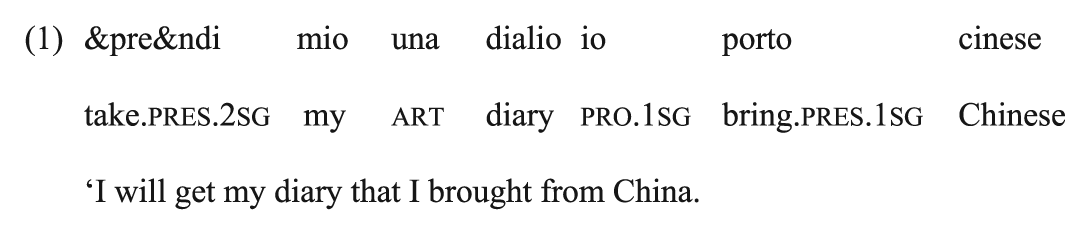
In (1) the speaker realizes two juxtaposed SoAs ‘&pre&ndi mio una dialio’ and ‘io porto cinese’. The simple juxtaposition of the SoAs leads the hearer understand that there is a shared element, that is the ‘diary’ about which the speaker adds some information (i.e. she brought it from China).
The fact that two juxtaposed SoAs can express a relative meaning is significant not only for a description of the L2 Italian interlanguage, but also from the perspective of acquisitional processes. Examining the function could reveal different or alternative patterns of acquisition. In this study an attempt is made to investigate relative clause acquisition, taking the aforementioned distinction into consideration when trying to ascertain whether the two kinds of relative clauses are learnt following two distinct processes.
Analyses are carried out of TL and NTL forms, on the one hand, and of precursor structures of relative clauses on the other, drawing on naturalistic oral data provided by two groups of different levels of proficiency in L2 Italian. This is to verify if RRCs and NRRCs are learnt in the same way and, thus, if NTL forms or precursor structures can reveal learners’ attempts to use relative clauses. The importance of NTL forms and precursor structures emerges from the use of such naturalistic data, since data is obtained in situations where participants are not forced to use any kind of relative clauses, and so if they do use them, they do so spontaneously.
Before illustrating the methods undertaken and the results obtained, it is useful to summarize current research regarding (1) the distinctions between RRCs and NRRCs and the linguistic and functional implications, and (2) the literature pertinent to the acquisition of relative clauses. In line with what Diessel (2004) found for L1 acquisition, we assume that relative clauses are learnt according to two different patterns of acquisition: one for RRCs and one for NRRCs. In particular, there seems to be a pattern of expansion of one SoA in the case of RRCs and a pattern of integration of two SoAs in the case of NRRCs. Naturalistic data obtained during oral examinations allowed for the analysis of two groups of L2 Italian learners of different levels of proficiency (B1 and C2 according to Common European Framework; compare Council of Europe, 1996). Analysing these data allowed for the identification of TL and NTL forms, as well as precursor structures, or ‘proto-relative’ constructions, and for any evidence of integration and expansion processes. The results from the analyses suggest that (1) learners at B1 level significantly underuse RRCs in comparison with C2 level learners, realizing certain NTL forms that hide an integration process in acquisition; and (2) that learners at B1 level already master NRRCs but significantly overuse ‘proto-relative’ structures to express a non-restrictive meaning.
1 Restrictive and non-restrictive relative clause distinctions
It is a well-established linguistic assumption that there is a distinction between RRCs and NRRCs. This distinction, which dates back to Port Royal Grammar, principally regards semantics and is based on two fundamental concepts: comprehension and extension. A RRC reduces the extension of the antecedent and identifies the referent, whereas a NRRC is usually attached to a specific referent and adds a further predication, exploiting coreferentiality with the head (Arnauld and Lancelot, 1968). In other words, as was stated above, a RRC modifies the reference of the antecedent it refers to, while a NRRC provides more information about its reference.
More recent research suggests that this distinction holds, since the two kinds of relative clause act at different levels of modification (Dik, 1997a, 1997b). The RRC, which modifies the arguments and the adjuncts, is necessary to predication. In (2), for example, the RRC che ho incontrato ieri identifies the reference of the antecedent la ragazza, which is the argument of the main predication.

In (3) the RRC che mi hai dato ieri identifies the reference of the antecedent la penna, which is the adjunct of the main predication.
In contrast, the NRRC can add further information regarding either the main predication, the proposition or the speech act. In (4), for example, the NRRC che erano agitati modifies the main predication providing the reason why candidates were allowed to enter.
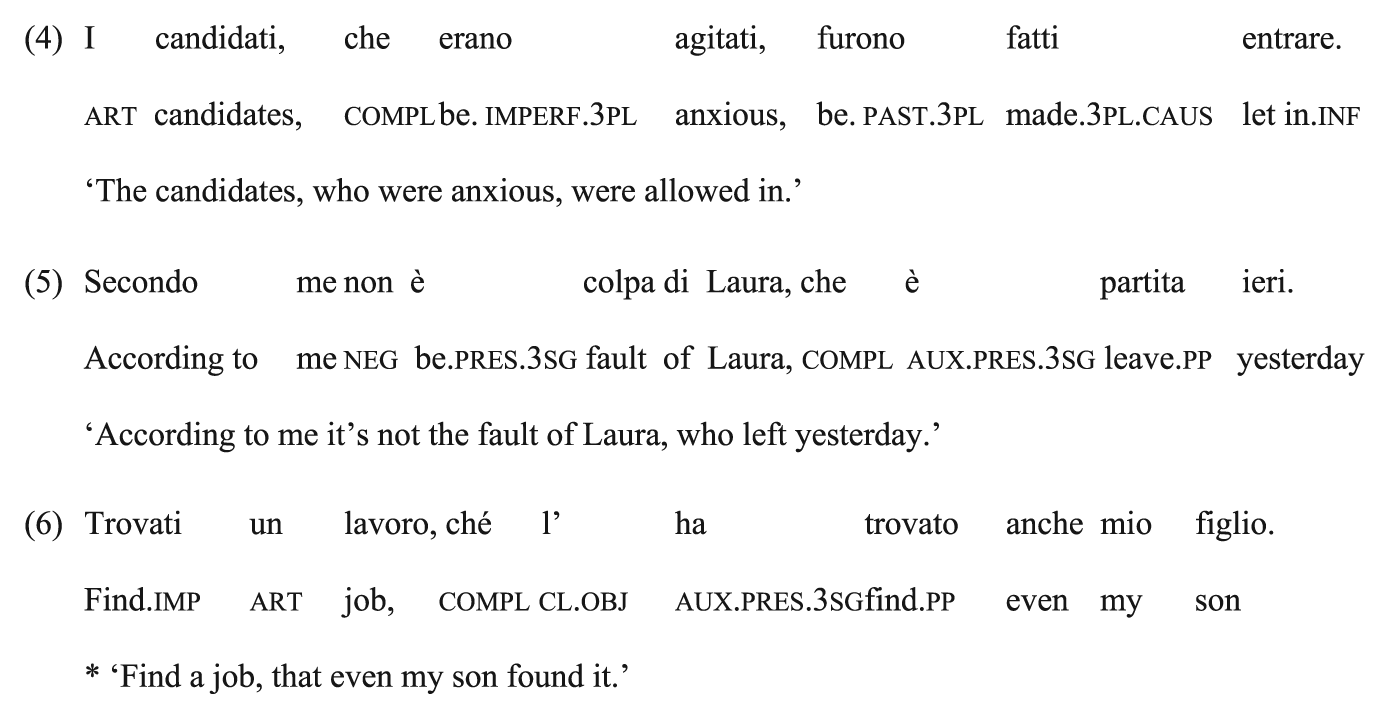
In (5), in contrast, the NRRC che è partita ieri modifies the proposition, particularly its truth-condition features. The reason that this leads the speaker to exclude Laura’s guilt is that she was away. Finally in (6) the clause che l’ha trovato anche mio figlio affects the speech act of order. In other words, it conveys the reason why the speaker tells the addressee to find a job.
Indeed, examples (5) and (6) should be considered unstable, since various aspects cast doubt on their relativity status. In particular, the possibility that the complementizer ‘che’ in (5) is actually a polyfunctional che (Benincà, 1993) and the presence of the clitic ‘l’ in (6), which is coreferent with the antecedent, distinguishes these examples from more prototypical relative clauses, and identifies them more with adverbial clauses. What should be emphasized here is the instability between the relative and adverbial function.
The levels of modification at which the NRRC operates (i.e. predication, proposition or speech act) imply that it never interferes with the relation between the topic and the comment of the sentence. This property is revealed by the fact the NRRC can sometimes assimilate an adverbial function. The following examples show how it can approximate a consecutive (7), a causal (8) and a concessive meaning (9).
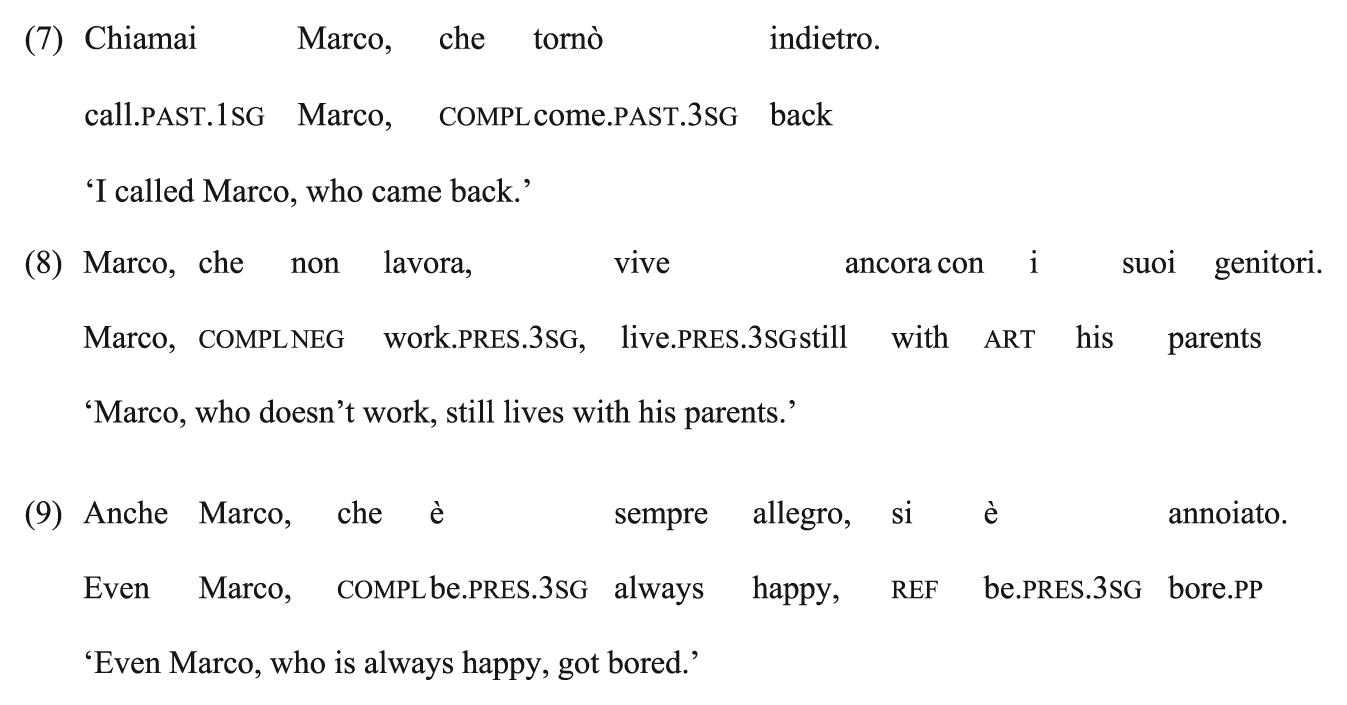
The semantic distinction between RRCs and NRRCs is also supported by prosodic, functional and formal features (see below) suggesting that a relative clause is not a stable construction and as such should not be investigated as a single structure.
Regarding prosodic features, the NRRC in Italian, as in many languages, is separated from the antecedent by a pause (graphically conveyed by a comma). Analysing spontaneous spoken Italian, 2 this is evident. In the following example, the two relative clauses che era la Civitavecchia and che è un’autostrada are clearly separated from the main sentence sono uscita alla prossima by an interruption in the fundamental frequency (F0).
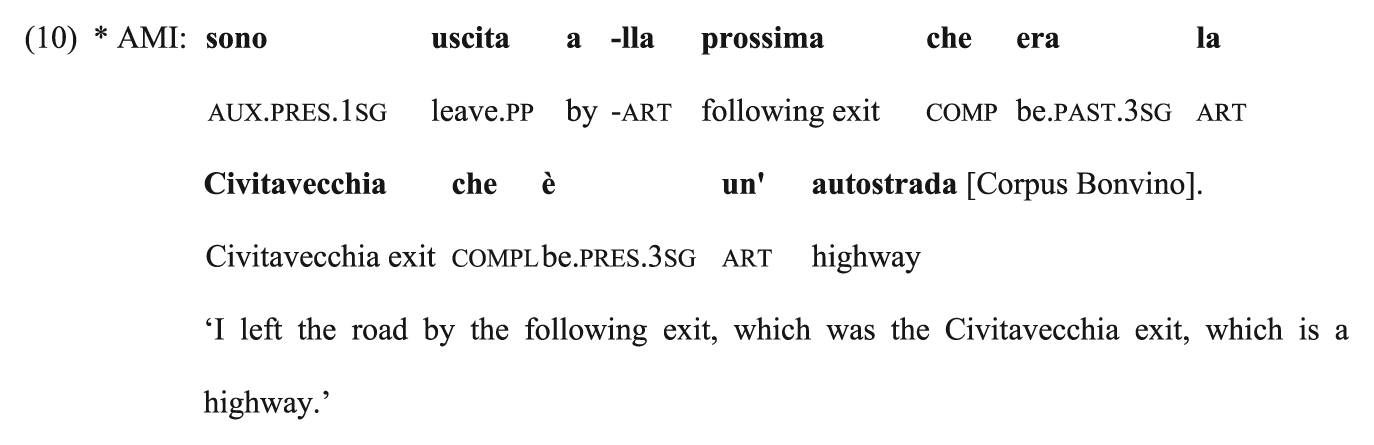
Figure 1 represents the flow of the F0. As we can see, there are two clear interruptions before each NRRC, which are both characterized by an initial raising movement. The F0 flow of a RRC is completely different.
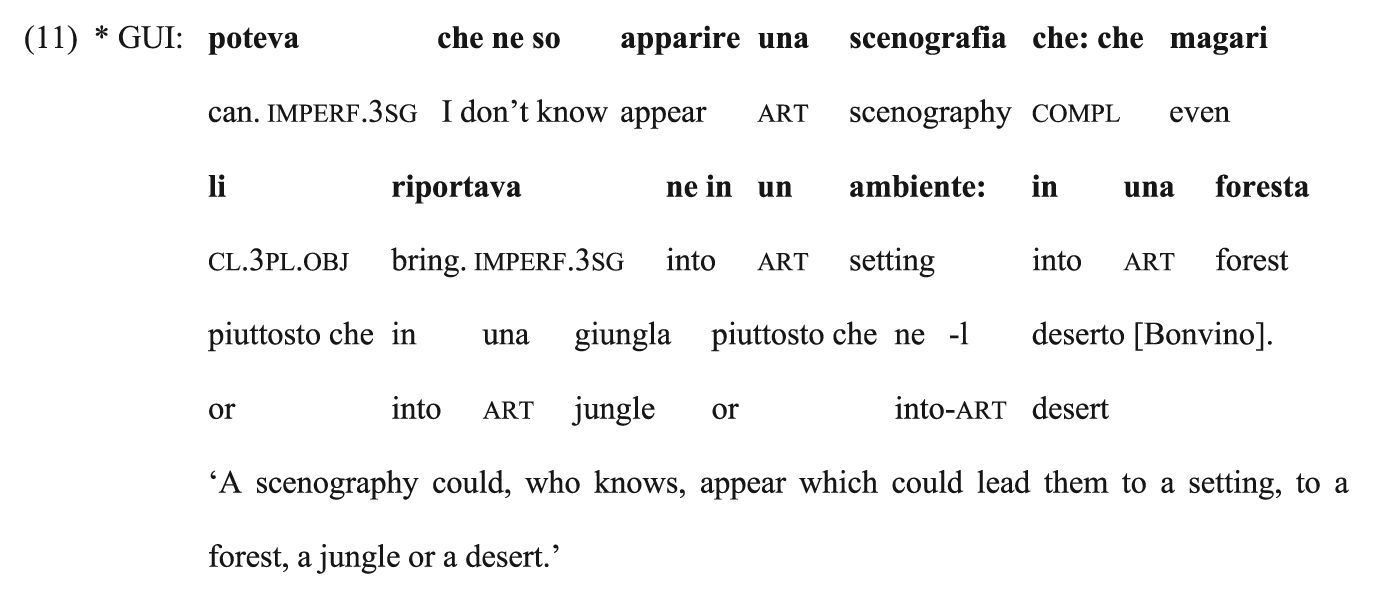
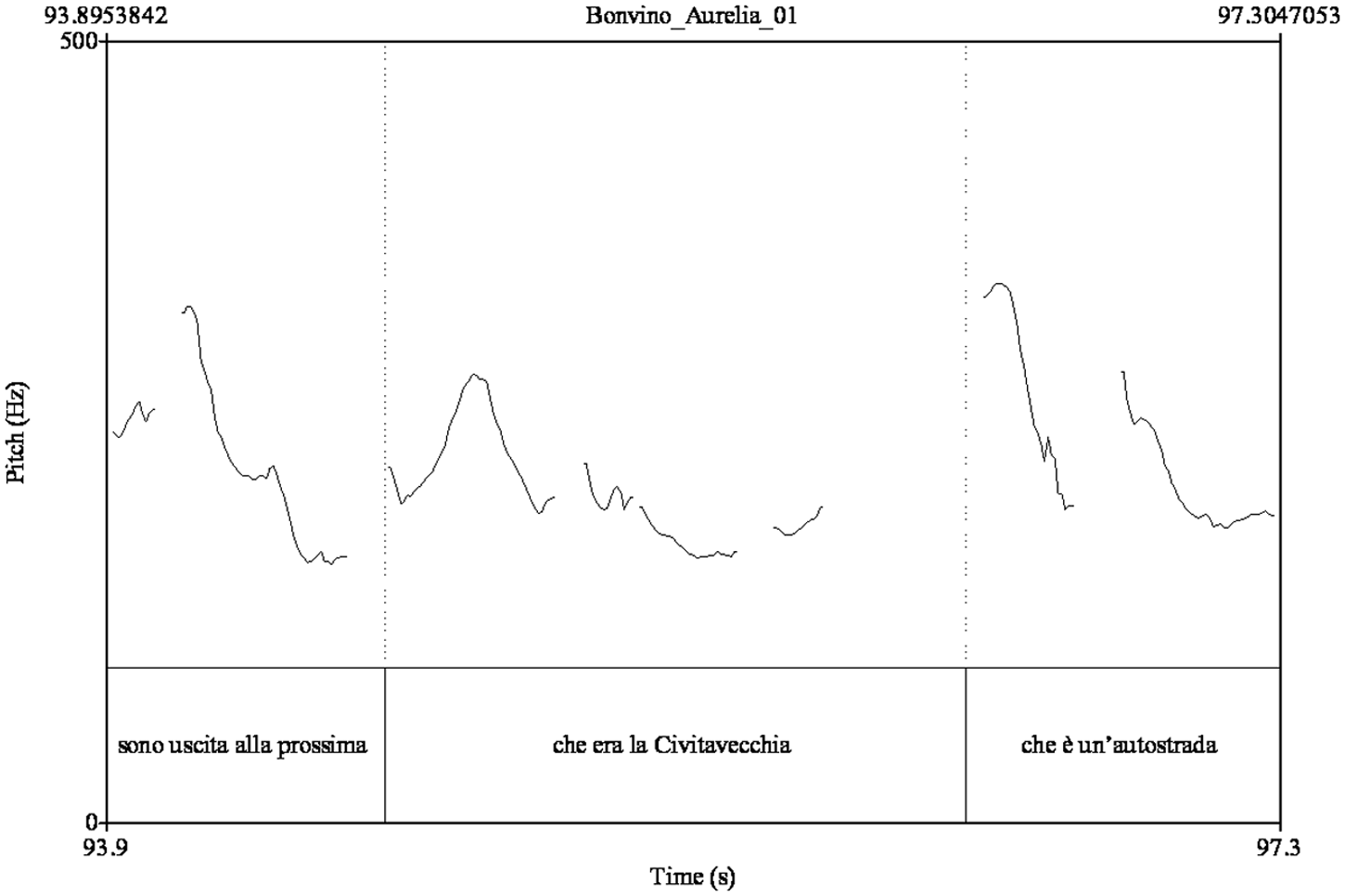
Figure 2 shows that there is no interruption and the flow is continuous between the main sentence poteva apparire una scenografia and the RRC che magari li riportava in un ambiente in una foresta. Moreover, there is no raising movement of the F0, which proceeds in a flat manner. Functional cues also support this distinction. Indeed, tests reveal the degree of dependency between the antecedent and the relative clause. The cleft sentence test and the answer to a wh-question test underline how the antecedent and the RRC cannot be separated since they form a single information unit.
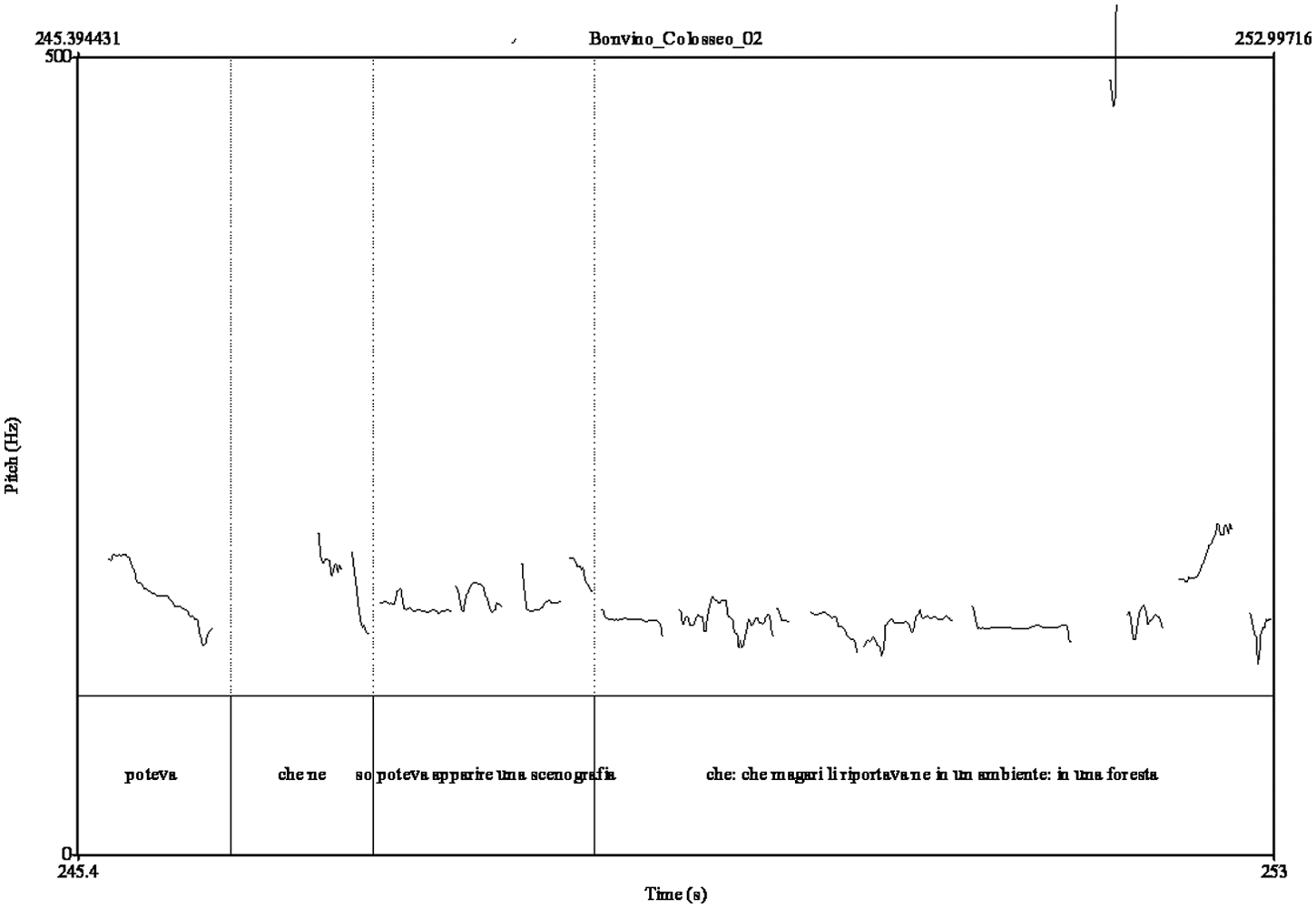
Based on the sentence in (12), the derived cleft sentence (13a) has to incorporate in focus position (i.e. after the copula) the entire NP (the antecedent), and the RRC necessary to identify the antecedent (for example, in a contrastive way to distinguish this girl from another perhaps studying French). In example (13b), the RRC is separated from the antecedent and the entire sentence is ungrammatical. The answer to a wh-question test also highlights the same functional-syntactic behavior: the answer to the question in (14) can only be (15a), where the RRC follows the antecedent; the antecedent on its own, as in (15b), is not tenable.
The following examples highlight how the possibility of including or excluding the NRRC from the cleft sentence or from the answer is simply a matter of informativeness. Indeed, the speaker can choose whether to include the NRRC, which conveys an almost adverbial meaning.
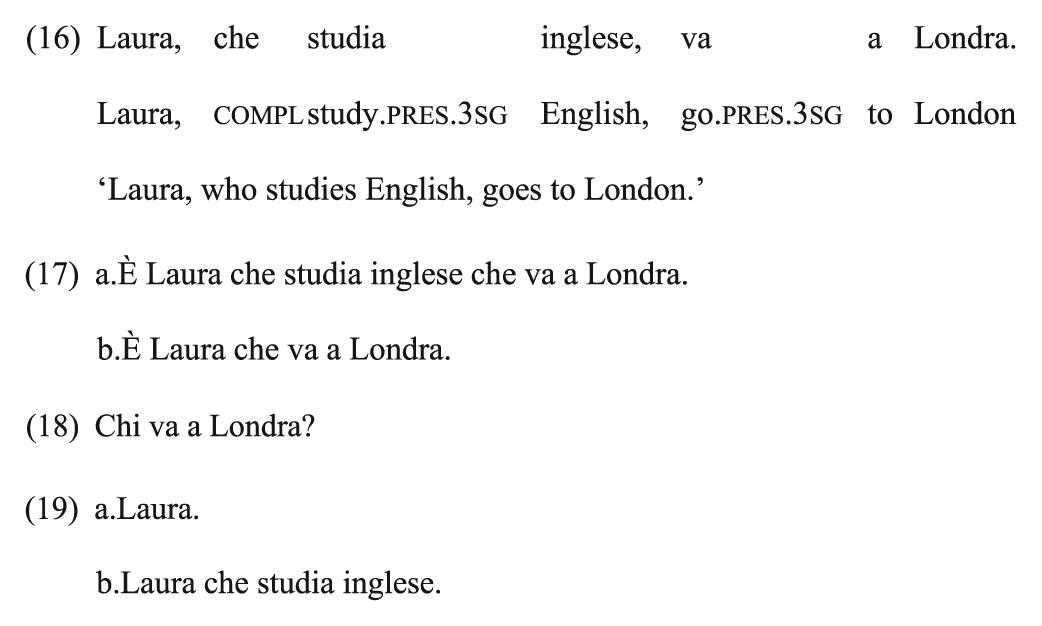
Starting from the sentence in (16), it is possible to formulate two cleft-sentences, one with just the antecedent (which being definite can stand alone) (17b) and another with the NRRC (17a) (which seems to express the reason why Laura goes to London). The same occurs with the answer to the question in (18): the response can simply be the antecedent (19a) or the antecedent followed by the NRRC (20b). This different functional behavior is another aspect, which supports making a distinction between the two forms.
Finally, it is impossible to ignore certain formal aspects that distinguish the two kinds of relative clause. In particular, RRCs seem to submit to tense, aspect and mood constraints. Indeed, they are more conditioned by consecutio temporum than NRRCs. For example, it is impossible to replace a verb in a RRC in the indicative present tense such as studiano in (20) with a verb in the subjunctive present tense like studino in (21), whereas this is possible with the NRRC in (22), which thus acquires an adverbial concessive meaning (23).
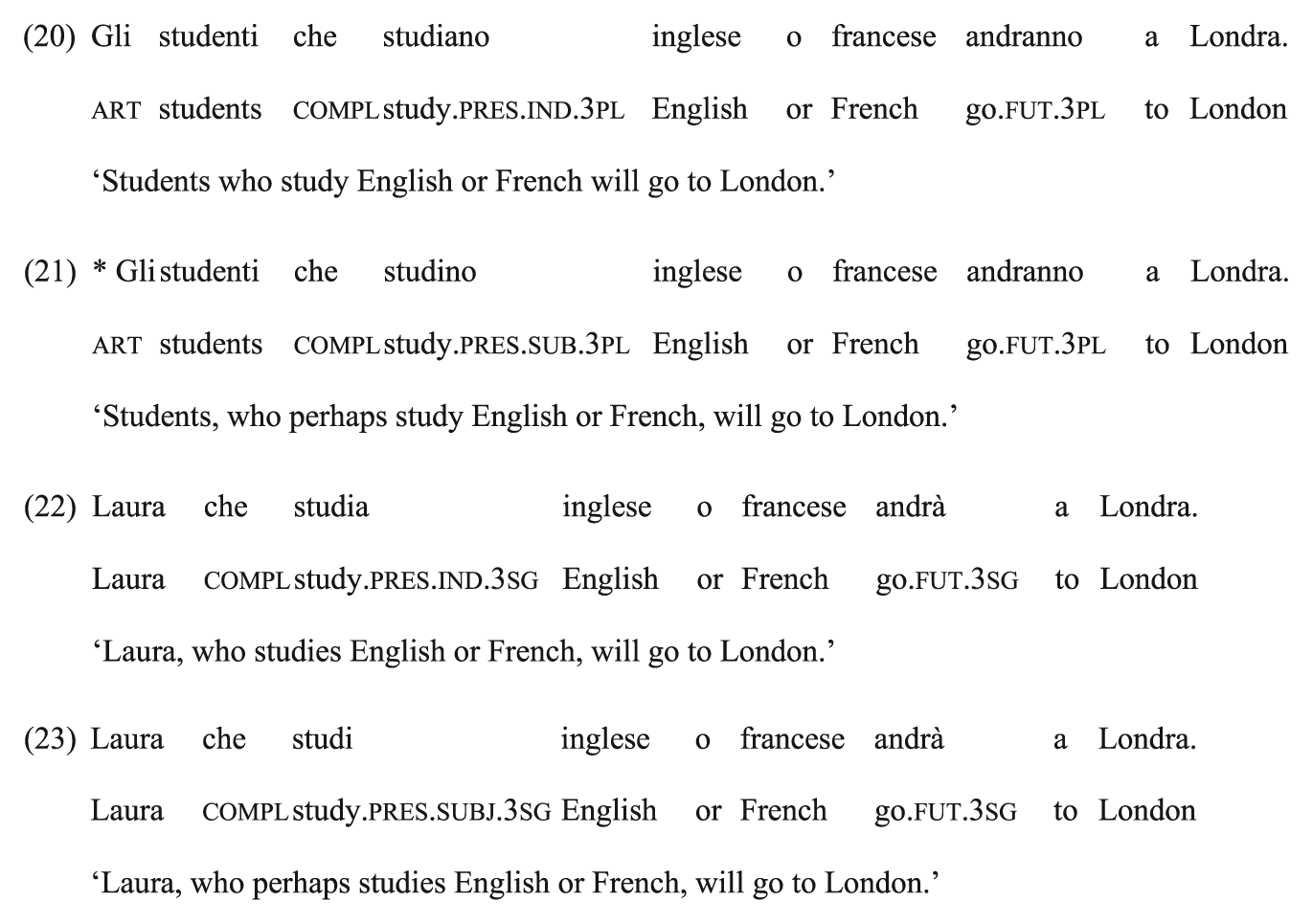
In particular, there is only one case in which sentence (21) can be grammatical: this is if we consider the antecedent gli studenti a definite NP, so that there is no need to identify them and the RRC can thus be interpreted as a NRRC.
All parameters considered, it is quite evident that the relative clause is neither a stable construction nor one linked to mere subordination as traditional grammar might lead us to believe. At this point we should reject any traditional marked distinction between coordination and subordination and hypothesize the existence of a coordination–subordination. Indeed, this is what Lehman (1988) suggests when investigating relative clauses from a typological perspective. Lehman splits the distinction of coordination–subordination into six sub-phenomena (i.e. integration of the subordinate clause into the main clause; syntactic level of integration; desententialization; grammaticalization of the main verb, interlacing of the two clauses and explicitness of linking), which contribute in making a construction more or less subordinated (or more or less coordinated). Bearing in mind the considerations made above, relative clauses not only cannot be uniquivocally placed at the subordination pole, but should also be reinterpreted as two different constructions, whose positions along this continuum need to be discussed separately. Indeed, the function of the NRRC, which almost acquires an adverbial function, places it more towards the pole of coordination, whereas the RRC, given its tighter link with the antecedent, seems more characteristic of subordination. All this should be taken into consideration when investigating the acquisition of relative clauses in the L1 and the L2.
2 Relative clause acquisition: Previous research in L2 and L1
Much of the research on the acquisition of relative clauses in the L2 predominantly deals with the application of the Noun Phrase Accessibility Hierarchy of Keenan and Comrie (1977) to L2 data, in order to verify the extent to which it signals the order of L2 acquisition (Doughty, 1991; Eckman et al., 1988; Gass, 1979, 1982; Pavesi, 1986, for English; Banfi, 2003; Croteau, 1995; Valentini, 1992, 1997, for Italian; Ozeki and Shirai, 2007, for Japanese). All these studies – except for Ozeki and Shirai (2007), which deals with a left-branching language – confirmed the order proposed by the Noun Phrase Accessibility Hierarchy, that is, that less marked positions are learnt earlier than more marked positions, except for the genitive position (for further details, see Gass, 1979).
However, in another recent study on the relative clause carried out by Mellow (2006), an emergentist and constructionist approach to language acquisition was adopted. Hitherto, this approach had been adopted when discussing the L1 (Diessel and Tomasello, 2000, 2001, 2005; Tomasello, 2003) while its use in SLA is more recent (see NC Ellis, 2003). According to this approach, language acquisition begins with formulae (unanalysed chunks), consistent with early SLA research (Corder, 1973; NC Ellis, 1996; R Ellis, 1994; Hakuta, 1974; Krashen and Scarcella, 1978), gradually leading to lexically specific patterns that ultimately become constructions through a process of syntactic generalization. Therefore, acquisition is seen as a top-down process that allows learners, once they have de-composed formulae and chunks, to re-compose the construction of the target language (henceforth TL). Moreover, frequency effects, input elaboration and use make language acquisition possible and concrete, easing storage. In the constructionist approach, constructions are considered symbolic since they are the result of a mapping process of a form and a function. According to Goldberg and Casenhiser (2008), the learning of a language takes places as soon as a function is associated with a form: In fact, in order for children to generalize over the utterances they hear so that they can creatively produce and understand utterances they have never heard before, they need to learn the way meaning is expressed formally in their language, i.e. they need to learn the constructions of their language […] Learning to associate formal pattern with meaning is clearly necessary and central to the overall task of learning a language. (Goldberg and Casenhiser, 2008: 198–99)
Constructionist and emergentist approaches also envision language acquisition through networks of constructions, built according to formal and functional similarity or proximity between them. Within this approach, Diessel (2004) underlines that relative clauses seem to be learnt in the L1 through an expansion process (as completive constructions), that is, through a process of expansion of the NP, in contrast to coordinated and adverbial constructions which seem to be learnt through a process of integrating two sentences.
Mellow’s (2006) case study results confirm constructionist assumptions: the acquisition of the relative clause is item-based and at the same time cumulative, relying on fixed expressions at the very beginning and becoming more productive later on. Frequency of input also influences acquisition: the early acquisition and extensive use of subject relative clauses closely correspond to native speaker frequency of use.
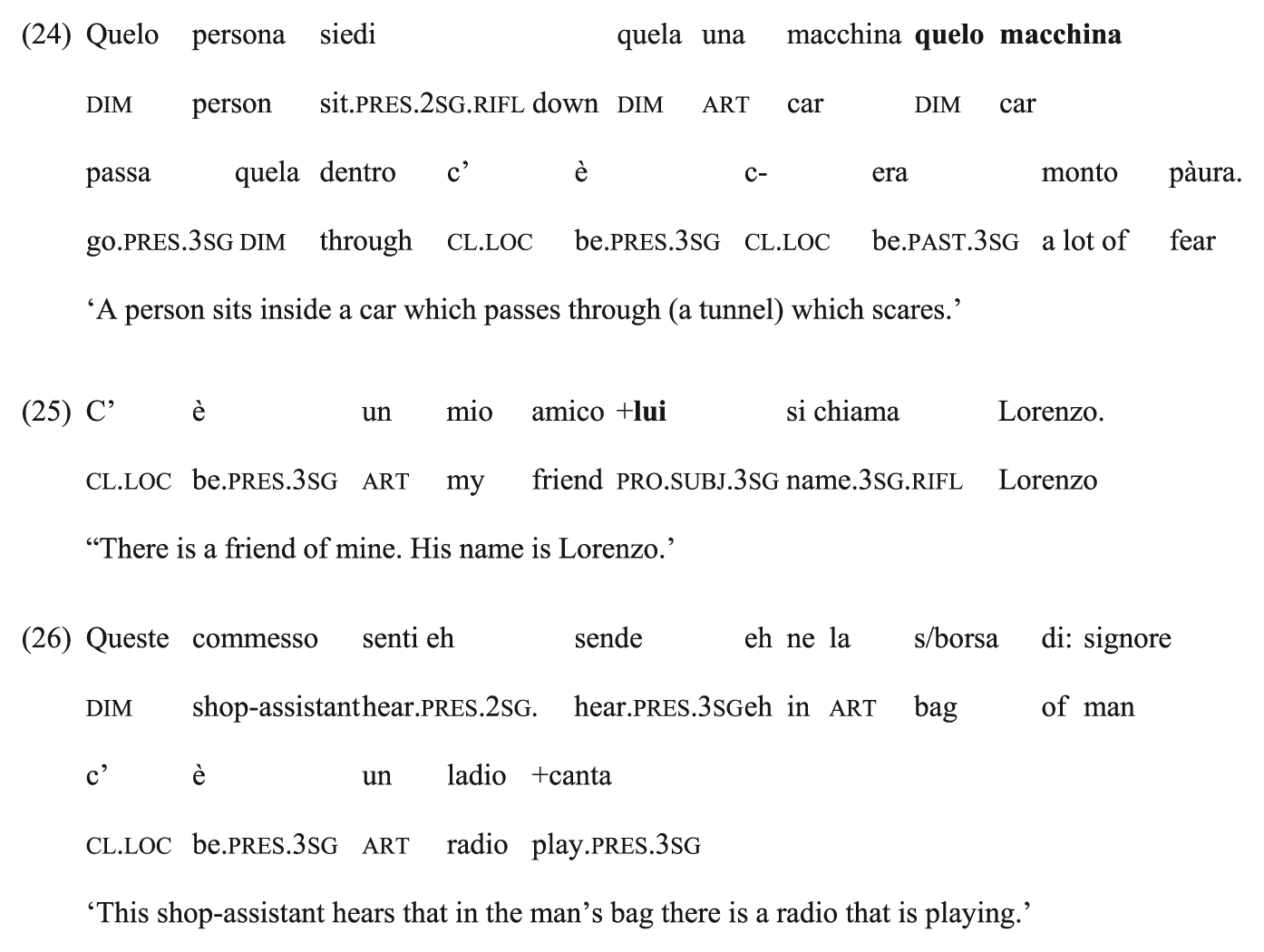
If we focus on L2 Italian relative clause acquisition, the research carried out by the Pavia School is of great importance, the principal results of which are presented in a manual edited by Giacalone Ramat (2003). The research of the Pavia School into relative clauses, based entirely on naturalistic data gathered in the Pavia corpus, in addition to confirming the Noun Phrase Accessibility Hierarchy, underlines a particular pattern of acquisition. Inheriting the label of ‘proto-relative clause’ from Sato (1990), Giacalone Ramat (1999) indentifies a particular structure that has the same function as the relative clause, but not the Italian TL form. These proto-relative constructions are usually made up of two coordinated clauses and semantic coreferentiality is marked by the repetition of the same NP (24) with a synonym or the use of a pronoun (25) (often a null pronoun (26)).
The literature reveals that research into relative clauses has taken two directions: on one hand it has aimed at checking the applicability of the Noun Phrase Accessibility Hierarchy to L2 data and on the other it has exploited the relative clause construction as an example of a complex construction to support constructionist and emergentist approaches to L2 acquisition. Moreover, studies into L2 Italian have highlighted certain precursor structures that can be integrated into the constructionist framework as an earlier step towards the acquisition of the target construction. In the processing and elaboration of ‘proto-relative clauses’, learners betray their attempts at mapping function to form, before arriving at TL mapping. What is fairly striking is that no research has been carried out so far considering the well-established functional distinction between restrictive and non-restrictive relative clauses. Therefore, this study intends to investigate L2 data in order to answer the following questions:
Is there a single process of acquisition for RRC and NRRC constructions?
Are the strategies employed by L2 learners to convey restrictive and non-restrictive meanings the same?
Are such strategies stable throughout the acquisition process or are there progressive acquisitional strategies? In other words, is the distribution of such strategies the same at different levels of competence?
Since some constructions in the learners’ L1 – like the serial verb construction in Chinese (see Li and Thompson, 1981) or the -te construction in Japanese (see Yausa and Sadock, 2002) – might influence the use of a particular relativization strategy compared to others, our final concern dealt with the role of the L1 in the distributions of such strategies. Thus, our fourth research question was:
4. Are these strategies in some way influenced by the L1? In other words, can speakers draw any advantage from their L1?
II Methods
1 Participants and materials
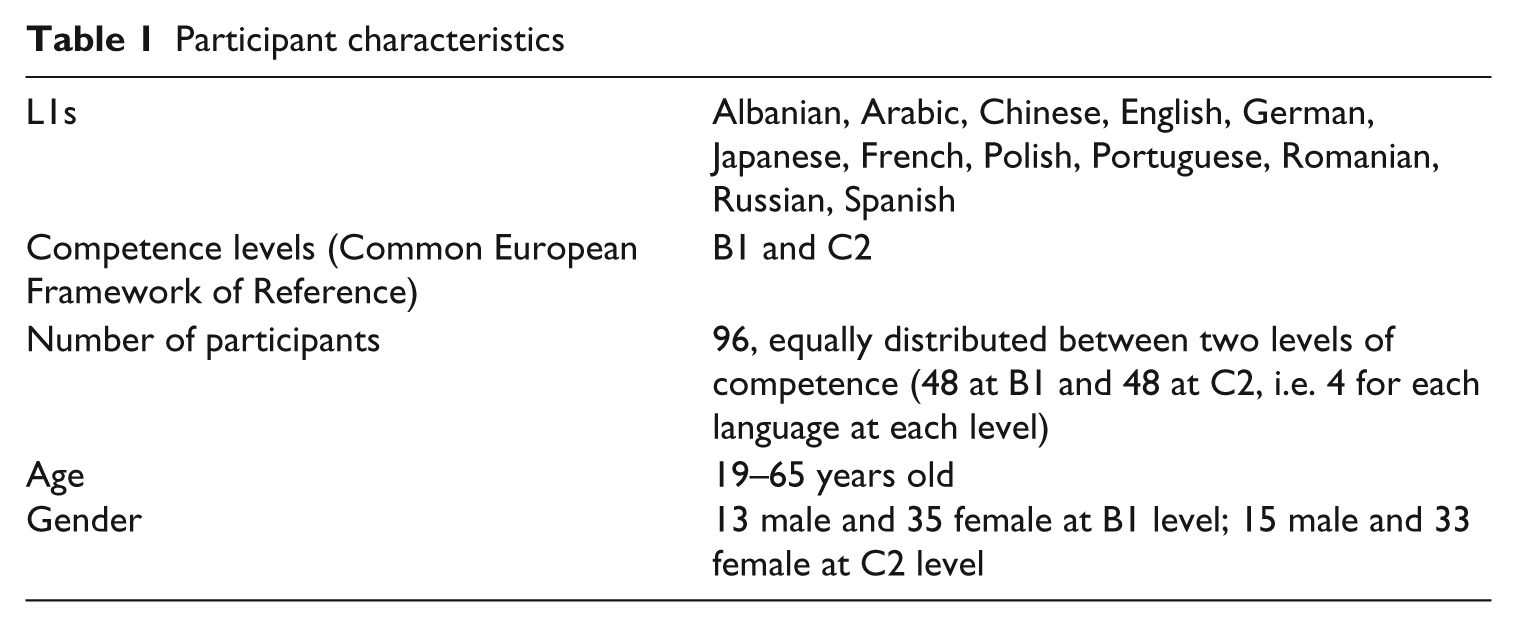
For this study, data from the L2 Italian CO.CER.IT (Italian Certification Corpus) database of the Department of Linguistics at Roma Tre University were analysed. The database gathers together all the L2 Italian examinations issued by the L2 Italian Certification Office of Roma Tre University since 2005 for the various L2 competence levels (from Common European Framework of Reference – A2 to C2; see Council of Europe, 1996). From this database, 96 L2 Italian learners were selected who had taken the exams spontaneously and who had passed them successfully. Forty-eight learners at B1 level and the same number at C2 level were chosen. The entire selection amounted to 15 hours 19 minutes 57 seconds of recordings: 5 hours 48 minutes 9 seconds at B1 level and 9 hours 31 minutes 48 seconds at C2 level. In the selection process internal factors, such as age, gender or level of instruction (see R Ellis, 1994; Larsen-Freeman and Long, 1991) were not considered, but candidates were distinguished by their L1. In particular, 12 different L1s were chosen. This selection was not random but was based on typological criteria, our aim being to represent all linguistic typologies. Unfortunately this aim was only partially achieved, since there were no speakers of a polysynthetic language. At each level, 4 participants of each L1 were included, so that, for example, 4 Russian-speaking participants were included in the B1 level group and 4 Russian-speaking participants were included in the C2 level group. Table 1 summarizes the characteristics of participants.
Participant characteristics
From the CO.CER.IT database only the recordings from the oral parts of the B1 and C2 level examinations were analysed. Roma Tre University examination tasks are designed according to Common European Framework of Reference guidelines. In particular, the B1 oral examination comprises two tasks: the first deals with answering personal questions aimed at making examinees feel at ease with the examination situation; the second deals with a discussion, starting with visual input relating to everyday life. There are three tasks involved in the C2 oral examination: the first deals with general and personal questions; in the second examinees have to comment on an Italian proverb, idiom or famous quotation, while in the third part they are asked to comment on some comic strips. Thus, the textual genres involved in the interaction for both exams are descriptive, narrative, regulative and argumentative. The role of the interviewer (i.e. the exam committee) is limited to formulating various personal questions and eliciting expressions to do with personal opinions or the advantages or disadvantages of a particular fact or state. The tasks in which participants of the two groups were involved only differed in the kinds of prompt provided: images, comic strips and proverbs. This difference, however, did not seem to affect production negatively: indeed, the prompts were selected for a different purpose (i.e. assessing proficiency) and none of the prompts was structured in order to elicit relative clauses. Therefore such a discrepancy does not favour any one group over another. Indeed, the prompts are simply a pretext to start production in which the participant is completely free to change topic and to use whatever structure he or she wishes. The difference in prompts is simply motivated by the different levels of competence, according to Common European Framework guidelines.
Therefore, the data can be considered spontaneous or semi-spontaneous. The preference for spontaneous data is motivated by the idea that authenticity can reveal more about learners’ strategies (communicative strategies, pragmatic strategies, avoidance strategies, etc.) than elicitation tasks or grammatical judgment, in particular when the process of acquisition of a particular phenomenon is being investigated.
2 Procedure
All 96 recordings were transcribed according to the CHAT format (MacWhinney, 2000). This choice was based on Luzi (2010), which had compared several corpora transcription systems, such as the Conversational Analysis system (Sacks et al., 1974), Gumperz’s model (Gumperz and Berenz, 1993), the LIP (Lessico di frequenza dell’Italiano Parlato; De Mauro et al., 1993) model and the CHAT format. An analysis of these transcription systems revealed that the CHAT format performs better than the others for various reasons:
for comprehensiveness, since it is able to take into account all interaction phenomena;
for reliability, since it limits the degree of interference of the transcriber;
for readability, since it allows the transcriber to select the most useful symbols for her research aims;
for consistency, since it leaves the transcriber free to decide which phenomenon to include in the transcription; and
for flexibility, since it constitutes a vast, but open, set of symbols that can be updated according to new scientific findings.
3 Analysis
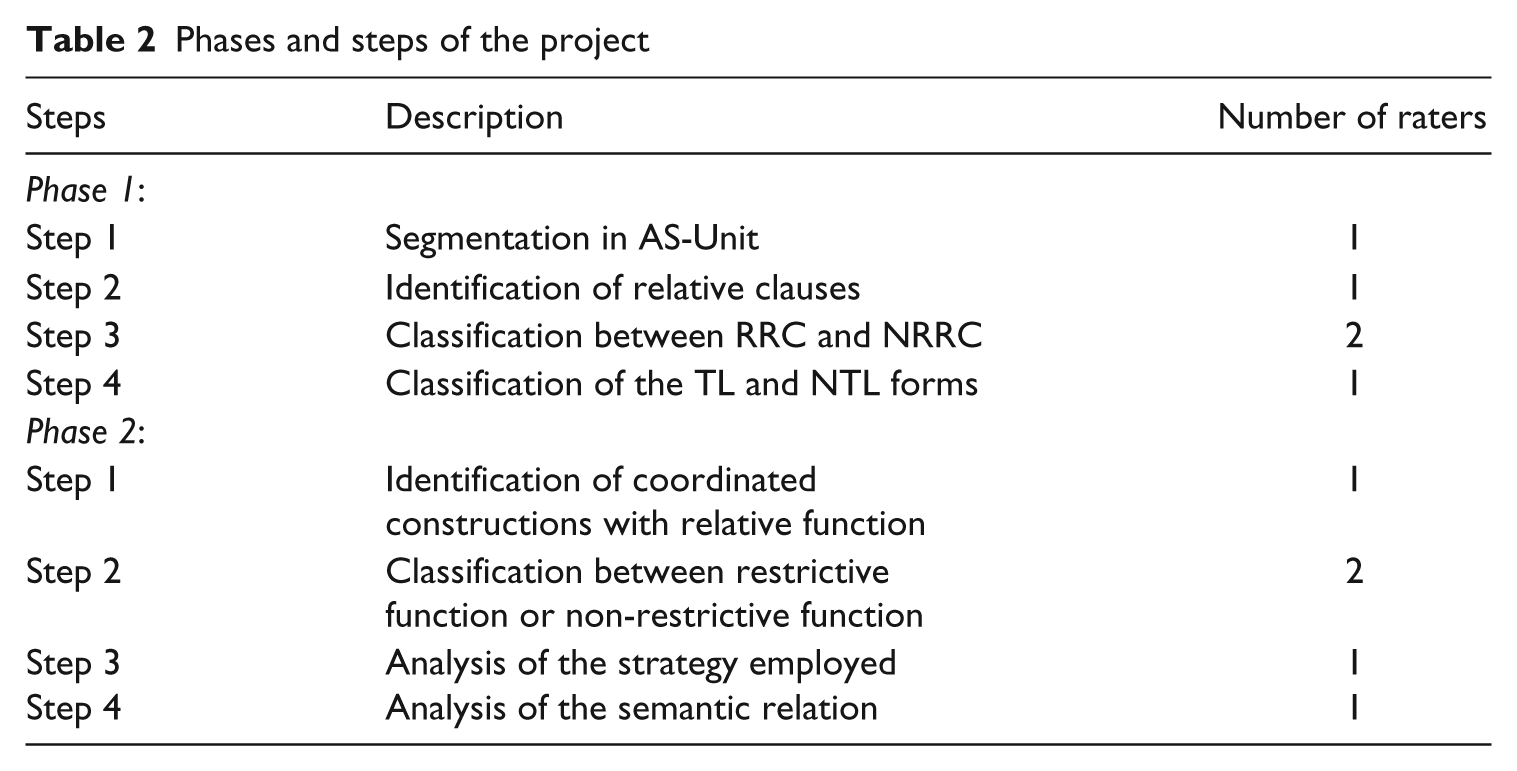
The analysis of data consisted of two main phases: Phase 1 dealt with relative constructions, while Phase 2 dealt with coordinated constructions in order to investigate the ‘proto-relative’ construction. Phase 1 consisted of four steps. First of all, all the recordings were segmented into Analysis of Speech Units (AS-Units) (Foster et al., 2000), both listening to the recording and reading the transcription (Step 1). Second, all the relative constructions were identified, again using the recordings and the transcription, since double-checking prevented the misinterpretation of the transcript while guaranteeing that no relative construction was overlooked (Step 2). Third, two raters (the author and a researcher in linguistics) classified all the RRC and NRRC constructions: the choice of selecting a second rater was made not only to lend more scientific reliability to the study, but also to obtain more accurate data, since spoken data are often misleading and difficult to interpret (Step 3). Interrater reliability was also calculated: Kappa = .76 (p < .001) for the B1 level and Kappa = .96 (p < .001) for the C2 level. Finally, relativization strategies were analysed, distinguishing cases in which learners realized these in conformity with the TL and cases in which learners realized them using forms that did not belong to the target language (NTL), but whose function was still clear (Step 4).
Up until now, AS-Unit application has predominantly dealt with English data, although Foster et al. (2000) also recommend applying AS-Units to data segmentation in other languages. Indeed, segmentation was carried out according to all the indications given in Foster et al. (2000), but two further criteria were taken into consideration:
In deciding whether to include two coordinated clauses in the same or in two different AS-Units, Foster et al. (2000) suggest considering the intonation of the first clause and the length of the pause between the clauses. If the intonation of the first clause is descending and the pause is longer than 0.5 seconds, then the two clauses belong to two different AS-Units. However, since there did not appear to be any scientific validity to a 0.5 second cut-off point, segmentation in our study relied more on prosodic cues, which are almost always descending and, unlike pauses, cannot be influenced by external factors such as sentence elaboration or word searching.
In order to obtain data that were more comparable with Giacalone Ramat’s research (2003, among others), all subordinate clauses with a non-finite verb, dependent on a finite verb (i.e. modals, verbs of saying, perception verbs, etc.) were considered as subordinate clauses belonging, with the clause they depend on, to the same AS-Unit. For example, the sentence in (35) penso che suo marito è arrivato molto tardi has been segmented as [penso [che suo marito è arrivato molto tardi]], where [penso] is the independent clause and [che suo marito è arrivato molto tardi] the subordinate clause.
As for the criteria used by raters for distinguishing RRC and NRRC constructions, classifications were made by taking into consideration the semantic, formal and functional parameters illustrated above. Therefore a relative clause was considered restrictive:
if it reduced the extension of the NP to which it referred;
if it could not be separated from the NP when a cleft sentence test or a wh-question test was applied;
if it generated an agrammatical sentence together with the main clause when a switch in the tense, aspect, and/or mode features occurred.
Therefore a relative clause was considered non-restrictive:
if it added information to the NP to which it referred;
if it could be omitted when a cleft sentence test or a wh-question test was applied;
if it generated an acceptable sentence together with the main clause, when a switch in the tense, aspect, mood features occurred.
The prosodic parameter was not taken into account since it was considered unreliable for L2 data analysis.
Phase 2 also consisted of four steps. First of all, all coordinated constructions were identified and those whose function approached relative clause function were selected (Step 1). All coordinated constructions with a relative function were divided by the two raters into two groups, distinguishing those with a restrictive function from those with a non-restrictive function (Step 2). Then inter-rater reliability was assessed: it was found to be Kappa = 1.000 (p < 0.00) for both levels of competence. The strategies employed were then looked into, including those quoted by Giacalone Ramat (1999), i.e. the repetition of the same NP, the use of a personal or a demonstrative pronoun, etc. (Step 3). Finally the semantic relation between the two NPs (synonymy, metonymy, hyponymy, etc.) was also analysed (Step 4).
As for Phase 2, Step 2 criteria for distinguishing coordinated constructions with a restrictive relative function from a non-restrictive relative function were established by the raters. In contrast to the criteria adopted in Phase 1, Step 3, formal and the functional criteria could not apply here, as the objects of the classification were coordinated constructions and not relative clauses; thus only semantic criteria held. Therefore a coordinated construction with a relative function was considered restrictive when it reduced the extension of the NP to which it refers, and non-restrictive when it added information to the NP to which it refers. Table 2 summarizes the phases and steps of the analysis.
Phases and steps of the project
With all the data collected in the analysis session described above, ratios were calculated, dividing the number of occurrences of each phenomenon (such as relative constructions and coordinated constructions) by the number of AS-Units. With all the ratios obtained, the following tests were then applied:
the Mann–Whitney U-test twice in order to answer research question 3 regarding the influence of L2 competence on the strategies used by learners (i.e. relative clauses or coordinated clauses); independent variable: L2 competence; dependent variables: ratios of relative constructions and ratios of coordinated constructions.
the Kruskal–Wallis test twice in order to answer research question 4 regarding the influence of the L1 on the distribution of the strategies used; independent variable: the L1; dependent variable: ratios of relative constructions and ratios of coordinated constructions.
Two considerations led to the application of non-parametric tests: first, the distribution of data was not always normal; second, even though the ratios were calculated, non-parametric tests are usually preferred when dealing with frequencies.
III Results
1 Phase 1
As illustrated in the previous section, the first phase of the research dealt with the analysis of relative constructions. After Step 1, consisting of segmenting the data into AS-Units, all the relative constructions were identified (n = 206 at B1 level, and n = 397 at C2 level). At this point in the analysis, the form of realization was disregarded, taking into account those constructions whose relative function, whether it be restrictive or non-restrictive, was clearly inferable from the context. The ratio obtained by dividing the number of occurrences of relative clauses by the number of subordinate clauses for each learner indicated the distribution of relative clauses among subordinates. Table 3 shows the descriptive figures of the relative constructions for the two levels, together with the figures relating to other forms of subordination.
Descriptives in the distribution of subordinate clauses
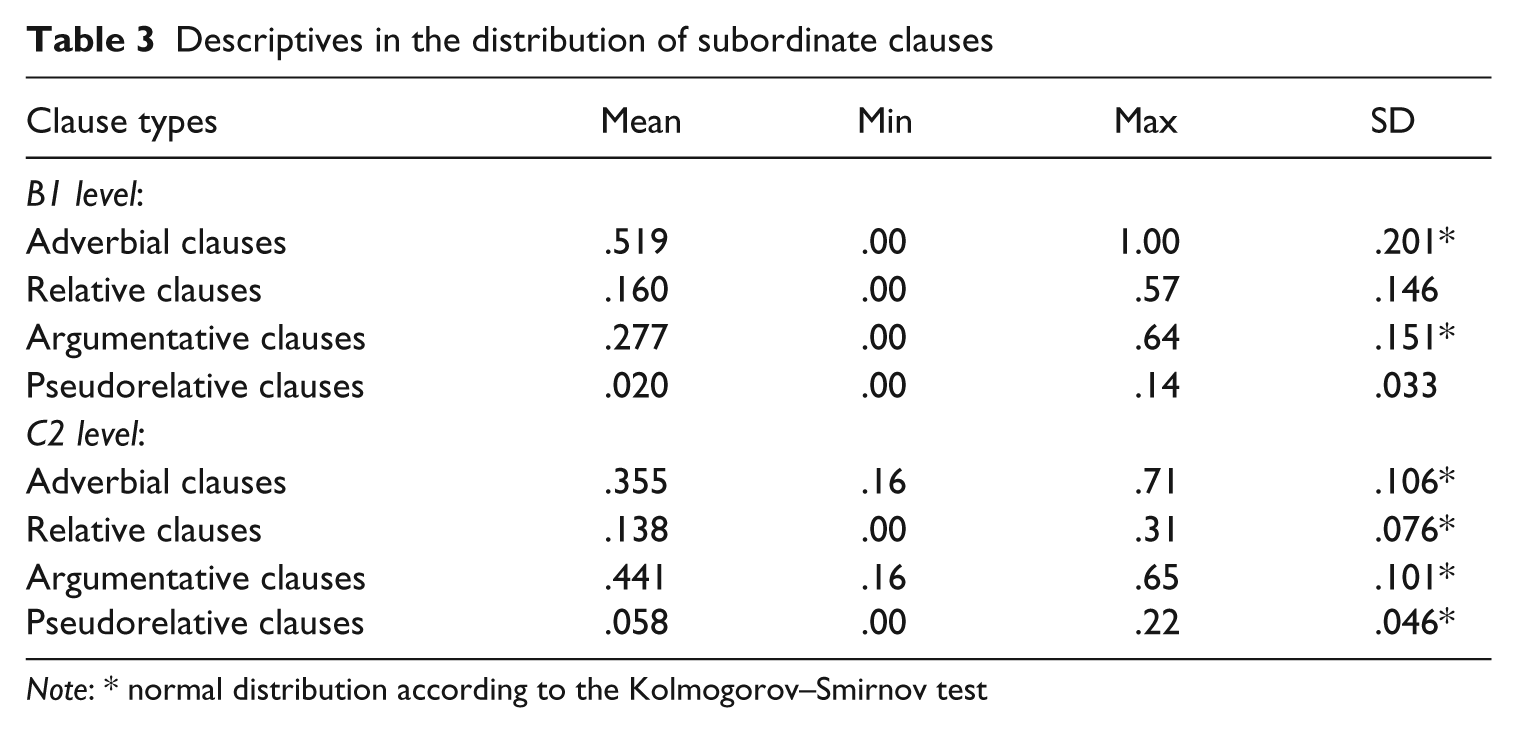
Note: * normal distribution according to the Kolmogorov–Smirnov test
In order to verify whether there was a significant difference in the production of TL relative clauses at both levels, the Mann–Whitney U-test was run. This established that there was no significant difference between the two competence levels (U = 1138.500, p > .05) and no effect size (η
Step 3 consisted in classifying all the relative constructions found in the data as RRCs or NRRCs. The classification was carried out by the two raters separately and they later held a discussion session regarding any cases where discrepancies had been found: at the end of this session those cases where a congruent classification was found were integrated with those for which there was agreement from the very beginning, making a total of 201 relative clauses at B1 level and 393 relative clauses at C2 level. On the contrary, cases in which there was no agreement between raters were excluded (N 5 at B1 level, N 4 at C2 level).
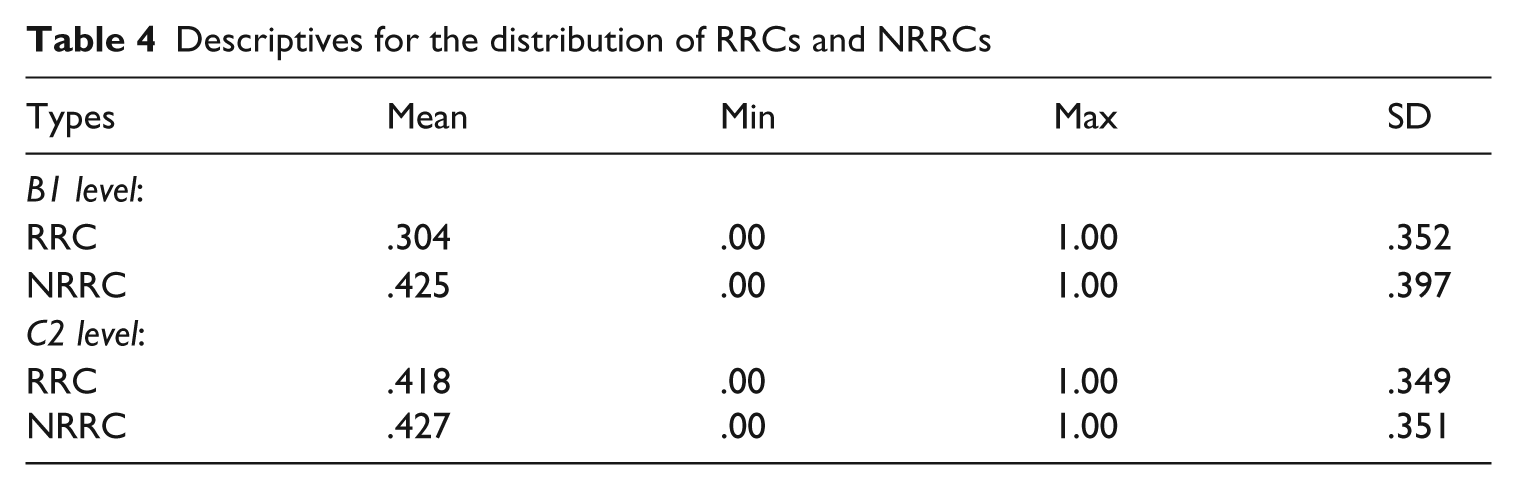
Table 4 shows the descriptive figures for the distribution of RRCs and NRRCs; ratios were obtained by dividing the number of occurrences of each form of relative clause by the total occurrences of relative clauses. According to Kolmogorov–Smirnov test there was no normal distribution for both kinds of relative clause at either level. The Mann–Whitney U-test was run in order to check whether there was a significant difference between the two linguistic competence levels regarding the distribution of RRCs and NRRCs. Table 5 shows the results. According to the test, only the distribution of RRCs was significant when comparing the two groups (U = 718.500, p = .001).
Descriptives for the distribution of RRCs and NRRCs
Mann–Whitney U-test results on the influence of L2 competence on the distribution of RRCs and NRRCs

In order to verify whether there was significant difference in the distribution of RRCs and NRRCs between the various L1s, the Kruskal–Wallis test was run, first considering each language separately and then grouped according to genetic branches and typological criteria. 3 Table 6 shows the results. Post-hoc comparison tests confirmed that there was no significant difference, including that case which has been highlighted in bold in Table 6 (RRCs L1 typology*L1 typology at B1 level). It therefore seems that the distribution of RRCs and NRRCs within each competence level was not influenced by the L1.
Kruskal–Wallis test results for L1 influence in the distribution of RRCs and NRRCs

Step 4 dealt with the form of all the relative constructions identified in Step 3; indeed, those realized correctly were separated from those realized incorrectly (it is worth remembering that our primary concern was the function of these constructions). Table 7 reports the mean values of all the relativization strategies, both TL and NTL. In the first part of Table 7, the TL strategies are reported. The predominant strategies at the two levels, used both for NRRCs and RRCs, is [NP [che Rel]], where che is the complementizer. In (27) there is an example of the relative construction [NP [che Rel]].
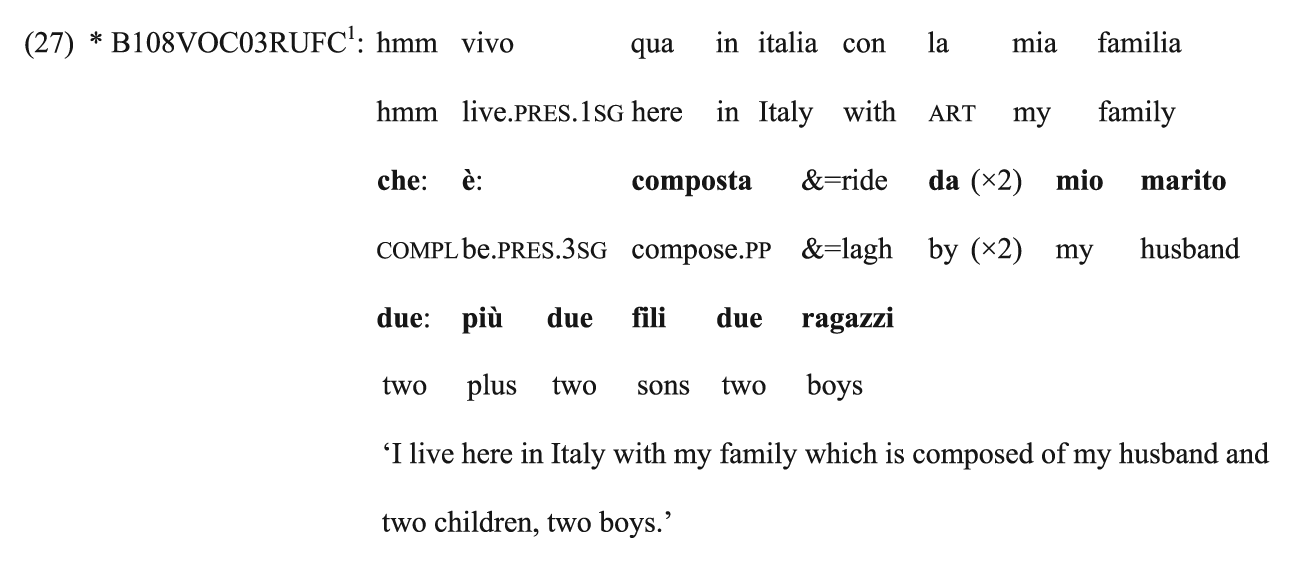
Mean of all strategies (TL and NTL) used for relativization
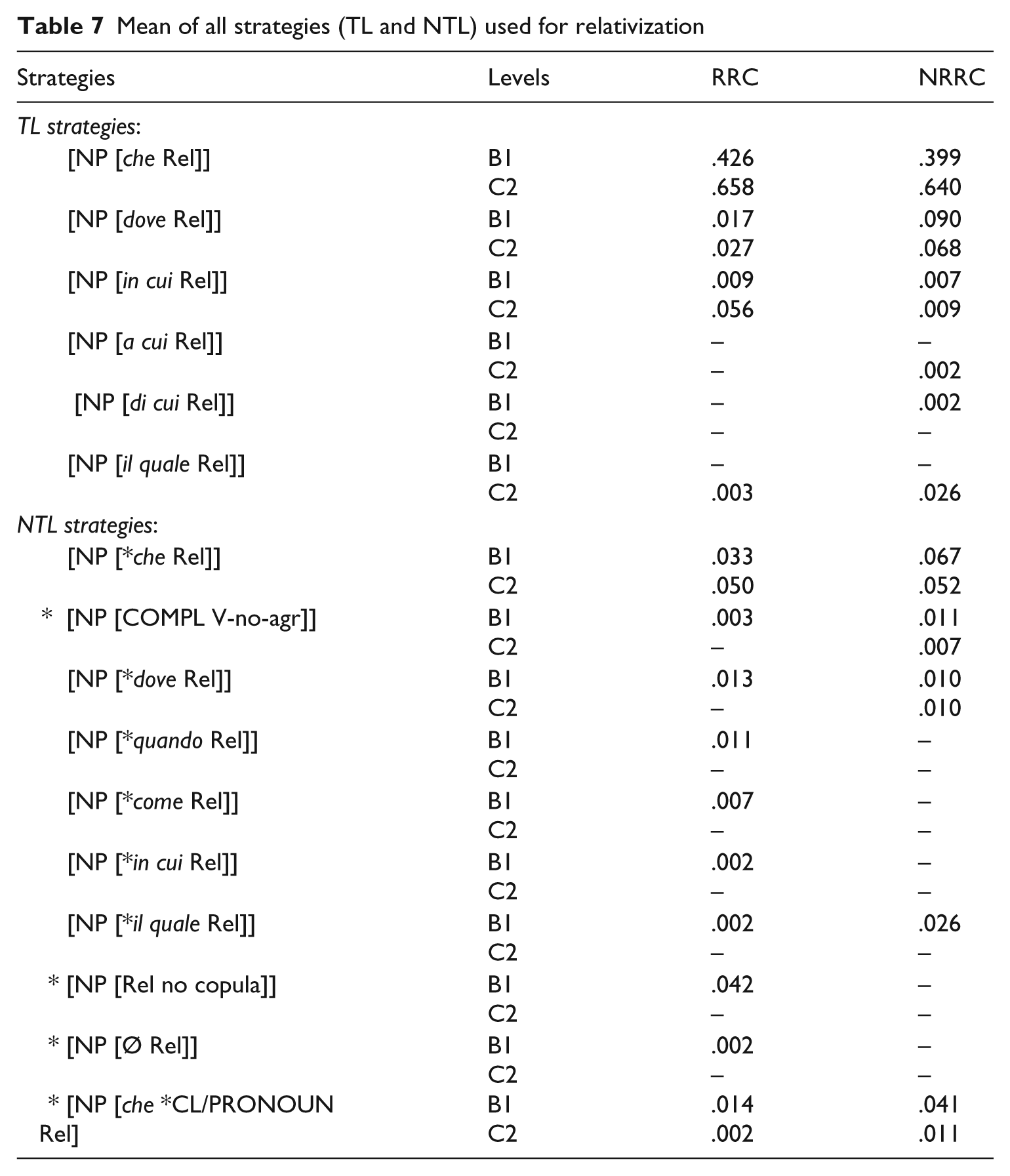
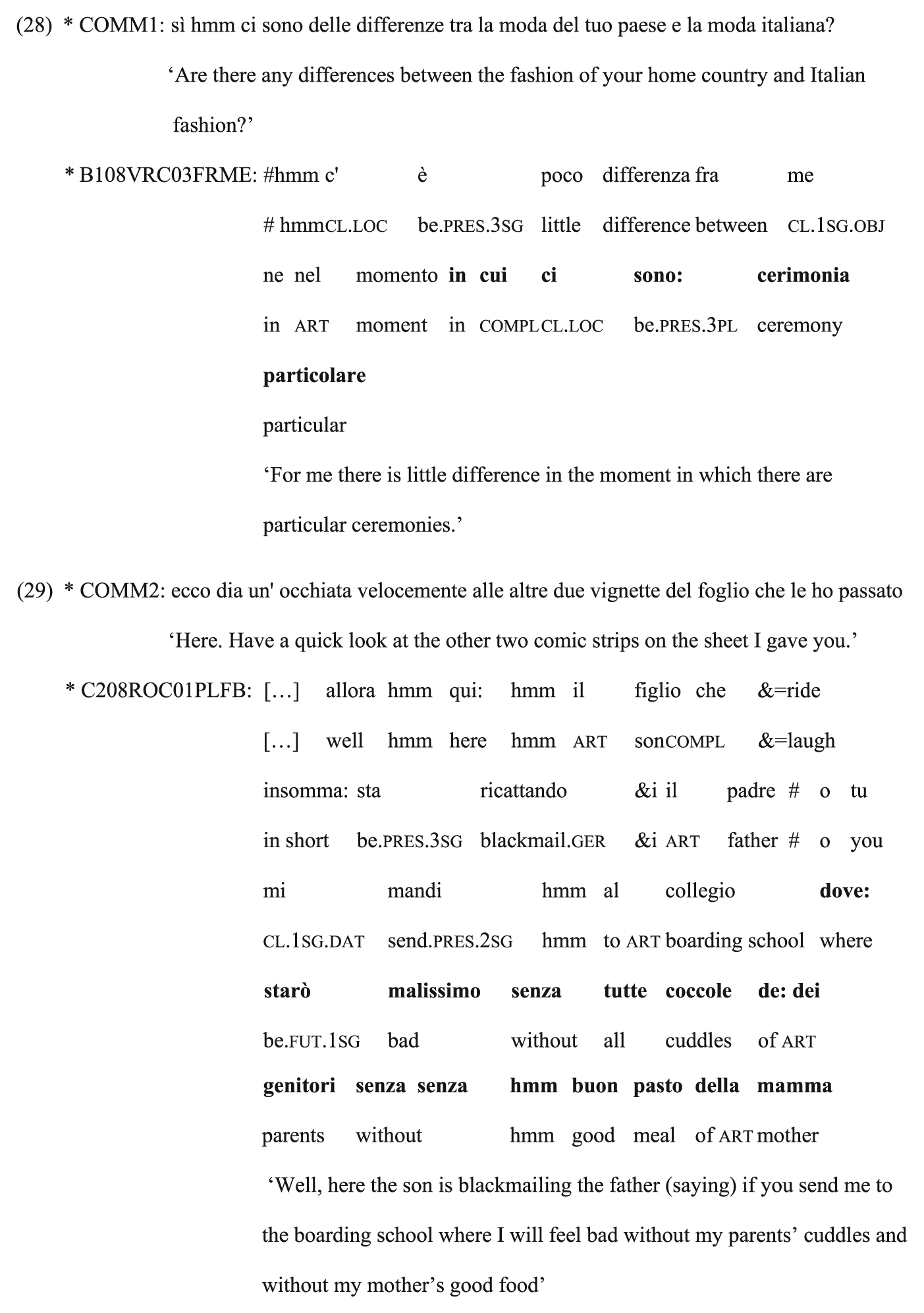
The [NP [che Rel]] strategy was followed, in terms of mean, by the [NP [in cui Rel]] (28) and the [NP [dove Rel]] (where dove means ‘where’) (29) constructions, which are both generally used to relativize a NP expressing a place. The difference between the two structures is that dove is invariable, whereas in cui is the inflected form of che plus the preposition in which indicates the grammatical function. It is therefore not surprising that there are more cases of dove than of in cui.
This aspect is also supported by the figures regarding the following two structures in Table 7, [NP [a cui Rel]] and [NP [di cui Rel]]. These obtained a low frequency figure just at C2 level (and only in the case of NRRCs): a cui and di cui are both given by cui and the prepositions a (‘to’) and di (‘of’). The last TL relativization strategy adopted was that employing the relative pronoun il quale.
The second part of Table 7 reports all the figures dealing with NTL relative constructions. The structure which obtained the highest figure is [NP [*che Rel]], characterized by the incorrect inflexion of the complementizer, as exemplified in (30).
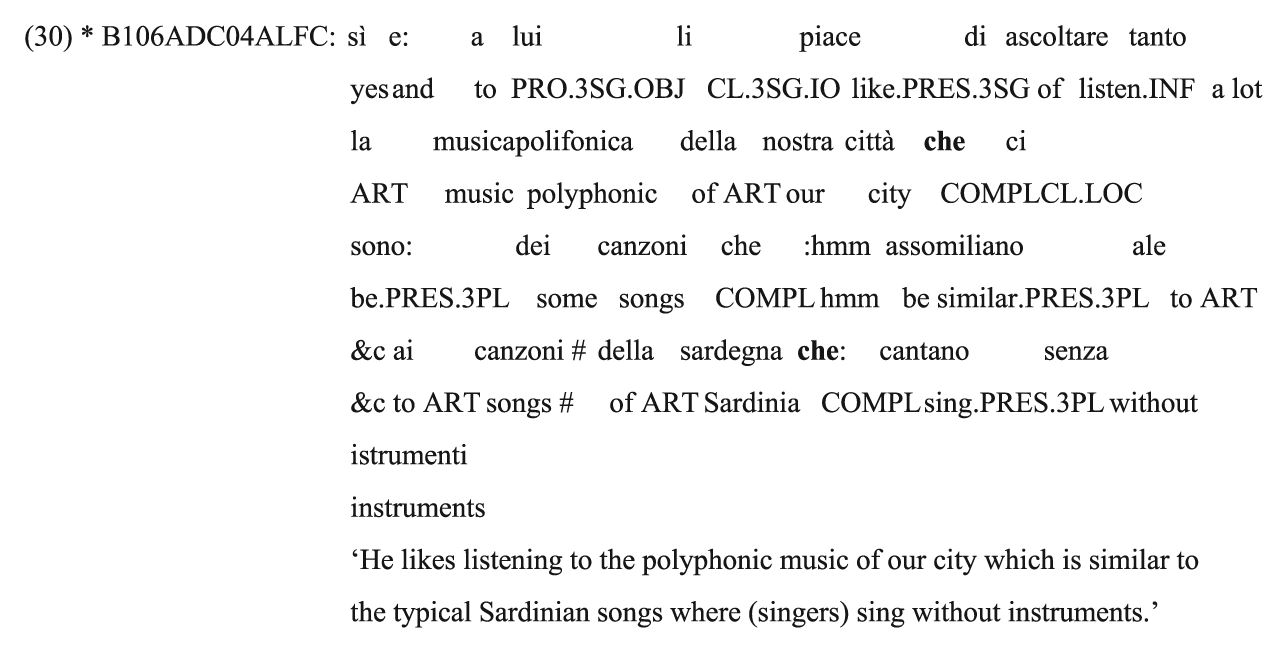
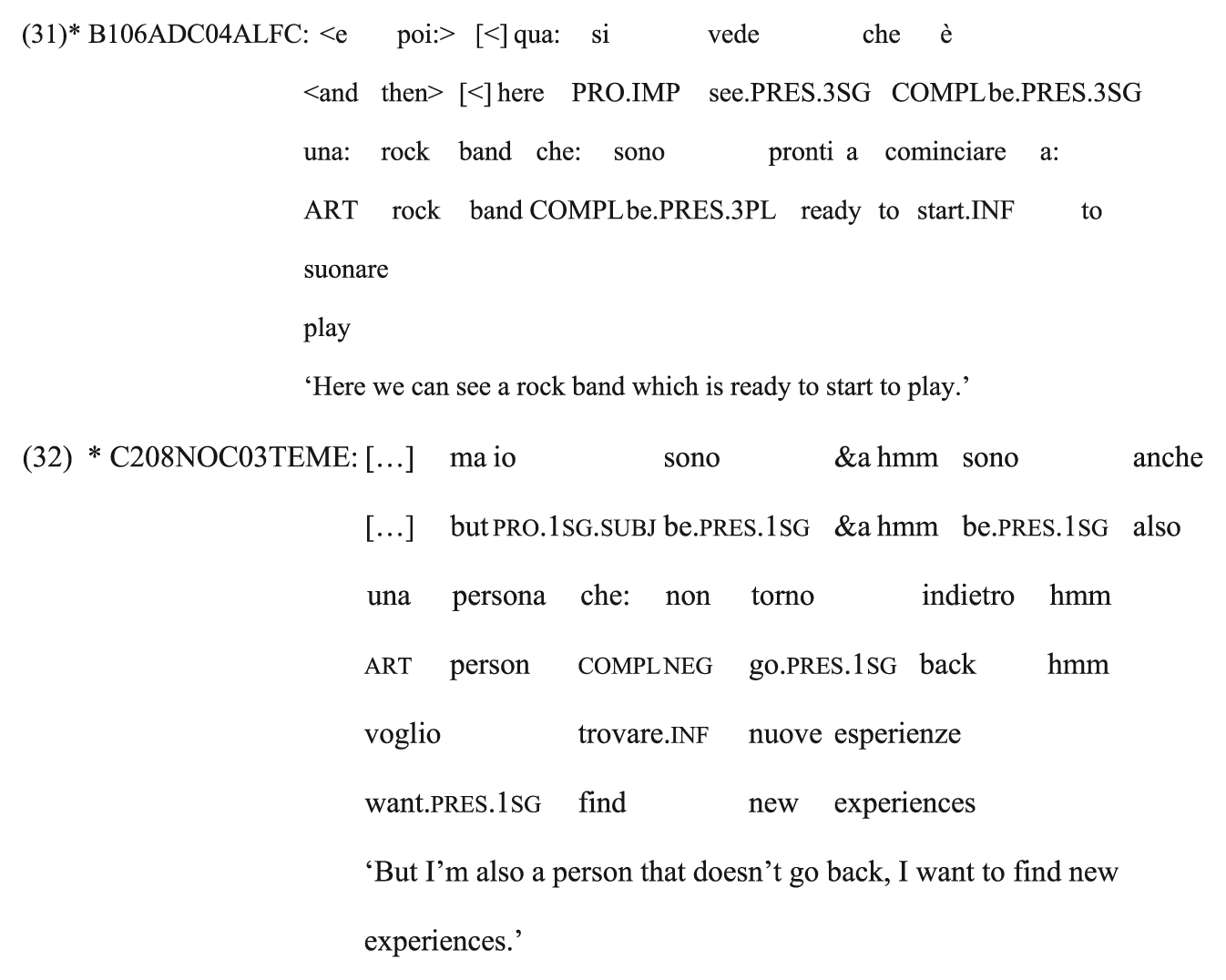
In (30), indeed, the reconstructed form would be in cui in both cases. Another frequent structure was *[NP [COMPL V-no-agr]], where the agreement between the subject and the verb was missing. This occurs when the null subject of the verb of the relative clause is coreferent with the antecedent and the verb of the relative clause does not agree with it in number and/or gender. Usually there is a semantic reason why learners do not mark verb agreement correctly. As examples (31) and (32) show, this kind of disagreement seems to be due to a semantic versus grammatical gender mismatch, caused, for example, by an idea of collectivity suggested by a collective noun, such as band in (31), which semantically evokes a plural person agreement, but actually requires a singular person agreement. It may also be caused by an idea of subjectivity, as occurs in (32), suggested here by the personal pronoun io, even though the grammatical element which determines the agreement is persona.
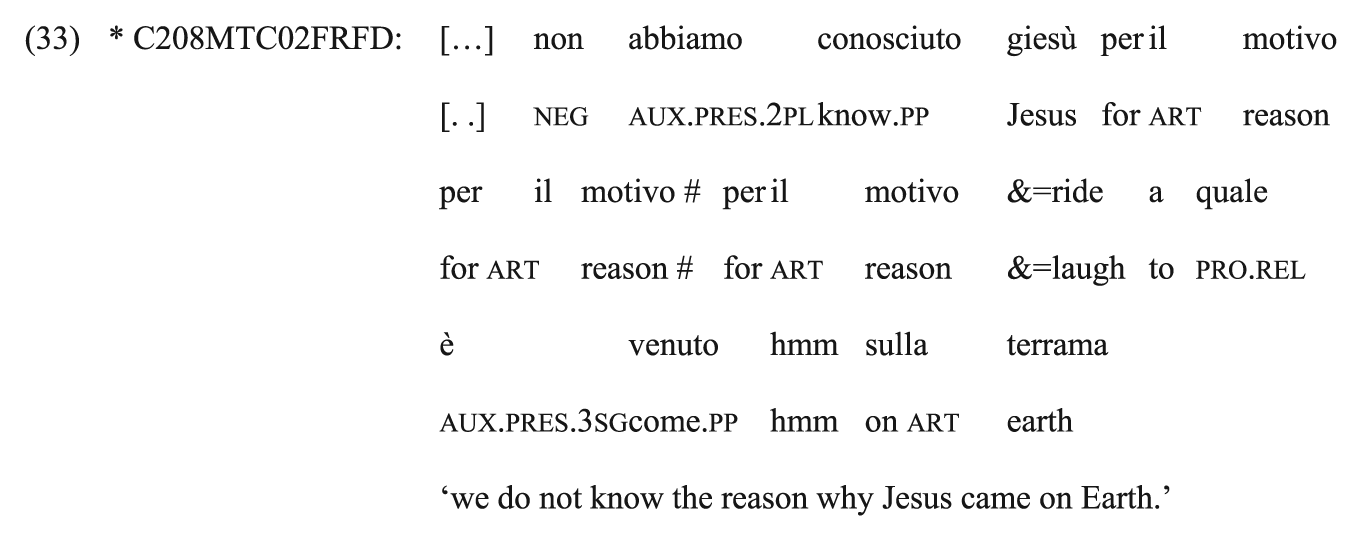
The other NTL constructions are [NP [*dove Rel]], [NP [*quando (when) Rel]] and [NP [*come (how) Rel]], which are all characterized by an incorrect selection of the adverb. The constructions [NP [*in cui Rel]] and [NP [*il quale Rel]] were also found in the corpus, albeit with low occurrences. These were included among cases of NTL since the selection of the preposition (in cui) or the inflection of the relative pronoun (il quale), as in (33), was incorrect.
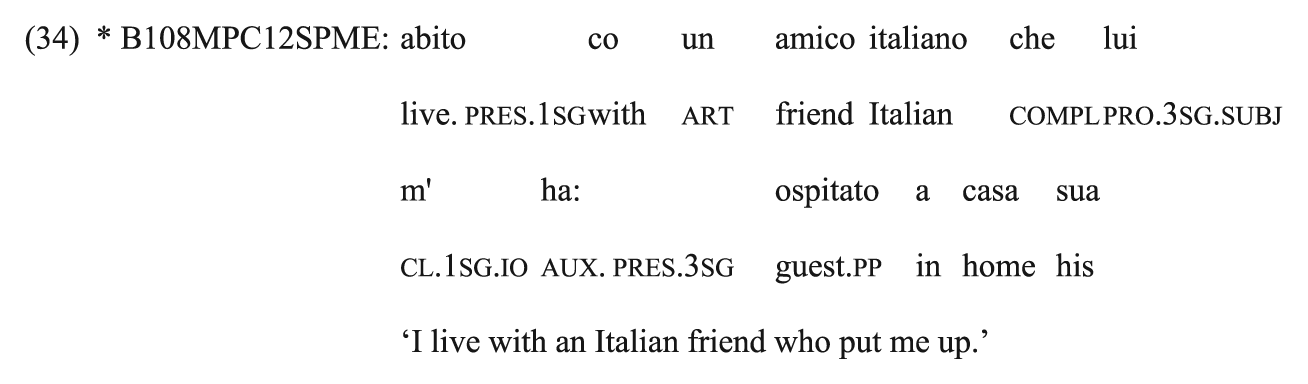
In addition to the *[NP [Rel no copula]] and *[NP [Ø Rel]] constructions where the copula and the complementizer or relative pronoun respectively are missing in the relative clause, the *[NP [che *CL/PRONOUN Rel] construction was recorded. This structure is characterized by the presence of a pronoun or a clitic coreferent with the antecedent, which marks the syntactic function that the antecedent has within the relative clause. In (34), for example, the learner marked the subject function through the personal pronoun lui, coreferent with the antecedent amico.
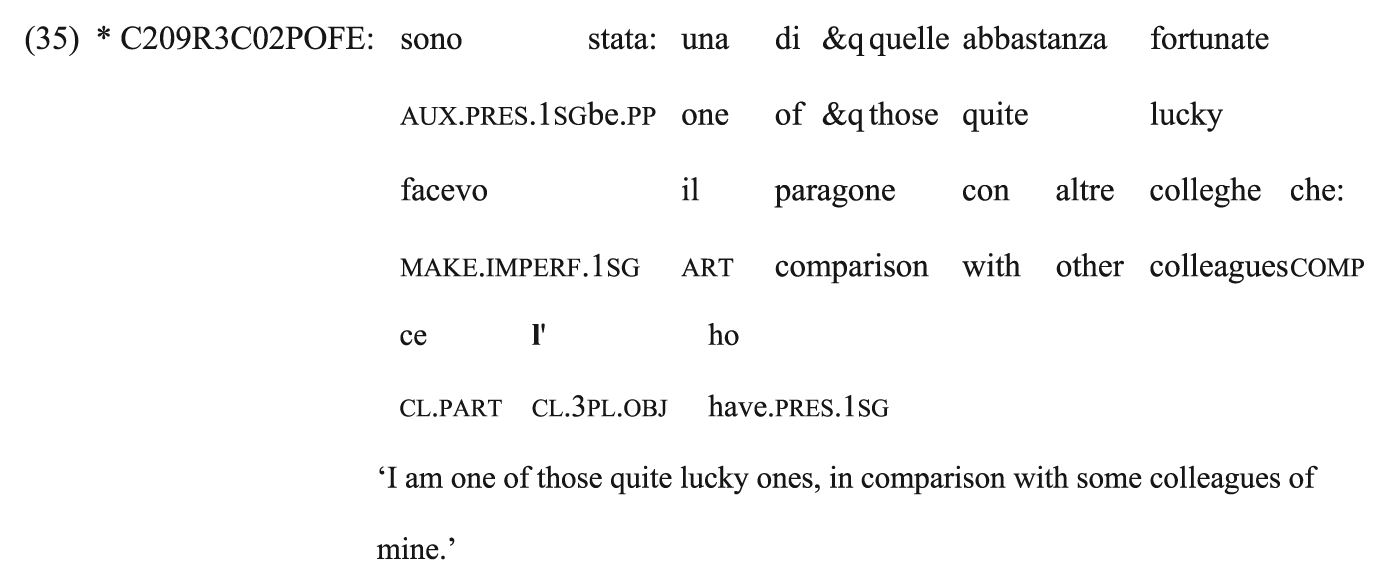
On the other hand, in (35) the clitic l’ (for le), coreferent with colleghe, is used to mark the object function.
2 Phase 2
The second phase of our research started with the identification and classification of coordinated constructions (synthetic and asynthetic), aimed at finding evidence of the ‘proto-relative’ construction (Giacalone Ramat, 1999). Step 1 consisted of analysing the functions of coordinated structures. Indeed, a coordinated construction can express a conjunction of two (or more) states of affairs which can:
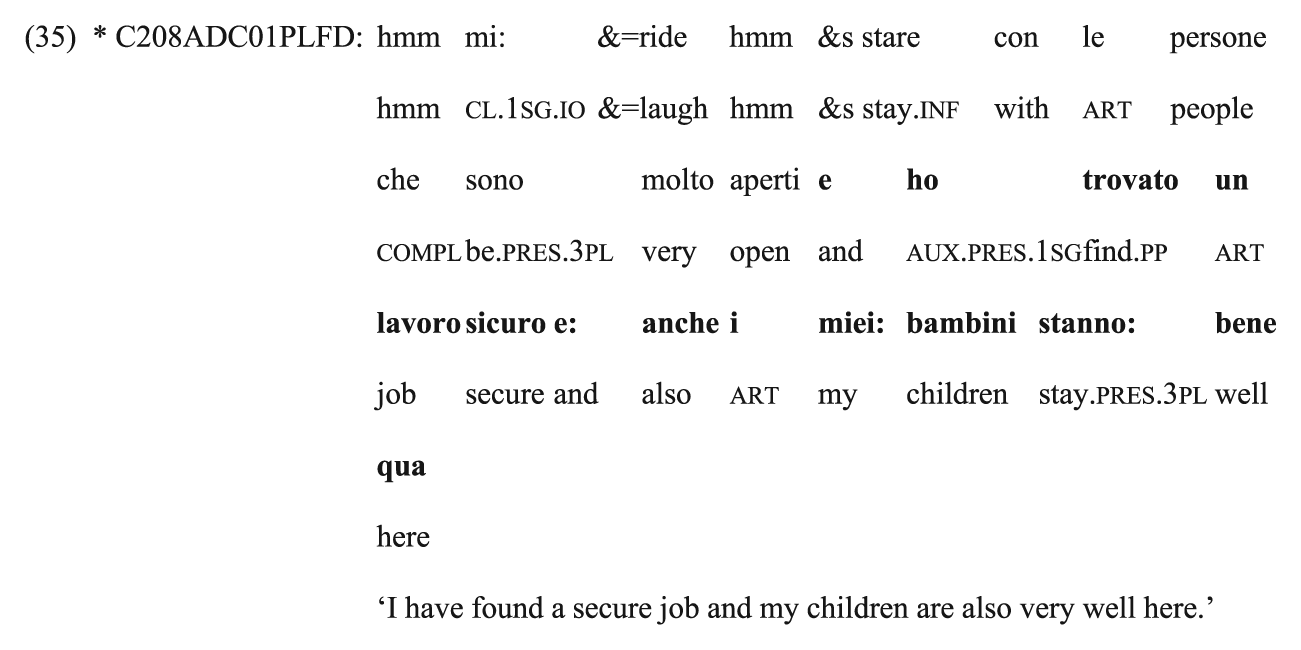
have no particular semantic relation with each other. This occurs with ‘simple’ coordination, exemplified in (36), where the first state of affairs (finding a job) has no particular semantic connection with the second state of affairs (the children’s well-being).
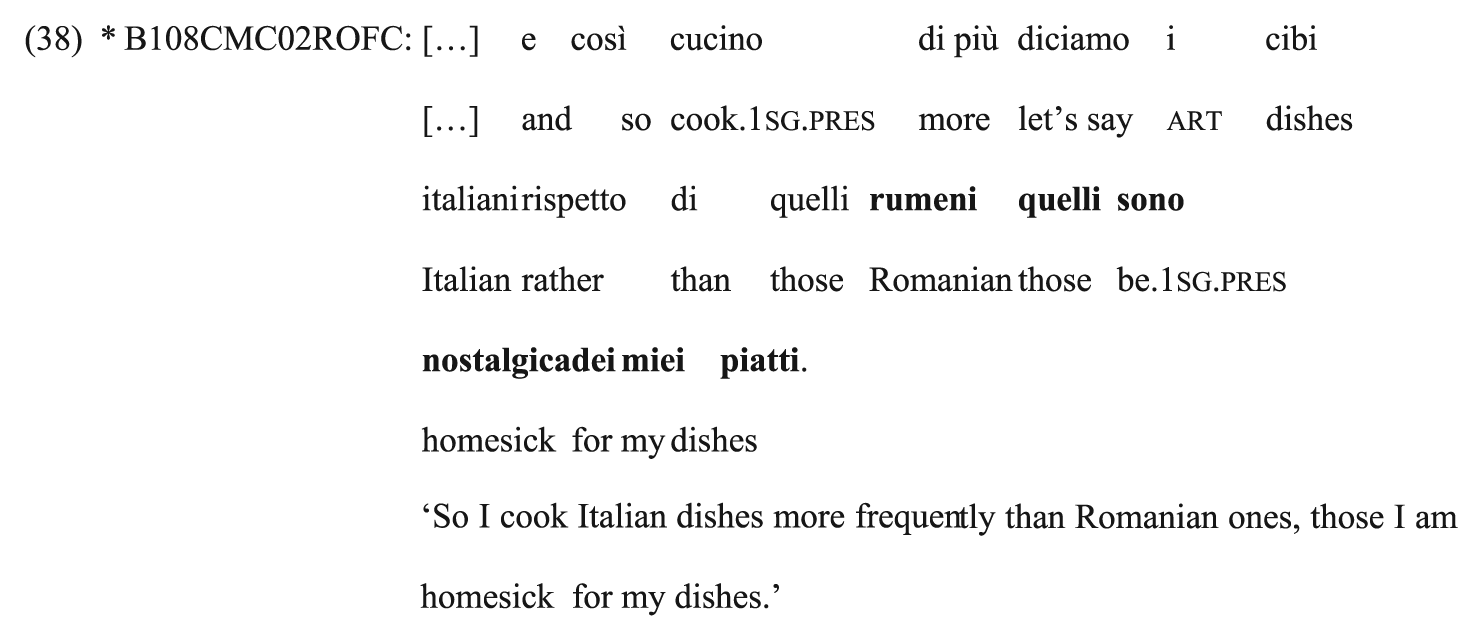
have an adverbial relation. This is the case with diagrammatic constructions, where the first SoA precedes the second SoA in terms of temporality and/or causality. In (37), for example, thinking that her husband is late is justified by the fact that the clock says it is five to midnight, and therefore the second SoA is the cause for thinking he is late. Likewise, in (38), the fact that the learner and his wife speak Italian at home is justified by the fact that she misses speaking Italian, as she is attending an international course and so is often speaking English. Therefore the fact that the couple speaks Italian is due to the fact that the wife frequently speaks English elsewhere. The most common adverbial relations found between SoAs are cause, temporal sequence, consequence, scope and hypothesis.
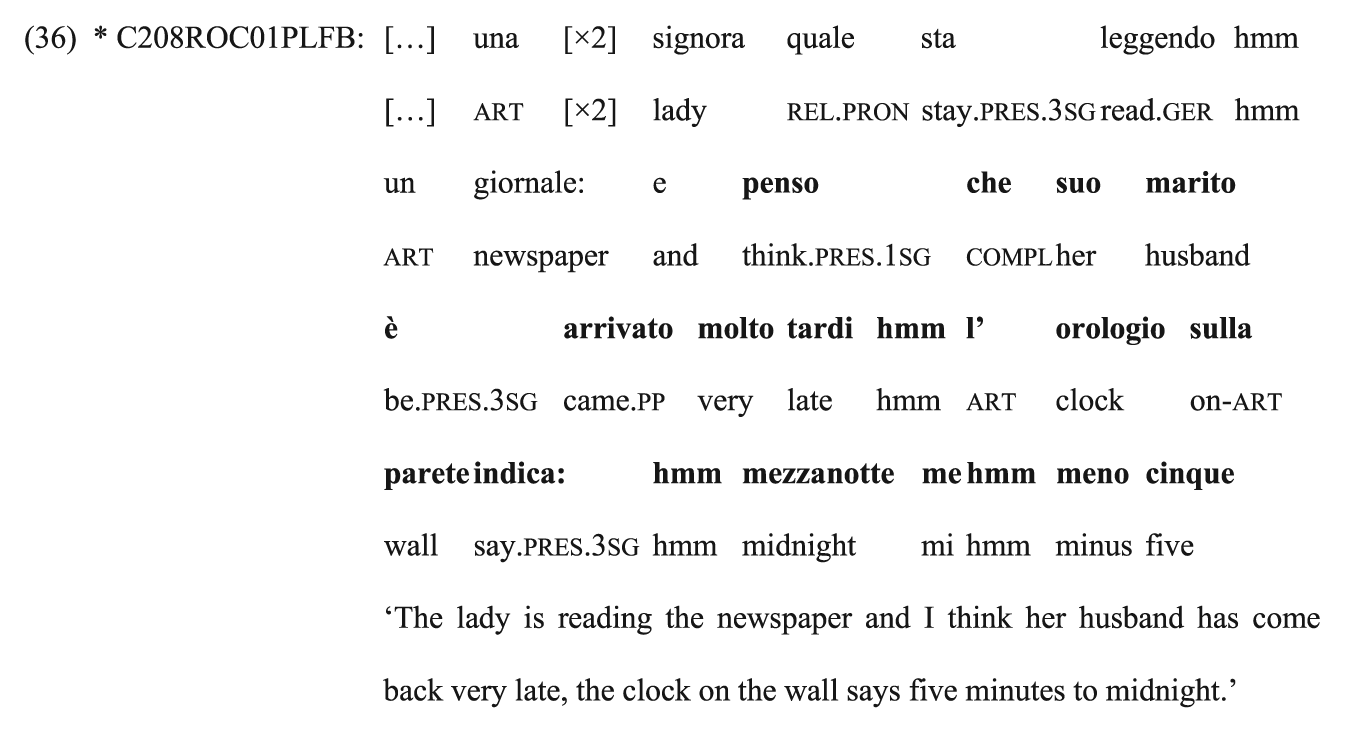
‘The lady is reading the newspaper and I think her husband has come back very late, the clock on the wall says five minutes to midnight.’
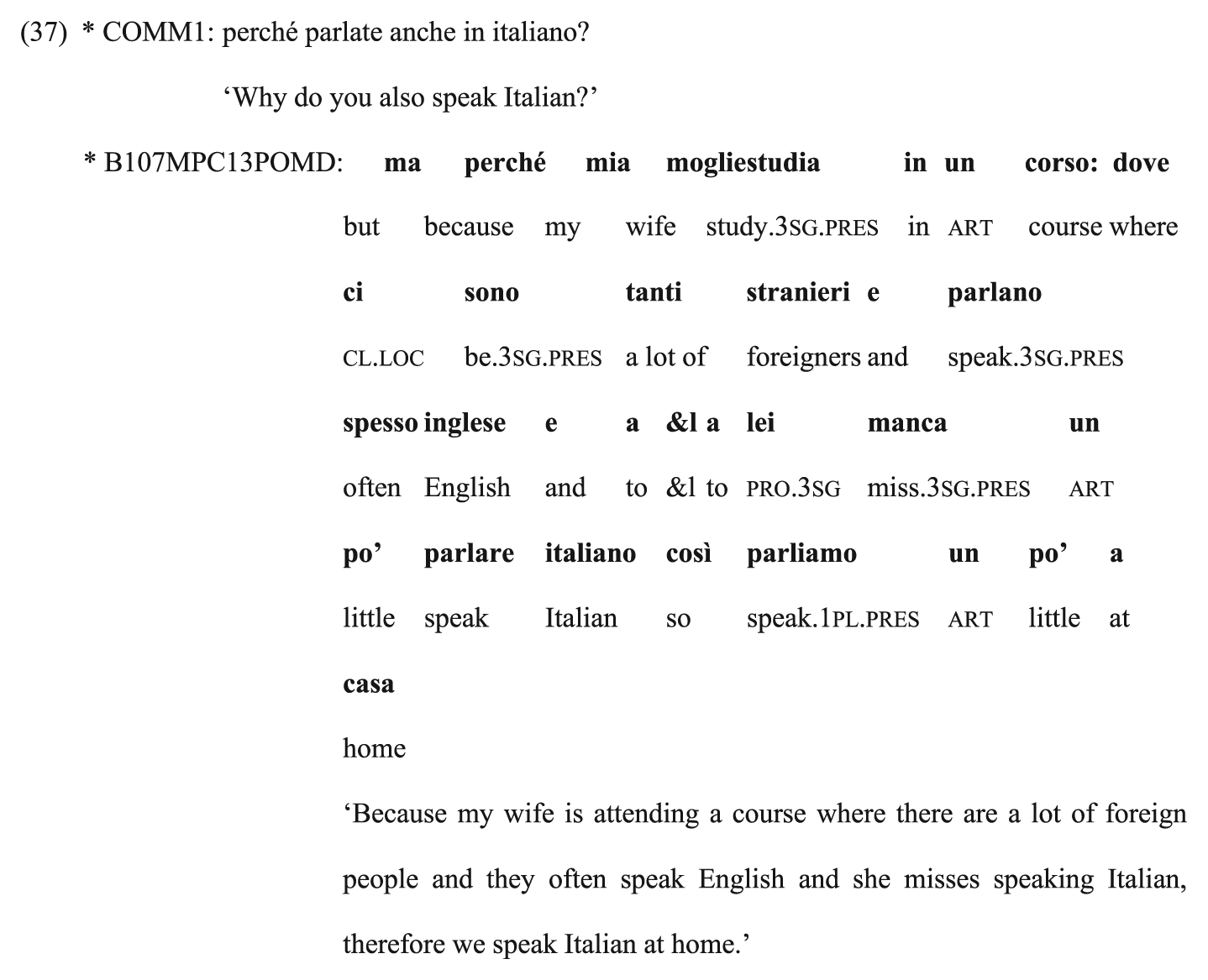
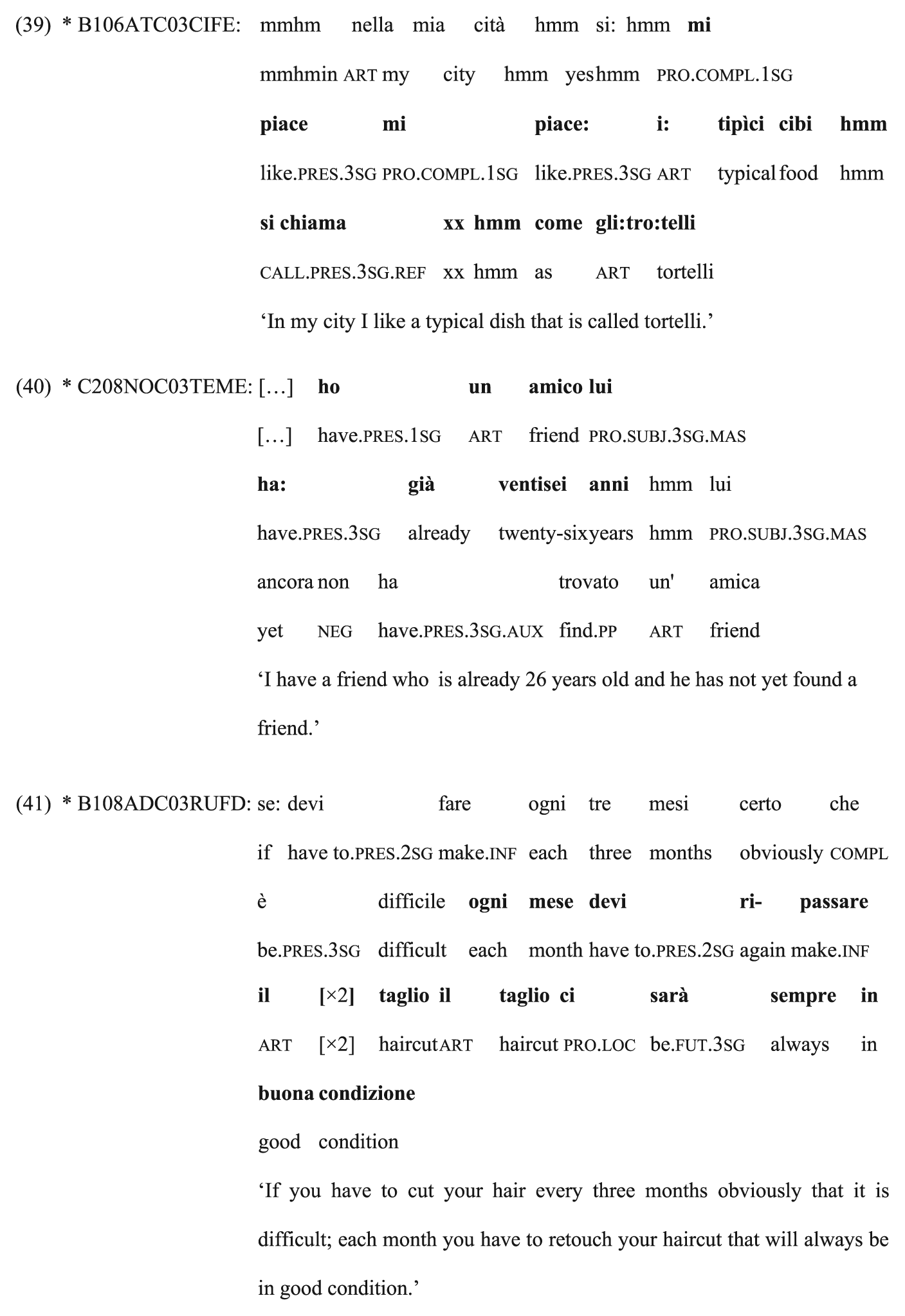
have a relative relation, that is, a NP of the first state of affairs is modified by the following state of affairs; in brief, this is an example of a ‘proto-relative’ construction. It is important to note that these are target language constructions in the majority of cases, since grammatically speaking they are correct. In (39), for example, there are two SoAs (I cook Italian dishes more frequently than Romanian ones and I am homesick for Romanian dishes) where the NP quelli rumeni is modified by the SoA which follows.
have other kinds of relations, such as a list of coordinates that realize a particular discourse function. 5 This may, for example, involve intensifying, reformulating, approximating or simply listing.
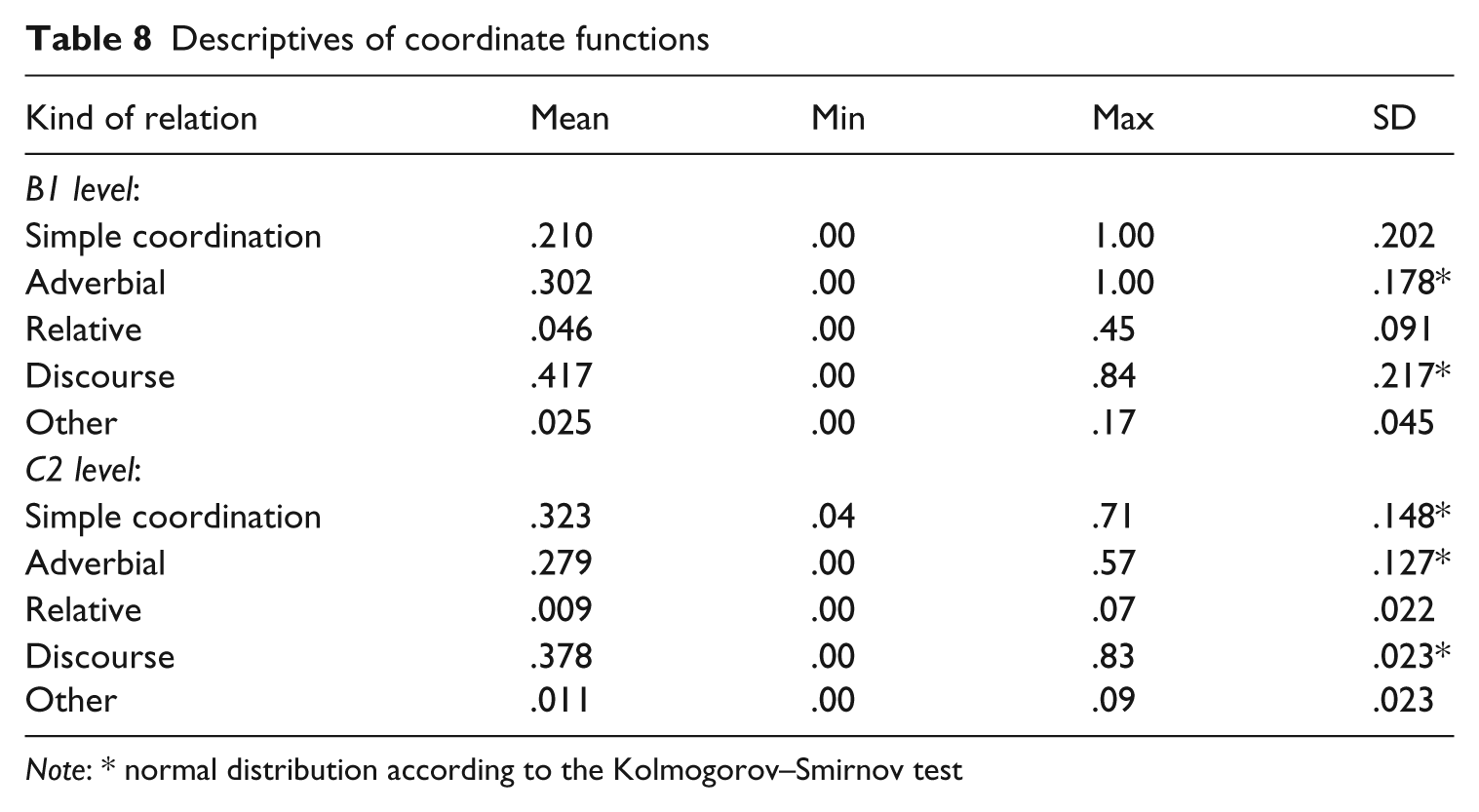
Table 8 illustrates the descriptive figures for the functions of coordinates that were identified. As we can also see from Figure 3 (below), the most frequent function at both levels is discursive; simple coordination and the adverbial function follow. Excluding the ‘other’ category, where marginal phenomena were included, coordinates with a relative function are not so frequent. Moreover, the pattern seems to be the same at both levels, except for simple coordination, which is more frequent than adverbial coordination.
Descriptives of coordinate functions
Note: * normal distribution according to the Kolmogorov–Smirnov test
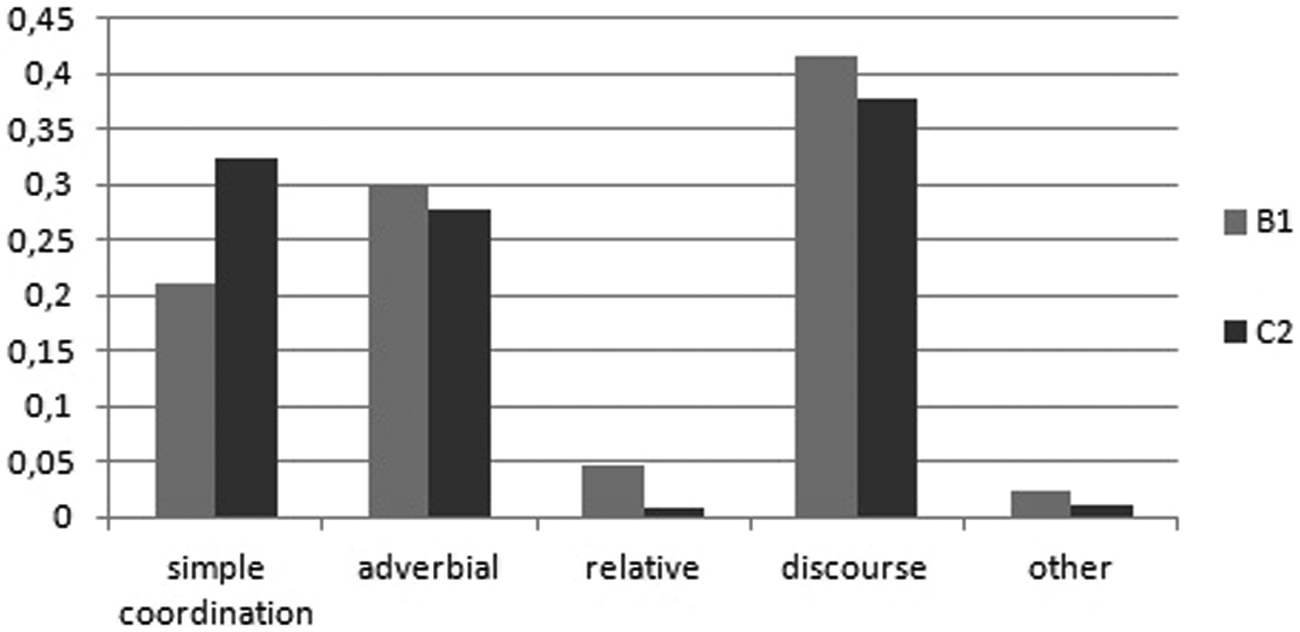
As for the differences of frequency between the two proficiency groups, the Mann–Whitney U-test was run in order to find out whether there was a significant difference between B1 and C2 levels. Table 9 illustrates the results. According to the results, there seems to be a significant difference between the two groups only as far as simple coordination is concerned, with a higher mean recorded at C2 level and a higher mean regarding relative coordination recorded at B1 level.
Results of the Mann–Whitney test

Kruskal–Wallis test results
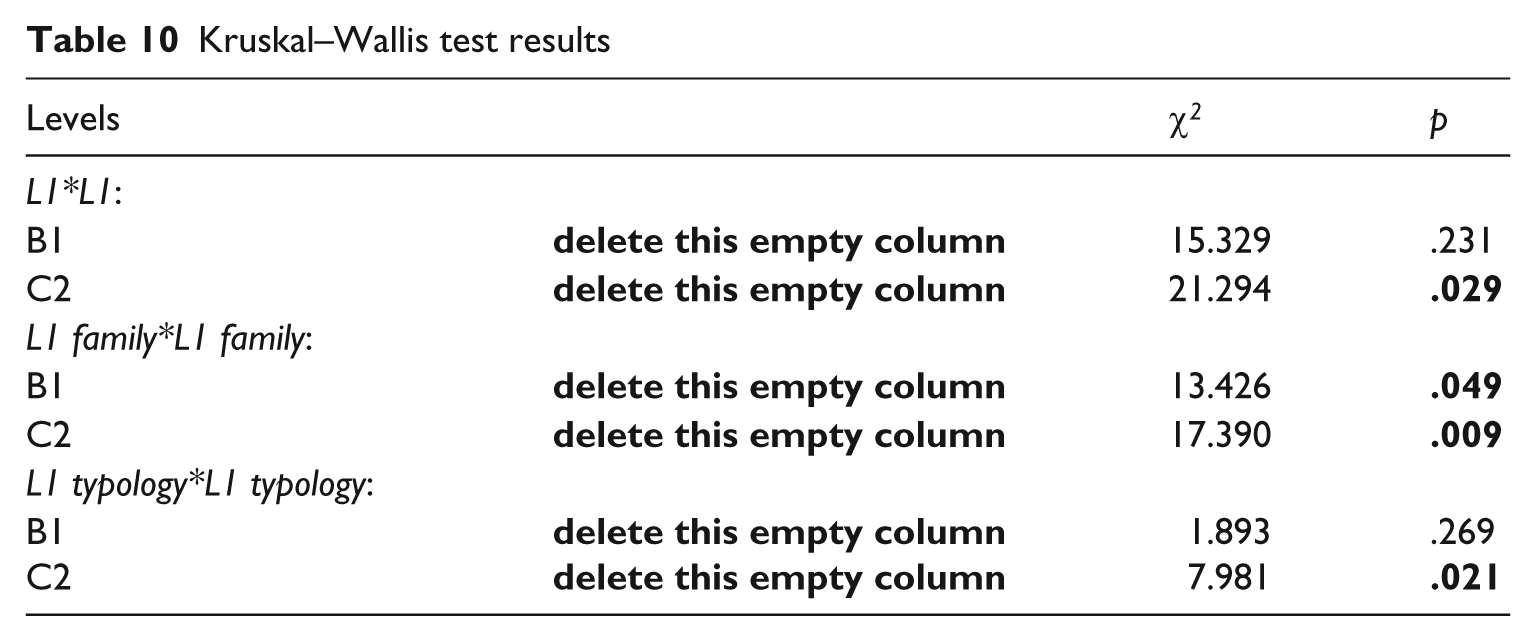
In order to verify whether the distribution of a coordinated construction with relative function can be influenced by the participant’s L1, the Kruskal–Wallis test was run. 6 Table 10 shows the results. The post-hoc comparison test score of (< .05) established that the apparently significant cases were not, in fact, significant.
Step 2 consisted of classifying all coordinated clauses with a relative function in restrictive and non-restrictive. The classification of coordinated clauses in the restrictive and in the non-restrictive function obtained total agreement between the two raters. According to both raters, therefore, all of the coordinated sentences with a relative function of the two linguistic competence groups had a non-restrictive function.
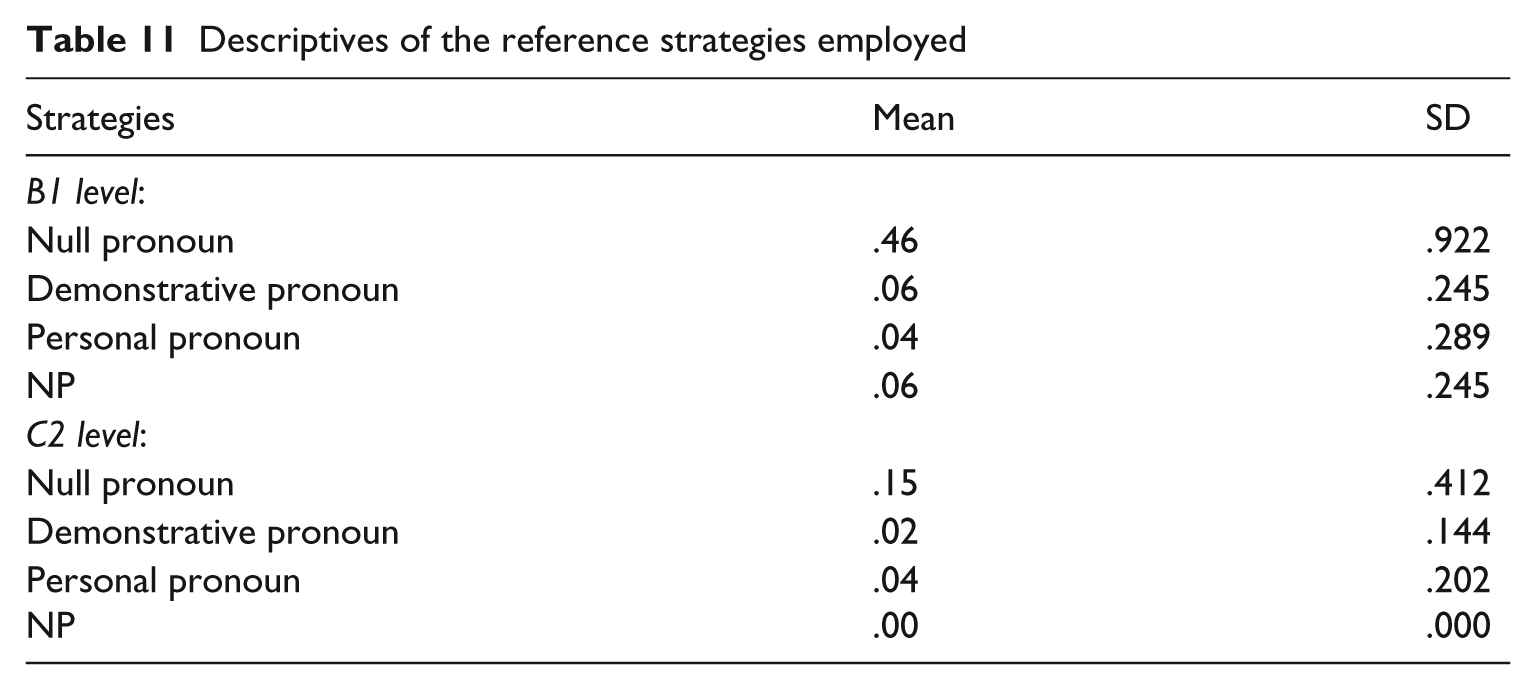
Step 3 consisted of an analysis of the strategies employed by participants in order to mark the reference between the two SoAs involved in the coordinated construction. As also witnessed by the previous research, participants used null pronouns, demonstrative pronouns (39), full personal pronouns or NPs. As reported in Table 11, the null pronoun was the most widely-used strategy at both levels.
Descriptives of the reference strategies employed
Finally, in Step 4 the semantic relationship between the nominal elements employed was analysed. Obviously the analysis was limited to the NP, since, as with the personal, null or demonstrative pronouns, the relation is simply referential. The aim of this step was therefore to see if participants preferred to exploit one particular semantic relationship instead of another. All the NPs employed in the second proposition of the coordinated construction, which referred to another NP in the first construction, were identical: no synonyms, hyponyms or hypernyms were found.
IV Discussion
Bearing in mind the results illustrated above, the study revealed that there was no significant difference in the production of relative clauses between the two groups. This result is perhaps not surprising, since a B1 level speaker is already considered an independent user according to the Common European Framework and as such is expected to be able to produce relative clauses. It is probably this finding that led previous researchers to affirm a syntactic sequence of acquisition where relative clauses are posited in a high position, i.e. immediately after the acquisition of adverbial clauses. However, this lack of significant difference does not take into consideration the classification between RRCs and NRRCs and their different functions. Indeed, once this distinction is considered, the lack of significance is limited to just the NRRCs. This can be explained by the fact that the NRRCs are functionally close to adverbial clauses, usually the first complex construction to be learnt by L2 speakers. On the contrary, the difference between the two groups in the production of RRCs is unquestionably significant, confirming the hypothesis that the more embedded and subordinate a construction is, the later the construction is learnt. Therefore at B1 level NRRCs, unlike RRCs, already seem to be stable. This difference in acquisition time should be seen as a preliminary indication that they are acquired separately and in different ways. As for the strategies employed, C2 participants seem to obtain higher means for TL strategies, confirming the notion that the higher the level of competence, the better the results. Regarding NTL strategies on the other hand, C2 participants obtained higher means only in those constructions where morphological misuse was involved (i.e. misuse of the complementizer), whereas B1 participants obtained higher means in those constructions involving syntactic misuse (i.e. the insertion of a clitic or of a pronoun, 0). This finding not only confirms the idea that morphological issues are more difficult to manage compared to syntactic issues, but also that the first challenge learners have to face is the difficult mapping of two functions with one form.
The analysis of NTL relativization strategies is fundamental since it suggests some tendencies in relative clauses production in L2 Italian interlanguage. The fact that the *[NP [Rel no copula]] and *[NP [Ø Rel]] strategies were not recorded for NRRCs, and that, on the contrary, the *[NP [che *CL/PRONOUN Rel] strategy has a predominantly non-restrictive function, seems to suggest two different elaboration processes: first, the expansion of the NP, to the extent that it does not require a complementizer or a relative pronoun and, second, the integration of a SoA with another SoA, to the extent that it requires a clitic.
Regarding the second phase of this project, which dealt with coordinated constructions, analysis revealed that participants seemed to exploit a particular function of the coordinated construction in order to express a relative meaning. The means recorded in the corpus, moreover, revealed a significant difference in the use of relative coordination between the two groups, even though the effect size was relatively small, perhaps due to the wide sample. In order to guarantee coreferentiality between the two coordinated SoAs, the use of null pronouns and of demonstrative pronouns was found to be the most common strategies. The use of ‘proto-relatives’, or of coordinated constructions with a relative function, significantly decreases between levels; such use therefore seems to be a grammatical provisional strategy of support, alternative to the TL form of NRRCs.
Putting together the means of B1 participants obtained in Phase 1 and Phase 2, a picture emerges that supports Giacalone Ramat’s proposal regarding ‘proto-relatives’ in addition to the present hypotheses, according to which RRCs and NRRCs follow two different developmental patterns. Indeed, the B1 participant mean for NRRC *[NP [che *CL/PRONOUN Rel] constructions is higher than the RRC one (and higher than the C2 participant means), whereas the *[NP [Ø Rel]] construction was only seen for relative clauses. Moreover, all relative coordinates had a non-restrictive meaning and all B1 participant means evidenced in Phase 2, Step 3 (i.e. the analysis of the strategies employed to mark the reference between the two SoAs) were higher than those obtained by C2 participants. All this seems to suggest that learners at lower proficiency levels, in order to express a non-restrictive meaning, prefer to use coordinated constructions with a relative function, these being replaced, as proficiency increases, with more embedded constructions. As a matter of fact, the NTL constructions illustrate this phenomenon: the use of the clitic/pronoun in the NRRCs seems to be evidence of an early stage characterized by the use of coordinated constructions, evolving towards more embedded constructions as the TL requires. Moreover, the strategies employed to mark coreferentiality (i.e. the repetition of the NP or the use of a clitic pronoun) bear witness to the less embedded nature of NRRCs.
From a different perspective, it is not surprising that no trace of coordinates with an restrictive meaning was found and that the *[NP [Ø Rel]] construction was employed only for RRCs. Indeed, this seems to suggest that RRCs are learnt by the expansion process of a single SoA in order to specify the reference of the NP involved; the absence of the relative pronoun in the *[NP [Ø Rel]] construction seems to indicate that the relationship between the two SoAs is already so strong that the relative pronoun is not necessary.
Recalling the proposal made by Diessel (2004), according to which there are two developmental processes, an expansion process and an integration process, it seems that RRCs are learnt through an expansion process of an NP, in order to expand its reference, whereas NRRCs are learnt by a two-SoA integration process.
Since the form of RRCs and NRRCs in the TL is identical, and their functional difference is not marked by form, one might hypothesize that in relative clause acquisition learners consider them as two different constructions to be learnt. In the case of RRCs they extend the SoA in which the NP is contained, adding more information simply after the NP, at the beginning without any use of complementizer or relative pronoun. On the contrary in the case of NRRCs they learn to associate an already existing function, that they realize through coordinated constructions at lower proficiency levels, with a new form. The mapping of a function with a form is a process which constructionists consider fundamental to acquisition (see Introduction).
All things considered, it is clear that learners do not use the same strategies to convey restrictive and non-restrictive meanings: as for the restrictive meaning, they only use relative constructions, even at B1 level, albeit with NTL uses, dealing mainly with the inflection of the complementizer. As far as the non-restrictive meaning is concerned, learners use both coordinated and relative constructions. However, the use of coordinated constructions with a relative meaning decreases dramatically at C2 level. With relative constructions, moreover, NTL uses deal predominantly with the inflection of the complementizer and, particularly at B1 level, with the insertion of a clitic/pronoun. Therefore, the distribution of the strategies employed varies according to the levels of competence, revealing the attempts of the learner to map two functions with one form.
Previous studies have analysed the acquisition of relative clauses disregarding function and looking at grammatical and ungrammatical uses. This has thus prevented them from identifying precursor structures that reveal the processes of acquisition. The findings of this study suggest that when describing the steps in mapping function to form, one should consider not only TL and NTL forms, but also other ‘polyfunctional’ structures that act at lower proficiency levels.
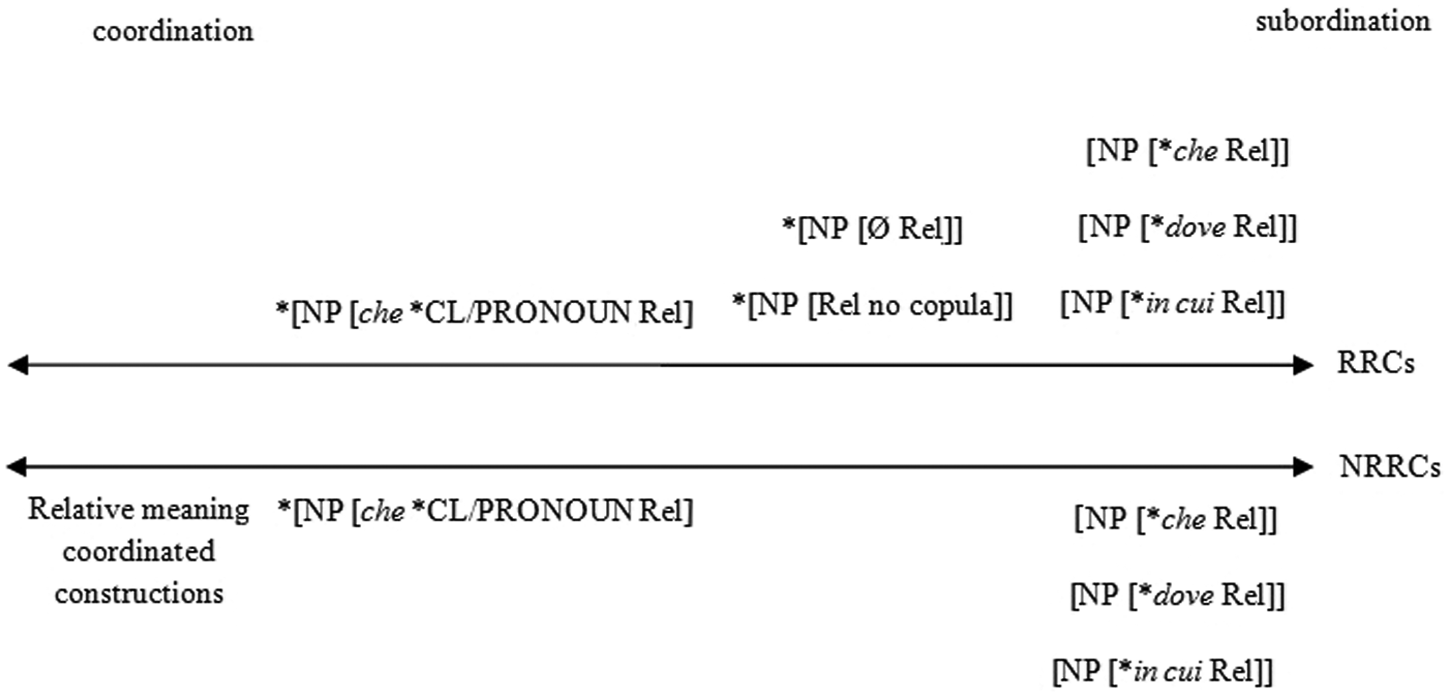
Figure 3 illustrates two separate patterns of relative clauses acquisition where all aforementioned considerations are integrated. It is important to note that this is not intended to be a stable and complete sequence of acquisition, since further studies and analyses with other L2 learners are necessary. However, the two arrows can be seen to represent the patterns followed by learners when acquiring RRCs and NRRCs: rather than time-lines, the double-headed arrows represent the coordination–subordination continuum along which learners move in order to codify that particular relative function. Not all NTL forms are inserted in the Figure 3, since the aim here is simply to give an idea of the strategies generally used. Moreover, the strategies here are grouped together along the continua, rather than in a final implicational hierarchy, as the frequencies of occurrence found in the present study need to be confirmed by further research.
The final issue dealt with the influence of the L1. Concern over L1 influence arose from the need to deal with the influence of the L1. Concern over L1 influence arose from the need to verify whether some specific constructions of certain L1s – like the verb serial construction in Chinese (see Li and Thompson, 1981) or the -te construction in Japanese (see Yausa and Sadock, 2002) – could influence the use of coordinated constructions with relative meaning. The results of this study seem to confute this hypothesis, since no significant cases were found when comparing the distribution of RRCs, NRRCs and coordinated constructions between the two levels of comptence, thus confirming a common developmental path for all our the learners in our corpus.
V Conclusions
All aspects considered, a partial and tentative answer to the research questions outlined above can be formulated. The hypothesis that posits that there are two different acquisition processes for RRCs and NRRCs would appear to be confirmed by the data: NRRCs are learnt by an integration process of two coordinated propositions, whereas RRCs are learnt through an expansion process of a single proposition. This is suggested by the different strategies employed by participants who at B1 level use coordinated propositions with a non-restrictive meaning more frequently than participants at a C2 level of competence. Finally, the L1 does not seem to have any influence either on the distribution of relative clauses or on the distribution of coordinated constructions with a relative meaning.
These conclusions are clearly limited to the production of the participants involved in this particular study, and more data and research are needed. Therefore, replication studies are essential in order to confirm these findings, while further research is necessary not only to investigate what occurs in the emergence of TL relative clauses at lower proficiency levels, but also to examine other fundamental aspects of the constructionist approach, i.e. the role of input and frequency. Indeed, input and frequency with regard to coordinated constructions with relative meanings could be important factors influencing the use of such strategies by learners.
This study supports what has already been claimed by constructionist studies in SLA, according to which learning takes place when a function is mapped to a form. Since relative clauses have two different functions, any formulation of sequences of acquisition that does not distinguish this duplicity is misleading. As highlighted by data, it is the function that guides the learning process, and this comes to an end once a TL form is associated with the function, even though, as in the relative clause case, the form corresponds to two functions. Therefore, given that there are two different patterns (i.e. integration and expansion), studies regarding acquisition sequences should take this into consideration, underlining that not only relative clauses, but numerous syntactic constructions follow on from these processes, just as Diessel (2004) shows with L1 acquisition.
According to the constructionist approach, constructions are indeed associated with each other as far as function similarity is concerned, and such links are envisioned in networks of constructions. Therefore, the functional proximity that NRRCs seem to share with adverbial constructions should not be underestimated.
The kind of data used in this research contributed greatly to the discovery of precursor structures of relative clauses. Indeed, naturalistic and semi-spontaneous data allowed for the detection of coordinated constructions as forerunners, which would not have been discerned in data gathered through elicitation tasks. This suggests that spontaneous or semi-spontaneous data are more useful whenever the research aims focus on the acquisition process in general, and on form–function mapping strategies in particular.
Footnotes
Funding
This research received no specific grant from any funding agency in the public, commercial or not-for-profit sectors.