



Abstract
Background
Effective management of lower extremity lymphedema requires its recognition as a distinct clinical entity. This study aimed to evaluate the validity and reliability of the Turkish version of the Lymphedema Symptom Intensity and Distress Survey–Lower Limb (LSIDS-L), a tool designed to assess both the severity and distress of symptoms in patients with lower limb lymphedema.
Aims
To evaluate the validity and reliability of the Turkish version of the Lymphedema Symptom Intensity and Distress Survey–Lower Limb (LSIDS-L) in patients with lower extremity lymphedema.
Study design
Diagnostic Accuracy Study.
Methods
The LSIDS-L was translated and culturally adapted into Turkish using the forward-backward translation method. The final version was administered to 155 patients alongside the Lymphoedema Quality of Life Questionnaire–Leg (LYMQOL-Leg). Reliability was assessed using a 7-days test-retest approach. Descriptive statistics were used for demographic data. Construct validity was evaluated using Spearman’s rank correlation coefficient, while internal consistency and test-retest reliability were assessed via Cronbach’s alpha and the intraclass correlation coefficient (ICC), respectively.
Results
The questionnaire demonstrated excellent test-retest reliability with ICC1k = 0.9989 and r = 0.9970. Internal consistency was also high, with a Cronbach’s alpha of 0.9180 and a standardized alpha of 0.9145, indicating strong coherence among items.
Conclusion
The Turkish version of the LSIDS-L (LSIDS-L-TR) is a valid and reliable instrument for assessing symptom intensity and distress in patients with lower extremity lymphedema. It offers a comprehensive tool for use in both clinical practice and research settings.
Introduction
Lymphedema is a chronic condition marked by the accumulation of protein-rich interstitial fluid, 1 resulting from either congenital lymphatic abnormalities (primary lymphedema) or acquired disruptions such as surgery, radiotherapy, trauma, or infection (secondary lymphedema). Although it most frequently affects the extremities, involvement of the head, neck, trunk, and genitalia may also occur.2–4
Currently, no single gold-standard diagnostic or staging method exists for lymphedema. Clinical assessment is typically based on patient history, limb volume, skin integrity, tissue consistency, and temperature. The International Society of Lymphology (ISL) classifies the disease into three stages, based on edema severity and cutaneous changes. 1
Patients with primary and secondary lymphedema report both physical and psychosocial consequences of the disease. 5 Physical symptoms include swelling, tightness, pain or tenderness, a sensation of heaviness, and restricted movement in the affected extremity 6 ; whereas psychosocial symptoms prominently comprise difficulties in interpersonal relationships, impaired body image and self-esteem, loss of confidence, psychological distress, reduced quality of life, problems with time management, and sleep disturbances. 7 These findings have been confirmed by studies conducted in patients with both primary and secondary lower-extremity lymphedema, demonstrating that the disease leads to impaired physical functioning and diminished quality of life.8–12
As the stage of the disease progresses, limb swelling increases, accompanied by a greater sensation of heaviness.4,13,14 Depending on the site and severity of involvement, numbness and tingling may also be reported in the swollen areas. Pain is observed less frequently compared to other symptoms but may develop due to factors such as nerve compression caused by the edema. 15 Along with these symptoms, functional loss may occur over time, leading to reduced ability to perform daily activities such as climbing stairs and dressing.3,4,16
Although upper-extremity lymphedema is frequently reported in the literature as a common consequence following breast cancer surgery, lower-extremity lymphedema is also prevalent to a considerable extent.17,18 Questionnaires used to evaluate the disease have often been developed for upper-extremity lymphedema; however, in order to achieve effective treatment, it is also important to assess lower-extremity lymphedema specifically.19,20 Despite being the most common form of lymphedema, studies and available tools focusing on symptom assessment of lower-extremity lymphedema remain limited. The Lower-Extremity Lymphedema Screening Questionnaire is used for diagnostic purposes, 19 while the Gynecologic Cancer Lymphedema Questionnaire (GCLQ) evaluates 20 symptoms in a yes/no format. 20 In Europe, the Lymph-ICF-LL was developed to assess 28 symptoms on a 0–10 scale. 21 However, neither of these instruments evaluates the severity and distress of symptoms. Measuring both symptom severity and distress is important for assessing disease burden and evaluating the impact of treatment on quality of life. 22 Therefore, the Lymphedema Symptom Intensity and Distress Survey-Arm (LSIDS-A) was first developed for breast cancer survivors. 23 Subsequently, the LSIDS-Head and Neck, focusing on head and neck involvement, and the LSIDS-Lower Limb (LSIDS-L), targeting the severity and distress of lower-extremity lymphedema symptoms, were developed. 24
The LSIDS-L is designed to evaluate both systemic and region-specific symptoms of lymphedema across all forms of the disease. Unlike other tools, it measures not only the presence of symptoms but also their severity and the psychological distress they cause. This distinctive feature enables it to provide clinically applicable information and to guide decision-making regarding the need for additional symptom management (e.g., pain treatment) and supportive care (e.g., psychological counseling, social services). 24
A review of the literature highlights the scarcity of assessment questionnaires and scales specifically designed for lower-extremity lymphedema. 25 This study aimed to translate, culturally adapt, and validate the LSIDS-L for Turkish-speaking patients with lower extremity lymphedema (LEL).
Materials and methods
Participants
The study was conducted at the Oncology Rehabilitation and Lymphedema Clinic of a tertiary referral hospital. Ethical approval was obtained from the institutional Clinical Research Ethics Committee (Approval No: E2-22-1644), and written informed consent was obtained from all participants.
A total of 155 patients with clinically diagnosed secondary LEL were enrolled. Diagnosis was based on history and circumferential measurements, and ISL staging was used. Inclusion criteria included: age >18 years, unilateral or bilateral secondary LEL, and completion of cancer treatment (if applicable) at least 6 months prior. Patients with mental disorders, chronic comorbid conditions, metastases or who declined participation were excluded.
Translation process
Written permission was obtained from the original developer of the Lymphedema Symptom Intensity and Distress Survey–Lower Limb (LSIDS-L) prior to initiating the translation process. 24 The translation followed the standard forward–backward methodology. Two faculty members from the Department of Foreign Languages and two physicians specializing in lymphedema participated in the adaptation. One linguist translated the questionnaire from English to Turkish, while another independently translated it back into English. The original and back-translated English versions were then compared to identify discrepancies, and the final Turkish version was established through consensus. Subsequently, the Turkish version was reviewed by the two clinical experts to ensure content validity and clinical relevance.
To assess the clarity and comprehensibility of the translated version, a pilot study was conducted with 30 participants. As no issues or negative feedback were reported, the finalized Turkish version was deemed suitable for further validation. Participants were asked to complete the questionnaire independently. For those who were illiterate, a trained researcher with expertise in lymphedema administered the questions verbally. To evaluate test-retest reliability, the questionnaire was re-administered to all participants after a 1-week interval.
Assessment
As part of the study protocol, the following demographic and clinical variables were recorded: age, body weight, lymphedema stage, duration of lymphedema, sex, occupation, educational level, dominant limb, affected limb(s), history of previous treatment, and type of treatment received, if applicable. Additionally, all participants completed the LSIDS-L and the Lymphoedema Quality of Life Questionnaire–Leg (LYMQOL-Leg). 26
The LSIDS-L consists of 31 items, each assessing a specific symptom associated with lymphedema. Patients were instructed to mark “yes” if they experienced the symptom or “no” if they did not. If the answer was “no,” they proceeded to the next item. If “yes,” they were then asked to rate both the intensity and the distress associated with the symptom. Intensity and distress were each rated on a scale from 1 (mild) to 5 (severe). If the answer was “no,” the item received a score of 0; if “yes,” the item score was calculated by summing the intensity and distress ratings. The total score of the questionnaire was calculated by summing the scores of all 31 items and dividing the total by 31.
The scale consists of eight subdomains: activity, soft tissue sensation, pain, resource-related, psychobehavioral, neurological, function, and sexuality. Subdomain scores were calculated as follows: • • • • • • • •
The questionnaire was re-administered after 1 week to assess test–retest reliability. 24 The Turkish validity of the LYMQOL-Leg was previously established by Borman et al. This validated, disease-specific instrument assesses quality of life in patients with lower limb lymphedema and includes 21 items. The first 20 items evaluate subdomains such as function, appearance, symptoms, and mood, while the final item assesses overall quality of life. The first 20 items are scored on a four-point scale (1 = not at all, 2 = a little, 3 = quite a bit, 4 = a lot), and subscale scores are calculated as the mean of item responses, with higher scores indicating poorer quality of life. The final item is scored on a 0–10 scale (0 = poor, 10 = excellent) to assess overall health. 27 LYMQOL-Leg has been widely used in clinical and research settings and is considered one of the most commonly used disease-specific quality of life instruments for lower extremity lymphedema. It was selected in this study to evaluate construct validity due to its established reliability and relevance in assessing patient-reported outcomes.
Statistical analysis
A power analysis conducted for the validity and reliability study with a sample of 155 participants revealed a power of 99.45% (r = 0.591, p < .05). This indicates that the sample size was sufficient to detect the observed effect with a high level of statistical power. The Bland–Altman method was employed to evaluate agreement between test–retest scores and to assess the concordance between the LSIDS-L-TR and the reference instrument (LYMQOL-Leg). Test–retest reliability and measurement consistency were analyzed using the Intraclass Correlation Coefficient (ICC) and Pearson’s correlation coefficient. Paired t-tests were performed to identify any statistically significant differences between test and retest scores. Internal consistency of the LSIDS-L-TR was assessed using Cronbach’s alpha. Additionally, item-level analysis was conducted to evaluate the contribution of each item to the overall reliability and to examine their alignment with the underlying scale structure. 28
Results
A total of 155 participants completed the study. Initially, 162 individuals were screened for eligibility; however, three were excluded due to recent radiotherapy within the past 4 months, and 4 declined to participate.
The mean age of the participants was 51 ± 14 years, with a mean height of 162 ± 15 cm and a mean body weight of 92 ± 24 kg. Based on the International Society of Lymphology (ISL) staging criteria, 18.7% of the participants were classified as stage 1, 50.3% as stage 2, and 31.0% as stage 3.
The study cohort included 23 males (14.8%) and 132 females (85.2%). In terms of occupational status, 28.3% were employed, 0.6% were retired, and 71.0% identified as homemakers. Educational background varied across the sample: 25.8% had completed primary school, 12.3% middle school, 28.4% high school, 23.9% university, and 9.7% were illiterate. The majority (96.8%) were right-handed, while 3.2% were left-handed.
With respect to the affected extremity, 60.6% of participants presented with bilateral lower limb involvement, 14.8% had right-sided, and 24.5% had left-sided lymphedema. A total of 39.4% reported having received prior treatment, with 39.3% undergoing complex decongestive therapy (CDT). The remaining 60.6% had not received any formal treatment.
Descriptive characteristics of the patients.
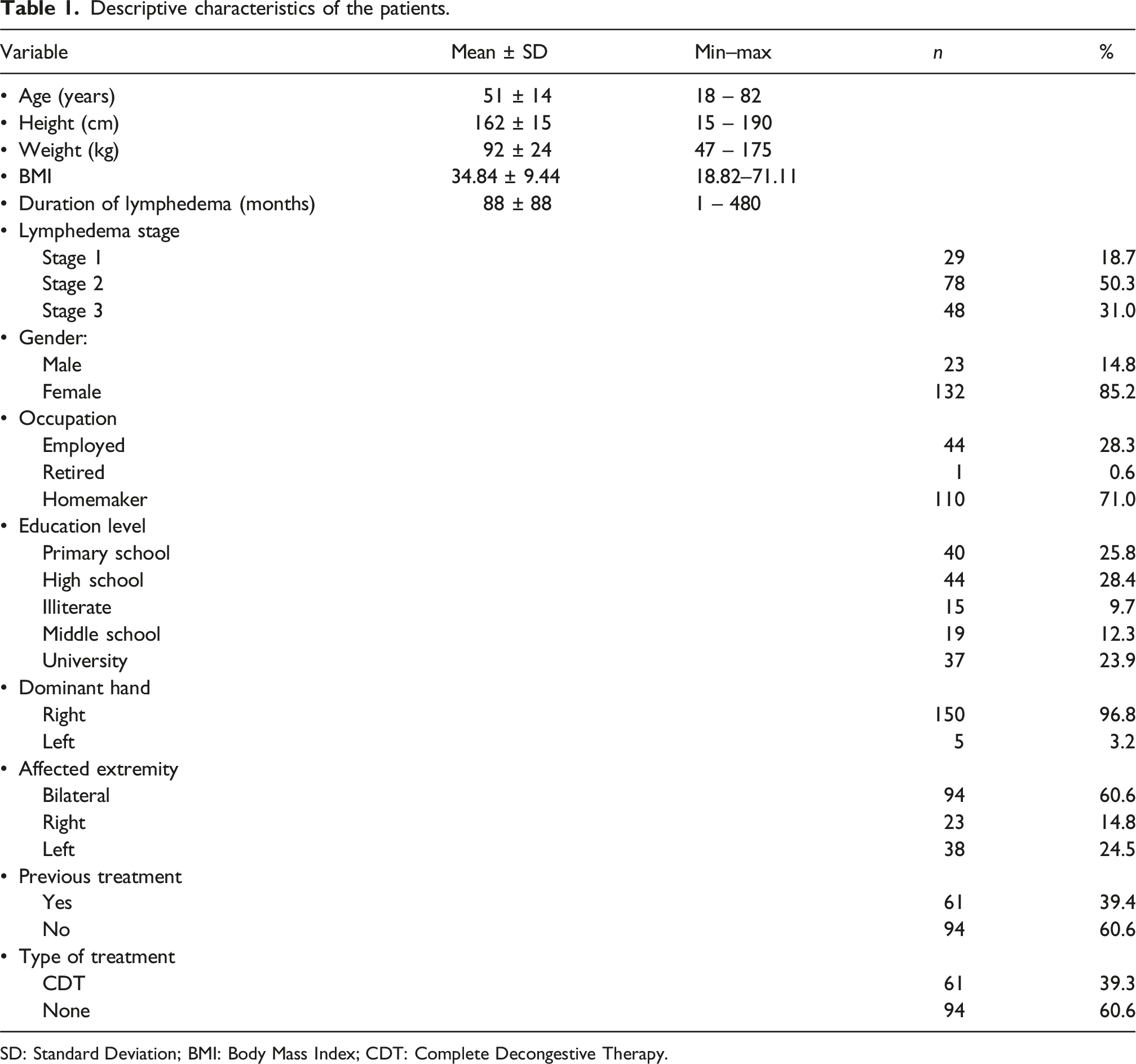
SD: Standard Deviation; BMI: Body Mass Index; CDT: Complete Decongestive Therapy.
Test-retest reliability
Agreement between the test and retest scores was evaluated using a Bland–Altman plot (Figure 1). The plot displays the distribution of differences between the two measurements relative to their mean. The differences were randomly scattered around the zero line, with no evident pattern or trend, indicating a high level of agreement and the absence of systematic bias between the two administrations of the questionnaire. (a): Bland–Altman plot for test–retest reliability, (b): Bland–Altman plot for criterion validity.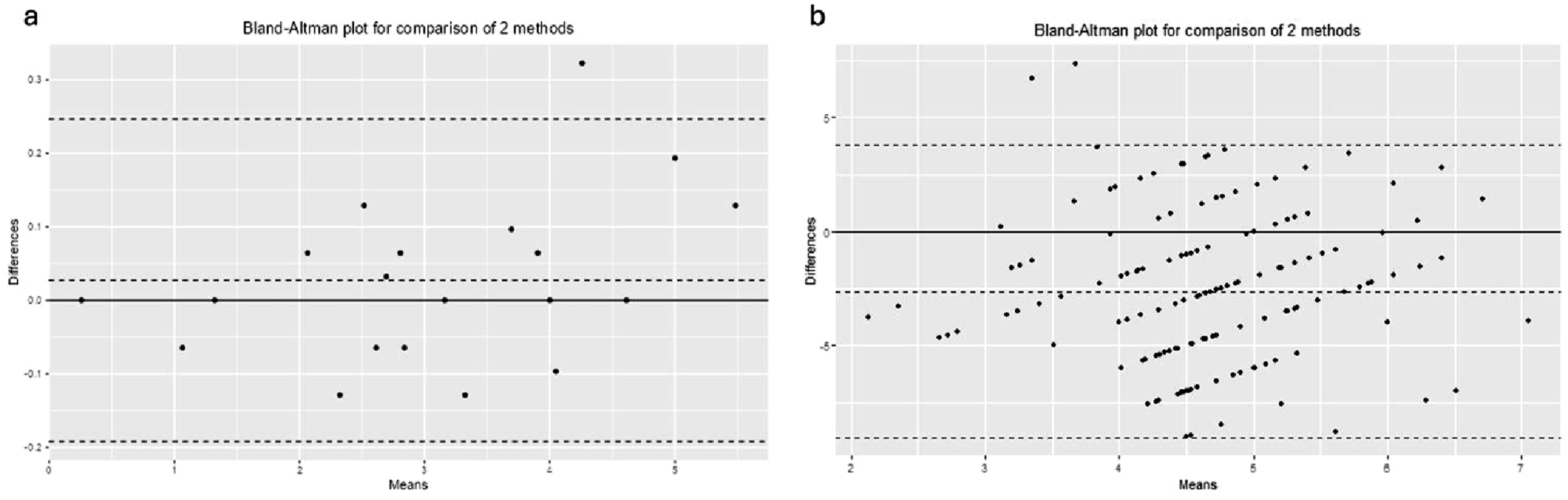
Another Bland–Altman plot ((Figure 1b) was generated to evaluate the agreement between the newly developed test and the gold-standard instrument. The plot demonstrated high concordance between the new and gold-standard tests, with minimal systematic error.
ICC analysis demonstrated an excellent level of agreement between test and retest administrations, with ICC1k = 0.9989 and Pearson’s r = 0.9970. The paired t-test revealed no statistically significant difference between the mean scores of the two assessments (t = 1.096, p > .05), further supporting the temporal stability of the LSIDS-L-TR.
Test–retest reliability of subdomains.
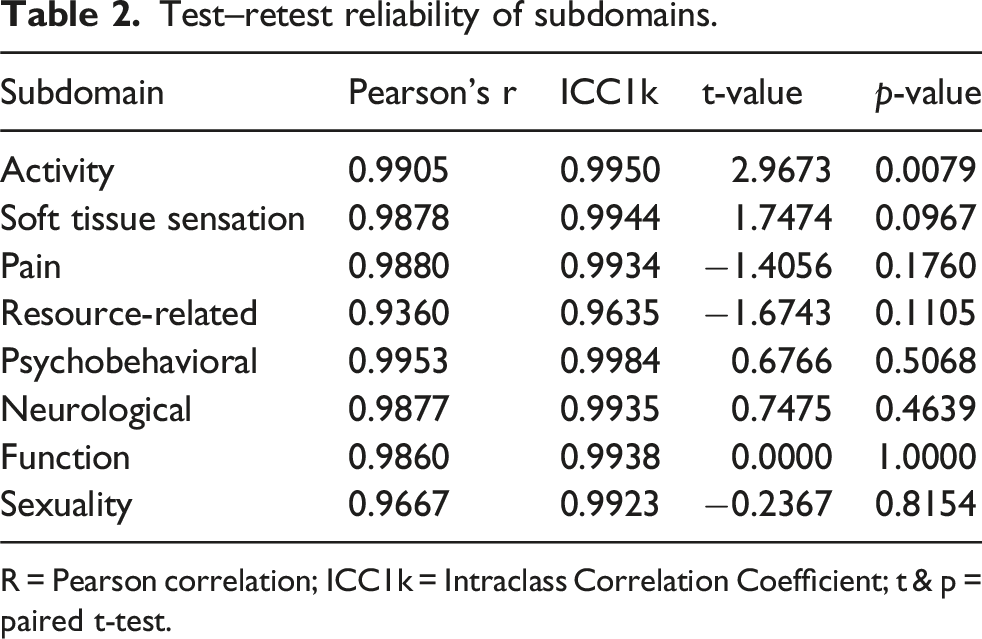
R = Pearson correlation; ICC1k = Intraclass Correlation Coefficient; t & p = paired t-test.
Validity
To assess internal consistency, Cronbach’s alpha was calculated. The raw alpha value was 0.9180 and the standardized alpha was 0.9145, indicating excellent internal consistency and high inter-item correlation.
Item analysis report.
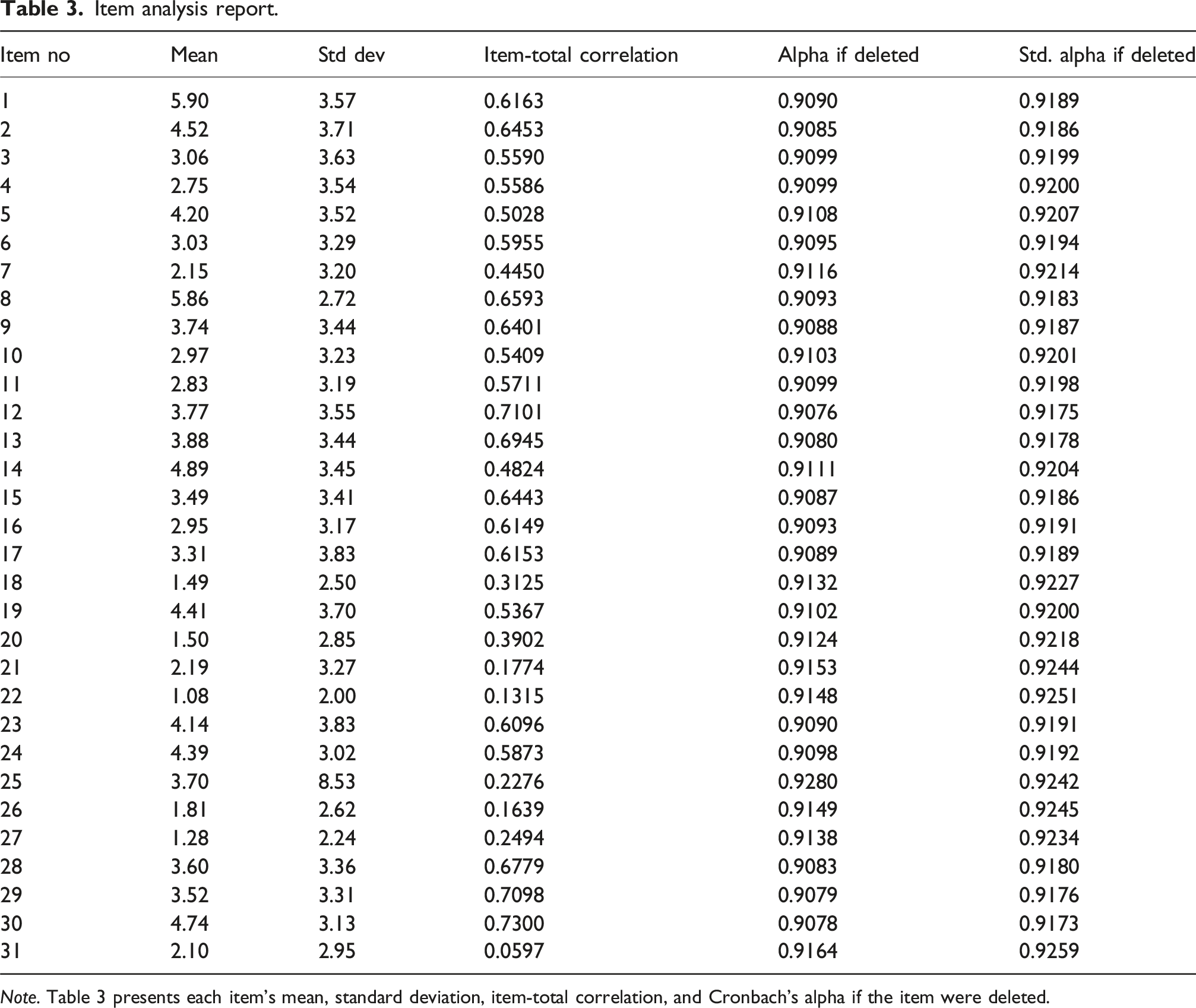
Note. Table 3 presents each item’s mean, standard deviation, item-total correlation, and Cronbach’s alpha if the item were deleted.
To evaluate criterion validity, the Pearson correlation coefficient between the LSIDS-L-TR and the established gold-standard instrument (LYMQOL-Leg) was calculated as r = −0.5910, indicating a moderate negative correlation. This inverse relationship, consistent with the scoring directions of the two scales, supports the construct validity of the LSIDS-L-TR and affirms its utility as a valid alternative for assessing symptom burden in lower extremity lymphedema.
Discussion
This study aimed to translate, culturally adapt, and validate the LSIDS-L for use among Turkish-speaking patients with LEL. The results demonstrate that the Turkish version (LSIDS-L-TR) is a valid, reliable, and psychometrically sound instrument with excellent internal consistency.
The LSIDS-L was developed based on the upper extremity version (LSIDS-A), with modifications to address the specific challenges and symptomatology associated with lower limb involvement. For instance, items such as difficulty standing were included to reflect the functional limitations unique to LEL. Unlike many existing symptom surveys, LSIDS-L uniquely captures not only the presence of symptoms but also their perceived intensity and associated distress. This dual-layered approach enables clinicians to better prioritize interventions such as pain control, psychosocial support, or functional rehabilitation. 24
The ICC is a reliability index used to evaluate consistency across time or between raters (test–retest, interrater, intrarater), assessing both correlation and agreement simultaneously.28,29 An ICC value greater than 0.75 indicates good reliability, while a value greater than 0.9 denotes excellent reliability. 29 Test–retest reliability was found to be excellent, with ICC values exceeding 0.9 across the total scale and all subdomains. High Pearson correlation coefficients and the absence of statistically significant differences in paired t-tests further confirmed the temporal stability of the scale. These findings establish the LSIDS-L-TR as a robust tool suitable for clinical monitoring, outcome evaluation, and longitudinal research.
For each subdimension, based on the test–retest reliability results of the Pearson correlation coefficient, ICC, and paired t-test, the tests provide reliable measurements. The Pearson correlation coefficient (r) is used when two variables are normally distributed together and takes a value between −1 and +1. r = 0: indicates no relationship between the variables; 0 < r ≤ +1: indicates a positive correlation; −1 ≤ r < 0: indicates a negative correlation. 30 A high Pearson correlation coefficient indicates a strong linear relationship between the two measurements and demonstrates that the subdimensions are measured consistently. 30 According to the reliability criteria of ICC, a high result supports that the subdimensions yield repeatable and reliable results over time. The absence of significant differences in the paired t-test results indicates that there was no systematic change between the two measurement time points and proves that the scale provides reliable measurements. These findings demonstrate that each subdimension of LSIDS-L-TR is reliable and will provide consistent results in clinical practice or research. In particular, the stability of the subdimensions over time reveals that health professionals and researchers can reliably monitor patients’ symptoms and treatment processes.
One of the methods used to determine whether a scale can consistently measure a specific conceptual framework with a single assessment is the internal consistency reliability coefficient, Cronbach’s alpha. This coefficient is used to evaluate whether the items within a scale represent a homogeneous structure. A Cronbach’s alpha value above 0.60 is generally recommended. 31 In our study, internal consistency was also strong, with Cronbach’s alpha values above 0.7 for all subdomains and an overall alpha of 0.9180. These findings suggest that the scale may be applicable in other populations with appropriate cultural adaptations and validation procedures.
Despite the strong psychometric performance, items 18 and 22 demonstrated relatively low item-total correlation coefficients. In particular, item 22 appears to have limited relevance in the Turkish healthcare context, where access to services is predominantly free of charge. This underscores the influence of sociocultural and systemic factors in scale adaptation. Consideration should be given to modifying or omitting such items or developing context-specific alternatives in future revisions to enhance construct validity.
Overall, item-level analysis reinforced the internal coherence of the LSIDS-L-TR. All items—aside from those noted—contributed positively to reliability, and Cronbach’s alpha values remained consistently high even when individual items were excluded. These findings confirm that the scale is structurally sound and that its components collectively measure the intended constructs in a reliable and meaningful way.
Limitations
The most significant limitation of this study is the relatively low number of male participants. However, considering the pathophysiology and clinical manifestations of lymphedema, there is no clear justification to expect significant sex-related differences in lymphedema-associated symptoms.
Another limitation is that all participants were recruited from a single center, which may affect the generalizability of the findings. Additionally, the majority of participants shared similar educational and occupational backgrounds. For instance, 23.9% of participants were university graduates, while 9.7% were illiterate. The lack of inclusion of individuals from a broader range of socioeconomic and cultural backgrounds may limit the overall applicability of the instrument across diverse populations.
The LSIDS-L-TR has been demonstrated to be a valid and reliable instrument for assessing symptom intensity and distress in Turkish-speaking patients with lower extremity lymphedema. Its comprehensive structure allows for a nuanced evaluation of both physical and psychosocial symptom burden, making it a valuable tool for clinical practice and research alike. The scale can assist healthcare professionals—including nurses, physiotherapists, and physicians—in monitoring patient outcomes, guiding treatment decisions, and evaluating the effectiveness of interventions. By facilitating more targeted and individualized care, the LSIDS-L-TR ultimately supports improvements in patient management and overall quality of life.
Footnotes

Ethical considerations
The study protocol was approved by the Clinical Research Ethics Committee of Ankara City Hospital (Approval No: E2-22-1644).
Consent to participate
Written informed consent was obtained from the parents or legal guardians of all participants.
Author contributions
All authors have read and approved the final manuscript and agree to be accountable for all aspects of the work in accordance with ICMJE recommendations.
Funding
The authors received no financial support for the research, authorship, and/or publication of this article.
Declaration of conflicting interests
The authors declared no potential conflicts of interest with respect to the research, authorship, and/or publication of this article.
Data Availability Statement
Data supporting the findings of this study are available from the corresponding author upon reasonable request.
Prior presentation
This study was presented as a poster presentation at the 2023 ISL World Congress of Lymphology, Genoa, Italy, 11–15 September 2023.
Guarantor
Prof. Dr. Pınar Borman is the guarantor of this study and takes full responsibility for the integrity of the work as a whole, from inception to published article.