



Abstract
Background
Telangiectasia and reticular veins are usually not a medical problem. More often, people are concerned with the aesthetic issues they cause. Reticular veins, unlike telangiectasia, are often annoying or painful. The more reticular veins you have in an area, the more annoying they will become. Sclerotherapy is an accepted treatment modality for reticular varicose veins and telangiectasia, in this study we compare between liquid and foam sclerotherapy and the effect of herbal gel application post procedural to reach the optimum results.
Methods
This single-centre, prospective randomized controlled trial enrolled a total of 574 patients who were initially assessed for eligibility. Thirty-nine patients did not meet the inclusion criteria ultimately after exclusion, 508 patients were randomized, with approximately 127 patients allocated to each group. Seventeen patients did not complete follow-up. Patients were randomized into four equal groups: group A: Liquid sclerotherapy without herbal gel, group B: Liquid sclerotherapy with herbal gel, group C: Foam sclerotherapy without herbal gel and group D: Foam sclerotherapy with herbal gel. The primary outcomes were clinical or photographic resolution or improvement of telangiectasias and reticular veins and patient satisfaction. Secondary outcomes included adverse events (hyperpigmentation, bruising, anaphylaxis, pain at injection site (during and after procedure) and time to resolution.
Results
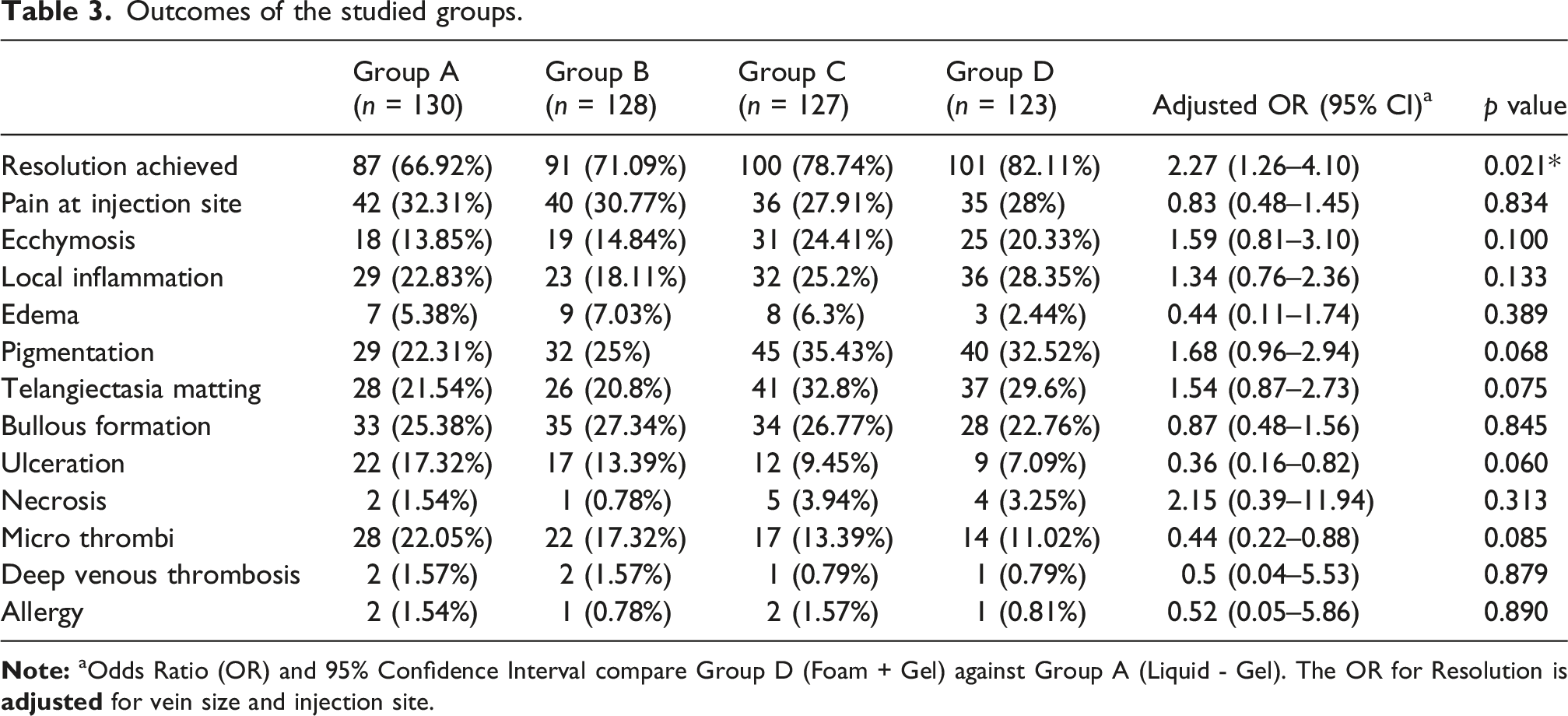
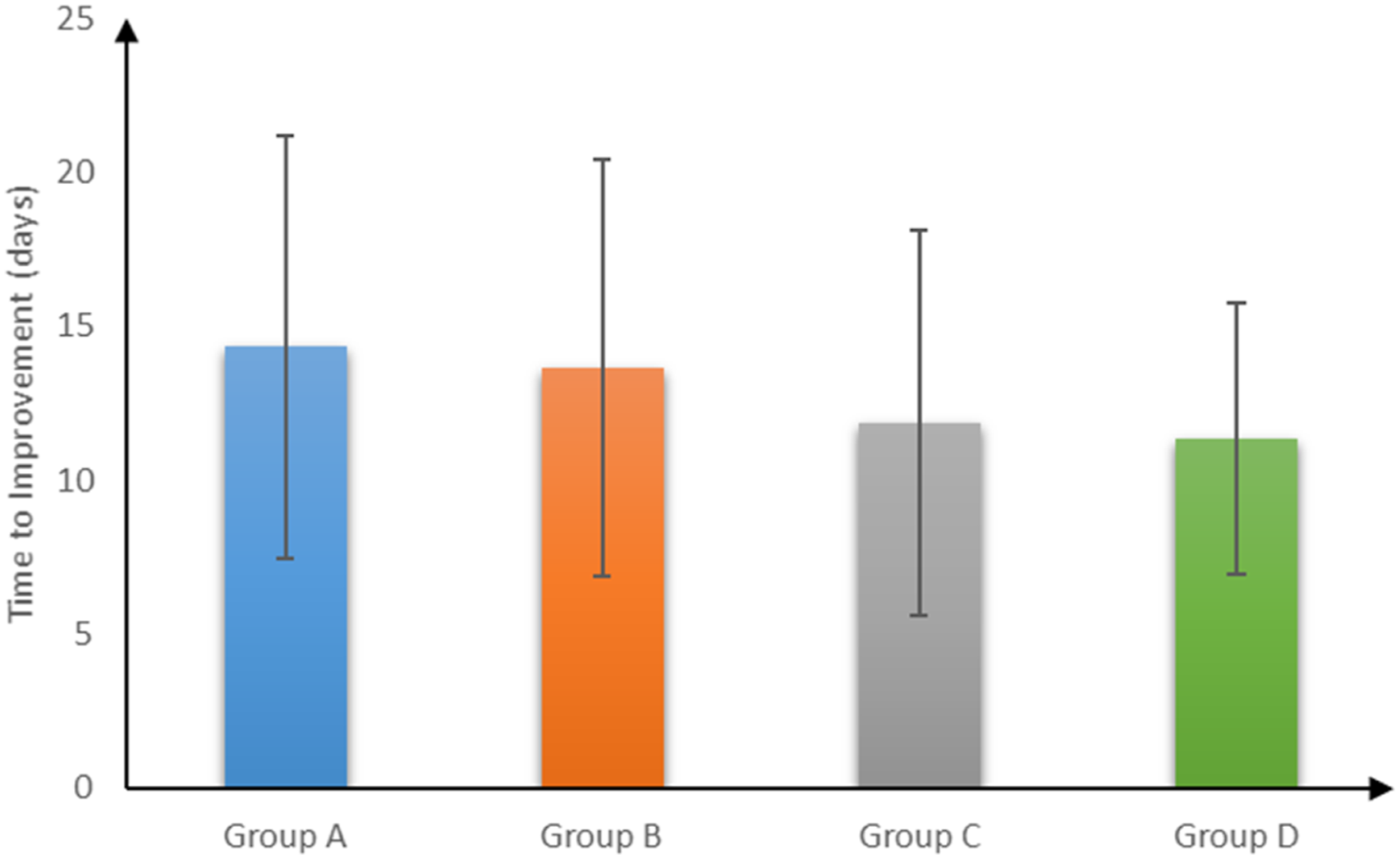
Resolution differed significantly among groups (p = 0.021). Foam sclerotherapy (Groups C and D) demonstrated faster improvement and higher VAS satisfaction scores compared to liquid sclerotherapy, with Group D achieving the highest satisfaction (p < 0.001). Time to improvement was significantly shorter in Groups C and D (p < 0.001). Adverse events did not significantly differ between groups and were transient and self-limiting.
Conclusion
Foam sclerotherapy demonstrated superior efficacy, faster clinical improvement, and higher patient satisfaction compared to liquid sclerotherapy, particularly when combined with post-procedural herbal gel application, which further enhanced resolution rates and overall patient outcomes.
Introduction
Sclerotherapy is an accepted treatment modality for reticular varicose veins and telangiectasia, Sclerotherapy relies on endothelial damage and the inflammatory process to achieve vein obliteration. Previous studies have investigated the efficiency and safety of different medical agents for the management of reticular varicose veins and telangiectasia 1 of the lower extremity, and the efficiency of liquid sclerotherapy and foam sclerotherapy was proven, it has evolved significantly since its usage in treatments performed by Professors Pétrequin and Soquet, 2 with key developments including detergent sclerosants (e.g., sodium tetradecyl sulphate (STS), polidocanol (POL)) and foam sclerotherapy.
While sclerotherapy, if executed correctly, is an efficient form of treatment with minimal complications, it must not be simply regarded as a simple intravenous injection procedure.
However, since Orbach invented foam sclerotherapy by mixing detergent sclerosants with the usually air 3 there has been a considerable controversy on the clinical efficacy for lower extremity varicose veins of foam sclerotherapy versus liquid sclerotherapy.4–6
Kaygin and Halici applied foam and liquid sclerotherapy in patients with lower extremity varicose veins, and the authors stated that both foam and liquid sclerotherapy were safe treatment options with acceptable complications. 2
In our practice we found that there is a good response and an effective outcome on application of of herbal gel twice daily post sclerotherapy as anti-inflammatory, anti-edematous and veno protection, the herbal gel components are Horse chestnut (Aesculus hippocastanum), the chief component of horse chestnut seed extract (HCSE) is escin which have been shown to exert significant vasoprotective and venotonic effects. 7 The second main component is Coumarin which its dervatives possess Significant Anti-thrombotic Properties protecting CVI patients from Thrombophlebitis Risk, through Anti-thrombin effect. 8
Calendula is another component which throw its active ingredient Faradiol showed equipotent Anti-edematous effect to indomethacin. 9 Calendula is clinically proven to possess potent wound healing10,11 by reducing epithelialization time, increasing in wound strength and improvement of wound contraction. It also has antimicrobial activities 12 include anti-bacterial, anti-fungal and anti-viral effect. 13
Hamamelis acts as an astringent, has Veno constrictor activity while Panthenol component for dermatitis as it Soothes, and promotes healing of Varicose Ulcer.
Glycerin acts as a moisturizer, aiding in skin rejuvenation and menthol has Local anesthetic (analgesic) effect.
Therefore, we conducted a prospective randomized controlled trial to compare between liquid and foam sclerotherapy and the effect of herbal gel application post procedural to obtain the optimum results.
Patients and methodology
Study design and setting
This was a prospective, parallel-group, randomized, single blinded, controlled trial conducted at the Department of Vascular Surgery, Kafrelsheikh University Hospital, Egypt. The trial was conducted in accordance with the principles of the Declaration of Helsinki and Good Clinical Practice guidelines. The study protocol was reviewed and approved by the Institutional Review Board of Kafrelsheikh University (Approval No. [KFSIRB200-348]). Written informed consent was obtained from all participants prior to enrollment.
Participants
Eligible patients were adults aged ≥18 years with telangiectasia and reticular veins on the thigh or leg (C1 Category in CEAP classification with competent saphenofemoral and saphenopopliteal junctions on duplex scan or with surgical or thermal ablation of GSV or SSV).
Exclusion criteria included: • Patients presenting with varicose veins of any size or anatomical location, or those classified as having chronic venous disease beyond CEAP class C1. • Arterial insufficiency. • Hypersensitivity to sclerosant material or herbal gel. • Dermatitis at the intended application site. • Serious comorbidities (heart failure, respiratory failure, uncontrolled hypertension with medication, or uncontrolled hypothyroidism). • Pregnancy. • Previous or family history of deep vein thrombosis (DVT), or thrombophilia • Patients who refused to participate in the study.
Sample size
A sample size of 500 patients was calculated to provide 80% power to detect a statistically significant difference at a 5% level of significance. To account for a potential 10% dropout rate, the sample size was increased to 550 patients, resulting in approximately 137 patients per group.
Randomization
A total of 508 eligible patients were randomized into four study groups in an approximately equal allocation ratio. Randomization was conducted using a computer-generated block randomization sequence prepared by an independent statistician. Allocation concealment was ensured using sequentially numbered, sealed, opaque envelopes, which were opened only after patient enrollment and completion of baseline data collection.
Following randomization, 17 patients were excluded due to loss to follow-up or withdrawal of consent.
Blinding
The study was conducted by single blinded method. Outcome assessing physician were blinded for treatment groups.
Intervention
• Group A: Liquid sclerotherapy injection without herbal gel application post procedural. • Group B: Liquid sclerotherapy injection with herbal gel application post procedural. • Group C: Foam sclerotherapy injection without herbal gel application post procedural. • Group D: Foam sclerotherapy injection with herbal gel application post procedural.
Methods
All patients were enrolled after obtaining written informed consent. Preoperative assessment included comprehensive history taking covering personal data, presenting complaints, past medical and surgical history, and family history.
Clinical examination was performed for all patients. General examination included assessment of general condition, vital signs, and body mass index. Local examination of the lower limbs was conducted preferably in the standing position and included inspection of vein distribution, laterality, extent, skin condition, edema, scars, and signs of chronic venous insufficiency. Palpation was performed to assess vein characteristics and skin temperature, and peripheral arterial pulses were examined to exclude arterial insufficiency.
All patients underwent pre-intervention duplex ultrasonography of the lower limb veins to confirm the diagnosis of telangiectasias and reticular veins, assess superficial venous competence, and exclude deep venous thrombosis and incompetence.
Sclerotherapy was performed in the vascular surgery outpatient clinic under strict aseptic conditions. Patients were positioned supine, and the skin was prepared with alcohol to enhance vein visualization. Liquid sclerotherapy was performed using 1% polidocanol, while foam sclerotherapy was prepared using the Tessari technique 4 with polidocanol (0.5%–1%) and room air at a 1:4 ratio respectively. Injections were administered using a 27–30-gauge needle, starting with the largest veins, with approximately 1 ml injected per site, followed by gentle massage. Maximum doses were adhered to in order to ensure patient safety. For liquid sclerotherapy, injection volumes ranged from 0.1 to 0.2 ml per site for telangiectatic veins and 0.2–0.5 ml per site for reticular veins, with a maximum total of 3–5 ml per session. For foam sclerotherapy, a maximum total volume of 10 ml of foam per session was used. Injection volumes and concentrations were tailored according to vein size, distribution, and patient tolerance. All patients were monitored for immediate adverse effects following the procedure. 14
After the procedure, compression was applied using bandages for 3 days, followed by elastic stockings for at least 7 days. Early ambulation was encouraged. Patients in the gel groups received topical herbal gel twice daily for 1 month in addition to compression therapy, while the remaining groups received compression alone.
Outcomes
• Primary outcome: – Clinical or photographic resolution or improvement of telangiectasia and reticular veins. – Patient satisfaction (vas score). • Secondary outcomes: – Adverse events (hyperpigmentation, bruising, anaphylaxis, pain at injection site).
Follow-up and assessment
Patients were followed up at outpatient clinic weekly for a duration of 1 month after the intervention. During each visit, the treated anatomical sites were systematically assessed for clinical resolution, persistence of veins, or the development of complications.
To ensure objective and reproducible evaluation of clinical outcomes, the following standardized protocols were implemented.
Photographic standardization
• Technical Parameters: All photographs were captured using a high-resolution digital camera with fixed settings for ISO, aperture, and shutter speed to maintain consistency across all sessions. • Fixed Lighting and Distance: A dual-strobe lighting setup was utilized to eliminate shadows, and a fixed distance of 30 cm was maintained between the lens and the skin surface using a measuring guide.
Clinical assessment protocol
• Blinded Evaluation: Clinical efficacy was determined by independent assessors who remained blinded to the treatment groups to prevent bias. • Side-by-Side Comparison: These assessors evaluated pre-procedural and 1-month post-procedural images side-by-side to determine the degree of resolution.
Statistics
Statistical analysis was done by SPSS v27 (IBM©, Chicago, IL, USA). Shapiro-Wilks test and histograms were used to evaluate the normality of the distribution of data. Quantitative parametric data were presented as mean and standard deviation (SD) and were analysed by ANOVA (F) test with post hoc test (Tukey). Qualitative variables were presented as frequency and percentage (%) and were analysed utilizing the Chi-square test. A two tailed p value ≤0.05 was considered statistically significant. All clinical outcomes were analyzed according to the Intention-to-Treat (ITT) principle.
Results
A total of 574 patients were initially assessed for eligibility. Thirty-nine patients did not meet the inclusion criteria. Additionally, 10 patients were unable to provide consent, and 17 patients declined participation.
Ultimately, 508 patients were randomized, with approximately 127 patients allocated to each group. Seventeen patients did not complete follow-up and considered as failure of treatment (Figure 1). CONSORT flow diagram of the enrolled patients.
Patients’ characteristics of the studied groups.
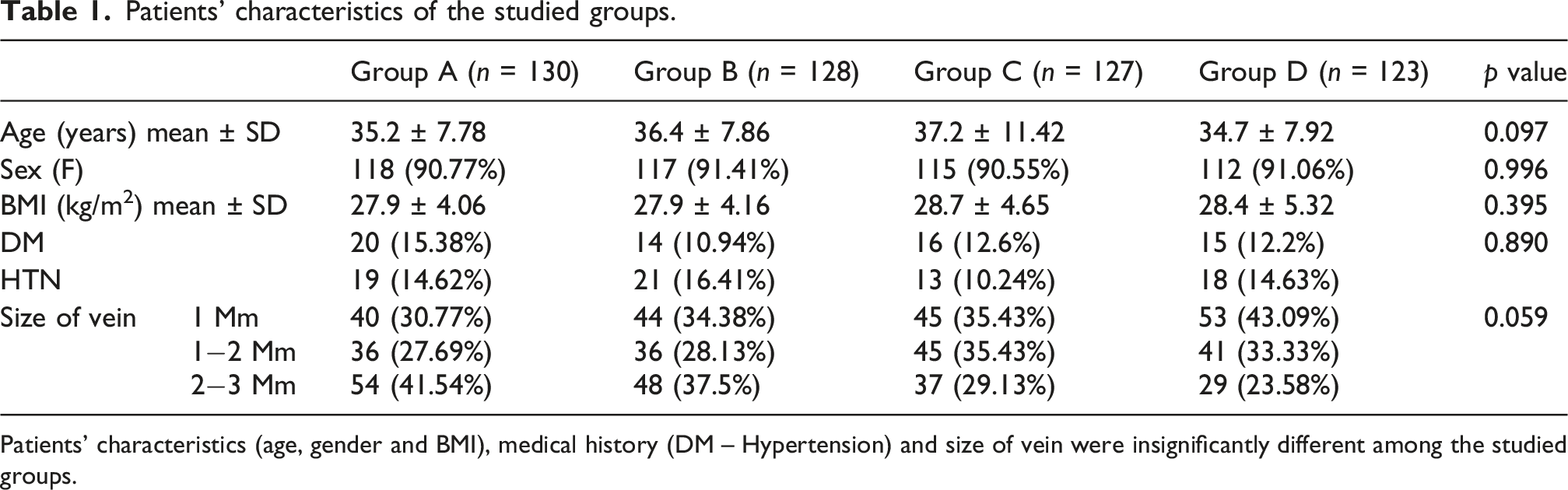
Patients’ characteristics (age, gender and BMI), medical history (DM – Hypertension) and size of vein were insignificantly different among the studied groups.
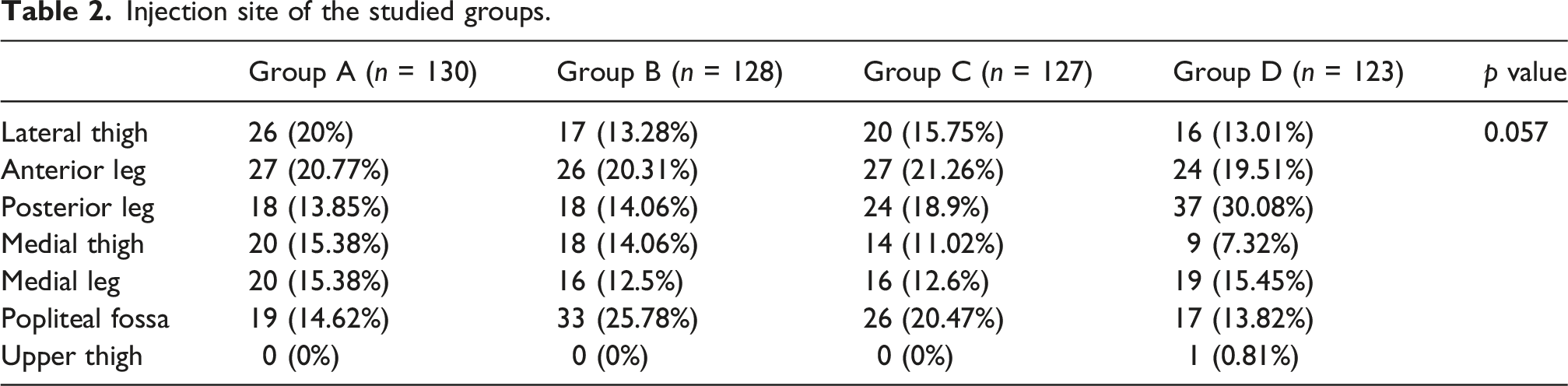
Injection site of the studied groups.
Outcomes of the studied groups.
VAS satisfaction score and time to improvement of the studied groups.

VAS: visual analog scale. *: significant as p value ≤0.05, P1: P value compared to group A, P2: p value compared to group B, P3: p value compared to group C.
Time to improvement *: significant as p value ≤0.05, P1: P value compared to group A, P2: p value compared to group B, P3: p value compared to group C.
Time to improvement was significantly different among the studied groups (p value <0.001), it was significantly lower in group C and group D than both group A and group B (p value <0.05) while it was insignificantly different between group A and B and was insignificantly different between group C and D (Table 4).
Discussion
Sclerotherapy remains one of the most widely used and effective minimally invasive techniques for the management of telangiectasia and reticular veins. The procedure involves the injection of a sclerosing agent, which induces endothelial damage, inflammation, and subsequent fibrosis leading to vein obliteration and resorption. Over the years, the introduction of foam sclerotherapy has represented a significant advancement over traditional liquid techniques, offering enhanced efficacy due to improved contact between the sclerosant and the vessel wall. Despite these advantages, variability in clinical outcomes and the occurrence of minor post-procedural complications continue to be reported, highlighting the need for further evaluation of adjunctive measures that could optimize treatment results and patient satisfaction. 15
Several studies have compared foam and liquid sclerotherapy in terms of efficacy, safety, and patient-reported outcomes, yet results remain heterogeneous. Recent interest has emerged in the use of topical adjuncts, including herbal formulations, to enhance post-sclerotherapy recovery and minimize local adverse effects. Herbal gels with anti-inflammatory and Vaso protective properties may aid in reducing edema, pigmentation, and discomfort, potentially improving overall patient satisfaction and accelerating healing. However, evidence supporting their clinical benefits in conjunction with sclerotherapy remains limited. 12
Consequently, this study aimed to compare the clinical efficacy, safety profile, and patient satisfaction associated with liquid and foam sclerotherapy, with and without the application of herbal gel, to determine whether such combination therapy could improve therapeutic outcomes in the management of telangiectasia and reticular veins.
Previous studies reported most complications following sclerotherapy management are minor and temporary. Also, previous reports that compared foam sclerotherapy and liquid sclerotherapy with regard to complications found controversial results. A review of foam sclerotherapy and the authors found 17.8% had skin pigmentation and 25.6% had pain at the injection site. 16 Another meta-analysis found no significant difference between foam sclerotherapy and liquid sclerotherapy for pain, local inflammation, and hyperpigmentation. 17
Pain and patient discomfort following sclerotherapy can deteriorate patient quality of life. Analyzed the expectations of 351 patients who underwent foam sclerotherapy for lower extremity venous insufficiency, and they concluded that up to 25% of patient expectations were not met. Also, stated that foam sclerotherapy was a more painful procedure compared to liquid sclerotherapy; however, the difference was not statically significant. In contrast, used foam sclerotherapy and liquid sclerotherapy for hemorrhoidal disease and found that patient satisfaction was significantly higher with foam sclerotherapy. 18
In a non-randomized prospective study by obese patients with lower extremity varicose veins and telangiectasia were treated with either foam or liquid sclerotherapy. The results demonstrated significantly higher VAS satisfaction scores at both the first and sixth hours post-procedure in the foam sclerotherapy group (p = 0.001 for both comparisons). Moreover, 80.9% of patients treated with foam sclerotherapy reported being very satisfied, compared to 58.1% in the liquid sclerotherapy group (p = 0.012). However, the incidence of ecchymosis and hyperpigmentation during the first week after treatment was significantly higher in the foam group (p = 0.003 and p = 0.040, respectively). 19
The incidence of pigmentation was notably higher in the foam groups, reaching 35.43% in Group C and 32.52% in Group D, compared to 22.31% and 25% in the liquid groups. Similarly, telangiectasia matting showed a higher trend in foam-treated patients (approximately 30%−33%) versus liquid-treated patients (approximately 21%). In the context of C1 venous disease, where patients are primarily concerned with aesthetic improvement, a 10%−13% absolute increase in these side effects is clinically meaningful, even if the p-values (p = 0.068 and p = 0.075, respectively) suggest they are statistically borderline (Figures 2 and 3). VAS Satisfaction Score of the studied groups p value. Time to improvement of the studied groups.
This creates a therapeutic trade-off: foam sclerotherapy offers more rapid and complete vein obliteration, but at the potential cost of a higher temporary aesthetic “tax” in the form of pigmentation or matting. Interestingly, despite these higher numeric rates of side effects, the VAS Satisfaction Scores remained significantly higher in the foam groups (p < 0.001). This suggests that for many patients, the achievement of faster clinical improvement and higher resolution rates outweighs the annoyance of transient, self-limiting side effects.
Conclusions
Foam sclerotherapy—particularly when combined with topical herbal gel—demonstrated superior short-term clinical resolution, faster improvement, and higher patient satisfaction compared to liquid sclerotherapy. While effective, these findings are strictly limited to short-term outcomes. Although foam sclerotherapy was associated with a slightly higher incidence of transient local side effects such as pain, ecchymosis, and hyperpigmentation, these were minor and self-limiting. This study did not assess the durability of results, long-term recurrence rates, or the resolution of longer-term pigmentation beyond the initial 30 days.
Limitations
• The study was conducted at a single center, which may limit the generalizability of the results to other institutions with different patient populations, clinical practices, or procedural settings. • The follow-up period was limited to short-term outcomes, and long-term efficacy, recurrence rates, and delayed complications were not evaluated.
The absence of a placebo gel arm makes it difficult to definitively isolate the pharmacological effect of the herbal formulation from the psychological effect of a daily topical routine or the additional physical contact during application.
Footnotes

Ethical considerations
Ethical approval for this study was obtained from the Institutional Review Board of Kafrelsheikh University (Approval No. KFSIRB200-348) on 15 January 2024. The study was conducted in accordance with the Declaration of Helsinki.
Author contributors
Funding
The authors received no financial support for the research, authorship, and/or publication of this article.
Declaration of conflicting interests
The authors declared no potential conflicts of interest with respect to the research, authorship, and/or publication of this article.
Guarantor
Ahmed Fouda accepts full responsibility for the work and/or the conduct of the study, had access to the data, and controlled the decision to publish.