




Abstract
Municipalities are faced with poverty, unemployment and inequality, to the detriment of growth and development. As specified in the South African Constitution (1996), municipalities are obligated to advance Local Economic Development (LED). Municipalities cannot accomplish this task alone; therefore, participation of all stakeholders is required. The aim of this study is to investigate bridging the urban–rural gap in facilitating LED within uMgungundlovu District Municipality in KwaZulu–Natal in understanding this phenomenon. The district is made up of seven urban and rural local municipalities. Using a qualitative research method through an interpretive paradigm, data were collected from purposely selected participants through in-depth open-ended interviews. Collected data were analysed through induction using thematic and content analysis. Results revealed gaps in understanding LED planning, facilitation and implementation, including gaps in resource planning and provision. The study revealed numerous stakeholders were relevant in facilitating LED within the District. It is recommended that the District improves rural service delivery and infrastructure provision enabling access of opportunities and creating platforms for stakeholder engagement, with inclusion of traditional leaders driving LED facilitation. Priority areas for enhancing LED initiatives are suggested, with LED viewed as a good initiative in achieving sustainable development in district municipalities.
Keywords
Introduction
Local Economic Development (LED) has been widely accepted globally, having gained national support from governments and key international organizations, as a local response to globalization, decentralization and local challenges (Kamara, 2017; Nel and Rogerson, 2005). LED is an approach to economic development enabling communities to work together, inspiring realization of sustainable economic growth and development for the benefit and better quality of life for all (Kamara, 2017; Kritzinger, 2011; Rogerson, 2014; Van Niekerk and Bunding-Venter, 2017). Inclusive economic development supporting sustainable livelihoods is advocated. Whilst numerous definitions of LED exist, some distinguishing elements include: participation and collaboration; dialogue and ownership; and recognition of unique local assets (Simon, 2003). In a country dealing with issues of poverty, inequality and unemployment, LED has received considerable attention. Municipalities are obliged by the Constitution of the Republic of South Africa, 1996 to play a facilitative role in promoting LED. This includes creating ideal environments for businesses attracting investment (Van Niekerk and Bunding-Venter, 2017; Venter, 2012). Meyer and Meyer (2016) find that local municipalities lack adequate economic strategies to deal with the major issues affecting them. Municipalities have not been able to create sustainable environments for business and partnerships ensuring inclusive localized LED.
Sartorius and Sartorius (2016) argue that, since enactment of the Local Government Municipal Systems Act (Act 32 of 2000), infrastructure development and service delivery in municipalities are biased towards municipalities with highest economic potential. Neglected municipalities with low potential are only mandated with minimal levels of basic services, thus becoming heavily reliant on grants and assistance. This opposes them contributing and creating conducive environments for LED ensuring full participation and contribution to mainstream economies. The structure is as follows: the first section deals with urban–rural gaps and LED planning, followed by the theoretical framework underpinning the study and LED facilitation and capabilities associated with emerging and key issues pertaining to successful LED. Methodological perspectives of an interpretative paradigm and an inductive approach are discussed positioning the exploratory research. The next section presents results with findings and respondents’ concerns discussed. The last section, conclusion and recommendations are made encouraging further research bridging the urban–rural gap vis-à-vis LED.
Urban–rural gap and Local Economic Development planning
Tacoli (1998) argues the definition of urban–rural tends to differ in countries. The Constitution, 1996 distinguishes different categories for municipalities, classified as a Metropolitan (category A), a district (category C) or a local municipality (category B). It however makes no distinction between urban and rural municipalities (National Treasury, 2011; Meyer and Meyer, 2016). The Municipal Infrastructure Investment Framework (MIIF) provides clarity by categorizing municipalities based on how they operate. Rural municipalities are classified as small towns and mainly rural areas (Bretteny and Sharp, 2016; Municipal Demarcation Board, 2018; National Treasury, 2011). Notably, a divide between urban and rural municipalities is evident concerning development planning, implementation and service delivery, as urban bias continues to plague rural municipalities (Sartorius and Sartorius, 2016). Ncube and Monnakgotla (2016:75) assert that rural municipalities face challenges of weak infrastructure, high unemployment and poverty. Rural areas and municipalities still struggle to create favourable environments for communities (Matseke, 2020; Meyer and Meyer, 2016; Nyawo and Mashau, 2019). Opportunities for sustainable employment creation and the ability to eradicate poverty due to widespread inadequate basic services and poor infrastructure provision in more remote and rural areas are limited (Nyawo and Mashau, 2019).
Planning in most municipalities is continually marked by past legacies of spatial and economic inequalities characterized by segregated racial, socio-economic and land use patterns (Coetzee, 2014; Sartorius and Sartorius, 2016). Addressing these issues requires rapid transformation, inevitably placing pressure on LED, especially in rural areas where development planning has limited impact. This is mainly because of ‘complex, diverse and rapidly changing characteristics, planning needs and styles of governance’ distinctively different from urban areas (Frank and Reiss, 2014:389). Local leadership is therefore crucial for successful LED planning, facilitation and implementation (Meyer, 2014). In rural areas, traditional leaders are directly responsible for land allocations, limiting LED planners from properly planning development, resulting in uneven development and planning (Dubazane and Nel, 2016). Rural leaders have negative perceptions regarding development planning. Development planning practices in the country have been largely focused on urban areas as Eurocentric in approach, limiting involvement and buy-in from traditional leaders. Frank and Reiss (2014) assert that planning must take cognizance of applicability to rural areas, perceptions associated with current planning, cultural and ideological distrust. Consequently, enactment of the Spatial Planning and Land Use Management Act (SPLUMA), Act 16 of 2013, attempts to address co-operative relations in planning. Numerous disputes by traditional leaders arise through no consultation, whilst the Centre for Law and Society (CLS) and other parties believed there were excessive powers given with limited accountability (Custom Contested, 2015).
In a way, this suggests a lack of collaborative effort within local government planning. Collaborative and participatory planning needs commitment of resources including time and money, regrettably lacking within municipal planning processes (Coetzee, 2014; Sim et al., 2016). Parnell and Simon (2014) suggest concerns of how rural areas are managed and prioritization of rural land. This comes at a time in the country when productive land is under threat from degradation and human settlement invasions, further straining ability of rural communities to contribute economically as most rural communities are dependent on agricultural production as major economic activities (Sim et al., 2016; Zulu and Mubangizi, 2014). Current planning and LED practices country-wide need to speak to rural areas. Frank and Reiss (2014) thus identify four knowledge dimensions believed as crucial for development of rural planning theory and practice: articulating rural planning perspectives, understanding rural spaces and local people which includes both their diversity and dynamics, promotion of planning and development practices of relevance to rural communities and promoting rural planning support within the planning profession. These knowledge fronts are key for LED planning and implementation in rural areas. Presently, challenges-facing municipalities collectively have major implications on the future sustainability of municipalities, along with lack of funding of LED projects (Reddy, 2016). Accompanied by this, is the impact of the current COVID-19 global pandemic on the economy, social life and people’s health. Responding to the pandemic adds further pressure especially to rural municipalities which lack required resources to address these unintended consequences.
Matseke (2020:92) states that the ability of rural municipalities to deal with the pandemic is of immense concern. Planning and facilitating LED during the pandemic will prove challenging and further increase the urban–rural gap. Combined, the challenges have major impacts on rural dwellers lacking financial stability, added impacts of climate change, increasing food insecurities and rising spatial and interpersonal disparities (Rodríguez-Pose and Hardy, 2015). Service delivery inequalities continue to be widespread in the country, with district municipalities recording the highest levels of service delivery inequalities (Sartorius and Sartorius, 2016). These inequalities influence LED implementation within local government, as service delivery is an important instrument for enabling LED and creating conducive environments for business (Nyawo and Mashau, 2019; Tsheola and Mokgokong, 2012). Investing in public infrastructure is of great benefit to the country’s economy (Mbanda and Chitiga-Mabugu, 2017; Nyawo and Mashau, 2019). This remains a challenge for rural municipalities continuing to be heavily reliant on national government to finance budgets (Statistics South Africa, 2015; Zulu and Mubangizi, 2014). Unavailability of good infrastructure hinders small local businesses and overall community development, limiting community participation in local development. Poor levels of infrastructure to support business development in rural municipalities further widen the gap between urban and rural municipalities inflicting high costs of doing business, poor communication and limited access to innovation and technological advancement (Nyawo and Mashau, 2019).
A strong link between service delivery and LED thus exists, with municipalities having high levels of service delivery gaps inclined to restrict LED potential and impoverished areas as hardest hit spaces (Nyawo and Mashau, 2019; Tsheola and Mokgokong, 2012). This has financial implications for municipalities limiting opportunities for revenue growth, with most rural municipalities classified as unviable and largely reliant on grants. Proper infrastructure provision and service delivery are needed to lower transportation costs, better accessibility and increase economic activity to grow connectedness and the local economy (Nyawo and Mashau, 2019). Collaborative effort and partnerships to address past planning gaps including partnerships between civic groups, all government spheres and agencies, academia and the private sector require proper resourcing, funding and sound leadership within local government (Coetzee, 2012). Additionally, a common understanding of the LED role and processes can be achieved through better interactions between LED officials and departments to prioritize LED planning and facilitation (SALGA, 2010). It is then that rural and urban dynamics are better understood and supported, and planning can be better positioned to remove barriers to inclusive economic development within the broader framework of the country. Accordingly, bridging this urban–rural gap requires basic services and infrastructure leveraging municipal spending to create local employment and effective LED facilitation requiring collective effort as rural municipalities cannot solely achieve this alone (National Treasury, 2011; Nyawo and Mashau, 2019). This would enable rural municipalities to play more critical roles towards alleviating poverty and facilitating development.
Theoretical framework
The theoretical framework underpinning the study focuses on regional economic development theories and locality theory. There are numerous aspects to regional economic development, such as natural endowments, access to capital, employment quality and quantity, entrepreneurship and technological capabilities and public systems (Nijkamp and Abreu, 2009; Capello and Nijkamp, 2011). Nijkamp and Abreu (2009:2–3) find that regional economic development concentrated on two primary issues: How do we implement regional welfare, and how do we handle disparities between regions? They find the former to focus on ‘allocative efficiencies’ regarding the economic usage of scarce resources in regions (such as human capital, physical and information) to maximize output. Whilst the latter seeks to ascertain the possibility of narrowing socio-economic gaps in space economies through policy interventions in lessening socio-economic disparities. The study area provides a potentially interesting case study with uneven development trajectories and differing governance systems. Whilst the primary objective of LED is to improve competitiveness, increase economic growth and ensure inclusiveness, LED’s challenge is finding ways to improve local capabilities to enrich all residents in geographic regions. (Kanayo and Duncan, 2019:805). Additionally, Reese and Li (2020:3) assert that LED is narrowly defined, with emphasis on efforts to mitigate perceived disadvantages of a location.
Location theory emerged in response to traditional economic analyses and lack of spatial awareness (Dawkins, 2003:136). Regional economic development theories have their roots deeply embedded in location theory (Nijkamp and Abreu, 2009). Conceptualizing location theory as argued by Kačar et.at. (2016:234) was largely founded by Alfred Weber (1868–1958) who focused on cost of transportation and labour as primary location factors. The concept is extended to social processes within specific localities and critical roles of governance in context (Nel, 2019). Localization, as defined by Antonescu (2014), is the deliberate selection of the location for development of economic activities. Much of the localization theories started with the presence of local resources, with the pursuit of maximizing profit and minimizing transport (Antonescu, 2014:3). Modern theory of location has evolved over time and is the result of numerous contributions from economists and businessmen (Jones and Woods, 2002). Location is no longer seen as a method by companies or people to optimize their activities, but a tool for policies, targeted policies or strategies used to influence overall development (Antonescu, 2014:4). Localities, according to Nel (2019), have two distinct meanings: localities as social structures and as agents. The former links local dependence and territorial forms in labour divisions, and the latter on locally based actors with similar interests for collaboration. Independent decision-making at local level has resurrected grassroot organizations and bolstered the role of indigenous and non-governmental organizations, as well as local governments assuming responsibility of their futures (Nel, 2019). Localized interactions thus facilitate formation of collective expectations and perceptions regarding long-term development opportunities (Grillitsch and Sotarauta, 2020).
Facilitating Local Economic Development
Worldwide, government, business and civil society face challenges for improved ways of realizing LED to address the twin challenge of poverty and unemployment in both urban and rural areas (Meyer, 2014). Stakeholders demand better ways of attaining LED, as the foundation for promoting sustainable development (Brăgaru, 2017). Consensus and partnerships are thus critical for stimulating local economies (Cooper and Meyer, 2019). LED emphasizes prosperity, inclusiveness and sustainable growth, incorporating both public and private functions. This includes planning, business development, infrastructure provision and finance (Mokoena, 2017). Venter (2019) therefore contends that LED plays a vital role in strengthening community partnerships while supporting capacity for inclusive economies and creating opportunities for local communities. Although municipalities in the country are widely considered to be the drivers for LED, it appears, however, that this mandate has not yet been met (Venter, 2014:722). Citizens are dissatisfied with lack of service delivery and poor LED implementation as evidenced by the continuous violent service delivery protests country-wide. Municipalities have trouble with LED due to limited expertise and inadequate structures to support facilitation and implementation. Inability to budget for LED, collect revenue and develop revenue enhancement strategies to grow revenue bases prevails. Additionally, facilitating LED in municipalities requires addressing both social and economic issues simultaneously (Luthuli and Houghton, 2019). District municipalities tend to fail at balancing social development and facilitating LED. Cooper and Meyer (2019) find that municipalities tend to concentrate on social welfare whilst minimal effort is given to economic growth and development. This hinders abilities to create favourable environments and promote LED, thus, overlooking business development potential to grow municipal revenue. To ensure economic and social equality, LED needs collective and collaborative effort from all stakeholders to succeed (Majola, 2020:512).
Control and direct influence regarding key aspects of successful LED implementation is almost non-existent in district municipalities (Lawrence and Hadingham, 2008). LED facilitation requires capabilities of undertaking necessary analysis to identify economic development challenges, developing interventions to respond and engage all key players. Consequently, local government is expected to play a leading role in facilitating and co-ordinating LED with assistance from local communities and business leaders (Meyer, 2014). Effective leadership and good governance are needed to facilitate LED and grow partnerships (Munzhedzi and Makwembere, 2019; Shilangu, 2019). Effective resource allocation and infrastructure are needed to facilitate LED (Moyo, 2007; Nyawo and Mashau, 2019). The District Development Model (DDM) programme was announced by President Ramaphosa in 2019 during the State of Nation Address (SONA). It is a critical programme that aims to foster innovation and economic growth by bridging the divide between major economic centres (urban) and their underserved rural counterparts. It promotes regional competitiveness while reducing inequality and business costs. This would assist municipalities to facilitate LED through accelerated service delivery for development potential maximization.
Moreover, Leigh and Blakely (2016) suggest that, to effectively drive economic development environments, organizations can either take on one or a combination of these roles, including an entrepreneur or developer, co-ordinator, facilitator and stimulator. As an entrepreneur or developer, local government can decide to operate commercial enterprises itself. As a co-ordinator, local government can act as a co-ordinator for the purposes of policy and strategy establishment. As a facilitator, local government can structure and restructure development processes to improve planning procedures. Lastly, as a stimulator, local government can stimulate business creation and expansion by taking specific actions to encourage and retain local businesses (Leigh and Blakely, 2016:139–142). Constitutionally, municipalities need to facilitate and co-ordinate development within their locality. Integrated Development Plan (IDP) can be used as tools to effectively co-ordinate LED interventions and programmes with other municipal, provincial and national programmes. Municipalities need to improve on planning and development processes to promote investment (Zulu and Mubangizi, 2014). According to Subban and Theron (2012: 28), IDP as an effective LED tool ought to be more generic and more public participatory, less descriptive and more prescriptive, less institution-oriented and more local client impact-oriented.
Materials and methods
Study area
The study was carried out in uMgungundlovu District Municipality, a category C municipality located in Pietermaritzburg, the capital city of KZN comprising seven local municipalities. According to Statistics South Africa’s community survey (Statistics South Africa, 2016), uMgungundlovu District Municipality has a population of over one million people (1 095 865), accounting for approximately 10 percent of the Province’s total population. The district IDP identifies a mix of both urban and rural areas within the municipality, with three distinct settlement typologies: rural farming, traditional and urban communities (uMgungundlovu District Municipality, 2014). Figure 1 depicts concentration of urban and rural areas in the district, with Msunduzi and uMngeni municipalities having the largest concentration of urban areas and where much of economic infrastructure and services are located. The Department of Cooperative Governance and Traditional Affairs (CoGTA, 2020) confirms the district as high dependency and concentration of poverty in the rural areas. Despite being the largest economic contributor, the municipality is challenged with high inequalities and unemployment (uMgungundlovu District Municipality, 2014). uMgungundlovu District Municipality Locality Map. Source: uMngeni Local Municipality (2021)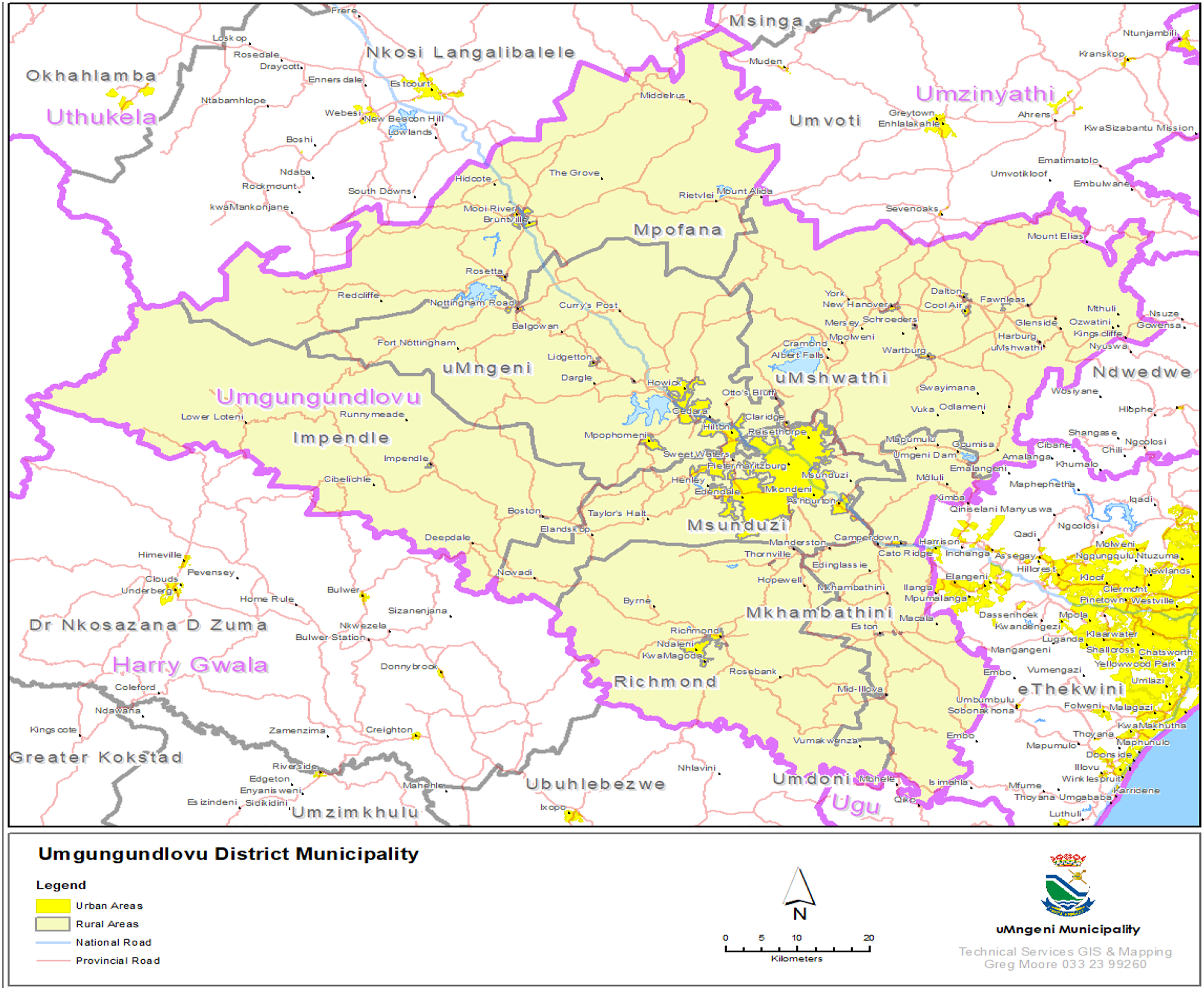
Research approach, philosophy and design
Sekaran and Bougie (2016) state that the research design is the strategy or framework utilized for collecting, measuring and examining data in order to realize the research questions. The research design is of key importance, in that it shapes and structures the research allowing the researcher to effectively address the research questions correctly, whilst also promoting transparency (Bowen, 2005). As an exploratory study, a qualitative research approach was pursued to provide a rich content based on experiences from LED facilitators. This was helpful in exploring the challenge of bridging the urban–rural gap in facilitating LED within the District Municipality. Through an interpretative paradigm and an inductive approach, the study looked into various non-probability methods applicable in qualitative research and drew on purposive sampling to identify those selected participants who were most knowledgeable and informed about LED. Purposive sampling, also known as judgemental, selective or subjective sampling, refers to a collection of sampling techniques that rely on the researcher’s judgement in selecting the units to be studied (Sharma, 2017:751). Individuals were purposefully chosen to conduct the research, which involved identifying the population of interest with subject matter expertise with reference to the topic.
Data collection and sampling
Creswell and Poth (2018:148) assert that data collection is a complex sequence of activities dedicated to acquiring valuable information from emergent research questions, with the importance of maintaining high standards of ethical practices, as was the case with this study. Semi-structured interviews were utilized to answer research questions. Interviews were held with individual participants and open-ended questions were used, whilst also allowing a degree of freedom and to allow for further probing. The overall goal of semi-structured interviews is to interview people who have personal experiences and opinions on the topic of interest (DeJonckheere and Vaughn, 2019:2). It enables the interviewer to follow-up on previous statements (Roulston and Choi, 2018). This data instrument has an advantage, in that it allows flexibility for the researcher ‘to probe, to clarify and to create new questions based on what has already been heard’ (Westbrook, 1994:244). The interview guide was constructed based on relevant and secondary data and scholarly literature on LED.
Since the case study research strategy was used, the case study participants were purposely selected based on designation, role and level of experience in LED facilitation. A small sample size of eleven respondents fundamental to this mode of inquiry with junior, middle and senior levels responsible for LED planning and implementation was sought. Data saturation was reached as a methodological principle as no new information obtained hitherto could be gauged from any other participants. These respondents provided a rich framework to the qualitative research and were regarded as best suited to address the research problem and further the research goal. Participants were contacted after obtaining ethical clearance approval from the University. Interview dates were set in advance where one-on-one interviews were conducted and recorded with individual participants. Confidentiality was ensured in the interview process, and recording with prior approval from participants was sought followed by transcribing responses.
Ethical considerations
Ethical consideration was granted via approval (gate keeper letters) from relevant organizations involved in this research. Application was sought from the University of KwaZulu–Natal (UKZN) Research Office. Informed consent was an important aspect of ethical consideration, prepared and submitted to participants prior to interviews. Consent contained necessary information including a declaration that participation was voluntary, and respondents had the right to withdraw at any time without penalty; a declaration of anonymity and confidentiality; with no related benefits and risks associated with participation (Bowen, 2005).
Data analysis
The thematic analysis approach was used which involved the process of first transcribing the data, getting familiar with the data, generating initial codes, searching for themes, reviewing themes, defining and naming the themes and lastly, producing the report (Vaismoradi et al., 2013). As such, data were classified, rigorously compared, grouped and refined to create and make clear description of categories or themes, within the collected data (Fossey et al., 2002) Transcribed interviews were reviewed and coded to fit the concepts suggested by the data, sorted and organized in a search for patterns or significant connections amongst them (Bowen, 2005). This process allowed for every code to continuously be compared to all the other codes in order to identify similarities, differences, general patterns and trends of significance (Bowen, 2005). Responses were identified into categorized and ordered themes based on the relevant issues, fundamental patterns and links (Bowen, 2008). Overall, three important steps were used to analyse this data. These were as follows: data reduction where data went through a selection process of coding and categorization; data display where reduced data were displayed and organized into diagrams and graphs; and the study drew conclusions of analysis where the research questions were answered. Data are presented thematically based on common trends and sub-themes that emerged from interviews. Emphasis was not on aiming for generalizability, but to gain in-depth understanding into a specific context, opinions and views of that locality relating to LED, hence sampling results may not be generalizable to the whole population.
Results
Gaps in LED understanding
There was unanimity amongst respondents regarding the definition of LED, with all respondents highlighting that LED is an economic development approach involving multi-stakeholders within an area working together to promote development. Respondents reported that LED needed to work on capitalizing on existing potential of the local area and its resources. One respondent added there was a need to go beyond understanding the definition on the scale that it is being viewed and roles that must be played. The respondent highlighted that most of the time LED officials tend to view it as a campaign strategy closer to elections enticing local communities. Concerns were raised that LED was not about politics but understanding that it requires infrastructure and an enabling environment promoting skills development in that: LED differs at which scale you are looking at it. If you are doing it at a municipal scale, it’s about prioritizing infrastructure in a particular way that you are going to invest in that infrastructure, so that you can attract particular investors who support local skills. (R9)
Respondents highlighted that there was a need for LED officials to understand LED barriers in rural areas. One respondent stated that this varied: for some it might be land, while for others funding. Ten respondents noted that skills and education were major barriers associated with LED promotion within rural areas. The rate of illiteracy levels was very high accompanied by lack of business skills. This hindered the ability of individuals in rural areas to comprehend what LED is and benefits associated thereto. One respondent highlighted challenges of understanding LED amongst traditional leadership, who control land for development within these areas. One respondent summed it up by saying: Because I can assure you, if I go to the Inkosi and ask him about LED, he will have very little knowledge about LED in the local municipality. (R6)
Respondents identified various roles of stakeholders within the District and local level. Moreover, they indicated that there were different roles and functions between business, government and the local community. Eight respondents expressed concerns regarding the various roles that stakeholders should be playing, but these were not prevalent for successful LED facilitation. Contestations around traditional leadership roles revealed that traditional leaders had a major role to play in ensuring that LED was realized within their local areas, but they had no understanding of the specificities surrounding LED.
Six respondents emphasized that traditional leaders needed to be taught about LED, its relevance and the potential benefits it has for rural people, thereby ensuring that traditional leaders were part of LED planning and implementation to help drive LED within rural areas of the District. One respondent highlighted that if traditional leaders were made aware of their roles in facilitating and promoting LED within their areas, they would better influence development of those areas by directing and mobilizing land for development. Another respondent added that the private sector needed to play a supporting role in terms of assisting local government and traditional leaders to drive LED in rural areas through sharing skills and knowledge, investing in rural areas and driving transformation through institutional structures. One participant summed up that the importance of stakeholders’ roles could only be achieved if clear definitions were set out: It is for us to have clear roles, role players need to create definitions for their roles. Municipalities need to know that they are not there to create jobs but to create an enabling environment, and when CoGTA gets to municipalities we need to understand that we are only there to coordinate and assist with getting funding support where they are required. (R8)
A respondent stressed the importance of understanding the level of planning and alignment required when planning for LED at municipal level. The respondents unanimously agreed that aligning all available strategies within the municipality and at both provincial and national level was needed when facilitating LED. Another respondent highlighted the importance of rural planning as a key hindrance to LED facilitation within rural areas. The respondents all stated that within rural areas there was no formal planning for land developments by the traditional leaders who were the respective land allocators.
All respondents expressed concern with the issue of land allocation within rural areas that was not aligned with the planning of the municipality. Respondents highlighted that land within rural areas was not properly zoned and that land identified and demarcated as land for commercial development and agriculture and grazing was being allocated for settlement purposes without prior consideration. The respondents highlighted that traditional leaders were reluctant to work with local government to properly plan land developments within rural areas and viewed government as competition instead of their partners. One respondent highlighted this, stating that: I think traditional authorities are struggling with the concept of governance, as an unspoken worry between government and traditional authorities where traditional authorities view government as competition. (R10)
Resource gaps
Respondents all highlighted basic service provision as important, affecting the realization of LED within the respective municipalities. The respondents reported that the levels of basic service provision were low, especially within the more rural areas. Three respondents expressed frustration at this, indicating that poor service provision hindered the facilitation of LED and the overall development of rural communities who were in dire need. Additionally, one respondent emphasized the issue of inefficiencies in the provision of services such as water, electricity and sanitation, thus challenging the effective facilitation of LED. There were constant power cuts and water shortages which affected local businesses that needed those services to operate. Respondents reported that this was an issue of concern because it exacerbated the already strained relationship between government and business. The respondents stated that: I went to another area in Mid-Illovo where people receive water once in 6 days, what development can you bring in there? (R1) The municipality has a lot of power cuts affecting business. (R3)
Ten respondents reported on the issue of infrastructure as a gap to facilitating LED both within the urban and rural contexts. Eight respondents stressed availability and level of infrastructure as key hindrances towards facilitating LED within rural municipalities. Two respondents highlighted that there were several talented individuals located within rural areas who had great potential to expand their businesses and grow the economy but deemed limiting due to infrastructure shortages. The respondents stated that roads, water and electricity were almost non-existent within rural areas making it difficult for people to develop within those areas regarding getting light industries and other forms of development. One respondent highlighted the lack of proper infrastructure within localities as a major hindrance to LED. The respondents stated that: So, the issue of infrastructure is a serious hindrance towards development in rural areas. (R1) Most of the LED initiatives are concentrated in the urban areas, and limited attention is actually given to rural areas. (R5)
One respondent highlighted that availability of essential services such as water, roads and electricity infrastructure was the ‘engine’ to driving LED, and that without it, LED could not happen successfully. Additionally, other respondents highlighted lack of infrastructure maintenance as another issue of key concern. Respondents from one municipality reported that infrastructure was rarely maintained, resulting in loss of business where companies would have to relocate from the municipality to better serviced areas. Respondents thus emphasized the need for government to invest in building proper infrastructure and maintaining already available infrastructure to help drive development and potentially grow the economy. One respondent summed it as follows: Government should invest in infrastructure so that we can be able to create an environment that is pro-economic development. (R4)
Nine respondents highlighted LED funding as another gap associated with facilitating LED at a municipal level, with issues of the LED budget being a key concern. A respondent from one municipality reported that although LED is important to the development of municipalities, its budget however did not reflect that, straining the ability of LED practitioners to facilitate LED in both urban and rural areas. Five respondents alluded that it was very difficult for them to create conducive environments without money and stressed that there was a need for provincial government to pump in more money to municipalities. Other respondents highlighted that funding within rural areas was also very limited, limiting the potential for development of those areas. Another respondent from the provincial department reported that their department offers funding support to various municipalities including financial support of traditional leaders to promote local development of these areas. A major concern was expressed by one respondent regarding department budget cuts on LED for traditional leaders. The respondent highlighted that although this was a good initiative by the department to support rural areas, and not be done at the expense of cutting LED budgets, stating: My point of view is, how we meet the challenge of radical economic transformation as per government policy when they cut the LED budget at national, provincial and local level. That’s why there is a rural-urban gap due to the lack of funding. (R6)
Business development challenges
The respondents highlighted that many challenges associated with access to opportunities were mainly in the rural areas, where the necessary resources needed to access business opportunities were either limited or non-existent. The respondents highlighted infrastructure, skills and finance as major hindrances towards facilitating LED initiatives that would create access to opportunities within deprived areas. Bringing previously disadvantaged communities into the mainstream economy remains a huge challenge, especially because the necessary infrastructure for business development was not available. Issues of access to finance for people to successfully run their businesses prevail. Respondents underscored the need for government to invest in public infrastructure in rural areas and open access to opportunities, including public institutions to address skills shortages and create opportunities for the rural poor. One respondent summarized this, stating that: Once you get that principle right, that if water, electricity and roads are not there, especially with roads, I’ve seen it where I grew up, once you’ve got a road or a network of roads everything opens up, because you are opening up access in terms of LED. (R9)
Six respondents reported that within their areas of jurisdiction, entrepreneurs were lacking, most people were not motivated enough to go out and create business for themselves. The respondents highlighted that government did provide funding support for individuals to promote entrepreneurship, but people lacked the drive to be entrepreneurs. A respondent reported that within rural areas, government invested lots of money to develop and transform rural areas through land restitution and redistribution. The respondent noted that considerable monies were spent on acquiring farms and investment in necessary infrastructure, but these farms rarely succeeded with beneficiaries lacking entrepreneurial behaviour and commitment to affect such activities. Two respondents summarized it as follows: Government has given them millions for farms, and now all these farms are under-utilised, vandalised and without money to revitalise. (R8) The extension officers are almost begging people to work. (R11)
All respondents emphasized skills and capacity shortage as issues of major concern. Two respondents highlighted that most practitioners within local municipalities lacked the necessary skills to promote and facilitate LED. They mentioned the issue of practitioners not being able to interpret economic data, with one respondent citing that some practitioners had never seen economic statistics apart from being able to interpret them. Another respondent supported this point by adding that very few LED practitioners were able to draft LED strategies internally. Another respondent highlighted the issue of skills shortages within local communities and stressed the need to promote skills development within these rural communities and LED practitioners.
Three respondents highlighted the issue of compliance to regulations as one of the key challenges in facilitating LED. The respondents reported issues of excessive red-tape, environmental regulations and the KwaZulu–Natal Ingonyama Trust Act (Act 3 of 1994) as some of the compliance issues hindering development. One respondent highlighted that urban areas had their own challenges, including challenges of business licensing. Seven respondents indicated the importance of engaging Amakhosi to participate in meetings as a very important aspect to consider, to solicit buy-in regarding proposed developments within their area. One respondent highlighted the importance of the Local Government Municipal Systems Act (Act 32 of 2000) requiring traditional leaders to participate in all council meetings, making it fundamentally important as active participants. The respondent described the importance of complying with regulation to properly drive LED facilitation. One respondent underlined the issue of complying with environmental laws, and Subdivision of Agricultural Land Act (Act 70 of 1970) as sometimes hindering development potential and advancing economic development. Another respondent emphasized the issue of reviewing the Ingonyama Trust Act (Act 3 of 1994) that tended to hinder development in rural areas.
The respondent stated that: …there are plans to review the Ingonyama Trust Act because in some areas where growth and development should take place, development processes becomes an issue. (R1)
The respondents stated that rural areas lacked basic service provision including water, electricity and sanitation, which were all factors contributing to migration. Another respondent highlighted that rural areas also lost several educated individuals due to the lack of opportunities within rural areas. Two respondents also highlighted the issue of migration of local businesses resulting from issues of inadequate services that negatively affected their businesses. Two respondents highlighted that within their locality businesses were relocating and the municipality was losing revenue because of this. High tariffs, constant power cuts and poor maintenance of infrastructure as some reasons why local businesses relocate to other towns were cited. In Mooi River, you can even see the company Honey Dew is now gone and is now Dairy Day in Tweedie Howick. It moved from Mooi River due [to] electricity tariffs and lack of services. (R3)
Respondents highlighted inclusiveness as a very important factor in facilitating successful LED in urban and rural areas. Eight respondents stated that they helped establish and support small and emerging businesses including SMMEs and co-operatives for inclusion in economic development. There was consensus that LED needed to be inclusive of rural communities desperately in need of development. Two responses highlighted development was neglected in rural areas. One respondent stated that: Most of the LED initiatives are concentrated in the urban areas, limited attention is given to rural areas. (R5)
Tackling social issues
Issues of high unemployment were highlighted by most respondents, stating that it was a major challenge to facilitate LED. Five respondents highlighted the lack of a conducive environment for business creation especially in the rural areas which tend to exacerbate issues of unemployment. Respondents raised issues of exploitation as concerning given that education levels were low, and people are more vulnerable to exploitation. Respondents alluded to education as a key challenge in facilitating LED, especially within rural areas with most communities having low literacy levels. One respondent highlighted that not enough was done by the Department of Education to increase literacy levels to rural areas and raise living standards. The research revealed that education levels played a major role in terms of promoting LED within rural areas. Two respondents summarized as follows: The level of education will also play a major part in local development. (R10) The skills that people get does not educate them in the business management side. They lack business and financial skills on how to run a business overall which happens within urban areas only. (R8)
Key stakeholders in LED
The respondents highlighted numerous important stakeholders within their area of jurisdiction. These include the local municipalities, District Municipality, Non-Governmental Organizations (NGOs), Non-Profit Organizations (NPOs) and Community-Based Organizations (CBOs), traditional leaders, chambers of business, informal businesses, sector departments and agencies (i.e. Economic Development, Tourism and Environmental Affairs (EDTEA), Small Enterprise Development Agency (SEDA), National Youth Development Agency (NYDA), Cooperative Governance and Traditional Affairs (CoGTA), the Industrial Development Corporation (IDC), the Department of Trade and Industry (DTI) and SALGA), the labour movement (Unions), tourism and farmers’ associations and event management structures. A respondent summed up that: The main stakeholders are industries, SMME’s, informal traders, LED forum, Tourism forum, tourism association, SALGA, EDTEA, SEDA, NNDA, NYDA. (R2)
Collaboration in facilitating LED
All respondents regarded creating stakeholder relations as key to achieving successful LED facilitation in both rural and urban areas. Two respondents summed up by emphasizing the importance of interrelations between these stakeholders with another highlighting the importance of working together to achieve the development goal. One respondent emphasized the importance of the labour movement as one key stakeholder to engage, when facilitating LED within localities. Two respondents’ views are: Business, civil society and the private sector, in addressing social economic needs of any locality must work together. It is a multi-stakeholder initiative that is interrelated. (R5) COSATU and other federations do participate on economic issues, so therefore, what is happening up there has to find expression at local level. (R7)
Enhancing leadership
There was agreement amongst the respondents regarding the important role of Amakhosi in facilitating LED within rural areas. As land allocators, respondents reported that relationships must be encouraged and formed with Amakhosi to properly facilitate LED unlocking development potential in rural areas. One respondent stated that traditional leaders need to be active participants in the development of their areas as opposed to being passive participants because they held the development potential with power-authority over these areas. Another respondent added that there was a lack of knowledge with officials on proper engagement with traditional leaders as a major barrier and ongoing concern. Traditional leaders were well recognized within these areas, and people respected them. Some respondents however found that there were challenges in terms of working with traditional leadership. Respondents shared issues of lack of co-ordination and consultation between Amakhosi and government together with prevalence of unsustainable development. One respondent stated that: They are the leaders that are firstly recognized by people as they mostly relate to their traditional leaders. (R4)
Improving monitoring and evaluation
Another factor of major importance is monitoring and evaluation. Two respondents highlighted monitoring and evaluation as one of the challenges faced by government that impedes the success of facilitating LED. One respondent highlighted that within local government, drafted LED strategies and projects are identified, but with no clear assessment and monitoring mechanisms in place regarding progress. The respondent highlighted that most of the drafted LED strategies failed because there were no clear indicators and targets in place to guide such implementation, stating: Currently, we are also developing the LED framework for the province. Municipalities will also have to do the same. The good thing about this one is, many did not have the issue of monitoring and evaluation (M & E). (R8)
Findings
The study revealed a need for a common understanding of what LED is amongst respondents facilitating the initiative within the District. Moyo (2007) found that understanding the concept of LED amongst the community was very limited, yet more concrete amongst municipal representatives. Likewise, the findings revealed consensus amongst municipalities in their understanding of LED, but was however lacking within rural communities. To effectively facilitate successful LED, different roles are needed from various stakeholders. Within municipalities, LED practitioners had to create enabling environments, aligning LED strategies to other sector plans, involving traditional leaders in the planning and implementation of LED and creating strategies for business retention and expansion opportunities.
Concerns were raised regarding the importance of other stakeholders playing their roles, with some respondents citing that people were unaware of the roles they should play whilst others, such as the private sector, have been cited as not playing any tangible role in facilitating LED. Similarly, Rogerson (2002) found that gaps in the definitions of responsibilities and roles in co-ordinating LED existed, within smaller and more outlying rural municipalities. One respondent highlighted the importance of establishing clear roles for all in facilitating LED within the District. Hristova and Tast (2015) found that there was a need for collective effort between local stakeholders and their roles to ensure that the local area’s potential is more effectively achieved.
A dominant theme emerged as the issue of resources required to successfully facilitate LED initiatives. Respondents unanimously highlighted availability of resources as a major gap associated with facilitating LED in targeted rural areas. Resource gaps included basic service provision within localities, socio-economic infrastructure and funding of LED. Shawa (2008) supports these findings stating that, in less developed countries, local governments mainly fail in achieving their LED facilitative mandate because of inadequate resources to perform this significant function. Infrastructure provision is revealed strongly in the study as a major concern, hindering development of rural areas, and overall successful facilitation of LED. Likewise, Rogerson (2002) identified infrastructure provision within local government as a major planning gap to LED. Most respondents stated that infrastructure especially road, electricity and water provision within rural areas would speed up development and enhance LED. Much infrastructure development in municipalities has been biased towards municipalities with the highest economic potential. More urban areas or municipalities tend to be well serviced with better infrastructure (Meyer and Meyer, 2016; Sartorius and Sartorius, 2016). As such, a need exists to aggressively invest and mobilize infrastructure to enhance LED potential within these areas (Du Plessis and Thomas, 2007; Mbanda and Chitiga-Mabugu, 2017; Meyer, 2014; Rodríguez-Pose, 2008).
Findings highlighted business development and tackling social issues as challenges impacting on successful LED facilitation in the District. Business development challenges are tied to several other factors, including resource issues, lack of understanding, limited collaboration and leadership. Unblocking these challenges would require addressing other aforementioned factors enabling access to business opportunities. The DPLG (2006) found social issues as major hindrances to successful implementation and facilitation of LED within local government. Three factors were highlighted associated with tackling social issues, including unemployment, exploitation and education. Tackling social issues cannot be done in isolation and requires collaborative effort from all relevant stakeholders to ensure LED is promoted and facilitated successfully. Collective effort from all stakeholders involves co-creating opportunities for conducive LED environments, economic growth and job creation (Rodríguez-Pose and Tijmstra, 2005; Swinburn et al., 2006).
The study findings revealed that various stakeholders were available within the District. Respondents highlighted local municipalities, District Municipality, NGOs, NPOs and CBOs, traditional leaders, business chambers, labour movement, formal and informal business and sector departments and agencies as key stakeholders. In promoting a conducive environment for economic development, participation of key stakeholders such as local communities, public and private institutions is important in driving LED within a locality (Coetzee, 2014; Meyer and Meyer, 2016).
Another dominant theme emerged from in-depth interviews with the issue of collaboration amongst participants in the LED space. Respondents highlighted the importance of collaboration in facilitating successful LED. The study found that, although respondents were aware of the importance of collaboration, this was lacking posing as a limitation towards successful facilitation of LED within the District. Similarly, Coetzee (2014) found that, within the KZN Province, cross-sectional partnerships were lacking, and successful LED implementation was limited. Consequently, many respondents highlighted tensions between government and business, including both large and small businesses. Collaboration at local government level proves challenging, as it involves a range of stakeholders not necessarily obligated to co-operate with each other (Strydom, 2016).
It is further highlighted that enhancing leadership as important in facilitating LED within the District. Ingle (2014) found leadership as an important factor for LED. Promoting LED in urban and rural areas requires strong leadership to direct and influence local business. Lawrence and Hadingham (2008) found that regarding leadership, municipalities lack control and cannot direct key aspects of LED in their localities. The respondents also cited the importance of Amakhosi (Chiefs) in heading development within their areas and the importance of strategic direction on the leadership side of government.
Improving monitoring and evaluation as oversight in facilitating successful LED within the District was another concern. Lawson (2012) found four dominant challenges hindering the success of LED: how LED practice and performance is to be measured, data gathered, feedback given to municipal leadership and how learning can be better facilitated for improvement. This suggests a level of discipline and monitoring mechanism needed amongst municipalities to ensure that LED is effective. Subban and Singh (2013) cited in Subban and Wissink (2015:52) state that effective engagement and communication between stakeholders and local communities would contribute immeasurably to improved accountability.
Limitations
The study included one District area only. Due to the small sample size available, findings may not be generalizable outside the specific population of the sample drawn. The study focussed on a qualitative approach only with the use of interviews as the main data collection method.
Conclusion and recommendations
LED is a fundamental approach towards unleashing and promoting economic development of local areas. Facilitation of LED within an urban–rural context in the country has proved challenging, with LED planning and implementation biased towards urban areas. Whilst the purpose of this exploratory research was to gain better understanding of prominent factors contributing to urban–rural bias in facilitating inclusive LED within the District Municipality and identifying relevant key players involved, it provides insights into problems in LED and develops ideas for potential quantitative or mixed-methods approaches warranting further research. Two gaps are highlighted in facilitating LED within the District Municipality: understanding of LED facilitation and resource allocation to enable effective LED facilitation. Challenges include business development associated with lack of infrastructure, skills and finance, tackling social issues of unemployment, exploitation and education especially in rural areas. There are various stakeholders available within the District who could be key in facilitating LED including the municipalities, private sector, institutional structures, community and contentions around traditional leaders. Three main strategies to bridge the urban–rural gap in facilitating LED in the District include: encouraging strong leadership to direct and influence rural LED facilitation; establishment of clear monitoring and evaluation tools; and strengthening collaboration through multi-stakeholder relations.
Recommendations put forward inter alia, are that the District Municipality must provide a platform for private sector involvement with leading and contributory roles in facilitating LED interventions in rural areas, with an active facilitating role of the District Development Agency. Service delivery should be improved in rural areas to boost development. The municipality must develop alternative funding models for LED interventions in rural areas to ensure vigorous implementation. Municipalities within the District must make annual provisions from capital budget funding towards economic infrastructure in rural areas, whilst they must be viewed uniquely in terms of spatial and geographical locations as compared with urban areas to maximize on existing conditions. This could be done by developing Rural Economic Development Plans for rural areas, assisting in identifying available opportunities. Future studies could involve traditional leaders leading LED within rural communities, impacting ethical and responsible leadership in driving LED and service delivery in local municipalities. Shifts in strategy could be geared towards narrowing the gap in local economic growth. The study advocates for more research in bridging the urban–rural gap in relation to LED. Strengthening LED would be a good way to achieve sustainable development in district municipalities in the medium to long-term.
Footnotes
Declaration of conflicting interests
The author(s) declared no potential conflicts of interest with respect to the research, authorship, and/or publication of this article.
Funding
The author(s) received no financial support for the research, authorship, and/or publication of this article.
