



Abstract
This study examines the labor market outcomes of high-growing incumbent small- and medium-sized enterprises (SMEs) in Incheon during the 2013-2016 economic downturn. By using employee-employer matched panel data, this study found that only a small number of high-growth firms (HGFs) created the majority of new jobs, while other firms reduced their employees in response to the economic challenges. SME HGFs, on the whole, have a tendency to hire people with high human capital. However, a group of HGFs exhibits a different hiring pattern, specifically targeting marginalized individuals in the labor market. Micro-firms that show one time sharp growth are more likely to hire middle-aged unemployed women and provide them with secure and well paying positions. These findings highlight the significant role of incumbent micro-HGFs in job creation and inclusive growth, emphasizing the need for increased attention from policy circles.
Keywords
Introduction
Contrary to the prevailing policy interest in fast growing firms, the majority of firms start small and remain so throughout their life span. While empirical evidence shows that small- and medium-sized enterprises (SMEs) constitute 60% of all businesses in OECD member countries and 99% of all businesses worldwide, only a small percentage, approximately 2~4%, of firms can achieve high-growth. These firms carry an outsized impact on the economy as they create 60-70% of all new jobs. (Acs, 2011; Acs and Muller, 2008; Birch and Medoff, 1994; Brüderl and Preisendörfer, 2000; Coad et al., 2014; Davisson and Henrekson, 2002; Delmar and Wiklund, 2008; Halabisky et al., 2006; Henrekson and Johansson, 2010; Hölzl, 2014; Littunen and Tohmo, 2003).
Despite their significant economic impact, little is known about what kind of jobs HGFs generate. Do they follow the footsteps of innovative firms that selectively hire a small group of high performers (with high educational attainment) and reward them with relatively safe jobs and high salaries? (George et al., 2012; Guth, 2005). Or do they create decent jobs for production workers (Lowe and Wolf-Powers, 2018) or employ people marginalized in the labor market, (Coad et al., 2014) such as less-educated workers, female workers, or individuals who are currently unemployed? What kind of impact do HGFs carry on the local labor market during an economic downturn? If academics and policy makers are paying close attention to HGFs’ because of their disproportionately large job creation effects, we should at least know if the jobs they produce exacerbate the current labor market problems.
While a few studies have tackled these pressing questions (Coad et al., 2014; Daunfeldt and Westerberg, 2017), they have not delved into the qualitative aspects of the jobs created by HGFs. Hence, this study aims to expand the scope of the investigation to explore what types of jobs HGFs create during their high-growth period and for whom. In this study, ‘employment practices’ refers to the combined effect of a firm’s hiring decisions and its treatment of employees, which ultimately shape the types and quality of jobs created.
The characteristics of the manufacturing sector (Incheon and the national average comparison based on December 2016).
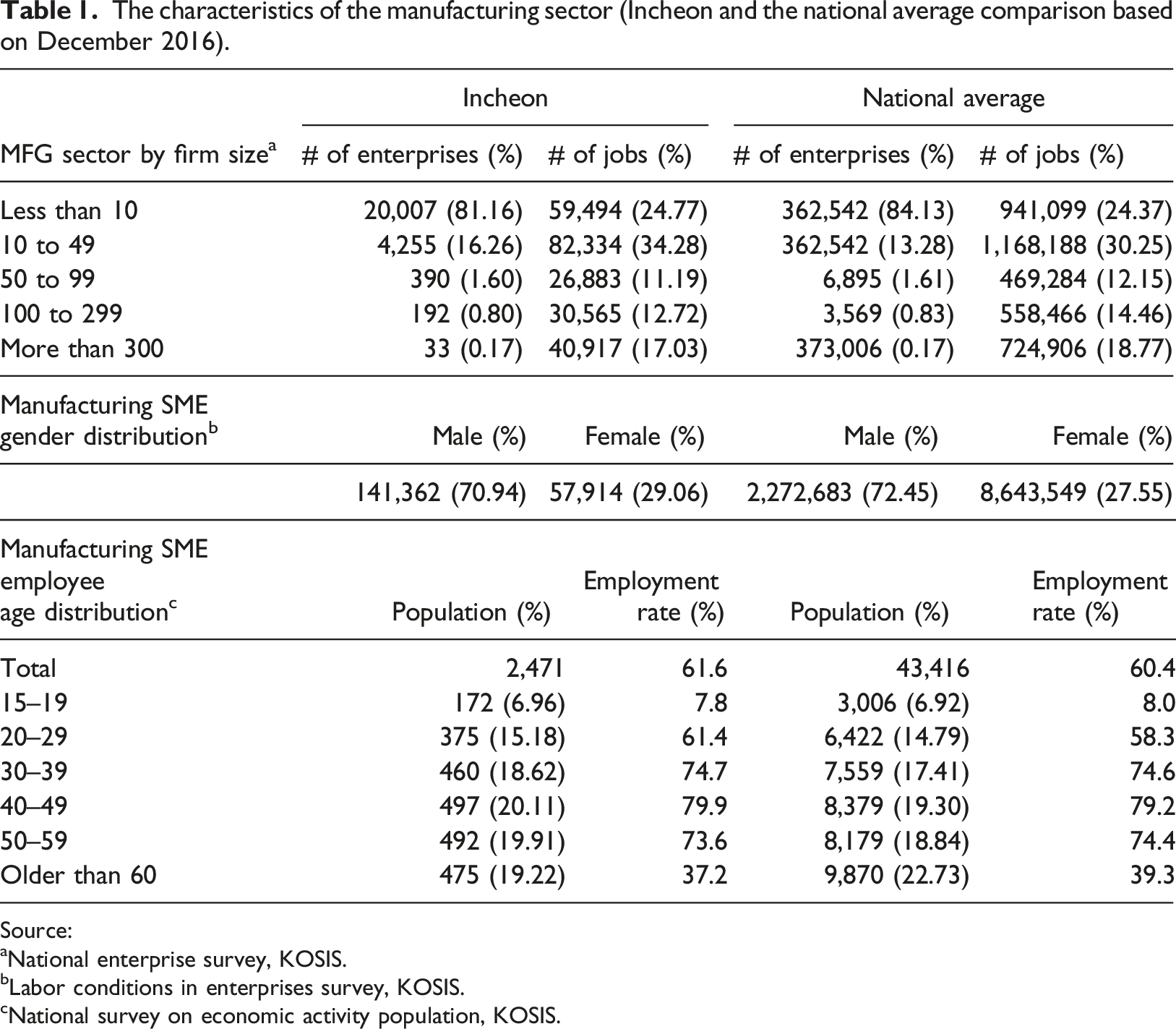
Source:
aNational enterprise survey, KOSIS.
bLabor conditions in enterprises survey, KOSIS.
cNational survey on economic activity population, KOSIS.
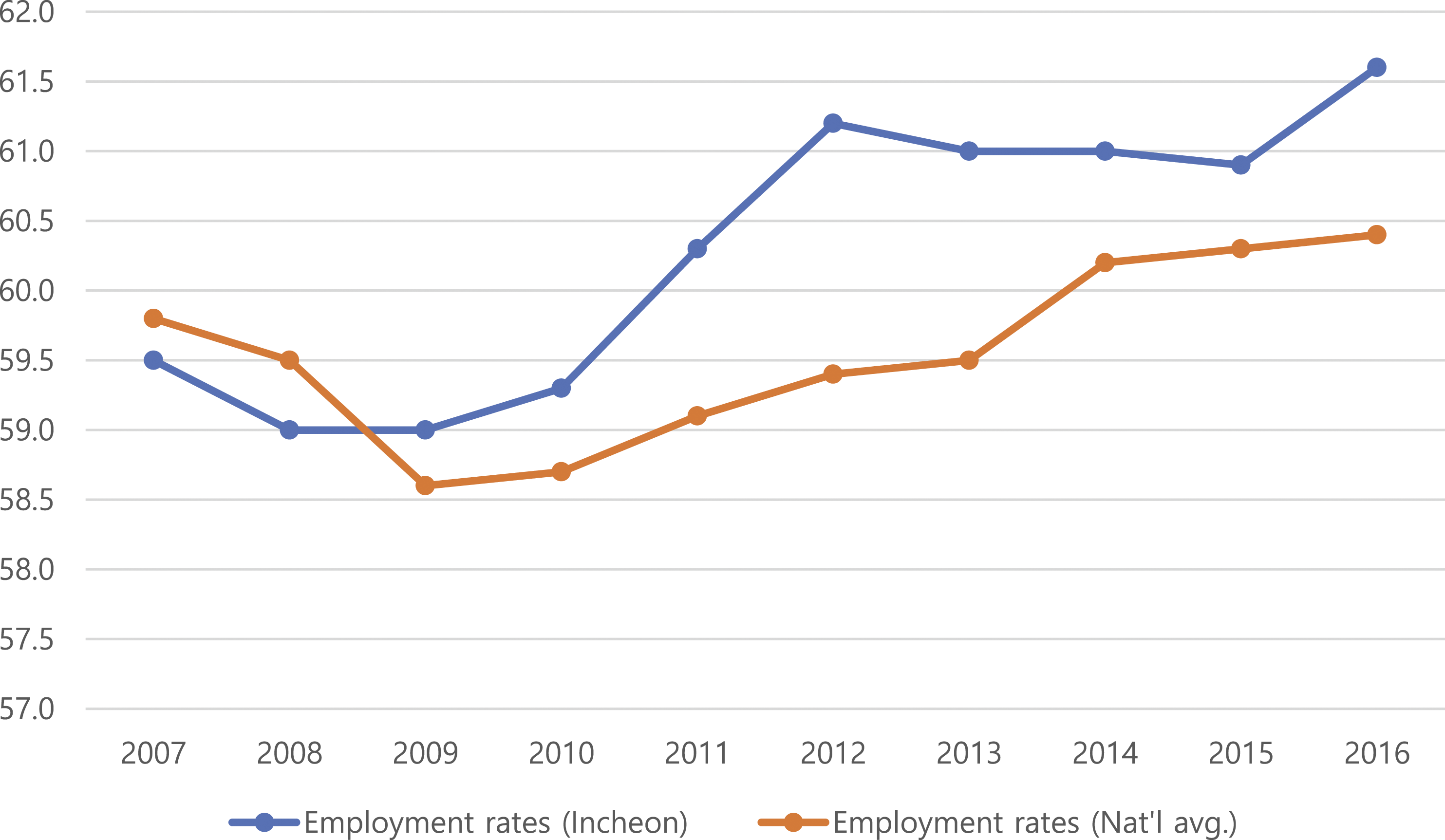
Employment rate changes in Incheon between 2007 and 2016.

Unemployment rate changes in Incheon between 2007 and 2016.
Distributions of firms and jobs of HGFs and Non-HGFs by size (2013, 2016).

Note: The author calculated HGFs using the OECD-Eurostat definition and included micro-firms in the analysis.
aThe number of new jobs are before considering the number of jobs destroyed as there is no variable to calculate the number of net new jobs.
bThere were nearly 10,000 non-HGFs in KED as of 2016. Among them, 1,933 firms had missing values in employee variable. After removing firms without employee data, 8,448 firm were used for analysis.
Second, this study focuses on incumbent SMEs that are older than ten years. Both an affirmative reason and a statistical evaluation led to such a decision. In South Korea, manufacturing HGFs has an average age of ten years (The Ministry of Small and Venture Businesses, 2017). However, the important roles of incumbent firms in Incheon’s economy have been largely downplayed by scholars and policymakers, due in large part to the policy bias towards young and fast-growing firms in the high-tech industry sectors (Brown and Mason, 2014). Thus, incumbent SMEs deserve a special attention. In terms of statistics, the inclusion of young micro-firms creates a problem with data accuracy while correcting the sample bias. It is well-known that tiny businesses have fewer reporting requirements, resulting in less thorough data for young and small firms (Coad et al., 2014). While adding micro-firms corrects the sample bias, it also raises concerns about the quality of the data, particularly for wage and investment in training data for firms between 4 and 9 years old, which often suffer from missing values. Retaining these missing values could skew results. Although removing 4-9-year-old firms compromises some data coverage, it will unquestionably improve data quality. Therefore, this study concluded that focusing on incumbent firms that are more than ten years old would be more advantageous.
This study also modified the concept of firm growth considering the high proportion of SMEs in Incheon. According to OECD-Eurostat, high growth is determined by either calculating the mean growth rate or measuring the size difference between the starting and ending years of the three years of the observation period. This approach implicitly presupposes a smooth, linear path of firm growth. For instance, the 20% of annual growth for three consecutive years translates into 72.8% of growth in three years. If a 5-person firm in the base year (2013) hired more than three people and grew into an 8-person firm at the end of the observation period (2016), then the firm will be considered an HGF.
However, not all firms will hire one or two people per year throughout a three-year period. Some will hire three people at once to minimize the recruitment costs. Smaller firms are more likely to do so because their limited financial resources hamper their continuous growth. Thus, this paper assumes that the firm-size and growth patterns are correlated. In return, the growth pattern will influence the hiring practices (McKelvie and Wiklund, 2010).
A firm's managerial decisions ultimately determine the quantity and characteristics of jobs created (Fuller and Moran, 2001). Although both employers and candidates may be involved in the hiring process, it is the employer who has the final say in creating a job position. Therefore, to develop the conceptual framework, this study draws upon literature from the field of organizational studies.
This study found that although high-growing SMEs as a group appear to hire people with high human capital for better paying and more secure jobs, smaller firms that experience only one year of growth are more likely to bring middle-aged women and the unemployed into permanent positions. Small firms that are typically viewed as uncompetitive can still generate inclusive labor market outcomes. Therefore, these firms deserve increased policy attention and support. In the following section, I will introduce some labor market issues and HGFs in Incheon briefly. Next, this study will review related literature and construct working hypotheses, which will be followed by data and methods, and the analysis sections. I will close the paper by discussing the policy implications of the findings.
The local context
Volatility and duality in Incheon’s labor market
Incheon’s labor market shrank in 2007–2009 following the 2008 Global Financial Crisis but quickly picked up from 2010 and grew rapidly until 2012 (See Figure 1). Then, it took another three-year dip from 2013 to 2015. This volatility in the labor market probably stems from the poor quality of jobs in SMEs, primarily due to limited access to financial resources and lower productivity and solvency of SMEs. In South Korea, SMEs are responsible for 70% of newly created jobs and many jobs at SMEs are less secure and lower paid than their counterparts in large firms. According to the Economically Active Population Survey, the average tenure for employees of SMEs in South Korea is less than three years. The average wage for SMEs jobs is only 65∼70% of the similar level jobs in large firms (Korea Small Business Institute, 2021). And these problems are more pronounced for female workers. Among regular workers, average tenure lengths for males and females are also significantly different at 8.3 years for male and 5.44 years for female workers. The average wage for female workers is also only 65∼70% of that of their male counterparts (when age, education, and skill level are equalized) (Keum, 2011).
High-growth firms in Incheon
According to the Ministry of Small and Venture Businesses (2017), 35% of all manufacturing establishments were HGFs in 2017. This share was substantially greater compared to the scientific and technology sector (8%) in the same year. This study used the Korea Enterprise Data (KED) to assess HGFs in Incheon for the years 2013–2016 because there are no official HGF statistics for localities (See Table 2). As of 2013, 10,441 firms made up the sample of manufacturing SMEs in KED, which is roughly 65% of all manufacturing SMEs registered in Incheon.
475 of these (or 4.5% of 10,441) were employment HGFs. The 475 HGFs consisted of 354 firms with fewer than ten employees (74.5%), 102 firms with 10–49 employees (22.53%), 11 firms with 50–99 employees (2.32%), and only three firms with 100–299 employees (0.63%). In 2013, HGFs in Incheon employed 4,499 individuals. By 2016, their workforce had grown to 11,329, reflecting the creation of 6,830 new jobs during their high-growth period. Remarkably, SME HGFs in Incheon continued to generate employment opportunities, even amidst a recession, outperforming the 8,448 non-HGFs that added only 800 jobs during the same period. Keep in mind that the percentage of jobs at micro-firms dropped from 27.7% in 2013 to 9.35% in 2016. This is because micro-firms expanded into larger enterprises following the high-growth events (See Table 2).
Different growth patterns of HGFs in the manufacturing sector
Growth patterns of HGFs by firm size and firm age.
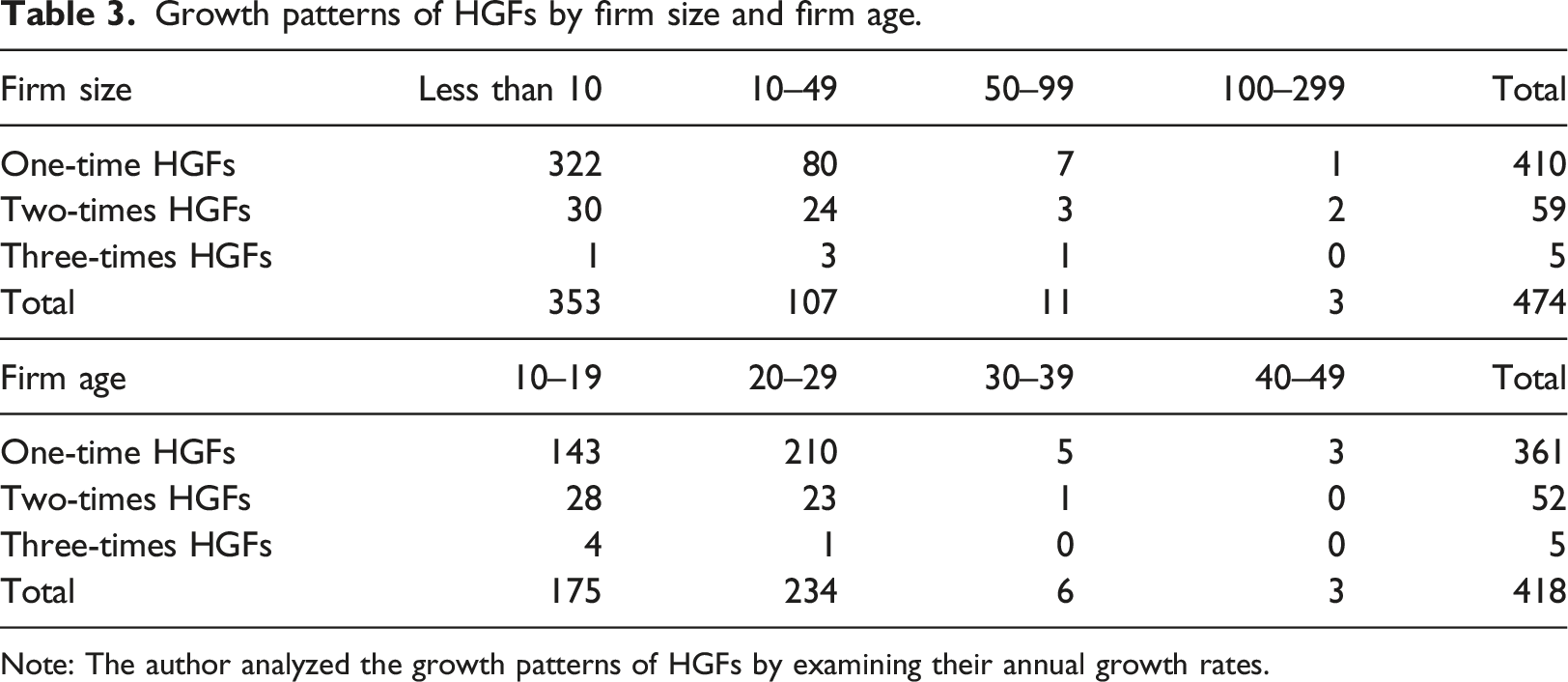
Note: The author analyzed the growth patterns of HGFs by examining their annual growth rates.
Some specific questions arise: What labor market outcomes do HGFs bring to Incheon during the economic downturn? Do they mostly hire male workers with high human capital and place them in decent jobs? Or do they serve as a buffer for the rising unemployment rates by recruiting unemployed people and providing them with another chance to re-enter the labor market? Why do some firms achieve only one-time high growth? Do employment practices differ among HGFs depending on their growth patterns? This study will review related literature and propose working hypotheses to answer these questions.
Related theories and hypotheses
Firm growth and human capital
Studies in organizational management have argued that a firm’s exceptional growth is determined by the firm’s intention to grow (Fischer and Reuber, 2011; Johnson, et al., 1997). High-growth firms possess the ability to assess what skills are required for them to grow and to find individuals with desired skill sets and attitudes that are critical to the firm’s continued growth (Dahl and Klepper, 2015; Mckelvie and Wiklund, 2010). Scholars in this line of thought have found that these firms hired individuals with high human capital and subsequently grew into large firms (Dahl and Klepper, 2015). By extending this finding to the SME manufacturers’ context, this study assumes that individuals with high human capital are more likely to be preferred by HGFs.
However, the desirable type of human capital and how to measure them varies depending on the industry sector and occupation. For example, in the knowledge-based industry sector, human capital is typically measured by educational attainment (Batt, 2002; Collins and Smith, 2006; Jung 2014); in the manufacturing sector, formal educational attainment is not an exact measure of an individual’s capacity. It is probably relevant to assume that a large proportion of managers and engineers in the manufacturing attain college degrees, it might not be the same for production line workers. In the latter case, the level of knowledge gained from daily experiences is probably more relevant (Lowe and Wolf-Powers, 2018).
Therefore, to measure human capital in the manufacturing sector, this study will use age as a proxy. Older people are likely to have more work experience and knowledge which can contribute to firm growth (Smith et al., 2005). However, seniority does not always guarantee superior knowledge or ability as individuals’ capacity to ‘learn by doing’ differs. To complement the shortcomings of using age, this study also uses the reason for leaving the previous jobs. If a person left the previous position voluntarily to take a new position, it is likely that the person possesses competitive talent and skills to be recruited by another firm, suggesting relatively high human capital. On the other hand, if the person left involuntarily, they are likely associated with less competitive human capital (Daunfeldt and Westerberg 2017). Although leaving a position against one's will does not always indicate less competitive human capital, an extended period of unemployment is generally associated with talent and skill reduction. Thus, holding all other conditions constant, people who are currently unemployed are relatively less competitive in comparison to their continuously employed counterparts. Thus, this research uses involuntary leave as a proxy for marginalized status in the labor mark.
Firm growth and human resource practices
Why would a person with high human capital then choose to leave their current employment and take a position in a high-growth firm? There are a few competing explanations offered by Coad et al. (2014) and Daunfeldt and Westerberg (2017). The first is the excitement of working for a rapidly changing organization. Second, that high-growing firms can offer future opportunities. Those individuals who are entrepreneurial and adventurous would be more attracted to such potential opportunities. Third, better employment arrangements, such as higher wages and excellent incentives will motivate talented and entrepreneurial people to leave their current positions and take a new one in a high-growing firm.
In the resource-based view of the firm, incentive-based HR practices motivate employee behavior and capabilities to contribute to a firm’s competitive advantage (Bowen and Ostroff, 2004; Collins and Clark, 2003). Incentive-based HR practices include ongoing investment in training, employment security, high-relative pay, and performance management systems that build trust (Batt, 2002). Firm-provided training rewards employees with additional skills and opportunities for higher-paying jobs. Employment security is usually measured by the permanence (regularity) of the position (Jung, 2014). Job security is known to enable workers to suggest labor-saving improvements without fear of job loss (Batt, 2002). Efficiency wage theory posits that employees with high relative pay will be more productive to avoid the prospect of a worse job on the external market (Krueger and Summers, 1987). As such, the effective incentive-based HR practices that are known for enhancing motivation and commitment include job security, high compensation, and training (Huselid, 1995; Pfeffer, 1998; Jung, 2014). This article hypothesizes that by providing job security, relatively high compensation, and training opportunities, HGFs are not only able to attract people with high human capital but also to motivate workers to participate in achieving the firm’s growth goal. Thus, newly hired people will be likely to be placed in positions that are supported by incentive-based HR practices including job security, high wage, and training opportunities.
High compensation is measured by monthly wages. There is no variable in the data that would tell us about position-specific training opportunities. If the firm adopts a policy that emphasizes rigorous internal training, all employees would likely benefit from it. Thus, this study uses the percentage of total expenditure devoted to training to measure training opportunity.
HGFs’ employees overall are likely to possess high human capital and hold jobs that are supported by incentive-based HR practices in comparison to non-HGF employees.
The same logic can be extended to new hires of HGFs during the high-growth period.
HGFs’ newly hired employees during the high-growth period are likely to possess high human capital and hold jobs that are supported by incentive-based HR practices in comparison to non-HGF employees.
Hiring practices of One-time HGFs
One-time HGFs refer to firms that exhibit one-time sharp growth within a three-year observation period. This means that these firms hired a large number of new employees (20% of their current employees and above) in one year. For example, a company with ten employees in 2013 would hire more than eight new employees within a year. In Incheon, 78.5% of One-time HGFs are micro-firms, which typically have limited access to financial capital, a critical resource for growth (Fuller and Moran, 2001). This could be why most micro-HGFs in Incheon during the 2013-2016 period achieved only one-time high-growth.
SMEs with limited resources may seek to bring their high-growth aspiration into reality by strategically aiming at a niche market in the labor pool. For instance, the hiring practices of One-time HGFs can be explained by the matching model: for some One-time HGFs, it might be difficult to find and recruit enough qualified people to almost double the number of the existing employees in one year. In such a case, firms will relax their hiring criteria (Coad et al., 2014) and might want to hire people who are already available (i.e., currently unemployed) in the labor market (Barringer et al., 2005; Coad and Tamvada, 2012). Smaller One-time HGFs (i.e., micro-HGFs) will probably experience more difficulties in attracting talented or more experienced workers, due to their low visibility on top of the financial limitations. This might result in hiring individuals who are less qualified or marginalized in the labor market.
From the employee perspective, individuals may seek employment in HGFs despite the possible uncertainty associated with such employment, if they offer a springboard that can enhance their labor market position. This would particularly be applicable for those in a weak labor market position, such as females and the unemployed. These groups may be tempted to enhance their labor market potential by taking employment in HGFs, despite the employment risk associated with HGFs.
What jobs will those new hires be assigned to? One-time HGFs most likely strategize to encourage new hires to stay in the firm longer and work for the interest of the firm by providing a more secure position to those who have been unemployed. In dynamic labor markets, high turnover of employees may not only increase the costs of recruitment, but also negatively affect productivity as new employees face a learning curve, and the cost of training new staff may be less than the cost of hiring highly skilled staff (Batt, 2002). For people, taking a permanent position in a small but rapidly growing firm would be more reasonable than being unemployed and waiting until a desirable position appears.
One-time HGFs’ newly hired employees during the high-growth period are likely to be young and unemployed in comparison to new hires of other types of HGFs. Also, those who are newly hired by One-time HGFs are likely to be placed in positions that are well-supported by incentive-based HR practices in comparison to new hires of other types of HGFs.
Hiring practices of Two-times HGFs
Two-times HGFs are those firms that achieve high growth two times within the three-year observation period. These firms tend to be bigger and older than One-time HGFs (See Table 3); thus, they probably have more internal resources to repeat high-growth. For Two-times HGFs, the resource-based view provides only a partial explanation. Given that Two-times HGFs are older and larger firms, they tend to recruit more experienced workers with competitive talent or skill sets.
It is also likely that they have a clear direction for what types of people they want to hire during their high-growth period. Under such conditions, it is likely that Two-times HGFs would tend to hire people with better abilities or higher human capital compared to other-HGFs. Again, in this paper, the higher human capital is measured by age and voluntary departure from the previous job. Also, it is likely that the characteristics of new jobs are likely similar to those of overall employees of HGFs.
Two-times HGFs’ newly hired employees during the high-growth period are likely to possess high human capital and hold jobs that are well-supported by incentive-based HR practices in comparison to new hires of other types of HGFs.
Research design, data, and methods
Research design
Sample properties (stratification and the distribution of new hires).
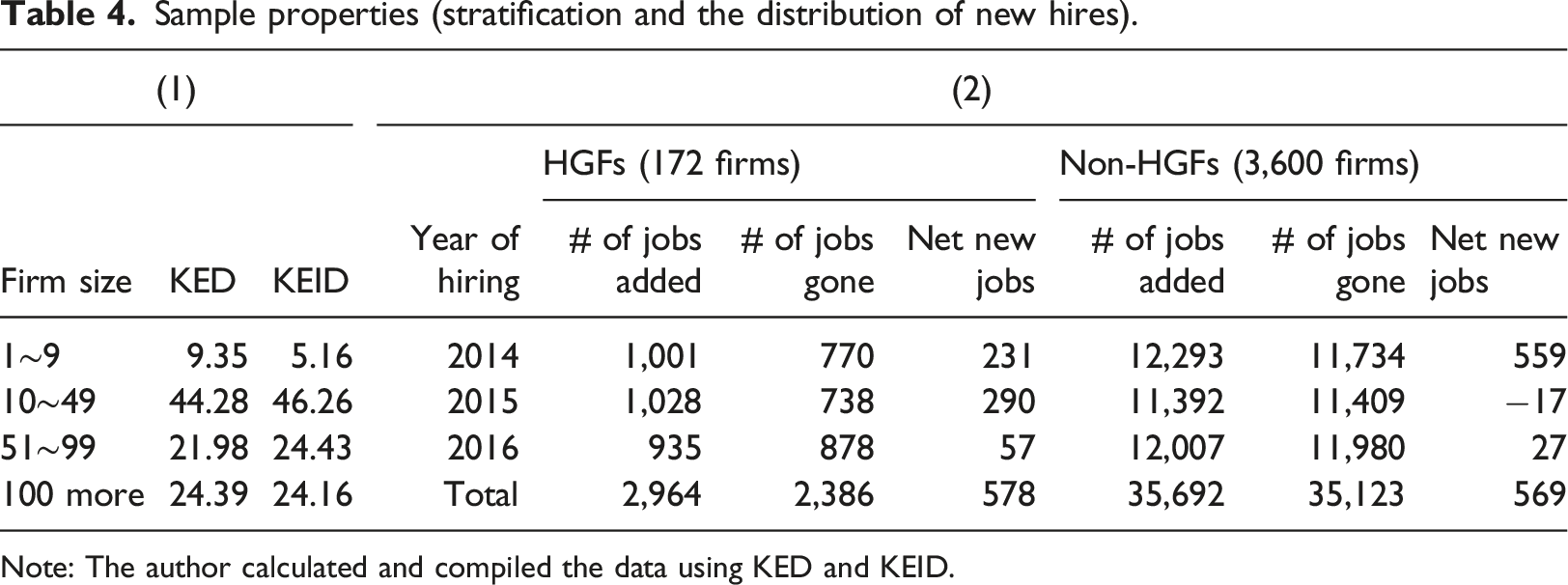
Note: The author calculated and compiled the data using KED and KEID.
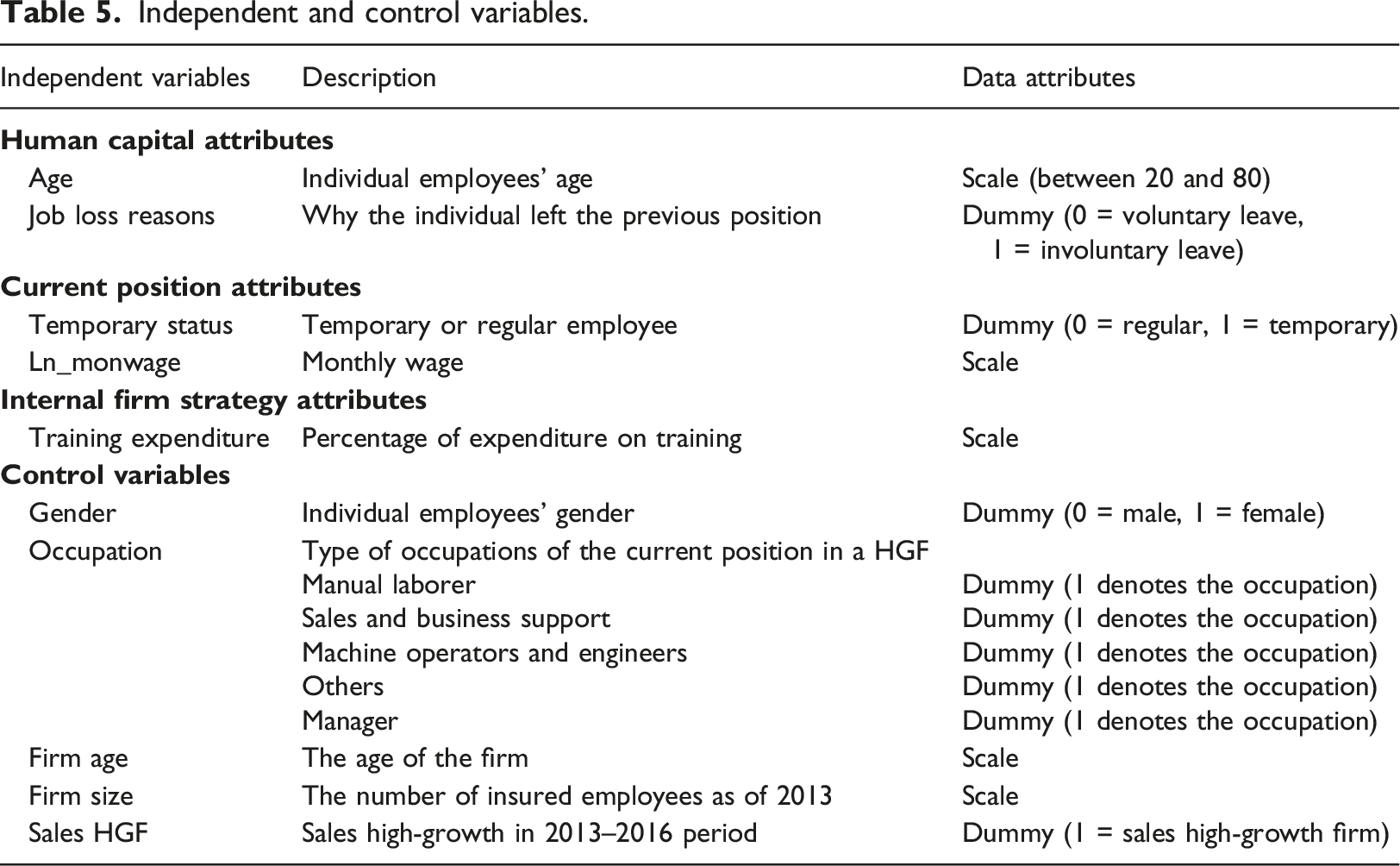
Independent and control variables.
Data and samples
The population of interest in this study is the people employed by high-growth SMEs in the manufacturing sector in Incheon. In oder to construct employee-employer matched panel data, the author provided the Ministry of Employment and Labor 5 with the data of 474 HGFs and 8,448 non-HGFs, and requested the ministry to find matching employees of those enterprises from the Korean Employment Insurance Data (KEID). 6
The ministry returned only partial information of what the author requested, including data for 7,019 workers in 172 HGFs and 132,314 workers in 3,630 non-HGFs. The ministry was hesitant to provide the entire population's data due to concerns about the protection of personal information. This sample contains 2,964 new jobs created by HGFs and 35,693 new jobs created by non-HGFs between 2014–2016.
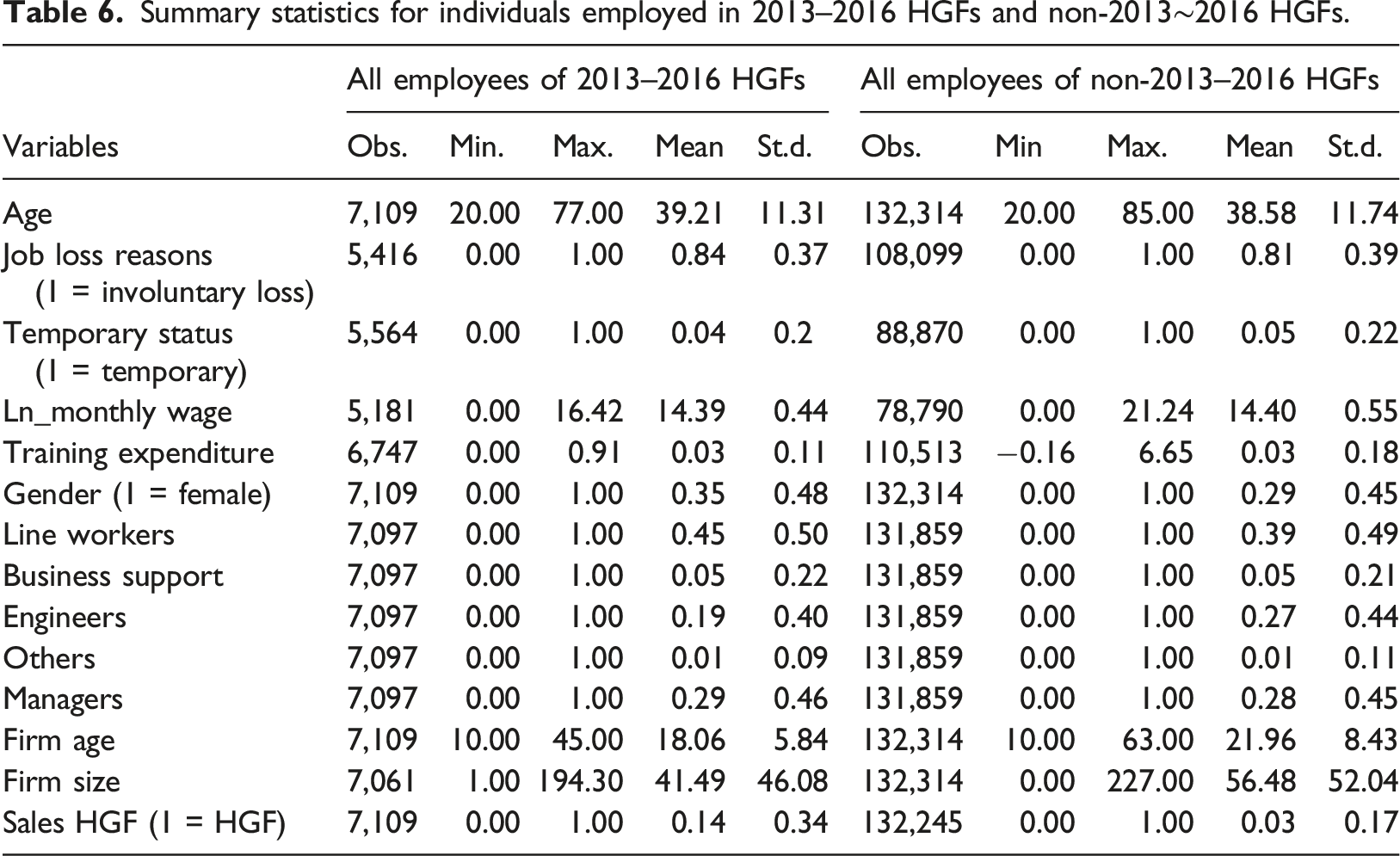
Summary statistics for individuals employed in 2013–2016 HGFs and non-2013∼2016 HGFs.
Statistical methods
To estimate what types of jobs HGFs create and for whom, this study uses a multivariable logistic regression method. The dichotomous dependent variable (HGFs) takes the value 1 if the person is employed by an HGF, and 0 otherwise.
This study estimates the dependent variable by using multiple independent variables which consist of three parts. X jt is a vector of personal characteristics including age, the reason for leaving the previous position, and gender in period t. Y it is a vector of characteristics of jobs including the employment status at the current position, the amount of monthly salary, and the percentage of investment of sales profit back to training in period t. Z it is a vector of control variables including firm age, firm size, occupations, and sales high-growth in period t. Θ, Ψ, and Ω are corresponding parameter vector of each independent variable, respectively.
Variables
The types of human capital are measured by age and by reasons for leaving the previous position. Age is a scale variable between 20 and 80 years. It denotes the age of the individual at the time of hiring. Job loss reasons are a dummy variable. 1 denotes involuntary leave. Involuntary job loss was measured as job exit due to either plant closing or layoff. As this data set is derived from the employment insurance data, it only contains economically active people. Thus, the counterfactual of involuntary leave is voluntary leave.
The job quality (employment conditions) of the current position includes the permanence of the position, the monthly wage, and the training expenditure. These variables partially indicate the quality of jobs at HGFs. A regular position is one that (a) continues from pay period to pay period, (b) lasts for an indefinite duration (more than one year), and (c) involves working 15 or more hours each week. 1 denotes a non-regular worker, whereas 0 denotes a regular worker. Monthly wage is scale data taking the log of the amount of payment. The percentage of training expenditure is scale data.
This research uses two variables to measure the inclusiveness of new jobs, including the hiring of female workers and unemployed workers. As discussed earlier, two types of workers, female and unemployed people, are in a particularly vulnerable position in the South Korean labor market. Gender is a dummy variable and 1 denotes female. Unemployment status is measured by using the job loss reason, which is a dummy variable. 1 denotes involuntary job loss. It includes job exit due to either plant closing or layoff.
There are multiple control variables. Occupation is included to account for differences in job types. Five types of occupations in the manufacturing sector (manual laborer, sales and business support, machine operators, engineers, and managers) are transformed into dummy variables. The model was constructed based on managers (the model indicates the odds of other occupations to be hired in comparison to managers). To control for firm characteristics, firm age and firm size are included. Firm age is scale data. It is calculated by deducting the year of establishment from 2016. Firm size is scale data and is measured by the number of employees in 2013. To capture external shocks, such as a sudden increase in product acceptance in the market, demand increase, and market expansion, sales high-growth is included (dummy, 1 = sales high-growth firm) in the model. Details of each variable are compiled in Table 5.
Summary statistics
Table 6 presents the summary statistics for all employees of HGFs and non-HGFs in the period of 2013–2016. The mean age for this group was 39.21 years, and 84% of this sample experienced involuntary job loss before taking their current position. In addition, 4% of those in this sample were employed on a temporary basis. The average monthly wage was 1,937K Korean won (1,850 US dollars). Five percent of all expenditures were used for internal training. Overall, people who were working for HGFs during the 2013–2016 period more likely to be slightly older, female, and unemployed at the time of hiring than were their counterparts in non-HGFs. Another important aspect to note is that 14% of HGF employees are working in employment HGF that also achieved sales high-growth in the same period, whereas the proportion for non-HGF employees is only 3%. This suggests that firms that have achieved high growth in employment are also likely to experience high growth in sales compared to non-HGFs.
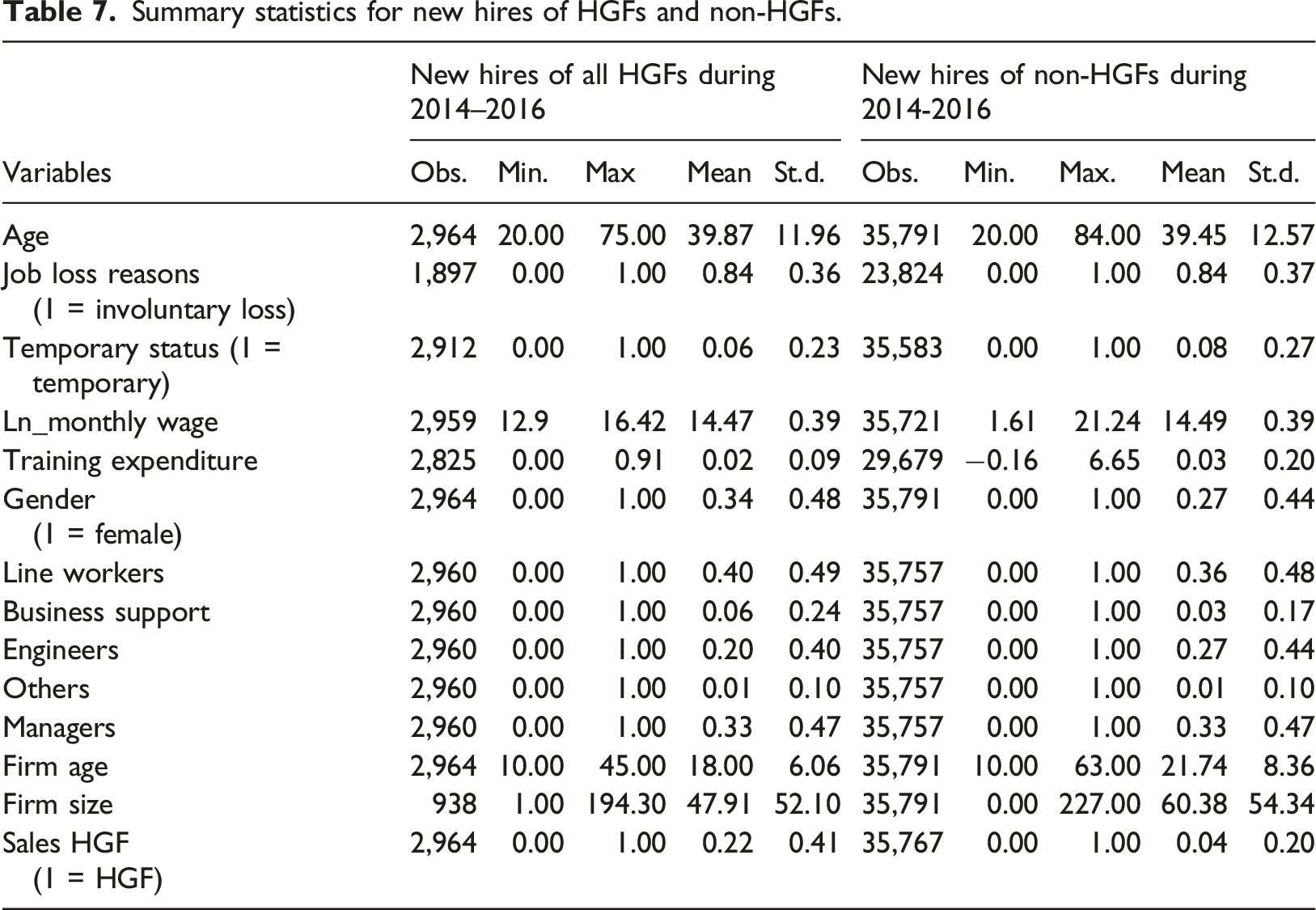
Summary statistics for new hires of HGFs and non-HGFs.
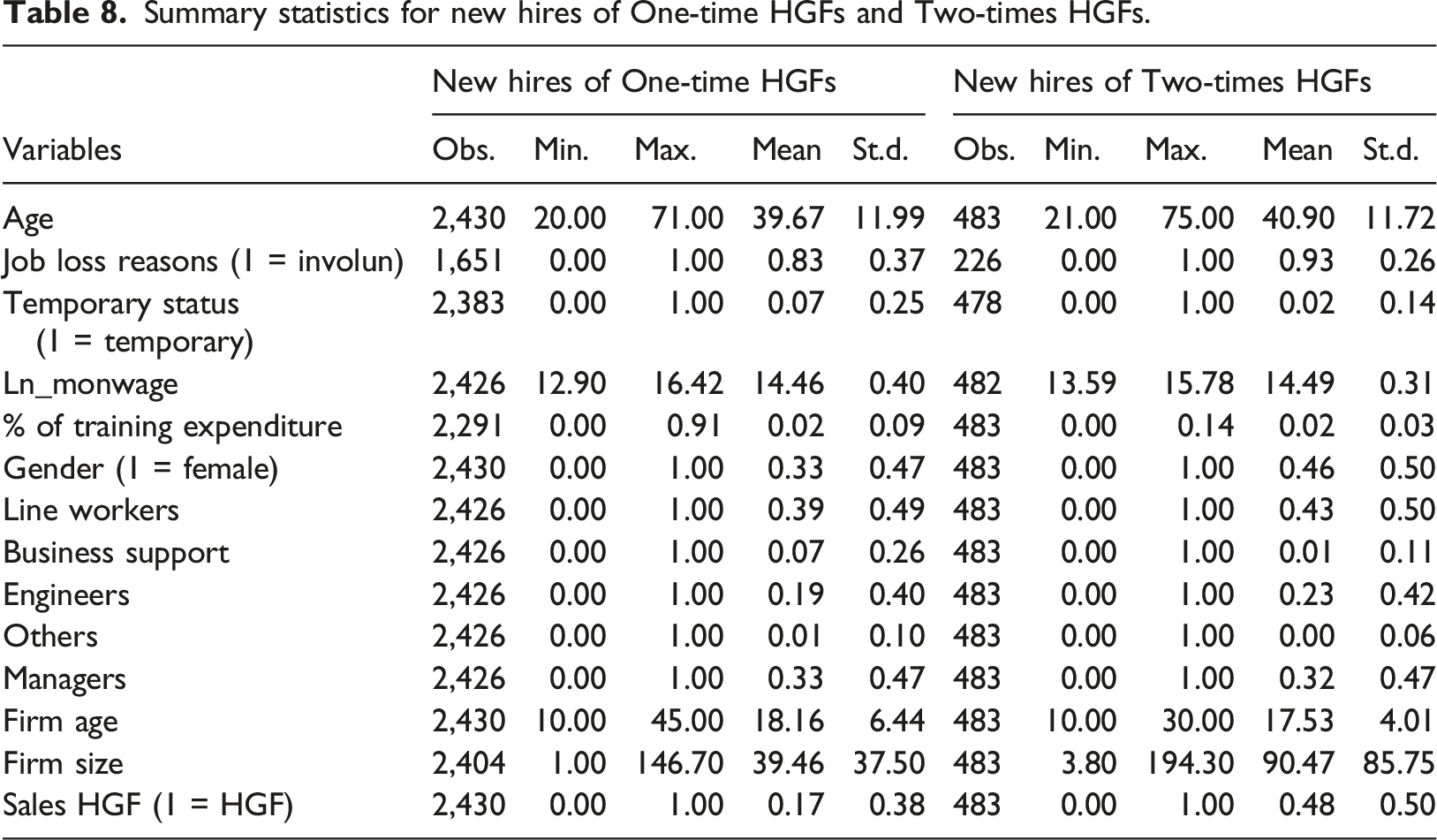
Summary statistics for new hires of One-time HGFs and Two-times HGFs.
Analysis results
Logistic regression results
Logistic regression results for being employed in an HGF (all employees vs new hires).

*p < 1.0.
The likelihood of a person working for an HGF decreases by 37.3% if they hold a temporary job. The inverted interpretation for an easier understanding is that the odds of the person holding a permanent position to be currently working for an HGF is 1.6 times higher than they are for the person holding a temporary position. It suggests that workers in HGFs are more likely to be in permanent positions than similar workers in non-HGFs. 7 If a person receives higher wages by one standard deviation than the mean wage, the odds that the person is currently working for an HGF increase by 131%. The percentage of expenditure for training is insignificant. Gender (1 = female) is significant and its coefficient is negative. The odds of working for an HGF decrease by 33%, if the person is female. The odds of a man to be working for an HGF are 0.249 and 0.166 for a woman. Thus, men are 1.5 times more likely to work for an HGF than women. On the other hand, the odds of a man to be working for a non-HGF are 0.972 and 0.674 for a woman. Thus, men are 1.44 times more likely to work for a non-HGF than women. In sum, men are more likely to be working for both HGFs and non-HGFs. However, HGFs are more likely to hire women than non-HGFs as seen in the descriptive statistics in Table 6.
Taken together, the overall employees of HGFs are more likely to be younger male workers than their counterparts in non-HGF and they are likely to have been recruited from other firms. Also, the employees of HGFs overall are likely to have better job security and receive a higher monthly wage then their counterparts at non-HGFs. These findings support Hypothesis 1.
Model 2 estimates the characteristics of people who were newly hired by HGFs between 2014 and 2016 and the characteristics of their jobs in comparison to newly hired in non-HGFs (see Table 8). Both the characteristics of new hires and the types of jobs are similar to those of the overall HGF employees. HGFs tend to provide better work conditions for their new hires in comparison to non-HGFs. Thus, these findings partially support Hypothesis 2. An important difference between Model 1 and Model 2 is that newly hired people are likely to receive training opportunities (significant at p > 0.1) in comparison to already existing employees of HGFs. In sum, HGFs tend to provide better job conditions to new hires than that of the already existing employees (See Table 9).
Logistic regression results for newly employed by One- and Two-time(s) HGFs.

*p < 1.0.
Model 4 estimates the characteristics of newly hired people and their jobs at Two-times HGFs (see Table 8). Age is significant and the coefficient is positive. If age increases by one year, the odds of being newly hired by a Two-times HGF during 2014–2016 increases 1.022 times. If the person left the previous job involuntarily, the odds of being newly hired by a Two-times HGF during their high-growth period decrease by 40%. The odds of the newly hired person by a Two-times HGF being placed in a temporary position increase by 206%. These results only partially support Hypothesis 4. Unlike other models, Two-times HGFs recruit older male workers from other firms and place them to temporary positions. To ensure that the models are robust, I check for multicollinearity among the variables using the variance inflation factor (VIF) test. As all VIF values are below 2, we can rule out the multicollinearity problem (see Table in Appendix).
Discussions
At an aggregated level, SME HGFs in Incheon show a tendency to hire younger male workers with high human capital in comparison to non-HGFs. HGFs are also more likely to place their employees to better secured and better paid positions. These characteristics were found both in the overall current employees and new hires of HGFs. However, the comparison among HGFs revealed that one-time HGFs are more likely to hire women between 30 and 50 years of age, as well as unemployed individuals, into permanent positions during their high-growth period compared to other types of HGFs. These firms play a crucial role in promoting inclusiveness in Incheon’s labor market by actively employing people in precarious situations. These results also indicate the existence of heterogeneous employment practices among HGFs, even within the same industry sector and region. This supports the assumption that was provided at the beginning of this study: HGFs would exhibit different employment practices depending on their growth patterns (in page 5).
It is also critical to understand why One-time HGFs are more likely to hire middle-aged and unemployed female workers. In the literature review, it was assumed that One-time HGFs would relax their human capital requirements and hire readily available workers to resolve the tension between the internal demand to hire a large number of people at once and the lack of time and financial resources. Another logical explanation is also possible: the observation period partially coincided with the economic downturn, resulting in a loose labor market in Incheon (see Figure 1 and 2). Under such conditions, firms can more easily recruit workers, while job seekers struggle to find jobs. Thus, it is conceivable that One-time HGFs strategically chose to satisfy their skill requirements at a lower cost by hiring experienced (middle-aged) but unemployed workers and providing job security.
On the other hand, Two-times HGFs tend to place a newly recruited person (who is likely an older male who was working for another firm at the time of their hiring) in a temporary position. Thus, Hypothesis 4 is not supported. Why would some talented workers be willing to take a temporary position in an HGF? Several aspects were discussed in the literature review section: (1) the excitement about working for a rapidly changing organization, (2) the future opportunities that high-growing firms can provide, (3) better employment arrangements, and (4) packages provided by the rapidly growing firms to attract people with high human capital. In addition, this study offers two other logical speculations. First, they may have been in a temporary position in their previous job; thus, for them, it may have been a horizontal move. Second, they might have been on the “let go” list at their former workplace. If that were the case, the voluntary move of talented men could be the result of a strategic choice to maintain their jobs before being laid off. One possible explanation for this speculation stems from Model 4: on average the Two-times HGF new hires are older and more likely to be in temporary positions. The older they are, the more likely they are to be placed in a temporary position. However, more investigation using longitudinal data on occupational mobility is necessary to fully comprehend why certain people move to high-growing firms.
The training variable was found to be significant only for new hires (Model 2). In a labor market where high job mobility and labor poaching are common, firms may be hesitant to invest in training their employees to increase firm-specific human capital, especially those located near a large number of competitors. (Muehlemann and Wolter, 2011).
Conclusions
This study has examined the types of jobs created by HGFs during their high-growth period and their labor market outcomes. Specifically, this study focused on the qualitative aspects of jobs created by incumbent SME HGFs. Despite challenges encountered in the research process, such as limited data access, the findings remain partially generalizable and provide insights into the roles of HGFs in slow-growing regions.
Firstly, HGFs have significant effects on job creation in a slow-growing region as they create most new jobs while non-HGFs largely destroy jobs. Secondly, HGFs contribute to the local economy not only by creating jobs but also by providing employment opportunities for diverse individuals, including those with high human capital and those facing difficulties in reentering the workforce, such as middle-aged women. Thirdly, financially constrained smaller firms, referred to as micro-HGFs, play a crucial role in absorbing the jobless. Fourthly, incumbent SMEs have demonstrated that, after operating as small firms for longer than 10 years, many of them still can achieve high growth. This finding challenges the popular belief that HGFs are exclusively young and small, known as “gazelles” (Birch and Medoff, 1994), underscoring the importance of incumbent SMEs as a pillar of job growth.
Furthermore, through an examination of annual growth rates over a three-year observation period, this study has also shown that firm growth does not follow smooth and linear paths in most cases. Instead, the growth rates of HGFs fluctuate. The discussion section elaborated on how these growth patterns correlate with different employment practices. Future research should explore this issue in diverse geographic and economic contexts, considering factors such as firm age, size, and industry sectors, as they all influence the employment practices of firms. By providing contextualized empirical findings at the local and regional levels, we can expand our understanding of the employment practices of HGFs.
Another important future research task emerges from the above findings. Policy programs often strive to identify firms that grow fast, and persistently. However, prior studies have shown that HGFs are short-lived “one-hit wonders” (Daunfeldt and Halvarsson, 2015) and firms rarely repeat their high-growth episodes. More importantly, this study testifies that only a tiny proportion of firms achieve high-growth for three consecutive years. If most HGFs cannot sustain their high-growth even for three consecutive years, then those This study also suggests an important future research avenue. While policy programs frequently aim to identify firms that exhibit consistent and sustained growth, prior research indicates that HGFs are often short-lived, “onehit wonders” (Daunfeldt and Halvarsson, 2015). Indeed, this study has revealed that only a small fraction of HGFs can maintain high-growth for three consecutive years. In light of this evidence, policies aimed at identifying potentially ever-growing HGFs or factors that enable firms to achieve such growth may need to be reassessed. To address this issue, further research using larger and more comprehensive samples is necessary.
This study has some policy repercussions. Older small businesses account for a significant share of business establishment in a slow-growing region like Incheon, but they are frequently ignored by policymakers since they are seen as uncompetitive entities. Economic development policy initiatives, including those in South Korea, have a propensity to overemphasize bigger, newer, and more innovative firms while giving smaller businesses comparatively little attention. Small and incumbent firms should receive more attention from public policy circles because, although appearing to remain dormant for longer than 10 years, they can surprisingly organize high growth when the chance arises. Depending on the local circumstances, policy packages to promote the incumbent firms can vary, but one thing is certain: supporting older and smaller businesses can be accomplished using a portion of the funding set out for larger firms.
Secondly, the study found that resource-constrained micro-firms were able to find suitable matches among the unemployed. Local governments can leverage this and facilitate connections between unemployed individuals with good job-seeking intentions and micro-firms with high-growth aspirations. Additionally, by providing wage assistance to micro-firms, the government can ensure the decency of the job and the continuity of employment.
Thirdly, it is imperative for the public sector to acknowledge that micro-firms often lack the requisite internal resources and expertise to prepare applications for government support. In light of this, administrative complexity must be reduced to facilitate micro-firms' access to government programs. Moreover, to prevent micro-firms from competing with larger, resource-rich firms for government aid, local governments must create exclusive policy programs that cater specifically to the needs of micro-firms.
Footnotes
Acknowledgements
The earlier version of this paper was first presented in a pre-organized session on 'Inclusive Innovation' at the Association of Collegiate Schools of Planning Conference held in Greenville, South Carolina, USA in 2019. The author would like to extend her special thanks to the anonymous reviewers and the editor, Greg Schrock.
Declaration of conflicting interests
The author(s) declared no potential conflicts of interest with respect to the research, authorship, and/or publication of this article.
Funding
The author(s) disclosed receipt of the following financial support for the research, authorship, and/or publication of this article: This work was supported by the National Research Foundation of Korea (NRF-2021S1A5B5A16077625).

Notes
Appendix
Table 11
VIF values for independent variables.
Models
Unstandardized coefficients
Standardized coefficients
t
Sig
Collinearity statistics
B
St.d
b
Tolerance
VIF
(Constant)
0.014
0.030
0.461
0.645
Age
−0.001
0.000
−0.033
−7.410
0.000
0.890
1.124
Job loss reasons
0.011
0.003
0.016
3.633
0.000
0.941
1.063
Employment status
0.024
0.005
0.019
4.473
0.000
0.963
1.039
Ln_monthly wage
0.009
0.002
0.021
4.550
0.000
0.863
1.159
Gender
0.019
0.002
0.034
7.533
0.000
0.879
1.138
Line workers
0.015
0.003
0.030
5.821
0.000
0.663
1.508
Business support
0.033
0.006
0.025
5.725
0.000
0.909
1.100
Engineers
−0.009
0.003
−0.017
−3.305
0.001
0.698
1.433
Others
−0.003
0.011
−0.001
−0.291
0.771
0.974
1.027
firm age
−0.003
0.000
−0.086
−19.748
0.000
0.939
1.065
Firm size
−0.001
0.000
−0.107
−24.010
0.000
0.902
1.109
Sales HGF
0.164
0.005
0.132
30.992
0.000
0.990
1.010
Training expenditure
−0.007
0.006
−0.005
−1.214
0.225
0.997
1.003