



Abstract
In this paper, Nepal’s journey toward graduating from the Least Developed Countries (LDCs) category, a significant milestone anticipated for November 2026, is discussed. It evaluates Nepal’s progress in meeting the three key criteria for LDC graduation: the income criterion, Human Assets Index (HAI), and Economic and Environmental Vulnerability Index (EVI). A comparative analysis with Bhutan, which graduated in 2023, and Bangladesh, aiming for graduation in 2026, highlights the different economic paths and development challenges each country encounters. The article also discusses the potential consequences of Nepal’s LDC graduation, including the loss of preferential trade benefits and concessional aid. It outlines Nepal’s preparations, which involve the Smooth Transition Strategy (STS) and the 16th Five-Year Plan, both emphasizing macroeconomic stability, economic transformation, and social inclusion. While the article identifies key opportunities, such as increased foreign investment and an improved international reputation, it also underscores the challenges Nepal will need to address to ensure sustainable growth after graduation, particularly through strategic international partnerships and development diplomacy.
Keywords
Introduction
According to United Nation (UN), Least Developed Countries (LDCs) are defined as nations with the lowest socioeconomic development levels, characterized by low income, weak human assets, and high economic and environmental vulnerability. Nepal was classified as one of the Least Developed Countries (LDCs) by the United Nations in 1971. As of December 2023, there are 45 countries on the UN’s LDCs list, including eight in Asia, one in the Caribbean, three in the Pacific, and 33 in Africa. These countries are entitled to various benefits such as preferential market access, international aid, special technical assistance, and capacity-building support in technology, among other concessions. Nepal is expected to graduate from LDC status in November 2026, along with other two Asian countries, Bangladesh and the Lao People’s Democratic Republic.
In a country like Nepal, where poverty is multidimensional encompassing social, political, and economic challenges, a comprehensive assessment is required before graduating from LDCs to middle-income status. Many citizens are still compelled to face extreme social discrimination, exclusion, and limited access to basic services. Additionally, the slow pace of institutionalizing federalism and the sluggish economy are persistent concerns.
If successful, the graduation will be a critical milestone in Nepal’s development journey, signaling its shift from dependency on international support to greater self-reliance. However, there are valid concerns about the potential loss of key privileges, such as access to international grants, concessional loans, reduced trade tariffs, and technical assistance, which have been vital to Nepal’s growth and development thus far.
Literature review
Least Developed Country (LDC) graduation reveals both challenges and opportunities that nations encounter during this transitional phase. According to the United Nations Committee for Development Policy (UNCDP), countries aspiring to graduate must meet three key criteria: income per capita, the Human Assets Index (HAI), and the Economic and Environmental Vulnerability Index (EVI) (UNESC, 2023). Successful graduation can enhance a country’s international reputation and economic self-reliance, leading to increased Foreign Direct Investment (FDI) and improved trade opportunities (UNCTD, 2023). However, the process is fraught with risks, including the potential loss of essential trade privileges and financial aid that have historically supported developmental efforts, emphasizing the need for strategic planning to mitigate adverse impacts (ITC, 2023).
Nepal’s potential for transformative development lies in leveraging its recent growth and aligning with global standards. This requires strategic adjustments and a focus on prioritizing national goals to facilitate the transition from a developing nation to a developed one, ensuring sustainable prosperity for its people (Gautam et al., 2024).
Comparative analyses with countries such as Bhutan and Bangladesh illustrate the diverse impacts of LDC graduation on economic growth and social development. Bhutan’s successful graduation from LDC status serves as an inspiring example for Nepal and other LDCs, which aspires to achieve the same recognition. Bangladesh has achieved significant progress in industrialization and poverty alleviation, serving as a valuable case study for other LDCs like Nepal (World Bank, Nepal, Bhutan and Bangladesh: Country Overviews, 2022). The World Bank (World Bank, World development indicators, 2022) underscores that nations with diversified economies tend to fare better post-graduation, highlighting the importance of robust economic foundations and institutional capacities. Therefore, while LDC graduation presents a pathway toward greater autonomy and development, it requires comprehensive approaches that address the multifaceted challenges of transition, ensuring sustainable development and improved living standards for populations (UNDP, Human Development Report, 2022: Human development and the SDGs, 2022).
Thresholds of LDC graduation
The list of LDCs is reviewed every 3 years by the Committee for Development Policy (CDP), which reports to the Economic and Social Council (ECOSOC) of the UN. The UN Committee for Development Policy (CDP) has established three key criteria that countries must meet to qualify for graduation from the Least Developed Country (LDC) category. These criteria have specific thresholds that graduating countries must fulfill. (1) Income criterion (GNI per capita): A country must maintain a 3-year average Gross National Income (GNI) per capita of $1,306 or above. In 2022, Nepal’s GNI per capita stood at approximately $1,300 (NRB, 2022), just below the required level. However, projections suggest Nepal is likely to surpass this threshold by 2026, provided its economic growth remains steady. (2) Human Assets Index (HAI): The Human Assets Index must reach 66 or above (UNDP, Human Assets Index and Economic Vulnerability Index reports, 2022). This index comprises two sub-indices: health and education. The health sub-index evaluates (i) the under-five mortality rate, (ii) maternal mortality ratio, and (iii) prevalence of stunting. The education sub-index assesses (i) lower secondary school completion rate, (ii) adult literacy rate, and (iii) gender parity in lower secondary school completion. Nepal’s HAI score was 72.3 in 2021, surpassing the required threshold. This indicates notable progress in health and education, though challenges remain in improving healthcare quality and education outcomes. (3) Economic and Environmental Vulnerability Index (EVI) A country must have EVI of 32 or below (UNDP, Human Assets Index and Economic Vulnerability Index reports, 2022). The EVI comprises two sub-indices: economic vulnerability and environmental vulnerability. The economic vulnerability sub-index includes (i) the share of agriculture, forestry, and fishing in GDP, (ii) remoteness and landlockedness, (iii) concentration of merchandise exports, and (iv) instability of export earnings. The environmental vulnerability sub-index considers (i) the share of the population in low elevated coastal zones, (ii) the proportion living in drylands, (iii) instability in agricultural production, and (iv) the number of victims of natural disasters. Nepal’s EVI score in 2021 was 24.9, comfortably below the graduation threshold. While Nepal remains susceptible to environmental hazards such as natural disasters and climate change, the score indicates that it meets the required level for LDC graduation. Following the criteria set by CDP, Nepal is on track to meet all three LDC graduation criteria by 2026.
Bhutan’s graduation journey and lessons for Nepal
As of now, seven countries—Botswana in 1994, Cabo Verde in 2007, Maldives in 2011, Samoa in 2014, Equatorial Guinea in 2017, Vanuatu in 2020, and Bhutan in 2023—have successfully graduated from LDC status. The graduation of these nations illustrates that sustained economic growth, advancements in human development indicators, and effective governance are essential elements for transitioning to a more developed status.
On December 13, 2023, Bhutan became the seventh nation to graduate from the LDC category. This accomplishment is particularly noteworthy given the challenges posed by the COVID-19 pandemic and the global crises surrounding food, energy, finance, and climate change. Bhutan’s graduation signifies substantial progress toward achieving its development objectives and provides valuable insights for other LDCs, especially those that are small and landlocked, such as some in Africa. In contrast, Nepal is set to graduate from the LDC in November 2026, facing its own unique challenges and opportunities.
Bhutan was recommended for graduation from the LDC category by the Committee for Development Policy in March 2018, having met criteria for the Human Assets Index and Gross National Income per capita (BNSB, 2023). The recommendation was approved by the UN Economic and Social Council in July 2018 and the UN General Assembly in December 2018. Bhutan received a 5-year preparatory period to align this transition with its Twelfth National Development Plan (2018–2023). The Thirteenth Plan now serves as its transition strategy. This graduation marks a step toward economic independence, attracting foreign investment and enhancing trade, particularly in hydropower.
According to the latest available data (2022), Bhutan and Nepal have following GDP composition by sector: (1) (2) (3)
Bhutan’s successful graduation from LDC status serves as an inspiring model for Nepal as it seeks similar recognition. While Bhutan has effectively utilized its hydropower potential and tourism sector, Nepal’s reliance on agriculture and remittances presents both challenges and opportunities on its journey to graduation. Both countries must continue to prioritize sustainable development and empower their citizens to achieve lasting economic growth and enhanced living standards.
Assessing the LDC graduation prospects of Nepal and Bangladesh
Nepal and Bangladesh, two South Asian nations, have both been recommended to graduate from the Least Developed Country (LDC) category in November 2026. While both countries have made significant progress in various development indicators, there are notable differences in their economic structures, paths to graduation, and key development indicators.
Bangladesh has made significant progress, reaching a GNI per capita of $2,693 due to rapid industrialization, especially in textiles, and is now a lower-middle-income country (BBS, 2022). In contrast, Nepal’s GNI per capita is $1,300, reflecting slower growth. Bangladesh excels in health, education, and gender parity, with an HAI score of 75.4, while Nepal’s score is 72.3, showing progress but with ongoing disparities. Bangladesh’s economy is diversified with a reduced vulnerability score (EVI 25.2), whereas Nepal remains reliant on agriculture and remittances, making it more vulnerable to shocks and natural disasters.
Bangladesh’s poverty rate is 18.7%, driven by economic growth and manufacturing, while Nepal’s is 17.4%, heavily supported by remittances, which make up a larger share of its GDP. Bangladesh’s economy is export-oriented, primarily in textiles, while Nepal’s export base remains small and reliant on primary products. Bangladesh has industrialized rapidly, especially in garments, creating millions of jobs, while Nepal’s industrial sector struggles with infrastructure and political challenges.
Both countries have improved gender equality, but Bangladesh leads in female workforce participation, especially in textiles. Bangladesh also has stronger infrastructure, with projects like the Padma Bridge boosting growth, while Nepal faces challenges due to its mountainous terrain. Both countries are highly vulnerable to climate change, but Bangladesh has developed innovative climate solutions, while Nepal’s vulnerability is more severe due to its geography and reliance on agriculture.
In summary, while both Nepal and Bangladesh are on track for LDC graduation, Bangladesh’s diversified economy, higher GNI, and manufacturing sector provide it with a stronger foundation for the transition. Nepal, however, faces challenges related to its reliance on remittances, underdeveloped infrastructure, and vulnerability to natural disasters. Nevertheless, both countries have made significant progress in human development, which will be critical for sustaining long-term growth post-graduation.
Nepal’s preparations for graduation
Nepal is steadily progressing toward its graduation from the LDC category by 2026, having met two of the three necessary criteria. To navigate this transition smoothly, the National Planning Commission introduced the Nepal LDC Graduation Smooth Transition Strategy (STS) in February 2024 (NPC, 2024), outlining a comprehensive roadmap.
The strategy focuses on six key areas, including macroeconomic stability, trade, investment, economic transformation, climate change management, and social inclusion, emphasizing collaboration across various levels of government, development partners, the private sector, and civil society. Nepal’s newly launched 16th Five-Year Plan (2024/25–2029/30) supports this goal by prioritizing good governance, resource management, and investment expertise, with the aim of becoming a high-middle-income country by 2043.
In addition to national planning, international cooperation is crucial to Nepal’s graduation process. Nepal is actively working to reduce aid dependency through its International Development Cooperation Policy (IDCP) introduced in 2019, which mobilizes foreign assistance to support LDC graduation and the achievement of the Sustainable Development Goals (SDGs). Nepal continues to strengthen bilateral ties with countries such as India, China, Japan, and the United States, while attracting foreign investment through initiatives like the 3rd Nepal Investment Summit in April 2024. Regionally, Nepal is improving connectivity through multilateral projects such as Bangladesh, Bhutan, India, and Nepal (BBIN) road and rail initiatives and is negotiating a trilateral power trade agreement with India and Bangladesh to address its trade deficit. These combined efforts aim to ensure Nepal’s sustainable development and economic resilience post-graduation.
Implications of LDC graduation
Nepal’s LDC graduation Smooth Transition Strategy (STS) analyzes the potential impacts on key domestic and external sectors. This assessment is crucial for developing an effective transition and post-graduation plan, identifying mitigation measures for challenges, and exploring new opportunities. (1) Impact on Trade: Nepal’s trade is concentrated in a few products, with exports making up only 8.9% of total trade (MOCS, 2023). LDC graduation will result in the loss of preferential market access, leading to a projected 4.3% drop in exports by 2026, particularly affecting textiles, carpets, and metal products. Exports to India are expected to remain stable due to bilateral agreements, while tourism and services will likely see minimal impact. (2) Impact on Development Cooperation and Financing: Official Development Assistance (ODA) has been critical for Nepal’s development. LDC graduation will not drastically reduce ODA from key donors like India, China, and the UK, but some countries like Japan and Germany may revise aid conditions. Access to concessional loans will remain unchanged, though Nepal may lose access to LDC-specific funds. Private investment could improve as Nepal’s creditworthiness strengthens post-graduation. (3) Impact on General Support: Nepal may face increased contributions to the UN budget and reduced travel support for international meetings. Scholarships for Nepali students may also decrease post-graduation, limiting opportunities for higher education abroad. (4) Impact on Policy Space: Nepal will lose Special and Differential Treatment (SDT) under WTO provisions, including extended transition periods for intellectual property protections and pharmaceutical patents. This could limit the production of generic medicines and increase scrutiny on export subsidy practices. The loss of these flexibilities may pose challenges in certain sectors, particularly pharmaceuticals.
Opportunities arising from LDC graduation
Nepal’s graduation from LDC status represents a pivotal moment in its development journey, unlocking numerous opportunities for growth and advancement. This shift not only enhances the country’s international reputation but also attracts foreign direct investment and bolsters its negotiating power on global stages. By promoting bilateral and regional trade agreements, Nepal can gain access to new markets, offsetting the loss of LDC-specific preferences. (1) (2) (3) (4) (5)
Strategic pathways for LDC transition
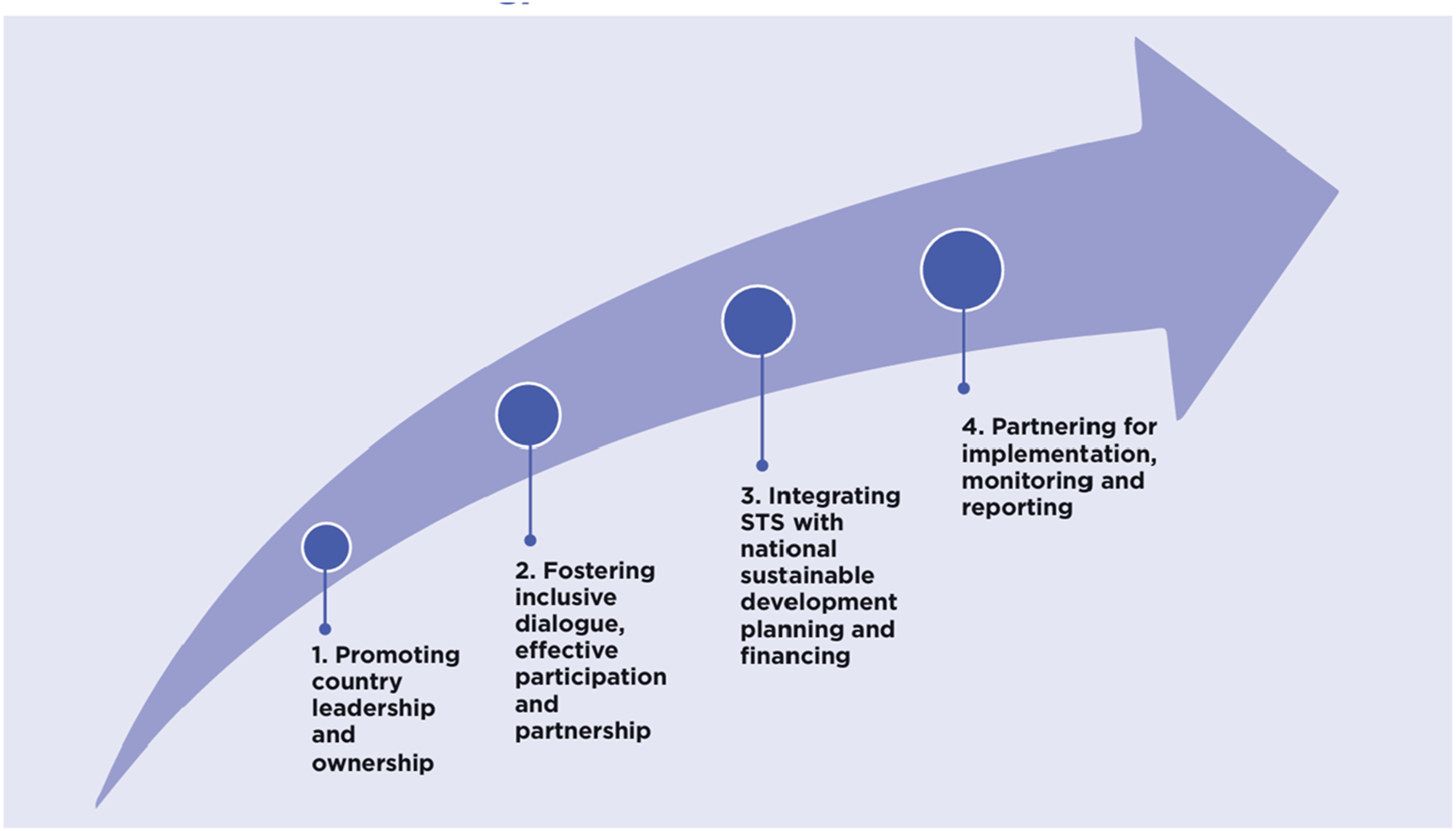
Nepal’s LDC graduation presents opportunities, such as improving its credit rating, global competitiveness, and attracting foreign investment. However, experts stress the need for careful planning and structural changes to boost purchasing power and ensure sustainable growth. Nepal must engage with international partners and leverage development diplomacy, particularly in WTO discussions, to secure support for a smooth transition. Projections of a 4% decline in exports post-graduation underscore the importance of diversifying markets and exports. These strategies are essential for a successful transition, as outlined in the LDC graduation Smooth Transition Strategy (STS). (1) Promoting Country Leadership and Ownership
Nepal’s LDC graduation is led by the High-Level National Steering Committee, chaired by the Prime Minister, with active involvement from key ministries like Finance, Industry Commerce and Supplies, and Foreign Affairs. The National Planning Commission leads the development of the Smooth Transition Strategy (STS) through a participatory approach, engaging both government and non-government stakeholders. The STS outlines responsible agencies in an action matrix, providing a framework for effective implementation, coordination, and monitoring of the transition process. (2) Fostering Inclusive Dialogue and Effective Participation
Successfully managing the challenges and opportunities of LDC graduation in Nepal necessitates collaboration among the government, private sector, community organizations, civil society, and key development partners. Stakeholder feedback has been integrated into the strategy through discussions and review meetings. Continued access to international support is vital for Nepal’s socio-economic development, leading to anticipated positive responses from partners to promote rapid, equitable growth, sustainability, and resilience. (3) Integrating STS with National Sustainable Development Planning and Financing
The 16th Five-Year Plan (2024/25-2028/29) integrates the LDC smooth transition strategy, focusing on achieving “Good Governance, Social Justice, and Prosperity.” It aims to fulfill the development aspirations of the population by promoting a peaceful, inclusive, and sustainable society. The plan prioritizes building a resilient economy that addresses economic, social, environmental, and climate challenges while enhancing service delivery. Aligned with the Sustainable Development Goals (SDGs) and existing government policies, it emphasizes human investment, science and technology, structural transformation, international trade, climate change, and pandemic recovery as part of Nepal’s transition from LDC status. (4) Partnering for Implementation, Monitoring, and Reporting
To ensure strong partnerships and the effective implementation, monitoring, and reporting of the Smooth Transition Strategy (STS), several committees should be established. An integrated approach must be adopted for implementing, monitoring, and reporting on the STS to enhance both effectiveness and efficiency in achieving desired outcomes. The Strategy should be incorporated into existing national planning and implementation frameworks, with oversights provided by established monitoring and evaluation mechanisms.
Conclusion and recommendations
Nepal’s graduation from LDC status represents a pivotal moment, with significant implications for its trade, foreign aid, and development strategy. The graduation must be felt by every citizen rather than symbolic achievement on paper. However, to navigate potential challenges and leverage new opportunities, Nepal must focus on strategic adaptation, proactive international partnerships, and development diplomacy. Political instability has hindered progress in recent decades, but the Smooth Transition Strategy (STS) and the 16th Five-Year Plan will be critical in ensuring macroeconomic stability, economic transformation, and social inclusion. Strengthening institutional capacities and diversifying the economy will be key to sustaining long-term growth and self-reliance (Figures 1–3). LDCs—Africa 33, Asia 8, Caribbean 1, and Pacific 3 (source: https://www.unctad.org/). Source: Nepal LDC Graduation Smooth Transition Strategy. Source: Nepal LDC Graduation Smooth Transition Strategy.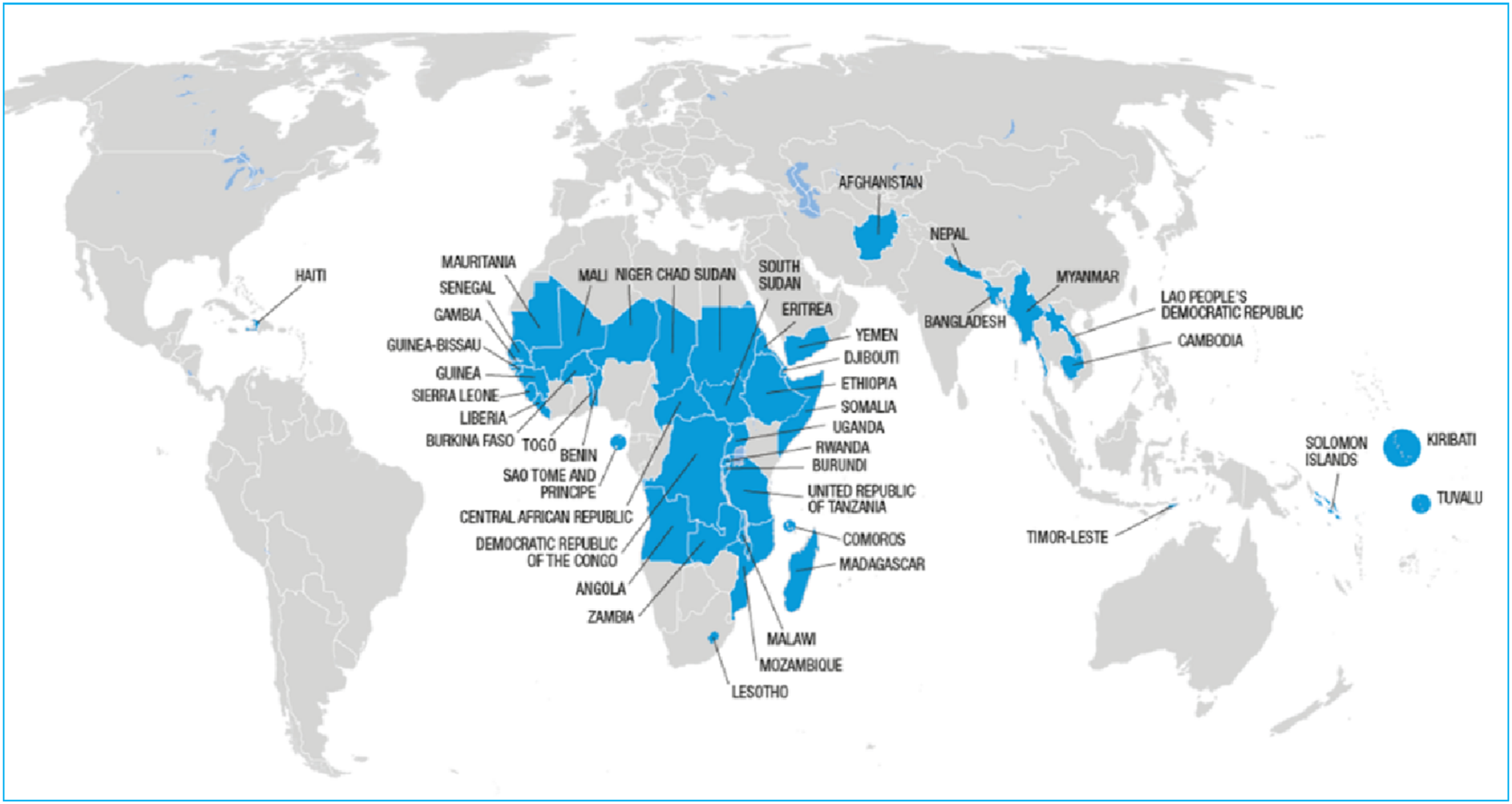

Based on the challenges identified in Nepal’s path to LDC graduation, the following specific and actionable policy recommendations are proposed. These suggestions are aligned with Nepal’s objectives of sustaining economic growth and enhancing resilience after LDC graduation, while addressing the key issues in the transition process. (1) (2) (3) (4) (5) (6) (7) (8) (9)
Footnotes
Declaration of conflicting interests
The author(s) declared no potential conflicts of interest with respect to the research, authorship, and/or publication of this article.
Funding
The author(s) received no financial support for the research, authorship, and/or publication of this article.
