



Abstract
Research in early intervention/early childhood special education (EI/ECSE) is focused on identifying effective practices related to positive outcomes for young children with disabilities and their families. Individual responses to evidence-based practices are often variable, and non-responders are common. Single case research (SCR) might be particularly well suited to examining differences across participants given the dynamic nature of the methodology. The repeated measurement of behaviors and visual analysis of subsequent data allow researchers to continually monitor behavior and make necessary adaptations to ensure positive child outcomes. The purpose of this article is to illustrate the dynamic nature of single case research design (SCRD) and the utility of SCRD in the iterative development of adaptive evidence-based practices using three examples of SCR studies. Implications for research and practice in EI/ECSE are discussed.
Research is a systematic process of inquiry in which hypotheses are scientifically tested. Research designs add rigor to the systematic process to increase precision and experimental control (Horner & Odom, 2014). The primary endeavor of research in early intervention/early childhood special education (EI/ECSE) is to identify effective, efficient practices related to positive outcomes for young children with disabilities and their families. Research in EI/ECSE has advanced such that developmentally appropriate, research-based practices related to positive outcomes for young children and their families have been established (Copple & Bredekamp, 2009; Division for Early Childhood, 2014). However, even when the most well-established evidence-based practices are evaluated, individual responses can be variable, mixed responses or experimental failures (e.g., “non-responders”) are customary, and unexpected phenomena are often observed even when evidence-based practices are used with fidelity (Greenwood et al., 2014; Wolery, 2013; Yoder & Compton, 2004).
EI/ECSE scientists have several classes of research designs to choose from for assessing the effectiveness of novel interventions or iterations of previously established interventions. The selection of research designs is driven by the theory of change or hypothesized relation between independent and dependent variables (Horner & Odom, 2014). For this reason, single case research (SCR) has a long history of utility and relevance for establishing evidence-based practices in EI/ECSE. SCR is particularly useful for examining data patterns at the individual level similar to traditional case studies, yet SCR designs (SCRD) are experimentally rigorous (Horner et al., 2005). SCR uses within-case comparisons across different treatment conditions with at least three potential replications of the effect. This minimizes threats to internal validity (e.g., history, maturation) and allows for the identification of functional relations (i.e., three demonstrations of an effect at three different points in time) between dependent and independent variables (Gast & Ledford, 2014; Horner et al., 2005).
Functional relations assume two phenomena. First, functional relations require research to be carried out with sufficient experimental rigor, with increased confidence in the results if the experiment meets contemporary SCRD standards (e.g., sufficient interobserver agreement, suitable number of data points; Kratochwill et al., 2013). Second, functional relations require sufficient and clear documentation that the implementation of the independent variable resulted in changes in the dependent variable(s). The first phenomenon should be described in and deduced from a thorough description of the design, procedures, and variables. Furthermore, the study should be reported to support direct replication of findings by independent researchers (Wolery, Dunlap, & Ledford, 2011). The need for replication is critical in the identification of evidence-based practices (cf. Sidman, 1960). The second phenomenon should involve a systematic and reliable formative and summative evaluation of the data. The preferred method and gold standard for data evaluation in SCR is visual analysis (Johnston & Pennypacker, 2009), particularly in relation to the formative analysis of ongoing data during a study.
Visual analysis involves a systematic set of procedures used to evaluate specific characteristics of data patterns within and across conditions and cases to verify the presence of a function relation. Traditionally, visual analysis is used throughout the study to make decisions about the design and study variables. That is, collecting, graphing, and evaluating the data are the systematic processes through which the researcher makes decisions. Thus, unlike traditional group studies, which require the use of statistical analyses identified a priori, visual analysis of SCRD requires “constant contact” with the data, which allows researchers and educators to make changes to ensure each participant benefits from the intervention (Gast & Spriggs, 2014, p. 176). Visual analysis facilitates a fine-grained analysis of individual performance under different experimental conditions, which allows for a close examination of the conditions under which an intervention is effective for particular populations (Gast & Ledford, 2014; Horner et al., 2005).
The dynamic nature of SCR is a central feature of the methodology that allows for formative, visual analysis and subsequent informed changes (i.e., using knowledge of the participants’ functional repertoires or learning histories) to the intervention or study design (Wolery, 2013). “Such efforts can lead to improved or new interventions” (Wolery, 2013, p. 40). Furthermore, the flexibility and usefulness of SCRD in the iterative identification, development, and individualization process of scientifically based interventions have been explicitly identified as a credible research design by the U.S. Department of Education’s Institution for Education Sciences (IES, 2015), which is a primary funding agency for EI/ECSE research. IES allows applicants for their research grants to use SCR as the sole design in pilot studies and throughout the iterative development process within Development and Innovation (Goal 2) projects and in combination with group designs to examine individual impact for Efficacy and Replication (Goal 3) projects (Buckley, Speece, & McLaughlin, 2014). There are multiple examples of the systematic use of SCRD within the field of EI/ECSE to identify individual evidence-based practices (Wong et al., 2014), develop and test intervention adaptations and expansions (Carter & Horner, 2007, 2009), and inform and guide comprehensive programs of research (Kaiser, 2014).
SCRDs are particularly well suited to identification, development, and individualization of evidence-based practices in EI/ECSE given the close relation between the researcher and the data and the focus on clearly articulating the processes by which intervention was implemented. SCRD have been used to compare efficiency of practices, identify fidelity standards for a specific practice, test adaptations to established practices, and measure the minimal dosage required to produce desired outcomes. The combination of selecting an appropriate SCRD, repeated measurement of behavior under established conditions, and visual analysis of data contributes to the iterative and dynamic nature of SCR. For example, changes can be made to the independent variable (e.g., adapting an instructional procedure) when data patterns do not match hypotheses or to the design (e.g., adding a C condition to an A-B-A-B design). Visual analysis allows researchers the opportunity to make needed changes while maintaining experimental control and producing improved outcomes. That is, SCRD researchers can adapt interventions when data are not moving in the desired direction and change designs when unexpected data patterns appear. Conversely, statistical analyses, which are designed to detect group-level differences, provide purely summative data that might mask individual responses to an intervention. Thus, although statistical analyses do not allow for ongoing data-guided decisions, formative analysis of data is a hallmark of SCR. In contrast, the dynamic, formative nature of visual analysis of SCR data allows for the use of an efficient iterative development process to identify what works, for whom, under what conditions. Furthermore, analysis of the data at the micro level promotes explicit identification of variables or contextual features that drive the data patterns. Researchers can examine and isolate individual features of an intervention or context to examine whether the intervention is working as intended or whether changes need to be made to improve outcomes for individual children, thus, advancing the science of EI/ECSE.
Given SCR is particularly well-suited to examining the effectiveness of interventions for heterogeneous populations (e.g., young children with disabilities) and individual response variation is commonplace in EI/ECSE, SCR has been and continues to be a primary methodology for identifying evidence-based practices in EI/ECSE. This is evidenced through the large number of SCR studies included in reviews of varying practices and populations (e.g., Goldstein, Lackey, & Schneider, 2014; Wong et al., 2014). As such, EI/ECSE personnel who understand SCR and can analytically assess intervention outcomes for individual or groups of students might be more likely to use efficient and effective interventions, which in turn improves outcomes for children with disabilities and advances the science of EI/ECSE. This ensures EI/ECSE personnel are not limited to the practices available to them from their respective training programs, facilitates effective data-based decision making, and is critical for improving outcomes for children with disabilities (Dixon, Reed, Smith, Belisle, & Jackson, 2015). The purpose of this article is to illustrate the formative, iterative use of SCR to identify evidence-based practices within applied EI/ECSE contexts. We provide three examples of SCR studies in which the independent variable produced unexpected data patterns. In each case, the researchers made adaptations to facilitate positive outcomes for participants. Due to space limitations, some methodological details are not provided; however, all studies met quality indicators (Gast & Ledford, 2014; Horner et al., 2005) and contemporary design standards (Kratochwill et al., 2013). Complete reports can be requested via email from the first author.
Example #1: Change the Core Intervention and Add an Outcome
In the first example, Germansky (2014) initially planned to examine the use of group friendship activities to increase the social interactions of a child with autism and his peers to answer the following research question: Are group friendship activities taught on the playground related to increases in appropriate social interactions for a young child with autism? The researcher used a withdrawal design (A-B-A-B; Gast & Ledford, 2014), which allowed for a feasible formative analysis and timely data-based decision making.
The researcher identified group friendship activities for use on the playground as the primary intervention for several reasons. Children with autism engage in fewer interactions with their peers, are less likely to initiate to peers or develop lasting relationships than children with typical development and children with other disabilities (Reichow & Volkmar, 2010), and experience difficulties in generalizing social skills across settings (Goldstein et al., 2014; Miltenberger & Charlop, 2014). Recent research suggested the playground might be an ideal instructional context for some skills (Ledford, Lane, Shepley, & Kroll, 2016; Miltenberger & Charlop, 2014). Group friendship activities were designed to teach appropriate social skills by adapting common preschool activities to embed opportunities to practice social interactions. Although this intervention approach had previously demonstrated variable efficacy and generalization (Brown, Ragland, & Fox, 1988; McEvoy et al., 1988; Twardosz, Nordquist, Simon, & Botkin, 1983), its use on the playground had not been tested.
The primary participant was Luke, a 3.5-year-old boy with autism. He attended an inclusive early childhood program in a southeastern state. The program’s playground was the primary setting for all instruction. Luke was verbally imitative, had intelligible language, followed simple three step directions, and performed typical motor movements. Direct observations and teacher reports indicated he had low rates of social interactions with his peers and adults across settings. The researcher also included five different peer participants from Luke’s classroom who had high levels of positive social interactions on the playground based on direct observation and teacher report.
During baseline (A), the participants (Luke and peers) were told they were going to sing two songs and would then be allowed to play. The songs were well known preschool songs and were sung often in this preschool class. During (B), the teacher explained that they were going to play two games to help the target child become a better friend. The teacher then asked the target child to select a song from two choices. The songs in intervention differed from those in baseline only because they were adapted to include social interactions (e.g., instead of singing “the wheels on the bus go round and round,” the children sang “the friends on the bus say hi and wave” and performed the physical and verbal social behaviors). In both conditions, interactions were measured on the playground after the conclusion of the song portion of the session. The primary dependent variable was appropriate interactions. Appropriate interactions were defined as any actual or attempted physical gesture or verbal expression that was not harmful in nature and that was explicitly directed to a peer. Partial interval recording was used to measure the dependent variable. Intervals were 10 s each with a total of 60 intervals per session.
Ongoing data collection and visual analysis indicated the absence of a functional relation (see Figure 1), so the researcher made an informed decision to change the intervention completely and addressed a second research question: Is a Stay–Play–Talk intervention implemented on the playground related to increases in appropriate social interactions for a young child? This intervention was chosen because the initial failure seemed to be related to the need for explicit in situ supports for peers, including the provision of behavioral expectations and reinforcement for engaging in expected behaviors. The Stay–Play–Talk intervention focused on teaching peers specific ways to initiate and maintain interactions with other children (e.g., stay, play, and talk; English, Goldstein, Shafer, & Kaczmarek, 1997). The researcher also added a secondary dependent variable, proximity, at Session 26 because we expected this variable to be crucial given the “stay” expectation associated with the C intervention condition. Proximity was defined as the target child being within an arm’s reach of another child.

Luke’s social interactions and peer proximity across conditions (Example 1).
The researcher made this change while maintaining experimental control to allow for an empirical test of the new intervention. She used a planned sequence of introducing the new intervention, thus changing her design to A-B-A-A’-C-A’-C. The baseline condition (A) was adapted to a simple business as usual condition (A’) rather than singing regular songs (as occurred in A) given the group friendship adapted songs were no longer used. During A’, the target child and peers were not prompted to engage with each other. If the target child interacted with a peer, teachers were told to respond as they normally would. During the Stay–Play–Talk intervention (C), the researcher conducted a 15-min training on the Stay–Play–Talk components (Laushey & Heflin, 2000) with the peers and reminded the peers of the three components of the intervention immediately prior to going on the playground each day. For the first 10 min on the playground, the implementer gave the peer a friendship bracelet if he or she was staying, playing, or talking with Luke. If the peer was not doing one of the three components, the implementer reminded him or her of his or her job and asked him or her to go be a good buddy.
With the initial group friendship intervention, Luke had no change in level or trend across conditions, significant overlapping data, and considerable variability in the estimated duration of appropriate social interactions in the initial A-B-A conditions (see Figure 1). However, when the second intervention (C) was implemented, there was an immediate increase in level with no overlapping data points from the previous A’ condition. In the return to A’ condition, which lasted three sessions, the data had an immediate decrease in level. The return to C produced immediate increases in level with some variability for the estimated durations of both appropriate social interactions and proximity. Visual analysis indicated that group friendship activities were ineffective and the Stay–Play–Talk intervention was effective at increasing Luke’s social interactions on the playground. Given the researcher used SCRD and visual analysis, she was able to change the intervention, maintain experimental control, and have an important impact on Luke’s social interactions on the playground. Although additional replications of this functional relation are needed, this study provides initial evidence supporting the use of Stay–Play–Talk on the playground, which was in large part due to the dynamic nature of the SCRD used.
Example #2: Add an Instructional Component and Adapt the Design
Although replacing the intended intervention with an entirely different treatment might be needed, it is not the only option when unexpected data patterns appear or outcome data are not changing in the desired direction. Ongoing data collection and visual analysis allow for a close examination of data patterns to make meaningful, individualized adaptations to the intervention to produce desired outcomes. For example, Lane (2008) planned to use an A-B-A-B withdrawal SCRD to examine the relation between an environmental arrangement with isolate toy sets and social interactions for preschool children with Autism Spectrum Disorder (ASD) and their peers. Three children with ASD (Elizabeth, 46 months; Jason, 43 months; Tanner, 62 months) and their typically developing peers (Alice, 44 months; Sally, 48 months; Tony, 64 months) participated in the study. The researcher used various isolate toy sets across sessions: (a) puzzle board and pieces, (b) Play-Doh™ and shape cutters, (c) Lego© blocks, (d) various types of construction paper and art materials (e.g., washable markers, stamps, and stickers), (e) shape sorter and corresponding shape blocks, and (f) interactive books with corresponding materials.
During the A conditions, the researcher directed each dyad to a play area, sitting across from one another, and offered a choice between two toy sets containing isolate toys. Isolate toy sets were randomized session by session with a choice of two sets available during each session. During baseline, each dyad had at least one opportunity to select each toy set to reduce the effects of novelty. Previously selected toy sets were not available for the next session, and each member of a dyad took turns selecting the toy set. The researcher provided the selected toy set and gave a brief direction to each child, “Play with the toys with (child’s name).” The researcher monitored each dyad to ensure they remained in the same area and, when necessary, redirected them with the least amount of assistance needed to ensure compliance. During the B condition, the researcher followed the same procedures used in the A condition, except that he divided materials from the chosen set into two play boxes and gave each child one box (with half of the isolate toy materials). This arrangement was used to encourage each member of the dyad to request materials from one another. Because the isolate toy sets were equally divided between the dyad, each child would need the other’s materials to fully engage in the activity.
As shown in Figures 2 to 4, the use of environmental arrangement (in Condition B), where an isolate toy was divided among members of a dyad, resulted in variable or no effect on the rate of social interactions between the dyads. The data patterns (i.e., level, trend, and variability of social interactions) observed within and across the A and B conditions were essentially equivalent. Furthermore, there was significant data overlap across conditions and no immediate change in social interactions with introduction of environmental arrangement (B). The researcher added the system of least prompts (C) to environmental arrangement (B) to increase social interactions. The researcher adjusted the planned A-B-A-B withdrawal design to an A-B-BC-A-BC design. This altered design was selected because of the variable effects observed during the environmental arrangement only condition on the rate of social interactions for each dyad. The effects observed across the A and B conditions were essentially equivalent, so the system of least prompts was introduced. The BC condition consisted of the environmental arrangement described previously plus the system of least prompts, which is known be related to play behaviors in young children with disabilities in one on one contexts with adults and peers (Barton, 2015). Prior to the beginning of the study, it was determined that the system of least prompts would be introduced if the environmental arrangement only condition had no or marginal effect on rate of social interactions.
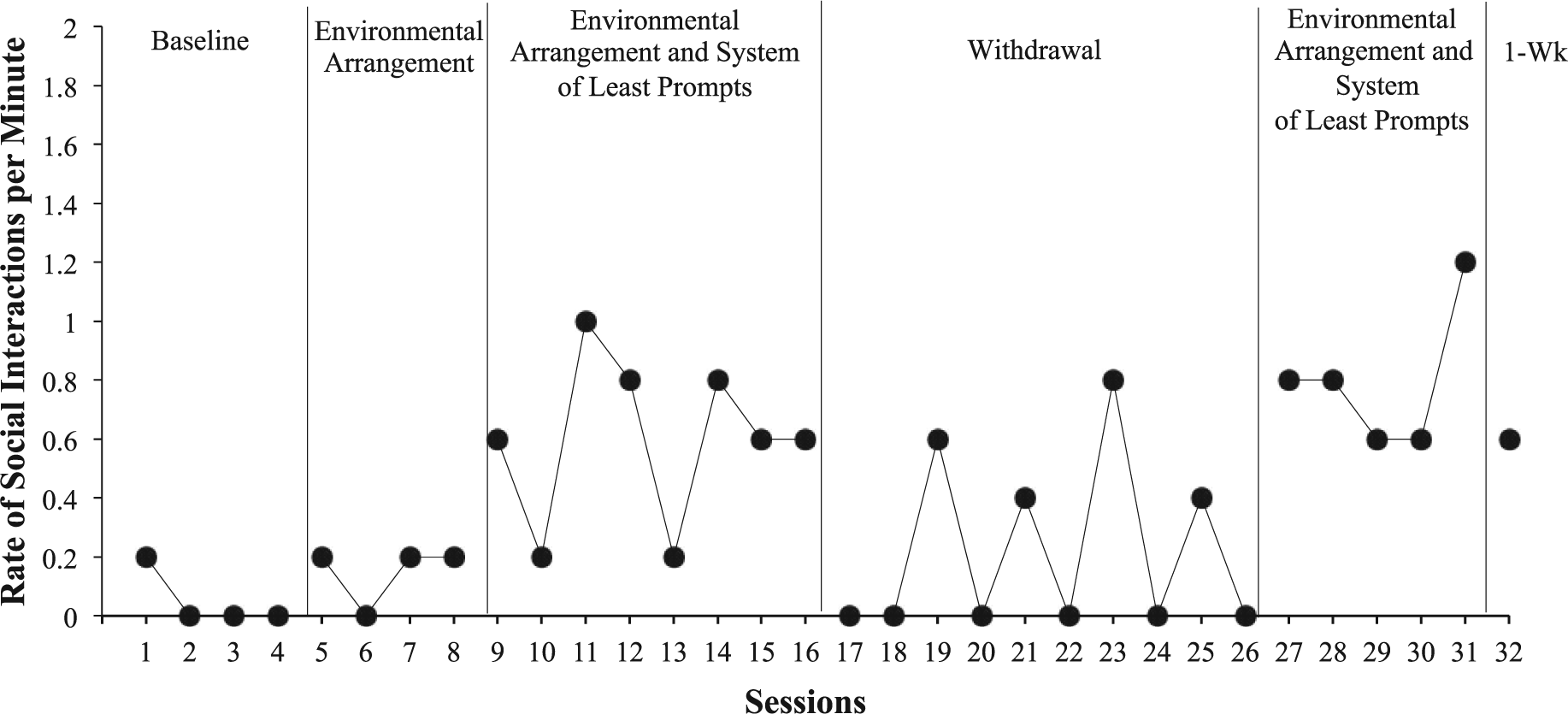
Elizabeth’s rate of social interactions across conditions (Example 2).
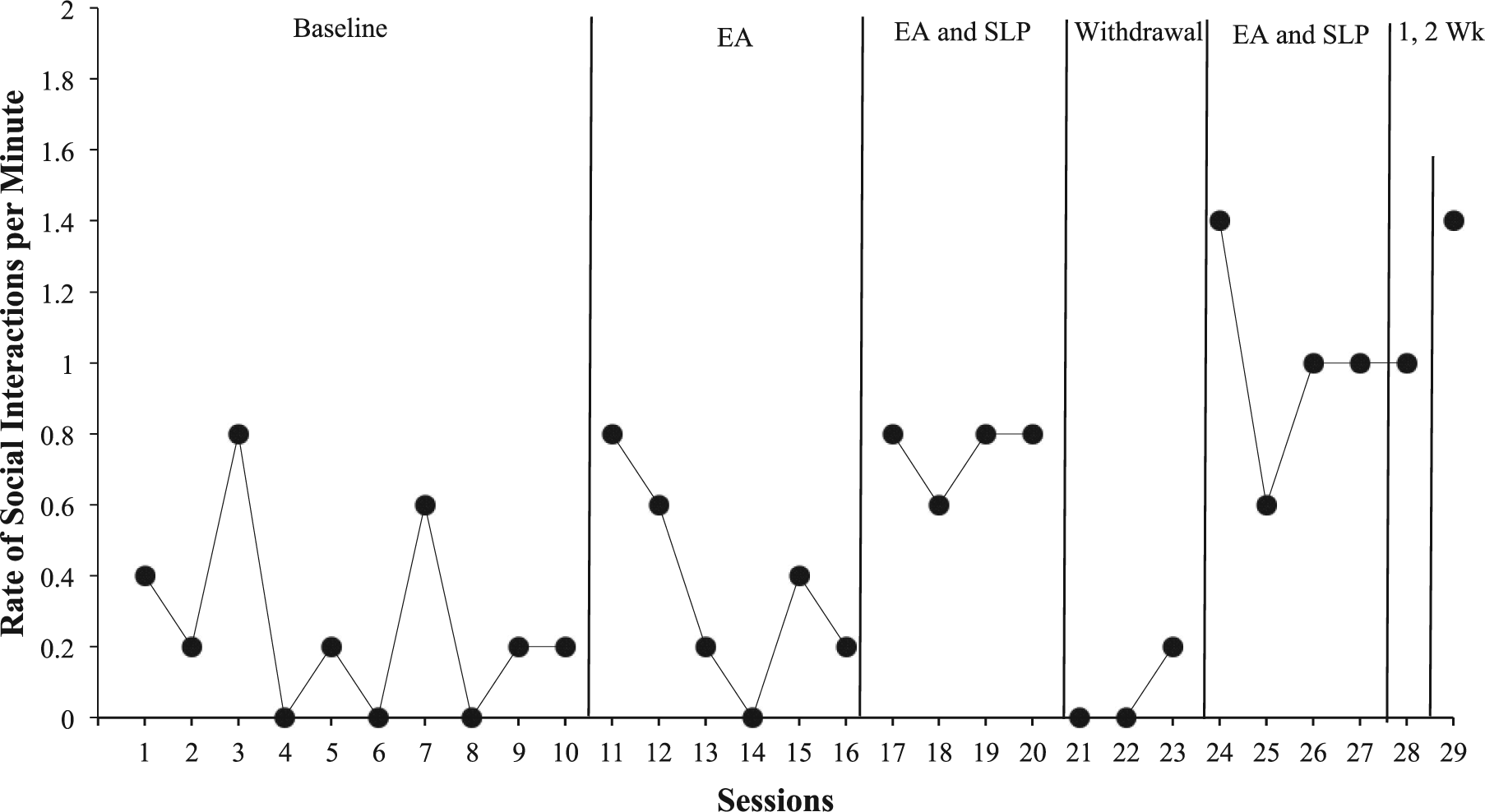
Jason’s rate of social interactions across conditions (Example 2).

Tanner’s rate of social interactions across conditions (Example 2).
Consistent with SCRD standards, the researcher used visual analysis to conduct formative evaluation; his close contact with the data allowed for (a) the timely identification of the need to adapt the intervention to increase social interactions and (b) the selection of an adaptation that was likely to increase social interactions. The researcher modified his intervention and design to ensure improved outcomes for the participants. That is, the researcher’s examination of the lack of changes in level, trend, or variability of the data patterns across conditions, the lack of an immediate or consistent change after changing conditions, and the significant overlap across conditions led him to conclude that environmental arrangement with isolate toys was insufficient for increasing social interactions in young children. His modified intervention, environmental arrangement plus a system of least prompts procedure, was related to an increased rate of social interactions for all three dyads. In addition, the combined intervention increased stability with regard to duration of social interactions. His findings suggested that environmental arrangement around isolate toys was effective only when used in conjunction with systematic prompting. Interestingly, the controlling prompt in this study, verbal prompting, parallels teachers’ behavior in preschool settings, where multiple verbal prompts are provided to students throughout the school day. Thus, the use of visual analysis facilitated knowledgeable decisions that had an important impact on child outcomes.
Example #3: Add and Test an Implementation Component
Research in EI/ECSE should be focused not only on the identification of effective practices to be used with children, but also on strategies for improving the performance of EI/ECSE professionals in ways that improve outcomes for children with disabilities and their families. For example, Decker (2013) examined the effects of a zone supervision model on teachers’ active supervision behaviors on an early childhood playground. Zone supervision is designed to increase teacher implementation of practice related to improved safety and increased opportunities for social, play, and motor skill development across children with disabilities (Casey & McWilliam, 2005; Kern & Wakeford, 2007). Four female teachers were included as participants, with a range of 1 to 19 years experience in early childhood settings. Amy was a co-teacher and worked in the same classroom as Bess, who was a pre-service graduate student in ECSE. Carol was a pre-service graduate student in ECSE who worked in the same classroom as Debbie, who was a lead teacher.
The researcher used a multitreatment withdrawal design, similar to the design in Example 1 above, with an initial baseline (A-B-C-B-C) to examine the relation between zone supervision and teacher supervisory behaviors. During the initial baseline (A), teachers were observed on the playground during their classroom’s regularly scheduled time and were not given any directions or instructions. Their established role was to supervise all the children in their class. During the non-zone supervision intervention (B), the researcher greeted the teachers and her students as they entered the playground (i.e., teacher-to-class supervision). She told the participating teacher to “supervise the students in their class.” During the zone supervision intervention (C), the researcher greeted the teachers and students as they entered the playground and randomly assigned each participating teacher a defined playground zone. No teacher participant was assigned the same zone for 2 consecutive days, which controlled for differences between zones in the number of children present and the nature of the playground equipment. The following adult supervision behaviors were measured: participant to other adult, movement (i.e., at least 3 consecutive steps), scanning (i.e., visually examining the playground with at least a half turn of the neck), participant to child interactions, zone behavior, and non-zone behavior.
Amy demonstrated low levels of supervision behaviors and variability in interactions between adults during baseline (A) and teacher-to-class (B) conditions (see Figure 5). With the introduction of an assigned zone (C), interactions between adults decreased and active supervision stabilized at a slightly higher level than previous conditions. During the second teacher to class (B) condition, supervision behaviors decreased and interactions between adults increased with some variability. With the introduction of the second zone (C) condition, interactions between adults decreased and active supervision stabilized at a level similar to the first zone (C) condition, which was slightly higher than the previous teacher-to-class (B) conditions. Bess demonstrated response patterns similar to Amy during the initial baseline (A), teacher-to-class (B), and assigned zone (C) conditions (see Figure 6). However, Bess had lower levels of interactions between adults. Furthermore, Bess demonstrated no change in supervision behaviors between the second teacher-to-class (B) condition and the second zone (C) condition; that is, supervision behaviors decreased with the return to the teacher-to-class (B) condition, but did not increase with the re-introduction of the zone (C) condition. Carol’s level of supervision behaviors and interactions between adults remained at the same level with some variability during the initial baseline (A), initial and return to teacher-to-class conditions (B), and the initial assigned zone (C) condition (see Figure 7). In the second zone (C) condition, her supervision behaviors, however, had more variability and several data points higher than previous conditions. Debbie demonstrated response patterns similar to Amy and Bess during the initial baseline (A) and teacher-to-class (B) conditions (see Figure 8). Debbie had an immediate increase in trend of supervision behaviors with introduction of an assigned zone (C). During the second teacher to class (B) condition, supervision behaviors decreased and interactions between adults increased. With the introduction of the second (C) condition, interactions between adults decreased and supervision behaviors were at a higher level than previous conditions; however, there was some overlap and variability.
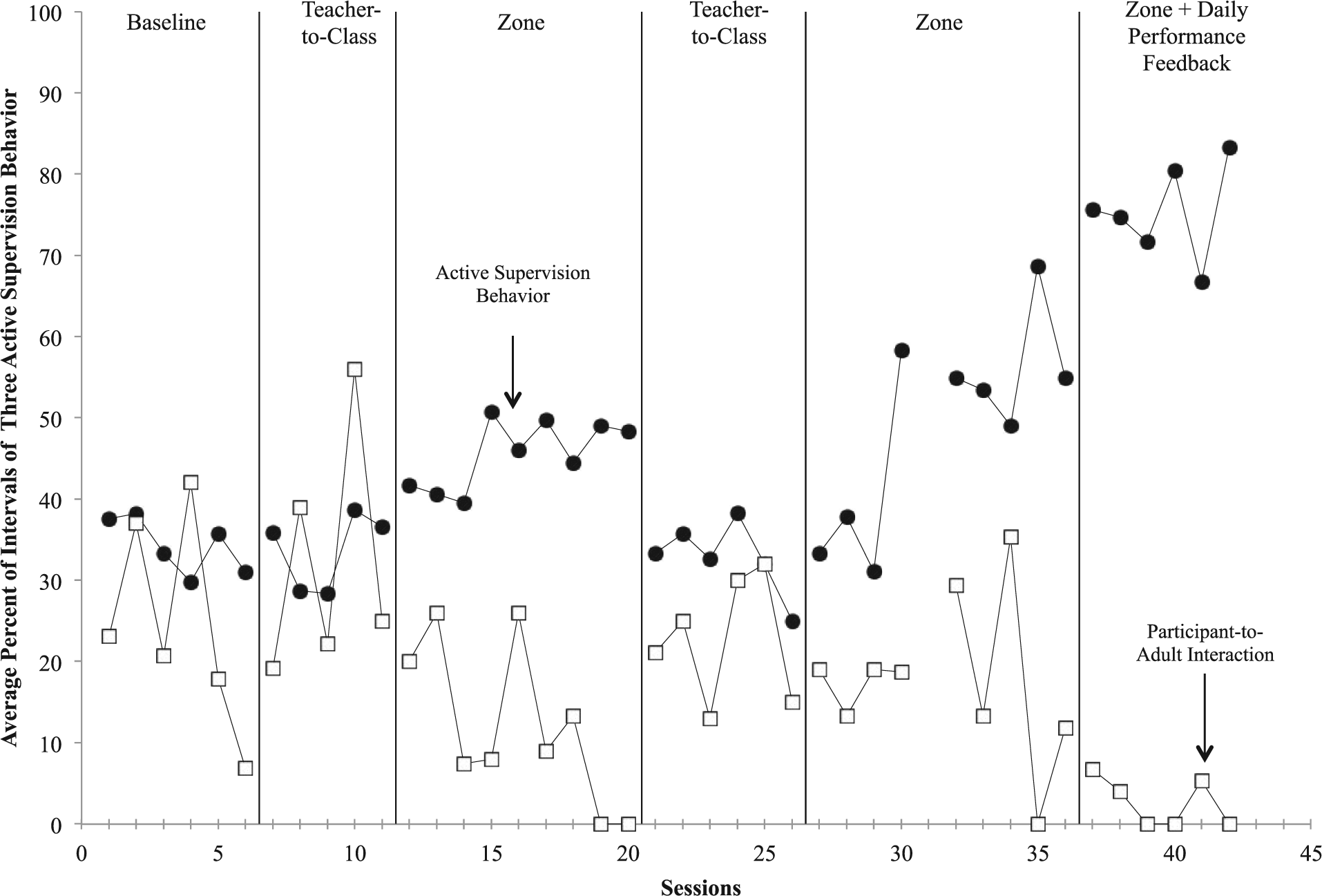
Amy’s supervision behaviors (closed circles) and adult interactions (open squares; Example 3).

Bess’s supervision behaviors (closed circles) and adult interactions (open squares; Example 3).
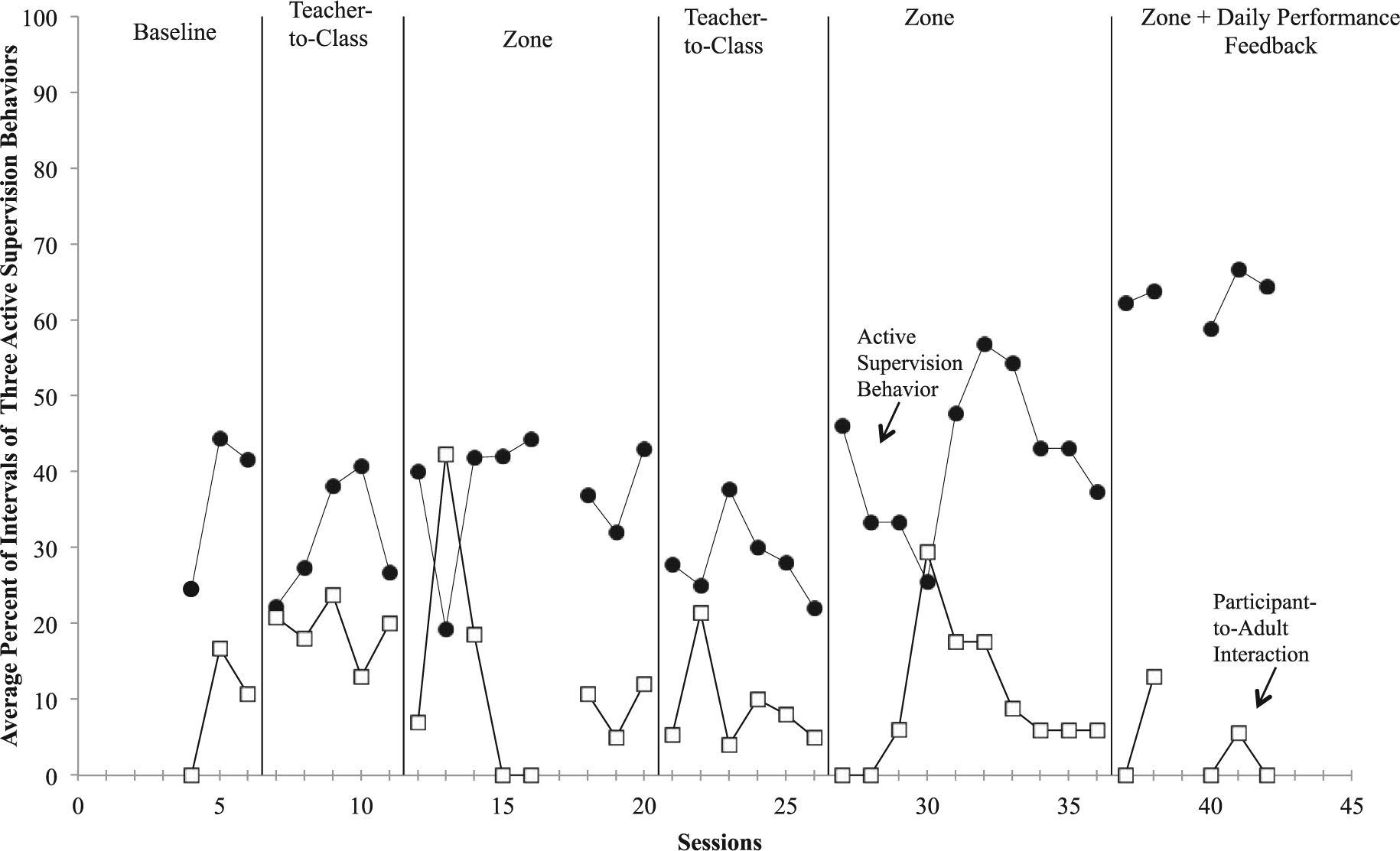
Carol’s supervision behaviors (closed circles) and adult interactions (open squares; Example 3).
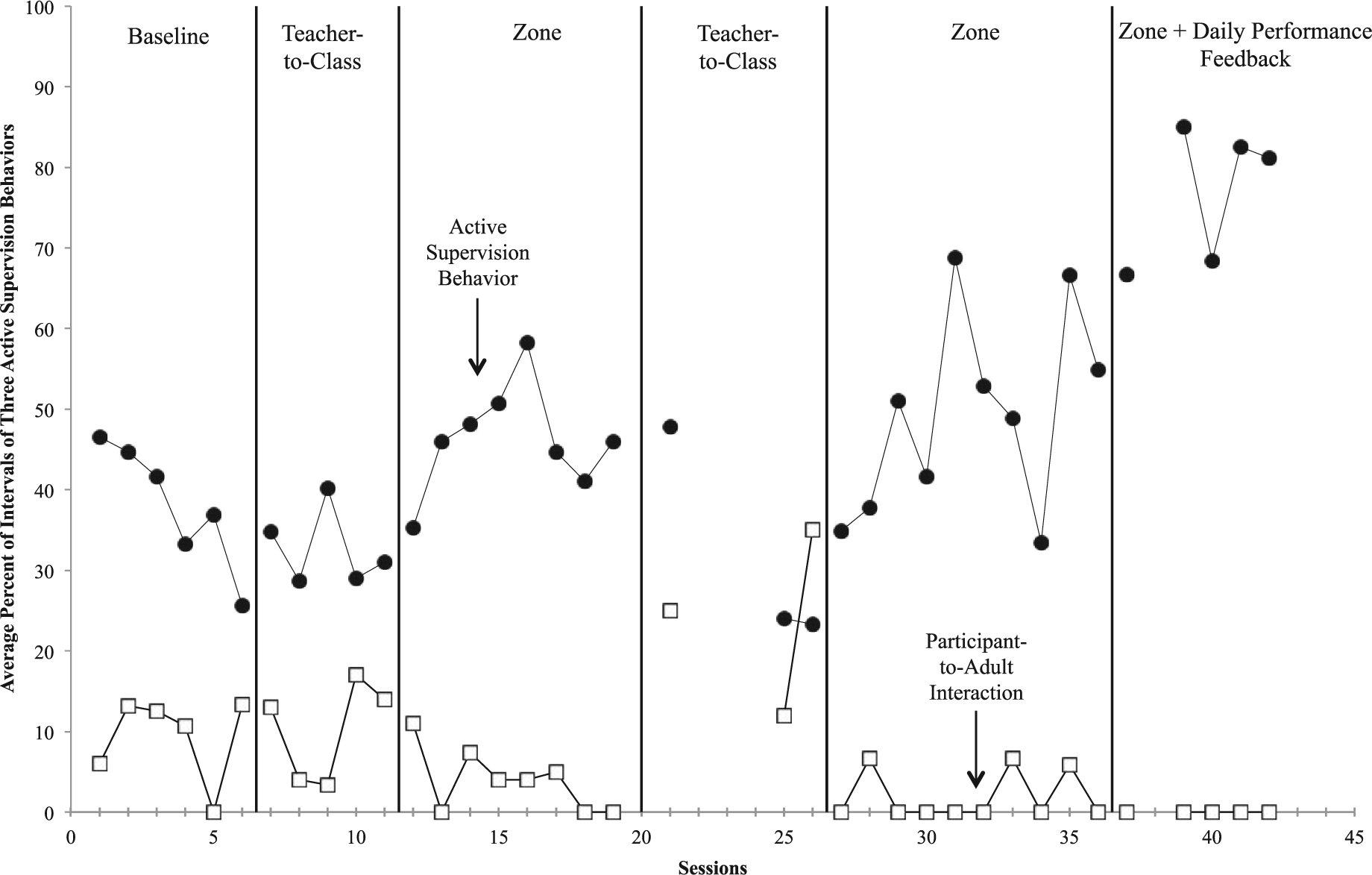
Debbie’s supervision behaviors (closed circles) and adult interactions (open squares; Example 3).
Overall, visual analysis of the data revealed variable response patterns within and across participants. This variability was unexpected, and the behavior change was insufficient for meeting the goals of the intervention. That is, the researcher’s close examination of the data patterns across conditions led her to conclude that the initial intervention—zone supervision without feedback—was insufficient for increasing teacher supervision behaviors on the playground. Thus, after the second zone supervision condition (C) for all participants, the researcher added performance-based feedback (C’) using an A-B-C-B-C-C’ design. Performance-based feedback has been shown to be an effective component of professional development for increasing the implementation of new practices and preventing a decline in implementation following training (Solomon, Klein, & Politylo, 2012). Performance-based feedback involves providing feedback to an individual based on specific data from previous observations and presented either immediately after the observation or within a day’s time (Barton, Kinder, Casey, & Artman, 2011). The researcher met individually with each participant after playground time, showed the participant her graphed data, discussed the data, and made recommendations for increasing supervision behaviors. Across all four participants, the addition of performance feedback led to an immediate increase in supervision behaviors at levels higher than previous conditions with less variability and fewer overlapping data points. Furthermore, interactions between adults decreased to zero or near zero levels. Although additional replications are needed, these findings suggest performance feedback might enhance the implementation of zone supervision models. The addition of performance feedback was informed by the data and designed to increase teacher implementation of practices related to improved safety and increased opportunities for social, play, and motor skill development.
Conclusion
There are two distinct conceptualizations of evidence-based practice. In the first conceptualization, evidence-based practice refers to a cyclical process of selecting an appropriate intervention and ensuring the chosen intervention leads to desired outcomes. This process was illustrated in the examples included in this article. However, in the past decade, the expansive disconnect between evidence-based practices identified through EI/ECSE research and the practices currently being implemented with young children and their families has been documented and highlighted (Dunst & Trivette, 2009; Odom, 2009). In the second conceptualization, evidence-based practice is used as an adjective to indicate that an intervention has amassed sufficient amounts of evidence to qualify as evidence-based. For example, Horner and colleagues (2005) and Kratochwill and colleagues (2013) suggest the 5–3–20 rule when identifying an evidence-based practice. This refers to five studies, across three research groups, with at least 20 demonstrations of an effect (e.g., across participants, settings).
SCRD play an important role in either conceptualization. In the first, SCRD can be used to closely monitor data and make necessary changes to ensure the intervention has a positive, important impact on the child. In the second conceptualization, SCRD are scientifically rigorous and can be used to amass evidence of an effect. Research that allows for systematic, iterative development processes while maintaining experimental control might be best suited to the identification of feasible evidence-based practices in EI/ECSE. Moreover, the relative ease with which practitioners can use SCR to improve assessment of behavior change and to identify the need for instructional modifications suggests that SCR can be beneficial not only in research (i.e., helpful for the field), but also in practice (e.g., clinically useful). Although making informed decisions requires ongoing data collection, which can be time-consuming, it is not more time-consuming than regular, systematic progress monitoring, which should be integral to instructional programs for all children and a recommended practice (Division for Early Childhood, 2014).
The purpose of this article was to highlight the dynamic nature of SCR and provide examples of its utility for identifying evidence-based practices in applied EI/ECSE settings. Three applied examples were provided to demonstrate how visual analysis and ongoing data collection allow for data-based decisions that are meaningful and contribute to advancing the science of EI/ECSE. Furthermore, advancements in SCR methodology have occurred at a rapid rate in recent years with new discoveries related to, for example, ideal observational methods (Ledford, Ayres, Lane, & Lam, 2015), non-overlap procedures for synthesizing within and across studies (Wolery, Busick, Reichow, & Barton, 2010), and the use of effect size estimators to supplement visual analyses (Pustejovsky, Hedges, & Shadish, 2014; Shadish, Hedges, & Pustejovsky, 2014). However, Wolery (2013) provides an important reminder about the role of the investigator in all research endeavors: “The search for the sources of variability has the possibility of enlightening us about nature, which should always be highly valued” (p. 41). That is, regardless of the design used, researchers in EI/ECSE should be concerned with identifying factors that are related to significant improvements in learning for young children with disabilities. SCR is one of several important tools for doing so.
Footnotes
Acknowledgements
We would like to dedicate this article to Mark Wolery, in thanks for making possible the studies discussed here, along with countless others, and for his immeasurable influence on the procedures and advances in single case methodology in Special Education. The impact of his work on children with disabilities, their families, and the practitioners who work with them is immeasurable and was largely conducted through single case research design methodologies.
Declaration of Conflicting Interests
The author(s) declared no potential conflicts of interest with respect to the research, authorship, and/or publication of this article.
Funding
The author(s) received no financial support for the research, authorship, and/or publication of this article.