




Abstract
Many early intervention systems are focused on “fixing” children to support development and inclusion. However, we need to acknowledge systemic racism and bias to focus on early settings, schools, and practitioners who are ready for all children. Furthermore, knowledge about the existence of bias and its possible harmful effects support a need for thoughtful, systems-level decisions. We propose a conceptual model for acknowledging the impact of social stratification mechanisms like systemic racism on the development of young children of color in early intervention to ensure equitable access and outcomes. Through this acknowledgment, we can consider systems-level change to build equity-empowered settings and classrooms that support optimal development for all children, especially children of color and with disabilities.
“It is common for interventions to focus on ‘fixing the child,’ as opposed to fixing the systems” which negatively affect them (Meek et al., 2020, p. 121). In the United States, there are many ways early intervention systems pathologize children and their experiences through diagnoses and labels. From categorizing young children as “at-risk” for school failure to subjective eligibility criteria for access to early educational settings and services and more recently attributing childhood trauma to undesirable behaviors, systems are often designed with an outward focus on fixing children who are outside of the “norm” with the goal of having them included into those systems (Annamma, Connor, & Ferri, 2013). However, this singular focus on what is wrong within the child or their family distracts teachers from seeing the larger systemic issues that affect a child’s educational experience. By redirecting our focus, we will create equitable, empowering systems while acknowledging the systemic racism and biases (e.g., implicit, ableism) inherent in all systems and proposing ways to change current practices that prevent children’s progress and inclusion. This refocusing of our systems will help us to reimagine early intervention systems to become truly welcoming and inclusive of all children and their families.
We consider young children, along with their families, within systems as complete and valuable. The systems they enter are the places to push for more flexibility, empathy, responsiveness, and change. In this article, we will describe our focus on early intervention, discuss inclusion as an equity issue, consider bioecological systems and blaming, labeling, and racism within them, and then acknowledge the role of trauma-informed approaches and bias on child and family access to those systems. We will conclude by proposing a new modus operandi and framework for systems change centered around creating systems, policies, and programs that are equity-empowered. Within this approach, we will discuss how attention to disparities in our systems, acknowledging bias (e.g., implicit, ableism) and actively addressing it, and celebrating the vast variety of young children and families can build more equitable systems.
Early Intervention
We focus our discussion on the early intervention system to illustrate how systems might shift toward a more equity-empowered focus. We align our definition of early intervention with the Topics in Early Childhood Special Education Author Guidelines (Hammill Institute on Disabilities, 2019): “includes services provided to (a) infants, toddlers, and preschoolers who are at risk for or display developmental delays and disabilities and (b) their families.” We recognize the age group of infants through preschoolers spans two federal service delivery systems—Part C under Individuals with Disabilities Education Act (IDEA) (typically referred to as early intervention and serving infants and toddlers before their third birthday) and early childhood special education (Section 619 of Part B of IDEA) which serves children aged 3 to 5 years (IDEA, 2004). The law states that, once deemed eligible for services, infants, toddlers, and their families will have an Individualized Family Service Plan (IFSP) based on familial needs and concerns with the primary service setting as the natural environment (the typical location of nondisabled children or children without an IFSP) (PACER Center, 2011). For 3 to 5 year olds, once eligibility determination is complete, the Individual Education Program (IEP) focuses the location of special education and related services in the least restrictive environment (educational settings where children without an IEP, typically developing, learn to the greatest extent possible) through a Free Appropriate Public Education (or FAPE) (PACER Center, 2011; U.S. Department of Education, Office for Civil Rights, 2010). Both processes stress the importance of children identified eligible for services and supports in the IFSP and IEP receive them in a setting common for children who have not been identified (PACER Center, 2011). Therefore, the goal of early childhood inclusion is inherent for this age span of children 0 to 5 years, or infants, toddlers, and preschoolers (Odom et al., 2011).
Inclusion and Belonging: An Equity Issue
One of the primary purposes of identifying young children as eligible for early intervention and early childhood special education (herein referred to as early intervention collectively) is to “enhance the development of infants and toddlers with disabilities” and support preschoolers to receive an appropriate education—ideally in the least restrictive environment (IDEA, 2004; Odom et al., 2011; U.S. Department of Education, Office for Civil Rights, 2010) and “all young children with disabilities should have access to inclusive high-quality early childhood programs where they are provided with individualized and appropriate supports to enable them to meet high expectations” (Ryder, 2017, p. 1). The Division for Early Childhood and National Association for the Education of Young Children Joint Position Statement (DEC/NAEYC, 2009) on early childhood inclusion defines it as: Early childhood inclusion embodies the values, policies, and practices that support the right of every infant and young child and his or her family, regardless of ability, to participate in a broad range of activities and contexts as full members of families, communities, and society. The desired results of inclusive experiences for children with and without disabilities and their families include a sense of belonging and membership, positive social relationships and friendships, and development and learning to reach their full potential. The defining features of inclusion that can be used to identify high quality early childhood programs and services are access, participation, and supports. (p. 2)
Based on this definition, concepts of belonging, membership, access, participation, and supports are deemed important, yet today they remain elusive in many early intervention settings. In 2018–2019, early intervention for infants and toddlers occurred in the home 90% of the time and community settings 7%, primarily in locations where children without a disability would spend time (Meek et al., 2020). However, for preschoolers, younger children tended to be in more restrictive environments with 35% of 3 year olds receiving most services in “regular early childhood programs” compared with 44% of 4 year olds and 53% of 5 year olds with a great deal of variability across states (Meek et al., 2020). Furthermore, racial/ethnic disproportionate representation is low for infants and toddlers, but higher for preschools with Latinx children “least likely” to receive services and American Indian/Alaska Native and “White children most likely to be served” (Meek et al., 2020, p. 65). Racial/ethnic discrepancies extend to other areas. For example, “Black and Latinx children also have the lowest rates of spending 80% or more of the school day in regular classes” (Meek et al., 2020, p. 67). These stark realities are counter to inclusion, participation, access, and membership for many children of color.
As the United States has moved further into the 21st century, perhaps spurred by an awakening to racial injustice (Norris, 2020), many have acknowledged the existence of bias (e.g., implicit, ableism) and structural racism which can help us to understand these disparate outcomes. Structural racism is defined as, A system in which public policies, institutional practices, cultural representations, and other norms work in various, often reinforcing ways to perpetuate racial group inequity. It identifies dimensions of our history and culture that have allowed privileges associated with “whiteness” and disadvantages associated with “color” to endure and adapt over time. Structural racism is not something that a few people or institutions choose to practice. Instead it has been a feature of the social, economic and political systems in which we all exist. (Aspen Institute, 2016)
Furthermore, structural racism is a broader term than systemic racism and is inclusive of considerations within systems and institutions. The Aspen Institute (2016) describes the differences between the terms: “If there is a difference between the terms, it can be said to exist in the fact that a structural racism analysis pays more attention to the historical, cultural and social psychological aspects of our currently racialized society” (para. 5). Through acknowledging racism, bias (i.e., ableism), and other social stratification mechanisms within our systems, we can focus on ways to target and reduce its impact in early intervention systems. If we truly believe inclusion and belonging is a human right or an equity issue, how can we dismantle the barriers to achieving it?
Acknowledging Racism Within Systems
To target change within systems, we must have a clear understanding of those systems in which the young child grows and develops. We frame our position within the conceptualization of a child’s existence in systems and through an acknowledgment that proximal processes are important in systemic approaches, such as early intervention (Table 1). The bioecological theory provides a framework regarding children’s development and outcomes based on the interplay of context, interactions, and early intervention systems (Bronfenbrenner & Morris, 1998, 2006; Griffore & Phenice, 2016; Tudge, 2008). The four systems (i.e., microsystem, mesosystem, exosystem, and macrosystem) each provide important contexts for designing and implementing strategies and services within each system (Bronfenbrenner, 1992). Bronfenbrenner and Morris (2006) expanded the model to include an additional framework providing four elements clarifying the complexity of child development—proximal process, person, context, and time (PPCT).
Bioecological Model of Development and Early Intervention.
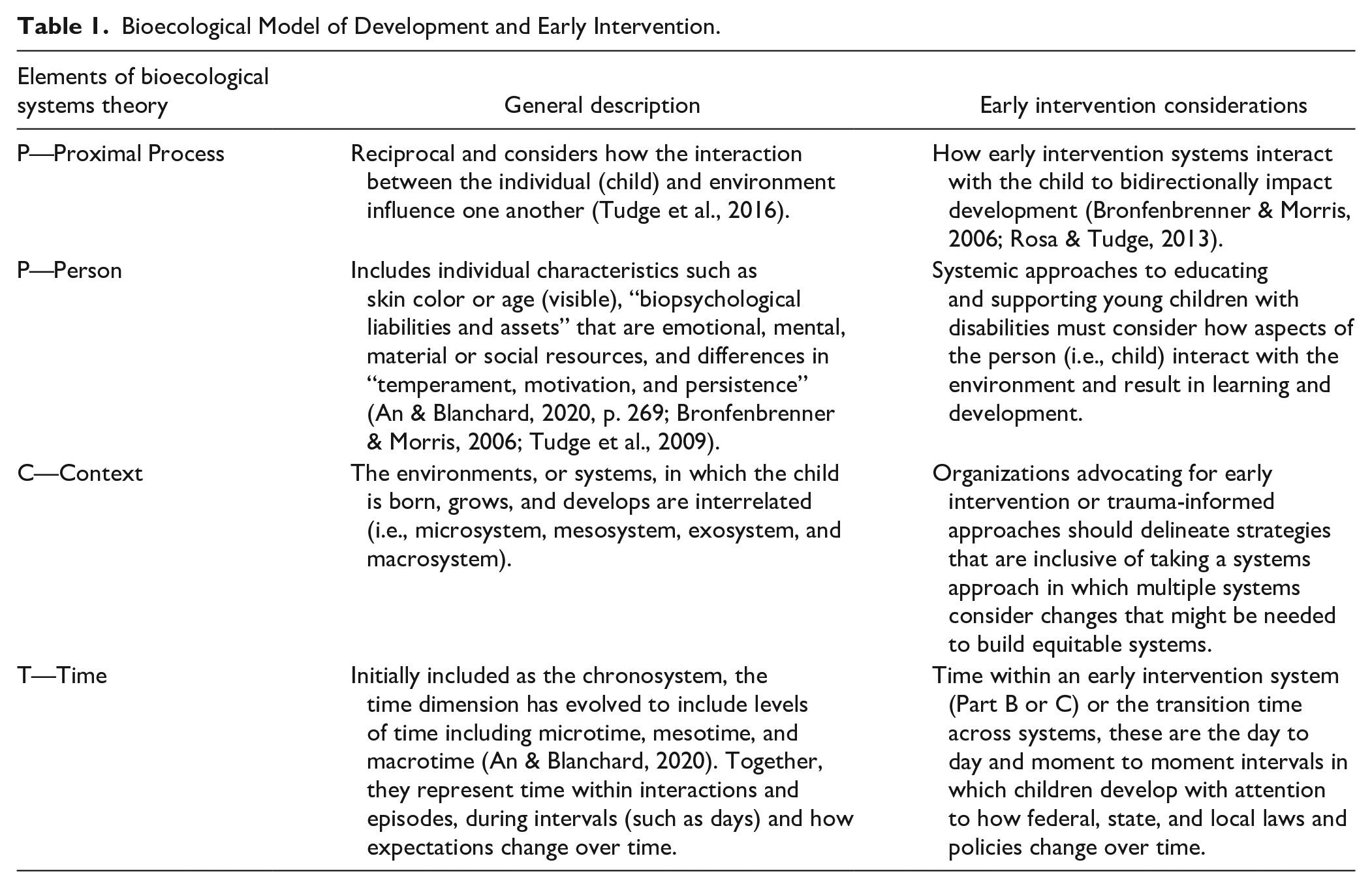
To elaborate on the systems, the initial four (i.e., microsystem, mesosystem, exosystem, and macrosystem) are part of the context, the third element and “c” in the model. The environments, or systems, in which the child is born, grows, and develops are interrelated. The microsystem includes the environments most directly affecting the child and where the child engages the most, such as home and school. The mesosystem covers the relationships between different microsystems such as caregivers and early educators. In the exosystem, the child is not an active participant, but takes part in bidirectional influence such as through the caregivers’ place of employment. Finally, the macrosystem covers societal values and beliefs including laws, the economy, and cultural expectations (Bronfenbrenner & Morris, 2006; Rosa & Tudge, 2013). Early intervention organizations and programs should delineate strategies that are inclusive of taking a systems approach in which multiple systems consider changes that might be needed to build equitable systems.
Child at the Center of System
Bronfenbrenner’s most recent version of the bioecological theory included consideration for proximal processes (as described above) which recognize “person characteristics” such as race, age, and gender (Bronfenbrenner & Morris, 2006, p. 795). The person characteristics could also include disability. However, a framework that includes acknowledgment of social stratification, segregation, and other factors affecting children of color is imperative to fully understand and support learning and development as well as to build equity-empowered systems. The effects of systemic racism on child development are not directly acknowledged or addressed in the context element of the bioecological systems theory. However, García Coll and colleagues provide a comprehensive developmental framework explicitly including social position factors (García & Weiss, 2017; García Coll et al., 1996).
The socioeconomic class children are born into, combined with considerations such as the child’s disability status, gender, race, and ethnicity, can predetermine health and educational outcomes from the birth. Although this is true for all children, we focus primarily on children of color—Black children and children who are members of the global majority—due to the disproportionate impact of social position factors (e.g., race, gender, ethnicity) and social stratification mechanisms (e.g., racism, oppression, discrimination) on development. In addition, children of color have developmental outcomes that are more often negatively affected by these factors and mechanisms (García Coll et al., 1996). We must acknowledge that discrimination, racism, and oppression negatively influence the opportunities and experiences for Black children and all children of color. For example, one recent report from The Children’s Equity Project and the Bipartisan Policy Center (Meek et al., 2020), “Start with equity: From the early years to the early grades,” explains how the impact of racism and social class can play out in the development of children of color. In addition, children from families who are of lower social class are more likely to experience traumatic events within the microsystem resulting in stress reactions. Furthermore, Black children are more likely to experience more of these traumatic events leading to compounded trauma responses (Morsey & Rothstein, 2019). This can lead to detrimental effects on physical functioning and later academic achievement. This model acknowledges the ways these constructs and variables must be considered in an equity-focused, systemic approach along with how systems can impact one another.
García Coll and colleagues (1996) developed an “integrative model for the study of developmental competencies in minority children.” Traditional models, such as the bioecological theory, often focus on the last four sections of the integrative model, four through eight (see García Coll et al., 1996): (4) promoting/inhibiting environments, (5) adaptive culture, (6) child characteristics, (7) family, and (8) developmental competencies (García Coll et al., 1996, p. 1896), while the integrative model prefaces development of children of color with three additional and crucial considerations for societal impact: (1) social position variables (i.e., race, social class, ethnicity, gender), (2) social stratification mechanisms (i.e., racism, prejudice, discrimination, oppression), and (3) segregation (i.e., residential, economic, social, and psychological). Any early intervention approach or research that does not consider these three additional areas is insufficient and potentially underscores deficit framing of children and families rather than focusing on systems change toward equity.
Furthermore, omission of the first three parts of the model ignores several factors important for understanding the complex nature of development. For example, section 2 focuses on acknowledging that children of color experience racism, discrimination, and oppression. Racism and discrimination are traumatic and exist in all systems and therefore affect children of color in many, often inconspicuous, ways (García Coll et al., 1996). To understand how racism functions at this level (and is different from other social stratification systems like oppression), the following definition is provided: Racism refers to the pervasive and systematic assumptions of the inherent superiority of certain races, and consequent discrimination against other races. Racism occurs when the ideology and concepts of social stratification are actualized and persons are deemed to be more or less inferior solely on the basis of their membership in a racial group (Essed, 1991; Montague, 1942). In Western societies, the preferred group is Caucasoid. Persons who are descendants of all other racial groups are placed into an inferior class status. Whereas an individual’s position can be modified or buffered through the acquisition of wealth or higher social status, it can never be completely changed. Racism is considered to be the primary mechanism of influence within this categorization system, as it refers to different social attitudes and treatment based solely on race. In contrast, prejudice, discrimination, and oppression may be experienced not only as a function of race, but also on the basis of social class, ethnicity, and gender. (García Coll et al., 1996, p. 1899)
Although research shows nurturing and responsive teachers are important in children’s lives, an individual school/center, classroom, interventionist, and/or teacher is not enough to offset the impacts of racism on children of color (Chafouleas et al., 2016; Morsey & Rothstein, 2019). Finally, one way to illustrate social stratification in early intervention is to look at how young children of color are referred, qualified, and labeled for special education at higher rates and are overrepresented in suspension and expulsion data (Gilliam et al., 2016; Meek et al., 2020).
Understanding Early Childhood Intervention Systems
Before we can reimagine our early intervention system, we need a shared understanding of the current early intervention landscape through extending the earlier overview of Part C of IDEA or early childhood special education (Section 619 of Part B of IDEA). From birth, children are identified as belonging in a variety of categories that may describe their mental and physical strengths and needs such as typically developing, developmentally delayed, having a medical disability, or at-risk for developing a disability. When a child is born with a medically diagnosed disability (e.g., Down syndrome, spina bifida), they are immediately referred to Part C services under IDEA. Children may also qualify for services due to an educational need. With this approach to special education, physical, medical, and developmental disabilities have a biological or environmental cause and should be addressed through remediation toward “correcting the physical state,” traits, or attributes of the child such as hearing or mental ability (Mehan et al., 1986, p. 70). This often leads to a focus on “fixing” the child.
For children with developmental disabilities of any kind, referrals to Part C of IDEA or early childhood special education (Section 619 of Part B of IDEA) initiate the process of determining educational eligibility for services and support. Multiple means of evaluation are gathered and analyzed to determine the appropriate eligibility category under IDEA; the child is labeled so that they can receive early intervention or special education services. However, eligibility categories such as developmental delay and learning disability may not be as clear as intended; they can be subjective and influenced by implicit biases (Saatcioglu & Skrtic, 2019).
Despite the challenges with labeling, a label may impact access certain services and programs. For example, due to the lack of universal preschool in the United States, a child’s label may give them access to a funded early childhood classroom. Some children who are determined to be at-risk for school failure may also gain access to state-funded preschool services from this label. The current systems often result in inequitable early educational experiences for all learners while segregating some young children with disabilities and developmental delays into exclusive, separate programs comprised of other children with disabilities (Meek et al., 2020), despite a strong research base supporting the importance of inclusive environments for young children (Odom et al., 2011).
Figures 1 and 2 outline the ways current systems may blame young children and families for qualifying for early intervention or remain focused on identifying children as in need of services and supports through intervention. Societal and systemic expectations for normality are deeply privileged to White, able-bodied young children, also referred to as dominant standards, which can be antithetical to inclusion, belonging, and equity (Annamma, Boelé et al., 2013). In other words, the systems have developed ways to narrow behaviors and developmental outcomes considered “normal,” often pathologizing many young children of color (Annamma, Connor, & Ferri, 2013). For example, Figures 1 and 2 outline the ways systems justify this mechanism of othering young children and families through blaming or labeling. In the blaming example, Figure 1, systems have a primary focus on labeling children so they can be fixed to fit into the system, often without robust data or information and in the absence of having a relationship with the child or family. This outward focus works to blame the child and family for “being different” or being outside of the “norm” while ignoring the ways our systems perpetuate inequities. In Figure 2, labeling, one or more adults in the child’s life determines that there may be a possible diagnosis, medical condition, or developmental delay and initiates a referral for screening, diagnosis, or evaluation. The child’s pathway to medical or educational labeling or categorizing begins. While there is variability across the United States related to how children are identified as fitting into one or more of the early intervention and special education eligibility categories in the IDEA, the hope is that the label will provide resources, services, or supports to reinforce child and family outcomes or provide special education and related services for learning and development. Furthermore, the extent to which these labels help or pathologize children can also vary.
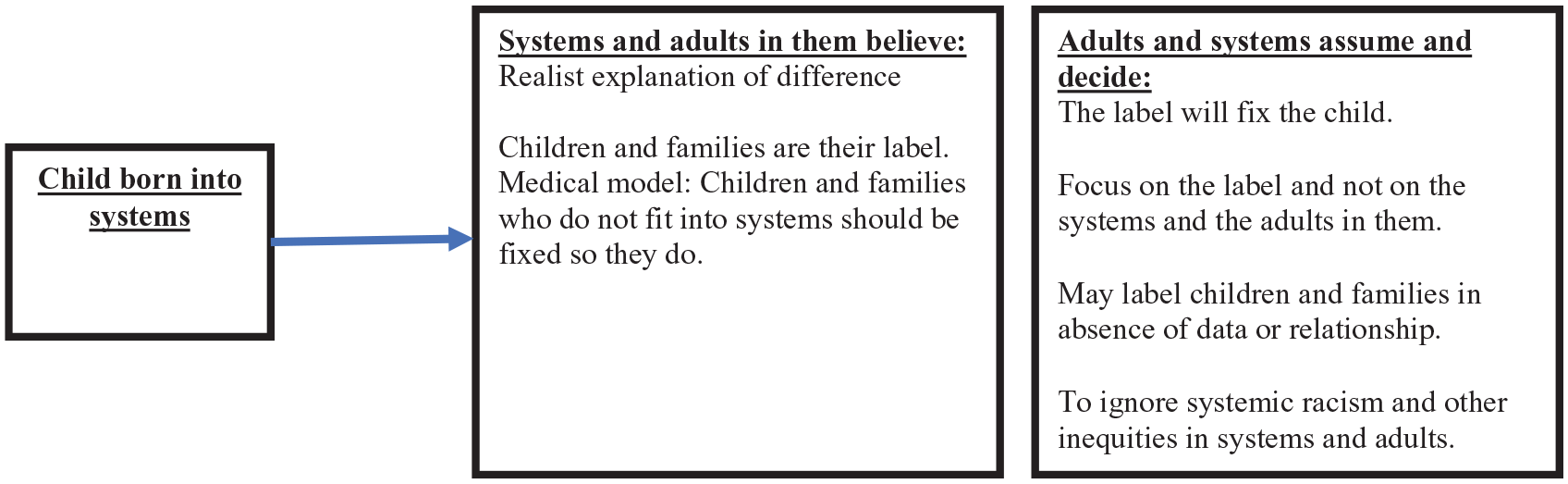
Modus operandum 1: Blaming.
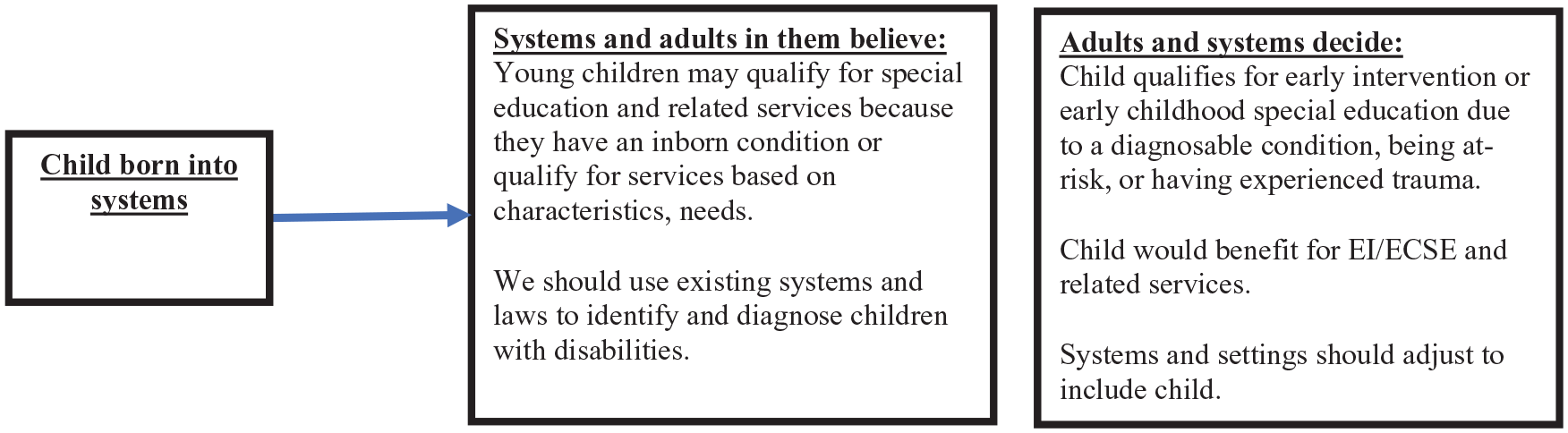
Modus operandum 2: Identification within systems. EI/ECSE: early intervention and early childhood special education.
Reimagining Equitable Early Intervention Systems
To provoke systemic change in early intervention, we highlight the National Institute for Children’s Health Quality Global Infant Safe Sleep Center’s Equity Evolution Framework (Scott & Desrosiers, 2020). This framework also aligns with the integrative model because two of the three systems acknowledge racism, bias, and other social position factors and push toward addressing them through systems change. To rebuild equitable systems, we must address the inequities inherent in the current systems.
The Equity Evolution Framework (Scott & Desrosiers, 2020) includes three categorizations for systems: (a) savior-designed systems, (b) ally-designed systems, and (c) equity-empowered systems (Table 2).
Equity Evolution Framework (Scott & Desrosiers, 2020).
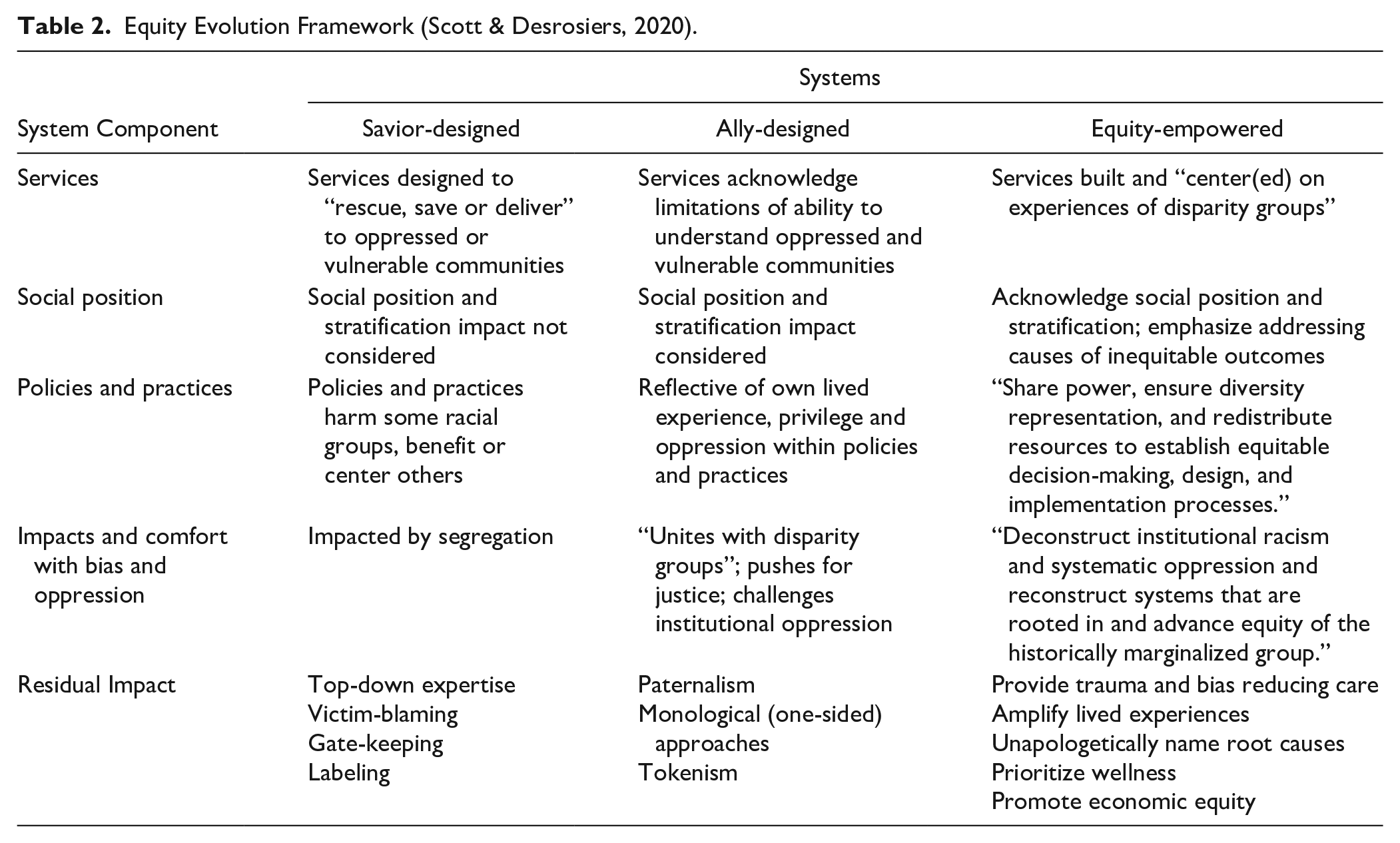
Figures 1 (blaming) and 2 (labeling) align most closely to savior-designed and ally-designed systems. When systems and individuals in them (e.g., administrators, early educators, or interventionists) blame families or have a deficit lens, they may feel early intervention “rescues” young children and their families with the “right” services, program, or plan. Similarly, through labeling, some in early intervention may consider aspects of their own privilege and push against injustice without completely taking on systems (ally-designed). Neither stance embodies the aspects of the last category, an equity-empowered mind-set.
Transition to Equity-Empowered Systems
The goal for early intervention is to move toward equity-empowered systems (Scott & Desrosiers, 2020). This acknowledges social positions and stratifications, and builds a service delivery model on centering disparity groups. In the health field, if a health outcome is seen to a greater or lesser extent between populations, there is disparity (Healthy People, 2020). Disparities often exist within and across all identity categories, “race or ethnicity, sex, sexual identity, age, disability, socioeconomic status, and geographic location” (Healthy People, 2020). Relatedly, disparities exist in early intervention. The residual impact of equity-empowered systems includes attention to systems and care models that address bias and understand trauma. Such systems celebrate and affirm the “race, culture, language, and identities” of young children and families. For an example of how an equity-empowered early intervention system could be created, we highlight how the trauma-informed approach and addressing biases, residual impacts of this kind of system, are important in equity-focused early intervention systems.
The Promise of Trauma-Informed Approaches
While the decades-long movement toward trauma-informed approaches has gained momentum, targeted interventions to support children who have experienced trauma remain understudied or undiscovered (Thomas et al., 2019). Therefore, to understand the overarching term, “trauma informed,” we must also understand what trauma is and what it is not, particularly within the context of intervention and education. According to the Substance Abuse and Mental Health Services Administration (2014), Individual trauma results from an event, series of events, or set of circumstances that is experienced by an individual as physically or emotionally harmful or life-threatening and that has lasting adverse effects on the individual’s functioning and mental, physical, social, emotional, or spiritual well-being. (p. 7)
At least 55% of children in the United States experience trauma prior to kindergarten (Jimenez et al., 2016). Acknowledging children experience trauma does not, in and of itself, provide the tools for supporting those children with interventions in classrooms just as determining a child has a disability does not automatically result in the services and supports the child needs to be successful (Anda et al., 2020). Therefore, it is critical that professionals within early intervention systems consider implementation of systemic trauma-informed educational approaches and interventions implemented to support children who experience trauma. A critical component of trauma-informed approaches is ongoing interrogation of implicit biases.
Reducing Bias
To reduce bias (e.g., implicit, ableism) in systems, we have to acknowledge it exists and have a clear understanding of how it operates. Implicit biases activate involuntarily and are generally in conflict with our stated beliefs. Therefore, consistent practice of bringing awareness to our biases and actively working to overcome them is essential to implementing trauma-informed approaches (Clark & Zygmunt, 2014). Gilliam and colleagues’ (2016) findings suggest that biases may operate in implicit ways: When the preschool teacher and child were of the same race, knowing about family stressors increased teacher empathy for the preschooler and decreased how severe the behaviors appeared to the teacher. But when the teacher and child were of a different race, the same family information seemed to overwhelm the teachers and the behaviors were perceived as more severe. (Hathaway, 2016, para 7)
Extensive research documents other areas of teacher bias including based on child characteristics (i.e., race/ethnicity, Harber et al., 2012; disability label, Shifrer, 2013; gender, Carlana, 2019) and perceptions of the student (i.e., behavior, Gilliam et al., 2016; effort, Kozlowski, 2015). Therefore, it is critical to consider how information about traumatic experiences may affect early interventionists and educators’ negative assumptions about children and families. A more comprehensive view of the young child through the integrative model and equity-empowered systems is important to mitigate teacher bias. For example, systems may acknowledge how racism or ableism affects a child’s development. In addition to providing services and supports for inclusion, programs may look at disparities in identification and placement.
Looking Toward System Responsibility
To more broadly shift focus from “fixing” children to the responsibilities of adults and systems, we propose revising the mechanisms as explained in Figures 1 and 2. We focus on strategies that celebrate each individual child, honor difference, and embolden adults to be the change agents who fight to protect children by challenging and rebuilding inequitable systems into equity-empowered systems (Figure 3).
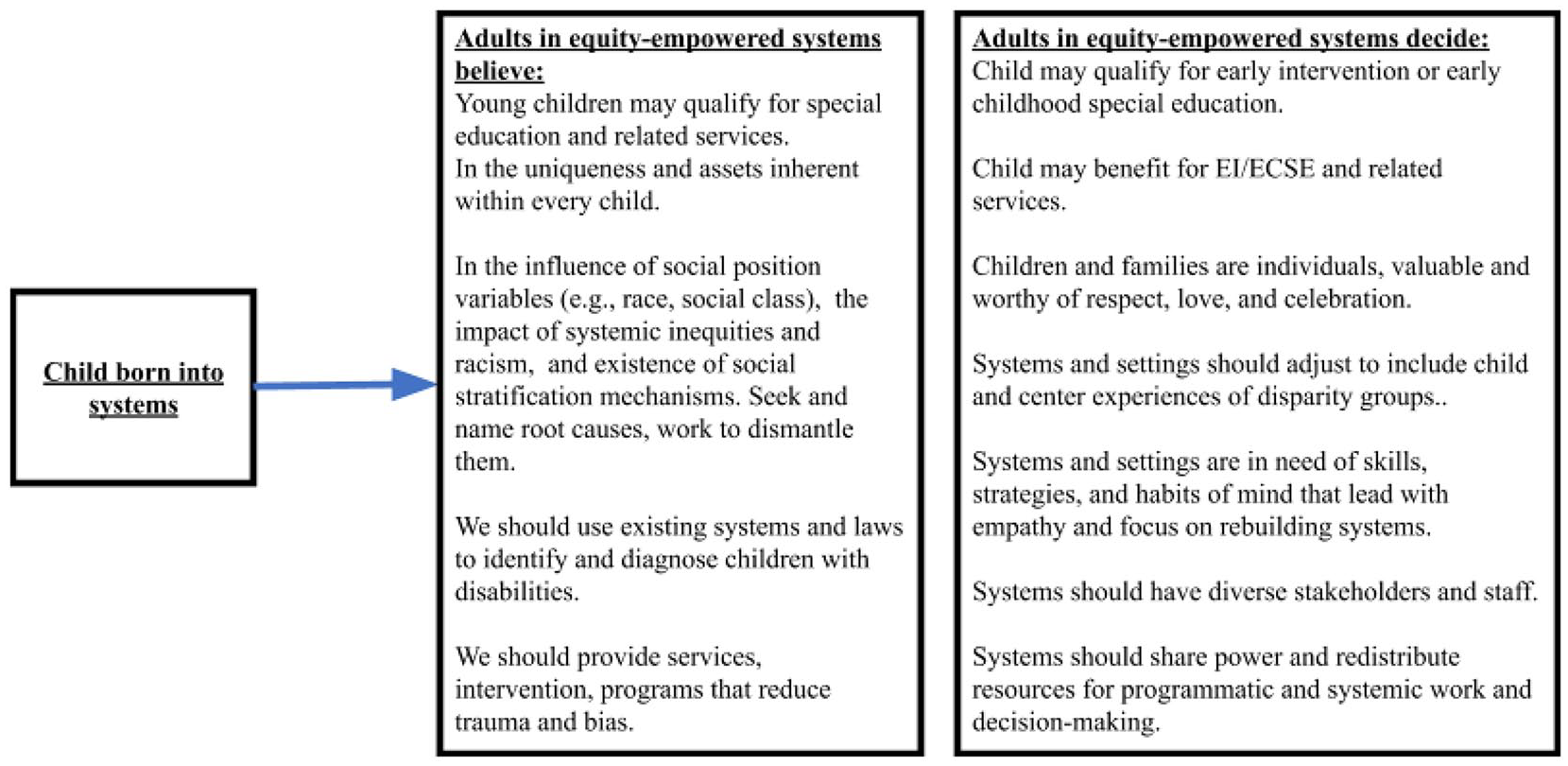
Preferred modus operandum: Responsible systems and adults. EI/ECSE: early intervention and early childhood special education.
By acknowledging and naming inequities, bias, racism, and social stratification mechanisms within systems, we can work toward building true partnerships with families and rebuilding systems that work for all young children and families. The systems in place were not built for the complex needs of racially, ethnically, linguistically diverse children and families. Rebuilding systems that work for all young children and families must be our priority.
The United States often supports systems that continue to perpetuate and reinforce inequities, many starting before a child is born, particularly for children of color. Improving outcomes for children will take a commitment from our systems including federal, state, and local cross-sector stakeholders. In 2019–2020, over 70 early childhood experts, led by The Children’s Equity Project and the Bipartisan Policy Center, convened to develop a report focused on early childhood equity. The report, released in July 2020, connected the importance of having a policy agenda to tackle inequities for young children, specifically children of color (Meek et al., 2020). The report is framed acknowledging the following: Our systems have created barriers that stack the deck against many children—and they have to climb over those barriers before they are out of diapers. We have a system that is unequal, unfair, and unsustainable . . . fixing child serving systems must be part of the solution. If all children are given access to the academic and social-emotional supports they need—instead of being kicked out of school, floundering in ineffective and ideologically driven teaching models, and separated into sub-par learning settings—young children who have been locked out of opportunity for generations could get closer to reaching their full potential. (p. 7)
Early intervention and early childhood special education are designed to identify children with disabilities for access to early intervention. IDEA, at its core, is a civil rights law, guaranteeing access to services and supports for traditionally underserved children and families. To ensure it lives up to that promise, we have to interrogate the implementation of our system and ask who it is working for and who is it harming. Within early childhood special education and early intervention systems, adults and systems themselves have a responsibility to help all children to realize their full potential.
Another aspect of the Start with Equity Report (Meek et al., 2020) is grounded in the following belief relevant to focusing on policy and systems-level change: We believe that implementing the reforms in this child equity policy agenda can help us progress toward bridging opportunity gaps in a comprehensive, specific, and measurable way, and can ultimately begin to transform children’s learning experiences. (p. 109)
This perspective is helpful for grounding our work in rebuilding equitable early intervention systems. Equity is at the forefront of our purpose and the need for a systemic approach.
Considerations for Early Intervention Systems Change
Macrosystem Level
Social stratification systems such as racism, discrimination, and oppression are present throughout each level and mediate child outcomes in the macrosystem level (García Coll et al., 1996). When considering macro-level early intervention system change, it is important to give attention to the existence of social stratification mechanisms. The macrosystem also includes institutional belief systems, laws, political systems, and cultural expectations (An & Blanchard, 2020; Tudge, 2008). Early intervention (as defined by Topics in Early Childhood Special Education) laws and federal and state policies related to infants, toddlers, and preschoolers with or at-risk for disabilities should be considered. With a focus on equity and reducing bias within our systems, we can take a deeper dive into how the macrosystem could better support young children and families.
Policy area considerations for governance and leadership
Although the need for equity and a systemic focus in early intervention systems is dire, discussions about how to influence this change is building. In April 2019, the National Association for the Education of Young Children (2019) Governing Board adopted the position statement, Advancing Equity in Early Childhood Systems. Although this statement does not have an explicit early intervention focus, it more broadly provides considerations across settings and systems, including policymakers. In the early intervention context, we refer to system-level considerations such as federal and state early intervention systems, state educational departments, and school districts. Decisions at these levels then affect schools, classrooms, educators, interventionists, and children. For trauma-informed early intervention systems to be effective, leadership at the state and district levels must lead the way in prioritizing and supporting implementation. For example, questions to consider in implementation: (a) How are funds dispersed and prioritized? (b) How are providers and educators supported to embody a family-centered approach? (c) Is the “at-risk” label included in identification for services? If so, how is it defined? (d) How are early intervention needs and priorities communicated to policymakers? and (e) How do eligibility numbers align with population demographics statewide and regionally? When they do not, what might be to cause of this disparity?
These questions can provide a starting point to interrogate decision making with a focus on equity and systems change.
Microsystem Level
The microsystem level is where the child’s developmental outcomes are more directly impacted (An & Blanchard, 2020; Bronfenbrenner & Morris, 2006; Tudge et al., 2009). These are the immediate environments children engage on a frequent basis such as childcare, school, and home. As we are focusing on early intervention systems, we will provide examples through settings outside of the home, such as childcare and school.
Ready childcare centers and schools
The long-time inequities—that start before birth—have long-lasting effects; within the U.S. educational system, this is often referred to as the “achievement gap” (Gwartney, 1970). Given that this terminology and its accompanying responses have persisted, it is not surprising that children of color are deemed less likely to be ready for school (Burchinal et al., 2011).
This common framing obscures a more sobering reality: schools, and learning systems more broadly, were not built and are still not prepared to educate and support children from diverse backgrounds, leading to an opportunity gap, or more bluntly, a systems failure (Da Silva et al., 2007). In 2017, Humphries and Iruka discussed the necessity of moving beyond simply identifying that the gap continues to exist and instead address the gap’s root causes. Such long-standing stagnation in conversation and conceptualization suggests the need to look at the so-called achievement gap differently, presenting opportunities for cross-sector collaborations, including employment, family leave, health care, and social systems.
It is critical to acknowledge and address the systemic racism and other inequities that have been upheld and perpetuated within—but not unique to—our educational systems within early intervention systems. For example, the Centers for Disease Control and Prevention (CDC) conceptualize health inequities within the context of social determinants of health, with each determinant (i.e., economic stability, neighborhood and built environment, health and health care, social and community context, and education) playing a key role in affecting health and well-being, quality-of-life outcomes, and risks (Institute of Medicine, 2002). These determinants are larger than interpersonal interactions and instead are based on large systemic and structural components of society and our economic structures (CDC, 2019); when considered as a group, these determinants are responsible for explaining the majority of health disparities (World Health Organization, 2020).
Using concepts and data from a related discipline, Iruka (2020) suggests that a similar framework should be utilized within the context of education with the development of Social Determinants of Early Learning—accounting for two main components: (a) socioeconomic and political contexts (i.e., governance, microeconomic policies, social policies, public policies, and culture and societal values) and (b) socioeconomic position (i.e., social class, gender, ethnicity and racism, equation, occupation, income, and experience) of children. Although none of these determinants are the “fault” of the children, they actively affect children and their families; therefore, educators have a responsibility to address these Determinants of Early Learning to maximize their role. Maximizing their role means acknowledging and actively working to dismantle the persistent and prevalent existence of racism and discrimination within educational settings (Foundation for Child Development, 2020). If early intervention systems are expected to address and work within a trauma-informed, equity-empowered framework, as has been suggested by Loomis (2018) with preschools, it is essential to simultaneously include anti-racist practices to promote child/student well-being from a systemic level. Questions to consider for implementation in schools and classrooms might include the following: (a) How does the childcare center, school, or classroom prepare for the children enrolled (ongoing enrollment or newly enrolled who may transition such as from a childcare center to public school prekindergarten)? (b) What are discipline policies and are there discrepancies in suspension and expulsion rates (e.g., Is one racial/ethnic group or gender suspended or expelled at higher rates)? If so, what are they and why might they occur? What changes can be made to improve these discrepancies?
Conclusion
The instability of the current economy, demands for racial justice, and COVID-19 virus crisis provide a unique opportunity for redesigning systems so they serve, support, and honor all children: The early learning and education systems, like all systems in the U.S., were not designed with all children in mind, and in some cases, explicitly designed to exclude, stunt outcomes, and prevent children from reaching their potential. As a result, these systems can exacerbate—rather than diminish—inequality. COVID-19 adds to the already flawed and inequitable American status quo, making equity issues, including those discussed here, all the more urgent to address. (Meek et al., 2020, p. 121)
The systems as they stand create undo barriers for young children and families’ inclusion and belonging. Now is the time for early intervention to capitalize on the moment and rebuild equity-empowered, inclusive, trauma-informed systems.
Footnotes
Declaration of Conflicting Interests
The author(s) declared no potential conflicts of interest with respect to the research, authorship, and/or publication of this article.
Funding
The author(s) received no financial support for the research, authorship, and/or publication of this article.
