



Abstract
While independent preclinical studies have reported beneficial effects of glutamate-oxaloacetate transaminase (GOT) in models of ischemic stroke, these findings remain dispersed across the literature. This PRISMA-compliant systematic review and meta-analysis aims to combine data from these studies to determine GOT’s therapeutic potential in ischemic stroke, focusing on the effects on lesion size and neurofunctional deficit. After screening results from searches in PubMed and Web of Science, and citation chasing, 12 eligible studies were included. Range of evidence met nine out of 13 STAIR criteria. Median (Q1, Q3) quality score was 8.5 (6, 11.25) on the CAMARADES 15-item checklist. Both endogenous GOT up-regulation and exogenous GOT administration reduced infarct size, with SMD = 1.14 (95% CI 0.61–1.67; p < 0.0001), to a higher extent in mice than in rats. GOT interventions also improved edema, neuronal death, somatosensory evoked responses and neurofunctional score. The findings support the therapeutic potential of GOT for acute stroke. However, effect sizes were substantially reduced after publication bias correction (28% reduction for infarct size, with some functional outcomes losing significance), and the complete absence of female, aged, and comorbid animals limits clinical translation. High-quality, pre-registered studies in clinically relevant populations are essential before clinical trials.
• The therapeutic potential of glutamateoxaloacetate transaminase (GOT) in ischemic stroke was systematically reviewed and meta-analyzed.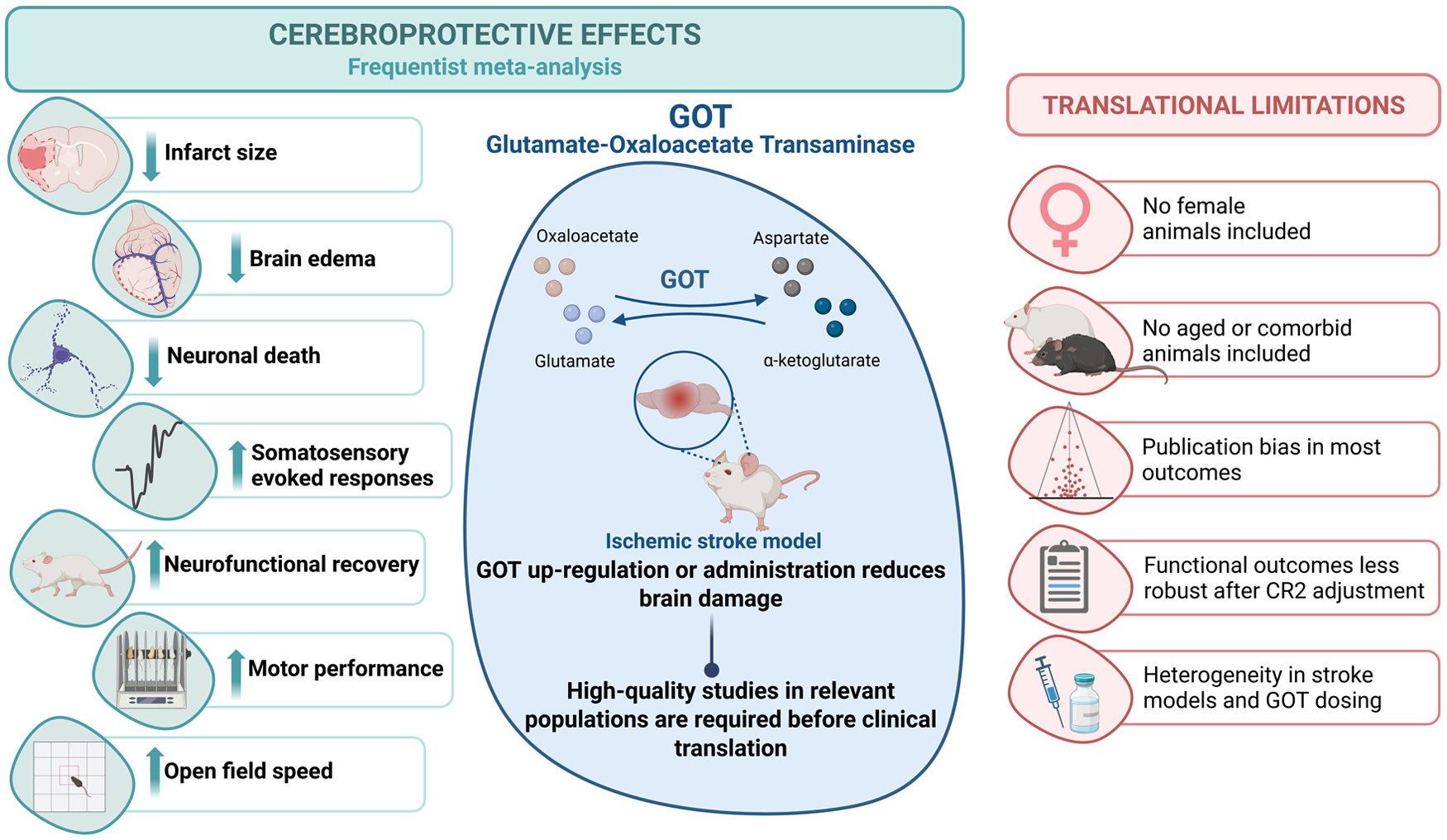
Get full access to this article
View all access options for this article.
References
Supplementary Material
Please find the following supplemental material available below.
For Open Access articles published under a Creative Commons License, all supplemental material carries the same license as the article it is associated with.
For non-Open Access articles published, all supplemental material carries a non-exclusive license, and permission requests for re-use of supplemental material or any part of supplemental material shall be sent directly to the copyright owner as specified in the copyright notice associated with the article.
