



Abstract
Student-teacher relationships that improve over time may help slow or prevent declines in student motivation. In a diverse sample of 1,274 middle and high school students from three schools, this mixed-methods study found that those who improved in developmental relationships with teachers reported greater academic motivation, and more positive perceptions of school climate and instructional quality. Improvements in teacher-student relationships had some positive effects on students’ grade point averages (GPAs) but they varied by school as well as by aspect of the relationship measured. No differences by poverty status were seen in any of these results. Student focus groups yielded additional understanding of the actions and mechanisms through which student-teacher relationships improve. Results of this study suggest that if individual educators and entire school communities focus on strengthening student-teacher relationships, significant improvements can be made in students’ motivation, engagement, and performance.
Keywords
Teachers across the United States commonly report low student academic motivation as the number one problem in their classrooms (Yeager et al., 2014). This problem is exacerbated across development, where numerous researchers have observed a downward trajectory in students’ academic motivation (Gnambs & Hanfstingl, 2016; Gottfried, Marcoulides, Gottfried, Oliver, & Wright Guerin, 2007; Kosovich, Flake, & Hulleman, 2017; Skinner, Kindermann, Connell, & Wellborn, 2012; Wang & Eccles, 2012). This downward developmental trajectory is not limited to the motivation to succeed in school. It can also be observed in students’ engagement in learning, their sense of belongingness, their perceptions of school climate, their educational aspirations, and their overall academic performance (Fredricks & Eccles, 2002; Gottfried et al., 2007; Li & Lerner, 2011; Wang & Dishion, 2012; Wang & Eccles, 2012; Wang, Chow, Hofkens, & Salmela-Aro, 2015). These declines in motivation, engagement, and performance are especially common across the transitions to middle school and high school (Niehaus, Rudasill, & Rakes, 2012). Therefore, understanding ways to mitigate this decline or pinpoint opportunities to intervene should be a priority for all those concerned with improving educational performance overall, and promoting positive youth development.
Li and Julian (2012) have proposed that the active ingredient in successful interventions aimed at youth development (in their formulation, interventions focused on at-risk youth) is the presence of developmental relationships, which are characterized not simply by caring or positivity but by endurance, reciprocity, and increasing complexity. Similarly, Pianta, Hamre, and Allen (2012) summarize in their research on student engagement: It does not appear to us that the central problem in school reform is curriculum, school/class size, or outcomes assessment but rather the extent to which teachers are supported to interact with students and form relationships with them that engage them in opportunities to learn and develop. (p. 368)
An increasing number of studies have linked positive student outcomes to student-teacher relationships (Jeffrey, Auger, & Pepperell, 2013; Noddings, 2013). However, surprisingly, little is known about whether student-teacher relationships change over time and how those changes influence student attitudes, behaviors, and outcomes (Alder, 2002; Gehlbach, Brinkworth, & Harris, 2012; Yu, Johnson, Deutsch, & Varga, 2018). Previous studies of teacher-student relationships provide little insight into the attitudes and perception of these relationships from the viewpoint of students. The current study helps to close this gap in the literature by quantitatively investigating the association between changes in student-teacher developmental relationships and motivation, engagement, and performance across an academic year, and by qualitatively examining how middle and high school students perceive these changes.
Student-Teacher Developmental Relationships
Relationships have long been established as a critical element of youth development. In educational settings, research has demonstrated that student-teacher relationships can influence students’ academic engagement, motivation, and achievement (Archambault, Janosz, & Chouinard, 2012; Bernstein-Yamashiro & Noam, 2013; Collie, Martin, Papworth, & Ginns, 2016; Cornelius-White, 2007; Goodenow, 1993; Hughes & Cao, 2017; Kannapel & Clements, 2005; Lee, 2012; Raufelder, Scherber, & Wood, 2016; Sointu, Savolainen, Lappalainen, & Lambert, 2017; Vollet, Kindermann, & Skinner, 2017; Wang, 1990; Wentzel, Russell, & Baker, 2016; Wentzel, 2009, 2012). The benefits of strong student-teacher relationships extend beyond such proximal factors related to academic success, and are also associated with factors related to the broader school context, such as perceptions of school climate (Adams, Ware, Miskell, & Forsyth, 2014), a feeling of belonging or connectedness (Cohen, McCabe, Michelli, & Pcikerall, 2009), and improved student behavior (Bernstein-Yamashiro & Noam, 2013). These factors also are important because when students feel emotionally connected to school, safe, and fairly treated, they are less likely to engage in behavior that is disruptive to their own and other’s academic engagement, and more likely to exert effort to do well (Lee, 2012). Studies suggest that these linkages may be particularly salient in the middle school (Hughes, Im, & Allee, 2015; Wentzel & Wigfield, 2009).
Historically, studies investigating student-teacher relationships have focused largely on the emotional valence of those relationships (Murray & Zvoch, 2011; Pianta, Hamre, & Allen, 2012; Wubbels & Brekelmans, 2005), centering on elements such as how much students feel their teachers care for them, or whether students have an adult at school in whom they can confide. The result is that constructs such as caring, warmth, trust, and social support are common in the literature on student-teacher relationships, but less common are relational dimensions such as scaffolding students to exert greater power in the relationship or helping students expand their sense of possibilities for their lives (Murray & Zvoch, 2011; Wentzel, 2012).
In contrast, relationships that have the potential to exert a positive developmental influence are those that affect multiple aspects of development in complex ways over time, rather than simply providing emotional care or closeness. Among middle-level students, for example, student-teacher relationships may affect, for good or ill, students’ expectancies about academic success in specific domains, and the value they attach to success in those domains (Wigfield & Eccles, 2000), students’ beliefs about their own intelligence and ability to grow (Blackwell, Trzesniewski, & Dweck, 2007), and how self-directed or autonomous they feel (Ruzek et al., 2016), all of which can influence their academic motivation. Therefore, the current study adds to the literature by taking a multi-dimensional approach to studying student-teacher relationships (Li & Julian, 2012; Wentzel, 2009), using a new developmental relationships framework developed by the authors that expressly includes relational elements such as sharing power and expanding possibilities, which are not typically included in student-teacher relationship measures (Pekel et al., 2018).
Drawing on self-determination theory (Ryan & Deci, 2000), we define developmental relationships as close connections through which young people discover who they are (their identity), cultivate abilities to shape their own lives (agency), and engage with and contribute to the world around them (contributions and connections to community). Both extensive literature reviews and pilot studies we conducted in the family, school, community, and peer contexts led to the conclusion that, for youth to grow and thrive, it is not enough that “positive” or “caring” relationships exist for them but that those relationships are comprised of five relational strategies: express care, challenge growth, provide support, share power, and expand possibilities (Pekel et al., 2018).
In the Developmental Relationships Framework that is the focus of the authors’ ongoing applied research, express care in a student-teacher relationship requires actions that show the students that they matter. Challenging growth involves the teachers’ actions that push their students to keep getting better. In these relationships, when a teacher helps their students complete tasks and achieve their goals, they are satisfying the providing support element. When a teacher treats their students with respect, and when they give their students a say in the classroom, they are sharing power. And finally, to expand possibilities for their students, teachers connect their students with people, places, and ideas that broaden their worlds.
When these five relational elements are experienced, students tend to report more favorable scores on a variety of psychological, social-emotional, behavioral, and academic indicators (Pekel et al., 2015; Pekel et al., 2018; Scales et al., 2018). For example, in a study of nine middle and high schools that looked at elements related to expressing care, challenging growth, and sharing power, students who reported having high levels of these strategies in their schools were 130% to 222% more likely than their peers to feel a sense of belongingness to school, and 53% to 61% more likely to feel academically confident and capable (Scales & Benson, 2007; Scales, 2013). Similarly, Thijs and Fleischmann (2015) observed that students who reported having high levels of closeness with their teachers tended to report higher levels of mastery goal orientation than their peers, which they found promotes higher achievement, while students who reported having high levels of conflict and dependency with their teachers tended toward performance goals, which can interfere with longer term learning (Pintrich, 2000).
Academic Motivation
Our framework and measure of academic motivation draws on a mixture of social-cognitive and self-determination theories. We view students’ academic motivation as a complex construct embodying effort and aspirations, which are influenced by a student’s own unique blend of mastery and performance orientations (Elliot & Church, 1997); sense of their intelligence as fixed or malleable (Dweck, 2010); how efficacious they feel about school in general and about specific content areas or domains (Midgley et al., 2000); the particular academic and social goals they are forming or have established (Wentzel & Wigfield, 2009); and how much they generally perceive themselves being able to influence what happens in their lives (Shepherd, Owen, Fitch, & Marshall, 2006). These self-perceptions, values, and expectations are in flux during early adolescence as a normal part of development (Wigfield et al., 2015), and thus may be especially sensitive to the influence of variation in the quality of relationships with parents, peers, and teachers.
Current Study
The current study is framed by an overarching research question:
Motivation is defined by measures of student effort and aspirations, and engagement is defined by measures of perception of school climate and perception of the quality of classroom instruction. Performance is indicated by students’ grade point average (GPA).
In our analysis, we control for early-in-the-semester scores for each of those outcome variables, as well as for gender, race/ethnicity, and eligibility for free or reduced price meals. We control for these because prior research has demonstrated that boys, less affluent students, and students of color tend to experience an even greater decrease in academic motivation across development than their peers (Skinner et al., 2012).
We examine both the level of those relationships and changes in relationships as predictors, as well as overall relationship score and scores on each of the five individual elements of developmental relationships (i.e., express care, challenge growth, provide support, share power, and expand possibilities). Based on the previous research cited, greater experience of developmental relationships should be linked to better student connection to school, effort exerted, and performance. But, on average, the level of student-teacher developmental relationships suggested by previous research does not appear to be high, particularly for high school students as compared with middle school and elementary school students (e.g., Center for Advanced Study of Teaching and Learning, n.d.; Lee, 2012), and for lower income youth (e.g., Fitzpatrick, Côté-Lussier, Pagani, & Blair, 2013; Li & Julian, 2012). For example, in a 3-year aggregate sample of more than 121,000 sixth- to 12th-grade students in more than 300 U.S. communities, only 46% of the students experienced adequate levels of both caring and high expectations from teachers (middle-school students 52% vs. high school students 42%, and students from single parent families 39% vs. other family types 47%; unpublished data from Search Institute Profiles of Student Life: Attitudes and Behavior Survey, 2019). Thus, we also consider that if stronger student-teacher relationships are linked to better engagement, motivation, and performance, then improvement in those relationships over the school year over such mediocre levels should also help to boost engagement, motivation, and performance, especially among those with relatively poorer relationships early in the school year.
From a practical standpoint, it also is important to examine whether improvement in developmental relationships is linked to better academic adjustment and performance. The findings of this study may suggest that strengthening student-teacher relationships may be a relatively low-cost, high-return lever for strengthening academic motivation and interrupting typical declines in motivation as students progress through school. If change in developmental relationships is found to be associated with changes in student motivation, then this study adds evidence that strengthening those student-teacher relationships may be a meaningful vehicle for improving the academic motivation and performance of all students.
Hypotheses
Based on the studies cited earlier, we expect to observe positive associations between increases in the quality of student-teacher developmental relationships and GPA, academic motivation, and perceptions of school climate and quality of instruction. We expect these associations to persist even when controlling for the relevant variables’ early-in-the-academic year (Time 1) scores.
There may be a subgroup of students whose outcomes do not have this linkage with relationship change, those students whose relationships with teachers were already strong and remain strong throughout the school year. But for most students, who we expect will not have particularly strong relationships with their teachers, we predict improved relationships will, on average, be linked to better outcomes in the spring.
Like motivation, the quality of teacher-student relationships tends to decline across educational transitions to middle and high school (Roorda, Koomen, Spilt, & Oort, 2011; Wehlage, Rutter, Smith, Lesko, & Fernandez, 1989). Therefore, given this typical downward trajectory, we do not expect to observe a large percentage of our population reporting that their relationships with their teachers improved over the year. However, we expect, as previous literature would suggest, that high school students will be more likely than middle-school students to decline in those relationships.
Method
Participants and Procedure
Sixth-, seventh-, and eighth-grade students from two middle schools and ninth- to 12th-grade students from one high school in a large suburban community in the Midwest participated in this study. All procedures and instruments were approved by an institutional review board independent from the investigators. One middle school (School A, n = 534 matched surveys out of 675) was studied during the 2016-2017 school year, and the other middle school (School B, n = 515 matched surveys out of 711) and the high school (School C, n = 224 matched surveys out of 793) were studied in the 2017-2018 school year. Aggregating the sample across the three schools, the sample was 84% middle school students, 26% Hispanic (range by building = 13%-37%), 42% White (range = 23%-56%), 51% female (range = 48%-52%), and 52% eligible for free and reduced price meals (range = 35%-70%). The demographic information for students with both Time 1 and Time 2 data was not significantly different from the total sample at each time point. Nevertheless, due to a large sample loss at the high school level, we emphasize the middle school results in this article and suggest additional caution in interpreting the high school results. Listwise deletion was used to handle missing data throughout the analyses. Table 1 provides demographic information on the final samples.
Percentages of Student Samples in Different Demographic Groups.
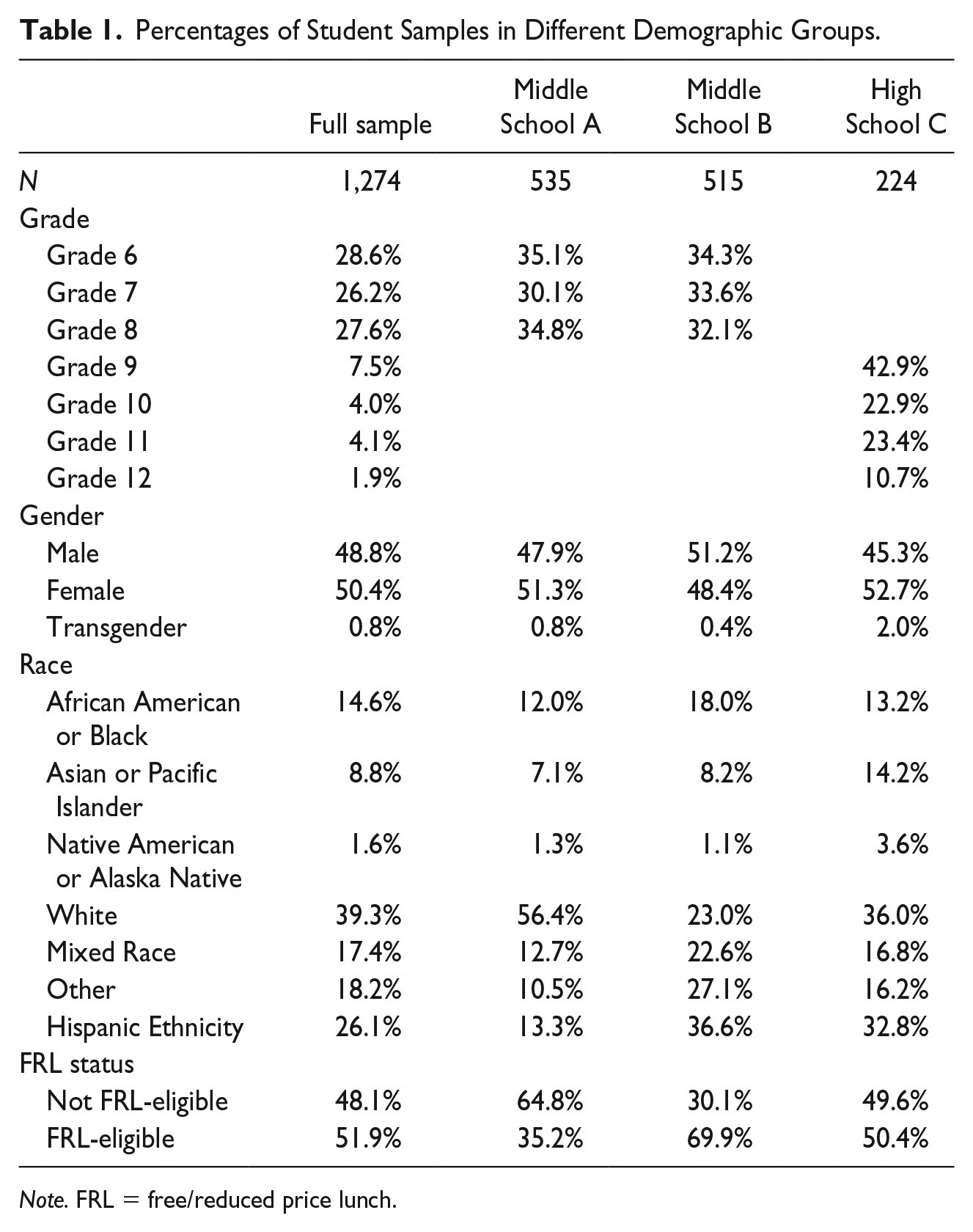
Note. FRL = free/reduced price lunch.
Students in School A completed online surveys in October 2016, and again at the end of May 2017 of that same academic year. Schools B and C followed the same schedule the following school year. The district provides Chromebooks for all students. Students took the surveys on those tablets during the same class period over a several day span. It took students 15 minutes, on average, to complete each survey. In addition, we employed a longitudinal design with student focus group data collected in Schools B and C in fall 2017 and spring of 2018. Three focus groups of students were recruited to participate in this study: one sixth-/seventh-grade group (six students), one eighth-grade group (five students), and one ninth- to 11th-grade group (six students). The small numbers of students who participated in the qualitative component of this study enabled deep discussion with the students and thick description of their attitudes, behaviors, and experiences.
The students who participated in this study attended either a middle or high school from a large first-ring suburb of a Midwest city (i.e., a suburb contiguous with the city boundaries); each school enrolls about 68% students of color. In the interest of protecting confidentiality, we did not ask these focus group participants for specific demographic information; however, they were chosen for their representativeness of the overall school population. Students were also chosen to reflect a range of academic performance. A trusted school staff member assisted with the recruitment and consent/assent process. Students in the focus groups were asked about their experiences with teachers who build positive relationships and changes they have noticed in their relationships with these teachers. Focus groups lasted approximately 1 hour. All survey and focus group participants provided student assent. Parents provided active consent for their students to participate in the focus groups, and passive consent for the survey, in keeping with district policy and procedure. Less than 1% declined to give permission or asked their student to be excluded.
Measures
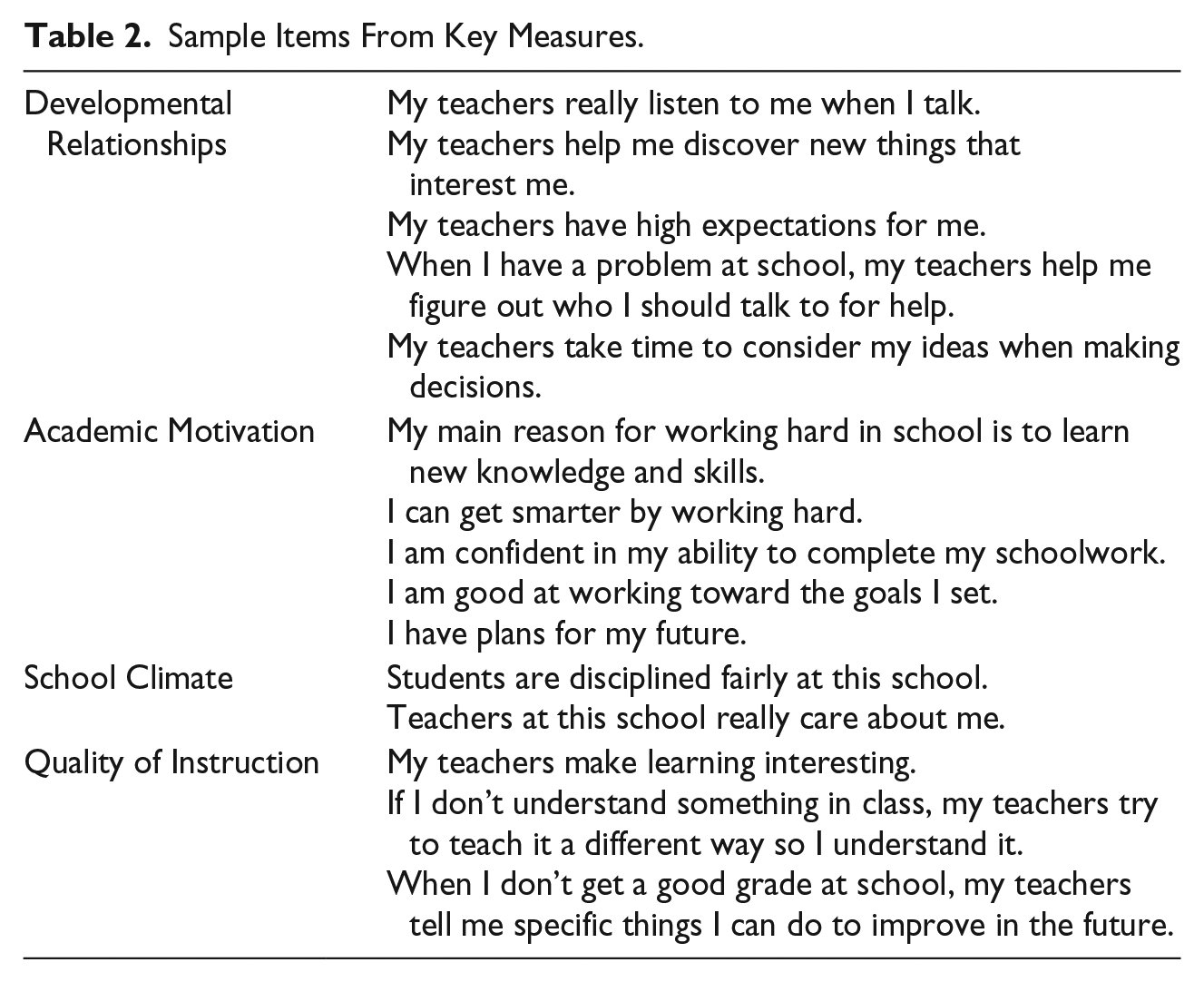
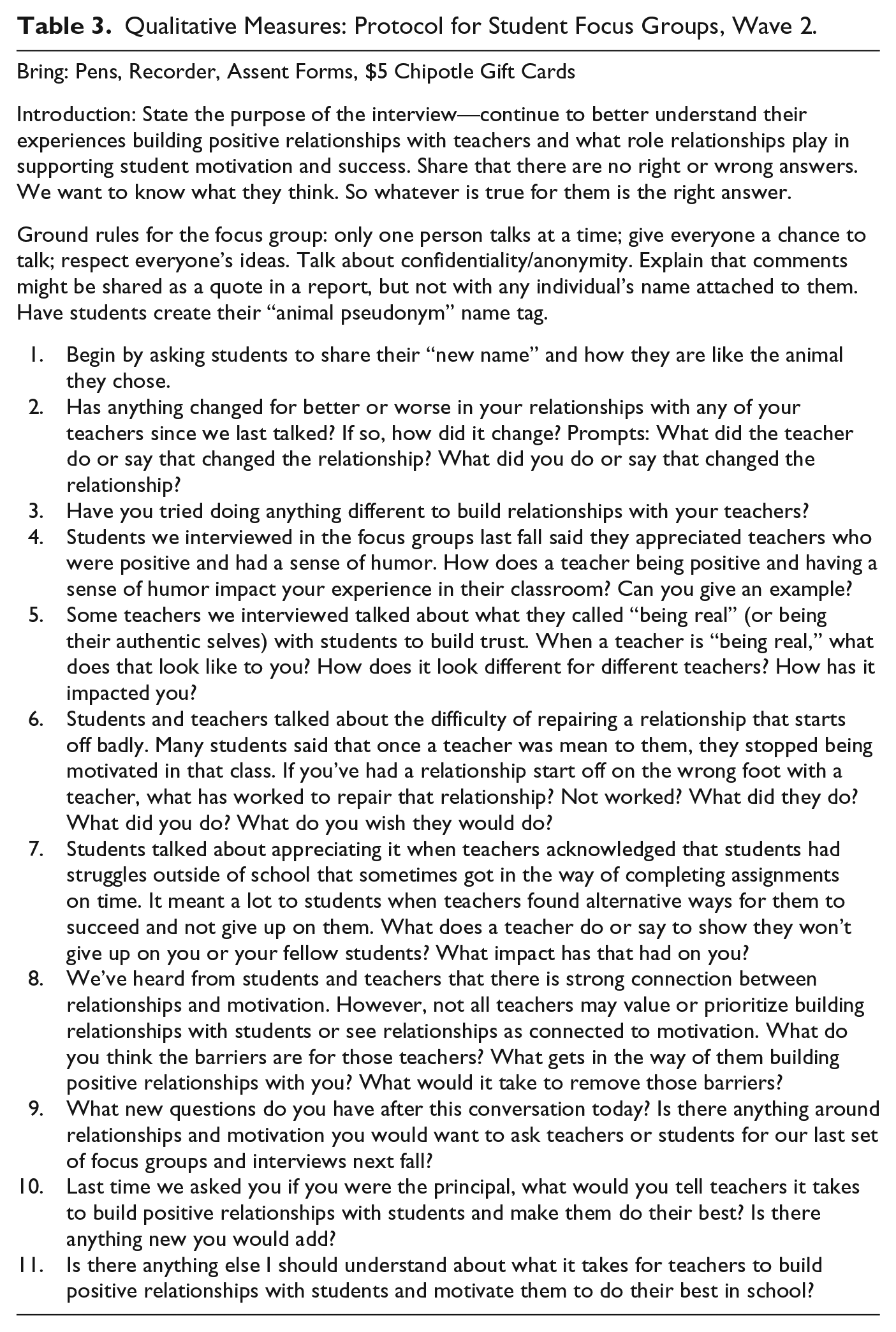
Sample items for each of the quantitative measures are presented in Table 2. The qualitative measures are represented by the protocol for the student focus groups. The Wave 2 protocol that focused on longitudinal change over the school year is presented in Table 3.
Sample Items From Key Measures.
Qualitative Measures: Protocol for Student Focus Groups, Wave 2.
Student-teacher relationships
We assessed student-teacher relationships using 20 items to describe how commonly students experience various relational qualities in their interactions with teachers (e.g., “My teachers really listen to me when I talk.” “My teachers help me discover new things that interest me.” “My teachers sometimes put me in charge of important tasks.”). Each item is scored on a 5-point rating scale, some items from 1 = never to 5 = very often, and some from 1 = not at all like my teachers to 5 = very much like my teachers. The overall developmental relationship variable is broken up into five elements: express care (five items), challenge growth (four items), provide support (four items), share power (four items), and expand possibilities (three items). The items were informed by an extensive review of multiple literatures on relationships (e.g., parent-child, student-teacher, mentor-mentee) and focus groups with students, parents, youth workers, and teachers. All items were developed by the authors, and went through extensive pilot testing and factor analysis (see Pekel et al., 2018). Students were asked to reflect on the relationships with their teachers in general, as opposed to a specific teacher, or the teacher with whom they have the strongest relationship. The decision to use this approach was based on two considerations. First, in pilot studies of early developmental relationship measures, students responded similarly (on average) when asked about specific teachers as compared to teachers in general. Second, asking students to reflect on their relationships with all of their teachers provides us with the opportunity to better understand the relational culture within the school, as contrasted with the importance of a relationship with a single teacher, as earlier research has done (e.g., Gehlbach, Brinkworth, & Harris, 2012).
The overall developmental relationships score used in this study was created by calculating the average scores from each of the five elements, and then calculating the average across the elements. See Table 8 for means, standard deviations, and alpha reliabilities, and Tables 4 and 5 for confirmatory factor analysis (CFA) results. Standard model fit indices (i.e., comparative fit index [CFI], Tucker–Lewis index (TLI), standardized root mean square residual [SRMR], root mean square error approximation [RMSEA]) showed excellent model fit, and all factor loadings for the five subscales were strong. The internal consistency of the subscales was consistently acceptable over the two waves. Tests of measurement invariance also showed that the relationship measure exhibited configural, metric, and scalar invariance across gender, grade, and family financial status, as well as across the two waves of data collection (available from authors).
Confirmatory Factor Analyses for Developmental Relationships for Waves 1 and 2.
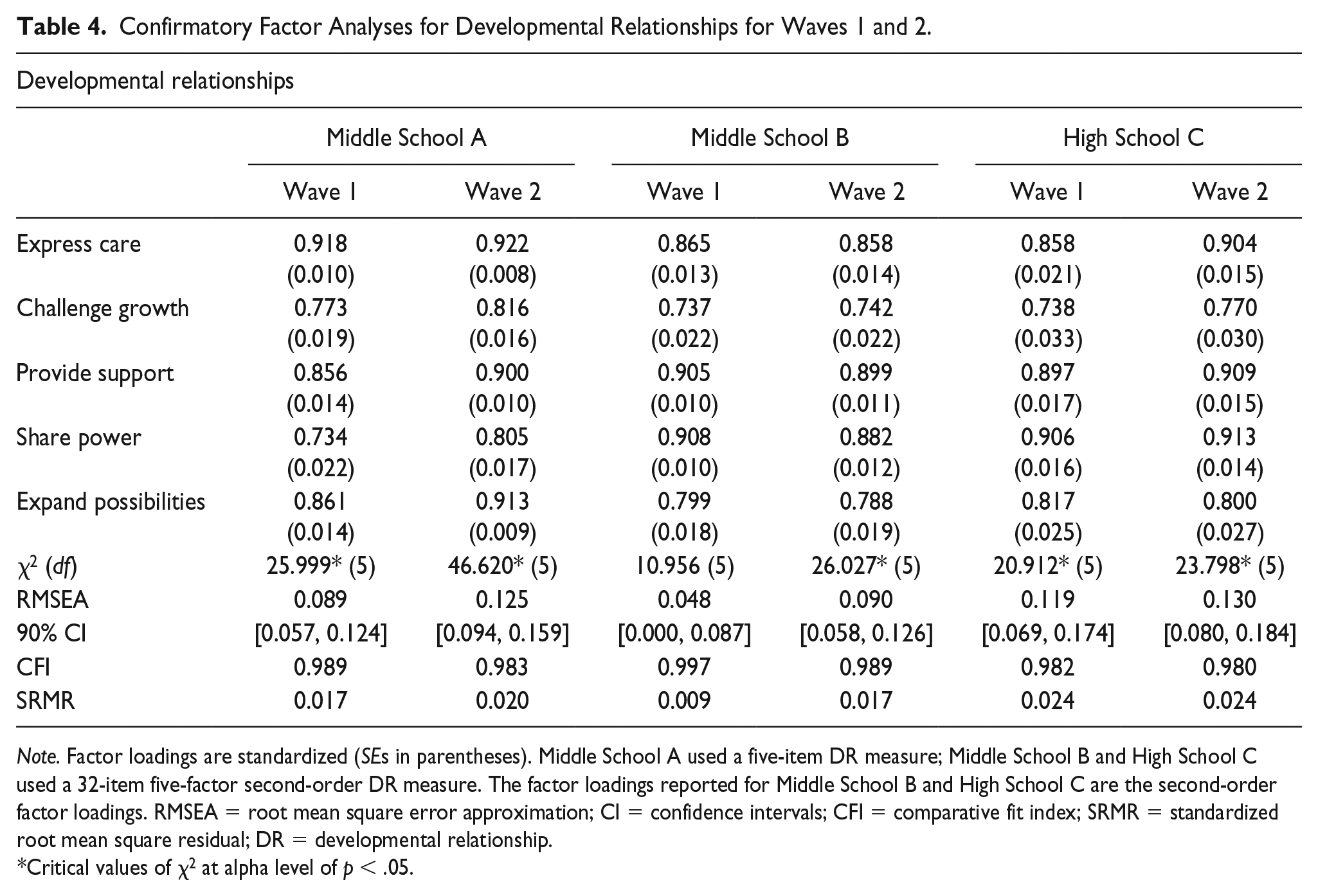
Note. Factor loadings are standardized (SEs in parentheses). Middle School A used a five-item DR measure; Middle School B and High School C used a 32-item five-factor second-order DR measure. The factor loadings reported for Middle School B and High School C are the second-order factor loadings. RMSEA = root mean square error approximation; CI = confidence intervals; CFI = comparative fit index; SRMR = standardized root mean square residual; DR = developmental relationship.
Critical values of χ2 at alpha level of p < .05.
Confirmatory Factor Analyses for Academic Motivation for Waves 1 and 2.
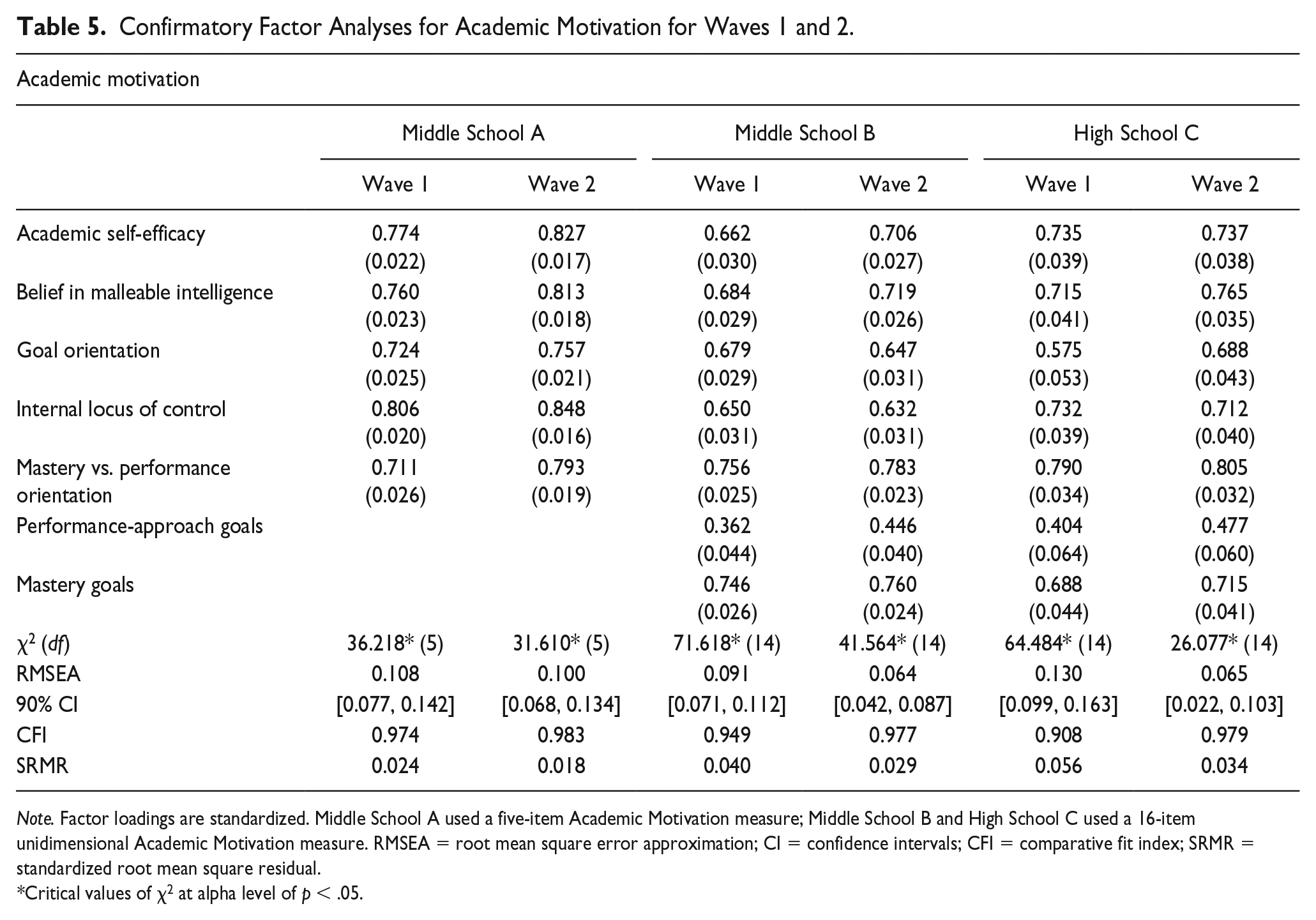
Note. Factor loadings are standardized. Middle School A used a five-item Academic Motivation measure; Middle School B and High School C used a 16-item unidimensional Academic Motivation measure. RMSEA = root mean square error approximation; CI = confidence intervals; CFI = comparative fit index; SRMR = standardized root mean square residual.
Critical values of χ2 at alpha level of p < .05.
We were interested in how change in relationship quality affects academic motivation, and so we modeled change using both a continuous and a categorical approach. First, given the long-running debate over the use of change scores versus analysis of covariance (ANCOVA)–based models in pre-post testing (e.g., Oakes & Feldman, 2001), we used both forms of analysis. First, we ran regressions using traditional Time 1 to Time 2 relationship change scores as the predictor of Time 2 outcomes, controlling for Time 1 outcome scores. We did not control for Time 1 relationships scores in the change score regressions. Because change scores already synthesize the Time 1 relationships values as part of the calculation of change, it has been shown that adjusting for them in change score models can strongly bias the results toward the null hypothesis, especially when using measures, that, even if adequately reliable (i.e., ≥.70), still have error, that is, are not perfectly reliable (Glymour, Weuve, Berkman, Kawachi, & Robins, 2005). These change-score analyses are the analyses presented in this article.
We also ran the regressions using Time 2 relationships as the predictor, but this time controlling for Time 1 relationships and outcomes scores, because relationships change scores were not the predictor variable. Those results are available in the supplementary materials as an indicator of the robustness of the results across differing methods of analysis. Also available in the supplementary materials are the results of categorical analysis, in which we created a priori three categorical student-teacher relationship change groups in order to compare students with a criterion-level increase in relationships (≥.25 standard deviations) with those with a decrease or no change in their relationships with their teachers. These results were very similar to those of the change-score regressions, again suggesting the robustness of the results.
Academic motivation
Our measure of academic motivation consisted of 15 items that reflected five components well represented in the motivation literature: mastery/performance orientation (tapping intrinsic and extrinsic motivation; two items), belief in malleable intelligence (whether students have fixed or growth mind-sets; three items), academic self-efficacy (students’ feelings of competency to do their academic work; three items), goal orientation (the salience of achievement and social goals; three items), and internal locus of control (reflecting students’ sense of being able to exert influence over what happens to them; four items). Each item is scored on a 5-point rating scale. The items were informed by reviews of previous work cited above, but were newly developed for this study. The academic motivation variable at both time points was created by calculating the average of each of the five motivation components, and then calculating the group average of all components (see Table 8 for means and standard deviations).
The internal consistency of the subscales was acceptable over the two waves (see Table 8 and Tables 4 and 5 for CFA results), and all but one of the CFA measures showed acceptable model fit across both waves (RMSEA was a bit higher than desirable in at least one wave at two schools). Moreover, correlations among the five motivation subscales (found in Tables 6 and 7) ranged from the .50s to .70s, suggesting a moderate degree of linkage as our theory of motivation postulates, but not so high we could not consider them independent measures.
Correlations Among Component Measures Making up the Academic Motivation Measure (Wave 1).
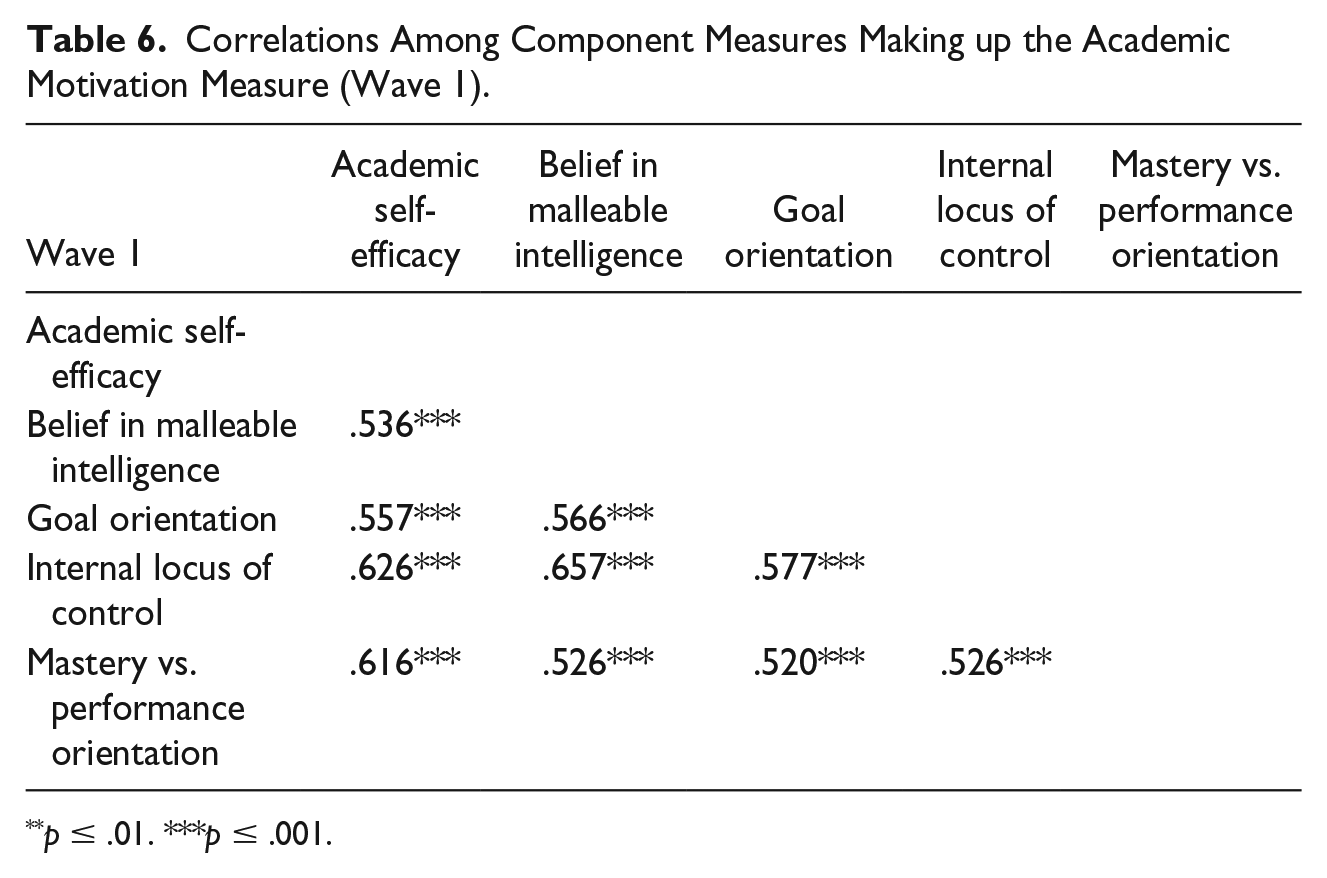
p ≤ .01. ***p ≤ .001.
Correlations Among Component Measures Making up the Academic Motivation Measure (Wave 2).
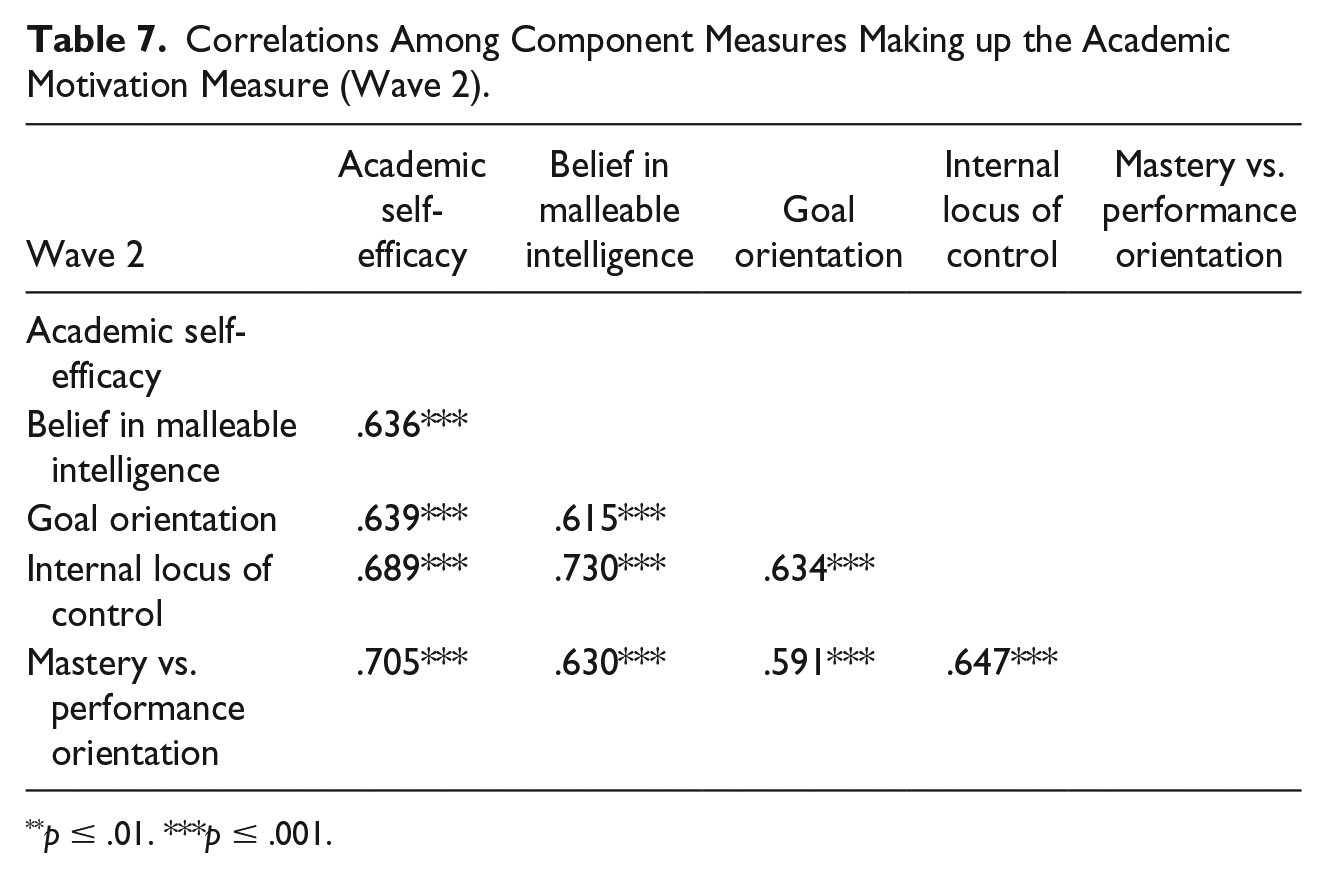
p ≤ .01. ***p ≤ .001.
These psychometric results are important because studies typically investigate these different elements of various motivational theories in isolation (see review in Lazowski & Hulleman, 2016). The findings from these CFAs and the subscale correlation matrix provide evidence for our multi-theory approach to measuring academic motivation. In addition, tests of measurement invariance also showed that the academic motivation measure exhibited configural, metric, and scalar invariance across gender, grade, and family financial status, as well as across both waves of data collection (available from the authors).
Eligibility for free or reduced price lunch
Use of free and reduced price lunch eligibility as a proxy for socioeconomic standing has been criticized for, among other issues, not correlating highly enough with actual income and not including other key components of socioeconomic status (SES) such as parents’ occupation or education (Harwell & LeBeau, 2010). Nevertheless, that eligibility status was the only SES indicator for which our partner school district maintained records, and so we employed a dichotomous eligible–not eligible indicator as a proxy for SES.
School climate
The school climate (four items) measure was informed by the extensive literature in this area (e.g., Fredericks, Blumenfeld, & Paris, 2004; Thapa, Cohen, Guffey, & Higgins-D’Alessandro, 2013) but consists of items newly created by the authors for previous research. Perceptions of school climate are related to a student’s sense of “fit” within a school, and are associated with but different from sense of belonging. As Cohen et al. (2009) noted, belonging or connectedness is an individual student’s emotional feeling of bonding to school, whereas school climate is both an individual’s perception of the safety, fairness, and welcomingness of the total school environment and a group perception about those aspects of pervasive school culture that can be “reality” for sizable numbers and perhaps the majority of students, faculty, and other school staff. The internal consistency of the school climate scale was consistently acceptable over the two waves (see Table 8). The school climate variable score was calculated by finding the average (see Table 8 for means and standard deviations). Each item is scored on a 5-point rating scale.
Descriptive Statistics and Alphas for All Key Measures Early in the Academic Year, at the End of Term 2, and at the End of the Academic Year.
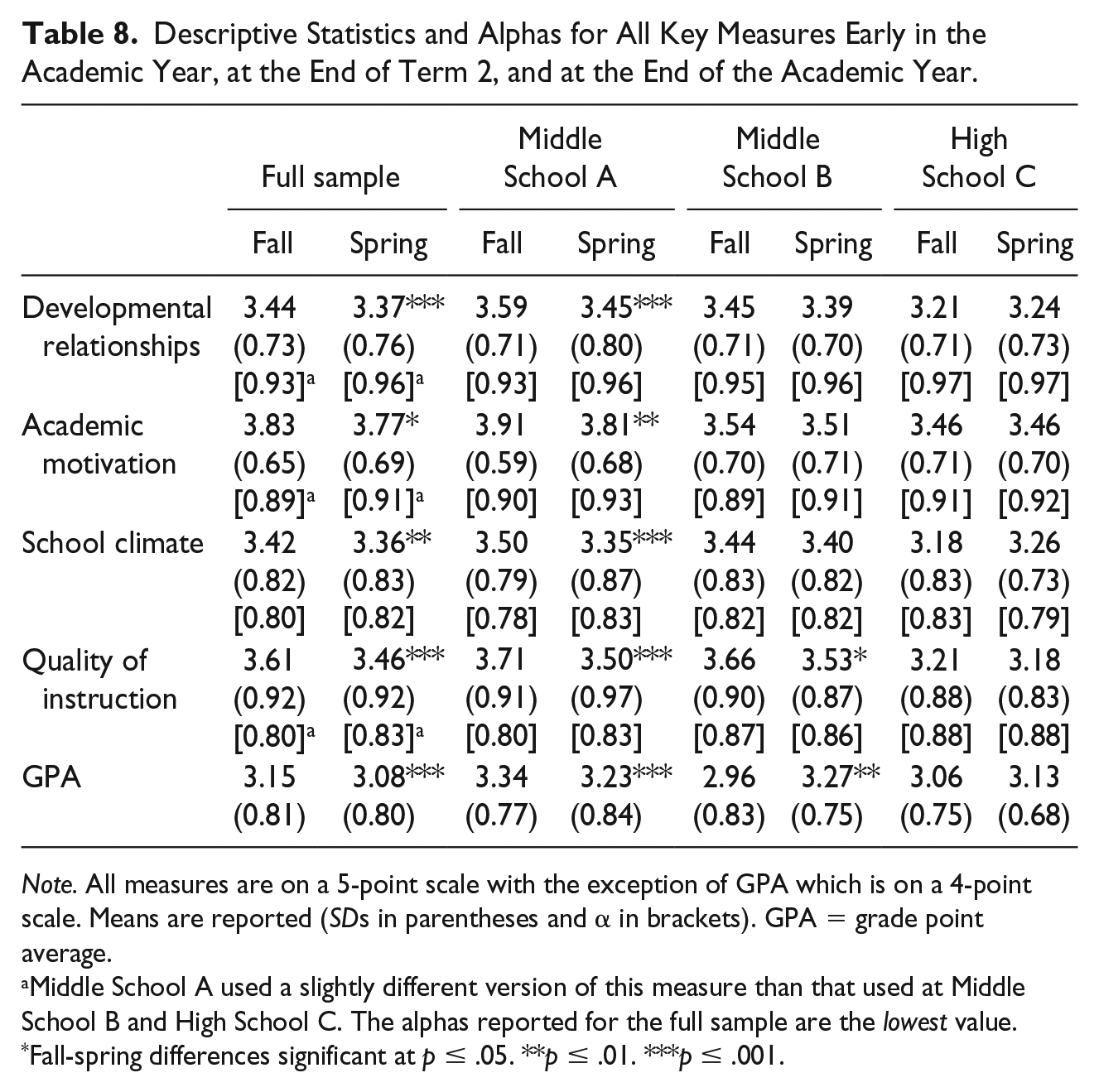
Note. All measures are on a 5-point scale with the exception of GPA which is on a 4-point scale. Means are reported (SDs in parentheses and α in brackets). GPA = grade point average.
Middle School A used a slightly different version of this measure than that used at Middle School B and High School C. The alphas reported for the full sample are the lowest value.
Fall-spring differences significant at p ≤ .05. **p ≤ .01. ***p ≤ .001.
Perceived quality of instruction
Quality of instruction was informed by review of the instrument developed for the Measures of Effective Teaching Project (Kane, McCaffrey, Miller, & Staiger, 2012). The six items reflected a mix of those items (some revised) and new ones (e.g., “My teachers make learning interesting.” “When I don’t get a good grade or score, my teachers tell me specific things I can do to improve in the future.” “The work I am asked to do in this school challenges me in a good way: it is not too easy and not too hard.”). Alpha reliabilities were acceptable in both waves (see Table 8 for means and standard deviations). Each item is scored on a 5-point rating scale.
School records data
GPA was provided by the school district for three time points over the academic year (the schools use a trimester calendar). Although GPA is a function not only of students’ achievement but of their classroom conduct and their teachers’ particular grading styles and judgments, it remains a highly valid indicator of academic performance. For example, high school GPA is at least as good as and often a better predictor of college success than are standardized test scores (e.g., Belfield & Crosta, 2012; Geiser, 2009; Hodara & Lewis, 2017; Niu & Tienda, 2012; Zahner, Ramsaran, & Steedle, 2014; Zwick, 2013).
Analytic Plan
In order to address our research question, we performed a series of regressions using a traditional Time 1 to Time 2 change score as the predictor, after controlling for the Time 1 outcomes scores, to predict each of the academic outcomes. We included a fixed effect for school in order to examine potential school-level differences (individual school results are available in the supplementary materials). We ran these regressions separately using both the total developmental relationships score and the score for each of the five elements as predictors, in order to examine possible different associations of the five elements with specific outcomes.
Analysis of the qualitative data used thematic analysis (Braun & Clarke, 2013) informed by a grounded theory approach (Charmaz, 2008). This process was facilitated by NVivo software (version 11). The analysis employed line-by-line coding of focus group and interview transcripts, identifying statements that illuminated our research questions. This process is sometimes referred to as open coding, because the aim is to stay open to participants’ interpretation of their experience, thereby allowing the data to take us in any theoretical direction. We then identified patterns in the open codes, gathering similar ideas together in themes. The three Wave 1 student focus group transcripts were coded independently by three researchers, who then came together to discuss similarities and differences in their coding, and developed a consensus theme structure. That structure guided coding of the Wave 2 transcripts, with new ideas being added as they emerged. The researchers then came together to discuss, come to consensus, and finalize the themes presented here.
Results
Investigating Associations Between Change in Student-Teacher Relationships and Academic Outcomes
Table 8 shows that, across the entire sample, the consistent pattern was for the measures of academic motivation, engagement, and performance to either stay the same or get worse over the school year.
Recall that we hypothesized that students who reported an increase in the quality of their relationship with their teachers would tend to report better GPA, academic motivation, and perceptions of school climate and quality of instruction. This hypothesis was mostly confirmed.
Tables 9 and 10 show that in each instance, as hypothesized, the more the students reported increased student-teacher relationships, the better were their motivation, perceptions of the school environment, and GPA at the end of the year, regardless of whether the overall developmental relationships score (Table 9) or the individual elements of relationships (Table 10) were used as the predictors. Improvement in the overall relationships score predicted all four end of the year outcomes (motivation, school climate, perceptions of instructional quality, and GPA). Improvement in express care, provide support, and share power predicted all the outcomes except GPA, whereas improvement in challenge growth predicted all four outcomes. Improvement in expand possibilities predicted better perceptions of school climate. The added variance in GPA directly explained by developmental relationships was, however, trivial (<1%). Tables 9 and 10 also show that these associations did not vary by free/reduced price lunch eligibility. Additional regressions were run with interaction terms (e.g., Relationships Change × Gender) to assess whether the relationships change–Time 2 outcome association varied by demographic groups (to save space, not shown here; available from the authors). In no case did the relation of the change in overall relationships score to academic outcomes vary by demographic group. There were a few variations by change in individual elements of developmental relationships (e.g., express care, challenge growth), mostly suggesting a small reduction in the positive association between improved student-teacher relationships and the Time 2 outcome, compared with the reference group (e.g., challenge growth being slightly less positive for Black students compared with White students). But these groups’ associations of relationships change with outcomes were still positive, that is, the conclusions did not change that improved relationships were linked to better outcomes across demographic groups.
Regression Results for Change in Total Developmental Relationships Score Predicting School Outcomes.

Note. FRL = free/reduced price lunch; DR = developmental relationship.
p ≤ .05. **p ≤ .01. ***p ≤ .001.
Regression Results for Change in Individual Developmental Relationships Elements Predicting School Outcomes.
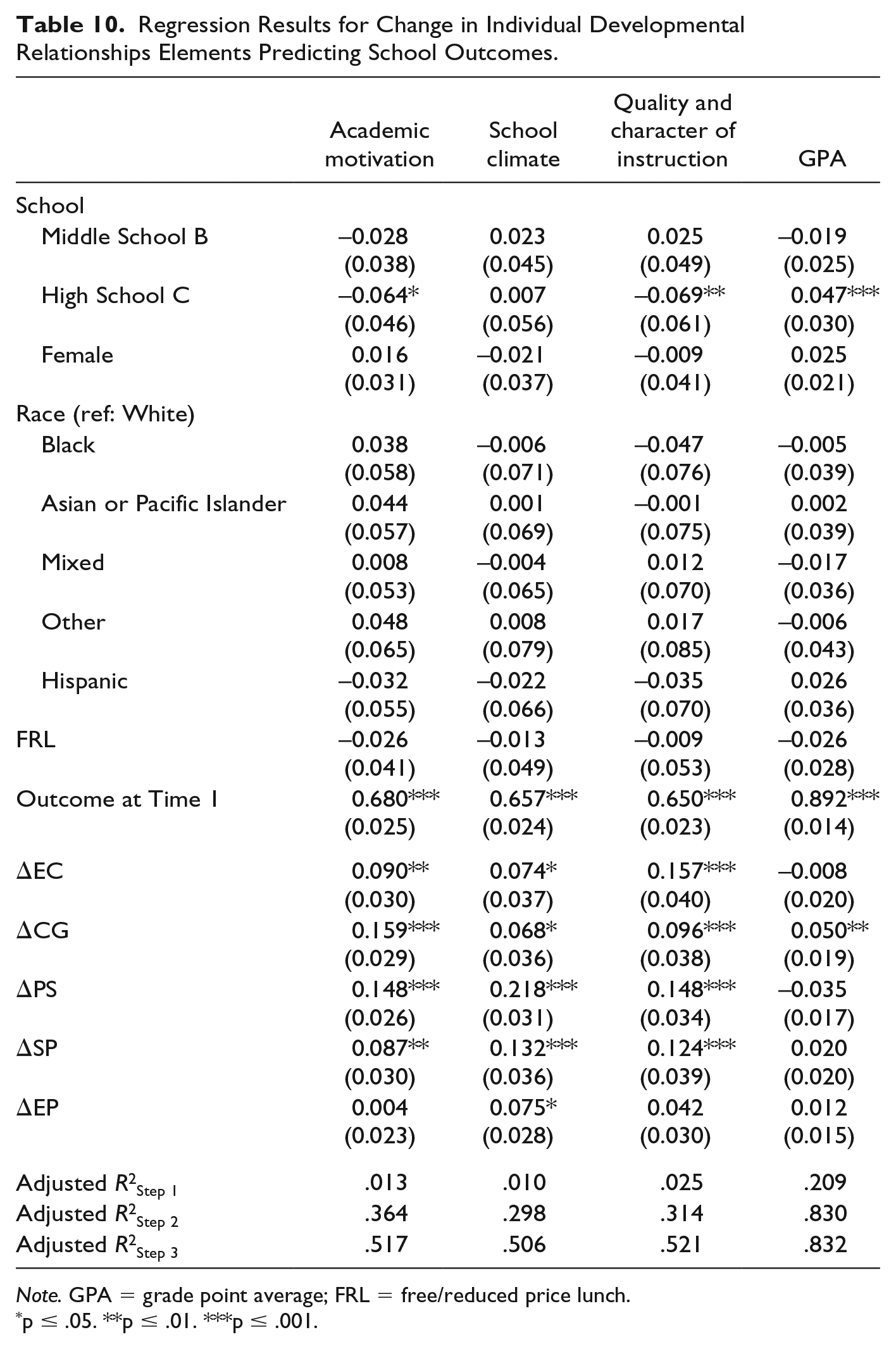
Note. GPA = grade point average; FRL = free/reduced price lunch.
p ≤ .05. **p ≤ .01. ***p ≤ .001.
Extent of Improvement in Developmental Relationships
These results show that improvement in student-teacher developmental relationships significantly predicted better academic motivation, perceptions of the school environment, and GPA. But only a minority of students improved at a meaningful level.
Using a level of an increase of 0.25 standard deviations being a meaningful degree of change (What Works Clearinghouse, 2017), that criterion was met by only 12% of the students in one middle school and 40% in the other middle school and the high school. Most students perceived their relationships with teachers as declining, staying essentially the same, or improving only a small amount over the school year.
Qualitative Results
The quantitative data showed that only a minority of students experienced improvement in their relationships with teachers, but that, for those who did, academic motivation and positive perceptions of school were higher at the end of the year. Nevertheless, those data do not shed any light on why these changes may or may not have occurred. The focus group data provide insights about the circumstances under which relational change might occur, and the concrete ways in which students perceived teachers to be or not to be interacting with them in a high-quality manner, thus offering additional insight for actions that could strengthen these relationships.
The following sections are the extracted themes from the Nvivo analysis. All of these themes emerged multiple times across the focus groups, and so can be viewed as exhibiting a degree of robustness in this sample of students. However, in keeping with the central purposes of qualitative research as a search for contextualized meaning more than broad generalization (Braun & Clarke, 2013), we did not attempt to quantify which themes were most prevalent.
Relationships Between Students and Teachers Can Improve and Trust Can Be Built When Teachers Respond to Student Needs
At the beginning of the school year, students talked about being given a large number of homework assignments or tasks. Students discussed that they felt stressed under the pressure and some reached out directly to their teachers. One student gave an example about a particular teacher: When he started throwing workloads at us, we talked to him and we sent emails, and then he kinda understood what our perspective was.
Students noted that through these interactions, their teacher began to change and said, . . .at the end of the year, he started warming up and he started to understand the students more [and] really understood where we were coming from with stress and stuff.
Students also talked about how they had been frustrated with another teacher who was not being flexible with assignments when they were struggling. They complained and asked the administration to switch out of the class. Students noted that because they voiced their concerns, they believed the school administration talked to the teacher because the teacher’s relationships with students improved. One student noted, . . .now, they’re more understanding for students’ certain circumstances and what would help meet us in the middle.
Students said they were “not afraid” now to talk to the teacher when they were struggling to complete an assignment.
Students also talked about being able to trust their teachers more when they responded to their needs. For example, when students felt personally singled out or “picked on” by their teachers, they were less likely to report a positive relationship with them. However, if teachers changed their approach, students noted that they were more willing to trust these teachers. One student described how they strongly disliked a teacher at the beginning of the school year for “talking smack” about them and sitting too close to them. Once the teacher began to give the student some space, they were able to trust them more.
Student-Teacher Relationships Are Strengthened When Teachers Are Honest About Mistakes and Apologize
Students discussed how it greatly impacted them when a teacher apologized to them or was honest about something they did wrong. For one student, being a part of a class where they felt singled out and picked on was causing them to “get mad” and “zone out.” After multiple students received poor grades in this class, the teacher’s behavior started to change: He just started being nice. He knew he was doing something wrong and was like, “I’m sorry for picking on you.”
The student noted that their relationship started to improve after this change had occurred.
When Students Demonstrate a Change in Effort, Teachers Are More Likely to Change Their Behavior Toward Them
Students perceived positive changes in their relationships with teachers and noted that their teachers “liked” them more if they started to complete more homework or in-class work. One student said, She just didn’t used to like me. She likes me a bit more now. . .I just started doing my work.
Another student said they decided to talk to their teacher about how to improve and their teacher said, If you turn your behavior around, you’ll get your grade higher.
This student was able to raise their grade in the class and improve the relationship with their teacher.
What Students Want From Their Teachers to Build Relationships and Motivate Them Remains Consistent Over Time
Students could clearly name some of the ways their relationships with teachers had changed over time both from modifications in their own behavior and their teacher’s behavior. Yet, what students said they wanted from their teachers to motivate them to do their best stayed consistent over the three semesters students were interviewed. In fact, we found that students were already experiencing these things with teachers deemed “exemplars.” In relationships with exemplar teachers, students experienced all five elements of developmental relationships and were motivated to do their best in the classroom. This included the following: teachers who expressed care by not taking things too seriously and joking with students; teachers who challenged growth by demonstrating high expectations and helping students learn from mistakes; teachers who provided support by not giving up on students no matter how far they fell behind; teachers who shared power by asking students for suggestions and inviting them into decision-making processes; and finally, teachers who expanded possibilities by connecting students with opportunities based on their interests in and beyond the school (details in Sethi & Scales, 2019).
Discussion
This study used a mixed-methods approach to examine academic year changes in student-teacher developmental relationships in a large and moderately diverse sample of middle-school and high school students, and the relation of those changes to student academic motivation, engagement, and performance. We hypothesized that increases in how commonly students experienced high-quality developmental relationships with their teachers over the academic year would be linked to positive academic motivation, perceptions of the school environment as measured by school climate, and ratings of instructional quality, as well as in student GPA.
That hypothesis was mostly supported. Students who increased in developmental relationships with teachers had better year-end academic motivation, perceptions of school climate, and perceptions of instructional quality, and on some relationship measures, better GPAs as well.
The results across schools suggested several observations.
Differences Between Middle and High School Students
More elements of developmental relationship influence school outcomes at the middle school than at the high school level, that is, more aspects of relational quality seem to have the potential to influence middle school students’ motivation, engagement, and performance. Given the considerable and rapid developmental changes young adolescents experience during this period, the results are promising. They suggest that middle-school teachers can keep young adolescents motivated and engaged if they can respond to those developmental changes with relational nuances that continue expressions of care while granting more agency to those students (share power) and providing meaningful resources and supports to do well on challenging and interesting tasks. These results suggest that middle school declines in motivation do not need to be the norm.
Robustness of the Results Across Analytic Methods
Both Time 2 levels of overall developmental relationship and the individual developmental relationship elements (controlling for Time 1 levels), and traditional change score representations of relational change significantly predict all motivation and perceptions of school outcomes, across all schools. The consistency of results using different analysis methods (and the consistency of results whether using these continuous measures or a categorical measure of relationship change groups) underscores the robustness of the findings: Both overall measures of developmental relationships and measures of the five individual elements or dimensions of those relationships are significant predictors of multiple motivation, engagement, and performance outcomes. These results are robust, being obtained whether using a traditional pre-post change score model or an ANCOVA-based change model.
Influence of the Individual Elements of Developmental Relationships
Among the five elements, provide support is important across multiple outcomes at both middle and high school levels, but especially at the high school level. The survey items tapped several aspects of support, including advocating for students if they have been treated unfairly, helping students learn to advocate for themselves, and connecting students to others who can help if they have a problem. The focus group comments reflected these as well as other ways of providing both support and care, such as when teachers are flexible with deadlines and understanding when students are under stress. At the middle school level, challenge growth and the change score in challenge growth are also important across multiple outcomes, including GPA. At the high school level, share power is also important across multiple outcomes, including GPA.
Importance of School Context for the Effects of Developmental Relationships
Despite similarities across schools, especially between the two middle schools, each school has its own configuration of which of the five developmental relationship elements, and changes in which of them, matter most for end of the year school outcomes. In other words, although we can draw robust conclusions across schools about the broad positive effect of developmental relationships on school success measures, the specific school context still matters for identifying which aspects of developmental relationships are most influential in a given middle- or high-school learning environment.
Meaningfulness of the Effects of Developmental Relationships
Developmental relationships explain far more of the school outcomes than demographics do. There is little evidence that they work for some groups of youth but not others. Based on the Relationship Change × Demographic Group interaction analyses, the results did not vary systematically on the basis of sex, race/ethnicity, or free/reduced price lunch eligibility. Because relationship quality is a malleable feature of student-teacher interactions, this suggests that enhancing student-teacher developmental relationship could have a positive impact on the motivation, engagement, and performance of most groups of students.
The effects of improvement in student-teacher relationship quality on motivation, school climate, belonging, and perceived quality of instruction were not simply statistically significant, but meaningful. Developmental relationships added from 11% to 37% more explanation of variance in the educational outcomes, over and above control variables. These effect sizes for relationships, measured outside of a formal intervention, compare favorably with those found in most relationship-based educational interventions (Roorda et al., 2011). The effects on GPA were, as expected, considerably smaller, with Time 1 GPA by far the most powerful predictor of end of the year GPA. In another study, we found that the effects of developmental relationships on GPA are significant, but largely indirect, through the effect that those developmental relationships have on student’s motivation (Scales et al., 2018).
The weaker results for developmental relationships’ direct effect on GPA are not entirely surprising. GPA trajectories have been found to be quite stable and difficult to perturb over several years, and would be even less changeable over a single academic year, with the best predictor of GPA typically being found to be previous GPA (see Scales et al., 2006). In the current study, too, fall GPA accounted for nearly all of the explanation of spring GPA, across all the schools. Thus, our findings with regard to GPA are not surprising. Even when relationships do have an impact on indicators such as grades or test scores, a meta-analysis of nearly 100 studies found that the effect sizes are relatively small, whereas the effects of relationships on variables such as engagement and motivation are on average moderate (Roorda et al., 2011).
In addition, it is possible that, while students’ reports may have a greater association with outcomes such as motivation, teachers’ perceptions of the student-teacher relationship would have a greater impact on grades than do the student perceptions measured in this study. Hughes (2011), for example, found that teacher and student reports of the student-teacher relationship quality each predicted unique academic outcomes (although the elementary students and teachers did not agree very much on their ratings of quality). The quality of the relationship as reported by students in the current study was strongly related to their academic motivation, and motivation contributes to the effort exerted to meet teachers’ expectations. But teachers have a more direct effect on the outcome of grades, because it is teachers’ criteria and judgment that determine students’ grades.
There may also be a difference between middle and high school levels in the influence of student and teacher relationship perceptions. The students in both middle schools in this study rated relationship quality higher than did the high school students. Longitudinal studies have also found declining relationships with teachers across middle to high school (e.g., Barber & Olsen, 2004). Thus, when relationships with teachers are seen to improve from these lower and typically declining levels, this positive disruption of low and declining relationship quality may as a result have more of an impact on those high school students. This may especially be true because, from an ecological perspective, relationships with non-parental adults such as teachers become more salient for older youth as they agentically expand their web of relationships with significant others, a process increasing during early adolescence and accelerated in mid to late adolescence (Scales & Gibbons, 1996; Collins & Laursen, 2004).
Given that the literature consistently reports overall declines in academic motivation and engagement over middle and high school, the effects we found of developmental relationships are important. For the minority of students who reported increases in student-teacher relationships, academic motivation and engagement increased as well. This suggests that motivation and engagement declines among middle school students are not inevitable, and that strengthening student-teacher developmental relationships might be a fruitful way of reversing that often-observed motivational slide. Moreover, when we compared groups of students who increased, decreased, or stayed the same in relationships (available in the supplementary materials), the students who had the most negative perceptions about overall school climate and the quality of their teachers’ instruction early in the school year had the best perceptions of climate and instructional quality at the end of the school year if their relationships with teachers improved. This suggests that the positive effect of higher quality student-teacher relationships can be experienced not just among already-motivated students but also among the more disaffected and unengaged students.
Too rarely are teachers’ relational practices throughout the school year examined in depth, particularly through the lens of those who are impacted the most: students themselves. The current study addressed this gap by investigating student-teacher relationships and how they are seen to change over time, as experienced by the students themselves, not just in surveys but in focus groups. This provides an important contribution to the existing literature on student-teacher relationships that extends beyond the typical focus of one salient emotional connection or the limited experiences of students and teachers at one point in time, or studies using only quantitative or qualitative measures but not both.
The student focus groups added value to this study by suggesting that there are a number of actions teachers and students can take that may propel improvement in student-teacher relationships. Among these themes were how important it was for students to feel that teachers are actually listening to them, trying to understand their individual circumstances, and sometimes being flexible with assignments and deadlines when taking this awareness into account. Teachers also laid the foundation for relationship improvement when they honestly admitted they had made a mistake about something, and expressed regret or apology to students. These kinds of teacher behaviors built students’ trust. That is critical, because students said they are then more likely to exert greater effort for a teacher like that, and they notice that, as they exert more effort, their relationships with those teachers get better, that is, both teachers’ and students’ behaviors then positively affect each other. In this way, the qualitative insights offer a reminder of the potency of students as actors in constructing their environments, not simply reacting to them, and of the bidirectional influence over time that students and teachers exert on each other, a central tenet of relational developmental systems theories (Lerner & Callina, 2013; Overton, 2015). Specific actions teachers can take that build developmental relationships and so have the potential to strengthen students’ academic motivation and engagement might include several that students in this study reported in the surveys happen most frequently, and several that they reported happen less often.
Among the most frequently reported, and therefore perhaps easier actions for many teachers to take, were these, about expressing care and challenging growth. My teachers
Really listen to me
Have high expectations for me
Require me to take responsibility if I do something wrong
Help me learn from my mistakes
(My teachers) and I respect each other
Less commonly reported were these teacher practices reflecting sharing power and expanding possibilities. Given their relative rarity, attempting to increase these teacher practices might also have a positive effect on student motivation. My teachers
Connect me to other adults who help me do well
Help me imagine different kinds of possibilities for my future
Sometimes put me in charge of important tasks
Help me discover new things that interest me
Take time to consider my ideas when making decisions
This was not an intervention study but rather an examination of more natural trends in how middle and high school students perceived their relationships with teachers early in the school year and at the end of the school year. These results suggest that, absent a special, explicit emphasis on strengthening student-teacher relationships, most students (60%-88% in this study, depending on the school) either stayed about the same throughout the academic year in their assessment of their relationships with teachers or declined. In Middle School B and High School C, where about 40% improved, there was not a fully developed intervention, but in addition to the data collection, there were several professional development sessions for teachers, and small student-teacher innovation teams established to consider ways of strengthening student-teacher relationships. It is possible that even this limited, modest effort in Schools B and C could have contributed to greater numbers of teachers trying to improve relationships with students, and students experiencing those relationships as enhanced.
The mean score for middle-school students on these student-teacher relationships was about a 3.4 on a 5-point scale, and 3.2 for high school students. That is, both middle and high school students are describing relationships that are, on average, okay, but clearly not as good as they could be. On average, they experience these features of high-quality relationships only “sometimes,” or say they are only “somewhat” like what their teachers do. And those relationships and the academic outcomes either stayed flat or declined over the school year for the schools as a whole. Ideally, we should see improvement in relationships occurring as teachers and students spend more time together over the course of the school year. Previous research suggests that relationships do not get better, just as we found in the current study. But if teachers have spent many hours with their students over the course of the school year and the vast majority of students’ relationships with their teachers are no closer (or, more accurately, not any more developmental as defined here) than at the start of the school year, that is a puzzling finding. We would expect students to feel that their teachers know and care about them more after 9 months of being taught and graded by them and informally interacting with them. These results suggest that the needle is not likely to move off of “just okay” relationships and flat-line academic outcomes unless schools explicitly target improvement of student-teacher relationships as a priority in their school improvement and strategic plans.
Conclusion
This study suggests that high-quality developmental relationships are powerful but uncommon, and highlights the potential value of efforts to systematically strengthen relationships in schools, out-of-school time programs, and other youth-serving organizations. Our research and the research of other scholars and organizations suggests that strengthening student-teacher relationships should be a central and explicit part of schools’ and districts’ missions, visions, and plans for the future.
The challenge to make this happen is not only for classroom teachers, who cannot do this alone, but to administrators in their buildings, district leaders, and school board members. Legislators, policy makers, and funders who influence the context in which schools conduct their work have a role to play here as well. Building developmental relationships of care, support, challenge, shared power, and expanded possibilities is likely to become a reality for the majority of students only when it becomes an organizational imperative as important as strengthening curriculum, instruction, and other essential elements of school improvement.
Supplemental Material
Supplementary_Materials – Supplemental material for Academic Year Changes in Student-Teacher Developmental Relationships and Their Linkage to Middle and High School Students’ Motivation: A Mixed Methods Study
Supplemental material, Supplementary_Materials for Academic Year Changes in Student-Teacher Developmental Relationships and Their Linkage to Middle and High School Students’ Motivation: A Mixed Methods Study by Peter C. Scales, Kent Pekel, Jenna Sethi, Rachel Chamberlain and Martin Van Boekel in The Journal of Early Adolescence
Footnotes
Acknowledgements
The authors are grateful to their colleague Chen-Yu Wu for supportive analysis conducted for this study.
Authors’ Note
At the time of submission, the data reported herein have not been published or disseminated elsewhere. During the time period when this study was conducted, all of the authors were employed by Search Institute (Dr. Van Boekel joined the University of Minnesota after this article was initially written), and as part of their normal work responsibilities helped to create the survey and focus group protocols that generated the data reported here. The opinions expressed are the sole responsibility of the authors.
Declaration of Conflicting Interests
The author(s) declared no potential conflicts of interest with respect to the research, authorship, and/or publication of this article.
Funding
The author(s) disclosed receipt of the following financial support for the research, authorship, and/or publication of this article: This study was made possible by grants to Search Institute from the Spencer Foundation, and the U.S. Institute of Education Sciences, Principal Investigator Peter C. Scales.

Supplemental Material
Supplemental material for this article is available online.
Author Biographies
References
Supplementary Material
Please find the following supplemental material available below.
For Open Access articles published under a Creative Commons License, all supplemental material carries the same license as the article it is associated with.
For non-Open Access articles published, all supplemental material carries a non-exclusive license, and permission requests for re-use of supplemental material or any part of supplemental material shall be sent directly to the copyright owner as specified in the copyright notice associated with the article.
