



Abstract
Although high-quality friendships are presumed to protect peer-victimized adolescents from distress, evidence supporting this claim is mixed. This study investigated whether the protective function of high-quality best friendships for victimized youth varies depending on adolescents’ perceptions of their best friend’s victimization. Among a sample of 1,667 eighth graders, we tested the effects of self-perceived victimization, best friend emotional support, and best friend victimization on depressive symptoms and social anxiety across eighth grade. Perceptions of higher emotional support buffered links between boys’ victimization and depressive symptoms. Perceived emotional support buffered links between girls’ victimization and internalizing symptoms if they viewed their best friend as nonvictimized, but it amplified such associations if they viewed their friend as victimized. These results suggest that although perceptions of best friend emotional support benefit peer-victimized youth, highly intimate friendships between victimized adolescent girls may promote maladaptive coping and increased distress.
During adolescence, as youth become increasingly concerned with gaining peer acceptance and avoiding peer rejection (Blakemore & Mills, 2014), experiences of peer victimization pose a significant developmental threat (Troop-Gordon, 2017). Past studies demonstrate that victimized youth are at risk of a broad array of adjustment difficulties, and one of the most well-established correlates of peer victimization is internalizing distress (depressive symptoms, social anxiety; Hawker & Boulton, 2000; Reijntjes, Kamphuis, Prinzie, & Telch, 2010). The maladaptive association between victimization and internalizing distress is concerning given that symptoms of depression and social anxiety during adolescence may be precursors to later psychopathology (e.g., major depressive disorder and social anxiety disorder; Birmaher et al., 1996; Moutier & Stein, 1999). It is thus critical to identify social factors that contribute to the distress of victimized adolescents, as well as factors that can protect peer-victimized youth against increased internalizing symptoms during the adolescent years.
Although negative peer experiences (e.g., victimization) take a significant toll on adolescents’ psychological well-being, friendships, in turn, function as developmental assets (Bagwell & Bukowski, 2018). In adolescence, friendships play a central role in promoting healthy adjustment by providing a context for adolescents to seek out intimacy and receive support (Furman & Buhrmester, 1992). Youth should derive the most benefits from friendship if they perceive their friend to be caring, supportive, and trustworthy (Bagwell & Schmidt, 2011). “Stress-buffering” models of friendship suggest that high levels of social-emotional support may be particularly critical for victimized youth inasmuch as support is presumed to provide coping resources at times of social stress (Cohen & Wills, 1985; Hodges, Boivin, Vitaro, & Bukowski, 1999; Schmidt & Bagwell, 2007). Indeed, evidence from several studies suggest that adolescents are buffered from peer victimization–related adjustment problems, such as academic problems (Rothon, Head, Klineberg, & Stansfeld, 2011) and socioemotional distress (Cuadros & Berger, 2016; Reavis, Donohue, & Upchurch, 2015), when they perceive higher levels of social support from their friends.
Despite some studies providing evidence that close friendships are protective for victimized youth, past research has also documented the opposite, and somewhat counterintuitive, pattern: that supportive friendships exacerbate youth’s victimization-related distress. Specifically, compared with those who receive only moderate or low levels of support, victimized adolescents who perceive higher levels of emotional support from friends experience worse internalizing symptoms both concurrently (Holt & Espelage, 2007) and across 1 year (Desjardins & Leadbeater, 2011). The negative effects of perceived emotional support within friendships appear particularly relevant for girls. For example, victimized girls, but not boys, who report greater closeness in their best friendships experience more severe depressed affect (Schmidt & Bagwell, 2007). Relatedly, victimized girls who perceive higher levels of emotional support from friends experience increases in internalizing symptoms across 4 years, whereas victimized boys who report higher levels of emotional support from friends are buffered from internalizing symptoms over time (Yeung Thompson & Leadbeater, 2013). Thus, although emotionally supportive friendships appear to consistently protect victimized boys from internalizing distress, emotionally supportive friendships can either alleviate or exacerbate the adjustment difficulties of peer-victimized girls.
One reason for these inconsistent findings may be that the function of emotionally supportive friendships for victimized girls varies depending on the perceived social experiences of the friend (Bagwell & Schmidt, 2011; Hartup, 1996). Even in the context of an emotionally supportive friendship, victimized youth may continue to experience distress if their friend is not socially well-adjusted (Berndt, 1992). As such, high levels of perceived emotional support may amplify the distress of victimized girls if they perceive their best friend to be similarly experiencing peer victimization. For example, compared with boys, girls tend to endorse more intimacy and self-disclosure in their friendships (Rose & Rudolph, 2006) and exhibit greater sensitivity to interpersonal distress (Van Tilburg, Unterberg, & Vingerhoets, 2002). Such findings suggest that if emotionally supportive friends are also perceived to be victimized, youth may dwell more on negative problems and possibly feel even more depressed and anxious. Therefore, it is critical to consider whether the effect of perceived emotional support on victimization-related distress varies depending upon whether adolescents think that their best friend is also victimized.
The Present Study
To be able to reconcile the above-described—and somewhat conflicting—findings, the current study was designed to investigate (a) whether high levels of perceived best friend emotional support indeed buffer against victimization-related depressive symptoms and social anxiety and (b) whether the protective function of an emotionally supportive best friendship varies depending on if adolescents perceive their best friend to be victimized. Consistent with a stress-buffering model, we expected that perceived best friend emotional support buffers links between peer victimization and internalizing symptoms for boys, regardless of whether they consider their friend to be victimized or not. However, we presumed that intimate friendships of girls may actually contribute to symptoms of depression and social anxiety if they believe that both they and their best friend are targeted by peers. To examine these hypotheses, we tested interactions between victimization, perceived best friend emotional support, and perceived best friend victimization in the Fall of eighth grade predicting depressive symptoms and social anxiety in the Spring of eighth grade, while also testing for gender differences in such patterns. Examining associations between victimization and distress at two separate time points across eighth grade, we also accounted for students’ internalizing symptoms at the beginning of the school year to identify how victimization, perceived best friendship quality, and perceived best friend victimization contribute to depressive symptoms and social and anxiety over and above preexisting mental health difficulties. This is important insofar as internalizing symptoms tend to be highly stable over the course of a year in adolescence (Reitz, Deković, & Meijer, 2006). Moreover, given that peer victimization typically peaks following the transition to middle school in sixth grade and subsequently declines in prevalence (Nansel et al., 2001; Nylund, Bellmore, Nishina, & Graham, 2007), adolescents who are nevertheless victimized during their final year of middle school may represent a relatively vulnerable group.
Method
Participants
Participants were 1,667 students (763 boys, 904 girls) taking part in a larger longitudinal study of peer relations (see Bellmore, Witkow, Graham, & Juvonen, 2004; Graham, Bellmore, & Mize, 2006). Students were recruited from 11 middle schools in low-income communities within the greater Los Angeles area that were carefully selected to yield an ethnically diverse sample (44% Latinx, 16% African American, 10% Asian, 8% White, 22% Other). The current study reports on data collected during the Fall and Spring semesters of their last year in middle school (i.e., eighth grade). Due to attrition over the course of the study, the current sample represents approximately 70% of the students who initially participated during the Fall of sixth grade. This participation rate is comparable with other longitudinal studies among ethnically diverse students in urban school settings (Seidman, Allen, Aber, Mitchell, & Feinman, 1994). A series of independent samples t tests indicated that students who were no longer participating in the study by eighth grade (i.e., students missing from the current analyses) were significantly more likely to report victimization and depressive symptoms, but not social anxiety, in sixth grade compared with those who remained in the study. As such, the current analyses may not necessarily generalize to students experiencing the highest levels of victimization and depressive symptoms.
Procedure
Students were recruited during the sixth grade and completed written surveys twice per year over the course of 3 years (sixth to eighth grade). To increase consent return rates, students who brought back signed consent forms, with or without parent permission, were entered in a raffle. Students who received parent consent and provided written assent completed confidential surveys in their classrooms. All questionnaire items were read aloud by a trained research assistant and students provided individual responses on the paper survey.
Measures
Self-perceived victimization
Six items measured participants’ self-perceived victimization. Four of these items were from the Peer Victimization Scale (PVS; Neary & Joseph, 1994), and two new items were added for the current study to capture common victimization experiences in urban middle schools. To minimize social desirability effects, for each item, students read two statements separated by the word “but” (see Harter, 1985). They first circled the statement that was most true for them and then indicated whether the statement was “really true for me” or “sort of true for me,” creating a 4-point response scale for each item (higher score indicates more victimization). An example item was “Some kids are not called bad names by other kids BUT other kids are often called bad names by other kids.” The other PVS items asked about being picked on, pushed around, and laughed at. The new items asked students if they were gossiped about by others or had their possessions damaged/stolen by others. Ratings across the six items were averaged to create a composite measure of self-perceived victimization, with higher scores indicating greater mistreatment (
Best friendship
The measure of perceived best friend emotional support and victimization was adapted from widely used measures of friendship in childhood and adolescence (Furman, 1996). The current analyses included the three items that measure perceived best friend emotional support (“cares about my feelings”; “sticks up for me when others say mean things about me”; “I can talk about problems with my best friend”) and the two items that measure perceived best friend victimization (“gets pushed around by others”; “gets put down and made fun of by others”). Students were instructed to think about the person they considered to be their best friend at school and rate that person on each statement. Ratings across the three support items (
Depressive symptoms
The 10-item short form of the Children’s Depression Inventory (CDI; Kovacs, 1992) assessed depressive symptoms during the Fall and Spring of eighth grade. Students read three sentences describing “how kids might feel” and chose the statement that best described how they felt over the past 2 weeks (e.g., “I am sad once in a while”; “I am sad many times”; “I am sad all the time”). Items were scored on a 0 to 2 scale (higher indicates more depressive symptoms) and averaged to create a composite score of depressive symptoms (Fall eighth grade:
Social anxiety
Nine items modified from the Social Anxiety Scale for Adolescents (La Greca & Lopez, 1998) measured students’ fear of negative evaluation and discomfort in social situations. Given our interest in adolescents’ general social anxiety and distress in peer contexts, students did not complete the subscale evaluating social avoidance in new situations and with strangers. Responses were on a 5-point Likert-type scale (1 = not at all, 5 = all the time) to items such as “I worry about what others think of me” and “I’m afraid to invite others to do things with me because they might say no.” The nine items were averaged to form a composite score of social anxiety (Fall eighth grade:
Demographics
Ethnicity was represented by four dummy variables (African American, Asian, White, and Other), using Latinx students (largest group) as the reference group.
Analytic Plan
Analyses were conducted using path analysis with the TYPE = COMPLEX and CLUSTER options in Mplus Version 7.31 (Muthén & Muthén, 1998-2016). The cluster function was used to account for students being nested in 11 different middle schools, and we used multivariate path modeling to consider predictor effects on the two outcomes simultaneously, while accounting for their covariance. All models were tested using full information maximum likelihood (FIML) estimation in order to deal with missing data, and the robust standard error option (MLR) was used to correct for nonnormality across all path analyses. FIML estimation allows each individual to contribute whatever data they have to the likelihood function, improving the accuracy and the power of the analyses (Enders, 2010; Schafer & Graham, 2002). FIML analyses can be improved through the inclusion of auxiliary variables, particularly when the auxiliary variables predict missingness and are strongly correlated with analysis variables containing missing data. In the current analyses, we include peer victimization, depressive symptoms, and anxiety symptoms measured across four prior waves (Fall and Spring of sixth and seventh grades) as auxiliary variables (best friendship perceptions were not measured before eighth grade).
The current analyses proceeded in several stages of model building. At each stage, multigroup analyses were first conducted to examine potential gender differences in the overall model fit. Specifically, chi-square difference tests were used to compare a fully constrained model (all paths forced to equality across girls and boys) to an unconstrained model (all paths freely estimated for girls and boys). If the unconstrained model yielded a significant improvement in model fit, then paths were allowed to freely vary across gender within each model and results are presented separately for girls and boys.
In the first stage of model building, we estimated a main effects model that examined the independent effects of self-perceived victimization, perceived best friend emotional support, and perceived best friend victimization on internalizing symptoms. Next, we examined two-way interactions between victimization and the two friendship variables to determine whether the association between victimization and internalizing symptoms varied as a function of (a) perceived friend support and (b) perceived friend victimization. Finally, a three-way interaction between the main predictors of interest (victimization, perceived best friend support, perceived best friend victimization) was added to the model. In the presence of significant two- or three-way interactions, simple slopes were tested. In supplemental analyses, we also used Wald chi-square difference tests (with the MODEL TEST option in Mplus) to examine potential gender differences in path coefficients; this allowed us to determine whether the magnitude of specific effects of interest (e.g., two- and three-way interactions) significantly differed for boys and girls. Continuous predictors were standardized prior to model estimation to facilitate interpretation, and all models also controlled for ethnicity (dummy coded with Latinx as the reference group) and Fall of eighth grade internalizing symptoms.
Results
Below we first review bivariate correlations between the main variables of interest, followed by path models that test the independent and interactive effects of victimization, perceived best friend emotional support, and perceived best friend victimization on students’ internalizing symptoms, as well as potential gender differences in these patterns.
Correlations
Correlations for all study variables are presented in Table 1 separately for boys and girls. Boys and girls who perceived higher levels of victimization were more likely to perceive lower levels of best friend emotional support and higher levels of best friend victimization. For both boys and girls, the three main predictors were also related to depressive and social anxiety symptoms, such that higher levels of victimization, lower levels of perceived best friend support, and higher levels of perceived friend victimization in the Fall of eighth grade were associated with more internalizing symptoms in the Fall and Spring of eighth grade. Depressive symptoms and social anxiety were moderately correlated at the beginning and end of the eighth grade school year and relatively stable from Fall to Spring of eighth grade.
Correlations Between Main Predictors and Outcomes for Boys and Girls.
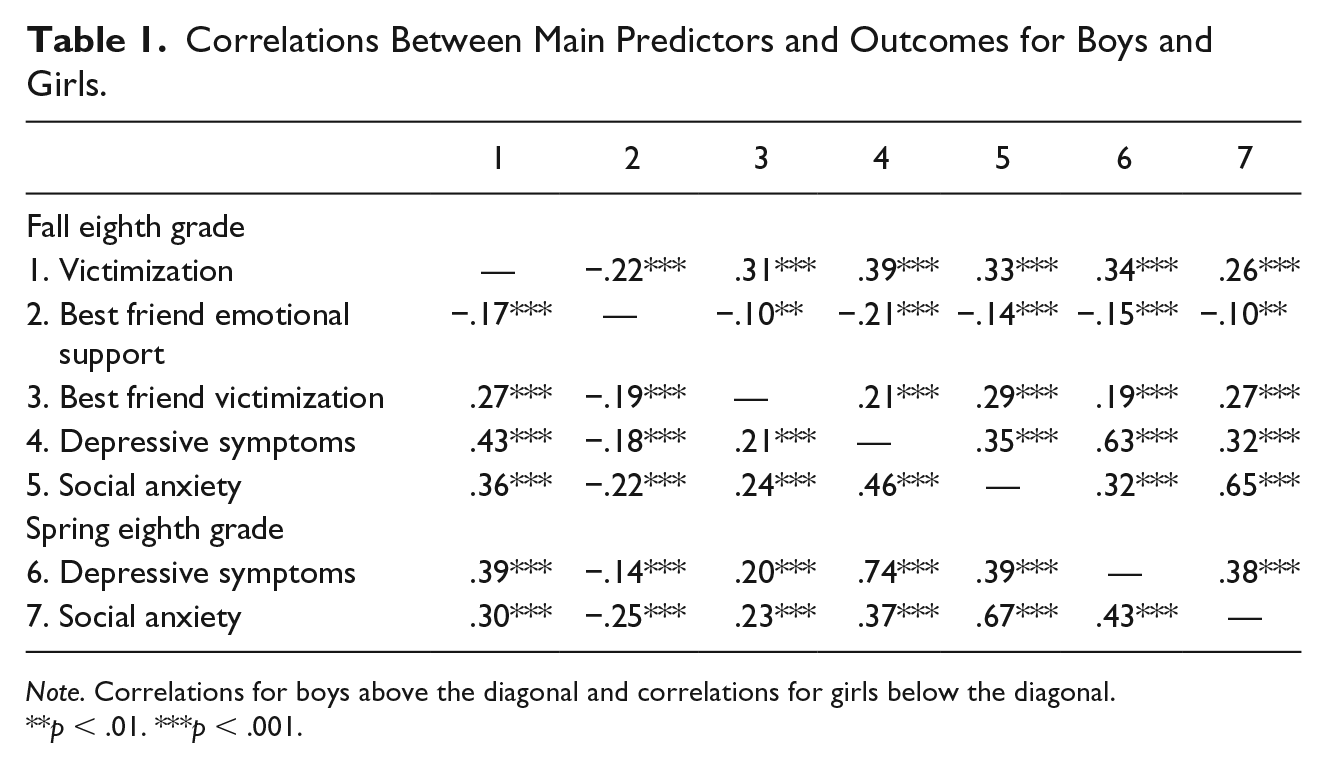
Note. Correlations for boys above the diagonal and correlations for girls below the diagonal.
p < .01. ***p < .001.
Path Models
Main effects
Multigroup analyses indicated that an unconstrained model, where boys’ and girls’ paths were allowed to freely vary, fits significantly better than a constrained model, Δχ2(16) = 30.85, p = .014. This suggested that overall patterns of main effects significantly varied by gender, so boys’ and girls’ main effects were allowed to freely vary.
Boys
The first two columns of Table 2 present the results from three steps of model testing for boys. As seen in Step 1, results from the main effects models indicated that there was only one significant ethnic difference that emerged across the two outcomes, such that Latinx boys reported more depressive symptoms than White students. Consistent with the correlations presented in Table 1, boys reporting more depressive symptoms and social anxiety in the beginning of eighth grade also reported more depressive symptoms and social anxiety at the end of eighth grade. There was a significant victimization effect for depressive symptoms, indicating that over and above preexisting depressive symptoms, boys who perceived themselves as more victimized in the beginning of eighth grade exhibited increased depressive symptoms by the end of eighth grade. Although there was not a significant victimization effect for social anxiety, there was a significant effect of perceived best friend victimization. That is, over and above preexisting social anxiety and self-perceived victimization, boys who perceived their best friend as more victimized in the beginning of eighth grade exhibited increased social anxiety by the end of eighth grade. There were no independent effects of perceived best friend emotional support for either outcome. The model explained 42% of the variance in boys’ depressive symptoms and 86% of the variance in boys’ social anxiety symptoms.
Main and Interactive Effects of Victimization, Perceived Friend Support, and Perceived Friend Victimization on Internalizing Symptoms for Boys and Girls.
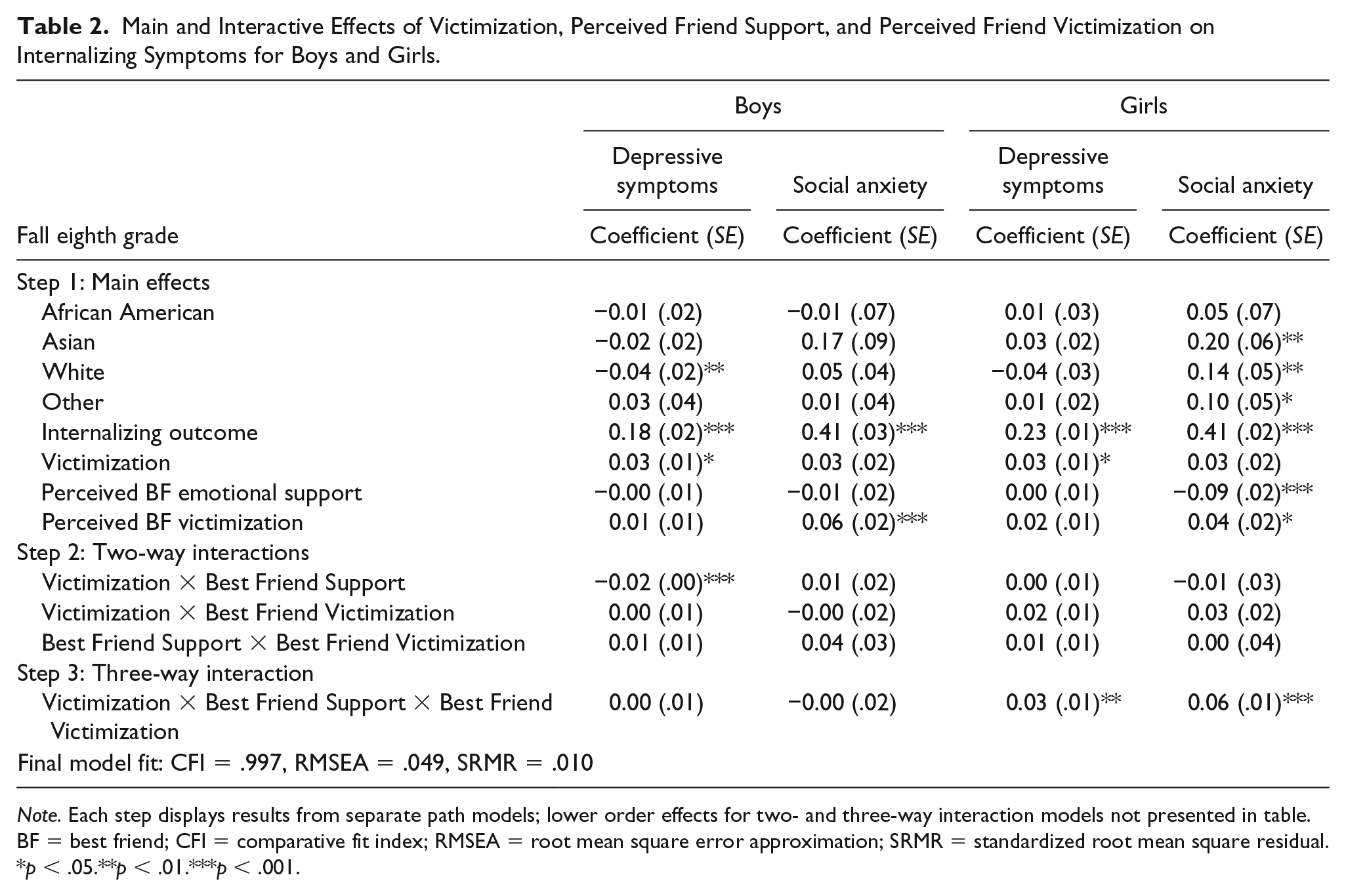
Note. Each step displays results from separate path models; lower order effects for two- and three-way interaction models not presented in table. BF = best friend; CFI = comparative fit index; RMSEA = root mean square error approximation; SRMR = standardized root mean square residual.
p < .05.**p < .01.***p < .001.
Girls
The last two columns of Table 2 present the results from three steps of model testing for girls. As seen in Step 1, results from the main effects models indicate that there were several significant ethnic differences in social anxiety, such that girls who were Asian, White, or from other than the four pan-ethnic groups reported more social anxiety than Latinx girls. Consistent with the correlations presented in Table 1, girls reporting more depressive symptoms and social anxiety in the beginning of eighth grade also reported more depressive symptoms and social anxiety at the end of eighth grade, respectively. There was a significant victimization effect for depressive symptoms, suggesting that over and above preexisting depressive symptoms, girls who perceived themselves as more victimized in the beginning of eighth grade exhibited increased depressive symptoms by the end of eighth grade. Although there was not a significant victimization effect for social anxiety, there were significant effects of perceived best friend emotional support and perceived best friend victimization. That is, over and above preexisting social anxiety and self-perceived victimization, girls who perceived their best friend as more emotionally supportive in the beginning of eighth grade exhibited decreased social anxiety by the end of eighth grade. In addition, girls who perceived their best friend as more victimized in the beginning of eighth grade exhibited increased social anxiety by the end of eighth grade. The model explained 82% of the variance in girls’ depressive symptoms and 86% of the variance in girls’ social anxiety symptoms.
Two-way interactions
After adding the two-way interactions to the model, multigroup analyses again indicated that an unconstrained model significantly better than a constrained model, Δχ2(22) = 39.12, p = .014, so effects were left to freely vary for boys and girls.
Boys
As seen in Step 2 of model building, there was only one significant two-way interaction (Victimization × Best Friend Emotional Support) that emerged for boys across the two outcomes. Specifically, perceived best friend emotional support moderated the association between boys’ self-perceived victimization and subsequent depressive symptoms. Probing of simple slopes revealed that perceived friend support served as a buffer, as expected. As seen in Figure 1, victimization at the beginning of the school year was related to increased depressive symptoms at the end of the school year if boys perceived their best friend to provide low levels of emotional support (−1 SD; b = 0.04, p = .002) or average levels of emotional support (b = 0.03, p = .010), but not if they perceived their best friend to provide high levels of emotional support (+1 SD; b = 0.01, p = .153). Compared with the main effects model, the two-way interaction model explained an additional 2% of the variance in boys’ depressive symptoms and an additional 1% of the variance in boys’ social anxiety symptoms.

Interaction between victimization and perceived best friend emotional support predicting boys’ depressive symptoms.
Girls
As seen in Step 2 of model-building, there were nonsignificant two-way interactions between girls’ victimization, perceived friend support, and perceived friend victimization. Compared with the main effects model, these two-way interactions explained an additional 2% of the variance in girls’ depressive symptoms but less than 1% of additional variance in girls’ social anxiety symptoms.
Three-way interactions
After adding the three-way interactions to the model, multigroup analyses again indicated that an unconstrained model fit significantly better than a constrained model, Δχ2(24) = 41.06, p = .016, so effects were left to freely vary for boys and girls.
Boys
There were nonsignificant three-way interactions between boys’ victimization, perceived best friend emotional support, and perceived best friend victimization. In other words, high levels of best friend emotional support buffered against victimization-related depressive symptoms, regardless of whether or not boys perceived their best friend to be victimized. Compared with the main effects model, this final model with all interactions explained an additional 2% of the variance in boys’ depressive symptoms and 1% of the variance in boys’ social anxiety symptoms.
Girls
As seen in Step 3, there were significant three-way interactions between girls’ victimization, perceived best friend emotional support, and perceived best friend victimization. To probe the interactions, for each outcome (i.e., depressive symptoms, social anxiety), we first tested the conditional two-way interactions between victimization and perceived friend victimization at different levels of perceived friend support. 1 For depressive symptoms, among girls who perceived their best friend to be highly supportive (maximum value), there was a significant two-way interaction between victimization and perceived best friend victimization (b = 0.04, p = .001). Specifically, as seen in Figure 2, victimization was related to increased depressive symptoms when girls perceived their highly supportive best friend as experiencing higher victimization (+1 SD, b = 0.06, p = .001). However, victimization was unrelated to subsequent depressive symptoms if girls perceived their highly supportive best friend as experiencing average (b = 0.03, p = .123) or no (minimum value, b = 0.00, p = .989) victimization. That is, it was specifically when girls perceived their best friends as both highly supportive and victimized that their own victimization was predictive of increased depressive symptoms. Among girls who perceived their best friend to be less supportive (–1 SD), there was a nonsignificant two-way interaction between victimization and perceived best friend victimization (b = −0.01, p = .502). In other words, when girls perceived their best friend as less supportive, the effect of victimization on depressive symptoms did not vary depending on perceived friend victimization.
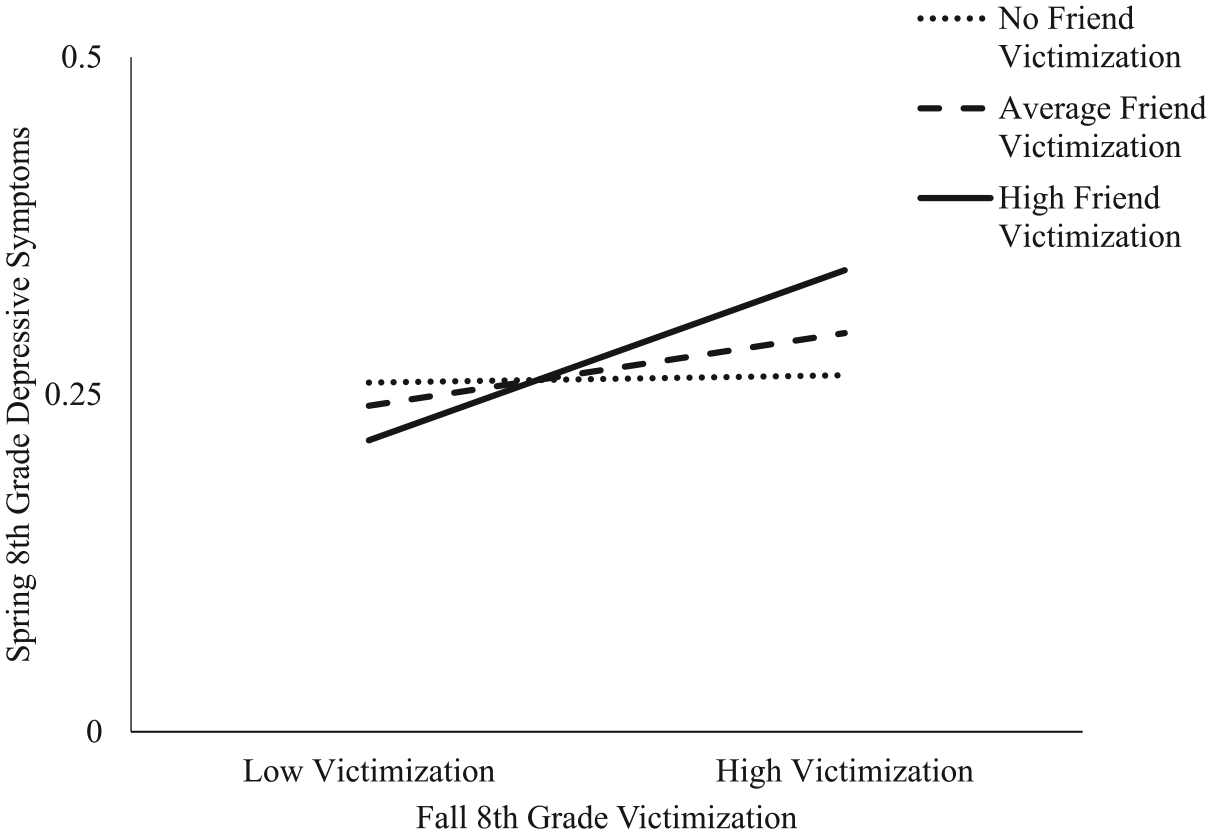
Significant interaction between victimization and perceived best friend victimization predicting depressive symptoms for girls perceiving high levels of best friend emotional support.
For social anxiety, among girls who perceived their best friend to be highly supportive (maximum value), there was again a significant two-way interaction between victimization and perceived best friend victimization (b = 0.06, p < .001). Specifically, as seen in Figure 3, victimization was related to increased social anxiety when girls perceived their highly supportive best friend as experiencing high levels of victimization (+1 SD, b = 0.08, p = .026). However, victimization was unrelated to subsequent anxiety when girls perceived their highly supportive best friend as experiencing average (b = 0.02, p = .416) or no (minimum value, b = −0.02, p = .393) victimization. That is, when girls perceived their best friends as both highly supportive and victimized, their own victimization was predictive of increased social anxiety. Among girls who perceived their best friend to be less supportive (–1 SD), there was a nonsignificant two-way interaction between victimization and perceived best friend victimization (b = −0.03, p = .166). In other words, when girls perceived their best friends as less supportive, the effect of victimization on social anxiety did not vary depending on perceived friend victimization. Compared with the main effects model, this final model with all interactions explained an additional 2% of the variance in girls’ depressive symptoms and 2% of the variance in girls’ social anxiety symptoms.
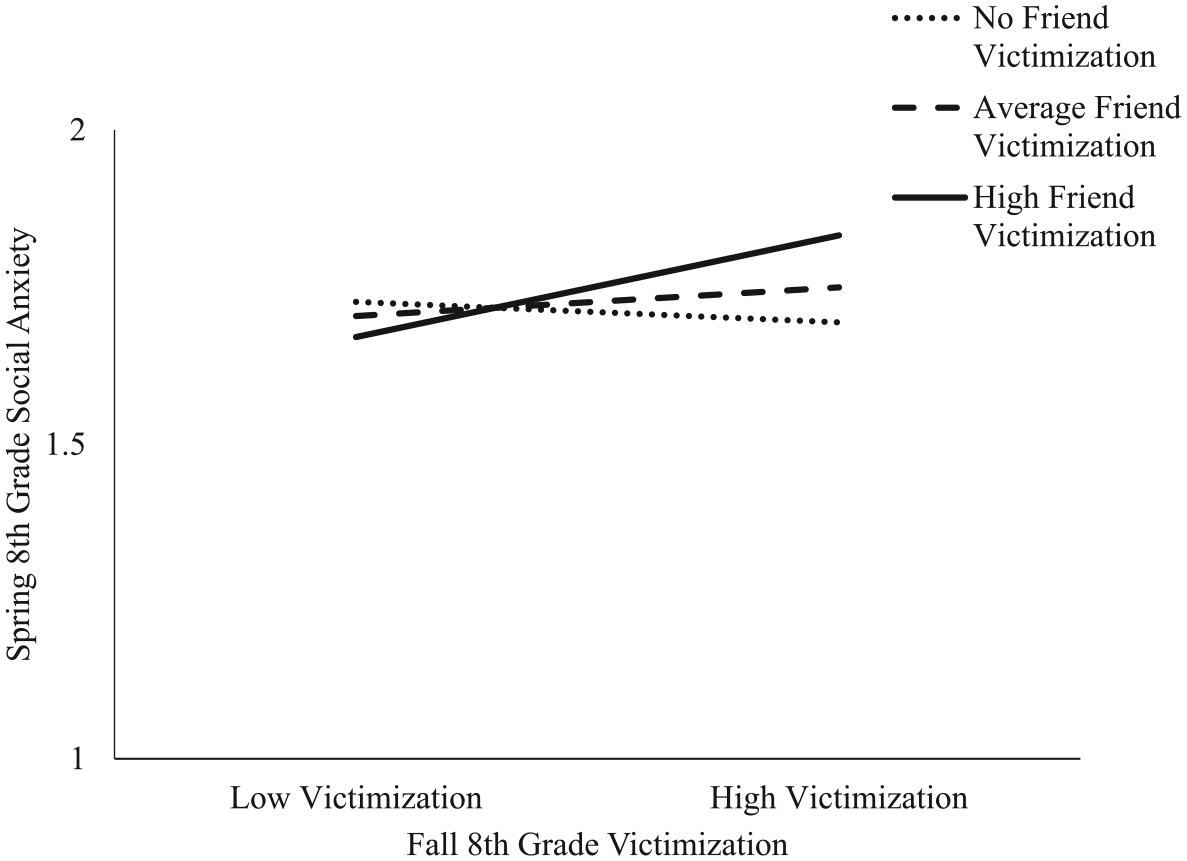
Significant interaction between victimization and perceived best friend victimization predicting social anxiety for girls perceiving high levels of best friend emotional support.
Supplemental equality tests across gender
For the main effects model, a series of Wald tests indicated that there were no significant gender differences in the effects of peer victimization on depressive symptoms, χ2(1) = 0.01, p = .938, or social anxiety, χ2(1) = 0.000, p = .986; the effects of perceived best friend support on depressive symptoms, χ2(1) = 0.55, p = .460; or the effects of perceived best friend victimization on depressive symptoms, χ2(1) = 0.14, p = .707, or social anxiety, χ2(1) = 0.60, p = .439. However, there were significant gender differences in the effect of perceived best friend support on social anxiety, χ2(1) = 17.92, p < .001, such that support was more strongly negatively associated with anxiety for girls (b = −0.089, p < .001) compared with boys (b = −0.002, p = .729).
Although the effect of the two-way Victimization × Best Friend Support interaction was significant for boys but not girls when predicting depressive symptoms, Wald tests indicated that there was not a significant difference in the strength of the interaction effect on internalizing for girls versus boys, χ2(1) = 2.24, p = .135 for depressive symptoms; χ2(1) = 0.15, p = .702 for social anxiety. There were also no significant gender differences for the two-way Victimization × Best Friend Victimization interaction effect on depressive symptoms, χ2(1) = 0.91, p = .340, or social anxiety, χ2(1) = 0.90, p = .344, nor were there gender differences in the two-way Best Friend Support × Best Friend Victimization interaction effect on depressive symptoms, χ2(1) = 0.00; p = .961, or social anxiety, χ2(1) = 0.59, p = .442.
Although the effect of the three-way Victimization × Best Friend Support × Best Friend Victimization interaction was significant for girls but not boys, Wald tests indicated that there was not a significant difference in the strength of the interaction for girls versus boys, χ2(1) = 2.51, p = .113, for depressive symptoms. However, there was a significant gender difference in the three-way interaction effect on social anxiety, χ2(1) = 6.84, p = .009, such that the interaction effect was stronger (and statistically significant) for girls (b = 0.059, p < .001) compared with boys (b = −0.002, p = .942).
Discussion
To provide further insight into the peer victimization–related distress of adolescents, the current study examined the role of best friends. Specifically, we focused on eighth graders’ perceptions of whether their best friend was victimized and their corresponding supportiveness.
Results indicated that boys were protected from victimization-related increases in depressive symptoms across the eighth grade school year if they perceived their best friend as more emotionally supportive (e.g., can talk to about problems; cares about my feelings). However, they felt more anxious when their best friend was victimized, regardless of their own victimization. For girls, perceived best friend emotional support was protective against victimization-related internalizing symptoms only if they did not see their friend as victimized. In contrast, if girls perceived their best friend to be victimized, perceptions of high levels of best friend emotional support exacerbated the internalizing symptoms related to their own victimization. By investigating the interactive effects of perceived best friendship quality and perceived best friend victimization, the current study provides a more nuanced understanding of the conditions under which friendships alleviate versus exacerbate the depressive and anxiety symptoms of peer victimized adolescents.
Among boys, higher levels of perceived emotional support emerged as a protective factor for victimization-related distress. This finding is consistent with a “stress-buffering” model of friendship proposed in prior research (Hodges et al., 1999; Schmidt & Bagwell, 2007). When boys perceived their best friend as someone they could talk to about their problems and count on to stick up for them, their victimization at the beginning of the eighth grade was less likely to predict increased depressive symptoms by the end of the school year. Interestingly, boys felt more socially anxious 1 year later if they perceived a best friend as more victimized, whereas their own victimization was unrelated to their subsequent social anxiety. One possibility is that boys who see their best friend as someone who gets pushed around and excluded become especially concerned with their own safety in the peer group, resulting in fear and timidity in social situations. In addition, given that adolescence is characterized by more defined status hierarchies and increased dominance goals (especially among boys; Rose & Rudolph, 2006), associating with a victimized, and possibly low-status, friend may be threatening for youth’s sense of social well-being.
Whereas perceived emotional support was beneficial for victimized boys regardless of their best friends’ victimization, perceived emotional support only protected victimized girls from internalizing symptoms if they did not view their best friend as victimized. In contrast, victimized girls perceiving high levels of emotional support showed increased depressive symptoms and social anxiety when they believed their best friend was also targeted by peers. The finding that perceived best friend victimization appeared to be particularly relevant for victimized girls’ well-being can be understood within past research on the nature and function of emotional support in boys’ versus girls’ friendships. In the context of boys’ friendships, intimacy may be expressed through companionship and shared activities, rather than high levels of emotional disclosure (Maccoby, 1998). As such, perceiving a best friend as both highly supportive and victimized may not negatively affect the day-to-day interaction patterns among victimized boys and their friends. In contrast, because intimacy in girls’ friendships is often characterized by higher levels self-disclosure (Berndt, 1992), emotionally supportive friendships between victimized youth may ultimately “backfire.” It is also important to note that the strength of our evidence for gender differences varied as a function of the specific predictor and outcome. For example, although the three-way interaction between victimization, perceived friend support, and perceived friend victimization predicted depressive symptoms for girls but not boys, these two effects did not significantly differ from one another (although they did for the social anxiety outcome). Thus, our results seem to reflect gradients of differences between the function of boys’ and girls’ friendships rather than clear delineations.
Although the current study did not test the direct mechanism by which perceived best friend victimization increases distress among girls, past research suggests that close relationships among youth experiencing similar social stress promote maladaptive coping behaviors such as corumination. Corumination, more often characteristic of girls’ compared with boys’ interpersonal interactions, typically involves revisiting problems and the negative emotions related to such problems, in turn increasing emotional distress (Rose, 2002). Of particular relevance to the current findings, despite its detrimental impact on adolescents’ emotional distress, corumination is also associated with more positive perceptions of friendship quality (Rose, Carlson, & Waller, 2007). Therefore, girls who share a common negative social experience (i.e., peer victimization) may be at high risk of validating and reinforcing each other’s negative emotions related to their shared plight, in turn exacerbating their distress (Guarneri-White, Jensen-Campbell, & Knack, 2015). Another possibility is that victimized friends also tend to be low-status friends; associating closely with peers at the bottom of the social hierarchy could similarly exacerbate the distress of victimized youth. Although we were unable to directly test this possibility given the anonymity of participants’ best friends, understanding the full constellation of friendship factors that modify victimization-maladjustment links is a question ripe for future research.
The current findings shed light on some important theoretical questions. First, the results offer insights into inconsistent findings on friendship quality among peer-victimized youth by considering the role of perceived best friend victimization. Given that evidence suggests victims’ friendships can both help and hurt victims, we posited that the relative impact of perceived emotional support will vary based on other friend characteristics. As such, the current study highlights the need to consider more than just friendship quality itself—understanding how a best friend’s social experiences may affect the effectiveness of their social support can further contextualize when and why friendships benefit youth. In addition, as discussed above, these results suggest some differences in the form and function of emotional support within the friendships of boys and girls, particularly those who are victimized by peers. Thus, the protective function of emotionally supportive best friendships for victimized youth seems to vary depending on both adolescent characteristics (i.e., gender) and perceived characteristics of best friends (i.e., victimization).
The current findings should also be interpreted carefully in light of several limitations. First, we relied exclusively on self-report data. Although our primary interest was in adolescents’ own perceptions of their victimization and best friendship characteristics (i.e., quality, friend victimization), shared method variance may have contributed to the findings. Relatedly, there was very high stability in self-reported internalizing symptoms across the school year, and effect sizes for the interactions (i.e., over and above such stability) were small in magnitude. In other words, the majority of variance in internalizing symptoms was explained by preexisting internalizing symptoms, as opposed to interactions between victimization and friendship characteristics. Although it is not necessarily surprising that future internalizing symptoms were most strongly predicted by prior internalizing symptoms (Reitz et al., 2006), it does raise questions about whether and how improving adolescents’ peer relationships can benefit youth with underlying mental health difficulties.
Another limitation is that we focused only on adolescents’ best friendships. This approach was taken to be consistent with much past research on friendship quality and isolate the effects of perceived quality and characteristics of a specific, close friendship. However, many youth, even those who are victimized by peers, have more than just one friend (Pellegrini, Bartini, & Brooks, 1999; Smith, Talamelli, Cowie, Naylor, & Chauhan, 2004). Examining characteristics of adolescents’ broader friendship networks might further help identify the conditions under which friendships can help versus hurt victimized adolescents. For example, victims experience less distress if many of their classmates are also mistreated by peers (Bellmore et al., 2004; Huitsing, Veenstra, Sainio, & Salmivalli, 2012), insofar as sharing social plight with similar others can alleviate the sense that “there is something wrong with me” (Schacter & Juvonen, 2015) or facilitate defending behavior (Huitsing, Snijders, Van Duijn, & Veenstra, 2014; Oldenburg, Van Duijn, & Veenstra, 2018). Moreover, recent findings suggest that victimized adolescents are less likely to blame themselves or experience mental and physical health problems if students in their friendship network across middle school have also been victimized by peers (Schacter & Juvonen, 2018). Thus, there may be differential effects of victimization experienced by adolescents’ broader social reference group (e.g., all friends) versus victimization experienced by their very best friend. Given the anonymous nature of the best friendship measure, we were also unable to determine the identity of participants’ best friends. In turn, participants may have reported on characteristics of best friends who were also participating in the study, introducing issues of data nonindependence. Finally, given attrition in the broader longitudinal study and differential dropout of victimized and depressed youth, the current findings may not be generalizable to adolescents with more chronic and/or severe social and mental health difficulties.
Although friendships are often considered universally protective, the current findings underscore that, particularly among girls, even high-quality friendships are not necessarily a panacea for victimized youth. In turn, it may be wise for intervention programs designed to increase social support for victims to carefully consider the nature of this support and incorporate elements that teach adaptive support strategies within close friendships. For example, past research documents iatrogenic (i.e., contagion) effects when conducting interventions among subgroups of antisocial youth (Dishion & Tipsord, 2011). It is possible that similar processes would unfold in the context of victim “support groups” that bring distressed students together, ultimately undermining the intervention goals.
At the same time, victimized adolescents can benefit from knowing that they are not alone in their plight. This presents a complex challenge for intervention and prevention approaches—how can we capitalize on peers to alleviate the sense that “this is only happening to me” without promoting the sense that “this is only happening to us”? One possibility is that broadly educating students how to engage in productive problem-solving, rather than problem-focused interpersonal interactions (e.g., corumination), could help teach and reinforce more positive coping strategies within close friendships. Such a social-emotional learning approach may be particularly important for girls who perceive both themselves and their best friend as victimized by peers. In addition, given the very high stability of internalizing symptoms documented in the current study and prior work, it is likely important to integrate resources and intervention programming that directly targets adolescents’ depressive and anxiety symptoms. Nevertheless, across such efforts, it will be important to acknowledge how the complex interplay of intrapersonal (e.g., mental health) and interpersonal (e.g., friendships) factors shape adolescent adjustment and how we can capitalize on social relationships to help rather than to harm.
Footnotes
Acknowledgements
This research is based in part on the first author’s dissertation submitted in partial fulfillment of the PhD requirements at UCLA. We would like to thank all dissertation committee members for their feedback on the study.
Declaration of Conflicting Interests
The author(s) declared no potential conflicts of interest with respect to the research, authorship, and/or publication of this article.
Funding
The author(s) disclosed receipt of the following financial support for the research, authorship, and/or publication of this article: This research was supported by grants from the National Science Foundation and the W.T. Grant Foundation to Sandra Graham and Jaana Juvonen, as well as a National Science Foundation Graduate Research Fellowship (DGE-1144087) awarded to Hannah Schacter.
