




Abstract
Black and Latinx youth are situated in a maladaptive discriminatory context in the United States; however, prosociality may be one way that youth can promote their own positive development in the face of these experiences. We examined the longitudinal associations between discrimination and prosociality among 380 Black and Latinx early adolescents (MW6age = 12.38 years, 52% female) and considered race/ethnicity and self-esteem control beliefs as potential moderators to this association. Discrimination predicted higher levels of prosociality among Black youth 6 months later, but not among Latinx youth. Discrimination also predicted higher prosociality among youth with very high self-esteem control beliefs 6 months later, but not among youth with lower levels of self-esteem control beliefs. None of these associations were significant when looking across a 1-year time frame. Our findings support the predictions of self-esteem enhancement theory and highlight the importance of considering how youth’s unique racialized experiences can inform how they respond to discrimination.
Keywords
Racial discrimination negatively affects social and emotional well-being in early adolescence; however, youth can actively address discriminatory contexts in ways that support their own positive development (see Priest et al., 2013, for a review). For example, prosocial youth engage in behaviors that benefit others and, therefore, promote their moral, social, and civic development within discriminatory contexts (Carlo, 2014). The goal of this study is to apply a strengths-based approach to understanding how Black and Latinx 1 youth develop prosociality, given their experiences within the racialized system in the United States. We examine the impact of perceived discrimination on youth’s subsequent prosocial behaviors, differences in these associations based on race/ethnicity, and whether self-esteem control beliefs serve as an individual resource that may promote prosociality in discriminatory contexts. Our findings support the predictions of self-esteem enhancement theory (SET; DuBois, Flay, & Fagen, 2009) and highlight how marginalized youth’s social and cultural contexts can inform the way they respond to discrimination.
Literature Review
Black and Latinx youth face social, structural, and historic inequalities in the United States, which are produced and reinforced through racist practices (DiAngelo, 2018; Hill, 2008). For example, a long history of discriminatory housing policies and zoning laws has restricted the movement of Black and Latinx families, effectively blocking their ability to accrue wealth and access high-quality schooling (Orfield, 2013). Although discriminatory systems are a core feature of contemporary U.S. society, many of these systems are largely invisible to, or are denied by, members of the dominant culture (e.g., “color-blind” racism; Bonilla-Silva, 2017). This juxtaposition informs the ways in which Black and Latinx youth may interpret and understand individual and institutional forms of discrimination. In this respect, “individual” experiences of discrimination cannot be viewed as being isolated or independent from these larger systems.
Contextualizing Discrimination for Black and Latinx Youth
Racializing systems in the United States can create unified experiences of marginalization among youth of color; however, they can also create qualitatively different experiences across racial/ethnic groups. For example, the contemporary lives of Black youth are informed by historic race relations spanning from slavery, to the Jim Crow era, and to present-day mass incarceration (Alexander, 2011). As a result, Black communities are overpoliced, and Black youth experience higher levels of discrimination from adults as well as disproportionate levels of discipline within school systems than other youth of color, often being identified as “aggressive” and “delinquent” (Travis & Leech, 2014; Wallace, Goodkind, Wallace, & Bachman, 2008). To foster resilience, Black parents often socialize youth in ways that instill racial pride, emphasize Black history, prepare them for discrimination, and equip them with skills to subvert negative contexts and experiences (Hughes et al., 2006; Hughes, Watford, & Del Toro, 2016).
Latinx youth’s experiences in the United States today, on the other hand, are informed by dominant cultural narratives of voluntary immigration. Because over 50% of new immigrants who enter into the United States come from Latin American countries, these narratives can in some ways be perceived as accurate (Walters & Trevelyan, 2011). In other ways, however, these narratives are historically inaccurate and serve to frame Latinx people as foreign, regardless of immigration status or nationality (Hill, 2008; Lee, 2000). For example, even though Latinx individuals have inhabited the areas of Arizona, California, New Mexico, and Texas since the 1500s, they are largely portrayed by dominant cultural narratives as non-American (Benner et al., 2018; Perea, 1995). Latinx individuals face discriminatory laws stemming from these societal conceptions about immigration and from perceptions of documentation status (e.g., Arizona’s “show me your papers provision”—Arizona Senate Bill 1070). Spanish-speaking Latinx individuals also face language subordination, where Spanish and “accented-English” are taken to be a marker of a non-American identity (Rosa, 2016). Relative to Black youth then, Latinx youth are uniquely tasked with managing interracial tensions surrounding issues of language, immigration, and assimilation (Ayón, 2018; Rosenbloom & Way, 2004). As a way to resist the pressures of assimilation and promote well-being in youth, Latinx parents often socialize their children in ways that underscore the importance of Latinx values, cultural heritage and traditions, and native language (Hughes et al., 2006).
Comparatively, the perceptions that Black and Latinx youth have of the U.S. context, and their place within it, can vary drastically because of their unique experiences with social, historical, and structural inequalities. Consequently, the responses of individual youth to discrimination, and the effects it has on their functioning and development, are best understood as being bound both to the processes inherent in the broader system of racial marginalization and to processes that relate to their particular racial/ethnic group.
Discrimination in Early Adolescence
Youth’s social worlds shift as they move into early adolescence, which can funnel them through new and different discriminatory environments. As youth transition out of elementary schools and into middle schools, they encounter larger student bodies and class sizes, less individualized attention, and more complex physical and social organizations (Eccles & Roeser, 2011; Elmore, 2009). They begin to spend more time outside the home because their mobility is less heavily regulated by parents and other adults, and because middle schools provide more opportunities to engage in external activities such as extracurriculars or travel (Laursen & Collins, 2009; Mahoney, Vandell, Simpkins, & Zarrett, 2009). These new social contexts can be accompanied by more exposure to discrimination because youth are interacting with more people—both new peers and new adults—and these interactions are occurring largely apart from their parents or nuclear family.
Social groups and cliques also become more prevalent in middle school and serve to sort and classify youth based on their perceived social capital and value (B. B. Brown & Larson, 2009). Because early adolescence is marked by increased perspective taking (Sebastian, Burnett, & Blakemore, 2008), and because these youth are better positioned than children to think abstractly about race (Quintana, 1998), Black and Latinx youth can become particularly attuned to the ways in which these classification systems are informed by social categories like race/ethnicity. In addition, these changes allow them to better understand how certain ideas, attitudes, and beliefs of others are rooted in racism. In this respect, youth who might not have noticed discrimination as children can now more readily identify particular motives or attitudes as being racially charged. Unsurprisingly then, youth of color increasingly report experiencing discrimination across the early adolescent years (Hughes, Del Toro, Harding, Way, & Rarick, 2016).
Just as cognitive shifts increase the likelihood of early adolescents being able to identify experiences of discrimination, so too do these shifts make youth particularly vulnerable to its negative effects. For instance, early adolescence is characterized as a time for identify exploration, where youth experience a heightened drive for interpersonal connections and become more attuned to social feedback cues (Pfeifer et al., 2009; Sebastian et al., 2008; Steinberg, 2005). Consequently, experiencing discrimination during this period can be especially detrimental to youth’s overall well-being and self-esteem. Indeed, discrimination in early adolescence has been connected to lower self-esteem, worse psychological adjustment, less positive racial/ethnic identity, and higher levels of depression (Benner & Graham, 2013; Benner et al., 2018; Rivas-Drake, Hughes, & Way, 2009). Despite their susceptibility, research suggests that some youth are resilient to the negative effects of discrimination on social and emotional well-being when they have appropriate internal and external supports (Harris-Britt, Valrie, Kurtz-Costes, & Rowley, 2007; Romero, Edwards, Fryberg, & Orduña, 2014). Given the negative effects of discrimination on development, and the opportunity to build resilience, it is, therefore, important to understand how Black and Latinx youth exist in, and respond to, discriminatory contexts in order to promote their own development during this vulnerable period of life.
Prosocial Responses to Discrimination
Prosocial actions are designed to benefit others or society as a whole (e.g., helping a hurt peer, volunteering), and engaging in these behaviors may be one way that youth promote and support their own positive development. In addition to prosociality indicating civic and moral development, it is also associated with lower anxiety, better mood, and higher self-esteem (Carlo, 2014). People who have experienced trauma tend to be more prosocial, which suggests that it might be an especially useful protective strategy for coping with adverse contexts or experiences (Frazier et al., 2013; Joseph, 2014; Staub & Vollhardt, 2008; Strakatý, 2016). In these cases, feelings of distress stemming from trauma and a desire to quell the distress are the underlying motivation for being more prosocial (Frazier et al., 2013; Piferi, Jobe, & Jones, 2006). Similarly, when youth experience discrimination, they might behave prosocially in order to decrease feelings of distress associated with that experience. Prosocial behaviors can, therefore, be comforting for youth who experience discrimination and provide them with means for sustaining self-esteem and well-being.
Prosociality is a multidimensional construct, and different dimensions speak to the varied contexts in which these behaviors occur and the presumed motivation for these behaviors. There are many common types of prosocial tendencies, including public, emotional, anonymous, dire, altruistic, and compliant (Carlo, Knight, McGinley, Zamboanga, & Jarvis, 2010). Acknowledging this complexity is important because having higher levels in one dimension does not necessitate having high levels in another. For instance, youth who have stronger tendencies toward public prosociality may be motivated to help only in the presence of others in order to improve others’ perceptions of themselves or their group. Comparatively, youth who have stronger tendencies toward altruistic prosociality may be motivated by feelings of sympathy for others and by a belief system that values helping others (Carlo & Randall, 2002).
Although prosocial behaviors can occur under different conditions, global conceptualizations of prosociality are useful because they allow researchers to explore a broad range of helping behaviors. In this study, we conceptualize prosociality as the direct interpersonal actions of youth intended to help another person, regardless of the context or underlying motivation. Consequently, this view of prosociality excludes instances of anonymous helping, but could include instances of other kinds of prosocial behaviors. This more global conceptualization of prosociality allows us to examine the explicit behaviors of youth, as opposed to their orientation to helping. In addition, it allows for flexibility regarding how youth might use prosociality as a coping mechanism. In this respect, we see prosociality as a strategy that youth might use to maintain well-being, which could be elicited through multiple prosocial tendencies.
A small body of research offers some support for the notion that youth can respond to experiences of discrimination through prosociality. Among Black youth, discrimination is associated with higher prosocial behaviors to general others (Lozada, Jagers, Smith, Bañales, & Hope, 2016), and prosocial behaviors specifically designed to support the Black community (White-Johnson, 2012). These findings could be because discrimination makes youth feel distressed (e.g., anxious, sad). In turn, prosociality might help in the management of negative feelings because helping others improves one’s mood and self-esteem (Carlo, 2014). In this sense, a desire to feel better may be the underlying motivation behind youth’s prosocial actions. It could also be that feeling distressed leads youth to further explore their ethnic identity (Lozada et al., 2016) and makes them more aware of how society is unequally structured around race (Diemer, Rapa, Voight, & McWhirter, 2016). In turn, these factors may lead youth to engage in higher prosocial behaviors, both as a personal coping strategy and as a way to promote the well-being of the Black community.
Among Latinx youth, discrimination is associated with a stronger endorsement of public prosocial tendencies but a lower endorsement of other prosocial tendencies, such as altruism (Brittian et al., 2013; Davis et al., 2016; Davis et al., 2018; McGinley et al., 2010). Higher levels of public prosocial tendencies may indicate that youth are motivated to act in ways that could improve dominant cultural perceptions of Latinx people (Richman & Leary, 2009). Lower endorsement of other prosocial tendencies may be because discrimination depletes youth’s cognitive resources and makes it difficult to pursue other forms of helping. Indeed, one study suggests that among Latinx youth, depressive symptoms mediate the association between discrimination and lower altruistic tendencies (Brittian et al., 2013). However, limited research has examined whether and how discrimination is associated with explicit prosocial behaviors among Latinx youth and whether it functions differently among Black and Latinx youth.
Self-Esteem Control Beliefs
Given the paucity of research on prosocial responses to discrimination, it is unclear what types of individual capacities might promote prosociality in these contexts. SET can help pinpoint internal resources that enable youth to use prosociality as a way to promote their own well-being and positive development. According to SET, when youth are exposed to experiences that threaten their self-esteem (e.g., discrimination), they can manage the impact of those experiences through different self-esteem maintenance strategies (DuBois et al., 2009; Kaplan, 1986; Lewis et al., 2013). Prosociality can be viewed as a self-esteem maintenance strategy because prosocial behaviors reduce personal feelings of distress and provide youth with more positive experiences to draw on for self-evaluations (DuBois et al., 2009; Frazier et al., 2013; Kaplan, 1986). Within the SET model, self-esteem control beliefs denote the degrees to which individuals believe they can influence their own self-esteem. People who have strong self-esteem control beliefs feel as if they can maintain positive feelings about themselves, even in difficult circumstances. Stronger self-esteem control beliefs should enable youth to use proactive self-esteem maintenance strategies.
Self-esteem control beliefs have yet to be empirically tested within SET, but theoretical and empirical work suggests that feeling “in control” is beneficial for well-being, especially among individuals who face distressing situations or those who experience marginalization (Grote, Bledsoe, Larkin, Lemay, & Brown, 2007; Skinner, Chapman, & Baltes, 1988; Turiano, Chapman, Agrigoroaei, Infurna, & Lachman, 2014; Turiano, Silva, McDonald, & Hill, 2017). In contrast, youth who feel as if they have no control over their circumstances may experience heightened feelings of helplessness, which could in turn perpetuate inaction and poor mental health (D. L. Brown & Tylka, 2011; Seligman, 1972). When youth feel as if they can control their self-esteem, they might be more likely to act prosocially in discriminatory contexts.
The Present Study
The present study aims to understand positive development within discriminatory contexts and positions prosociality as a tool that youth of color can use in order to promote their moral, social, and civic development while reducing feelings of personal distress (Carlo, 2014; DuBois et al., 2009). First, we ask what the association is between discrimination and prosocial behaviors. Based on a framework where prosociality is palliative for distressed youth (Frazier et al., 2013), we hypothesize that experiencing discrimination will lead to higher levels of subsequent prosociality. Second, given the distinct histories of discrimination among Black and Latinx communities, we ask whether discrimination predicts prosociality differently depending on youth’s race/ethnicity. We hypothesize that discrimination will predict higher levels of subsequent prosociality more strongly among Black youth in comparison with Latinx youth. This expectation is based on past literature that suggests that discrimination is associated with prosociality among Black youth (Lozada et al., 2016; White-Johnson, 2012), which may, in part, be due to how Black parents socialize their children through talking with them and preparing them for experiences of discrimination (Hughes, Watfod, & Del Toro, 2016). Although we expect that discrimination will be associated with prosociality among Latinx youth, we expect it to be weaker among Latinx youth because racial socialization in Latinx families is less focused on discrimination, so these youth may be less prepared to cope with it (Hughes et al., 2006). This expectation is also based on past research, which suggests that the discrimination experiences of Latinx youth leads to higher levels of some prosocial tendencies and lower levels of others (Brittian et al., 2013; Davis et al., 2016). Given the complex association between discrimination and prosocial tendencies for this group, discrimination may make a smaller difference in actual prosocial behaviors. Last, we use the SET model (DuBois et al., 2009) to pinpoint self-esteem control beliefs as an internal resource and ask whether self-esteem control beliefs moderate the association between discrimination and subsequent prosociality. We hypothesize that youth with stronger self-esteem control beliefs will exhibit higher prosociality when faced with discrimination. Comparatively, we expect that there will be no association between discrimination and subsequent prosociality among youth with weaker self-esteem control beliefs.
Method
Data for this study came from a larger evaluation of a school-level intervention targeting student problem behaviors and academic performance (Flay & Allred, 2010; Flay, Allred, & Ordway, 2001). The study took place from 2004 to 2010 in 14 schools, where schools were randomly assigned from matched pairs to either control or intervention conditions (Ji, DuBois, Flay, & Brechling, 2008; Lewis et al., 2016). All schools were classified as low resourced: Less than 50% of students in each school passed the State Achievement Test and over 50% of students were enrolled in free lunch (Bavarian et al., 2013). Because so many Black and Latinx youth are channeled into poorly resourced neighborhoods and schools, this sampling can allow us to understand how these particularly marginalized youth experience and respond to discrimination. In addition, because this study is anchored in longitudinal data, we have the ability to examine all research questions at both 6 months and 1 year later.
Participants
We use data from the last three waves of the study (Waves 6, 7, and 8), which were collected from students at the beginning of their seventh grade year, the end of seventh grade, and the end of eighth grade, respectively. In order to assess the impact of discrimination among racial/ethnic minority youth, we only use data from the 380 participants (52% female) who identified as either Black (64%) or Latinx (36%) at Wave 6, 7, or 8. This selection scheme allowed us to not conflate the experiences of youth who identified as multiethnic—specifically youth who identified as both Black and Latinx—with youth who identified largely with one racial/ethnic group. The average age of participants at Wave 6 was 12.38 years (SD = 0.55 years). Parental consent and youth assent were obtained for all youth who participated in the study. All study procedures were approved by the institutional review boards at the University of Illinois at Chicago and Oregon State University.
Measures
Discrimination
Discrimination was measured using five yes/no items (Gonzales, Gunnoe, Samaniego, & Jackson, 1995). For each item, students indicated whether they had experienced the given situation since the end of the last school year. An example item is, “You were unfairly accused of something because of your race or ethnicity.” Preliminary analyses showed that this measure was highly skewed, with over half of the sample reporting no experiences of discrimination. Consequently, we dichotomized this measure so that a score of 1 indicated that a participant did not report any instances of discrimination and a score of 2 indicated that a participant had experienced at least one instance of discrimination.
Prosociality
Prosociality was measured using five items administered on a 4-point Likert-type scale (Solomon, Battistich, Watson, Schaps, & Lewis, 2000). Students reported the extent to which they experienced each given situation within the past 2 weeks, with answers ranging from never (0) to all of the time (3). An example item includes, “At school or someplace else, I cheered up someone who was feeling sad” (ω, a measure of scale reliability for latent factors, ranged from .73 to .79 across the three waves). Higher scores indicate higher levels of prosociality.
Race/ethnicity
Race/ethnicity was measured using a single-item question: “What race/ethnicity are you?” Students were instructed to check all boxes that applied to them. Response options included White, Black, Native American, Latino, Asian, and Other. Participants were included in the study if they marked only Black or only Latino. Participants who identified as Latino were coded as 1 and participants who identified as Black were coded as 2.
Self-esteem control beliefs
Self-esteem control beliefs were measured by a single Likert-type item administered using a 4-point Likert-type scale: “I am not able to control how I feel about myself as a person.” Students indicated the extent to which they agreed, with answers ranging from strongly disagree (1) to strongly agree (4). This item was reverse coded so that higher values indicate higher levels of self-esteem control beliefs.
Control variables
We included gender, intervention participation, and self-esteem as control variables. We controlled for self-esteem to ensure that the regression pathways for self-esteem control beliefs were not conflated with, or explained by, trait-level self-esteem. Self-esteem was measured using a four-item composite measure administered using a 4-point Likert-type scale (DuBois, Felner, Brand, Phillips, & Lease, 1996). Students indicated whether they agreed with the given statements, ranging from No! (1) to Yes! (4). An example item includes, “I am happy with myself as a person” (α = .78-.83).
Analyses
We conducted a series of cross-lagged panel models in MPLUS to address all research questions. In all models, we allowed the substantive predictors to also serve as outcomes, and the outcomes to also serve as predictors. We specified prosociality as a latent factor and used maximum likelihood to provide reasonable estimates in the presence of missingness. To account for the nesting of children in schools, we used robust standard errors by specifying school as a cluster variable and using the “TYPE=COMPLEX” command. We used data from Waves 6 and 7 to explore 6-month associations and data from Waves 7 and 8 to explore year-later associations.
We ran multiple two-timepoint models (Waves 6 and 7 and Waves 7 and 8) and a three-timepoint model (Waves 6, 7, and 8) for each research question. The categorical nature of the discrimination variable and level of missingness made it impossible to estimate all regression paths using a three-timepoint model in MPLUS, so it could not account for full cross-lagged effects. As a result, we compared the results from the two-timepoint models and three-timepoint models for all research questions to ensure the estimated regression paths were similar. The significance and direction of the regression paths predicting prosociality did not change from the three-timepoint models in comparison with the two-timepoint models. Therefore, we report the findings of the models using two timepoints each (Waves 6/7 and Waves 7/8) because the two-timepoint models provide otherwise lost information about additional cross-lagged regression paths.
In MPLUS, it is impossible to get model fit when a categorical variable (i.e., discrimination) is specified as an outcome. Consequently, we report the model fit of the three-timepoint models, where discrimination is not specified as an outcome. If the interaction terms in any moderation model did not significantly predict a nonhypothesized outcome, we fixed the respective regression path to zero to allow for more accurate regression estimates along significant pathways. The pathways that were fixed to zero are indicated by a dash in Tables 4 through 7.
Results
Overall, most youth did not report experiencing discrimination; between 66% and 68% of youth reported no experiences of discrimination across the three waves. Youth most commonly reported hearing jokes about their racial/ethnic group (16%-25%) and being called a racial slur (14%-15%). Within-wave correlations between all variables are provided in Table 1.
Correlations Between Variables.
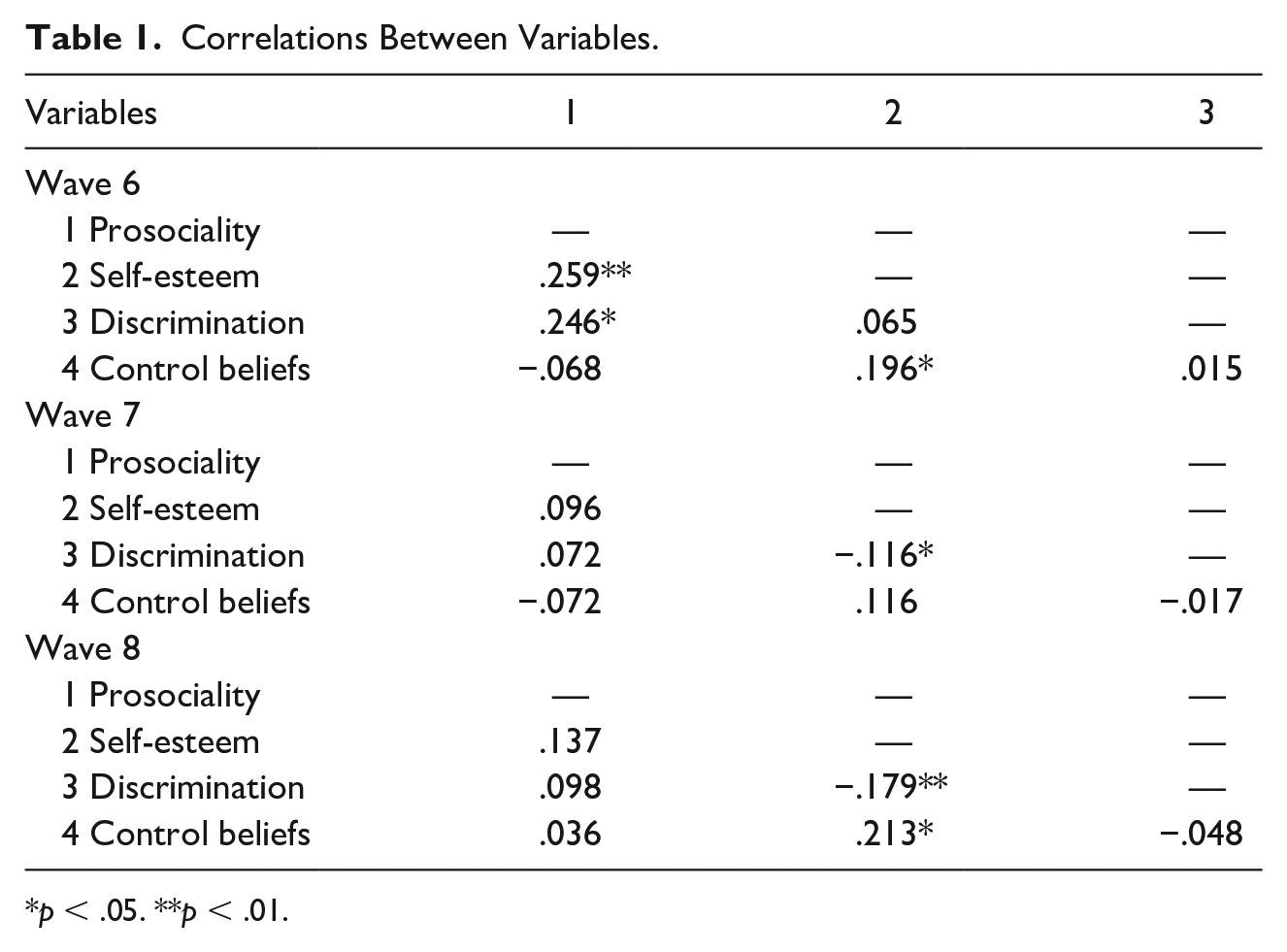
p < .05. **p < .01.
Our first hypothesis—that experiencing discrimination will lead to higher levels of subsequent prosociality—received partial support. The three-wave model that included only discrimination, prosociality, and covariates fit well, χ2(168) = 232.352, p < .001; root mean square error of approximation (RMSEA) = .032, 90% confidence interval (CI) = [0.021, 0.042]; comparative fit index (CFI) = .95; Tucker-Lewis index (TLI) = .93. Experiencing discrimination at Wave 6 significantly predicted higher prosociality at Wave 7 (controlling for Wave 6 prosociality), indicating a significant effect at 6 months (see Table 2). In contrast, experiencing discrimination at Wave 7 did not significantly predict prosociality at Wave 8 (controlling for Wave 7 prosociality), indicating a nonsignificant effect at 1 year (see Table 3).
Standardized Estimates of W6-7 Discrimination Predicting Prosociality.
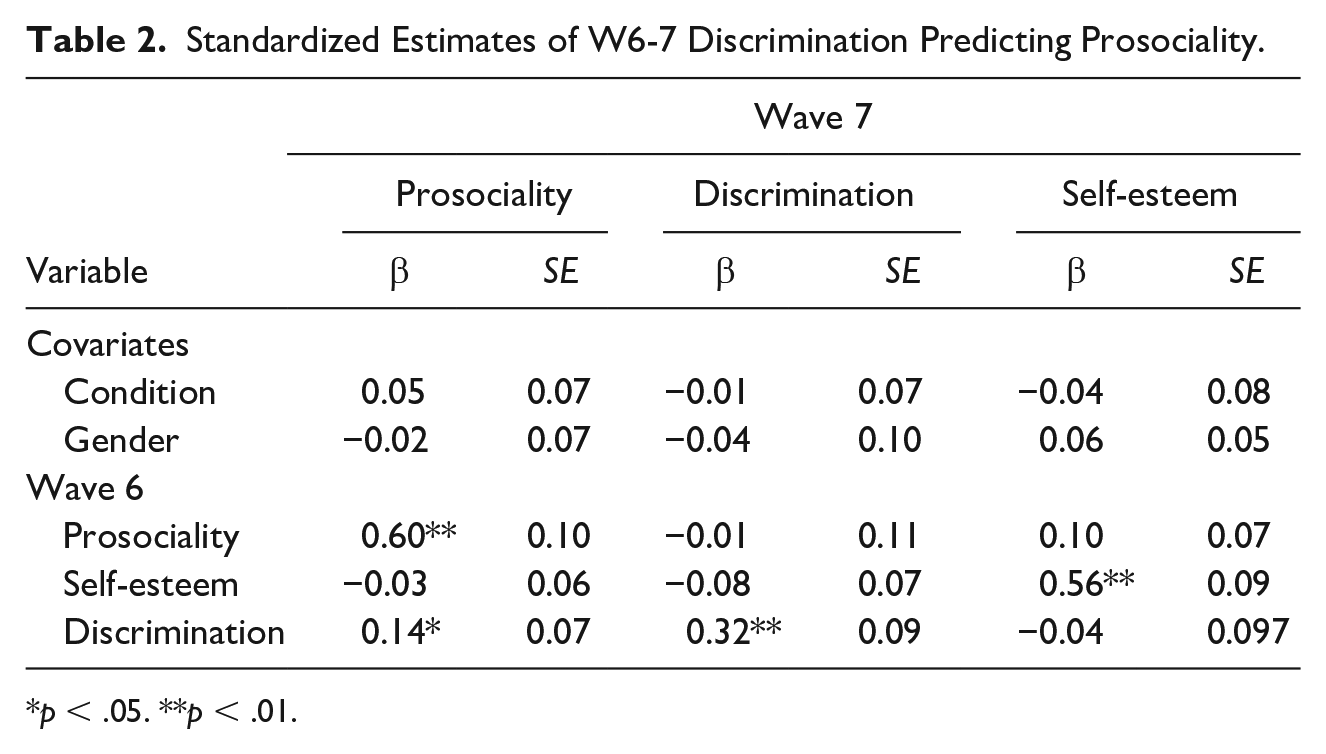
p < .05. **p < .01.
Standardized Estimates of W7-8 Discrimination Predicting Prosociality.
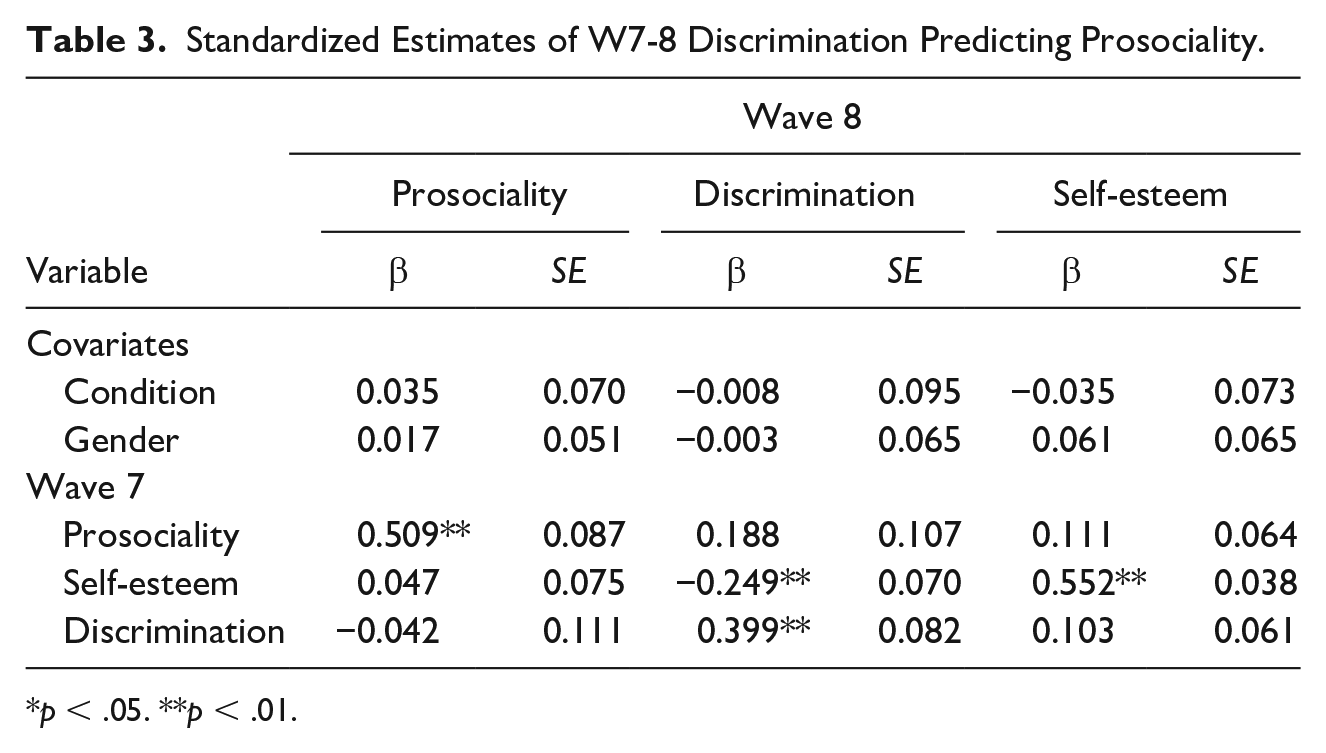
p < .05. **p < .01.
Our second hypothesis—that discrimination would predict higher levels of prosociality more strongly among Black youth in comparison with Latinx youth—was partially supported. The three-wave model that added the interaction between race/ethnicity and discrimination had acceptable fit, χ2(184) = 268.146, p < .001; RMSEA = .038, 90% CI = [0.028, 0.048]; CFI = .92; TLI = .90. Race/ethnicity interacted with discrimination at Wave 6 to predict prosociality at Wave 7, showing significant effects 6 months later (see Table 4). Race/ethnicity did not, however, significantly interact with discrimination at Wave 7 to predict prosociality at Wave 8, meaning that this effect did not replicate 1 year later (see Table 5). We used model constraints to explore the significant interaction from the Wave 6/7 model. Results indicated that Black early adolescents who experienced discrimination reported significantly higher prosociality at Wave 7 (B = .82, SE = 0.23, p < .001). Latinx early adolescents who experienced discrimination did not report significant differences in prosociality (B = −.29, SE = 0.30, p = .33).
Standardized Estimates for W6-7 Race/Ethnicity Moderation.
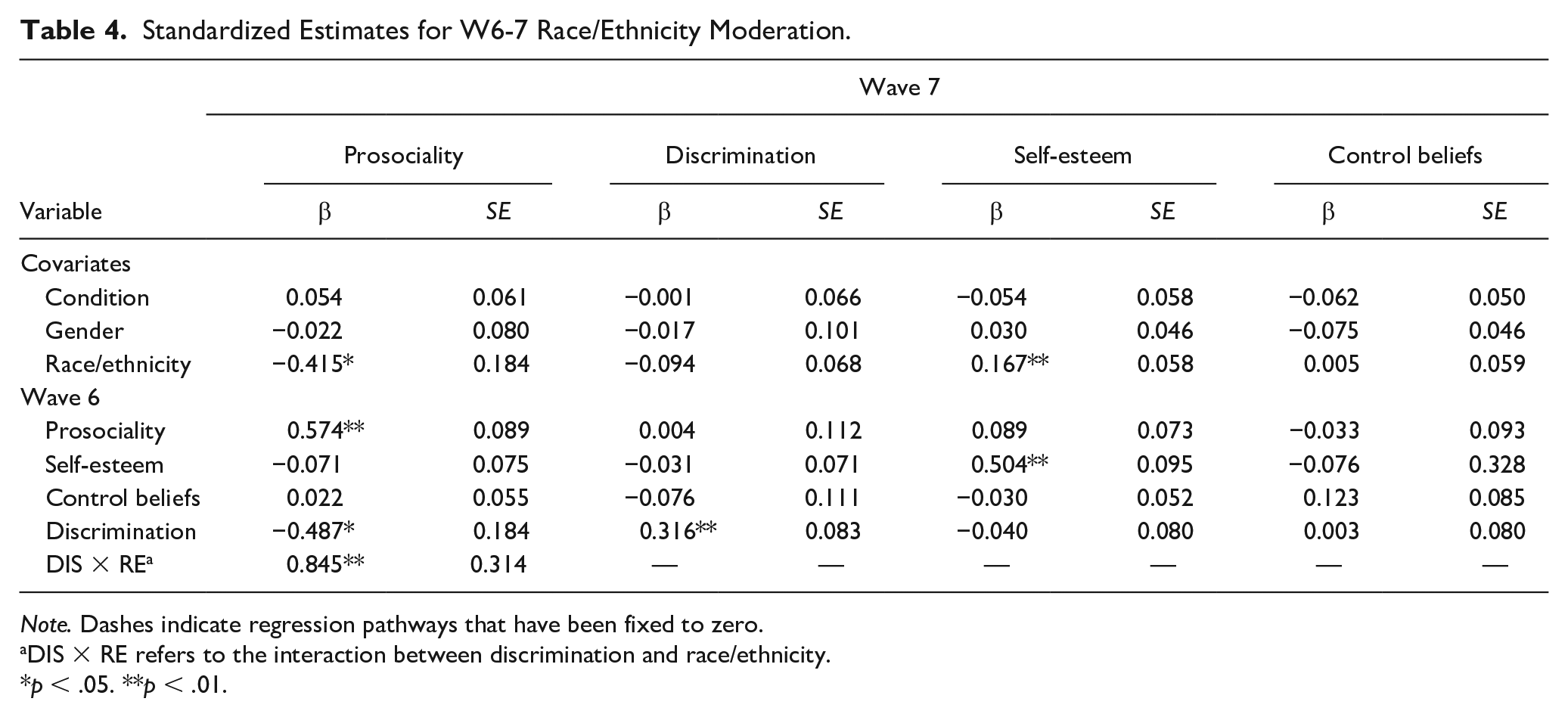
Note. Dashes indicate regression pathways that have been fixed to zero.
DIS × RE refers to the interaction between discrimination and race/ethnicity.
p < .05. **p < .01.
Standardized Estimates for W7-8 Race/Ethnicity Moderation.
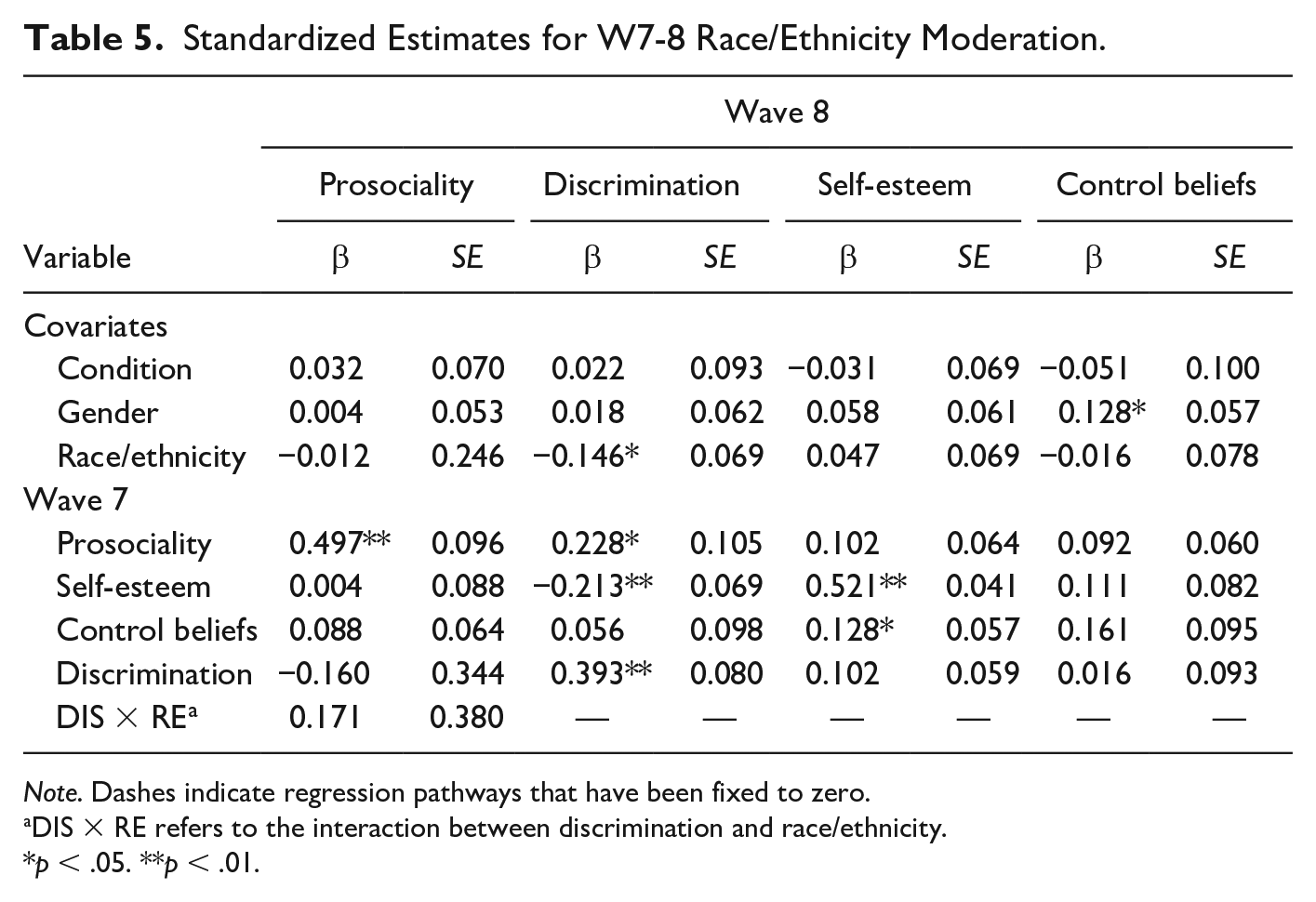
Note. Dashes indicate regression pathways that have been fixed to zero.
DIS × RE refers to the interaction between discrimination and race/ethnicity.
p < .05. **p < .01.
Our last hypothesis—that self-esteem control beliefs would moderate the association between discrimination and subsequent prosociality—received partial support (see Tables 6 and 7). Self-esteem control beliefs interacted with discrimination in the Wave 6/7 model; however, this finding did not hold for the Wave 7/8 model. The three-wave model that included the interaction between self-esteem control beliefs and covariates fit well, χ2(255) = 331.355, p < .001; RMSEA = .029, 90% CI = [0.019, 0.037]; CFI = .94; TLI = .92. We used model constraints to explore the significant interaction for the Wave 6/7 model. Results indicated that youth who experienced discrimination and had very high levels of self-esteem control beliefs (i.e., a score of 4) at Wave 6 engaged in significantly more prosocial behaviors 6 months later at Wave 7 (Bveryhigh = .77, SE = 0.34, p < .05). Individuals who experienced discrimination and had lower levels of self-esteem control beliefs at Wave 6 did not report higher prosociality 6 months later at Wave 7 (Bhigh = .322, SE = 0.20, p = .11; Blow = −.13, SE = 0.26, p = .63; Bverylow = −.57, SE = 0.45, p = .20).
Standardized Estimates for W6-7 Control Belief Moderation.
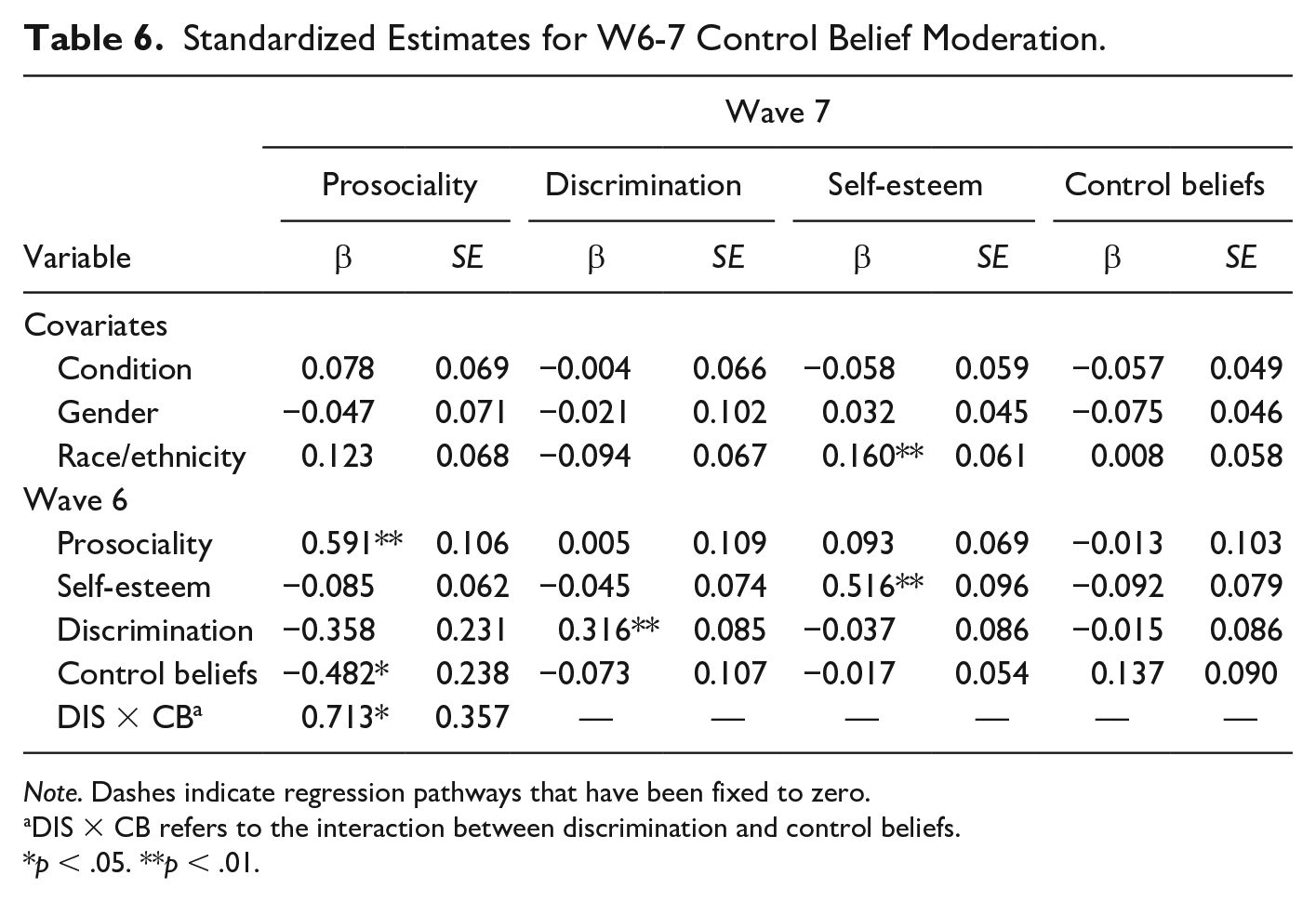
Note. Dashes indicate regression pathways that have been fixed to zero.
DIS × CB refers to the interaction between discrimination and control beliefs.
p < .05. **p < .01.
Standardized Estimates for W7-8 Control Belief Moderation.
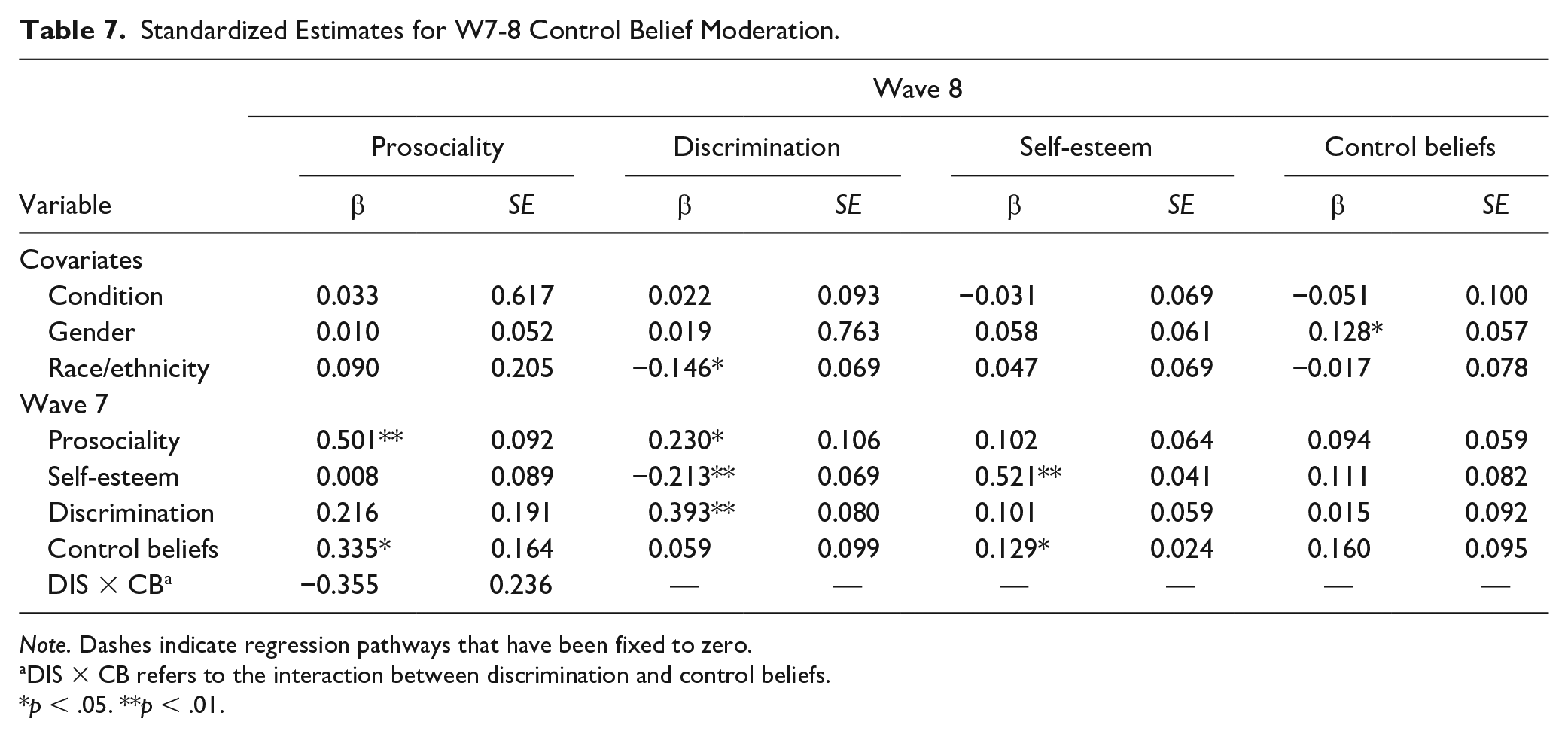
Note. Dashes indicate regression pathways that have been fixed to zero.
DIS × CB refers to the interaction between discrimination and control beliefs.
p < .05. **p < .01.
Discussion
This study used a strengths-based perspective to examine prosocial development among Black and Latinx youth situated in discriminatory contexts. First, we asked about the association between discrimination and prosociality and hypothesized that experiencing discrimination would lead to higher levels of later prosociality. We found that experiencing at least one instance of discrimination predicted higher prosocial behaviors 6 months later, but not over a 1-year period. These findings align with past research that has shown positive cross-sectional associations between trauma, discrimination, and prosociality (Joseph, 2014; Lozada et al., 2016; Strakatý, 2016) and provides new insight into the longitudinal associations between discrimination and prosociality among adolescents who are situated specifically within low-resourced settings. Examining these associations among youth in low-resourced settings is important because such youth face significant barriers across multiple domains (e.g., school, neighborhood, income), and, therefore, their responses are bound by their available resources. Higher levels of prosociality 6 months later could indicate that youth are attempting to reduce feelings of personal distress that result from experiencing discrimination. Similarly, these behaviors provide youth with more opportunities to evaluate themselves positively (DuBois et al., 2009; Kaplan, 1986).
A number of reasons may underlie why there were significant associations between discrimination and prosociality and across 6 months but not across 1 year. One potential reason could be connected to maturation effects. As youth age from seventh into eighth grade, their interpretation of, and responses to, discrimination may change. Consequently, discrimination may be associated with prosociality in seventh grade, but youth may use a different coping strategy by eighth grade or be engaged in different forms of prosociality not captured in the current measure. Significant effects at 6 months, but not at 1 year, could also reflect that some associations “fade-out” or become weaker over time. Therefore, we would expect the strength of an association between two variables across a 1-year time frame to be less strong than across a 6-month time frame. Issues related to measurement imprecision and nonsymmetrical models may also be at play. For instance, youth were situated within a single classroom context across the 6-month time frame (i.e., seventh grade) but were exposed to different classroom contexts across the 1-year time frame (i.e., seventh and eighth grades), which could introduce different sources of error. Concerns about measurement and nonsymmetrical models are further discussed below, under limitations.
As our second research question, we asked whether race/ethnicity moderated the association between discrimination and prosociality. Given the unique histories of racism faced by Black and Latinx communities, we hypothesized that discrimination would be associated with higher levels of subsequent prosociality more strongly among Black youth in comparison with Latinx youth. We found that Black youth indicated higher levels of prosociality 6 months later when compared with Latinx youth, but that there was no difference between Black and Latinx youth in this association 1 year later. Our findings extend past studies by empirically testing differences among Black and Latinx youth (Brittian et al., 2013; Davis et al., 2016; Lozada et al., 2016), and extrapolates how differences across youth’s social contexts might inform these associations.
We view these racial/ethnic differences as stemming from the cultural context of racism and discrimination in the United States. In this respect, Black youth may be using prosociality as a way to combat dominant cultural narratives that position them as “aggressive” and “delinquent” (Rowley et al., 2014; Travis & Leech, 2014). This response may be viewed as adaptive because it could indicate that youth are reclaiming Blackness as something that is intimately connected to actions that extend “beyond the self” (Damon, Menon, & Cotton Bronk, 2003). However, if Black youth use prosociality primarily to disprove racial stereotypes, these behaviors may negatively affect racial/ethnic identity development over time. For Latinx youth, prosociality might not be as relevant of a strategy for combatting dominant cultural narratives that frame youth as “foreign” and deny them the right to an “American” identity (Hill, 2008; Lee, 2000). Racial/ethnic differences might also be explained by the different ways in which impending experiences of discrimination are managed within Black and Latinx families. In this sense, preparing children for discrimination seems to be a more central component of racial/ethnic socialization within Black families than Latinx families (Hughes et al., 2006). As such, it stands to reason that when youth expect to experience discrimination, they are better able to respond in ways that promote their own positive development. Although cultural values such as familism promote prosocial development among Latinx youth (Calderón-Tena, Knight, & Carlo, 2011), these values might serve to promote higher levels of prosociality overall, as opposed to enabling youth to selectively use prosociality as a coping mechanism.
For our final research question, we asked whether self-esteem control beliefs moderated the association between discrimination and prosociality, and hypothesized that stronger self-esteem control beliefs would promote prosociality. We found that youth who felt in control of their own self-esteem were more likely to exhibit higher prosociality 6 months later. This result aligns with past research that indicates control beliefs serve as a protective factor among individuals who have experienced marginalization or distress (Grote et al., 2007; Turiano et al., 2014; Turiano et al., 2017). In addition, we expand this research by isolating control beliefs specifically related to self-esteem and exploring the role of these beliefs within a discriminatory context. This finding supports the SET model and offers insight into why youth might respond to discrimination prosocially. Youth who held stronger self-esteem control beliefs might have utilized prosociality as an adaptive self-esteem maintenance strategy. Therefore, self-esteem control beliefs could be an important internal resource to promote in order for youth to engage in adaptive self-esteem maintenance strategies.
Limitations and Future Directions
These findings offer important empirical support for associations between discrimination and prosociality; nonetheless, several limitations must be considered in future research. The primary limitation relates to construct measurement. Research has yet to integrate self-esteem control beliefs into conceptualizations of youth well-being, and our findings suggest that control beliefs might be an unstudied strength, specifically among marginalized youth. However, our control belief measure was limited to a single item, so we could not account for measurement error within this item. Although self-esteem control belief measures exist for use among younger populations (DuBois, 2004), it seems that self-esteem control beliefs begin to differentiate moving into early adolescence. Future research could be improved by creating a self-esteem control belief scale that is specifically built for and around the experiences of adolescent populations. Mixed-methods approaches that use adolescent interviews and input to inform item questions might be especially useful during scale development.
The second construct that requires advances in measurement is racial/ethnic discrimination. This is a multifaceted construct that can occur at many different levels. Our measure of discrimination did not capture information regarding the source or frequency of discrimination, which could affect developmental outcomes in unique ways (Benner & Graham, 2013). As a result, this study may have been underpowered to detect some effects of discrimination. The association between discrimination and prosociality might be stronger among youth who experience discrimination regularly because they could be continuously drawing on prosociality as a coping mechanism. It is also possible that these effects might be weaker among youth who experience discrimination regularly if youth’s coping abilities are depleted because of their constant exposure to discrimination (Wentzel, Filisetti, & Looney, 2007). Future research should explore whether associations between discrimination and prosociality become heightened or blunted as the frequency and severity of discrimination increases.
The discrimination measure also reflected slightly different experiences at Wave 6 compared with Wave 7 because the time metric shifted meanings depending on the particular wave of assessment. In the questionnaire, youth indicated whether they had encountered each of the given discriminatory experiences since “the end of last school year.” At Wave 6, data were collected during the beginning of the school year and, therefore, all questions that used this time metric were referencing participants’ experiences over the last few months, in the summertime. At Wave 7, data were collected near the end of the school year, meaning that this time metric now referenced youth’s experiences spanning across approximately 12 months, in both school and summertime settings. Although the structure of the discrimination measure was limiting in some respects, it also allowed us to explore the impact of discrimination on prosociality considering different temporal cadences and contexts. Consequently, this study highlights how slight shifts along these dimensions can create stark differences in the substantive findings.
We used a self-report measure of prosociality, but future work could also combine this type of measure with teacher-report or parent-report measures. Self-report measures of prosociality are useful because they might capture behaviors that are unobserved or overlooked by adults; however, youth might also overreport prosocial behaviors based on social desirability. In addition, given that all the measures in this study were self-reported, analyses may be positively biased due to shared method variance. Therefore, combining self-report with other-report measures may offer a more complete picture of the longitudinal associations between discrimination and prosociality among diverse youth. Given that prosociality is a multidimensional construct (Carlo et al., 2010), future research could also explore how discrimination affects specific types of prosocial behavior among youth with different social positions.
The present study offers a broad set of information considering one social category (race/ethnicity). However, nuanced work is needed to explore how multiple social categories converge to create unique experiences and outcomes. This goal could be accomplished through taking an intersectional perspective of development, where researchers attend to the way in which different forms of privilege and oppression are historically contextualized and act on youth to shape their experiences and opportunities (Crenshaw, 1989; Else-Quest & Hyde, 2016). Consequently, this type of perspective will be best able to capture how developmental processes unfold for individual youth. Specifically, research could explore how gendered and racialized systems work in tandem to influence developmental outcomes and responses associated with discrimination. Attending to gender is particularly relevant for this area of research, given gender differences in prosocial behaviors throughout adolescence (Van der Graaff, Carlo, Crocetti, Koot, & Branje, 2018). Future research could explore how girls of color uniquely experience and respond to contemporary acts of racism, sexism, and racialized sexism while considering how history informs the way in which these processes are enacted on a daily basis.
Conclusion
As Black and Latinx early adolescents navigate discriminatory contexts, it is important for researchers to be cognizant of how their unique experiences of marginalization shape their development. Black youth in this study exhibited higher prosociality within discriminatory contexts, whereas Latinx youth did not. This finding is particularly relevant given the lack of research that considers how the sociocultural contexts of discrimination for Black and Latinx youth might differentially affect specific developmental outcomes in early adolescence. This study also highlights self-esteem control beliefs as an overlooked resource that promotes positive development for youth who experience discrimination. Therefore, researchers and practitioners should explore how to best support the development of self-esteem control beliefs and prosociality among these youth. Multilevel strategies that seek to reduce institutional forms of discrimination, foster positive cross-racial peer interactions, and take an individualized approach to empowering marginalized youth might be especially fruitful.
Footnotes
Acknowledgements
We are extremely grateful to the participating Chicago Public Schools (CPS), their principals, teachers, students, and parents. We also thank the CPS Research Review Board and Office of Psychology and Health Specialized Services, especially Dr. Renee Grant-Mitchell and Dr. Inez Drummond, for their invaluable support of this research.
Declaration of Conflicting Interests
The author(s) declared no potential conflicts of interest with respect to the research, authorship, and/or publication of this article.
Funding
The author(s) disclosed receipt of the following financial support for the research, authorship, and/or publication of this article: The findings reported here are based on research funded by the Institute of Education Sciences (IES), U.S. Department of Education, under cooperative agreement R215S020218 as part of the Social and Character Development (SACD) Research Program. The SACD Research Program is a collaboration among IES, the Centers for Disease Control and Prevention (CDC’s) Division of Violence Prevention, Mathematica Policy Research Inc. (MPR), and awardees of SACD cooperative agreements (Children’s Institute, New York University, Oregon State University, University at Buffalo-SUNY, University of Maryland, University of North Carolina-Chapel Hill, and Vanderbilt University). The SACD research program includes a multiprogram evaluation data collected by MPR and complementary research study data collected by each grantee. The findings reported here are based partly on the Chicago portion of the multiprogram data and the complementary research data collected by the University of Illinois and Oregon State University (OSU; Brian Flay, principal investigator) under the SACD program. The inclusion of the (Chicago portion of) the multisite data, which are restricted-use data licensed from the U.S. Department of Education, requires that all Ns be rounded to the nearest 10. These findings may differ from the results reported for the SACD multiprogram evaluation. The findings presented in this article may be based on different sample sizes of children, classrooms and teachers, outcome measures, and/or analytic strategies seeking to answer different research questions. The findings and conclusions in this report are those of the authors and do not necessarily represent the official position of the IES, CDC, MPR, or every consortium member, nor does mention of trade names, commercial products, or organizations imply endorsement by the U.S. government.
