




Abstract
Stereotyped beliefs about the teen years may guide individuals’ cognition, behaviors, and well-being. This study explored associations between parents’ generalized views of typical adolescents and parent and teen well-being and examined parent–adolescent communication (PAC) as a potential mechanism in that association. One-hundred twenty parent–teen dyads (adolescents: 13–15 years) were recruited from a pediatric primary-care practice in the United States. All data were collected via self-report. Parents who viewed typical adolescents more favorably (as friendly and upstanding/prosocial) reported higher well-being. This association was partly mediated by quality of PAC. Positive parental views of adolescents were related to higher adolescent well-being only indirectly via PAC. Similarly, negative parental views of adolescents were associated with parent and adolescent well-being indirectly via PAC. The findings point to PAC as a potential intervening variable that is linked to parents’ views of adolescents and parent and adolescent well-being. The current findings merit replication and further investigation using larger representative samples.
Adolescence is often viewed as a period of “storm and stress” (Hines & Paulson, 2006), characterized by fluctuating teen moods, impulsivity, rebelliousness, and excitement-seeking behaviors (Gross & Hardin, 2007; Gruhn et al., 2011). Research on generalized beliefs about different age groups suggests that perceptions of adolescents as moody, impulsive, and rebellious are widespread across different countries and cultures (e.g., Chan et al., 2012). Similar to gender and racial stereotypes, generalized beliefs about the teen years may guide individuals’ affect, cognition, and behaviors and contribute to youth’s psychological adjustment during this period of development (Buchanan & Holmbeck, 1998). From a social cognitive perspective, stereotyped views of adolescents—particularly among parents—can influence how parents and youth approach each other during the child’s adolescence (Buchanan & Holmbeck, 1998; Steinberg, 1994; Whiteman & Buchanan, 2002), which, in turn, may be related to the well-being of both parents and adolescents.
Although existing literature in this area supports a linkage between parental views of adolescents and certain qualities of the parent–teen relationship (e.g., Holmes, Bond, & Byrne, 2012), and sufficient evidence suggests that qualities of the dyadic relationship are related to youth adjustment and well-being (e.g., for review, Smetana & Rote, 2019), it is unclear if and how parents’ generalized perceptions of adolescents are related to individual well-being. To address this gap, this study examined the association between parents’ beliefs about typical adolescents and the well-being of parents and adolescents and examined parent–adolescent communication (PAC) as a potential intervening (e.g., mediating) variable in that association.
Parental Beliefs About Adolescents and Parent–Teen Interactions
Theoretical and empirical work suggests that parents’ beliefs about important developmental periods may influence how they interact with their own children at different stages of development (Steinberg, 1994). In the case of adolescence, there is evidence that parents who view typical adolescents as risk-takers, rebellious, and moody tend to be more controlling in their parenting practices (Grolnick, Weiss, McKenzie, & Wrightman, 1996) and are perceived by their own adolescents as being less involved (Jacobs, Chhin, & Shaver, 2005). While no prior studies have specifically examined linkages between parents’ beliefs about adolescents and parent–child communication, there is evidence that parents who view adolescents in stereotypical terms report more conflicts with their own adolescents (Holmes et al., 2012), and their youth also report having poorer relationships with parents compared to youth whose parents who hold more favorable views of adolescents (Jacobs et al., 2005). These studies suggest that the ways in which parents generally think about adolescents may be related to the quality of parent–teen interactions.
Although youth characteristics and behaviors may influence how parents perceive typical adolescents (Freedman-Doan, Arbreton, Harold, & Eccles, 1993), one study showed that parents’ generalized beliefs about adolescents were a stronger determinant of the behaviors they expected from their own adolescent than that adolescent’s actual behavior (Jacobs et al., 2005). In other words, parents’ expectations of adolescent behaviors may be guided more strongly by what they believe about typical adolescents than by the behaviors they actually observe in their own adolescents. This research points to how persistent stereotyped views of adolescents can be and suggests that stereotypes of adolescents as a group may be retained even in the context of disconfirming evidence (Seta & Seta, 1993). Consistent with this idea, related research finds that stereotyped perceptions of adolescents are often exaggerated compared to what adolescents are actually like (Buchanan & Hughes, 2009; Chan et al., 2012).
Parent–Teen Communication and Individual Well-Being
Within the family context, close parent–adolescent relationships are the most robust protective factor against emotional and behavioral difficulties in adolescence. Nonetheless, temporary shifts in how parents and adolescents communicate and interact with each other are expected as youth attempt to renegotiate boundaries and parental authority and seek independence (for review, Branje, 2018). For example, in early-mid adolescence, parent–teen conflicts become more frequent and intense (Adams & Laursen, 2007; De Goede, Branje, & Meeus, 2009). Although normative and common, daily instances of conflict have been linked to lower emotional well-being in both parents (Silva et al., 2020) and adolescents (Chung, Flook, & Fuligni, 2009). In contrast, adolescents who can openly communicate with their parents (or caregivers) on a regular basis—and feel like they are being heard—are less likely to experience emotional distress (Steinberg, 2001). In a large, population-based study of racially diverse U.S. adolescents, it was found that adolescents who felt that they could not talk (or talk very little) to a parent about problems reported more depressive symptoms compared to adolescents who felt greater ease communicating with parents (Ackard, Neumark-Sztainer, Story, & Perry, 2006). Together, these studies suggest that poorer and less-open communication in parent–teen dyads is related to parents’ and teens’ emotional well-being.
Despite links between parents’ generalized beliefs about adolescents and qualities of the parent–adolescent relationship, and between quality of parent–teen communication and well-being, it is unclear if and how parents’ generalized beliefs about adolescents are related to parent and adolescent well-being. It is possible that parents’ generalized views of adolescents may be related to individual well-being indirectly through quality of parent–teen communication, which is in turn linked to well-being.
The Current Study
This study expands on prior research linking parental beliefs about typical adolescents with aspects of the parent–adolescent relationship (e.g., conflict and relationship quality; Holmes et al., 2012; Jacobs et al., 2005) by examining the association between parental beliefs and the well-being of parents and adolescents and examining whether quality of PAC mediates that relationship. Understanding how parents’ beliefs about adolescents are associated with PAC and well-being has the potential to reveal how generalized perceptions about this age group can permeate the parent–adolescent dynamic and affect dyadic well-being. While scholarly narratives of adolescence have been shifting in favor of positive depictions that focus on youth strengths (e.g., National et al 2019; Steinberg, 2014), there remains a disconnect between what is being said in academic circles and what is communicated to parents through popular media. In light of existing research on stereotypes about age groups (e.g., Chan et al., 2012), changing parents’ generalized beliefs about adolescents may be a difficult endeavor to undertake. However, understanding the proximal behavioral and affective factors associated with such perceptions may help researchers identify more malleable targets of intervention.
We hypothesized that positive parental views of typical adolescents would be associated with higher parent and adolescent well-being. In addition, we hypothesized that parents with more favorable generalized perceptions of adolescents would have better PAC, which we further hypothesized would mediate the relationship between parental beliefs and well-being. Conversely, we hypothesized that stereotypical or negative parental views of typical adolescents (as rebellious and moody) would be associated with lower parent and adolescent well-being, in part because stereotypical views of adolescents would be associated with poorer PAC which, in turn, is expected to be linked to low well-being in parents and teens.
Method
Participants and Procedures
This study relies on baseline data from 119 parents–teens dyads who participated in a randomized controlled trial (registered clinical trial #NCT03496155) designed to test the effects of a clinic-based, parent-directed intervention on strength-based parenting (Miller et al., 2020). Baseline data were collected prior to receipt of any intervention material. Thus, this study is based on data from participants in both the control and treatment groups. The groups that did not differ with respect to demographics or any of the measures included in this analysis (all p values > .05).
Originally, 120 parent–teen dyads were recruited, but one dyad was lost to follow-up after the study screener. This study relied on data from 119 dyads that completed their baseline survey partially (n = 1) or entirely (n = 118). Of the 119 dyads included in the current analysis, two teens and one parent had missing data on the well-being measure (outcome variable). Those with versus without missing data on well-being (outcome variable) did not differ significantly with respect to demographics (youth race, sex, age, parent age, parent education, family income, and family structure), parental perceptions of typical adolescents (independent variable), or parent–teen communication (mediating variable) (all tests p values > .05 across reporters).
As summarized in Table 1, 97% of the parents enrolled were mothers and 60% of the adolescents were female. Approximately 65% of the youth were black or African American, about a quarter were Caucasian, and 6% were mixed race. The mean teen age was 14.33 (SD = 0.90), and mean parent age was 44.50 (SD = 6.45). About one-third of adolescents lived in single-parent homes. The majority of parents (71%) had an associate degree or higher education.
Sample Demographics.
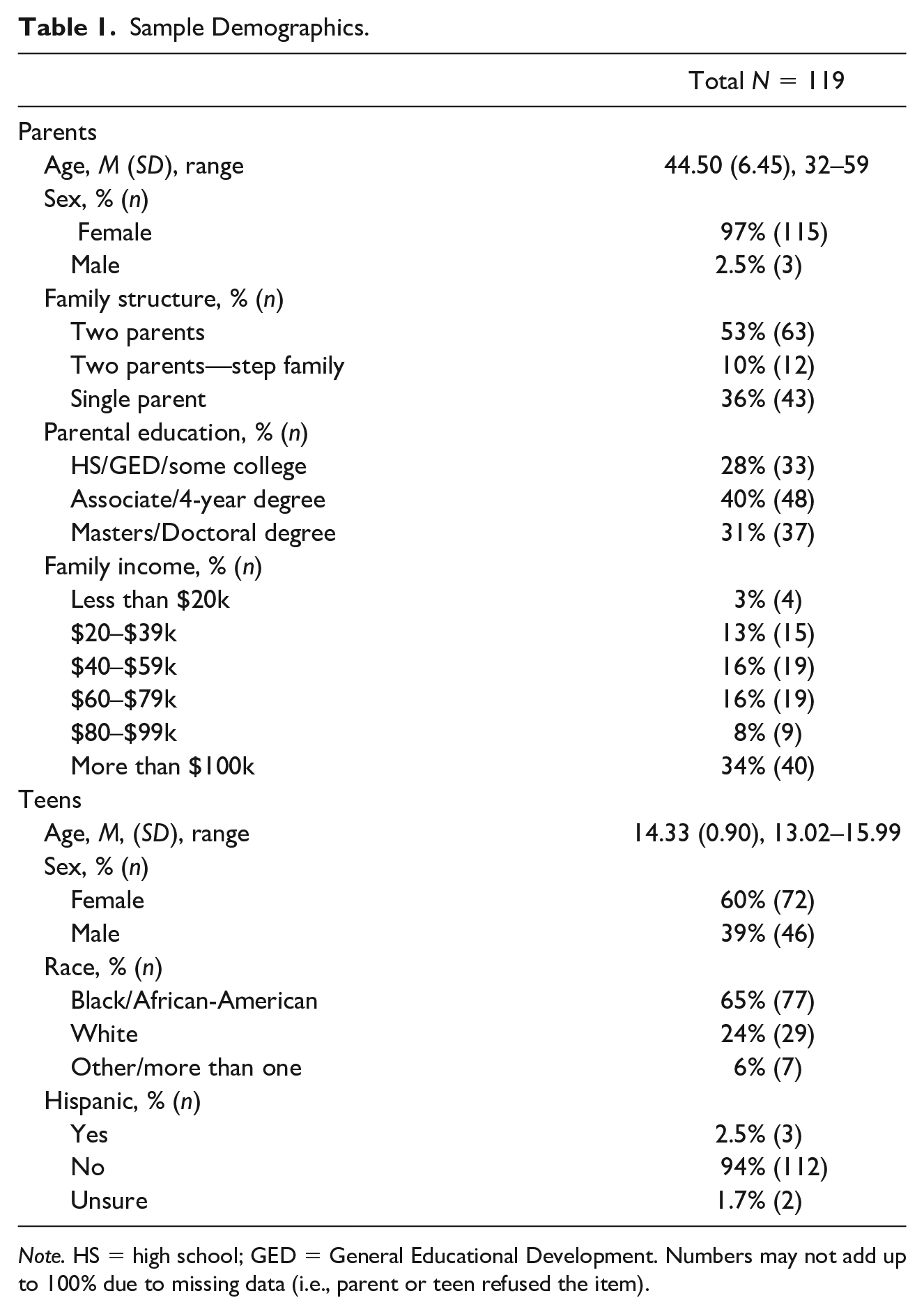
Note. HS = high school; GED = General Educational Development. Numbers may not add up to 100% due to missing data (i.e., parent or teen refused the item).
Participants were recruited from one diverse, urban primary-care practice in the Pediatrics Research Consortium at Children’s Hospital of Philadelphia (CHOP) from May 2018 through October 2018. Potential participants were identified using CHOP’s electronic health record (EPIC) system. Recruitment letters were mailed to all parents of adolescents who would be 13 to 15 years of age at their upcoming well-child visit (WCV). Recruitment letters were mailed approximately 1 to 3 months prior to the scheduled appointment and instructed interested parents to contact the study team via phone or email. The study team called parents who did not contact the study team on their own accord.
Interested participants were screened for eligibility. To be eligible, participants needed to meet the following criteria. Teen criteria included (a) age 13 to 15 years at the time of their upcoming WCV; (b) primary-care patient at CHOP; (c) scheduled for a WCV that parent and teen both planned to attend; and (d) had their own email account to complete electronic surveys. Parent criteria included (a) parent or legal guardian of a teen age 13 to 15 years at their upcoming WCV at a CHOP primary-care practice and (b) had their own email account to complete electronic surveys. Teens were excluded if they (a) were not fluent in written or spoken English; (b) were attending a new patient WCV; (c) were diagnosed with a developmental delay or pervasive developmental disorder that required special education services; (d) had a psychiatric hospitalization in the past year; (e) had participated in similar clinical studies conducted in the same practice; and/or (f) had a sibling who participated in similar clinical studies conducted in the same practice. Parents were excluded if they (a) were not fluent in written or spoken English and/or (b) had participated in other clinical studies in the same practice. If interested and eligible, consent/permission and assent were obtained as appropriate from parents and teens over the phone.
Figure 1 illustrates the study enrollment process. Of potential participant dyads identified through EPIC (n = 599), we were able to connect with approximately 50% (n = 297) by telephone. Among dyads reached by telephone, 59.60% (n = 177) expressed interest, and 74.58% (n = 132) of them were subsequently screened. Of the 132 dyads screened, 2 (1.52%) were not eligible because the teen had a developmental delay or pervasive developmental disorder. Among the 130 participant dyads who were eligible, 4.6% (n = 6) declined immediately after the screening or during consent, 3% (n = 4) were lost to follow-up, and 92.3% (n = 120) consented and enrolled. The reasons that families refused participation after screening or during the consent process included (a) no longer interested, (b) teen was too anxious about participating, and (c) concerns about confidentiality.
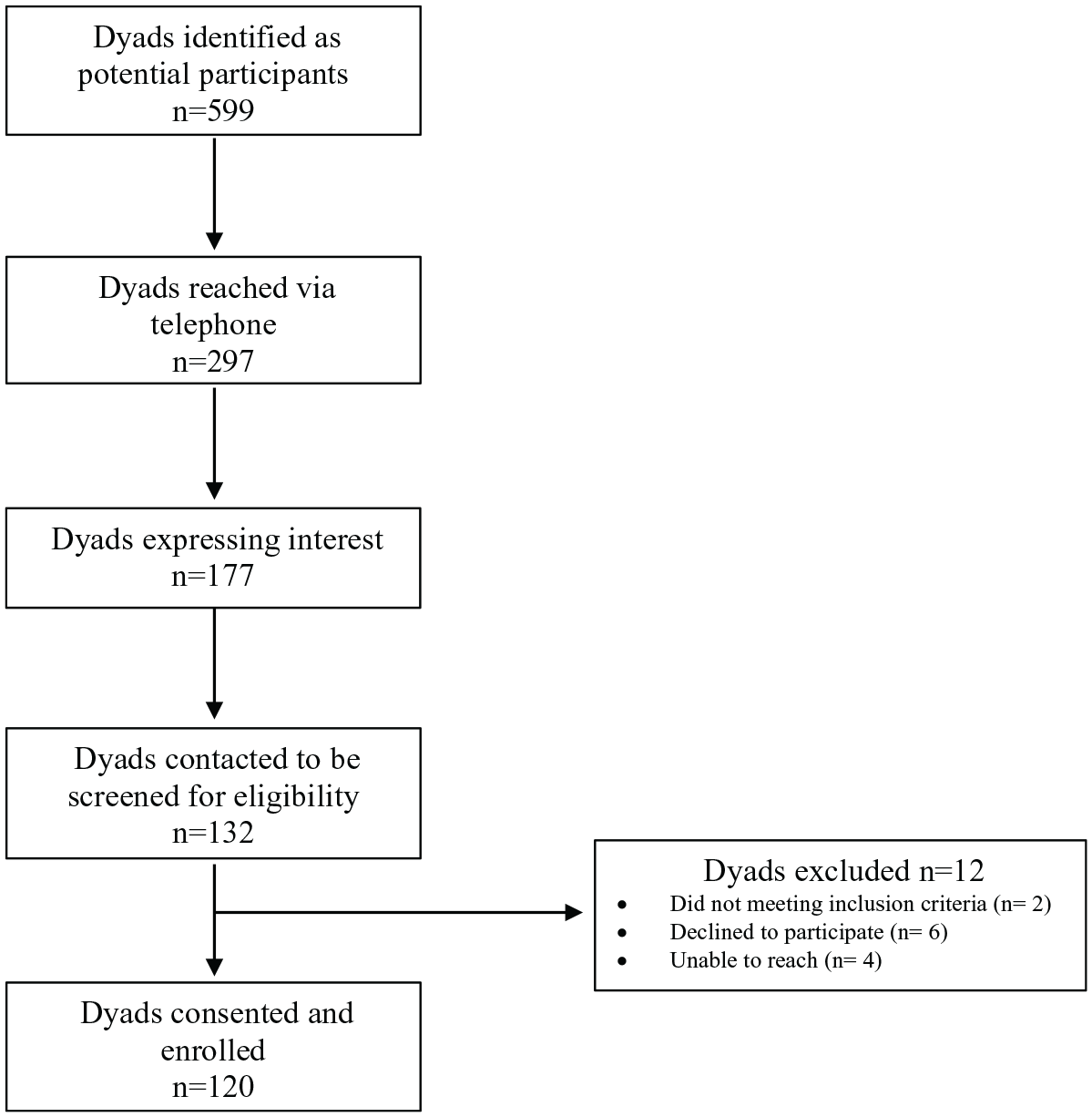
Recruitment and enrollment.
Approximately 1 month prior to participants’ WCV, baseline assessments were sent electronically to parents’ and teens’ respective email accounts via a secure electronic data management system (REDCap). Each participant received $20 for completing the baseline assessment. All study procedures were approved by the institutional review board and were in accordance with the international guidelines for the ethical conduct of human subject research.
Measures
The three measures used in this study were part of a longer self-report battery of measures that included additional questionnaires relevant to the broader study aims.
Parental beliefs about typical adolescents
Parents completed a shortened version of Buchanan and Holmbeck’s (1998) Stereotyped Beliefs about Adolescents scale to measure parental perceptions of typical adolescents. This measure includes a variety of descriptive characteristics (e.g., impulsive, rebellious, insecure, and hardworking). For each characteristic, parents rated the probability that a typical adolescent possesses that characteristic or displays that behavior using a visual analog scale from 0 to 100. Our modified version of the measure included 26 of the original 44 characteristics, or four of the 9 original subscales. The subscales included in this study were rebellious (composed of nine descriptors including takes risks, tests limits, rebellious, reckless, stubborn, and impulsive), moody (composed of 6 descriptors including insecure, emotional, anxious), friendly (composed of five descriptors including friendly, considerate, and caring), and upstanding and prosocial nature (composed of six descriptors including hardworking, honest, and curious). Cronbach’s alphas in this study were 0.88, 0.86, 0.92, and 0.82, for the rebellious, moody, friendly, and upstanding subscales, respectively. Scores on the friendly and upstanding, and rebellious and moody, subscales were averaged and used as proxies of positive and negative parental beliefs about adolescent, respectively.
Emotional well-being
Parents and adolescents completed the Flourishing Scale, which is based on Diener’s framework of well-being (Diener et al., 2010). Respondents indicate the degree to which they agree with a series of eight statements regarding how they feel and think about their lives. Items include statements such as “I lead a purposeful and meaningful life” and “my social relationships are supportive and rewarding.” Response scale ranges from 1 (strongly disagree) to 7 (strongly agree). Scores are summed for a possible range of 8 (Strong Disagreement with all items) to 56 (Strong Agreement with items). Higher scores indicate better well-being. Cronbach’s alpha was 0.82 and 0.81, for parent and teen report, respectively.
PAC
Parents and adolescents completed the PAC scale (Barnes & Olson, 1985), a 20-item-comprised measure that assesses the extent to which parents and adolescents report open and nonproblematic family communication. Representative items include, “I find it easy to discuss problems with my [mother/father or adolescent].” The response scale ranges from 1 (strongly disagree) to 5 (strongly agree). Scores were summed for a total communication score (possible range = 20–100), such that higher scores indicate more open and less problematic communication between parent and adolescent. Cronbach’s alpha was 0.86 and 0.88, for parent and teen report, respectively. Parents’ and teens’ report of communication were averaged to obtain a single dyadic communication score. However, correlations between preaggregated scores and the other study variables are provided in Supplemental materials (Table S1).
Statistical Analysis
As a first step, bivariate relationships between the main variables of interest were examined. We then examined the associations between demographic variables (race, youth sex, youth age, parent age, parent education, family income, and family structure) and main variables of interest (parental views of typical adolescents, PAC, and parent and teen well-being). Demographic variables that were significantly related to both the independent and dependent variables at p < .05 were controlled for in subsequent analysis.
We tested mediation using Hayes’s (2018) SPSS PROCESS 3.1 routine. This routine estimates the significance of the indirect effect with a bootstrapping approach, which is a nonparametric method based on repeated random resampling with replacement that yields 95% bootstrapped confidence intervals (CIs) for the indirect effect. Parental beliefs about typical adolescents (positive and negative, in separate models) were specified as the focal independent variable(s), PAC as the intervening [mediator] variable, and well-being as the dependent variable. Separate models were specified for parents’ and teens’ report of well-being. We assessed for the extent to which PAC carried the influence of the independent variable (parental beliefs about typical adolescents) to the dependent variable (well-being) using the estimated indirect effect. Consistent with Hayes (2018), significance values for indirect effects are not reported, but the 95% CIs are. All CIs were based on 5,000 bootstrap samples. A significant indirect effect was evident if zero was outside of the 95% CI, which indicated that the indirect effect was statistically different from zero at p < .05. Following conceptual recommendations by Mathieu and Taylor (2006), a significant indirect effect was indicative of mediation only if there was a significant relationship (i.e., total effect) between the independent and dependent variables. In the absence of a significant total relationship between the independent and dependent variables, the presence of a significant indirect effect indicated that the association between the independent and dependent variables was entirely indirect (no mediation). The Sobel test was used to confirm the significance of all mediated effects.
Results
There were no significant associations between demographic variables (race, youth sex, youth age, parent age, parent education, family income, and family structure) and the main variables of interest (parental views of typical adolescents, PAC, and parent or teen report of well-being; all p values > .05). Consequently, the analyses did not include any covariates.
Bivariate Associations
Bivariate associations between the main study variables and mean scores on each measure of interest are reported in Table 2. Positive parental perceptions of typical adolescents were positively correlated with PAC and parent well-being and marginally correlated with teen well-being. Negative parental perceptions of typical adolescents, on the other hand, were inversely correlated with PAC and not significantly correlated with parent- or teen-reported well-being. PAC was positively correlated with parent and teen well-being.
Descriptive Statistics and Bivariate Correlations Between Main Variables.
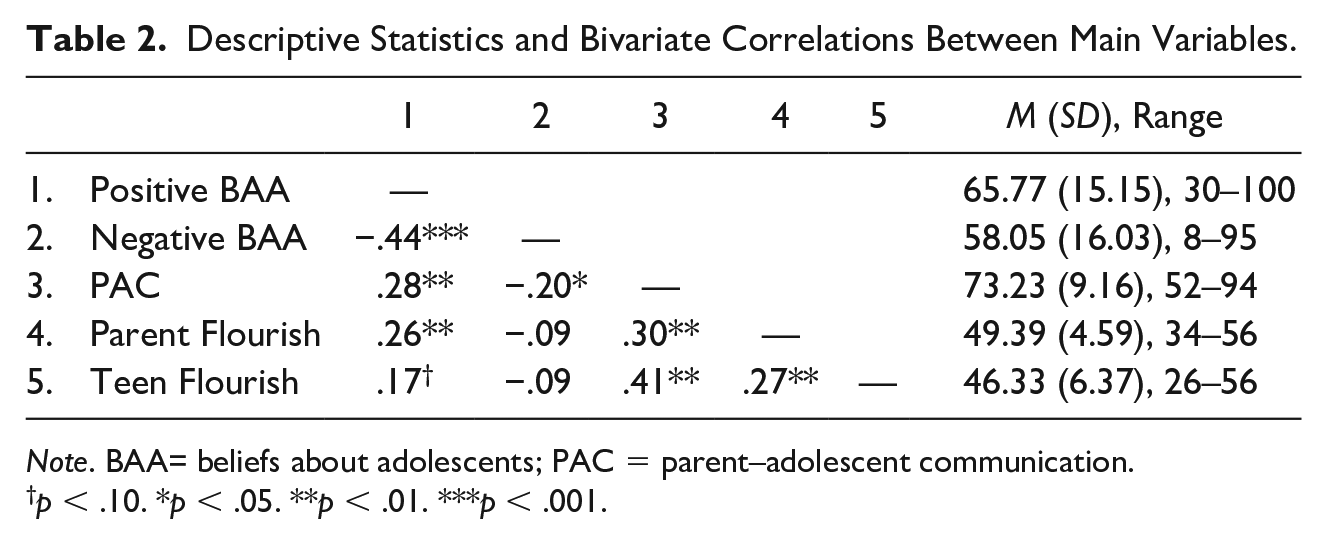
Note. BAA= beliefs about adolescents; PAC = parent–adolescent communication.
p < .10. *p < .05. **p < .01. ***p < .001.
Mediation Models
All model estimates are summarized in Table 3. Positive parental views of adolescents were significantly associated with higher PAC (path a, B = .17, SE = .05, p = .003). Higher PAC was, in turn, significantly associated with higher parent and adolescent well-being (paths b, p < .01). Positive parental views of adolescents were also significantly associated with higher parent well-being (total effect: B = .08, SE = .03, p = .005) and marginally associated with adolescent well-being (B = .08, SE = .04, p = .063). In parents, the association between positive parental views of typical adolescents and well-being was reduced but remained statistically significant after accounting for the effect of PAC on parent well-being (direct effect, B = .06, SE = .03, p = .038), suggesting a partially mediated effect. Indeed, the indirect effect linking positive parental beliefs to parental well-being was significant (B = .02, SE = .01, 95% CI = .003, .043), indicating that at least some of the association between positive parental views and parent well-being was accounted for by quality of PAC. The Sobel test confirmed the statistical significance of this mediated effect (Z = 2.07, SE = .01, p = .038). PAC mediated approximately 27% of the total association between positive parental views of adolescents and parent well-being.
Estimates of All Paths in the Mediation Models.
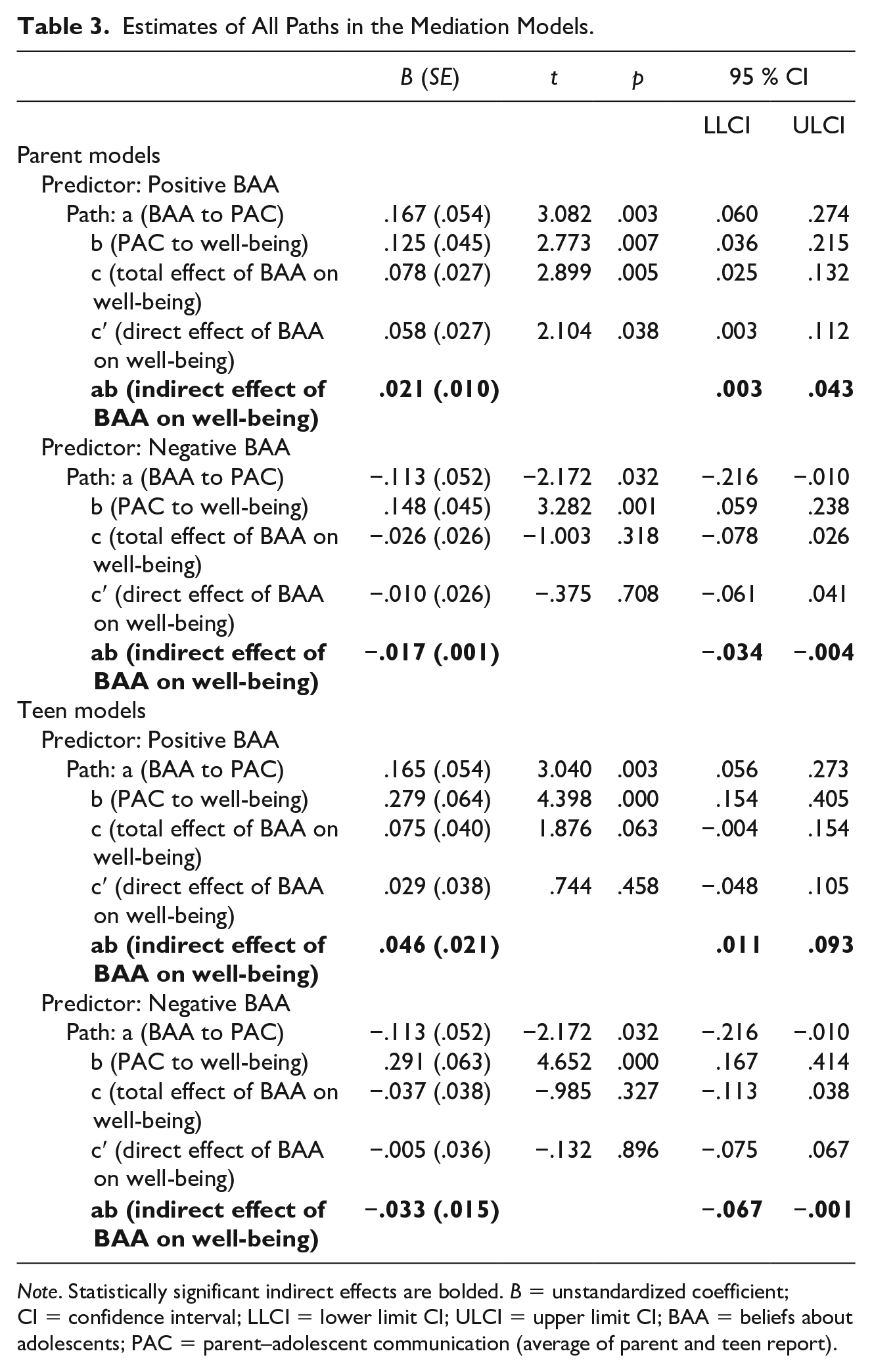
Note. Statistically significant indirect effects are bolded. B = unstandardized coefficient; CI = confidence interval; LLCI = lower limit CI; ULCI = upper limit CI; BAA = beliefs about adolescents; PAC = parent–adolescent communication (average of parent and teen report).
In adolescents, the indirect association between positive parental views of adolescents and adolescent well-being was also significant (B = .05, SE = .02, 95% CI = .011, .093). Given the marginal significance of the total effect (p = .06), a significant indirect effect suggested that the association between positive parental views of adolescents and adolescent well-being was entirely indirect (via PAC).
Negative parental views of adolescents were significantly associated with lower PAC (path a, B = −.11, SE = .05, p = .032). PAC was, in turn, positively associated with higher parent and adolescent well-being (paths b, p < .001). Negative parental views of adolescents were not associated with parent or adolescent well-being (total effects, p > .30). However, the indirect association between negative parental beliefs and well-being was significant for both parents (B = −.02, 95% CI = −.034, −.004) and adolescents (B = −.03, 95% CI = −.067, −.001). Therefore, negative parental beliefs and parent and adolescent well-being were associated only indirectly (via links with PAC).
Alternate Analyses
Since this study was cross-sectional and no causal pathways can be inferred, it is possible that parents and teens with higher well-being have better communication, which, in turn, may be related to parents’ perceptions of typical adolescents. To explore this possibility, models were re-run specifying well-being as the main predictor and parental beliefs about adolescents as the outcome (and PAC retained as the intervening variable). Results from these models mirrored the pattern of results already reported (see Supplemental material, Table S2). Briefly, both parent and adolescent well-being were positively associated with PAC (paths a, p > .001). PAC was significantly associated with both positive (path b, B = .36, p = .021) and negative (B = −.33, p = .054) parental beliefs about adolescents. In parents, well-being was significantly associated with more positive parental beliefs about adolescents (total effect, B = .86, p = .005), and this association remained significant after accounting for PAC (direct effect, B = .64, p = .038), suggesting a partially mediated effect. Indeed, the indirect effect of parent well-being on positive parental beliefs was significant (B = .22, 95% CI = .029, .458), suggesting that at least some (approximately 25%) of this association was accounted for by quality of PAC. The Sobel test for this mediated effect was marginally significant (Z = 1.93, SE = .11, p = .053).
In adolescents, well-being was not associated with positive parental beliefs (total effect, p = .06), but the indirect effect for the association between adolescent well-being and positive parental beliefs was significant (B = .23, 95% CI = .040, .504). Similarly, neither parent nor adolescent well-being were associated with negative parental beliefs about adolescents (total effects, p values > .14); instead, parent and adolescent well-being were associated with negative parental beliefs only indirectly via associations with PAC.
Discussion
Stereotyped beliefs about different age groups can influence individuals’ affect, cognition, and behaviors. Existing research supports a linkage between parents’ stereotyped beliefs about adolescents and qualities of the parent–teen relationship (e.g., Holmes et al., 2012). Qualities of the dyadic relationship (including patterns of communication) are, in turn, associated with parent and adolescent well-being (Chung et al., 2009; Silva et al., 2020; Smetana & Rote, 2019). What has remained unclear is if and how parents’ beliefs about adolescents are associated with parent and adolescent well-being. This study aimed to address this gap in literature by examining the link between parents’ beliefs about typical adolescents and individual well-being and examining quality of PAC as a potential mechanism of that association.
We found that positive parental beliefs about adolescents were associated with better PAC and higher parent well-being. Negative parental beliefs about adolescents, on the other hand, were associated with lower PAC but were not directly related to parent or adolescent well-being. In addition, dyads that had better PAC reported higher parent and adolescent well-being. Consistent with expectations, PAC partially mediated the association between positive parental beliefs about adolescent and parent well-being, accounting for 27% of the association. Contrary to expectations, parental beliefs about adolescents (positive and negative) were only indirectly associated with adolescent well-being, via PAC. Similarly, negative parental beliefs about adolescents were only indirectly associated with parent well-being, via associations with PAC. Given the cross-sectional nature of these data, the reverse associations (e.g., parental beliefs as outcome and well-being as predictor) were also explored and the same patterns of results were observed.
This study contributes to the current literature on parental stereotyped perceptions of typical adolescents by considering the relation between parental beliefs and the well-being of parents and teens. It extends existing literature by corroborating that parental views of typical adolescents are related to interpersonal aspects of the parent–adolescent relationship and specifically finding that parents’ views of adolescents play a role in how parents and teens communicate with each other. While prior studies have reported associations between parental beliefs and parenting practices, parents’ expectations of their own teen’s behavior, and parent–teen conflict, this study adds that parental beliefs are also related to the quality of dyadic communication. The study findings also point to PAC as a mechanism that indirectly links parental views of adolescents to parent and adolescent well-being (and vice versa). With the exception of the link between positive parental views and parent well-being, which was significant even after adjusting for PAC, this study findings suggest that parents’ generalized perceptions of adolescents were indirectly related to emotional well-being via associations with PAC.
Limitations and Future Directions
Our study has a few noteworthy limitations. First, all data were collected simultaneously and no causal pathways can be inferred. Second, our parent sample was composed of mostly mothers and our results cannot be generalized to fathers. Third, we recruited parent–teen dyads from a single primary-care practice in an urban setting. This prevents us from generalizing our results to all parents of adolescents, especially parents of teens who do not receive annual primary care or parents who do not accompany their adolescent to preventive health care visits. Moreover, our findings are limited to parents of 13- to 15-year olds. Finally, the study did not assess adolescents’ views of their own parents, which also may be related to the quality of parent–teen communication and individual well-being, especially in early adolescence as youth begin to de-idealize their parents in effort to increase autonomy (Branje, 2018; Steinberg, 2001). Despite these limitations, this study contributes to the body of knowledge about parents’ beliefs of typical adolescents and their relation to parent–teen communication and well-being.
These findings merit replication and further investigation using larger representative samples. Ideally, future studies could be designed to investigate whether parental beliefs about typical adolescents change over time and how these beliefs contribute longitudinally to fluctuations in the quality of parent–teen communication and dyadic well-being across adolescence. It is possible that parents hold more stereotypical views of adolescents when their youth are early-mid adolescents, but these perceptions may shift as youth mature and begin to pursue interests and activities that demonstrate prosocial/upstanding behavior, even in spite of occasional mood swings and the risks youth may take. After all, being prosocial could entail engaging in activities for which the outcomes are uncertain and embody at least some level of risk, such as volunteering in low-resource and potentially dangerous neighborhoods, participating in a political march or protest, or working closely with high-risk populations such as those with mental illness. Another important line of inquiry is understanding what factors contribute to parents’ generalized perceptions of typical adolescents and deciphering what it is about youths’ transition to adolescence that parents and caretakers find difficult or stressful, as well as what aspects of this period parents find rewarding and come to appreciate. Such research could inform the development of interventions that provide parents and other important adults in adolescents’ lives with anticipatory guidance about what changes to expect and look forward to in their adolescents and how to respond in effective ways.
Conclusion
Existing literature supports a linkage between parents’ stereotyped views of adolescents and qualities of the parent–teen relationship, which are, in turn, independently related to parent and adolescent well-being. Since it is unclear if and how parents’ beliefs of adolescents are related to individual well-being, this study aimed to examine the association between parents’ beliefs about typical adolescents and the well-being of parents and adolescents and examine PAC as a potential intervening variable in that association. Results showed that positive parental beliefs about adolescents were related to higher parent well-being, and this association was partially mediated by PAC. Positive parental beliefs about adolescents was related to higher well-being in adolescents only indirectly via associations with PAC. Similarly, negative or stereotyped parental views of adolescents were related to lower parent and adolescent well-being only indirectly, through associations with PAC. Based on these findings, we conclude that parents’ stereotyped beliefs about adolescents may impact both parents’ and adolescents’ emotional well-being via its influence on the quality of dyadic communication. Strategies to favorably influence parents’ stereotypical beliefs about adolescence, particularly among parents of children entering or in early adolescence, may have important beneficial effects on family communication and emotional well-being.
Supplemental Material
Table_S1_S2_072420 – Supplemental material for Stereotyped Beliefs About Adolescents and Parent and Teen Well-Being: The Role of Parent-Teen Communication
Supplemental material, Table_S1_S2_072420 for Stereotyped Beliefs About Adolescents and Parent and Teen Well-Being: The Role of Parent-Teen Communication by Karol Silva, Reyneris J. Robles, Elizabeth Friedrich, Megan Fisher Thiel, Carol A. Ford and Victoria A. Miller in The Journal of Early Adolescence
Footnotes
Declaration of Conflicting Interests
The author(s) declared no potential conflicts of interest with respect to the research, authorship, and/or publication of this article.
Funding
The authors disclosed receipt of the following financial support for the research, authorship, and/or publication of this article: Primary funding provided by the John Templeton Foundation. This project was supported in part by the Health Resources and Services Administration (HRSA) of the U.S. Department of Health and Human Services (HHS) under T71MC30798 Leadership Education in Adolescent Health (LEAH). This information or content and conclusions are those of the authors and should not be construed as the official position or policy of, nor should any endorsements be inferred by HRSA, HHS or the U.S. Government.

Supplemental Material
Supplemental material for this article is available online.
Author Biographies
References
Supplementary Material
Please find the following supplemental material available below.
For Open Access articles published under a Creative Commons License, all supplemental material carries the same license as the article it is associated with.
For non-Open Access articles published, all supplemental material carries a non-exclusive license, and permission requests for re-use of supplemental material or any part of supplemental material shall be sent directly to the copyright owner as specified in the copyright notice associated with the article.
