




Abstract
The present study examined both mothers’ reports and adolescents’ perceptions of parents’ educational involvement and their effects on the adolescents’ functioning in school. The sample was drawn from 5 urban schools in Israel. Participants were 449 eighth grade students/adolescents (Female = 47%) and 126 mothers. Adolescents and their mothers completed parallel parents’ educational involvement questionnaires, and adolescents completed questionnaires on learning strategies and self-evaluation. Multiple-group confirmatory factor analyses, based on the mothers’ reports and adolescents’ perceptions of parents’ educational involvement revealed three factors: home-based, school-based, and communication-based knowledge of adolescents’ activities in school. The analysis showed no relation between mothers’ reports and adolescents’ perceptions. However, adolescents’ perceptions of their parents’ educational involvement were significant predictors of the adolescents’ learning strategies, self-evaluation, and academic achievement. Findings underline the congruence and incongruence between mothers and their adolescents, and the significant role parents play in their adolescents’ schooling according to the adolescents’ perceptions.
Keywords
Introduction
Parents’ educational involvement is a term used to describe a wide range of parents’ behaviors designed to benefit their adolescent’s educational outcomes and future success. Several factors including parents’ sociocultural background, their construction of parental educational involvement role, factors related to their adolescents, the school adolescents attend and the teachers they have inform parents’ educational involvement in their adolescents’ lives? (McWayne et al., 2022; Williams-Johnson & Fields-Smith, 2022). Researchers have examined different dimensions of parental involvement such as home-based involvement (Bhargava & Witherspoon, 2015) and school-based involvement (Epstein, 1995, 2001; Grolnick & Slowiaczek, 1994; Walker et al., 2009).
Parental involvement is a sociocultural process that draws on the reciprocal connections between home and school. Therefore, Bronfenbrenner’s bioecological systems theory provides a meaningful framework for examining parents’ involvement in their children’s education. This theory portrays individuals as embedded in successively broader social ecologies that are mutually influential, and development is described as a consequence of complex and reciprocal interactions among contexts and between contexts and the individual (Bronfenbrenner, 1979; Thompson, 2012). Adolescents’ immediate social contexts such as the family, school or peers are labeled microsystems, and the relationship among these microsystems as the mesosystem. Bronfenbrenner (1979) defines the mesosystem as “a set of interrelations between two or more settings in which the developing person becomes an active participant” (p. 203). Research within this framework indicates that the stronger, more positive, more numerous, and more supportive the linkages between home and school, the healthier the development of children and adolescents (Epstein & Dauber, 1991; Hoover-Dempsey & Sandler, 1997).
Parental involvement is dictated by their offspring’s developmental level and parents own culturally based construction and negotiation of educational involvement (Yamamoto et al., 2022). Nevertheless, across racial and cultural groups and children’s developmental level, there is strong evidence that parents’ educational involvement is associated with improved academic achievement (Barger, et al., 2019; Kim & Hill, 2015). Adolescents experience positive motivational and academic outcomes when parents are actively involved with their schooling and schoolwork (Bhargava & Witherspoon, 2015; Kim & Hill, 2015; Wang & Eccles, 2012). When parents are involved in their adolescents’ academic growth, adolescents are more intrinsically motivated to learn (Fan & Williams, 2010; Rubach & Bonanati, 2023), they feel more efficacious (Kaplan Toren, 2013), and are better at regulating and managing schoolwork (Xu & Corno, 2003). Cheung and Pomerantz (2012) examined the mechanism through which parents’ involvement facilitate adolescents’ achievement and found that the more parents are involved the more their children’s motivation to do well in school draws on parent-oriented reasons (e.g., adolescents’ willingness to show their parents that they are responsible and gain parents’ approval).
Most studies on parents’ educational involvement are based on adolescents’ perceptions (Fan & Williams, 2010; Hill & Tyson, 2009; Wang & Sheik-Khalil, 2013). Few studies account for the parents’ reported involvement in their adolescents’ education (Park & Holloway, 2013; Ule et al., 2015), and fewer still examine the cor-respondence between adolescents’ perceptions and parents’ reports on parental involvement and their relative importance for adolescents’ academic and self-evaluation outcomes (Maurizi et al., 2012; Paulson, 1994). The present study addressed this gap in the literature by examining (a) the alignment between adolescents’ perceptions and mothers reports of educational involvement at home (e.g., homework) and school (e.g., attending parent-teacher conferences), and of communication-based knowledge of their adolescents’ school-related activities; and (b) the relative importance of the mothers’ reports of their educational involvement in their adolescents’ education and the adolescents’ perceptions of parents’ educational involvement on their strategies for learning, self-evaluation, and academic achievement. Below we provide a brief description of the considered dimensions of parental involvement within the theoretical framework of the study.
Parents’ Educational Involvement: A Multidimensional Construct
Parental involvement in their adolescents’ education is often conceptualized as consisting of home-based and school-based involvement (e.g., Green et al., 2007; Kaplan Toren & Kumar, 2020; Lavenda, 2011; Pomerantz, et al., 2007) and incorporating a wide range of parental behaviors (Fax & Chen, 2001). Epstein and Salinas (2004) identify different kinds of parents’ educational involvement that include active engagement in children’s academic learning at home such as helping with homework, and involvement in school such as communicating with teachers and administrators, volunteering at school events, and participating in decision-making regarding school policies. However, as children develop into adolescence and experience a greater sense of independence, parents’ knowledge of their adolescent’s whereabouts gradually depends on parent-adolescent communication. In this study we consider these three dimensions of parental involvement in adolescents’ education (home-based, school-based, parent-adolescent communication-based knowledge).
Considerations of the different dimensions of parents’ educational involvement are important because they differentially impact students’ academic and self-evaluation outcomes (Dotterer, 2022). Illustrate to, attending parent-teacher conferences and volunteering were positively related to students’ academic achievement (Domina, 2005); while home-based involvement was found to have a positive effect on adolescents’ global self-worth and scholastic competence (Kaplan Toren, 2013; Kaplan Toren & Seginer, 2015). In the sections below we discuss the three dimensions: home-based, school-based, and communication-based knowledge as reflected in parents’ awareness of their adolescents’ academic and social life.
Home-Based Parental Involvement
Parents demonstrate their involvement in their adolescents’ education in the home context in several ways. Actively assisting with homework and assignments, helping adolescents prepare for exams and supporting them to be more self-regulating about their schoolwork, and monitoring their academic progress are just some of them (Green, et al., 2007). Less concrete, but just as important, are the parents’ academic socialization messages regarding attitudes toward schooling and education. Thus, parental involvement at home includes three components: (1) motivational and attitudinal (e.g., encouraging their adolescents to do well in school and creating a home environment that is supportive of learning), (2) cognitive (e.g., support their adolescents’ developing self-regulation and learning strategies) and (3) behavioral (e.g., parents talking with their adolescents and providing informational and material support) (Seginer, 2006). Essentially, involved parents socialize their adolescents to value education, are responsive to adolescents’ academic choices and discuss academic issues with them (Eccles & Harold, 1996). Home-based parental involvement was found to have a positive effect on adolescents’ self-evaluations, academic expectations, and aspirations (Hill & Tyson, 2009; Kaplan Toren, 2013). Simultaneously, home based parental involvement also provides specific and more targeted instructional support, enabling adolescents to develop specific academic skills and learning strategies (Arcidiacono & Gonzalez- Martinez, 2020; Sy et al., 2013). Of the multiple indicators of home-based parental involvement, the present study examines two key indicators: instructional support and grade awareness.
School Based Parental Involvement
School based parental involvement consists of two main activities. Those in which the parents are mainly concerned with their adolescent’s functioning in school (e.g., attending a parent-teacher conference) and those addressing the child classroom or school in general (e.g., attending a school open house or volunteering to assist on class field trips) (Green, et al., 2007). Park and Holloway (2017) suggest three types of parents’ school-based activities: (1) helping an individual’s own adolescent (private-good). (2) improving school (public-good) and (3) parent networking.
Studies demonstrate an association between school based parental involvement and student achievement. For example, research indicates that attending parent-teacher conferences and volunteering positively related to students’ academic achievement (Kim & Bryan, 2017), reading scores (Xu, et al., 2010), and enhance student-level achievement in mathematics (Park & Holloway, 2017).
Seginer (2006) suggested that the positive effect of school-based parental involvement on students’ schooling outcomes is explained by parent-teacher interaction that acquaints parents with their adolescent’s school environment (Van Voorhis, 2003). Other studies indicated that school-based involvement reduced school absenteeism, discipline problems (Epstein & Sheldon, 2002), and fostered parent-teacher cooperation, mutual respect of values and trustful relationships (Penttinen, et al., 2020).
Communication-Based Knowledge
Communication based knowledge refers to parents’ awareness of their adolescents’ academic and social activities and experiences in school from resulting parent-adolescent regular conversations and communications. Unlike the childhood years when parents directly monitor their children’s whereabouts and behavior, adolescents, particularly European-American and European adolescents, spend progressively less time with parents and family and more time with peers (Larson, et al., 1996) making direct monitoring less feasible. Therefore, during adolescence, parents are dependent on adolescents’ willingness to share information with them regarding their school related activities (Kerr et al., 2010). Over the last decade there has been increasing attention to the importance of the quality and regularity of communication between parents and adolescents.
Adolescence is marked by dramatic physical, cognitive, emotional, and social changes (Steinberg, 2008) that transform adolescents’ conceptualizations of the self as an autonomous and efficacious individual (Keating, 2004). Parent-adolescent relationships undergo transformation and renegotiation as they become less hierarchical and are characterized by increased bidirectional communication (Collins & Laursen, 2004; Steinberg & Silk, 2002). These changes directly relate to the kind of involvement from parents that adolescents prefer and appreciate. Illustrate to, because of adolescents’ increasing sense of autonomy, they desire less direct involvement of parents in monitoring and regulating their school life or assisting them with their homework (Seginer, 2006). Therefore, parents are less likely to engage in involvement strategies that interfere with adolescents’ autonomy and more likely to adopt involvement strategies that scaffold adolescents’ independence (Bhargava & Witherspoon, 2015; Hill & Tyson, 2009). In essence, during the adolescent years the quality of communication between parents and adolescence takes on an added importance.
Positive communication between parents and their adolescent is determined to be foundational for adolescents to develop a shared understanding and valuing of the importance of education and for developing higher level cognitive skills essential for future success (Wang et al., 2013). Adolescents’ spontaneous disclosure of everyday activities predict their enhanced academic adjustment over time (Cheung et al., 2013). Fulkerson and his colleagues (Fulkerson, et al., 2010) demonstrate the beneficial effects of regular parent-adolescent communication wherein children receive advice and information concerning culture, academics, and daily activities. Positive parent-adolescent communication is found to be essential for socializing adolescents to develop adaptive social skills and establish meaningful interpersonal relationships (Hill & Roberts, 2019). Positive communication with parents also enhances adolescents’ efficacy and social competence in interacting with peers and other adults (Hillaker et al., 2008), while decreasing the likelihood of participating in risky behaviors (Wang et al., 2013). Overall, through communication emphasizing the importance of academic success, parents influence adolescents’ academic performance and development of social skills (Hill & Roberts, 2019).
Adolescents’ Perceptions and Parent Report of Educational Involvement
Oftentimes adolescents’ and parents’ perspectives on parenting practices and family process vary (Dimler, et al., 2017; Fletcher et al., 2004). Studies report a discrepancy between adolescents’ perceptions and parents’ reports of either parenting practices such as monitoring or adolescent outcomes such as mental health and delinquency (Bartholdy, et al., 2017; De Los Reyes, et al., 2010). Interestingly, Maurizi and colleagues (Maurizi et al., 2012) reported that adolescents rated their parents higher on affection than did parents themselves.
Catalano and Hawkins (1996) argued that adolescent’s report of parenting practices provides more information on the adolescent’s perception of parental warmth and control and therefore a stronger and more proximal influence than parents actual practices on behavioral outcomes. Other researchers (Kosterman, et al., 2000; Latendresse, et al., 2009; Mason & Windle, 2001) have also supported the argument that adolescents’ perception of parents’ behaviors and practices rather than what parents’ actually do is more important and predictive of adolescents’ behavioral outcomes. Of note, even correlations among parallel items measuring adolescents’ perceptions and parents’ report of parental monitoring and extent of adolescents’ disclosure of antisocial behavior were low (Laird et al., 2010). These authors found that only adolescents’ reports were consistently associated with antisocial behavior. In contrast, Fleming and colleagues (Fleming, et al., 2016) argued, based on their finding that parents’ report of parenting practices was a better predictor of the likelihood of suspension from school whereas adolescents reported of the same was a better predictor of adolescent substance use, suggesting that the predictive strength of adolescents’ perceptions and parent report may depend on the type of behavioral outcome under consideration. Accordingly, we used parallel item measures of parents’ educational involvement at home, school, and communication-based knowledge of adolescents’ school related activities to (a) examine the relative importance of parents’ report and adolescents’ perceptions of involvement and (b) their relative power in predicting adolescents’ learning strategies (effort regulation and metacognitive self-regulation), self-evaluation (scholastic-competence and global self-worth) and academic achievement.
Gonzalez-DeHass, et al., (2005) reported that when parents show an interest in their adolescent education by getting involved, students put more effort into learning, seek challenging tasks, persist through academic challenges, and experience greater satisfaction in their schoolwork. It is also well-documented that effort, deep learning strategies and seeking academic challenges are all linked to improved achievement outcomes (Williams & Clark, 2004; Zimmerman, 2008). Furthermore, previous studies have demonstrated links between parents’ involvement (home-based and school-based) and academic achievement via adolescents’ self-evaluation (Kaplan Toren, 2013; Kaplan Toren & Seginer, 2015). Based on findings from these earlier studies we proposed that the relation between the three facets of parents’ educational involvement, namely, home-based, school-based, and communication-based knowledge of adolescents’ activities and academic achievement are likely mediated via adolescents’ learning strategies and self -evaluation.
Summary of Predictions
Our analyses focus on the following three main questions. First, are the parallel items (manifest variables) measuring mothers’ reports and adolescents’ perceptions of parents’ home-based and school-based involvement and communication-based knowledge correlated? Second, do the measures (latent factor structures) of mothers’ report of parent involvement parallel measures of adolescents’ perceptions of parent involvement, and are they correlated? And finally do both mothers’ reported involvement and adolescents’ perceptions of parent involvement contribute to adolescents’ academic achievement via learning strategies, and self-evaluation?
Our analyses focus on the invariance and relations between mothers’ reports and adolescents’ perceptions of parents’ educational involvement, and the extent to which each (mothers’ report and adolescents’ perceptions) is related to adolescents’ learning strategies, self-evaluation and academic achievement. In sum, this study tests four hypotheses:
The measurement of parental educational involvement as reported by mothers and perceived by adolescents is statistically invariant.
The correlation between parental educational involvement as reported by mothers and as perceived by adolescents are low.
Parental educational involvement as reported by mothers and as perceived by adolescents are positively related to three adolescents’ outcomes: (1) learning strategies (effort regulation and metacognitive self-regulation) (2) self-evaluation (global self-worth and scholastic competence), and (3) academic achievement.
The relation between adolescents’ perceptions of parents’ educational involvement and adolescents’ academic achievement is partially mediated by adolescents’ reported learning strategies and self-evaluation.
Method
Participants
The sample was drawn from 5 urban schools located in two large cities (129,000–300,000 citizens) and their metropolis in central and northern Israel. The Israeli junior high school spans 3 years (seventh grade to ninth grade, for children 12–15 years old). In the current study, cross-sectional data was collected from 126 mothers and 449 eighth-grade adolescents (age 13–14), 47% were females. Most of the adolescents (93%) were born in Israel; 3% adolescents were born in Russia or East Europe. A high percentage of the adolescents (77%) came from two-parent families. Overall, a high percentage of the participating mothers (63%) had a graduate degree.
Procedure
The study was approval by the District Director of the Ministry of Education. Adolescents completed the self-report questionnaires in the first semester of the school year during the months of December and January. Participation was voluntary and only adolescents present on the days of data collection participated. Participating student took home the parents’ questionnaire. The school provided the end-of-year (the month of June) academic achievement records for the student participants.
Measures
Alpha Reliability Coefficients, Means, Standard Deviations, and t test Results for Mothers and Adolescents.

Note. M = mean; SD = standard deviation. nots.
Inter-item correlations are reported for 2-item measures. *p < .05, **p < .01, ***p < .00.
Parental Involvement
Both mothers and adolescents responded to 16 parental involvement items that were presented on a Likert-type scale ranging from “1 = Rarely” to “5 = Always” (Kaplan Toren, 2013; Seginer, 2002). Items include parents’ home involvement (e.g., “When I submit a paper, I can count on my parents help”), school involvement (e.g., “My parents contact my teachers frequently”) and parental knowledge (e.g., “I tell my parents what was going on in classroom”). While items in the parental involvement instruments were identical for adolescents and parents, they responded a different prompt. The prompt for parents was “My child talks with me about,” and for adolescents it was “I talk to my parents about.” In the present study parental involvement is assessed by 10 items indicating school-based and home-based (Kaplan Toren, 2013) as well as six items assessing communication-based knowledge from the original questionnaire (Kaplan Toren, 2004). We added the communication based-knowledge items considering studies that revealed the importance of parent-adolescent disclosure and the adolescent’s willingness to disclose. These studies were in the context of students’ risk-taking behaviors (e.g., Kerr et al., 2010). However, our data dell with parent-adolescent disclosure and the adolescent’s willingness to disclose in the context of school learning. The reliabilities for the home-based, school-based and parental communication-based knowledge were of .70, .71 and .84, respectively.
Learning Strategies Scales
Students’ reported use of self-planning and self-monitoring strategies were assessed with 17 items adapted from the Motivated Strategies for Learning Questionnaire (Pintrich et al., 1993). Students rated each item on a 5-point scale (1 = not at all typical of me; 5 = very much typical of me) (Pintrich et al., 1993). Items were selected to tap strategies that are generic to the process of learning and studying. A factor analysis revealed two factors: effort regulation (“When I read material for class, I prepare an outline to help me organize my thoughts”), and metacognitive self-regulation (“I try to pull together the information from class and readings” and “I try to relate what I am studying to other things I know about”). The reliabilities for effort regulation and metacognitive self-regulation were of .75 and .74 and respectively.
The Perceived Competence Scale for Adolescents
This measure includes two 6-item subscales: Global self-worth and scholastic competence (Harter, 1982). For both subscales participants were asked to read two alternatives within each item and select the one that described them better. For example, “Some teenagers like the kind of person they are,” while “Other teenagers often wish they were someone else” (global self-worth); and: “Some adolescents forget what they learn” while “Some other adolescents can remember easily everything they learn” (scholastic competence). Next, the participants rated the selected alternative on a four-point scale ranging from 1 = Not at all true for me to 4 = very true of me. Reliabilities for the scholastic competence and global self-worth were .68, and.66, respectively.
Analytic Approach
Analyses were conducted using SPSS 25# and Amos 21. The first three hypotheses were tested based on adolescents whose mothers participated (represent 126 students out of 449 which is 28% of all samples) in the study. Data from the full sample was used to test hypothesis four.
To test the first hypothesis, we conducted a second order confirmatory factor analysis of the parental involvement items data from mothers and adolescents. This enabled us to examine the measurement model and determine if the latent constructs of mothers’ reports and adolescents’ perceptions of parent’s educational involvement were parallel. Overall, model fit was evaluated based on the Comparative Fit Index (CFI), and the Root Mean Square Error of Approximation (RMSEA). We examined the correlation between mothers’ report and adolescents’ perceptions of parent involvement subscales (Hypotheses 2), and the correlations among mothers’ report and adolescents’ perceptions of parent involvement and adolescents’ learning strategies, self-evaluation and academic achievement, namely, end of the year grades (Hypotheses 3). We also conducted t-tests to examine mean-level differences between mothers and adolescents for the three parent involvement subscales. Finally, to test Hypothesis 4 we conducted structural equation modeling to test the mediated (via learning strategies) relationship between adolescents’ perception of parents’ educational involvement and adolescents’ global self-worth, scholastic competence and academic achievement. Model fit was evaluated based on the CFI, and RMSEA.
Results
Preliminary Analysis
Chi-squared test revealed no significant differences between mothers who participated in the study and those who did not participate. Across both groups 62% had a graduate degree (χ2(1) = .001 p = .973); and were born in Israel (71%(participants) and 68%(non-participants); χ2(1) = .383 p = .536). There were no significant differences in the ratio of male to female adolescents of participating and non-participating mothers (51% male (participants) and 53%(non-participants); χ2(1) = .207 p = .649). Multivariate analysis of variance (MANOVA) revealed no significant differences between the two groups (mothers who did or did not participated) in all the research variables (F(12, 418) = 1.69, p = .07).
Testing the Psychometric Equivalence of Mothers’ Report and Adolescents’ Perceptions of Parents’ Educational Involvement
We conducted second-order confirmatory factor analysis to examine if the measures of parents’ educational involvement as reported by mothers and perceived by adolescents are statistically invariant. Parents’ report of educational involvement do not always align with students’ perceptions of parental involvement (Rote & Smetana, 2016). Thus, we deemed it important to evaluate, using multi-group procedures, whether from a psychometric perspective, mothers’ reports and adolescents’ perceptions of parents’ educational involvement differed significantly.
Confirmatory Factor Analyses
Test for Invariance Across Mothers’ Reports and Adolescents’ Perceptions of Parents’ Educational Involvement.
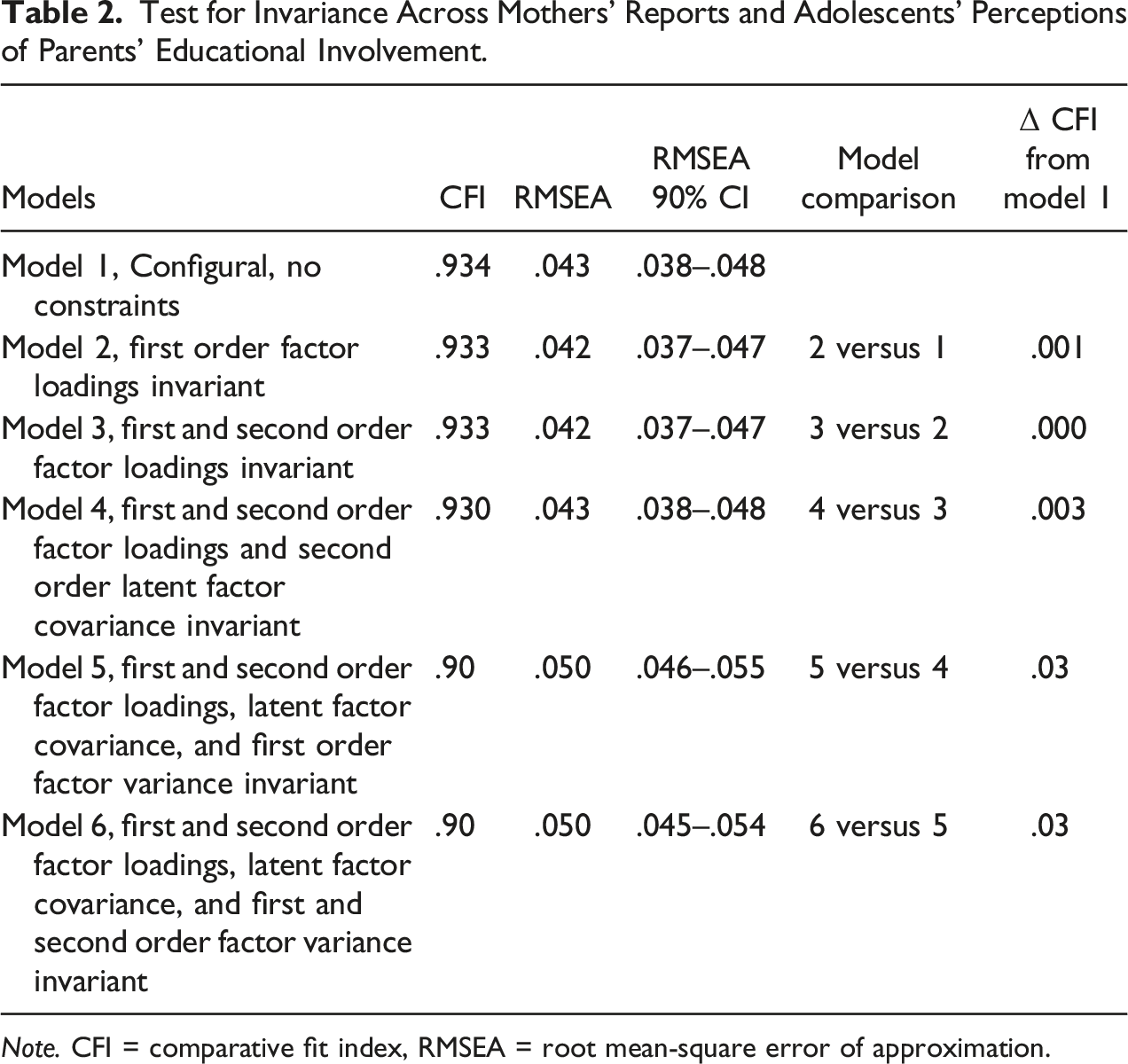
Note. CFI = comparative fit index, RMSEA = root mean-square error of approximation.
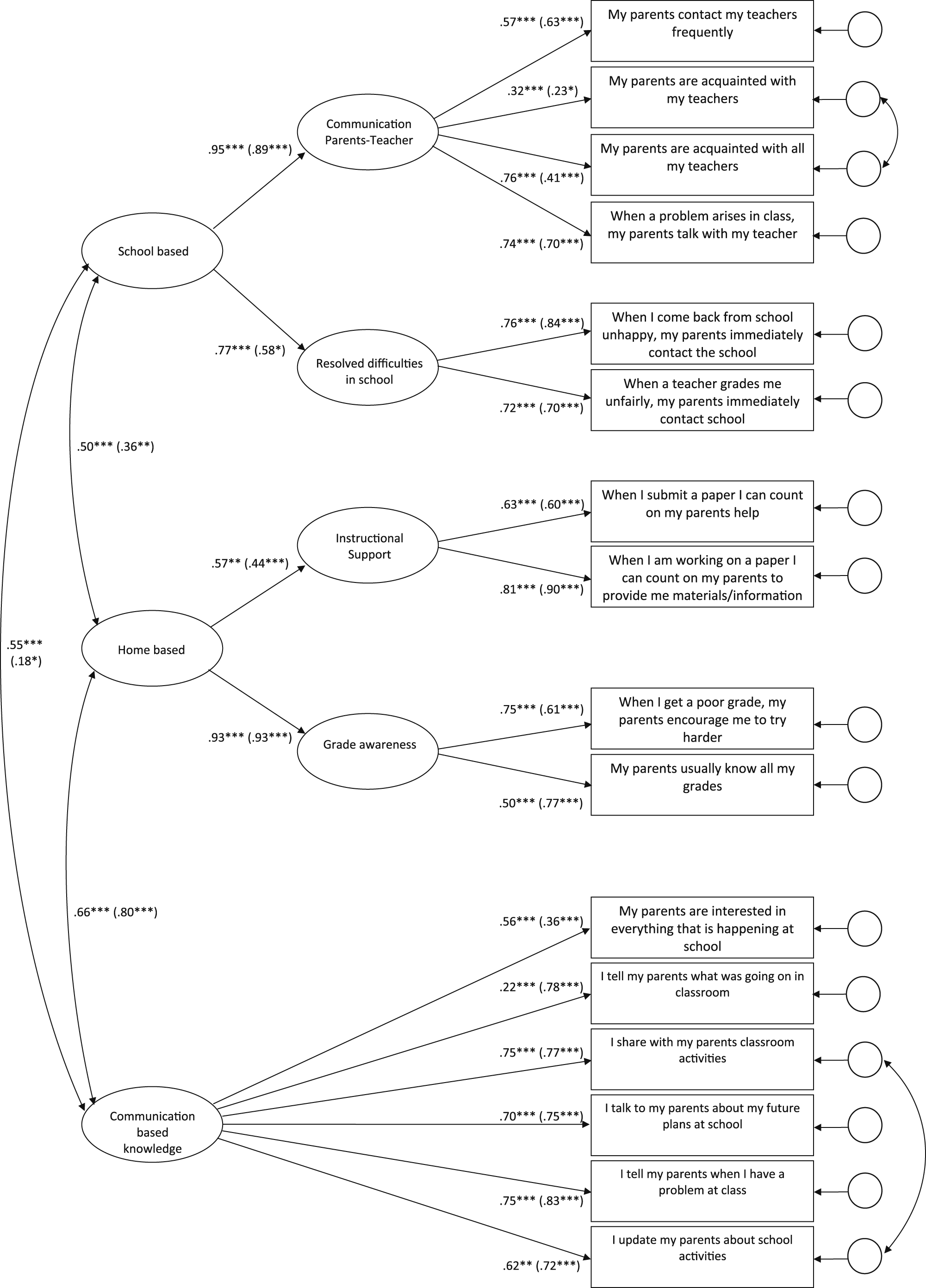
Mothers’ reports and adolescents’ perceptions of parents’ educational involvement. Second order factor analysis (Adolescents were marked in brackets).
In order to test for invariance of models across mothers and adolescents, we examined the CFI and RMSEA values along with change in CFI from one model to the next. We did not examine χ2 value or change in χ2 for testing the invariance of models because researchers (e.g., Cheung & Rensvold, 2002; Little, 1997; Marsh et al., 1997) suggest that χ2 value is sensitive to sample size and is an impractical and unrealistic criterion on which to base evidence of invariance. Based on specified criteria for testing model invariance, Model 4 (First and second order factor loadings and second order latent factor covariance invariant) with a CFI value of .930, RMSEA value of .043 (Browne & Cudeck, 1993), and the change in CFI value of less than .01 from Model 3 to Model 4 (Cheung & Rensvold, 2002) fit the data well. However, the more restrictive models 5 and 6 that included invariant factor variance did not fit the data.
Correlation Among Parallel Parents’ Educational Involvement Factors
Correlations of the second-order factors of mothers’ report and adolescents’ perceptions of parental involvement were not significant: parent-school communication r = −.097, p = .281 resolved difficulties in school r = −.018, p = .844 instructional support r = .143, p = .110 grade awareness r = −.064, p = .474 and communication-based knowledge r = −.146, p = .102. This finding support hypothesis 2 and is in line with previous findings (Paulson, 1994).
The Relative Importance of Mothers’ Report and Adolescents’ Perceptions of Parental Involvement on Adolescents’ Effort Regulation, Metacognitive Regulation, Global Self-Worth, Scholastic Competence, and Grades
To test Hypothesis 3, we examined the correlations between mothers’ report and adolescents’ perceptions of parents’ educational involvement and adolescents’ outcomes, namely, adolescents’ learning strategies (effort regulation and metacognitive self-regulation), self-evaluation (global self-worth and scholastic competence), and academic achievement.
Correlation Between Adolescents’ Perceptions and Mothers’ Reports of Parents’ Educational Involvement and Adolescents’ Outcomes: Learning Strategies, Global Self-Worth, Scholastic Competence and Academic Achievement.
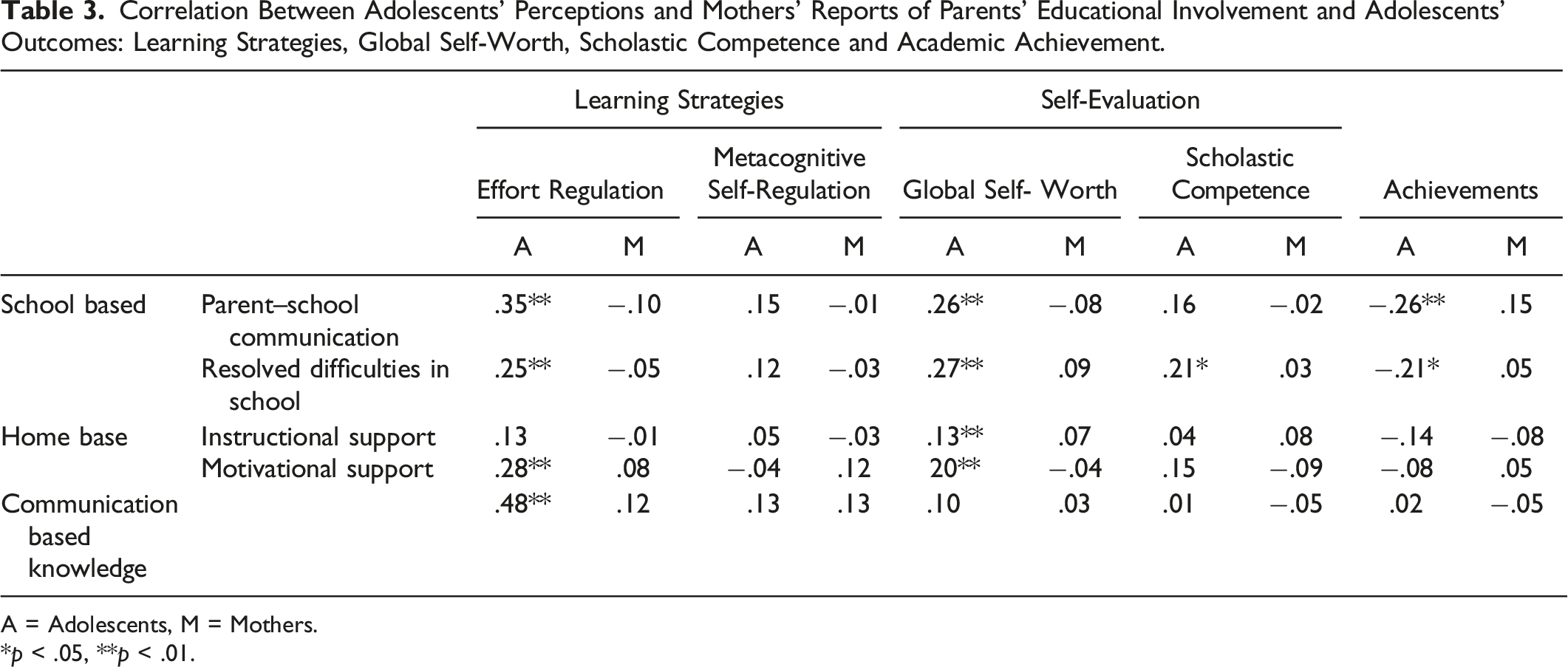
A = Adolescents, M = Mothers.
*p < .05, **p < .01.
Partial Mediated Relationship Between Adolescents’ Perceptions of Parental Involvement and Academic Achievement
Since mothers’ report of their parents’ educational involvement were uncorrelated with adolescents’ learning strategies, self-evaluation and academic achievement, only adolescents’ perceptions of parental involvement were considered for testing the mediated relationship between parental involvement and adolescents’ achievement. Analysis employing the maximum likelihood estimation method was carried out on covariance matrices using AMOS 21 SEM.
Factor loading as well as structural parameters were estimated simultaneously. Each latent variable in the theoretical model was linked to one to three indicators. Following Harter’s (1982) conceptualization of self-competence for children, the global self-worth and the scholastic competence each consists of one empirical variable. The mean of each of these two variables was weighted by variances estimate [.60, .67] to account for the measurement error in each of these variables. Lambda coefficients indicated that the factor loadings between latent and manifest variables were high. The structural model presented in Figure 2 shows a good fit (χ2 = 72.593, df = 39, CFI = .97, RMSEA = .042 90% CI [.026, .056]). Partial mediated relationship between adolescents’ perceptions of parental involvement and academic achievement. N = 449, χ2 = 72.593, df = 39, CFI = .97, RMSEA = .042 90% CI [.026, .056].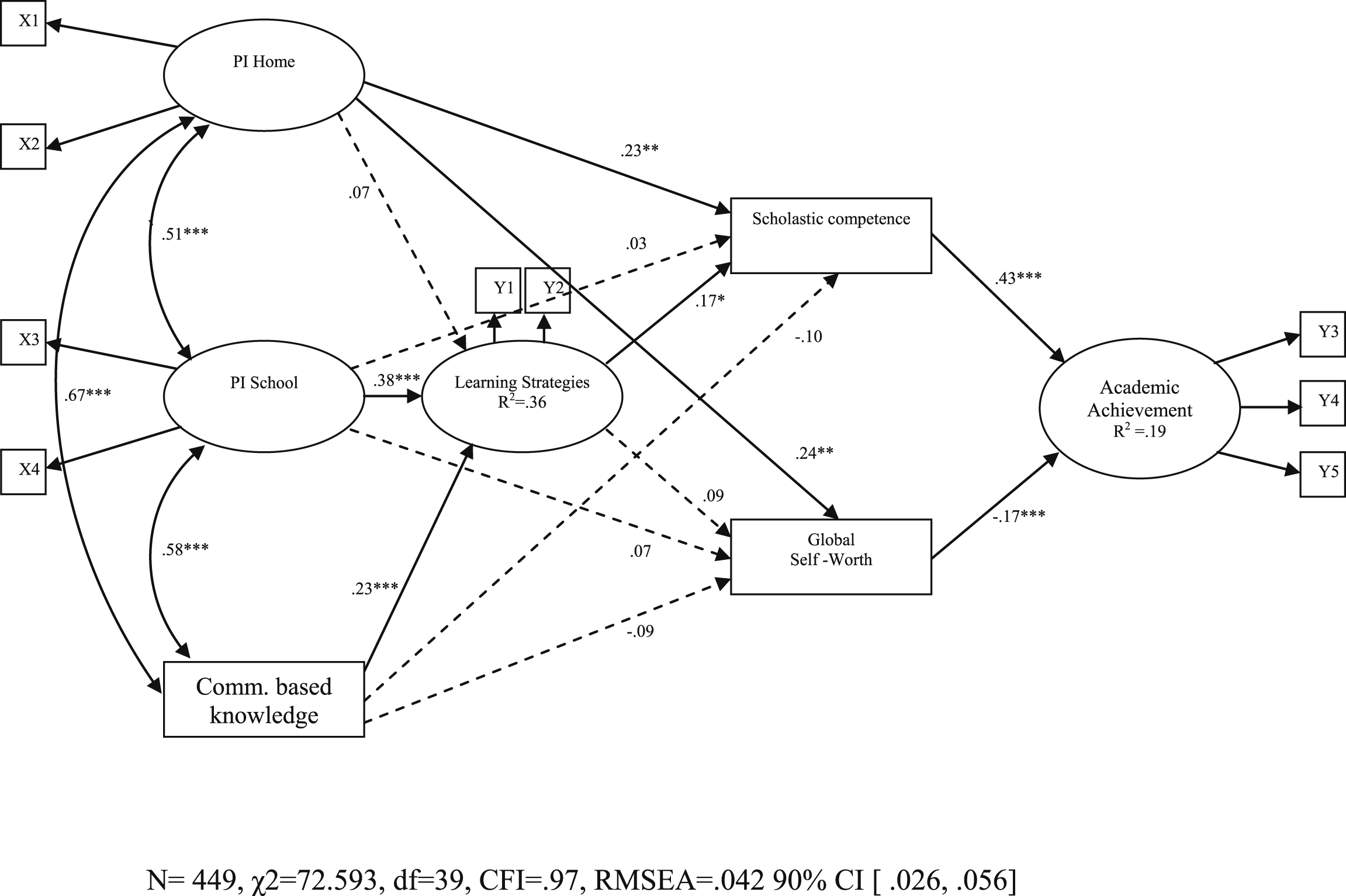
We conducted additional analyses to test mediation. Bootstrapping analysis (with 5000 samples) showed that the link between school-based and scholastic competence is mediated by learning strategies [95%CI (.013–.144) p = .013], in addition the link between communication-based knowledge and scholastic competence is mediated by learning strategies [95%CI (.004–.107) p = .021]. However, neither their perceptions of parent involvement in school nor perceived of communication-based knowledge was directly significantly related to adolescents’ global self-worth and scholastic competence. In addition, the model indicates a direct links between home-based and scholastic competence and global self-worth. Altogether, the present model explains 36% of adolescents used of learning strategies and 19% of adolescents’ academic achievements.
In line with hypothesis, adolescents’ perceptions of parents’ educational involvement predicted adolescents’ academic achievement via learning strategies, global self-worth, and scholastic competence.
Discussion
Parental involvement in their children’s education has been identified as an important factor in motivating and supporting the functioning of early adolescents in school, and in their academic achievement. Parental involvement includes a broad variety of parental behaviors that are clearly meaningful in parent-adolescent interactions. Yet, the dyadic process underlying parental involvement has not been adequately described in most research in this area. Our findings reveal the congruence between mothers and their adolescent children regarding the construct of parental involvement (home-based, school-based and communication-based knowledge), but no relations between adolescents’ perceptions and mothers’ reports of parallel items of parental involvement. Overall, our findings underline the positive effect of adolescents’ perceptions (but not of mothers’ reports) of parent involvement on their learning strategies, self-evaluation, and academic achievement.
Confirmatory factor analyses from both mothers and adolescents revealed a congruent distinction between the home-based, school-based, and communication-based knowledge dimensions of the parents’ educational involvement. The study included items concerning the parents’ educational involvement that were identically worded—except for the introductory statement—for both mothers and adolescents. The absence of correlation between the mothers’ reports and the adolescents’ perceptions supports findings from earlier studies (Paulson, 1994; Rote & Smetana, 2016; Tein et al., 1994), which reported a discrepancy between parents’ and adolescents’ perceptions of parents’ educational involvement.
Using multiple sources of information (adolescents, parents, teachers, and observers) has been recommended for two main reasons. First, multiple sources increase the validity of psychological constructs (e.g., De Los Reyes & Kazdin, 2005; Dimler, et al., 2017). At the same time, previous studies showed the mismatch in parent-adolescent dyads. For example, parents and adolescents often interpret parental behavior differently. A review of 25 countries yielded modest association between adolescents’ and parents’ reports (Rescorla et al., 2013). Although the family is the adolescents’ immediate social environment, and parents and adolescents share the same life context, they often hold discrepant views about the family environment (Human, et al., 2016) and about parent-adolescent interactions, such as parental knowledge of the adolescents’ activities (Lippold et al., 2011). Researches provide several explanations and reasons for the differing perceptions of adolescents and parents regarding parental involvement, especially in adolescence: (a) the low degree of willingness of adolescents to disclose information that would help parents become more involved (Smetana, Metzger, et al., 2006); (b) parents’ and adolescents’ disparity of estimation of the adolescents’ academic needs, and the validity and efficacy of parental involvement (Hill & Tyson, 2009); and (c) discrepancy between adolescents’ and parents’ perceptions, which may also reflect the different access of each individual toward children’s and adolescents’ problem behaviors (Dirks, et al., 2012), and the processes occurring between family members, as well as the quality of the relationships (e.g., open adolescent-parent discussions) (Ehrlich et al., 2016).
The second reason, is that use of multiple sources of information enables researchers and practitioners to understand which sources of information have the greatest validity and influence, which has raised the question: What matters more, the mothers’ reports or the adolescents’ perceptions? Although, adolescents evaluate parental involvement differently from their parents, they are influenced by parental behavior by observational learning from parents’ model and practicing (Morris et al., 2007). Moreover, parents’ behavior affect adolescents emotions and behavior. For example, parents anger regulation and irritability link to harsh parenting which in turn impact adolescents’ externalizing and internalizing problem (Di Giunta, et al., 2020).
Consistent with earlier findings (Gray & Steinberg, 1999; Paulson, 1994; Seginer et al., 2004), The present study findings underline the unique contribution of the adolescents’ self-report measurement, which is an important subjective source of information that cannot be captured by other sources, not even by their mothers’ reports.
A possible explanation for the lack of relation between mothers’ report and adolescents’ perceptions lies in the role of adolescent self-representation which was found as a mediator between mothers-constructed and adolescent-constructed of future orientation (Seginer & Shoyer, 2012). These findings underline the role of adolescent’ self in processing incoming information and subsequently guiding individual behavior and thinking (Harter, 2012).
Practical Implications for Educators and Parents
Parents’ perceptions of their behaviors do not always align with their adolescents’ perceptions. As noted above, parents and adolescents often interpret parental behavior differently (De Los Reyes & Ohannessian, 2016; Dimler, et al., 2017; Tilton-Weaver, et al., 2010). Our findings support those of earlier studies and underline the importance of adolescents’ subjective views (Dimler, et al., 2017). In the present study, adolescents’ perceptions of their parents’ educational involvement are antecedents of students’ achievement. In light of these findings, parents need to pay more attention to the ways in which their educational involvement behaviors (in school, at home, and their parents-adolescents communication about the activities of their children) are perceived by their adolescents.
Furthermore, parents’ educational involvement includes a variety of beneficial parental behaviors. It is important to distinguish between the different dimensions of parents’ educational involvement to be able to identify and evaluate the different effect of each one on the adolescents. The present study indicated the importance of two dimensions of parental involvement for learning strategies and self-evaluation of adolescents: educational involvement at home and parents-adolescents communication about the activities of the adolescents. The study expands our understanding of the importance of adolescents’ willingness to disclose and share information with their parents not only regarding problem behaviors and risk taking, but also regarding their future orientation, thoughts, concerns, hopes, and fears about their functioning in school. Parents-adolescents communication-based knowledge depends on the adolescents’ willingness to disclose this information, and on the parents’ own behaviors, including their attempts to solicit information from the adolescents and to supervise and control their activities (Kerr et al., 2010). The findings of the present study underline the importance of adolescent-parent relationships, which are at the basis of the adolescents’ disclosure and therefore of parents-adolescents’ communication-based knowledge.
Parental involvement at home and Parents-adolescents communication about the adolescents’ activities do not necessarily involve the parent visiting at school. There are two good reasons for nurturing and empowering parental involvement at home: (a) it suits adolescents’ autonomy needs (Seginer, 2006; Sy et al., 2013), and (b) some teachers concern that parents’ participation would turn into interference, or perceive parental involvement in school as a disadvantage, because the relationship with parents requires investment of time and other resources (Cullingford & Morrison, 1999; Epstein, 2018). In such cases, schools can assist families in establishing a home environment that supports adolescents’ functioning in school (Hirano & Rowe, 2016).
Limitations of the Study and Future Directions
The limitations of the study pertain to two issues. The first limitation concerns the gender of the parents sampled and the number of adolescent-parent dyads. The recent decades characterized by changes in favor of gender equality. However, parenthood is still most gender-typed social role adulthood (Koivunen et al., 2009). Mothers and fathers have different forms of childcare (Pinho & Gaunt, 2021). Parental role is based on broad gender norms, more concretely, women and men cope differently with demands in the context of parenting (Roskam & Mikolajczak, 2020). Mothers take on most responsibility for managing the care and development of children (Craig, 2006). Thus, mothers might be more accessible for her children. Earlier studies examining mothers versus fathers’ educational involvement suggest that the two differ mostly in their school involvement and in their effect on child achievement (Fleischmann & de Haas, 2016; Kim, 2018; Smetana, Campione-Barr, & Metzger, 2006). Research shows that mothers are more active in attending parental meetings, participating in cooperation committees, and helping their child with schoolwork (e.g., helping prepare for tests) (Räty et al., 2009). A meta-analysis for relation between parental involvement among mothers and fathers (Kim & Hill, 2015), revealed that although mothers’ mean levels of involvement were higher than fathers, no differences found between mothers and fathers in the strength of relation between parental involvement and students’ achievement. In addition, analysis of differences between mothers and fathers across various types of parental involvement showed that school-based involvement and intellectual enrichment at home was more strongly related to students’ achievement for mothers.
Given that the association between parental involvement and academic achievement is likely to differ by parent gender, future research should therefore include a sample of fathers and examine the role of fathers in family-school-adolescents relationships.
Parental involvement plays a central role in adolescents’ functioning in school. Yet, as we found in the present study, parents and adolescents do not always agree about the level of the parents’ educational involvement (e.g., De Los Reyes et al., 2015). Earlier studies have shown that adolescents tend to hold more negative views of the family than parents do, and that the degree of congruence and incongruence in adolescent-parent perceptions predicts adolescents’ psychological adjustment (Human, et al., 2016). Therefore, it is likely that the discrepancies between the adolescents’ perceptions and the mothers’ reports are in themselves meaningful predictors of adolescents’ functioning in school. In future research, larger samples of adolescents-parents’ dyads will make it possible to examine whether or not the discrepant between adolescents’ perceptions and parents’ reports about parental involvement serves as an additional predictor of adolescents’ functioning in school.
A second limitation concerns the cultural context of the participants (adolescents and their family). Parent-adolescent discrepancies may be smaller in societies where cultural values promote familiarity and collectivism (Rescorla et al., 2013). The nature of parental involvement also varies across cultural groups (Lopez et al., 2001). For example, in Israel, research suggests that Jewish parents participated voluntarily and actively in school activities, whereas Arab parents generally waited to be invited by school personnel to participate (Lavenda, 2011). Furthermore, according to Arab and Jewish parents’ reports and adolescent’s perceptions, Jewish parents show greater involvement at home, and Arab parents are more involved in school (Kaplan Toren & Kumar, 2020). Future research should therefore examine the differential importance of various aspects of parents’ educational involvement in different cultures.
In Sum, while this study corroborates earlier finding indicating that parents play a significant role in their adolescents’ schooling, it expands our knowledge by indicating the intricate relations between mothers and adolescents view of parenting educational involvement. Specifically, although mothers and adolescents’ share a similar construct of parental involvement, they score it differently, to the extent that the relation between their reports are non-significant. Moreover, adolescents’ – but not mothers’ -- parental educational involvement self-report is significantly linked to adolescents’ schooling. This finding calls for additional research examining both adolescents’ and mothers’ factors as well as the relationships between them underlying two issues: the dynamics of parental educational involvement as understood by both, and the discrepancy between mothers self-report and adolescents perception of parental educational involvement.
Supplemental Material
Supplemental Material - Parents’ Educational Involvement: What is More Important Mothers’ Reports or Adolescents’ Perceptions?
Supplemental Material for Parents’ Educational Involvement: What is More Important Mothers’ Reports or Adolescents’ Perceptions? by Kaplan Toren Nurit, and Kumar Revathy in The Journal of Early Adolescence.
Footnotes
Declaration of Conflicting Interests
The author(s) declared no potential conflicts of interest with respect to the research, authorship, and/or publication of this article.
Funding
The author(s) received no financial support for the research, authorship, and/or publication of this article.

Supplemental Material
Supplemental material for this article is available online.
Appendix
Parental involvement questionnaire (Kaplan Toren, 2013; Seginer, 2002) 1. My parents contact my teachers frequently 2. My parents are acquainted with my teachers 3. My parents acquainted with all my teachers 4. When a problem arises in class, my parents talk with my teacher 5. When I come back from school unhappy my parents immediately contact school 6. When a teacher grades me unfairly my parents immediately contact school 7. When I submit a paper, I can trust my parents’ help 8. When I am working on a paper, I can trust my parents to provide me materials/information 9. When I get a poor grade, my parents encourage me to try again 10. My parents usually know the grades I get 11. My parents are interested in everything that happens at school 12. I tell my parents what was going on in classroom 13. I share with my parents classroom activities 14. I talk to my parents about my future plans at school 15. I tell my parents when I have a problem at class 16. I update my parents about school activities.
Author Biographies
References
Supplementary Material
Please find the following supplemental material available below.
For Open Access articles published under a Creative Commons License, all supplemental material carries the same license as the article it is associated with.
For non-Open Access articles published, all supplemental material carries a non-exclusive license, and permission requests for re-use of supplemental material or any part of supplemental material shall be sent directly to the copyright owner as specified in the copyright notice associated with the article.
