




Abstract
The retail industry is undergoing a significant transformation. Factors such as technological advancement and evolving consumer demands have forced companies to rethink their traditional approaches to retail. Retailers have since embraced data-driven strategies with real-time implementation to stay relevant in this complex, ever-changing industry. This shift has generated a new demand for retail talent. Data-driven companies require workers with demonstrated skills in data analytics, critical thinking, cross-functional teamwork, and communication/leadership. We propose that the experiential learning platform of a retail consulting class is the most effective learning environment for students to develop these skills in a real-world retail context. This article connects the skillsets demanded in the evolving retail landscape to the learning outcomes of a retail consulting course. We describe the structure, elements, and process of the class to allow for adoption and successful implementation by other educational institutions. Then, we illustrate the learning outcomes by highlighting student testimonials and skill evaluations.
Today’s retail landscape is changing drastically. The digital revolution has reduced barriers to entry and thereby created an increasingly competitive retail marketplace. The rise of online and omni-channel retailing has elevated the needs and expectations of the average consumer. Technological advancements have increased the amount and variety of accessible data. These changes have pushed retailers toward data-driven strategies with real-time implementation to stay relevant in a dynamic marketplace (Perrey & Spillecke, 2011). Such a shift requires a new breed of talent in the corporate retail workforce. Retail firms, especially well-established ones, are in dire need of new talent with diverse skillsets (Lobaugh, McElroy, & Sloan, 2016). Skills such as critical thinking, cross-functional teamwork, data analytics, and communication/leadership are highly demanded in the corporate retail environment. Retailers can look to young professionals who recently completed their higher education as a means of filling their demand for talent.
Preparing students for this retail workforce is no small undertaking. It requires rethinking traditional education methods to provide students with the skills necessary for success in today’s retail landscape. This poses a challenge for educators because many skills demanded in this evolving industry (such as critical thinking, problem-solving, and decision-making abilities) are not easily developed in traditional classroom settings (Willingham, 2007). Many educators consider experiential learning through real-world projects to be the best method for students to develop critical thinking skills demanded by employers (Deeter-Schmelz, 2015; Keeton & Tate, 1978; Kolb, Boyatzis, & Mainemelis, 2001; Piercy, 2013; Razzouk, Seitz, & Rizkallah, 2003). We propose that the experiential learning platform of a retail consulting class is the most effective learning environment for students to develop skills in a real-world retail context. A retail consulting class, structured as an experiential learning platform, provides students with the opportunity to develop their critical thinking skills by integrating and synthesizing real-world information to deliver evidence-based recommendations to retail firms.
This article highlights the skillsets increasingly demanded in the retail industry and connects them to the educational requirements of a retail consulting class-our experiential learning platform. First, we provide background on the changing retail industry and identify four key skillsets consequently demanded in the retail workforce. Then, we describe the structure, elements, and process of a retail consulting class to allow for replication by institutions for retail education. Finally, we share self-reported skillset improvements and student testimonials to highlight learning outcomes.
The Current Retail Industry and Workforce Skills Demanded
What Is New in Retailing?
The retail industry is facing many changes and challenges in the digital age. Millennials, a growing consumer segment with significant buying power, have unique demands stemming from their technological proficiency. This segment uses websites, social media, and mobile apps to browse and obtain information, read reviews, ask for opinions, compare prices, and make purchases in just a few clicks (Bharadwaj, El Sawy, Pavlou, & Venkatraman, 2013; Lobaugh, Simpson, & Ohrl, 2015; Lobaugh et al., 2016; Simpson, Ohri, & Lobaugh, 2014). Interestingly, these consumers continue to visit brick-and-mortar retailers for the opportunity to touch, test, and interact with products. By favoring the immediacy of e-commerce and the tangibility of physical stores, millennials have prompted a new demand for seamless omni-channel shopping experiences, expecting instant gratification and immediate solutions from retailers (Lobaugh et al., 2015). This shift in shopping behavior combined with advancements in technology have presented tremendous challenges for retailers. These challenges include (a) increased complexity in constrained environments, (b) understanding and responding to vast amounts and varieties of data, (c) complex and interconnected processes, and (d) demand for swift execution in a dynamic marketplace.
Retailers can respond to these challenges by hiring fresh talent with relevant skills. Below, we discuss these four challenges and the related skillsets demanded in the corporate retail workforce.
Increased Complexity in Constrained Environments: Critical Thinking Skills
Technological advancements have caused a retail revolution. As information becomes more accessible, consumers obtain more buying power. With a few clicks (or touches) consumers can learn about products and compare available options to make quick, informed decisions. This power shift highlights the importance of real-time strategy execution, enabling retailers to win over consumers during specific moments of interaction. These include the moment inspiration strikes a consumer, the moments of online research, or the moment a transaction is completed. In this stage of the retail revolution, however, information comes from various sources at multiple touchpoints, and has not been integrated into processes of multifunctional retail operations. Furthermore, the consumer shopping cycle from inspiration to fulfillment is constantly changing while increasing in complexity.
Thus, there is no single solution to address the issues at hand. Retailers need multiple innovative solutions, which can only be achieved through critical thinking. Critical thinking helps employees utilize, analyze, and synthesize information collected from various sources to create innovative solutions. Critical thinking skill refers to the ability to actively conceptualize, apply, analyze, synthesize, and/or evaluate information gathered from, or generated by, observation, experience, reflection, reasoning, or communication, to solve a problem (Facione & Facione, 1994; Paul & Binker, 1990; Villalba, 2011; Willingham, 2007; The Critical Thinking Community, n.d.).
With well-developed critical thinking skills, employees can approach an unfamiliar obstacle by strategically utilizing the knowledge or skills obtained from a previous encounter that, at surface level, may not appear similar. This is important because, in the workplace, employees will likely encounter new and complex problems that require strategic thinking to make effective decisions. Employers have recognized the role that critical thinkers play in shaping an effective workforce. A 2012 American Management Survey found that 72% of employers believe critical thinking is key to the success of their organization (Minton-Eversole, 2013). Moreover, a study by Indeed.com revealed that mentions of “critical-thinking skills” in job postings doubled between 2009 and 2014 (Korn, 2014). Given the ongoing transformation of the retail industry, critical thinking skills are in high demand by retail organizations. With so many disruptive forces at play, highly developed critical thinking skills are vital to a retailer’s long-term success.
Understanding and Responding to Vast Amounts and Varieties of Data: Data Analytic Skills
Today, organizations are surrounded by an astronomical amount of data, and this amount is projected to double in size every 2 years, reaching 44 trillion gigabytes of data by 2020 (Turner, Gantz, Reinsel, & Minton, 2014). Digital and technological advancements have generated an influx of customer information that organizations can utilize to better understand their customer base. Retailers now have access to data that can help them define who their customers are, where they shop, what they browse and buy, and how they interact with retailers. However, this abundant information is useless without the expertise of data scientists. Data scientists can provide insights that help identify market trends, optimize operational efficiency, maximize return-on-investment, or deepen customer understanding.
Businesses recognize the value of such data analytics talent. With data-driven companies experiencing 6% higher profitability on average, it is no surprise that big data talent is in such high demand (McAfee & Brynjolfsson, 2012; Spillecke & Umblijs, 2013). Retail firms, facing both digital and omni-channel retailing operations, can significantly benefit from data analytics skills. With these skills, management can better predict trends and demands for popular products, identify profitable customers, and devise strategies to effectively approach and retain them. These capabilities can improve a firm’s financial performance and provide significant advantages in the competitive retail environment.
Complex and Interrelated Processes: Cross-Functional Teamwork
With the digital revolution, technology and data systems have been incorporated into every touchpoint of a customer’s purchase journey. These touchpoints include customer awareness of a product/brand as well as evaluation, transaction, and postpurchase experience. Effective retail strategies are formed when this data is integrated through collaborative teamwork across different functional departments. Functional areas such as merchandising, marketing, supply chain, loss prevention, information technology, and retail operations must work together to address managerial issues, situations, or opportunities. This highlights the need for cross-functional teamwork skills in the retail workforce to handle complex and interrelated processes.
It is vital that employees integrate various ideas and work cross-functionally to form the best possible solution. This practice is called “integrative thinking,” and it has been identified as an essential skill demonstrated by some of the most influential leaders across various disciplines (Martin, 2009; McCord, Houseworth, & Michaelsen, 2015). Retail operations require integrating details across multiple levels to provide a seamless customer experience. This is especially true in omni-channel environments, as consumers typically expect a smooth purchase experience across both physical and digital mediums. Cross-functional teams can identify the optimal technologies and processes for continuous improvement and efficient operation. This collaboration ultimately ripples down to the customer, improving satisfaction and boosting financial performance.
Demand for Swift Execution in a Dynamic Marketplace: Communication/Leadership
In this dynamic marketplace, opportunities rise and fall quickly. With technology advancing and consumer demands fluctuating, there is a constant need for retailers to adapt to market conditions. Retailers must be flexible, responsive, and agile, implementing strategies swiftly and deliberately. Yet, neither technology-driven nor data-driven strategies can be swiftly implemented without effective communication and leadership skills.
Employers evaluate communication skills first when recruiting new talent, placing substantial value on the ability to speak, write, listen, present, and sell. In the business environment, communication and leadership skills are required to work effectively within teams and convey innovative ideas to key decision makers. Without well-developed communication skills, it is nearly impossible for an employee or team to facilitate swift strategy execution within the dynamic retail sphere.
Retail Consulting Class as an Experiential Learning Platform
To develop workforces with skills applicable to the challenges facing our retail landscape, we argue that the best education platform involves client-based projects on emerging retail issues. We propose a retail consulting class in which cross-functional teams collaborate to solve real-world retail issues through experiential learning.
Experiential Learning
Experiential learning, or “learning by doing,” was first recognized by John Dewey in 1938 and maintains significant relevance today as the most effective learning platform in the educational environment (Dewey, 1938; Kolb, 1984; Kolb et al., 2001). Today, we define experiential learning as, learning in which the learner is directly in touch with the realities being studied. It is contrasted with the learner who only reads about, hears about, talks about, or writes about these realities but never comes into contact with them as part of the learning process. (Keeton & Tate, 1978)
Through these experiences, students develop communication skills, strengthen decision-making abilities, and gain self-confidence by solving and responding to real-world problems and processes.
Business schools have been criticized for overemphasizing conceptual/theoretical material and quantitative/technical ability while undervaluing interpersonal, communication, and decision-making skills (Lamb, Shipp, & Moncrief, 1995; O’Reilly, 1994). With experiential learning platforms, students learn by discovering, reflecting, and applying the conceptual/theoretical material to the real work environment. The benefits of experiential learning are gaining significance as employers place more value on real-world experiences. In a 2015 survey of over 400 employers, 80% of employers said that, during the hiring process, it is very important to them that recent graduates demonstrate the ability to apply learning in real-world settings (Hart Research Associates, 2016).
Educators have made considerable efforts to replace large-lecture formats with experiential learning approaches (Karns, 2005) in response to the criticism that business education fails to keep up with changes in the contemporary business environment (O’Malley & Ryan, 2006; Razzouk et al., 2003). These approaches include simulations, case studies, community service learning, group projects, and client-based projects (Deeter-Schmelz, 2015; Erzurumlu & Rollag, 2013; Gremler, Hoffman, Keaveney, & Wright, 2000; Li, Chao, & Li, 2013; Lopez & Lee, 2005; McCord et al., 2015; Munoz, Miller, & Poole, 2016; Pachamanova, 2015; Petkus, 2000; Piercy, 2013). Of these, community service learning and client-based projects are accepted as the most effective experiential learning platforms in the current business environment. Our proposed retail consulting course takes the form of a client-based project. While community service learning emphasizes engaging in activities that help meet community needs, client-based projects emphasize working on real-world problems provided by business clients. As a client-based project, our retail consulting course highlights learning through the process of delivering project outcomes to retail clients.
Retail Consulting Course
In retail business education, client-based projects that facilitate cross-functional collaboration are considered effective learning tools. However, stakes are high from the client perspective, as retailers must invest resources on outside projects in a constrained environment. Our retail consulting course ensures high-quality client deliverables in addition to excellent student learning experiences. We deliver both commercial benefits to clients and educational benefits to students through three unique elements: a stand-alone consulting course, student recruitment, and constant feedback.
The first element is a stand-alone course that covers diverse emerging retail issues from multiple retail clients. While exposing to various managerial issues that retail companies currently face, students develop insights into important retail topics. In addition, by conducting their own project and providing feedback to other groups’ projects, students not only learn multiple approaches that can be used to solve problems but also learn how to give and receive constructive criticisms.
The second element is recruiting high-performing cross-functional teams through an application and interview processes. To recruit qualified (e.g., ability to analyze a large amount of data, retail experience, subject expertise gained from previous work/projects or courses) and motivated students, project descriptions are announced to all business students along with descriptions of goals, expected deliverables, and required skillsets. Including project descriptions in the application allows students to recognize the opportunities for their area of study to be exercised in a real-world setting. Students formally apply by filling out a form that details their skillsets, experiences, and completed coursework. By establishing an application process, students better understand the rigorous nature of the course and the place more value on the learning opportunity. Following the application process, an instructor conducts student interviews and assembles the cross-functional teams. A successful student recruitment process facilitates the creation of high-performing cross-functional teams with high motivation and complimentary skillsets, eventually reducing the instructor’s workload.
The third unique element is the use of progress reports to deliver constant feedback. In the class, four progress reports serve as major milestones to help students stay on track and achieve project goals. An instructor reviews each report and provides specific feedback on each team’s progress. This allows students to analyze their current methods, receive constructive feedback, and make adjustments moving forward. This helps students prepare for their final report while giving the instructor oversight on the progress and quality of each team’s project.
To provide a blueprint for successful implementation, we present a systematic process for preparing and administering the retail consulting course. Then, we identify skillsets developed in each element of the course and provide evidence of learning outcomes.
Retail Consulting Class Synopsis
Our retail consulting course consists of undergraduate and graduate students selected across multiple disciplines (e.g., finance, marketing, information technology, operations management, public relations, and advertising) and grouped into cross-functional teams of five students. Each team is assigned a client (sponsoring company) with a unique challenge to be addressed. Students work within their teams to identify problems, explore opportunities, collect data, and form recommendations for their client. Students are expected to integrate and apply everything they have learned to date in diagnosis, analysis, research, and strategic thinking to provide tactical, actionable recommendations. Through this process, students improve analytical abilities and exhibit strategic decision-making while gaining practical insights into actual retail business operations. The climax of this experiential course is the finalized team project and its delivery to the sponsoring company. During course hours, students work within their groups and participate in class discussions regarding data analysis, flow of work, presentation requirements, and client deliverables. Once a week, teams present the progress of their work to the class and receive feedback from the instructor and fellow classmates. Student participation, such as listening to presentations and providing feedback, is mandatory and graded.
Experiential learning in the retail consulting class is enhanced by achieving the following objectives:
Gain practical knowledge and skills in planning, conducting, managing, and presenting a consulting project
Improve ability to identify and analyze key factors and issues relevant to solve a problem
Develop and enhance analytical skills by analyzing information and generating insights
Develop and enhance ability to present analysis-based insights in a concise, accurate, clear, and interesting manner from the perspective of a client
Improve persuasive communication skills for client engagement
Improve teamwork and leadership skills
Clients and Designing Consulting Projects
Working as a consultant to solve interesting, real-world business problems sets high expectations for students and motivates them to think critically and solve problems to the best of their ability. Finding the right clients and identifying the right projects can be a challenging process, but it provides significant rewards by increasing student learning outcomes (Lopez & Lee, 2005). The first step in designing the retail consulting course is to compile real-world business issues for the students to solve. This can be accomplished by contacting retail companies through alumni networks and personal networks of the instructor. When contacting potential clients, discussions should focus on managerial issues that they would like to see addressed. The managerial issues should provoke a level of critical thinking that effectively prepares students for challenges in the complex business environment. If possible, clients should also commit to cover expenses incurred from the project and provide company data necessary for the project. When preparing projects with prospective client companies, it is important to take preemptive measures to ensure students can begin their projects on time and stay on track with the pace of the course. This includes discussing or creating non-disclosure agreements and prearranging all necessary data acquisition. This planning stage is a worthwhile investment, as it prevents roadblocks that could delay the process of students’ projects.
In addition, it is important to arrange dates for project kickoffs and final presentations. On these dates, representatives from client companies visit the classroom and interact directly with the students. For the remainder of the course, students interact with the employee that the clients select to be the designated point of contact. This person communicates with students throughout the course, supplies additional data requested, and coordinates any related activities such as meetings, conference calls, or field visits.
Retail Consulting Course Elements and Key Skillsets Developed
In this section, we explain how elements of the retail consulting course develop the four essential workforce skillsets: critical thinking, cross-functional teamwork, data analytics, and communication/leadership. Figure 1 illustrates the relationships between the elements of the retail consulting course and the skillsets aimed to develop.

Retail consulting class to develop skillsets required in the retail industry.
Retail Knowledge and Insights Learning
Client projects provide students with applied retail knowledge and insights. It is recommended that four to five projects are selected to expose students to a variety of topics that are emerging and significant in the retail industry. The following are examples of projects conducted during spring 2016 and 2017 semesters:
Spring 2016 • Company A: To investigate and evaluate the purchase journey of Millennials for wearable watches in omni-channel environments and recommend the field management service model that can to create a best-in-class interconnected shopping experience. • Company B: To analyze, explore, and test ways to enhance the usage and experience of dressing rooms by exploring technologies, testing service design methods, and conducting field experiments. • Company C: To identify factors and patterns that influence sales and losses by analyzing multiyear data and observing in-store shopping behaviors. • Company D: To determine the target markets, segments, and personas of the brand while identifying methods of serving these markets and exploring additional growth opportunities.
Spring 2017 • Company A: To identify shopping and purchase patterns of nonreceipted “refunders” that are distinguishable from those of regular shoppers by analyzing store videos, traffic, and transaction patterns. • Company B: To predict high-risk stores that are vulnerable to fraudulent transactions and travel patterns of fraudulent shoppers by using geo-data. • Company C: To develop models and alert systems that can identify and predict potential incidents by analyzing video footage of reported thefts. • Company D: To analyze location-based characteristics (competition, demographics, sociopsychographics, transportation, crime activities) and identify the drivers of sales and loss. • Company E: To explore methods of quantifying shopper engagement by using a virtual store to examine shopper mindset changes in omni-channel contexts. • Company F: To investigate consumer perceptions and purchase behaviors by conducting focus group interviews and online surveys.
Cross-Functional Team Skills
The composition of each team plays a critical role in delivering positive outcomes for both clients and students. Students should be able to rely on the skillsets of their team members to accomplish project goals. The formal application process intentionally recruits students who have experience, motivations, and/or skillsets related to projects. Applicants are asked to report their current experience, skills, and relevant coursework completed in addition to any skillsets they would like to learn or improve upon. Applicants rate their perceived skill levels as strong, moderate, or weak in (a) data analytics, (b) retail knowledge and experience, (c) insights related to project topics, (d) project management experience, (e) communication, and (f) presentation.
Applicants then select their project preference based on the sponsoring companies and project descriptions provided. Student responses are indexed against individual competencies and skills demonstrated from prior class/work experiences to form five-member teams. The applicants’ background and motivations are balanced, as motivation accelerates the speed of learning. Qualified students are interviewed and placed into teams. Understanding the students’ motivations, skillsets, and experiences allows the instructor to create effective cross-functional teams that appropriately match student strengths to client projects. Therefore, it is crucial that students provide adequate background information when completing the application.
Teamwork and Leadership Skills
Classroom Setting
To facilitate communication within groups, between teams, and with clients, it is desirable to have an experiential classroom setting. It is suggested that students sit in group workstations with access to computers and whiteboards. Our retail consulting course is hosted in a state-of-the-art experiential learning classroom equipped with new and emerging tools for collaborative work. Remote video and conferencing tools facilitate collaboration and communication with clients. While clients are encouraged to speak in the classroom during project kickoff, such conference tools are a helpful alternative for clients who do not have this option. This setting also allows for effective software training (related to client projects) as students can watch the instructor and follow along from their designated workstation.
Structure for Teamwork
At the beginning of class, several preliminary measures are taken to prepare for the semester ahead. Students work with their assigned teams to discuss and develop a team contract that defines expectations, requirements, and policies among members. Each group selects a team leader to serve as the primary contact for the instructor, and students exchange necessary contact information with one another. Students sign the class regulation and non-disclosure agreement form provided by the client company. Then, teams prepare a brief presentation that introduces the class to their assigned client project. Team members introduce themselves and share information such as skills and relevant class/work experience so they can act as a resource for other students in the class.
Interacting With a Client
Teams meet with representatives from their client companies and discuss project expectations and deliverables. This initial client meeting sets high standards for students by establishing specific expectations and key deliverables for the project. Students and clients schedule periodic conference calls to communicate progress and receive feedback. After this meeting, students develop project plans and establish milestones. While preparing for meetings and interacting with client representatives, students exercise leadership and strengthen professional communication skills (written and oral).
Weekly Presentations to Class
Teams present weekly project updates to the class and receive constructive feedback from their instructor. These presentations allow students to, not only receive feedback, but also share their findings, challenges, and experiences with the other student teams. While presenting their projects and offering feedback to their peers, students develop professional communication skills. Moreover, they have the opportunity to reflect on their work and improve their projects based on any feedback and criticism. The weekly project updates culminate into four scheduled progress reports and presentations.
Data Analytics and Critical Thinking Development Through Feedback System of Progress Reports
The structured feedback system of periodic progress reports ensures student learning of the four essential skillsets with an emphasis on critical thinking and data analytics. Progress reports provide students with the opportunity to reflect on their current approaches and make improvements based on instructor input. Students receive a grade for each progress report, but have the opportunity to revise and resubmit their report (based on instructor feedback) to learn from their mistakes and successes. For reference, students receive progress report templates and samples. Together, the four progress reports serve as project milestones and align with the marketing research process shown in Figure 2.
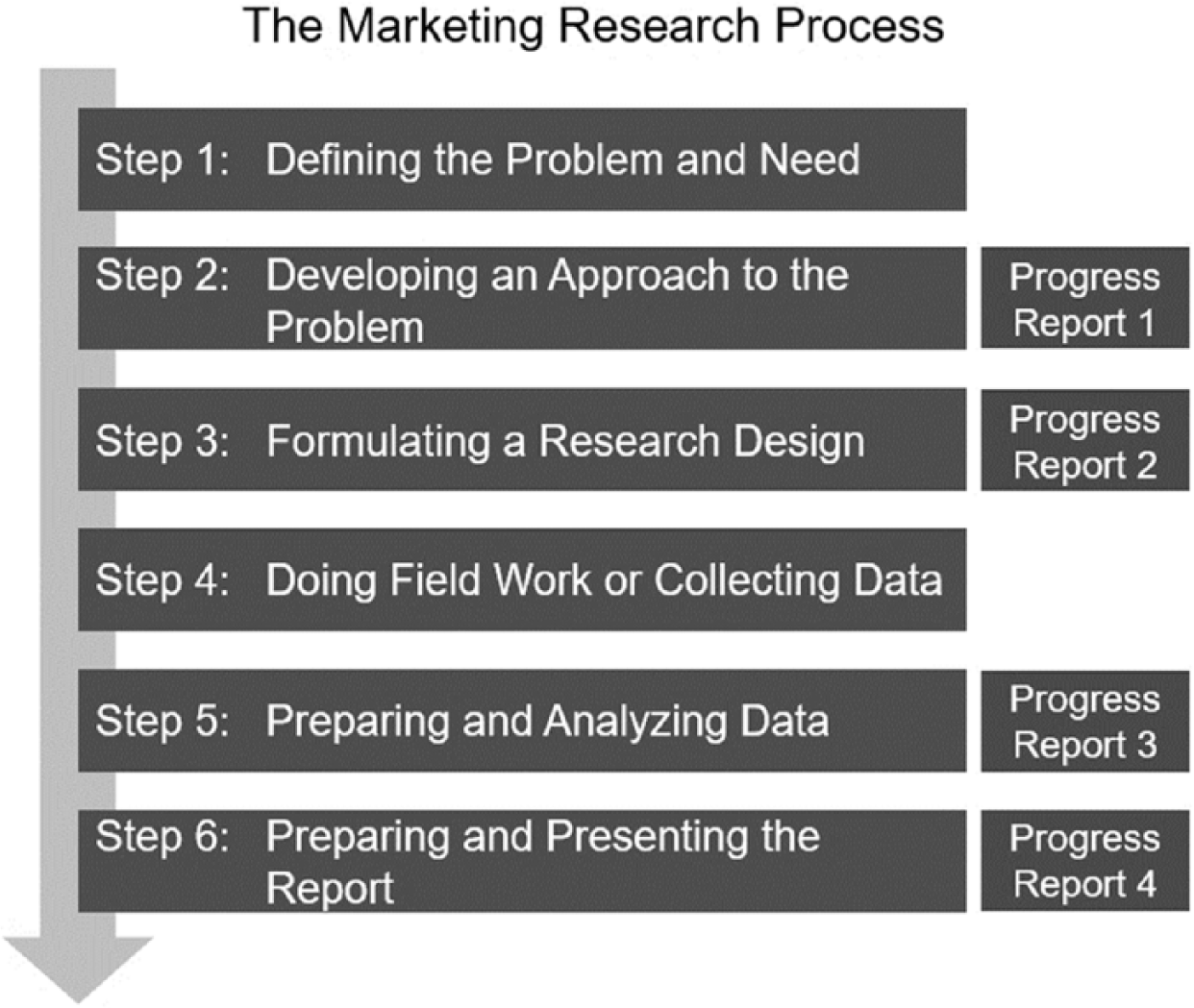
Progress reports as project milestones.
The first progress report is designed for students to obtain a deeper understanding of their projects by identifying objectives and creating an action plan. Students include a write up of their initial client meeting in the report. They also research their assigned client and familiarize themselves with the company background, structure, strengths, weakness, and issues provided by the client. Students submit their first progress report identifying the project goals, specific objectives, project scope, key deliverables, and important project milestones. Students receive feedback on their overall understanding of the project and their action plan for the remainder of the course. Through this process, students improve their critical thinking, leadership, and communication skills. Synthesizing these multiple sources of information to define specific objectives and deliverables requires students to think critically. The process of turning objectives into action plans by discussing and negotiating assignments among team members builds effective leadership skills.
The second progress report includes secondary and exploratory research findings. Students are expected to review existing literature on their topic and synthesize findings related to their project. By analyzing research and comparing findings, team members identity potential solution alternatives for their project and conduct exploratory research to test initial hypotheses. Students also deepen the situational analysis of their company by applying knowledge gained from secondary and exploratory research. At this point, it is critical that any groups conducting surveys, interviews, focus groups, or other research involving human participants apply for institutional review board approval. In this stage, critical thinking and communication skills are developed.
In the third progress report, students provide a summary of data collection. Teams must highlight any insights, trends, or takeaways identified from data analysis and provide a discussion of these findings. Since each project requires its own data analysis techniques, this phase requires frequent meetings with the instructor outside of class hours to receive guidance and feedback. This allows students to work with data hands-on and gain experience navigating various analytic software. After sufficient data analysis, students must be able to effectively communicate any data insights as well as their project implications. In this stage, students sharpen their data analytic skills and develop communication skills. Through several rounds of presentations and discussions, students develop communication skills and gain confidence converting data findings into insights that can be incorporated into strategies.
The fourth progress report focuses on evidence-based recommendations. Each recommendation should be supported by sufficient literature, research, and data findings. Students should provide actionable steps for the company and demonstrate how the outcomes of these steps achieve stated goals and objectives. During this phase, students work together to improve the quality of their evidence-based recommendations by synthesizing and refining ideas. This process sharpens the students’ critical thinking and communication skills. Through critical thinking and communication, some recommendations are emphasized, while others are dropped to provide cohesive strategies in preparation for final reports.
Final Delivery of Project Outcomes and Evaluation
At the end of the semester, students present their final projects to company representatives. Clients may request to livestream the presentation so it may be viewed by additional representatives at their corporate headquarters. Findings from the entire semester are condensed into a PowerPoint presentation that highlights the significant data findings and the resulting recommendations. The data featured in the presentation must be easily understood and carefully connected to company recommendations. In preparation, students deliver mock presentations to the class and receive questions and feedback from the instructor and their fellow classmates. This helps students gain confidence for their formal presentation and practice speaking articulately, answering questions, and defending their recommendations. Students submit a formal, final written report based on client feedback during live presentations. When preparing their final reports, students compile four progress reports utilizing the guidance from their instructor and client representative. The final report consists of the following: executive summary, table of contents, background and objectives, methodology, findings, conclusions and recommendations, references, and appendices.
Grading is based on the quality of deliverables the client receives. The client evaluates the presentation and final report using a designated evaluation rubric (Figure 3). The instructor evaluates the progress reports, weekly class participation, project management, final report, and client presentation. Final group grades are determined by the combination of the outcome-orientated evaluation by the client and the process-oriented evaluation by the instructor. Then, final group grades are adjusted based on peer evaluation scores (Figure 4). Successful groups tend to evaluate each team member equally regarding overall contribution and other criteria. Less collaborative groups can identify members who lacked commitment or failed to meet quality expectations throughout the course. Students who receive lower ratings than their peers in team evaluations receive lower grades for their group work.
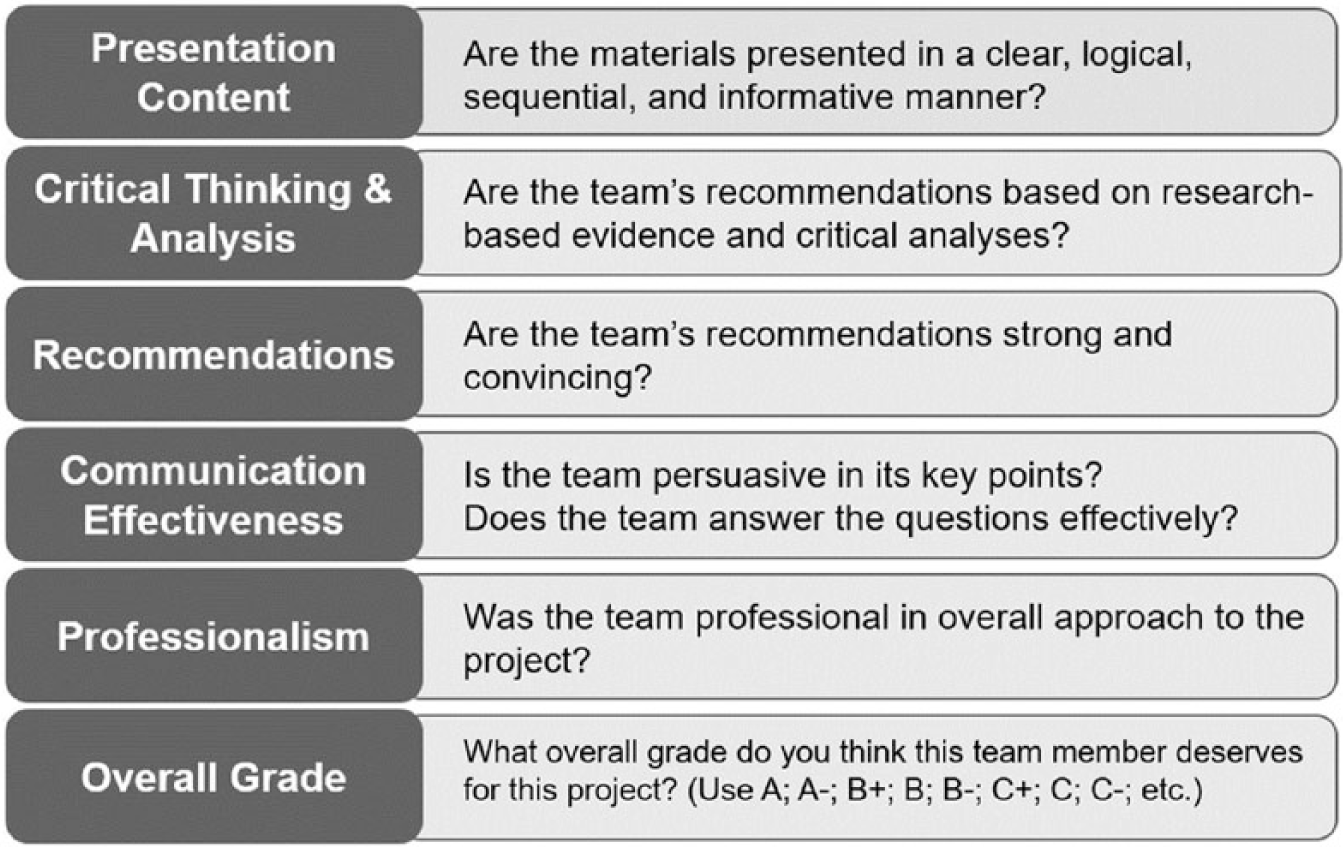
Evaluation rubric.
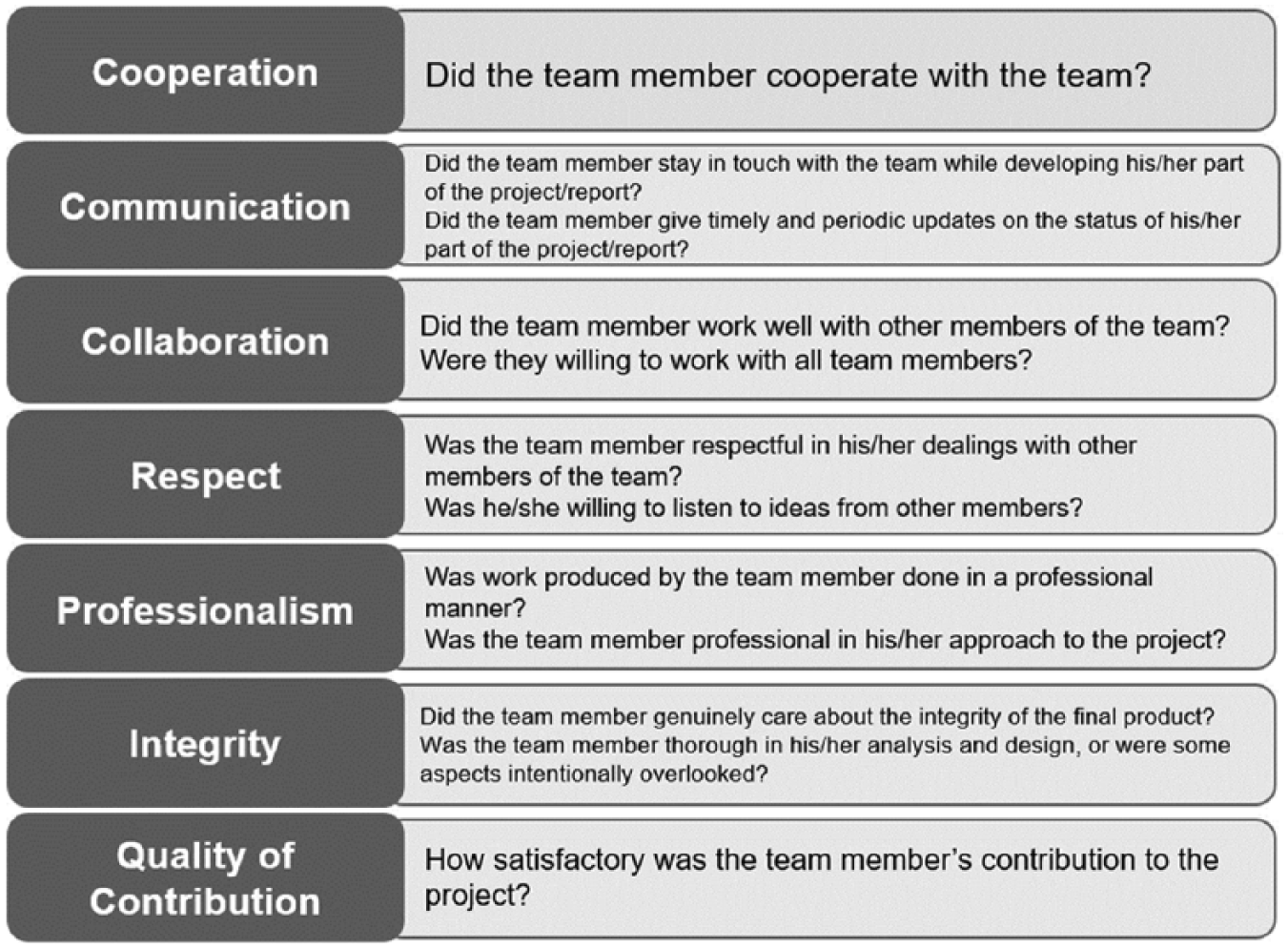
Peer evaluation of team members.
Assessment of Learning Outcomes
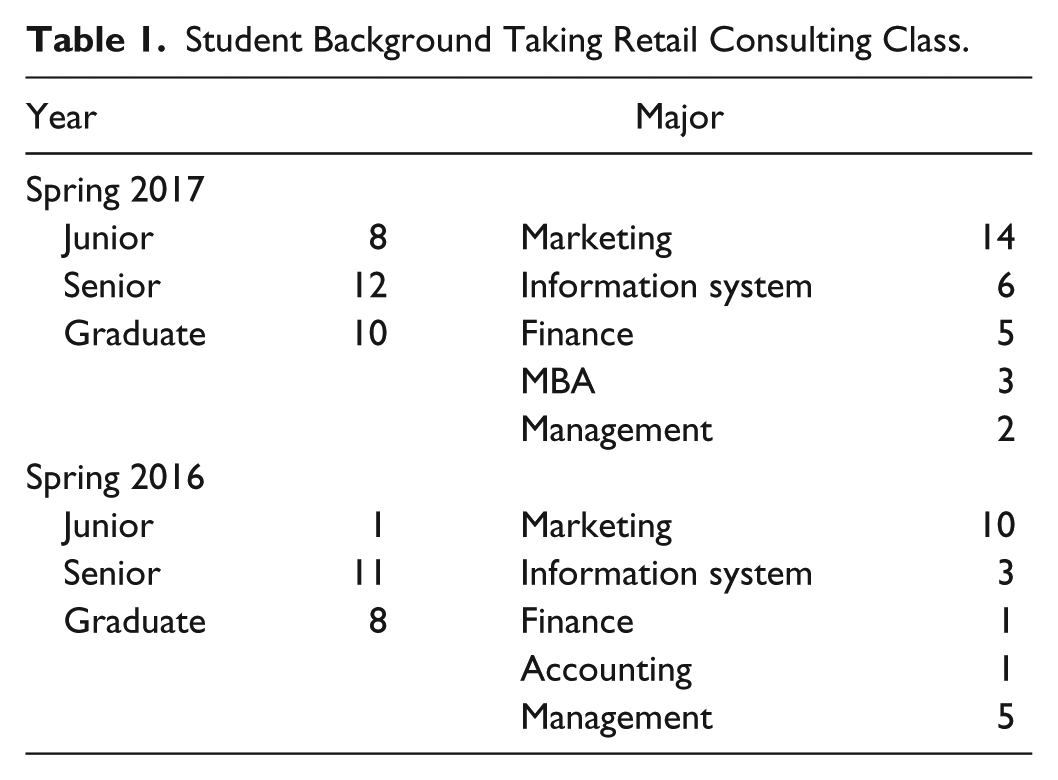
To evaluate whether the retail consulting course helped students gain and improve the four essential skills demanded in the retail workforce, we assessed the learning outcomes from students who completed the retail consulting course in 2016 and 2017. The profiles of students enrolled in the course during each of these classes are included in Table 1.
Student Background Taking Retail Consulting Class.
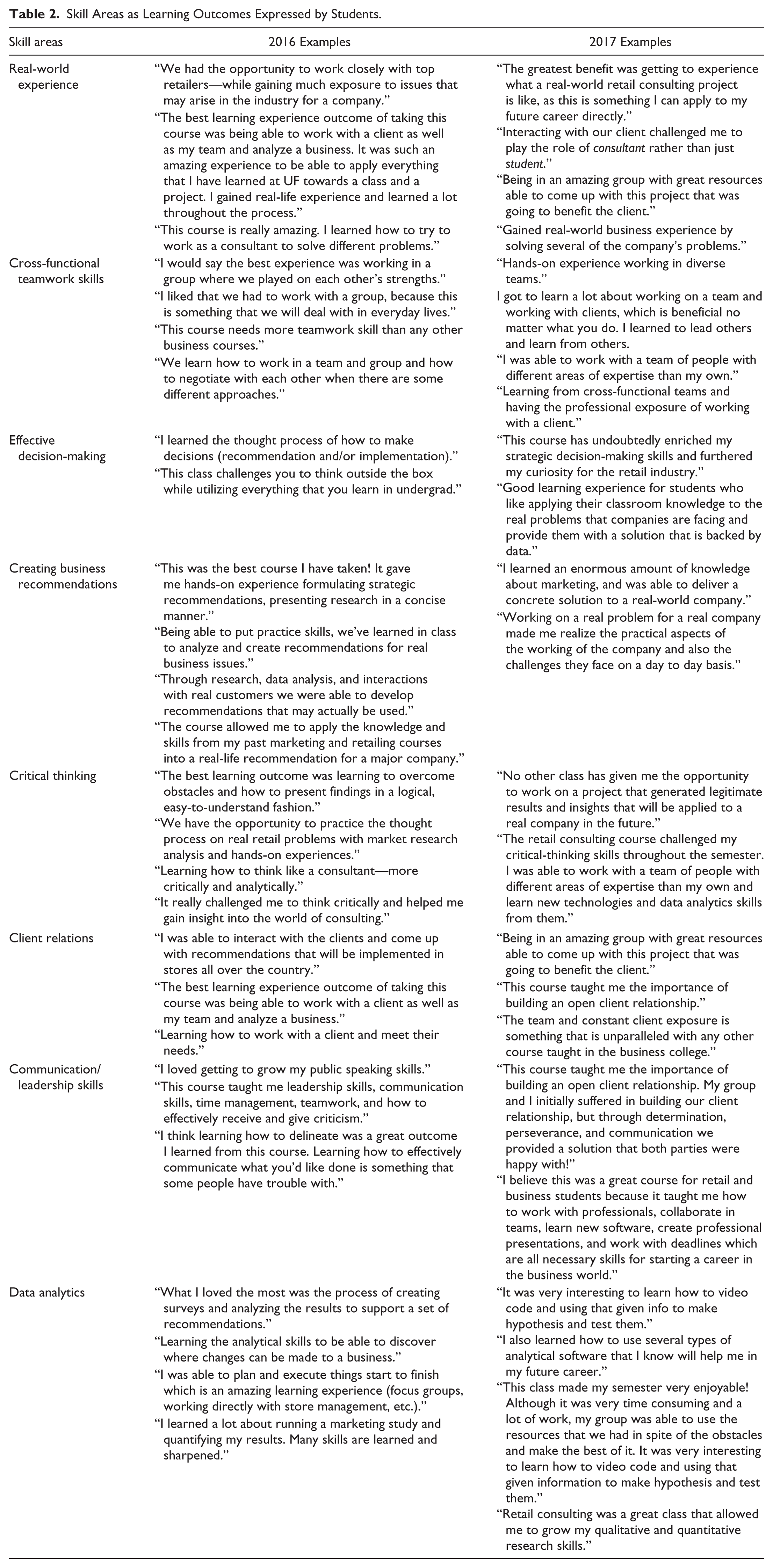
Students were asked to specify the greatest benefit of taking the retail consulting course. Though open-ended responses encompassing multiple skill areas and learning outcomes, they can be roughly categorized into the following: real-world experience, cross-functional teamwork skills, effective decision-making, creating business recommendations, critical thinking, client relations, communication/leadership skills, and data analytics. Table 2 summarizes learning outcomes expressed by students who completed the retail consulting course in 2016 and 2017. The most highlighted benefit from the student perspective was the real-world experience gained from working with clients as a retail consultant. Assuming the position of a retail consultant boosted students’ motivation, professionalism, and learning outcomes. Creating solutions to address real business problems challenged students to provide a heightened level of work to exceed client expectations. Many students credit the process of making decisions and forming client recommendations for their learning outcomes. Assuming the decision-maker role enables critical thinking through reflection and real-world application of the knowledge gained from prior coursework. Students indicated that the decision-making and problem-solving experiences gained from this course will them help in their future careers.
Skill Areas as Learning Outcomes Expressed by Students.
To provide further support for the effectiveness of this course, we conducted a quantitative assessment of the 2017 class. In the course application, students were asked to indicate their perceived skill levels (strong, moderate, or weak) in areas such as data analytics, insights relevant to project topics, retail knowledge/work experience, project management, communication, and presentation. Following completion of the course, students were invited to take a short online survey (using Qualtrics). In the exit survey, we expanded skill areas. Students were asked to indicate skill levels (strong, moderate, weak) in critical thinking, problem solving, cross-functional teamwork skills, team leadership, applying feedback and responding to criticism, data analytics, retail knowledge and experience, insights related to project topics, project management, written communication, interacting with clients, effective communication with team members, public peaking, and creating professional presentations. In addition, students were asked to report how much they improved their skills in the areas listed as the learning outcomes. Table 3 summarizes self-assessment skill levels and perceived improvements on course completion.
Self-Assessment of Skill Level and Perceived Improvement After Taking the Class (N = 15).
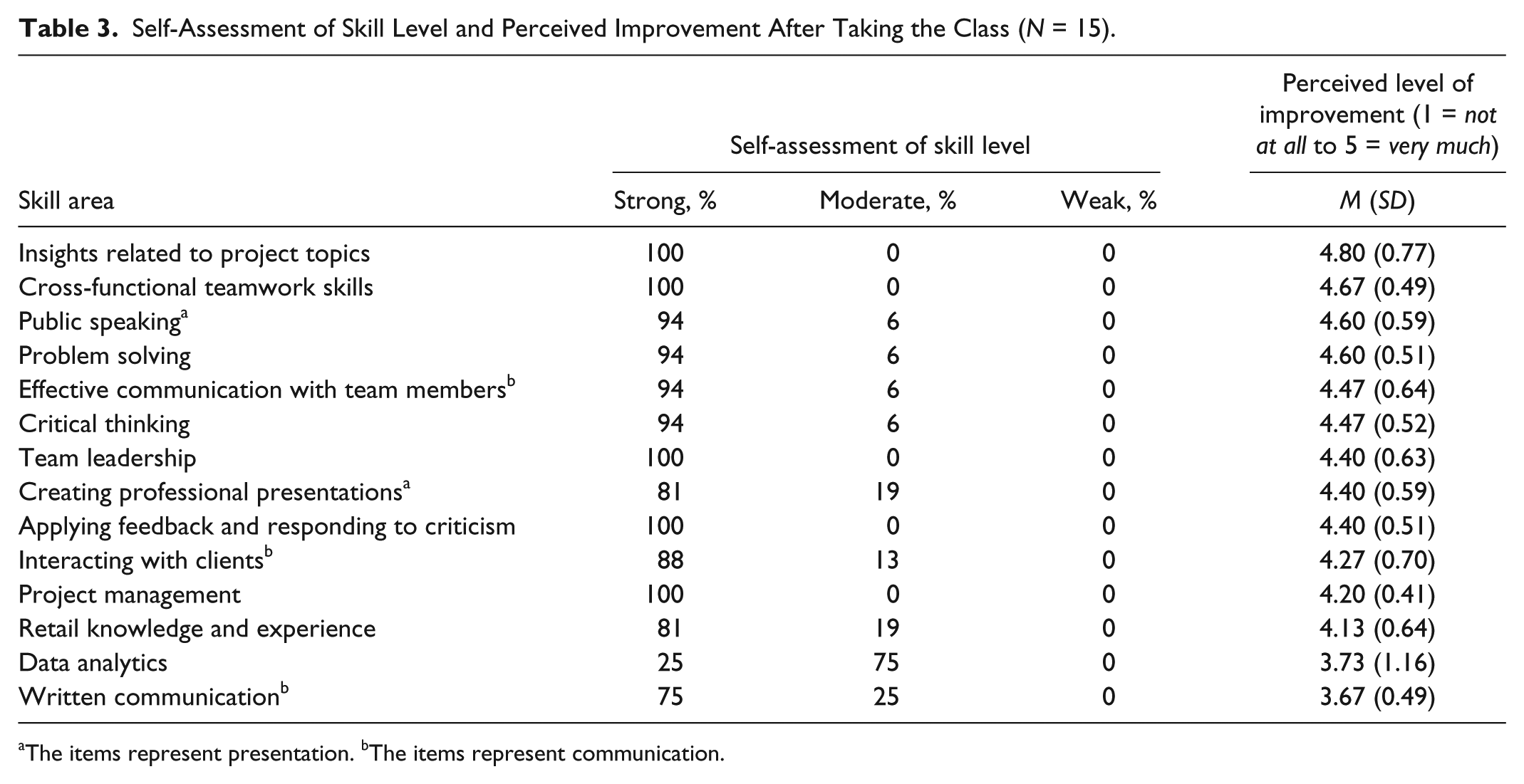
The items represent presentation. bThe items represent communication.
The descriptive statistics on perceived levels of improvement showed that students felt substantial improvement in all skill areas, as reflected in the mean scores higher than midpoints. It is worth noting that there were no areas in which the students reported weak skills. Among skillsets, the highest improvements lied on the areas of insights related to project topics (M = 4.80, SD = 0.77); cross-functional teamwork skills (M = 4.67, SD = 0.49); public speaking (M = 4.60, SD = 0.59); problem solving (M = 4.60, SD = 0.51); effective communication with team members (M = 4.47, SD = 0.64); and critical thinking (M = 4.47, SD = 0.52). The perceived level of improvement was measured on a 5-point scale, indicating the mean scores signify student competence in the stated skillsets.
Additional sets of skills also showed moderately high levels of improvement: team leadership (M = 4.40, SD = 0.63); creating professional presentations (M = 4.40, SD = 0.59); applying feedback and responding to criticism (M = 4.40, SD = 0.51); interacting with clients (M = 4.27, SD = 0.70); project management (M = 4.20, SD = 0.41), and retail knowledge and experience (M = 4.13, SD = 0.64). However, even with competence levels high in most areas, there is still an observable lack of skills. Students reported that written communications (M = 3.67, SD = 0.49) and data analytics (M = 3.73, SD = 1.16) were underdeveloped compared with other skill areas. Written communication was the least developed in the course. Since select students per cross-functional team played the role of data analysts, the average improvement on data analytics was lower overall and had high standard deviation.
To further investigate if skillsets were improved from participating in the course, we compared the self-evaluated skill levels from the course application with those from the exit survey. We averaged multi-items for communication skills and presentation skills to make this comparison. A total of six skill areas (data analytics, insights related to project topics, retail knowledge/experience, project management, communication, and presentation) were compared. Treating skill-level measures as rating scales, we conducted paired samples t tests to evaluate the impact of the retail consulting course on these six skill areas. We also conducted nonparametric Friedman tests since the skill levels (measured as strong, moderate, and weak) could be considered ordinal scales. We found the same patterns of significance. Table 4 includes results of paired samples t tests.
Comparison of Skillsets Before and After the Class (N = 15).
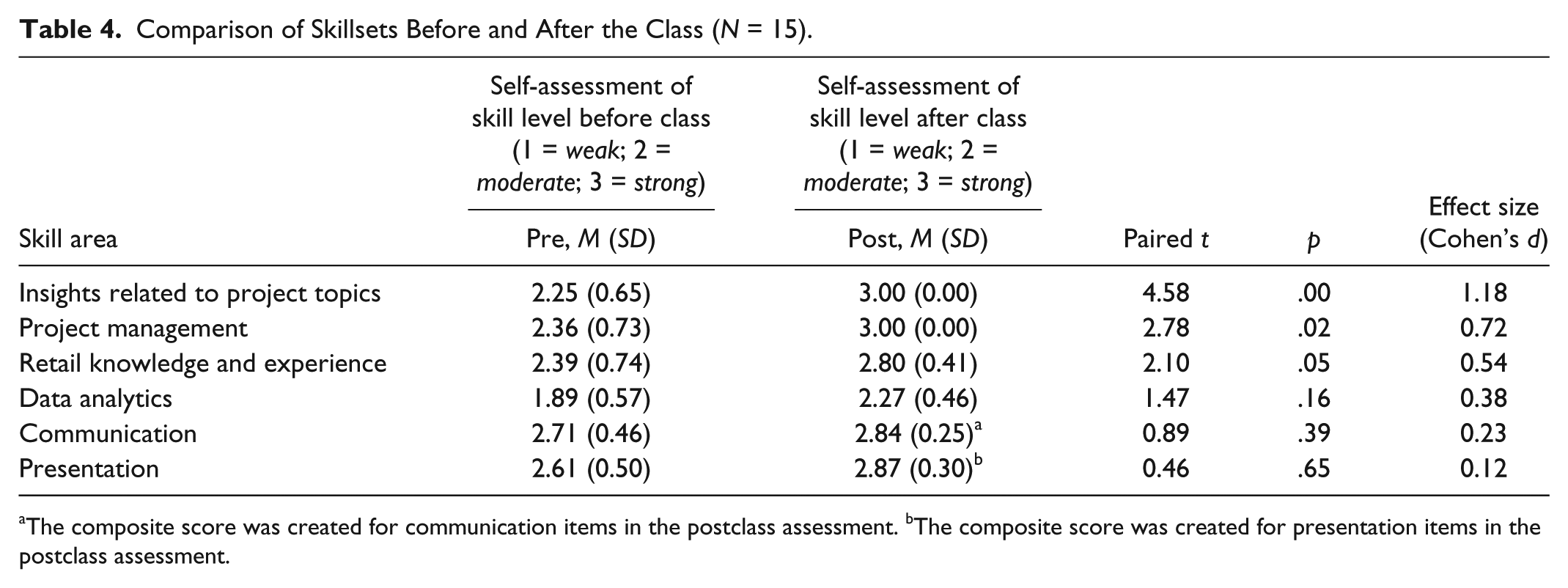
The composite score was created for communication items in the postclass assessment. bThe composite score was created for presentation items in the postclass assessment.
The largest improvement was found in insights related to project topics. There was a significant increase in the level of insights from before taking the course (M = 2.25, SD = 0.65) to after taking the course (M = 3.00, SD = 0.00), t = 4.58, p < .001. Cohen’s d (1.18) indicates a large effect size. The second largest improvement was found in project management. The increase from before taking the course (M = 2.36, SD = 0.73) to after taking the course (M = 3.00, SD = 0.00) was significant, t = 2.78, p < .05. The Cohen’s d (0.72) is relatively large. Retail knowledge and experience also showed improvement from before taking the course (M = 2.39, SD = 0.74) to after taking the course (M = 2.80, SD = 0.41). The increase is significant, t = 2.10, p < .05, and effect size is moderate (Cohen’s d = 0.54).
The improvement in data analytics skills was not significant (t = 1.47, p = .16) although the postcourse skill level (M = 2.27, SD = 0.46) was higher than the precourse skill level (M = 1.89, SD = 0.57). The effect size (Cohen’s d = 0.38) was small. Again, this could be because only select students played the role of data analysts in their cross-functional teams. Although not all students substantially enhanced their analytic skills, the course increased skill levels. Analytic skill level before taking the course was distributed across 15% of strong level, 67% of moderate level, and 15% of weak level. This distribution changed into 25% of strong level, 75% of moderate level, and 0% of weak level, suggesting no student felt weak on their analytics skill after taking the course.
Communication was not significantly improved from before taking the course (M = 2.71, SD = 0.46) to after taking the course (M = 2.84, SD = 0.25), t = 0.89, p = .39. The effect size (Cohen’s d = 0.23) was small. Presentation was also not significantly improved from before taking the course (M = 2.61, SD = 0.50) to after taking the course (M = 2.87, SD = 0.30), t = 0.46, p = .65. The effect size (Cohen’s d = 0.12) was also small. This is likely because perceived skill levels in communication and presentation were evaluated highly before taking the course, so any improvements were insignificant. No students indicated weak skill levels in communication or presentation before taking the course, though students did indicate weakness in the areas of data analytics, project management, retail knowledge/experience, and insights related to project topics. In addition, the use of composites for postscores of these two skill areas might have contributed to these insignificant findings.
Among the measures for communication composite (effective communication with team members, interacting with clients, written communication), postcourse skill levels were high for effective communication with team members (M = 2.93, SD = 0.26) and interacting with clients (M = 2.87, SD = 0.35) and moderately high for written communication (M = 2.73, SD = 0.46). The perceived improvement was high for effective communication with team members (M = 4.47, SD = 0.64) and interacting with clients (M = 4.27, SD = 0.70) and moderate for written communication (M = 3.67, SD = 0.49). Regarding presentation skills, the postcourse scores for public speaking (M = 2.93, SD = 0.26) and creating professional presentations (M = 2.80, SD = 0.41) were relatively high. The perceived improvements were also high for public speaking (M = 4.60, SD = 0.59) and creating professional presentations (M = 4.40, SD = 0.59). While the improvements of communication and presentation were not significant, skill levels were substantially high after taking the course.
The precourse and postcourse skill-level assessment combined with perceived levels of improvements indicate that the retail consulting course successfully developed the four essential skillsets: critical thinking, cross-functional teamwork, data analytics, and communication/leadership. Compared with other skillsets, the development of analytic skills was moderate. This result suggests that one course alone is not sufficient in developing competence in data analytics skills. This is especially true considering that only a fraction of the students assumed the role of data analysts. Data analytics skills are not transferrable to cross-functional team members without direct, hands-on experience managing and analyzing data. This is the limitation of cross-functional teams with complimentary skills.
Discussion and Conclusion
This article demonstrates how the experiential learning platform of a retail consulting class can prepare students for employment in an evolving retail industry. Rapid advancements in technology and data processing along with evolving consumer demands in omni-channel retail environments have created major shifts in the retail industry. These shifts put forward specific challenges and generate a renewed demand for retail talent with four specific skillsets. First, facing demands for adopting new technologies and integrating internal processes and data systems, retailers need talent with critical thinking skills in response to increased complexity in constrained environments. Second, retailers need to execute strategies promptly and effectively to keep up with changing consumer demands and needs. To do so, retailers need data scientists and analysts who can identify opportunities by processing vast amounts and varieties of data. Third, considering technology and data systems are the backbone of integrating complex and interrelated processes in omni-channel environments, cross-functional teamwork skills are highly demanded in the retail workforce. Last, since swift execution is necessary in a fast-changing marketplace, the demand for effective communication and leadership is greater than ever before.
The four essential skillsets of critical thinking, cross-functional teamwork, data analytics, and communication/leadership can help retail organizations successfully navigate this turbulent retail environment. We proposed and articulated that these skillsets can be developed through the experiential learning platform of a retail consulting class. Framing client-based projects as consulting experiences increases student interest, responsibility, and overall quality of work. Personal contacts with clients motivates students to put greater effort into their projects and maintain positive, professional relationships. Working as consultants on real-world projects places a high level of psychological taxation on students and motivates them to produce high-quality deliverables (Razzouk et al., 2003). Additionally, students have expressed that providing recommendations for real clients is not only a valuable learning experience but also a rewarding one. With these projects, students assume responsibility for a large portion of their learning, while the instructor plays the role of a coach and mentor. When students gather data, generate insights, and devise action plans based on this evidence, they receive invaluable problem-solving experience and improve their overall decision-making abilities. As students actively learn by performing these activities, knowledge and skills are developed through the transformation of experience, supporting the benefits of experiential learning (Kolb, 1984). Our results demonstrated that students learned insights related to project topics, cross-functional teamwork skill, problem-solving skill, and critical thinking skill compared with other skill areas.
To ensure effective learning while delivering high-quality project outcomes, we proposed three unique elements in the retail consulting course: a stand-alone consulting course with various retail topics, the application process to assemble high-performing cross-functional teams, and the feedback structure of the periodic progress reports. Consulting projects on diverse retail clients help students gain applied retail knowledge and insights into emerging issues. The application and interview process helps formulate competent and motivated cross-functional teams. The composition of team members with complimentary skills facilitates the development of communication skills, teamwork skills, and leadership. The benefits of forming high-performing cross-functional teams accrue learning outcomes for students as well as satisfaction of clients. Moreover, having high-performing teams alleviates an instructor’s workload, which has been considered as a major obstacle for educators adopting client-based projects (Lopez & Lee, 2005; Piercy, 2013). The structure of providing feedback through periodic progress reports provides students with the opportunities to reflect on their work, consider alternative approaches, and learn from previous mistakes. Through constructive feedback and opportunities for revision, students develop critical thinking skills, problem-solving skills, and professionalism.
Assessment of student learning outcomes supports that the structure of our retail consulting course effectively develops students’ skillsets. After taking the course, students confidently reported improvements in cross-functional teamwork skills, critical thinking, problem-solving, and teamwork skills. In addition, they refined existing skills in professional communication and presentation. Students substantially improved their understanding of topics related to their assigned project. Project management skills were also developed as evidenced by precourse and postcourse skill assessments.
As student assessments indicate, the retail consulting course alone is not sufficient in developing data analytics skills. While the structure of cross-functional teams with complimentary skills effectively develops other skillsets, it has a limitation in the development of data analytic skills. Hands-on experience managing and analyzing data are required to fully develop data analytic skills. Most marketing students who took the course displayed a lack of analytic skills compared to other skills in the application process. Since there is an increasing demand for data analytics in the retail industry and a need for effective retail strategies with optimal return-on-investment, educators should consider incorporating data analytics into their core curriculum.
We acknowledge several limitations related to the assessment of learning outcomes. We demonstrated the learning outcomes using subjective perceptions of improvements and supported these perceptions with precourse and postcourse comparisons of skill levels. First, the key experiential learning outcomes (critical thinking/problem-solving skill, cross-functional teamwork skill) were measured only after taking the course. Thus, evidence for objective improvements may be sought in future studies. Second, we used strong, moderate, and weak levels as the measures of skill levels and treated them as rating scales to conduct paired samples t tests. Although Friedman tests (nonparametric statistics for rank ordered data) showed the same significance patterns, the refined measurements should be considered in future studies. Last, better objective measures for skill levels should also be considered.
Overall, our research indicates broad support for the retail consulting course as an effective experiential learning approach for developing essential skills demanded in the retail work force. Considering the fast-paced and rapidly evolving retail industry, these skills will provide students with the competence and confidence to excel in their retail careers. We encourage educators to consider a retail consulting class for developing future retail talents. For such considerations, we summarize the benefits and values of the retail consulting course by citing students’ testimonials: The Retail Consulting course challenged my critical thinking skills throughout the semester. I was able to work with a team of people with different areas of expertise than my own and learn new technologies and data analytics skills from them. Interacting with our client challenged me to play the role of “consultant” rather than just “student.” The course makes students get out of their comfort zone and learn more about client problem solving. I am a finance major but still found great interest in working on a retail-industry problem. There was so much to learn from so many different angles and it really opened my eyes to just how integral different skills are to a successful project. This course taught me leadership skills, communication skills, time management, teamwork, and how to effectively receive and give criticism. If there is any class to tell a future employer about, it is this one. As students, we were given the responsibility of consulting a major corporation’s executives and given the resources to effectively do so. This class challenged us to think outside the box while utilizing everything that you learned in undergrad. Retail Consulting is an exceptional course that challenges you in many ways. We worked in teams to solve real problems for real companies. I was able to gain experience and skills in leading a team, planning and executing focus groups and in store surveys, creating recommendations for retail companies and actually implementing some of these ideas. It was really rewarding to be able to see the project through from beginning to end.
Footnotes
Declaration of Conflicting Interests
The author(s) declared no potential conflicts of interest with respect to the research, authorship, and/or publication of this article.
Funding
The author(s) received no financial support for the research, authorship, and/or publication of this article.