



Abstract
Since their inception, university sales competitions have been key learning and educational components of university sales education. Over the past two decades, the oldest and one of the largest sales competitions in the United States has been held in a face-to-face format. However, due to the educational environment created from the COVID-19 pandemic, this competition was forced to convert to a virtual format over a 16-day period. This research outlines the steps taken to convert this event to virtual format and presents insights for other universities endeavoring to produce virtual sales competition events. Finally, research implications and direction for future research are presented.
Educators utilize case studies, simulations, projects, and role-plays, and all of these activities offer their own strengths in hands-on learning (Rippé, 2015). The use of experiential learning activities such as role-play is effective in education as it is a “guided practice” of relevant concepts and skills while promoting critical thinking (Alvarez et al., 2015), problem solving techniques (Barr & McNeilly, 2002; Cummins et al., 2013), active learning (Inks & Avila, 2008), and internalization of theory and learning at a deeper level (Young et al., 2008). However, sales role-play learning methods are ubiquitous in university sales curriculum and sales literature (Cummins et al., 2013). Research suggests that role-play in sales courses are the most effective method for teaching sales skills and techniques (Deeter-Schmelz & Kennedy, 2011). Unfortunately, with the advent of the COVID-19 crisis in the spring of 2020, many of the activities normally implemented to facilitate experiential learning in sales classes were challenged.
These same challenges affecting the sales classroom also affected one of the most important and popular extracurricular activities for sales programs: university sales competitions. Traditionally, university sales competitions offer additional experiential learning engagement opportunities beyond classroom experiences for sales students while contributing to student learning and performance (Drea et al., 2005; Widmier et al., 2007). The Sales Education Foundation (https://www.salesfoundation.org) currently lists 20 different international, national, and regional university competitions. Additionally, many instructors who participate in these interuniversity competitions indicate that they also use intrauniversity sales role-play competitions to prepare for competitions with other universities and life beyond graduation (Magnotta et al., 2020).
The COVID-19 crisis of 2020 forced schools hosting face-to-face sales competitions to move to a virtual format. While some faculty members and students had limited experience with virtual sales calls and virtual competitions, large-scale national sales competition had not been hosted virtually. The sudden onset of the COVID-19 crisis left faculty and students little time to prepare for a virtual competition format and such a rapid change may have unintended consequences. For example, student competitors may experience technology related anxiety and lower levels of self-efficacy associated with the added requirement of learning how to use web conferencing platforms (e.g., WebEx, Zoom, etc.) to conduct their sales call role-plays. The shorter the interval between notification that a competition is going to be virtual and the date of the competition, the more likely such unintended consequences will emerge.
Moving forward, the likelihood that as a direct or indirect result of the COVID-19 crisis, and greater acceptance of virtual selling in the business community, the number of virtual sales competitions is expected to grow. In addition, important research streams will emerge providing conceptual and empirical examination of what a post-COVID-19 evolution may mean for sales education, particularly sales role-plays and sales competitions (Cummins et al., 2020). Accordingly, establishing best practices for hosting virtual sales competitions is prudent. The purpose of this research is to make an effort to establish the foundation of best practices for virtual sales competitions.
Toward this end, we first present a case study (including feedback from participants) of the first large-scale virtual university sales role-play competition. Second, based on qualitative data collected shortly after the competition, we highlight the challenges associated with conducting a role-play competition in a virtual environment and offer recommendations from which others may glean insights in replicating a virtual sales role-play competition. Third, based on what was learned from this experience and research, we provide related research recommendations to explore virtual competitions, virtual sales, experiential learning, and other directions for research that emerged from the findings.
Please note, for the purposes of this article, we are identifying the use of online synchronous interaction as a “virtual” format. Much of the trade and academic literature conflate the terminology of “virtual” and “online” learning and use these terms synonymously.
Theoretical Background: Experiential Learning
Kolb’s (1984) experiential learning theory is one of the most widely regarded theories in experiential learning literature. Kolb’s research focuses on reflection and experience through several learning activities that focus on interpersonal relationships, problem solving, career choice, and education (Kayes, 2002). Kolb’s model consists of six assumptions of learning: (1) it is a process, (2) it derives from experience, (3) it is a dialectic process, (4) it is holistic and integrative, (5) it is an interplay between an individual and the environment and, (6) it results in knowledge creation (Kolb, 1984).
Today’s sales educator needs to utilize experiential learning activities to effectively meet the needs of young adults aspiring to a career in sales (Sojka & Fish, 2008) and, for the most part, have consistently utilized teaching methods beyond textbooks and lectures to engage students. Motivation-based activities that connect students personally to real-world experiences are commonly used to affect the learning preferences of sales students (Young, 2002). Sales is arguably an area that is very well suited to hands-on activities or experiential learning that focuses on successful learning outcomes (Frontczak & Kelley, 2000; Sojka & Fish, 2008). As one researcher stated, “Students should be participants, not merely observers, in the classroom setting . . .” (Ueltschy, 2001, p. 63). Sales role-plays, especially those utilizing client-based scenarios (Ardley & Taylor, 2010), provide students with the ability to apply their knowledge of various sales processes and techniques, and improve their self-confidence while learning to adjust in the moment (Alvarez et al., 2015). As such, sales role-plays and sales competitions—both face-to-face and virtual—are generally identified as experiential activities.
Many universities are involved in university sales competitions. Currently, a large majority of universities with sales programs are participating in university sales competitions. A quick review of university sales competition web sites and participating universities reveal more than one hundred of the 155 universities identified by the Top Sales Universities (www.saleseducation.org) have participated in these events. Given the relative novelty of virtual sales competitions, we speculated most students, faculty, and sponsors had little to no experience with the virtual format. As a result, moving a large national sales competition from face-to-face to virtual presented several new challenges.
The 2020 National Collegiate Sales Competition: A Case Study in Experiential Virtual Learning
In early March 2020, it became increasingly evident the COVID-19 crisis and related travel restrictions and closings would make hosting a face-to-face sales role-play competition impossible. Rather than canceling the event, with just 16 days prior to the start of the competition the decision was made to pivot to a virtual sales competition. At that time, based on the data gathered relatively few of the participating students, coaches, and sponsors had extensive experience with virtual sales calls or related technology.
The following details the National Collegiate Sales Competition (NCSC) event and how the NCSC staff conducted the event, the challenges faced, and the approach to overcoming them. The NCSC was created in 1999 as a face-to-face sales recruiting event that included a sales exclusive career expo, networking opportunities and a sales role-play competition as its focus. The rapid move to a virtual environment in response to a crisis created a multitude of challenges and opportunities.
Challenges in the Move to a Virtual Environment
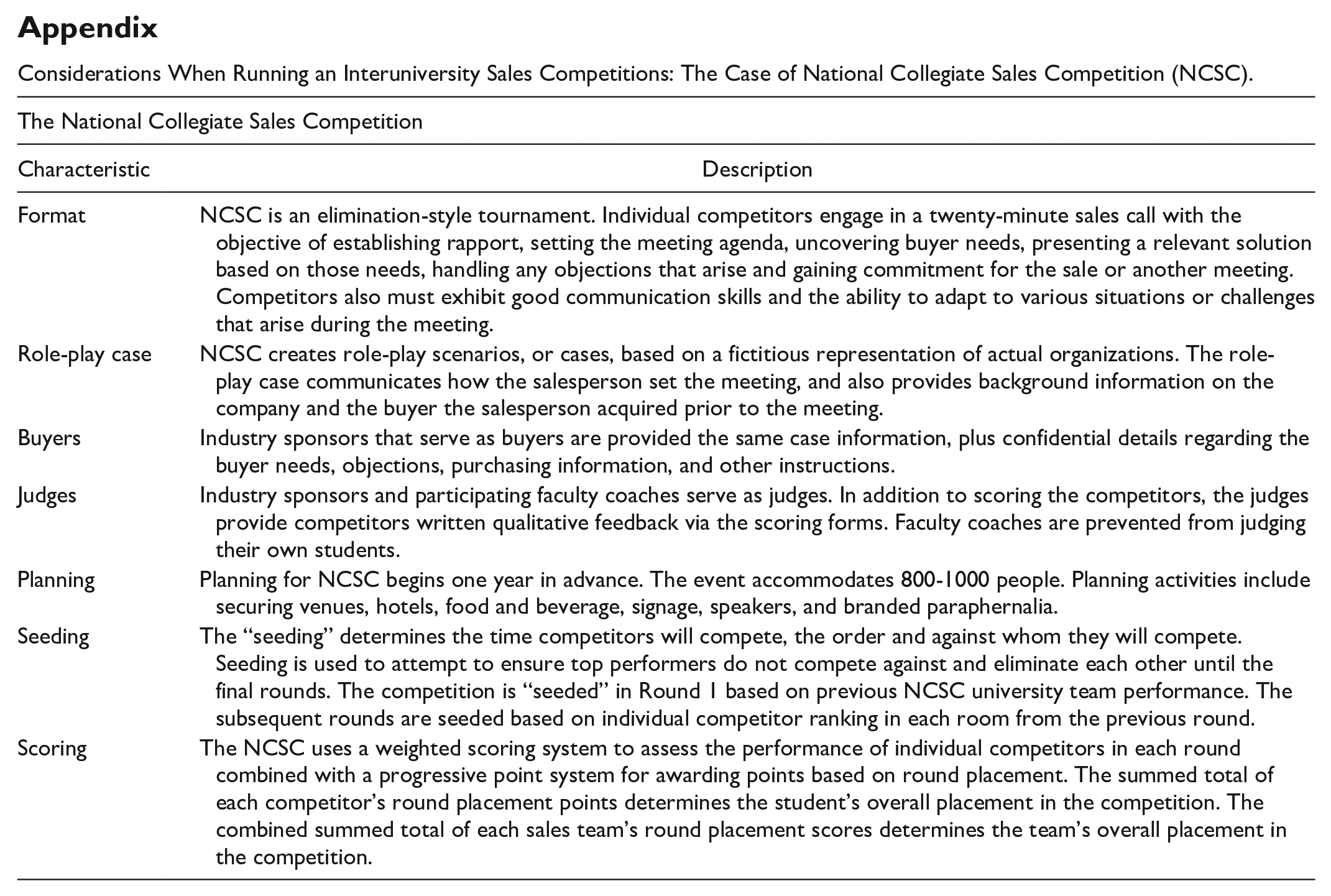
Transitioning from face-to-face to a virtual environment generated a host of issues to be addressed, including choosing an appropriate web-conferencing platform, providing remote training and support, creating a schedule that accommodates time-zone differences, communicating with judges, buyers, coaches, and competitors in a timely and effective manner, managing the role-plays virtually, managing the virtual scoring process (including mitigating virtual data entry errors), distributing results and recreating an environment suitable for networking, the exchange of ideas and spontaneous interaction to create learning opportunities. Especially challenging is that use of virtual technologies is both problematic and beneficial (Lee & Heinze, 2020). Below is description of some of the challenges associated with changing the NCSC format to virtual from face-to-face 16 days out from the start of the competition. For more detailed information on the NCSC itself, please see the appendix.
The Web Conferencing Platform
One of the first challenges encountered by the NCSC team was the choice of which web-conferencing platform to utilize for the role-play competition. Gartner, the world-wide leading research and advisory company is a trusted strategic partner of the NCSC and product sponsor of NCSC 2020 and the previous two years. Gartner conducts thousands of web conferences annually using WebEx. Because of their extensive experience and the NCSC’s limited time for planning, they took ownership of the web conferencing logistics and, in conjunction with the NCSC staff, developed a plan for using WebEx to conduct the role-play meetings and webinars.
Like other web-conferencing platforms, WebEx offers a variety of tools to setup meetings, including using break-out rooms or having continuous meetings during which attendees come and go as scheduled, screen sharing, and meeting recording options. Based on advice from Gartner, the decision was made to schedule separate 30-minute sessions (WebEx meetings) for each role-play Meeting of the competition. Given the number of competitors and the multiround nature of the competition, 310 role-play meetings were scheduled and completed. To provide students a richer opportunity for reflective observation (essential to experiential learning), NCSC staff determined it important to record the role-play meetings to make them available to the competitors after the completion of the competition. This necessitated a plan for recording the individual role-play meetings and uploading them to a secure video server.
Initially, the plan was for the buyers to begin recording the role-play meeting once the student competitor entered the room. After discussing the potential for buyers to forget or delay starting the recordings, it was decided that each WebEx meeting would be set to auto-record. While this plan would ensure each role-play would be recorded, it meant each recording would be 30 minutes, only 20 of which would be the sales call. Also, to reduce potential issues with screen-sharing, it was decided that the screen-share would be active before the competitor entered the room. This presented a suboptimal environment and a challenge for judges to evaluate the role-play meeting, especially the “nonverbal” aspects, as both the competitor (seller) and the buyer were visible in a small portion of the screen. However, the NCSC determined that creating less variability in using the technology would alleviate some of the errors that might occur with inexperienced technology users, as well as reduce competitor anxiety associated with the use of new technology.
Remote Training and Support
Remote training and support are important components of NCSC. When Gartner became the NCSC Product Sponsor in 2018, they dedicated a team to support the event, including developing training and sales support materials. The Gartner team established (and updates annually) a website containing a plethora of training materials (e.g., white papers, sales aids, and sample sales call role-plays) and recordings of sales training webinars from the initial year of their NCSC Official Product sponsorship. However, those training resources did not address how to use web conferencing tools to conduct virtual sales calls. Given the sudden change to virtual from face-to-face, the lack of training content in this area represented a significant challenge.
Without adequate training, students are likely to experience lower levels of self-efficacy related to their use of web conferencing tools to conduct the role-plays. Lower levels of self-efficacy lead to higher levels of anxiety and stress (Bandura, 1993, 1988; Conrad & Munro, 2008). While exploring the relationship between anxiety and virtual role-play performance is beyond the scope of this article, it is worth noting that the Gartner and NCSC team recognized the need for additional and specific training on the use of web conferencing tools to conduct virtual sales call role-plays. In addition, the Gartner and NCSC team recognized faculty coaches and judges needed training related to changes in the logistics of performing their roles in a virtual format. To address that need, for NCSC 2020 the Gartner and NCSC staff held an additional 19 training and support webinars covering how to use WebEx, digital scoring, virtual judging, general announcements, and live support during the competition.
Logistical and Communication Challenges
Given the short time frame for transitioning to virtual from face-to-face, a “divide and conquer” approach to preparation was adapted. The Gartner staff developed scheduling for the WebEx meetings, and various NCSC staff developed the competition agenda, and a plan for coordinating judges, and scoring. Individuals from each of these areas communicated with NCSC participants (i.e., competitors, coaches, and judges) independently (via email and social media). Coordinating these messages proved to be a challenge and as a result, the number of messages distributed by the Gartner and NSCC team may have been greater than was necessary. Additionally, receiving communications from multiple sources rather than from one central source, in some instances, created more confusion among the participants.
Based on anticipated difficulties of effectively communicating to the 600 plus participants spread across more than 30 states and Canada, a Webinar Command Center was scheduled for each day of the competition. The “Command Center” was staffed by Gartner and NCSC personnel to answer participant questions regarding technology, the Gartner Product, and the competition as they occurred in real-time. In addition, student competitors could test the WebEx screen-sharing tool for their visual aids. Several recommendations were provided by sales faculty across the country and instituting the “Command Center” was one of the most critical.
A few days before the start of the competition, Gartner sent all judges individual WebEx meeting invites for each flight they were judging. For example, Round 1 judges received eight 30-minute WebEx meeting invitations (running back-to-back). In addition, the competitors were sent a 30-minute WebEx meeting invitation corresponding to their assigned role-play meeting room and time. Before the start of the round, judges were sent the links to their respective scoring form and instructed to access the link 10 to 15 minutes before the start of the round.
Time Zones and Seeding
The competition is “seeded” in Round 1 based on previous NCSC university team performances. The subsequent rounds are seeded based on individual competitor ranking in each room from the previous round. When the NCSC is face-to-face, the lower seeded competitors are scheduled earlier in their rounds. However, since the competition would be virtual, meaning competitors were spread throughout the United States and Canada, adjustments had to be made to the schedule based on time zones. For example, the Quarter-Final round started at 8 a.m. EDT or 5 a.m. PDT. Schedules were adjusted within each room so that no competitors would be scheduled before 7 a.m. their local time. This necessitated an additional step for the staff in determining each competitor’s time zone. Since that data had not been collected, the time zone of each university was used as a proxy time zone for their respective competitors.
Managing the Virtual Role-Play
Managing the virtual role-play created additional challenges. One such challenge arises when a student competitor enters the competition “room.” The idea of using waiting rooms was discussed, but at that time few people were familiar with how the waiting rooms worked and how they would be managed. Based on that uncertainty, and the goal of reducing potential errors and anxiety, students were asked to enter the rooms on their own at the start of their respective sale call role-play times. This also created the need for additional individual email invites to be sent to each competitor. Competitors were required to enter their respective role-play meeting rooms (WebEx) no earlier than 1 minute prior to, and not later than 5 minutes after, the official start of the flight. The importance of arriving on time to meetings and limiting the meeting to the amount of time allotted (keeping promises) are key lessons to learn for aspiring salespeople. The role-play meetings were promptly ended at the 20-minute mark.
The buyers were also responsible for managing the judges in their respective rooms. Buyers in an onsite, face-to-face setting are only required to play their roles as buyers and do not have additional administrative duties. This created the additional challenge of making sure buyers were trained and prepared to successfully fulfill those new duties. Instructions included making sure the judges were prepared to judge (were present and had their digital score sheets), and that their cameras and audio were off or muted. Because there would be discussion between and among the buyer/proctor and the judges, competitors entering the WebEx meeting room earlier than 1 minute prior to their competition time would be asked to leave and return at the appropriate time. The buyer/proctors needed to ensure that the competitor entered the role-play meeting room on time, and not too early. If the competitor was more than 5 minutes late, the competitor would be disqualified (for that round). If a competitor were disqualified, the judges and buyer would exit that role-play meeting and enter the next role-play meeting without submitting scores. If the disqualification occurred in Round 1, the competitor would receive a score of zero and advance to the Wildcard Round. In all succeeding rounds the competitor would be disqualified from the remainder of the competition. Finally, judges were given 15 minutes between flights to move from one meeting room to the next, complete the score sheet, and prepare for the next role-play meeting. These policies were communicated to the coaches and competitors during the virtual training and informational sessions.
Managing the Virtual Scoring Process
Moving to a virtual environment also required a full transition to an online scoring system. A digital scoring system was created using a combination of Google Sheets and Google Forms. Using Google Forms, the digital score sheet was developed that contained fields for the necessary identifier information (competitor’s name, round number, judge’s name, etc.).
A master Excel spreadsheet was created capable of taking the raw scores from the judges and then calculating the average weighted scores, ranking the competitors within each room by round, assigning round ranking points to each competitor, seeding each competitor in the next round (until the Finals), and tracking individual and team scores for each competitor and school. In addition, the spreadsheet provided a means for checking to ensure the correct number of scoresheets were collected for each competitor, each judge had submitted a score sheet, each score sheet was complete, and that competitors from the same school were not scheduled to compete in the same room and round.
At the end of each flight scoresheets were submitted by each judge, which populated a Google Sheet corresponding to the judge’s meeting room. Once all the judges’ scores had been submitted, the scores were imported into the master Excel scoring spreadsheet. The scoring spreadsheet tracked the progression of each round by flight. Once the scores from the last flight of a round were imported, the round rankings and subsequent round seeding and schedule were available. The schedule was then manually reviewed to ensure no two competitors from the same school were scheduled in the same room for the next round. If this occurred, competitors were moved to the same seed number in another room, making sure they had not already competed against the other students in that room.
Mitigating Virtual Data Entry Errors
The master score sheet and schedule are keyed to competitors’ and judges’ names (or ID numbers) and email addresses; ensuring the accuracy of that data is critical. Since the NCSC staff had not yet used a digital scoring system nor multiple WebEx rooms simultaneously, it was decided to pilot test the process. A few days before the start of the 2020 NCSC, a webinar meeting was held for judges to review the digital scoring form, how to use it, and how to transition from one role-play meeting room to the next when a new flight began. Three flights were simulated during the webinar, giving judges the opportunity to complete and submit multiple scoring forms. Judges submitted score sheets to be processed to test the digital scoring system. Data entry errors or inconsistencies were found that would be problematic for scoring. For example, some judges misspelled competitors’ names or entered different versions of the same name (e.g., Kimberly Burns, Kim Burns, K. Burns, Kimberly B., and so forth). There were also instances of judges making errors regarding their own email addresses, or not using the same email address on each of the forms.
To mitigate data entry errors, a prepopulated form was developed that included the names of all the competitors and the respective room and round codes. To accomplish this objective, unique scoring forms were created for each room in each round. The scoring forms contained a code identifying the room and round, and a drop-down dialogue box containing only the names of the students competing in the respective room and round. In addition, the instructions on each form reminded judges to use the same name format and email address on each form they complete. While creating the unique scoring form took extra time on the front-end, it eliminated data entry errors on the score sheets and improved the scoring process during the competition.
During a face-to-face NCSC, staff responsible for collecting and processing score sheets can observe the role-plays in real time, visually verify the judges were scoring, and physically collect score sheets from judges when a flight is complete. This made it easy to ensure each judge submitted a score sheet. In the virtual NCSC, the staff responsible for scoring had no visual cues that role-plays were occurring or that judges were judging, nor when the role-play ended. The only visual cue that a flight was completed was the appearance of submitted scores on Google Drive. Shortly after each flight was completed, the scoring data populated the Google sheets associated with the respective rooms. As the data came in from each of the rooms, tallies were kept determining which judges had submitted score sheets. Judges were given 10 minutes (after each flight concluded) to submit their score sheets before the NCSC staff sent a reminder message. During the competition, a total of 1,527 score sheets were collected, and all but two of those were submitted within the 10-minute time frame. In the two instances requiring a reminder message, the judges submitted those score sheets immediately upon receiving the reminder.
After each flight, the scoring data from each of the rooms was aggregated, imported into the master Excel score sheet, and processed. At the end of each round (except for the final round), the results were collected and the schedule for the next round was manually reviewed for accuracy and consistency with the seeding policy. Once the schedule for the next round was set, the results and schedule were released to the NCSC staff for posting to Guidebook, and provided to the Gartner team so they could send out the WebEx meeting invitations to the respective competitors (the judges already had the invitations). The amount of time necessary to process the scores, results, and subsequent round schedule varied based on the number of score sheets processed and the number of participants advancing to the next round. As mentioned, the additional time required to manually verify the required conditions for the competitor schedule created an unforeseen bottleneck.
Table 1 presents the expected amount of time required to complete this process for each round. With the exception of Round 1, the expected time frames were met for each of the rounds. As predicted, 20 minutes was required to process the Round 1 scores. However, the autogenerated schedule had multiple instances of teammates competing in the same room. The task of moving one of the affected competitors to a new room while ensuring they had not competed against anyone in the new room, were not moved to a room where their coach was a judge, nor had they had any of the same judges from Round 1 required more time than expected. An additional 30 minutes was required (beyond the scheduled 40 minutes) to complete the entire process.
Score Processing Time by Round.

Due to the delay in scheduling, the Wildcard Round could not begin at its scheduled time. Complicating matters further was the rigidity in the WebEx meeting schedule. Since all 108 WebEx meetings occurring during the Wildcard Round were scheduled (regarding time) and could not be adjusted without unreasonable effort and confusion, the decision was made to move the scheduled first flight of the Wildcard Round to the end of the round, keeping flights two through six on schedule. While this solved the problem, it created some confusion among the competitors, coaches, and judges that were rescheduled.
Curating the Recorded Role-Plays and Distribution of Score Sheets
Recording shareable competition role-play meetings for educational (universities) and evaluative (industry sponsors) purposes is critical to the mission of this event. While there are many providers available, Panopto, a commercial video server, was chosen for curating the Role-Play Meetings. Panopto allowed for easy upload and controlled access via protected folders. A Panopto folder was created for each of 68 participating schools, and also for the semifinal and final rounds. Since the Role-Play Meetings were being recorded to Gartner servers, the Gartner team volunteered to manage the upload process. After each round, Gartner representatives uploaded recordings from the round to the respective school’s folders in Panopto. Since the autorecord feature was used, each 30-minute recording included the 20-minute role-play and up to 10 minutes of judges and buyers talking while waiting for the competitor. Consequently, all non-role-play footage was edited out of each of the 325 role-play videos before made available. Once the videos were edited, each university team was granted access to their own folders (containing their recordings) as well as those of the Semifinals and Finals at the conclusion of the competition. The competition sponsors were granted access to all recordings at the conclusion of the event.
Shortly after the competition ended, separate spreadsheets were created for each competitor containing only their scores and qualitative feedback from the competition. Information identifying the judges was removed. Subsequently, all 138 competitors were sent individual e-mails containing their scoresheets (as attachments) and a link to their recorded role-plays on Panopto.
Opportunities Realized in the Move to a Virtual Environment
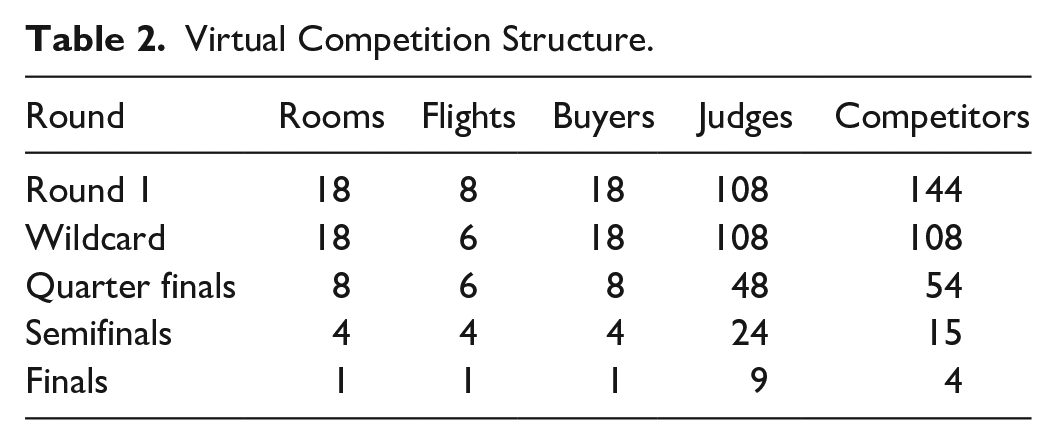
One of the primary advantages of a virtual sales competition is that physical space is not a constraining factor. Instead of physical rooms in which the sales role-play call is conducted, virtual rooms set-up in WebEx were utilized. As such, the number of “rooms” could be increased, thereby reducing the length of the competition. Based on the number of competitors and the time frame, flights of 18 competitors were utilized for both Round 1 and the Wildcard round. This required planning 18 simultaneous WebEx sessions for each flight associated with those rounds. While running a greater number of competitors in each flight saves time, it also raises the challenge of the coordination of 18 sets of buyers and judges for each of those rounds. Table 2 presents the breakdown of rooms, flights, buyers, judges, and competitors by round.
Virtual Competition Structure.
Another advantage to the virtual sales competition (relative to an on-site format) is that it is easier to manage the judges. Judges are required in a virtual format to take more ownership of, and responsibility for managing their time. For example, on-site judges sometimes end up in the wrong judging room or fail to show up to judge. In the virtual competition format, the judges receive WebEx invites only to the rooms in which they judge, eliminating the possibility they could end up in the wrong room. In addition, because they are required to “accept” the WebEx meeting invitation, which subsequently populates their calendars, they are less likely to miss or be late for a round.
In order to answer additional questions concerning how to successfully and effectively conduct a virtual sales competition beyond the NCSC staff observations, we endeavored to collect data from all participants in the event.
Methodology
To assess participant satisfaction with the virtual competition, a satisfaction survey was sent to competitors, coaches, and sponsors within 5 days after the competition ended. The intent of the survey was to collect satisfaction data and insight regarding how the competition might be improved. Of those 340 participants invited to complete a survey, 147 responded with a completed survey resulting in a 45.3% response rate.
Qualitative Data
The survey included the four open-ended questions shown in Table 3. Three of the questions asked for suggestions as to how the event could be improved in terms of preparation for going virtual, communication, and participation experience. A fourth open-ended question asked for general feedback. The qualitative data contained comments related to the virtual sales competition, the virtual career fair, and the virtual speed selling competition. Analysis of the virtual career fair and speed selling competition is beyond the scope of this article, and comments pertaining to those two activities were removed from consideration. In addition, comments related to the general structure of the NCSC were removed from consideration because they are not relevant to the present study (e.g., comments about seeding or score weighting).
Open-Ended Questions.

Note. NCSC = National Collegiate Sales Competition.
As Table 3 shows, 227 responses were received and of those, 35 were removed from consideration due to incompleteness of responses. The remaining 192 comments were reviewed to identify common themes and whether they were positive or negative.
After reviewing the comments, four expert reviewers agreed each could be classified into categories labeled: General (applied to the competition in general), Communica-tion, Virtual Versus Face-to-Face, Technology, and Training. Comments containing multiple statements applying to more than one category were split and assigned to the respective categories. For example, “Overall it was amazing . . . poor Wi-Fi at home is a challenge” was categorized as General (“Overall it was amazing . . .”) and Technology (“. . . poor Wi-Fi at home is a challenge”). After accounting for responses applying to more than one category, a total of 247 comments were categorized.
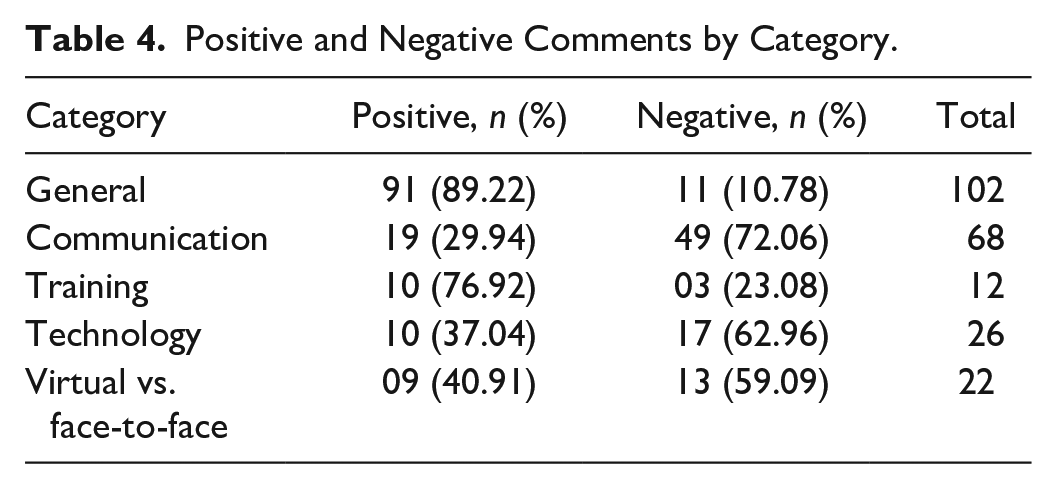
Additionally, the evaluators classified each of the comments as positive or negative. As with the categorization process, the evaluators talked through discrepancies until a consensus opinion was reached. Table 4 shows the resulting count of positive and negative comments by category.
Positive and Negative Comments by Category.
General Comments
Approximately 42% of the comments were categorized as “General,” and 90% of those were positive. Most of the 92 positive comments were associated with expressions of satisfaction and gratitude for hosting the event, especially given the quick pivot to virtual because of the COVID-19 crisis. For example, “I was impressed with how quickly the in-person event was able to transition to online.” These comments offer partial support for the notion the change to a virtual format was managed effectively. This success may be attributed to the commitment of all participants to make the change.
The positive comments, especially those with qualifiers like “given the unprecedented changes you faced . . .” “considering the short turn time . . .,” and “given all the constraints . . .” suggested some latitude was given because of the circumstances driving the change. These comments, while supportive, were not as informative as the negative comments in terms of suggestions for improvement.
The negative General comments were primarily tied to time between rounds and perceived scoring delays. For example, “The scores seemed like they took a while to release.” Below is a representative sample of additional negative comments classified as “General.”
Took too long in between rounds
Scoring took a little longer than initially expected.
Scoring was more inconsistent from one round to another this year versus prior years.
“The delay in the start of the wild card round was unexpected but not horrible.”
The delay between the Round 1 and the Wild Card round resulted because the impact of an unanticipated confluence of constraining factors. For example, the Gartner staff needed to have their work completed by 5 p.m. eastern time. To limit the time demands of the judges and buyers, the Gartner and NCSC team wanted to complete Round 1 and the Wild Card round within nine hours on the first day of the competition. This meant the time required for Round 1 and the Wildcard round was reduced by 6½ hours compared to the when the competition was held on-site. This provided less time for scoring and scheduling between the rounds. Combined with the seeding and other requirements to manually adjust the schedule to satisfy NCSC policy, the interval proved to be inadequate to complete and publish or communicate the schedule in the time originally allotted.
Aside from those comments related to making the pivot to virtual in a short period of time, the bulk of the General comments, both positive and negative, are representative of the comments the NCSC typically receives every year.
Communication
The second most common category was Communication (see Table 4), and just over 72% of those comments were negative. While several respondents expressed satisfaction with the level of communication, (“Communication was done extremely well”) most thought there was too much communication and from too many different sources (“The communication was thorough but fragmented. I lost count of the number of e-mails with information that was relevant to be used for the event. A more coordinated communication effort would have made it better”). Communication is critical to successful change management (Kemp & Low, 2008; Nilakant & Ramnarayan, 2006). Accordingly, the team responsible for implementing the change encouraged each area (scheduling, scoring, training, logistics, and general announcements) to communicate frequently with participants. Comments like “Both Gartner and NCSC staff overcommunicated all important information. In light of the situation, this was quite helpful!” indicate it was better to err on the side of overcommunication.
In addition, respondents expressed dissatisfaction with how the scores and delays were communicated. Below is a representative sample of the comments classified as “Communication” related.
“I was super impressed with the communications. I have no suggestions.”
“I found it to be an excellent amount of communication.”
“Too many emails prior, but can’t say the communication wasn’t there.”
“There were too many long e-mails coming from too many directions.”
“The results could have been provided in a more timely fashion.”
“More timely communications regarding advancing in the rounds. It would have been nice to see the results BEFORE emails started going out with role-play information on rounds.”
As mentioned previously, responsibility for communicating to the NCSC participants was distributed among various parts of the Gartner and NCSC teams (e.g., scoring, scheduling, etc.). This increased the number of messages sent out and contributed to respondents’ perceptions that the communication was fragmented and confusing. Furthermore, the decision to hold separate WebEx meetings for each competitor significantly increased the number of e-mail messages sent to judges. For example, each of the 108 judges in Round 1 received eight WebEx meeting invitations from Gartner. In total, Gartner coordinated more than three hundred WebEx role-play meetings, each of which required individual invitations to a competitor, a buyer, and five to six judges. In addition, each invitation required an acceptance to ensure everyone was aware of their schedule. These invitation messages were in addition to other messages regarding scheduling, scoring, and general announcements sent from other members of the Gartner/NCSC teams.
Part of the rationale for having separate meetings for each role-play meeting was (1) to control competitor access to the meetings, (2) to use the auto-record feature of WebEx (eliminating the need for someone to start and stop the recording), and (3) to reduce potential errors and confusion. The auto-record function (automatically recorded the entire 30-minute meeting session) ensured each meeting was recorded but significantly increased the number of email messages sent to the judges. Using one meeting for each room and controlling sales competitor access via the virtual waiting room would have been more efficient. The caveat was the risk that one or more of the role-play meetings would not get recorded. That risk can be mitigated by sufficient training and creating a written procedure that calls for the recording to be initiated prior to allowing the competitor into the meeting room.
While some respondents felt there was too much communication (“Both Gartner and NCSC staff overcommunicated all important information), others felt there was not enough communication—especially related to the scheduling delay between Round 1 and the Wildcard round (“More timely communications regarding advancing in the rounds. It would have been nice to see the results BEFORE emails started going out with role-play information on rounds”). The delay was due to the complex nature of the scoring, seeding, and scheduling processes combined with the relatively short window between Round 1 and the Wildcard round. Because the length of the delay was unknown, no messages about the delay were sent out until the decision was made to postpone the first flight of the Wildcard round. Also, because the WebEx meeting invitation emails needed to be sent to the competitors in advance of the round, the scheduling team received the Round 1 results prior to their release to the participants. As a result, some of the competitors received Wildcard round meeting invitations before the official Round 1 results were distributed. This led to some anxiety among the competitors and coaches.
The data suggest a more strategic approach to communication would improve effectiveness and satisfaction. Coordinating and consolidating the communication would reduce the total number of messages sent/received and the perception of fragmentation. In addition, scheduling sufficient time between Round 1 and the Wildcard round would create more realistic expectations, eliminate the delay, and allow the results to be posted before the meeting invitations were sent out. The feedback indicates that competitors and coaches prefer to have a clearly communicated schedule prior to receiving invitations to the individual role-play meeting. This is also true for the judges.
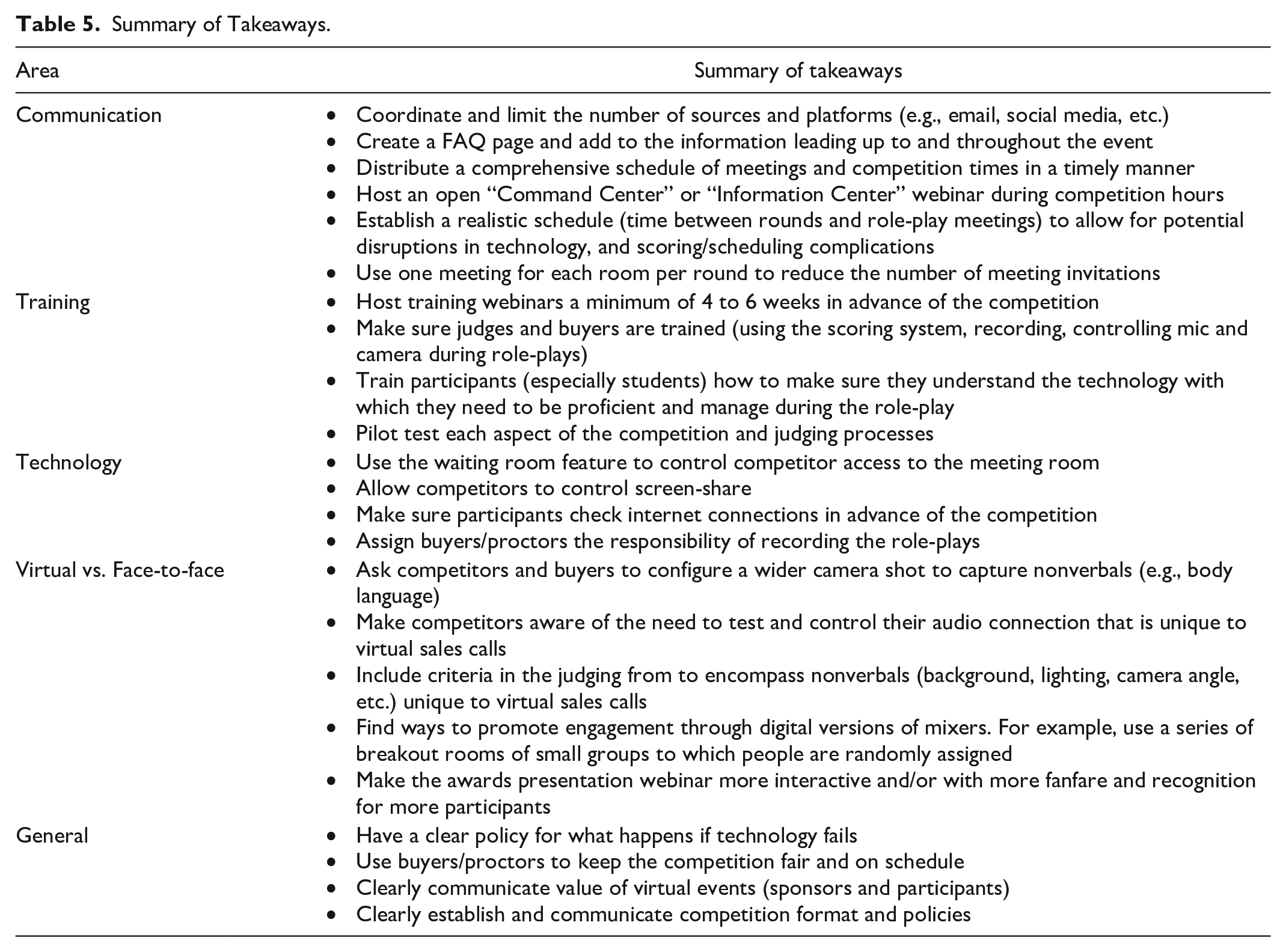
Although commented on by only a few respondents, the “Command Center” webinars (see Table 5) were valuable and powerful methods of communication providing at least the NCSC staff a greater level of confidence in their ability to mitigate technology and communication errors. For example, “In addition, the resource IT room that was provided throughout the competition was extremely helpful. I made use of that myself a couple of times and that was timely and helpful.” The Gartner and NCSC staff fielded many different questions related to the competition (e.g., schedules, the role-plays, using WebEx, etc.) from many students, faculty, and judges who joined the Command Center webinar at different times throughout the competition. Judges and buyers also communicated challenges and issues to the Gartner and NCSC staff during competition role-play meetings which were then able to be resolved in a timely manner.
Summary of Takeaways.
Training
Training is a critical component to successful change management (Kemp & Low, 2008; Nilakant & Ramnarayan, 2006). As mentioned previously, during the time period leading up to the 2020 NCSC, COVID-19 related closings were just starting and most faculty, students, and judges were not as experienced or otherwise familiar with web conferencing technology (and related tools like WebEx and Zoom) as they would become over the following months. Accordingly, Gartner and the NCSC staff were intent on providing the training necessary for participants to feel comfortable making the change to a virtual format by increasing their confidence with the virtual aspects of the competition, including using WebEx and the new digital scoring system. As mentioned previously, Gartner held 19 training webinars, including four focused on training competitors and coaches on how to use WebEx to sell virtually. Relatively few respondents commented on the training, but of those that did, the majority expressed satisfaction with the training provided. Below is a representative sample of additional comments.
“Both Gartner and NCSC did an excellent job of preparing both faculty and students for the virtual competition.”
“Dry runs were great.”
“Was overly impressed by the thoroughness of the preparation. Multiple opportunities for web calls, good flow of communication.”
“Only issue I had was with the phone call function. Maybe could have spent more time on that.”
In addition to providing training, the webinars for the judges provided the NCSC staff the opportunity to pilot-test the new digital scoring process, and the feasibility of having judges move from one meeting to the next within the planned 10-minute window between the end of one flight and the start of the next. Based on findings from hosting the training sessions, the window between flights was increased to 15 minutes (from 10), and (as discussed previously) the scoresheet form was changed to reduce data entry error.
Gartner and the NCSC staff hosted multiple training webinars for students and judges. The data suggest the training sessions were successful. This was a welcome result because with only 16 days between the decision to go virtual and the start of the competition, the time available to create robust training sessions was limited. While the training sessions were well received, we expect this is partly due to the emergent circumstances brought on by the COVID-19 crisis. Spacing out the training sessions over the 3 months preceding the NCSC would have provided the participants a higher level of comfort and sense of preparedness.
Technology
The majority of the respondents’ comments related to technology were negative (see Table 5) and primarily associated with the role-play technology (WebEx, cameras, and Internet; “The technology failed our students and hurt us in the overall presentation. One of my competitors lost video and was only able to continue audibly”). The more positive comments regarding technology were general or related to the digital scoring system (“I really liked the online judging sheets. It may be worth considering to use this format going forward, regardless if in-person or virtual”). Below is a representative sample of additional comments.
Technology was effectively utilized, and having the calendar invites to hold times with WebEx addresses was very helpful because I always could easily find where I needed to be when.
When this returns to “in-person,” I hope you will still use the web-based form for judge scoring rather than the Scantron. This was very efficient for judges.
Quality of technology is key—which was a success.
One of the buyers had some tech issues on their side, which did not provide the full 20 minutes for the competitor.
Going forward students will be able to get to good Wi-Fi sights as some had poor Wi-Fi at home. That challenge, hopefully, will be mitigated in the future.
When held on site, the technology associated with the competition (e.g., cameras, computers, and software) is provided and managed by the NCSC staff (including a team of 20 plus IT specialists). In contrast, most of the technology associated with a virtual competition is outside the direct control of the NCSC staff. For example, when held on site, the NCSC staff utilizes 9 cameras, 10 to 15 computers, and the recording software. In the virtual competition, each of the 300+ participants (competitors, judges, coaches, buyers, and support staff) used their own computer (or related devices) and internet access. Consequently, the probability of technical problems increases significantly with virtual competitions. To reduce the likelihood of technology-related problems, the Gartner and NCSC team encouraged everyone to test their computers, cameras, and internet connections prior to their scheduled engagement (as a competitor, buyer, or judge). In addition, the Gartner team strongly encouraged all participants (competitors and judges) to use their phones for the audio connection to the WebEx meetings. Their recommendation was based on experience from thousands of WebEx meetings indicating cell phone connections are more reliable than the Internet. And, if for some reason competitors or judges had internet connection problems, they could continue participating in the sales call via their phones. As Wi-Fi and internet technology become more powerful and reliable, using a phone for audio connections may become unnecessary. Fortunately, while some technical glitches did occur, the NCSC staff was aware of only three instances (of 325 sales call role-play meetings) where technology-related problems adversely affected the role-play meetings.
The digital scoring system proved to be more efficient than the traditional paper-based (scantron) scoring systems NCSC has used in previous competitions. The system reduced data entry errors, shortened the scoring process, and was preferred by judges. NCSC will continue to use the digital scoring system whether the competition is virtual or on-site.
Finally, it would be more efficient to require the buyer/proctor to record only the 20-minute role-play. Doing so requires little or no editing and substantially reduces the time required to make the recordings available to each appropriate constituent.
Virtual Versus Face-to-Face
Several respondents provided feedback related to the shifting to virtual sales competitions in general, including expressions of preference for one or more characteristics of each format (“Unusual experience due to being virtual. Much prefer human element and face to face interaction.”). Comments related to the idea of sales competitions becoming virtual, or those containing direct or indirect comparisons of virtual and face-to-face competitions were added to this category. A representative sample of additional comments is below.
“This was an outstanding competition. It paved the way for future virtual competitions. We appreciate all of the education, training and logistics that were necessary for everyone to be on the same page. JOB WELL DONE!!!”
“Nothing compares to meeting the students one-on-one.”
“Thank you for such an amazing job hosing the first national virtual sale competition. A lot can be learned and used for other competitions that may be hosted virtually in the future.”
“Judging two rounds at home was very difficult for me with three kids.”
“Perhaps you can provide an opportunity for faculty and/or students to connect via virtual small breakout sessions to encourage sharing of experiences while the event is going on.”
The most common concern regarding the virtual sales competition format is the diminished interpersonal engagement. It is important to note that the NCSC judging experience between the virtual and face-to-face competition formats is similar. In both cases, judges are watching live-streamed video feeds of the sales calls; however, what they are seeing is different. The cameras used in the face-to-face format capture a wider area, allowing judges to see more body language and nonverbal cues than in a WebEx or Zoom meeting. However, those cameras do not provide judges good visual access to the competitors’ visual aids. In contrast, the screen-share function available in the virtual format allows the judges a better view of the competitors’ visual aids but limits their ability to see the competitors’ (and buyers’) nonverbals. Beyond the role-play activity, the interpersonal engagement was diminished in the virtual competition format because judges were not in the same location, there were no social mixers (receptions, meals, etc.) or common areas (e.g., hallways, hotel lobby, etc.) where participants could interact spontaneously and network or otherwise communicate informally. Finding a way to replicate those opportunities in a virtual format may add substantial value to the experience of participating in a virtual sales competition event. For example, virtual webinars or meetings might be scheduled in the evenings for each group of participants so that faculty might have discussions with other faculty. Webinars might be set up for sponsors and student competitors and alternates (candidates) as well. Individual virtual rooms for each of the sponsoring organizations could be set up such that students and faculty could enter and exit each of the rooms for the type of more personal discussions associated with an onsite career fair.
Summary of Takeaways
Due to the limited time to prepare for this virtual university competition, operational and logistical decisions were made with little time to assess more viable solutions. While several insights were gained and communicated previously, Table 5 provides a summary of takeaways that will be helpful to universities hosting virtual sales competitions.
Future Research Directions
Numerous avenues for future research exist concerning university sales competitions in general, and virtual university sales competitions specifically. This is especially true as sales educators adjust to the effects of COVID-19 on sales curricular and extra-curricular activities (Cummins et al., 2020; Mitchell et al., 2020).). While most university sales curriculum includes role-playing, and few would argue the value of role-playing, there is still much to explore concerning how to improve its effectiveness in both face-to-face and virtual settings. The utilization of the virtual format in sales is likely to be a critical component in the foreseeable future. Sales researchers need to better understand its effectiveness and ways to improve on its effectiveness. With this in mind we offer the following guidance for future sales research in a variety of different research contexts.
Within the area of experiential learning, future research could explore the effectiveness of sales role-play as a tool to engage students in deeper levels of learning (Deeter-Schmelz & Peltier, 2019). Most university sales instructors utilize sales role-play and accept it as experiential learning. However, there is no research that examines the extent to which role-play exercises move students through Kolb’s (1984) four stages of experiential learning (concrete experience, reflective observation, abstract conceptualization and active experimentation) to achieve deeper levels of learning.
Additionally, future research could assess the extent to which sales competition preparation and participation promotes learning and whether that learning can be enhanced by incorporating the four stages of experiential learning into the preparation process. Finally, future research could look at the relationship between participation in a sales competition and its affects on future sales career success. For example, does a person who succeeds in a sales competition see that same level of success in their sales career (short- and long-term)?
A second rich area for future research lies in the context of face-to-face versus virtual sales competitions. The use of technology in online sales education underscore this need (Alvarez et al., 2015). Research is needed to assess the extent to which relying on web conferencing technology (e.g., software, hardware, Internet connection, etc.) to conduct sales call role-plays produces competitor anxiety unique to the virtual format, and the degree to which that anxiety affects performance. In addition, if such anxiety exists, how might technology-related self-efficacy affect the generation of such anxiety. Moreover, research is needed that examines how sales instructors may influence students’ technology-related self-efficacy and by extension, their anxiety.
Another viable area for research is the relative value face-to-face and virtual sales competitions provide stakeholders (students, universities, and industry sponsors). While there appears to be inherent value in the sales exclusive job fair and evaluative importance in observing the sales role-play competition, stakeholders incur costs (including financial, time, and opportunity) when preparing for and participating in these events. Previous research has looked at the value face-to-face competitions provide industry sponsors (Inks et al., 2020), but none has examined virtual sales competitions along similar dimensions. Furthermore, additional research is needed to explore the relative value of these competitions to students (e.g., experience, interviews, job offers, networking), faculty (e.g., networking and brand-building), and their respective universities (e.g., brand-building). Participant opportunity to network and otherwise engage others was deemed of critical value to competitors, faculty, and sponsors, and it was more limited in the virtual competition format. These limitations may also adversely affect networking and engagement when salespeople conduct virtual sales calls and meetings. Identifying new and innovative means of more personal engagement when conducting business virtually would be a major contribution to both academe and industry.
Future research could also look at the relative impact face-to-face and virtual sales competitions have on the brand and image of the host university. Sales center directors and instructors invest substantial time and resources into hosting and conducting university sales competitions. Intuitively, it would seem that there are benefits attributed to the host university by the event participants and the academic community, but this has not been empirically measured. From a value standpoint, does hosting a university sales competition virtually or onsite offer objective, concrete value to the host university? Holding events at universities with national participants can lead to a positive overall impression for the host organization if participants are satisfied (Biscaia et al., 2017; Jeong & Kim, 2019). Future research could therefore determine the financial, social, and reputational impact that hosting face-to-face and virtual sales competitions might have for schools in both the short- and long-term. An extension of this research could also look at the impact participation in virtual and face-to-face competitions might have on student career choices in sales (e.g., inside sales vs. outside sales). Furthermore, longitudinal research could look at students’ participation in virtual events and compare their career path after graduation with students who competed in face-to-face events to see what type of sales careers each pursued in addition to assessing their success in that career. One possible avenue to explore is seeing if participation in virtual events spurred more students toward a career in inside sales.
Another research area within the context of competitions is the relationship between sales competition/participation and sales professionalism. Like many university sales organizations (e.g., University Sales Center Alliance and Sales Education Foundation), numerous university sales competitions tout a mission to “enhance” the sales profession and its image. Is this mission being accomplished? Do participants of university sales competitions view the sales profession differently and more positively? Does the general population have a different and more positive view of sales and careers in sales?
Future research could also look into online/virtual sales competitions to determine the impact these events have on corporate hiring and recruiting. While traditional sales competitions assess face-to-face selling skills typically associated with an outside salesperson, virtual sales competitions assess inside sales skills. Research could investigate how these different skills might affect the types of businesses interested in sponsoring events while also assessing hiring patterns.
Finally, within the area of the sales practice, future research could explore how virtual sales call technology use affects buyer perceptions and sales outcomes. For example, does the quality of audio and video affect buyer’s perceptions of salesperson competence and credibility? Research could compare different forms of technology, assess positives and negatives associated with the different technologies, and look at other areas such as cost and training time across various technologies. In the same context, future research could also analyze the effectiveness of virtual sales calls compared to face-to-face calls (Sleep et al., 2020).
A majority of university sales programs participate in university sales competitions and utilize role-play exercises to prepare future sales leaders for a successful career. The research directions provided above, if undertaken, have the potential to better inform the sales academy and the sales profession regarding how to become more effective when utilizing role-play and competitions that are ubiquitous in both arenas.
Conclusions
The growth in the number of university sales competitions combined with the novelty of virtual large-scale university sales competitions has led to a gap in the related sales education research on sales call role-plays and competitions. This paper begins to fill that gap and informs sales educators from both a curriculum and a university sales competition perspective. It also reveals key insights regarding change management and how to effectively pivot a major event to a virtual platform, including pitfalls that are inevitable when attempting to implement change in a restricted time frame.
The case study presented in this article underscores the importance of commitment, communication, training, and execution to effective change management. In addition, it highlights challenges associated with change management in a condensed timeframe. In this case, the primary motivating factor driving the change was the event staff’s commitment to host the NCSC, despite the emerging crisis, thereby ensuring a career development opportunity for students that had invested substantial effort to participating in this event.
The decision to make the change to a virtual format was made with 16 days remaining in a 360-day planning cycle. Consequently, while deemed successful from a global perspective, the change could have been managed more effectively had there been adequate time for planning. In particular, communication (a critical component of change management) was suboptimal. Due to a lack of strategic communications coordination, participants perceived communication as fragmented and overly abundant. In contrast, the level and amount of training was perceived by participants as effective and contributed to the more general perception that the event was successful.
The case study also highlights challenges associated with hosting a virtual sales competition relative to a face-to-face competition. First, in the virtual format, the host cedes to participants control of critical technology and, by extension, control over factors having direct impact on the success of the event. Second, the virtual format presents a substantial challenge with respect to fostering networking and personal engagement among the participants. Absent are the mixers, dinners, lunches, and impromptu meetings that are common in the face-to-face format.
This article served to accomplish three objectives. First, the article presented a case study of the first large-scale virtual university sales role-play competition, including guidance for implementing large-scale change in an event, and best practice approaches to hosting a virtual sales competition. Second, we presented the findings from participant feedback that informed our recommendations. Finally, we presented a series of related future research recommendations focusing on expanding the knowledge base in the area of virtual sales competitions, experiential learning, and virtual sales practice.
Footnotes
Appendix
Considerations When Running an Interuniversity Sales Competitions: The Case of National Collegiate Sales Competition (NCSC).
| The National Collegiate Sales Competition | |
|---|---|
| Characteristic | Description |
| Format | NCSC is an elimination-style tournament. Individual competitors engage in a twenty-minute sales call with the objective of establishing rapport, setting the meeting agenda, uncovering buyer needs, presenting a relevant solution based on those needs, handling any objections that arise and gaining commitment for the sale or another meeting. Competitors also must exhibit good communication skills and the ability to adapt to various situations or challenges that arise during the meeting. |
| Role-play case | NCSC creates role-play scenarios, or cases, based on a fictitious representation of actual organizations. The role-play case communicates how the salesperson set the meeting, and also provides background information on the company and the buyer the salesperson acquired prior to the meeting. |
| Buyers | Industry sponsors that serve as buyers are provided the same case information, plus confidential details regarding the buyer needs, objections, purchasing information, and other instructions. |
| Judges | Industry sponsors and participating faculty coaches serve as judges. In addition to scoring the competitors, the judges provide competitors written qualitative feedback via the scoring forms. Faculty coaches are prevented from judging their own students. |
| Planning | Planning for NCSC begins one year in advance. The event accommodates 800-1000 people. Planning activities include securing venues, hotels, food and beverage, signage, speakers, and branded paraphernalia. |
| Seeding | The “seeding” determines the time competitors will compete, the order and against whom they will compete. Seeding is used to attempt to ensure top performers do not compete against and eliminate each other until the final rounds. The competition is “seeded” in Round 1 based on previous NCSC university team performance. The subsequent rounds are seeded based on individual competitor ranking in each room from the previous round. |
| Scoring | The NCSC uses a weighted scoring system to assess the performance of individual competitors in each round combined with a progressive point system for awarding points based on round placement. The summed total of each competitor’s round placement points determines the student’s overall placement in the competition. The combined summed total of each sales team’s round placement scores determines the team’s overall placement in the competition. |
Declaration of Conflicting Interests
The author(s) declared no potential conflicts of interest with respect to the research, authorship, and/or publication of this article.
Funding
The author(s) received no financial support for the research, authorship, and/or publication of this article.
