



Abstract
This study examined the impact of shared responsibility on the relationship between marketing and other business students’ coping strategies and their satisfaction with the rapid transitioning to remote learning and academic performance expectations. COVID-19 (coronavirus disease 2019) rapidly altered and challenged higher education to maintain pedagogical services provided to students, regardless of faculty or student readiness or experience. As such, shared responsibility can be critical in times of crisis when the university community must pull together for mutual success. Findings indicate that students’ sense of shared responsibility and healthy coping mechanisms lead to student satisfaction with the transition process and more positive academic outcomes. This study is the first to empirically examine shared responsibility in higher education during a crucial period to the authors’ knowledge. By promoting shared responsibility, marketing educators can improve student outcomes and identify those who may need additional support resources.
Typically, online courses are developed with much forethought, prioritizing the teaching–learning process, learning outcomes, student engagement, and available support services. Developing an online course may take as much as a year of planning and revision before offering the course. Transitioning an existing course to online learning is different from developing a new course, but time is still necessary for revision and refinement. In Spring 2020, universities worldwide rapidly transitioned to some form of remote learning due to the coronavirus disease 2019 (COVID-19; Agasisti & Soncin, 2021; Eringfeld, 2021). The United Nations Educational, Scientific, and Cultural Organization (2021) continues to monitor the global impact of COVID-19 on school systems, reporting that the educational disruption affected 91% of students.
Remote learning describes the use of online educational technology that aids institutions in disseminating information (Wang et al., 2020) and includes several delivery methods, such as asynchronous online delivery or synchronous virtual meeting formats (e.g., Zoom and Microsoft Teams). The process of transitioning to remote learning varies depending on the course’s pretransition delivery method. For example, transitioning a face-to-face course to online synchronous delivery is different from transitioning that same course from face-to-face to online asynchronous delivery (Eastman & Swift, 2001). Faculty choose various strategies and approaches with these differences in mind. Similarly, students’ course expectations vary as a result. Although some disruptions and adjustments were made in fully online courses when the COVID-19 transition to remote learning occurred, this research focuses on the more substantial transition required in face-to-face classes.
Abruptly transitioning to remote learning due to COVID-19 required faculty, some with no online teaching experience, to launch their courses without the usual time to refine their plans. Some dubbed this “pandemic pedagogy” to underscore the tremendous educational disruption caused by COVID-19 (Milman, 2020; Rahiem, 2020). Currently, the COVID-19 pandemic is ongoing, leading universities to make similar decisions related to transitioning courses to remote learning as the situation continues to evolve. Thus, understanding how to advance education during crucial transition periods is valuable, whether necessitated by a global pandemic or more localized events, such as hurricanes or other natural disasters. For example, the focal university, a midsize (12,883 students) public institution located in the Southeast United States, announced the decision to transition to remote learning on the Friday before spring break in March 2020. As a result, spring break was extended from 1 to 2 weeks, giving faculty little time to transition over 3,000 face-to-face course sections to remote learning.
Transitioning to remote learning also affects students as many with little or no online learning experience had to adapt quickly. For context, the focal university is composed of approximately 77% in-state students, with 94% from the southeastern region of the United States. The student body is 30% first-generation, predominantly made up of women (63%) and undergraduates (89%) with 65% White and 23% Black students. During this semester (Spring 2020), 81% of College of Business students were classified as face-to-face students who are required to take mostly in-person classes with the option to take some online courses. At the onset of the pandemic, the university transitioned student resources (e.g., health services, library services) and created COVID-19 policies. The university administration also communicated COVID-19 updates frequently to keep the campus community and the public informed of its transition process. In the 65 days from the first update to the end of the spring semester, the university made 153 updates, summarized in Table 1. In addition, the faculty kept a dialogue with students by communicating course-related information in various ways, such as emails, learning management system announcements, and video conferencing to decrease uncertainty and reinforce faculties’ mission to keep learning on track.
Summary of University’s COVID-19-Related Updates to Students, Faculty, and Staff During Spring 2020 Term.
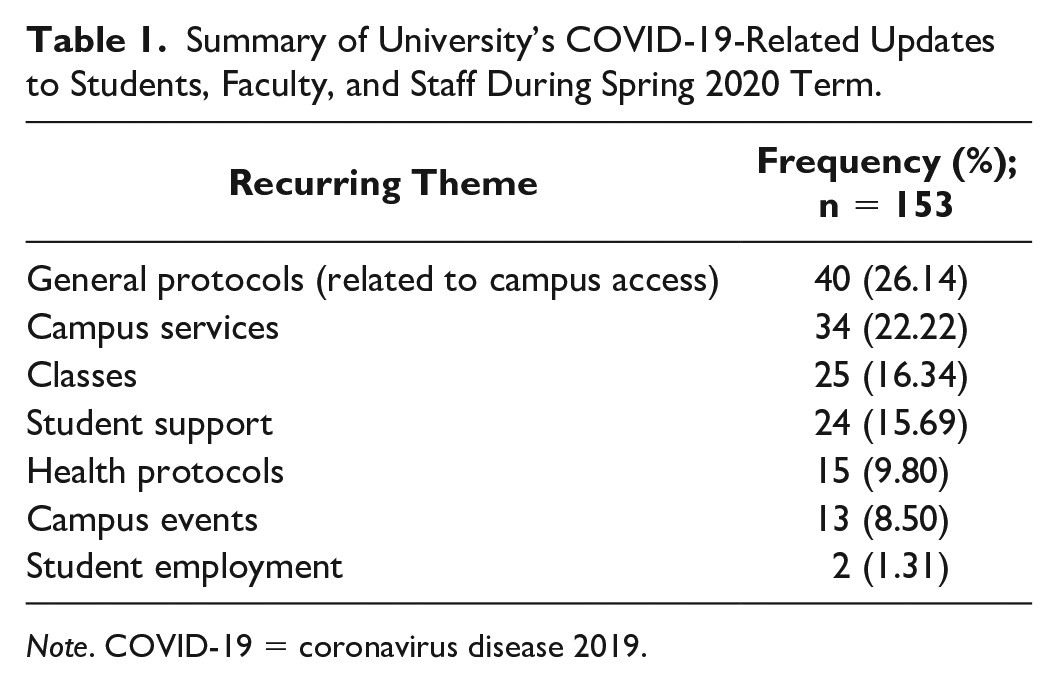
Note. COVID-19 = coronavirus disease 2019.
As the pandemic progressed, students, faculty, and staff coped with the transition to remote learning while also dealing with personal issues related to the pandemic. One recurring theme related to health care, education, and human rights was “We are in this together,” which pointed to the mutually shared responsibility to do our respective parts in the face of the pandemic (United Nations Sustainable Development Group, 2021). Rayburn et al. (2020) echo this notion, maintaining that higher education must develop a shared responsibility among the university community during societal turbulences. As members of that community, students may rely on various coping mechanisms to deal with the substantial and unexpected changes. This is of importance to marketing faculty as we navigate the remainder of the pandemic and strategize methods to successfully handle future crises that affect student learning.
Presently, researchers have focused on several factors to improve marketing education during times of crisis, such as hybrid versus online peer group grading (Vander Schee & Birrittella, 2021), the conversion of a face-to-face sales competition to a virtual format (Inks et al., 2020), student isolation and loneliness (Rippé et al., 2021), students’ perspectives on universities’ crisis management (Rayburn et al., 2020), and synchronous online discussion boards (Ackerman & Gross, 2021). For instance, Rippé et al. (2021) note that students face isolation and loneliness in record proportions, and transitioning to remote learning during the pandemic exacerbated these effects (Killgore et al., 2020). However, no article to date has empirically examined students’ sense of shared responsibility and coping strategies in higher education during a critical transition period. Therefore, this study examines how teaching and learning quickly transformed within a student population comprised primarily of marketing and other business students. Specifically, this article considers students’ coping mechanisms and sense of shared responsibility on their satisfaction with the rapid transitioning to remote learning and expected academic performance with the goal of providing implications that marketing educators can use in future crises.
Literature Review
Shared Responsibility in Marketing Education
In the general service context, shared responsibility is defined by Sierra et al. (2009) as the “mutual dependence or accountability for the success of a service outcome through verbal and physical efforts by the parties directly involved in the service exchange” (p. 111). In higher education, shared responsibility refers explicitly to the mutual dependence or accountability for academic success by students, faculty, staff, and administration (Cao et al., 2019). This notion is rooted in value co-creation in which the value of the exchange is created together by the provider and consumer (Albinsson et al., 2016; Prahalad & Ramaswamy, 2004; Vargo & Lusch, 2004). That is, for the exchange process to be successful, instructors, administration, and students are all responsible for the learning experience (Sierra, 2010). In a similar vein, Vargo and Lusch (2004, 2008) argue that consumers are active co-creators rather than passive receivers of value. In this essence, empowering students to be co-creators of the value can enhance their learning experience.
Studies in marketing have built on this notion, demonstrating that shared responsibility is a key component to creating value and encouraging consumer loyalty (Albinsson et al., 2016; Sierra et al., 2009; Sierra & McQuitty, 2005). Recently, Rayburn et al. (2020) conducted a qualitative study regarding students’ perceptions of their university’s response to the COVID-19 pandemic and concluded that there should be a shared responsibility for learning among universities, professors, and students. However, while studies have considered shared responsibility in higher education, no studies to the authors’ knowledge have empirically considered this framework during a disruption that required rapid transitioning of delivery mode.
Previous research on shared responsibility in marketing (Sierra & McQuitty, 2005) and higher education examined students’ perceptions and participation in the service exchange (Elsharnouby, 2015; Taylor et al., 2011), student motivation (Mostafa, 2015), feedback (Winstone et al., 2017), and student housing (Cao et al., 2019). Shared responsibility between instructor and student positively affected attitudes, emotions, behaviors (Sierra, 2010), value, word-of-mouth, and satisfaction (Cao et al., 2019). Satisfaction occurs when expectations are met or exceeded (Oliver, 1993), and research has shown a positive relationship between value creation and satisfaction (Chan et al., 2010). Given that shared responsibility has positive effects on various outcomes, including satisfaction, it is expected that when students feel that they share in the responsibility of transitioning to remote delivery, they will feel more satisfied with the process.
Coping Mechanisms
Individuals cope with stress, anxiety, and negative emotions differently. Coping differences may explain some students’ behaviors and outcomes. The psychological process of coping is complex and pervasive, and it is enmeshed in a network of cognitive, attitudinal, and behavioral correlates (Lazarus & Folkman, 1984). A coping model able to account for the multitude of various strategies enacted by individuals must reflect the complexity of these interconnected constructs (Duhachek, 2005). Duhachek (2005) conceptualized and empirically tested a three-dimensional higher-order coping model consisting of three strategies—active, expressive, and denial/avoidance coping. Of the various coping responses, the current study considers these coping strategies as common reactions in higher education (Pariat et al., 2014; Pierceall & Keim, 2007). For university students, coping is a key mechanism preventing a negative academic result (Tavolacci et al., 2013). As such, the authors investigate the effects of these three coping strategies (Tsarenko & Strizhakova, 2013) on students’ sense of shared responsibility with the university and the mediating role of shared responsibility in this process.
Active Coping
According to Duhachek (2005), active coping consists of “direct, objective attempts to manage a source of stress” (p. 44), meaning that people try to control their feelings/emotions, focus on the positive side of a situation, or deliberate how to resolve or alleviate the problem. Previous studies have considered active coping as a problem-solving strategy, task-oriented strategy, positive method, or approach coping (Cabras & Mondo, 2018; Deasy et al., 2014; Gustems-Carnicer et al., 2019; Rogers et al., 2016).
In addition, studies have examined students’ commitment to success in higher education while coping with stress (Cabras & Mondo, 2018; Spano, 2005). Kadison and DiGeronimo (2005) argue that responsibility in troubled times rests with health care providers, university administrators, faculty, parents, and students. When students feel that they are not alone in the situation, they may feel or perceive more control over the problem because they can reach out to others for help or share their stories, encouraging others to do the same (Spano, 2005). Tsarenko and Strizhakova (2013) argue that consumers who prioritize active coping strategies are likely to focus on finding a satisfactory solution to their problem. Problem solving often involves the exertion of verbal and physical efforts by the parties involved. The current study extends Tsarenko and Strizhakova’s (2013) assumption by postulating that students exhibiting active coping mechanisms may also affect students’ sense of shared responsibility.
Additionally, researchers found that active coping strategies are positively associated with academic performance (Deasy et al., 2014; Gustems-Carnicer et al., 2019). When investigating how college students experience stress, Gustems-Carnicer et al. (2019) discovered that students who utilized problem-focused (i.e., active) coping strategies performed better academically. Thus, the students’ use of active coping would encourage their sense of shared responsibility toward student learning and, ultimately, academic success.
Expressive Coping
According to Duhachek (2005), people attempt to reduce their stress or tension through venting or emotional discharge of their negative feelings. The belief in the value of venting has become widespread as people are commonly encouraged to release their emotions and “blow off steam” to improve their psychological state (Bushman, 2002). Furthermore, the ability to regulate one’s emotions (i.e., expressive coping) has been viewed as a key component in the processes underlying stress mitigation and life satisfaction (Saklofske et al., 2012). Expressive coping strategies were studied in relation to dealing with various negative emotions and stressors, such as coping with anger (Bushman, 2002), job loss (Spera et al., 1994), and service failures (Strizhakova et al., 2012; Surachartkumtonkun et al., 2013). In the marketing literature, expressive coping related to service failures had positive and negative outcomes (Tsarenko & Strizhakova, 2013). Similar results occurred in higher education research. For example, Gustems-Carnicer et al. (2019) state that despite students’ attempts to reduce stress through venting, an association exists between venting and increased distressing risky behavior, such as suicidal thoughts. Alternatively, Surachartkumtonkun et al. (2013) found that expressive coping strategies significantly affect positive behavioral intentions. Based on these findings, it stands to reason that students who seek out social support to improve their well-being may also exhibit a sense of mutual accountability for their academic success.
Denial Coping
People try to reduce stress by denying or passively dismissing the problem (Duhachek, 2005). Denial coping is both emotional and cognitive, as those who adopt this coping strategy begin to physically and mentally distance themselves from a negative situation by “fleeing” (Tsarenko & Strizhakova, 2013). For example, they may deny that the incident ever happened in response to a stressor or simply refuse to believe a problem occurred. When students adopt denial coping strategies, they may attempt to distance themselves from the situation by stopping class attendance, not completing assignments or projects, or not responding to faculty emails.
Deasy et al. (2014) found that students attempt to escape from or avoid stressful situations or deny that they are stressed, especially when students deem that they cannot control the problems or situations (Aguilar-Vafaie & Abiari, 2007; Gustems-Carnicer et al., 2019). Students in denial of a negative situation may not feel a shared responsibility for their academic success. A possible explanation for adopting this type of strategy is that many students do not want to burden others with their problems or fear admitting their vulnerability (Deasy et al., 2014). Other research found an association between students who adopted denial coping strategies and adverse outcomes, such as academic performance (Gustems-Carnicer et al., 2019), personal health and well-being, and depression (Pritchard et al., 2007; Tavolacci et al., 2013; Tolan et al., 2002; Zuckerman & Gagne, 2003).
Student Satisfaction and Academic Performance in Online Learning
Online learning appeals to many students for various reasons, including convenience, flexibility, and easy access (Croxton, 2014; Im & Kang, 2019; Yeboah & Smith, 2016). It is increasingly a norm in university curricula. Student satisfaction is of interest to universities as one way to measure course and instructor effectiveness. Early research in online learning satisfaction sought to understand the construct and how it affects students’ persistence in degree completion and continued enrollment (Alqurashi, 2019). Researchers determined that satisfaction with online courses is related to a host of factors, including external pressures (e.g., work), time constraints, finances, self-efficacy, access to technology, isolation, course design, and the learning platform (Bali & Liu, 2018; Im & Kang, 2019; Yeboah & Smith, 2016).
Just as satisfaction with online learning depends on multiple facets, previous research found contrasting results when comparing satisfaction with online and face-to-face classes. For example, Bali and Liu (2018) found no significant differences in satisfaction between online and face-to-face students taking the same courses. Conversely, Tratnik et al. (2019) observed that face-to-face learners reported higher satisfaction than their online counterparts, including satisfaction with the overall course, course quality, and belief that their expectations were met. Similarly, mixed results were found by researchers who investigated whether academic performance was related to students’ satisfaction in online and face-to-face courses. On the one hand, Sembiring (2015) found a significant and positive relationship between the Servqual satisfaction framework and students’ academic performance. On the other hand, Yeboah and Smith (2016) concluded that no significant relationship exists between satisfaction and academic performance in various online courses. It is also worth noting that academic performance was measured using grades or GPA in both studies.
Overall, no prior research was found investigating student satisfaction during abrupt transitioning from face-to-face to remote delivery in the same course, nor was any literature discovered that examined how that change affected students’ academic performance expectations. However, research shows that students have different perceptions of online and face-to-face courses in general, and these perceptions can affect their persistence, motivation, and performance. Students with higher perceptions and more motivation typically perform better than students with less positive perceptions (Kauffman, 2015). Based on these findings, we postulate that students exhibiting higher levels of satisfaction with the university’s process of transitioning to remote delivery will hold higher academic performance expectations.
In summary, based on the discussion, it is expected that students’ sense of shared responsibility affects student outcomes, such as student satisfaction and expected academic performance during a rapid transitioning to remote learning (Figure 1). Additionally, how students cope with the transitioning would affect their sense of shared responsibility and expected performance. This study is the first to consider shared responsibility in higher education during a critical transitioning period to the authors’ knowledge.
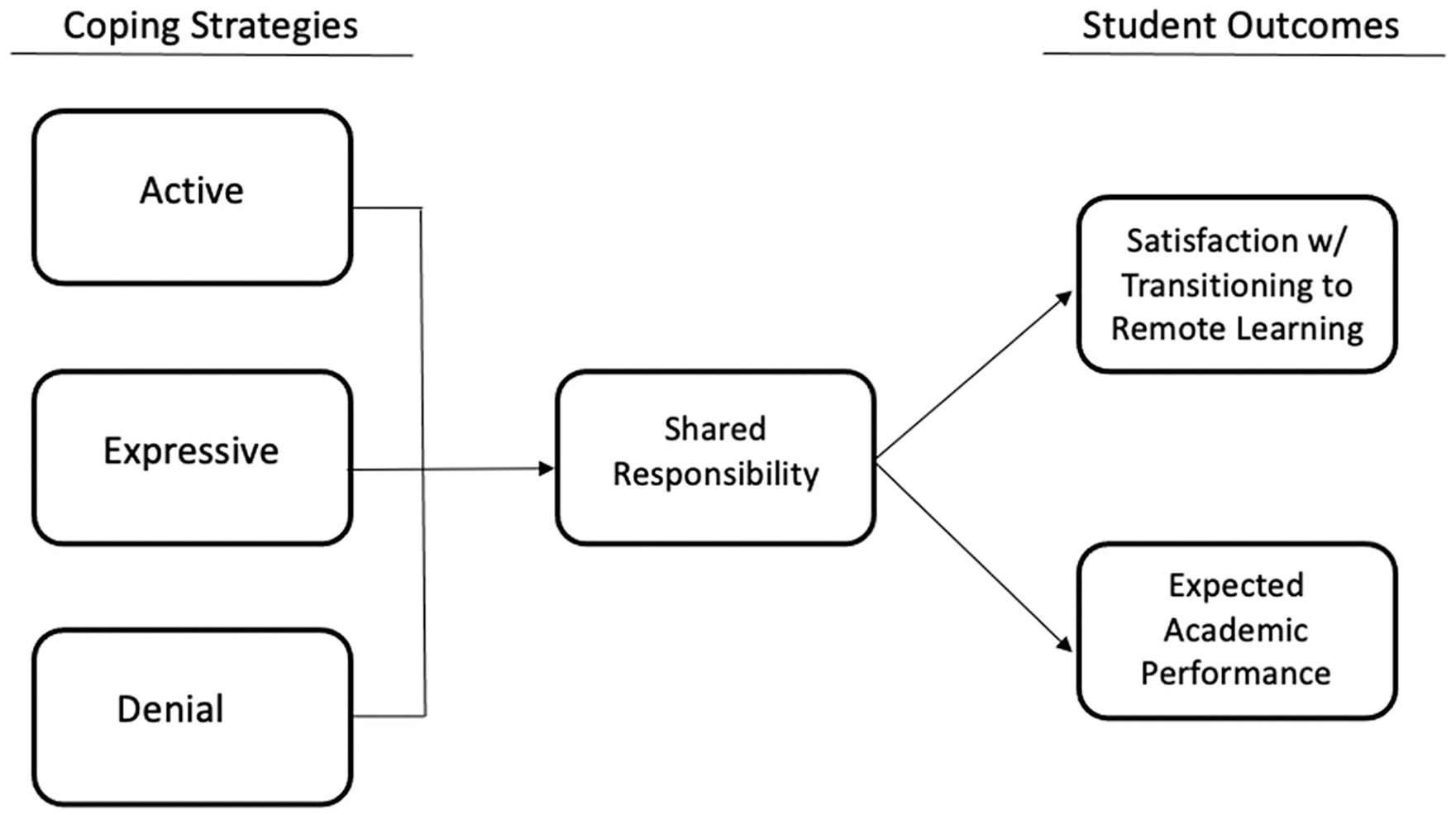
Conceptual model of shared responsibility on coping strategies and student outcomes.
Methodology
Study Design
A survey study was conducted before the end of the spring 2020 semester at a university in the southeastern region of the United States. The online survey was administered through Qualtrics, and students were offered extra credit in return for their participation as deemed appropriate by their professors (e.g., five extra points on an exam). Respondents were prompted with a writing task asking them to recall their experience with the rapid transitioning to remote learning during the pandemic, followed by demographic questions. Initial analyses were performed using IBM SPSS Statistics, Version 25. A serial multiple mediation analysis using the PROCESS statistical package (Hayes, 2013) examined the direct and indirect effects of coping strategies on students’ expected academic performance with students’ sense of shared responsibility and satisfaction with the rapid transitioning to remote learning.
Sample
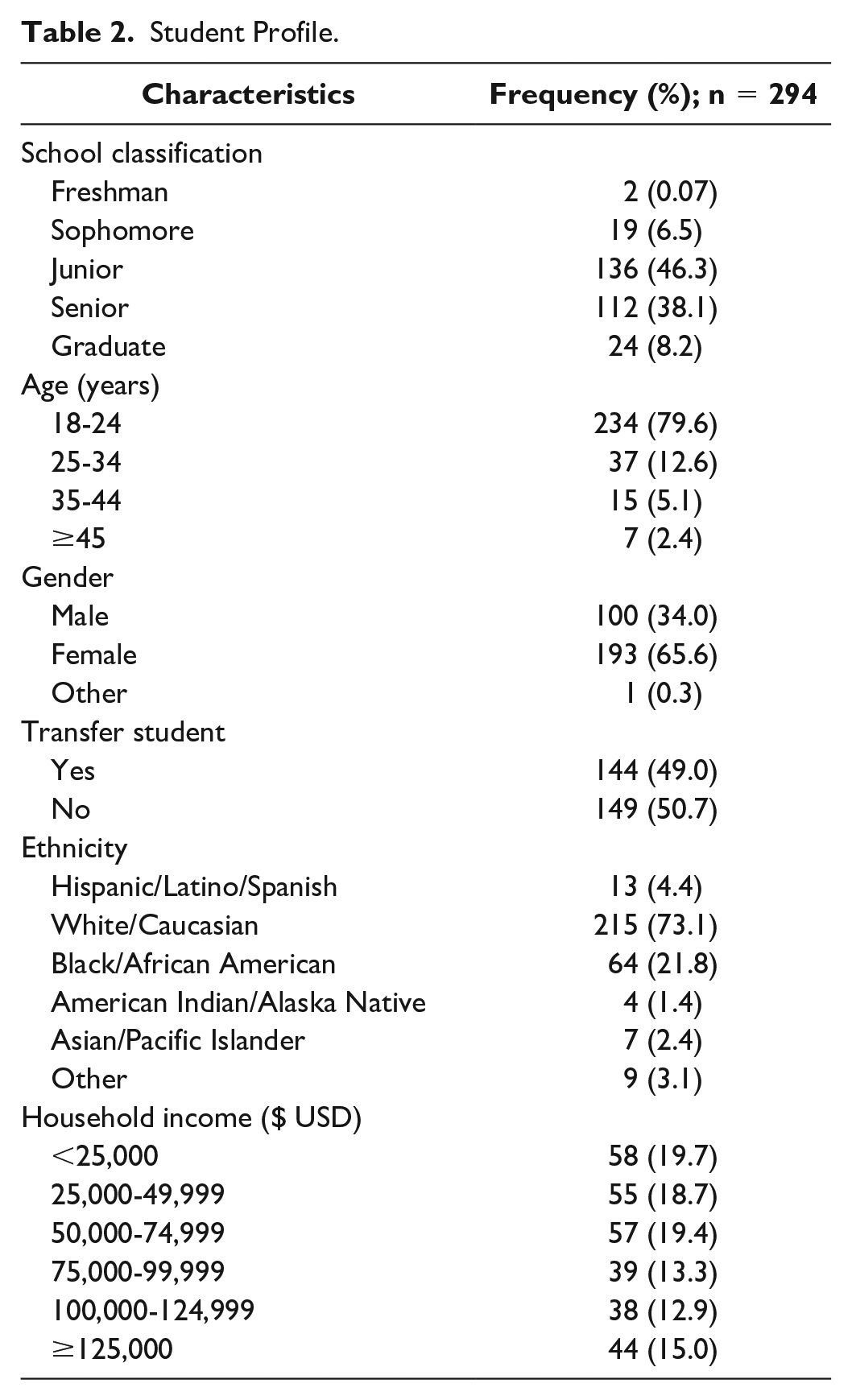
The sample was composed of undergraduate and graduate business students currently enrolled in marketing courses. Marketing faculty recruited students from their classes in exchange for extra credit. Similar to other universities, students represented a variety of majors since marketing courses are required for many majors and are required as part of the College of Business core. After examining multiple attention checks and response bias, the final sample consisted of 294 respondents (see Table 2). The respondents were 65.6% female and ranged between 18 and 50 years old, with an average age of 24 years. Nearly 80% were between 18 and 24 years old. Most of the respondents took an online course before this semester (95.7%), and 72.6% of the respondents were enrolled in a mix of face-to-face and online classes when transitioning to remote learning. A similar COVID-19 survey was conducted by the university in which 77.6% (N = 1,380) of participating business students indicated current or previous enrollment in at least one online course. Marketing majors (and all business majors) are required to complete a series of three 1-hour online professionalism courses, which may explain the high percentage of students reporting having taken an online course before transitioning due to COVID-19. About 14% of the sample reported enrollment in face-to-face classes only. Table 2 details the student profile.
Student Profile.
Preliminary Analyses
Measurement of all constructs was adapted from established scales in the marketing literature. Students’ sense of shared responsibility with the university was measured using four items (Sierra et al., 2009; Sierra & McQuitty, 2005). The focal university name replaced “The University” in each item. A shortened version of Duhachek’s (2005) three-dimensional coping scale was adapted, including active (seven items), expressive (six items), and denial (three items) coping strategies (Tsarenko & Strizhakova, 2013). Satisfaction with transitioning to online learning was measured using four indicators (Lam et al., 2004; Oliver & Swan, 1989). Last, student expectation of academic performance was measured with one item by asking students what letter grade they expected to earn at the end of the semester. All latent constructs were measured on a 7-point Likert-type scale unless otherwise noted. Initial analyses using IBM SPSS Statistics, Version 25, suggested that all constructs were reliable and unidimensional (Churchill, 1979; see Table 3).
Correlations, Means, Standard Deviations, and Cronbach’s Alphas.
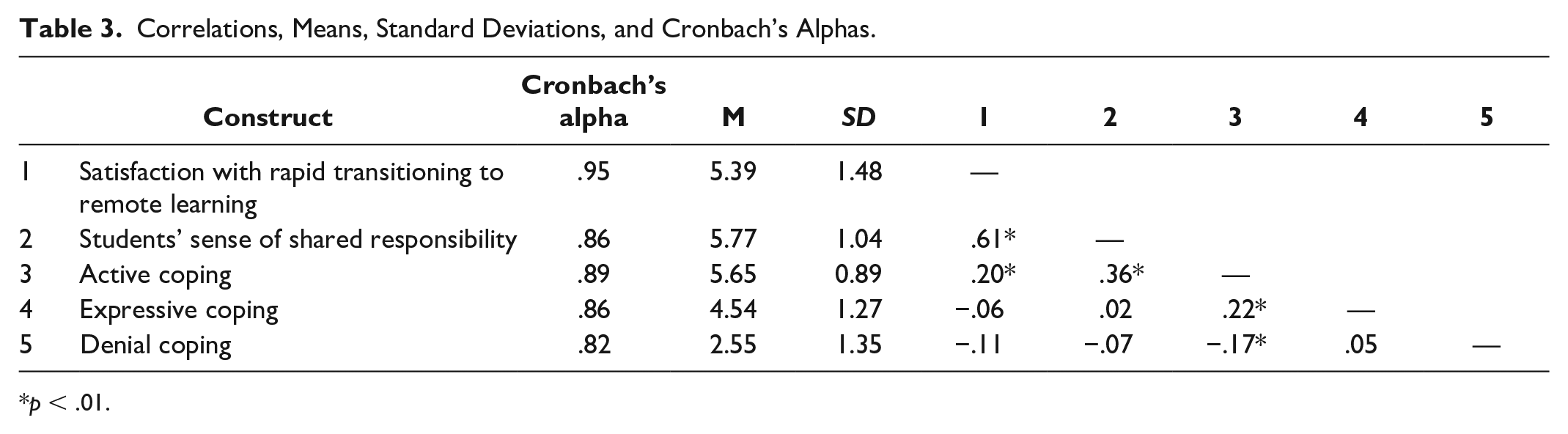
p < .01.
Results
Overall Measurement Model
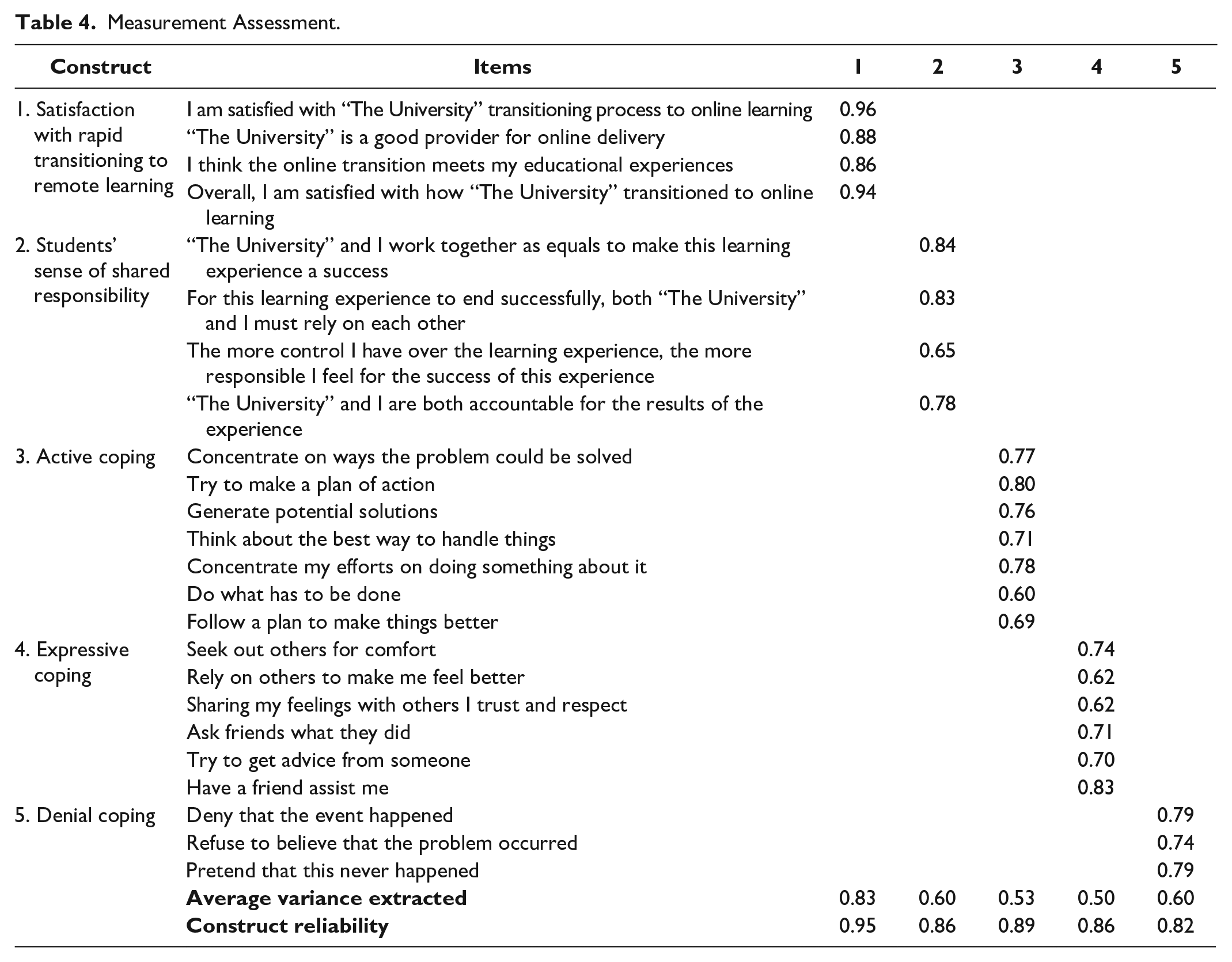
Construct validity was tested by specifying a congeneric confirmatory factor model in which each scale item loaded onto its respective construct. The results of the confirmatory factor analysis revealed that all constructs showed convergent validity with an average variance extracted over 0.5 and composite reliability over 0.80 (Fornell & Larcker, 1981). Discriminant validity was tested by examining whether the average variance extracted for any two constructs exceeded the squared correlation coefficient between the same two constructs (Fornell & Larcker, 1981). Table 4 provides evidence of convergent and discriminant validity for each construct. The model fit of the confirmatory factor analysis is good (χ2 = 427.39 with 242 degrees of freedom, p < .001, comparative fit index = 0.95, root mean square error of approximation = 0.05) with a sample size over 250 (Hair et al., 2006).
Measurement Assessment.
Main Analysis
A serial multiple mediational analysis was conducted using ordinary least squares path analysis (Hayes, 2013) to determine the effects of coping strategies (Active, Expressive, Denial) on students’ expected academic performance (Expected Grade) via students’ sense of shared responsibility (SR) and satisfaction with rapid transitioning to remote learning (SAT; Figure 2). Supporting Hypothesis 1, SR was positively related to SAT (d = 0.874, p =.000). Hypotheses 2A and 2B were also supported, in which Active Coping was positively related to SR (a1 = 0.430, p = .000), and Active Coping positively influenced Expected Grade (c1 = 0.133,p = .039), respectively. Active Coping is the strongest predictor of Expected Grade.
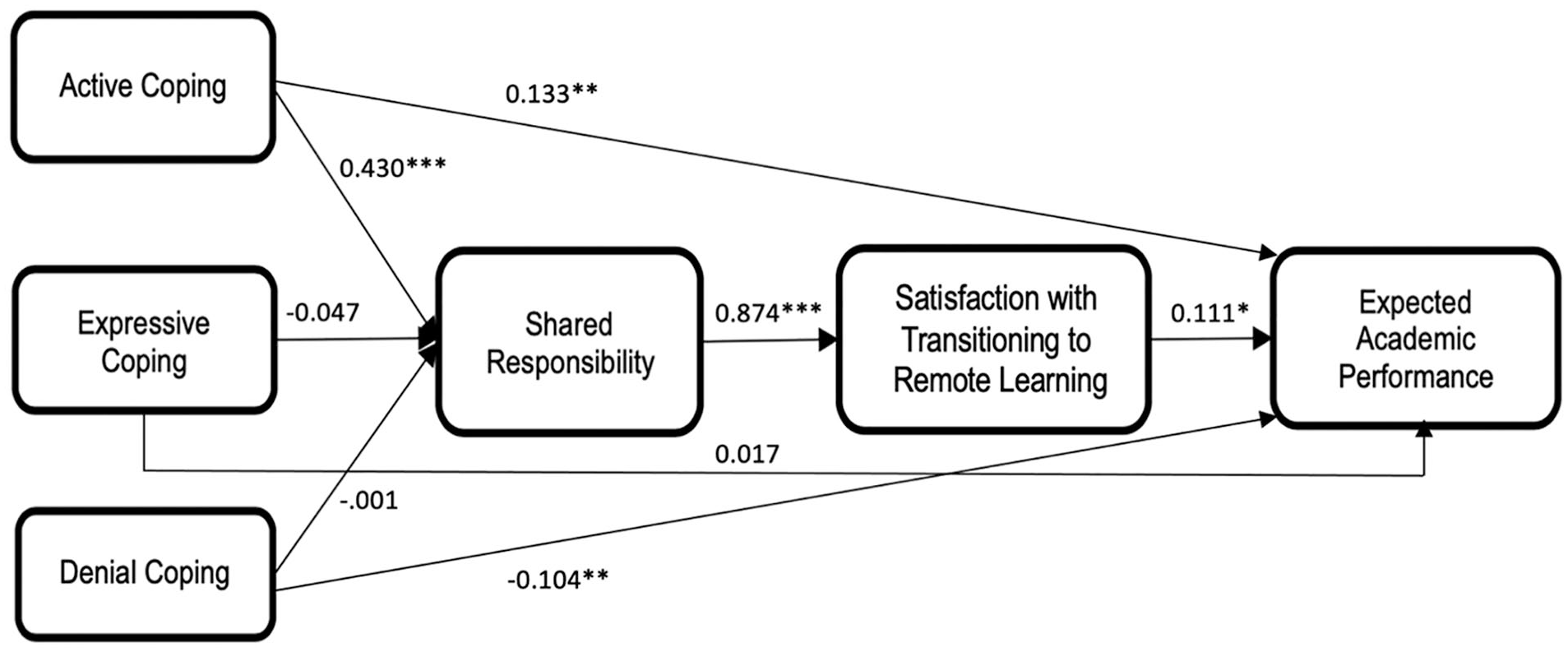
Empirical model of shared responsibility on coping strategies and student outcomes.
Contrary to Hypotheses 3A and 3B, the direct effect of Expressive Coping on SR (a2 = −0.047, p = .306) and Expected Grade (c2 = 0.017, p = .681) were not significant. In addition, Hypothesis 4A was not supported as Denial Coping on SR was not significant (a3 = −0.001, p = .974), although the relationship was in the right direction. However, Hypothesis 4B was supported as Denial Coping negatively influenced Expected Grade (c3 = −0.104, p = .007). Last, supporting Hypothesis 5, SAT positively influenced Expected Grade (b = 0.111, p = .012) while controlling the coping strategies.
The indirect effects were also tested using a percentile bootstrap estimation approach with 5,000 samples (Shrout & Bolger, 2002; see Table 5). The result of the bootstrap confidence interval for the indirect effect of Active Coping on Expected Grade through SR and SAT was above zero (0.004-0.093). This result provides evidence that students utilizing active coping had a higher sense of shared responsibility, leading to greater satisfaction with rapid transitioning to remote learning, and in turn, to higher expectations of academic performance.
Regression Coefficients, Standard Errors, and Model Summary for Shared Responsibility and Satisfaction Serial Multiple Mediator Model.

Note. SE = standard error; CI = confidence interval; SR = shared responsibility; SAT = satisfaction with rapid transitioning to remote learning.
Post Hoc Analyses
Students’ backgrounds were also considered in the analyses. Post hoc analyses reveal that age, gender, ethnicity, and whether they were a transfer student made no significant difference in this study. Interestingly, school classification was significantly different with their sense of shared responsibility and expected grade performance during the transition to remote learning, as well as household income on expected grade performance and coping mechanisms (Table 6). Specifically, an analysis of variance (ANOVA) on school classification yielded significant variation among conditions for SR, F(4, 292) = 3.27, p = .012, and for Expected Grade, F(4, 291) = 4.04, p = .003. An ANOVA on household income also yielded a significant variation among conditions for Expected Grade, F(5, 289) = 3.07, p = .010.
Means and Standard Deviations of Post Hoc Analyses.
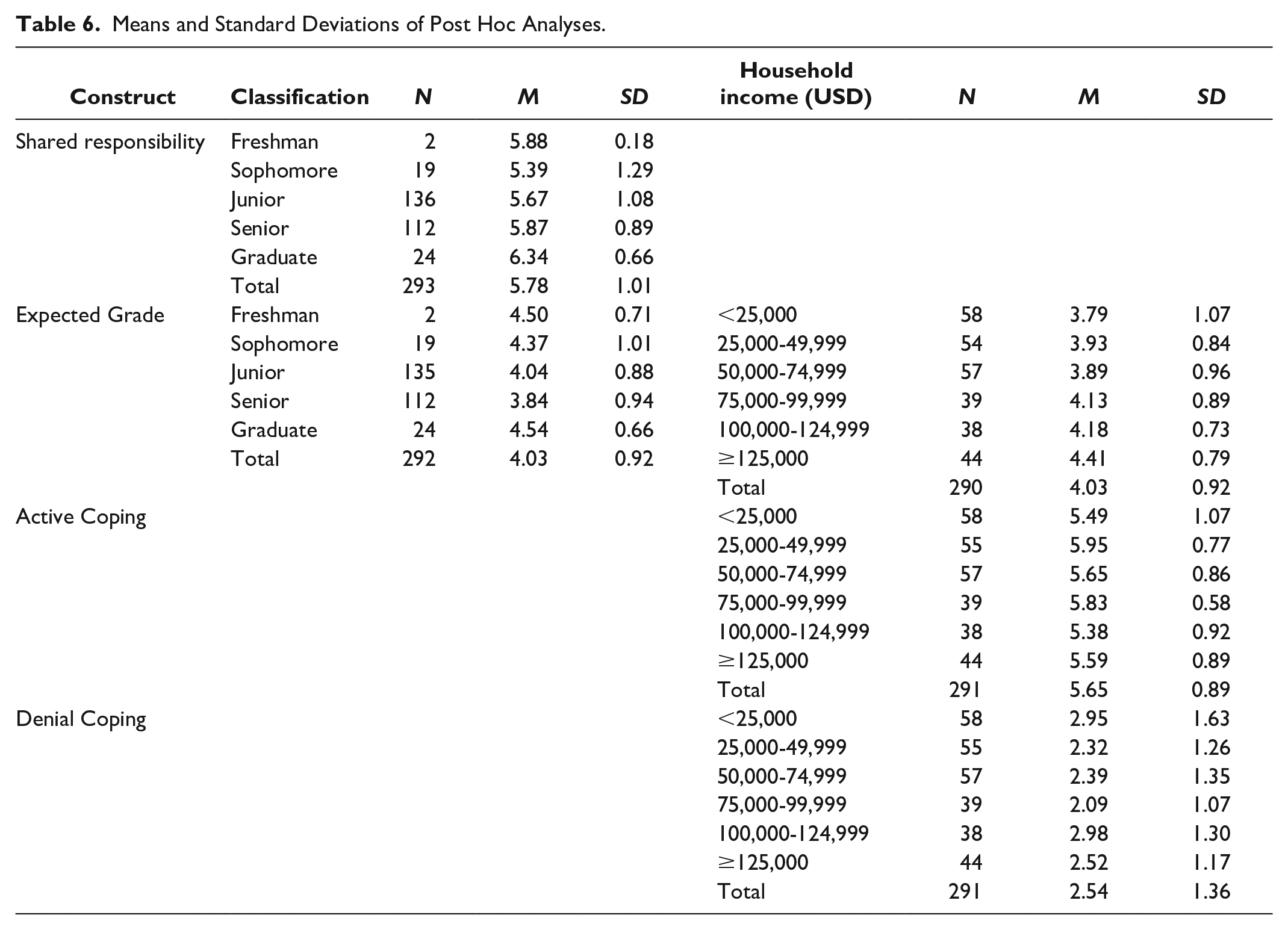
A Tukey post hoc test revealed that graduate students and sophomores differed significantly at p = .018, and graduate students and juniors differed significantly at p = .020 with SR. There was no statistically significant difference between the other classification levels. For Expected Grade, a Tukey post hoc test also showed that graduate students and seniors differed significantly at p = .005, and households with less than $25,000 and more than $125,000 were significantly different at p = .009.
Last, an ANOVA on household income resulted in a significant variation for Active Coping, F(5, 290) = 2.76, p = .019, and for Denial Coping, F(5, 290) = 3.33, p = .006. A Tukey post hoc test revealed that households with $25,000 to $49,999 and $100,000 to $124,999 differed significantly at p = .028 with Active Coping. For Denial Coping, households with less than $25,000 and $75,000 to $99,999 were significantly different at p = .022, and $75,000 to $99,999 and $100,000 to $124,999 were significantly different at p = .039.
Discussion
The purpose of this study was to examine how students responded during the university’s transitioning of services and courses to remote learning during the pandemic. After transitioning online in mid-March of 2020, the results show, as hypothesized, that students who were satisfied with the university’s adjustment to remote learning also held positive perceptions about their expected academic performance at the end of the semester. Previous literature revealed mixed results about student satisfaction and academic performance (Sembiring, 2015; Yeboah & Smith, 2016). This article provides empirical support linking satisfaction during an abrupt shift online to expected academic performance. Additionally, students who felt a sense of mutual accountability in their classes’ transitioning to remote delivery also felt more satisfied with the process, maintaining that a “shared responsibility is necessary to ensure a continuity of learning” during challenging times (Rayburn et al., 2020, p. 4).
For the focal university in the southeastern part of the United States, transitioning to remote learning occurred at the midpoint of the spring term, giving students and faculty about 2 months to develop course-related habits and perceptions. Since some students had the opportunity to build relationships with one another and their instructors before transitioning online, there could be a sense of camaraderie or trust that the transition would be satisfactory. This relationship-building could then lead students to have favorable perceptions of their expected academic performance after transitioning to remote learning. Our post hoc tests revealed that upper-level students were significantly different from lower-level students with shared responsibility and expected grade performance. Graduate programs typically require students to share more of the responsibility in the learning process by nature, which may account for a greater sense of shared responsibility in times of crisis. These results illustrate that shared responsibility plays a role in higher education (Cao et al., 2019; Sierra, 2010) and active coping mechanisms.
This study’s findings also highlight the importance of active coping strategies on expected academic performance in higher education, a finding that aligns with research by Deasy et al. (2014) and Gustems-Carnicer et al. (2019). When encountering or experiencing stress, students who are proactive can potentially improve their academic performance. These active coping strategies are typically problem-solving or task-oriented that may help students refocus their thoughts, put forth more effort to overcome challenges, or develop ways to do better in their classes.
While expressing or venting feelings may help students cope with anxiety due to stress caused by uncertainty and fluctuating variables, the current findings do not support the notion that expressive coping strategies positively affect satisfaction with transitioning and expected academic performance. A possible explanation is that COVID-19 affected everyone. Hence, students may experience academic stress but think their situation is incomparable to friends or family members facing the loss of loved ones or jobs. Consequently, they may choose not to bother others by expressing or venting their feelings. Another possible explanation is that COVID-19 presents a unique situation since transitioning to remote learning affected all courses. The isolation resulting from the lack of face-to-face course interaction may have presented significant emotional challenges with which students could not cope.
Interestingly, denial coping strategies presented mixed results in this study. Students with denial coping mechanisms did not expect to perform well academically, a finding that aligns with Gustems-Carnicer et al. (2019). However, the results do not support the negative association of students who use denial coping and their sense of shared responsibility with the university. A possible reason is that although students may distance themselves from their problems, they may perceive that the university and faculty should be fully responsible during a pandemic. Overall, our results indicate that students cope with stress related to the pandemic differently, and these coping differences may explain some students’ subsequent behaviors and academic outcomes.
The post hoc analyses also revealed significant differences in household income with grade expectations and active and denial coping mechanisms. The variations generally relate to the ends of the income spectrum. It appears that lower-income students expected lower grades than those with higher household incomes. However, higher-income students seem to be less engaged in active coping than lower incomes. Last, the disparity between household incomes showed variation in denial coping compared with those with middle household incomes. These findings provide some evidence that socioeconomic indicators, such as household income, may play a role in students’ expectations for academic success and coping strategies.
Contributions and Implications
One of this study’s main contributions is extending shared responsibility in the marketing education literature. While previous research has found a positive relationship between students’ perceptions of shared responsibility and student learning (Sierra, 2010), this article is the first to empirically examine students’ sense of shared responsibility in higher education during a critical transition period. In creating a more favorable marketing education experience, instructors and administration can encourage shared responsibility with students by modeling how to share information in times of uncertainty or stress and by communicating with students about changing situations, issues, and plans. The focal university made efforts to instill a “We are in this together” plan given the COVID-19 policies and communications throughout the semester (e.g., Table 1). Some of the measures to directly involve students included the following: (1) Make students feel that they are not alone, (2) show students that the university and faculty understand the situation and care about them, and (3) help students be aware that the institution is working hard to resolve issues. Simultaneously, students should also (1) communicate their needs so the university and faculty can respond accordingly, (2) consider the university’s situation and decisions, and (3) be ready to do their part or be involved in the university’s requests or requirements.
In this study, an active coping strategy was the strongest predictor of expected academic performance, compared with expressive and denial coping mechanisms, suggesting that active coping, or problem solving, could be an ideal, healthy approach during challenging times. More importantly, while students can certainly employ other coping strategies, they should still integrate active coping methods. Rippé et al. (2021) demonstrate that instructors should promote students’ sense of perceived control while providing practical tips on how to cope with stress during a pandemic. This mechanism can help students realign their focus and seek solutions to their problems. These problem-solving mechanisms often involve the exertion of verbal and physical efforts. For instance, various educational companies offer subscriptions and free trials for students, providing practical solutions for crisis-related stress mitigation (Williamson et al., 2020). Accordingly, universities and faculty should consider providing a template and encouraging students to write out a plan of action that includes solutions they can control. As a result, students would take ownership of their plans, leading to better learning outcomes.
Furthermore, this study presents a unique perspective and provides implications that could increase student satisfaction and academic performance during crises. Research in higher education indicates that when students have a strong sense of community, learning persistence, motivation, and satisfaction increase (Rovia, 2002). Realizing that they are part of the broader campus community can positively affect students’ attitudes toward their courses and the university, influence their emotions and behavior, and affect their satisfaction. Similarly, understanding such connections may help universities optimize their approach to handling global or local crises while ensuring student well-being and maintaining education quality.
For marketing education, it is crucial for faculty to emphasize the importance of communicating with consumers in times of crisis. Both profit and nonprofit organizations need to have marketing communication strategies in place during challenging times. Additionally, students need to understand how to communicate with their target audiences. Utilizing different communication tools and message deliveries to different target audiences during times of crisis would help increase dialogue, interaction, and accountability. Moreover, including a syllabus statement regarding the existence of a strategic crisis plan for the course and university and modeling active coping strategies for even minor disruptions to learning (e.g., weather-related closures, group project conflicts) can benefit students.
Teaching Strategies for Marketing Educators During Challenging Times
A major takeaway from this study is the understanding that during times of challenge or crisis, it is vital that instructors establish shared responsibility strategies with their students. Table 7 provides some examples of practical implications before, during, and after rapidly transitioning to remote learning. These strategies and tactics are not all-inclusive but examples of how faculty at the focal university pivoted learning online. Leaning on value cocreation, encouraging students to be active participants or co-creators of their education would lead to a more favorable learning experience. As such, dialogue or communications with students through emails or learning management system announcements can be used to discuss what is going on in classes and the university and to address common student concerns. These communications can be written or in audio or video formats that can be communicated on a regular or “as-needed” basis. Instructors should indicate the student’s responsibility to inform instructors of their struggles and needs. Additionally, instructors may consider integrating easy access links to university resources, including, but not limited to, counseling, financial, and tutoring services. It is important that instructors draw attention to these resources in their syllabi, class discussions, and announcements, stressing their availability to all students. Doing so can make students feel more connected to the university community, leading to a stronger sense of shared responsibility.
Shared Responsibility Strategies for Marketing Educators.
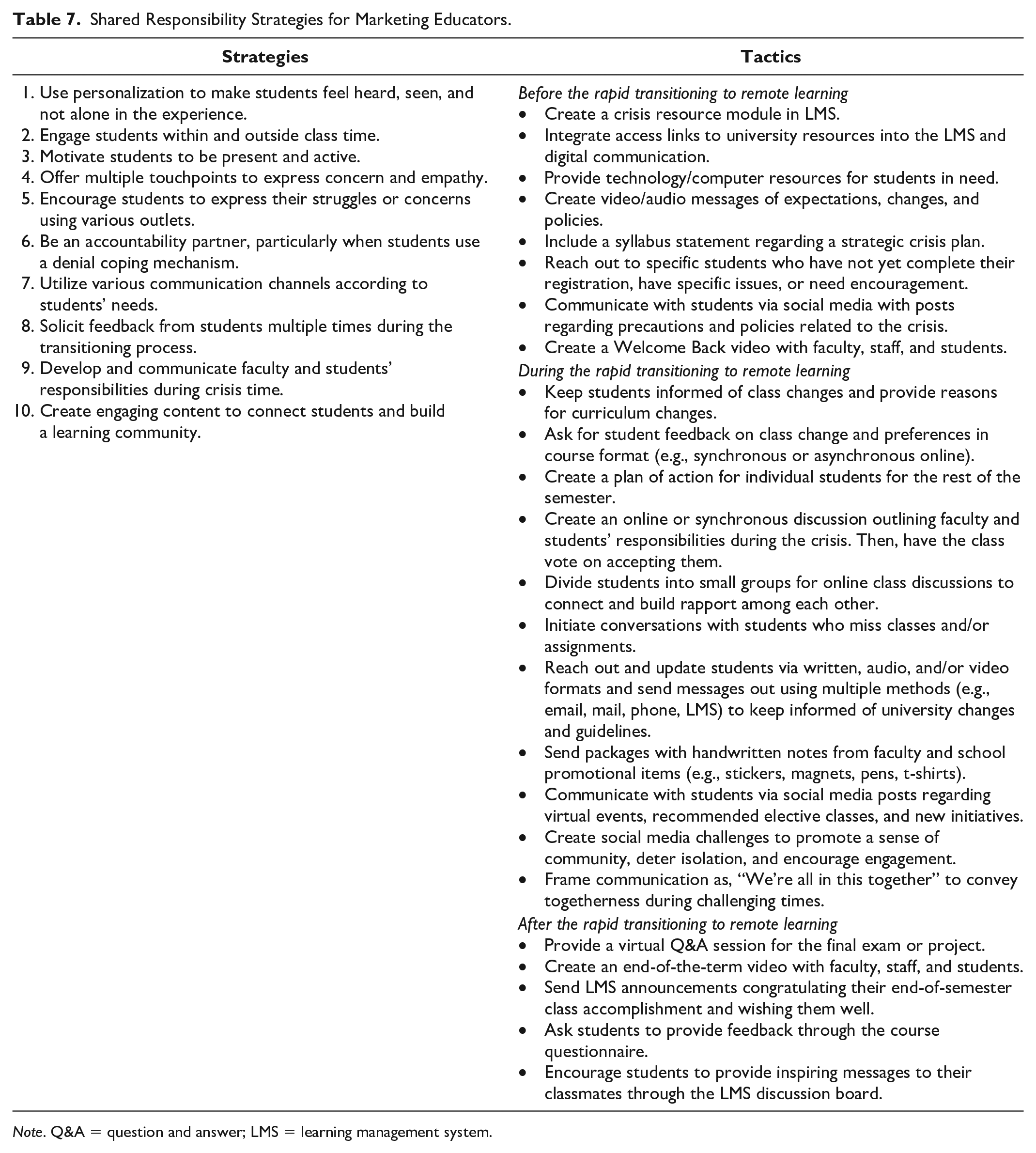
Note. Q&A = question and answer; LMS = learning management system.
Furthermore, instructors should strive to be more sensitive and vigilant in checking on students who have missed or avoided synchronous class times or assignments, blamed others for their problems, or made unrealistic academic goals. While students may not be aware, these behaviors could indicate that a student might be employing a denial coping mechanism in which instructors should be cognizant, especially during a pandemic. Therefore, instructors can prevent escalating student crises by being an accountability partner with students by asking them why they missed a class or an assignment. This communication may initiate a conversation that helps students alter their coping mechanism from denial to an active strategy, helping them press through times of trouble or crisis and developing a plan of action. For example, a student may respond that they are struggling for reasons related to the crisis. Hence, faculty could guide the student to utilize university resources and offer encouragement to help the student turn around and complete the semester successfully.
Limitations and Future Research
This research focused on transitioning abruptly to remote learning due to a global pandemic. Additional research is needed to determine if the implications are relevant in similar, more localized situations, including hurricanes and other natural disasters. Also, the data were collected at a single university in the United States and focused on the students’ responses to the rapid transitioning to remote learning and the university’s communication efforts. Future research is needed at different institutions, such as K-12, community colleges, private universities (Tamrat, 2021), and other public universities, to extend the generalizability of the findings. Other possible directions for future research would be to investigate students’ cultural, socioeconomic, and other demographic differences to produce similar findings. There could also be different results based on students’ support systems outside the university community.
Based on value cocreation, a successful learning experience requires the cooperation of everyone (instructors, administration, and students) involved in the exchange process (Cao et al., 2019; Sierra, 2010). Capturing faculty and administration responses during challenging times would provide a complete picture of the shared responsibility framework. Further work is also needed to determine whether differences exist in delivery mode before and after the transition to remote learning. For example, students may differ in classes transitioning from face-to-face to online asynchronous versus synchronous delivery.
Last, future research should consider other coping mechanisms during times of transitions and uncertainty. Positive and healthy coping mechanisms can result in a more positive student learning experience despite the circumstances, which may contribute to better academic performance and retention efforts. To ensure that students succeed academically during a crisis, universities and faculty should help students understand that coping with stress is a learning process evolving with time and experience.
Final Thoughts
Globally, educators faced unprecedented challenges as COVID-19 necessitated a rapid transition from face-to-face to remote learning. Shared responsibility in higher education applies to the university, faculty, and students (Rayburn et al., 2020). Encouraging students’ sense of shared responsibility and proactive coping during challenging times may be essential to not only crisis management but also student well-being and academic performance.
Footnotes
Declaration of Conflicting Interests
The author(s) declared no potential conflicts of interest with respect to the research, authorship, and/or publication of this article.
Funding
The author(s) received no financial support for the research, authorship, and/or publication of this article.
