



Abstract
The article analyzes contracting challenges faced by Italian health care authorities and U.S. procurement officials in the immediate aftermath of the COVID-19 crisis, and it provides practitioner-derived lessons for improving procurement in times of disaster. The lessons we have learned so far emphasize (a) the need to recognize the strategic role of procurement, (b) empowering procurement officials, (c) formalized coordinative mechanisms cannot ensure effectiveness without trust among different governance levels, (d) the ability to identify reliable and proactive suppliers of personal protective equipment, (e) the importance of stimulating the economic market to diversify the production of needed materials and to ensure a more risk-resilient supply chain, and (f) the critical role of public–private collaborations to ensure responsiveness and resilience of health care systems.
Keywords
Introduction
The crisis surrounding the 2019 novel coronavirus (COVID-19) highlights the case for strategic procurement of medical supplies, such as ventilators and personal protective equipment (PPE), whose global supply chains were initially disrupted by the lockdown in China and, subsequently, by a surge in global demand. Responding to a global emergency such as COVID-19 requires the development of systems that can improve disaster resilience (Holling, 1973; Manyena, 2006), and efforts to expand and sustain the procurement of medical supplies. The challenge is that public procurement transfers higher levels of contract risk onto public agencies in times of disaster (Buor, 2019; Gabler et al., 2017; McKnight & Linnenluecke, 2016; Walker et al., 2013). Procuring authorities require goods and services at the same time, setting off bidding wars that escalate the costs of supplies. Because of the lack of suppliers, procurement officials often rely on vendors from gray markets (Antia et al., 2006; Huang et al., 2004), including those who may have little or no experience working for the government or even in supplying the products they have been contracted to provide. Procurement officials also rely on thin markets (Beck & Maher, 1986; Theobald & Price, 1984), whereby the number of available vendors is limited and the urgent need for medical supplies requires sole-sourced, no-bid contracts.
This article sheds light on the main challenges faced by two of the countries most affected by COVID-19, Italy and the United States, which are characterized by opposite health care systems. Private providers and private insurance companies characterize the U.S. system; in Italy, there is a national health care service with universal coverage, financed by general taxation. In both countries, there are procuring agencies that serve a network of hospitals. The procurement of medical supplies in Italy and the United States have traditionally prioritized contractor competition, to avoid service cuts in the former and to increase profitability in the latter (Meehan et al., 2016). For example, U.S. hospitals and their purchasing agents have come to rely less on their own stockpiles of supplies of PPEs (Volland et al., 2017) and have, instead, turned to just-in-time inventories to bring down costs (Swanson, 2020). In both the United States and Italy, hospital purchasing depends on foreign manufacturing and international supply chains that provide critical input products for the domestic medical suppliers that remain. As a case in point, the United States imported more than $8.3 trillion in medical and pharmaceutical supplies from Chinese firms in 2019 alone, which is estimated to produce more than 50% of the world’s surgical face masks (UNICEF, 2020).
Another issue for Italian officials is that public procurement in health care has come to prioritize cost and compliance over innovation (Patrucco et al., 2016). There has been a severe lack of identifying governance solutions that could transform procurement into a more strategic process—specifically, to stimulate innovation, coordination, and evidence-based decision-making. The perception that efforts to prevent corruption in contracting have swung so far that bureaucratic cultures and the overlapping and fragmented nature of legal controls stifle any attempt at contracting innovation (Meehan et al., 2016). The result is a formal and informal public procurement institution that does not give adequate attention to issues of long-term risk in supply chain disruptions, business continuity concerns, or product integration—which could better buffer the public sector to surges in demand.
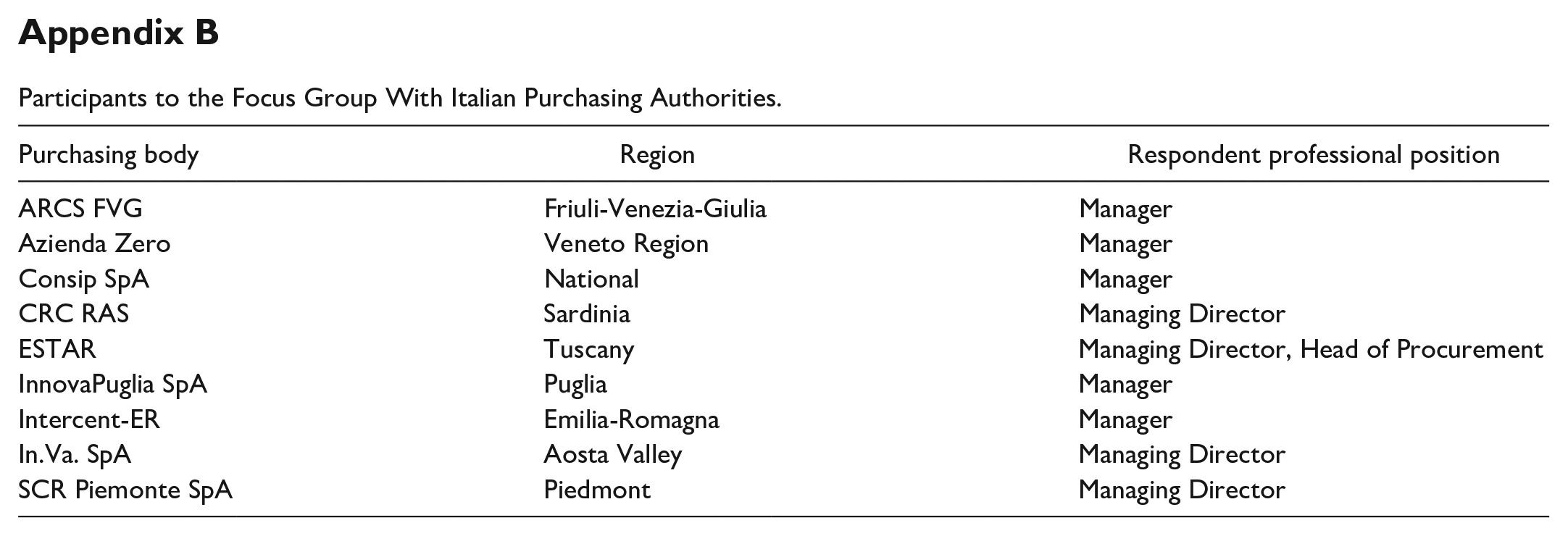
The commentary analyzes contracting challenges faced by Italian health care authorities and U.S. procurement officials in the immediate aftermath of the COVID-19 crisis, and it provides practitioner-derived lessons for improving procurement in times of disaster. While the implications of the crisis are still evolving, we draw from 30 in-depth interviews with members of the leading medical supply companies and procurement officials in Italy (consulted in two waves in the first 45 days of the pandemic in Italy; see Appendix A); a focus group with representatives of regional centralized public purchasing bodies and one representative of Italian national purchasing agency, Consip (see Appendix B); U.S. federal contracting data; and archival records to derive our conclusions. The empirical findings, while drawing from preliminary observations in the crisis, offer evidence-based solutions and promising practices to provide guidance to procurement officials from a variety of public-sector backgrounds (Jennings & Hall, 2011). The central findings suggest the potential for a strategic approach to public procurement, and more collaborative, partnership-based approaches for mitigating supply-related risks between business and government. Table 1 summarizes the main differences between a conventional vis-à-vis strategic procurement.
Conventional Procurement Versus Strategic Procurement.
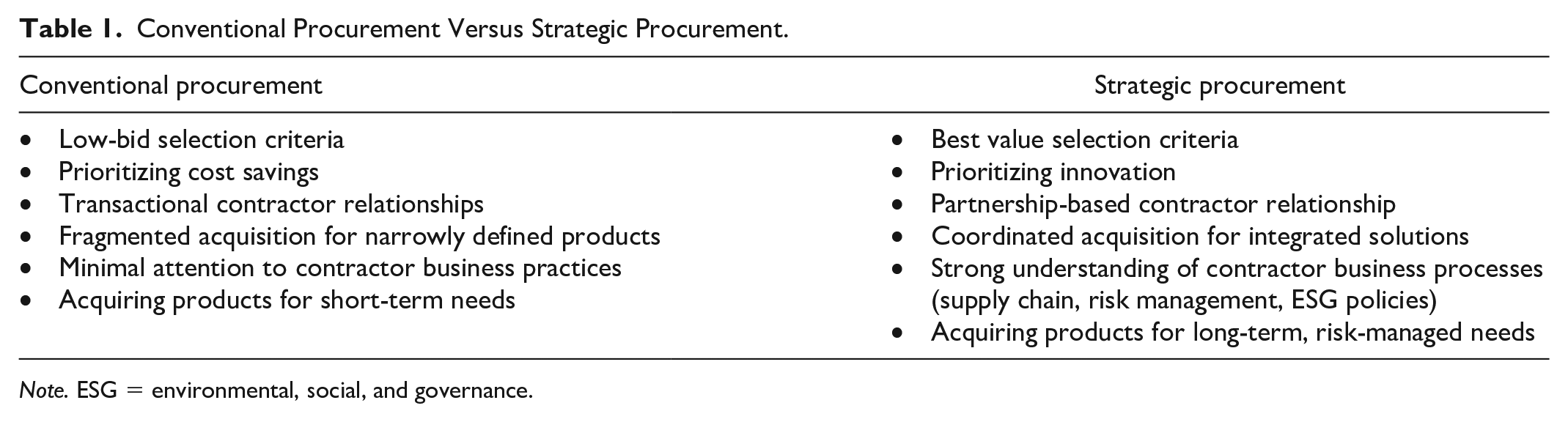
Note. ESG = environmental, social, and governance.
Procuring During a Health Emergency: Challenges in Italy and the United States
The Italian Case
Italy was the first Western country to be struck by the COVID-19 outbreak. Their early involvement in the crisis provided authorities with an advantage in procuring supplies from the international marketplace, but they were disadvantaged in developing their crisis response plans without many other examples to follow. Public procurement is administered at three governmental levels in Italy: Consip, the national purchasing agency, procures at the national level; regional purchasing agencies procure goods at the regional level; and local health authorities acquire goods not covered by purchasing agencies and manage supply contracts.
The regional authorities are the primary procurement bodies responsible for acquiring medical supplies (Raudla et al., 2015). Regional authorities worked to centralize decision-making and critical functions at the regional level to trim costs. This trend was reinforced by national government policies aimed at reducing expenditures and fighting corruption.
On January 31, 2020, the Italian government declared the state of emergency and named as special commissioner the head of Civil Protection Department, which at this point started to procure and deliver critical goods. A month later, the Civil Protection adopted “operational civil protection measures for the management of the epidemiological emergency from Covid-19” activating a national “Civil Protection Operations Committee” and “Regional Crisis Units,” which were designed to facilitate coordination between institutional levels involved in purchasing critical medical supplies. In the immediate aftermath of the COVID-19 crisis, agencies conflicted with one another in the acquisition of medical supplies, demonstrating a severe lack of coordination and a great deal of competition that both hindered the success of acquisition and drove up the prices for scarce goods. Due to a lack of expertise in dealing with public health emergencies and the conflicting roles between the national and regional authorities, the latter increasingly acted independently and took initiative in purchasing critical goods and services within existing governance frameworks established before the outbreak or developing new approaches.
For example, the Tuscany and Veneto regions further shifted the responsibility for procuring and delivering critical medical supplies from their local health authorities to their regional purchasing agencies. In Tuscany, the procuring agency was already in charge of stock management and delivery. In Veneto, a new centralized logistic system was put in place in only a few weeks’ time to ensure efficiency in the distribution of critical supplies. The Emilia-Romagna region, by contrast, allocated the responsibility to buy critical supplies to a small group of leading hospital authorities, thus, relegating the role of the regional purchasing body to provide coordination and support. The Lombardy and Piedmont regions strengthened the role of their central purchasing agencies by letting them directly purchase materials on behalf of local health authorities. In every area, local health authorities and hospitals continued to fill gaps left in regional supplies with their own purchasing imperiled when relationships and trust between hospitals and the regional procuring authority were not consolidated, as was the case of Lombardy.
Despite the diversity of regional models adopted, and national-level efforts to consolidate interjurisdictional efforts, severe coordination problems emerged between national and regional authorities. Specific examples included the identification of supply needs and the organization of deliveries. Without national coordination, regional procurement authorities activated an informal network to launch joint tenders, share market information, and exchange good practices. Only after the first two months of the crisis had passed did the Health Care Minister appoint a special commissioner to ensure better coordination between the two institutional levels.
An international rush for supplies produced in global manufacturing hubs, a lack of national production after years of spending cuts, and decades of pressure on procurement authorities to seek cheaper products precipitated the severe medical-supply shortage. When Italian manufacturers of luxury brands and other domestic manufacturers in the textile industry started to convert their production lines to accommodate needed health care supplies, the regulatory and authorization processes were exceedingly lengthy. In some cases, procurement officials decided to proceed anyway and circumvent the regulatory requirements. In other cases, officials waited them out. Some of the most innovative regional procuring authorities played more of a strategic role in contracting. They activated a local network of companies and research centers to commence and to intensify the production of critical medical supplies. Their knowledge of the local industry and their relationships with domestic companies made this possible.
Due to the pressures to acquire products within a limited contractor market and with accelerated time frame, differences also emerged in the use and interpretations of emergency public procurement regulation and procedures. In some regions, procurement officials continued to launch open competitive tenders, albeit with accelerated terms, and, in others, they entered in direct negotiations with potential suppliers. The national procurement regulator was notably absent and did not provide any guidance to regional authorities in navigating the legal uncertainty, such as for advanced payments.
The U.S. Case
By the time that COVID-19 became a national crisis in the United States, the virus had been declared a global pandemic by the World Health Organization (WHO), and other Western European countries such as Italy were enacting drastic social distancing policies to limit its spread. President Trump declared the COVID-19 a National Emergency on March 13, 2020. Since that time, more than 3,407 contracts have been issued by 75 federal agencies for products and services related to the COVID-19 response—with a total contract value of more than $8 billion (Federal Procurement Data System [FPDS], 2020). State and local governments also established their own procurement efforts, with many of them creating web portals to facilitate purchases (Wolf, 2020), and many others establishing purchases with vendors directly. Similar to the procurement efforts in Italy, government agencies have been acquiring higher quantities of medical supplies to supplant the efforts of hospital purchasing networks.
Also similar to the Italian case, the U.S. experience has been marked by fragmentation among purchasing agents. U.S. hospitals and their purchasing agencies, state and local governments, and federal authorities all compete with one another to purchase medical supplies (Cook & Diamond, 2020). A team working for the Governor of Kentucky negotiated a substantial purchase of PPE from a Chinese vendor, only to be informed at the last minute that the contract had been purchased out from under them—by the U.S. Federal Emergency Management Agency (FEMA; Watkins & Mencarini, 2020). Similar federal buyouts of medical supply contracts also occurred for the City of Phoenix. Because of the decentralized nature of contracting efforts, procurement officials are often informed of competing offers by the vendors themselves, which escalate the costs for high-priced goods. Due to its size and its deep pockets, the U.S. federal government often outbids other purchasers for supplies. Federal purchasing, rather than assisting local authorities, has driven up prices. Federal authorities have also drawn from government resources to charter international flights to transport supplies to the United States and to employ military officials to assist with domestic supply manufacturing. An unanswered question is whether utilizing the Defense Protection Act to secure more domestic orders and to effectively drive the price down would improve the costs and delivery for taxpayers.
Procurement officials at all levels of the U.S. government have also increasingly relied on gray markets, issuing contracts to vendors with little or no experience providing medical supplies. At least 41% of the federal contracts issued for the COVID-19 response were sole-sourced without competition (FPDS, 2020). One example is a no-bid contract awarded to a small Virginia firm to supply FEMA with 10 million N95 masks for $55 million. Their last contract for the federal government was for $50,000, and their current contract relies primarily on supply from an international vendor. The deadlines for delivering supplies related to COVID-19 stretch into 2021, but the risk for missed deadlines or failed deliveries is borne by the public sector. This is a particular risk in areas where first-time contractors are sourcing products from abroad. Some U.S. federal agencies are reporting proof-of-life videos to verify that first-time suppliers have the inventory advertised. Vendors also often require payment upfront, and hospital purchasing agents are forced to consider medical suppliers with whom they have never worked before, including retailers that do not have recognized manufacturer standards of quality (Watkins & Mencarini, 2020). One hospital purchased what they thought were surgical face masks, only to find that they had received products typically used in nail salons (Harwell, 2020).
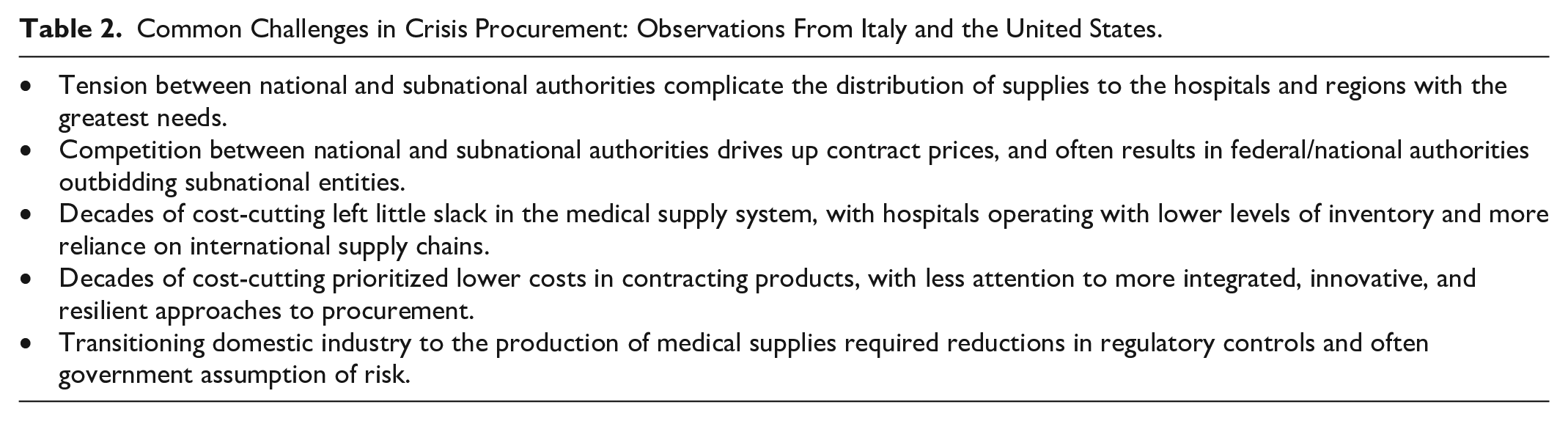
U.S. efforts to increase the supply of medical products have faced similar challenges as those highlighted by their Italian counterparts, in relying on domestic production. U.S. authorities have relied extensively on international vendors, often via U.S.-based contractors. Even with domestic manufacturers of N95 masks reporting that they have doubled their rates of production, and with new domestic vendors entering the market (Hufford, 2020), they are not able to produce the number of supplies required for the crisis. Working at full capacity, domestic suppliers are expecting to produce about 50 million N95 masks per month. Public health officials estimate that they need upward of 290 million of the masks per month (U.S. Department of Health and Human Services). Domestic mask producers such as 3M have typically developed their masks for the industrial sector, to protect against dust and metal shavings in factory work. To accelerate domestic production, U.S. officials have faced similar challenges as their Italian counterparts in waiving regulations to remove barriers to entry for new firms to produce these products and for other suppliers to make the transition. One of the biggest obstacles for 3M, the largest N95 mask producer in the United States, has been transitioning their mask designs from industrial purposes to medical purposes. Their work was held back by their request for a liability waiver from U.S. Congress to protect them from lawsuits in the medical sector—in case a respirator did not prevent an infection. The issue was finally resolved through legislation passed on March 18, 2020, where the U.S. government agreed to assume the risk, but prior agreements with industrial leaders could have made the transition more seamless. Suppliers entering the market for providing N95 masks also often require a 3-month approval process to begin their operations. Those requirements have been waived to speed up domestic production. Table 2 summarizes the main challanges in Italy and in the U.S.
Common Challenges in Crisis Procurement: Observations From Italy and the United States.
Lessons Learned From Medical Supply Practitioners in Italy: Paving the Way for More Strategic Procurement
In Italy, intergovernmental tension was driven by weak institutional trust, where formalized coordination mechanisms were difficult to establish within levels of governance. The issue was particularly acute in those contexts where the role of the procurement function, embodied by centralized purchasing agencies, was not recognized as strategic, but simply as an administrative process. Shortages in critical materials were also less severe where regional purchasing agencies started to actively manage demand by keeping under control local panic buying and hoarding.
The need to make urgent and vital decisions pushed public managers to make bold decisions, to speed up procedures, and to establish dialogue with the market in ways hardly conceivable before the crisis. In the words of Ms. Monica Piovi, Director General, ESTAR, “We have been caught by a de-bureaucratization hormone and we destroyed the myth that public tenders need fifteen months to be carried out”.
During the outbreak, procuring authorities understood the relevance of identifying reliable and proactive suppliers. This could pave the way in future for establishing vendor rating solutions, which were never previously adopted because of the predominant formalistic approach and the fear of litigation. A vendor rating system would allow procuring authorities to select providers on the basis of a broader set of parameters, such as their previous experiences; their environmental, social, and governance (ESG) policies; and their risk management capabilities. Such a system would also help to build trust between buyers and suppliers.
This emergency shed light on the critical role of business–government cooperation to improve the resilience of the health care system. As reported by the CEOs of two medical supply companies in this sample, holistic solutions (e.g., devices with the necessary consumables or Information Technology (IT) platforms that integrate territorial and acute care) and public–private collaborations in the fields of telemedicine and logistics, can improve the rapidity in clinical response, real-time data collection, and flexibility. When a partnership is in place, public authorities can leverage private capacity to quickly update and expand services, as discussed by the CEO of the company who helped Italian hospitals expand Intensive Care Unit (ICU) capacity.
Many of the interviewees from both the private and public sectors argued that the search for price minimization, even for less important supplies such as masks and sanitizers, has harmed the national market. During the outbreak, some procuring authorities worked with clinicians, local companies, and universities not only to increase the production of PPEs but also to conceptualize and manufacture incremental innovations. This is an example of co-innovation that enforces the opportunity to shift public procurement toward a more strategic role (with procuring authorities working as a sophisticated public buyer, able to stimulate the market to conceptualize and offer solutions and not just replicate existing products). This also illustrates the importance of small- and medium-sized enterprises (SMEs) having access to public procurement markets. Despite the widespread adoption of official policies, this effort is still limited.
Discussion
The extraordinary COVID-19 outbreak faced by governments around the world sheds light on a number of important strategies for improving public procurement in times of disaster. It also reveals the need for more innovative thinking about government acquisition, including an enhanced focus on a strategic role for procurement and the value of public–private partnerships—twin goals that can be prioritized when public procuring bodies act as sophisticated buyers. The comparison of experiences and contracting practices across Italy and the United States reveals common challenges involved in contracting for medical supplies during a global crisis.
More often than not, procurement has been conceived as a clerical function within the public sector, with a main focus on transparency and accountability (Patrucco et al., 2016), without any attempt to shift toward a more strategic approach (Klasa et al., 2018). Procurement as a strategic, partnership-based approach has been challenged by an operating culture of the public sector, which has hindered the development of interorganizational relationships and trust (Erridge & McIlroy, 2002). For the procurement process to be strategic, it requires a change of status of the purchasing function that shall be equipped with the right skills and have access to adequate resources (Carr & Smeltzer, 1997) to better assess health organizations needs and market offering.
The public sector has relied on public–private collaborations to overcome the limits of public procurement (Brunjes, 2019). Partnerships as contracts to achieve common goals can prove critical in crises such as COVID-19, because they improve the flexibility of the public sector and its capacity to provide immediate answers and services to communities (Busch & Givens, 2013). Disaster situations call for the immediate creation of reactive short-term collaborative relationships or, also called, hastily generated partnerships (Busch & Givens, 2013) between public and private entities (Gabler et al., 2017) that are not only fundamental to ensure resilience but also pave the way to the creation of trust on a larger scale. Indeed, the development of relationships and trust enables collaborative procurement arrangements to deal more effectively with complex policy areas (Walker et al., 2013), by providing an opportunity for interested stakeholders to work closer together to address community problems (Erridge & McIlroy, 2002).
In the aftermath of the COVID-19 crisis, policy makers should reflect on areas of procurement that would have been less affected during the outbreak if previous partnerships existed with market suppliers, by comparing the flexibility, rapidity, and business continuity offered by contractual agreements based on different levels of collaboration. Furthermore, it provides the opportunity to design a resilience-oriented procurement strategy, based on the selection of reliable providers, the creation of a portfolio of providers to be activated in case of emergency, and the use of contracts to allow flexibility and outcome assurance (Bovaird & Quirk, 2016). To do this, co-designed solutions will be needed, which will be possible only in case the public sector will be open and ready to negotiate with the private-sector entities, thus, moving procurement from a compliance-based perspective into a risk-management and collaborative perspective.
A new strategic approach to procurement would also allow the achievement of business resilience and innovation, and encourage the creation of a local production base without being protectionist; in doing this, public procurement could be used to implement other strategic public policies, as an economic stimulus for market organizations, for employment, and ultimately as a driver of domestic growth.
The post-COVID-19 fallout will certainly leave more room for the adoption of new practices in public procurement and public–private partnerships. The excitement toward innovation should be accompanied by a great investment in managerial competence in the public sector, whose weakness has been considered one of the main reasons beyond the unmet promises of previous public–private partnership seasons (Bloomfield, 2006).
Footnotes
Appendix A
List of Italian Procurement Experts (Interviewees).

| Companies | Sector | Respondent professional position |
|---|---|---|
| Boston Scientific | Private (Medical devices) | Public Affairs |
| 3M | Private (Medical devices) | Public Affairs |
| Edwards Lifesciences | Private (Medical devices) | CEO |
| Fater Group | Private (Medical devices) | Public Affairs |
| General Electric Healthcare | Private (Medical devices) | Public Affairs + Portfolio Manager worldwide |
| Rekeep | Private (Facility Management) | Public Affairs |
| Siram Veolia | Private (Facility Management) | CEO |
| WL Gore | Private (Medical devices) | Public Affairs |
| Philips | Private (Medical devices) | CEO |
| Beckton Dickinson | Private (Medical devices) | CEO |
| Dedalus | Private (IT) | Head of Commercial Relations |
| Confidustria Dispositivi Medici (Italian Manufacturers’ Association of Medical Devices) | Private (Business Association) | MD |
| FARE (Italian Association of Public Buyers in Healthcare) | Private (Business Association) | President |
| Federsanità ANCI Piemonte | Private (Business Association) | President |
| Croce Rossa Italiana (Italian Red Cross) | Nonprofit | Deputy Director of Operations |
| Aria SpA | Public (Lombardy Region) | Chairman |
| Azienda Zero | Public (Veneto Region) | Director General |
| Intercent-ER | Public (Emilia-Romagna Region) | Director General |
| Soresa SpA | Public (Campania Region) | Chairman + MD |
| Asst Sette Laghi | Public (Lombardy Locality) | Director General |
| AULSS 2 | Public (Veneto Locality) | Managing Director |
| AULSS 6 | Public (Veneto Locality) | Managing Director |
| AUSL Bologna | Public (Emilia-Romagna Region) | Managing Director |
| Crisis Units | ||
| Piedmont | Medical Head of Crisis Unit | |
| Veneto Region | Head of Purchasing |
Note. IT = Information Technology; MD = Managing Director.
Appendix B
Participants to the Focus Group With Italian Purchasing Authorities.
| Purchasing body | Region | Respondent professional position |
|---|---|---|
| ARCS FVG | Friuli-Venezia-Giulia | Manager |
| Azienda Zero | Veneto Region | Manager |
| Consip SpA | National | Manager |
| CRC RAS | Sardinia | Managing Director |
| ESTAR | Tuscany | Managing Director, Head of Procurement |
| InnovaPuglia SpA | Puglia | Manager |
| Intercent-ER | Emilia-Romagna | Manager |
| In.Va. SpA | Aosta Valley | Managing Director |
| SCR Piemonte SpA | Piedmont | Managing Director |
Acknowledgements
Veronica Vecchi and Niccolò Cusumano acknowledge Osservatorio Masan of CERGAS -SDA Bocconi where they conduct research on procurement in health care.
Declaration of Conflicting Interests
The author(s) declared no potential conflicts of interest with respect to the research, authorship, and/or publication of this article.
Funding
The author(s) received no financial support for the research, authorship, and/or publication of this article.