



Abstract
Although network analysis has gained much attention in emergency management studies, there are few systematic reviews of emergency management network studies in public administration. After reviewing 44 journals, this article identified and reviewed a total of 58 studies that conducted network analysis in the context of emergency management. Based on existing literature, this article summarizes the common and unique factors driving network formation and development, describes the structural characteristics of emergency management networks, and reports the performance measures that have been used to evaluate network performance. It concludes by addressing research gaps, presenting propositions and recommendations for future research, and highlighting implications for emergency management practice. The context of this review is emergency management, but the three network research streams focused upon—network formation and development, network properties, and network performance—are relevant to all management and policy domains. This review also underscores the need to further explore the dynamic process of network formation and outcomes of network relationships and structures.
Introduction
Over the past two decades, the number of network studies and the use of network analysis have grown rapidly in the fields of public administration and public policy (Berry et al., 2004; Hu et al., 2016; Isett et al., 2011; Provan et al., 2007; Siciliano et al., 2021). Public administration scholars have conceptualized networks as collective interorganizational arrangements operating to achieve common management or policy goals (Agranoff & McGuire, 2001; Isett et al., 2011; Popp et al., 2014; Provan et al., 2007). Networks have also been defined as a distinctive form of governance that, when engaging in collective decision-making and coordinated action, relies more on horizontal relationships than hierarchical authorities and the chain of command (Koliba et al., 2010; Nowell & Steelman, 2019; O’Toole, 1997). A network approach to coordination encourages organizations to strengthen existing relationships and build new relationships with other organizations. Through network arrangements, organizations can expand their access to information, knowledge, and resources (Isett et al., 2011; Provan & Lemaire, 2012). Interorganizational networks can also contribute to the accumulation of social capital and member organizations’ commitment to shared goals (Berardo & Scholz, 2010). Well-connected coordinated networks are better able to integrate services and improve service quality (Provan et al., 2005). Furthermore, such a flexible network approach fosters learning across unit boundaries, encourages innovation, and prepares organizations for emergent situations (Provan & Lemaire, 2012).
Network arrangements are used to address various management and public policy issues such as human and social service delivery, environmental management, and regional economic development (Milward & Provan, 2003; Lee et al., 2012; Robins et al., 2011). Emergency management is an area abundant with network applications and research (Comfort et al., 2012). The number of empirical network studies is ranked third among all service domains (Kapucu et al., 2014). Emergencies demand that organizations work across organizational, sector, and jurisdictional boundaries to form emergency management networks. Emergencies provide an important context for addressing and studying public organization management and performance issues (Bryson, 2021; O’Toole & Meier, 2015). Recent catastrophic natural hazards such as hurricanes, earthquakes, and wildfires are constant reminders that emergency management 1 is “the quintessential government role” (Waugh, 2000, p. 3) and “a central activity of public administration” (Petak, 1985, p. 3). How to improve interorganizational communication and coordination in emergency management across sectors and jurisdictions continues to be a fundamental question for public administration (Waugh, 2007; Comfort et al., 2012).
Unlike conventional statistical analyses that focus on actors’ attributes, network analysis refers to a wide range of methods and tools employed to analyze relationships among actors and examine relational processes and outcomes (Scott, 2013; Wasserman & Faust, 1994). Network analysis allows researchers to investigate the formation, development, and consequences of dynamic interactions among actors (Kapucu & Hu, 2020). The relational focus is crucial to understanding and assessing the structure and process of interorganizational communication and coordination among the many actors involved in emergency management. Network analysis has been used to identify key actors in emergency response systems, measure the strength and quality of relationships among organizational actors, describe the structural and procedural patterns of interorganizational relationships, and evaluate the impacts of such relations (e.g., Comfort & Haase, 2006). Research has stressed building and sustaining relations and trust for better communication and coordination before disasters occur (e.g., Comfort, 2019; Kapucu & Garayev, 2013; Van Wart & Kapucu, 2011). Through network analysis, public administration scholars and practitioners have begun to investigate the importance of networks in coping with emergencies and crises.
Although the network approach to emergency management and the use of network analysis have received growing attention from scholars and practitioners (Comfort et al., 2012), there are few systematic reviews of emergency management network literature. Existing reviews of network literature have reflected on the evolution of emergency management research in public administration (e.g., Comfort et al., 2012) and examined broad research on collaborative emergency management (e.g., Nohrstedt et al., 2018). However, to our knowledge, there is a lack of systematic review of empirical emergency management network research applying network analysis to provide guidance for scholars and practitioners in the field.
The goal of this article is to synthesize key findings from the existing empirical emergency management network research conducted via network analysis, identify potential research gaps, and provide practical implications for emergency management professionals to form and develop collaborative networks. This review summarizes findings from three network research streams—network formation and development, network properties, and network performance, which are relevant for all management and policy domains. Furthermore, the summary of findings in emergency management can be compared with network research in other contexts to identify and discuss common and unique patterns of network relations, structures, and consequences. In the following sections, this study discusses emergency management networks and the methods used for selecting the most relevant literature. This study also introduces a conceptual framework to present findings, including: (a) how networks are formed and developed, (b) what properties (attributes and structures) characterize emergency management networks, and (c) how such networks are evaluated for effectiveness. Finally, this article discusses the findings and suggests future directions for emergency management network scholarship and practice in the field of public administration.
Emergency Management Networks in Public Administration
Emergencies, especially large-scale disasters and extreme events, require quick, well-coordinated responses across jurisdictions, sectors, and organizational boundaries (Waugh & Streib, 2006). Take the U.S. emergency management as an example. The U.S. emergency management system includes federal, state, regional, and local emergency management agencies and other government agencies, as well as nonprofit organizations, faith-based organizations, other community organizations, and businesses (Waugh, 2000). The system is a multilevel network that includes a wide range of organizations and their multiple types of relations. Cross-sector and interorganizational collaboration is a necessity for coping with transboundary disasters, regardless of differences in governance systems across countries (Ansell et al., 2010).
Emergency management networks are interorganizational arrangements operating to prevent, protect, mitigate, respond to, and recover from emergencies. Emergency management networks consist of organizational actors (i.e., nodes) and the relationships (i.e., ties) that connect actors. Such relations can include either vertical or horizontal interactions among organizations to exchange information or resources and joint efforts of organizations in completing a specific task or emergency support function pertaining to emergencies. In a network diagram in Figure 1, the circles represent different actors and the lines represent a diverse range of interactions that occurred among these actors.
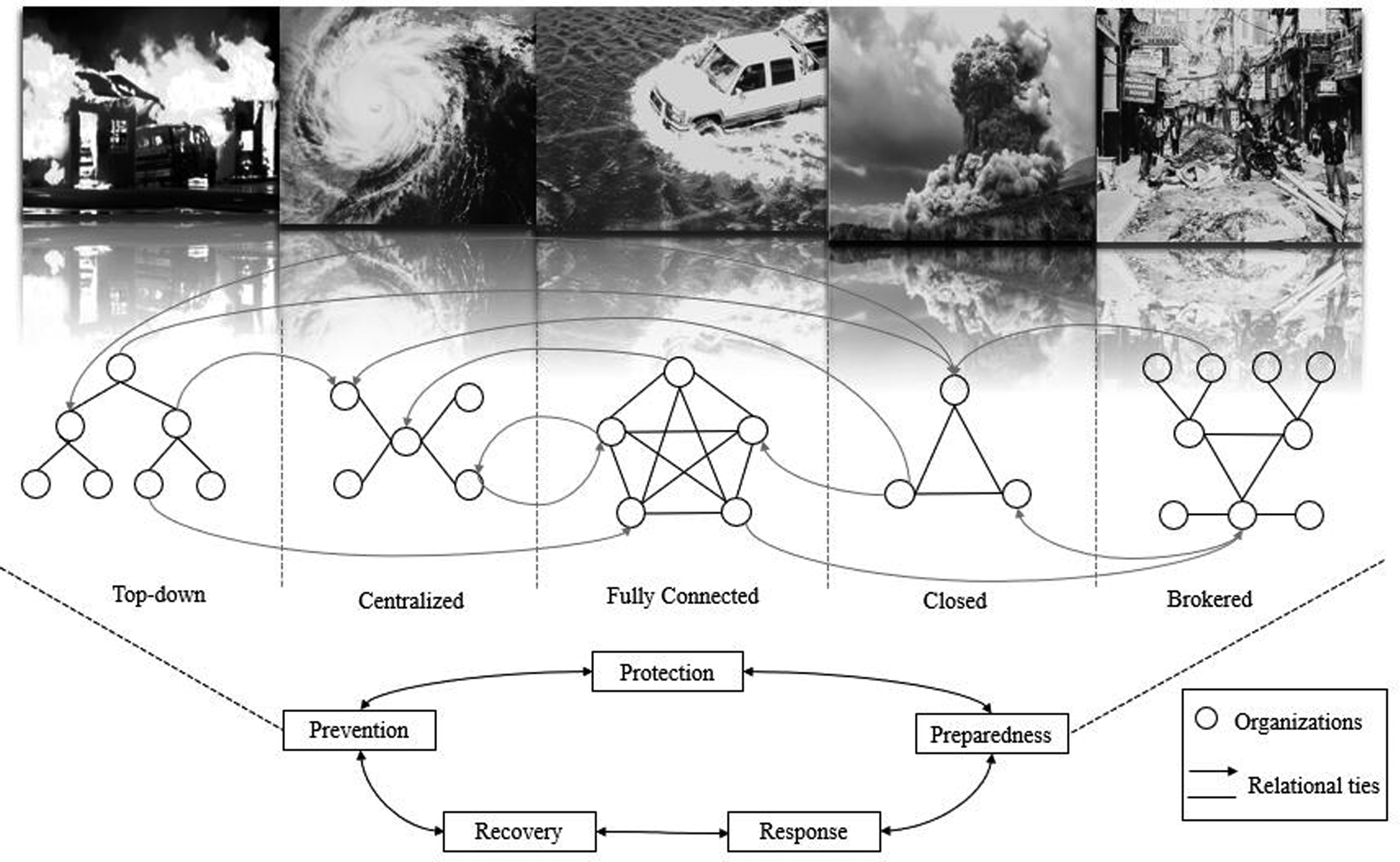
Emergency management coordination networks.
Actors in emergency management networks include a wide range of government agencies, nonprofits, and business organizations. Examples of government agencies include those responsible for emergency management, public health, public safety, and emergency response. Examples of nonprofit sector actors range from well-established national nonprofit organizations (e.g., the American Red Cross) to faith-based entities (e.g., Salvation Army) and local community groups, together providing a wide range of services such as emergency medical care and shelter. Examples of business organizations include national and international insurance companies that are key actors during disaster recovery (Waugh, 2000). Furthermore, depending on the nature of the disaster, different emergent organizational actors are engaged in disaster preparedness, response, and recovery (Boin & Bynander, 2015; Kapucu et al., 2021). For instance, school districts and individual schools can play an important role in accommodating an influx of students displaced from impacted regions (Hawes & Testa, 2020; Meier et al., 2001; Robinson, 2011, 2012). Retailers such as Walmart have extended their service mission, using their logistical capabilities to deliver food and water to communities in need.
Relationships among actors can be directional or nondirectional; and these relationships can be formally defined by government documents such as comprehensive emergency management plans or can emerge spontaneously to address a special need during a disaster situation. Some actors are in more central positions by having many connections than others. Some networks can be fully connected with a high density of links, while others might be less densely connected. Actors can form small subgroups within a closed network or bridge different groups through a brokered structure. 2
As shown in the Figure 1, 3 while a top-down structure remains important for the coordination of involved organizations, such a hierarchical structure is not sufficient. A centralized command and control structure often constrains the timely and effective communication necessary to coordinate diverse actors (Comfort, 2007; Kettl, 2006). In addition, a hierarchical structure is not flexible enough to adapt to the dynamic context of a crisis (Leonard & Howitt, 2010). A network coordination structure with horizontal ties among organizations enables flexible and frequent communication, contributing to trust building and the development of social capital (Hu et al., 2014). Depending on the context, networks can form different coordination structures such as centralized systems to improve efficiency in communication, or brokered network structures that link disconnected communities in coordination efforts. Therefore, hybrid modes of coordination are important in emergency management, combining the hierarchical approach with the flexible network coordination structure (Boin & ‘t Hart, 2003; Nowell & Steelman, 2019). This study reviews a growing number of empirical emergency management network studies and summarizes their findings to inform both research and practice.
Method
A systematic review would facilitate scholars’ and public managers’ understanding of emergency management networks, support their knowledge creation and utilization, and inform their decisions in emergency management practice. This section discusses the identification of journals, screening of journal articles, and coding and analysis of the collected empirical emergency management network research that applied network analysis.
Journal Selection
To identify the list of relevant journals, we began by including the top-tier and second-tier social science citation-indexed journals in public administration and emergency management, according to the ISJ Journal Citations Reports for Social Sciences (Clarivate Analytics, 2019). We then compared the list with records in other review articles, such as the list of 12 journals used in the review article, “Emergency management research and practice in public administration: Emergency, evolution, expansion, and future research” (Comfort et al., 2012), and the list of 39 public administration journals included in “An assessment in journal quality in public administration” (Bernick & Krueger, 2010). We also compared our preliminary list with the recommended emergency management journal list provided by the Natural Hazards Center. From the screening process as shown in Figure 2, we initially identified 46 journals, including 22 public administration journals and 24 emergency management journals, and then consulted with expert colleagues in the field for accuracy and feedback on the final list. With their inputs and further comparison with existing lists, we added two public administration journals and removed four specialty journals, due to their focus on the technical and engineering aspects of emergencies. 4 Appendix A provides a list of the 44 journals reviewed in this study.
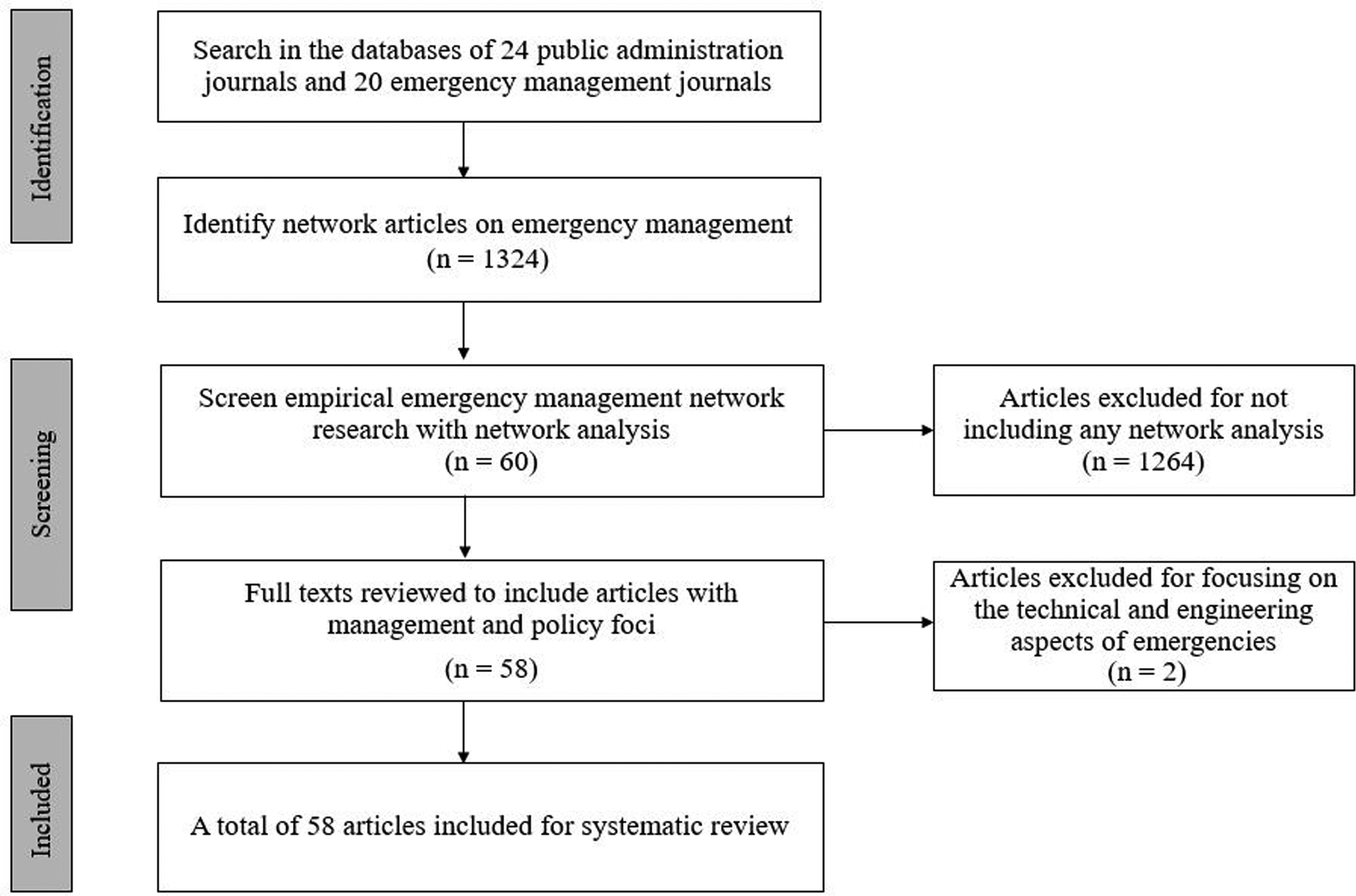
Flowchart of data collection.
Article Screening
We followed previous review articles on network research (e.g., Kapucu et al., 2014; Lecy et al., 2014; Robinson, 2006) and used 1997 as the start year to search articles published from 1997 to 2018. 5 We used “network” and “[emergency or disaster or crises or hazards]” as search terms for the titles, abstracts, and keywords of the public administration journals selected. We utilized “network” as search terms for the titles, abstracts, and keywords of the emergency management specialty journals chosen. From the preliminary search, we obtained 1,324 articles from 44 journals. Then, we included “network analysis” as search terms to screen the titles, abstracts, and main texts of the 1,324 articles for empirical emergency management network research conducted via network analysis. We excluded 1,264 articles that did not engage in empirical network analysis. Next, we reviewed the full texts of the remaining 60 articles and excluded two that did not focus on any management or policy issues, instead discussing the technical and engineering aspects of emergencies. In the end, we identified 58 articles from 9 public administration journals and 13 emergency management specialty journals for use in this systematic review.
Table 1 lists the journals that published one or more empirical emergency management network articles. Among the public administration journals, Public Administration Review, American Review of Public Administration, Public Management Review, and Administration & Society were among the foremost in publishing empirical emergency management network research. Among the emergency management specialty journals, the Journal of Homeland Security and Emergency Management published the most emergency management network articles.
Empirical Articles on Emergency Management Networks.

Data Coding and Analysis
Two authors read each of the 58 articles carefully and manually coded through an open coding process in combination with preestablished coding themes (Bowen & Bowen, 2008). During the open coding process, we read the title, abstract, and introduction of each article to identify its research focus. We built on the “antecedent-process-outcome” frameworks in collaborative governance literature (e.g., Bryson et al., 2015) and existing review work on network studies (e.g., Provan et al., 2007) and identified three main topics—formation and development, properties, and performance of emergency management networks—as the preestablished coding themes. We categorized the 58 articles into these three groups of different yet interrelated research. We then conducted open coding to identify key concepts that scholars used to study the three main topics. In addition, we coded the publication year and the type of emergencies that the article focused on. Throughout the coding process, the two authors had multiple rounds of meetings to discuss coding issues and achieve substantial intercoder reliability (Cohen's Kappa > 0.9). Coded data were organized and saved in excel spreadsheets.
Results of Emergency Management Network Research
Over the past few decades, scholars have applied networks and network analysis to study a wide range of emergencies. Figure 3 presents the number of articles that examined natural hazards (e.g., hurricanes, floods, wildfires, earthquakes, tsunamis, cyclones), man-made disasters (e.g., gas pipe explosions, airport fires), public health emergencies (e.g., H1N1 flu, swine flu, Middle East respiratory syndrome coronavirus [MERS]), homeland security (e.g., terrorism, border management), and emergency management systems and policies. Given the increasing number of natural disasters worldwide, it is not surprising that approximately half of the articles focused on natural hazards, followed by studies of emergency management systems and policies.
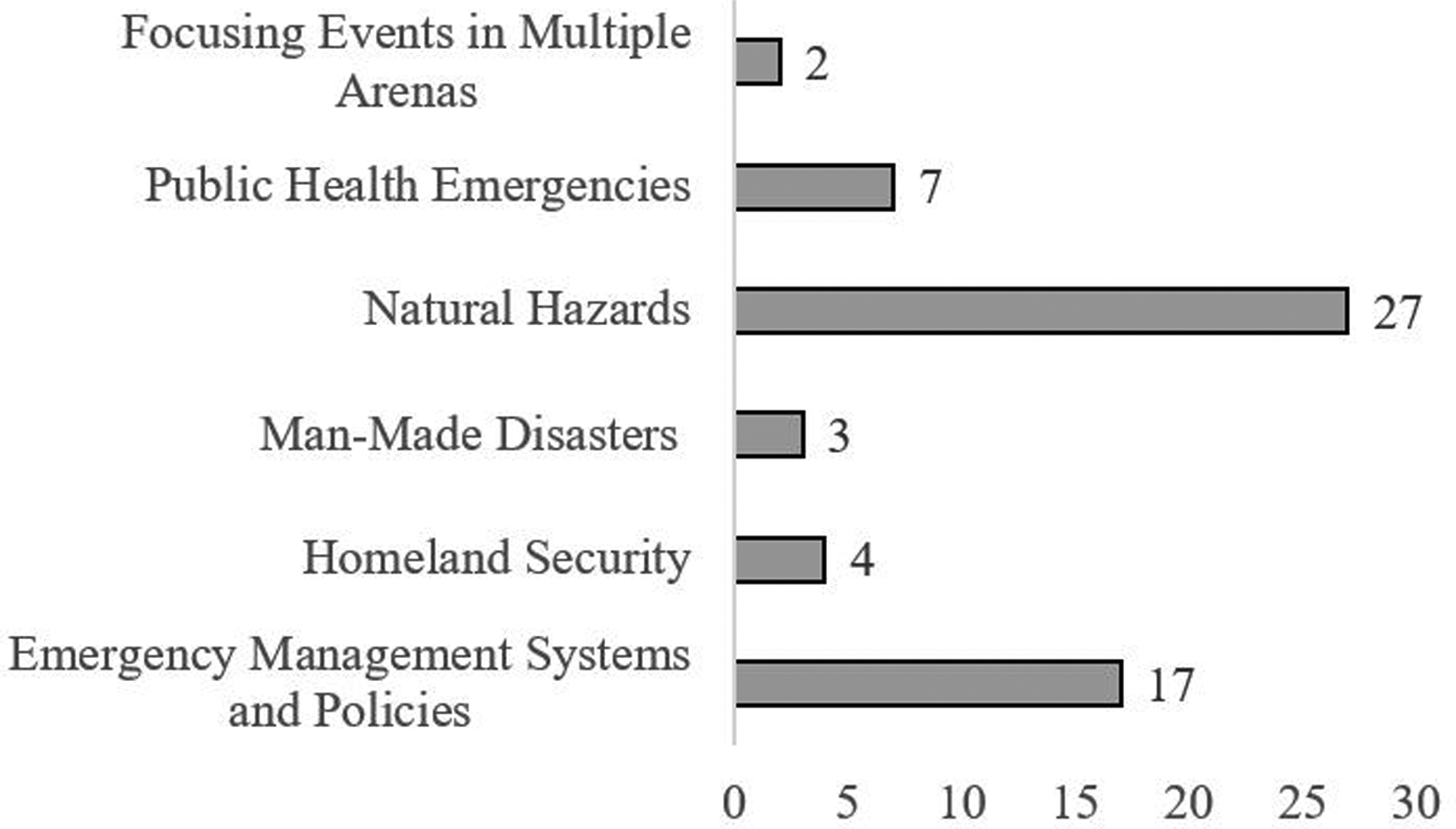
Categories of emergencies and crises studied in network research.
The authors proposed a descriptive conceptual framework (see Figure 4) to identify and discuss three key topics in existing emergency management research related to network formation and development, properties, and performance. The key elements of each topic are also summarized in the figure. The categorization of these three streams is not exclusive. An article may fall under more than one research stream. Out of the 58 empirical emergency management network articles collected here, the most (51) reported on the properties of networks, examining their composition, patterns, and structures. Fourteen analyzed factors contributing to network formation and development, and 23 studied their performance.

Three streams of emergency management network research.
Network Formation and Development
The first group of 14 articles investigated the antecedents of emergency management networks, studying the drivers of emergency management network formation and development. This section categorizes and summarizes the key factors that scholars have studied to explain the formation and development of networks in the 14 articles.
Organizational and contextual factors
Both organizational and contextual factors influence the formation and development of emergency management networks. Attributes such as an organization's size, age, capacity, sector affiliation, capacity, and leadership support influence whether it is likely to engage in collaboration (Andrew & Carr, 2013; Nolte et al., 2012). For instance, cities equipped with sufficient levels of personnel, financial resources, independent emergency management agencies, and professional emergency managers are often more capable of collaborating on emergency management (Song et al., 2018). At the international network level, national capacity plays an important role in collaboration in response to disasters (Siciliano & Wukich, 2017).
Contextual factors include environmental or institutional aspects that go beyond individual organizational control, such as policies, disaster type, and scale. Environmental uncertainty can create mixed effects on network formation and development. On the one hand, it can drive organizations to build more ties and use untapped resources. The increasing frequency and scale of disasters such as hurricanes, floods, and wildfires make it necessary for organizations to work with others (Fischer & Jasny, 2017). A city's social and environmental vulnerability (such as colocation in coastal regions or earthquake-prone zones) often prompts city governments to collaborate with others (Jung et al., 2017; Song et al., 2018). On the other hand, environmental uncertainty such as resource scarcity during a disaster can increase the risk of defection in response to disasters (Jung et al., 2017).
Public policies such as the National Response Framework (NRF) define the roles of organizations and their coordination structures, facilitating the formation of emergency management networks (Kapucu & Demiroz, 2011). The influence of policies on network formation and development has been examined through empirical studies. For instance, the New South Wales Rural Fires Act (1997) recommends a collaborative approach to addressing wildfire issues. Under this act, Bush Fire Management Committees were created to collaboratively build a Bush Fire Risk Management Plan. After joining such committees, organizations were found to communicate more frequently and become more connected during planning (Brummel et al., 2012). Another policy example is the Emergency Management Assistance Compact (EMAC), an interstate mutual aid agreement. The EMAC facilitates and streamlines the coordination and delivery of resources among state governments during times of disaster (Kapucu et al., 2009).
Interorganizational relationships
Prior relationships, existing trust, and recognized social capital are important for network formation and development in emergency management (Kapucu, 2006; Kapucu & Hu, 2016). One type of relationship (e.g., resource sharing) can facilitate another type of relationship (e.g., cooperation) (Ruzol et al., 2017). Organizations tend to build and sustain collaborative ties with others with whom they have previously interacted and developed trust (Kapucu & Garayev, 2013).
Structural effects
In recent years, a growing number of studies have found empirical support for endogenous structural effects (e.g., Jung et al., 2017). Organizations involved in disaster response are more likely to build ties with organizations that are well connected to others (i.e., the popularity effect). In the context of border management, organizations tend to build reciprocal relationships (i.e., the reciprocity effect) and transitive associations with organizations with whom they have a common partner (i.e., the transitivity effect), reaching out to brokers who can bridge disconnected parties (i.e., the bridging effect) (Yeo, 2018). The reciprocal and transitivity effects were also found in response to the 2012 typhoons and 2015 MERS response in South Korea. The transitivity effect suggests a tendency to form close-knit structures when it comes to the communication of risks and coordination of response efforts (Jung et al., 2019). To share risk and deal with the uncertainty of a disaster, Organization A may choose to communicate with Organization B because Organization A is familiar with Organization C, and Organization C already built connections with Organization B. Another factor, task interdependency, also prompts organizations to build relationships with others. In a study of Swedish wildfire responses, scholars identified 11 tasks and found that organizations working on the same task were more likely to form ties with one another (Bodin & Nohrstedt, 2016).
Homophily effects
In addition to examining the influence of organizational attributes on network formation and development, these network studies have analyzed the effects of homophily, a condition in which organizations with similar attributes such as sector affiliation and size are more likely to interact with one another for information sharing and resource exchange (McPherson et al., 2001). For instance, organizations from the same public sector or region tend to build connections related to emergency management (Kapucu & Hu, 2016; Kim et al., 2017b; Yeo, 2018). There are also other homophilic effects, including similarities in environmental vulnerability such as riverside location, as well as parallels in community composition such as percentage of the senior population (Kim et al., 2017b; Jung et al., 2019; Song et al., 2018). Organizations facing similar challenges (e.g., vulnerability to floods) are more likely to share information about flood management (Song et al., 2018). Political similarities among cities (e.g., party affiliation among elected officials and council members) positively correlate with their collaboration during emergencies (Song et al., 2018).
Network Properties
The second group of 51 studies focused on describing the structural properties of emergency management networks composed of multiple actors, their attributes, and relationships. This section reviews how the 51 articles applied network analysis to report the basic network characteristics, identify key actors, and describe the overall connectedness of emergency management networks.
Basic characteristics
In the 51 articles on network properties, researchers have not only reported the sizes of networks and number of ties but also used network measurements such as tie strengths (e.g., frequency of interactions), geodesic distance (i.e., shorted paths between two actors), reciprocity, and multiplexity (i.e., having different types of ties) to measure the quality of relationships among such organizations (Brummel et al., 2012; Hossain & Kuti, 2010; Wukich & Mergel, 2015). Only a few scholars have applied network measures to study the governance structures of emergency management networks (e.g., Berthod et al., 2017; Frey & Calderón-Ramírez, 2018; Hamilton et al., 2019).
Key actors
Centrality measures are frequently used to identify key actors in different phases of emergency management. Degree centrality was employed to identify central organizations that dealt with a wide range of emergency scenarios, including but not limited to the September 11 terrorists attacks, Boston Marathon bombings, wildfire management, hurricanes, earthquakes, technological disasters, foreign animal disease outbreaks, and oil spills (Abbasi & Kapucu, 2012; Curtis, 2018; Hu et al., 2014; Kapucu, 2006; Kapucu et al., 2010a; Kim et al., 2018; Lai et al., 2017; Oh & Lee, 2017; Owen et al., 2012; Pålsson et al., 2018; Pleuss et al., 2018). In addition, centrality measures have been used in these reviewed articles to study policy changes. Examining the evolution of national disaster response systems, Kapucu (2009) applied network analysis to explore the coordination structure reflected in the 1999 Federal Response Plan, 2004 National Response Plan, and the 2008 NRF. Kapucu used degree centrality to track the changes in key organizations in U.S. disaster response systems. For directed networks, indegree and outdegree centralities were employed to identify organizations receiving many information requests and those that reached out other organizations (Owen et al., 2012). Between-centrality measures can help identify organizations capable of serving as intermediaries, gatekeepers, boundary spanners, and brokers, quickly connecting involved organizations (Saban, 2015; Shi et al., 2017). Closeness centrality can help identify organizations able to reach out to emergency management networks in a timely manner. Eigenvector centrality is used to identify influential organizations with ties to other well-connected organizations (Woblers et al., 2013).
Network structures
Network density (i.e., the ratio of the actual number of ties to all possible pairs of ties) and average degree (i.e., the average number of ties each node has) have been used to describe the overall connectedness of emergency management networks (Pålsson et al., 2018). A certain level of network density is needed, as a highly fragmented network with many isolates or small components can impede timely communication and effective coordination (Yeo & Comfort, 2017). In a study of the 2010 Thailand floods, Yeo and Comfort (2017) found that response failure can often be attributed to fragmented network structures with many isolates and small components (i.e., subgroups that include sets of nodes connected within groups but not with other subgroups or nodes). Network centralization measures the extent to which connections fall under a single or a few organizations (Borgatti et al., 2013). A highly centralized network lacks flexibility and adaptability for effective emergency management and can lead to coordination failures (Kapucu et al., 2010b; Nowell et al., 2018), as reflected in the response to the 2010 Thailand floods (Yeo & Comfort, 2017).
These network structure articles have examined whether emergency management networks exhibit a structure of network closure or brokerage. These articles measure network closure by analyzing triadic substructures (e.g., transitivity) or identifying subgroups with fully connected members (e.g., cliques). For instance, Vidal and Roberts (2014) suggested that transitive triads, due to the nature of their closure, could foster the development of bonding social capital and trust-building. Comfort and Haase (2006) noted that the development of cliques (i.e., three or more fully connected nodes) can better facilitate action under stress; however, cliques can also constrain organizations from exchanging resources and information from others outside the clique (Comfort & Haase, 2006). Therefore, brokerage (i.e., bridging) is important for connecting disconnected subgroups and encouraging innovation and knowledge sharing in emergency management networks (Faas et al., 2017). The issue of a lack of communication or coordination between involved organizations can be solved by bridging actors (Shi et al., 2017).
Recent research has identified a moderate core-periphery structure as an effective means of coordination in response to wildfires (Nowell et al., 2018). In a core-periphery structure, there are core nodes that are well connected with each other and other nodes, and periphery nodes that are only connected to core nodes (Borgatti et al., 2013). A moderate core-periphery structure combines the strength of efficiency through a centralized structure with flexibility for emergent coordination (Nowell et al., 2018). Another study of the terrorist network suggested that a scale-free network structure can contribute to maintaining functionality despite authorities’ disruptive counterattacks (Xu et al., 2009). However, empirical studies of effective network structures are limited to single cases, and more research on what constitutes effective network structures is needed.
Network Performance
The third group of articles examined emergency management network performance, their outputs, and outcomes. Although 23 articles described the performance of emergency management networks, only a small number (5) addressed factors influencing network performance (i.e., Bodin & Nohrstedt, 2016; Hu & Kapucu, 2016; Kim et al., 2017a; Nowell & Steelman, 2014; Vasavada, 2013). For instance, in a study of disaster networks in India, Vasavada (2013) found that four factors—trust, size, goal consensus, and the need for network-level competency—influenced the effectiveness of disaster networks. Other studies highlighted the importance of information technology, building collaborative ties according to task interdependency, and network structure (Bodin & Nohrstedt, 2016; Hu & Kapucu, 2016; Kim et al., 2017b). As the relationship between network structure and performance was described above, this section focuses on the assessment of network performance.
Evaluating network performance can be challenging, due to the involvement of multiple organizations and difficulty in defining common goals (Provan & Milward, 2001). Although traditional performance measures remain valuable for assessing organizational performance, it is important to focus more on network-level performance (Kapucu & Demiroz, 2011). Therefore, scholars have stressed that network effectiveness should be assessed at individual, organizational, and community levels (Provan & Milward, 2001). We organized the existing network performance literature on emergency management into three streams of research that used network properties to explain network performance; employed network properties to measure key elements of interorganizational collaboration such as communication and coordination; and evaluated the effectiveness of policy and plan implementation through network comparisons. Of the studies included in our analysis, most of the network performance articles evaluated responses to single events or assessed emergency management practice in general. Only a few exceptions compared multiple cases (e.g., Lai & Hsu, 2019), collected longitudinal data on network evolution (Lim & Nakazato, 2018), or implemented novel methods such as computer simulations to study the impact of a network's structure on its performance (Wang et al., 2018; Xu et al., 2009).
Impacts on individual organizations, networks, and communities
The first stream of research used organizations’ relationships, positioning, and roles within a network to explain the perceived organizational, network, and community outcomes (e.g., Jacobs & Cramer, 2017; Nowell & Steelman, 2014). For instance, an organization's embeddedness in a wildfire response network as measured by organizational similarity in terms of function and sector affiliation can influence the perceived frequency and efficacy of the communication between organizations (Nowell & Steelman, 2014). After Hurricane Sandy, the connections of certain community-based organizations (CBOs) with other CBOs influenced their perceived impacts on community recovery after Hurricane Sandy (Acosta et al., 2018).
Network properties as performance measures
The second stream of research used the properties of networks to measure their effectiveness (Hossain et al., 2015; Kapucu et al., 2009, 2010b; Kapucu & Garayev, 2016; Williams et al., 2018; Yeo & Comfort, 2017; Uddin & Hossain, 2011). To evaluate the preparedness of a refinery, scholars used density, reciprocity, and transitivity of coordination ties as indicators of trust among members of organizations (Mohammadfam et al., 2015). In another example, community resilience to disasters was measured by how the “number, type, and quality of relationships among organizations” changed after participation in coalitions addressing community resilience issues (Williams et al., 2018, p. 1). In response to the 2010 Thailand floods, there was little information and resource sharing, as indicated by many isolates, the substantial hierarchy, and lack of reciprocal and transitive relationships (Yeo & Comfort, 2017).
Comparison of planned and actual networks
Another stream of research focused on policy implementation by comparing the properties of planned and actual networks (Choi & Kim, 2007; Guo & Kapucu, 2015; Hu et al., 2014; Kapucu & Demiroz, 2011; Choi & Brower, 2006). This line of studies used network centrality measures to identify central actors as defined in policy documents such as comprehensive emergency management plans and compared them with central actors in actual responses. This type of analysis can help to determine whether key emergency management personnel played their role as planned and identified potential challenges to policy implementation. Discrepancies between planned and actual response networks suggest either that policies do not fully capture dynamic emergency situations or organizations involved in response need to develop a more accurate understanding of their policies.
Recommendations for Future Research and Practice
The previous section summarized the key research findings regarding existing emergency management network research. This section discusses the mixed findings, addresses research gaps, and presents recommendations for future research. This section also translates the existing research into practical recommendations for improving the effectiveness of emergency management networks.
Implications for Research
Compared with the significant number of studies on network properties, network formation and development, and performance have received only limited attention. Future research also needs to better examine the multiplexity of ties, substructures of networks, and measurement of network performance. Figure 5 summarizes the key findings of network formation and development, network property, and network performance in the existing literature.
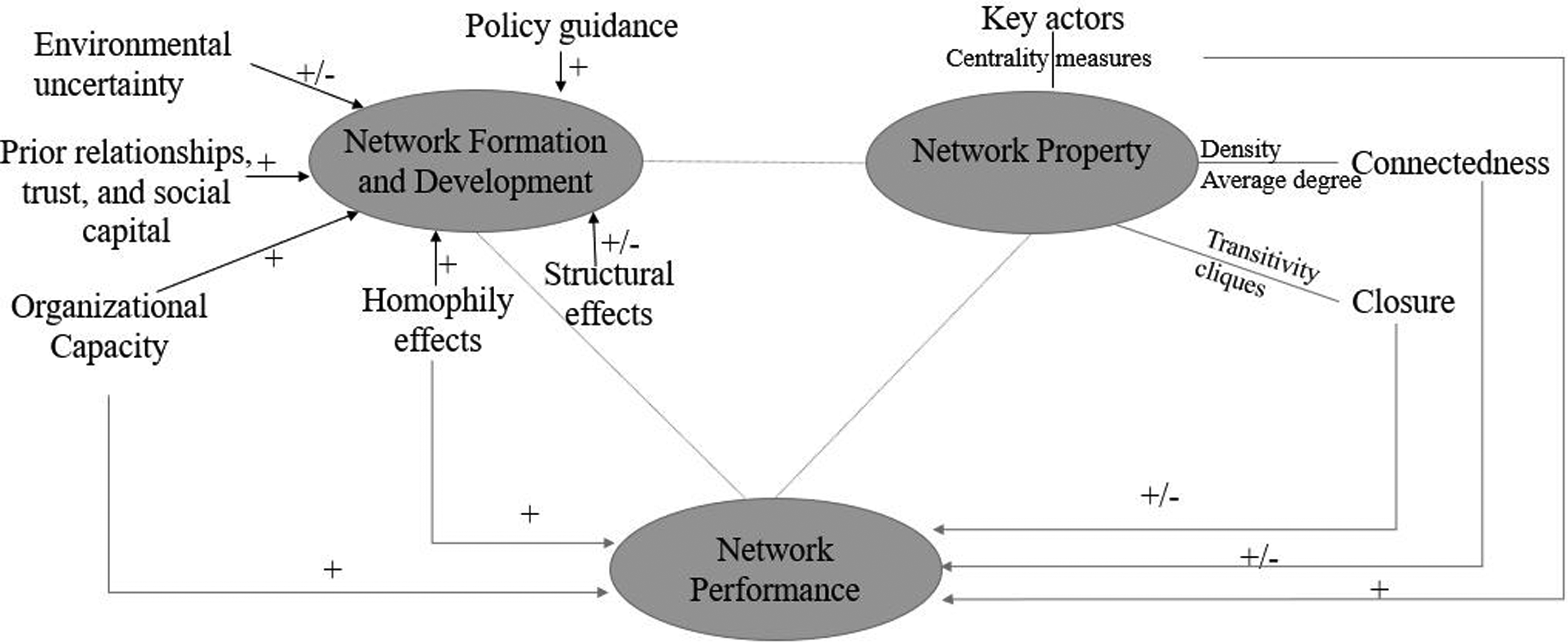
Summary of key findings from existing literature.
Network formation and development: Multiplex ties, environmental uncertainty, and structural effects
Organizational relations are multiplex in nature, involving many types of interactions among organizations (Borgatti et al., 2013), such as informal relations, information exchange, and activity coordination. Many of the existing emergency management network studies did not consider the compound nature of these ties, nor did they fully analyze the different types of network connections. It remains unexplored (or at least understudied) what “network relations” actually means, and how it evolves at different stages of emergency management. Simply asking with whom an organization has collaborated during a disaster response (for instance, via a survey questionnaire) is not sufficient to capture the multiple types of interactions among organizations. It is unclear how the authors of previous work on this topic identified and coded coordination ties in formal documents. Moreover, informal networks have only been studied by a few scholars (e.g., Bdeir et al., 2017), and thus comprise an underresearched area of investigation. Network typologies should be developed to explicate the wide range of interactions among organizations participating in emergency management.
A clear understanding of network purposes is necessary for an exploration of the driving forces behind network formation and development. For instance, organizations build communication ties to seek, disseminate, and exchange disaster-related information, messages, and data (e.g., situation awareness reports), whereas they develop coordination ties to align their resources and participate in certain emergency management tasks (e.g., search and rescue operations after a hurricane) (Comfort, 2007). The cost of establishing information communication ties is relatively lower than building and sustaining action-oriented coordination ties, as the latter often involves resource alignment and joint effort. The high level of task interdependency has more influence on the formation and development of interorganizational coordination than communication ties. Similarly, the need for trust and prior interactions can be higher for the development of coordination ties.
The formality of network ties also determines how various factors affect tie formation. For instance, when two organizations are connected through the informal relations that their leaders develop, the influence of policy guidance is less prominent. However, when two organizations seek to establish formal collaboration ties, policy guidance becomes a critical factor. An example is how EMAC shapes the coordination of resource delivery among state governments during disasters (Kapucu et al., 2009). Therefore, we present Proposition 1, which states the need to better define, illustrate, and contextualize what is meant by communication and coordination ties. Future research should engage in more in-depth coding to further analyze the purposes and functions of such ties. Differentiating among network relationships will provide an important foundation for studying the rationale behind network formation and evolution.
Proposition 1: Organizations form and develop different types of ties in the context of emergency management. Depending on the purpose and formality of those ties, the drivers for network formation and development can vary.
The findings of existing research have consistently suggested that a multitude of factors, including (but not limited) to policy guidance, organizational capacity, prior relationships, existing trust and level of social capital, and similarities among organizations can all encourage the establishment of coordination ties in emergency response (e.g., Andrew & Carr, 2013; Kapucu et al., 2009; Nolte et al., 2012). Organizations tend to build reciprocal transitive ties in emergency communication and coordination (Yeo, 2018).
Additional research is needed to disentangle the mixed effects of environmental uncertainty and structural effects of network relations. A nuanced analysis of environmental uncertainty will help to explain how when facing pressure to work together in collaborative efforts, participating organizations choose their level of engagement and assess resource scarcity and high levels of risk. External pressure to collaborate does not necessarily lead to new tie development, though the need for external resources may prompt an organization to reach out to others. In fact, organizations often carefully calculate the benefits and costs of building ties with another organization. When the risk is high, organizations tend to work with those with whom they have already built relationships, rather than reaching out to unfamiliar bridging organizations (Bernardo & Scholz, 2010). We present Proposition 2 to illustrate the need to examine the dynamic process by which the external environment influences organizations’ tie formation in emergency management.
Proposition 2: When deciding how to communicate and coordinate with others, organizations tend to internalize the influence of external uncertainty by considering their own collaboration capacity, the level of risk involved, the overall demand for resources, and prior connections with other organizations.
Empirical studies examining the endogenous effects of network substructures remain limited. Four of the five studies identified here focused on emergency management in South Korea or specific incident responses such as efforts to mitigate MERS. Research findings are mixed regarding brokerage and popularity effects. Therefore, more studies conducted in a US emergency management context are needed to explain how the dynamics of such relationships influence organizations’ engagement in coordination efforts and explore the network structures of brokerage and popularity.
Network properties and network performance
Many studies have identified key actors in emergency preparation and response, describing the overall characteristics of emergency management networks, and examining within-network subgroups such as cliques. Yet there is still no systematic approach to studying the role of brokerage. There is a consensus regarding how to measure the overall connectedness and closure of emergency management networks, but no widespread agreement has been reached regarding how to measure a network's level of brokerage. Scholars have used betweenness centrality as a measure for identifying boundary spanners and brokers. However, additional research is needed to measure the extent to which networks are brokered or closed.
At the organizational level, the central position of an organization in the network (e.g., high centrality and betweenness) positively influences that organization's access to information and resources before, during, and after disasters. Therefore, an organization's embeddedness in a network and its connections with other groups have positive impacts on how the focal organization perceives their organizational effectiveness in response to disasters (Acosta et al., 2018; Nowell & Steelman, 2014). We summarize the common findings from existing research in the following proposition.
Proposition 3: An organization's central position in an emergency management network enables the focal organization to quickly access information and resources, leading to perceived effectiveness in response to disasters.
The relationship between network-level structures and network performance is more complicated. A certain level of network connectedness (e.g., density) is necessary to facilitate information flow and resource coordination and foster long-term trust and social capital (e.g., Yeo & Comfort, 2017). Different from other domains of public administration, the unique context of emergency management demands careful consideration of the structural properties that allow for both stability and adaptability. Although a centralized structure has been considered essential for integrating social service delivery (Provan & Milward, 1995), in the context of emergency management, a highly centralized network is not adaptable or flexible enough for timely information communication and resource coordination. Emergency management networks must also embrace in a timely manner the engagement of organizations lacking prior disaster response experience.
Recent research has discussed the benefits of a core-periphery structure on network performance (e.g., Nowell et al., 2018); however, additional empirical studies are needed to test its validity in other contexts of emergency management. Based on the work by Nowell et al. (2018), we propose the use of a moderate core-periphery structure to combine the strengths of a closed network with the flexibility of brokers connecting peripheral with core organizations.
Proposition 4: A core-periphery structure will facilitate the timely exchange of information and coordination of resources among core members through their dense connections; such a network structure will also allow for the flexibility to engage emergent actors through brokers connecting core with peripheral organizations.
Implications for Management Practice
Emergency management practitioners need to acknowledge the importance of networks, invest in building trust and strengthening relationships, and determine how to use different network types and structures to improve the performance of networks. Below we summarize several practical implications of this study.
First, it is essential for emergency management practitioners to manage relations as crucial resources and understand the strengths of relationships, and the dynamic nature of overall interorganizational relations. Organizations benefit from understanding network relations because it allows them to know which actors to seek out for information, which to contact for personnel support, and which to go to for joint actions such as rescue or debris removal. Emergency situations constantly evolve, and organizations’ ties with others, their positioning and roles, are equally dynamic. An organization's position within a network influences their access to information and resources. Based on the existing network structure, an organization can strategically examine whether the strengths of relations satisfy particular communication or coordination needs and take actions accordingly.
Second, to better manage and use network resources, emergency managers need to invest in relationship building with other organizations and identify facilitators, catalysts, and barriers to networking. Moreover, organizations should develop strategies for building new relationships in addition to improving existing ones. Many venues can be employed for getting to know companion organizations within emergency management networks, such as professional training, meetings, and conferences. Organizations can not only take advantage of the effects of homophily and strengths of network closure to enhance collaboration but they can also explore new connections through broker organizations. Organizations can build reciprocal ties for information sharing or select outside collaborators through common partner organizations to strengthen existing relations. Organizations should also expand their relational resources by contacting new organizations. From a whole-network perspective, leaders of organizations can come together to invest in building network structures that adapt to the situational changes brought about by external events such as catastrophic disasters.
Finally, emergency management practitioners can benefit from understanding the strengths and weaknesses of different network structures so that their organizations can build strategies to work with others in the field. An organization's connections with other resourceful groups within their network improve resource access and service quality and save on service costs. Organizations can gain access to more resources by identifying key actors in their network. Managers may contemplate on what network closure and brokerage can bring to their organizations. Although a dense network allows for timely communication and information distribution, managing and sustaining relationships with other organizations takes time and resources. Small, well-connected groups such as cliques can foster the development of social capital, but also limit organizations from obtaining more diverse sources of information from the outside. Organizations in closely connected subgroups must consciously take advantage of network brokerage and connect with outside groups for more diverse perspectives.
Conclusion
As a growing subfield of public administration, emergency management is abundant with interorganizational networks formed to facilitate communication and coordination among a wide range of organizations across the sector and jurisdictional boundaries. This systematic review summarizes key findings of empirical research on emergency management networks, discusses research gaps, and proposes potential research topics for future research. It presents four propositions on network formation and the influence of network structures on performance. This article also provides strategies for identifying catalysts and barriers to forming and developing networks, as well as understanding the strengths and weaknesses of different network structures to inform their practice.
The context of this review is emergency management, but findings from this study are relevant to network research and applications in other domains of public administration. The three network research streams focused upon—network formation and development, network properties, and network performance—are relevant to all management and policy domains. In emergency management, a synthesis of previous network research findings provides a foundation for future work comparing networks across management and policy domains and allows for the identification of common and unique patterns of network relations, structures, and consequences. Our systematic review presents evidence that the effects of network structures are context-specific (Turrini et al., 2010). For instance, network centralization has been found to be beneficial for service integration in the domain of health and human services (e.g., Provan & Milward). In contrast, a centralized network structure may not be sufficiently flexible to allow emergency management networks to embrace new members and accommodate a wide range of actors’ need for timely communication during a disaster.
This review underscores the need to move beyond describing the characteristics or relationship patterns of networks and instead further explore the dynamic process of network formation and outcomes of network relationships and structures. This research found that most of the studies reviewed applied network analysis to analyze the composition of emergency management networks, assess relationships and interactions among organizations, and describe structural patterns of interorganizational communication and coordination. Few studies examined the influence of different network structures on network performance. Like other management and policy domains (Siciliano et al., 2021), more research is needed to better understand the formation, development, and performance of emergency management networks.
Future research can pay attention to the multiplex nature of emergency management networks, and better define and contextualize ties among organizations in different phases of emergency management. To identify effective network structures for emergency management, research is needed to consider a variety of contextual and organizational factors to further test the intertwined relationship among network properties and performance.
This review article synthesizes findings of existing research to inform research and practice, rather than evaluating methodological rigor of existing research. Due to the focus on organizational action and interactions, it does not review articles that studied individual behaviors in the disaster context. Only a small number of the reviewed articles are explanatory; therefore, this study does not present an explanatory framework but develops a descriptive framework of emergency management networks.
Footnotes
Declaration of Conflicting Interests
The author(s) declared no potential conflicts of interest with respect to the research, authorship, and/or publication of this article.
Funding
The author(s) received no financial support for the research, authorship and/or publication of this article.
