




Abstract
The way in which platforms curate and assemble the music they present plays an important role in mediating fields of artistic practice to audiences. The different curatorial logics of platforms help shape the way audiences understand the contours of a field of creative practice and the extent to which they are exposed to novel and unfamiliar sounds. This article draws on a large-scale content analysis of how classical music is represented on each of radio, digital playlists and live concert programming to investigate the degree to which each platform supports audiences to engage with unfamiliar music. Incorporating novel approaches to measuring familiarity, the results demonstrate that concerts provide the most diverse and varied programming, whereas digital playlists assemble the most homogeneous musical landscape for listeners. As audiences increasingly shift to digital platforms, these curatorial patterns have significant implications for artistic practices by limiting opportunities for less established and more esoteric voices.
Introduction
Between spaces of cultural production and their consumption by audiences lie a range of intermediaries which help shape the reception of artists and their work. Beyond the meanings which are attached to individual works, different modes of music presentation—such as radio broadcasts, live concerts and digital services—involve selecting and assembling particular representations of individual fields of creative practice. For a genre as stylistically diverse and historically far-reaching as classical music the space of possible repertoire is vast, and this curatorial function helps frame which music is considered central and which is peripheral in audiences’ engagements with the field. Weber (2003), for example, identifies the broader marginalisation of contemporary classical music which occurred in the earlier twentieth century as the repertoires of orchestras and ensembles came to be dominated by a narrow canon of composers and works.
In addition to shaping understandings of the contours of a field, the mediating role of curation also plays an important role in introducing audiences to new and unfamiliar works, artists and styles. In the visual arts, the role of the contemporary art curator has increasingly been acknowledged as having a fundamental role in shaping how works are understood (Acord, 2010). Just as an art gallery curator hangs a space, the metaphor of the “journey” can be deployed to depict the way in which a music programmer is tasked with guiding the listener through a space of artistic practice in the course of their programming choices. These decisions typically involve taking an artistic intention and balancing the needs and expectations of an imagined audience to be variously enticed with the familiar and challenged with the unexpected. The role of the curator is therefore intimately linked to processes of music discovery: of exposing audiences to novel and unfamiliar sounds, and broadening their musical horizons. Beyond impacting the experiences of individual listeners, curatorial practices have an important capacity to influence the level of cultural diversity which is visible in an artform. Furthermore, different curatorial assemblages of a field are also of direct practical concern to those artists who are seeking to have audiences engage with their work.
These issues form the departure point for the current analysis, which examines the varying degree to which the curatorial practices of different platforms encourage audiences to engage with unfamiliar music. It takes the form of a large-scale content analysis of the music featured on each of three dominant platforms used by Australian audiences of classical music: ABC Classic FM (radio), Spotify digital playlists and live concerts. The analysis contrasts the different “profiles” of each platform, which reflect overall trends in the distribution of features relating to the familiarity of music on radio, digital playlists and concerts. The findings identify a continuum of musical heterogeneity in which concerts provide the most varied listening experience and Spotify playlists represent the most homogeneous sound world. Beyond the overall profiles of familiarity observed on each platform, the analysis shows that these differences are also replicated at the micro level of sequencing and juxtaposing individual works. When compared to the largely randomised ordering found in playlists, radio is shown to provide a more nuanced assemblage of works. In the context of audiences increasingly shifting to digital platforms, the results point to a narrowing of musical diversity for audiences discovering new music, fewer opportunities for domestic scenes of music production and new contestations over the role and function of music curation.
Familiarity and the Mediation of Fields of Cultural Production
The concept of “mediation” provides a useful theoretical lens through which to consider how different music platforms, and their collective curatorial choices, encourage audiences to engage in music discovery and broaden their musical horizons. Such a theorisation of mediation borrows from Latour's (2005, p. 39) distinction between “intermediaries” and “mediators”. For Latour, whereas intermediaries “transport meaning … without transformation”, mediators have a specificity which “transforms, translates, distorts, and modifies the meaning of the elements they are supposed to carry”. In the particular context of brokering music, both have resonance, but the idea of “mediators” points to those actors and processes which have the capacity to shape the ways in which a field and its music are understood. Research has sought to understand the mediating influence of factors including social practices (Born, 2005), social spaces (Becker, 2004), technologies (Beer, 2009) and physical spaces (Skandalis, Banister, & Byrom, 2016) which surround the “consumption” of music. Rather than a passive act of reception, these approaches posit listening as an active process in which meanings emerge through the intersection between works, audiences and these varied mediating forces.
The notion of curation as a distinct practice of mediation is found in the visual arts (O’Neill, 2016), and a similar process can be observed in music. While we express our own personal preferences by choosing a radio station, which concert to attend, or how we assemble our digital music ecosystem, each of these modes of listening involves its own processes which determine the selection and sequencing of works we encounter. By doing so, each platform mediates the space of cultural production with its own inflections and emphases. Ahlkvist (2001), for example, uses the notion of “programming philosophies” to investigate the different strategies among music programmers working for commercial radio stations. Within these strategies he observes a tension which emerges between familiarity and innovation as programmers guide their imagined audience through a space of artistic practice in the course of their curatorial decisions.
The constellations of artists and works which are assembled in programmes of music will therefore form pathways which traverse varying degrees of collective familiarity for a curator's imagined audience. In this sense, a relationship emerges between the role of curatorial practices and the capacity for audiences to engage with music that is unfamiliar to them. The significance of listening to unfamiliar music, and the degree to which audiences engage in music discovery, have been argued as fundamental to the formation and sustenance of healthy systems of artistic production (Nowak, 2016; Tepper & Hargittai, 2009). Whereas studies analysing the technological conditions of musical taste have pointed to the democratising affordances of digital technologies (Carboni, 2014) and their capacity to encourage experimentation and discovery (Datta, Knox, & Bronnenberg, 2018), others have argued that such promises have been overstated (Nowak, 2016) and that the logics of digital infomediaries in the culture industries demand scrutiny (Morris, 2015).
Commercial interests, in particular, have been a specific interest among researchers investigating the structural forces which help shape our listening environments. Part of the rise of jazz music in the USA, for example, can be traced to the commercial stoush in the 1940s between ASCAP (which had hitherto enjoyed a monopolistic position in representing songwriters) and radio broadcasters (Ryan, 1985). In setting up their own alternative collecting society—Broadcast Music Inc. (BMI)—radio broadcasters seised an opportunity to attract black songwriters who had faced racial discrimination at ASCAP. In turn, the music of BMI's new membership, including its previously under-represented black members, subsequently received far higher levels of air play and public prominence on US radio stations. More recent research into the detailed make up of radio playlists by Ahlkvist and Fisher (2000) has examined the standardisation of music programming in the context of market consolidation and limited programmer agency. As cultural mediators increasingly become digital, there has been a corresponding concern to scrutinise the lack of neutrality in the technical—and increasingly algorithmic—platforms which mediate our everyday lives (Beer, 2009; Kitchin, 2017). In addition to the logics of recommendation algorithms, the influence of music playlists in digital services such as Spotify has also received critical attention for the role they play in expressing and maintaining power dynamics within the digital music economy (Eriksson, 2020; Prey, 2020). Significantly, the trans-national nature of digital services—compared to the largely local and domestic contexts of concerts and radio—also suggests new ways in which these power dynamics may evolve to represent a threat to national culture industries. Not only do domestic spheres of mediation have more capacity to reflect local practices, but they can also be subjected to the kinds of quotas for mandated levels of national context which digital services have largely been able to avoid.
The role of the curatorial function to select and assemble from the wider array of musical options can also be traced to Bourdieu's concern for what he termed “the new cultural intermediaries” who—in opposition to actors in dominant positions of the hierarchy of cultural production (e.g., art dealers, publishers, theatre managers)—work in industries such as radio and television to gently manipulate tastes (Bourdieu, 1984, pp. 365–366). Bourdieu's interest in this new profession of taste makers lies largely in its manifestation of class dynamics among the new upwardly mobile petite bourgeoisie, which Dubois and Lepaux (2018) argue is today largely a career choice available to a privileged elite. The trend for arts managers more generally to be drawn from “higher and more restricted social backgrounds” at once emphasises the kinds of social reproduction which may be embedded in the role of curation, while also pointing to potential tensions which arise in increasingly digital environments as the curatorial function becomes a domain contested by software engineering and other specialisations.
Research Questions
This tension between traditional and emerging platforms for music discovery forms the backdrop for the empirical analysis presented in this paper. In scrutinising what is at stake amidst shifting consumer behaviours, the study presented here is guided by the following research questions:
Research Question 1: How do the profiles of classical music programmed on radio, digital playlists and in concerts compare in their capacity to present diverse content and engage audiences with unfamiliar music? Research Question 2: How do these profiles relate, in particular, to the capacity for audiences to engage with their national scene of contemporary classical music composition? Research Question 3: To what extent does the ordering of works curated on each of radio and digital playlists support users to engage with unfamiliar music?
Methodology
This paper's investigation of how different platforms’ curatorial processes represent the field of classical music draws on a quantitative content analysis approach. The data analysed includes raw radio logs from Australia's largest classical radio network (ABC Classic FM), Spotify playlist data and concert event listings published by the Australian Music Centre. In addition to capturing descriptive data on the historical era of the music presented, measures of the concept of “familiarity” were developed to support analysis of the extent to which each platform encourages its audiences to engage with unfamiliar music. Ethics approval for data collection was provided by Western Sydney University's Human Research Ethics Committee (H12046).
Platforms of Mediation
The platforms selected for inclusion in the content analysis firstly aimed to provide coverage of those which users most rely on to discover new music. An earlier study by the author (Chambers, 2020b) demonstrated that radio (26%) and digital playlists (21%) were the most common platforms people reported using to discover new music on a weekly or more regular basis. Usage of these two dominant platforms also showed a contrasting association with age, with radio more frequently used by older respondents and digital playlists being preferred by younger audiences. Radio and digital playlists therefore represent tensions between traditional and emerging practices, both in terms of audience behaviours and the curatorial practices which underpin them. A third platform, live concerts, was also included given the contrasting and highly specialised role it affords to the curation of music which is presented and the prominence which audiences have typically given to this mode of presentation in comparison to recordings (Dobson, 2008). The collective dataset for all three platforms has been published separately (Chambers, 2020a).
Radio Programming
Radio programming was examined by selecting the Australian Broadcasting Corporation's Classic FM network as a case study. ABC Classic FM, now rebranded as ABC Classic to denote its increasingly digital modes of broadcast, forms part of Australia's state-funded broadcaster and was chosen on the basis of it being Australia's only national radio network focussed on classical music and having the largest audience reach of any classical focussed broadcaster, with an average weekly reach of 736,000 metropolitan listeners (Australian Broadcasting Corporation, 2018, p. 63). A total of 449,580 discrete broadcasts of individual works was collected which reflected ABC Classic FM's broadcast output between 1 January 2009 and 31 October 2018.
Digital Playlists
As the dominant digital music service with the largest subscriber base (Mulligan, 2019), Spotify is an obvious candidate for analysing the curation of digital playlists. The Spotify API was utilised to harvest all classical playlists—including both Spotify and non-Spotify curated—tagged with the “classical” keyword, resulting in 1,382 candidate playlists. Playlists which were not regularly refreshed, or which only featured the music of a single composer (and which therefore lacked the variation in composers necessary for analysis), were omitted. The remaining 34 playlists were harvested over a five-month period between January and May 2019. As playlists can be refreshed on varying schedules, each playlist was programmatically checked once a week to determine if its list of works had been refreshed. This resulted in 43,337 instances of a particular work being programmed on a specific playlist on a particular date. The real time nature of Spotify data collection resulted in its date range being shorter than the data collected for radio and concert programmes.
Concert Programmes
The mediation of classical music by way of public concert programming was analysed based on a dataset obtained from the Australian Music Centre's (AMC) Calendar of Events. The AMC is a national music information centre documenting the music of Australia's classical composers and sound artists. This online concert listing features public concert information for events featuring at least one work by an Australian composer. The dataset can, therefore, be considered as representing a subfield of the broader classical musical field encapsulated in the Classic FM and Spotify data, but one which is of particular interest to consider the impact of curatorial practices on local contexts of music production. A total of 4,599 concert programmes was sourced from the AMC Calendar, spanning the period 2009 to 2018 which includes 21,512 instances of composers being programmed. Unlike the radio and digital playlist datasets above, the live concert data is without information on the duration of works and the sequencing order in which the works were programmed.
Level of Analysis
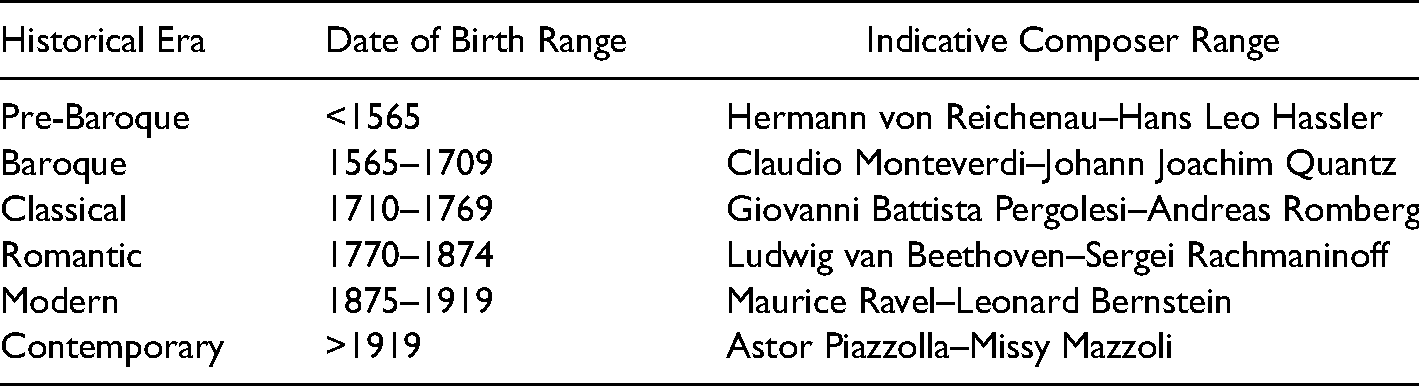
While each platform involves the curation of specific works, each work's composer has been used as the most granular level of analysis. This decision reflects the challenges of reliably identifying distinctive works in the reported data, together with technical limitations in calculating acoustic distinctiveness (as a measure of familiarity) discussed further below. While individual composers do themselves often encompass diverse stylistic output, the symbolic unity represented by the named composer can itself be recognised as part of the organising structure of the classical music field. To support analysis by historical era, each composer was assigned to an era of classical music based on their date of birth using the classifications in Table 1 below. To support the analysis of issues pertaining to national culture emphasised in Research Question 2, each composer was also assigned a country to reflect their principal place of creative activity.
Historical Eras of Classical Music.
The use of composers also introduces two perspectives from which to analyse the data for each platform. The first of these, the “composer perspective”, simply considers the distribution of the unique set of composers featured in each dataset regardless of how frequently each composer is featured. This perspective permits considering the overall diversity of compositional voices featured on each platform. The second approach, the “output perspective”, takes into account the varying frequency with which each composer is featured on each platform. In this perspective, a composer whose music is featured 200 times on a particular platform will have a ten times greater weighting in the analysis than a composer who is featured just 20 times. The output perspective permits analysing how curatorial processes differently emphasise and give exposure to music by the composers featured on a platform, together with the musical periods, nationalities and measures of familiarity those composers represent.
Measuring Familiarity
A central concern of the current study's research questions is the extent to which the programming of music on different platforms encourages audiences to engage with unfamiliar music. Given the practical impossibility of measuring familiarity at the level of individual responses to particular composers, two “global” approximations of familiarity were developed based on popularity and distinctiveness.
Popularity as Familiarity
A universal measure of the popularity of the composers featured on a platform provides insights into the expected familiarity audiences will have with the music presented. While cleavages between popularity and familiarity can be expected, the demonstrated relationship between affective preferences and familiarity (Pereira et al., 2011) affirms its broad utility for analysing the large dataset collected. As the most ubiquitous digital music service, Spotify's measure of artist popularity was selected as the means for assessing global popularity. It is acknowledged that such a measure is imperfect due to it being specific to the users of Spotify and, as a global service, may be less capable of capturing the local popularity of domestic artists. These limitations are offset, however, by the breadth of artists featured on the service and Spotify's market dominance which bolsters its capacity to act as a proxy of global popularity. Spotify's artist popularity score is an integer ranging between 0 to 100 and is based on the aggregated popularity of all of the artist's tracks in the service (Spotify, 2018). The formula by which this score is calculated is not able to be inspected, however a sample of popularity scores taken for 2.7 million artists shows it to be heavily skewed towards smaller values. The mean of the sample was 3.48 and 65.01% of artists have a popularity score of zero.
Distinctiveness as Familiarity
A drawback of using popularity as a measure of familiarity is that each composer is effectively reduced to a single dimension. Cole Porter, Alexander Scriabin and John Adams all share a popularity score of 46 and are all broadcast with similar frequency in the radio broadcast data, however their music could not readily be considered similar. Furthermore one would not expect a listener who is familiar with one to be overly familiar with the other two. To address this, a distinctiveness score was calculated which draws upon the perceptual acoustic properties of the music itself to consider the overall similarity of each individual composer's music to the music of other composers featured on a particular platform. This measure of distinctiveness draws on the notion of similarity commonly found in content-based recommender systems. Such algorithms draw on knowledge of the music a listener is already known to like or listen to in order to identify items which are musically similar. If the music of two composers is perceptually similar, it is posited that listeners familiar with the first composer will have a corresponding level of familiarity with the second composer. In the context of the current study, music which is highly dissimilar to the music typically heard on a platform is presumed to have a greater likelihood of being more unfamiliar to users of a platform.
As specified in equation (1) below, the distinctiveness score u for composer i on platform p is calculated by taking the acoustic distance
Distinctiveness score
Assessing Changes in Popularity and Familiarity Over Time
Given the wider date ranges included in the radio and concert data, a potential confound arises whereby any observed differences among popularity and distinctiveness measures observed in the playlist data may be due to shifts in curatorial practices over time. To assess this potential confound, Mann-Kendall trend tests were applied to the mean measures of popularity and distinctiveness for the works presented on each of radio and concerts for each successive year between 2009 and 2018. None of these four tests produced a significant result, with p-values ranging from 0.59 for changes in popularity scores on radio to p = 0.15 for uniqueness scores among concerts. This suggests that the different timeframes for each platform is unlikely to be a factor in the interpretation of results.
Results and Analysis
The analysis of data firstly considers the study's first research question by contrasting the overall profile of music featured on ABC Classic FM, Spotify playlists and concerts using each of the popularity and distinctiveness approaches to measuring familiarity. These profiles are then further scrutinised to examine the second research question's particular emphasis on national spheres of cultural production. To address the final research question, the level of analysis shifts to examine how unfamiliar music is mediated to audiences in the form of the sequencing of works which arises from curatorial processes on different platforms and the resulting “trajectories” of familiarity experienced by listeners.
Popularity as Familiarity
Research Question 1
The overall popularity of composers featured on each of the three platforms is shown in Table 2, together with density plots in Figure 1. The statistical significance of differences in the mean popularity scores between each of the platforms was separately assessed for each of the composer and output perspectives using the Mann-Whitney test. Each platform's score was consistently found to be statistically different to its two alternatives (p < 0.001). Across each of the three platforms, the average popularity score was substantially higher than the mean popularity of artists on Spotify (3.48). This suggests that across curation on radio, concerts and playlists, there is a concern to select artists who are globally more popular than average. A divide is shown in the data between a heavy right skew favouring low popularity composers on concerts and radio, compared to a much more balanced distribution in the playlist data. With a median popularity score of just five, concerts demonstrate curatorial processes which seek to provide the most exposure for lesser known artists. This is unsurprising given the dataset's emphasis on contemporary Australian composers, however it is interesting to observe the degree to which the radio data shows a similar pattern and also gives voice to a large range of relatively obscure composers. By contrast, Spotify playlists are much less likely to draw upon low-popularity composers. This can partly be interpreted as self-fulfilling—the popularity measure is taken from Spotify, and composers who appear in Spotify playlists will likely become more popular. This influence was moderated, however, by taking the Spotify popularity scores of artists at a point in time before the collected playlist data which could have served to bolster their popularity. As such, the comparatively higher mean and median scores for playlists largely reflect that platform's curatorial preference for high popularity composers.
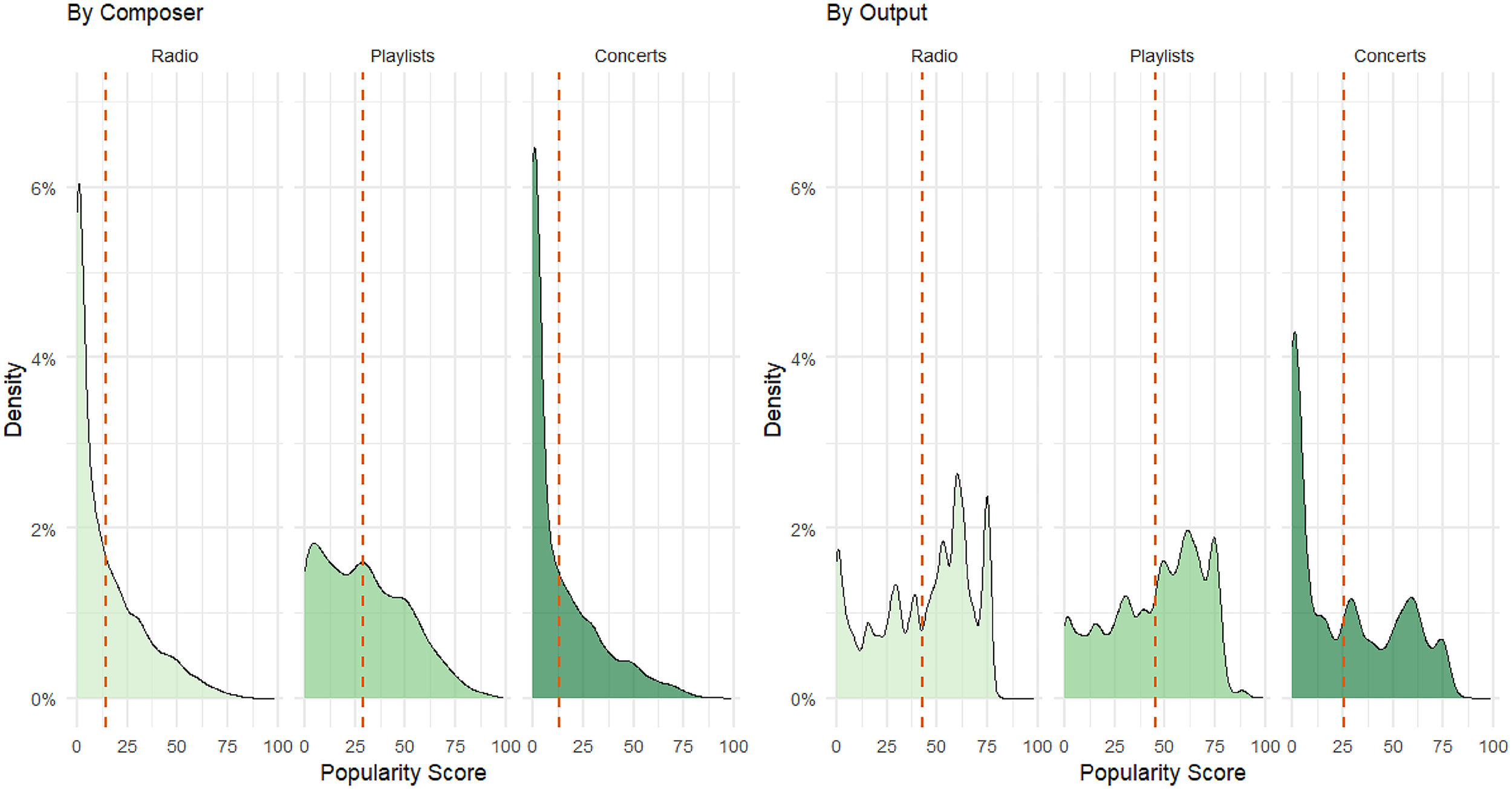
Popularity score density plot.
Popularity Distribution Statistics.

The output-perspective density plots on the right-hand side of Figure 1, however, show that the frequency with which different composers are broadcast heavily favours high popularity artists. The output of radio is brought into much closer alignment with playlists, with concert programming being the platform where audiences are more likely to encounter less appreciated works. Whereas radio and playlists are sensitive to audiences who can change stations or skip to another track, concert programming enjoys a captive audience and room to provide greater discursive introduction to esoteric composers and their work.
Research Question 2
Within the overall platform popularity distributions for music presented on each platform, notable trends can be observed when comparing the popularity of Australian composers and their international counterparts. When limiting the dataset to contemporary era composers (the era representing the vast majority of Australian composers), the boxplots in Figure 2 show that the median popularity scores across all platforms are lower for Australian composers. The output-perspective on the right-hand side of the figure demonstrates that, when selecting from among the Australian composers which are featured on a platform, those composers who have a higher popularity score are in higher rotation and heard more frequently. While this is unsurprising, it is interesting to observe that the shift in mean popularity scores from the composer to the output perspective—reflecting the extent to which high popularity composers are more frequently curated—is most pronounced in the playlist data (rising from 11.8 to 23.27) and much less so in the concert data (rising from 4.91 to 7.39). While the average popularity of curated Australian composers could be expected to be lower than their international counterparts—particularly as measured by a global digital music service—it is nevertheless salient to observe the extent to which Spotify favours more popular Australian composers. Audiences wishing to hear more niche areas of Australian composition are much more likely to do so through live concerts and, to a lesser extent, radio.
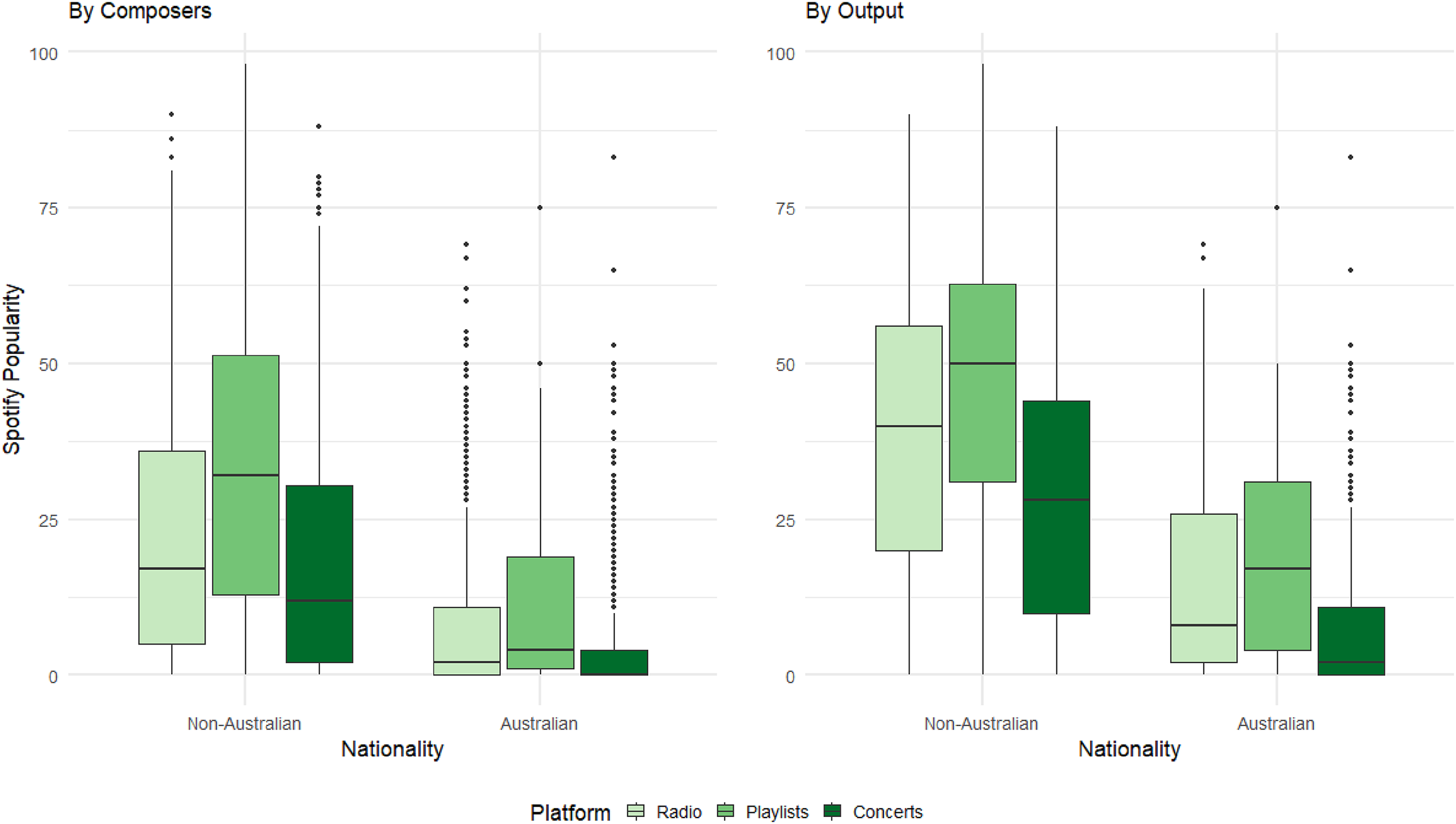
Boxplots of popularity scores, by nationality, for contemporary era composers only.
Distinctiveness as Familiarity
Research Question 1
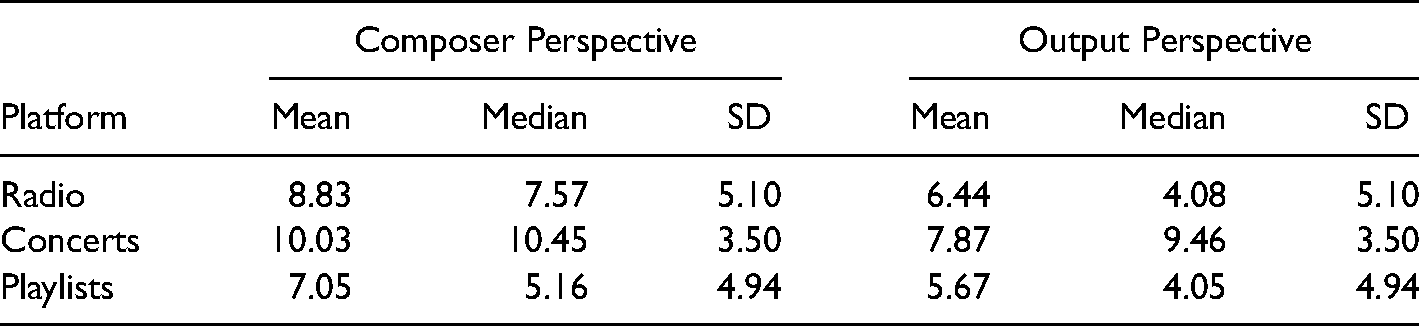
When familiarity is assessed from the point of view of distinctiveness—where high scores correspond to composers who are more acoustically distinct in the context of the platform on which they are featured—concerts are again shown to be the platform offering the most heterogeneous output, with a median output-perspective score of 9.46 (see Table 3). Mann-Whitney tests comparing the distinctiveness scores of each platform showed that differences were significant (p < 0.001) for both the composer and output perspectives. While the composers featured on ABC Classic FM display considerably more acoustic diversity when compared to playlists, with means of 8.83 and 7.05 respectively, the relative size of this gap reduces when the frequency with which composers are programmed is taken into account in the output-perspective. The density plots in Figure 3 further highlight the contrasts between the three platforms. Radio's output is particularly skewed by the high frequency of stylistically archetypal composers such as Mozart (
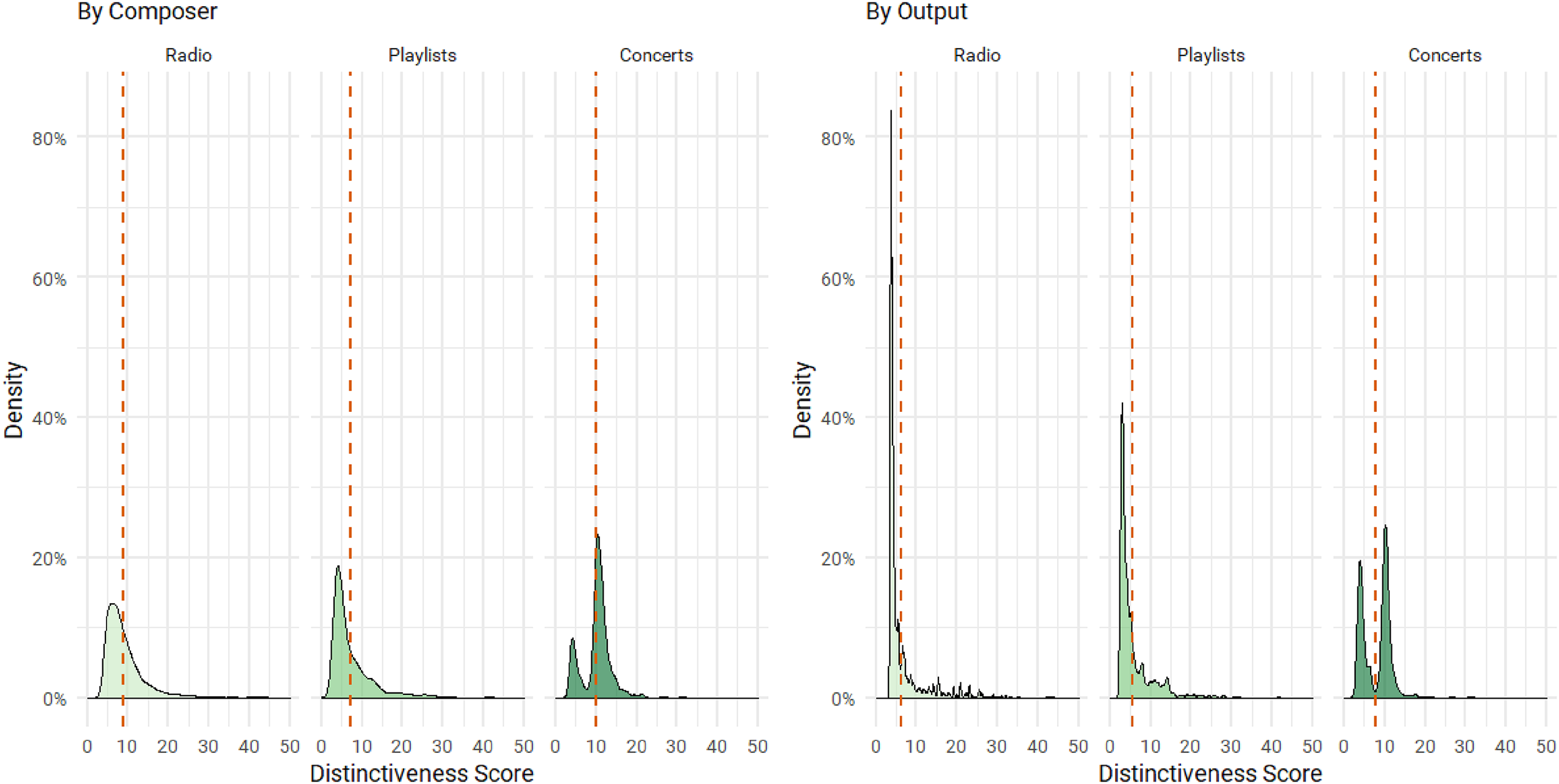
Distinctiveness score density plots.
Distinctiveness Score Distribution Statistics.
Whereas popularity used a single Spotify composer popularity score as a global measure for all platforms, distinctiveness scores for individual composers are specific to each platform. Mozart, for example, has distinctiveness scores of 3.56, 2.80 and 10.08 for the radio, playlists and concerts data respectively—reflecting, inversely, the varying degree to which his style of music is typical for each platform. This is clearly shown in Figure 4, which shows the difference between the mean distinctiveness score for content in each historical era and compares that to the overall mean for each of the three platforms. While for radio and playlists the acoustic sounds of the more experimental contemporary era are more distinctive than what they would normally curate, the inverse is true of concert programmes given their emphasis on Australian repertoire. Instead, increases in the relative distinctiveness of music is correlated with increasing temporal distance from the contemporary era. While Baroque music will not necessarily be completely unfamiliar to concert audiences, it will nevertheless be unfamiliar in that context of presentation.
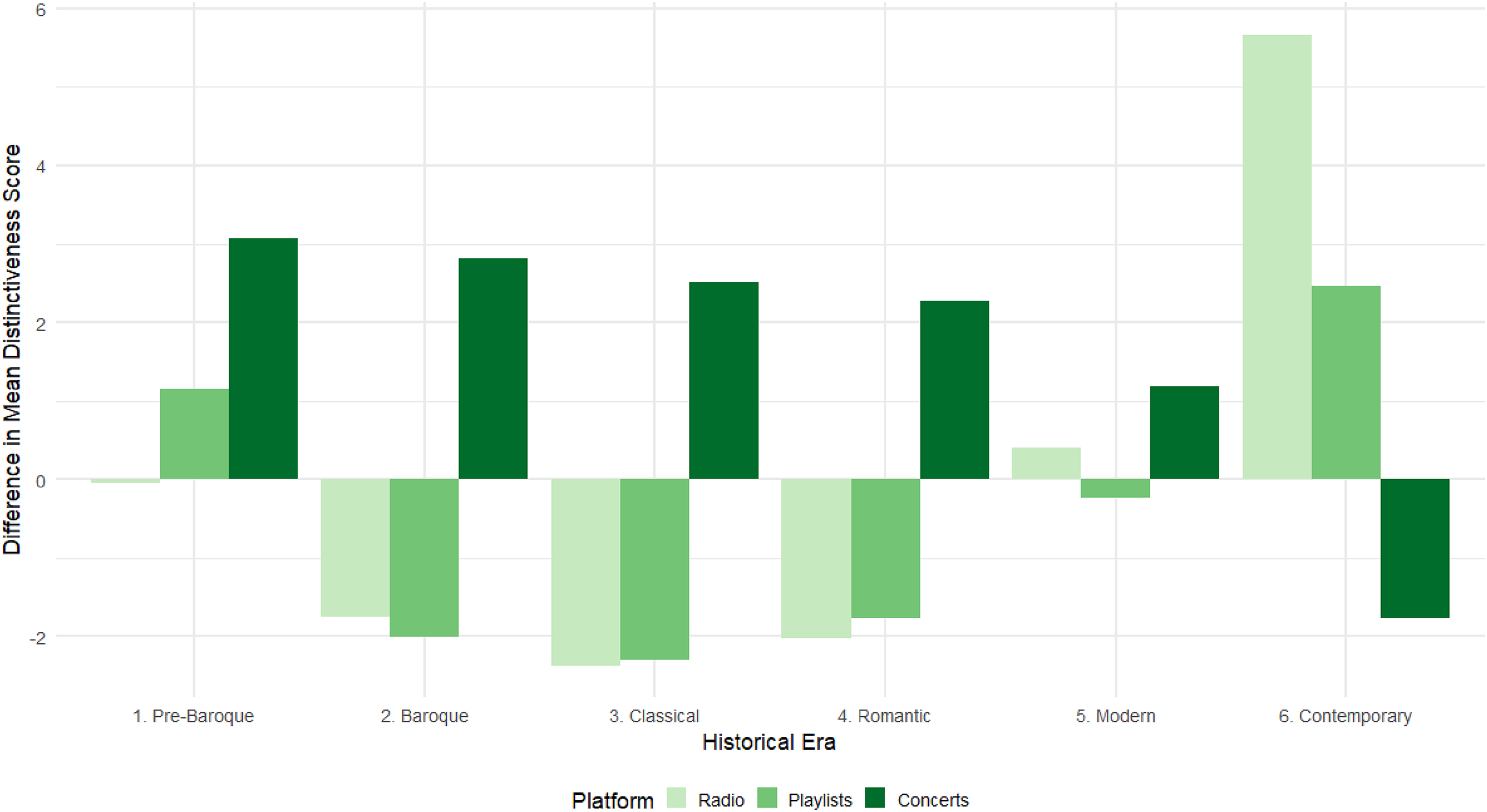
Variation in distinctiveness score means, by historical era and platform.
Research Question 2
The capacity for distinctiveness scores to identify the extent to which particular forms of music are unusual for a particular platform also permits scrutinising how contemporary Australian composition fits into different broader music profiles. By again considering just contemporary era composers, Figure 5 presents boxplots of the distinctiveness scores for each platform. To contrast the representation of Australian music, its distinctiveness score range is shown alongside composers from each of Europe and North America. While Australian composers might understandably be distinctive in the context of the overall musical profiles of radio and playlists, it is interesting to observe that the Australian music which is selected on these platforms manages to be substantially more distinctive even within the more eclectic boundaries of the contemporary era. While the live concert data's emphasis on Australian composition justifiably reverses this trend, it suggests a particular challenge for audiences approaching Australian composition on both ABC Classic FM and Spotify playlists. The contemporary era music programmed from other regions bears much greater similarity to the canon of Western art music which predominates on these platforms, which serves to increase the perceived obscurity of Australian music among listeners.
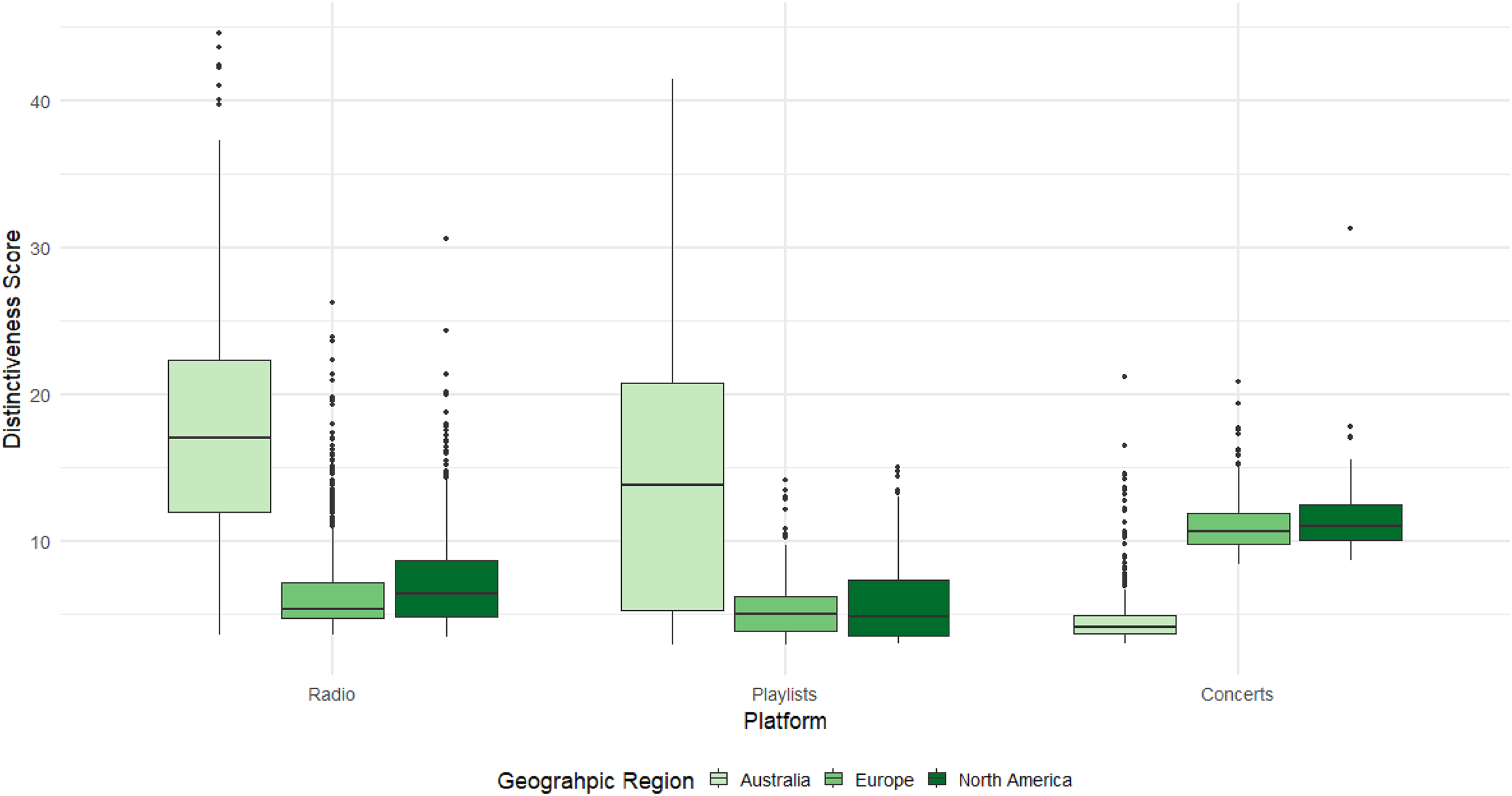
Distinctiveness scores of contemporary era composers, by geographic region.
Trajectories of Unfamiliar Music
Research Question 3
Whereas the previous analyses have considered the outputs of platforms as a whole, a more fine-grained level of analysis can be achieved by attending to the specific sequencing of works involved in presenting highly distinctive, and likely unfamiliar, music to audiences. Drawing on the notion of “trajectories” of distinctiveness, this analytical approach takes pairs of sequential works to examine the patterns by which listeners are prepared for and then “recover” from highly distinctive music.
In the case of radio, the sequencing of works is a continuum which spans the entire date range in the dataset being analysed. In practice, this continuum is broken by the packaging of works into discrete programmes and the scope of data analysed was restricted to sequential broadcasts which belonged to the same program. For each of the resulting pairs of works, the absolute difference in distinctiveness score was calculated, with an overall mean value of 4.24. To evaluate how curatorial processes have shaped the trajectories by which users traverse familiarity, the observed data was compared against randomly drawn permutations. Drawing on Monte Carlo approaches to establishing a reference distribution (Ernst, 2004), the sequences for each program were randomly reordered 1,000 times to assess how the same observed collection of works, and corresponding distinctiveness scores, would appear to audiences if arranged randomly. The resulting histogram of the means for these permutations, together with the observed mean in the empirical data, is shown in Figure 6. Classic FM's mean is over 9 standard deviations less than the average of the random permutation means, reflecting a much smoother transition in the distinctiveness of broadcasts than would otherwise be produced by randomly programming the same works.
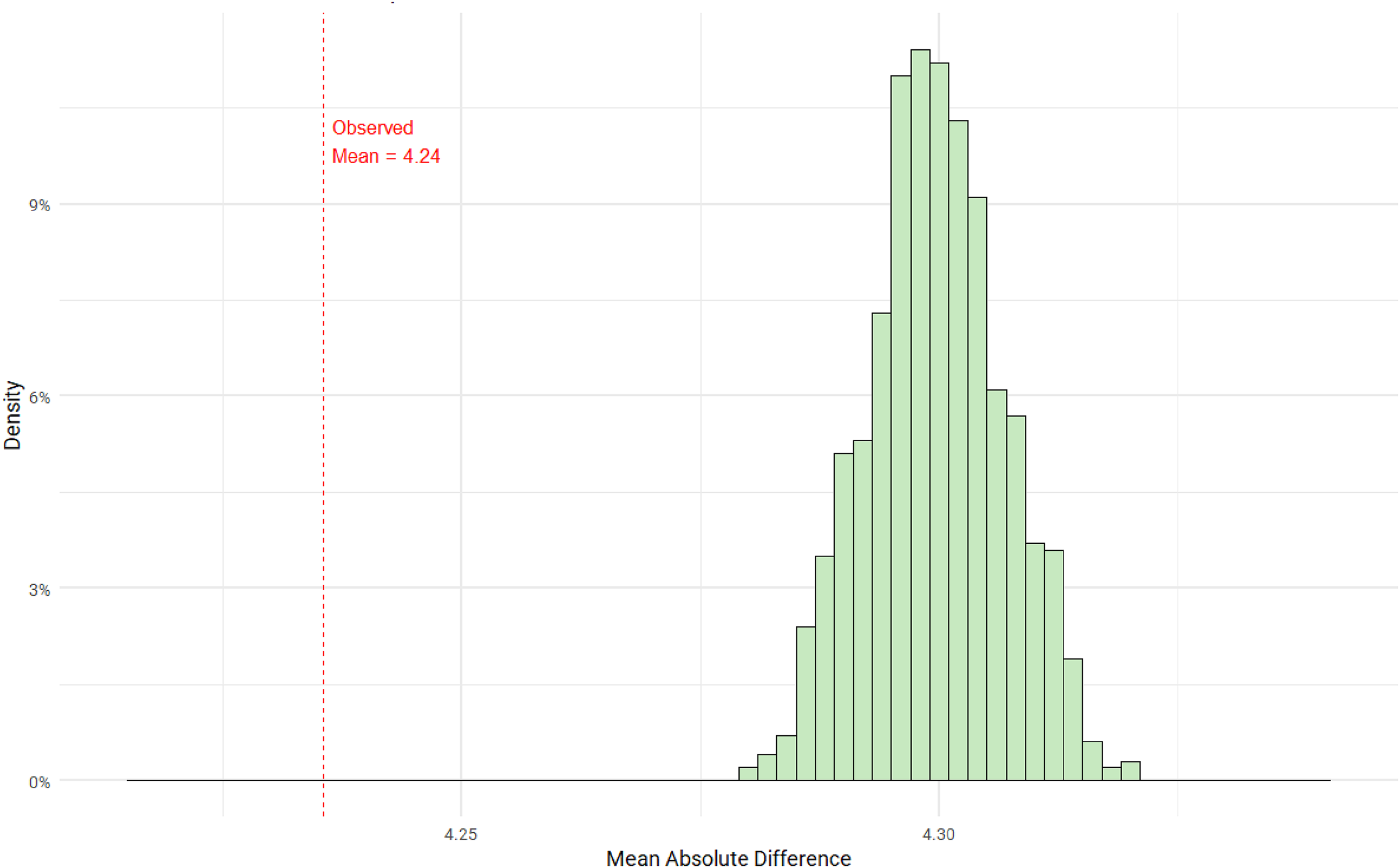
Trajectories of distinctiveness difference in sequential radio broadcasts.
While the event data is without the sequencing data to permit an analysis, the Spotify playlist data provides a comparison which further emphasises the significant role played by curation observed above in the ABC Classic FM data above. As with radio, playlist sequences within individual playlists were subjected to 1,000 permutations of random reordering. The observed mean absolute difference in distinctiveness score of the resulting pairs was 2.71, which initially suggests a less disjointed experience in contrast to radio. As shown in Figure 7, however, there is effectively no significant impact of curation with the observed mean instead falling within one standard deviation of the randomised means. This suggests that playlists largely eschew the kinds of nuanced curation commonly associated with music programming. This may be in part due to a listening context in which listeners can readily skip to the next track, shuffle the order of tracks, or view and select from the overall curated list as they desire.
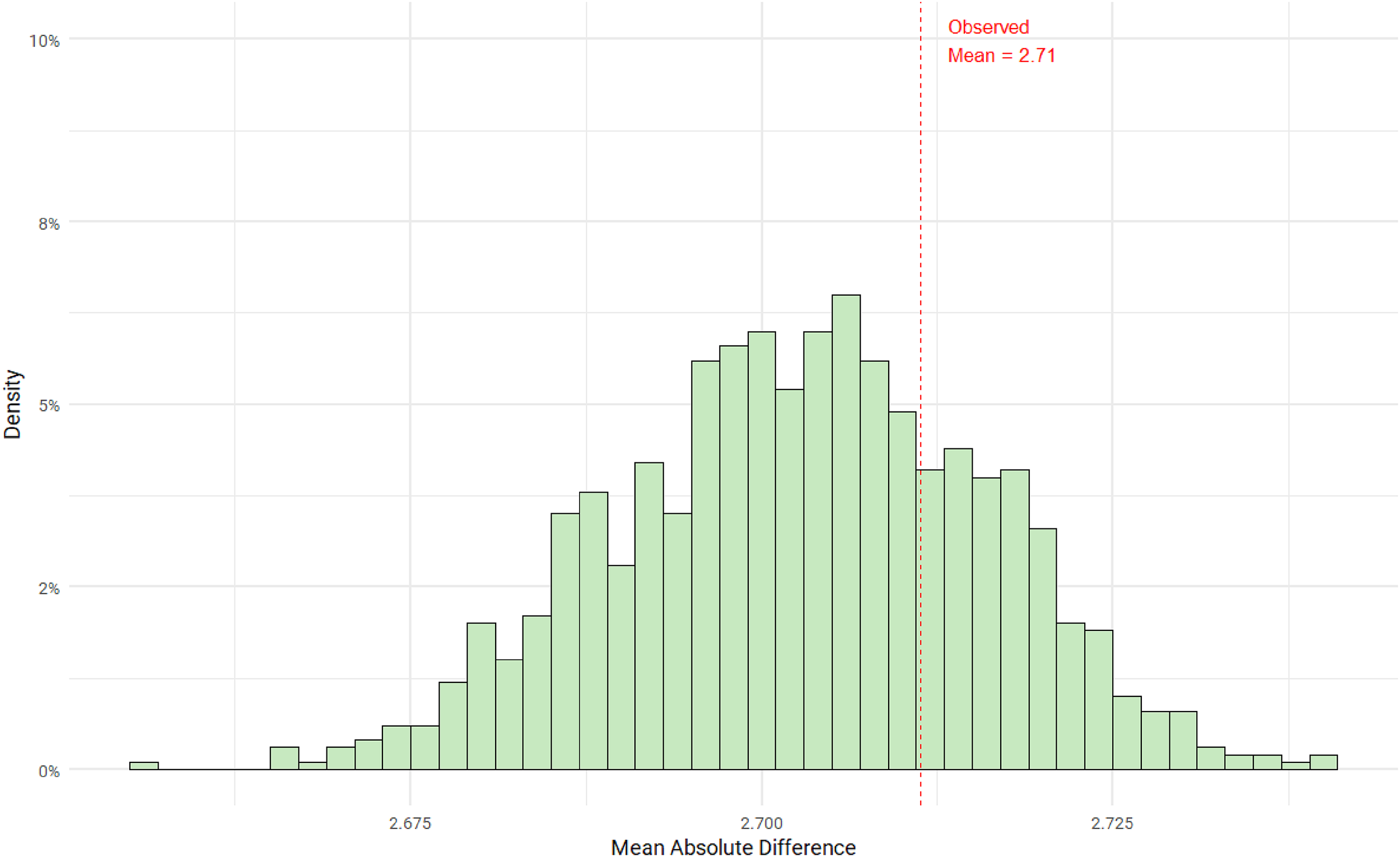
Trajectories of distinctiveness difference in sequential playlist entries.
In addition to the sequence pairs examined above, distinctiveness scores can also be used to analyse how curation works across longer sequences of broadcasts. Taking sequences of three-broadcasts (u1, u2, u3), for example, it is possible to identify 6 potential trajectories of distinctiveness scores: (i) ascending (u1 < u2 < u3), (ii) V-ascending (u2 < u1 < u3), (iii) V-descending (u2 < u3 < u1), (iv) inverted-V ascending (u1 < u3 < u2), (v) inverted-V descending (u3 < u1 < u2) and (vi) descending (u3 < u2 < u1). To examine trajectories of unfamiliar music on radio, the top 10% of values for u2 were selected to reflect the most distinctive music featured on the network. Comparing empirically observed means to the average of randomised permutations shows patterns (iv) and (v) to be less common in the Classic FM curated broadcasts by an order of 4.9 and 4.5 standard deviations respectively. That both of these are the only trajectories which place u2 above both u1 and u3 points to the increased clustering of highly distinctive works together. Listeners are less likely to be given a preparation and recovery trajectory when presented with highly distinctive works; instead they will be preceded or followed by music of increasingly distinctive composers. This points to the capacity for distinctiveness to become a pattern in and of itself, whereby the sound of something “familiar” is no longer reassuring but can itself be confusing and out of place.
Discussion
The collective curatorial practices which arise on different platforms have been shown to result in substantial differences in the degree to which audiences are prompted to engage with classical music that is distinctive and unfamiliar. In selecting from the entire space of possible composers, the analysis addresses the first research question by identifying a continuum stretching from the heterogeneity and eclecticism of concerts, through to the more homogeneous and familiar sound world offered by Spotify playlists.
As audiences increasingly shift from radio to digital platforms (Australian Communications and Media Authority, 2022), this firstly suggests that the collective ways in which classical music is mediated to audiences will progressively involve a less diverse musical sound world. To the degree that processes of music discovery are important to fostering healthy artforms and systems of cultural production (Tepper & Hargittai, 2009), digital playlists provide a narrower space within which to make such discoveries and to engage with substantially unfamiliar sounds. In addition to the overall profile of the music presented, the degree to which curatorial processes are able to guide audiences in their engagement with more esoteric music is also diminished in playlists when compared to radio. Responding to the third research question, the findings show that the radio data exhibits nuanced trajectory patterns which suggest a capacity to gradually expose audiences to unfamiliar music. Spotify playlists, by contrast, involved effectively random juxtapositions of musical content. While digital music services ostensibly provide users with greater agency in their music consumption when compared to radio or concerts, these findings add further empirical evidence to those voices who are more sceptical of the supposed democratising potential of emerging digital platforms.
The findings also point to the increasing loss of a specialised curatorial role which has the potential to consider how the gap of unfamiliarity can be bridged and how audiences can be effectively introduced to new musical sounds. It is not just the rise of digital playlists to which this loss of curatorial expertise can be attributed. At the ABC, the launch of their internet only radio station ABC Classic 2 in June 2014 caused internal and public outcry at the suggested use of computer-assisted or fully automated programming (Strahle, 2016). Not only does this raise questions about the sustainability of human-curated radio programmes in the face of digital competition, but the contextual presentation of those programmes—which includes a presenter discursively preparing listeners to hear a work—is also at risk of disappearing or being replaced by generic pre-recorded voice tracking. Live concerts, by contrast, would appear to be relatively immune to these trends and therefore represent a critical platform through which audiences discover and engage with unfamiliar music.
The different collective outputs of these curatorial processes can also be understood as reflecting shifts in the make-up of the curatorial profession. It is unlikely that the curators of Spotify playlists, particularly the software engineers involved in those incorporating algorithmic selections, would share the same privileged elite background as the arts managers pursuing “culture as a vocation” as identified by Dubois and Lepaux (2018). This shift in the social constitution of cultural intermediaries—with their corresponding differences in motivations and backgrounds—warrants further investigation for its capacity to influence how the field is constituted and its previously theorised role in reproducing social stratification. Spotify curators and engineers may have similarly privileged backgrounds, for example, but the criticisms levelled at digital music services for reducing music to a commodity (Marshall, 2015) suggest changes to the way in which curators are able to appreciate music as an economic as opposed to creative good.
Beyond the tension between radio and digital playlists, the concert dataset's emphasis on contemporary Australian composition also permits a focus on the second research question's concern for the implications of curatorial practices on local scenes of music production. In the context of the classical genre, contemporary composition is frequently at the avant-garde of musical expression and in many respects represents the epitome of unfamiliarity in the alienating response it can elicit in audiences (Kramer, 2016). Australian composition is explicitly at the core of the concert dataset, which only helps draw sharper attention to the peripheral position it occupies in radio and playlists. The Australian voices which are heard on these latter platforms are considerably more esoteric than their contemporary international counterparts, which is likely to increase the degree to which Australian composition is regarded as idiosyncratic. While such distinctiveness may warrant its inclusion as an occasional novelty in playlists, its effect in the context of a broadcaster such as ABC Classic FM is more likely to contribute to a sense of alienation for an audience more accustomed to hearing music from the Romantic era.
Furthermore, while the global reach of Spotify suggests it offers emerging artists significantly more potential than the limited market of domestic broadcast radio, its playlists reflect curatorial processes which draw on a narrower range of composers. The curation of music on ABC Classic FM gave space to a much greater range of low-popularity and esoteric composers when compared to Spotify playlists. This finding points to the importance of government and industry interventions which have the capacity to shape curatorial processes to align with perceived national interests. As part of Australia's state-funded national broadcaster, ABC Classic FM is governed by a charter which includes a provision “to encourage and promote the musical, dramatic and other performing arts in Australia” (Australian Broadcasting Corporation Act 1983, Cth, s. 6 (1) (c)). More broadly in Australian radio, domestic content quotas have been the subject of extensive advocacy due to their role in “stimulating and maintaining local musical practice” (Mason, as cited in Gailey, 2012) and the analysis provided here lends support to calls by sections of the local music industry to introduce quotas for digital streaming services (Commonwealth of Australia, 2019).
This study has demonstrated the potential to apply novel content analysis techniques—particularly through the use of measures of “distinctiveness”—to contrast how music is mediated to audiences on different platforms. Whereas its findings were limited to classical music and the national context of Australia, it points to further opportunities for research to compare the ways in which curatorial practices mediate familiarity to audiences across different genres, platforms and national settings. It is of particular interest to consider the extent to which these findings are repeated in the context of contemporary genres which do not have to negotiate the historical legacy which is uniquely present in classical music. The current study is also limited in its reduction of entire platforms to a single unit of analysis without exploring the variation which may be present in those platforms. This variation may be temporal—understanding how curatorial practices on platforms evolve over time—but could also examine the distinct curatorial practices within each platform. Different playlists, different radio programmes and different performing ensembles all involve varying approaches to curation within their own platforms. The increasing role played by algorithmic recommendation curation on digital platforms also warrants particular scrutiny of its capacity to limit our exposure to unfamiliar musical sounds.
The current study's focus on considering the implications for national scenes of contemporary music also points to opportunities to consider how curatorial processes either reflect or obscure broader markers of diversity in musical practice. Classical music's relationship to dominant culture has been a long-standing point of critique (Kajikawa, 2019), and the research approach adopted here offers an approach to understand how factors such as gender and ethnicity are reflected in curatorial practices.
Finally, the emphasis presented here on the outcomes of curatorial practices has the potential to frame further investigations into both the processes which contribute to producing the observed outcomes together with how these objectively measured outcomes are experienced and negotiated by audiences. People's understanding of a domain of cultural practice is mediated through the assemblages of multiple platforms—alongside other mediating influences—and the research presented here is unable to examine how listeners negotiate these different representations of a field such as classical music. As audiences increasingly shift towards digital platforms, such a program of research can inform our understanding of the curatorial considerations which shape this new musical environment together with the implications for fields of cultural production.
Footnotes
Acknowledgments
I wish to thank Professor Roger Dean and Associate Professor Liam Magee at Western Sydney University for their feedback on earlier drafts of this article. I also thank the anonymous peer reviewers for their constructive comments.
Declaration of Conflicting Interests
The author(s) declared no potential conflicts of interest with respect to the research, authorship, and/or publication of this article.
Funding
The author(s) received no financial support for the research, authorship, and/or publication of this article
