




Abstract
Climate change and environmental degradation increasingly heighten conflict and contribute to the intensity and frequency of disasters globally, leading to a significant rise in humanitarian needs. This scoping review explores what is known about how humanitarian organizations respond to and plan for climate change within their programming and operations, as captured in grey and academic literature. Following Arksey and O'Malley's five-step scoping review methodology, two reviewers searched six databases—EMBASE, SCOPUS, Medline, PAIS, Web of Science, and OVID Global Health, using “humanitarian” and “climate change” as keywords. Using the same keywords, grey literature screening involved an incognito Google search and searches on ReliefWeb and Humanitarian Library databases. Targeted searches were also conducted on ten organizational and sectoral websites. The search yielded 37 academic documents and 55 grey literature sources, totaling 92 documents included in the review. We analyzed the documents using a combined deductive and inductive approach. First, we extracted data from the documents based on six analytical questions. Then, we synthesized this data and inductively labeled it to identify emerging themes. The results outline six main themes: the emergence of climate change as a focus within the humanitarian agenda, climate compatible approaches in the sector, climate change in relation to the short-term life-saving orientation of humanitarian aid, sectoral commitments to climate change, resilience-building and local collaboration. Climate change is fundamentally transforming the landscape of humanitarian needs and response. As presented in this review, humanitarian organizations need to continue examining how to overcome challenges and further integrate concerns for climate change in humanitarian operations and response.
Introduction
Climate change and other environmental risk factors are increasing the number and intensity of disasters, leading to a significant rise in humanitarian needs globally (IFRC 2019). Climate change is understood as long-term shifts in temperature and weather patterns. It can be caused by natural causes such as volcanic eruptions and changes in the solar cycle, or by human activities (IPCC 2019). Climate change can contribute to infectious disease spread, political instability and conflict, mass migration, and negative impact on crops and water quality (IFRC 2019). According to the Intergovernmental Panel on Climate Change (IPCC), human activities, especially through the emission of greenhouse gases, are primary drivers of global warming (IPCC 2023). Climate change is transforming both the scale of humanitarian need and the institutional and operational landscape within which humanitarian organizations operate, raising important questions about humanitarian organizations’ current and future roles in climate adaptation, risk reduction, and long-term resilience (OCHA 2023). In addition to responding to disasters and conflicts that may be amplified by climate change, what roles should they take on in preventing and mitigating climate-related crises?
Recently, many organizations have integrated notions of climate adaptation within their projects and sought to increase resilience to climate vulnerability through steps such as local early warning systems or forecast-based financing (Baxter et al. 2022; Braman, Suarez and Van Aalst 2010; De Geoffroy et al. 2021; IASC 2021; ICRC 2021a; Jjemba et al. 2018; Peters and Dupar 2020; Rüth et al. 2017; Schwerdtle et al. 2020). Humanitarians have also acted at the organizational level by implementing environmental policies to reduce greenhouse gas emissions (e.g., by decreasing air travel for staff) and improve waste management (ICRC 2021b; ICRC et al. 2022; Johnson et al. 2020; MSF 2022; Schwerdtle et al. 2020; Voûte, Guevara and Nayna Schwerdtle 2021). More broadly, sectoral initiatives such as the creation of the IASC Climate Task Force for interorganizational collaboration and the launch of the Environmental Charter drafted by the International Committee of the Red Cross (ICRC) have emphasized the importance of humanitarian organizations committing to climate adaptation and mitigation policies (ICRC 2022; Selby and Cabot Venton 2009a). These initiatives aim to encourage humanitarian organizations to develop climate adaptation and mitigation strategies within their operations (Hall 2016; ICRC 2022).
Given its primary mandate to respond to acute crises, responding to climate change within the humanitarian system, including strategies at the level of humanitarian organizations, is extremely challenging (IFRC 2019). Most literature on climate change and humanitarian action has focused on how climate change will exacerbate humanitarian crises, with less discussion of broader ways that humanitarian action can or should adapt to respond to the impacts of climate change (Brugge et al. 2020; Hall 2016; IFRC 2019). Many humanitarian organizations are implementing environmental policies and programming for climate adaptation and mitigation (Brugge et al. 2020), and some sectoral initiatives set in motion, including calls for re-thinking how the humanitarian system and mandate are shaped (Bennett, Castañeda Solares and Wilder 2023; Lilly 2024) and finding mechanisms for humanitarian organizations to “treat the symptoms,” or root causes, of climate change (Vazquez 2023). To better understand developments related to these issues, we undertook a literature review to map and synthesize knowledge related to humanitarian organizations’ responses to climate change. The aim of this review is to gather and present knowledge related to international humanitarian organizations’ (IHOs’) climate anticipation, adaptation, and mitigation policies in programming and operations as captured in grey and academic literature.
Methods
A scoping review is useful to identify and determine core ideas on a topic, map evidence, summarize and disseminate findings, and identify research gaps (Arksey and O’Malley 2005; Peters et al. 2021). Scoping reviews are based on well-defined methodological processes but provide flexibility in exploring, reviewing, reporting, and discussing multiple sources of evidence (Peters et al. 2021). Moreover, scoping studies “require analytical reinterpretation of the literature” as reflected in this review (Levac et al. 2010: S1). This review adopts Arksey and O'Malley's five-step methodological framework (2005). These steps include: (1) identifying the research question, (2) identifying documents, (3) selecting documents, (4) charting the data, and (5) collating, summarizing and reporting results.
We consulted with an academic librarian as we developed the review protocol. The librarian guided our preliminary search strategy to define keywords and identify eight sentinel articles (see Appendix 1). The selected sentinel articles tested the feasibility and relevance of our topic by providing main articles that should appear in our database search results. It also supported the testing and selection of keywords and databases that indexed relevant articles for our review.
Identifying the Research Question
The first step consisted of developing the following research question to guide the review: What is known about international humanitarian organizations’ responses to and planning for climate change within their programming and operations? For the purpose of this study, IHOs are defined as non-governmental and intergovernmental organizations that are international in scope (active in more than one country, including national branches of international organizations) and with a mandate to respond to acute crisis situations that threaten the health and well-being of populations, such as conflict, disaster, mass migration, or disease outbreak. Furthermore, we conceptualized programming and operations as encompassing deliberate actions to prepare for, manage, and deliver humanitarian aid.
Identifying Documents
Repeated consultations with a librarian helped us in selecting databases and the keyword string to identify relevant documents. We selected six databases to identify academic literature: EMBASE, SCOPUS, Medline, PAIS, Web of Science, and OVID Global Health. Our goal was to select a set of databases that would capture a wide range of interdisciplinary research, while still including the pre-identified sentinel articles.
We selected the keywords “humanitarian” and “climate change” to be broad enough while still intentionally maintaining conceptual clarity and ensuring the review remained tightly focused on humanitarian organizations’ responses and plans to climate change. This choice was informed by iterative testing and consultation with a librarian and was intended to maintain a clear focus on humanitarian aid and climate change and minimize the retrieval of adjacent but conceptually distinct areas, such as general disaster aid, disaster risk reduction (DRR), or sustainable development initiatives not explicitly framed within the humanitarian context of interest.
To identify grey literature, we first conducted a Google incognito search using “climate change” and “humanitarian” as keywords, retaining the first ten pages for screening. We also searched the ReliefWeb and Humanitarian Library databases. Following this, we conducted targeted searches of organizational and sectoral websites, including ALNAP, the Interagency Standing Committee (IASC), the United Nations Office for the Coordination of Humanitarian Affairs (UNOCHA), ICVA, the International Federation of the Red Cross (IFRC), the International Committee of the Red Cross, Médecins sans Frontières (MSF), Care International, OXFAM, and Save the Children. For pragmatic considerations, we searched databases and websites for one hour to select relevant documents, retaining 255 grey literature sources. After conducting a title and abstract screening, we retained 61 documents and included 55 documents following the full-text screening.
Study Selection
After removing duplicates through the Rayann platform, we included 2748 academic documents for screening. To enhance rigor of the screening process, two researchers (RM and IMB) reviewed the titles and abstracts of the documents identified through database and web searches. The first 10% of reviewing was conducted in parallel, allowing RM and IMB to compare and discuss differences and results. A second parallel review was performed by RM and IMB, obtaining a 95% agreement on inclusion and exclusion decisions. Following this step, the reviewers continued the search separately. The same selection strategy was conducted for grey literature documents. Following the title and abstract screening, we had 89 academic documents and 61 grey literature documents to assess for eligibility, of which 37 academic documents and 55 grey literature documents were included in the review.
To be considered for inclusion, documents had to (1) focus on IHOs, (2) address organizational programming and operations, and (3) include humanitarian organizations’ actions to respond, mitigate, and/or adapt to climate change. Documents that only discussed climate changes impacts exacerbating humanitarian crises or which climate-affected crises humanitarian organizations should respond to were excluded. No time period limits were imposed as part of the inclusion criteria. The search strategy was designed to capture all relevant literature available in the databases at the time of the search, regardless of publication year. For academic sources, we retained empirical and non-empirical articles, but excluded dissertations and conference presentations. Grey literature sources were limited to publicly accessible documents and included reports, blogs, policy briefs, guidance notes, and case studies. Searches were conducted in English, but sources written in English, Spanish, or French were eligible to be included. The search was completed from December 2022 to February 2023. Figure 1 illustrates the literature selection process using a PRISMA flow diagram.
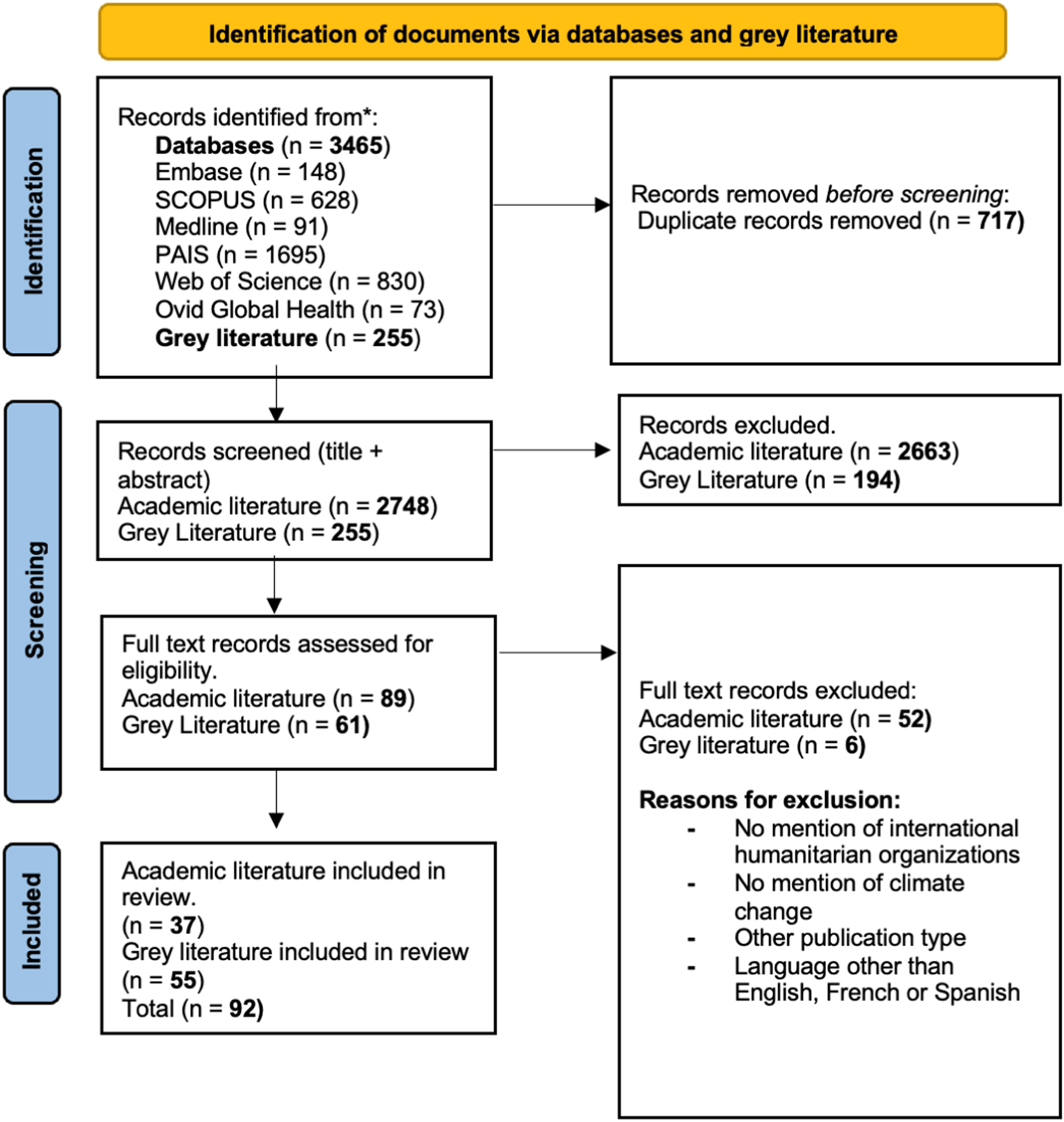
Identification of documents via databases and grey literature.
Charting the Data
To chart the data, IMB and RM manually inserted relevant excerpts from each document into an Excel table using a deductive approach, in which the reviewers matched the data from each document to columns in the Excel table. The table was divided into three sections with columns for each topic: bibliographic (author, title, year of publication, journal), contextual (location, organizations discussed, type of humanitarian response and type of humanitarian crises), and substantive information responding to the following questions: (1) What is known about IHOs’ efforts to reduce climate change impacts? (2) What is known about IHOs’ efforts to address climate vulnerability of the communities with whom they work? (3) What plans exist to reconfigure IHOs to be responsive to climate change? (4) What gaps have been identified in what IHOs are doing to plan and respond to climate change? (5) What recommendations have been made for what IHOs should be doing to plan and respond to climate change? (6) How are community and local perspectives represented and referred to in discussions of IHOs and climate change?
The process involved IMB and RM independently charting data of the first 10% of articles, followed by discussion and comparison of results. When agreement was reached on the data charting process, the reviewers continued charting independently.
Collating, summarizing, and reporting the results
We drew from the data charting table to create 1–2-page syntheses of responses related to the six sub-questions. We also reviewed the “other” column to identify ways to integrate this material within the syntheses. We used an inductive approach to code each synthesis, aiming to identify transversal concerns or ideas. This coding process revealed patterns and linkages within and across syntheses, which helped generate themes related to humanitarian organizations’ plans and responses to climate change. Conceptual maps and visual representations were developed by IMB, and presented to the research team to help further refine emerging themes related to the evolution of the climate change and humanitarian action agenda, climate compatible approaches, humanitarian aid's short-term emergency mandate, sectoral commitments, resilience-building, and local collaboration.
Results
Bibliometrics
The review yielded 92 documents, including 44 inter-agency reports, 33 academic articles, 11 blog articles, and four books or book chapters. All documents were in English and published from 2003 to 2022, with a sharp increase in published articles starting in 2018 (see Figure 2)

International humanitarian organizations and climate change: publications 2003–2022.
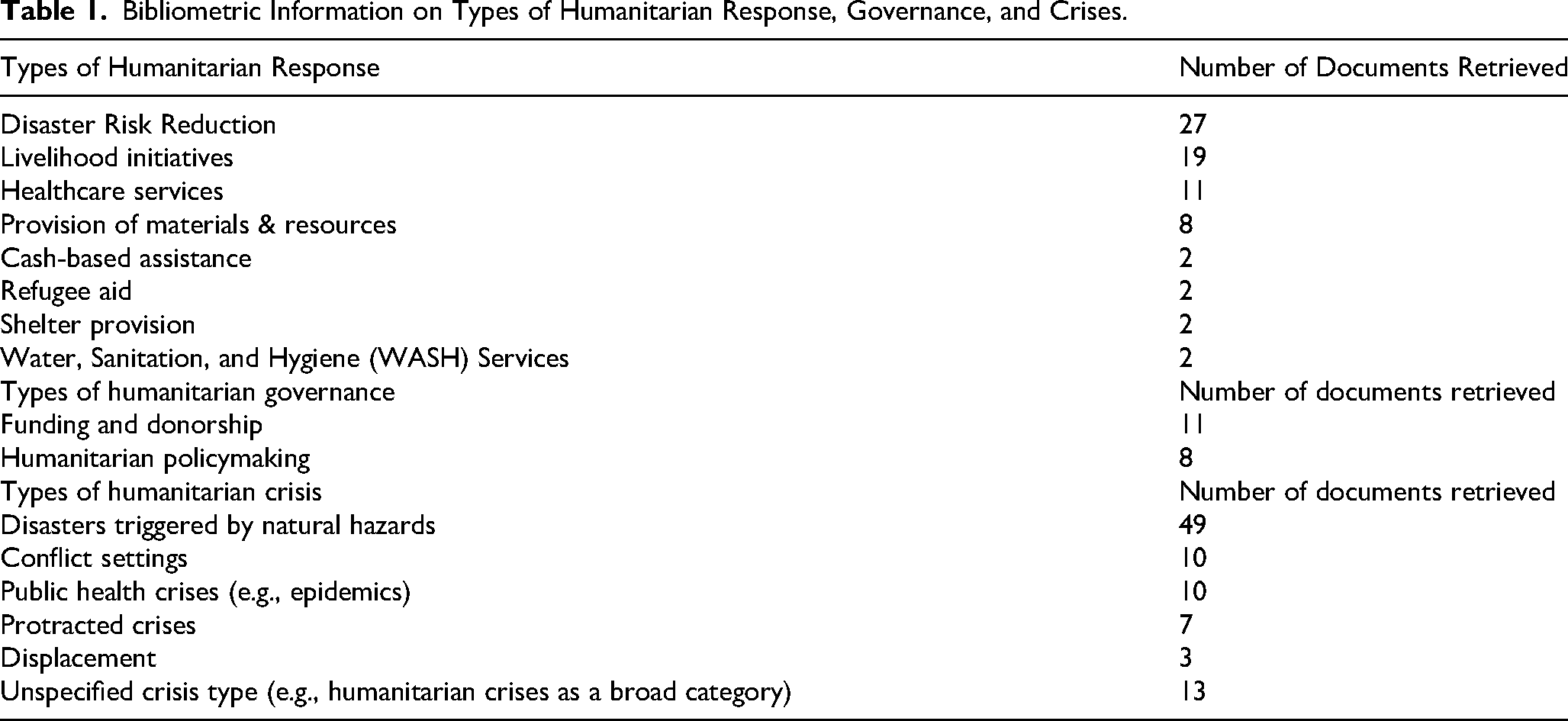
The ICRC was the organization that was the focus or source of the largest number of documents (24), followed by MSF (17), Save the Children (6), IASC (5), CARE international and the United Nations Office for the Coordination of Humanitarian Affairs (3 each), and OXFAM (2). For more details about humanitarian response types, governance, and types of conflict, see Table 1.
Bibliometric Information on Types of Humanitarian Response, Governance, and Crises.
The three regions most often discussed were Sub-Saharan Africa, Southeast Asia, and The Pacific, followed by the Middle East and North Africa (MENA) and Latin America (LATAM). For more details, refer to Figure 3. In terms of specific countries, Bangladesh was the main focus of six articles, with the Philippines, Indonesia, and Ethiopia highlighted three times each.
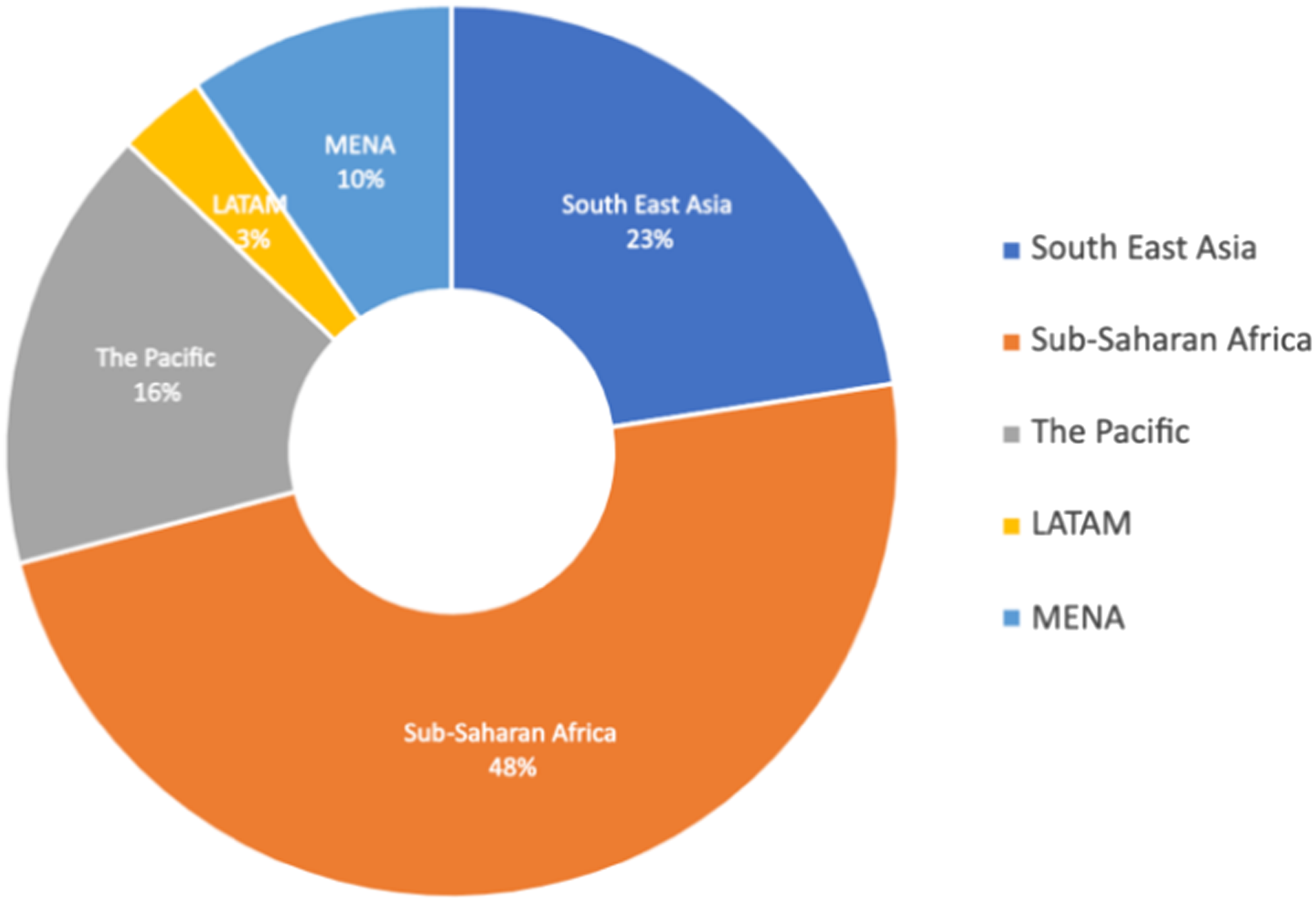
Regions as central focus in the literature.
Examining Climate Action in Humanitarian Programming and Operations
The next sections discuss the emergence and evolution of climate change as a topic within humanitarian programming, organized around six main themes. It discusses the emergence of climate change as a focus in the humanitarian agenda, how humanitarian efforts towards climate change began calling for climate-compatible approaches, the challenges balancing the short-term emergency mandate with long-term climate implications, and situating sectoral commitments to climate change. Finally, it outlines future considerations for humanitarian organizations, including resilience-building and local collaboration for climate change action by humanitarian organizations. Figure 4 illustrates these key developments in the emergence and evolution of climate change in the humanitarian agenda as described in the results.
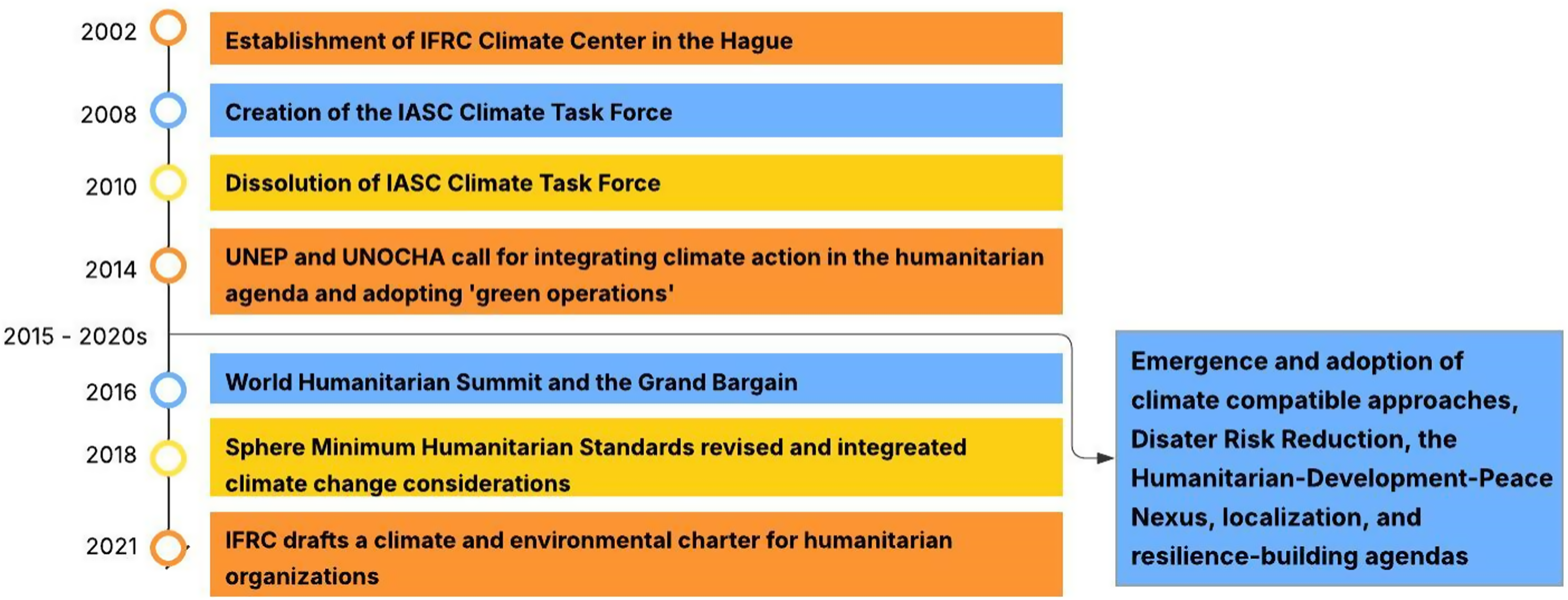
Key developments identified in the emergence and evolution of climate change in the humanitarian agenda.
The Emergence of Climate Change as a Focus Within the Humanitarian Agenda
Nine documents discussed climate change and humanitarian aid from the years 2000–2010. A common narrative across documents was the need to break down silos by increasing collaboration, dialogue, networking, and coordination among actors within and outside the humanitarian aid sphere to plan for and respond to the effects of climate change (IFRC 2003; OCHA 2009; Pettengell 2010; Selby and Cabot Venton 2009a; VOICE 2009). The IFRC emphasized the growing recognition that “climate change is here to stay” (IFRC 2003, S6). This sentiment was shared by some scholars, for example, Randall et al. (2008, S2) shared that “climate change effects [are] being felt in all parts of the world” (Randall et al, 2008, S2) and there exists). With “a deficit in humanitarian adaptation programming at the field level” (Randall et al. 2008, S7).
Efforts to tackle climate change had mostly been fragmented among organizations during these years, and scholars had not explored “the humanitarian community's engagement with climate change, as distinct from their regular responses to natural disasters emergencies” (Hall 2016, 370). A major step in drawing attention to climate action among humanitarian organizations was the establishment by the IFRC of the Climate Center in The Hague in 2002 (Hall 2016; Herbeck 2014). The aim of this center was to raise awareness, gather information and strategies for climate change adaptation, and foreground climate change and its humanitarian consequences into ICRC and IFRC strategies and on the international agenda (Herbeck 2014). In 2008, climate change was placed on the IASC agenda for the first time and the IASC Climate Task Force was created (Hall 2016). According to Herbeck, the Task Force was established in response to a request “by the leaders of organizations to undertake a strong advocacy on climate change adaptation and humanitarian action” (Herbeck 2014, S339). The work of the Task Force created new opportunities for IHOs to discuss and coordinate responses within the humanitarian sector to climate change, including adaptation and mitigation efforts. Through the Task Force, IHOs collaborated to foreground humanitarian aid's contributions to climate change adaptation and mitigation in the UNFCC agenda (Hall 2016). After the end of the Task Force's term in 2010, climate change again lacked a central focus within the sector (Hall 2016; Herbeck 2014).
In the 2010s, the focus of IHOs’ climate change efforts continued to be on policies concentrated on adaptation (Herbeck 2014). Many IHOs developed initiatives that sought to reduce vulnerabilities for communities in settings that were prone to climate-affected hazards such as disasters and conflicts. For example, CARE International implemented a Reducing Vulnerability to Climate Change project in Bangladesh. The aim of the project was to reduce community vulnerability to climate change by promoting sustainable development and building local-level capacity (Sterrett 2011). Moreover, Catholic Relief Services partnered with local actors in India to adapt farming practices to climate change. They increased crop yields by restoring ponds to capture the rising rainwater caused by flooding (Ashby and Pachico 2012). In 2014, the United Nations Office for the Coordination of Humanitarian Affairs (UNOCHA) and the United Nations Environment Programme (UNEP) expressed that there was “a need to make humanitarian action fit for the future, anticipating risks and challenges such as increased vulnerability due to climate change” (UNEP and UNOCHA 2014, S4). Yet, they also reported existing challenges to incorporating climate change action and other environmental considerations in the humanitarian agenda (UNEP and UNOCHA 2014). These include limited awareness among humanitarian practitioners, little integration of environmental policies, tools and processes, and a “lack accountability at agency level to ensure that humanitarian agencies fulfil their environmental mandates or requirements” (UNEP and UNOCHA 2014, S20).
Climate Compatible Approaches
In an effort to shift from adaption to mitigation and advance the goal of “mainstreaming the environment in humanitarian action” (UNEP and UNOCHA 2014, S36), multiple commentators called upon humanitarian organizations to adopt climate compatible approaches (Clarke and De Cruz 2015). This new orientation was described as requiring a “paradigm shift” with the need for IHOs to be “adaptive and flexible in uncertain times and willing to completely reimagine what they do, and why” (Clarke and De Cruz 2015, S26). Humanitarian scholars reported that such a reimagining would require greater collaboration and expanded partnerships, developing new channels of knowledge and new capacities, and innovating to make better use of climate information in humanitarian programming (Bayat-Renoux and Glemarec 2016; Braman, Suarez and Van Aalst 2010; Clarke and De Cruz 2015; Nagoda, Eriksen and Hetland 2017). Climate compatible approaches involve linking humanitarian interventions with broader goals (Schick and Fadda 2020), and in this way, create multi-sectoral, intersectional and multi-partnered solutions to adapt and mitigate to climate change (Chaves-Gonzalez et al. 2022; Clarke and De Cruz 2015; IASC 2022; MSF 2021; Peters and Dupar 2020; Pongisiri 2022).
Successful climate compatibility, sometimes referred to as a “climate-smart approaches,” has, therefore, been presented by scholars and practitioners as requiring the integration of multiple sectors and concerns, such as health, social, and economic, into IHOs’ plans for climate adaptation and mitigation (MSF 2021; Pongisiri 2022). It entails responding to a wide range of intersecting needs and vulnerabilities of children, women, Indigenous people, ethnic minorities, and people with disabilities (IASC 2022; Peters and Dupar 2020). Finally, it involves diverse stakeholders and partners, including donors, climate scientists, development organizations, and multilateral agencies to support the development of solutions tailored for specific contexts (Chaves-Gonzalez et al. 2022; Clarke and De Cruz 2015).
A step in the direction of climate compatibility has been to incorporate existing DRR and humanitarian-development-peace (HDP) nexus practices and policies into climate adaptation strategies for humanitarian organizations (ICRC 2003; ICRC et al. 2022; Marzi et al. 2021; OCHA 2009; Pettengell 2010; VOICE 2009; Voûte, Guevara and Nayna Schwerdtle 2021). The HDP nexus suggests greater partnership and collaboration to integrate humanitarian aid services with development approaches that focus on longer-term initiatives. The effort to bring together these approaches reflected a concern that divisions between humanitarian, development, DRR, and climate funding reduce collaboration among actors, creating disconnects between the climate action and humanitarian communities (Knox Clarke 2021; Sitati et al. 2021). Seeking ways to align these approaches was proposed by a range of humanitarian practitioners and scholars as a means to help address the climate adaptation financing gap by facilitating public and private long-term planning (Bayat-Renoux and Glemarec 2016). In addition, greater engagement with DRR can also encourage collaboration and support among humanitarian agencies and national authorities, as well as open possibilities to integrate climate scientists into their programming and operations (Aptel 2020; Bayat-Renoux and Glemarec 2016; Ferris 2017; Henly-Shepard et al. 2018; IASC 2021). Finally, by building on strengths from all sectors, “a more proactive anticipatory approach can be taken in areas where IHNGOs are most effective rather than where they have traditionally served” (Clarke and De Cruz 2015, S30). In this way, they complement their capacities and roles to respond and plan for the increasing threat climate change may pose.
Climate Change and the Short-Term Life-Saving Orientation of Humanitarian Aid
A feature of humanitarian aid that has frequently been identified as an obstacle for implementing climate activities over the last decades has been the short-term nature permeated in the structure of humanitarian operations (Abrahams 2014; Johnson et al. 2020; Selby and Cabot Venton 2009b; Sterrett 2011). Large humanitarian organizations such as the IFRC have stated how “we (humanitarians) need to understand, analyse and monitor the short- and longer-term impact of climate change to the most vulnerable populations and locations” (IFRC 2022a, S23). Other organizations such as OXFAM and UNOCHA have claimed to “support longer term visions in terms of humanitarian response and development” (Florin Marin and Otto Naess, 2017, S17). Considerations for the long-term environmental impact are highlighted in a Sphere guidance note that reports how the humanitarian response itself can damage the environment further, for example, by causing “deforestation as a result of humanitarian operations in Darfur” (George 2019, S1). Additionally, a study on the financial burden of humanitarian disasters suggests that each degree rise in temperature yields a 4.76% increase in humanitarian regional spending at the regional level (McDougal and Patterson 2021). The growing threats of climate change could potentially triple the current funding needed to address humanitarian crises as temperatures continue to rise (McDougal and Patterson 2021).
Nevertheless, some humanitarian practitioners have expressed that the focus on the urgency and speed of disaster response has made it cumbersome “to shift into a mindset that involves long-term planning, where environmental sustainability can be explicitly pursued” (Abrahams 2014, S38). The existing “disalignmens between short- and long-term operations and impact, hinder the ability to effectively incorporate environmental considerations” according to a report authored by practitioners from several large IHOs (Johnson et al. 2020, S17). Reportedly, insufficient funding from donors, the perception that climate change does not impact humanitarian work, the belief that climate threats are too distant, and the view that climate change surpasses the capacity of humanitarian actors to act are cited as reasons for a lack of sustained engagement in environmental action and sustainability (Brugge et al. 2020; Knox Clarke 2021). Humanitarian practitioners argue that they “can’t do good environmental management because we have to act quickly” (Bayat-Renoux and Glemarec 2016, S37), while others report fearing that “giving attention to environmental issues could overstretch or weaken the core humanitarian imperative of saving lives” (Brugge et al. 2020, S15).
Commentators have expressed that the emergency focus of humanitarian action is a major reason why there has not been a prioritization of climate activities as the acute nature of lifesaving interventions often outweighs environmental considerations. Bayat-Renoux and Glemarec state that “humanitarians focus on meeting short-term urgent needs and rarely take into account long-term stressors” (Bayat-Renoux and Glemarec 2016, S356). For instance, a Sphere guidance note on reducing the environmental impact of humanitarian responses emphasizes that the primary mandate of emergency response takes precedence over environmental considerations. It advises that commitments to addressing environmental concerns “should be assessed for their relevance in each specific response context” (George 2019, S4). The note further states that if the imperative to save lives outweighs concerns about environmental damage and if negative environmental impacts are unavoidable, humanitarian organizations should proceed with their operations but integrate measures to mitigate and remediate environmental impacts in other aspects of their relief efforts (George 2019). In this way, practitioners argue that it is difficult to prioritize environmental considerations when “the speed and lifesaving interventions outweigh environmental considerations” (Johnson et al. 2020, S5)
Sectoral Commitments to Climate Change
Humanitarian practitioners discussed how a lack of resources, “including time, expertise and funding” has been the “main constraint for environmental policies, tools and commitments” (Johnson et al. 2020, S14). Yet, operations within IHOs themselves are also an obstacle to a climate-oriented approach. The literature increasingly reports how dependence on fossil fuels for operations has contributed to worsening the environment (DG ECHO 2021). Additionally, reports document how past humanitarian activities have generated environmental harm, including waste from food packaging, deforestation for food or shelter, and water contamination (Brangeon and Crowley 2020; George 2019). Médecins Sans Frontières (MSF) reports how in 2021, “half of humanitarian carbon emissions were due to supply chain, followed by 28% produced by staff travel, 19% by production and consumption of electricity and heat, and 8% in shipping, 5% in waste” (MSF 2022, S7). Thus, leading the organization to committing to “finding innovative and context-specific ways to reduce and mitigate environmental footprint” despite the challenges presented by the organization's core responsibility to respond to urgent humanitarian needs (MSF 2022, S7). MSF created an Environmental Toolkit “aiming to provide MSF teams with a method of assessing the environmental impact of their offices and projects and establish a baseline to enable teams to measure mitigation and monitor improvements” (Devine et al. 2021, S1). Other humanitarian organizations have enacted similar policies, for example, CARE has committed to becoming a climate neutral organization by adopting emission reduction targets and developing a confederation-wide environmental policy (CARE, n.d) and Save the Children Australia in 2019 became the first non-environmental NGO to be accredited by the Green Climate Fund by Implementation in Haiti.” Disasters 38: S25 climate change into their programming (Save the Children 2022).
Beyond organizational policies, multiple authors suggested collaborative actions are crucial to strengthen the environmental response of humanitarian programming and operations (Brangeon and Crowley 2020; DG-ECHO, 2021; George 2019; MSF, 2021). With extreme climate and weather events affecting many across the globe, especially the most vulnerable, the IFRC called once again for greater inter-organizational collaboration on climate change (IFRC, 2022a; IFRC, 2022b). In 2021, the IFRC invited willing humanitarian organizations to sign a new climate and environmental charter (IFRC, 2022a). The charter asked signatories to commit to seven principles: to step up responses to address vulnerability in climate-affected communities, maximize environmental sustainability, embrace local leadership, build climate and environmental expertise, work collaboratively across the humanitarian sector to strengthen environmental response, use their influence to mobilize climate action, and develop targets and measures as commitments are implemented. By 2022, over 300 local and international humanitarian organizations had voluntarily signed the charter and committed to its principles (IASC, 2022).
The Environmental Charter presents opportunities to collaborate on scaling up sectoral commitments to climate change. However, despite existing climate action policies, “these are often not consistently implemented monitored and evaluated. Thus, their impact in practice remains unclear” (Brugge et al. 2020, S6). A survey in 2019 found that “while considerable challenges impede large-scale, effective implementation of environmental mainstreaming, efforts to include environmental issues in humanitarian action are increasing (Brugge et al. 2020, S7). From the survey of 63 humanitarian organizations, findings demonstrate that 41% had environmental policies, 30% were in the process of developing them, and eight organizations (23%) did not have any (Brugge et al. 2020). Of the latter group, four did not consider it necessary to have environmental policies, three did not see them as relevant to their work, and one stated that the environment is not a focus of the organization. Across the sector, multiple commentators and reports have identified that the most common type of environmental policies among IHOs are “office-focused” (Brugge et al. 2020; Johnson et al. 2020), aiming to reduce flights, minimize meat consumption at the office, and improve green waste management (Brugge et al. 2020; Devine et al. 2021; Johnson et al. 2020; van Bommel and Schramek 2019). International humanitarian workers interviewed for a report on the importance of environmental considerations in humanitarian contexts, expressed that climate friendly policies need internal enaction before wide-scale sectoral implementation, as humanitarian organizations need “to practice what they preach” (Johnson et al. 2020, 8). Yet, the inward focus of these policies, and a lack of tools to measure their success, have been a source of concern for humanitarian organizations about the possibility of substantive and sector-wide organizational change (Brugge et al. 2020, Johnson et al. 2020).
Resilience-Building
Resilience is framed in the documents primarily as community resilience, defined as the capacity of communities to anticipate, absorb, adapt to, and transform in response to climate-related shocks and stresses. It discussed how community resilience-building can contribute to addressing the root causes of social, institutional, and economic vulnerability and prepare communities for future climate risks and shifts in livelihoods (Eriksen et al. 2017; ICRC, 2020; Selby and Cabot Venton 2009a; Sudmeier-Rieux 2014; Turnbull, Sterrett and Hillboe 2013). In this light, the ICRC claims that humanitarian organizations “must try and collectively enhance efforts to limit people's exposure by reducing risks and strengthening their resilience to shocks” (ICRC, 2020, S49). Moreover, to build community resiliency in the face of “increasingly severe events,” Chaves-Gonzalez et al. suggest that humanitarian action ought to be “as anticipatory as possible and only as reactive as necessary” (2022, S4–S5). In this way, “by acting earlier in the shock trajectory, anticipatory action widens the choice set of options available to households to mitigate the shock impact” (Chaves-Gonzalez et al. 2022, S4). The documents reviewed outline how anticipatory action, alongside long-term strategies such as DRR, climate mitigation, and poverty alleviation, could be developed to promote resilience and reduce vulnerability to climate change effects (Chaves-Gonzalez et al. 2022; IASC, 2021; Schick and Fadda 2020).
A first step in developing resilience towards climate change according to the IASC would be “mitigating their climate footprint and reducing their environmental impact” (IASC, 2021, S8). A research article on climate science suggests that “by addressing a current climate risk that is likely to continue or worsen in the future, community resilience can be built” (Braman, Suarez and Van Aalst 2010: S699). Moreover, environmental stewardship has been identified as a critical component of humanitarian action, with the potential to reduce drivers of conflict and enhance community resilience by systematically integrating environmental considerations into humanitarian programming (UNEP and UNOCHA, 2014). Adopting mitigation and adaptation strategies could mean that humanitarian programs may need to “consider the impact that climate change has on long term vulnerabilities for communities and ensure they are not further entrenching inequalities or contributing to increasing vulnerabilities” (Nagoda, Eriksen and Hetland 2017, S131). Most importantly, resilience-building has been suggested by scholars to require deliberate transformation as an approach to making humanitarian action and adaptation closely aligned with tackling short- and long-term challenges of climate change and its future shocks (Eriksen et al. 2017; Pettengell 2010). A report on national and regional perspectives of humanitarian aid and climate change highlights how “humanitarian practitioners therefore need to combine their collective experience and expertise built over recent years and collaborate with a range of actors across sectors to build community resilience and reduce vulnerability to climate change” (Selby and Cabot Venton 2009a, S4).
Local Collaboration
Only 18 of the 92 articles included in the study discussed community engagement, participation, and local leadership for humanitarian climate action. From these 18 documents, humanitarian organizations and practitioners recognized the importance of collaborative decision-making and building common frameworks to advance locally led climate action (de Geoffroy et al. 2021; Quinn and Lees 2022; MSF 2021; Rüth et al. 2017; Suarez et al. 2008). On average, highly or very highly vulnerable countries received less than a quarter of the amount per person that went to low or very low vulnerability countries (IFRC, 2022b). Additionally, various reports suggest there is a lack of funding for climate-related crisis in the humanitarian context—and the existing funding is not going directly to the most vulnerable (ICRC et al., 2022; IFRC, 2022b; Knox Clarke 2021). Nagoda, Eriksen and Hetland (2017) suggest that to decrease levels of vulnerability, humanitarian organizations will have to recognize the context, acknowledge differing values and interests and how they affect adaptation outcomes, integrate local knowledge, consider feedback between local and global processes, and empower vulnerable groups to influence climate change outcomes. Through the inclusion of local stakeholder groups, humanitarian climate initiatives might better identify climate threats, their root causes, and increase visibility for who is most at risk and how (Pongisiri 2022). Thus, several authors suggest that humanitarian actors should establish operational partnerships that are in line with local communities to design climate action activities that are sustainable, mitigate risks, and reduce harm and costs in the long term (ICRC et al., 2022; ICRC, 2020; Johnson et al. 2020). To effectively develop partnerships at the local level, the literature suggests it is important humanitarians utilize traditional knowledge, communicate clearly with and among local actors, engage in knowledge exchange, create spaces for collaborative decision-making, build common frameworks for resilience and accountability, and direct funding to local initiatives (de Geoffroy et al. 2021; Quinn and Lees 2022; MSF, 2021; Rüth et al. 2017; Suarez et al. 2008). Nevertheless, according to a former staff of a large humanitarian organization, progress still needs to be made for meaningful community inclusion. They claim that, “plans to reform the humanitarian sector still fall short of meaningfully shifting power to local women and women's rights organizations within disaster preparedness, response, and recovery efforts” (Schick and Fadda 2020, 8). In this way, organizations like the ICRC and IFRC believe that another priority area for climate adaptation should be to advocate for greater locally led approaches and turn global commitments into local action (ICRC, 2022; IFRC, 2022b).
The literature on climate action and humanitarian aid suggests community and locally led approaches involve collaborating with local research, building operational capacities, and employing local climate knowledge (Selby and Cabot Venton 2009b). To achieve this, humanitarians will have to support rather than prevent existing local social dynamics, understand how power relations, and their elevated position within the power dynamic, drive vulnerability patterns at the local level and shape policy processes (Geremeskel Weldemichel and Abera Etana 2017; Nagoda, Eriksen and Hetland 2017; Schick and Fadda 2020). A report from the Directorate-General for European Civil Protection and Civil Aid Operations (DG ECHO) that analyzes the implementation of the Environmental Charter shares how local actors could benefit from the opportunity to distil their experiences and occupy a larger space to share knowledge in global debates (DG-ECHO, 2021). This would also support the localization agenda, which will be an important element for transforming the humanitarian system to respond to the scale of the climate crisis through local expertise (ICRC, 2022). The IASC shared similar perspectives and recommends that in order to achieve the goal of being more locally led, humanitarians might need to ensure global commitments translate into support for local organizations’ leadership, participation, decision-making, program delivery, and capacity building (IASC 2021).
Discussion
Over the past decades, climate change has been increasingly recognized as an existential global threat requiring attention across all spheres of human activity, with particular relevance in the field of humanitarian action due to its potential to worsen disasters and exacerbate humanitarian crises globally (IFRC, 2019). This review synthesizes views and knowledge about what humanitarian organizations have done and are doing to incorporate climate change adaptation within their programming and operations. It identifies opportunities that have been proposed for increased climate change action within the humanitarian sector, including resilience-building, climate-compatible and smart approaches, and enhanced local collaboration. The literature also discusses challenges to expand climate action in the humanitarian sector such as obstacles resulting from the short-term nature of humanitarian interventions and how this mandate has impacted the ability to scale up sectoral collaborations.
Our review points to tensions relating to humanitarian organizations’ responsibilities to respond to climate change. One such tension lies in the contrast between the short-term, lifesaving mandate of humanitarian action and the long-term vulnerabilities created by climate change. While humanitarian practice has expanded beyond immediate emergency relief, with many organizations increasingly engaging in preparedness, DRR, and resilience-building efforts, the broader humanitarian architecture remains largely organized around short-term funding cycles, rapid response mechanisms, and lifesaving imperatives (Abrahams 2014; Eckenwiler et al. 2023; Slim 2024). This structural orientation can complicate efforts to integrate long-term environmental management into humanitarian planning while ensuring that already limited capacities and resources remain focused on immediate crisis response (Bayat-Renoux and Glemarec 2016; George 2019). Some humanitarian scholars concerned about humanitarian action's role in responding to climate change do recognize the necessity of prioritizing immediate lifesaving efforts and triage amidst scarce resources (Slim 2024). However, the urgency of climate change, along with its short- and long-term consequences, has also prompted scholars to critically reflect on the limitations of crisis-focused responses. They argue for a broader humanitarian responsibility that not only addresses immediate needs but also considers future risks and the enduring impacts of past interventions on present crises (Eckenwiler et al. 2023; Steinke 2023). This reframing prompts humanitarian policy makers to consider the consequences of not attending to this longer temporal horizon of humanitarian needs since “the future is part of the emergency of the present” (Slim 2024). To foreground these commitments, humanitarian organizations can invest in preparedness responses that mitigate, anticipate, and plan for risks associated with climate change. Preparedness responses can enable preventive early action, such as early warning systems and DRR strategies (ICRC, 2021a; de Geoffroy et al. 2021). Integrating climate considerations within humanitarian objectives can also support humanitarian actors’ capacities to anticipate and plan for climate change and build longer-term resilience in affected communities to future climate shocks. For example, in a refugee camp in Kenya, waste disposal activities were integrated as part of a humanitarian intervention and facilitated improvement of environmental protection while securing livelihoods for refugees involved in the waste disposal program (Brugge et al. 2020). Similarly, MSF implemented a project combining health and environmental responses. They installed solar panel systems in Pakistani hospitals and clinics, which help reduce carbon emissions and improve local air quality in the long term (MSF, 2021).
Efforts to address the tension between the short-term response and long-term planning might also require a re-structuring of humanitarian aid and donor approaches. Humanitarian scholar Hugo Slim suggests that IHOs will need to shift from a business-to-consumer model that directly assists affected community members, to the equivalent of a business-to-business model that instead invests in supporting national institutions in adapting to climate change (Slim 2024). Under this framing, donor organizations should have sufficient climate adaptation expertise, obtained through multi-stakeholder partnerships and collaborations, to make informed decisions about where to allocate their funding and, in that way, support local and national organizations and allow them to access multilateral climate finance (ICRC et al., 2022). The lack of climate financing is due in part to donors being less willing to invest in environmental sustainability because they want to see direct and short-term results that align with the crisis response (Oberhofer, Blanco and Craig 2013; Sitati et al. 2021). Thus, there might be a need to adapt donor structures and processes to align with the long-term impacts of climate change and that effectively address the ongoing needs of climate-vulnerable populations (Knox Clarke 2021). In this way, adjusting climate financing to address climate needs will be instrumental in scaling up efforts for climate change adaptation and mitigation.
Our review also suggests that more efforts are needed to meaningfully shift power from international to local stakeholders for effective climate interventions and policies (ICRC et al. 2022; Knox Clarke 2021; Mosberg, Nyukuri and Naess 2017; Nagoda, Eriksen and Hetland 2017; Schick and Fadda 2020; IFRC 2022b). This aligns with commitments made at the 2016 World Humanitarian Summit, which emphasized that humanitarian action should be “as local as possible and as international as necessary” (UN, 2016). Operational partnerships that involve local communities, traditional knowledge, and expanded roles for local actors have been widely recognized as critical for localizing humanitarian climate responses (ICRC 2020; ICRC et al. 2022; Johnson et al. 2020; Pongisiri 2022). However, despite commitments made by state actors, humanitarian organizations, and donors to allocate 25% of humanitarian funding to local actors, only 1.2% of funding had been directly provided to local and national actors by 2023 (Development Initiatives, 2023). While shifting power to local stakeholders is essential to better address vulnerability and local needs, the shift should also be embedded within broader humanitarian strategies that align with climate action frameworks. One such approach is integrating climate action within the HDP nexus and DRR. These frameworks promote collaboration among actors, enabling multi-sectoral, intersectional, and multi-partnered approaches that both strengthen local capacities and ensure climate responses are well-coordinated and attuned to a wide range of needs. Localizing humanitarian climate action while integrating HDP nexus and DRR approaches can also be seen as a crucial step toward climate compatibility, as it can help break down siloed responses to climate change in the humanitarian sector (Bayat-Renoux and Glemarec 2016; Henly-Shepard et al. 2018; IASC, 2021). Additionally, these collaborative approaches can enhance humanitarian actors’ ability to respond to crises while also supporting anticipatory and future-oriented climate action that can advance community resilience-building (Nagoda, Eriksen and Hetland 2017; Steinke 2023).
This review included guidelines, recommendations, and initiatives from within the humanitarian sector focusing on climate action, such as the IASC taskforce, the Environmental Charter, and IASC recommendations on locally led climate action (Hall 2016; Herbeck 2014; IASC, 2021; ICRC, 2022). Nevertheless, further system-wide policies that can enhance collective commitments and clarify the roles of multi-sectoral agencies to address climate change at a regional or global scale are needed (Lilly 2024). Such climate action policies should strive to be measurable, evaluated and monitored to strengthen feasible and collaborative impact for climate adaptation and mitigation (Bayat-Renoux and Glemarec 2016; Brugge et al. 2020; Lilly 2024). Figure 5 summarizes key findings and discussion points, highlighting opportunity gaps for humanitarian organizations to better integrate climate action into their programming and operations. These opportunity gaps provide a basis for reflection and dialogue on how climate change considerations can be incorporated into humanitarian aid, as well as the evolving roles and responsibilities that may emerge in this process.
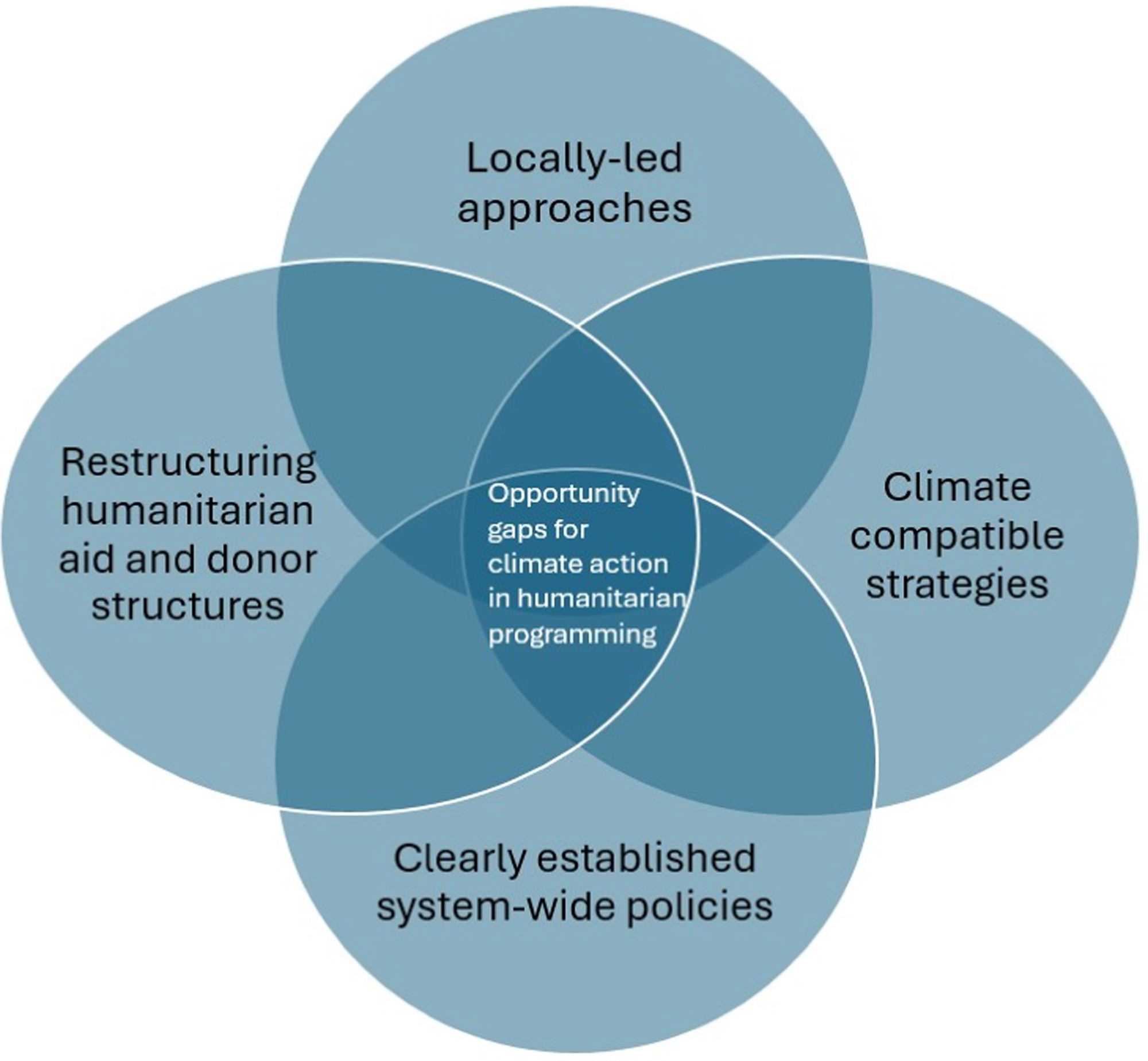
Opportunity gaps for climate action in humanitarian programming.
Limitations
With this scoping review, our aim was to map the existing literature on climate change in humanitarian programming and operations. We are cognizant that there are several limitations to our review. For pragmatic reasons, we limited our search to publicly accessible documents, excluding internal humanitarian policies and documents on climate action in humanitarian programming. This review also focused on literature explicitly linking humanitarian organizations with climate change, which may have excluded studies addressing DRR, extreme events, or climate adaptation without using these terms. As a result, some relevant insights on related organizational practices could be missing. Future work could explore these adjacent domains to provide complementary insights on the intersection of humanitarian aid, disaster preparedness, and climate adaptation strategies. Moreover, the database and grey literature searches were conducted in English. The grey literature search was limited to six databases, and we selected six large IHOs’ websites for targeted review. Our focus was on IHOs, and we therefore did not identify the important national and local humanitarian efforts and approaches to climate action that are underway in many settings.
Conclusion
This review has outlined ways in which humanitarian actors have engaged with climate action, including adaptation and mitigation, offering a perspective on the emergence and evolution of climate action in humanitarian programming and operations. It highlights opportunities (e.g., climate compatibility, local collaboration, resilience-building) and challenges (e.g., scaling up policy and sectoral efforts, climate financing, short-term emergency mandate) for present and future humanitarian sector efforts to incorporate more robust climate action. With the increasing effects of climate change on displacement, conflict and disasters, urgent action and climate-responsive policies might be needed. Humanitarian organizations will need to continue to grapple with how their structures, operations, and scope of responsibilities need to shift in response to the unavoidable realities and long-term impacts of climate change.
Footnotes
Acknowledgments
Thank you to Genevieve Gore, academic librarian, for her support in developing the search strategy and methodological rigor of this review. Much gratitude to the GHER lab for their input and feedback. This work was supported by a grant from the Centre de Recherche en Éthique. Isabel Munoz Beaulieu is supported by a scholarship from the Social Sciences and Humanities Research Council of Canada.
Author Contributions
Funding
The authors received no financial support for the research, authorship, and/or publication of this article.
Declaration of Conflicting Interests
The authors declared no potential conflicts of interest with respect to the research, authorship, and/or publication of this article.

Author Biographies
Appendix 1: Sentinel Articles
Eriksen, S., Naess, L. O., Haug, R., Bhonagiri, A., & Lenaerts, L. (2017). Courting Catastrophe? Humanitarian Policy and Practice in a Changing Climate. Opendocs.ids.ac.uk. https://doi.org/10.19088/1968-2017.147
Gero, A., Fletcher, S., Rumsey, M., Thiessen, J., Kuruppu, N., Buchan, J., Daly, J., & Willetts, J. (2014). Disasters and climate change in the Pacific: adaptive capacity of humanitarian response organizations. Climate and Development, 7(1), 35–46. https://doi.org/10.1080/17565529.2014.899888
Hall, N. W. T. (2016). A Catalyst for Cooperation: The Inter-Agency Standing Committee and the Humanitarian Response to Climate Change. Global Governance, 22(3), 369–387. https://www-jstor-org-443.web.bisu.edu.cn/stable/44860966#metadata_info_tab_contents
Marin, A., & Naess, L. O. (2017). Climate Change Adaptation Through Humanitarian Aid? Promises, Perils and Potentials of the “New Humanitarianism.” Ids.ac.uk, 48(4). https://bulletin.ids.ac.uk/index.php/idsbo/article/view/2884/ONLINE%20ARTICLE
McCann, B. T., Davis, J. M., Osborne, D., Durham, C., O’Brien, M., & Raymond, N. A. (2020). Quantifying climate change relevant humanitarian programming and spending across five highly disaster vulnerable countries. Disasters. https://doi.org/10.1111/disa.12453
Nagoda, S., Eriksen, S., & Hetland, Ø. (2017). What Does Climate Change Adaptation Mean for Humanitarian Assistance? Guiding Principles for Policymakers and Practitioners. IDS Bulletin, 48(4). https://doi.org/10.19088/1968-2017.157
Nayna Schwerdtle, P., Irvine, E., Brockington, S., Devine, C., Guevara, M., & Bowen, K. J. (2020). “Calibrating to scale: a framework for humanitarian health organizations to anticipate, prevent, prepare for and manage climate-related health risks.” Globalization and Health, 16(1). https://doi.org/10.1186/s12992-020-00582-3
Rumsey, M., Fletcher, S. M., Thiessen, J., Gero, A., Kuruppu, N., Daly, J., Buchan, J., & Willetts, J. (2014). A qualitative examination of the health workforce needs during climate change disaster response in Pacific Island Countries. Human Resources for Health, 12(1). https://doi.org/10.1186/1478-4491-12-9