




Abstract
This review study aims to debunk the notion that the Global South, particularly Africa, is essentially a consumer of knowledge produced by the Global North. While some scholars have argued that the lopsided nature of the global knowledge architecture might be attributed to North-South politics and the historical legacy of colonialism, the issue of “self-consciousness” in reinventing scientific methodological approaches within academic disciplines remains insufficiently addressed among scholars in the Global South. Using the case of “conflictology” as an emerging academic discipline and insights from the three cardinal principles of transformative leadership, this study explores new frontiers of knowledge production from my own field experiences researching the viability of African interethnic border markets as Infrastructures for Peace (I4P). This is part of the long-term, complex research agenda I have pursued in my quest for a scientific “explanation” of the concept of “closeness centrality” in the study of conflict evolutionary theories in human society.
Introduction: Eurocentrism versus an Afrocentric Approach
I would have chosen to develop a review paper in the usual style of selecting a book, synthesizing themes, reviewing content, and evaluating methodological considerations. However, I will instead offer a reflection on my own experience as a “constructive disruptive” scholar and how these attributes have contributed to the evolution of African peace and conflict studies through what I coin as “conflictological” studies. Thus, this review will not be overburdened with additional bibliographical data. Rather, I will select only a few works to illustrate the older versions of peace and conflict studies and the new perspectives. The conceptualization of a novel perspective, termed “conflictology,” experienced a resurgence on July 23, 2021, during my appearance before a panel comprising eight esteemed scholars and senior university administrators for the evaluation of a promotion to the position of associate professor. This occurred against the backdrop of precautionary measures and travel restrictions imposed by diverse authorities. Due to the precautionary measures and travel restrictions put in place by different authorities against the spread of COVID-19, the interview meetings were conducted virtually.
Self-reflexivity is incomplete without a reflection of where my career journey begun because man is an interactive creature and cannot live fully in isolation. As a norm in such interviews, a panel of scholars, mainly drawn from my field of study across the globe, congregated under the patronage of the Riara University Council, chaired by my long-time academic mentor and distinguished scholar- Emeritus Prof. Njuguna Ng’ethe (formerly of the Institute for Development Studies (IDS), University of Nairobi). Professor Ng’ethe is a political scientist by training. My entire research career is perhaps attributed to Prof. Ng’ethe for his profound mentorship and coaching abilities. His teachings of post-graduate studies are mainly dependency theory in development of a modern state. He fondly inspires students into developing knowledge as opposed to a mere consumption. I remember in one of the advanced seminar sessions, he instructed students to develop a framework of texts from their native languages that describe the concept “poverty” from an African perspective. Not many students would like to take such assignments with enthusiasm. Nevertheless, it was great opportunity for me to learn that Prof. Ng’ethe was a staunch Afrocentric scholar with such profound desire for Africa’s self-reliance in all spheres of life, including, knowledge production. He begun to nurture my research traits during my undergraduate studies at the University of Nairobi through his research enterprise—field research, seminars, and international conferences. I would then continue with my research assistantship/Master of Arts degree on the University of Nairobi scholarship scheme at IDS, under his tutelage.
The professorial interlocution process was comprehensive. Previously, there had been an elaborate process of validating the professorial class of my scholarship and leadership through a litany of referees and a review of scholarly assets (books and journal papers), and ostensibly grasping my philosophical orientation, worldview, and background checks. To ensure confidentiality, and out of a responsibility to ensure the protection of university data, I will not divulge the details of all the panel members and the institutions they represent. The panel was not a typical interview; rather, it was held at an academic conference. It was fashioned to forge a supra-individual criticism of my scholarly works as an essential element of the deliberations being undergone in order to inform their decision-making process. Among the many comments I received during the interviews, one collegially provocative invitation to make the case as to why African conflictology studies are so important struck me the most as particularly being especially meritorious of collaborative discussion: No doubt you have published widely. You have a track record of eminent scholarship in the field of peace and conflict studies—and the literature with which your papers and books engage is rich and deeply philosophical. You have built an impressive collaborative research enterprise, which makes you advance knowledge faster. Your research outputs are original and thought-provocative. This is not ordinary scholarship! However, you seem to be overly focused on African genres, and [it seems] that you focus your research on what you call “conflictology.” Unfortunately, this area is not well known in the field of peace and conflict studies!
This Comment Merits Further Discussion
I delve into the theoretical sophistication and politics of the knowledge market, as projected in this comment. I would like to briefly reflect on the intellectual enthusiasm surrounding the professorial interlocution during the interviews. The atmosphere of collegiality and genuine friendship was professional and memorable, especially among the subject matter experts from the University of Nairobi, Kenya, and the University of Haifa, Israel, with whom I had worked under their tutelage during my earlier career path as a research assistant and a co-editor of a book. The levels of competence and professionalism of those who served on the panel were exceptionally high. It is important to simultaneously recognize the central role of the Riara University community and leadership for the trust they gave me and their desire to harness my scholarly credence for the university’s growth and advancement.
I consider myself fortunate to have been invited to appear before this panel of renowned scholars. The entire 6 hours of the interview were mentally engaging and intellectually captivating, but also emotionally rewarding because of the excitement involved in realizing that my dream was coming true. The challenges of this new responsibility are different, and yet important. These motivations have greatly augmented my quest to develop conflictology as a new scientific field of study. However, we practice scholarship and research in a space that is remarkably Eurocentric, derivational, and oppressive (Zeleza, 2007). In order to escape the Eurocentric entrapment, scholars from the Global South must have some purpose, and envisage the pluralization of IR in “good faith” (Fonseca, 2019; Hagen & Ranawana, 2023). Despite this criticism, the decolonial project is still valid. Moderate Eurocentrists have argued that the decolonialist project remains a viable option for tackling western domination in knowledge production and problem solving in every sphere of life—ranging from personal decision-making, to political regimes’ strategic planning and policymaking, to scholastic teaching and academic research (Bilgin, 2008; Mignolo & Walsh, 2018). There are many new problems facing scholars from the Global South, including the persistence of the politics of knowledge production, unfulfilled basic requirements for scientific endeavors, and neglect of the interest and agency of African scholarship and inventions. Scholars who protest against an overly Eurocentric approach to understanding international systems have sought to develop an alternative framework of analysis, such that rather than remaining content to limit themselves to creating (and maintaining) well-defined boundaries around IR, their research engagement includes negotiating beyond the boundaries to include the marginalized. Possibly even to the extent of redefining and reshaping those boundaries: catalyzing change by sharpening the goals of the so-called “others,” and even by mobilizing indigenous voices, and introducing new and timely methods of inquiry that put more emphasis on post-structuralism, feminism, queer studies, and decolonialism (Hagen & Ranawana, 2023).
Many of the problems that the alternative schools seek to resolve in the system of international relations can be traced back to the intractability involved in conceptualizing and designing research projects in the Global South. This is partly attributed to the entrapment of African scholars in the divide-and-conquer colonial mindset of what ought to be scientific and what is not. The essence of the Afrocentric approach to International Relations (IR) lies in its central focus on the Global South. Although there is currently a regrettable consensus on the simplistic idea of defining the Global South from a geographical perspective as simply including countries which happen to be located in the Southern Hemisphere and characterizing them as being either “developing,” “less developed,” “Third World,” or “underdeveloped,” Sinah Klob provides a more sophisticated approach to understanding the notion of Global South–North relationships as defined by the global network of power—one which is created and recreated by political imaginations and inventions borne out of the dynamic international system of actors and institutions (Klob, 2017).
Power relations are, as a factor, one of the fundamental characteristics of the Afrocentric approach to the study of IR in that the unit of analysis in the system of IR is the African state. Globalists and Afrocentrists are concerned with the persistently entrenched endurance of the lopsided relationship between the Global South and North (Hagen & Ranawana, 2023; Oztig, 2024), as well as being concerned with the skewed relationship and inequalities observed within states in the Global South (Oztig, 2022). In a way, globalists have served to enrich and extend the basis of Afrocentrists’ concerns. For instance, Oztig’s proffered cure for the invisibility of some regions of the Global South in international scholarship would be to better integrate them into the global IR community. This point of view has been contested by eminent Afrocentrists like Ade Ajayi (1973) and Patrick Giddy (2012). In the opinion of Ajayi (1973), African voices should be presented as unique indigenous counterpoints to European elements of the international community, perhaps out of concern that those marginalized regions might become even more invisible if they were to be subsumed and silenced by dominance Eurocentric elements of the global system. Another way of understanding the tensions and/or linkages between Eurocentrism and Afrocentric approaches to knowledge production is to treat IR with a theoretical and epistemological pluralism (Acharya, 2017). Through a bottom-up approach, globalists have sought to illuminate African concerns within the framework of a collectivist system of international relations.
Thus, because of this, pan-Africanists tend to study African developmental issues whose interactions constitute collectivities or group actions in a way that seeks alternative ideas to shape international politics (Bleiker, 2023; Tickner, 2013). Radical pan-Africanists have progressively created revolutionary ideas with the deliberate and planned intent to use them as a fulcrum to change the international order, and Pan-Africanists are interested in gleaning these fully formed ideas ripe for harvest. In this regard, decolonizing knowledge production is premised on the notion of using Afrocentricity to transform scholarship by underpinning it with African values, norms, experiences, and cultures (Mazama, 2001). Thus, the notion of Afrocentricity has intimate connections with the African peoples’ worldviews, stressing the importance of building critical consciousness against the oppression perpetuated by the Global North (Adams, 1993). Comparatively, while Afrocentrism advances the purest form of Africanness, Eurocentrism advocates for the universality of ideas (Asante, 1988). In this enterprise of ideas, the anti-African approach had a militating effect on the rise and visibility of the African value system in the international system. In this sense, anti-Africanism is a behavioral system that tends to blight pan-African approaches to the study of IR or, altogether, to promote the (neo) imperialist structural barriers that shove Global South scholars into the knowledge periphery. Although Afrocentric purists (such as Maulana Karenga, Cheikh Anta Diop, Marcus Garvey, and Kwame Nkrumah) place African people at the center of knowledge production, critiques (Kuhn, 1962; Oyebade, 1990) of this approach have cautioned that this inward approach to the international system may inadvertently create what I coin as “a reverse gear” on the possibilities of a pluriversal perspective. The pluriversality of ideas is beneficial for intellectual interbreeding and policy learning. As Oyebade states, Africa is better positioned when the world is shaped by different centers of power and knowledge, creating a diversified and multicultural universe, rather than one in which knowledge and power emanate from a single source.
Overcoming these problems is crucial to ensuring equity in the global knowledge market. We must recognize the role of African agencies in addressing these challenges. Indeed, thought leadership, thought liberation, and critical consciousness are ultimately central to the quest of decolonizing African intellectual architecture and liberating the minds of individual scholars. Conversely, African agency is inescapably oppressed by the very system that decides whose knowledge assets matter, and where and when. To counter the problem of capital knowledge marginalization faced by Africans (Behuria, 2019), we must view individual scholarship as an African agency. The two have been entangled. There is a deep complementarity between Africa agency and the mindsets of individual scholars. Thus, the constructive disruption of the Eurocentric world order lies at the heart of Afrocentric conflictologists’ pathos, ethos, and praxis.
Eurocentrism versus Conflictological Studies: Self-Reflexivity
Understandably, since the emergence of the discourse on IR at the University of Wales at Abery Stwyth in 1919, the discipline of IR has remained entangled in Eurocentric values. Afrocentric purists are adamant that African values must stand alone in the global system. This dichotomy of ideas and the chokingly bounded ideological encirclement and binding of the marginalized as discussed earlier in this paper seem to hold IR in a state of siege—and itself becomes entangled by the same Eurocentric values with which it has become enmeshed. Disentanglement and decolonization remain uncertain, owing to the power relations sustained by the Eurocentric value system. Thus, the Afrocentric knowledge system cannot provide transient histories of domination by the Global North. Karenga’s (1980) characterization of Afrocentricity is a spectacular amalgam of aesthetics, axiology, shared orientation, centrality to community, traditional eminence, spirituality, ethics, human-nature harmony, solidarity of selfhood, and unity of humanity.
However, the inhumane nature of Eurocentric IR causes functional decay—serving no purpose other than perpetuating injustice and marginalization. These relationships have been called “power conflict” or “value conflict” (Eurocentrism vs. Afrocentrism) (Onditi & Amuhaya, 2023). Thus, power relations have always been an integral part of the international system and the world order. There is an alternative view of how the international system should be configured in order to accommodate all actors and diverse ideas. The notion of borderless thinking is one such creation of a world beyond Eurocentric internationalism (Berkeley, 2009, p. 26). Similar to a pluralistic approach to international order, borderless thinking allows the Afrocentric value system to question the myth of internationality (Tlostanova, 2014). In borderless thinking, the focus is on encouraging communities and cultures to emerge into a hybrid space that allows for the multiplicity of ideas, voices, and the epistemological validity of feelings. Thus, how does the struggle between Eurocentric and Afrocentric approaches to knowledge production affect emerging disciplines such as conflictology?
Exploring new research frontiers in conflictology is seen, in this approach, both as being primary means of developing, encouraging, and promoting a much-needed focus on the primacy of “Africa agency” and as being the principal means of enriching the body of individual scholarship in the field of conflictology. I explore four factors in this basic approach: 1. The level of sophistication in conceptualizing studies in the emerging field of conflictology; 2. The politics of the international knowledge market; 3. The building blocks of authentic scholarship; and 4. Trajectories in the field of conflictology.
The level of sophistication in conceptualizing studies in the emerging field of conflictology is understandably embryonic and surrounded (as if by hungry jackals) by both explicit and implicit Eurocentric biases.
Eurocentric biases need not be looked at as the only “force” against the Afrocentric approach. Although there are, of course, internal forces within the Global South protesting against Eurocentric dominance in IR, there are also other internal forces calling for the exact opposite—the extension of Eurocentrism in IR. For instance, Umar (2023) offers his own autoethnographic reflection from within his Indonesian academic community. In a discussion regarding what he coins “internal hierarchies” within the Global South, he decries the role played by “gatekeepers” and government agents in institutionalizing western domination (Umar, 2023). Hence, as a result of such institutionalization, some parts of Global South scholarship lack the three ingredients of authentic scholarship: thought leadership, thought liberation, and critical consciousness. In other words, some scholarship in the Global South offers research consumers no “vaccination” protection whatsoever against the disease of western domination (except by a surreptitious recourse to common sense), and no protection against losing itself in the study of irrelevancies. Umar’s prescription in dealing with the problem of internal hierarchies is for scholars in this part of the globe to widen their engagement with both academic and non-academic counterparts globally and to abandon the weird enterprise of gatekeeping. But globalists have cautioned against self-reflexivity, as it risks pushing Global South scholars further to the periphery and state of knowledge inequality. They have largely advocated for a Global IR.
This conclusion concurs with global moderates, who advocates for the recalibration of the current global system of knowledge production from overly western-dominated perspectives by allowing for other voices from the Global South in ways that is more responsive to the local interests and needs, at the same time address the geometries of power by thinking and rediscovering IR concepts and models that are representative of both spheres (Efstathopoulos, 2023; Ergas, 1980). Critiques of globalists have not spared this proposition. Although not wholly against the concept of globalization as an effective panacea for western domination, Abu Bah (forthcoming), an eminent modern sociologist based at Northern Illinois University, has urged for integrated reforms to be made to the international system, in suggesting a new concept—the glocalization of various processes, including peace and security—defined as “the intersection of local and international [(global)] grievances and interests in and around war-torn countries. Therefore, glocalized security rests on the argument that the fusion of local and international matters produces new war dynamics that require both substantial domestic reforms and [the] realignment of external interests in order to achieve [a] sustainable peace” (Bah, 2022, concept note).
Coming back to the reflections emerging from the professorial interview panel, I can understand the concerns of the panelist who was critical of the emerging field of conflictology when he retorted: …you focus your research on what you call “conflictology.” Unfortunately, this area of study is not well known in the field of peace and conflict studies!
At the time of the interview in 2021, there were no textbooks on the subject of conflictology, and only a handful of journal articles dealing with the specialized methodology needed for conflictological research were available in libraries and electronic databases. In 2010, the only outlet that provided conceptual clarification of the differences between conflictology and other fields of social sciences was the University-of-Catalonia-based Journal of Conflictology. In the 2010 volume 1 series 1 (which seems to have been the first and last volume of this journal), Eduard Vinyamata defines conflictology as being a “way of understanding conflicts [by] assuming all related areas, such as conflict resolution, transformation, and management, while at the same time [being] based on the principles of non-violence as a paradigm opposed to the conviction that violence is the way to resolve conflicts” (Vinyamata, 2010, p. 1). During this time, scholars argued that (1) the development of conflictology as a distinct field of study was justified based on the importance of consolidating the various components of peace and conflict studies, and that (2) the purpose of bringing together these fragmented components was to enhance communication, enforce the interactivity of human culture, and establish an efficient system of peaceful coexistence in human society.
At the beginning of the millennium, scholars began to decipher the need to develop a scientific methodology for not only studying conflictology as a distinct field of study but also to expand its scope (Omoluabi, 2001). However, with only one mundane journal of conflictology, many scholars seeking to extend the conflictology vistas grappled with conceptual clarifications. Given this conceptual lacuna in the emerging field of conflictology, a framework for designing multidisciplinary research and policy interventions is needed. This framework is needed to enable post-conservationist peace researchers to conduct studies with adequate methodologies, including setting up quasi-experiments to analyze the evolution of conflicts in space and time. Thus, the goals of conflictology research have been to provide scientific explanations, analyze issues, model conditions, and predict conflict phenomena. Afrocentricists, such as Asante (1980) and Oyebade (1990), have supplied valuable thoughts concerning the need to change by removing African research out from under the intellectual hegemonic domination of Eurocentrism and the need to do so through publishing research experiences from an African perspective. In one such example, Oyebade (1990:237) coins the concept of the “humanization of the universe by the Black man.” Afrocentric research projects such as conflictology are thus a search for those values that will make human–human interactions humanistic—and not oppressive.
Conflictology, as a form of scientific thinking, uses rational judgment, emphasizes science, and deploys philosophy and life experiences to study conflict. In deploying deductive thinking, conflictologists apply universal generalization, define the conditions under which generalization holds, and use formal logic (Frankfort-Nachmias and Nachmias, 1976). For example, a scientific explanation for a suicide bombing by a terrorist would be based on the root-cause theory: a terrorist action is a response to socioeconomic and political conditions (Hudson & Majeska, 1999; O’Neill, 2002 Newman, 2006, p. 755). Indeed, like other human beings, terrorists do not necessarily act according to their own experiences or backgrounds. Their actions are usually in response to social conditions, irrespective of their situation. However, we must consider this knowledge as being tentative and changing. For instance, the transformation of peace and conflict studies into a system that examines the geographical distribution of conflicts and social institutions is still considered to be scientific. This is because, unlike natural science (whose explanation is purely based on the prediction of phenomena and universal laws), social scientists use verstehen; that is to say, they are empathic observers and participants in the subject matter of their discipline (Rudner, 1966). The empathic approach to knowledge production aligns with the Afrocentric values of humanity—in which case (rather than using derogative terminologies such as “Third World” and “tribes,” as is the case with Eurocentrism (Asante, 1988)), conflictological studies embody African civilization (African historical and cultural perspectives in its approach to research.
African-centered conflictologists should bear in mind that in the process of developing an African value-based knowledge system, instinctive attachment to social values may invite “value judgment.” Value judgments may compromise the essence of a scientific investigation. Stephen Pepper, one of the leading philosophers of the 20th century, discounted value judgments in scientific research, doing so based on five criteria: (1) a value judgment is non-cognitive, and is generally regarded as being a feeling or an emotive expression; (2) it is not a judgment of fact and so is neither true nor false; (3) a value judgment in and of itself is not a fact; (4) values are not cognitive hypotheses; and (5) a value judgment is a normative statement (Pepper, 1949, pp. 431-432). Any scientist hopes that their scientific credence will never be eroded by empathy or subjectivity. However, with the maturity of conflictology, instinctive desires are increasingly replaced by scientific rigor. The purpose of this evolutionary theory of discipline is to systematize the diverse forces that contributed to the origin and the evolution of conflictology as a discipline that embodies Afrocentrism.
However, for a comprehensive understanding of the connection between “African agency” and individual scholarship, we have to go deeper than the politics of knowledge production and social instinctiveness. The decolonization of one’s mindset—a goal which may require public action—would not only complement individual growth in scholarship but would also help foster individuals’ initiatives to address forms of marginalization in the knowledge market. In my opinion, “If the response to this particular panelist lies in the development of new knowledge frontiers as the main object of inclusive scholarship, then the reach of the knowledge decolonization analysis lies in establishing a body of knowledge that makes the viewpoint of peace and conflict studies more scientific and cogent as the channel for demarginalizing the African scholarship.”
This review outlines the need to debate the notion that African scholarship serves only to consume knowledge produced in the Global North. The need for a continued attempt to increase access to confictology content—and for a continued attempt to sensitize students to the need to approach the study of peace and conflict in a more empirical style—is crucial for unveiling African agency. Although further methodological refinements will be required, the publication of my 2020 book entitled Conflictology: Systems, institutions, and mechanisms in Africa has contributed immensely to the conceptual clarification of concepts, scope, principles, and processes. Further, the level of sophistication has been enhanced and accelerated by the development of a post-graduate program: Master of Arts in International Relations and Diplomacy at Riara University, and the inception of the think tank: Centre for Conflictology Observatory and Predictive Studies (CCOPS), to name just a few of the scholarly developments in the recent past. Many fieldwork projects and conferences on conflictological studies have progressively elevated quality standards in conflictology-focused research. In my efforts to elucidate students and scholars interested in the study of conflictology, I have broadened the notion of conflictology as an inseparable aspect of humankind (Onditi, 2020a). In this volume, I argue that understanding human civilization is central to the study of human relations, and hence, of conflicts and wars. Therefore, conflictology as a distinct discipline of study examines human evolution, the outcome of which could be good or bad. Interstate relations, tensions, wars, conflicts, and diplomacy that we witness in the world today draw roots from the evolution of human society (Onditi, 2020a, p. 15).
Who is the conflictologist? In the scientific tradition, a discipline “distills” when persons identify themselves as being part of that discipline and when, collectively, this event is denoted by formalized groups such as professional societies, journals, and professional associations. People studying conflict and war from an interdisciplinary perspective describe themselves as conflictologists and polemologists, respectively. For the former, several scientific platforms present their research, including the Journal of Conflictology. However, anyone applying conflictological lenses in the study of conflicts—be they geographers, economists, sociologists, political scientists, IR specialists, or lawyers—would also want to call themselves conflictologists. However, most researchers have adopted more specialized labels. Therefore, the future of this discipline lies in how those with specialized labels would conduct their research and writing. Conflictologists will have to explore the world of conflict and war from a distinct perspective, reflecting the discipline’s history, particularly the distinction between observational and experimental approaches, and the different scales of the relevant patterns and processes. Combining efforts through collaborative engagement in the development of methodological approaches and the generation of research content provides researchers both with various topical domains at all levels within conflictology and with a wide range of networks and intellectual resources. Thus, the current generation of researchers who wish to contribute to the advancement of the discipline of conflictology, unlike in 2021 (when I was promoted based on my groundbreaking research in conflictology), has a progressive network to join and be guided. I have since established a Conflictology lab in Nairobi (the Centre for Conflictology Observatory and Predictive Studies), as a platform for advancing scientific study of peace and conflict with a focus on increasing the understanding of the evolution of African conflict within societal structures, such as the interethnic border markets.
The politics of the international knowledge market are the second most significant factor in the evolution of conflictology research. In part, the panelists retorted, “you seem to be overly focused on African genres.” I was not entirely swayed by this statement, because I understood that politics has always been an integral part of relationships in society (Ray & Bhattacharya, 1989). Politics, in the sense of the knowledge market, is no different. Whenever scholars or policymakers wish to solve problems and make important decisions, political questions arise: Which theoretical models are used? Which template is most applicable? Which framework works best? Which perspectives are most relevant? Subsequently, the roots of intellectual inquiry have been traced back to politics (Easton, 1969). Political thought is an inseparable aspect of philosophical thinking. As what might be expected of any person who might not be as familiar with a particular field of study as they might be in later years, this panelist’s criticism viewed conflictology as a desperate effort to create a niche in search of models, frameworks, or theories. However, hypothesizing and questing for empirical data in search of a meaningful theory is generally an acceptable way to describe novel scholarship. This scholastic adventure continues to improve research in confictology. For instance, the principles of conflictology such as non-violence conflict resolution, as highlighted by Omuluabi (1999), form its important building blocks. These principles have served to enrich and extend the basic conceptual framework for developing the Master of Arts in International Relations and Diplomacy (MIRD) at Riara University. This program, which has significant conflictology content, has attracted many students and scholars from different backgrounds. Research emerging directly from Lab I on intertribal border markets in rural Kenya has been stimulating and substantive. For instance, I developed the “dominatarian theory of regional integration” (Onditi, 2020b) through field research and professional interaction with the East African Community (EAC) Secretariat in Arusha, Tanzania, which has influenced the majority of recent research in the area and in regional studies. Likewise, out of my studies on border communities, I have designed the human-to-human bond (H2HB) model, (Onditi & Amuhaya, 2023), which has attracted much attention among scholars interested in studying kinship relationships in human society. However, we must contend with the brutal reality that—despite all the scholarly efforts emerging from Africa—an overarching paradigm has yet to be established for the discipline of conflictology.
The problem of marginalization in scholarship is not limited to the subject’s endogenic evolution; it also concerns the African perception of the global system. One major limitation of globality is that Western theories, models, and perspectives are considered as being universal truths. As a result of this perception, the African knowledge system has been regarded as being “myths,” “superstition,” or “witchcraft,” to the extent that the African knowledge system has been labeled as “less scientific” (Mazrui, 1967). However, Global South scholars have begun to question this ‘truth’, because such models are unable to offer appropriate interventions for challenges facing unique contexts. This diversity of opinion has led to an asymmetry in the knowledge market and policy influence. I contend that curing the inequalities rests in Afrocentric scholars’ ability to develop and document African-based epistemologies such as “Afric-rhektology” as tools for offering alternative ideas in the global system (Onditi, 2022; Onditi & Amuhaya, 2023). In my intervention with the panelist, who wondered why much of my scholarship focused on the African genre, I had to contemplate what a scientific explanation was: Can African genres yield meaningful predictions? Furthermore, can the African genre be considered a science? The link between science, humans, and society is inherent in evolutionary habits. For instance, from the Ancient Kemetians/Egyptians, it is known that knowledge, Rekh (which also denotes science—to know, to be wise, to be acquainted with, and to be skilled in an art or a craft) involves both ren (to diagnose) and sometimes ka (to name) and år or åri (to prescribe or to do). Given this ontology, for a set of knowledge to be considered logical, it must pass through the following three stages:
Given the processes illustrated in Figure 1, åru or åriu (a doer) is preferable to åkhem (to do nothing; to be ignorant; to have nothing; to be inert, weak, or feeble). The same word, rekh, is found with its attendant attributes in the Serer languages of Senegal and the Gambia and similar manifestations in Yoruban epistemological discourse as imo (knowledge) and ibagbo (belief). Among the Luo people of Kenya, the term Riek refers to being knowledgeable or bright. Similarly, among the Shilluk and the Acholi of South Sudan and Uganda, respectively, the term riek is also associated with a person who is known as being the knowledgeable one. All these put together form a rich African knowledge ecosystem that has yet to break through borders and transcendently form a part of the global knowledge ecosystem. The three stages of knowledge formulation and processing. Source: Francis Onditi conflictology lab, Nairobi, 2024.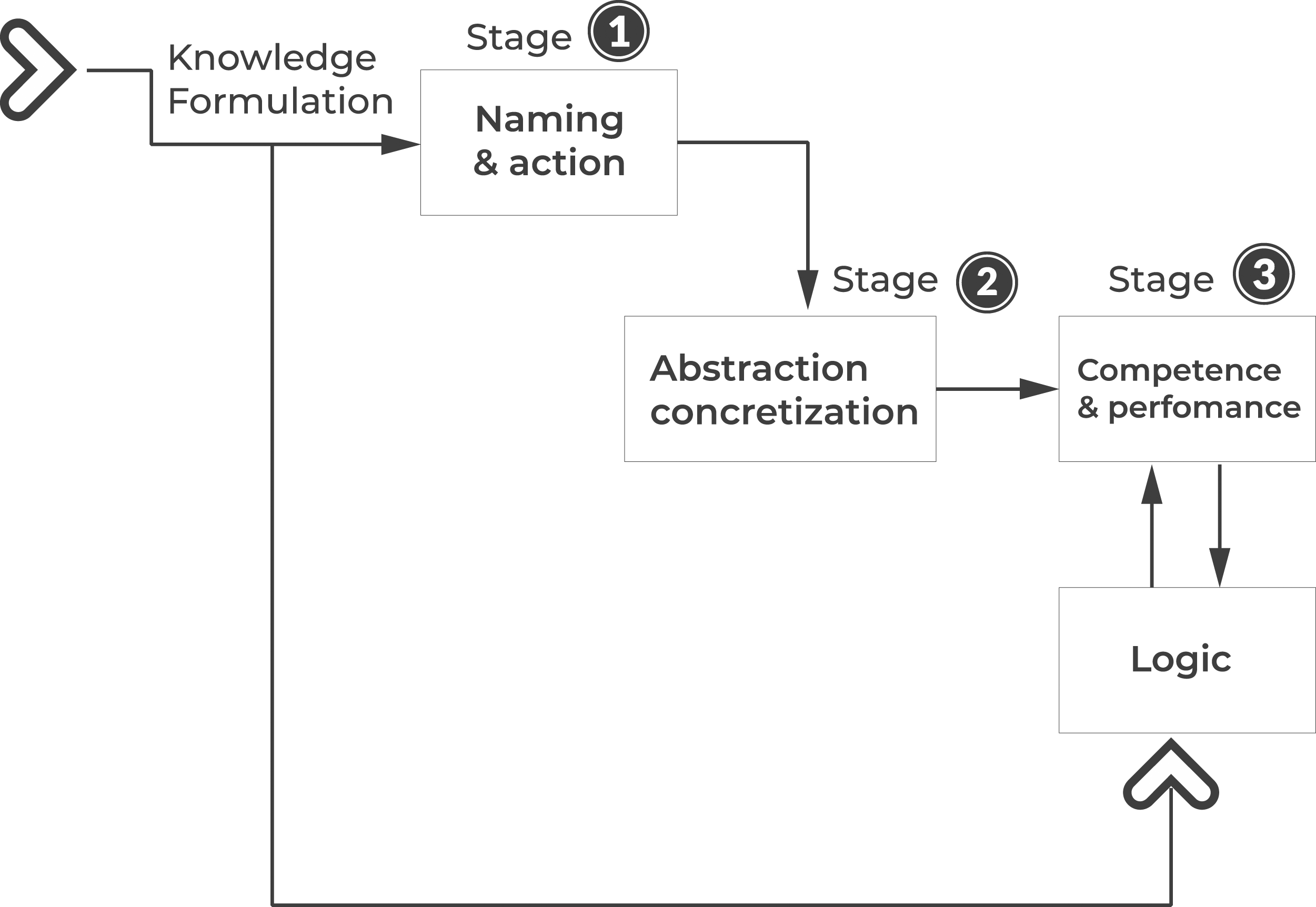
Is African genre science? To address the skeptical panelist, it would be helpful to remind ourselves of the foundations of knowledge and epistemology (Kant, 1881). In the epistemological order of things, the basic scientific assumptions are made up of the natural world, knowledge of nature, natural causes of events and phenomena, claims of truth that must be constructed objectively, and knowledge that is acquired through life experience and perception (Frankfort-Nachmias & Nachmias, 1976). In this conceptual framework, science comprises general laws. However, it is important to distinguish between natural and social sciences. Natural scientific explanations are based on universal laws (Hempel, 1966), whereas social scientists use probabilistic (inductive) explanations (Braithwaite, 1960). For example, a conflictologist studying the evolution of conflict in intertribal border markets might explain the prevalence of conflict in one market versus the other by suggesting that the rise in prevalence was a response to political events; in the past, an increase in conflict prevalence occurred during the election period. This explanation connects this phenomenon to a previous event—namely, the general election. Social scientists have formulated such an explanation because interethnic violence has been linked to political events (elections). It is important to note that this relationship cannot be explained by universal laws (Sjoberg & Nett, 1968). Rather, it is based on probabilistic patterns of events in which the prevalence of violence increases during the election period. In the above example of studying patterns of similarities, it is possible to establish a relationship based on generalizations and tendencies. It is also possible to predict that if the concept of riek is common among Nilotic speakers of South Sudan, there is a likelihood that, any other Nilotic speaker of similar descent in Africa will use the same word to describe the phenomenon.
Therefore, African genres such as the Afric-rhektological approach constitute a suitable scientific methodology for addressing issues facing the global system. This scientific explanation can be used to tackle various problems, including identity issues and interethnic conflict and wars, not only in Africa but also in any context experiencing similar problems. Nevertheless, the creation of inclusive knowledge futures is not a far-fetched utopian activity. This is possible when communities with the impetus to do so can look beyond physical, cultural, and technological borders and embrace practices that have the ability to change lives. In the context of multiplicity and multiculturalism, the application of African-based philosophies such as ujamaaism (it was a socialist system of village collective production and consumption based on principles such as equality and self-reliance in Tanzania) and barazaism (it is a form of gathering villagers with the aim of resolving issues collectively) cannot remain localized to African problems. My humble response to the skeptical panelist is that such a set of ideas from African scholars should form part of an alternative social force in the global knowledge market. With the social force of discursive acts, communities or states position themselves as actors or influencers, both locally and globally. Although African genres may not be as developed as Western bodies of knowledge tend to be, the phenomenon of ujamaa is based on pure reason—and the community’s experience is sufficient to produce verifiable knowledge. Science does not refer either to a general or particular body of knowledge but rather to a distinct methodology (O’Hear, 1989; Wallace, 1971). Based on this logic, the African genre is scientific and should be studied. As Karl Popper explains, “a scientific explanation is established on perspectives and theoretical problems” (Popper, 1961).
Transformative leadership, an important component of conflictology research, is the third most significant development that may influence the future of the discipline. While referring to the emerging field of conflictology, the panelist asserted, “this area is not well known in the field of peace and conflict studies.” I believe the panelist was responding to my earlier assertion that the reason for my interest in developing a new field of study (conflictology) was purely based on the need to search for and offer a scientific explanation for the evolution of conflict in microsocietal structures—a gap that had not been filled by conventional disciplines such as peace and conflict studies. Such adventures require new frontiers and thought leadership. My thought would be that the panelists ought to be reminded that authentic science cannot exclusively rely on traditional disciplines, subjective beliefs, or common sense to verify scientific phenomena. This point of view has been reinforced by eminent political philosophers Jacques Maritain, Eric Voegelin, and Alfred Weber (cited in Ray & Bhattacharya, 1989). In society, this is a positive feedback system; the decisions and actions taken by the system form part of a larger scheme of knowledge production and are channeled back into the system itself. An illustration of such a political system was the 1955 Bandung Conference which culminated in the notion of the “Third World”—forming an intellectual resistance against the wind of incongruity and the domination of the superpowers which bipolarized the world into good and bad nations.
The Case of Third World Resistance Against Eurocentrism
The struggle between knowledge spheres (Eurocentricity vs. Afrocentricity) is an old phenomenon. Intellectuals and politicians in the Global South have historically demonstrated the willingness and capacity to address the question of intellectual dominance through various platforms. The Third World Movement is one such type of intervention. Unlike ideological-based organizations, the Third World stood as a movement that vocalized the political and social aspirations of non-aligned countries (Berger, 2004). It departed from the mainstream to build up a counterbalance and express a third voice in the worldwide geopolitical strategies that were fueled by the philosophy of “those who are not with me are against me.” African countries such as South Africa with a history of struggle against colonial domination have embraced Third World philosophy by embedding it in their foreign policy. As such, in a 2010 document for the South African foreign policy White Paper, the Minister of International Relations and Cooperation noted, “Building a better world would require the diplomacy of Ubuntu.” Unequivocally, the principles underpinning South African foreign policy embrace the Pan-African ethos, which inspires the need to collectively address the shared challenges of underdeveloped nations. This statement is closely aligned with the geopolitical paradigm of the French philosopher Alfred Sauvy, who in 1952 coined the term “Third World” to mean “people without privileges.” In doing so, Sauvy was making an analogy to the Third Estate. The term Third Estate emerged during the French Revolution and was used to describe neglected, marginalized, and exploited peoples who were not part of the ruling classes (the clergy being the first estate, and the nobility being the second estate) and who were called to rise up. Today, the notion of the Third World can be interpreted from different perspectives. From a geopolitical perspective, it encompasses distinct nations with a common colonial history (Berger, 2004). In this sense, Third Worldism denotes the pursuit of anti-colonialist and neutralist ideologies, as well as the rejection of the domination of great power politics (Randall, 2004). It is against this order that South African foreign policy is intertwined with the country’s pursuit of a better Africa in a better world. South Africa’s global positioning as a “middle-power bridge-builder” between the West and the South constructs the country as a natural “prominent actor” (Makki, 2004).
Another interpretation of the Third World is the (de)colonial prism. An optimistic view might suggest that the imperialistic tendencies of the West as evidenced through the notion of Third-Worldism ended with the 1955 Bandung Conference, which led to the formation of the Non-Aligned Movement (NAM) (Thomas, 1999). The Conference ended with a call for increased technical and cultural cooperation between the governments of Africa and Asia, the establishment of an economic development fund to be managed by the United Nations, support for human rights and self-determination, and a singling out of the Republic of South Africa (Tomlinson, 2003). The growth of the debate over the Third World from different scholarly platforms—economic, military, cultural, and political—has spilled over into the general political and diplomatic discourse. Unfortunately, the term has evolved into what can be called a taxonomical jingle. Consequently, the so-called underprivileged nations in Africa and elsewhere are framed as the Third World, and not always for progressive reasons. There is also the risk that the term will be loosely adopted as a neocolonial statute that only serves to advance the oppression of the Global South. However, South African foreign policy accords with the ethos and practice of the Third World, and holds a significant place within the broader debate over South–South cooperation. I argue that the struggle between Eurocentric and Afrocentric values is an extension of Third Worldism. For instance, the social, political, and economic impacts of the UN sanctions against countries in the Global South have wide and deep ramifications. Therefore, efforts towards forming a South–South alliance should be aimed at bridging the gap between the “emerging powers” and the rest of the developing world.
Third World states have stressed the prickly question of intellectual colonization, which gave birth to three typologies of inequalities: between the colonizer and the colonized, between races, and between the rich and poor (Weber, 2004). Therefore, economic equality became a central objective in the bundle of concerns voiced by Third-Worldists. Their struggle aimed at promoting a policy of the Next International Economic Order (NIEO) through which the disrupted traditional economy of Africa, Asia, and America (Berger, 2004) would be rehabilitated and fixed from within the global market economy. Thus, the capitalist aftermath of the developing development process in poor and colonized countries could be erased and wiped out definitively. Capitalism was not seen as being a modernizing and liberating movement, but rather as a system that produced a new relationship between dominant landlords and subservient peasants and between colonizers and the colonized (Mint, 1958). Contrary to the more bounded aims of regional organizations, the Third World Movement went beyond geographical borders to plead for equality for all dominated peoples in the Global South. This results in the almost exclusive attention provided in this review article on cultural, kinship, and linguistic hallmarks for explaining a sense of belongingness. This helps situate the evolution of Afrocentric conflictology studies within the continuity of Pan-Africanism by emphasizing the ideology of pan-Africanism (Wolf-Phillips, 1987). This conceptual and pragmatic controversy has implications for how Afrocentrists can effectively advance African ideas without risking monolithism. Thus, I offer a quadradic framework of analysis through which Afrocentric pluriversality can thrive: geopolitics, psychological, sociological, and the New International Economic Order.
Geopolitics
A shared value system that connects Africa, Asia, and Latin America. Nations of the world do not necessarily share geographical borders, but they share a common colonial history and are dependent on Western powers in all spheres of life, culture, economy, politics, and technology. Several decades of the use and misuse of the term Third World has (de)generated the world into two literal camps: “us” versus “them” (or “we” vs. “them).” In its historical context, the term has a deeper meaning, being sometimes tagged with anti-colonialism, a non-aligned group of nations in the Global South, or the socio-political stratification of the broader international community. In French culture, the term (tiers monde) refers to a third position or a third force (Mazrui, 1967). In other words, the people who occupied the Third Estate were underprivileged. However, by the end of the Cold War, socialist figures were being won over by market-democratic ideas, and the concept was losing its grip in IR studies. This concept was informed and influenced by the insolence of various actors in the Cold War.
Psychological
The shared value system that differentiates between the oppressed and the oppressor in the global system. The oppressed view of anti-colonial struggles is directly linked to their attempts to obtain liberation and freedom. The strategic value system of the power bloc was driven by shared colonial imperialism. States in this league are resentful of former colonial powers and attribute to the Western elites their own political-economic status, illiteracy, and the domination of political life that they suffer.
Sociological
The shared value system is not necessarily about industrialization, affluence, or blooming gross domestic product (GDP). Instead, it is about building societies that provide for the “basic needs” of their people based on “self-reliance,” and societies that can exist with equity, independence, and dignity in the global system. In the literature, the term appears to be used most often to refer to a type of development that is value-laden and highly susceptible to time, space, and culture (Hans-Henrik, 1990). Measuring development purely based on GDP is part of the continued marginalization of the Global South and a way that this marginalization is maintained. Moreover, low GDPs may result because many countries in the Third World have struggled to achieve development through Western models. Therefore, Third Worldism should be viewed as a system of “self-management” that reflects the historical and social mores of the people in the Global South (Africa), Asia, and Latin America.
New International Economic Order
The shared value system of shifting the global economic center of gravity from northwest to the south and east is a system which pursues a fair and equitable rule-based international trade regime. Through the Third World platform, Eastern-oriented economic frameworks such as OPEC (oil-exporting countries) have managed to forge a united front with the rest of the developing countries in order to compel a dialogue with the West, in order to resolve overall economic issues, to the advantage of the long-suffering Third World and to evolve a New International Economic Order founded on ideology and national interests. In the literature, the push for the institutionalization and continuity of the Third World is justified by the view that the current system is devoid of the interests of developing countries. This aggressive approach to global equalization ignited new economic thinking, leading to the formation of the “Third World Forum,” comprising the leading social scientists and intellectuals of Africa, Asia, and Latin America. In this regard, an attempt is made to apply the above described four pillars (hence, the quadruple framework of analysis) in understanding how the future system of international relations would look like (see Figure 2). Proposed quadruple framework of analysis for “Afrocentrising” the system of international relations. Source: Francis Onditi conflictology lab, Nairobi, 2024.
Figure 2 is an attempt to guide researchers and scholars addressing fundamental questions, such as, how do you achieve a balanced pluriversal system of knowledge production in IR? How do you diffuse cultural tensions between the Eurocentric and Afrocentric approaches? What are the checks and balances of dominance? How do you address the risks of knowledge monolithism that emerge from purist Afrocentricity? The concepts embodied in these four dimensions (Figure 2) were identified in the literature. The Third World is identified with geopolitics by Berger (2004), who identifies issues that often create tensions in the global system: opposition to Northern hegemony, South-South solidarity, sovereign equality and the independence of nations, non-interference in internal affairs, and recognition of the perceived neo-colonialist underpinnings of global affairs. Although Berger’s scholarship is mainly geopolitical, he also discusses solidarity and religious sentiments (sociological) and how Africa–Iran relations have been cultivated and broken at the same time (psychological). Peter Worsley uses a sociological lens to advance and illustrate how the notion of the Third World is closely related to structural inequalities being experienced by countries in the Global South (Worsley, 1976). He reinforces his view through a geopolitical prism by arguing that the Third World is a distinct set of political cultures that try to survive in an environment that often experiences strategic polarization. Muni believes that Third Worldism was largely shaped by the Cold War and power bloc politics. Muni used the term “Third Force” (psychological) to describe the non-aligned group of Asian and African countries. This formulation is informed by my experience of studying border interethnic markets in rural Kenya. This experience enabled me to study the evolution of conflict at a microcosmic level in order to discover some of the invisible forces driving human relations and interactions. In this knowledge production milieu, discoverability is sometimes established through trial and error. Therefore, scientific thinking is restless, critical, and sometimes creates tensions between powerful actors (Radder, 2017)—but it should also allow the opportunity to alleviate human suffering through dialogue and negotiation.
Negotiating Around Tensions for a Balanced International System
Tensions and negotiations define human society. These two notions offer functional structures for resolving conflict and a scientific adventure aimed at providing an interdisciplinary forum for scholarly investigations and discussions that will advance our basic knowledge of conflict in its historical, geographical, and cultural contexts. In this realm, I suggest three ingredients for authentic scholarship: (1) thought leadership, (2) thought liberation, and (3) critical consciousness.
Thought leadership is linked to the process of decolonization. It encompasses democratic principles: It is egalitarian, ephemeral, and non-hierarchical, and it is not easily monopolized (Kondlo, 2013; Ryde, 2008). This means that—unlike the traditional concept of “leadership” that needs to exist for the life of the organization—thought leadership starts with the spark of a new idea and ends with implementation readiness for the idea. Similarly, scholars’ ability to elevate innovation is a grand strategy as an integral part of thought leadership within the framework of African intellectual architecture. This strategy not only provides a platform for invoking new ideas and knowledge frontiers but also acts as a tool for the strategic engagement of African scholars in knowledge production. From a Pan-African perspective, the notion of thought leadership is characterized by four attributes: (1) the ability to inspire other leaders, (2) imagination ignition, (3) exploding old myths, and (4) illuminating paths to the future that others can follow (Butler, 2012; Nkenkana, 2015). This implies that under the influence of such leaders, institutions should depict a radical departure from the norms or “business as usual,” and instead should champion new ideas rather than be concerned with recycling existing forms of knowledge. The growing interest in the need to institutionalize thought leadership in scholarship is primarily driven by the fact that while Africa’s development and economic integration continues apace, studies indicate that unleashing development potential rests in the ability to establish knowledge-based economies (Asongu & Andre, 2020; Asongu & Odhiambo, 2019). Similarly, development scholars have reiterated that thought leadership is about persistence with changes in imperial regimes (Tandon, 2015). The intellectual domination of the West in the knowledge space is also part of what I call the “total intellectual liberation struggle.” Intellectual liberation should breed a transformative scholarship in Africa based on innovation and thought leadership (Alhadi, 2014a). Likewise, universities in Africa should recognize that innovation is mandatory for achieving success in a globally competitive environment.
There is a slight division between thought liberation and political liberation. This is because the contemporary perspective of the cause-effect relationship of the liberation movement identifies issues such as the need to increase the attractiveness of African markets to foreign investors; along with other issues such as the need to increase positive and sustained rates of GDP growth and productivity growth, the need to develop new infrastructure projects, and the need to better meet the needs of the growth of a middle class with considerable consumptive capacity and potential political weight (Beresford, 2016). Of specific interest to my response to the skeptic panelists is the struggle for the strategic positioning of African scholarship in the global system and the international knowledge market (Alhadi, 2014b). In the current international order, the “knowledge market” does not necessarily offer sustainable solutions to the majority of the population in Africa. Instead, the system advances capitalistic tendencies that continue to marginalize African scholarship (Zeleza, 2001). The implications of existing neoclassical models of development have pushed African scholars further to the periphery, thus perpetuating inequalities in the global knowledge market. It is necessary to elevate African agency or Pan-Africanist ideals as part of thought liberation in reforming the global knowledge market. Pan-Africanism stems from African peoples’ desire for full political unity for political and economic liberation—especially liberation from the shackles of racism and colonialism (M’bayo, 2004:19). However, we view pan-Africanism as being a socio-political worldview, philosophy, and movement that seeks to unify native Africans and those of African heritage into a “Global African Community (GAC).” Subsequently, Badejo’s (2008) reiteration of pan-African intellectualism forms an important component of African agency. This is what I call an “alternative intellectual project.” This conception fits well with my response to the skeptical panelist’s view—a response in which I argued that leadership conjoined with liberation should promote individual African scholars’ participation in the global knowledge market. This is a fundamental prerequisite for an inclusive world order and authentic scholarship. Ultimately, this will facilitate the direct engagement of African scholars in developing models, templates, and theories in support of science and policy.
The link between critical consciousness and scholarship lies in the ability of thoughtful leaders to set the research agenda and ensure that conducive conditions prevail for its implementation and that researchers are free to open up new frontiers of knowledge (Patka et al., 2023). In this order, critical consciousness lays the foundation for a scholarship that is inclusive, adventurous, reputable, and has equal standing with any other scholarly product in the global knowledge market. The limits of successful African critical consciousness in scholarship can largely be attributed to factors that can be categorized into two broad areas of categorization: structural and sociological problems. Structural problems can be further analyzed in three dimensions. The first is structural poverty in Africa. These structures can be ideological or institutional. Khadiagala (2011) confirms that the African continent is plagued by a myriad of failures regarding governance, policies, and administrative institutions. Excluding notable—and exemplary—exceptions, these challenges, at times, potentially risk profoundly manifesting even in the management of brilliant but beleaguered African universities which have the potential to play even more critical roles as essential educational bastions against such challenges. The second structural problem is the level of organizational maturity within African institutions (Cervenka, 1977). The sociological factors that militate against African critical consciousness are primarily the lack of political will by African states to submit their national interests to science and authentic scholarship. Institutional failures that lead to poor governance and a lack of critical thinking are also key sociological factors contributing to institutional failure (Cheeseman et al., 2017). Thus, the implementation of transformative, responsive, and disciplined leadership in universities is urgent. To build this calibur of leaders, there must be an equal representation of women in politics, government, business, and society. Such leaders must be fully equipped with the knowledge, skills, competencies, and support systems to provide practical solutions for their communities, countries, and continents.
As you can see from the quote from the skeptical panelist, the mindset of African scholarship seems to be fixated on the past—and this fixation with the Western way of scholarship does not allow upcoming scholars to fully exploit the benefits of innovation and scientific adventure. African intellectual architecture should therefore redefine its intellectual identity regarding modern needs and realities. Ultimately, African agencies should define leadership questions for higher-level learning institutions. Although focusing the research agenda on African genres may not necessarily be a panacea for meaningful contributions to the global knowledge market, it represents a niche in scholarship, just as a German scholar decides to focus on European studies or a Chinese intellectual examines the Asian genre.
The fourth factor is the development of an interdisciplinary team of researchers to advance the field of conflictology. On the question of what is my disciplinary focus? as indicated in the previous discussion, the number of researchers interested in joining my laboratory has increased. Furthermore, we have seen long-standing journals welcoming the submission of manuscripts with research employing conflictological methodologies. With the increased traction of research emerging from my lab, one might assume that, by the sheer increase in awareness of the subject of conflictology, there would be rapid growth in journals and university presses that churn out works on conflictology. Surprisingly, this has not been the case. For the last decade, the Journal of Conflictology has remained the only outlet with a specific focus on the subject matter. However, the journal ceased publishing articles in 2010. Therefore, it seems that conflictology, as a distinct discipline of study, is not even holding its own—but rather is dead. As a result, our lab has had to painfully cut jobs—though doing so in order to resuscitate, revive, reinvigorate, and revitalize the discipline into an efficient and helpful platform for advancing empirical research among the interdisciplinary community of scholars.
From the start, our conflictology lab had been established for that very end—to advance and enhance empirical, interdisciplinary research on the evolution of conflict in society focusing on individuals, groups, or states. We believe that conflict evolves through salient structures such as markets and pastoral transhumance spaces. Therefore, we study spaces and networks in intertribal border markets as factories of conflict and Infrastructures for Peace (I4P). How is conflict produced in space and time during intergroup interactions or within these networks? How does the space between individuals, groups, or states influence the prevalence of conflict? How do geographical distance and social geometry influence conflict formation? How are the conflicting vibes and triggers distributed throughout space and time? How do individuals, groups, or the state’s spatial representations affect the evolution, resolution, and transformation of conflicts?
The conflictology lab conducts field research, mainly in two spaces. The first space is (1) Intertribal border markets—a term taken to mean to mean both a tangible and an intangible expression of principles of social structures that bind communities to a holistic system through human relations in time and space. We consider a “market” to represent both spatial space and a set of norms, institutions, and value systems upon which individuals, groups, or states transact conflict and peace. The second space is (2) Transhumance pastoralism. This form of livelihood has shifted from community-based herding to market-centered herding. Climate change continues to shrink grazing land, consequently disrupting livelihoods dependent on that resource. This environmental change and the resultant social conflict caused by the shrinkage of resources has led to the evolution of maladaptive strategies such as the armament of pastoral communities with small arms and light weapons (SALW) to defend against intrusions and deter the theft of scarce resources. The proliferation of SALW is a major cause of death and disrupts livelihoods among pastoral communities. We believe that some of the most challenging questions in conflictology and polemology (war studies) today can be answered by studying states, individuals, and groups together using an interdisciplinary prism.
In our lab, we are expanding this research on actors in conflict—doing so in order to address a broad scope of actors (state, individual, and group) as a whole unit related to the production, distribution, and transformation of conflict. The interdisciplinary work in our lab hosts collaborations among conflictologists, geographers, mathematicians, climate change scientists, GIS experts, economists, IR researchers, and others with similar research interests. We strive to understand the human-human relationships and networks that drive human behavior and which dictate their actions in groups and at the state level in time and space. We apply “network” analytics as a tool for analyzing objects of relationship in the intertribal market spaces. This technique offers a method for measuring these structures; allows for the operationalization of processes such as socialization and diffusion; and opens new avenues for measuring power dynamics and quantifying conflicts along the spectrum.
Some of the research questions that conflictologists address by applying network analytics include the following: Are there intertribal market factories of conflict or peacebuilders? How do community relationships and other regional and international affiliations alter the state or society’s conflict propensities? Does membership in regional or international institutions reduce or increase tension among states? How do structures, such as infrastructure and market connectivity, increase or reduce conflict? What are the best structures for promoting community-state relations? What are the conflicting implications of human–human closeness centrality in market spaces? How do spatial organization and geography influence the distribution and prevalence of conflicts?
Conclusion
The struggle between Eurocentric and Afrocentric approaches to knowledge production produces “monolithism” and not the “pluriversality” of ideas that one might expect in the system of international relations. In other words, the more knowledge that is produced within a single lane of Afrocentricity, the more the Global South (Africa) becomes isolated and invisible. From this perspective, conflict, knowledge markets, society, and human interactions are inseparably intertwined. The forces of knowledge production at a particular stage in history are matched by certain power relations that characterize the international system. The power relations in knowledge production, taken together, constitute the socioeconomic, cultural, and political realities of society. It is plausible, therefore, to argue that inequalities in the international system rest on the realities of the political structure. I conceive these inequalities as acts of “knowledge injustice”—which, within the space of African agency, are inhumane and derail all efforts to improve the lives of people through knowledge advancement. Discursive tools (such as “Afric-rhektology”) that are emerging from the African research space should be enhanced. One way to address marginalization in the international knowledge market is to integrate local and global knowledge systems. Unfortunately, purist Afrocentrists are unlikely to agree with this debate. However, the reality of international system operations is that the monolithic knowledge produced in Africa is lost in the shadows of international knowledge politics—and its development is compelled to follow the general laws of knowledge production.
Finally, sociologists who study African conflict have drawn our attention to the broader global and local dimensions of international processes by framing international security discourses into what Abu Bah coins “glocalization” (Bah, forthcoming). Bah opened up an important debate by questioning the fusion of domestic and external issues, and asking how this entanglement undermines the international order, in general, and specifically, international security. Despite such novel intellectual efforts by African scholars (some of whom reside in the Northern Hemisphere), it remains unclear whether “Africa agency” can become a global influencer within the so-called new system of international relations (Coffie & Tiky, 2021; Vasiliev et al., 2023). However, Eurocentric apologetic scholars, such as one who appeared on my professorial interview panel, still question why African scholars should invest in studying African issues. However, as previously discussed, we must be cautious in that African intellectual architecture is not necessarily a panacea for the conceptual and policy problems of the international system. On the one hand, it has become clear that knowledge anecdotes such as Afric-rhektology must fulfill at least two prerequisites: They must fit within the globality of things or be seen as doing so, and they must not appear to duplicate existing Western theories and models. On the other hand, African intellectual architecture should be globalized in order for its ideas to span continents, bridge cultural divides, and traverse the world.
Footnotes
Declaration of Conflicting Interests
The author(s) declared no potential conflicts of interest with respect to the research, authorship, and/or publication of this article.
Funding
The author(s) received no financial support for the research, authorship, and/or publication of this article.
