



Abstract
This study examines the influence of music on the intergenerational transmission of Holocaust trauma. The article discusses the psychological role of the music by analyzing personal accounts of Holocaust survivor offspring, considering ways music influenced their relationships and communication with their parents, and how they employed music during the different stages of their life. Eleven second-generation musicians, with no prior experience with music therapy, consisting of three men and eight women aged 55–67 were interviewed. The interview included three musical excerpts that the interviewee prepared, representing their father, mother, and themselves. These musical excerpts were played during the interview, creating a deeper insight into the intergenerational relationship from the interviewee’s perspective. Analysis of the transcribed interviews indicated two patterns: the first, labeled “commemorating conductor”, relates to those with a more contented upbringing, who went on to perpetuate their parent’s traditions, primarily via their music; the second, the “arranger”, relates to those who grew up in a harsh environment. Music became their therapeutic tool and the means to recount their parents’ story. Both groups found creative ways via their music, to express intricate feelings repressed over the years, helping them cope with their background, identity, and communicate with their parents.
The traumatic experience of the Holocaust is not limited to its survivors, there are severe long-term implications. As Dasberg stated in his foreword to Wardi’s book: “The Holocaust affected all of us, and in truth we are all its survivors or the children of its survivors. But the children of those who were actually there have an intimate knowledge of the significance of being both victim and winner” (Wardi, 1992). Beyond the trauma of the murder of six million Jews, whole communities and their culture and tradition were obliterated (Troudart, 2012). The Holocaust survivor offspring (HSO) were raised under the influence of both their parents’ trauma and their parents’ obliterated cultural background.
Many studies have discussed the second-generation relationship and communication with their parents. Such studies focused on many aspects, for example; differences between the maternal and paternal relationship (Lichtman, 1984), transmission of anger and shame (Wiseman, Metzl, & Barber, 2006), the transmission of the trauma together with resilience patterns (Braga, Mello, & Fiks, 2012), health and psychiatric aspects in the second generation that are connected to parental relationship (Yehuda, Flory, & Bierer, 2011; Zohar, Giladi, & Givati, 2007), and looking at the relationship through the eyes of the parents – the Holocaust survivor (HS) (Cohen, 2010).
The aim of this study is to focus specifically on HSO musicians and how they perceived their parents, the Holocaust survivor. The focus of this article is on the psychological role music played on HSO by analyzing personal accounts, to see how music influenced their relationship and communication with their parents, at different stages of their lives.
Literature review
Intergenerational transmission of trauma
Studying the long-term effects of the Holocaust on families has shown that the symptoms characteristic of the Holocaust trauma were passed on in differing degrees to the descendants of the victims of the Holocaust (Alford, 2015; Bar-On, 1995; Danieli, 1998; Rapaport, 2011; Solomon, 1998). Over the years, findings of both clinical and empirical studies of HSO and intergenerational transmission of trauma have been ambivalent (Wiseman & Barber, 2008). On one side of the spectrum are those HSO for whom their background is very apparent and on the other side are those for whom it is hardly noticeable (Fridman, Bakermans-Kranenburg, Sagi-Schwartz, & Van IJzendoorn, 2011; Sigal & Weinfeld, 1989).
Some research refers to the lack of ability of parents to achieve a healthy attachment to their children and to meet their children’s emotional needs (Lurie-Beck, 2007; Wiseman & Barber, 2008). In another study, HSO were anxious about unpredictable parental responses either resulting from their parents’ excessive desire to protect them from harm or from their parent’s inability to prevent them from being hurt (Brom, Kfir, & Dasberg, 2001). Several studies indicate that HSO were at risk for developing a variety of problems. Among these problems were post-traumatic stress disorder (Kellerman, 2001), emotional abuse and neglect (Yehuda et al., 2000), role reversal between parents and children (Shefer, 2010), mutual parent–child overprotectiveness, possessiveness, problematic attachment relationships (Anderson, Fields, & Dobb, 2013; Kellerman, 2001; Wiseman et al., 2006), family conflict (Chaitin, 2002), fear of separation, obsession with food, a preoccupation with death and approaching disaster (Kellerman, 2001), a higher level of physical health problems (Flory, Bierer, & Yehuda, 2011; Shrira, Palgi, Ben-Ezra, & Shmotkin, 2011), a strong need to please and protect parents (Krell, Suedfeld, & Soriano, 2004), disorder related to their parents’ (HS) behavior (Danieli, Norris, & Engdahl, 2017), sadness (Hogman, 1998), and an absence of legitimacy to feel happy (Krell et al., 2004). Other researchers found no significant differences between HSO and control groups on various aspects of personality, family atmosphere, and mental health (Felsen & Erlich, 1990; Rose & Garske, 1987; Solkoff, 1992; Weiss, O’Connell, & Sitter, 1986). Scharf and Mayseless (2011) claim that even when no significant differences between the two groups were found, HSO were still at risk for developing high levels of psychological distress.
Intergenerational transmission of the trauma creates a situation where the identity of the HSO is intertwined with the identity of family members or other Holocaust victims who perished in the Holocaust (Samual, 2016). Wardi (1992) reports a trend where the parents, the Holocaust survivors (HS), attempt to mold a new identity for themselves via their children, thus disabling the HSO to define their own identity. She continues to describe how HSO assume the role of “memorial candles” bridging the past, present, and future. Their names represent different victims of the Holocaust: “… no wonder they have difficulty creating an independent identity” (Wardi, 1992, p. 98). The roles bestowed on HSO did not always suit them. The expectations were a burden that they found hard to bear. Even when HSO tried to play the role, their parents were not always satisfied (Wardi, 1992). Haas (1996) reports how some children of survivors distanced themselves from their parents in order to develop their own identity. HSO could find themselves with two identities: their own and the identity of the Holocaust victim for whom they were named (Barocas & Barocas, 1973; Philips, 1978; Wardi, 1992). To emphasize the psychological complexity, support groups have helped the HSO cope with their identity challenges (Kidron, 2007).
Communication between HSO and their parents
There are cases where the HS built a “wall of silence” (Bar-On, 1992). Danieli (1984, 1998) mentions a “conspiracy of silence” between the generations when the story of the HS was not told at all. Axelrod, Schnipper, and Rau (1980) claim that this lack of communication was the reason some HSO were hospitalized with psychiatric disorders. Fifty-two percent of these individuals were hospitalized at the same age their parents had experienced their trauma. Even in less extreme cases, this imposed silence did not help in the process of post-traumatic healing, for the HS or their HSO (Danieli, 1998).
The other side of the spectrum includes cases in which too much about the traumatic experience was revealed, resulting in the HSO becoming psychologically disturbed (Robinson & Winnik, 1980). The way the story was told could reflect on the psychological implications (Blumental, 1981; Lichtman, 1984), even to the extent that it could be beneficial (Trachtenberg & Davis, 1978).
Many HSO were raised in an environment in which their parent’s experiences were not transmitted appropriately, and they developed “secondary traumatization”, where they displayed traits, as if they themselves experienced the traumatic experience. In later years, these HSO continue to display traits that could make it more difficult to come to terms with age-related problems (Shrira, 2016).
Beginning in the 1980s, a new voice on the Holocaust has been heard in literature, theater, dance, cinema, and the visual arts – the voice of survivors’ offspring (Ofer, 2009). An article by Meyers and Zandberg (2002) shows the way the conception of the Holocaust in Israeli culture has been closely tied to musical works, which vary from a very official national referral to a far more empathic one. Their specific example is the album Ashes and Dust by Poliker and Gilad, both HSO and renowned Israeli musicians.
Music is also a means for the HSO to come to terms with their “secondary traumatization.” Referring to Poliker in another article on the same album: Poliker’s music has given expression to these hidden, unspoken, and often unknown feelings of children raised by survivors – the anger towards their parents’ oppressors, the fear for their parents’ safety, and the overall challenge of voicing the ineffable. As a performer who has been able to capture a national imagination without necessarily exploiting it, remaining true to his on and off-stage persona. (Friedman, 2017, p. 163)
Second generation and music therapy
There is a dearth of published case studies of second-generation and music therapy. One such study is that of an HSO. Timmermann (2011), a German music therapist, describes how he worked with Ludmilla, a 43-year-old musician who had emigrated with her parents from Russia to Germany. Her Jewish mother escaped from the Nazis, but her family perished in the Holocaust. During the treatment, Ludmila revealed fears and phobias she had about the dead and the funerals. The highlight of the therapy was her improvisation of seven different percussion instruments in memory of her relatives who had perished in the Holocaust while she read their names. Until then, Ludmila had refrained from mentioning the family members who perished in the Holocaust. This experience enabled her to grieve for family members she had never met, highlighting the intergenerational transference discussed earlier, and the power of music to soften the conspiracy of silence.
Schulberg (1999) described her experiences as an HSO. With the help of guided imagery and music (GIM), she managed to process Holocaust themes that were an inseparable part of her life and enabled her to independently control her life. She said that prior to experiencing music therapy, she lived for her mother, and in fact her identity was her mother’s identity. The GIM enabled her to confront the death of family members in the Holocaust, especially the death of her grandmother who perished in Auschwitz, after whom she was named. GIM also provided comfort for her. Beyond the descriptions of death, she experienced her grandmother as a cradling, consoling figure, creating an atmosphere of confidence in the inferno. These feelings were lacking in Schulberg, who had grown up in a world full of traumas. Music therapy allowed her to experience loss and also to feel more hopeful and confident.
These are specific cases where the HSO received therapy in the traditional music therapy environment. Ruud (2013) raised the possibility that everyday musicking 1 can also aid in coping with different types of emotional problems: “… music offered itself as a mirror of an inner state and thus helped the person to recognize, identify, distinguish, express, and finally tolerate the emotion that was produced in his/her interaction with the music” (Ruud, 2013, p. 25). This study takes Ruud’s idea and transposes it on HSO for whom music was prevalent in their daily lives, to examine to what extent musicking aided them.
The aim of the study
It was found that music can be of a significant assistance within the context of Holocaust survivors (Amir, 2007; Clements-Cortes, 2008; Fisher & Gilboa, 2016; Schulberg, 1999; Timmermann, 2011), but research as to the effects of music on HSO is sparse. There are several dissertations that show that HSO refer to the arts as a means to commemorate the Holocaust and to confront the psychological consequences (Brutin, 2015; Shushan, 1989), as yet there is no study that focuses on musical implementations. This study attempts to fill this lack, to broaden the knowledge of the power of music within the context of the Holocaust and the influence of musical activity on HSO and how it influenced their relationship with their parents, from their perspective.
In this paper, I analyze interviews who are musicians from different parts of society who are HSO. The analysis starts by reflecting on their upbringing and the various ways their parents influenced them. The focus is on the way music helped them to express their inner feelings, and their different approaches, specifically referring to their different backgrounds. The study focuses on the following questions:
- Are there noticeable differences in the way the HS and their HSO related to each other, specifically referring to the “conspiracy of silence” when there was a medium of music? If so, how did the music influence this relationship?
- In what way did the music of the HSO have a therapeutic effect on themselves?
- In what way did the music performed by HSO influence the type of relationship they had with their parents?
Method
Participants
Eleven representatives, three men and eight women aged 55–67, were interviewed. 2 The participants were chosen according to purposive sampling principles (Given, 2008). First, “criterion sampling” was applied where the common denominator of all participants is that they are all Second Generation to Holocaust survivors, and that they are all musicians (professional, amateur, classical, Jewish, and played different instruments). Second, “maximum variation sampling” was applied, where participants are from both genders, different ages, from different countries of origin, and with different musical backgrounds.
Tools and procedure
Data was collected using semi-structured in-depth interviews (Smith, Flower, & Larkin, 2009). The interviewer asked questions regarding the participants’ parents and life story, emphasizing the role of music in their lives, and focusing on the meaning of music regarding their relationship with their parents. 3 Prior to the interview, participants were asked to prepare three musical excerpts: one excerpt that, according to the interviewees, represents their father, another that represents their mother, and a third musical excerpt that the interviewees feel represents themselves. These musical excerpts were played during the interview in order to enrich the interview and to enable the interviewer to acquire a deeper understanding of the musical world of the participant.
In order to ensure proper ethical standards: (a) participants signed informed consent forms; (b) complete anonymity was guaranteed to participants when requested; (c) participants were explicitly told they could leave the study at any point and that this would be understood and respected; and (d) the Ethics Committee of the Department of Music at Bar-Ilan University, Israel approved the study.
Data analysis
Verbatim transcripts of the interviews were written and analyzed based on the Interpretative Phenomenological Analysis (Smith & Osborn, 2003), which analyzes the way people experience things that happen in their lives. According to this approach, the researcher is interested in learning about the inner world of the interviewee. Meanings given by the interviewee are placed in the center of the analysis, with the goal of trying to understand the content and complexity of these meanings. The integrated musical excerpts were analyzed based on the musical analysis methodology of Eliram (2006), which refers to the musical characteristics of the song (rhythm, harmony, and melody), the structure of the song, the genre of the song, its cultural context, the atmosphere it creates, and verbal topics to which the song refers. In addition, the way the interview interpreted the excerpt and the precise reasons for choosing it were taken into account.
Trustworthiness of the study
Several measures were used to increase the credibility of the qualitative research. First, an informal memorandum of opinions and feelings of the researcher during the entire study was incorporated within the analysis. Second, a combination of different techniques for gathering information – verbal interview alongside the musical interview – were used. Third, peer debriefing was used by presenting the interviews and the analysis to a colleague, a social worker with no experience in the field of music therapy, whose remarks were taken into account (Janesick, 2015). Finally, using the member checking 4 technique, I consulted several interviewees about the results of the study and the categories to receive their input.
Findings
The findings were divided into two time-periods, childhood and adulthood, based on the analysis of the interviews and the musical extracts. Childhood refers to the period in which the interviewee was still at home under the parents’ influence, as opposed to the adulthood period, when the interviewee was not living with the parents.
Childhood period
The recollections of the interviewees revolved around four topics, where there were evident differences on how they related to events. The common denominator was the presence of music; its melody was integral to all the topics, whether veiled or clearly perceived. The topics were the basis for the four principal categories: the home atmosphere, the emotional environment, the characteristics and feelings of the interviewees, and the family relationship with respect to music. There is a fifth category that relates to non-musical HSO aspect, the deliberation on the subject of the Holocaust.
The home atmosphere
The home is the primary environment. Some remember their home having a happy and warm environment, where music simply synchronized naturally into the general atmosphere.
Our house was simply one great party, a house with many guests (they were all Holocaust survivors) on a daily basis. All the time we partied. (Yair)
Others recalled a harsh atmosphere, one in which they were embarrassed to invite friends and preferred not being at home.
I was afraid to show my feelings, so where did I display emotions, I went to friends. I liked not being at home. We had to remain silent at home. He (her father) was very tense. If there was noise at our home, then it was terrifying, he was very irritable. (Yocheved)
Those who recalled a harsh atmosphere related to the few and precious moments where there was music, generally during religious rituals. These moments were a kind of oasis in otherwise unfriendly surroundings.
Every Sabbath at the meals we were obliged to sing four songs. However, when he (her father) was in an exceptional good mood we sang a song that he learnt as a child a very challenging song musically. Then there was a pleasant atmosphere. Looking back, I guess it was not really possible to survive at all in this house if there hadn’t been the music. I am referring to the silence and tension. (Yocheved)
The emotional environment
Parental involvement created the emotional environment. Some parents (HS) were fearful that something might happen to their children, so they forbade their children from participating in any risky activity.
I was not allowed to ride a bike, or swim. I wasn’t allowed to do anything that could be slightly dangerous. (Ronit)
Music did not pose a risk, music was allowed.
Other parents (also HS) were overly involved in their children’s activities. They drove their children to succeed and prevented them from typical childhood activities that would detract them from musical achievement.
It was impossible to go to youth groups, because I had to play the piano … I did not want to play the piano. (Shifra)
Characteristics and feelings of the interviewees
How did the child (HSO) react to their home atmosphere and emotional environment? One approach was to use their music to separate themselves from their parents, to define themselves as individuals, and to facilitate independence. Alternatively, there was a level of sadness. Music was the medium where their inner feelings found expression.
Naturally, all my sadness, and all my soul, I invested in music. (Ella)
Family relationship with respect to music
All of the interviewees are musicians who were raised in a musical environment, with strong recollections of family musical experiences. Some of the HSO remember family outings to musical performances; others remember parental involvement, not always positive, in their musical aspirations. What makes this different from regular family relationships is the contrast within the daily routine. When music was absent, such regularity was often lacking.
[While I played music] I saw that it was good for him [her father]; he didn’t tell me to stop. (Yocheved)
Deliberation on the subject of the Holocaust
The dark cloud of the Holocaust hovered over the everyday family interaction.
Families referred to the Holocaust in different ways, none of which can be referred to as a healthy environment for raising children. There were parents, locked in their horrific past, who maintained a “conspiracy of silence”: The motive of silence was strongly emphasized in our home. On the one hand, I knew that they had a very dark past in the Holocaust and suffered terribly, but on the other hand, we were not told any details. (Ella)
As opposed to the parents who shared their experiences with their children from a very early age: A mother does not tell to her children these types of experiences. (Channi)
5
See Table 1, where the contrasts and more detailed quotes are presented.
Categories and sub-categories during childhood.
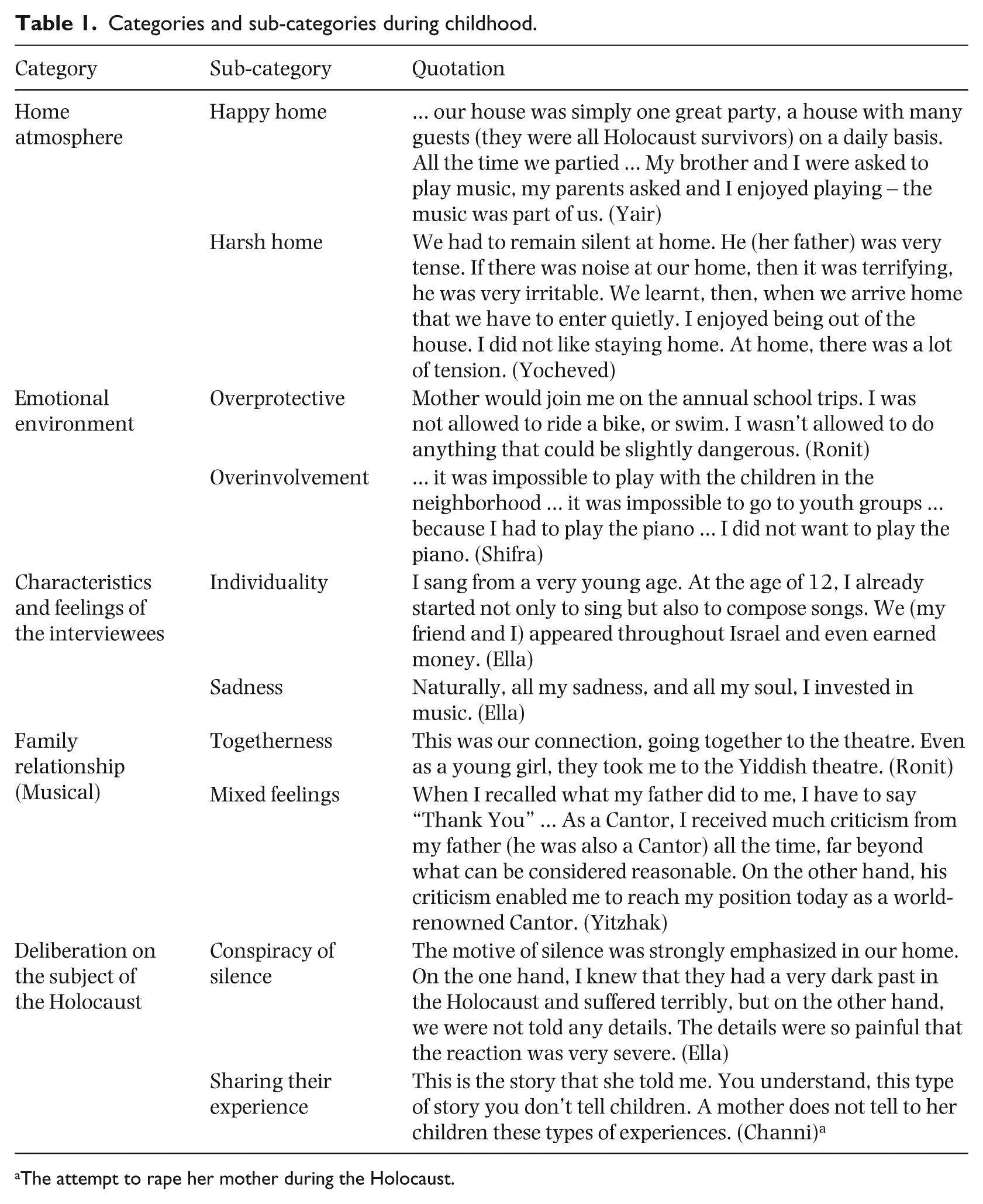
The attempt to rape her mother during the Holocaust.
Adulthood period
The period of adulthood can be summarized with the following four categories: relationship with their parents, deliberation on the subject of the Holocaust, composition of music, and the therapeutic functionality of the music.
Relationship with their parents
The findings show how the perspective of their parents when they were adults differed from that of their childhood. As adults they see their parents in a different light. They use terms such as “appreciation” and “understanding” to describe their feelings towards their parents. They are generally overly caring.
They should not lack anything, mentally, emotionally or physically. As far as I am concerned, this is very relevant to the Holocaust. (Reut)
In some cases, they are compensating for the profession their parents never had a chance to attain due to the Holocaust. However, there is one case where there had been no verbal communication, and it was music that filled the gap to bring together the adult/child and the parent.
Music is my daily conversation with my mother. Other than music, we don’t speak. We only speak via music. (Naftali)
Deliberation on the subject of the Holocaust
Once the HSO became adults, the conspiracy of silence was no longer a wall that needed to be penetrated. They knew what had happened, even if they had learned about the Holocaust when the parents were well advanced in years. Often a trigger gave rise to communication. Perhaps a grandchild had to write about a Holocaust survivor. Possibly as old age approached, the parent had the urge to take their children on a family trip to rediscover the family roots in Europe, to show them where they were born and raised and where they experienced the Holocaust.
Composition of music
As renowned musicians, they have the tools to delve into new areas. All their “special” projects are Holocaust-related, even if not explicit to the audience.
I said to myself “I have to write an opera based on my father’s diary.”
6
This is the right thing to do. It is my mission. (Ella)
Whether they are preserving and reviving traditional melodies or performing in Germany with a German audience listening to voices of the Holocaust without realizing it. They are telling their parents’ story; the music became their memorial candle (using Wardi’s terminology [1992]).
I retell this story and play the flute, the melody that my father so loves. (Reut)
7
Therapeutic functionality of the music
For the interviewees, music has been a way to express inner emotions, a type of self-therapy.
Music is therapy for me, to remain with my sanity in hard times, as if to take a pill. (Dina)
The music also became a way to facilitate the formulation of an identity – an identity that was unclear during their childhood and now had become a way to commemorate the trauma of their parents.
I was very embarrassed by this language (Yiddish) but once I reached maturity, I realized that this is an amazing language used by the greatest poets and authors. I will sing jazz to you in Yiddish. I will show you how everything can be sung in Yiddish.
8
(Ronit)
See Table 2 for more detailed quotes.
Categories and sub-categories during adulthood.
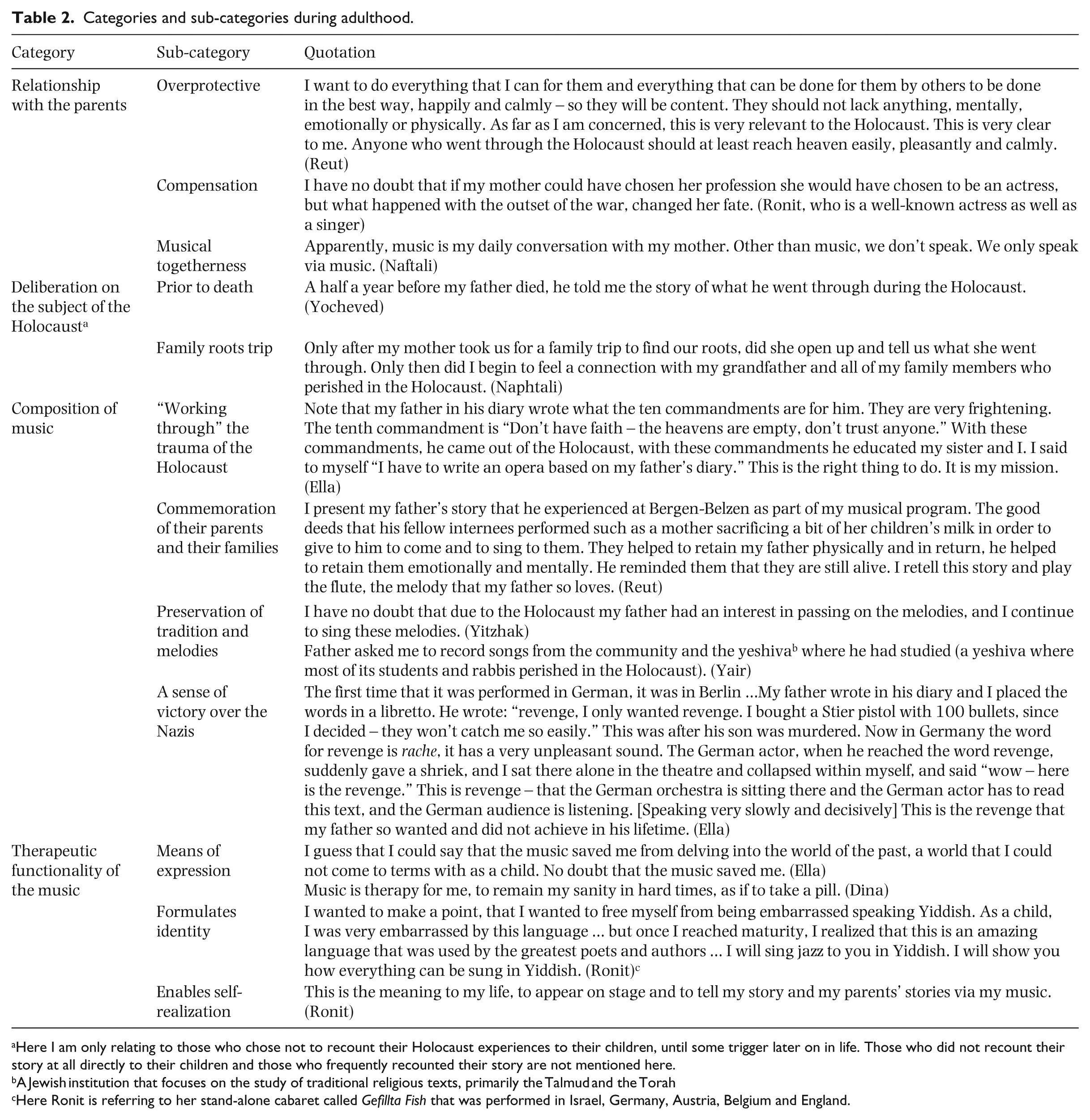
Here I am only relating to those who chose not to recount their Holocaust experiences to their children, until some trigger later on in life. Those who did not recount their story at all directly to their children and those who frequently recounted their story are not mentioned here.
A Jewish institution that focuses on the study of traditional religious texts, primarily the Talmud and the Torah
Here Ronit is referring to her stand-alone cabaret called Gefillta Fish that was performed in Israel, Germany, Austria, Belgium and England.
Patterns
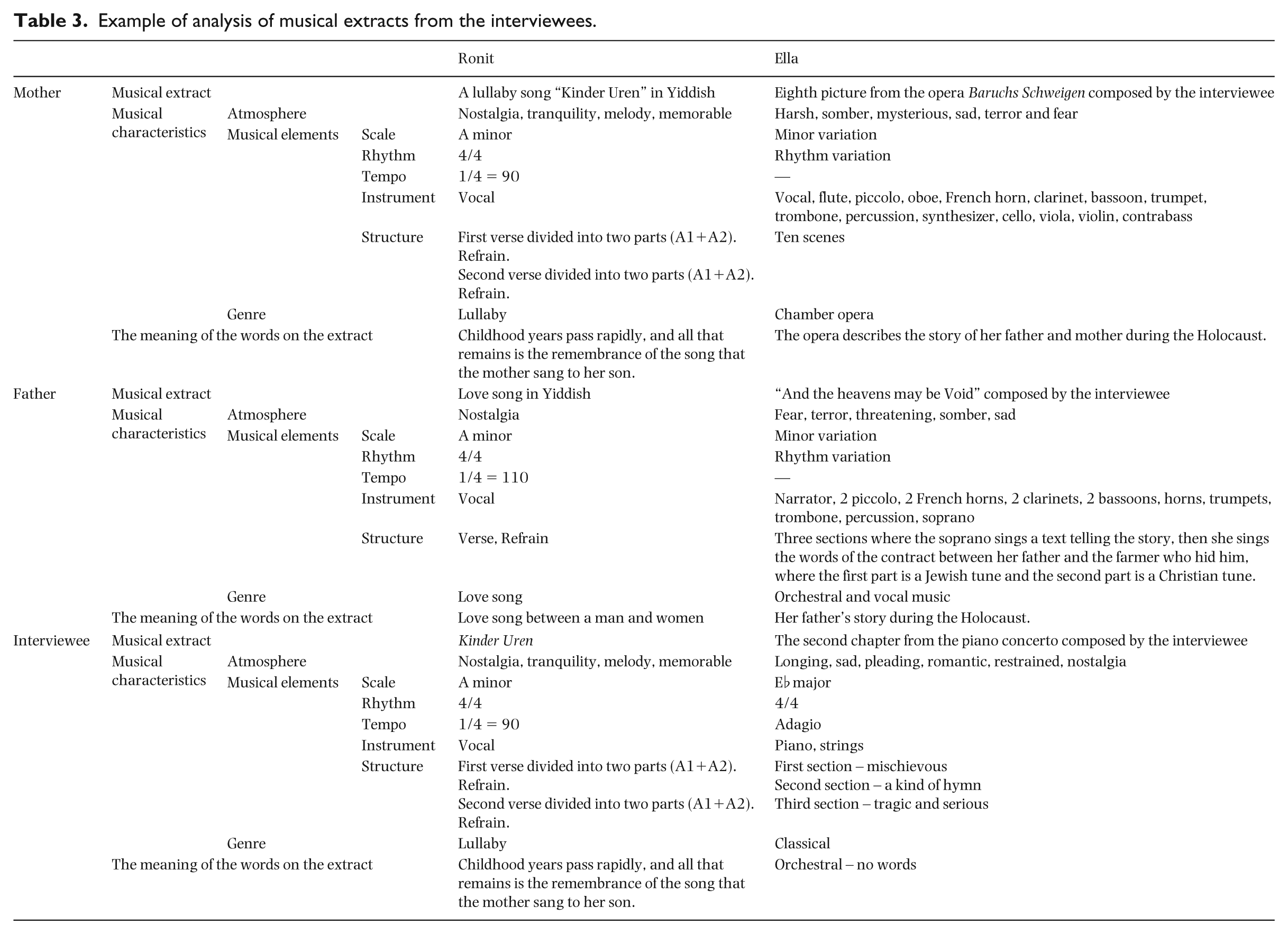
Based on this research two behavioral patterns emerged; the first I termed the “commemorating conductor” and refers to those interviewees who related to their childhood home as open and happy, and as adults used their musical skills to portray their family traditions and melodies. The second behavioral pattern, the “arranger”, describes those interviewees who recall a harsh childhood home, and as adults used their music as a personal tool to cope with their trauma and personal self-realization. 9 The musical analysis also emphasized these two patterns (see Table 3).
Example of analysis of musical extracts from the interviewees.
Commemorating conductor
The “commemorating conductor” pattern can be portrayed as follows: in their childhood, the happy home was described by its hospitality, generally the guests were also HS, bringing with them a variety of music from their past. The music was always prominent: when performing household chores, when going to concerts, and when sitting around the table during religious ceremonies. All of this created a pleasant home environment.
The parents, the HS, were over-protective, fraught with fear and anxiety and over-involvement in their children’s daily life and musical studies. These characteristics are documented in the literature, where they are referred to as part of the “survivor syndrome” (Alekzandrowicz, 1973; Hass, 1996).
As adults, they tend to impersonate their parents, not only in the type of music they play but also in their gestures while performing. They transmit their musical tradition and tunes, giving a feeling of victory over the Nazis while performing. Their music is a means of expression more than a means of self-therapy.
The musical relationship with their parents is one that is to be shared and to be proud of, where their role is a kind of amplifier of the various sounds that they absorbed in their childhood, and throughout their lives.
The conductor in music is the person who leads the orchestra and is responsible for the output, the sounds and interpretation for the listening audience. As such, I adopted this musical term and described the pattern as the “commemorating conductor.” This pattern is very evident in the analysis presenting Ronit in Table 3. The song she chose to represent her mother was a lullaby song in Yiddish, portraying a nostalgic and memorable childhood. This same lullaby song is the same song that she chose to represent herself, singing it to her own children, thus showing the characteristics that are typical for the commemorating conductor. It is also evident that the song representing her father is a Yiddish love song, expressing the warm home atmosphere that was prevalent in her childhood.
Arranger
The pattern of the “arranger” can be portrayed as follows: Their childhood home had a harsh environment. A home that was not welcoming, they rarely would invite friends and preferred not to be there themselves. The parents were lacking tender, loving emotions. The “special” moments were those moments where they shared musical experiences, but this generally created mixed reactions on the part of the child.
As adults, they used their music to appease their parents, and to receive recognition of their musical abilities. Music became their therapeutic tool, enabling them to define their identity that had been unclear in their childhood, a kind of self-fulfillment. They use their music to process their traumatic childhood experiences and to create a high level of individuality, beyond the expected levels, mostly prevalent when referring to their involvement with music. They tell the family story via their musical performances, the family that was “lost” in the Holocaust. Their music not only tells the story but also frees them from the family yoke. Once again, when looking at Table 3, we see how Ella represents this pattern. The extracts that she chose are in contrast to those of Ronit. They are all extracts that were composed by herself. Those representing her parents describe a harsh and threatening atmosphere. She herself chose an extract that described a longing and restrained atmosphere. All these extracts had an element of sadness.
In musical terminology the “arranger” describes the person who is responsible for adapting music to suit the relevant artistic message, by choosing the relevant instruments and voices. Here the interviewees found meaning and processed their experiences via their music.
Discussion
The purpose of this study was to investigate the role of music in terms of how it helped HSO to cope with typical syndromes and to investigate ways that music contributed to the relationship of the HSO with their parents. Analysis of the overall findings of this research showed several issues in which music was an essential component as part of the connection between parents, Holocaust survivors, and their offspring, especially when their children reached adulthood. First, music helped to accommodate the “conspiracy of silence.” Second, music contributed to the inter-generational interaction, enabling the second generation to come to terms with the trauma that was prevalent in their surroundings. Third, interviewees used their music as a means to tell future generations their parents’ stories, and as such, gaining some empathy of their parent’s traumatic experience. Fourth, the legacy of musical melodies that were almost totally lost could be transferred to the next generation, a kind of self-commitment to their parents. Finally, music played a role in the construction of personal and collective identity of the second generation. All in all, a type of “self-music therapy.”
Conspiracy of silence
The professional literature on the Holocaust describes the “conspiracy of silence.” Even though most of the interviewees did not know the details of their parents’ stories, and did not ask about their parent’s past, what is referred to by Bar-On as “the double wall” (1994), there were those who recalled the special moments when the silence was broken. Those “musical” moments when their parents, the HS, would sporadically recount details of their past, specifically while singing their parent’s songs or melodies. The traditional music opened a window into the darkness that had been hidden away.
Intergenerational interaction
Music facilitates the development of a positive relationship between children and parents (Codruta, 2016; Simion, 2016). The fact that music can also be used to cope with distress, trauma, and post-traumatic situations is well documented in the psychology of music and music therapy literature (e.g., Amir, 2007; Bensimon, Amir, & Wolf, 2008; Clements-Cortes, 2008; Felsenstein, 2014; Gerber et al., 2014; Loewy & Stewart, 2004; Orth, Doorschodt, & Verburgt, 2004; Vibe & Kira, 2012) and in many respects my research replicates previous findings. What is unique in the current research is the understanding of the different roles that music plays in the life of the second generation with musical backgrounds, reflecting the psychological and emotional aspects of music. This study shows how the second generation found creative ways to express difficult feelings repressed over the years. The emphasis on music distinguished these participants from other HSO in that these interviewees used music to navigate the precarious relationship between the generations in spite of the trauma that lingered between them and their parents. Interviewees often used their music as a therapeutic tool that allowed them to overcome the traumas that they experienced in childhood and served as a means of communicating and showing empathy towards their parents.
Reviving their parents’ story
This study shows the tremendous power of music, which allowed the second generation to deal with the trauma of the Holocaust. Instead of talking about the trauma, they played and sang it. HSO who had been ashamed of their parents’ culture and language during their childhood, used that same language and tradition as adults and revealed their parents’ and families’ Holocaust stories via music. They were no longer embarrassed. On the contrary, they were proud to perform, especially in Europe, in countries that had been occupied by the Nazis. Music was the means for communicating the Holocaust.
In places where no one survived, it was almost impossible to reconstruct the collective memory of those communities. The voice of the ancestors was lost (Troudart, 2012). Music revives this lost voice.
Self-music therapy
Friedman (2017) analyzed music that was composed by three second-generation musicians, Lee, Poliker, and Brant. He related to issues that dealt with identity, working through trauma and becoming their parent’s messenger. In contrast to Friedman’s research that dealt with the second generation’s musical productions, my focus was on how music contributed to the connection the interviewees had with their parents.
In addition to Friedman’s findings which were replicated in my research, there was also a clear type of “self-music therapy” that was evident from the way the interviewees presented their music. This was clearly seen in the category “Therapeutic functionality of the music”, an idea described by some of the interviewees themselves. This type of self-music therapy is also called in the literature “health musicking” 10 (Bonde, 2011; Ruud, 2010; 2013; Stige, 2002). According to this line of thought, the interviewees who used music and especially their own music making (= musicking) were oblivious to the health-promoting functions of music. The context is not restricted to a clinical one. Bonde (2011), for instance, suggests that health musicking is not limited to a professional therapeutic context. It can be observed in any social or individual context where people use musical experiences to create meaning and coherence in states and times of adversity… In this way, health musicking can be understood as the common core of any use of music experiences to regulate emotional or relational states or to promote well-being, be it therapeutic or not, professionally assisted or self-made. Social science research in recent years has documented some of the many ways in which music is used to promote health by “lay people” in their daily lives (Bonde, 2011, p. 121).
Ruud (2010) gives examples of the powers of such musicking. According to him it is “… a provider of vitality; … a tool for developing agency and empowerment; it is a resource or social capital in building social networks; a way of providing meaning and coherence in life” (Ruud 2010, p. 111).
Limitation and further research
This research found two patterns that were very prevalent to the interviewees. Further research is required to strengthen the findings presented here as this is based on a qualitative research.
Berger and Berger (2001) in their book Second Generation Voices reveal how offspring of the perpetrators deal with their Holocaust legacy. I suggest a comparative study should be made in order to understand the role music plays in the relationship between perpetrators and their children.
Recently published research has begun to focus on the third generation. Has the trauma been passed on to this generation? If so, does music have any influence on this trans-generational relationship, where the first generation or at least an awareness of this generation, is still noticeably present? Maybe the fact that I myself am a music therapist, and a third generation to Holocaust survivors, is itself a testimony to such a need.
Footnotes
Appendix 1
Appendix 2
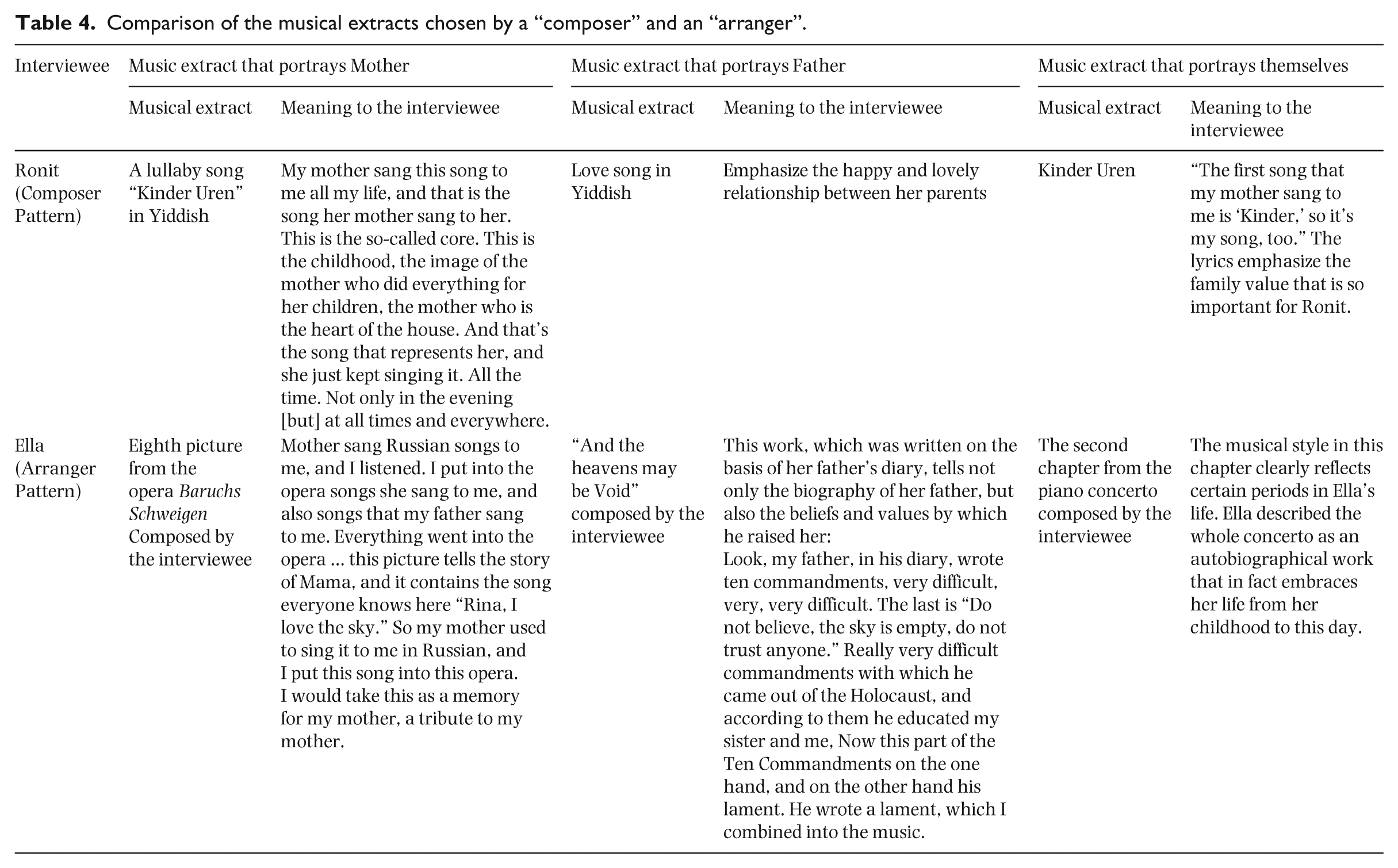
Comparison of the musical extracts chosen by a “composer” and an “arranger”.
| Interviewee | Music extract that portrays Mother |
Music extract that portrays Father |
Music extract that portrays themselves |
|||
|---|---|---|---|---|---|---|
| Musical extract | Meaning to the interviewee | Musical extract | Meaning to the interviewee | Musical extract | Meaning to the interviewee | |
| Ronit (Composer Pattern) | A lullaby song “Kinder Uren” in Yiddish | My mother sang this song to me all my life, and that is the song her mother sang to her. This is the so-called core. This is the childhood, the image of the mother who did everything for her children, the mother who is the heart of the house. And that’s the song that represents her, and she just kept singing it. All the time. Not only in the evening [but] at all times and everywhere. | Love song in Yiddish | Emphasize the happy and lovely relationship between her parents | Kinder Uren | “The first song that my mother sang to me is ‘Kinder,’ so it’s my song, too.” The lyrics emphasize the family value that is so important for Ronit. |
| Ella (Arranger Pattern) | Eighth picture from the opera Baruchs Schweigen Composed by the interviewee | Mother sang Russian songs to me, and I listened. I put into the opera songs she sang to me, and also songs that my father sang to me. Everything went into the opera … this picture tells the story of Mama, and it contains the song everyone knows here “Rina, I love the sky.” So my mother used to sing it to me in Russian, and I put this song into this opera. I would take this as a memory for my mother, a tribute to my mother. | “And the heavens may be Void” composed by the interviewee | This work, which was written on the basis of her father’s diary, tells not only the biography of her father, but also the beliefs and values by which he raised her: Look, my father, in his diary, wrote ten commandments, very difficult, very, very difficult. The last is “Do not believe, the sky is empty, do not trust anyone.” Really very difficult commandments with which he came out of the Holocaust, and according to them he educated my sister and me, Now this part of the Ten Commandments on the one hand, and on the other hand his lament. He wrote a lament, which I combined into the music. |
The second chapter from the piano concerto composed by the interviewee | The musical style in this chapter clearly reflects certain periods in Ella’s life. Ella described the whole concerto as an autobiographical work that in fact embraces her life from her childhood to this day. |
Funding
The author(s) received no financial support for the research, authorship, and/or publication of this article.
