




Abstract
Employer branding is becoming increasingly important for organizations to attract and retain top talent. While practitioners use a range of tactics to build and promote employer branding, it is still unclear as to what exactly constitutes effective employer branding. This gap in the literature formed the motivation of this study, which aims to develop, validate and apply a multi-dimensional measurement model of employer branding. First, a comprehensive measurement model of employer branding comprising eight constructs (brand value, development value, economic value, ethical and moral value, functional value, interest value, management value, and work-life balance) was developed through an extensive literature review. Next, using data collected through a structured survey, the validity of the proposed model, including the relevance/appropriateness of each construct and its unique contribution to employer branding, was assessed. The second-order confirmatory factor analysis results established the existence of a robust higher-order measurement model for employer branding, with each of the eight constructs contributing significantly and uniquely. The model was then applied to assess the hypothesized difference in employer branding across different demographic groups, namely gender and overall work experience. The results indicate a significant difference in the model across the various demographic groups. Overall, the study significantly contributes toward the theoretical advancement of employer branding. Future researchers could adopt the validated model and measurement items in different settings. For practitioners, the results indicate that employer branding requires an all-encompassing effort rather than being oriented towards few attributes. Also, the study findings highlight the need to customize employer brand strategies across different demographic groups.
Keywords
Introduction
Employer branding has witnessed significant interest among academics and practitioners over the past two decades (Theurer et al., 2018). It is the totality of a firm’s effort to promote to existing and prospective employees that the organization is a desirable place to work (Dabirian et al., 2019; Maheshwari et al., 2017). It influences an organization’s reputation as an employer and in general. Employer branding has evolved from a nice-to-have strategy to a business imperative (WilsonHCG, 2020). It significantly affects the quantity and quality of applicants a company attracts, and it makes a difference to current employee productivity, job satisfaction and retention (Gilani and Cunningham, 2017; Verčič and Ćorić, 2018) and overall organizational performance (Aldousari et al., 2017). The relevance of employer branding has become even greater during the ongoing COVID-19 crisis, as potential and current employees are going to remember how employers rose to the occasion to support their employees, customers, and communities (SHRM, 2020).
While practitioners are using a range of tactics to build and promote employer branding, scholars are still unsure what exactly constitutes effective employer branding (Kaur et al., 2020; Theurer et al., 2018). The primary reason for this confusion is that employer branding is a wide-reaching concept and encompasses many disciplines, including human resource management, organizational behavior, brand marketing, strategic management, psychology, and public relations (Berthon et al., 2005; Theurer et al., 2018). It also draws on a multitude of theories such as organizational identity theory, psychological contract theory, social identity theory, and signalling theory, which is often loosely applied (Theurer et al., 2018; Verčič and Ćorić, 2018). The inherent multidisciplinary nature of employer branding has led to a broad view of the phenomenon. Employer branding, therefore, faces the risk of developing into a fragmented field with heterogeneous interpretations of the concept and its scope (Theurer et al., 2018). Furthermore, most of the recent research on employer branding is limited to conceptual papers which either identify or define the concept (Gilani and Cunningham, 2017; Theurer et al., 2018). Any efforts to develop a reliable and valid measurement of employer branding are still in the nascent stage (Srivastava et al., 2017). These limitations make it difficult for researchers and practitioners to appreciate the progress made in the literature, derive comprehensive and objective insights, and forge a path ahead for theoretical and empirical advancement. The lack of an integrated and theoretically-grounded understanding carries the risk that practitioners and policymakers could mistakenly be addressing the wrong issues and neglecting those that have more significance. These concerns formed the motivation of this study, which aims to develop and empirically validate an employer branding model by integrating its various dimensions. Integrating existing knowledge into a comprehensive model allows investigation of multiple theoretical perspectives simultaneously, helps define the boundaries of the field more rigorously, and allows knowledge to grow in a consistent manner in the field.
The specific objectives of this study are as follows: • To develop the relevant employer branding constructs and their underlying items; • To empirically test and validate the multi-dimensional model of employer branding; • To apply the model to test differences in employer branding across different demographic groups
This study makes several theoretical and practical contributions. First, the study provides a deeper, broader, and unified understanding of what comprises employer branding to strengthen future development in the field. We expect practitioners to find the proposed employer branding model to be a valuable tool to attract and recruit potential employees and to build an engaged workforce based on firm’s values and goals.
The rest of the paper is structured as follows. In the next section, the review of the existing literature on developing the key employer branding measures is discussed along with the study hypotheses. The survey-based research methodology used to test and validate the employer branding model is detailed in section three. The analysis and findings are presented in section four, followed by a discussion of the findings in section five. We conclude in section six with the implications of the study, along with limitations and suggestions for future research.
Literature review
The past two decades have witnessed significant interest in employer branding. Unfortunately, despite the interest, researchers are still unclear on what exactly constitutes employer branding. It is important to first delineate the gaps in the literature so that efforts can be made to address them. Some of the gaps identified in the employer branding literature are discussed in the following section.
Gaps in the employer branding literature
First, there is no comprehensive definition of employer branding; several definitions of employer branding exist in the literature, which has evolved over the years. An early study by Ambler and Barrow (1996) defined it as ‘the package of functional, economic and psychological benefits provided by employment, and identified with the employing company,’ while Lloyd (2002) defined it as the ‘sum of a company’s efforts to communicate to existing and prospective staff that it is a desirable place to work’. Further research into the concept by Backhaus and Tikoo (2004) stated that employer branding is the process in which an identifiable and unique identity as an employer is built. Srivastava et al.'s (2017) definition of employer branding was specific to prospective employees. They posited that an employer brand is a “set of attributes that establishes the identity of the organization in the minds of the prospective employees as a distinct employer promising a certain employment experience.” A recent study by Theurer et al. (2018) has taken a broader and strategic perspective beyond just focussing on current and future employees in defining employer branding. They define employer branding as a process of strategically promoting the employer brand externally and internally, using brand marketing activities with the aim of establishing the desired employer image in the organization’s target groups and sufficiently distinguishing an employer from its labor market competitors. Considering the ambiguities and vagueness that surround these definitions, complications frequently arise when attempting to apply the principles of employer branding in practice.
The inherent multidisciplinary nature of employer branding from diverse fields such as marketing, human resources, organizational behavior as well as general management has led to a broad view of the phenomenon (Theurer et al., 2018). Also, we have witnessed a dispersed interpretation of constructs and applications in the scholarly discourse around employer branding without a unified understanding. Past research on employer branding has labelled similar concepts by different names and has labelled different concepts by the same name (Theurer et al., 2018). For example, Alnıaçık and Alnıaçık (2012) categorized career-development and promotion opportunities under social value, while others have categorized it under economic value (Chiu et al., 2020), application value (Sivertzen et al., 2013), and development value (Hadi and Ahmed, 2018). Also, researchers often fail to differentiate between what constitutes employer branding and the process of employer brand building and its outcomes. For example, having marketing strategies and effective communication channels, such as an organization’s Web site, advertising, social media, and other networking outlets, are not necessarily employer branding. Instead, they are tools for building a strong employer brand (Wilska, 2014). Similarly, having strong employee commitment, engagement, productivity, and loyalty to the organization are not necessarily employer branding but rather the outcomes of employer branding (Theurer et al., 2018). A clear distinction among these aspects, therefore, is warranted.
Ideally, an employer branding model must apply to both potential and current employees. However, studies have either focussed on attracting and recruiting potential employees (e.g. Chhabra and Sharma, 2014) or focused on current employees (e.g. Gilani and Cunningham, 2017). Therefore, internal and external employer branding should be given adequate consideration (Lievens et al., 2007; Theurer et al., 2018; Tumasjan et al., 2019). Also, only limited efforts have been made to explicitly understand the difference in employer branding among different demographic groups. As a result, organizations are unable to customize their employer brand strategy for different groups. Further, recent studies on employer branding have been conceptual in nature (Dabirian et al., 2019; Gilani and Cunningham, 2017; Graham and Cascio, 2018), which requires empirical validation.
In summary, given the current state of the literature on employer branding, it is pivotal to integrate extant theoretical and empirical approaches and establish a clear view of what comprises employer branding. This study addresses this need and contributes to the literature by identifying several theoretical constructs from the fragmented literature on employer branding and operationalizes it into a measurement model. In the process, some of the gaps in the literature are addressed.
Existing measures of employer branding
Only limited efforts have been made to date to develop a measurement scale to capture employer branding. Moreover, there is a lack of consensus among the different measurement scales of employer branding proposed in the literature. For instance, Berthon et al. (2005) proposed a validated 25-item scale comprising five constructs, namely social value, development value, application value, interest value, and economic value for employer branding from the perspective of potential employees. Knox and Freeman (2006) utilized a 20-item scale to capture internal and external employer branding. Hadi and Ahmed (2018) utilized a 16-item measurement scale comprising four constructs, namely application value, development value, interest value, and work-life balance, to examine the impact of employer branding on employee retention. Although not validated, Dabirian et al. (2019) proposed an extended conceptual model comprising eight themes of employer branding, which include social value, interest value, application value, development value, economic value, management value, work-life balance, and brand image. Jain and Bhatt (2015) proposed a validated 18-item measurement scale comprising seven constructs, namely compensation, development opportunities, leadership capability, mobility convenience, the reputation of the company, work environment, and leavers and sabbatical provisions. Verčič and Ćorić (2018) proposed a 12-item, two-factor measurement scale which included various elements of job-related values such as support by colleagues, acceptance, belonging, and job security in the first factor, and items related to self-confidence, self-esteem, and future prospects in the second factor. A recent study by Chiu et al. (2020) proposed a 32-item, six-factor measurement scale comprising development value, social value, interest value, perceived brand strength, the intrinsic value of the employer brand, and the importance of cultural benefits.
We have only come across only one statistically validated measurement model for employer branding in the literature. Srivastava et al. (2017) proposed a validated second-order 11-item measurement model comprising three first-order constructs, namely, reputation, perceived culture, and HR systems and processes. The lack of consensus on a measurement scale in employer branding along with the dearth of validated measurement models clearly highlights the need to develop robust constructs and a comprehensive measurement model for employer branding.
Construct development and hypotheses for employer branding
As evident from our literature review, any efforts to conceptualize the critical dimensions of employer branding and develop a reliable and valid measurement of associated dimensions are still in the nascent stage. Construct development and validation are essential for the establishment of a common conceptual base, especially when the existing body of knowledge on employer branding is scattered across the literature. Though fragmented, the contributions of these various measurement scales on employer branding, when considered together in conjunction with a larger body of employer branding literature, have provided many critical aspects necessary for the development of employer branding constructs and underlying items. The eight key factors (constructs) of employer branding derived from the literature are discussed and hypothesized below.
Brand value
Brand value in the employer branding context is how the brand is perceived by prospective and current employees (Dabirian et al., 2019). This includes reputation, a perceptual judgment of an organization’s past actions developed over a period of time, which helps to attract talented people to apply for posts, to accept offers, and to stay with the organization (Jain and Bhatt, 2015). Conversely, a fragile brand image and employer reputation may result in the attraction of fewer candidates and disengaged and resentful employees (Maheshwari et al., 2017). Theurer et al. (2018) mentioned that employer brand value is associated with its financial market performance. An organization that is financially strong has a higher brand value in the eyes of its employees. Kashyap and Verma (2018) highlighted that great workplaces are financially successful. Similarly, the market success of the employer, such as stock price and overall market share, contributes to its brand value (Theurer et al., 2018). Also, the brand value of the organization perceived by employees is greater if they offer high-quality and innovative products and services (Dabirian et al., 2019; Verčič and Ćorić, 2018). This leads to our first hypothesis:
Brand value will contribute uniquely to employer branding
Development value
The development value offered by an employer is a critical factor for the enhancement of the employer brand as a great employer to work for in the market. It assesses the degree of attractiveness of an employer in providing career-enhancing experience, vertical career growth, and a springboard for future employment (Dabirian et al., 2019; Hadi and Ahmed, 2018; Kashyap and Verma, 2018). This includes training programs and professional development opportunities (Dabirian et al., 2019; Maheshwari et al., 2017). According to Hadi and Ahmed (2018), developing and updating employee skills would allow organizations to leverage their full potential and would also result in increased employee loyalty and retention. Similarly, employee learning opportunities from different projects, foreign assignments, and from employees and clients from different countries are a critical factor in developing positive employer brand perceptions (Srivastava et al., 2017). Therefore, we propose the following hypothesis:
Development value will contribute uniquely to employer branding
Economic value
Economic value is associated with the economic benefit provided by the employing organization (Kashyap and Verma, 2018). It assesses the extent to which an individual is attracted to an employer that provides an above-average salary and an attractive overall compensation package (Figurska and Matuska, 2013). According to Dabirian et al. (2019), the economic value of an employer is primarily the compensation provided to employees, although various types of employee benefits, such as incentives, medical or dental benefits, holidays, and “unconventional” perks such as free food could add to employer brand image. Hence, we propose the following hypothesis:
Economic value will contribute uniquely to employer branding
Ethical and moral values
This assesses the extent to which ethical and moral values are followed by the employing organization (Jain and Bhatt, 2015), including developing ethical codes of conduct, as well as policy documents focused on socially responsible practices such as environment friendly/green policies (Jain and Bhatt, 2015). The employer brand image is more positive for organizations that promote ethical choices such as transparency and honesty. For instance, transparent organizations are accountable for their actions, words, and decisions, because these are available for others to see and evaluate (Graham and Cascio, 2018). It is also an organization’s moral responsibility to provide a clean and safe work environment for employees. Employees value a good work environment, and it plays a key role in how they perceive their employer (Arasanmi and Krishna, 2019). Therefore, we posit the following hypothesis:
Ethical and moral value will contribute uniquely to employer branding
Functional value
This assesses the extent to which the employee functions, department functions, and organization functions are valued by the employee. The functional benefits provided by a company to its employees, such as the scope of responsibilities of employees or teams, are essential in employee branding (Wilska, 2014). For instance, intradepartmental and interdepartmental cooperation and teamwork are valued by employees (Verčič and Ćorić, 2018). Employer branding advocates for the fulfilment of employees’ expectations (Arasanmi and Krishna, 2019). Employees must be clearly informed on what is expected of them by the company. This is because employees are attracted to organizations where they can meet and exceed their expectations regarding career and personal goals (Arasanmi and Krishna, 2019). Conversely, employees, who base their job choice on unbalanced information, are more likely to become dissatisfied as a result of unmet expectations and are more likely to quit. Backhaus and Tikoo (2004) indicated that a realistic job preview makes expectations more accurate and reduces role ambiguity. Employees who have a sense of responsibility and ownership feel important to the organization, work harder, complain less, and are willing to stay at a company for longer (Figurska and Matuska, 2013). This led us to propose the following hypothesis:
Functional value will contribute uniquely to employer branding
Interest value
This assesses the extent to which an individual is attracted to an employer that provides an exciting work environment, has novel work practices, and makes use of its employees’ creativity (Figurska and Matuska, 2013). According to Dabirian et al. (2019), the interest value of employers is based on how challenging and achievable their specific tasks and job requirements are. Conversely, lack of interest value will lead to frustration with repetitive tasks. Hadi and Ahmed (2018) highlighted the importance of providing a work situation that is challenging and at the same time has the opportunity for creativeness. Kashyap and Verma (2018) also highlighted the importance of providing challenging tasks and wide varieties of jobs for employees to increase their interest value. Along similar lines, Srivastava et al. (2017) underlined the importance of a competitive work environment for enhancing employer branding. Hence, we posit the following hypothesis:
Interest value will contribute uniquely to employer branding
Management value
The leadership of the organization influences employees significantly (Hadi and Ahmed, 2018). According to Dabirian et al. (2019), employees assess their employers based on the leadership qualities of their superiors. Some of these qualities include managers’ competence, having a strong vision, and being able to motivate and inspire others. Having strong and trustworthy leadership is an important criterion of employer branding (Figurska and Matuska, 2013; Graham and Cascio, 2018; Jain and Bhatt, 2015). Employees count on their supervisors and managers to display their organizations’ core values and to act ethically and competently (Graham and Cascio, 2018). The good or bad influence of managers at work determines the employee perception of the employer. For instance, managers’ attitudes and their behavior towards their employees play a key role in employees’ decisions to stay at or leave a company. Figurska and Matuska (2013) highlighted the importance of equal treatment of all employees and avoiding favoritism as critical components of employer branding (e.g. being an equal opportunity employer). A culture of trust between employer and employee is key for creating a positive employer brand (Gilani and Cunningham, 2017). Organizations with clear values within their organizational culture can use these values to boost their employer brand. Employees will become engaged by the culture of the organization and begin to adopt behaviors in line with the culture (Gilani and Cunningham, 2017). Therefore, we propose the following hypothesis:
Management value will contribute uniquely to employer branding
Work-life balance
Providing work-life balance is an integral component of employer branding (Figurska and Matuska, 2013; Jain and Bhatt, 2015). Employees desire to balance work-related with non-work-related commitments, such as family and leisure activities (Dabirian et al., 2019). This includes flexible working hours (Dabirian et al., 2019; Kashyap and Verma, 2018) and flexible work arrangements such as working from home (Hadi and Ahmed, 2018). This led us to propose the following hypothesis:
Work-life balance will contribute uniquely to employer branding In sum, we propose employer branding as a mathematical composite of all eight constructs identified in the literature and that each construct will contribute uniquely to employer branding.
Impact of gender and overall years of work experience on employer brand perceptions
Understanding the importance given to employer branding factors among different demographic groups is critical for organizations to customize their employer brand strategy. Unfortunately, only limited efforts have been made to explicitly understand the difference in employer brand perceptions among different demographic groups, especially gender and years of experience, since employer brand perceptions could differ among male and female employees (Lundkvist, 2015) and among new and experienced employees (Jain and Bhatt, 2015). Although Aslan et al. (2016) reported no difference among gender and employer brand perceptions, others have reported significant differences in employer branding perceptions among gender (Alnıaçık and Alnıaçık, 2012; Jain and Bhatt, 2015). Jain and Bhatt (2015) found significant difference in employer brand perceptions among employees with different years of work experience. Hence, we propose the following hypotheses:
Gender has a significant impact on employer branding
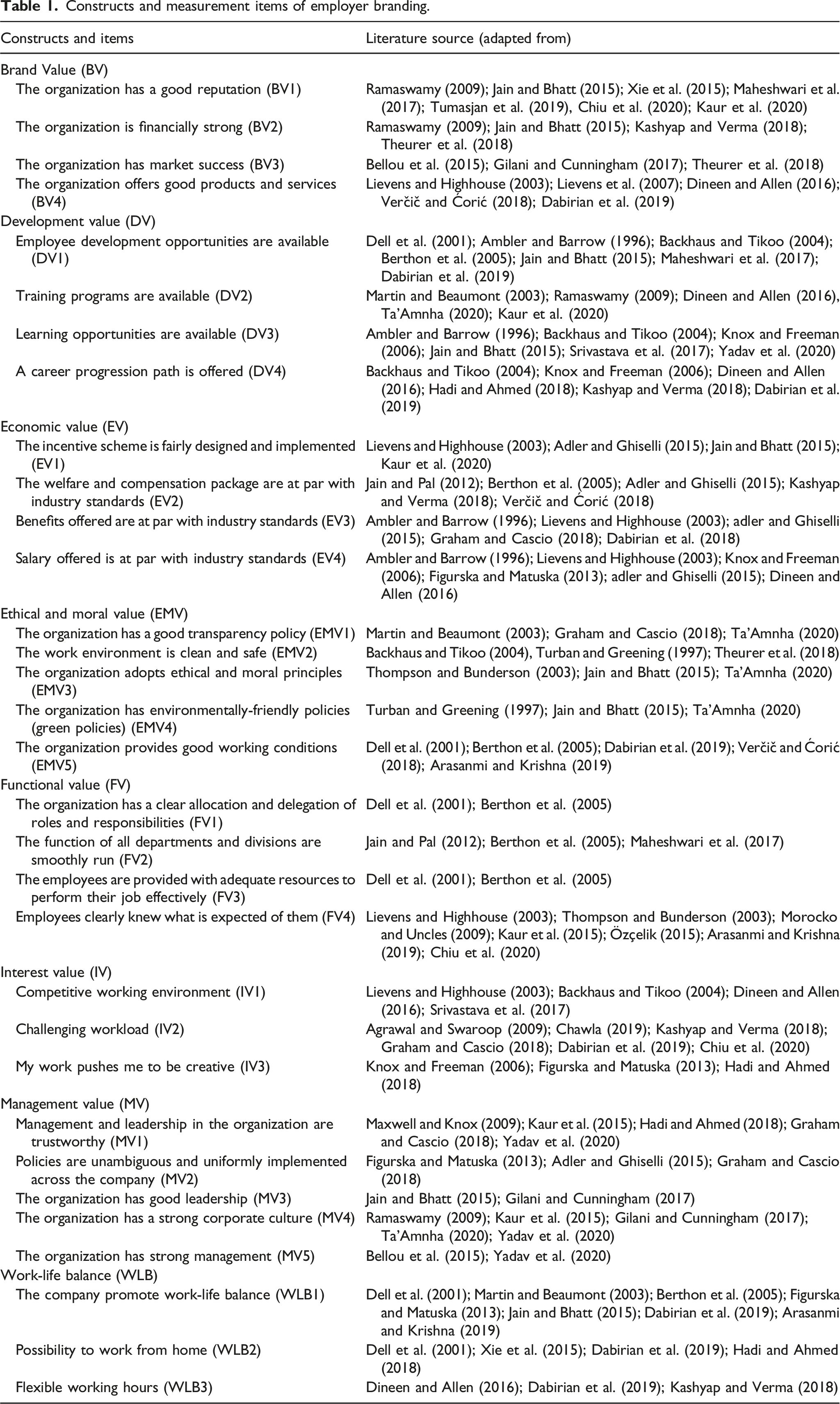
Overall years of experience of the employee has a significant impact on employer branding In line with our first study objective, Table 1 summarizes the employer branding constructs and their underlying items derived from the literature. A total of 32 items are identified across eight constructs. While it may be argued that a host of other constructs and items could be identified in the employer branding literature, no other constructs and items appeared to be as consistent and relevant to employer branding as those given in Table 1. These eight constructs and underlying items form the basis for our employer branding model. No previous studies have systematically and comprehensively identified the relevant constructs of the employer branding model in as much detail as this study. Therefore, this is a significant contribution, given that construct development is at the core of theory building (Venkatraman, 1989).
Constructs and measurement items of employer branding.
Proposed model of employer branding
As evident from our review, employer branding is a complex and multifaceted phenomenon, encompassing eight constructs. Therefore, an effective employer branding strategy should be able to display multiple attributes as a coherent ensemble. In other words, no single dimension (construct) itself will be sufficient in describing the employer branding phenomenon. In this study, as hypothesized, we expect all eight constructs (observed) are governed by a higher-order employer branding construct (latent/unobserved). To test the proposed hypotheses, a second-order measurement model for employer branding is proposed (Srivastava et al., 2017). A measurement model defines relationships between the observed constructs and unobserved latent construct (the employer branding construct) and evaluates the reliability and validity of the model (Chiou et al., 2011).
Next, we apply the proposed model to test the hypothesised differences in employer branding across different demographic groups, namely gender and overall work experience. In the process, its applicability and usefulness are established (Figure 1). A second-order measurement model for employer branding.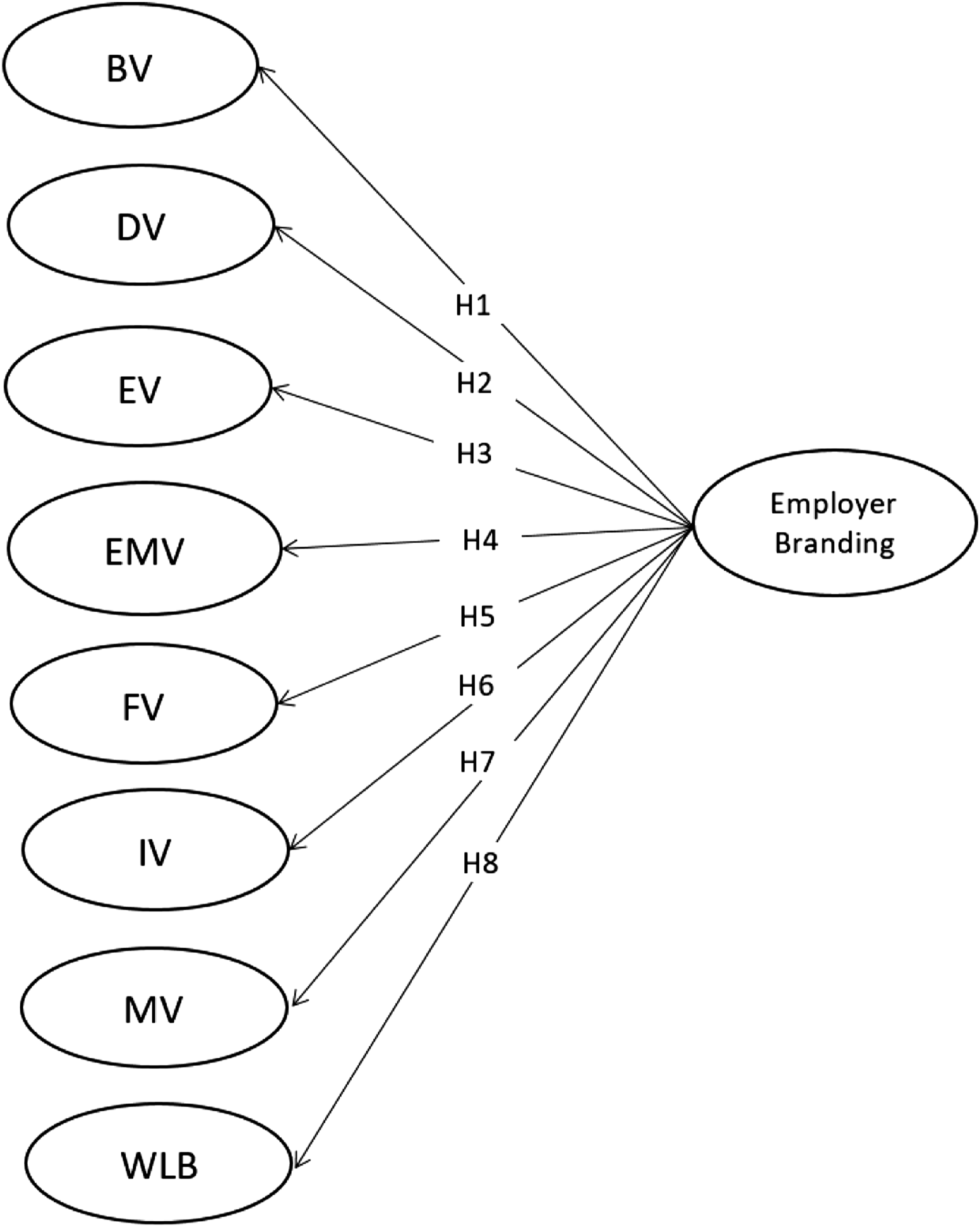
Now that we have developed the conceptual model, the next stage is to test and validate the individual constructs and the measurement model and, in the process, examine the proposed hypotheses. The research methodology used to achieve this is explained in the next section.
Methodology
A survey-based research approach was used for this study as surveys are an effective tool to capture individual perceptions (Al Ahbabi et al., 2019). Structured data collection procedures from a large representative sample population were used to enhance generalizability. The various stages of the survey research are discussed in the following sections.
Development of the survey instrument
The survey instrument to capture employer branding was derived from the literature. The measurement items for the survey, along with their literature sources, are given in Table 1. A 5-point Likert scale, ranging from strongly disagree-1 to strongly agree-5, was used to capture the respondent perceptions relating to the survey items. In addition to these questions, data on the demographic status of the respondents (in line with the objectives of this study) were also captured. The developed survey instrument was then pre-tested with three academics, one each from marketing, business and management, and organizational behavior, and two industry professionals responsible for branding in their respective organizations. The pre-test process with the participants involved checking the appropriateness of the questions for each stakeholder, evaluating the readability/choice of terminology, assuring clarity/ease of understanding, and the relevance of the items in real-world business situations (Michael et al., 2020). Based on their feedback, changes were made to the sequencing of the questions, as well as the wording/phrasing of the questionnaire, which improved the final quality of the survey instrument.
Research setting
This investigation is set in the United Arab Emirates (UAE) because of the unique characteristics of its labor market. First, the UAE provides a good setting to test and validate the employer branding model in a multicultural setting, thereby enhancing the generalizability of the model. According to estimates, over 200 nationalities live and work in the UAE and make up 83% of the population (UAE, 2021). The expatriate workforce has played a pivotal role in the last few decades in the growth and transformation of the UAE from a nomadic to a modernized country and its transition from an oil-based economy to a knowledge-based economy. The transient nature of the expatriate workforce in the UAE presents a challenge for companies to hire and retain the best talent. A study by Hays showed that nearly six in ten (57%) of working professionals in the UAE are looking to switch employers (Gulf news, 2017). This provides both opportunities and challenges for companies looking to attract, recruit and retain employees.
Data collection
Demographic profile of respondents.
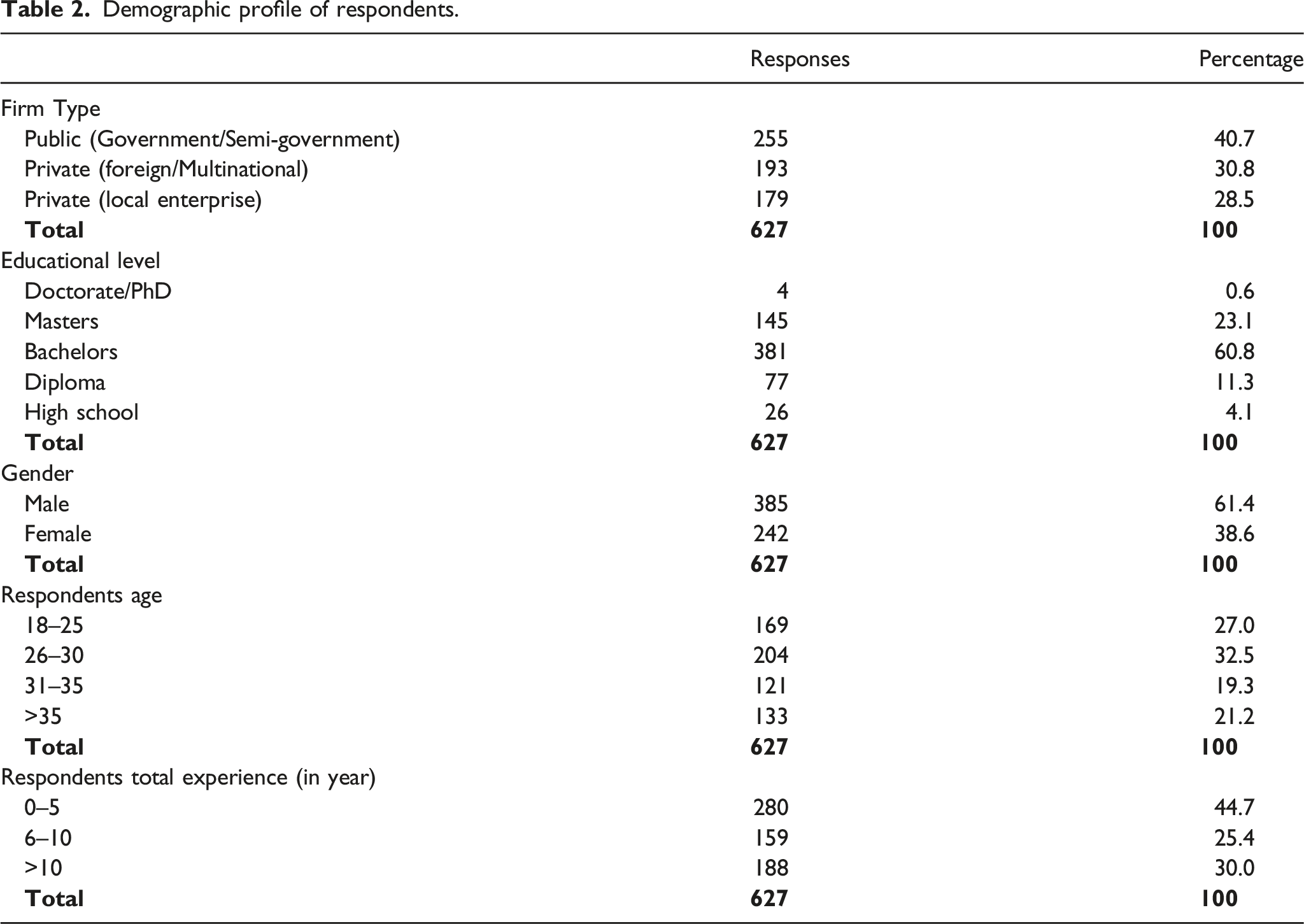
Descriptive statistics
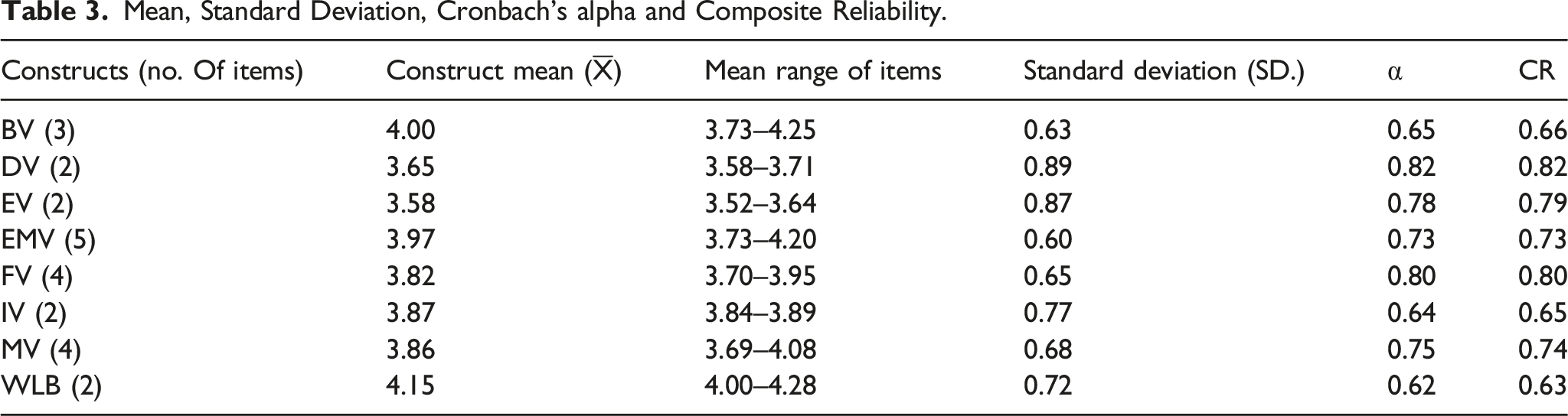
Mean, Standard Deviation, Cronbach’s alpha and Composite Reliability.
Analysis and findings
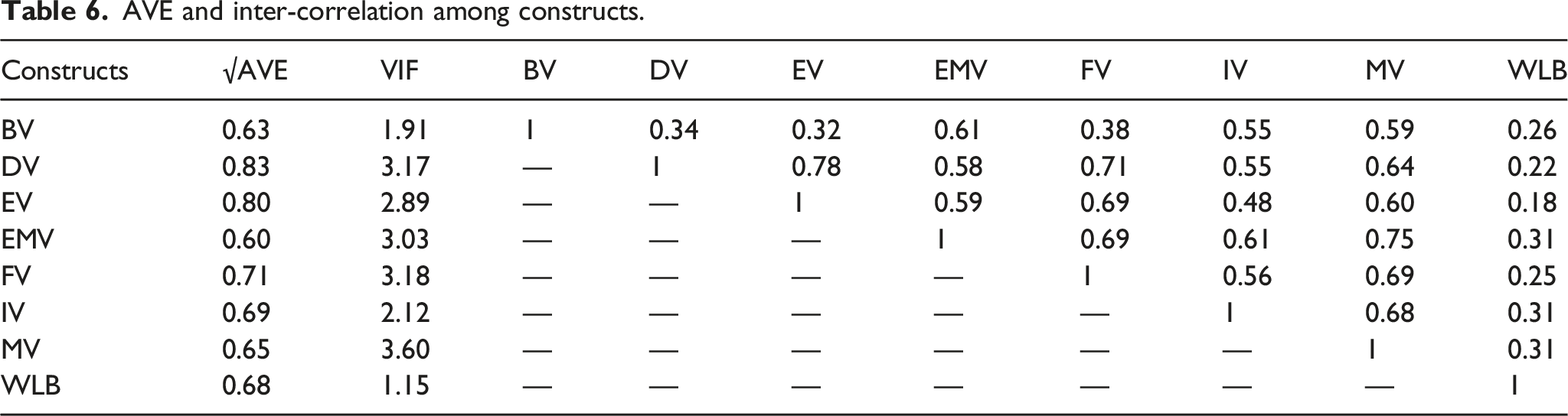
A two-stage multivariate analysis using AMOS 25 software was used to test the model and hypotheses. In the first phase of the analysis, the unidimensionality of the eight employer branding constructs was determined using convergent validity and discriminant validity followed by assessment of construct reliability using Cronbach’s alpha (α) values and composite reliability (CR) scores (Balasubramanian and Shukla, 2017). In the second stage, a second-order CFA was conducted to test the hypothesized relationships, i.e. to check whether the eight factors are governed by a higher-order factor followed by a multi-group moderation analysis to test the hypothesised difference in employer branding across different gender and work experience categories.
Convergent and discriminant validity
Measurement model fit indices (first-order confirmatory factor analysis).

Note: Recommended value in parentheses.
First-order confirmatory factor analysis.

Note: Underlined values represent items with factor loading less than 0.5.
AVE and inter-correlation among constructs.
Construct reliability
Construct reliability indicates the consistency, precision, and repeatability of the items within the constructs. Ideally, 0.7 or greater shows good reliability of constructs ((Nunnally and Bernstein, 1994), while values between 0.6 – 0.7 indicate an acceptable level of reliability (Ursachi et al., 2015). The α values and CR scores of each of the eight constructs are provided in Table 3. The results demonstrate acceptable reliability for all the constructs.
Now that the eight first-order constructs have been tested and validated and their relative importance understood, we now proceed to test and validate the proposed second-order measurement model of employer branding and the related hypotheses.
Testing the second-order measurement model of employer branding
Measurement model fit indices (second-order confirmatory factor analysis).

Note: Recommended value in parentheses.
Second-order confirmatory factor loadings and hypotheses test results (H1-H8).

aSignificant at p<0.001.
Applying the model to test differences across different demographic groups
Chi-square difference test of the overall models (Hypotheses H9 and H10).

ap < .05, p < .01.
Now that we know the overall model is different across different demographic categories, the next phase of analysis involved testing for differences in the standardised structural path coefficients (second-order factor loading) across the different gender and experience categories. For this, we compared the unconstrained (or free) model with the constrained model, in which the hypothesized path is constrained to be equal for any two groups, while other paths are set free to vary (Ramachandran and Balasubramanian, 2020). For example, to test whether there is any difference in the second-order factor loading of EB → BV, the unconstrained model involving male and female groups is compared with the constrained Model b1, in which the path coefficient that indicates the strength of the relationship between EB → BV was kept equal for both groups. The χ2 difference was then computed by comparing the constrained model with the unconstrained model; if the results were significant, this meant the selected path (the relationship) was different for the two groups considered.
χ2 difference test for second-order factor loadings among different demographic groups.

All estimates are significant at p < .001.
ap < .001.
bp < .01.
cp < .05.
As seen in Table 10, for gender, statistically significant difference in the second-order factor loadings are observed for brand value (Δχ2 = 11.068, p < .01), development value (Δχ2 = 9.977, p < .01), economic value (Δχ2 = 7.753, p < .01), ethical and moral values (Δχ2 = 5.900, p < .05) and work-life balance (Δχ2 = 5.222, p < .05). The contribution of brand value in employer branding was found to be higher for female compared to male respondents (β = 0.533, p < .001). Similarly, ethical and moral values are valued more by females (β = 0.915, p < .001) than males (β = 0.873, p < .001). On the other hand, the contribution of development value was found to be higher for male (β = 0.919, p < .001) than female employees (β = 0.847, p < .001). Similarly, economic value contributed more to male (β = 0.910, p < .001) than female employees (β = 0.846, p < 0.001). Surprisingly, work-life balance was found to contribute more to employer branding for male (β = 0.422, p < .001) than female employees (β = 0.374, p < 0.001).
For the two experience categories, statistically significant difference was observed for three out of the eight factors. This included development value (Δχ2 = 5.960, p < .05), ethical and moral values (Δχ2 = 9.421, p < .01), and work-life balance (Δχ2 = 5.839, p < .05). Development value was found to contribute more to employer branding for experienced employees (β = 0.936, p < .001) than less experienced employees (β = 0.823, p < .001). Similarly, the contribution of ethical and moral values was found to be greater for experienced employees (β = 0.893, p < .001) than less experienced employees (β = 0.762, p < .001). However, work-life balance contributes more to less experienced employees’ employer brand perception (β = 0.435, p < .001) than for more experienced employees (β = 0.374, p < .001).
Discussions
The study findings identified and confirmed the eight key attributes of employer branding. In terms of their unique contribution to employer branding, except brand value and work-life balance, the other six attributes were found to have very high levels of contribution. The results of H5 (functional value) which explained the maximum variance in employer branding, echo other studies that highlighted the importance of functional benefits provided by a company to its employees, such as having clear and realistic job expectations and providing them with adequate resources to succeed in their job (Arasanmi and Krishna, 2019; Backhaus and Tikoo, 2004; Berthon et al., 2005; Wilska, 2014). Similarly, the results of H7 (management value), which explained the second highest variance in employer branding, supports studies that have highlighted the significance of management value for employer branding (Dabirian et al., 2019; Hadi and Ahmed, 2018), such as having strong and trustworthy leadership (Figurska and Matuska, 2013; Graham and Cascio, 2018; Jain and Bhatt, 2015).
The results of H4 on ethical and moral values (third important contributor of employer branding), highlights the importance of preserving an ethical and moral workplace as an integral component of employer branding. This includes transparency and honesty, socially responsible practices, and providing a good and safe work environment (Arasanmi and Krishna, 2019; Graham and Cascio, 2018); Jain and Bhatt, 2015). Similarly, the results of H3 on economic value (fourth important contributor of employer branding), reaffirms the importance of providing economic benefits such as above-average salary, a compensation package, and other benefits play a critical role in the employer brand perception (Alnıaçık and Alnıaçık, 2012; Chiu et al., 2020; Figurska and Matuska, 2013).
The results of H2 on development value, which explained the fifth highest variance in employer branding, are in line with the previous studies that stressed the importance of development value for employer branding (Dabirian et al., 2019; Kashyap and Verma, 2018). This is because, on many occasions, career-oriented people tend to switch their jobs more often if they are provided with better opportunities. Employees are usually concerned with self-development and perceive those organizations that continuously develop their employees as good employers. It is also a critical factor for the enhancement of the firm’s image as a great employer in the eyes of prospective employees (Hadi and Ahmed, 2018). According to Kashyap and Verma (2018), any developmental support received from the organization, such as training opportunities, mentor support, and an empowering environment, is strongly associated with employer branding. Although results of H6 shows that interest value only emerged as the sixth important contributor of employer branding, the relatively high variance explained by the construct supports studies in the literature that stressed the importance of employers providing an exciting work environment that promotes employees’ innovation, creativity and provides an opportunity for employees to work on interesting projects in enhancing their employer brand (Chiu et al., 2020; Figurska and Matuska, 2013; Hadi and Ahmed, 2018).
However, results of H1 shows that the contribution of brand value (only seventh important contributor) to employer branding, is relatively low compared to other constructs. This shows that having a good reputation, innovative products and services, and financial and market success are important in building an employer brand (Dabirian et al., 2019; Graham and Cascio, 2018; Verčič and Ćorić, 2018) but other aspects which are more important should not be overlooked. Unexpectedly, the results of H8 shows that work-life balance explained the least amount of variance in employer branding. This is even more surprising given that perceived importance was found to be the highest for work-life balance. The likely explanation is that work-life balance is fast becoming a norm and in some cases stipulated by regulations, such as the number of working hours and holidays. Hence, employees may not consider it to be very unique as some may perceive it to be their right. Overall, still, providing a work-life balance is essential as failure to do so may lead to employee turnover and a decline in employee commitment.
In terms of the difference in employer branding across different demographic groups, the results of H9 shows that gender have a significant impact overall (see Table 9) and on five out of the eight attributes of employer branding (see Table 10). The results support the findings of PwC consulting, which found that female employees value the reputation of their employers more than male employees (PwC, 2015). Similarly, the results on ethical and moral values echo the findings of Universum, an employer branding academy, that women place more importance on ethical and moral values than men at work (Universum, 2021). However, the contribution of development value, which was found to be higher for male than female employees could be because of the disparity that exists at organizations where men are more likely than women to be promoted to management roles, and that gender will make it harder for women to advance in the future—a sentiment most strongly felt by women at senior levels (Waller, 2016). Similarly, the results of economic value, which contributed more to male than female employees, is in line with previous study findings that reported economic benefits, such as competitive base salary, are more important for males than females in selecting an employer (Universum, 2021). Finally, the relatively higher contribution of work-life balance to employer branding for male than female employees could be because ensuring work-life balance for female employees have become a norm and, in most cases, stipulated by law.
In terms of the difference in employer branding attributes across employees with less than 5 years of overall experience and greater than 5 years of experience, the results of H10 indicate that years of experience have a significant impact overall (see Table 9) and for three out of the eight attributes of employer branding (Table 10). The relatively higher contribution of development value towards employer branding for experienced employees than less experienced employees could be because junior or early-career employees are likely to receive training and other learning opportunities and, therefore, are likely to consider development opportunities a norm rather than a value-added attribute. On the other hand, employees with experience greater than 5 years are less likely to receive development opportunities, which could well explain why they value employers that provide them with development opportunities. Similarly, the relatively higher contribution of ethical and moral values for experienced employees than less experienced employees shows that experienced employees are more likely than less experienced (likely younger employees) to choose to work for an ethical company over more pay, although clearly, both groups prefer working for an ethical business (Reliable Plant, 2021). The results on work-life balance and experience echo the earlier findings of Jain and Bhatt (2015), who reported that fresh graduates have a strong desire for personal enjoyment, independence, and autonomy, and therefore, the importance given to flexible working conditions is more than that of experienced employees.
Conclusions
In line with our study objectives, the study first developed a priori knowledge of the employer constructs and items from the literature in employer branding. Using data collected through a structured survey, first, the validity and reliability of the eight individual constructs were established using a first-order confirmatory measurement model. Next, we proposed a second-order measurement model for employer branding. As hypothesized, the results of the second-order CFA confirmed the existence of a second-order employer branding model comprising of brand value, development value, economic value, ethical and moral value, functional value, interest value, management value, and work-life balance. Each of the observed first-order constructs has contributed uniquely to the second-order latent employer branding construct. Also, in line with our hypotheses, a significant difference was observed for the employer branding model across different demographic groups. The implications of the study are manifold.
Research implications
By extending the discussion on employer branding, the current research study contributes to the literature by providing a more inclusive representation of the employer branding construct and operationalizes it into a novel second-order model. In the process, this study developed and validated eight employer branding constructs and multi-item scales (24 items in total) for its measurement. The operationalization of eight first-order constructs and an underlying second-order latent construct of employer branding in itself is a significant research and theoretical contribution given that construct development and validation is at the heart of theory building (Venkatraman, 1989). The study fills the gap in the literature for conducting quantitative studies to validate themes and/or test conceptual models of employer branding. This study contributes to promoting and examining arguments for adopting a gender perspective and also for considering the experience of employees when developing an employer brand. The findings from this study are expected to be relevant to a broader population across different countries, given the fact that data was collected from the UAE, where more than 200 nationalities live and work. Also, the relatively high sample size (more than 600) across multiple sectors enhances the generalizability of the findings. The validated first and second-order employer branding constructs and their associated measurement items can be adopted by future researchers in different settings to advance investigation and practice in employer branding. Overall, the study significantly contributes toward the theoretical advancement of employer branding.
Practical implications
The existence of the second-order model indicates that employer branding is multifaceted and provides an opportunity for practitioners and researchers to view employer branding from a higher level of abstraction beyond the individual items and factors. Therefore, organizations looking to improve their employer brand should take an all-encompassing effort rather than being oriented toward one or two factors in isolation. Also, the study findings indicate the need to customize employer brand strategy across different demographic groups such as male and female employees and less experienced and more experienced employees. Also, the study findings indicate both current and prospective employees should be considered in the employer branding strategy. Overall, the study provides clear conceptual guidance for all managers in developing an employer branding program. The study is also timely as the COVID-19 pandemic has highlighted the critical importance of employer brands during a crisis (SHRM, 2020). Prospective and current employees are going to remember which employers rose to the occasion in taking care of their employees. Moreover, as evident in the literature, organizations could benefit from employer branding initiatives with regards to attracting and recruiting prospective employees as well as enhancing employee productivity, job satisfaction, and retention (Gilani and Cunningham, 2017; Verčič and Ćorić, 2018), and in the process improve the organization’s overall performance (Aldousari et al., 2017).
Limitation and future research
The present study has limitations. Even though the study is very extensive in nature, the proposed second-order model may not have covered every facet of employer branding. For instance, there could be some country-specific aspects that have not been accounted for. Furthermore, the results of this study were based only on one country. More work is required to test the generalizability and transferability of the proposed model in different settings. Also, the difference in employer branding across other demographic groups such as employee level (senior manager, middle manager, etc.), and firm characteristics such as size and ownership, has not been looked at in this study. Researchers interested in employer branding can expand this study to different regions and cultural settings to test the universality of the proposed employer branding model, as well as incorporate some unique aspects associated with each subculture. Also, future studies could use the proposed employer branding construct to assess its impact on other outcome variables such as organizational performance metrics, including operational efficiency and financial performance, as well as employee commitment, loyalty, and retention. Finally, researchers could use qualitative research such as semi-structured interviews to gain a deeper understanding of these factors across different demographic groups. Despite these limitations, we believe the proposed employer branding model can help practitioners improve their employer brand. For researchers, this study provides a solid theoretical foundation and a measurement model that may greatly facilitate further empirical work in this domain.
Footnotes
Acknowledgement
Jawahitha Sarabdeen would like to acknowledge all the support provided by Prince Sultan University (PSU)
Declaration of conflicting interests
The author(s) declared no potential conflicts of interest with respect to the research, authorship, and/or publication of this article.
Funding
The author(s) received no financial support for the research, authorship, and/or publication of this article. Jawahitha Sarabdeen would like to acknowledge all the support provided by Prince Sultan University (PSU)

First-order confirmatory factor analysis
Second-order confirmatory factor analysis