



Abstract
Drawing upon the Conservation of Resources (COR) theory, this study examines the relationship between Work-Family Conflict (WFC) and entrepreneurial exit intention, as well as the mediating role of entrepreneurial passion and the moderating role of external relationship embedding, in the context of the pandemic in Shanghai. Based on Structural Equation Modeling (SEM) and data at multiple time points from 389 entrepreneurs, results indicate that there is a positive relationship between WFC and entrepreneurial exit intention among entrepreneurs during the pandemic. Entrepreneurial passion plays a critical mediating role between WFC and entrepreneurial exit intention through the lens of resource loss. External relationship embedding, as a vital external resource provider, plays a moderating role in the relationship between WFC and entrepreneurial passion. It also moderates the mediating role of entrepreneurial passion in the relationship between WFC and entrepreneurial exit intention. Overall, this research broadens the existing COR theory from the perspective of resource gains and losses and investigates the complicated interplay between WFC, entrepreneurial outcomes, and external relationship networks. Theoretical and practical implications are discussed in this work.
Keywords
Introduction
The COVID-19 pandemic has caused unprecedented disruption to businesses worldwide, with many entrepreneurs facing numerous challenges in maintaining their ventures’ survival (Gautam, 2020; Gautam and Hens, 2020; Rajput et al., 2021; Sharma et al., 2020). During this pandemic, a number of small to medium-sized nascent enterprises have found themselves embroiled in a quagmire of existential challenges (Gautam, 2020). The concomitant imposition of global lockdowns, quarantine mandates, closure of ports and airports, stringent human mobility restrictions, and export controls (Sharma et al., 2020) have wreaked havoc on the intricate supply networks and sales infrastructures that underpin these newborn enterprises. This has resulted in grave operational consequences (Rajput et al., 2021), with the retail and transportation sectors bearing the brunt of this disruption. A substantial number of startups within these sectors have experienced an alarming spectrum of setbacks, ranging from business closures and revenue attrition to looming threats of irrevocable industry exit (Gautam and Hens, 2020). In China, the city of Shanghai, one of the country’s economic hubs, experienced a significant outbreak, resulting in strict lockdown measures that affected many of its businesses (Ren, 2020). The impacts of the pandemic are not solely confined to the business realm but also permeate into the realm of individuals, exacerbating severe work-family conflict (Bernhardt et al., 2023).
Work-Family Conflict (WFC) is an interrole tension arising from incompatible demands, pressures, and expectations stemming from both work and family domains (Byron, 2005). Several studies point out the negative psychological and physical outcomes associated with WFC during the pandemic. Research demonstrates that individuals experiencing WFC are more prone to anxiety, depression, and burnout (Zheng et al., 2022). These psychological distresses not only affect the individuals themselves but also impact on their family relationships, creating a vicious cycle of stress and conflict (Hammer et al., 2013). Some studies have found that the adverse impacts of WFC are not confined to the individual level, but rather extend to the organizational level as well (Kawai et al., 2023; Yu et al., 2020; Zhu et al., 2017). For instance, employees experiencing WFC are more likely to engage in counterproductive work behaviors such as tardiness, increased sick leave, and ultimately, job resignation (Scott et al., 2015). These counterproductive work behaviors not only affect the individual’s career prospects but also lead to increased costs in terms of recruitment, training, and lost productivity for the organization (Amstad et al., 2011). While numerous studies have extensively examined the detrimental impacts of WFC among employees within the organizational context, limited research has been conducted on exploring WFC among entrepreneurs, particularly during the pandemic. Given the above research gap, our research focuses primarily on the detrimental relationship between WFC and entrepreneurs’ entrepreneurial intention and behavior. Specifically, we posit that there exists a positive relationship between WFC and the intention to exit entrepreneurship (Hsu et al., 2016).
The term “entrepreneurial exit intention” is operationalized to signify the likelihood or inclination of entrepreneurs to discontinue their association with or relinquish the organizational structures they have carefully constructed throughout their entrepreneurial journey (DeTienne and Cardon, 2012). A notable amount of research has emphasized the role of personal and psychological factors in affecting entrepreneurial exit intention. For instance, entrepreneurial burnout, resulting from excessive work demands and stress, has been identified as a significant predictor of exit intentions (Zhao et al., 2023). Similarly, entrepreneurial self-efficacy, or an individual’s belief in their capabilities to overcome challenges, has been positively associated with persistence and negatively linked to exit intentions (Hsu et al., 2019). Based on the extensive research conducted, numerous studies have consistently demonstrated that psychological pressure resulting from work-related roles can significantly influence an individual’s entrepreneurial exit intention (Hsu et al., 2019; Zhao et al., 2023). However, limited attention has been paid to examining the role of pressure stemming from family responsibilities in predicting exit intention (Zhu et al., 2017). Additionally, current research also fails to acknowledge the ambiguity in roles arising from the pandemic among entrepreneurs and, importantly, how the interplay between work and family roles (e.g., Work-Family Interference vs. Family-Work Interference) impacts entrepreneurs’ intention to exit entrepreneurship.
We suppose that WFC can be divided into two distinct directions: Work-Family Interference and Family-Work Interference (Ahmad, 2008; Frone et al., 1992). Work-Family Interference (WFI) refers to the emotions and resources generated in the business domain that impose constraints on the entrepreneur’s time, cognition, and behaviors within the family domain, thereby limiting their ability to fully engage and perform optimally in the family area (Frone et al., 1992). Family-Work Interference (FWI) can be conceptualized as the constraints imposed on an entrepreneur’s time, cognition, and behaviors in the business domain due to the emotions and resources emanating from the family domain (Frone et al., 1992). Given the challenges of the pandemic, we posit that employees are compelled to make a conscious choice when confronted with simultaneous role pressures or demands. This choice necessarily precedes any intentional attribution of directional interference, as they prioritize the performance of either their work or family role (Greenhaus and Beutell, 1985). Based on the Conservation of Resources (COR) theory (Hobfoll, 1989), such a role conflict and priority arising from work and family responsibilities can result in a depletion of resources. In light of this, entrepreneurs may contemplate disengaging from their ventures as a means to mitigate these conflicts and safeguard the essential resource foundation of their families, particularly in the context of the pandemic (Kawai et al., 2023). Therefore, we posit that there is a positive correlation between WFC (e.g., WFI vs FWI) and entrepreneurs’ intention to exit their businesses from the perspective of resource conservation-loss.
Previous studies have examined the impact of WFC on entrepreneurial behaviors and outcomes (Hsu et al., 2016; Kawai et al., 2023). However, there is limited research on the pathway mechanisms between WFC and entrepreneurial outcomes, particularly in the context of the COVID-19 pandemic. Entrepreneurial passion refers to an entrepreneur’s strong emotional attachment to their venture and the drive to pursue their goals despite obstacles (Feng and Chen, 2020). Existing research has provided evidence that entrepreneurial passion serves as a crucial mediating variable between personal/contextual factors (e.g., motivation, entrepreneurial effort, and so on) and entrepreneurial outcomes (Newman et al., 2021). Additionally, entrepreneurial passion, conceptualized as a strong inclination towards entrepreneurial activity (Feng and Chen, 2020), has been identified as a critical driver of entrepreneurial success (Karimi, 2020). Therefore, we propose that entrepreneurial passion plays a key path mediating role in the relationship between WFC (e.g., WFI vs. FWI) and entrepreneurs’ exit intention. According to COR theory, entrepreneurial passion can be seen as an important psychological resource for entrepreneurs (Hu et al., 2022), supporting their sustained engagement in entrepreneurial activities (Feng and Chen, 2020). When entrepreneurs face WFC, this crucial psychological resource can be depleted (Kossek and Lee, 2017), and they may experience a decline in entrepreneurial passion because they may feel they cannot devote sufficient time and energy to their ventures (Frone et al., 1992). When entrepreneurs perceive a loss of key psychological resources like entrepreneurial passion (Hobfoll, 1989), the resources and motivation supporting their continued entrepreneurship are insufficient. Finally, they may exhibit intentions or behaviors to abandon entrepreneurship.
Prior research has predominantly focused on the process of resource loss when confronting WFC (Oren and Levin, 2017), while disregarding the potential for resource replenishment through external environment and social networks. Consequently, we introduce a vital construct termed “external relationship embedding” to address this oversight. External relationship embedding, defined as the extent of an entrepreneur’s embeddedness within external social networks, has been shown to influence entrepreneurial outcomes (Jack and Anderson, 2002). Numerous studies have provided evidence demonstrating the multitude of benefits associated with external relationship embedding. For instance, studies have shown that firms embedded in dense networks are more likely to access and assimilate external knowledge, leading to enhanced innovative performance (Crescenzi and Gagliardi, 2018). Through close interactions with external stakeholders, organizations can gain insights into best practices, market trends, and competitive landscapes (Dyer and Nobeoka, 2000). Existing research has thus acknowledged that external relationship embedding can provide organizations with valuable external resources and favorable supports. However, there remains a significant research gap regarding the role of external relationship embedding as a critical resource provider in alleviating the pressures and challenges associated with WFC for entrepreneurs. Drawing from the COR theory (Hobfoll et al., 2018), we hypothesize that external relationship embedding serves as a pivotal provider of external resources. This embedding offers entrepreneurs access to vital resources, information, and supports (Ali, 2018), which can potentially replenish resource depletion arising from WFC. Consequently, this supplementary influx of external resources will mitigate the detrimental relationship between WFC and entrepreneurial passion and reduce intentions to exit the venture.
Our work makes several contributions to the existing literature. Firstly, drawing upon the COR theory, our study seeks to investigate the relationship between WFC and entrepreneurs’ exit intention. This finding broadens the empirical examination of WFC outcomes by adopting an entrepreneurial lens (Kawai et al., 2023). Secondly, our work emphasizes the exploration of entrepreneurial passion as a mediator between WFC and exit intention, thereby expanding the research scope of entrepreneurial passion’s mediating role (Newman et al., 2021). Furthermore, we elucidate the process of resource depletion induced by WFC, mediated by entrepreneurial passion, thereby broadening the application of COR theory within the entrepreneurial domain. Thirdly, our research aims to delve deeper into how varying degrees of external relationship embedding may influence the interplay between WFC, entrepreneurial passion, and entrepreneurial exit intention. By considering external resource embeddedness, our study underscores the compensatory effect of external relationship embedding on resource depletion resulting from WFC (Hobfoll et al., 2018).
Theoretical background
Hobfoll (1989) introduced the Conservation of Resources (COR) theory, explaining how individuals behave under stress by focusing on resource gains and losses. This theory highlights individuals’ innate drive to safeguard their limited resources and avoid losses, which is its central tenet (Hobfoll, 1989). Our study applies COR theory to explore how entrepreneurial passion mediates and external relationship embedding moderates certain dynamics. Specifically, entrepreneurial passion is a key personal resource (Hu et al., 2022). When facing WFC (i.e., WFI vs. FWI), entrepreneurs may reallocate internal resources (e.g., time, energy, emotion) to manage these tensions, reducing their availability for entrepreneurship (Kossek and Lee, 2017). This depletion can lead to a loss of entrepreneurial passion, increasing the likelihood of venture abandonment. We aim to clarify how WFC harms entrepreneurship through this resource loss lens. Moreover, external resources can replenish depleted internal resources (Hobfoll et al., 2018). We argue that external relationship embedding aids entrepreneurs in acquiring crucial resources like information, supports, and funding (Ali, 2018), thus potentially buffering the negative link between WFC and entrepreneurial passion.
Research hypotheses
WFC and entrepreneurial exit intention
Work-Family Conflict (WFC) is a type of interrole conflict (Byron, 2005) that occurs when the demands of work and family responsibilities conflict. Scholars have clearly affirmed that WFC embodies complex and bidirectional dimensions (Frone et al., 1992), manifested as both the interference of professional obligations into the family sphere (i.e., work-family interference) and vice versa (i.e., family-work interference). The identity contradiction of entrepreneurs as both family members and organizational leaders will become further exacerbated during the pandemic (Kawai et al., 2023). This contradiction is primarily demonstrated in the juxtaposition of two competing demands: on the one hand, entrepreneurs are compelled to devote time to nurturing the health and wellbeing of their families (Azoulay et al., 2021; Thorell et al., 2021), while on the other hand, they are duty-bound to steer their nascent enterprises out of the quagmire of the pandemic. In accordance with the COR theory, entrepreneurs, in scenarios characterized by limited resources and energy, will prioritize their role (e.g., family vs work) execution (Greenhaus and Beutell, 1985). Specifically, entrepreneurs may drop family commitments in favor of professional requirements, or alternatively, adjust their occupational engagement in deference to family responsibilities (Hsu et al., 2016). However, the reality of working from home makes the boundary between entrepreneurs’ work and family blurred (Hilbrecht and Lero, 2014). Therefore, when entrepreneurs choose to enter the work role, family affairs will interfere with the execution of their work role functions and vice versa (Green and Cohen, 1995). We postulate that the relationship between WFC and entrepreneurs’ entrepreneurial exit intention is primarily manifested through two distinct dimensions: Work-Family Interference (WFI) and Family-Work Interference (FWI).
WFI can be conceptualized as the interference of work obligations into the family domain, whereas FWI constitutes the interference of family responsibilities into the work realm (Frone et al., 1992). Empirical research has consistently demonstrated that both WFI and FWI can exert detrimental effects on entrepreneurship. In the context of the unprecedented turmoil caused by the COVID-19 pandemic, entrepreneurs confronting heightened WFI experience a concurrent decline in job satisfaction, accompanied by elevated stress and anxiety levels (Chope, 2008). Furthermore, this imbalance can damage an individual’s physical and psychological well-being, leading to fatigue, burnout, and even depression (Ilies et al., 2015). To alleviate the damaging consequences of these exacerbated conflicts, entrepreneurs may choose to discontinue their entrepreneurial endeavors (Netemeyer et al., 1996). Conversely, when family demands impose undue pressure on professional pursuits (i.e., FWI) during the pandemic, entrepreneurs may also witness a decline in their life satisfaction and psychological well-being (Shelton, 2006). To cope with this stress and rapidly restore psychological balance, entrepreneurs may deliberately reduce their time and energy investments in their ventures (Asiedu-Appiah et al., 2015). According to the COR theory (Hobfoll, 1989), both WFI and FWI can impose strains on entrepreneurs and contribute to the depletion of their internal emotional resources. Faced with mental and emotional resource depletion, entrepreneurs may initiate responses to mitigate the pressures emanating from role conflicts (Wach et al., 2021). Given the intricate relationship between stress responses and resignation or exit intentions (Thomas and Ganster, 1995), when the magnitude of conflict and associated stress surpasses the entrepreneurs’ threshold of tolerance or coping capacity, it may precipitate their exit from the venture. Therefore, we propose the following hypothesis:
WFI is positively correlated with entrepreneurial exit intention.
FWI is positively correlated with entrepreneurial exit intention.
Mediating role of entrepreneurial passion
According to the COR theory, resources play a pivotal role in forecasting work-related outcomes (Hobfoll, 1989). Negative work events, specifically WFC, can deplete an individual’s resources (Hobfoll et al., 2018). In response to this resource loss, individuals may undertake measures to conserve their invaluable resources, as these are crucial for task execution (Hobfoll, 1989). Aligning with Newman et al.’s (2021) work, we direct our attention to the key resource of entrepreneurial passion. Defined as a fervent and beneficial emotional state experienced by entrepreneurs during their entrepreneurial pursuits (Cardon et al., 2005), it serves as a catalyst for identifying and capitalizing on entrepreneurial opportunities, enhancing entrepreneurial performance, and promoting entrepreneurs’ subjective well-being (Newman et al., 2021). We apply the COR theory to elucidate the mediating role of entrepreneurial passion as the primary link between WFC and entrepreneurial exit intention. Our research suggests that WFC may exhibit a negative association with entrepreneurial passion, and entrepreneurial passion may demonstrate a negative correlation with entrepreneurs’ intention to exit their ventures.
During the COVID-19 pandemic, the inevitable progression of the crisis has heightened entrepreneurs’ focus on the health and wellbeing of their family members (Azoulay et al., 2021; Thorell et al., 2021), subsequently diverting crucial resources, such as time and energy, away from their business affairs. When confronted with FWI, entrepreneurs are compelled to expend personal energy and deplete essential resources to alleviate the tensions arising from this family-work role conflict (Teng, 2007). The intense role conflicts stemming from FWI can trigger a range of detrimental psychological and physiological states among entrepreneurs, including stress, anxiety, fatigue, and even more severe health afflictions, such as hypertension and cardiac diseases (Baron, 2008). Inevitably, these adverse conditions erode the positive emotional attachment entrepreneurs have towards their entrepreneurial pursuits (e.g., entrepreneurial passion). Conversely, when entrepreneurs encounter WFI, they may neglect their family responsibilities due to work demands (Frone et al., 1992). This neglect can undermine entrepreneurs’ identification with and pride in their entrepreneurial role (Cardon and Patel, 2015), ultimately leading to the gradual dissipation of entrepreneurial passion. Furthermore, if entrepreneurs fail to manage this conflict adequately, the effects of WFI will progressively diminish employees’ positive emotions towards entrepreneurship, subsequently diminishing their entrepreneurial passion (Newman et al., 2021). Therefore, we postulate that WFC (i.e., WFI vs. FWI) may exhibit a negative relationship with entrepreneurs’ entrepreneurial passion.
Entrepreneurs’ resources, specifically entrepreneurial passion, are a pivotal component in an individual’s task performance (Newman et al., 2021). Facing a loss of these crucial resources, entrepreneurs may undertake measures to safeguard against further depletion (Hobfoll, 1989). Entrepreneurial passion encompasses two key dimensions: a positive emotional attachment and an identification with the entrepreneurial role (Cardon et al., 2013). On the one hand, when WFC undermines entrepreneurial passion, entrepreneurs encounter diminishing confidence and a scarcity of positive emotions needed to overcome obstacles (Yu et al., 2018), which may subsequently diminish their motivation to persist in their entrepreneurial ventures. On the other hand, a decline in entrepreneurial passion also obscures an individual’s identification with entrepreneurship (Feng and Chen, 2020), ultimately amplifying their intention to terminate their entrepreneurial pursuits. Essentially, WFC serves as a stressor on entrepreneurial passion (Yu et al., 2018), undermining it and leading to a depletion of internal emotional resources. There is a concurrent decrease in entrepreneurs’ positive emotional attachment and identification with their ongoing entrepreneurial efforts, compromising their self-efficacy in overcoming the myriad challenges inherent in entrepreneurship (Cardon and Kirk, 2015). To alleviate this resource depletion, entrepreneurs are inclined to adopt strategies such as discontinuing their entrepreneurship to preserve their valuable resources (Koładkiewicz et al., 2023). Therefore, the erosion of entrepreneurial passion induced by WFC not only diminishes motivation but also prompts entrepreneurs towards exit. Hence, we propose the following hypothesis:
Entrepreneurial passion mediates the relationship between WFI and entrepreneurial exit intention.
Entrepreneurial passion mediates the relationship between FWI and entrepreneurial exit intention.
Moderating role of external relationship embedding
Based on the COR theory, individuals who have experienced a depletion of resources can resort to additional resources for replenishment, thereby mitigating the impact of resource losses (Hobfoll et al., 2018). Previous research has demonstrated that individuals can acquire external resources, such as social support (Hobfoll et al., 1990), to alleviate the depletion of their internal resources. In our work, we focus on a crucial channel for entrepreneurs to obtain vital resources: external relationship embedding. External relationship embedding characterizes the interaction between social organizations, fostering reciprocal benefits and symbiotic outcomes (Chertow and Ehrenfeld, 2012). This is primarily exemplified by the levels of mutual commitment, understanding, and trust cultivated among the entities involved (Jasper Deuten et al., 1997). In the context of the pandemic, external relationship embedding can alleviate the negative association between WFC and entrepreneurial passion through practical assistance (Rindfleisch and Moorman, 2001).
Firstly, compared to those lacking external relationships, individuals with a deep degree of external relationship embedding have increased access to numerous crucial information sources (Smith and Stevens, 2010). This access to invaluable external information sources instills proactive attitudes and strong confidence in entrepreneurs as they navigate pandemic-induced challenges (LePine et al., 2005; Podsakoff et al., 2007). These vital information sources not only assist enterprises in overcoming practical difficulties but also alleviate entrepreneurs’ psychological pressure and challenges in their work roles (Saks and Ashforth, 1997). The alleviation of work pressure frees up entrepreneurs’ time and energy, allowing them to better fulfill family obligations. Such a reduction in work-family role conflicts preserves and sustains the entrepreneurial passion of business owners (Newman et al., 2021). Secondly, startups embedded within social relationship networks are more likely to accumulate a more extensive quantity and quality of entrepreneurial resources (Zafar et al., 2012). Despite navigating unpredictable business climates (e.g., COVID-19), the adept utilization of external resources catalyzes the development of entrepreneurial activity, fortifying entrepreneurs’ confidence and resilience in conflict resolution (Rafiki et al., 2023). By facilitating access to essential resources, external relationship embedding can help entrepreneurs sustain their passion, even in the context of WFC (Andersson et al., 2002). Thirdly, enhanced external relationship embedding enables startups to obtain positive feedback and developmental insights more abundantly (Yang et al., 2010). This valuable feedback reinforces information exchange with external organizations, cultivates mutually beneficial and trust-based relationships, and fosters a supportive and conducive environment for entrepreneurial ecosystems (Scott et al., 2021). A favorable entrepreneurial ecosystem mitigates the WFC stemming from job demands, subsequently attenuating the adverse association between WFC and entrepreneurial passion. Therefore, we propose the following hypothesis:
External relationship embedding moderates the relationship between WFI and entrepreneurial passion.
External relationship embedding moderates the relationship between FWI and entrepreneurial passion.
We have proposed that entrepreneurial passion might mediate the relationship between WFC and entrepreneurial exit intention (i.e., H2(a) and H2(b)). As indicated by H3(a) and H3(b), external relationship embedding will moderate the relationship between WFC and entrepreneurial passion. All the hypotheses and arguments serve as a basis for the following moderated mediation hypotheses.
External relationship embedding moderates the mediating role of entrepreneurial passion between WFI and entrepreneurial exit intention.
External relationship embedding moderates the mediating role of entrepreneurial passion between FWI and entrepreneurial exit intention.
Based on the above hypotheses, the research model of our work can be shown in Figure 1: Research model (N = 389). Notes: T1 refers to November 2021, T2 refers to February to March 2022, and T3 refers to May to June 2022.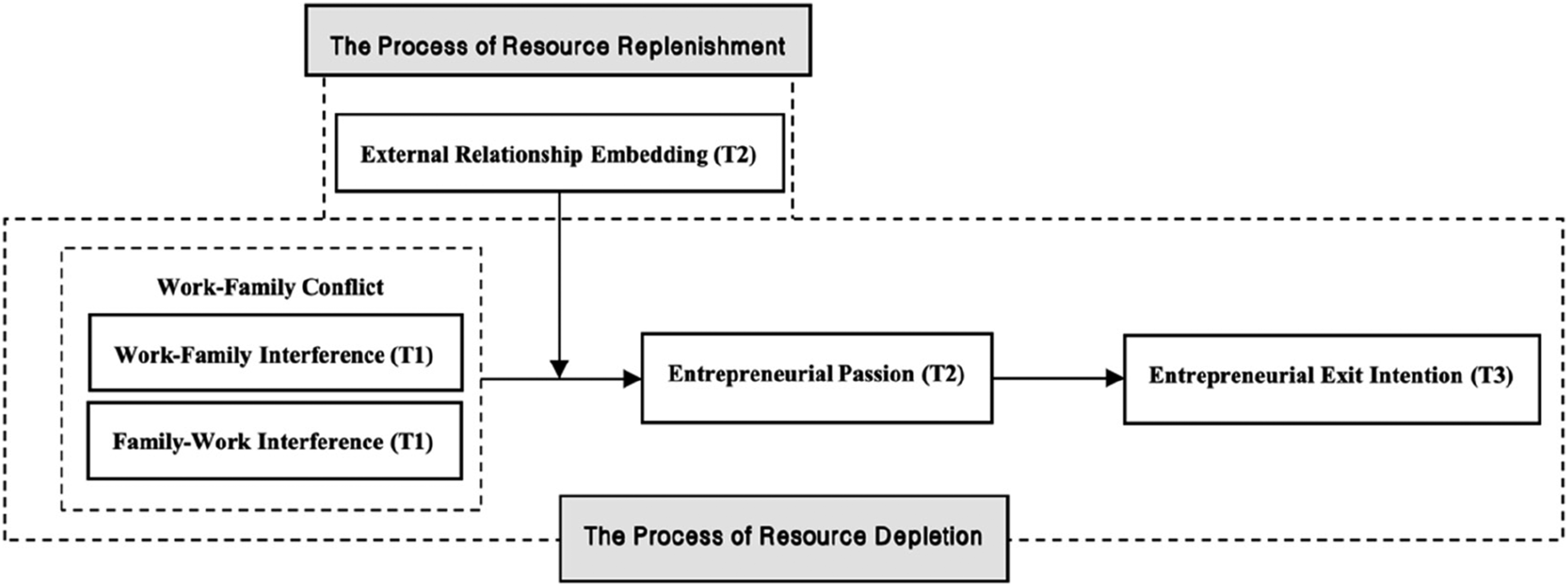
Research method
Participants and procedures
To better explain the relationships between WFC and entrepreneurs’ outcomes, we specifically chose participants from highly competitive industries, such as information technology and the AI industry. The participants in our study were 435 full-time newborn entrepreneurs, and most of them had just set up their enterprises within 5 years. Our research was rooted in Shanghai and its surrounding areas, which experienced severe impacts of the pandemic in the first half of 2022. Most participants were recruited from a multitude of industrial parks and innovation incubation hubs, imbued with a fervent entrepreneurial and innovative atmosphere (Zeng, 2015).
Our work has chosen to issue the online questionnaire via the online platform “Credamo,” which is a very famous online survey platform in China. The survey timeline can be divided into 3 phases, spanning the periods preceding, during, and following the pandemic’s sway over Shanghai. The first survey started in November 2021 and was a baseline survey. During the first phase, we formally informed participants of the study’s purpose and the need for longitudinal data tracking. To facilitate the tracking of matching data, we assigned a unique code to each participant. Having secured the oral consent of participants, we initially inquired about demographic information and undertook the measurement of the WFC variable. The second phase, from February to March 2022, involved surveying the mediating variable (i.e., entrepreneurial passion) and moderating variable (i.e., external relationship embedding). Finally, the last phase, entrepreneurial exit intention, was investigated from May to June 2022. Each survey phase spanned a duration of 1 month.
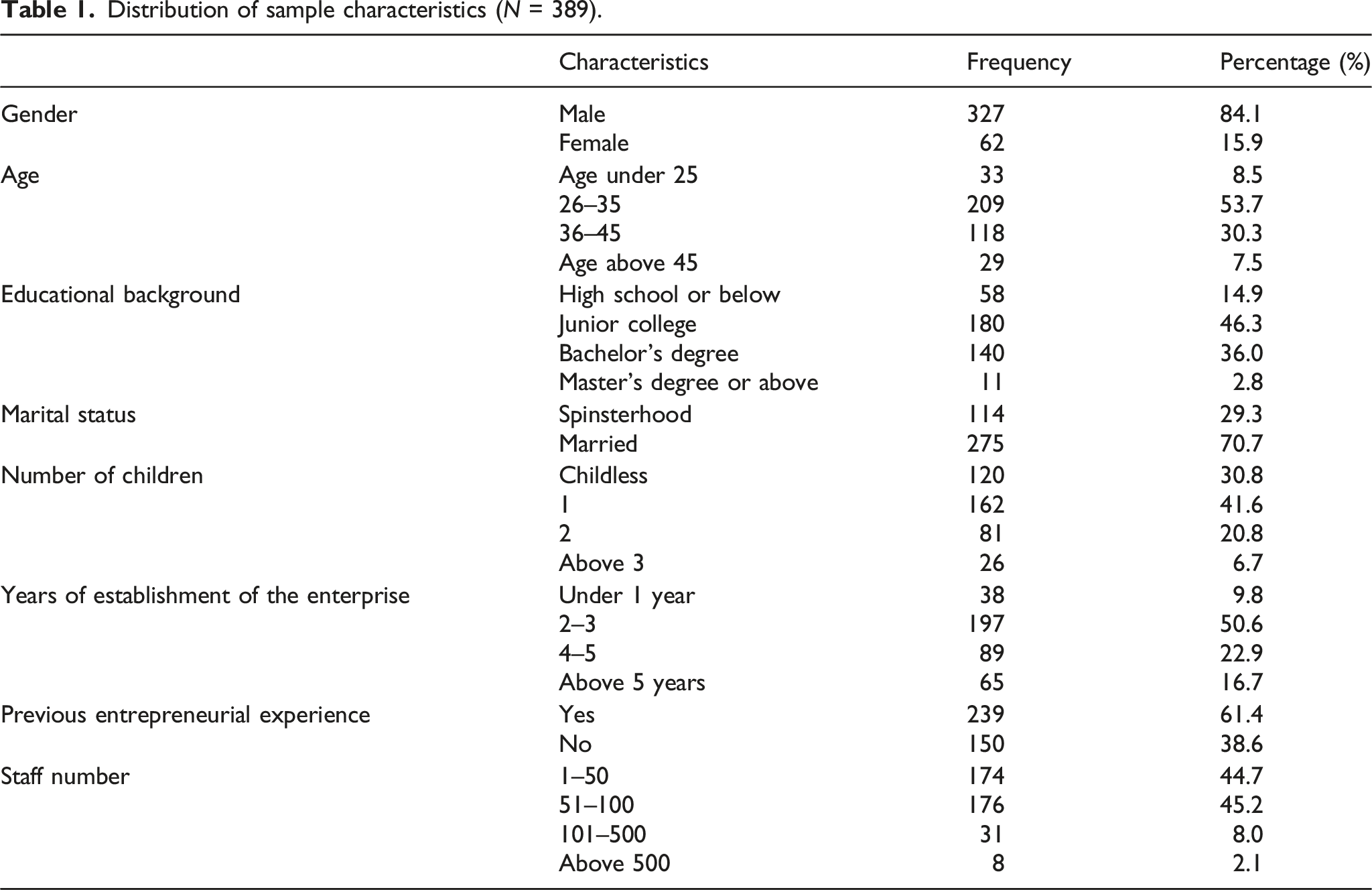
Distribution of sample characteristics (N = 389).
Measures
The measurement scale employed in our research has been carefully curated, drawing inspiration from a thorough review of top journals in the areas of entrepreneurship and organizational behavior. The measurement scale was originally developed in English. To ensure that the measures in the Chinese and English versions of the survey instruments were equivalent, all items underwent standard translation followed by the back-translation procedures (Brislin, 1980). The variables under investigation were subject to measurement using a five-point Likert scale, which featured anchors ranging from “1” denoting “completely inconsistent,” to “2” indicating “inconsistent,” “3” signifying “neutral,” “4” connoting “consistent,” and culminating with “5” representing “completely consistent.” The specific scales employed for measurement are detailed below: A. Work-Family Conflict (WFC): The construct of WFC in our study is a bidirectional variable, encompassing both Work-Family Interference (WFI) and Family-Work Interference (FWI). We use the validated scale developed by Netemeyer and colleagues (Netemeyer et al., 1996). Each aspect comprises five distinct items. A typical item appraising WFI reads as follows: “The demands of my work interfere with my home and family life.” The reliability of this scale is 0.743. A representative item probing FWI is: “My home life interferes with my responsibilities at work such as getting to work on time, accomplishing daily tasks, and working overtime,” with the scale demonstrating a high level of reliability of 0.775. B. Entrepreneurial passion: We use the entrepreneurial passion scale introduced by Cardon and colleagues (Cardon et al., 2013), comprising a comprehensive suite of 13 items. A typical item, symbolic of this construct, asserts: “It is exciting to figure out new ways to solve unmet market needs that can be commercialized.” The scale manifests robust internal reliability of 0.899. C. External relationship embedding: We use the external relationship embedding scale developed by Rindfleisch and Moorman (2001), which comprises a concise four-item inventory. A representative item is: “We feel indebted to our collaborators for what they have done for us.” The scale’s reliability is 0.707. D. Entrepreneurial exit intention: We use the established entrepreneurial exit intention scale promulgated by Hsu and Keaveney (Hsu et al., 2016; Keaveney and Nelson, 1993). This scale features a concise set of 3 items. A typical item representative of this construct posits: “I am thinking seriously of looking for another job.” The scale’s reliability is 0.912. E. Control variables: Understanding the critical influence of individual attributes and industrial characteristics on nascent ventures’ development (DeTienne and Cardon, 2012), our study includes a series of control variables. These include gender, age, educational background, marital status, number of children, entrepreneurial experience, year of enterprise founding, and workforce size. These variables serve as pivotal factors in the comprehensive analysis of the research framework.
Findings
Confirmatory factor analysis
Full model confirmatory factor analysis (CFA).
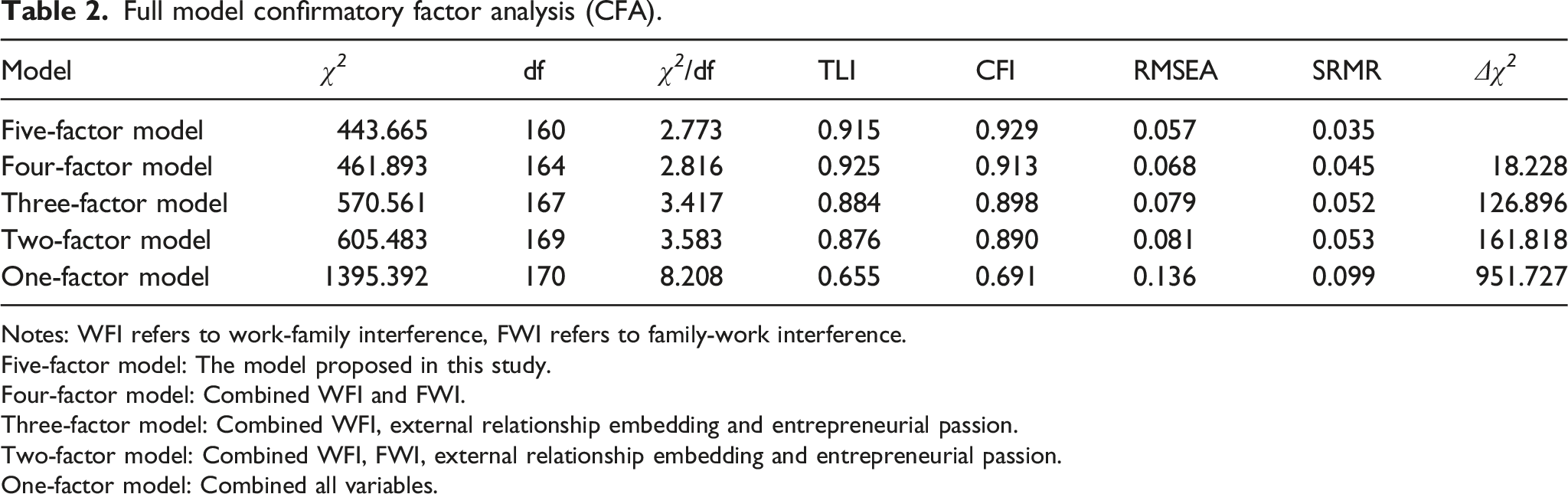
Notes: WFI refers to work-family interference, FWI refers to family-work interference.
Five-factor model: The model proposed in this study.
Four-factor model: Combined WFI and FWI.
Three-factor model: Combined WFI, external relationship embedding and entrepreneurial passion.
Two-factor model: Combined WFI, FWI, external relationship embedding and entrepreneurial passion.
One-factor model: Combined all variables.
Common method bias test
Unrotated factor analysis.

Non-measurable latent method factor analysis.

Notes: Five-factor model: The model proposed in this study.
Six-factor model: Conceptual model plus a CMV (Common Method Factor).
Descriptive statistics
Descriptive statistics and correlation analysis of variables.
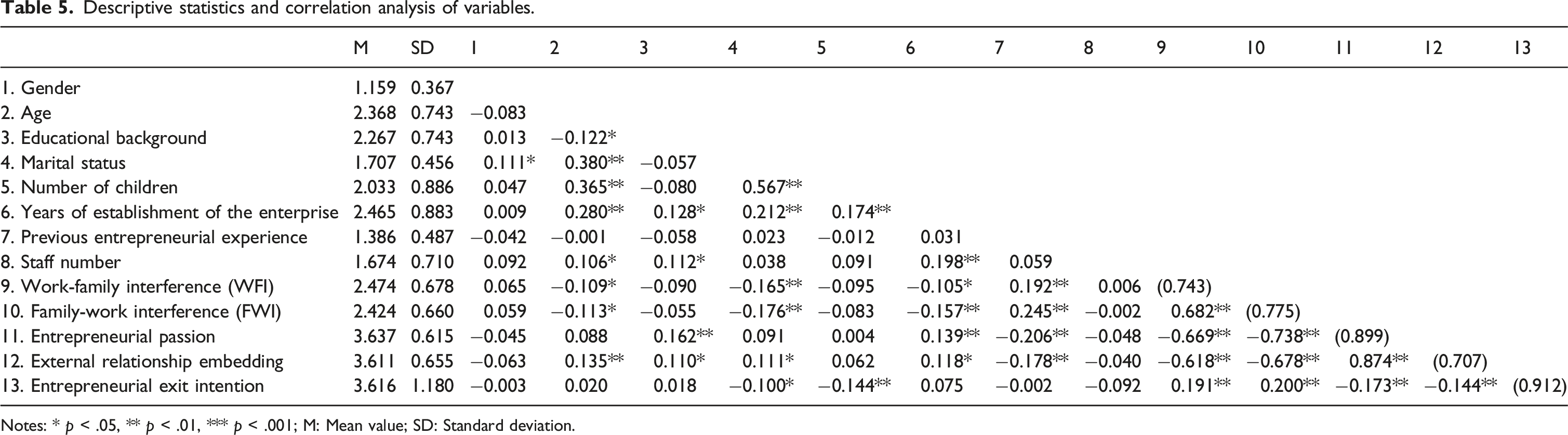
Notes: * p < .05, ** p < .01, *** p < .001; M: Mean value; SD: Standard deviation.
Hypotheses testing
WFC and entrepreneurial exit intention
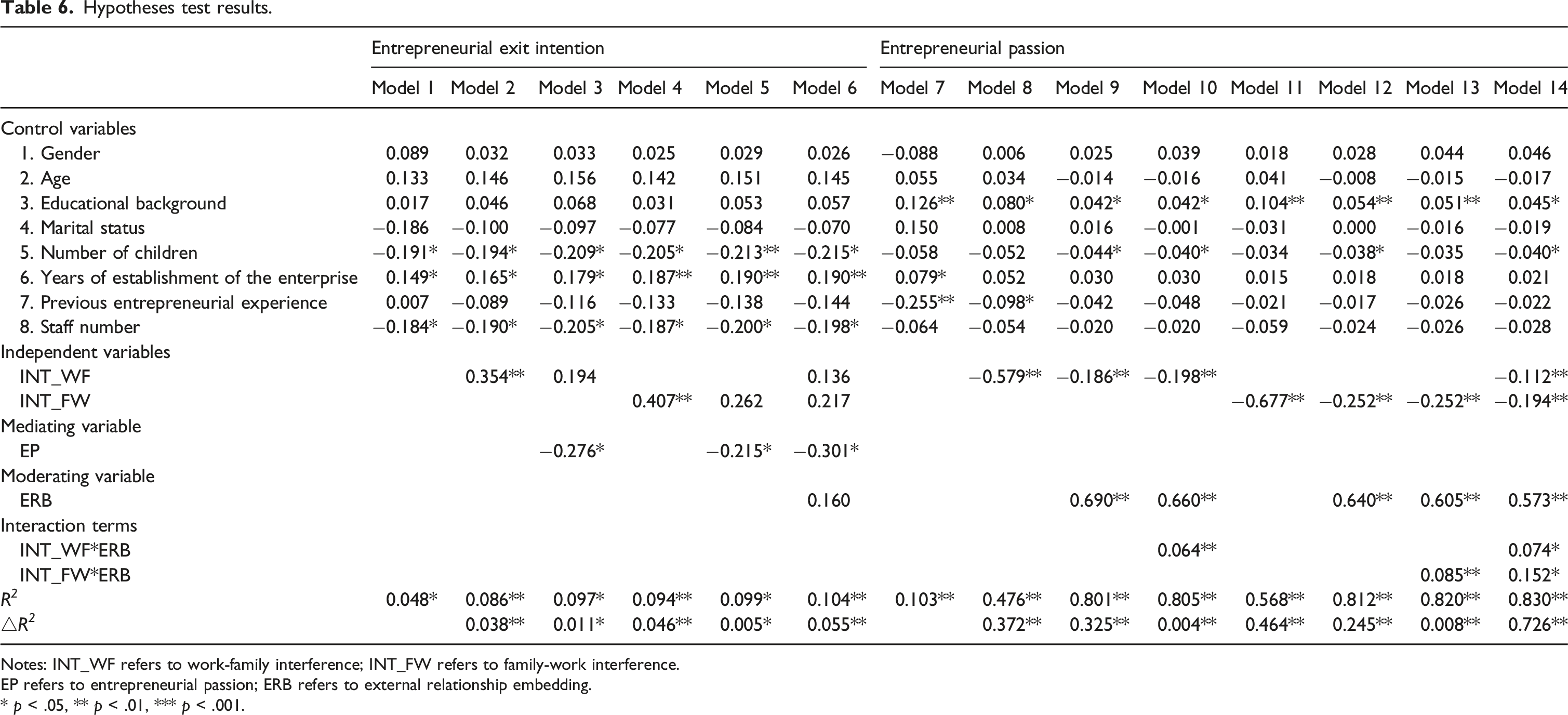
Hypotheses test results.
Notes: INT_WF refers to work-family interference; INT_FW refers to family-work interference.
EP refers to entrepreneurial passion; ERB refers to external relationship embedding.
* p < .05, ** p < .01, *** p < .001.
The mediating role of entrepreneurial passion
Insightful findings arise from Model 8 and Model 11 in Table 6. Despite incorporating control variables, a significant negative correlation between WFI/FWI and entrepreneurial passion persists (β = −0.579, p < .01 for Model 8; β = −0.677, p < .01 for Model 11). The inclusion of these controls is notably associated with an increase in the explanatory power of WFI/FWI in predicting entrepreneurial passion (∆R 2 increased by 37.2% and 46.4%, respectively). Both models exhibit high statistical significance (p < .01), confirming significant correlativity. Thus, our results strongly suggest a significant negative relationship between WFC (e.g., WFI vs. FWI) and entrepreneurial passion.
Examining Model 6 in Table 6 reveals a significant shift: the introduction of entrepreneurial passion as a mediator diminishes the earlier significant associations between WFI, FWI and entrepreneurial exit intention (β = 0.136, n. s, and β = 0.217, n. s). Additionally, entrepreneurial passion emerges as a key factor, having a significant negative relationship with entrepreneurial exit intention (β = −0.301, p < .05). These results strongly suggest that entrepreneurial passion mediates the relationship between WFI/FWI and exit intention (Hayes, 2013), providing empirical support for H2(a) and H2(b).
The moderating role of external relationship embedding
After controlling for relevant variables in Model 1 of Table 6, we sequentially introduced WFI in Model 2 and external relationship embedding in Model 9. Model 10 further examined the interaction between these two variables. The result of above analysis is presented in Model 14, which reveals a significant positive correlation between the interaction term and entrepreneurial passion (β = 0.074, p < .05). This finding confirms the moderating role of external relationship embedding in the relationship between WFI and entrepreneurial passion, providing a strong support for H3(a).
To delve deeper into H3(a) and enhance visual clarity, we categorized the strength of external relationship embedding into low and high levels, aligned with its mean (± one standard deviation) (Hayes, 2013). Based on this classification, we carefully calculated slope estimates using the coefficients from our predictive model. Our findings indicate a slope of −0.240 (t = −7.268, p < .001) for low external relationship embedding. In contrast, for high embedding, the slope is −0.155 (t = −5.369, p < .001). These results, summarized in Figure 2, highlight the moderating role of external relationship embedding between WFI and entrepreneurial passion. The moderating effect of external relationship embedding on the relationship between WFI and entrepreneurial passion. Notes: INT_WF refers to work-family interference; ERB refers to external relationship embedding.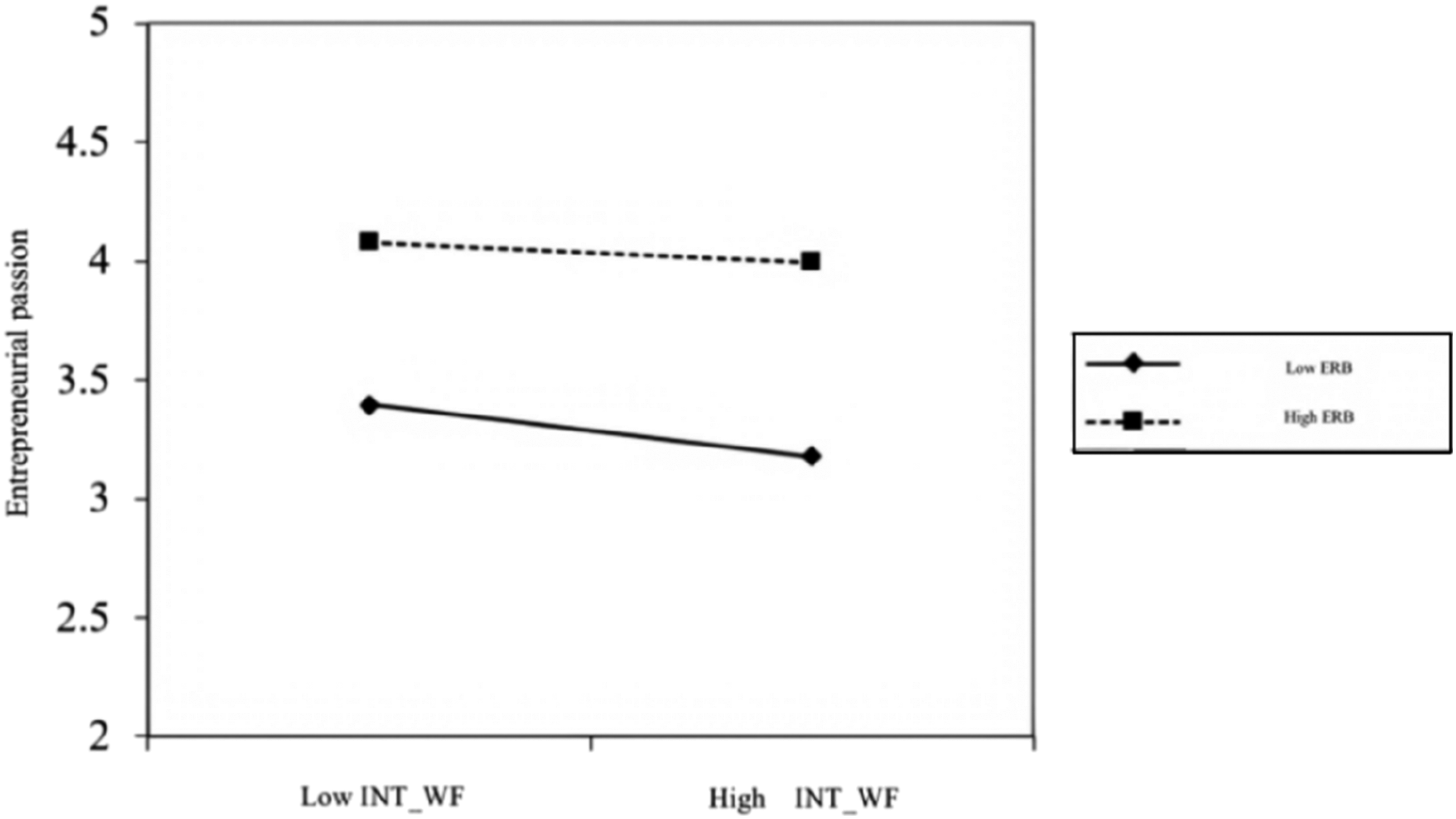
In Table 6, Model 1 lays the foundation for analysis after controlling for extraneous variables. Model 4 introduces the variable for FWI, and the analysis gradually deepens with the inclusion of external relationship embedding in Model 12. Model 13 further enhances the analytical framework by introducing the interaction term between external relationship embedding and FWI. The comprehensive Model 14, a regression model encompassing all variables and interaction terms, provides the culminating analytical exposition. Notably, in Model 14, the interaction term between FWI and external relationship embedding demonstrates a statistically significant, positive relationship with entrepreneurial passion (β = 0.152, p < .05). This empirical evidence supports that external relationship embedding effectively moderates the relationship between FWI and entrepreneurial passion, thereby validating H3(b) within the study context.
Moreover, the empirical testing of H3(b) involved a rigorous, visually engaging analysis that segmented the sample into two distinct groups: those with low and those with high levels of external relationship embedding, based on standard deviation. This stratification was followed by the calculation of simple slopes. In the context of low external relationship embedding, the simple slope is notably negative (−0.308) and exhibits strong statistical significance (t = −9.658, p < .001). In settings characterized by high external relationship embedding, the simple slope, while still negative (−0.196), is less steep and again highly significant (t = −6.158, p < .001). Figure 3 aptly illustrates this interaction, highlighting the moderating role of external relationship embedding in the relationship between FWI and entrepreneurial passion. The moderating effect of external relationship embedding on the relationship between FWI and entrepreneurial passion. Notes: INT_FW refers to family-work interference; ERB refers to external relationship embedding.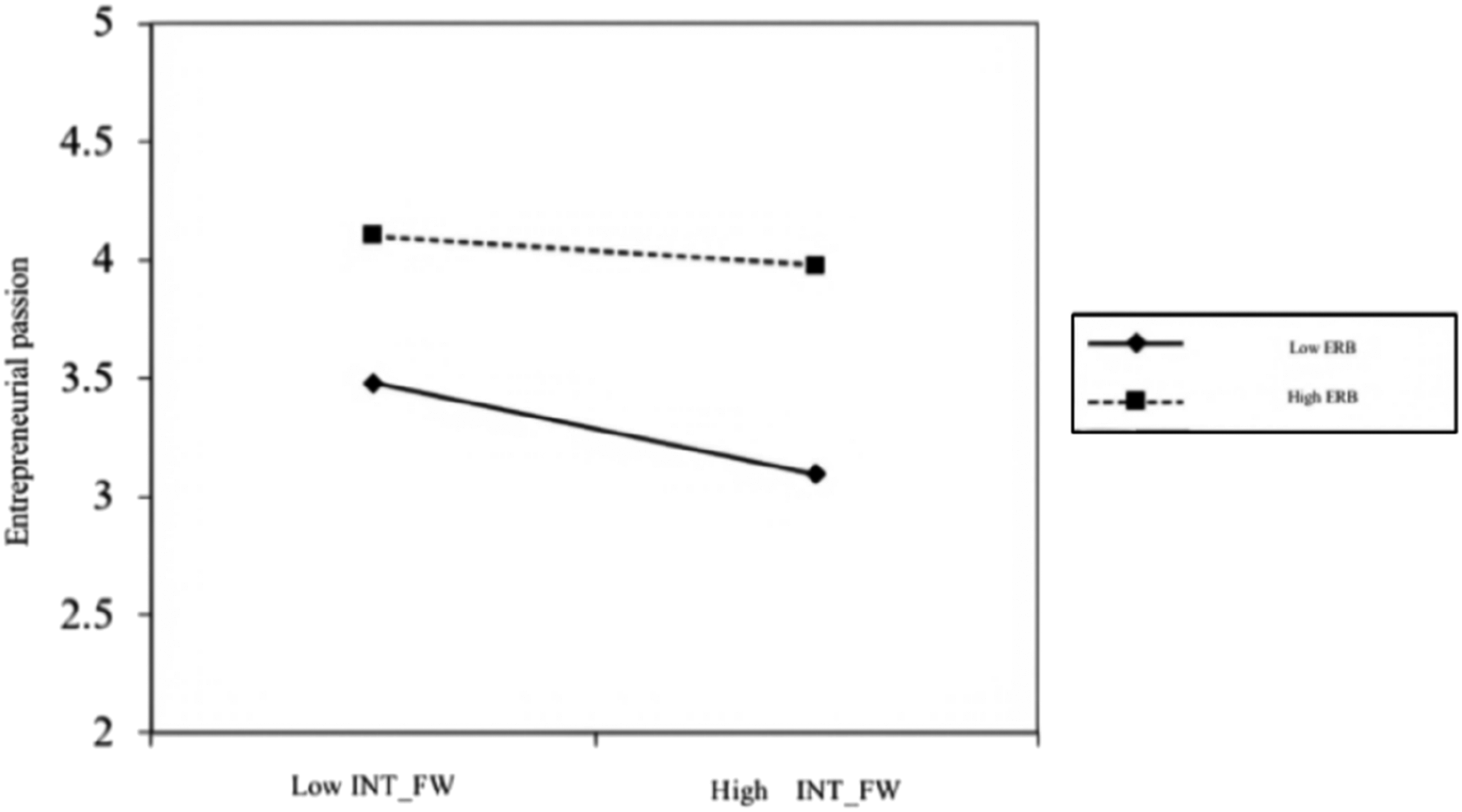
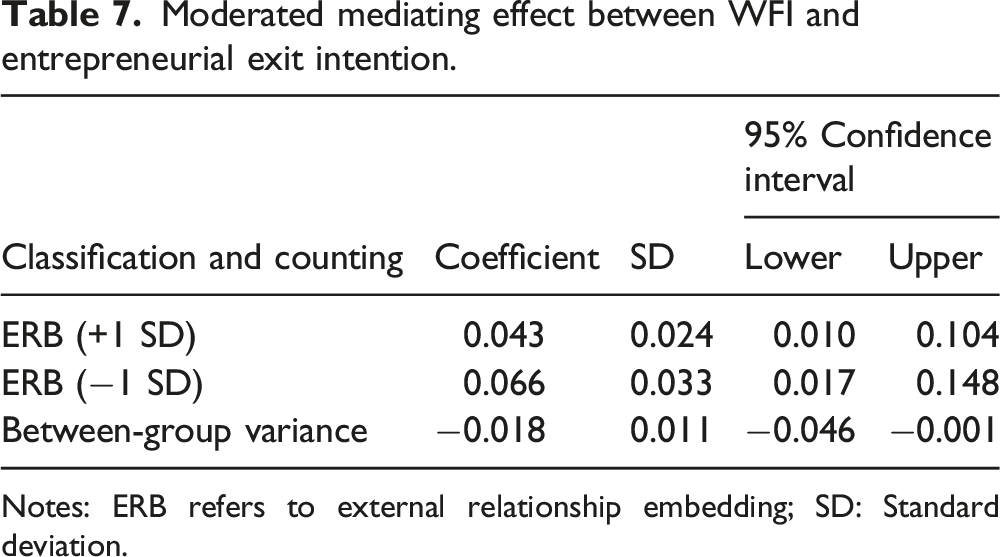
Moderated mediating effect between WFI and entrepreneurial exit intention.
Notes: ERB refers to external relationship embedding; SD: Standard deviation.
Moderated mediating effect between FWI and entrepreneurial exit intention.
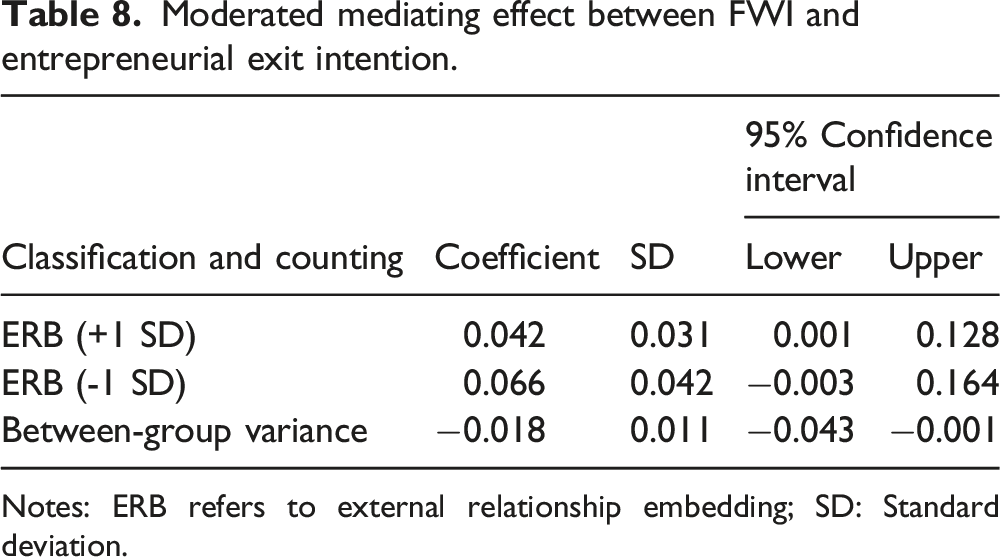
Notes: ERB refers to external relationship embedding; SD: Standard deviation.
Table 7 reveals that, at a low level of external relationship embedding (one standard deviation below the mean), the link between WFI and entrepreneurial exit intention, mediated by entrepreneurial passion, is significantly positive (γ = 0.066, 95% CI [0.017, 0.148], excluding 0). Similarly, at a high level of embedding (one standard deviation above the mean), the relationship remains significantly positive (γ = 0.043, 95% CI [0.010, 0.104], excluding 0). Notably, the difference between two groups is also statistically significant, with a 95% unbiased CI of [−0.046, −0.001] not including 0. This supports H4(a).
Table 8 reveals that, at lower levels of external relationship embedding (one standard deviation below the mean), the indirect relationship between FWI and entrepreneurial exit intention via entrepreneurial passion is insignificantly positive (γ = 0.066, 95% CI [-0.003, 0.164], including 0). However, at higher levels of embedding (one standard deviation above the mean), this indirect relationship becomes significantly positive (γ = 0.042, 95% CI [0.001, 0.128], excluding 0). Moreover, the difference between two groups is statistically significant, with a 95% unbiased CI of [−0.043, −0.001] excluding 0. These findings strongly support H4(b).
Discussion
Drawing upon the COR theory, our research developed a theoretical model to examine the relationship between WFC (i.e., WFI vs. FWI) and entrepreneurial exit intention via entrepreneurial passion. Using self-reports from 389 entrepreneurs in Shanghai, our research found that: a. WFC is positively correlated with entrepreneurial exit intention. b. Entrepreneurial passion mediates the relationship between WFC and entrepreneurial exit intention. c. External relationship embedding alleviates the negative relationship between WFC and entrepreneurial passion. d. External relationship embedding moderates the mediating role of entrepreneurial passion between WFC and entrepreneurial exit intention, such that the indirect relationship is weaker when the level of external relationship embedding is higher.
Theoretical implications
The current study provides several theoretical contributions. Our study initially examined the complex WFC (i.e., WFI vs. FWI) encountered by entrepreneurs, particularly amidst the pandemic, and their increased intention to exit the entrepreneurial realm. Specifically, we found a significant positive correlation between WFC and entrepreneurs’ exit intention. This aligns with previous research that has identified WFC as a significant predictor of negative outcomes in the entrepreneurial context (Yu et al., 2020). However, our work has enhanced the understanding of WFC among entrepreneurs in the pandemic context, a special group that has received limited attention compared to conventional employees (Ferguson and Durup, 1998; Jennings and McDougald, 2007). By specifically targeting entrepreneurs, this research empirically linked WFC to a decrease in entrepreneurial passion and an increased intention to exit, thereby enriching the current discourse on WFC in the entrepreneurial context.
Drawing from the COR theory, our study enhanced understanding of the relationship between WFC and entrepreneurial exit intention through the lens of resource loss. While prior research often relied on role conflict or boundary theory (Frone et al., 1997; Higgins et al., 1992) to explain the outcomes of WFC, ignoring the critical perspective of resource gains and losses (Hobfoll, 1989). Our study extended this line of inquiry by introducing entrepreneurial passion as a mediating emotional factor to demonstrate the process of resource loss among entrepreneurs. We demonstrated that WFC had a negative relationship with entrepreneurial passion, thereby accelerating the loss of key emotional resources among entrepreneurs, which in turn was associated with their exit intention. This new perspective sheds new light on the mechanisms through which WFC shapes entrepreneurs’ decisions to persist or withdraw from their ventures (Kawai et al., 2023).
Our study broadened the scope of entrepreneurial research by incorporating external relationship embedding as a key channel for obtaining contextual resources to replenish the loss of resources caused by WFC. While previous research has primarily focused on individual inner resources, such as coping strategies (Gaio Santos and Cabral-Cardoso, 2008) when facing WFC, it has neglected other ways for individuals to address WFC by utilizing external resources. Our work uniquely highlighted the ability of entrepreneurs to access external macro-environmental resources (Hobfoll et al., 2018) in alleviating the negative resource loss stemming from WFC. Specifically, we found that external relationship embedding mitigates the negative relationship between WFC and entrepreneurial passion. More importantly, it also buffers the indirect relationship between WFC and exit intention through entrepreneurial passion. Our study suggested that external relationship embedding could serve as a resource-protective factor (Rindfleisch and Moorman, 2001), helping entrepreneurs maintain their passion and commitment to their ventures despite experiencing WFC. This finding offered a nuanced understanding of how entrepreneurs’ social networks can serve as a critical provider of external resources, aiding them in navigating the challenges posed by WFC and maintaining their passion for their ventures.
Practical implications
Our study has several important theoretical implications. Firstly, our research identifies a positive correlation between WFC and entrepreneurs’ exit intention during the COVID-19 pandemic, which underscores the need for entrepreneurs to prioritize work-life balance (Felstead et al., 2002). Some useful strategies could include implementing flexible work schedules (Smite et al., 2023), providing family-friendly workplace policies (Fan et al., 2023), and offering counseling services (Astuti, 2021) to help entrepreneurs manage their work and family responsibilities more effectively. By reducing WFC, entrepreneurs may be less likely to consider withdrawing from their ventures.
Secondly, the mediating role of entrepreneurial passion in the relationship between WFC and entrepreneurial exit intention highlights the importance of fostering and maintaining passion among entrepreneurs. Our research suggests that entrepreneurial passion is a critical emotional resource for entrepreneurs to overcome the difficulties caused by WFC during a pandemic, and several measures can help entrepreneurs to keep their entrepreneurial passion. Organizations could provide entrepreneurs with opportunities for professional development and growth (Bergdahl, 2022), create a supportive entrepreneurial ecosystem (Rashid and Ratten, 2021), and offer mentorship programs (Berenblum et al., 2022) that help entrepreneurs navigate the challenges of running a business. Additionally, entrepreneurs themselves could engage in activities that rekindle their passion for their ventures, such as maintaining a work-life balance (Felstead et al., 2002), networking with other entrepreneurs (Emami et al., 2023), or seeking new business opportunities during the pandemic (Guckenbiehl and Corral de Zubielqui, 2022).
Thirdly, our finding that external relationship embedding mitigates the negative relationship between WFC, entrepreneurial passion, and exit intention indicates that entrepreneurs should prioritize building and maintaining strong external networks (Emami et al., 2023). Our work finds that external relationship embedding is also a viable way for entrepreneurs to obtain critical resources during the pandemic. Practical steps could include, for example, actively seeking out mentors and peers in the entrepreneurial community (Emami et al., 2023), participating in industry associations and networking events (Kalaycı et al., 2023), and leveraging technology to expand their professional networks online (Heidemann et al., 2012). By fostering a strong external network and relationship embedding, entrepreneurs can access valuable resources, advice, and supports (Ali, 2018) that may help them overcome WFC and maintain their passion for their ventures.
Limitations and future directions
While this study provides valuable insights, it has notable limitations that future research should address. Firstly, the issue of sample representativeness and generalizability arises. Despite using random sampling, our study’s questionnaire distribution channels were limited, resulting in a small sample size. This led to an uneven distribution of samples across age and gender, with women comprising less than 20% of the sample. Given that Chinese women often bear heavier family responsibilities, their underrepresentation may neglect crucial role conflict issues (Kawai et al., 2023). Future studies could aim for more diverse and inclusive data collection methods to strengthen the study’s findings and overcome these limitations.
Secondly, although our study gathered cross-sectional data to reduce common method bias, it remained limited in establishing causal relationships between explanatory variables. Future research may consider longitudinal designs, such as the Experience Sampling Method (ESM), incorporating multi-period and multi-subject data collection techniques, to enhance the study’s causal inference credibility.
Thirdly, future research could explore the moderating role of internal relationship embedding, such as intergroup relationship embedding (Alderfer and Smith, 1982). While our study emphasized the external aspects of relationship embedding in mitigating WFC and pandemic effects, it is important to recognize its dual nature. Robust internal relationships (e.g., social supports from colleagues and supervisors) within entrepreneurial firms foster trust and cohesion (House et al., 1988), facilitating the sharing of vital resources. Investigating potential boundary effects of internal embedding, together with its interplay with external factors, can enhance our understanding of relationship embedding’s multifaceted nature in entrepreneurship.
Finally, the integration of WFC and entrepreneurship, grounded in the COR theory, marked significant progress in our study. This integration confirmed the relationship between WFC, entrepreneurial passion and exit intention. Nevertheless, entrepreneurship is a complex, multistage process (Rotefoss and Kolvereid, 2005) where entrepreneurs play a pivotal role. Given this, WFC likely influences other stages of entrepreneurship as well. Future research could explore these potential effects, enriching the model’s theoretical foundation and practical relevance. This broadened scope would enhance the model’s value for both scholars and practitioners, offering a deeper understanding of how WFC shapes the entrepreneurial journey.
Footnotes
Author contributions
All authors contributed to the study conception and design. Material preparation, data collection and analysis were performed by Jiabao Wang and Yi Zhao. The first draft of the manuscript was written by Yi Zhao and all authors commented on previous versions of the manuscript. All authors read and approved the final manuscript.
Author’s note
The authors’ research interests include organizational behavior and management psychology.
Declaration of conflicting interests
The authors declared no potential conflicts of interest with respect to the research, authorship, and/or publication of this article.
Funding
The authors disclosed receipt of the following financial support for the research, authorship, and/or publication of this article: This research project was supported by a National Natural Science Foundation of China (NSFC) Project “The Formation Mechanism of Social Entrepreneurship Legitimacy and Its Impact on Social Entrepreneurship Performance: The Perspective of Language Expectation Theory” (No. 71702095).
