




Abstract
This study investigated the relationship between school climate, stress, teacher self-efficacy, and their effects on teachers’ job satisfaction. Data were collected from 403 teachers in seven high schools in Ho Chi Minh City, Vietnam. Results show that the linkage between school climate and teachers’ job satisfaction was mediated by self-efficacy and stress. Teacher satisfaction was affected by pay, three school climate factors, and teachers’ self-efficacy. Teacher stress, affiliation, and innovation affected their self-efficacy. Work pressure causes teacher stress, while positive affiliation could mitigate teacher stress. Implications were grasped for improving teachers’ income, self-efficacy, and the Vietnamese school climate.
Keywords
Introduction
Teachers’ job satisfaction has been defined as general job satisfaction. Teachers’ job satisfaction is their feelings toward the teaching profession. It is a combination of teachers’ perceptions of the relationship between what teachers expect in teaching and what they receive when they teach (Zembylas and Papanastasiou, 2004). Teachers’ job satisfaction is also reflected in their work’s positive or negative evaluation (Skaalvik and Skaalvik, 2010). Teachers’ job satisfaction has been found to link positively to student performance. Therefore, many studies have investigated factors contributing to enhancing teachers’ satisfaction. School climate or environment is one of the factors impacting teachers’ job satisfaction. Research has also demonstrated that other factors can moderate or mediate the relationship between these two constructs. Some of them are income, stress, and self-efficacy.
During the last 10 years, the literature on teachers’ job satisfaction shows that income, stress, and self-efficacy have impacted teachers’ job satisfaction. Stress mediates work pressure on job satisfaction. Stress and self-efficacy mediate the relationship between school environment and teacher job satisfaction (Burušić, 2019; Demir, 2020; Ghavifekr and Pillai, 2016; Kasalak and Dagyar, 2020).
The direct and indirect relationship between school climate and teachers’ job satisfaction has also been a focus of various studies across different cultures. In different cultural contexts, significant differences were found (Klassen et al., 2010). In Vietnam, limited studies, however, have been published to examine the linkages between school climate and teachers’ job satisfaction and the mediating role of stress and self-efficacy.
The culture and leadership in the Vietnamese education sector possess unique characteristics. Vietnam places a strong emphasis on normative cultural values and prioritizes the collective well-being of the group, family, and community over individualism and self-interest (Nguyen and Clark, 2014; Truong and Nguyen, 2002). The institutional context of education in Vietnam has been influenced by the education system of the Soviet Union, which was established in the post-World War II period. This system is highly hierarchical, with public school leaders serving as state civil servants who represent both the government and the school (Hallinger et al., 2017). Due to Vietnam’s communist culture, decision-making styles among Vietnamese school principals are heavily influenced by power distance and collectivism (Truong et al., 2017). A study conducted by Truong et al. (1998) revealed that Vietnamese managers value leadership styles that exert greater control over subordinates and place less emphasis on collaborative leadership. Given these cultural and leadership aspects in the Vietnamese education sector, this study aims to investigate the relationship between school climate and teachers’ job satisfaction within the context of Vietnam.
Study objectives and research questions
This study’s objectives are threefold. First, it examined school climate as a determinant of job satisfaction of high school teachers in Ho Chi Minh City, one of the busiest cities in the country in terms of population size and economic development. Second, the mediating role of stress and self-efficacy in the relationship between school climate and teachers’ job satisfaction was analyzed. Finally, implications were discussed to improve teachers’ self-efficacy and job satisfaction while mitigating their stress. Based on these objectives, this study was conducted to collect data for the following research questions (RQs): RQ1: How does school climate affect teachers’ job satisfaction? RQ2: Do stress and self-efficacy mediate the relationship between school climate and teacher’s job satisfaction?
Conceptual framework
This section discusses the underpinning theory, ecological system one to evaluate the relationship between school climate, teachers’ satisfaction, self-efficacy, and stress, followed by the theoretical hypotheses of the study.
Ecological system theory
Ecological system theory examines the interconnections between a person and their surrounding environment (Bronfenbrenner and Morris, 2007). With five environmental systems: microsystem, mesosystem, exosystem, macrosystem, and chronosystem, the theory explains how school climate, teacher self-efficacy, teacher stress, and job satisfaction are interrelated (Bronfenbrenner, 1979). Grounded in Bronfenbrenner’s ecological system, this study aims to explore how different factors in these interrelated systems interact to affect teacher satisfaction.
The microsystem represents immediate interactions and constructs encountered by individuals (Bronfenbrenner, 1979). In this study, the microsystem explores how teacher self-efficacy and teacher stress directly affect teacher satisfaction. The mesosystem investigates the connections between microsystem factors, such as the relationship between teacher self-efficacy/teacher stress and perceived school climate. The ecological system by Bronfenbrenner allows research on the interaction between individual and environmental factors, such as self-efficacy/stress and school climate, to gain insights into the interplay across different layers of an ecological system, directly influencing teacher satisfaction.
School climate
School climate/school environment is a concept that has been recognized by educational researchers for more than 100 years. However, school climate has been studied systematically since the 1950s. Early studies often focused on observable variables (e.g., facilities) and were driven by research on school organization and performance. In recent decades, educators and researchers have realized that school climate is much more complex (Cohen et al., 2009; Wang and Degol, 2016).
School climate refers to the various elements that shape the overall environment and atmosphere within a school setting, including its physical layout and administrative framework (National School Climate Center, 2007; Nguyen et al., 2022). It encompasses the social and academic interactions among students, educators, parents, and the broader community, all of which are guided by shared standards, values, and expectations. The National School Climate Council emphasizes the importance of fostering a positive and enduring school climate, as it contributes to the development of students' character, abilities, and understanding, ultimately equipping them to become independent, committed, capable, and accountable members of society.
Teachers’ job satisfaction
Job satisfaction is an individual’s feelings toward a job, resulting from an evaluation of the characteristics of the job. Should one be highly satisfied with their work, they will have positive emotions. On the contrary, they will have negative emotions (Zembylas and Papanastasiou, 2004). In schools, job satisfaction is the teacher’s feelings toward a teaching career; it is the sum of teachers’ perceptions of the relationship between what teachers want in teaching and what they receive when they teach (Zembylas and Papanastasiou, 2004). Teachers’ job satisfaction is also reflected in their positive or negative evaluations of their teaching work (Skaalvik and Skaalvik, 2009).
Most of the teacher satisfaction scales focus on factors that create satisfaction. Thus, in addition (1) pay, (2) characteristics of teaching work itself, and (3) external environmental factors such as relationships with students, colleagues, principals, and facilities-support resources are reported to have an impact on teachers’ job satisfaction (Luo and Li, 2024; Maheshwari, 2022; Yao and Ma, 2024). At the school level, these factors are collectively known as the school climate/school environment. These results are consistent with many theoretical and practical studies on general job satisfaction. These shape the formulation of the following two hypotheses in this study: (H1) There is a direct positive impact of a positive school climate on teachers’ job satisfaction, and (H2) there is a direct negative impact of low pay on teachers’ job satisfaction.
Teacher self-efficacy
Teacher self-efficacy (SE) is their belief in successfully and effectively carrying out teaching and educational activities. Based on Bandura’s point of view, there are various definitions of teacher self-efficacy. Armor et al. (1976); Bandura, (1977) define teacher self-efficacy as a belief in teachers’ ability to deliver desired outcomes for students and learning, even for complex or unmotivated students. Moè et al. (2010) suggests that teacher self-efficacy is teachers’ confidence in a particular situation about their ability to support students in the learning process and their influence on students’ achievement and motivation. Skaalvik and Skaalvik (2010) define teacher self-efficacy as teachers’ ability to plan, organize, and complete required tasks to achieve educational goals. According to Steele (2010), teacher self-efficacy is the set of beliefs teachers have about their abilities and competencies in teaching that affect students’ achievement and behavior despite external influences and obstacles.
As summarized by Gibbs (2003), teachers with solid self-efficacy tend to be more satisfied at work, show a more substantial commitment, and have fewer absences; they are also resilient in failure situations, take more risks in their curriculum, consistently use new teaching approaches, create more student achievement, and have more students motivated to learn. Results from previous studies reviewed by Gkolia et al. (2014) also showed that with self-efficacy teachers are enthusiastic about teaching, which helps them to spread confidence to students and reflects in students’ ideas and awareness of the value of entrepreneurship. In addition, the transformational leadership of the principal, who provides motivation, vision, and opportunities for teachers through feedback and encouragement, has a positive impact on teachers’ self-evaluation effectiveness. Both confidence in teachers’ abilities and the principal’s leadership are factors that positively affect teacher job satisfaction. Teacher self-efficacy comes from the teacher’s own practical experience and can be derived from (1) the management influence, the principal’s encouragement, (2) self-comparison with peers or recognition and peer review, and (3) psychophysiological stimuli such as stress and fatigue.
Teacher self-efficacy as a mediator
Teacher self-efficacy has a substantial impact on an individual’s cognitive processes and performance, including decision making, academic achievement, and behavioral motivation (Bandura, 2013; Cheung and Sun, 1999). Previous studies have shown that teachers with low SE experience greater difficulties in teaching, higher levels of job-related stress (Betoret, 2009), and lower levels of job satisfaction (Klassen et al., 2010). In contrast, teachers with higher self-efficacy in classroom management or instructional strategies have greater job satisfaction (Klassen and Chiu, 2010). These shape the formulation of a hypothesis in this study: (H3) There is a positive impact of a positive school climate on teacher self-efficacy.
Self-efficacy helps teachers to be dynamic, creative, innovative, and persistent in teaching. This leads to good, positive results in students’ academic and training achievements in general and confidence in students’ abilities. Teacher self-efficacy also shows a strong commitment to the teaching profession and a positive relationship with job satisfaction (Gibbs, 2003; Gkolia et al., 2014; Tschannen-Moran and Hoy, 2001). These shape the formulation of a hypothesis in this study: (H4) There is a positive impact of teacher self-efficacy on teachers’ job satisfaction. Combining H3 and H4, it is hypothesized that the school climate and teachers’ job satisfaction linkage is mediated by teacher self-efficacy.
Teacher stress
Job stress is the specific relationship between an individual and their work climate (Lazarus and Folkman, 1984). Job stress is a psychological state that occurs if an incompatibility exists between a requirement and a person’s belief in one’s ability to fulfill that requirement (Cox and Griffiths, 2010).
There are various definitions of job stress for teachers. Kyriacou (2001) argues that it is an unpleasant, negative emotion such as anxiety, depression, stress, anger, or frustration that teachers receive from some aspect of their teaching work. Lambert et al. (2009) define it as the result of unmet expectations and needs, leading to depression, loss of motivation, and negative thinking. Kokkinos (2007) considers it to be a form of occupational stress in which work-related factors destroy or enhance physiological and psychological states, hindering the normal function of the body. These definitions always include stressors and the stress caused by the agent.
Teacher stress is influenced by various factors within the school environment. These stressors include teaching unmotivated students, maintaining discipline, managing heavy workloads and time constraints, facing judgment from others, dealing with colleagues, navigating issues of self-esteem and status, managing administrative tasks, handling ambiguity and role conflicts, and coping with poor working conditions (Kyriacou, 2001). These factors are all part of the broader concept of school climate.
Previous studies, as reviewed by Stephenson (2012), conducted in many countries have identified several stressors that can impact teachers. These include individual factors such as demographic variables; work-related factors like workload, ambiguous roles, and time constraints; environmental factors such as disruptive student behavior, lack of resources, poor working conditions, challenges in collaboration with colleagues, responsiveness of the curriculum, and management issues; income-related factors such as low salary; and other factors like depression, increasing internal and external pressures, and job dissatisfaction. Recent research by (Collie and Mansfield, 2022) has also highlighted the role of teacher profiles and school climate as sources of stress for teachers. It is important to note that these stressors are not static but rather dynamic and can vary depending on the specific context. They are consistently associated with burnout, distress, depression, and short-term absences. Additionally, some potential stressors are linked to individual variables such as teachers’ expectations, beliefs, attitudes toward their teaching career, and self-efficacy.
Teacher stress not only leads to negative outcomes such as absenteeism, burnout, physical and psychological problems, and job dissatisfaction but also has a detrimental impact on teachers’ professionalism, including poor classroom management and reduced teaching effectiveness (Betoret, 2009; Stephenson, 2012). Therefore, it can be concluded that (H5) there is a negative influence of school climate, excluding work pressure, on teacher stress, and (H6) there is a negative impact of teacher stress on self-efficacy.
In addition, teacher stressors are work-related factors that destroy or enhance physiological and psychological conditions and interfere with the body’s normal functioning (Kokkinos, 2007; Kyriacou, 2001). This leads to negative experiences and psychological states about schoolwork and job dissatisfaction (Stephenson, 2012). Therefore, it can be stated that there is a negative impact of teacher stress on teachers’ job satisfaction (H7). Combining H5 and H7, it is hypothesized that the school climate and teachers’ job satisfaction linkage is mediated by teacher stress.
Based on the theoretical foundations and the above hypotheses, Figure 1 displays the theoretical framework of this study. Theoretical framework of the study.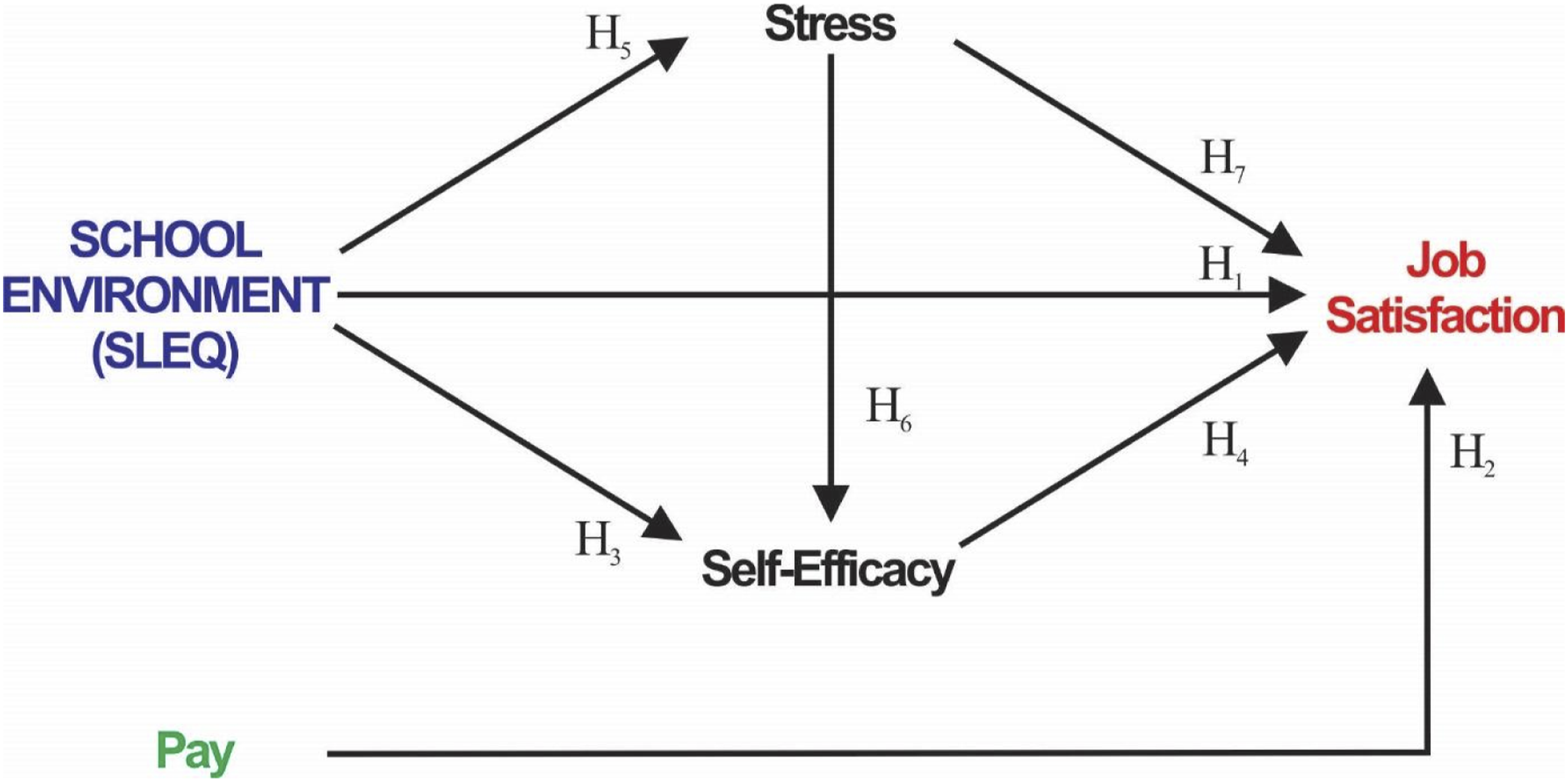
Research methods
Research design
This study applies an exploratory mixed-method design, including a qualitative phase and two quantitative ones. First, the theoretical framework (Figure 1) sets the foundation for the qualitative phase, followed by pilot quantitative research (Quan 1). Finally, the main quantitative phase is conducted (Quan 2).
Qualitative results
Principal’s leadership
After the interviews with 29 teachers on the school climate in the city where they worked, the principal’s leadership was added to the original construct of the school climate (Fisher and Fraser, 1991). The original School-Level Environment Questionnaire (SLEQ) consists of eight reflective components representing three groups: (1) relations, (2) personal development, and (3) system change and maintenance. The first group focuses on teacher–teacher and teacher–student relations (Fisher and Fraser, 1991). Several subsequent studies testing SLEQ in other contexts also confirmed this component of the scale (Aldridge et al., 2006; Johnson et al., 2007; Johnson and Stevens, 2001) and do not refer to the teacher–principal relationship. It was followed by a study by Aldridge et al. (2016), who applied SLEQ and introduced principal support into the school environment. Meanwhile, based on the theory of psychological environment in organizations, the support and encouragement of leaders are important factors in the environment (James et al., 2008). More particularly, Lasseter (2013), Gkolia et al. (2014), and Sahito and Vaisanen (2020) also confirmed a positive correlation between leadership, principal support, and teacher job satisfaction. In the context of Vietnam, education policies have also emphasized the importance of a principal (Vietnam Ministry of Education and Training, 2011a; Vietnam Ministry of Education and Training, 2018) in education-training activities as well as the overall development of a school. The qualitative results also showed that the principal played a significant role in teachers’ perceived beliefs of their working environment. Thus, the principal leadership/support was added to the school environment scale as a factor in the group of relations.
Work pressure and stress
In the pilot stage, work pressure included both workload and work pressure. This refers to workload and work pressure that require teachers to spend their energy and time dealing with stress factors. The pilot scale also included items about the states of stress, referring to psychological and physical states, which are the effects (possibly) caused by stress factors based on stress theories by Cox and Griffiths (2010) and Kyriacou (2001). Thus, theoretically, these are two constructs with correlation. They were then separated in this study: (a) work pressure is a component of the school environment, while the state of stress, or (b) stress, in short, is a consequence of environmental factors.
Teachers’ job satisfaction
Two common approaches have been applied to measure job satisfaction. It is the individual general feeling about the job and the individual assessment of various work-related aspects (Robbins and Judge, 2013). The quantitative pilot stage measured the job satisfaction of teachers based on the JDI scale (Job Description Index) in line with the latter in which satisfaction is formative (cause) with six reflective (effect) concepts. This approach has presented two problems. A certain overlap was found between the formative concepts and the components of the school environment. JDI is a scale applied to general work, which may not be appropriate in the context of teachers and schools. Meanwhile, this study decided to use the former approach to directly measure teacher job satisfaction. In addition, it also helped to shorten the questionnaire. Therefore, in this study, satisfaction was measured by teachers’ overall feelings about the teaching profession instead of measuring various components of the job.
Participatory decision making
Participatory decision making was not used in the final scale of the school environment in Vietnam. The results of the pilot stage showed that participatory decision making did not satisfy the requirements for convergent and discriminant validity. This may be a feature of high school governance practices—at least—in schools in Ho Chi Minh City.
Teacher–teacher relationship
Teacher–teacher relationship was renamed to affiliation
The questionnaire items were carefully translated and modified to suit the context of Ho Chi Minh City schools based on the interview data. This contributes significantly to the reliability of the scale. The pilot results also indicated some confusion with the inverted items of the original scale among the participants, leading to a decision to inverse all negative items of the final scale used in this study.
Measures
School climate and SLEQ and pay
School climate is a set of psychological feelings experienced by individuals (e.g., students, teachers, and administrators) within the school through individuals, groups, and collective behaviors; work/community/society relationships; common values; and norms. This study considers a school climate as a teachers’ working environment. Therefore, the SLEQ scale by Fisher and Fraser (1991) was chosen because the scale (1) covers teachers’ perceptions of working environment factors that affect teachers’ attitudes and behaviors, (2) partially represents a student-centered school environment through the following factors: teaching and learning, the leadership of the principal, professional interest, affiliation, innovation, staff autonomy, and (3) organizational environment with resource adequacy. As a result, this study utilized 61 items in eight sub-scales of the school climate.
This study also used a pay scale in Job Descriptive Index by Smith et al. (1969) with six items (Appendix 1).
Teachers’ job satisfaction
There are two approaches to measuring job satisfaction: overall job satisfaction and measuring job satisfaction via sub-scales. In the latter approach, job satisfaction can be measured using five sub-scales: (1) nature of work, (2) pay, (3) promotion, (4) supervision, and (5) co-workers (Robbins and Judge, 2013) or nine sub-scales (Spector, 1985) of pay, promotion, supervision, benefits, contingent rewards, operating procedures, nature of work, co-workers, and communication. In this study, as previously discussed, overall job satisfaction is used. In this manner, the Job Satisfaction Scale (JSS) by Taylor and Tashakkori (1995), unidirectional with five measures of emotional satisfaction, is appropriate to measure the job satisfaction of high school teachers in Ho Chi Minh City.
Teacher self-efficacy
This study adapted the Teaching Efficacy Scale (TES) by Tschannen-Moran and Hoy (2001). This scale includes three unidirectional first-order factors: (1) efficacy for instructional strategies, (2) efficacy for student engagement, and (3) efficacy for class management. Two items were added to the original eight items of efficacy for instructional strategies (e.g., answering difficult questions from students). Two items were deleted from efficacy for student engagement (related to student creativity): (“to help your students think critically’ and ‘to foster student creativity”). Seven instead of eight items were applied for class management. For teacher self-efficacy, in this study, 23 items were used in the questionnaire (Appendix 1).
Teacher stress and work pressure
Teacher stress (state of stress) was measured as a unidirectional structure with six items, and work pressure was measured with nine items in this study, adapting the Teacher Stress Inventory (TSI) by Boyle et al. (1995).
Teacher stress has been measured with two aspects: stress factors and manifestations. As above-discussed, teachers’ stress is divided into two concepts: work pressure and stress. Due to the nature of this research on the relationship between school climate and teachers’ job satisfaction, stress factors/work pressure (nine items) were included in school climate factors. As a result, stress manifestations (six items) were considered stress state, a separate construct in this study.
Except for categorical variables (gender, age, income, and marital status), the remaining 101 items were measured with Likert-5. Labels of these 101 items are shown in Appendix 1.
Measurement models and hypotheses
Figure 2 illustrates the framework and proposed hypotheses of the study. Framework and proposed hypotheses of the study. Note: red and bold lines: negative correlation; regular blue lines: positive correlation.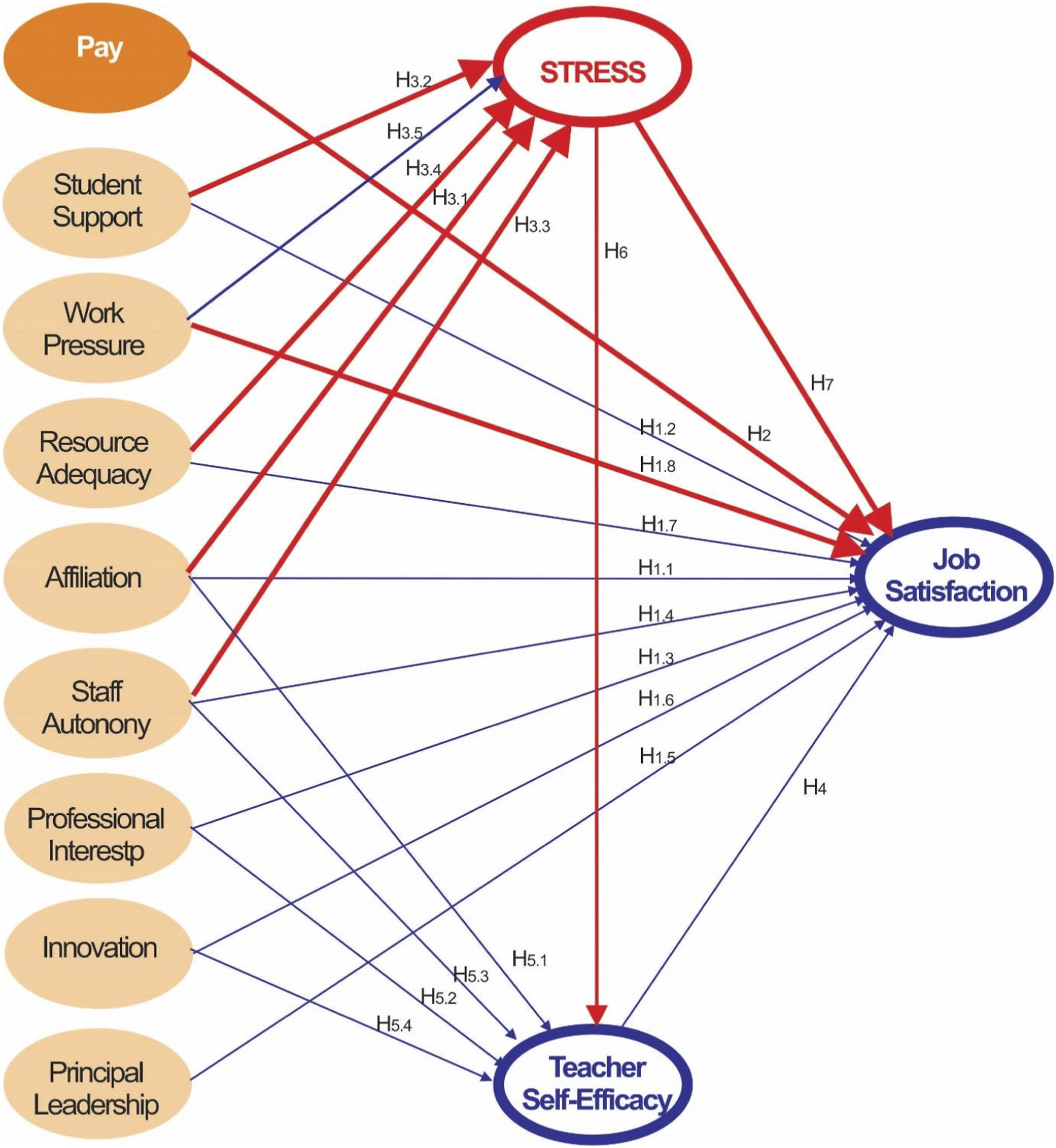
Participants and procedure
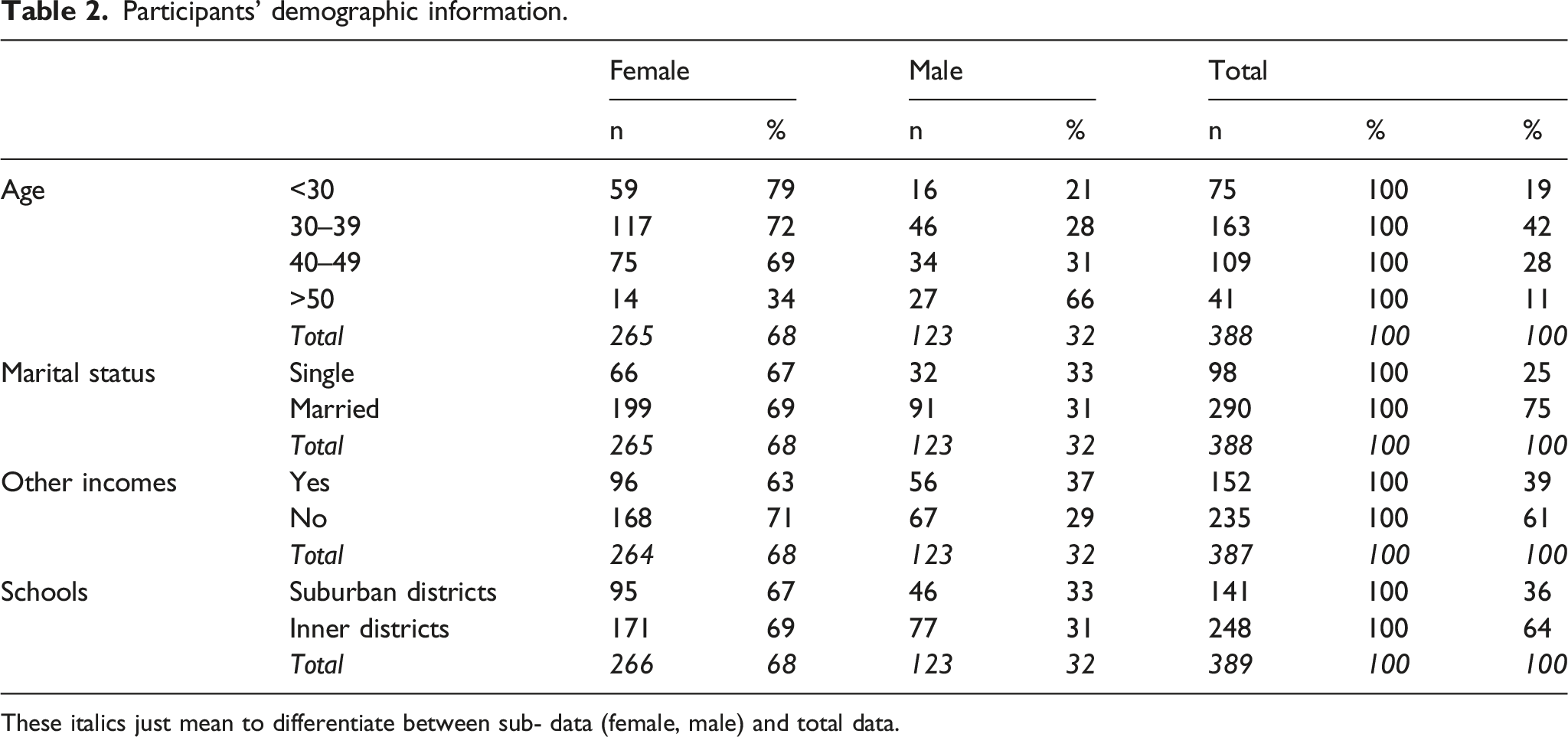
Participants’ demographic information.
These italics just mean to differentiate between sub- data (female, male) and total data.
Data analysis
Responses were scanned to eliminate unreliable data: identical responses, missing more than a third of the scale/sub-scale, and missing more than two items of personal information. An adjustment was then made to remove outliers. Valid responses remained at 403, including 14 missing values of gender. The data distribution of participants is not significantly biased in terms of demographic variables, and group size is sufficient for difference analysis (Table 2).
Data were analyzed in two steps: Exploratory Factor Analysis (EFA) and PLS-SEM. First, the scales’ reliability is assessed through the reliability coefficient Cronbach Alpha. Thereby, the observed variables with a small total variable correlation (<0.4) were eliminated, and the scale was accepted when the Cronbach Alpha reliability coefficient was satisfactory (>0.7) (Hair et al., 2019). Next, EFA was used to remove low-loading items (<0.4) and items with loadings across two scales/sub-scales, and the scale was only accepted when Average Variance Extracted >50%. Finally, for PLS-SEM, the measurement and the structural models were tested.
Analysis and results
Descriptive statistics
Descriptive statistics of all constructs.
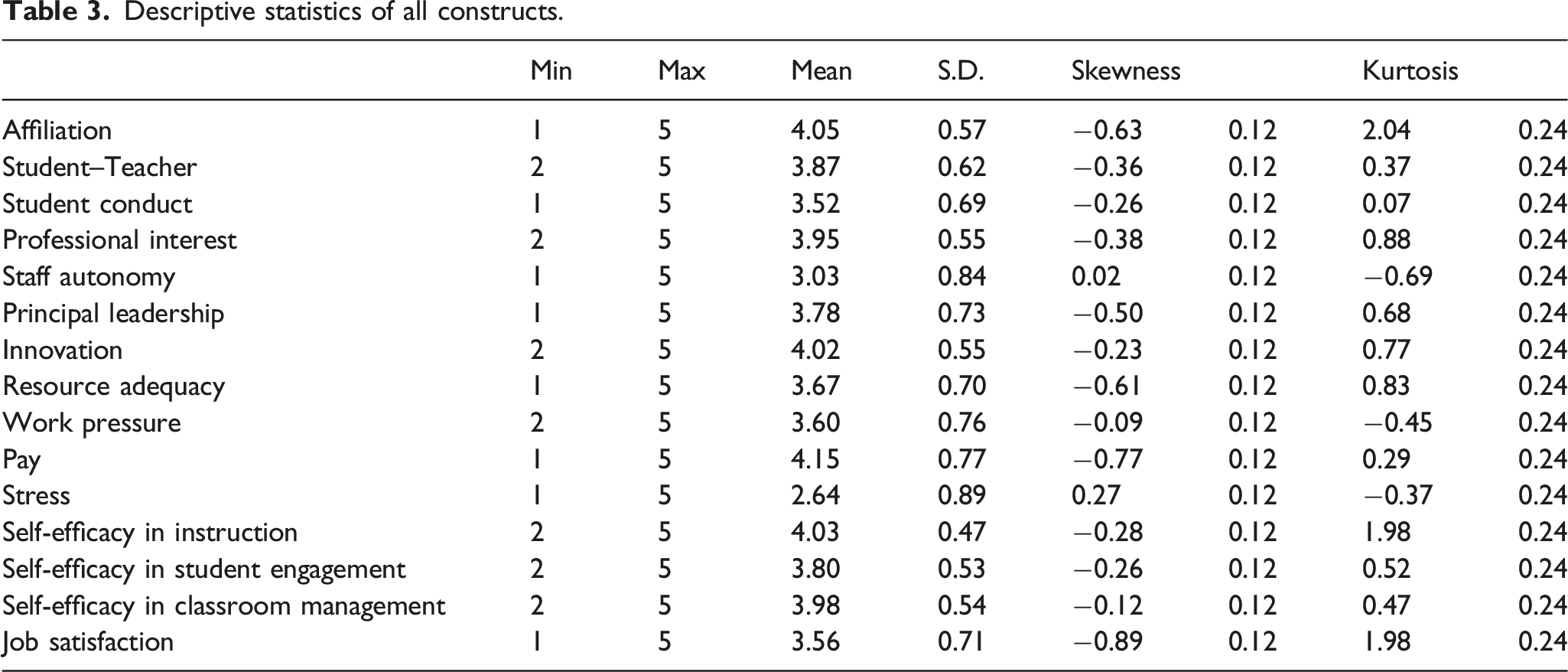
Teachers highly valued school climate factors, all of which are above the average (3.0); the highest is affiliation (4.05) and the lowest is staff autonomy (3.03). Work pressure has a mean of 3.6, meaning that teachers perceived the workload as high. Teachers strongly agreed (4.03) that pay was lower than their expectations and was not relevant to job requirements, and also when compared to other professions. However, the results indicate that teachers were not stressed (2.64). In general, teachers were very confident with their competencies in all three aspects of teaching (4.03), student engagement (3.80), and classroom management (3.98). Teachers’ job satisfaction was above average (3.56) (Table 3).
The results of exploratory factor analysis
The results of exploratory factor analysis showed that not many items were excluded (14/101), and the scales remained as designed except for student support, which was separated into two unidirectional factors: student–teacher relationship (3 items) and student conduct (4 items). As a result, hypotheses H1.2, H3.2, and H5.2 related to this concept are separated into the following two pairs of hypotheses:
Student–teacher relationship has a positive impact on teacher job satisfaction.
Student–teacher relationship has a negative impact on teacher self-efficacy.
Student conduct has a negative impact on teacher self-efficacy.
A student–teacher relationship has a negative impact on teachers’ stress.
Student conduct has a negative impact on teachers’ stress.
The results of PLS-SEM
This section presents the analysis results based on (1) the evaluation of the measurement model and the structural model and (2) the testing of hypotheses. In the research model, only self-efficacy was a formative structure, with three unidirectional reflective constructs; all remaining constructs are unidirectional. The unidirectional structural measurement models (reflective) are evaluated through the following criteria: Cronbach’s Alpha reliability>0.6, composite reliability>0.6, outer loading of items>0.7, AVE>0.5, and square root of AVE> highest correlation with any other construct. In addition, the item loading must be higher than the cross-loadings with other constructs. The unidirectional structural measurement models (formative) are evaluated through VIF value < 2.0 and p < 0.05. If p >= 0.05, outer loading will be considered. If this is >0.5 and significant, the item is also accepted.
Evaluation of measurement model and structural model
Figure 3 shows the evaluation of the measurement model of this study. Measurement model of this study.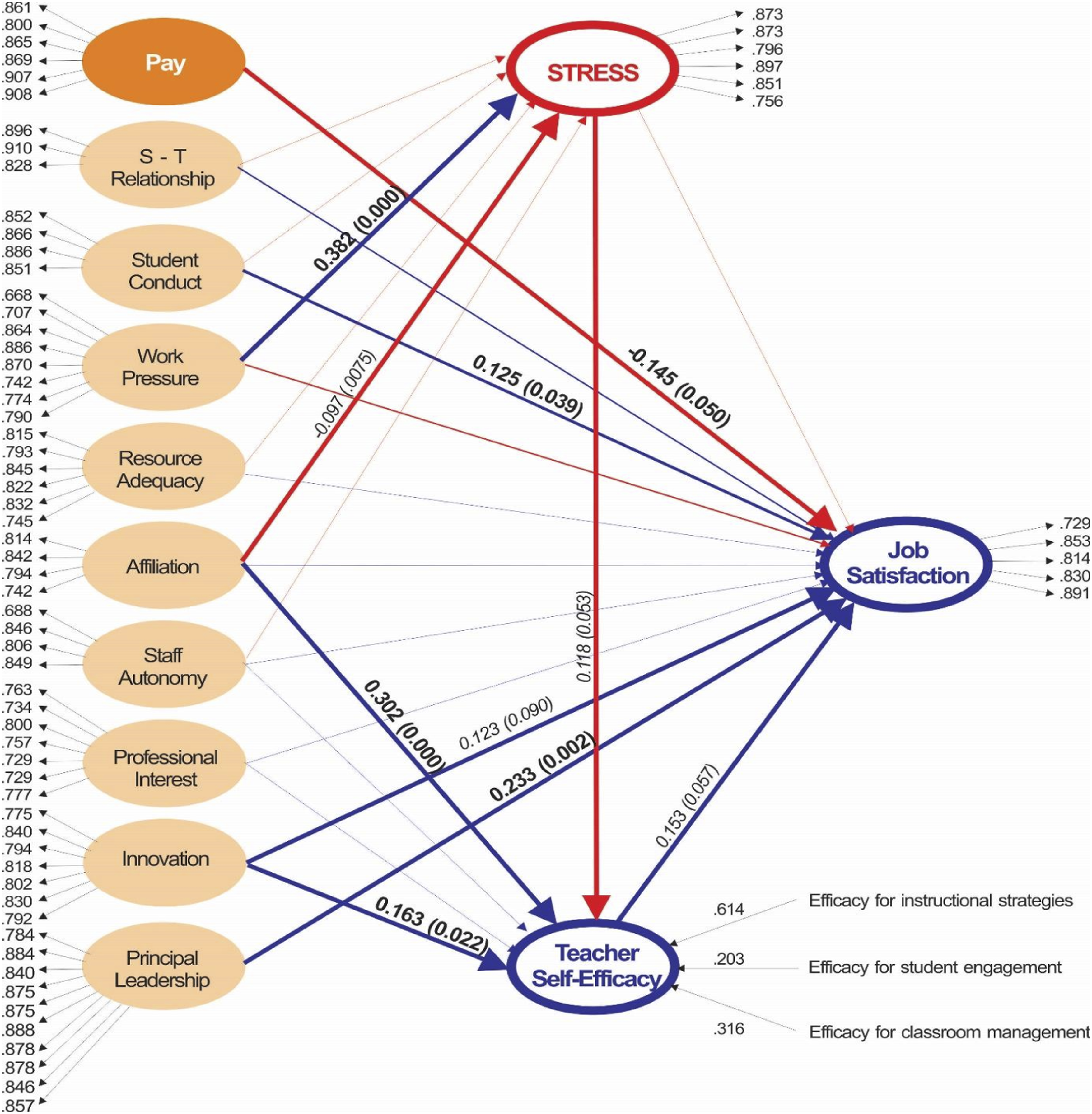
Testing the hypotheses
Results of hypothesis testing.
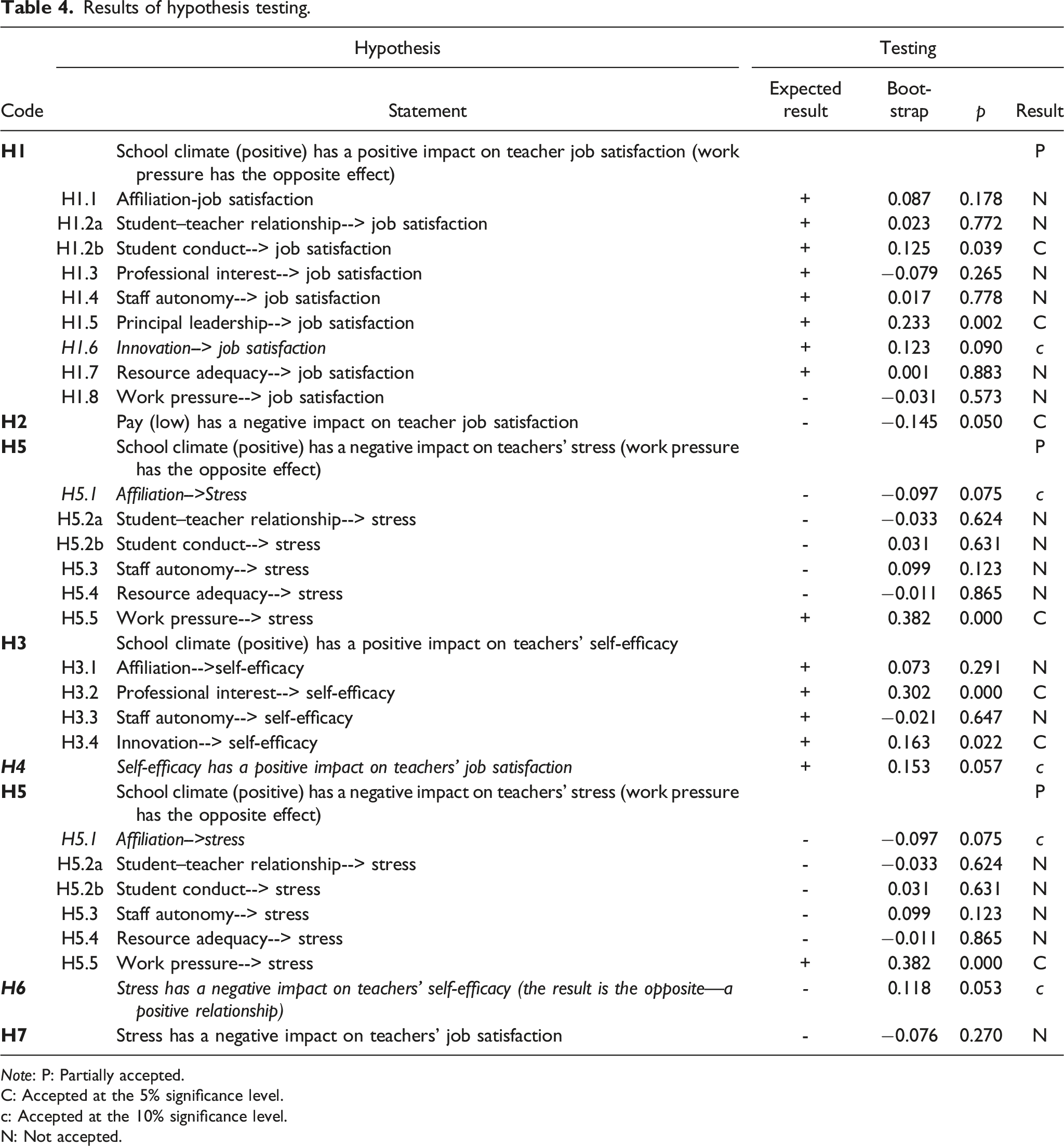
Note: P: Partially accepted.
C: Accepted at the 5% significance level.
c: Accepted at the 10% significance level.
N: Not accepted.
It can be seen that factors affecting teachers’ satisfaction are three school climate factors, pay, and teacher self-efficacy. Three school environmental factors that had significant positive impacts on teachers’ job satisfaction are the principal’s leadership (p = 0.002), student conduct (p = 0.039), and innovation (p = 0.09). Low pay negatively impacted teacher satisfaction (p = 0.050), while teachers’ self-efficacy positively impacted their job satisfaction (p = 0.057).
As regards the relationship between school climate and teacher stress and self-efficacy, two factors of school climate affecting teachers’ stress: work pressure with significant positive impacts (p = 0.000) and affiliation with negative impacts (p = 0.075) while professional interest (p = 0.000) and innovation (p = 0.022) had significant positive impacts on teachers’ self-efficacy.
For stress and self-efficacy, the results show a positive relationship (contrary to expectations) between stress and self-efficacy. This study’s results also show that self-efficacy mediates school climate and teacher satisfaction. Affiliation and innovation of school climate factors directly affected self-efficacy, positively impacting teacher satisfaction. Stress is hypothesized to mediate school climate and teacher satisfaction. Interestingly, stress mediated school climate and teacher satisfaction via self-efficacy.
Discussion and implications
The study’s findings have important theoretical and practical implications. Firstly, the finding that pay is a significant determinant of teachers’ job satisfaction underscores the importance of providing fair and competitive compensation to attract, retain, and motivate teachers. This study aligns with previous research, both in developing countries like Vietnam (Sahito and Vaisanen, 2020; Sirima and Poipoi, 2010) and in developed countries (Goman, 2017), which have also highlighted the issue of low and inadequate teacher pay compared to other professions within and outside the education sector. These findings emphasize the need to address the disparity in teacher compensation to ensure that it meets teachers’ basic needs and reflects the value of their work.
Secondly, the acknowledgment of principal leadership, student conduct, and innovation as influential factors in the school climate provides valuable insights for school administrators and policymakers. Enhancing principal leadership qualities, promoting positive student conduct, and fostering a culture of innovation can all contribute to improved teacher job satisfaction. Notably, this study emphasizes the significance of principal leadership, which has been shown in previous research (Blömeke and Klein, 2013; DeMartino and Weiser, 2021; Yao and Ma, 2024) to be the most significant factor affecting teachers’ job satisfaction. This finding highlights that the role of leadership is just as important as executive management in shaping teachers’ experiences. It aligns with a recent study by Jentsch et al. (2023), reinforcing the crucial role of school leadership that has sometimes been overlooked in policy-focused research (Ladd, 2011). The collective evidence underscores the importance of effective and supportive school leadership in creating a positive work environment for teachers.
Furthermore, the study’s findings regarding the mediating role of stress and self-efficacy between school climate and teacher satisfaction underscore the importance of creating supportive and conducive work environments. It is crucial to reduce teacher stress levels and enhance their self-efficacy through targeted interventions and support mechanisms. This study aligns with previous research by Malinen and Savolainen (2016) and Jentsch et al. (2023), confirming the mediating effect of teacher self-efficacy in the relationship between school climate and teacher satisfaction. These findings emphasize the need for interventions and strategies that address teacher stress and enhance their belief in their abilities to effectively navigate the challenges of their profession. By promoting supportive work environments and providing resources and support for teachers’ professional growth, educational institutions can foster higher levels of teacher satisfaction and well-being.
The results of this study provide further solid evidence of how important the environment affects one’s personal development via microsystem and mesosystem as demonstrated in Bronfenbrenner’s ecological model. The results also illustrate the complex, intricate, and interconnected aspects (including pay as a government policy) of these systems affecting a human being’s development.
This study was carried out in the Vietnamese context with some unique characteristics, yet shared similar results with other countries both developed and developing countries: the effects of school climate on teacher job satisfaction, in particular the role of leadership, pay, and innovation. Some of the unique features and history of education in Vietnam influenced the way teachers perceived their school environment, leading to forming another construct (student conduct) from the chosen scale of the school environment and accepting or rejecting proposed hypotheses developed from other contexts. a. This study is therefore significant in a way that related stakeholders (policymakers, top educational leaders of the country as well as provincial ones) are aware of how much these factors interact with each other to affect teacher satisfaction.
Based on the findings of this study, Vietnamese educational institutions can take into account the following practical implications:
Reviewing and adjusting salary structures to ensure competitive and equitable compensation for teachers is crucial for addressing a significant determinant of job satisfaction. The issue of teacher pay is a concern at all levels of organization, including macro, meso, and micro. When teachers are paid below the level they demand, it can lead to various consequences that negatively impact their dedication, effort in teaching, teacher–student relationships, and engagement in professional development and innovation (Barnett, 2003; Mkumbo, 2012; Nyamubi, 2017).
By prioritizing competitive and equitable teacher compensation, educational systems can create a more favorable environment that recognizes and values the contributions of teachers. This, in turn, can enhance job satisfaction, attract talented individuals to the profession, and ultimately lead to improved educational outcomes for students.
Based on the study findings, it can be concluded that teachers value a people-oriented leadership style over a task-oriented one, as well as a supportive leadership style over a directive approach. The study highlights several important managerial implications. Firstly, the selection and training processes for principals should prioritize the development of emotional intelligence and strong social skills. This will help ensure that school leaders possess the essential capabilities to effectively support and engage with their teaching staff. Additionally, educational management agencies should implement systems to collect anonymous feedback from teachers. This feedback can provide valuable insights that principals and agency officials can use to make appropriate adjustments and improvements to leadership practices across the organization.
Conclusion
The findings of this mixed-method research are 4-fold. Firstly, teacher self-efficacy and stress mediated the linkage between school climate and teachers’ job satisfaction. Secondly, pay and three components of school climate, that is, principal leadership, student conduct, and teachers’ self-efficacy, affected teachers’ job satisfaction. Thirdly, teacher stress, affiliation, and innovation affected their self-efficacy. Fourthly, teacher stress was caused by work pressure but mitigated by positive affiliation.
This study has implications for improving teachers’ income, self-efficacy, and the Vietnamese school climate, particularly issues related to the principal’s leadership. Implications are about the significant role of the principal, for example, in building and fostering a learning culture and setting values and standards in professional development at school. In addition, it is necessary to have an appropriate reward policy, along with a comprehensive and objective evaluation of teachers’ performance, and timely encouragement for teachers’ self-efficacy.
In addition to the practical implications for Vietnamese educational institutions within the context of this study, this research also provides a valuable contribution to the field of general management by examining factors that influence job satisfaction. The study’s findings underscore the importance of key determinants such as pay and leadership in shaping overall job satisfaction levels. This understanding of the impact of these factors on job satisfaction offers significant insights for managers and organizations seeking to improve employee well-being and productivity. By addressing these determinants, organizations can foster a positive work environment and cultivate higher levels of job satisfaction among their employees, ultimately leading to improved organizational outcomes.
This study has some limitations. School climate was investigated on the perception of teachers only. Further study should be carried out from the perspective of others, that is, students and parents. In addition, it is fundamental to study the outcomes of school climate, such as students’ engagement, performance, and achievement. It is also interesting to explore determinants of the school climate, for example, the effect of educational institutions and legal framework on school climate. Such fields of study are essential for Vietnam as an emerging country studying school climate and other related aspects of teachers.
Footnotes
Declaration of conflicting interests
The author(s) declared no potential conflicts of interest with respect to the research, authorship, and/or publication of this article.
Funding
The author(s) disclosed receipt of the following financial support for the research, authorship, and/or publication of this article: This research is funded by Vietnam National Foundation for Science and Technology Development (NAFOSTED) under grant number 503.01-2021.29.
Appendix
Scales and measurement items.
Item
Label
AFF
Affiliation
AFF_1
I have many colleagues to discuss my professional views and opinions
AFF_2
I feel that I have many friends among my colleagues at this school
AFF_3
I feel that I could rely on my colleagues for assistance if I should need it
AFF_4
I always receive encouragement from colleagues
AFF_5
I do not feel lonely and left out of things in the staff room
AFF_6
I am proactive in contributing to the collective work of my division and my school
AFF_7
I feel that I am always assigned fair and reasonable compared to my colleagues
STC
Student support
STC_1
Students respect their teachers
STC_2
Students are very polite to teachers
STC_3
Students are close and friendly to teachers
STC_4
Students firmly trust teachers about life experiences
STC_5
Students are very focused in class
STC_6
Students are very active in class
STC_7
Students are fine, obeying teachers
STC_8
Students have a very high sense of discipline in school and class
PFI
Professional interest
PFI_1
Teachers show considerable interest in the professional activities of their colleagues
PFI_2
Teachers are straightforwardly talking with each other about teaching and learning
PFI_3
Teachers are willing to share experiences and materials
PFI_4
Many teachers attend in-service and other professional development courses
PFI_5
Professional matters are always discussed during staff meetings
PFI_6
Teachers are keen to learn from their colleagues (lecturing, class visit, documents, and material sharing)
PFI_7
Teachers are very active in improving their professionalism
STA
Staff autonomy
STA_1
There are a few rules and regulations that I am expected to follow
STA_2
Teachers are autonomous in teaching, not being required closely follow syllabuses and lesson plans
STA_3
I am not expected to maintain rigorous control in the classroom
STA_4
I am often supervised to ensure that I follow directions correctly
STA_5
Teachers have a say in the school’s decisions and operating policies
PCL
Principal’s leadership
PCL_1
The school leader (SL) establishes clear and relevant school plans and goals
PCL_2
SL always encourages and helps teachers to perform tasks instead of imposing them
PCL_3
SL advises and guides teachers rather than directing and ordering
PCL_4
SL always listens to the teacher’s opinions and respects all differences
PCL_5
SL always responds to all comments and suggestions from teachers
PCL_6
SL inspires teachers in education and teaching
PCL_7
SL cares about individual teachers
PCL_8
SL creates a high consensus in the school
PCL_9
SL always solves all problems reasonably
PCL_10
SL treats fairly and reasonably among teachers and between professional divisions
INO
Innovation
INO_1
Teachers are encouraged to be creative in teaching and education
INO_2
Teachers always encourage and support innovative ideas
INO_3
Teachers actively innovate to teach by exploiting information technology
INO_4
Teachers are allowed to improve and innovate lesson plans and teaching
INO_5
The school continually encourages and supports innovative ideas from teachers
INO_6
The school creates all conditions for teachers to experiment with new teaching methods
INO_7
The school supports the use of new supplementary materials by teachers in addition to textbooks
INO_8
Innovations are shared in my school
RSA
Resource adequacy
RSA_1
The library is fully equipped with books and materials for students and teachers
RSA_2
The school’s internet network is expansive and strong
RSA_3
The classrooms are well-suited to class sizes and teaching activities
RSA_4
Classrooms are spacious and comfortable
RSA_5
The function rooms are fully equipped with sufficient good tools and equipment
RSA_6
Tables and chairs, tables, and podiums are very suitable and of good quality
RSA_7
Audio-visual equipment (TV, projector, screen ..) is sufficient for teaching
RSA_8
Office machines (photos, computers, scanners…) meet the needs of teachers
WPS
Work pressure
WPS_1
The teacher’s workload (preparing lessons, teaching, testing, and grading) is heavy
WPS_2
Non-teaching load (paperwork, extra-curricular activities, homeroom ….of teachers) is heavy
WPS_3
Innovative programs and projects are implemented that require teachers effort
WPS_4
Teachers often do not have enough time to complete all schoolwork well
WPS_5
Teachers do not have the opportunity or time to rest or take care of the family
WPS_6
Because of the heavy workload, teachers have little opportunity to develop their expertise
WPS_7
The reward and evaluation criteria create pressure on teachers
WPS_8
Easy news coverage by smartphones+social networks is pressure on teachers
WPS_9
Communication with parents about students’ learning and activities is pressure on teachers
PAY
Pay
PAY_1
Pay is lower than the job requirements
PAY_2
Pay is only enough for the basic living of the individual
PAY_3
Pay cannot meet the basic needs of a small family
PAY_4
Unfair pay compared to other occupations (army and police)
PAY_5
It is hard for me if I do not have another income
PAY_6
Pay is lower than my expectation
EIS
Efficacy for instructional strategies
EIS_1
Answering difficult questions from students
EIS_2
Apply a variety of teaching strategies to each class
EIS_3
Explain in many ways for students to understand
EIS_4
Provide appropriate challenges/questions/problems for students
EIS_5
Apply different approaches to different classroom students
EIS_6
Ask good questions, give examples, and tell stories that make students interesting
EIS_7
Engage students in learning
EIS_8
Organize and manage students working in groups
EIS_9
Use multiple forms of assessment
EIS_10
Apply new techniques (STEM, projects, etc.)
EMT
Efficacy for motivation
EMT_1
Help students see the value and meaning of learning in their lives
EMT_2
Encourage students to be negligent and not interested in learning
EMT_3
Help weak students understand the lesson
EMT_4
Communicate and transform special students
EMT_5
Make students confident in their learning ability
EMT_6
Understand and support students who have not been successful in their studies
ECM
Efficacy for classroom management
ECM_1
Make students comply with classroom rules and regulations
ECM_2
Control disruptive behavior
ECM_3
Able to handle pedagogical situations successfully
ECM_4
Clarify my expectations in front of the class through words and actions
ECM_5
Keep class time free from the influence of a few problematic students
ECM_6
Communicate effectively with students about school ethics
STR
Teacher stress
STR_1
I often feel insecure
STR_2
I often feel anxious
STR_3
I often feel helpless/incompetent at work
STR_4
I often feel mentally tired
STR_5
I often feel physically tired
STR_6
I often have to take medicine to treat/improve my health
SAT
Teacher’s job satisfaction
SAT_1
I always look forward to the next class
SAT_2
I am always satisfied with my teaching
SAT_3
I would choose this job if I had to choose again
SAT_4
The time and effort I put into my school and class are worthy
SAT_5
School and class bring me joy and happiness