



Abstract

Seasoned foreign correspondent
“Covering a war means going to places torn by chaos, destruction and death, and trying to bear witness. It means trying to find the truth in a sandstorm of propaganda when armies, tribes or terrorists clash.”
Those words were spoken, with conviction and clarity, by correspondent Marie Colvin when she gave an address for the war wounded at St Bride’s Church in London in November 2010.
A little more than a year later, Marie was killed during an attack on a makeshift media centre in the embattled Syrian city of Homs. Her death was widely mourned by friends and fans, far and wide, who hailed her as the “bravest of the brave” war correspondent of our generation.
And her death gave many of us pause for thought on what she had called “our mission to report these horrors of war with accuracy and without prejudice”.
By the end of 2013, at least 63 journalists had died on this “mission” covering the nearly three-year long war in Syria according to the Committee to Protect Journalists (CPJ). And the story does not end there. There are at least 30, possibly 40, journalists kidnapped in Syria, many of whom have disappeared without a trace. They could be alive, or dead. From what we know from those who have escaped their ordeal, or were freed, their plight is likely to be horrific.
It’s this ominous threat of abduction, mainly from Islamist groups linked to al Qaeda, that has led many journalists to stop, however reluctantly, their trips into opposition-controlled areas.
With much of the reporting in the most volatile areas of Syria being done by freelancers, the growing danger led the Rory Peck Trust, an agency dedicated to freelancers’ care, to issue an unprecedented statement entitled: “Do you really have to go to Syria?” It spoke of a situation that was “becoming more dangerous and unpredictable by the day”.
It’s long been a mantra of journalism that: “no story is worth dying for.” Gone are the days when journalists felt our profession afforded us some protection. Journalists are being targeted, not just in Syria, but in conflicts everywhere from Afghanistan to Somalia to Colombia. And even in countries not at war, like Egypt, those with power take aim at the media.
But it’s still said: some stories are worth taking risks for. And Syria is still one of them: one of the most punishing wars of our time; one of the gravest humanitarian crises; a conflict which draws in an entire region, and major capitals beyond. But it’s the kind of war where you often don’t know how great the risks are, until it is too late.
ABOVE: French photographer Remi Ochlik in Cairo, Egypt, on 23 November 2011. Ochlik was killed in February 2012 in the Syrian city of Homs by government rocket fire
Credit: Julien de Rosa/Handout/Reuters
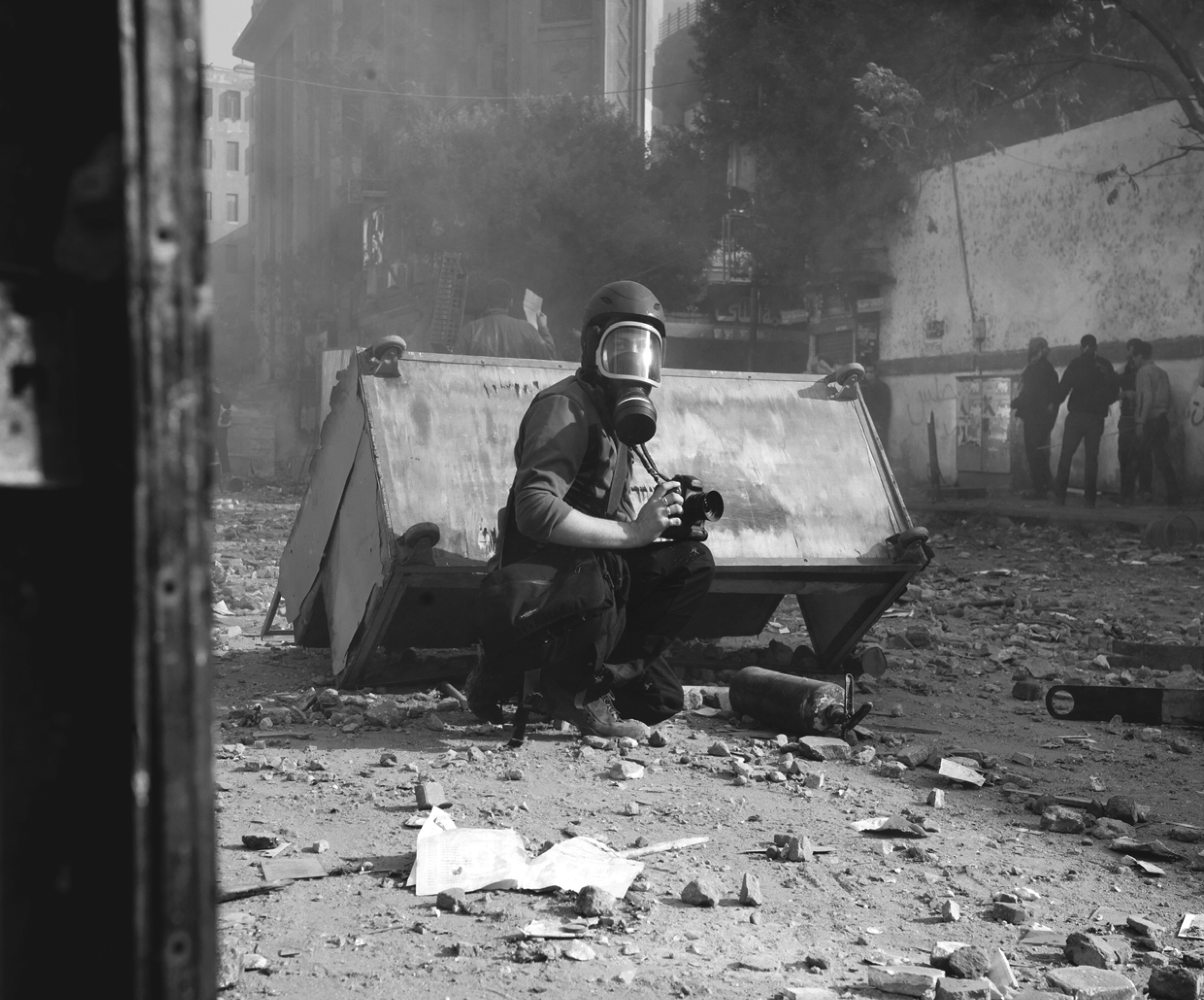
Friends who met Marie Colvin in Beirut as she prepared for her ill-fated assignment spoke of her unease over an unpredictable foray with smugglers into the besieged city dubbed the “capital of the revolution”.
When a mutual friend, veteran correspondent Lindsey Hilsum of Channel 4 News, told Marie that trip was beyond her own threshold of danger, Marie had a simple strong reply.
“It’s what we do.” It’s what journalists have been doing for as long as there have been wars to cover.
Just after Marie died, a Syrian diplomat admitted to me that he had repeatedly tried, and failed, to get Marie a visa so that she could enter the country legally and, in principle, more safely. It could have made all the difference.
In this war, journalists tend to divide into; those who work in areas controlled by opposition forces, those – including myself – able to obtain government visas, and journalists who have decided it’s not possible to cover the story at all, given the mounting risks.
Often, sitting with colleagues in Beirut, who talk about “going in”, I am reminded of a war a quarter century ago where journalists set up shop in the Pakistani frontier cities of Peshawar and Quetta. There was that constant query: “Are you going inside?” That conflict was the war between Afghan mujahideen backed by the West and much of the Muslim world against a Soviet-backed government in Kabul.
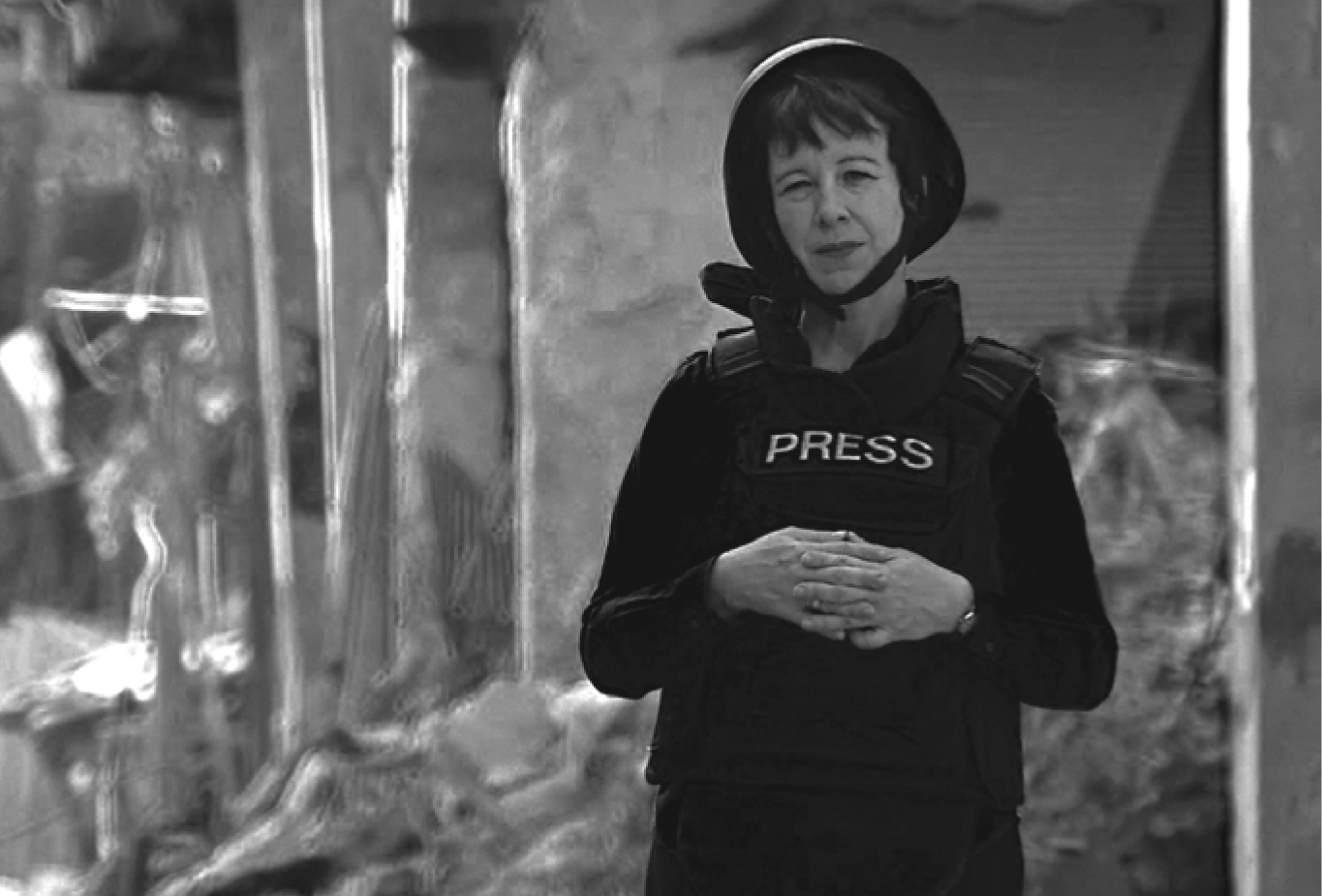
ABOVE: Lyse Doucet on assignment in the Tadoman neighbourhood of Damascus, Syria
Credit: John Landy/BBC
Most journalists reporting on that war gone by also tended to cover one side or the other, partly because of the difficulty of getting visas for Kabul, and partly out of choice. In a Cold War era, there was a sense for some of wanting to report from what was perceived to be the right side of history.
Journalists are being targeted, not just in Syria, but in conflicts everywhere from Afghanistan to Somalia to Colombia
I began reporting from Pakistan in 1988 and then obtained a visa to go to Kabul as another harsh winter closed in and Soviet troops began to pull out. Some mujahideen commanders gave me letters promising safe passage in case I entered areas under their control. There was also a warning that the end was nigh for President Najibullah’s government.
A year later, when I left Kabul and returned to live in Pakistan, still hoping to continue to cover both sides, the Afghan foreign minister threatened to cut off contact because I had “gone over to the enemy”. But the threat never materialised and I still travelled back and forth. “Hospitality over ideology” prevailed among most Afghans.
But it was also a time of danger, on all sides of this war. This meant death threats to journalists, including the BBC, the murder of a few colleagues, and the risks which come from covering any violent confrontation. Each life lost matters, and gratefully, they were fewer in number then.
We used to say then that the bravest journalist was the one who could summon up courage in front of colleagues to say “no” – no to boarding a Soviet military helicopter or embarking on a road trip fraught with risk, even if a lot of other journalists decided to go, no matter what.
That was a time before Twitter, email, or even proper phone systems. Kabul had only two international telephone lines on their exchange. One, for some reason, went through Glasgow, and the operators there became my daily companions down a crackling, and no doubt heavily bugged, line. Queues formed of journalists, fretting over deadlines, next to the few teletype machines that clattered away, night and day, in gloomy hotel lobbies.
In contrast in Syria today, journalists have the ability to go live with the latest technology wherever they are, safety and power sources permitting.
But use of technology may bring risks. It’s alleged that the attack which killed Marie Colvin along with the talented young French photojournalist Remi Ochlik, and injured and killed others, was a targeted killing. The Syrian military is said to have picked up satellite signals used by journalists in the media house next to a makeshift clinic run by opposition forces.
In Syria, journalists are also stopped at government crossings if they have stamps from the northern border where opposition forces hold sway. It’s harder to get a visa if you have gone in from that side which the Syrian government regards as a violation of its sovereignty.
And for extreme groups on all sides, journalists can be seen as spies, symbols of western powers, or useful bargaining chips.
Most journalists now go to war zones armed with hostile environment training, including basic first aid, and advice on how to deal with an array of threats. But as the Rory Peck Trust noted: “this is a new situation where no amount of planning or preparation can reliably reduce the possibility of kidnapping or abduction.”
There is another major difference in the coverage of our time. If journalists can’t be there on the ground, due to dangers or difficulties, there will almost always be someone else to tell at least part of the story. We live in a time when no one can say: “I didn’t know it was happening.”
On social media including Twitter, Facebook and YouTube there is a constant stream of films, photographs, comment, and cries for help. Activists and engaged citizens, armed with a telephone or a computer, want their stories to be heard and don’t have to wait for journalists to help them.
There is also a vast spectrum of local television channels, radio stations, and newspapers in every part of the world. This gives journalists everywhere an extraordinary array of eyewitness accounts and videos to tell stories from a distance.
But even with this unprecedented access to sources of information, there is still the age-old challenge once known as the “fog of war”. Sifting facts from fiction, verifying videos, checking accounts from warring sides is still our stock in trade. Trying to find truth doesn’t get easier.
I recently had reason to return to records of that earlier war a quarter of a century ago. The photographs turned back the time: children screaming in the wake of a rocket attack; long queues for petrol with Afghans shivering in winter cold; Soviet soldiers proudly standing guard; a magazine cover with President Najibullah’s photograph with its bold headline “Will He Last?”
Decades on, many of us cover another punishing war, this time in Syria, where children also pay a terribly heavy price, and a Russian-backed President does battle with an array of opposition forces backed by the West.
Afghanistan’s own war hasn’t ended and still takes a heavy toll on civilians, including brave Afghan journalists determined to tell their own country’s story.
Some things don’t change about the brutality of war. And one thing will never change about journalism. Every journalist knows that feeling in the gut: when a story matters, you want to “be there.”
In some ways, it’s easier now to tell these stories of our time, and in other ways, far harder.
Marie Colvin’s testimony still stands: “Covering a war means going to places torn by chaos, destruction and death, and trying to bear witness.”
