



Abstract

When Nobel Prize-winning economist Amartya Sen spoke out about the Indian government undermining universities’ autonomy, it was indicative of growing concerns about censorship under Prime Minister Narendra Modi. Lawyer and writer
In February, the Nobel Prize-winning economist Amartya Sen resigned from his position as chancellor of the Nalanda University. The institution was established in 2014 with the aim of reviving the glorious traditions of the ancient Nalanda, which, at its peak in the 11th and 12th centuries attracted students from all over Asia. The Indian government, Sen wrote in an open letter to the university’s governing board, had intentionally dithered on renewing his appointment, despite the board’s unanimous recommendation of his name. “Governments must understand that winning [an] election does not give you permission to undermine the autonomy of academic institutions…”, Sen told The Times of India, shortly after announcing his resignation. “Universities don’t have the power of courts or the upper house so they are easy prey. You can go through them like a sword through butter.”
Sen’s departure from Nalanda is symptomatic of a culture that demands an unhealthy coalescing of politics and academics. In July 2014, the government appointed Y Sudershan Rao as chairperson of the Indian Council for Historical Research (ICHR), a supposedly autonomous body of the ministry of education. Rao seemed like a complete outside choice to many academics. His work, wrote the noted historian Romila Thapar in India Today, was “unfamiliar to most historians”, and while he had “published popular articles on the historicity of the Indian epics”, none had appeared in peer-reviewed journals. After his appointment, Rao told The Telegraph (Calcutta) that he would help fund projects that sought to prove the historical legitimacy of the Ramayana and the Mahabharata, the two great Hindu epics. But, as Thapar wrote, it is simply not within the realm of any reasonable historian’s role to aim at dating these mythological works.
Out of the 18 new members appointed to the ICHR, four were selected from affiliates of the Rashtriya Swayamsevak Sangh, a group that prides itself on re-writing history based on its agenda of establishing a Hindu state. It was at the behest of the RSS that, in 2002, the The Bharatiya Janata Party sought to alter the contents of school textbooks. These plans were reversed in 2004 when the government changed. But, today, there is again a profound fear that the state will seek to “saffronise” education.
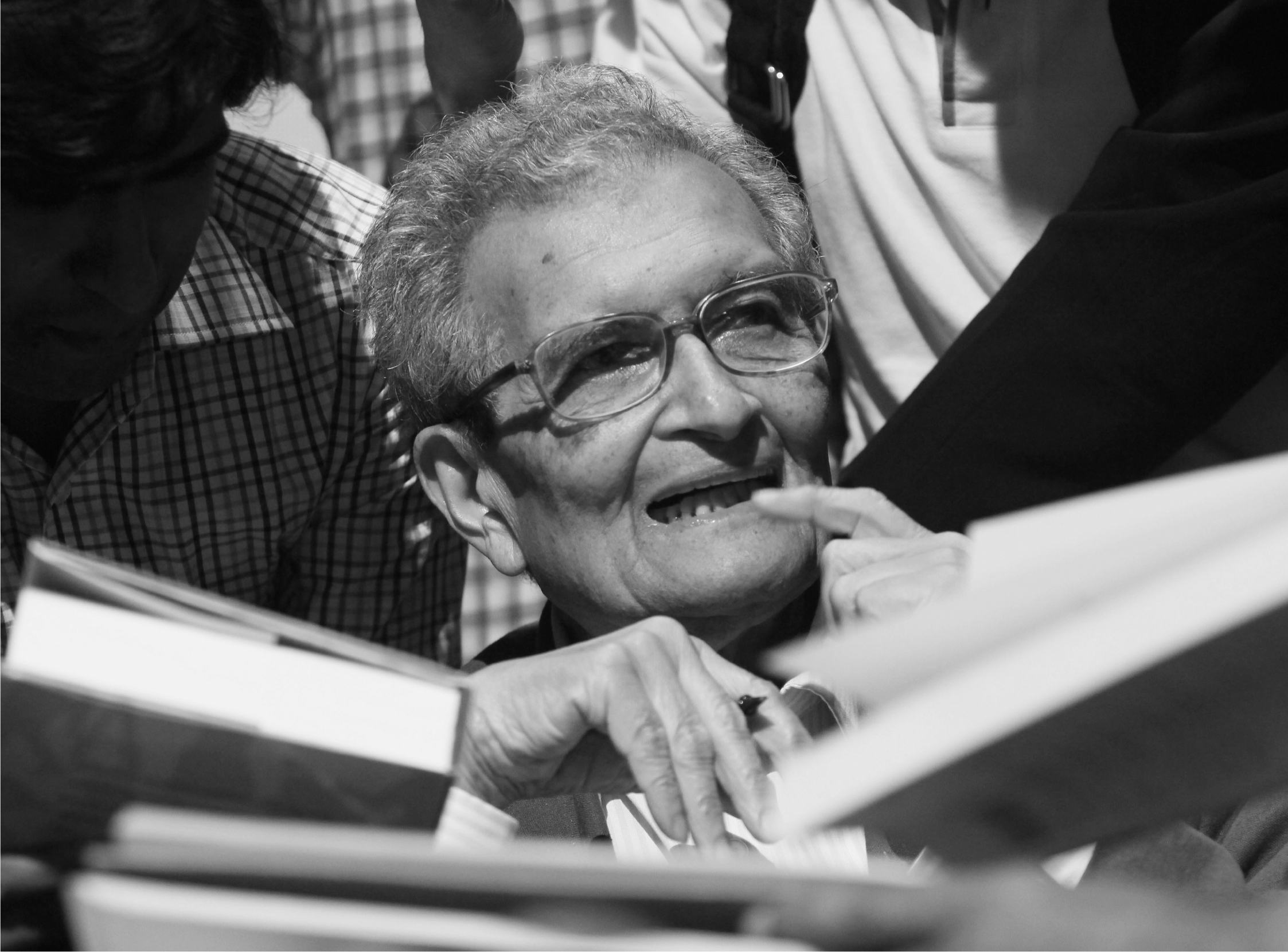
Nobel Prize-winning economist Amartya Sen pictured in February 2015, shortly after resigning as chancellor of the Nalanda University because of concerns over excessive state control
Credit: ZUMA Press Inc. / Alamy
There are several reasons why academic freedom is important to India’s future. Viewed from a utilitarian perspective, the principle can be seen as helping foster the ease of doing research, thereby aiding the development of an enhanced scholarly culture. But there is also intrinsic value to the autonomy that academics ought to enjoy. This flows not from any specifically guaranteed constitutional right, such as the right to freedom of expression, but from a more general commitment to democracy.
Universities don’t have the power of courts so they are easy prey. You can go through them like a sword through butter
The argument that popularly elected governments must enjoy the power to realign academic development is an easy one to make. But democracy demands something more than fulfilling merely the majority’s will. It requires commitment to fundamental values that respect an individual’s ethical autonomy. Academic freedom is one such ideal. The Indian government must recognise the principle for its inherent worth; it must appreciate that ideas flourish best in an open and free environment, where each individual’s view enjoys complete integrity.
© Suhrith Parthasarathy
Opinion
Arrested art
A copy of the book One Part Woman on display at a bookshop in New Delhi, India. Its author, Perumal Murugan, went into hiding after virulent protests by Hindu and caste-based groups
Credit: AP Photo / Altaf Qadri

Around the world, arts students are often ones to push boundaries, cross lines and spark controversy. But at India’s University of Hyderabad, they need watch where they tread. At its Sarojini Naidu School of Arts and Communication, a message was recently circulated asking final year students to submit their projects on CD, for “reviewing and sanctioning … before exhibiting”. The department said they had created a committee to select the best pieces, but students said they were being censored. One told regional newspaper the Deccan Chronicle that, “the agenda behind the committee is not clear and we weren’t given a proper answer as to why it has been formed”.
Students were told works had to be checked because of a row in 2007, when a student’s project at Maharaja Sayajirao University, Baroda, in the country’s west, offended various religious communities. The student, Chandramohan Srilamantula, was arrested after an exhibition of his paintings, which included a naked god giving birth and a crucifix in the shape of a penis with a commode underneath it. A group of activists stormed the campus and Srilamantula was taken into custody. But this incident happened a long time ago. “Why,” as one Hyderabad student said, “form a committee now after eight years?”
Many school boards and universities have been forced to follow the path of self-censorship, and have stopped taking risks because death threats are so common. Nobody wants to question the power of the mob, which is why some universities and state authorities continue to ban or avoid anything that might disrupt the status quo. Some call it a “conspiracy of silence”, because so many of these protests are part of the political setup. Some accuse political leaders and the media of playing divide and rule, and using religious feeling for propaganda purposes. It has come to feel like each religious group is waiting for a chance to protest, all vying with each other to be the most offended.
In January, Perumal Murugan, a well-known novelist in the Tamil language, announced on Facebook that he was giving up writing: “Perumal Murugan, the writer, is dead. As he is no God, he is not going to resurrect himself. He has no faith in rebirth. As an ordinary teacher, he will live as P Murugan. Leave him alone.” This came after virulent protests by Hindu and local caste-based groups over his novel, Madhorubhagan. They complained the novel denigrated Hindu deities and women. The protests started four years after it was published in Tamil, but Murugan has said he believes it was the English translation, One Part Woman, published at the end of 2014 that started the uproar.
Censorship battles can be long and drawn out in India. Take the case of The Hindus: An Alternative History, written by University of Chicago professor Wendy Doniger and published by Penguin. Penguin was eventually forced to pulp the book four years after it was published because a retired Indian headmaster, Dinanath Batra, brought a series of civil and criminal actions, saying the academic work hurt Hindu sentiments. Batra has challenged Indian educational boards, and has opposed and stopped the introduction of sex education in Indian schools. He says sex education runs contrary to Hindu culture and religion.
In principle, there is creative freedom in India. The question is whether Indians are able to use religion as a context, resource or point of reference when they are creating works of art. Language and religion are the only factors that feature in cultural policies. What will the future of creative output be like, if things continue like this?
© Meena Vari