



Abstract

Leading director
A multi-award-winning director at the age of 43, and a highly respected figure in the world of arthouse Brazilian theatre, Alvim smokes cigarette after cigarette as he talks inside the closed, empty bar at Club Noir, the theatre he founded in São Paulo in 2008 with his partner, the actor Juliana Galdino.
In a Brazil seething with political intrigue, in which the impeachment proceedings currently facing President Dilma Rousseff are just the most visible tip of a profound turbulence which has gripped the country since her re-election in October 2014, Alvim’s 2015 adaptation of Julius Caesar was inspired by a televised presidential debate he saw in the final days of the election campaign, in which centre-left Rousseff faced off against her centre-right opponent Aécio Neves. “I watched the debate as it became utterly polarised between Dilma and Aécio, and the famous clash between Mark Antony and Brutus instantly came to mind,” he said. “It was the idea that the same facts can be drawn in such completely different ways by the power of speech: the power of the word to reframe the facts, and its central importance in the political game.”
It’s what Julius Caesar is all about, said Alvim – and it raised fundamental questions about the intrinsic value of freedom of expression. “What’s the point of freedom of speech if we are constantly bombarded with lies and untrue information – and if we are reproducing it?” he asked. “Take Rousseff – she made a number of statements about economic policy before the elections, then adopted a completely different, neoliberal economic policy afterwards.”
Her discourse altered completely, he said – and it’s a trait that’s not confined to politicians. “We all change our discourse according to the historical moment, and according to the side we find ourselves on at any given time.”
In an interview with the newspaper O Globo, Carmo Dalla Vecchia, one of the two actors in Alvim’s Caesar, said he recalled reading the script and connecting with “the great question” it asked of each one of us: “At what point in my life have I altered what I was going to say in order to win myself a more favourable position?”
Club Noir’s production Caesar: How to Construct an Empire is Alvim’s own adaptation from Shakespeare’s text. The actors Dalla Vecchia and Caco Ciocler play more than 20 parts between them, switching roles for each of the 12 scenes in the play, to the extent of each playing the same characters in different scenes. The actors’ movements on the stripped-down, darkened set are minimal, so that the lines, and their voices, become everything.
“The word,” said Alvim, “is the element that orders time, space and the feelings within each scene.”
Technically, Alvim said, Brazil enjoys a level of freedom of speech today that is vastly improved compared to other times in its recent history. “We spent 20 years under military rule,” he said. “We were under severe censorship. Artists and intellectuals were arrested, tortured and exiled. Plays were banned, theatres raided.
“People can say what they want now, within the framework of theatre, literature or music, or on social media or wherever – how often is the president of the republic called corrupt, a thief, on Facebook?”
And yet, he said, there are problems beneath the surface relating to the quality of that speech, and of public discourse in general. He pointed to what he describes as a dumbing down of the mainstream print media in terms of Brazil’s two biggest newspapers.
“Until a year ago, Folha de São Paulo had two theatre critics: one for art and experimental theatre, and one for commercial productions.” Only the latter remains at Folha, he said, while Estado de São Paulo no longer has a theatre critic at all. He said, together with ever-shorter articles on the arts, there is a drastic narrowing of public discourse.
“The vocation of newspapers worldwide has always been not to follow the herd, not to follow the current, but to point to stronger, civilising instances,” he said. And theatre, he believes, is the kind of work in which multiple viewpoints converge in contradictions. “It’s essential. Since the birth of drama in 5th-century Greece, the theatre has been a place for deep discussion of issues concerning the entire polis.”
It’s easy to see how the issues and characters in Julius Caesar, the most political of all Shakespeare’s plays, resonated for Alvim, and made him see parallels with Brazil’s stormy political scene. The conspirator Cassio, with his “lean and hungry look”, as Caesar describes him, the man who “thinks too much” is a dead ringer for the speaker of Brazil’s congress, Eduardo Cunha, Rousseff’s arch-enemy and the driving force behind her impeachment. And though Rousseff herself, beset by difficulties, including a badly faltering economy, is far from “bestriding the narrow world like a Colossus”, she is easily compared with Caesar in his final days – criticised, distrusted and perhaps, like Caesar, eventually eliminated from power by an excess of enemies on all sides.
Actors Caco Ciocler and Carmo Dalla Vecchia played 20 parts between them in Roberto Alvim’s 2015 production of Julius Caesar
Credit: Leekyung Kim

In an act-two soliloquy (Scene IV, in Alvim’s adaptation) as Brutus, the play’s “honourable man”, attempts to justify what he has already decided to do to his friend, he conjures up grounds for the pre-emptive reining-in of Caesar’s possible future despotism, likening him to an unhatched serpent, to be killed in its shell. Power can lead people to great arrogance, muses Brutus. “So Caesar may. Then, lest he may, prevent.”
The similarities with today’s Brazil are many. An impeachment process has been launched against Rousseff because she is said to have violated budget laws to increase spending during her re-election campaign. She is not accused of the kind of personal corruption which has tainted dozens of Brazilian politicians – among them Cunha. Yet, Alvim said: “The president is constantly called corrupt. But there is no evidence of that whatsoever.” What there is instead, he said, is a “very profound hatred” of Rousseff. Political decisions by voters, he said, are more often than not made on emotional, affective grounds. “Politics has little to do with rationality and reason, and that’s also central to Julius Caesar,” he said, citing the famous speech by Mark Antony in which he rouses the crowd to mutiny by force of clever rhetoric. “There is not a single concrete idea in that speech,” he said. “Just production, rhetoric, cathartic emotion.”
Allowing that kind of emotional response to come to the fore in politics, he said, prevents relevant change from taking place. “It just generates more barbarism.” Following Caesar’s assassination, Alvim notes, comparing it to the danger of Rousseff’s impeachment, the Roman Empire tumbled into civil war. He said: “It triggered a process of the dissolution of the state’s democratic basis in a much worse manner than during Caesar’s rule.”
Luiz Inácio Lula da Silva, Rousseff’s predecessor as president, was the target of similarly speculative fears during his presidency and beyond, said Alvim. “You hear it all the time, even now. Lula wants to turn Brazil into a communist republic. He wants Brazil to become another Venezuela. The same was said of Julius Caesar: ‘He wants to become a tyrant.’ But it’s the projection of a fear, the shadow of their own fears cast on him, with very little basis in fact.” In government, argued Alvim, Lula made countless agreements with large corporations and all the main banks. “He was actually the most neoliberal president Brazil has ever had,” he said.
Describing himself as left-wing, Alvim is nevertheless not an obvious supporter of the ruling Workers’ Party, and has spoken vehemently against what he describes as the “Marxist mafia” or “cartel” in charge of allocating public funds for São Paulo theatre productions over the past few years, under which Club Noir and a number of other companies were excluded, he explained, from accessing funding over a period of almost three years. Club Noir’s failure to win funding amounted, said Alvim, to a form of financial censorship. “We put on plays by playwrights like Kafka, Pinter, Beckett, Ibsen, Genet,” he said. “Our work is political, but not in the sense of being pamphleteering or partisan; and so it is dismissed as bourgeois, elitist.” Year after year, the same theatre companies won funding. “Companies that basically just do Brecht, and theatre slanted in favour of a communist revolution. Not even they believe in it,” he said. “It’s just a way of defending their territory, and their funding.”
Alvim’s complaint led to a change in the rules, and the awarding commission now changes every six months. The good thing, said Alvim, is that such things can be reported and corrected these days, in contrast with the years of Brazil’s last military dictatorship, from 1964 to 1985. Under that regime, countless theatre productions were censored. Musicals like Freedom, Freedom, received 25 cuts, and a production in Rio de Janeiro of Shakespeare’s The Taming of the Shrew, also received line cuts. Plays like The Invasion, by Alfredo de Freitas Dias Gomes, and Tennessee Williams’s A Streetcar Named Desire were banned completely.
Repression in the theatre reached a peak in 1968, when a production of the Chico Buarque play Roda Viva at São Paulo’s Teatro Ruth Escobar was attacked by some 20 members of the paramilitary CCC – the Communist-Hunting Command (Comando de Caça aos Comunistas). Armed with guns, batons, hammers and knuckledusters, the group terrorised the audience and the cast before storming backstage, where they attacked the actors and stripped some of the women, forcing one woman and a man into the street, naked.
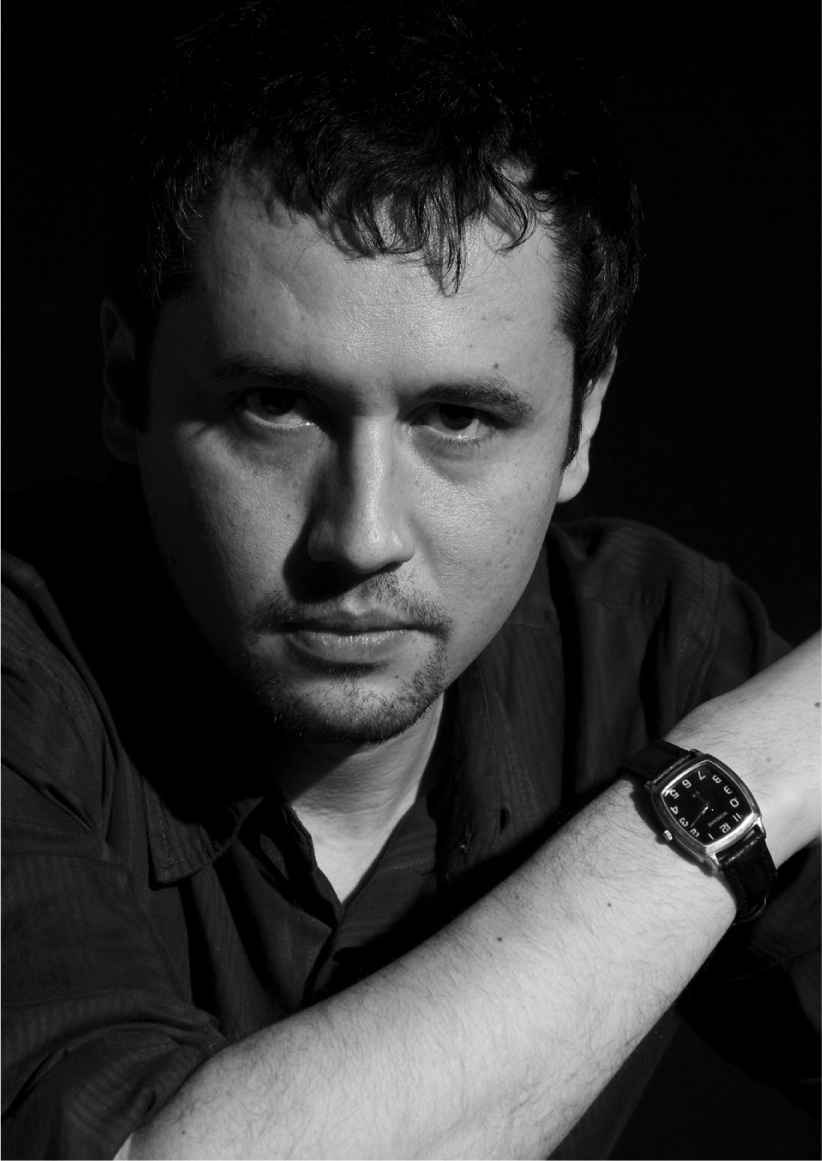
Award-winning Brazilian theatre director Roberto Alvim was inspired to put on Julius Caesar after watching a televised presidential debate
Credit: Edson Kumasaka
According to a 1992 account of the period by writer, actor and director Fernando Peixoto, there was a growing sense of moral outrage on the part of audiences, as well as the authorities. Audience members actually stood up and insulted actors during some productions. For Alvim that individual behaviour, beyond the acts of leaders, whether democratically elected or despotic, is also at the heart of Julius Caesar, and of Brazil in 2016. The lynching of the poet Cinna in the play, simply for having the same name as one of the conspirators, is comparable, he said, to a series of mob attacks that have taken place in Brazil in recent years, and to one incident at an anti-Rousseff demonstration in December, in which a young black boy of no more than 12 was filmed as a crowd of ostensibly upright citizens attempted to lynch him, slapping and hitting him. The video was shared widely and denounced on Brazilian social networks.
“In this era of global exchange,” said Alvim, “where everybody has a platform to express their opinions, the strange thing is that we see fewer and fewer opinions, and fewer individual world views.” Too many of us, he said, become trapped in polarised positions borrowed from others – ideas picked up on the internet and then “ventriloquised, repeated, like pirates’ parrots”. He said: “What we should be fighting for is freedom of ‘impression’ – the freedom to see the world in a detached way and to form our own impressions, so that when we open our mouths to speak, we are able to say something independent, emancipated and singular.”
The role of art, in his view, is to equip people to be able to do just that. “A work of art doesn’t exist to convince anyone of anything,” he said. “It’s a question of emancipation, of autonomy.” He rails against the 2014 Bienal de São Paulo and last year’s Venice Biennale for what he sees as their heavy-handed political pamphleteering. “The works had no aesthetic complexity,” he said, noting an overwhelming number of works at both biennials denouncing things like sexism, racism, even paedophilia. “I don’t need biennials to tell me about those things,” he said. “I can read about them in articles and books.” Art’s true calling, he said, is deeper and more complex. “It’s to help us to perceive the structural workings of things – to discover and reinvent our humanity, and how we relate to one another.”
Club Noir’s production of Caesar, which Alvim describes as an “aesthetic, emotional immersion”, opened in São Paulo in July 2015 before touring Brazil. The production will transfer in February and March 2016 to Rio de Janeiro, and then there will be a handful of additional performances, including in Brasília, the seat of Brazilian government. A performance might just coincide, said Alvim, with the dreaded Ides of March (15 March) – and that might also, depending on how quickly things move, coincide with part of the impeachment process.
Beyond that, coming up at Club Noir in 2016 are productions of Spilt Milk, Alvim’s adaptation of an acclaimed novel by Chico Buarque; Ibsen’s Peer Gynt; and Shakespeare’s Coriolanus. “Coriolanus is another perfect fit for our times,” he said. “Coriolanus is given the duty to fight; and he fights. But once his bloodlust is stirred, it’s impossible to stem the urge to violence and destruction.” He compared it to Rio de Janeiro, where militias formed by members of the military police have carried out hundreds of extra-judicial executions. “They entered the military police to do justice,” he said. “But once they start killing, how do you kill that urge?”