



Abstract

Crowdsourcing is helping authors get their books directly to audiences when traditional publishers are worried about government pressure, writes
“I approached a couple of people who had books published in Taiwan, and [the publishers] came back saying: ‘Sorry, it’s an important book, but we have to consider market forces’.”
By market forces, they were hinting that the Chinese government was likely to block the book’s publication in China. Fong encountered a similar story elsewhere, and it was once she had exhausted all of her options that she turned to self-publishing. While not new, the opportunities that the digital age brings, including crowdfunding, are changing the rules of self-publishing. These rules are opening spaces up, especially for those wanting to publish in highly censored environments.
For Fong, self-publishing was not something she considered when the book was first commissioned in 2012. The publishing arm of major Chinese company Citic wanted to acquire the China publishing rights, so long as they could put the book through the normal Chinese censorship machine. But Fong didn’t accept. She wanted to keep her options open and assumed there would be other offers at a later date.
But by the end of 2012, there was a presidential transition period from Hu Jintao to Xi Jinping under way. When the book came out in English three years later, the situation had drastically changed. Xi has overseen a tightening of censorship within China. Even in Hong Kong, a more typical publishing route for those with books that might rattle Chinese censors, the situation was not healthy. By this stage, the forced disappearance of five Hong Kong booksellers had been reported.
“I thought it would come to the point where someone would publish it, but would want it to be censored. I wasn’t even given that choice,” Fong said.
The two biggest barriers for Fong were translation and distribution. Translation was not only very expensive, but it also raised the issue of who would translate the book willingly. Finally, a translator agreed to do it on condition of anonymity.
As for distribution, Fong did not have a Chinese bank account. Even if she did, she was wary of monetary transactions, as one of the arrested Hong Kong booksellers had been released only on the condition that he revealed who had bought books at his store. Fong did not want to create a similar paper trail.
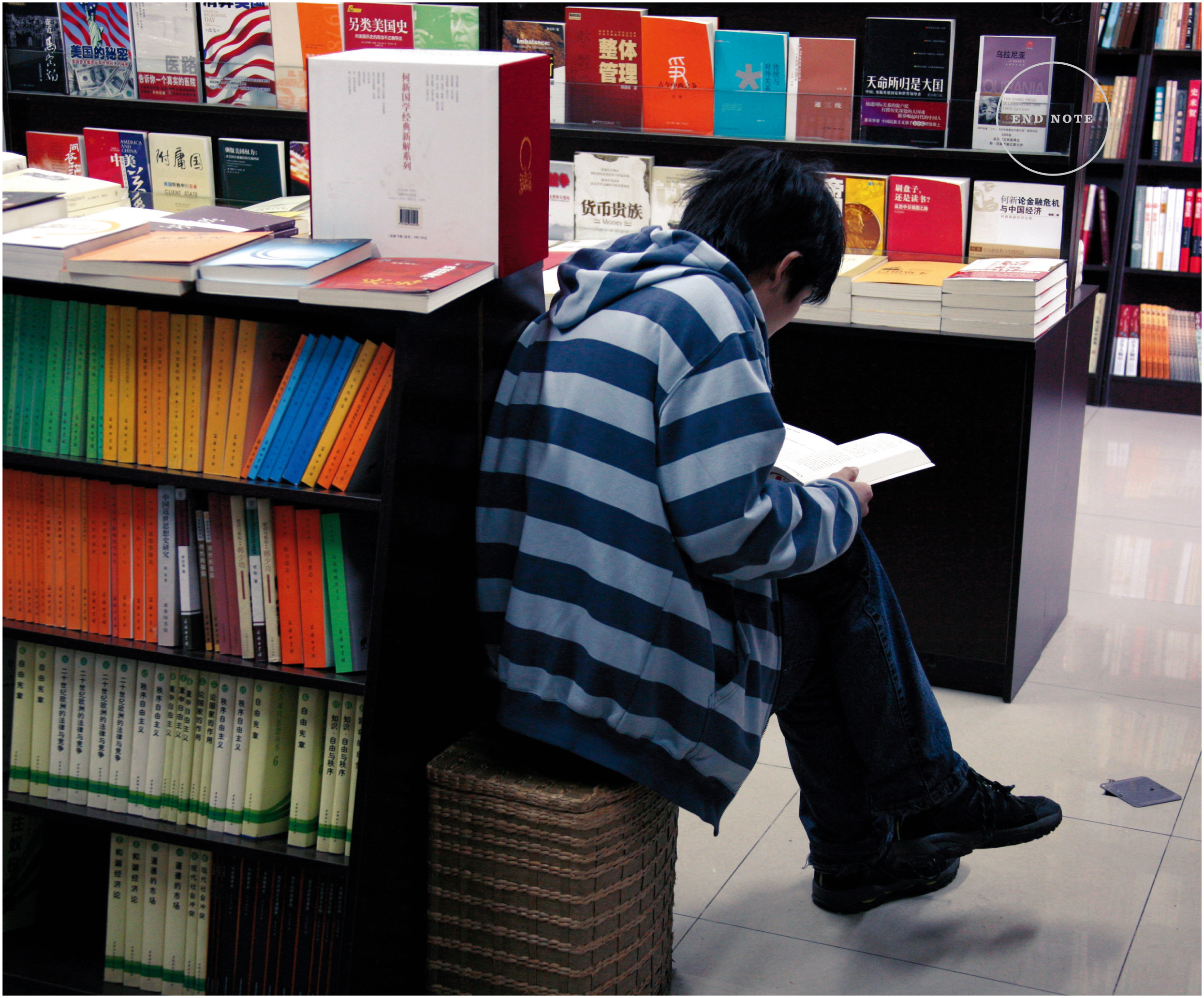
A man reads at a bookstore in Beijing, China, where censorship of literature is commonplace
CREDIT: David Gray/Reuters
She finally decided to release the book as a free PDF, which she uploaded to Weixin, an instant-messaging service and blog, and other platforms. The main ambition was to get it read widely, though Fong has little way of gauging this marker of success. She knew she would lose control in this respect, which was partly the point – for it to be distributed without a trace. She has received some positive feedback from Chinese people who have read it, though.
She also crowdfunded to cover some of her costs, such as for the translation, which was approximately $10,000. So far, she has covered one third.
“One of the things I am saying is we need more well-funded avenues for this,” said Fong, adding that while it was not a money-making endeavour, she wanted to show that you could earn money through writing of this nature, as it might encourage others.
Fong’s example isn’t the only one of online publication solving two author issues – censorship and costs. In Iran, for example, the publishing house Nogaam is behind many titles by authors who know they have little chance of being published there otherwise due to censorship. Its business model also involves crowdfunding. Once an author has been compensated, the book is available free via download.
“If you’re in Iran and your book is rejected or censored to the bone then you had to either bin it or put it on a shelf to gather dust. So online publishers like Nogaam are giving people a new choice,” Nogaam editor Azadeh Iravani told The Guardian.
Mark Coker is the founder of Smashwords, which is one of the largest distributors of independent ebooks. Smashwords distributes the majority of its books to major ebook retailers and libraries in the USA. It also operates its own small online store. Coker’s company arose when he was unable to sell his book to publishers because they did not see its market potential.
“The experience opened my eyes to what I viewed as a horrible problem that represented a threat to books and book culture. What would happen to culture if readers were allowed to read only what was most popular? Such a focus leads to loss of diversity of thought, knowledge and opinion,” Coker told Index.
Coker explains how even in Western countries, there has been a crackdown on publishing erotic literature, such as books that deal with incest, bestiality or rape. As fiction, these books are legal in many countries, yet they’re not socially acceptable. In 2012, for example, Smashwords was told by PayPal to delete fiction that concerned these topics, or be refused service. Upon negotiation with Smashwords, PayPal changed its terms of policy to allow this type of fiction. It was hailed as a victory for free speech, as it removed payment processors from the business of book censorship.
Some retailers still refuse to carry these books for fear of offending their customers or damaging their public reputations. To remedy this situation, Smashwords allows these authors to sell books in the small online Smashwords store. Smashwords wanted to protect the ability of all authors to publish, said Coker, and to offer ways for them to be financed.
“Although I may personally find these more taboo subjects revolting, I consider myself a defender of free speech and a defender of a reader’s right to experience fantasies in the safety of their own mind. If it’s acceptable for a reader to read a thriller and experience the mindset of a serial murderer or terrorist, then why can’t they experience sexual fantasies in the privacy of their own mind?” said Coker.
But even if epublishing does offer more options for authors, it is still hard to cover costs, let alone make any money. Crowdsourcing and the marketing that goes with it takes a lot of time, and targets are often just to cover the running costs. What’s more, it is still not an option for everyone. Fong admitted that there’s a strong chance she wouldn’t be granted a visa for China in the future; it’s a loss she factored into the project.
Meanwhile in Bangladesh, where the market for online publishing has seen several writers launch themselves, Sadaf Saaz, a director of Dhaka Lit Fest, said writers self- published at their own risk.
“It could be that if publishers were to refuse then self-publishing would be an option, but writers themselves are being threatened, too, so publishing on issues such as atheism has its risks, whether officially published by a publishing house or on one’s own,” Saaz told Index.