




Abstract

The Beirut blast, protests, an economy in freefall – all of this has deepened a mental health crisis in Lebanon. But it’s not something people feel they can talk about, write
Within two hours, a massive explosion at the Port of Beirut, around the corner from Karantina, ripped through the Lebanese capital, levelling entire neighbourhoods and demolishing the three-storey building that Elie lived in and partly owned. The blast, triggered by 2,750 tonnes of improperly stored ammonium nitrate, claimed more than 200 lives, including Claudette’s, and wounded more than 6,000 others. It also killed three of Elie’s Syrian refugee neighbours: Khalidiya Hajj Steify, 40, and two of her daughters, Latifa, 22, and Joud, 12. About 300,000 people, including Elie, were left homeless following the explosion, which was one of the world’s biggest non-nuclear blasts. It all but destroyed the area’s hospitals and schools and plunged a country already in disarray into a humanitarian crisis.
Elie said that in addition to losing his sister-in-law and home that evening he also lost his peace of mind. While Lebanon’s economic collapse, coupled with coronavirus restrictions, had weighed him down – he would sometimes deprive himself of luxuries such as bananas due to rising costs – Elie was content with what he had. It was the blast that finally broke him, precipitating a prolonged bout of depression and anxiety.
24 days after the explosion, a man gazes out at the city in his damaged Beirut apartment
CREDIT: NurPhoto/Contributor/Getty
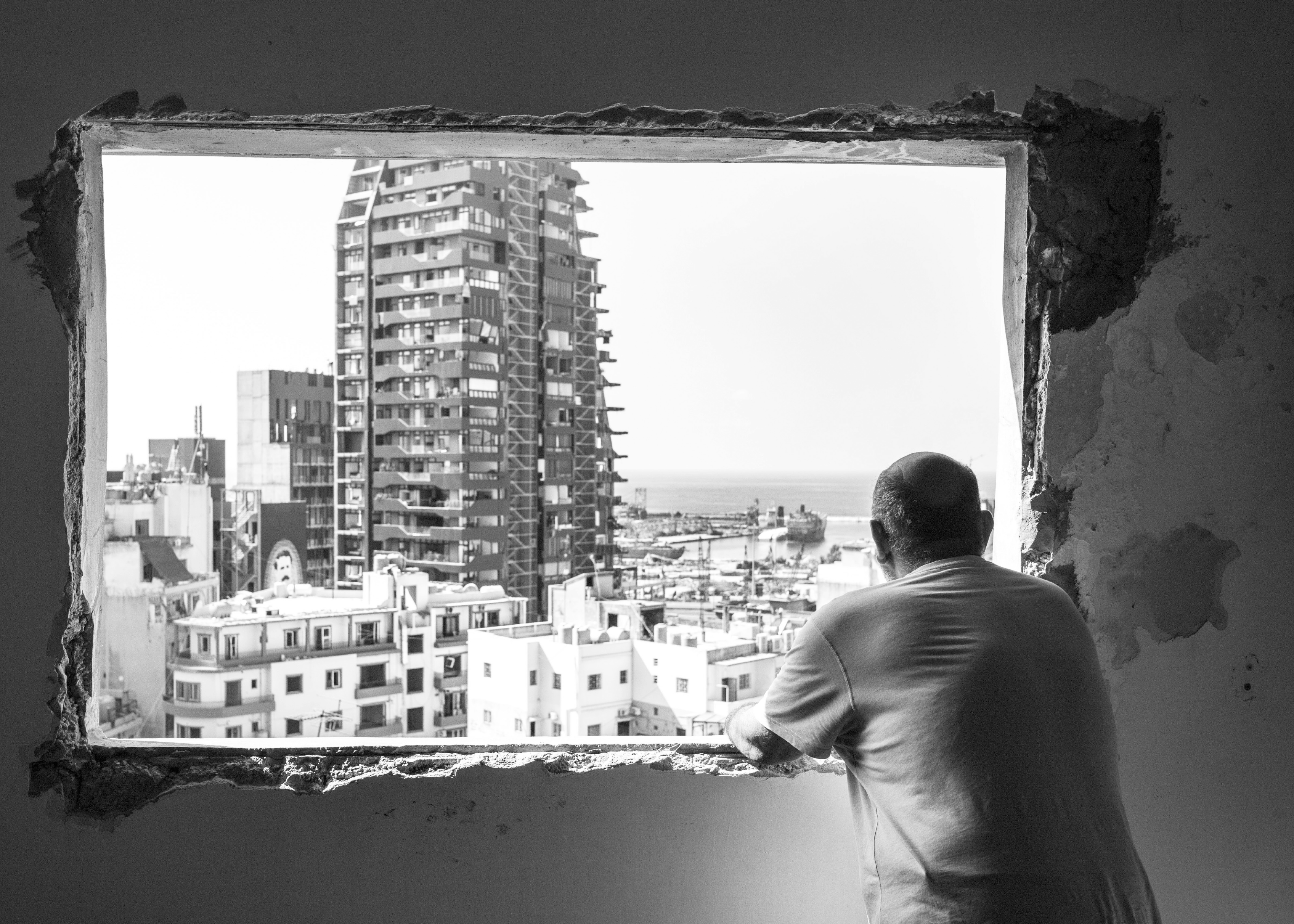
“I’m not sleeping at all. When I do sleep, I have nightmares in which I imagine everyone near me buried under debris and calling out for help,” Elie told Index. “They needed me to help, but I couldn’t move. It’s like a video that’s replaying in my head. I’m constantly reliving those moments. I sometimes wake up in the middle of the night, screaming their names. My wounds are psychological – I will never forget what I saw.”
The incident also brought back painful memories from Lebanon’s 15-year-long civil war.
A different crisis exposed
Lebanon is a nation in perpetual crisis: economically, politically and, less spoken about, psychologically.
Public health services in the country are insufficient and poorly funded; more than 80% of hospitals and healthcare facilities are private. Just one in 10 people in Lebanon with mental illnesses has access to the right care, and there are only two psychiatrists per 100,000 people. An economic meltdown prompted the government to cut healthcare spending by 7% earlier this year and private insurance companies don’t cover psychotherapy – even though some experts say that’s precisely what’s needed the most.
“Living in Lebanon is a slow death,” said Dayna Ash, a 31-year-old writer, feminist and activist who suffers from heightened anxiety. “I’m looking out of my window right now, and there’s a hill of trash that’s just appeared. Anxiety is a constant in this country. We’ve got to a point where we’ve normalised it. I just don’t see past tomorrow.”
In the period between the blast and the end of September, Embrace – a Beirut-based non-profit organisation focusing on mental health awareness – said it received 1,200 calls to its emotional support and suicide prevention lifeline. That compares with 1,000 calls in the first nine months of 2019. About 20% of the callers said the explosion and its impact on them was among the main reasons they were seeking assistance.
“The blast destroyed so many of us on a different level,” Hiba Dandachli, a board member and communications adviser at Embrace, said. “We all lost something that day.”
Even before the explosion, the mental health crisis was worsening. So far in 2020, the total number of calls logged by Embrace has risen by 300%, partly due to the deteriorating socioeconomic situation and the pandemic, which necessitated lockdowns across the country and burdened the already ailing healthcare system.
Over the past two years, a spate of suicides has rattled the nation. In February 2019, one man set himself on fire in front of a private school after failing to pay his daughter’s fees. In July, a man shot himself in a busy Beirut district after leaving a note suggesting hunger was his impetus. Psychiatrists and medics have warned of a national mental health epidemic, which is expected to deepen as the country’s economic and political fallout intensifies.
Racha Hijazi, a Sidon-based licensed clinical psychologist and cognitive-behavioural therapist, said the combination of these factors had caused a spike in anxiety across the country, with many of her patients saying that the very act of survival can feel insurmountable.
“People are drowning in anxiety,” she said. “Their anxiety has reached a point where their lives have become dysfunctional. Whenever there is another explosion or fire in Lebanon, you drag people back into the grief process. You’re not allowing them to heal. People are going to suffer for a long time.”
Hijazi said she had seen an increase in bouts of memory loss, lack of concentration and exhaustion, as well as other cognitive-behavioural changes related to trauma.
Stigma across borders
Lebanon is certainly not alone. Middle East and North African countries have seen some of the highest rates of depression anywhere in the world – in part due to the lack of stability triggered by war and rapid urbanisation. Women are disproportionately affected and resources for prospective patients are scant, with governments allocating little to mental health budgets, if anything at all. The stigma accompanying mental illness in the region remains pervasive, despite some strides forward.
Wishing to be referred to just as Samah, a 32-year-old aid worker who survived the blast, said her mental health had become more of a priority over the past 12 months as she had struggled to process the trauma she’d witnessed and endured in the field.
“Growing up as an Arab, discussing mental health issues is stigmatised. It’s often seen as you’re ‘disturbed’ somehow, or you need dramatic psychiatric care,” she said. “It was very much a taboo topic growing up in my household and community.”
The older Generation’s method of coping with tragedy focused on the physical rather than the emotional or psychological, she added.
That said, the economic situation has proven to be a bigger barrier than stigma, according to Rima Makki, a mental health activity manager for Doctors Without Borders in Lebanon.
“We’re receiving calls from people who were well-off and had the means to do therapy but now can’t continue treatment.”
Lebanon’s economy has continued to spiral after a dollar shortage in September 2019 wreaked panic and havoc at banks. A protest in central Beirut a few weeks later sparked a countrywide uprising against the ruling elite, calling for structural changes and an end to decades of corruption. The economic impact of Covid-19 later spurred another devastating blow. In less than 12 months, Lebanon’s currency lost 80% of its value, with unemployment and food prices simultaneously rocketing. Prior to the explosion, the UN revealed that more than half the population was living in poverty. The blast also ravaged the country’s key grain silo, compounding Lebanon’s food security crisis.
And there is no viable social safety net or pension scheme in Lebanon to mitigate the economic crash’s impact.
“People are not just reacting to the explosion itself but to years of systematic oppression that have much deeper mental health consequences,” said Nawal Muradwij, a clinician-in-training at City University New York.
Looking at the narrative around trauma, she said there had been a rejection of the idea that Lebanese people were resilient as “it diverts focus away from the oppressive context in which these mental health considerations take place”.
NGOs and the media play a part
Where the government has failed, non-governmental organisations have stepped up – a phenomenon witnessed acutely in the aftermath of the explosion. Local and international civil society organisations, along with mental health experts, have spent years prioritising funding for mental illness, policy changes and improving community attitudes. Following the explosion, Embrace and other non-profits joined a coalition called Basecamp to assist with relief efforts, offering emotional support services.
Psychologists and psychiatrists, including Hijazi, have banded together to provide services to the underprivileged for free. And Haven for Artists, which is based in Achrafiyeh, one of the neighbourhoods that was hit by the blast, transformed its premises into a shelter and organised free mental health sessions and drama and art therapy. Embrace has also seen a surge in the number of volunteers wanting to help with relief efforts, according to Dandachli.
Mental illness has been on the country’s radar for the past decade, although implementation has been slow and reliant on partners in the humanitarian sector. In 2014, Lebanon’s health ministry, in co-operation with the International Medical Corps and the World Health Organization, announced a National Mental Health Programme which was designed to “reform mental healthcare in Lebanon, and provide services beyond medical treatment at the community level”.
Activities for young children affected by the blast are organised by volunteers
CREDIT: Mohamed Azakir/Reuters
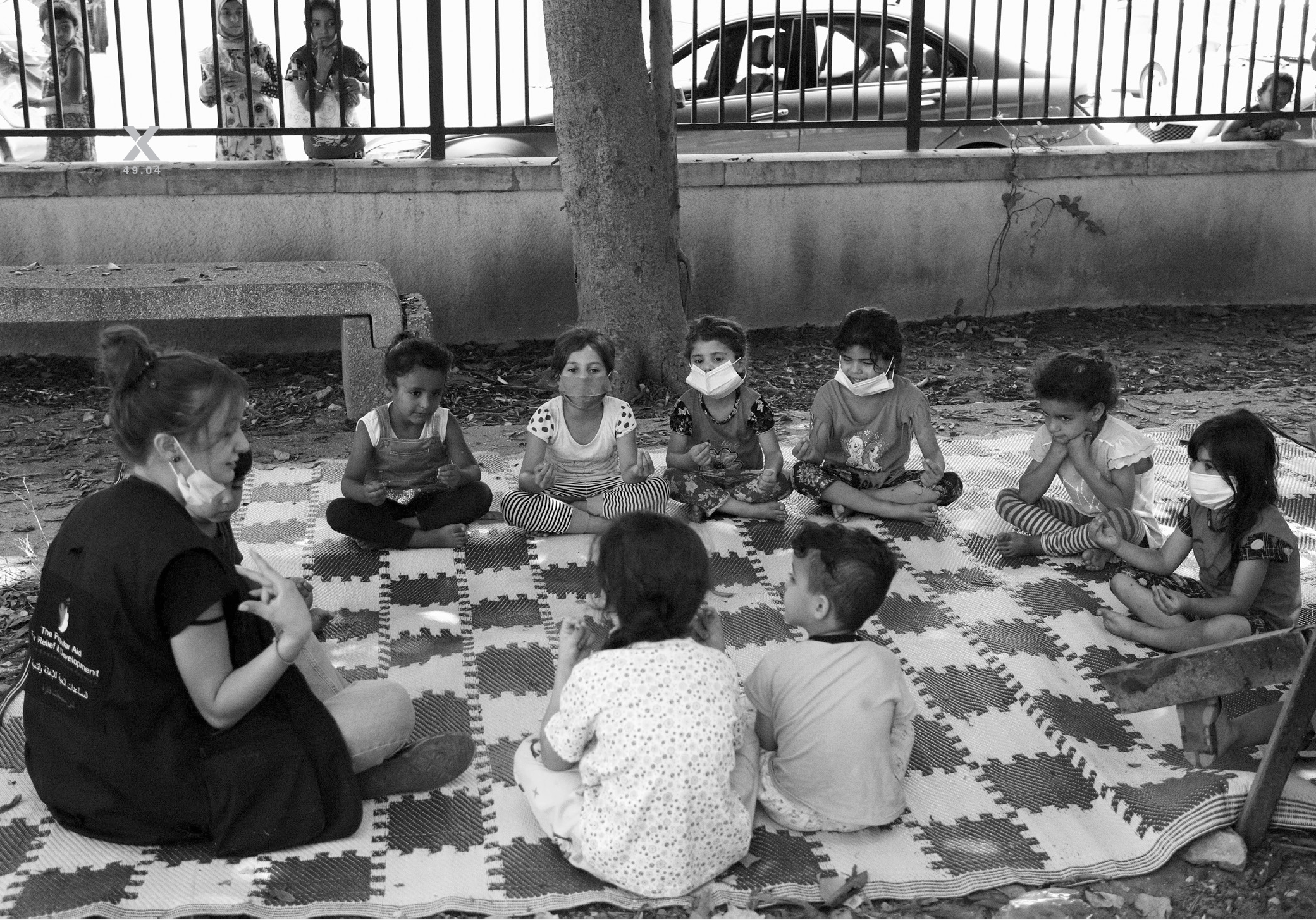
In 2015, a five-year plan was released, detailing structural reforms at the ministry, legislative changes, funding mechanisms and a communications and advocacy strategy, to scale up services and awareness campaigns. But much remains to be done.
Hijazi believes the media can perpetuate anxiety by repeatedly airing footage that “recreates trauma over and over again”, as well as provoking vicarious trauma in those who haven’t experienced catastrophic events first-hand.
But some have helped by prioritising mental health messaging. Broadcasters such as LBC and MTV have hosted psychiatrists and tackled mental illness on popular television shows. The shift in attitudes is starting to take hold, according to Samah, in part because the situation in Lebanon has become so unbearable that the Millennial and Gen-Z Generations simply can’t overlook mental health, given they are continually experiencing crippling anxiety.
“Our generation is far more open to speaking about these issues [than] my parents’ generation,” she said.
Old habits die hard
While the stigma has lessened among the younger generations, the middle-aged and elderly often refuse professional help as they’ve developed mechanisms by which they attempt to deal with trauma by themselves. For example, Elie Halabi refuses to see a psychiatrist, in part due to how people have responded to him when he shows “weakness”.
“I have depression. But I’ve never talked about this with anyone, and I don’t want to, because I know what they’d say: ‘Pull yourself together’,” he said.
“That’s what they say, or they mock or pity me. This isn’t gymnastics. Why would I need to pull myself together? It’s my mind that is troubled.”
Instead, he said, he “puts his faith in God, the best medicine”. He added: “Who else can I go to, anyway? I just want to survive. All I can think about is tomorrow.”
Hijazi traces the spike in national anxiety levels back to the start of the October 2019 revolution, which led to the overthrow of prime minister Saad Hariri (who returned to office this October).
“The revolution was anxiety-provoking for many. It was as if people suddenly started to look around and say, ‘Maybe my life is not as it should be’.” Feelings of hopelessness have consumed people living in Lebanon to the extent that hundreds have attempted to flee the country in boats, risking their lives to make a treacherous journey by sea from Tripoli to Cyprus.
Given the country’s outlook is bleak, with basic food prices projected to climb as the central bank is poised to end subsidies on goods including fuel, wheat and medicine in the coming weeks, Hijazi said people were focused on survival.
“When you’re thinking, ‘Am I going to be able to put food on the table for my family tomorrow?’ or ‘Can I pay my child’s tuition fees or not?’ you don’t have the chance or the luxury to process your emotions,” she said.
While some experts are optimistic about shifting attitudes, they point to limited access to medication due to the economic slump as a significant concern. Pharmacies have already started to report a shortage of drugs, with long queues forming amid panic buying and pharmacist strikes.
And the impact is being felt, according to Sabine Tawk of Skoun, which offers outpatient support to drug users. While the group hasn’t witnessed a significant rise in substance use, Tawk said more than half of its clients had contended with job losses, salary cuts, food shortages and difficulty paying for medication. She said patients had reduced their prescribed doses which had, in turn, exacerbated anxiety and depression and the risk of relapse.
The mental health emergency is vast, impacting different people in myriad ways. Health care professionals have themselves had to contend with vicarious trauma. In the two weeks following the blast, Hijazi couldn’t make any appointments as she struggled to overcome the shock herself. “If I want to help you, I have to help myself first,” she said.
Meanwhile, vulnerable communities, among them Syrian and Palestinian refugees and the LGBTQ community, are also in great need. While some non-profits target these particular groups, many minorities still do not have the same resources or access as others. “Mar Mikhael and Gemmayze [areas left in ruins by the blast] were considered a safe space for the LGBT community,” said Ash, who is also the head of Haven for Artists. “Many of them live, frequent or work there. They came here as a way of life to avoid discrimination or physical abuse. That safe space has been destroyed.”
Young people in particular have been severely affected, according to Unicef, with 50% of children showing signs of trauma. Pascale Safadi, who lost her home in Karantina on 4 August, said her four-year-old son and five-year-old daughter were deeply affected.
“We can’t sleep at night,” Safadi, 34, said. “As soon as it starts to get dark, my daughter starts crying and says, ‘Mama, why did this happen to us? Why did they destroy our home?’”
Since then, her daughter, who was severely injured in the blast – the cause of which is still being investigated by the government – has talked about what she experienced only by pretending to be a journalist and asking her brother questions about the blast with a toy microphone. Safadi said she spoke to a psychiatrist about her children’s situation and was advised to give them time to settle as they recovered from the acute stress associated with primary emotional triggers.
“Children need answers,” Hijazi said. “You can’t just say ‘We don’t know how this happened’.”