




Abstract

Poland’s re-election of right-wing President Andrzej Duda this summer was met with little international condemnation. The world should have screamed, writes
Four years ago the “black protests” successfully stopped the authorities from tightening one of the most restrictive abortion laws in Europe – abortion was already permitted only in cases of grave foetal abnormalities, rape or incest, or if the pregnancy threatened the mother’s life and health. But four years ago, Andrzej Duda hadn’t been re-elected as president – a decision that has given extra legitimacy to the right-wing agenda.
For those who have been paying attention to Poland, the attack on women’s reproductive rights was not unpredictable, and Duda’s reelection was the watershed moment.
The campaign leading up to the presidential election of 2020 was done in a heightened state of chaos, with many issues that people could question in terms of legality. The date of the election was changed. Then, in the first part of the campaign – held in spring, before the decision to postpone voting – participants had to deal with the growing dangers of the pandemic. Some of them tried to be responsible, such as Civic Coalition candidate Małgorzata Kidawa-Błońska, who suspended her physical campaign in order to protect people from the virus.
But Duda, supported by the Law and Justice Party (PiS), minimised the dangers of the virus and conducted his campaign without any particular limitations. His strategy proved much more rewarding: Kidawa-Błońska lost almost all her supporters, and for the second part of the campaign the Civic Coalition replaced her with another liberal candidate, Warsaw mayor Rafał Trzaskowski. And thus Poland lost the only woman on the list of 10 participants in the race.
The entrance of Trzaskowski opened a new chapter in the campaign’s dynamics and brought about a shift in the discourse used during meetings with voters and in the state media.
As the mayor of Warsaw, Trzaskowski – who was elected in 2018 in the first round of voting, beating the PiS candidate – presented himself as a progressive politician. He signed the Warsaw declaration on LGBTQ rights and announced a desire to follow World Health Organisation guidelines on integrating non-heteronormative sexual orientation into sex education in the city’s schools.
Duda’s language shifted to that of exclusion in an immediate response to Trzaskowski. The Civic Coalition candidate was depicted as an extreme danger to the sacred tradition of the Polish Catholic family, even though he never formally endorsed same-sex marriage, supporting civil partnership instead. Duda introduced the topic of LGBTQ people into the electoral battle, calling it an “ideology worse than communism”.
But the list of accusations was longer: the “LGBT ideology” would “sexualise” Polish children, would ruin traditional family bonds, was opposed to the Catholic Church, and would destroy society.
Coat hangers on the street of a women’s rights protest against the abortion law amendment in the city of Wrocław, Poland at the end of October
CREDIT: Zuza Gałczyńska/Unsplash
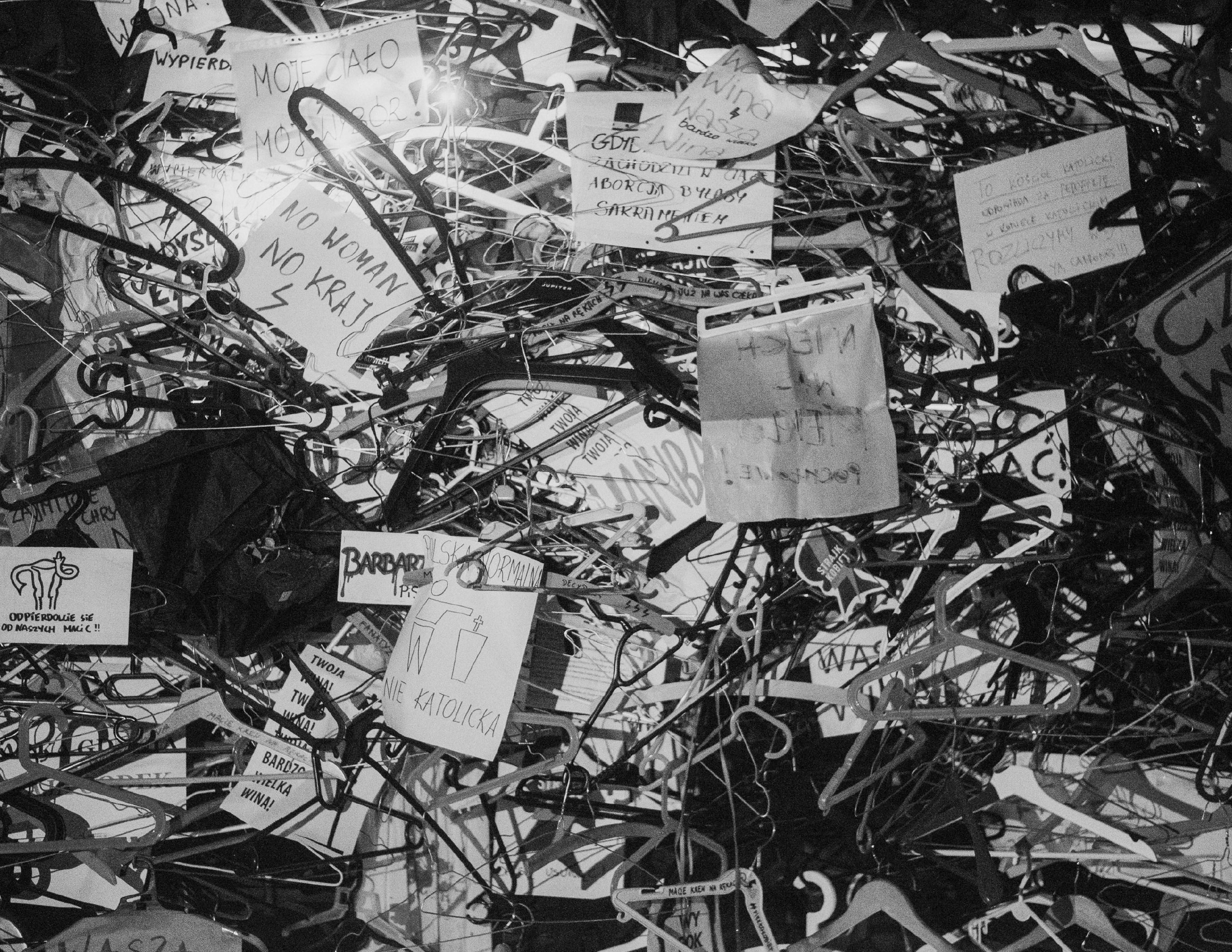
During the PiS convention, Deputy Prime Minister Jarosław Kaczyński said the party considered “two communities fundamental, the family as one man, one woman and the children”, and he opposed the West, where children can have “two mummies or two daddies” because homosexual couples have the right to adopt.
A strategy based on fear had already been successfully used by Kaczynski during previous election campaigns. In 2015, he claimed that Poland should not accept refugees because Middle East migrants might not only take Polish people’s jobs away but also bring “parasites and protozoa”.
In addition to whipping up anti-LGBTQ sentiment, Duda and other high-level PiS politicians used the campaign to set other priorities. High on the agenda was the continued reform of media laws – Duda and other PiS politicians have frequently admonished news outlets in Poland owned by foreign media companies for reporting stories critical of the ruling party.
And Duda made clear his support of a ban on abortions in most cases.
Until the last moment of the 2020 presidential election, everything was still possible and Polish society was arguably the most polarised it had ever been. Duda had the support of the ruling party, the Catholic Church and state media. Trzaskowski was perceived as a progressive, pro-European candidate who could put an end to the nationalist domination of Polish politics.
In the end, the difference between the candidates was tiny: Duda won 51.2% of the vote, the slimmest presidential election victory since communism ended in Poland in 1989. More than 10 million voters supported Trzaskowski but in politics, as in the song, “the winner takes it all”.
The consequences of the ideological battle are a tragedy. The LGBTQ+ community has faced a wave of violence, both verbal and physical, with many cities declaring themselves to be LGBTQ-free. People identifying as LGBTQ who live in these areas have faced a choice: emigrate, keep quiet or fight back. In some cities people protested against the anti-homosexual agenda. Queer activists placed signs at their borders, and attracted attention from the European Union. In July, the EU denied funding from its Structural and Cohesion funds to municipalities that declared themselves as “LGBT-free”, because it viewed this as discriminatory and a violation of the EU Charter of Fundamental Rights. In response, the Polish minister of justice (and prosecutor-general) decided to support these municipalities with government funds.
A women’s rights protest against the abortion law amendment in the city of Wrocław, Poland at the end of October
CREDIT: Zuza Gałczyńska/Unsplash
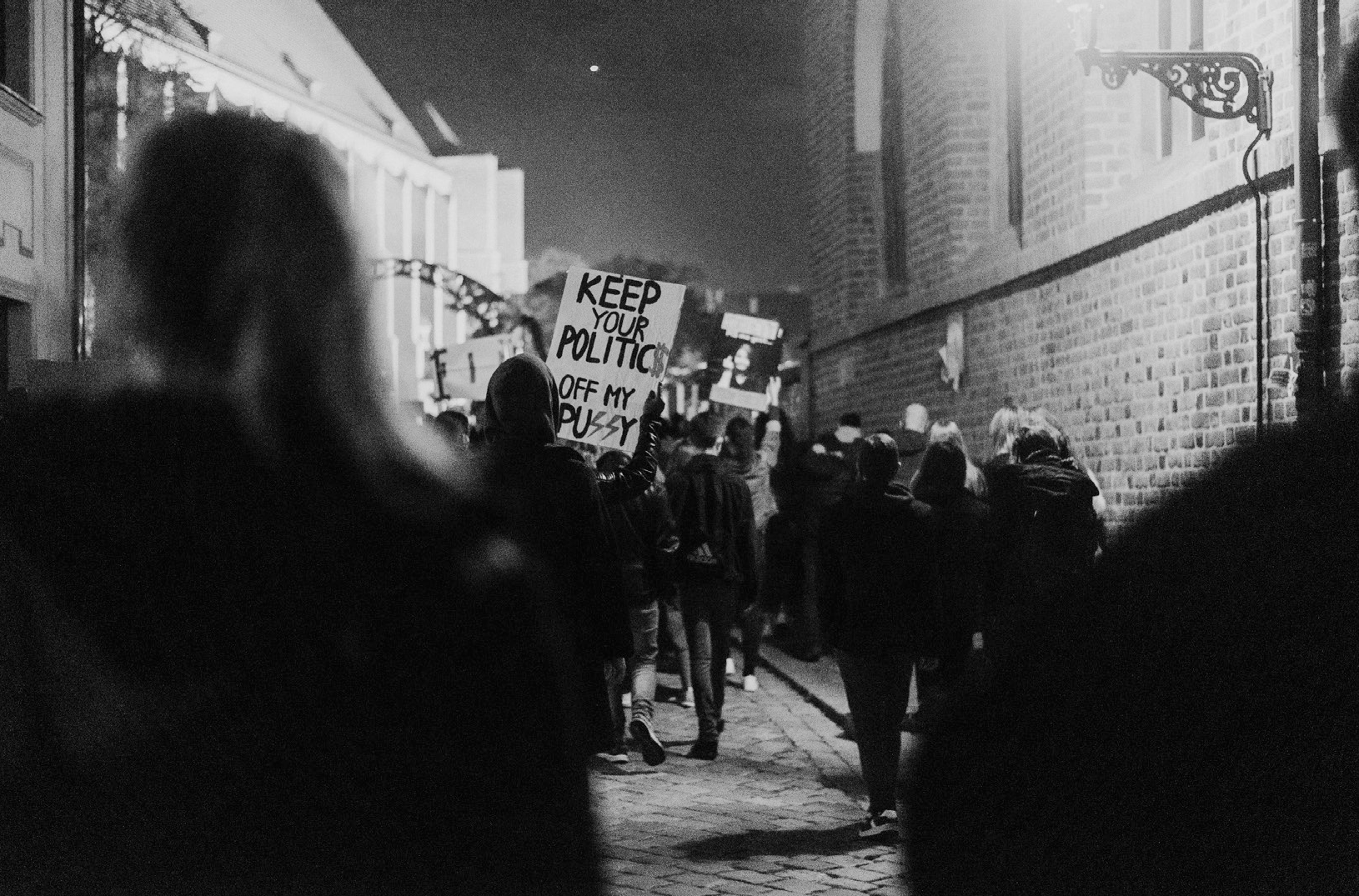
And then there is the abortion ruling from the Constitutional Tribunal. At the time of writing it is yet to become formal law, but Duda has said that if approved by parliament he will sign it into law, imposing a near-total ban on abortions.
I fear that Duda will continue his work as a strong supporter of the ruling nationalist coalition, obediently signing laws that will limit the power of the judiciary, freedom in academia and media, and the rights of minorities and women.
The end of the year has brought Poland to a state of total chaos. The government is unable to fight the coronavirus crisis and, despite mass demonstrations, we’re running out of ways to fight the new laws coming our way. With little independent media left, who will speak up for us?