




Abstract

Rumours, lies, denials and intimidation all played prominent roles in the 2020 presidential election campaign and its aftermath. But Trump’s tactics were far from unusual in US history, writes
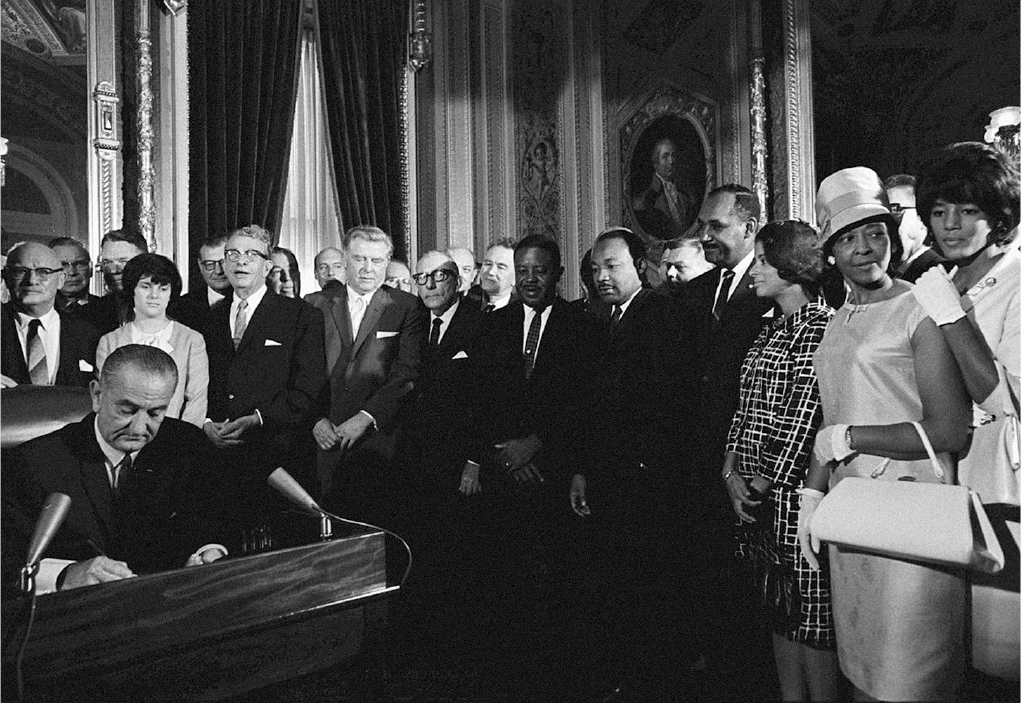
President Lyndon B Johnson signs the 1965 Voting Rights Act surrounded by Martin Luther King, Clarence Mitchell Jr. and Rosa Parks. The act outlawed discriminatory voting practices
CREDIT: Yoichi Okamoto/WikiCommons
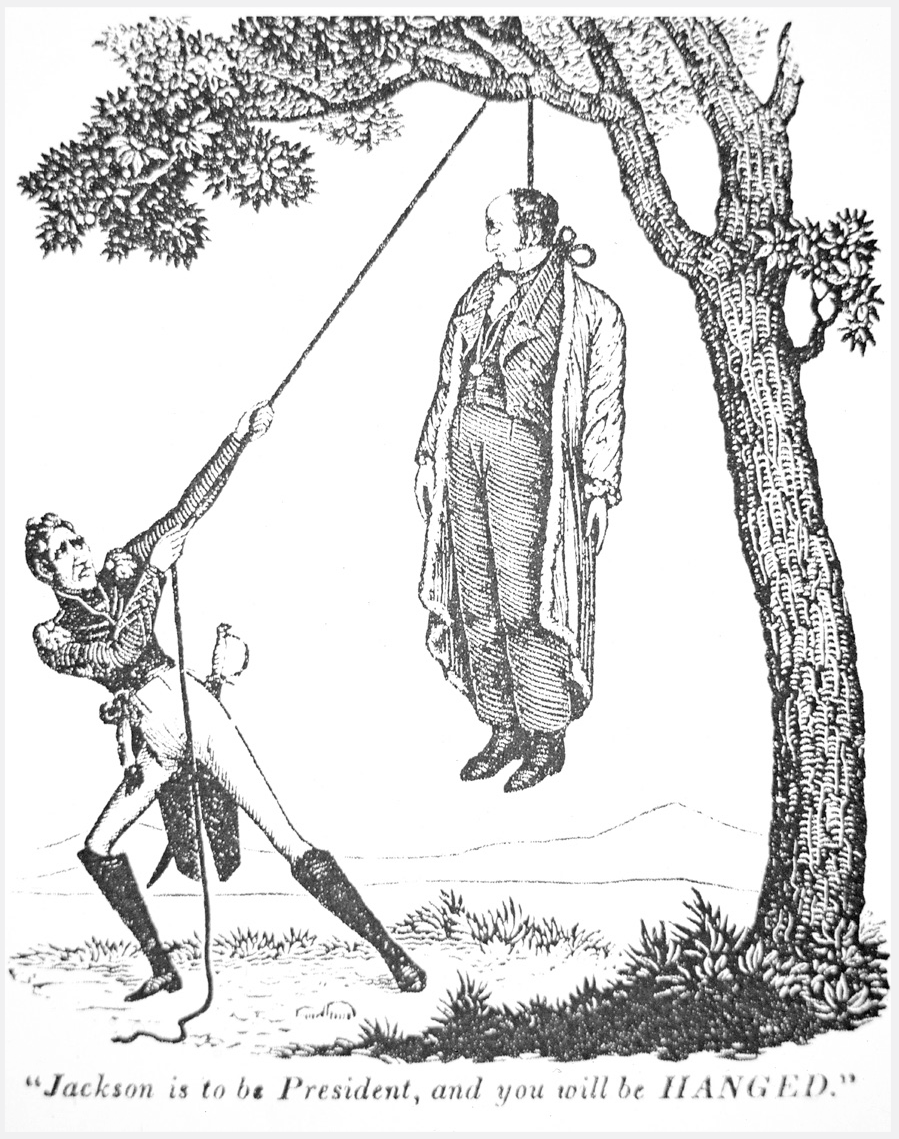
But the smears went both ways. John Quincy Adams, who had been president since 1825, was labelled a pimp. In fact, many voters felt he should not have been president to begin with. During the election of 1824, Jackson had won the popular vote but not the electoral-college vote, and the election had been decided by the House of Representatives. A man called Henry Clay supported Adams and, in return, was made secretary of state. Jackson’s supporters labelled this “the corrupt bargain” and spent the next four years calling Adams a usurper.
In a more recent election, investigations into the Watergate scandal revealed that the Richard Nixon re-election campaign of 1972 involved a “dirty tricks” squad, whose job was to sabotage the campaigns of Democratic opponents by spreading false rumours and playing pranks.
While social media and the internet have exacerbated the problem of lies and intimidation, such tactics have always existed in some form in US political campaigns. What is new is a president who directly promotes conspiracy theories, with almost half of the public supporting him.
As for voter intimidation, that too has a long history. During the mid-19th century, the practice of “cooping” became widespread, in which paid partisan gangs would kidnap voters, keep them prisoner while plying them with alcohol, and then take them to a large number of polling places in order to stuff the ballot boxes with fraudulent votes. Some historians have written that author Edgar Allan Poe was a victim of such a scheme.
Following the American Civil War in the 1860s, methods of voter intimidation only got worse, particularly in southern states where white supremacists tried every tactic possible to prevent the newly enfranchised African-Americans from voting. During the 1876 presidential election, widespread intimidation led to disputed election results in three states and the “compromise of 1877”, in which southern Democrats allowed a Republican to be elected president in return for northern military troops leaving the South.
Soon after, southern states enacted practices such as literacy tests and poll taxes to prevent almost all African-Americans in the South from being able to vote. For those who tried, white supremacist militias would threaten or exercise violence outside polling places.
Later that century, most states adopted the “Australian ballot” (so named because it had been first used in parts of Australia). These ballots were produced by the government rather than political parties and allowed votes to be cast secretly to end practices such as cooping. They also made voter intimidation and bribery more difficult. Further positive change came in the 1960s when the US constitution was amended to ban poll taxes, and in 1965 Congress passed the Voting Rights Act to ban literacy tests and send federal authorities to southern states to prevent intimidation at polling places.
The 2000 presidential election featured a remnant of Florida’s voter intimidation laws against African-Americans. The state procured a database of people allegedly convicted of felonies in other states who now lived in Florida (and therefore would lose their right to vote for life under Florida law at the time). Most of the names in the database were of African-Americans, and the database was filled with errors. Many of them were prevented from voting in the election.
A political cartoon showing Andrew Jackson hanging John Quincy Adams, who he defeated in the 1828 election
CREDIT: Peter Newark American Pictures/Bridgeman Images
Immediately after the election, Republicans labelled Democrat Al Gore’s request for a hand count of uncounted ballots as demands for “recounts”, as if Gore were being a sore loser. In fact, Gore was requesting that ballots that had been left uncounted by punch-card reading machines be looked at manually to determine what voters had intended.
The mess of that election led to a ban on punch-card ballots throughout the USA and the adoption of more modern voting technologies, as well as a new emphasis on early voting and postal ballots to prevent all errors in the voting process from occurring on just one day.
The federal Help America Vote Act of 2002 requires states to allow provisional ballots at polling places for voters who believe they are allowed to vote but who encounter an administrative obstacle, to allow election officials to check afterwards whether such voters have a legal right to vote.
In 2018, Florida voters approved an amendment to the state constitution to restore voting rights to convicted felons other than those who had been convicted for murder or violent sexual offences. That said, change is not always linear: in 2019, the Florida state legislature approved a law to restrict restoration of voting rights to those who had paid all fees and fines associated with their convictions and court hearings, which can be expensive for lower-income ex-convicts in Florida.
It’s not clear what the political future of Trump or his movement will be. For the next four years, the USA will probably not have a president who publicly promotes conspiracy theories and calls for intimidation of the supporters of his political opponents. But many fear that the political tactics promoted by Trump will not end even when his presidency does – and history doesn’t necessarily put minds at ease.
Roughing Up a Smooth Transition
With the departing US president having one month left in office, BENJAMIN LYNCH asks just how much damage he can do
Though it appears to have originated because of the difficulty early presidents faced in getting to Washington DC, the protracted handover of power is now seen as a way of giving a sense of continuity and stability. Will this be the case under Donald Trump?
In an interview with Index, Joseph A Russomanno, professor of media law and the First Amendment at Arizona State University, said there was a tradition of exiting US presidents not doing too much during transition periods. But he added: “Donald Trump is known for rejecting tradition. Anything is possible.”
The last two months of a presidency are known as the “lame duck” period, with outgoing incumbents exercising little real power.
The system relies heavily on precedent and on a gracious showing of support despite there perhaps being key differences with the incoming president. This happened when George W Bush signed off on a $350 billion bailout during the 2008-09 financial crisis as he prepared to hand over the reins to the incoming Barack Obama.
Russomanno spoke of the importance of a smooth transition. Yet so far Trump has shown few signs of wanting this to happen and has of course questioned the validity of the ballot itself – the very cornerstone of democracy and free expression.
And his worrying record on media freedom over the course of his presidency doesn’t bode well for his last few weeks in office.
“The door that has been open to him with regard to press freedom and limiting it is still open. It is open until the day he leaves office,” Russomanno said.
As for the next president, Joe Biden, it will be just as important for the media to remain impartial and critical as it has been under Trump.
“With a Democrat in the White House, the thinking will be that the press favours him,” said Russomanno. “The notion of fairness is paramount. If there is a burden on the news media after Biden takes office, it will be to demonstrate that they are watchdogs on him and his administration in the same way as they were on Trump’s administration.”