




Abstract

Since protests erupted over the re-election of Alexander Lukashenko, journalists like
Larysa Shchyrakova reporting from the protests in Belarus in 2020
CREDIT: (botton right) Stringer/Tass/PA Images
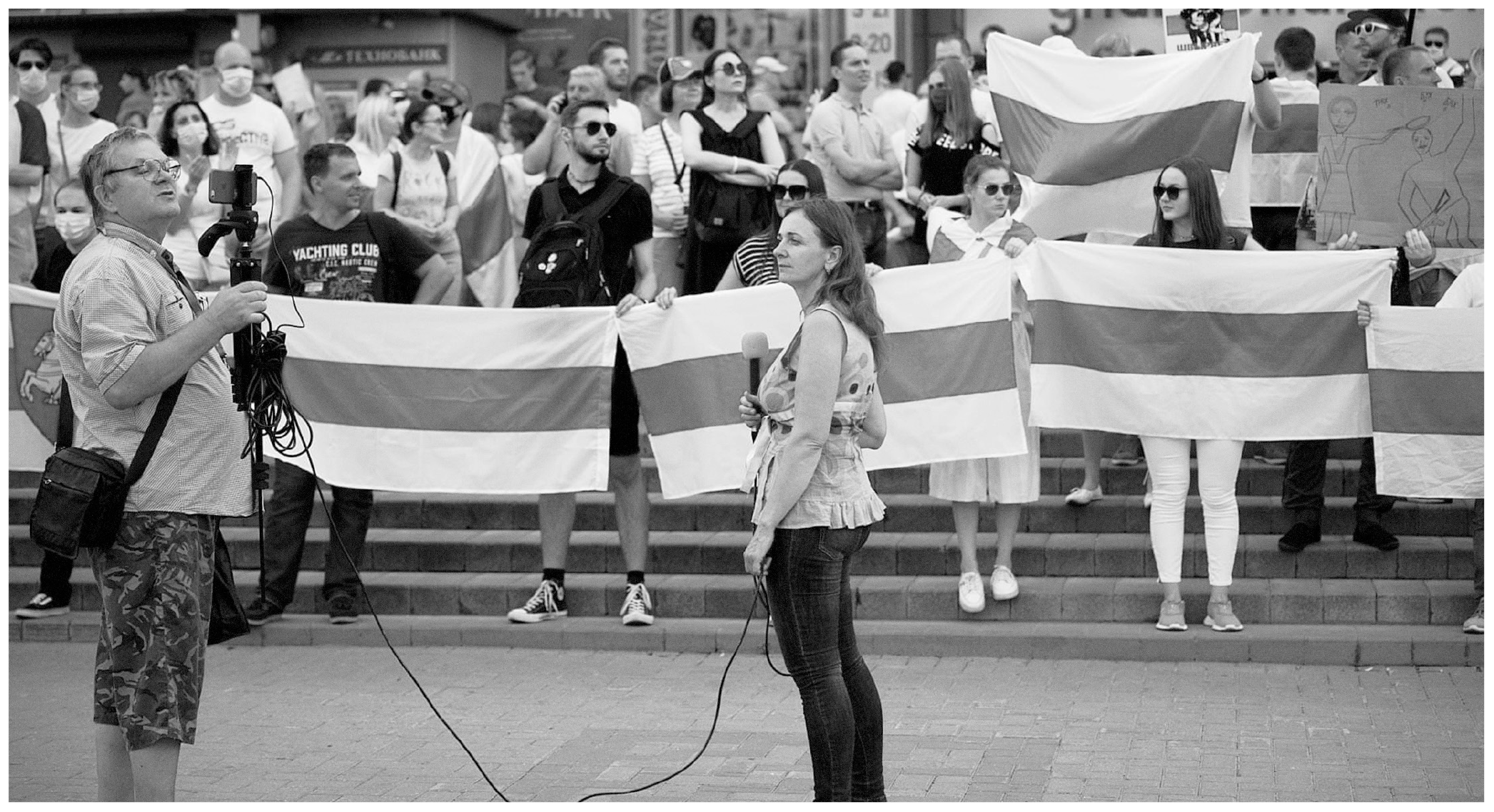
More than 60 of those journalists were subjected to violence, collectively faced more than 1,200 days in jail and were fined the equivalent of about $25,000.
This trend has continued into 2021. According to the Belarusian Association of Journalists, more than 50 journalists have been detained, been attacked or had their equipment stolen, including our former staff member Andrei Aliaksandrau.
Here, two journalists in Belarus talk of their own experiences of working in the country and the threats they have faced just for doing their job.
I am 47 years old and a historian by education. But for the last 13 years I have been working as a journalist for the Belsat TV channel and the human rights website Gomel Spring. I shoot videos, take photos and write articles.
The repression against me began long before the disputed August presidential election, which Alexander Lukashenko said he won convincingly.
Since 2016, I have been in court some 45 times for working for the Belsat TV channel without accreditation from the Ministry of Foreign Affairs. The channel’s management has repeatedly applied to the Ministry of Foreign Affairs for accreditation for its employees, but we have been denied.
In 2017, there were mass protests in Belarus against the unemployment tax, a “law against social parasites” proposed by Lukashenko’s government that required people working less than 183 days a year to pay the government $250 a year.
The pressure on me intensified. There were the traditional detentions during and after street rallies, trials and fines, but this time the police threatened to take away my teenage son because I had been on trial so many times.
At the beginning of 2020, when the Covid-19 epidemic began, journalists started being prosecuted for covering it. When the election campaign began in May, there was further persecution and repression of journalists.
In Belarus, the practice of preventive detentions is often used. Many times before the street protests began there were several police cars parked outside my house. When this happens, I have three options: leave the house and be immediately detained by the police; not leave the house and not get to the demonstration, which I have to cover; or try to run away from the police.
Once, I managed to escape (I had to climb over a fence like a monkey) and took a taxi. Twice, near my house, I was stopped by traffic police and forced to get into a police car, taken to the police station and held for hours until the rallies I was supposed to cover ended.
On election day, policemen were on duty outside my house in the morning, but I did not spend the night at home, so I had the opportunity to cover the election. In late August, when there were mass protests in Gomel against the rigging of the election, I was detained three times near my house and placed in a detention centre.
Several times I was detained in front of my teenage son. Because of this, he was very stressed and six months later he was still feeling the effects of this emotional trauma. My psychological state also deteriorated. I began to feel anxious, I was afraid of detention and arrest and I found it difficult to sleep. Since the election I have a prison bag packed with essential items and books in case of arrest at home.
The police wrote reports that I was allegedly a participant in an unauthorised mass event. Under the law, I can be detained for that but not for practising journalism without accreditation. In court, the reports of participation disappeared and I was instead fined for my journalism.
On February 16, my house was searched as part of a criminal case (not against me). Organised-crime officers searched it for three hours for protest symbols, money, bank cards and other information. As a result, a computer, two cameras, a video camera, hard disks, SD cards and a voice recorder were confiscated.
Working conditions for journalists have changed a lot. Authorities set very high barriers to prevent us obtaining information. That is why we often ask people, activists, to take photos and record audio for us during protests and trials.
There is now a fear – and sometimes terror – in Belarus because of this repression of journalism and civil society. Thousands of people, including journalists, have been forced to leave the country.
Amendments to the law came into force on 1 March, increasing the maximum period of detention for participating in an unauthorised protest from 15 to 30 days and increasing the maximum fine from $350 to $3,000.
These measures have borne fruit and organised street protests have become less common. But the attitude of the people towards the dictator and the police has certainly not changed. It is absolutely negative, full of hatred.
Being an independent journalist in Belarus has never been easy. Even before the presidential election of 2020 you could get in a lot of trouble just for being a professional journalist and doing your job.
If you want to shoot a video in your hometown, a vox pop for example, the police have the right to detain you for three hours just to check who you are. And even if you have a pass or ID card with you, it won’t help you, so it was the easiest way for them to stop you from doing your job.
Alternatively, they can accuse you of working for the independent media without accreditation – something that attracts a big fine. And that has happened regularly to a lot of journalists, such as those who work for the independent Belarusian-Polish TV channel Belsat. Since its foundation in 2008, Belsat has tried many times to be registered, but every time it has been refused by the Ministry of Information.
Police detain a protester during the annual Dziady march, November 2020. The march goes from Minsk to a mass grave of Stalin’s victims at Kurapaty
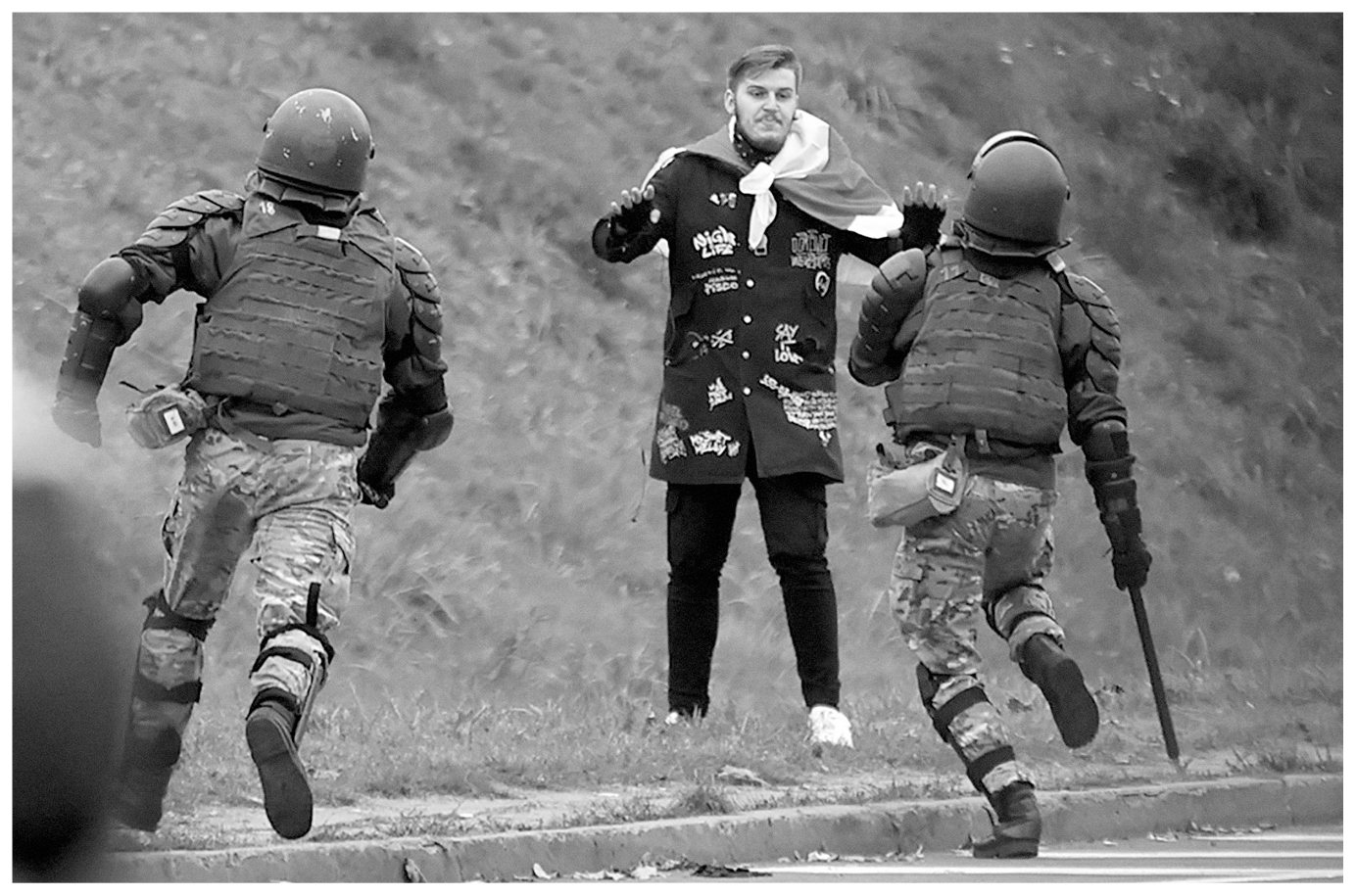
In 2017 after I live-streamed mass protests in Belarusian cities, I had to face the courts three times, and I was fined a total of $1,600.
To try to prevent me from streaming a political rally on 1 May, I was accused of being a hooligan who was cursing in the city centre. The only two witnesses in court were the policemen themselves, and I had to stay in jail for three days. My colleagues ended up covering the protest. Three days is not the maximum detention you can get. In an administrative case, you can be taken to a temporary detention centre for up to 15 days, and this has happened to a lot of journalists.
In more liberal times, this usually happened only when something big took place such as a massive protest or when somebody was too active covering stories the regime didn’t want people to hear about. Your house could be searched and your equipment taken away for months while the investigation was ongoing. It has never been easy being a journalist in Belarus.
But 2020 changed everything – for the worse. I have been arrested four times since August and I have been sentenced to a total of 35 days in jail, with the longest term being 27 days. The reason each time was simple: I was accused of participating in forbidden mass street protests. The law has made almost every protest illegal, even though the right to protest and the right for people to express their thoughts and feelings is written in the constitution.
Yauhen Merkis from Belsat has been arrested four times since August 2020
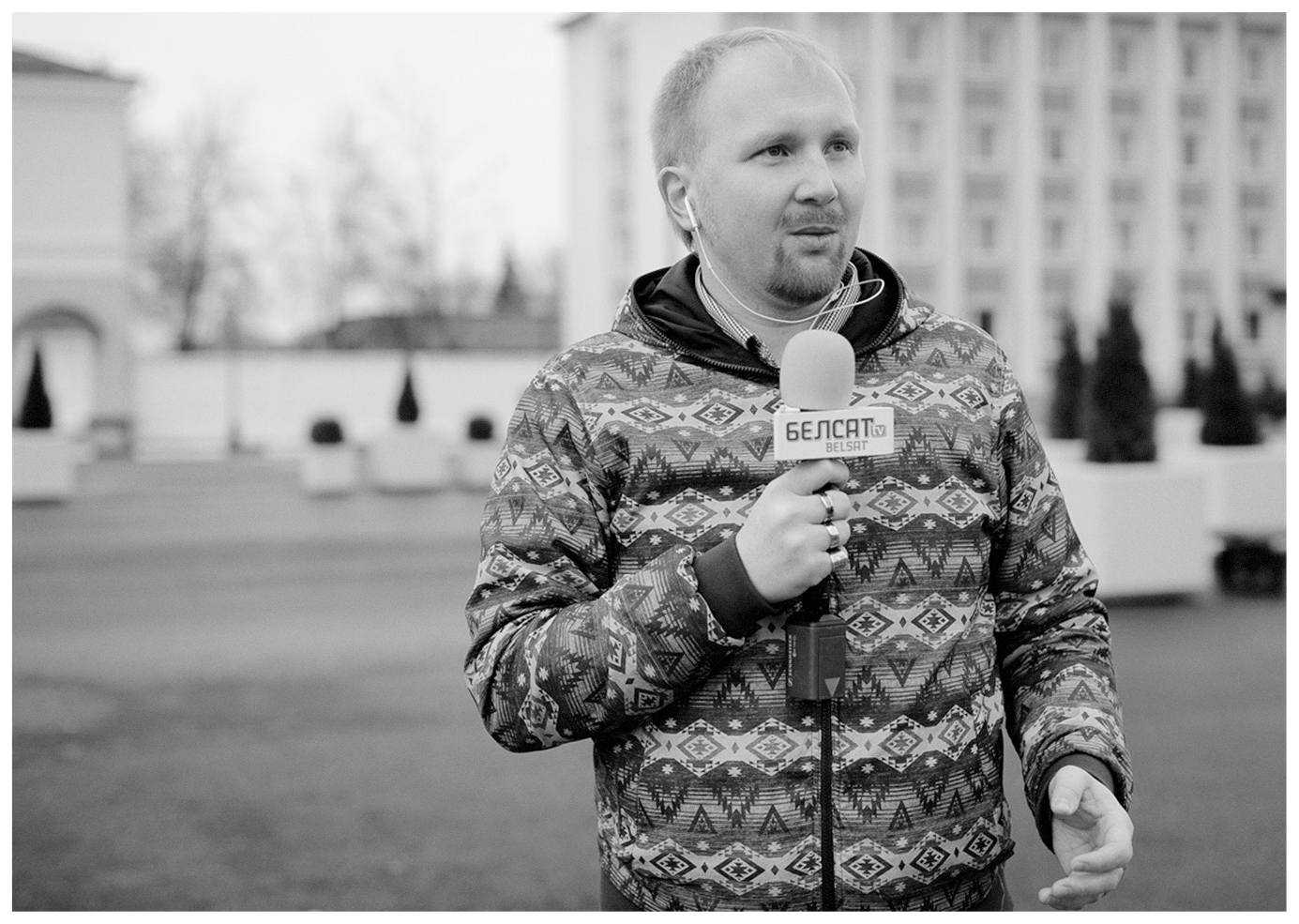
As proof of my guilt, the court used pictures from CCTV cameras provided by special police units or KGB officers. Although I wore a Press vest and had a Belarusian Association of Journalists ID card, it didn’t help.
The conditions in jail were awful. It was cold and damp, the toilet was just a hole in the ground and there was only cold water in the sink. You had the right to shower only once a week.
The authorities decided whether you could receive letters from relatives, friends and colleagues. The food was awful and, after being released, you actually had to pay for all this “comfort” and “security”. To prevent your colleagues meeting you on your release, you were driven to the outskirts of town, or even to another town, and released there. Nobody cared how you would manage to get home. The pressure continues when you’re free: surveillance, hacking attacks on your mail and social network accounts, regular visits by police trying to remind you that you don’t have the right to do anything “illegal”. Every time the doorbell rings, you grab your emergency bag containing the main things you have already packed in case of a possible return to prison.
The law doesn’t work in Belarus anymore. Before 2020, the regime tried to at least pretend that the law mattered. Now anything can happen to you. Anytime. Anywhere. It doesn’t matter whether you’re an activist, a journalist or just a patriot.
Working under such conditions isn’t easy and many people have left the country. There are not many independent journalists left. That was always the objective of the police, the Belarus intelligence agency, the KDB, and the regime itself.
But we’ll keep fighting for our freedom until we win, even if our weapons are a PC, a video camera or just a pencil.