Abstract

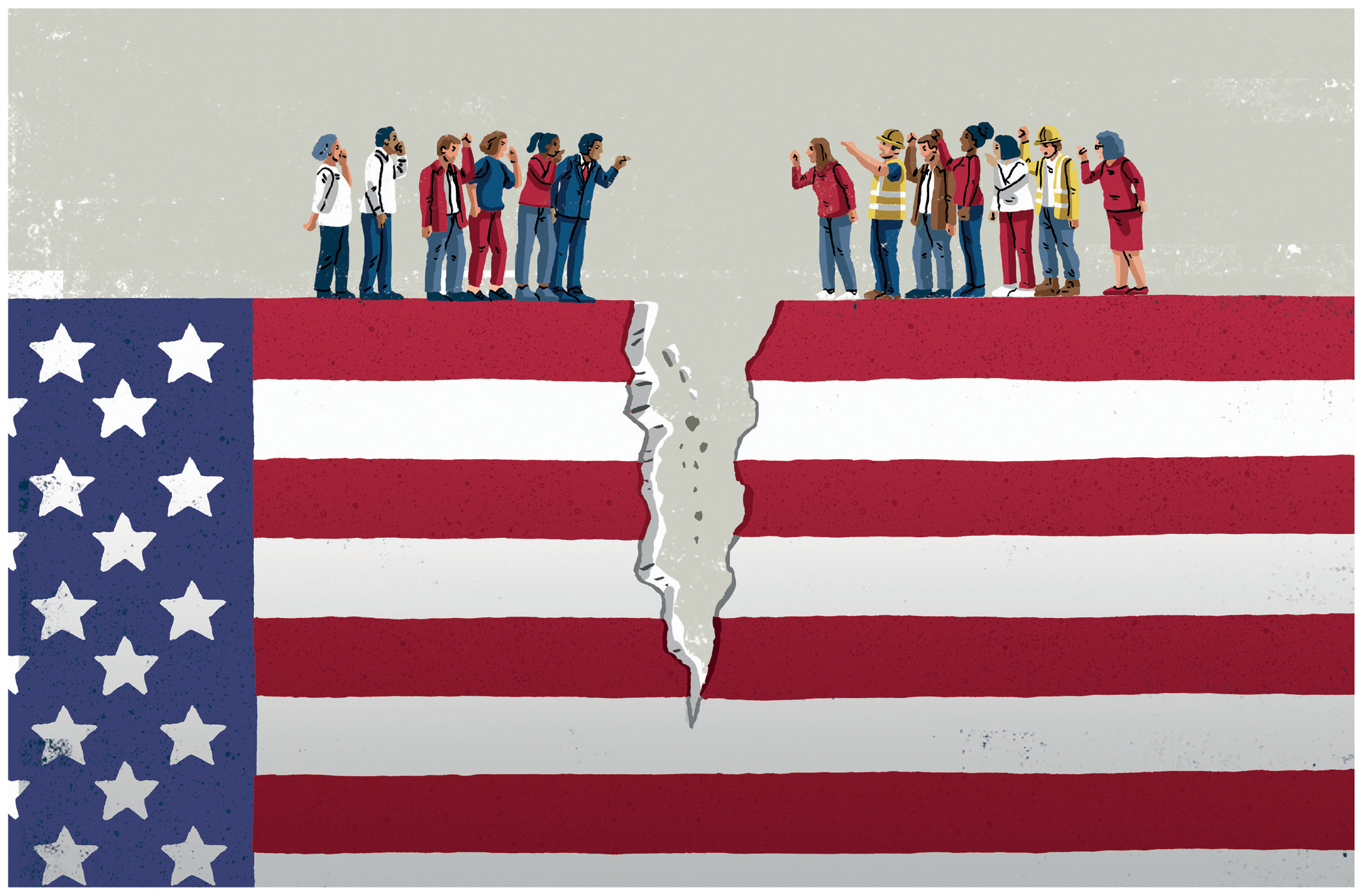
THE IDEA OF “fake news” and a variety of related concepts (including “post-truth”, misinformation and “alternative facts”) has become central to the discussion of politics in recent years. Concerns about the issue have been raised around the world. Prominent examples include the USA, particularly following Donald Trump’s lie-fuelled presidential election victory in November 2016; and the UK, following the vote to leave the EU in June of that year.
These examples are high profile, but in many countries the problem of fake news existed long before 2016. Citizens of Russia, parts of central Europe and the Philippines would recognise lots of the tendencies that we now associate with fake news. Post-2016, we have seen similar patterns in other countries, including in large democracies such as Brazil and India.
When we consider fake news, the first question that needs to be asked is deceptively complex: what exactly do we mean by the term? In an article published in Nature in 2018, a group of prominent social scientists suggested fake news was “fabricated information that mimics news media content in form but not in organisational process or intent”.
This definition seems straightforward. However, things become more complicated when we look at other uses of the term. At a press conference during the 2016-17 presidential transition period, Trump responded to a CNN reporter who was questioning him by saying “You’re fake news”. In 2018, the Trump White House created the Fake News Awards. The top 10 list included organisations such as The New York Times, Time and ABC News and largely consisted of reporting errors that had already been corrected.
Things such as the Fake News Awards have led to considerable pushback against the term. In the UK, a parliamentary committee found that it had “taken on a variety of meanings, including a description of any statement that is not liked or agreed with by the reader”, and as a result the term had ceased to be useful.
In reality, it is being used in two distinct ways, which need to be disambiguated. The first definition relates to the spreading of fabricated news-style content. We can think of this as “fake news as misleading content”. The second definition relates to when political leaders use it as a rhetorical device to attack those they perceive to be their political opponents, particularly in the media. This is “fake news as populist discourse”.
The tension between these two definitions becomes apparent when they generate seemingly contradictory rhetoric. This happens if a populist political leader uses fabricated content to accuse a reputable news organisation of spreading inaccurate information. This occurred, for example, in the aftermath of Trump’s inauguration ceremony, when the size of the crowd attending was disputed. Inaccurate, inflated figures about crowd size were being circulated. As a result, media organisations tried to use reputable methods and sources to provide more accurate figures. They were then promptly accused of lying by the Trump administration.
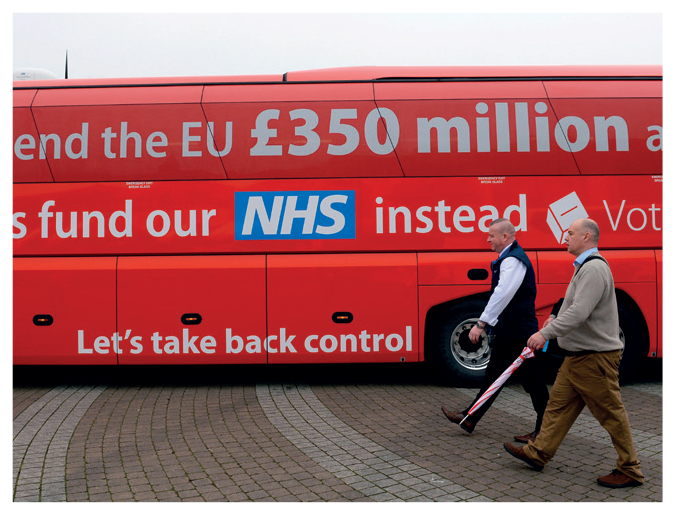
The Vote Leave campaign bus before the Brexit referendum in May 2016
CREDIT: Stefan Rousseau/PA Wire/PA Images
Can these two seemingly contradictory definitions of fake news be reconciled? If we look at it from a different perspective, these two distinct ideas become part of a single problem. We need to think of fake news as an institutional challenge, created by the declining democratic legitimacy of people who have traditionally been looked at to structure and impose boundaries on political debate: most obviously the newspaper editor and the television journalist.
We should be careful to avoid what is sometimes called “golden ageism”. News coverage was not perfect in the past. What is sometimes called the mainstream media has rarely been a paragon of virtue. However, it is also undoubtedly the case that the relative decline of mass media such as newspapers and broadcast television and their replacement with increasingly personalised news content has dramatically changed the way we get information. This is most obviously true of social media, but it is also the case with the growing number of television channels that viewers can choose from.
It is this context which shapes the problem of fake news. The first version of fake news – fake news as misleading content – is powerful because information can circulate more freely and news agendas are more porous. The second form – fake news as populist discourse – is effective precisely because it is often aimed at institutions (such as broadcasters or the traditional media) that are struggling to retain their legitimacy and authority.
Understanding fake news in this way allows us to address another question frequently raised about the problem: haven’t politicians always lied? And if they have, why are we suddenly so concerned about fake news?
Falsehood has long been a part of politics, and we can find examples going as far back as Ancient Greece and Ancient Rome. However, it is the distinctive institutional dimension to fake news that gives it contemporary relevance.
This definition also points towards some possible solutions to the problem, and individuals can certainly do things to protect themselves. Don’t share things without reading them first (on social media, you often see only the headline). Think about the provenance of a story. Do you know the news organisation that is posting it? Have you seen the same story on other, reputable news organisations? Do individuals or organisations sharing content have any partisan or ideological biases? These core media literacy skills have never been more vital.
However, these approaches can only ever offer partial solutions, as they are overly focused on individual news consumers. Instead, we need to be more ambitious and think about how we can reimagine the media and political environment to make it fit for purpose in the 21st century. How do we create environments where people can encounter a diverse range of ideas representing different strands of thinking in society? How can those ideas can be tested through pluralistic debate, and in such a way that debate does not rapidly descend into partisan trench warfare? In short, the only way to fix the challenge of fake news is a renewed political culture.
CREDIT: Eva Bee/Ikon Images