




Abstract

With the dictatorship in Belarus detaining and murdering journalists,
President Lukashenko and his son at a rally in 1996
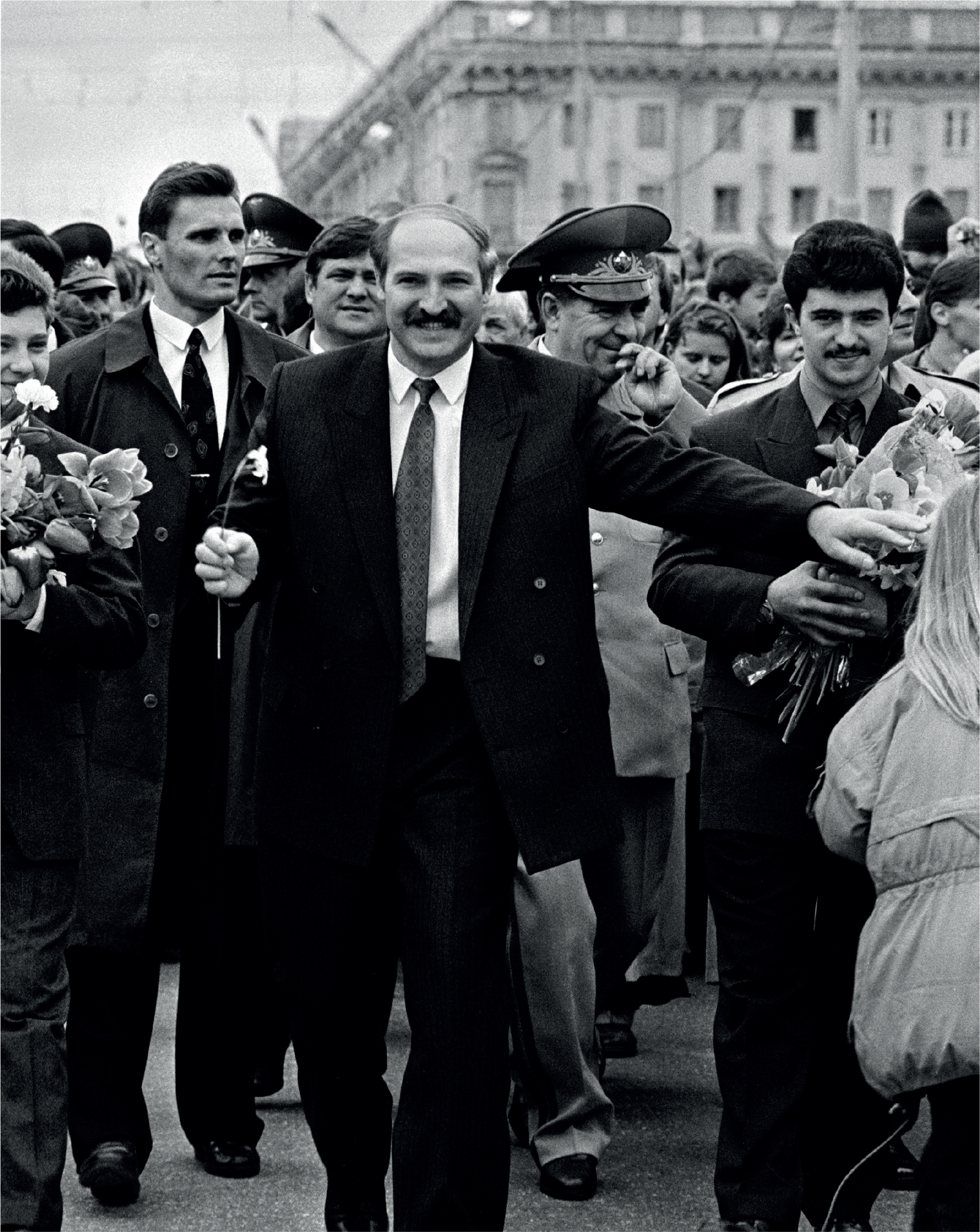
“
“There are, of course, certain distinctions,” said Brushko. “But in principle, [both periods] resemble one another.”
The compositions of the images that make up his photographic project, Revision 30, comprising pictures taken by him and his father, attest to this.
He asserts that both epochs are “identically bad”, but when he recounts the sorry tale of the attacks on the media site tut.by, where he works, it becomes clear that journalism and journalists are experiencing unprecedented threats in Belarus.
“A week ago there was a round-up at the portal and 15 people were arrested,” he said. “This sort of thing didn’t happen in the ‘90s.”
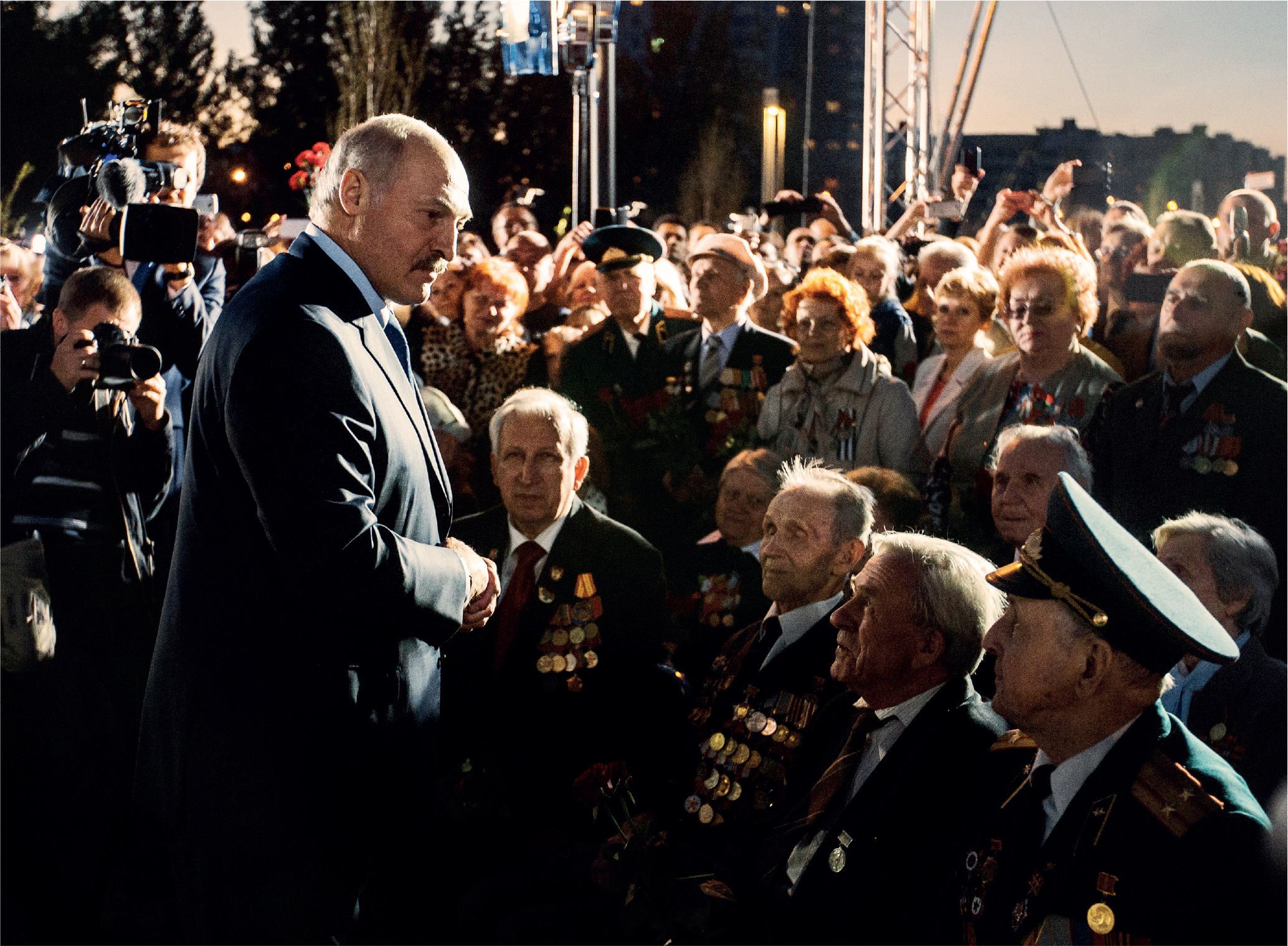
Lukashenko addressing veterans from the Second World War, 2016
The editor-in-chief was accused of tax-evasion, a transparent pretext for the state to repress dissenting reporting on the protests that began in Minsk in 2020.
The journalists who were targeted reported on economic, political and social problems within Belarus and went out to protest against president Alexander Lukashenko and his government.
Among them is Katerina Borisevich, who was sentenced to six months in prison for her reporting on the murder of activist Roman Bondarenko. The authorities had tried to portray his death as the outcome of a drunken brawl rather than a politically motivated attack by security forces.
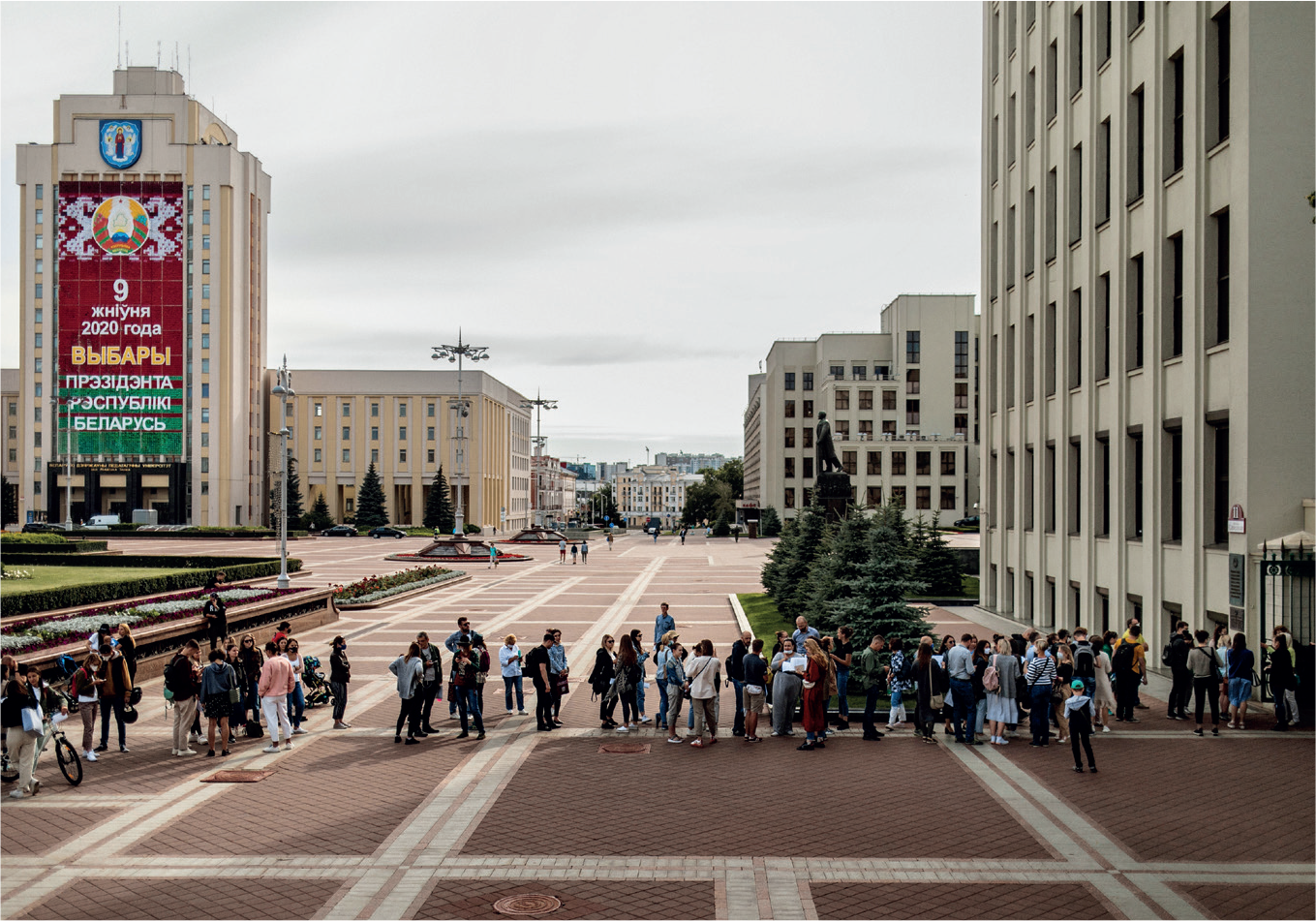
Queuing to file complaints to the Central Election Commission over the refusal to register presidential candidates Viktor Babariko and Valery Tsepkalo Minsk, July 2020
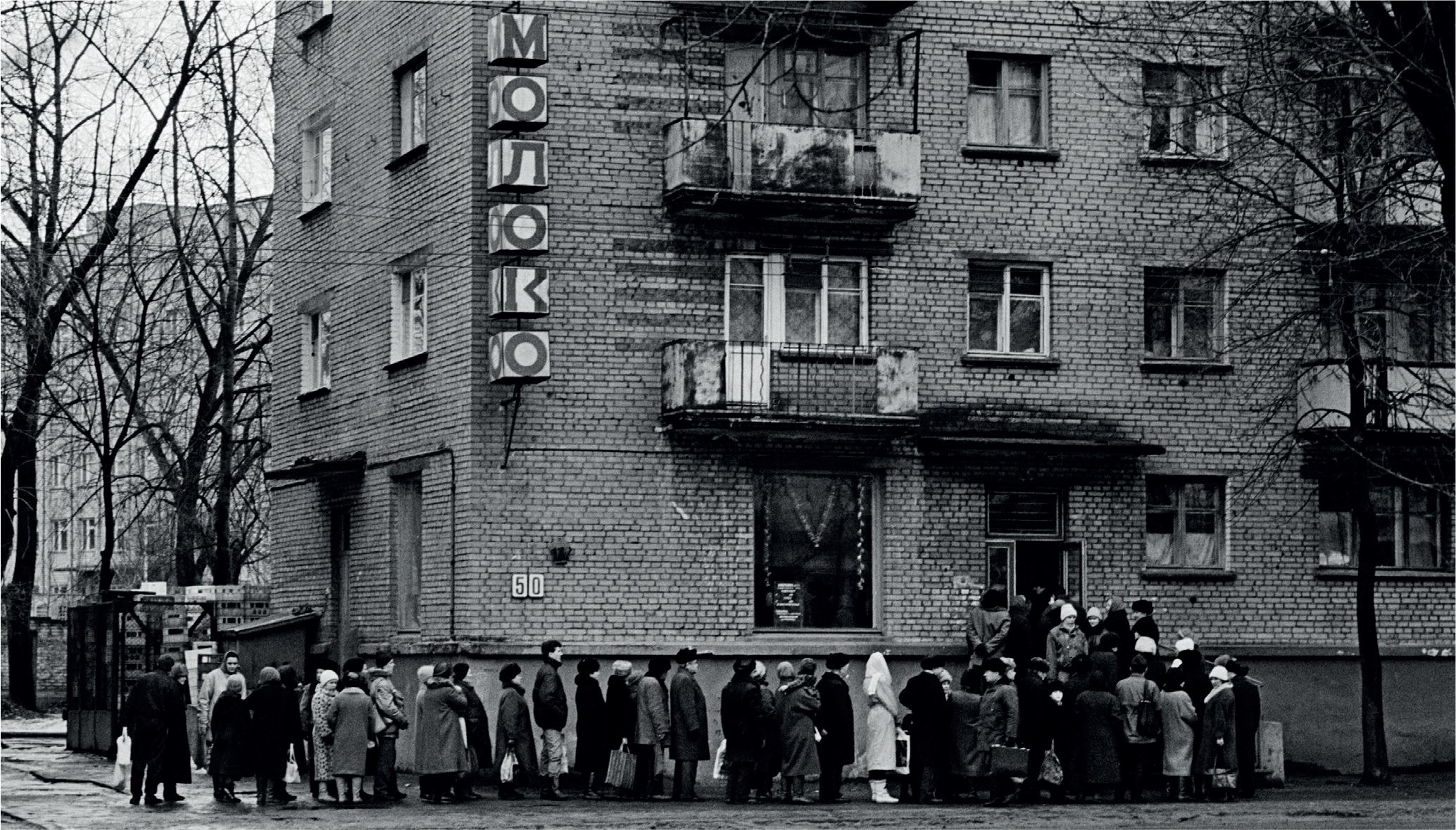
Queuing for milk at a shop in Minsk in 1991
“Most of my co-workers decided to leave Belarus – we don’t want to end up in prison,” said Brushko.
He also made the decision to leave as the situation was clearly becoming very dangerous.
When I ask where he is now, he says his lawyers have advised him not to let his whereabouts be known – testament to how the long arm of the Belarusian state has a reach beyond its borders when seeking to quash journalists whose work it sees as problematic.
This is illustrated by the recent detainment and torture of journalist Roman Protasevich, who was hauled off a Ryanair flight to Lithuania which had been diverted to Minsk under the pretext that the plane was subject to a possible terrorist attack.
Minsk workers rally against a large increase in food prices, April 1991

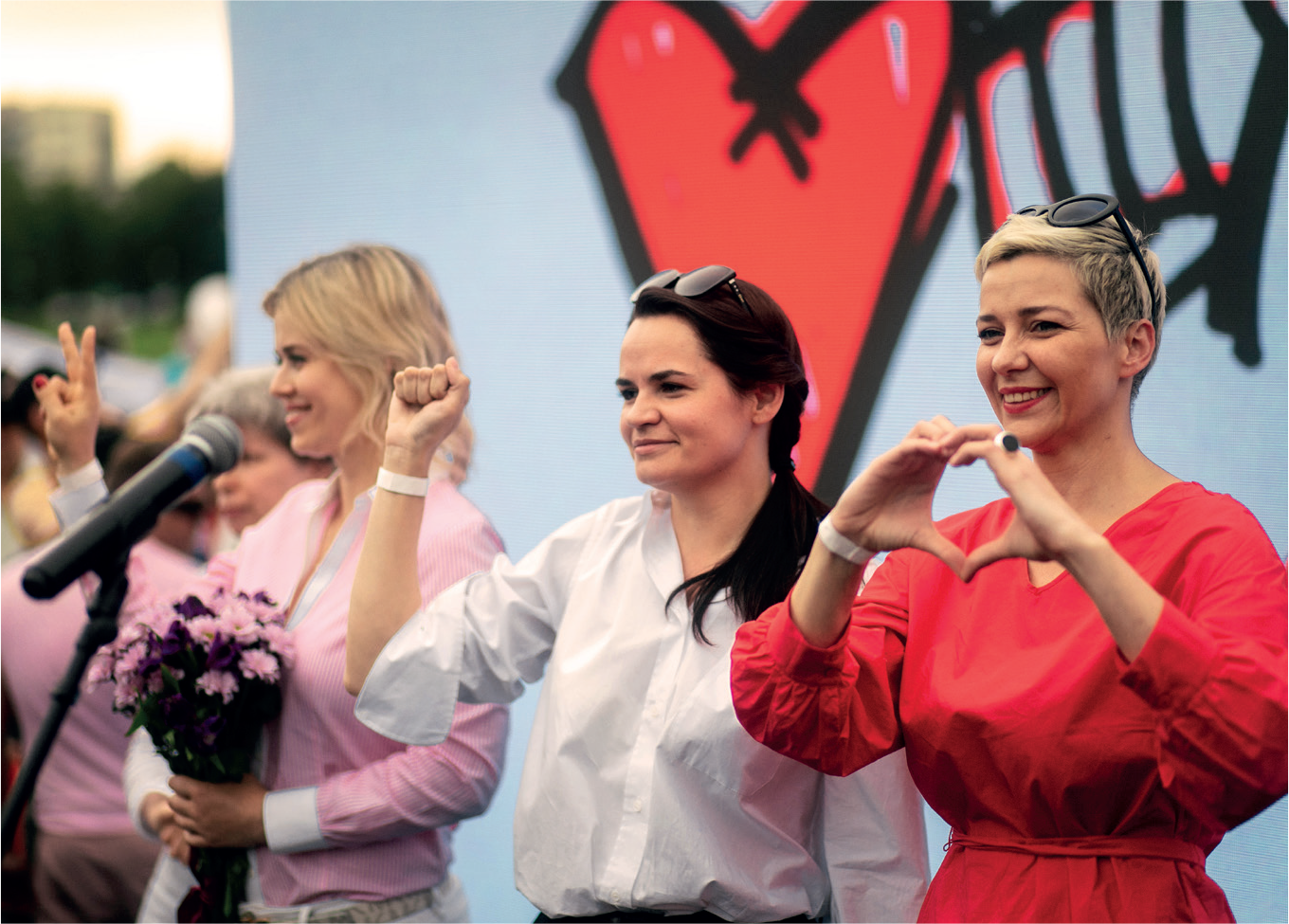
Veronika Tsepkalo, Svetlana Tihanovskaya and Maria Kolesnikova who led the campaign in 2020 to unseat President Lukashenko
Even during the period surrounding the collapse of the Soviet Union, journalists weren’t arrested, Brushko tells me. The worst that could happen was getting fired.
He can’t say what the future will look like for tut.by. The portal is still live, but his account and those belonging to his co-workers have been blocked.
And yet he remains hopeful that the situation might improve. I ask him how he understands his work as a photojournalist. Is it just a matter of recording events, or can it change a country? At the moment, he sees his main role as informing people to the greatest degree possible about what is going on in the country. He adds that, despite the protests, nothing has actually changed, and without outside involvement, even stabilisation will be impossible. Changes have, however, occurred in society, and he says, wryly: “Before, people stood for hours for sausages, for food. Now they stand for freedom. Changes have happened.”
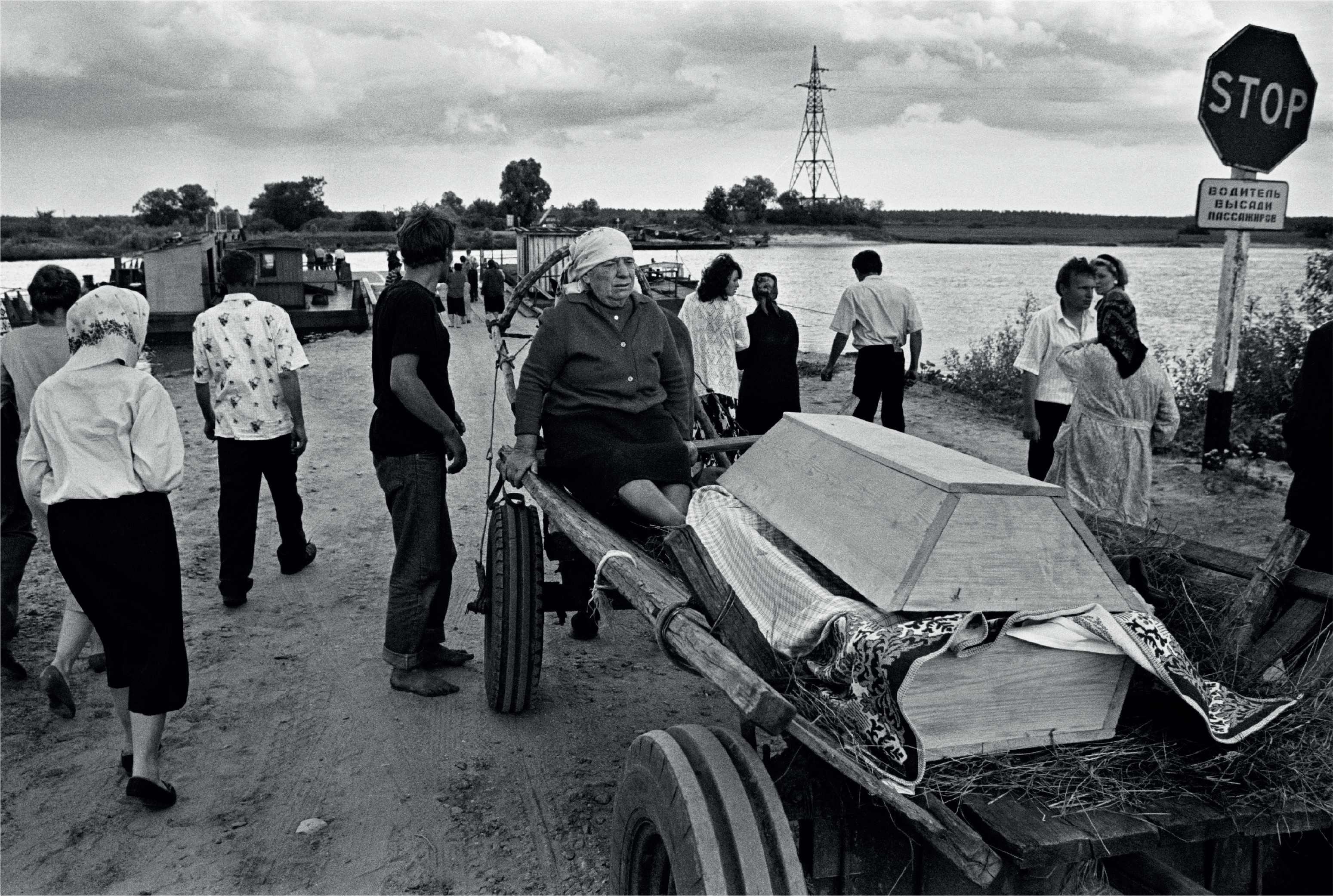
Funeral of a neighbour in the Gomel region in 1997. Much of the nuclear fallout from the Chernobyl disaster was in Belarus
These photographs, despite their similarities, show that as one historic event ends, another begins.
For the project it was important to think about the tectonic changes that have taken place, he says, adding that he wanted it to be easy for people in any country to understand the differences as well as the similarities.
“Visual language is universal.”
A new project will soon take place in printed form in a German magazine based in Stuttgart. Intrigued by the decision to go offline, I tell Brushko it brings to mind the glory days of samizdat distribution throughout the USSR. He sees the influence of printed papers being less prominent nowadays. On one hand he sees the fun in the project, but on the other he sees it as an important way to preserve the role of printed newspapers and highlight a unity between past and future. He hopes his father would have been proud. We return to the situation in Belarus and how he sees its development.
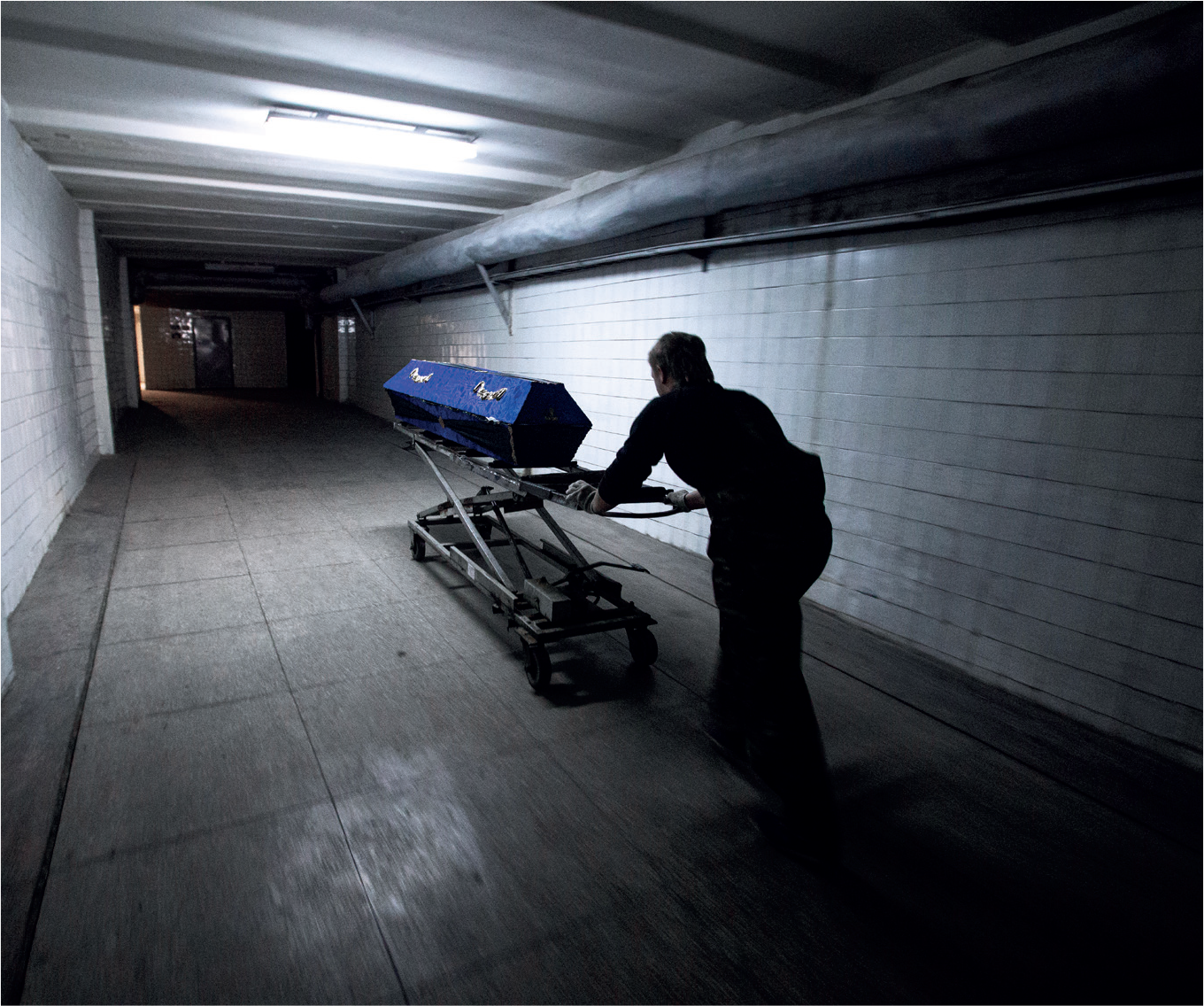
City Crematorium during the Covid-19 pandemic, Minsk 2020
We understand that this is a time of change... we will survive it,” he said. “But it’s painful to see your colleagues sitting in prison simply because they are doing their jobs – and doing their jobs well. The tax evasion stuff is just an excuse. And we shouldn’t forget about Roman Protasevich. He worked for a long time as a journalist in Belarus, and what has happened to him is clearly related to his previous work. In Belarus it’s a hard time to be a journalist. I hope journalists make it through. Everything should be questioned.”
He smiles and spreads his hands.
“And if the authorities don’t like it when things are questioned, then we’re probably doing our job well.”