




Abstract

Journalists pay the price for clan rivalry in the Kurdistan Region of Iraq, writes
Camera operator Rebaz Ibrahim films a protest in Sulaymaniyah, Kurdistan Region
CREDIT: Winthrop Rodgers
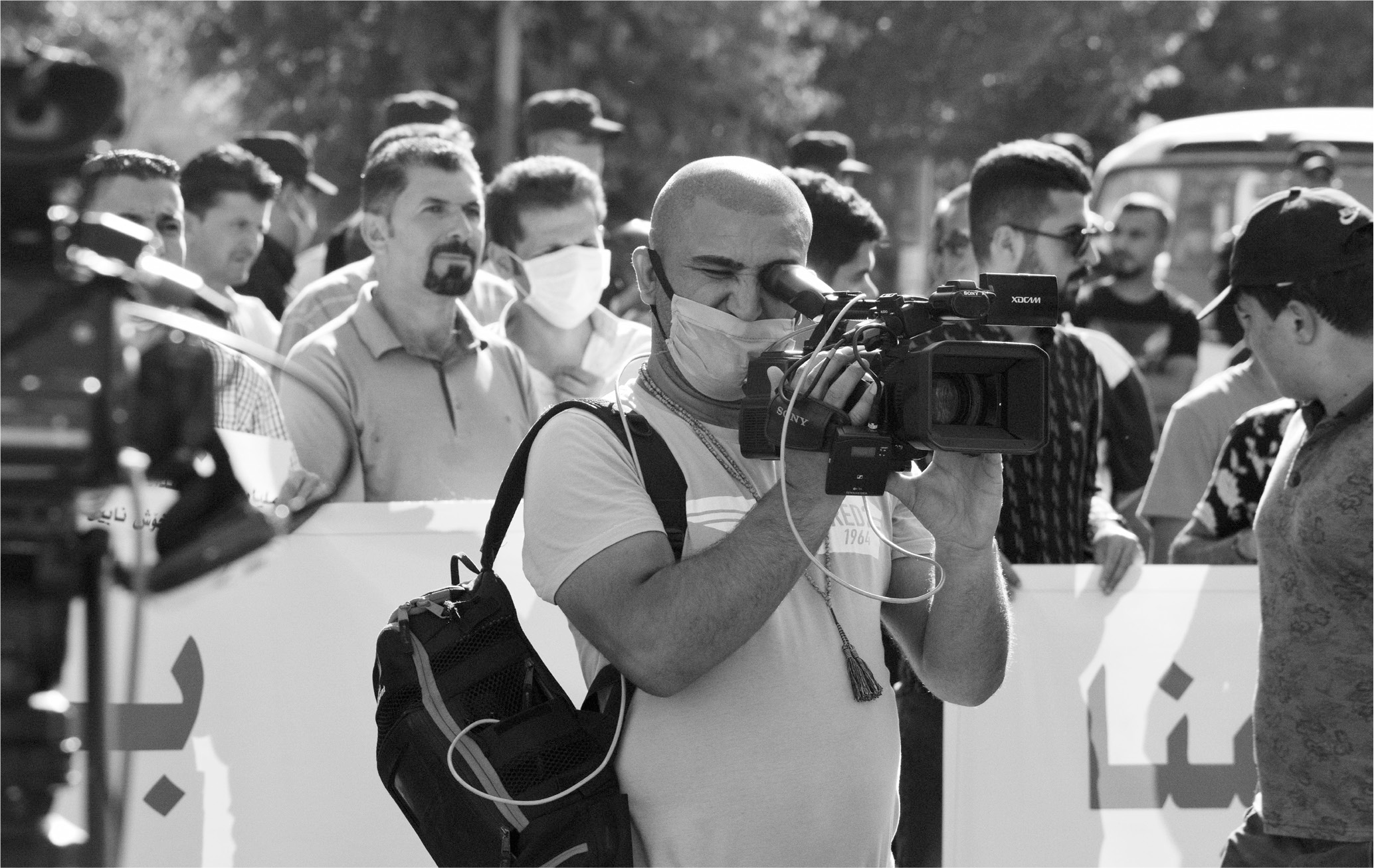
Sherwan Sherwani, Guhdar Zebari and Ayaz Karam were arrested in October last year. At the time, protests were taking place across the region against the dire economic situation and delays to the payment of civil servants’ salaries. Initially, the three were not told what they were suspected of, but eventually it turned out they would be prosecuted for breaching security laws.
According to Human Rights Watch, the trials were a travesty of justice, with flawed procedures, weak evidence and a lack of proper access to lawyers. Despite international advocacy by human rights and press freedom groups, their sentences were confirmed in early May.
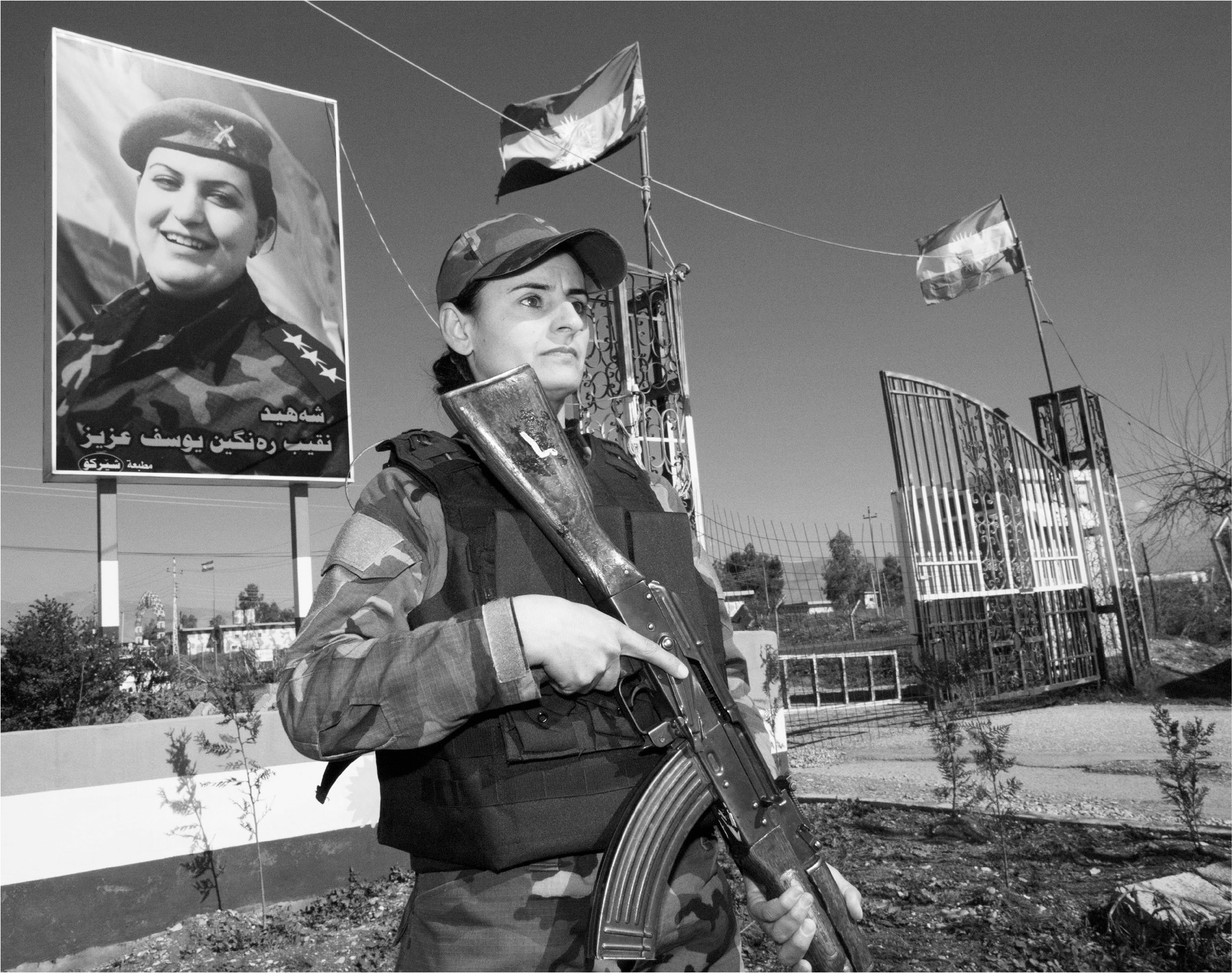
In a way, it seems odd that there is this serious lack of press freedom in Kurdistan. The region in the north of Iraq, de-facto autonomous since 1991 - and officially so since the new Iraqi constitution in 2005 - portrays itself to its Western economic and military partners as a haven of stability, progressiveness, democracy and freedom.
Kurdistan, with its female fighters, likes to portray a progressive image
CREDIT:dpa picture alliance/Alamy Stock Photo
Compared with Iraq proper, the Kurdistan Region has a lot going for it. While Iraq was plunged into chaos and violence after the US invasion in 2003 and subsequent occupation, it remained calm: no bombings, no kidnappings, economic growth, elections and power-sharing between the different political factions.
But a closer look reveals a grimmer picture. The region is divided. In the 1990s, after autonomy could be established because of a Western-imposed no-fly zone over Kurdish lands to protect the population against the rage of Saddam Hussein, tensions between the most important political parties led to a three-year civil war. Ever since that ended, in 1997, the southern part of the region has been governed by the Patriotic Union of Kurdistan (PUK), while the northern part is under the control of the Kurdistan Democratic Party (KDP).
The smaller parties, Gorran (Change) and New Generation Movement, have media as well: KNN and NRT respectively.
As the higher echelons of power are untouchable, the journalists on the ground bear the consequences. KDP media have trouble working in PUK areas while Kurdsat must be careful when it’s reporting in Erbil (the capital city) or Duhok, both KDP territory. The NRT’s offices in Erbil have been closed several times and have been the targets of arsonists. TV channels are accused of not just covering protests against their rivals but co-organising them, resulting in detentions.
These detentions, says Rebaz Majeed, a journalist based in Sulaymanya, which is in a PUK- controlled area, are something you can try to protect yourself against.
“When I report about a demonstration, I make sure I am surrounded by protesters as much as possible,” he said. “They work as a shield against security forces that may want to detain you.”
What also protects him is that he works for Voice of America. But ever since the sentencing of three of his colleagues last February, he feels less confident.
“Everybody has contacts in the parties and they will get you out but, apparently, that doesn’t always work anymore. Detentions are not just intimidations.”
Majeed was another who reported on the protests last year. He tried to take a picture of security forces but they shouted at him: “Move that camera or I will cut your throat!”
Has he been more careful ever since? “No. I work according to the rules of the profession - that’s all I can do.”
Don’t misunderstand Barwari: he doesn’t intend to blame Sherwani for the injustices against him. He wants to make clear that journalists in the Kurdistan Region are not aware enough of the red lines and often lack professionalism. That is not the mistake of just a few journalists, but part of the bigger picture of the lack of press freedom.
Corruption is a red line. The Kurdistan Region is notorious for it, but writing about it is an absolute no-no. Journalists Kawa Garmyani and Sardasht Osman were murdered for doing just that in 2016 and 2010. Their murders were never solved. They crossed a line by properly investigating corruption and publishing their findings. But other journalists endanger themselves by simply making casual accusations on social media, according to Barwari.
Barwari couldn’t defend the journalists this time as he specialises in freedom of expression cases and this one was about security laws, but he has no doubt that his colleagues were prosecuted because of their journalistic work. Judges in Kurdistan are not independent but can still convict people only when there is evidence, Barwari said.
The Human Rights Watch assessment said that the evidence in the cases was flawed, and Barwari said that evidence can be completely fabricated. A defendant can claim evidence was forged, but proving it is something else. It would require an independent forensic lab, for a start. Without being too explicit, Barwari sketches a web in which journalists get caught and only get more stuck the more they struggle.
That the sentenced journalists were prosecuted under the Iraqi security law is also telling. The Kurdistan Region has its own laws governing journalistic activities which are more liberal than those of Iraq. By prosecuting journalists under Iraqi laws, the Kurdistan authorities ensured they could be punished more harshly.
Barwari would love to set up courses for journalists to educate them about their rights. He set up an initiative with lawyer colleagues, but getting the finances to really make a difference is hard. Even foreign representations in the Kurdistan Region don’t support such independent initiatives.
Majeed thinks the Western countries that cooperate with the Kurdistan Region in projects and that support Kurdistan militarily should make that aid conditional on supporting press freedom. He said: “I was once invited by a foreign consulate to speak about press freedom. But I declined the invitation. I don’t want to be a photo opportunity; I want them to really do something.”
Barwari continues publishing his investigative pieces - about Kurdistan and Iraq - on small websites. He’s not politically active on social media. He knows the red lines. His friends sometimes tell him to adopt a pen name to protect his life, but he refuses: “Reaching press freedom is a process. Every generation has to make its contribution, and this is mine.”