




Abstract

The Indian government has been cracking down on criticism of its handling of the pandemic under the cover of “fake news”, writes
Prime minister Narendra Modi’s government ordered that the tweet, along with 51 others, be taken down on, based on the premise that it was adding to misinformation.
Bég’s tweet had asked about the role of a Hindu religious gathering in escalating the spread of the virus.
Another tweet, by the Indian American Muslim Council (a Washington DC-based advocacy group), which embedded a Vice news article about a Hindu religious ceremony during the second wave was also blocked.
The group responded in a statement: “The government’s alacrity in pressuring Twitter to block tweets critical of its handling of the crisis shows the administration’s moral compass continues to point in a direction that is shamelessly self-serving.”
The government’s position is a significant change in rhetoric compared with last year, when members of a Muslim missionary group were labelled as “super-spreaders” – a statement which did not get blocked on social media.
As the pandemic has exposed the country’s crumbling healthcare system -India has confirmed more than 350,000 Covid deaths – its government has been busy fixing its image, on both traditional and social media platforms.
The objective of online censorship during the pandemic has been to ensure that a controlled narrative goes out to citizens – one that shows Modi in a positive light.
“This is just a tactic to intimidate people against saying anything even while our loved ones are gasping for life,” Bég, who hails from Kashmir, told Index, referring to his censored tweet. “Instead of utilising all available manpower to mitigate this crisis, the government is preoccupied with blocking critical comments on social media.”
Facebook, Instagram and YouTube also took down posts that were critical of the government’s handling of the crisis, although Facebook restored posts with the hashtag #ResignModi after removing them for a few hours, saying it had blocked the hashtag by mistake and the decision had not been based on the government’s order.
The world’s largest democracy is the biggest market for WhatsApp and the second biggest market for Facebook.
This is also where social media companies routinely contest censorship attempts by the government.
The latest slugfest is over new rules the government introduced in February.
According to these rules, Twitter and Facebook should comply with the government’s take-down requests, share users’ information with law enforcement authorities and appoint locals in the roles of chief compliance officers and resident grievance officers.
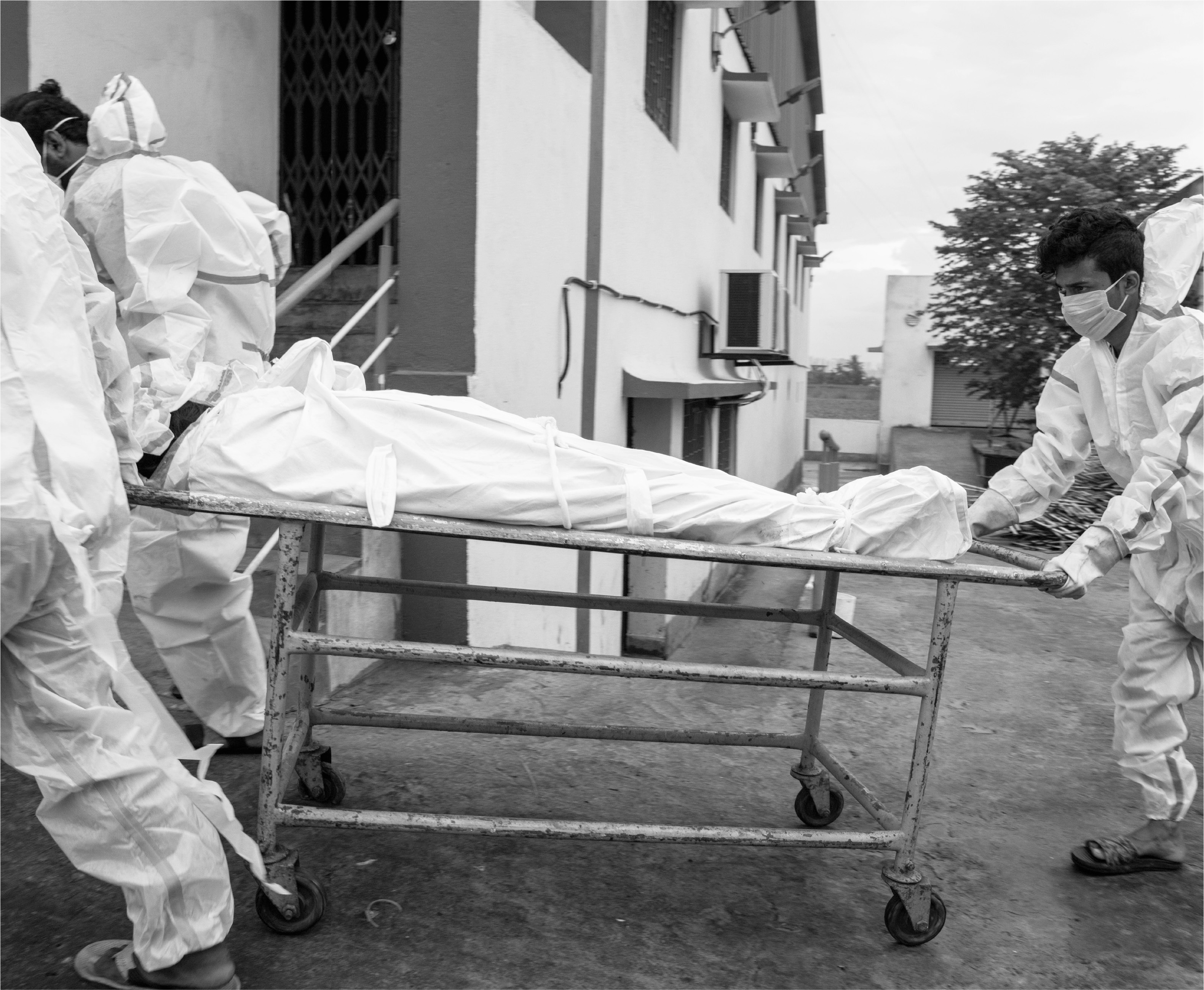
As the death toll rose, the Indian government fought against criticism of its policies.
CREDIT: Massimiliano Ferraro / Medialys Images / Alamy Stock Photo
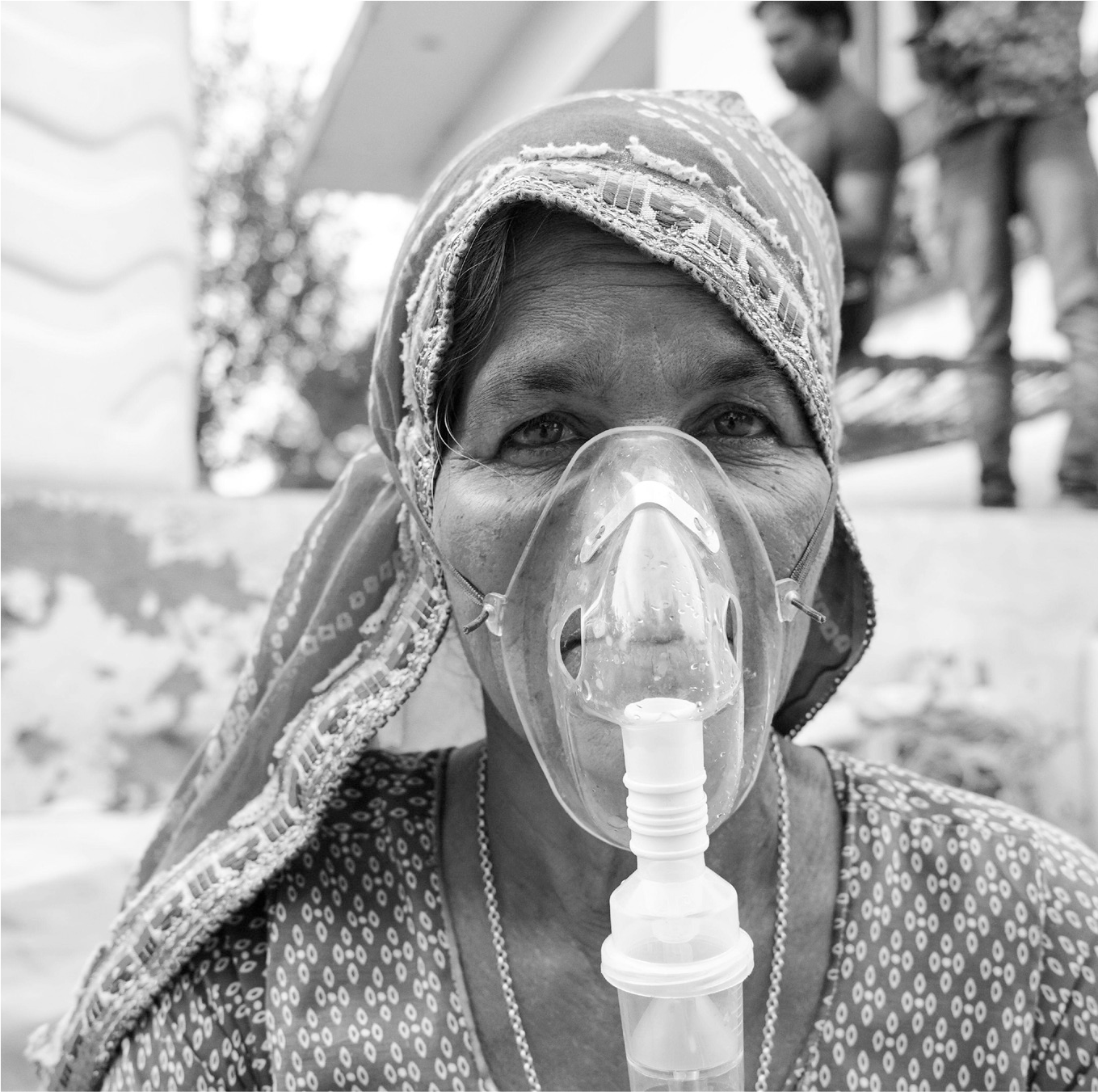
An Indian Covid-19 patient wearing a mask.
CREDIT: Shimbhu Saini / Alamy Stock Photo
The new rules will also force WhatsApp to hand over information on the “first originator” of messages if asked by the government.
WhatsApp has taken the Indian government to court challenging these rules, arguing that the traceability provision is unconstitutional and against people’s fundamental right to privacy as underlined by India’s Supreme Court.
Twitter released a statement saying: “To keep our service available, we will strive to comply with applicable law in India. But, just as we do around the world, we will continue to be strictly guided by principles of transparency, a commitment to empowering every voice on the service, and protecting freedom of expression and privacy under the rule of law.”
Ten global non-profit organisations including Article 19, Reporters without Border and Human Rights Watch left have written an open letter asking tech companies to defend privacy and ensure free speech by pushing back against government orders that infringe on rights.
Before these rules were brought in, Twitter took a tough stance against the government’s takedown requests. Earlier this year, for example, it did not follow the administration’s orders to block activists who supported farmers’ protests.
New Delhi-based journalist and filmmaker Vinod Kapri took a swing at the government for mishandling the crisis but found his tweet had been taken down.
“Given that the government has increased censorship of mainstream media, [social media] is the last bastion of freedom of expression in the country,” Kapri told Index. “It is imperative for these companies to understand their role and potential.”
For its part, the government maintains that while it “welcomes criticisms, genuine requests for help as well as suggestions in the collective fight against Covid-19, it is necessary to take action against those users who are misusing social media during this grave humanitarian crisis for unethical purposes”.
This isn’t the social media companies’ first brush with censorship in India. The previous regime, led by the Indian National Congress party, introduced changes in the law to stifle online speech.
“There is no government that does not do this,” said Pratik Sinha, co-founder of AltNews, India’s leading fact-checking website. “But there is absolutely no doubt that [Modi’s] BJP has taken this to another level.”
One of the tweets taken down belonged to Pieter Federick, a freelance journalist specialising in South Asia. He said that the previous administration had set a precedent for the authoritarian approach to freedom of expression we see today.
He said: “Many of the examples of censorship under the last regime were one-off incidents. The Modi regime is demonstrating a new, systematic pattern of crushing dissent in all quarters – sometimes even within its own party. The broadness, speed and viciousness with which the Modi regime is strangling critics is something unprecedented.”
Journalists die on India’s Covid frontline
Reporters have been dying because of Covid-19 as they try to share news of the pandemic, writes
IN THE CITY of Bangalore, often called the Silicon Valley of India, the summer days are bright and sunny, with occasional bursts of rain. But instead of the familiar noise of traffic, an uncanny silence reigns – pierced only by birdcall and the wail of ambulances passing by every hour.
Like many parts of India, the city I live and work in has been in lockdown for nearly two weeks now, desperately trying to curb the spread of the virus. I’m one of the privileged few, with a roof over my head, food on my table and a job I can do from home, while many of my colleagues all over the country are out reporting and risking their lives.
More than 300 journalists have fallen victim to the second wave of the pandemic so far. That’s three deaths a day in April and four a day in May. In Delhi, the city where I spent my formative years as a reporter, I see former colleagues putting out SOS messages on Twitter every day seeking oxygen, hospital beds and essential drugs for their friends and family, complete strangers – and sometimes themselves.
One old colleague, who came down with Covid along with her father and infant son, spent hours every day trying to organise oxygen cylinders for her mother, also a Covid patient who was in critical care for days.
A journalist friend in Kolkata, where I grew up, found herself in a large crowd with no social distancing when she went to get her first dose of the vaccine. As she took a video of the utter chaos and frightening lack of safety around the hospital, the authorities beat her up and tried to snatch away her phone.
Like millions in India, I am spending my days besieged by helplessness, impotent rage and suffocating anxiety for my family and friends.
Numbers alone cannot convey the nightmare we are living through. Ordinary citizens are gasping for oxygen and dying on the streets in front of hospitals, which face acute shortages of beds.
Crematoriums and burial grounds are so overrun that grieving families have to wait for hours before they can perform the last rites for those they have lost.
In the villages, dire poverty, paltry healthcare facilities and panic have left millions vulnerable to the virus. Hundreds of bodies are being set afloat in rivers, including the Ganges. These are scenes that generations, including mine – fed on the promises of liberalisation and “India Shining” by subsequent governments – never dreamed of seeing on prime-time television.
In the thick of the catastrophe, another pandemic is being orchestrated by the ruling government of Narendra Modi.
Earlier this month, even as India struggled to keep count of its dead, 300 government officials participated in a digital workshop “to create a positive image of the government”. Journalists and media outlets have been urged to spread “positivity” among the masses instead of the panic created by the barrage of bad news.
Perhaps government officials should get out in the field, risking their own lives, and try to spread good vibes among those whose loved ones are dying in their arms for lack of medical care. Or maybe they should stop by those so-called hospitals in rural Uttar Pradesh, India’s most populous state, where the toilets are so dirty that even stray dogs don’t enter them.
Instead, the firebrand Hindu majoritarian leader who rules over the state charged a man for “spreading panic” when he appealed for oxygen for his grandfather on Twitter.
Yet, in spite of the unremitting horrors of the last couple of months, we are also witnessing tremendous acts of kindness and humanity every day. The youth wing of the Indian National Congress, the main opposition party to the BJP, is toiling night and day to help the distressed get access to oxygen and food supplies. Hundreds of ordinary citizens are verifying leads on social media for medical help. Non-profit organisations are feeding the poor and homeless and individuals are pouring out their savings to help others.
A shared sense of grief, along with simmering anger, seems to be slowly bringing together people with different political beliefs. There is still fear of the government’s reprisal – I feel this, too, as I write this – but every other feeling seems to recede when it comes to the question of life and death.
