




Abstract

Index editor
PICTURED: The Luanda headquarters of Angolan state oil company Sonangol, which finds itself at the centre of the bribery scandal
CREDIT: Zute Lightfoot / Alamy Stock Photo

He and his family had taken advantage of the lifting of lockdown in the UK to book a holiday in Croatia and were looking forward to some time together. Taylor, a former oil industry lawyer, had spent eight years battling to expose an international network of bribes paid by his former employer – SBM Offshore, a Dutch company based in Monaco. He needed a break.
But before he had a chance to show his passport, Taylor was pulled aside by police and told he was the subject of an Interpol red notice issued by the Principality of Monaco on suspicion of bribery and corruption (the very crimes he had exposed). Instead of a break, he found himself in a Dubrovnik jail sharing a cell with a suspected drug smuggler and two men accused of violent offences.
Whistleblower Jonathan Taylor
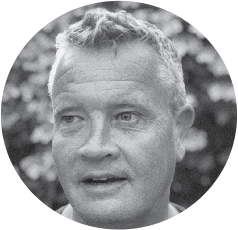
The word “Kafkaesque” is overused, but in Taylor’s case it is entirely apt. Within days he was granted bail and continued his holiday. But when his family returned to the UK, he was obliged to remain in Croatia to fight extradition. He has been there ever since.
In the year Taylor has spent in Croatia, he has lost his job, his marriage has been strained and his mental health has suffered as a result of the isolation. In April, he wrote to the British embassy in Zagreb to say he was worried about his sanity. Staff contacted the local police who turned up at his apartment in the capital, wrestled him to the floor and bundled him into an ambulance. He was taken to a psychiatric hospital where he was strapped to a bed and forcibly injected with a sedative.
He has not been charged with any offence in Monaco, where prosecutors wished to question him about allegations of extortion during an employment dispute with SBM Offshore. After months of legal limbo, the Croatian Supreme Court granted Monaco’s extradition request in May, but leaving a final decision on the case to the justice minister. Dramatically, just as this edition of Index went to press, the minister blocked the extradition, allowing Taylor to return home.
Taylor exposed a multimillion-dollar bribery system with its origins in Monaco that stretched to Iraq in the Middle East, Angola and Equatorial Guinea in Africa, and Brazil in South America. His disclosures helped lead to $800 million of fines for SBM Offshore and triggered the collapse of the Brazilian government. Two former chief executives of SBM have been found guilty of corruption. But Monaco has chosen to pursue the whistleblower.
Commenting on the latest decision on his case, Taylor told Index: “After almost a year in exile, the price of my blowing the whistle has not come cheap, as the destruction of my career and the catastrophic effect on my personal life shows. Monaco decided to pursue me at any cost; they have failed and I am delighted the rule of law has prevailed. I hope the real criminals will now be brought to justice.”
The Taylor case has attracted international attention thanks to a coalition of freedom of expression organisations including Whistleblowing International Network, UK whistleblowing organisation Protect, the European Centre for Press and Media Freedom and Index on Censorship. In May, the coalition lobbied the Croatian justice minister Ivan Malenica to put an end to Taylor’s exile. A cross-party group of UK MPs also asked foreign secretary Dominic Raab to intervene.
Taylor’s lawyer, Toby Cadman, head of Guernica 37 International Justice Chambers, argued consistently that the UK government could and should intervene. “It is not just Jonathan’s fate which hung in the balance, it is the very existence of the protections afforded to whistleblowers and investigative journalists the world over.”
His company, SBM Offshore, built and leased floating platforms for the processing and storage of oil after drilling and before transportation to refineries. It was an immensely lucrative specialist business which brought in millions of dollars of contracts. Taylor’s job took him regularly to Rio, Singapore and Houston.
But when Taylor arrived at work on 31 January 2012, everything changed. His boss took him aside and explained the company had received a call from one of America’s top compliance lawyers, Martin Weinstein. At the time, Weinstein was working for US oil company Noble Energy, which had been involved in a joint venture with SBM in the west African petro-state of Equatorial Guinea. SBM’s head of legal affairs Jay Printz was clearly worried. He explained emails found by Noble on a company laptop indicated vast amounts of money had been paid by an SBM middleman to various officials in the African country, including Gabriel Obiang, the son of Teodoro Obiang, Equatorial Guinea’s dictator.
The news was devastating for SBM Offshore. The company was already in trouble after posting a net loss of $440 million in 2011 following $1 billion of charges for overdue projects. For an oil company, to be caught paying bribes is second in seriousness only to a major environmental catastrophe such as an oil spill or a rig fire.
Taylor was asked to investigate the payments and within days realised the company was involved in systematic corruption on an industrial scale. “The business model of SBM was simple,” Taylor later said. “We got the orders by paying bribes.” In the case of Equatorial Guinea, industry and mining minister Gabriel Obiang had been promised $7.3 million – and three top-of-the-range BMWs were thrown in for good measure, too.
Taylor was directed to a safe in the office of a senior executive, where papers revealed the full scale of the bribe system. These showed that a former manager had set himself up as a middleman, doing business for SBM via a company in the British Virgin Islands and taking a 20% cut. A formal investigation, codenamed Project Pandora, was set up: external lawyers and forensic accountants were brought in to find out exactly what had been going on.
A list of “agency fees” paid between 2005 and 2011 was supplied by SBM Offshore’s accountants in Switzerland. This flagged up millions of dollars of suspect payments.
The investigation team, which included Taylor, soon uncovered bribes in Iraq, Malaysia, Italy and Brazil as well as the original corruption in Equatorial Guinea. In Angola, a scheme set up by former SBM CEO Didier Keller saw multimillion-dollar payments being paid to a host of executives at state oil company Sonangol.
On 5 April 2012, senior SBM Offshore staff were called to an emergency meeting at Amsterdam’s Schiphol airport to discuss Project Pandora. Taylor presented his findings, including a further list of territories dragged into the scandal, such as Greece, India, Nigeria and Vietnam. He recommended informing the authorities in all affected territories.
For 10 hours the company thrashed out its options, but in the end decided on a policy of “containment” – limited disclosure coupled with a cover-up of the full scale of the fraud.
What the company did not know was that Taylor had already informed the US Securities and Exchange Commission, which investigates corporate fraud, via his American lawyer. Nor did his bosses realise he was recording every meeting.
Within six months, Taylor was gone. After failing to persuade his bosses to report the corruption scandal, he parted company with SBM in June 2012.
Eventually he took the extraordinary step of editing the company’s Wikipedia page to reveal how the system of corruption worked. The evidence was damning. In April 2014, he began cooperating with the Dutch authorities.
In November 2014, SBM paid $240 million to Dutch prosecutors in an out-of-court settlement. As part of the deal, it admitted to the corruption of public officials, mainly in Angola, Brazil and Equatorial Guinea, between 2007 and 2011. A similar arrangement, a deferred prosecution agreement, was reached in the USA in 2017. In the UK, the company admitted to corrupt payments stretching back more than 20 years. Tony Mace, the British CEO of SBM at the time, received a three-year prison sentence for fraud.
In March this year, Didier Keller – Mace’s predecessor and the man responsible for setting up the bribery system – was finally brought to justice in Switzerland, where he was found guilty of paying $6.8 million of bribes into bank accounts controlled by senior Sonangol figures. The Swiss prosecutor explained that any contract won by SBM Offshore had to be approved at various levels in the Sonangol hierarchy, where certain officials had the power of veto. At the very top of the pyramid was chief executive Manuel Vicente, who went on to serve as Angola’s vice-president.
Writing about the oil giant in his Angolan travelogue Blue Dahlia, Black Gold, Daniel Metcalfe explained that “Sonangol is the company every Angolan dreams of working for... it is the only company in Angola that really matters”. It accounts for 90% of the country’s export revenues – about $33 billion – with sidelines in hotels, banks and real estate. Its headquarters, which dominate the central square of Luanda, cost $131 million and is shaped, naturally, like an oil rig.
Because it so comprehensively dominates the Angolan economy, other sectors struggle to thrive. And the corruption of Angolan officials has become notorious. The country currently lies 146th out of 198 in the Transparency International corruption index, ranking the same as Bangladesh and Guatemala and just below Iran.
Little of Angola’s oil wealth trickles down to its people, with 40% of Angolans living in poverty, a figure that rises in rural areas which the wealth does not touch.
In 2020, $1 billion of assets belonging to Isabel dos Santos, the daughter of the former dictator, were frozen and her half-brother, Jose Filomeno dos Santos, received a five-year prison sentence for corruption. Former president dos Santos and his deputy Vicente – sometimes described as Africa’s richest man – are protected by an immunity agreement put in place after they left office.
Until now, the major oil companies have been largely untouched by the SBM Offshore scandal and Angolan corruption. But a year ago, Taylor began working with Ken Hurwitz, a senior anti-corruption lawyer at the Open Society Justice Initiative based in New York. Hurwitz was building a case against various Sonangol officials to deliver to the authorities in Portugal, where Vicente was accused of bribing a judge. He came across the name of an obscure company whose shareholders included various close associates of Vicente. When Taylor looked into the Angolan company, he discovered documents that showed it had been at the centre of a deal struck between SBM Offshore, Sonangol and America’s largest oil company Exxon-Mobil. Taylor has also discovered details of SBM’s links with BP in Angola.
The SBM Offshore corruption scandal is a truly global story. It has now led to inquiries in the Netherlands, Switzerland and Brazil as well as the UK and the USA. The $800 million of fines paid by SBM were intended to draw a line under the affair. But that depended on the disclosure of the full scale of the corruption. If the authorities were not told about other deals, it is possible that those agreements will unravel.
It would suit Monaco, SBM Offshore, “big oil” and various kleptocrat elites in Africa if Taylor were to be silenced, which is precisely why campaigners have been so committed to his cause and to bringing those responsible for the corruption to justice.