




Abstract

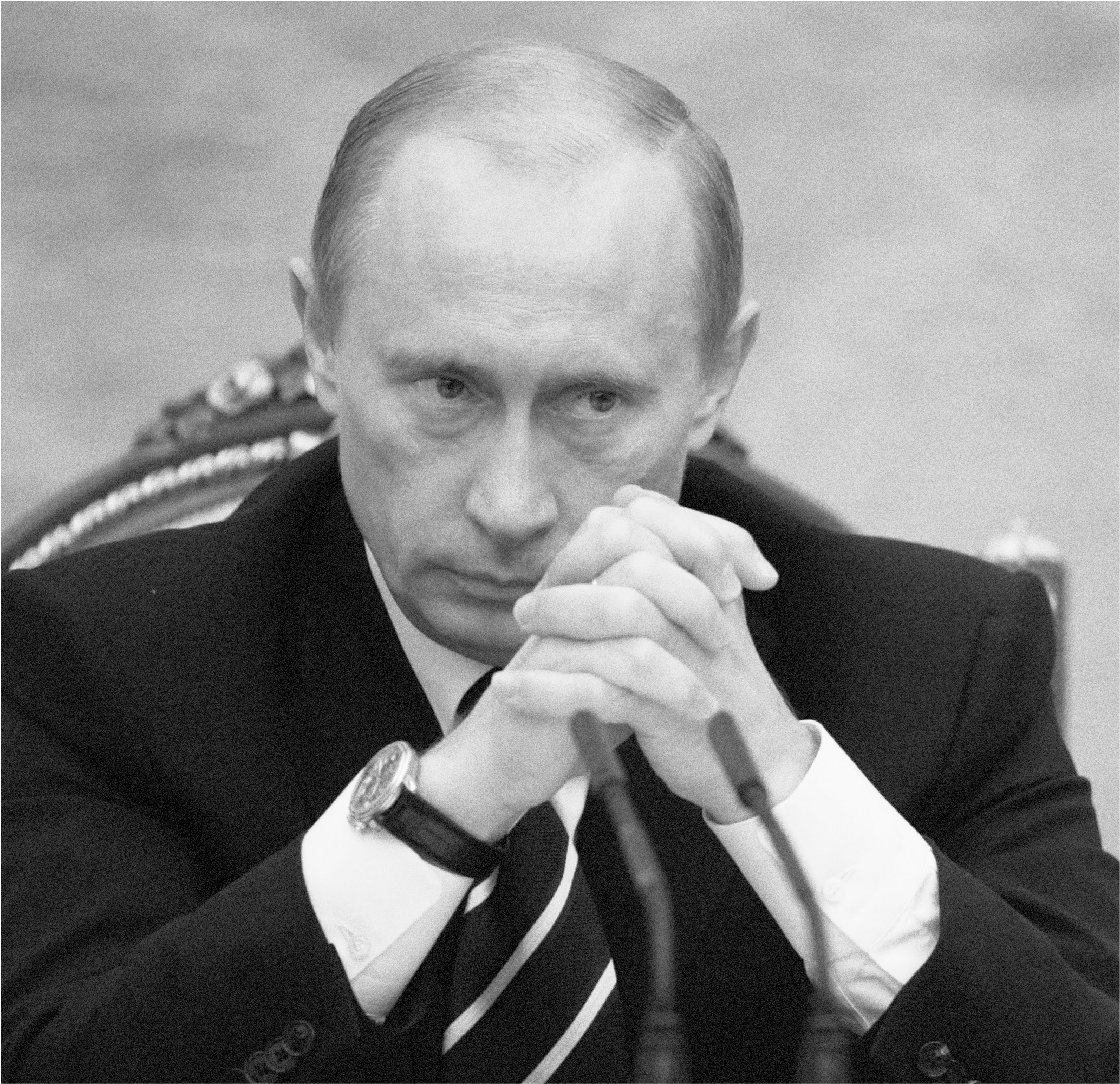
Vladimir Putin at the Kremlin, 2007
CREDIT: SPUTNIK / Alamy Stock Photo
He started off buying Russia’s $1 billion Arctic fishing fleet for a fiver – I’m not sure those numbers are exact, but you get the gist.
Browder, ever the ornery bastard, then became a tough investor in Russian business, asking questions, raising hell about corrupt payments, standing up for shareholders’ rights.
For a time, in 1997, his company, Hermitage Capital, was the best-performing fund in the world. Then the weather changed in Russia and he fell out with the wrong kind of people.
The most interesting fact about Bill Browder is that he is the foreigner most hated by the master of the Kremlin, Vladimir Putin. Russia’s strongman president has had a great 2021. The West is in retreat after the defeat in Kabul, his only political rival, Alexei Navalny is safely behind bars, the activist’s anti-corruption network rolled up, and Kremlin-friendly oligarchs are strutting through London’s law courts as if they own them, allegedly. But Browder’s tank remains on the Kremlin’s lawn. Russia has tried eight times to have Browder extradited, in vain.
Unable to snuff him out, the Russian secret state killed his tax lawyer, Sergei Magnitsky. Browder went to war and, so far, more than 30 countries – starting with the USA – have passed Magnitsky Acts aimed at targeting corrupt officials from Russia and elsewhere.
Over a Zoom call, Browder goes through what the Russian state did to put pressure on Magnitsky to climb down after he had discovered a complex fraud by senior tax officials – a fraud that started with redirecting Hermitage’s tax payments of some $230 million.
“They put him in all sorts of terrible situations. They kept the lights on 24 hours a day to impose sleep deprivation. They put him in cells with no heat and no window panes in December, in Moscow. They moved him from cell to cell to cell,” he says.
“And the purpose of all this was to get him to withdraw his testimony against the corrupt officers. He refused. The torture got worse and worse, he ended up getting sick. He ended up losing 20kg, developing terrible pains in his stomach.
“He was diagnosed as having pancreatitis and gall stones. They refused him any medical treatment. He and his lawyers wrote 20 different desperate requests for medical treatment to every branch of the criminal justice system.
“All those requests were ignored or denied. And on the night of 16 November 2009, almost 12 years ago, he went into a critical condition. The authorities, instead of putting him in an emergency room, put him in an isolation cell. They chained him to a bed, and riot guards with rubber truncheons beat him until he died.
“At the age of 37, he left a wife and two children. And when I got that news, it was the most traumatic, life-changing, horrific news I could have ever gotten. And I made a vow to his memory, to his family and myself that I was going to put aside everything else that I was doing, and devote all of my time all of my resources and all of my energies to go after the people who killed him and make sure they face justice.
“And for the last almost 12 years, that’s what I’ve been doing.”
I put it to Browder that the Kremlin couldn’t kill him so they got Magnitsky instead. Does he feel some measure of guilt about that?
“Completely. I feel guilty every day about that, I feel it. And that’s the driving force of my life, the guilt.
“If he hadn’t been my lawyer, he’d still be alive today. And that plagues me.
And that’s a burden on my shoulders that I’ll never be able to free myself from.”
Time was when Browder was the Kremlin’s number-one target.
“I used to think I was the person that they hated the most – certainly the foreigner they hated the most,” he says.
“But that’s been replaced for sure by Alexei Navalny. Most people are too scared to stand up to them and, as a result, they end up getting away with a lot of stuff. But I stood up to them after what happened with Sergei Magnitsky. And we drew blood in the form of all these sanctions, which is something that they never expected.
“So they really, desperately, wanted to make an example out of me in order to prevent anyone else from seeing that they aren’t as all-powerful as they make themselves out to be.”
It’s a lonely business, drawing blood from the Kremlin. Navalny and Browder have succeeded. Most Western politicians suffer from eternal optimism, misreading Putin, the gangster-trained, psychopathically-vengeful former KGB officer as a Mr Barrowclough, the pitifully nice warder from British sitcom Porridge, but with snow on his boots.
I ask Browder to explain why he thought the West kept on being fooled by Mr Barrowcloughski or, rather, Vlad the Poisoner.
“The most dramatic and stark example is the case of the 2018 Salisbury poisonings in the UK,” he says.
“Here, actors from the Russian state, dispatched by Vladimir Putin, came to the UK with a military grade nerve agent and administered it to one of their enemies, Sergei Skripal, creating a massive public health emergency in a British city. They closed the whole city down and we ended up having the death of an innocent bystander, Dawn Sturgess.
“You have a police officer whose life was ruined by this whole thing. And what was the consequence of that? They expelled a bunch of diplomats.
“And the unspoken secret about expelling diplomats is that they then replace them with other diplomats. And so there was no consequence. And why was there no consequence? Because, deep down, the British government and many other governments are scared of Putin.
“They don’t want to actually pick a fight with him. They’re scared. And so they want to seem to be doing the right thing but they don’t actually want to do the right thing.
“And so we ended up in a world where Putin gets away with murder, literally, on a regular basis around the world.
“Look at what’s happened with the United States. The Russians were paying the Taliban to kill American soldiers. Has anything happened? No. They were hacking pipelines. Has anything happened? No. We’ve given Putin a pass for far too long.”
Browder fears that part of the problem of gauging Putin accurately is democracy itself. Each new Western leader feels they can get a grip on the little man in the Kremlin.
He says: “Every time we get a new leader coming in, they look at the terrible relationship that Britain and the United States has with Russia, and the new leader comes in very arrogantly and self-confidently, saying, ‘Well, you know, my predecessor really didn’t know how to deal with this, but I know how to deal with him and I’m going to charm him or I’m going to reset relations and make things right’. And time and again Putin ends up laughing at them.
“It just carries on and on. Nobody wants to put their foot down and say enough is enough. We need to contain Russia – no more of this pussyfooting around. Nobody yet has the guts to really stand up to him among the leaders in the West.”
I ask him what he would do.
“Well, it’s real simple. And it doesn’t require a huge amount of risk-taking.
“Putin is not going to go to war with us, because he would lose. He has a very sclerotic military – the military budget of Russia is the same as the UK’s.
“Russia’s economy is tiny, so he doesn’t really have any normal, confrontational tools to fight us.
“What he does is all this asymmetric fighting, hacking elections, doing all this kind of stuff. But we also have some asymmetric tools.
“The main weakness of Vladimir Putin, the way I see it, is that so much money has been shifted from the Russian state to his proxies that he’s a thief, no a kleptocrat. He’s stolen an enormous amount of money from the Russian people. He doesn’t keep much of that money in Russia. He keeps the money in the West – not in his own name but in the name of oligarchs. And so how do we get what he covets the most, which is his money? We freeze the assets of the oligarchs who look after his money.
“It’s well known who those oligarchs are. Alexei Navalny published a list of these people. It’s well known to all the experts and intelligence services.
“And so if we really want to stop Putin from doing all this stuff, you just freeze [their] assets, and that will get him to stop doing all the nastiness. Because what he cares about more than anything is his money.”
Does Browder know why it hasn’t happened?
“It’s fear of confronting a bully. Nobody wants to take that on.”
In the meantime, the ratchet of fear in Russia is being tightened. Some of it is just plain mad, such as the prosecution of Magnitsky after his death. The corpse was found guilty.
Some of it is common murder. And it is getting closer to home. The chilling effect of Roman Abramovich’s libel action against Catherine Belton for her book, Putin’s People, has been felt in London.
Journalists who write on Russia are running scared. If they aren’t, their editors and their lawyers are – and with good reason.
The rights and wrongs of the case are yet to be heard but what is the general effect? Well, it smacks of a new, postmodern kind of censorship. Shut your mouth or you will lose a lot of money.
One of my favourite books is A Cup of Coffee with My Interrogator, by the Czech dissident Ludvik Vaculik, translated by Index stalwart George Theiner. Vaculik sets out the heavy metal of Brezhnev-era control: of snuffing out careers, of locking up people such as Vaclav Havel, of smudging lives.
When I secretly met the future president in Prague in 1988, he was optimistic for what tomorrow might bring. I shudder to think what Vaculik and Havel would make of Abramovich v Belton and what it portends.
Browder, too, is bleak about the impact of the case.
“I’ve known Catherine for many years. She’s one of the most rigorous reporters I’ve ever come across. I’ve read her book. And my own view is that the libel action against her is creating a climate of fear among journalists,” he says. “You have, I believe, a bunch of oligarchs with unlimited resources who are putting all of those resources to bear to bring pressure on every other newspaper to say nothing bad about Putin’s corruption.
“This is, in my opinion, not just about terrorising Catherine Belton, this is an act of terror that terrorises you and every other journalist and every other publishing company.
“And so I fear this will have a huge damping effect on vigorous reporting about what’s going on in Russia, without question. And I think it goes well beyond Catherine Belton.
“And for them to do that to her, it just completely dampens any possibility of a lively debate and in my opinion, that’s the purpose of this exercise.”
I ask if he thinks Abramovich is an honest man?
Browder pauses. He’s a lean-looking fellow who has the air of someone who can handle himself in a fight, if a fight there must be. I certainly wouldn’t want to play chess with him.
“Let’s put it this way,” he says. “I’m not going to comment on Roman Abramovich because I don’t want to be sued by him. But I would say that anybody who has become a multi-billionaire in Russia under the Putin regime has had to cut a lot of corners in order to get there. And I think there’ll be very few exceptions to that rule.”
But wasn’t Browder just as bad as all the rest of them before finding religion?
“Well, that’s an easy thing to say, except [when] you look at what I was doing in Russia.
“I was investing in big Russian companies, researching how the oligarchs who mostly controlled those companies were stealing, taking that research and publishing it, and sharing it with journalists at the Financial Times, The Wall Street Journal, The New York Times and The Washington Post, and exposing the corruption.
“So I was doing just the opposite, which was trying to fix Russia. I was actually making money in the process because if you buy undervalued companies and you can expose corruption, and they stop doing the corruption, then the share price goes up.”
I suggest that Navalny started out on exactly the same route, of being an angry investor.
Browder replies: “I don’t want to take anything away from Alexei, not only because he’s truly a legendary character. But I started what I was doing, he then emulated it.”
What does Browder think of Navalny’s comments in 2008, when he described most Muslim immigrants from the Caucasus as “cockroaches”? The reply is that we have all said rubbish things we later regret.
I challenge him about hiring British law firm Carter-Ruck to litigate against the Kremlin’s media attack on him.
Browder defends his decision, saying “Well, I don’t particularly like plaintiff libel lawyers but I hired a lawyer from Carter-Ruck to defend my rights not to be defamed by the Russian propagandists.
“There’s a reason for defamation laws. They get abused often. But in this case, the defamation laws protected me.”
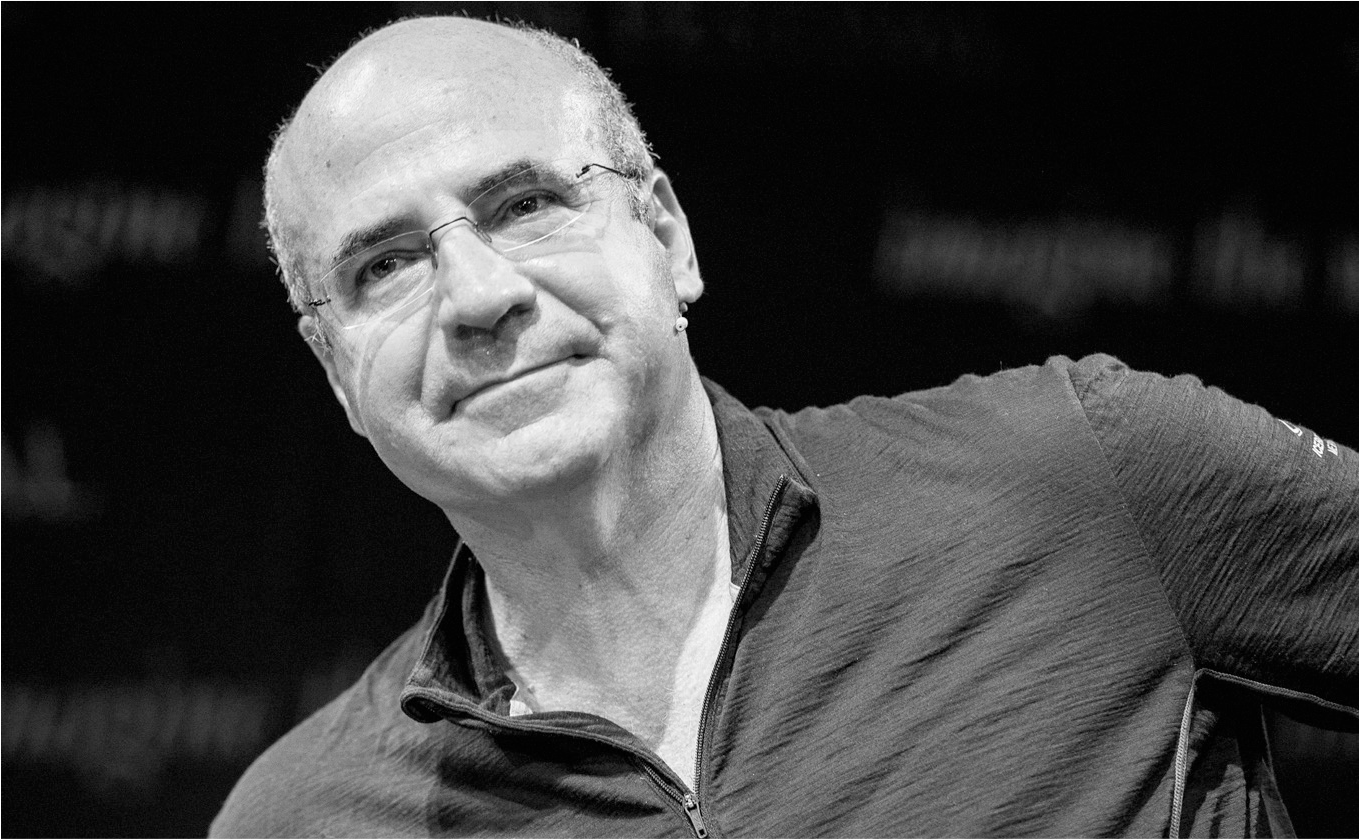
Bill Browder, pictured in 2018.
CREDIT: Aled Llywelyn / Alamy Stock Photo
Looking at the long game, who is worse: Brezhnev or Putin?
“The Soviet era was bad. But they were sort of driven by ideology. With Putin, I don’t believe there is any ideology. He has simply enriched himself and his friends and I believe he is driven by pure greed. So, for me, it’s like having Pablo Escobar running a country that has nuclear weapons.
“I would argue that in some ways it is much more dangerous to have Vladimir Putin out there than almost any other leader you had during the Cold War; he is literally ready to do anything.”
How would Browder’s grandfather Earl have viewed Browder’s campaign against Putin the klepto-Czar? “I hope he would have been proud of me.” Those of us who worry at the ever-tightening grip of the Kremlin’s dead hand on Russia – with the connivance of some in the West – could agree with that.