




Abstract
Cuba’s PR spinners may paint a pretty picture but, says
When US journalist Herbert Matthews visited the Sierra Maestra in 1957 and sat down with Castro for an interview, the comandante fooled Matthews into thinking rebel forces were stronger than they were by marching the same columns of men past at various intervals and having “messengers” return to report the existence of non-existent rebel units.
“From the look of things, General Batista cannot possibly hope to suppress the Castro revolt,” wrote the New York Times correspondent in his subsequent dispatch.
Over the ensuing half-century, Havana’s propaganda has been equally powerful – bolstering an image abroad of Cuba as a besieged outpost against US aggression; a beacon of healthcare and education; and a country where children are taught to live lives of ascetic self-sacrifice in emulation of revolutionary icon Ernesto “Che” Guevara (who, like Castro, is the subject of a cult of personality in Cuba).
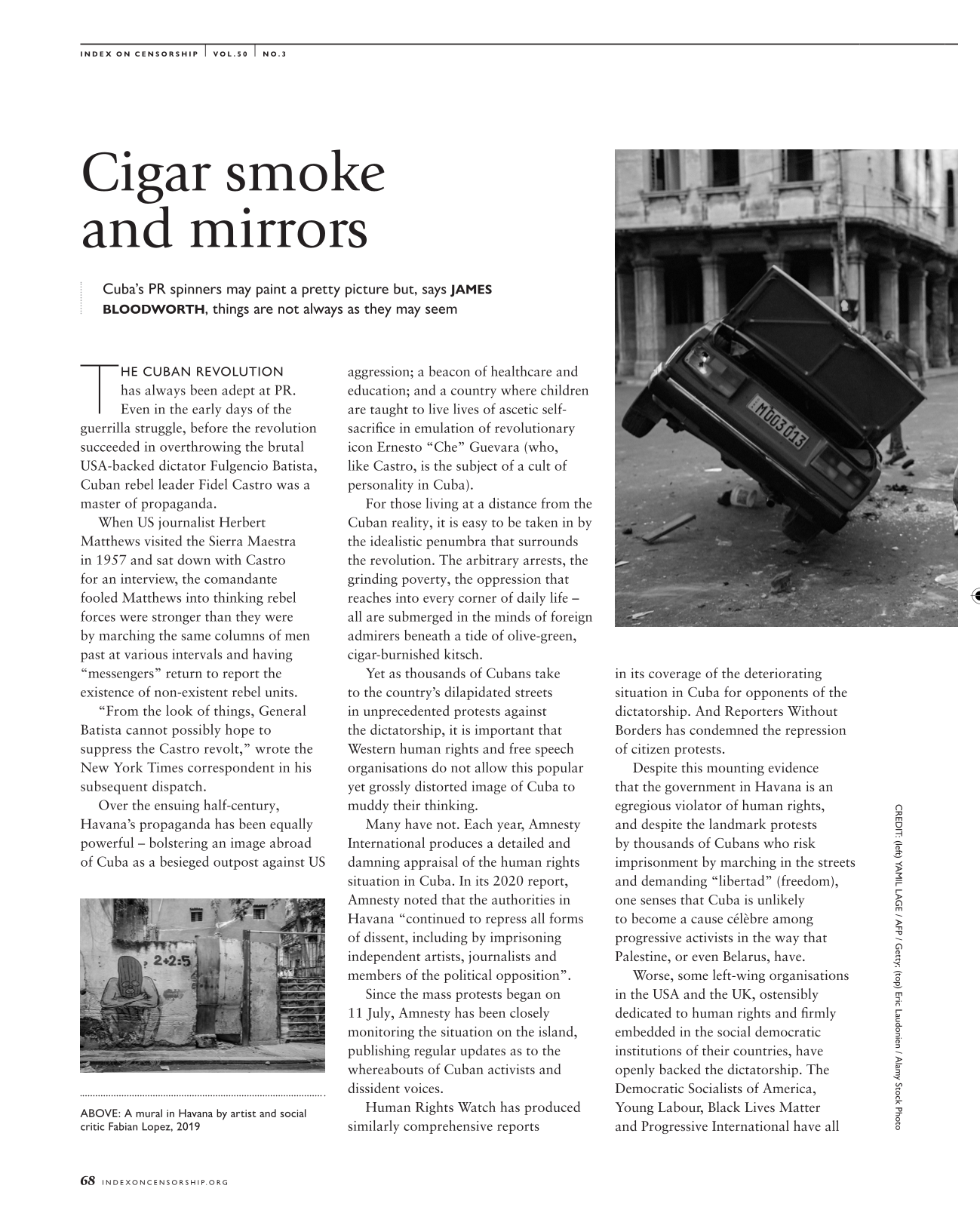
A mural in Havana by artist and social critic Fabian Lopez, 2019
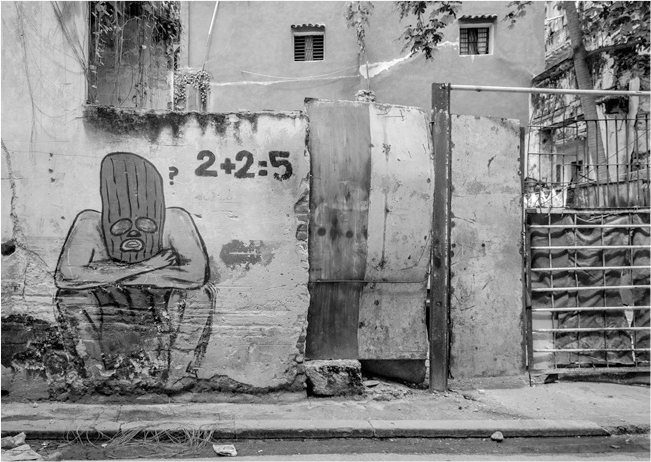
For those living at a distance from the Cuban reality, it is easy to be taken in by the idealistic penumbra that surrounds the revolution. The arbitrary arrests, the grinding poverty, the oppression that reaches into every corner of daily life – all are submerged in the minds of foreign admirers beneath a tide of olive-green, cigar-burnished kitsch.
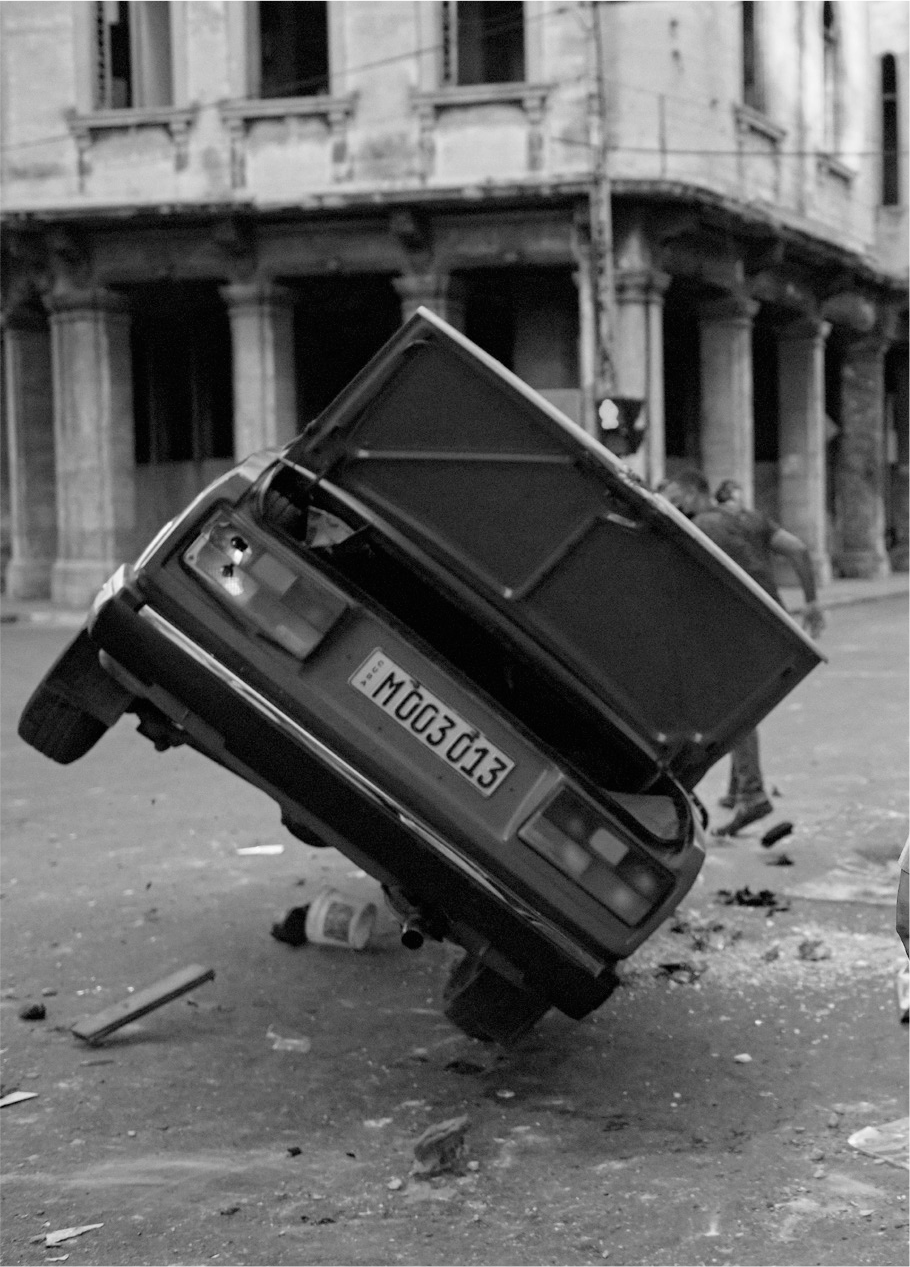
Yet as thousands of Cubans take to the country’s dilapidated streets in unprecedented protests against the dictatorship, it is important that Western human rights and free speech organisations do not allow this popular yet grossly distorted image of Cuba to muddy their thinking.
Many have not. Each year, Amnesty International produces a detailed and damning appraisal of the human rights situation in Cuba. In its 2020 report, Amnesty noted that the authorities in Havana “continued to repress all forms of dissent, including by imprisoning independent artists, journalists and members of the political opposition”.
Since the mass protests began on 11 July, Amnesty has been closely monitoring the situation on the island, publishing regular updates as to the whereabouts of Cuban activists and dissident voices.
Human Rights Watch has produced similarly comprehensive reports in its coverage of the deteriorating situation in Cuba for opponents of the dictatorship. And Reporters Without Borders has condemned the repression of citizen protests.
CREDIT: (left) YAMIL LAGE / AFP / Getty; (top) Eric Laudonien / Alamy Stock Photo
Despite this mounting evidence that the government in Havana is an egregious violator of human rights, and despite the landmark protests by thousands of Cubans who risk imprisonment by marching in the streets and demanding “libertad” (freedom), one senses that Cuba is unlikely to become a cause célèbre among progressive activists in the way that Palestine, or even Belarus, have.
Worse, some left-wing organisations in the USA and the UK, ostensibly dedicated to human rights and firmly embedded in the social democratic institutions of their countries, have openly backed the dictatorship. The Democratic Socialists of America, Young Labour, Black Lives Matter and Progressive International have all released statements in support of the government in Havana.
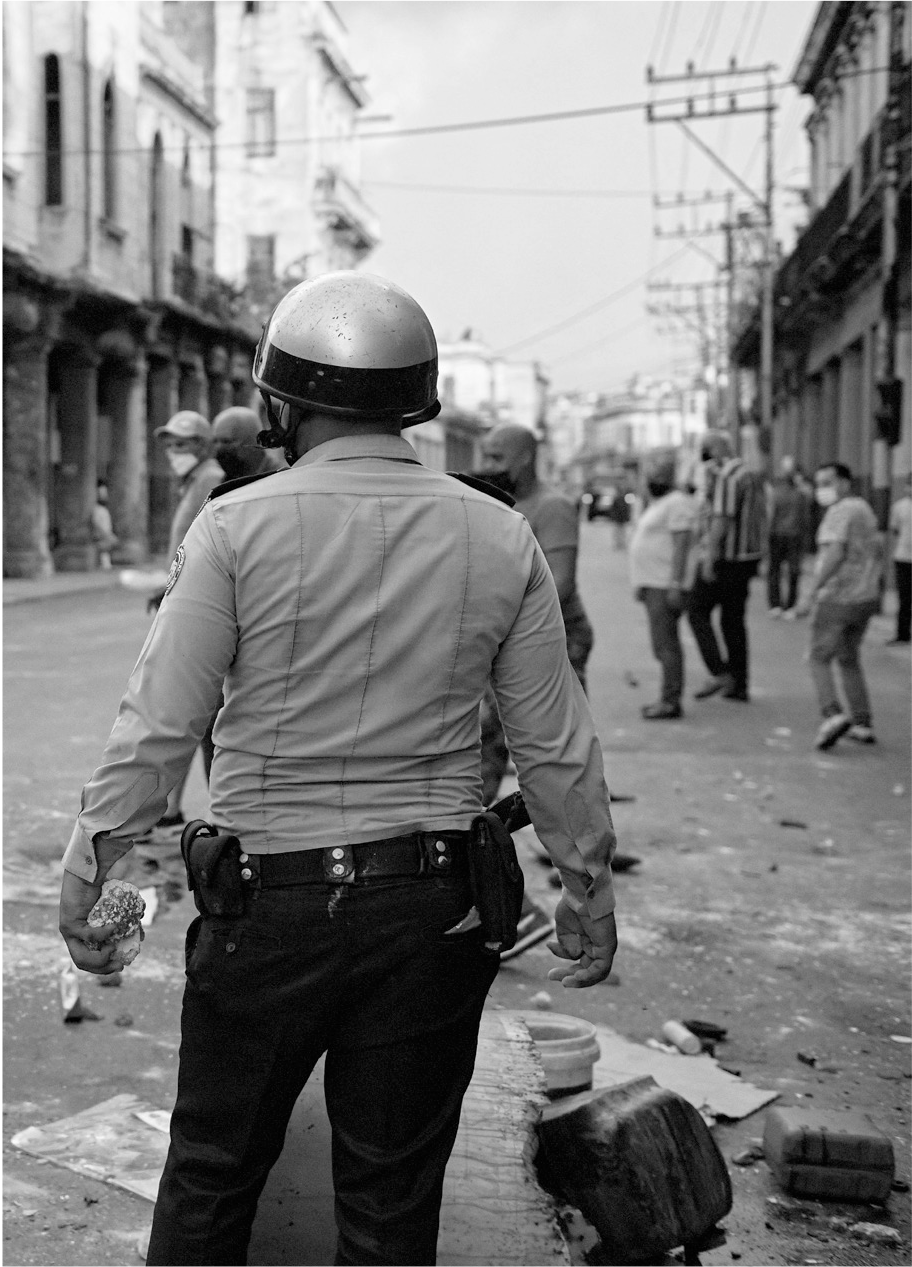
A policeman watches on as protesters stage a rare sight of discontent in Havana in a demonstration against Cuban President Miguel Diaz-Canel. July 11, 2021
Ordinary Cubans have had to put up with similar condescension projected onto their island by preening academics and intellectuals who have lived cossetted lives in liberal democracies for many decades.
In his memoir, Before Night Falls, the exiled Cuban writer Reinaldo Arenas, who was sentenced to hard labour by the communist regime for his homosexuality and for his critical writings, used the term “communist deluxe” to describe such people.
In his book he writes of a German professor who, at a Harvard University banquet, informed him that, despite the hardships Arenas may personally have suffered, the professor was a “great admirer of Fidel Castro” and “very happy with what he has done in Cuba”. The professor said this between mouthfuls of a huge plate of food.
“I think it’s fine for you to admire Fidel Castro, but in that case, you should not continue eating that food on your plate,” responded Arenas. “No one in Cuba can eat food like that, with the exception of Cuban officials.”
Arenas then snatched the man’s plate away from him and launched it against a nearby wall.
Such encounters with ordinary Cubans are mercifully rare for foreign apologists of the dictatorship, who have failed over 62 years to learn that the red apple of Havana is rotten. They see no distinction in Cuba, which resembles a military garrison as much as a country, between the oppressed and the oppressor. Cuba is the revolution, and the revolution is Cuba. Or, as Fidel himself once put it: “Inside the revolution, everything; outside it, nothing.”
The voices of ordinary Cubans are submerged under an intoxicating blend of cigars, mojitos and summer socialism.
Amid so much willed historical ignorance it is vital that organisations dedicated to free speech and human rights work to draw attention to the deteriorating situation in Cuba. As I write these words, trials have already begun against those who dared to take to the streets to call for change.
These trials are invariably followed by speedy convictions in arbitrary court proceedings which are a degradation of justice. According to groups tracking the arrests, as of 26 July nearly 700 Cubans have been detained since protests began.
It is important, too, that liberal - minded people take the reports that such organisations produce seriously – at least as seriously as they do when the same accusations of human rights abuses are levelled at less fashionable (and less PR-savvy) dictatorships.
The Cubans I speak to are tired – tired of the indignities at the hands of the dictatorship, tired of the daily struggle to source basic commodities in an economy governed by archaic doctrines imported decades ago from a country that no longer exists.
But they are also tired of being treated as the living inhabitants of a socialist theme park, instrumentalised to serve the fantasies of those foreign admirers who carry with them a baggage of excuses for the Castroist dictatorship. As Orwell once put it, “to be corrupted by totalitarianism one does not have to live in a totalitarian country”.
During the Covid-19 pandemic, many liberal and progressive voices have been quick to share news stories featuring battalions of heroic Cuban doctors being sent around the world to assist in medical efforts to beat the virus.
It would be nice if such interest in Cuba were less ephemeral; if it looked beyond Havana’s carefully manufactured PR operation; and if it expressed itself, for once, by listening to what Cubans themselves were saying about the decrepit dictatorship whose tentacles extend into every aspect of their lives.