




Abstract
This is a tenable position, and many people have held it down the ages. Almost anyone connected with any great enterprise has been tempted by the idea that a higher good requires the silencing of those who say things which are inconvenient to it. Many of us have also been unwilling, at some point, to accept the truth of information published by those whom we hate or despise, even if that information is true. These are interesting questions with awkward answers, but is a magazine devoted to opposing censorship the right place for such an argument, made with such fury?
I felt that the tone of Jelacic’s article was that of a prosecutor at a show trial, denouncing the accused to a tribunal whose verdict was not in doubt. Take for example: “the disinformation movement has brought together a diverse coalition of leftists, communists, racists, ideologues, anti-Semites and fascists”. This drips with guilt by association. Abuse of this kind is not debate. It is meant to frighten and isolate its targets, and fear is one of the most powerful means of imposing censorship.
Those she actually names in her attack can and no doubt will defend themselves. They are not my political allies and I differ from them in several important opinions. But on one thing I have found myself on the same side, and that is what I shall politely call the alleged doctoring of reports from Syria by the UN Chemical Weapons watchdog, the OPCW. Jelacic writes: “The OPCW was portrayed to be issuing doctored reports in support of the alleged Western imperialist agenda to overthrow the [Syrian] regime, including by the use of military intervention for which chemical weapons attacks would be a pretext. The disinformationists parroted Damascus and Moscow in whose view all of the alleged chemical attacks were staged on the orders of the West”.
After all the foregoing fury, I was braced for a personal attack. I am perhaps the most prominent publiciser of doubts about recent OPCW reports, having done so in a large-circulation mainstream British national newspaper. If I venture on to Twitter, many people confidently shower me with slime of this sort. Yet none came from Jelacic. Perhaps this is because I am rather demonstrably not a leftist, communist, racist, ideologue, anti-Semite or fascist.
I have not suggested that the alleged attacks were staged, let alone that this was done on the orders of the West. I do not parrot Moscow or Damascus. I took up the case because, unlike almost any other journalists known to me, I read the OPCW reports with care, and then wrote about them on my Mail on Sunday blog. This led to my making direct contact with OPCW inspectors who, noting my detailed doubts, wished to tell me that they were justified and that something disturbing was indeed happening.
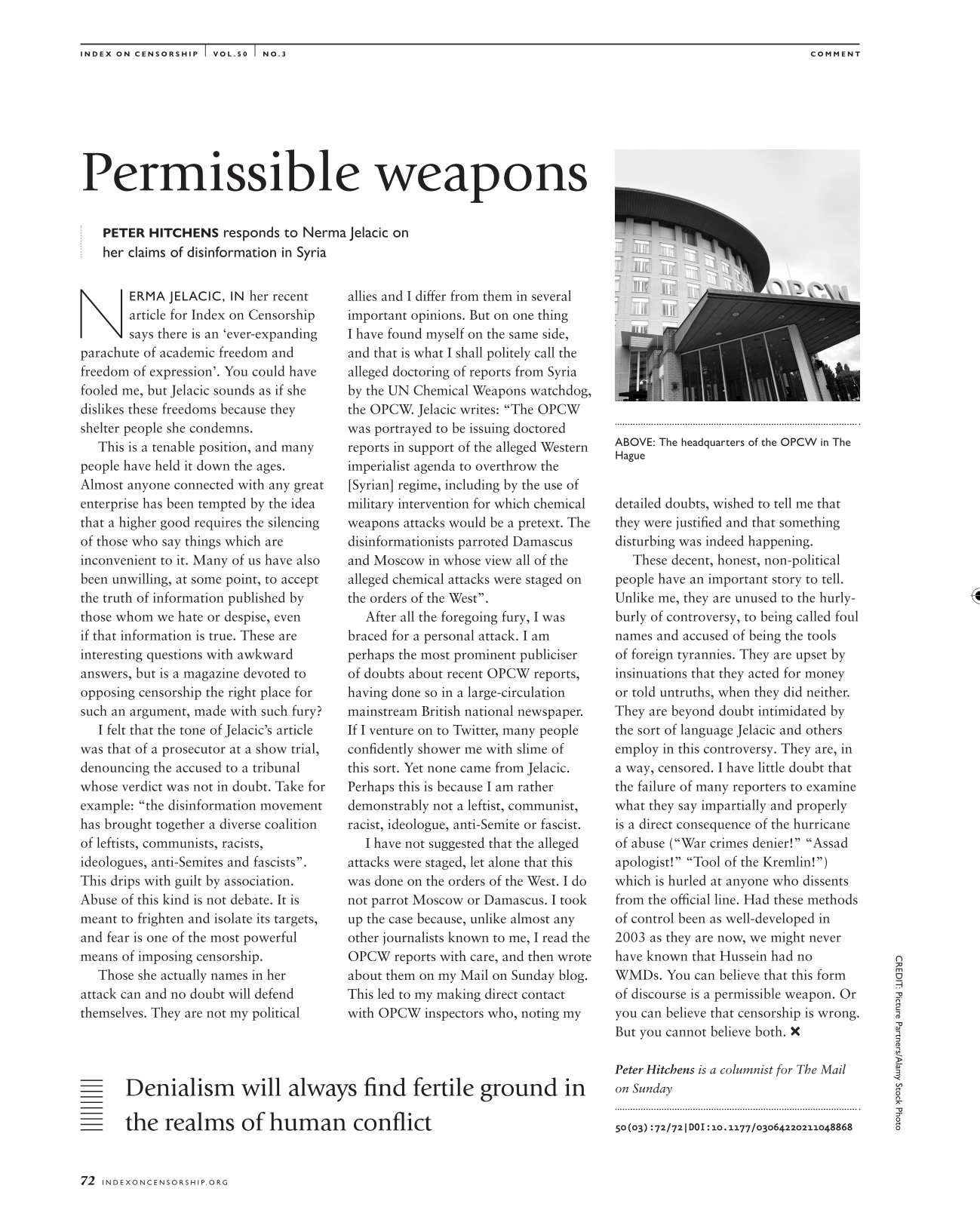
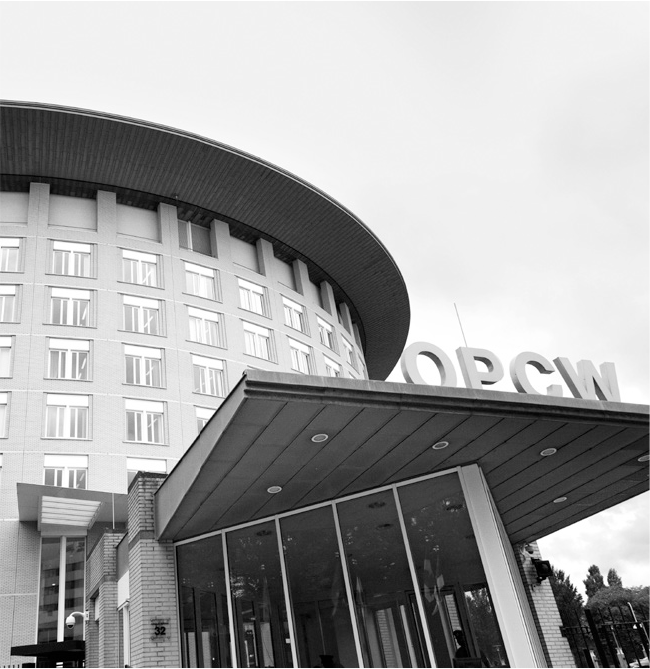
The headquarters of the OPCW in The Hague
CREDIT: Picture Partners/Alamy Stock Photo
These decent, honest, non-political people have an important story to tell. Unlike me, they are unused to the hurly-burly of controversy, to being called foul names and accused of being the tools of foreign tyrannies. They are upset by insinuations that they acted for money or told untruths, when they did neither. They are beyond doubt intimidated by the sort of language Jelacic and others employ in this controversy. They are, in a way, censored. I have little doubt that the failure of many reporters to examine what they say impartially and properly is a direct consequence of the hurricane of abuse (“War crimes denier!” “Assad apologist!” “Tool of the Kremlin!”) which is hurled at anyone who dissents from the official line. Had these methods of control been as well-developed in 2003 as they are now, we might never have known that Hussein had no WMDs. You can believe that this form of discourse is a permissible weapon. Or you can believe that censorship is wrong. But you cannot believe both.