




Abstract

Protestors gather in front of a Ben & Jerry’s store after the ice cream company joined the Boycott, Divestment and Sanctions (BDS) movement
CREDIT: Ron Adar / Alamy

In late July, the Ben and Jerry’s board announced it would withdraw its licensing agreement from the businessman who has held the Israeli franchise since 2000. It made this move because the Israeli licence holder was also marketing to the Jewish settlements in the Occupied Palestinian West Bank and East Jerusalem (OPT).
The board said it had intended to divest totally from Israel in line with BDS. But Unilever, which owns the ice cream company, one-upped its subsidiary by shifting the intent of the announcement to say that the company would withdraw only from supplying the Jewish settlements in the OPT, while remaining in Israel proper. The company now will try to secure a different licensing agreement if the current licensee refuses to exempt the Jewish settlements in the OPT.
While the distinction is an important one, it will prove difficult under Israeli law. That’s because the previous government, under Benjamin Netanyahu, passed a law to blur the Green Line – the internationally recognised border of Israel – incorporating a ban on the banning of Israeli Jewish settlers from businesses and marketing.
Ben Cohen and Jerry Greenfield, who sold their eponymous company to Unilever in 2000, weighed in supporting the decision to halt sales in Jewish settlements in the OPT. “It’s possible to support Israel and oppose some of its policies, just as we’ve opposed policies of the US government,” they wrote in a New York Times opinion piece that also expressed their “love” for Israel, something completely anathema to the BDS movement. Even so, the movement hailed the ice cream maker’s move.
There is precedence for this type of practice, including two major EU agreements with Israel – science funding via the EU’s Horizon 2020 project and a new cultural grant, both of which stipulate that Israel can’t use the funds outside the Green Line.
The Israeli citizen who owns the franchise for McDonald’s in Israel has long refused to put a fast-food outlet outside the Green Line. An early supporter of the anti-occupation group Peace Now, the McDonald’s licensee, Omri Padan, has always been clear on where he sells his kosher Big Macs.
There is a critical difference between using boycotts or divestment to protest a government’s policy and the BDS movement’s goals and tactics, which encompass anything Israel or anyone Israeli. The movement makes no distinction between the Occupied West Bank or East Jerusalem or blockaded Gaza and Israel proper. It doesn’t merely protest policies. It protests the existence of the state of Israel.
It calls for an end to oppression of the Palestinian people with full rights, with no equal recognition for the rights of the Jewish people who are Israeli citizens. Increasingly, it makes no distinction between the Palestinians under occupation in the West Bank, East Jerusalem and Gaza and the more than 20% of the Palestinian citizens of Israel who live inside the Green Line (and many of whom call themselves Arab citizens, not Palestinians).
The South African boycott movement, upon which BDS claims to be based, aimed to end the egregious policy of apartheid but not to delegitimise a country’s very existence. Rather than support two states for two peoples, the BDS movement aims for one state. BDS regards any Jewish-Israeli institution – and increasingly any prominent Jewish-Israeli individual – as a legitimate boycott target.
BDS believes that all universities are complicit in the occupation. All arts institutions. Independent artists. Independent club owners. Independent writers. Privately-owned companies.
Swept up in this dismissal of all things Israeli are the Israeli citizens who are of Arab or Palestinian descent. As one Israeli citizen who is an Arab activist from Hadash, the communist-influenced party, said to me: “We are being ignored, too.” So is the struggling peace camp and artists of all types, most of whom are opposed to their government’s policies.
The impact on universities is especially ironic. Under the Netanyahu administration, the board of all university presidents in Israel voted against certifying Ariel College as a university, due to it being outside the Green Line in the settlement of Ariel, near Nablus. (The decision was overridden by the government.)
Israeli universities increasingly have significant numbers of Arab students both from within Israel and from the West Bank and East Jerusalem. (The Israeli blockade of Gaza combined with Hamas rule makes it nearly impossible for students from Gaza to enter Israel.) Haifa University’s student population is nearly 40% Arab; 22% of undergraduates at Technion – considered the leading maths and science university in Israel – are Arab; 33% of graduate students in several Tel Aviv University programmes are Arab; and, increasingly, the Hebrew University of Jerusalem has not only Arab-Israeli citizens but students from East Jerusalem and the West Bank.
Similarly, while the numbers are much lower among faculty, they are rising. But even though the previous dean of the Hebrew University Law School was an Arab citizen of Israel, the school – a bastion of human rights teaching – is on the BDS boycott list.
Noam Chomsky put it this way in an al-Jazeera interview: “The settlements and the occupation are illegal acts. Actions against these, I support… It is a mistake to go broader to arts, culture, universities – I don’t advocate targeting Harvard University, even though the USA is involved in horrific acts.”
Another active leftist, the musician Steve Earle, has been to Israel twice – once to perform and once for a week to co-produce an album for Israeli-Jewish musician David Broza in an East Jerusalem, Palestinian-owned studio. He was quoted in a Nation magazine interview about why he was against cultural boycotts: “I do more good when I go and see what I see and I come back and I sing about it.”
The BDS movement can claim success in making it so difficult for several prominent musicians to perform in Israel that some have pulled out of concerts, some at the last minute. It’s a small market and if it becomes too much of a hassle, it’s easier for musicians to cancel or avoid booking.
In one case where I was working with the musician, the result was that the private indie rock club took a tremendous financial loss when he pulled out at the last minute due to social media pressure. The musician decided to visit on his own and learn more about the situation between Israel and the Palestinians. But he didn’t perform and the loss wasn’t recouped for the club. How was this a victory for the Palestinian people?
There are numerous examples of performers being convinced not to visit, but it’s worth highlighting one case of someone who did travel. Leonard Cohen was set to perform in Israel in 2009, even though BDS activists in Ramallah protested against his visit.
Cohen’s manager, Robert Kory, told the Associated Press: “There are a lot of people who don’t want us here, and anything done here invites controversy. But we believe freedom of speech is very, very important.”
Cohen left the region after using the proceeds from the concert to establish the Fund for Reconciliation, Tolerance and Peace. Most of the money was earmarked to support the Parents Circle, a group of Jewish-Israeli and Palestinian parents whose families had died in the conflict.
This example could be a template for a different way to use the power of the arts – to engage debate rather than stifle it.
BDS activism has been growing on social media, where it seems to have the most impact. But the Israeli economy is thriving, even amid Covid-19. Israel’s largest trading partner, the EU, will never cut ties with the country, even as it has tried to force Israel to label or separate goods made in the Jewish settlements.
As I write this article, the Israeli foreign minister is planning a public visit to Morocco and planes have begun flying direct between the two countries for the first time. With a new government in Israel comprising left, right and centre, two Israeli ministers have met their Palestinian counterparts for the first time in years.
The psychological impact of these changes on Israel, especially the Jewish majority, has been intense. Yet there is something missing. Voices unheard in Israel from Palestine and Palestine’s supporters would be an important addition to the debate, were they allowed to be heard.
There’s another reason for the psychological reaction inside Israel and within the global Jewish community. Boycotts against the Jewish people are loaded with horrific historic precedent, dating back to the late 1800s in Germany, spreading through Europe and culminating in the Holocaust. Exclusion from professional guilds was a norm in many places.
Arab students at Tel Aviv University
CREDIT: Eddie Gerald / Alamy
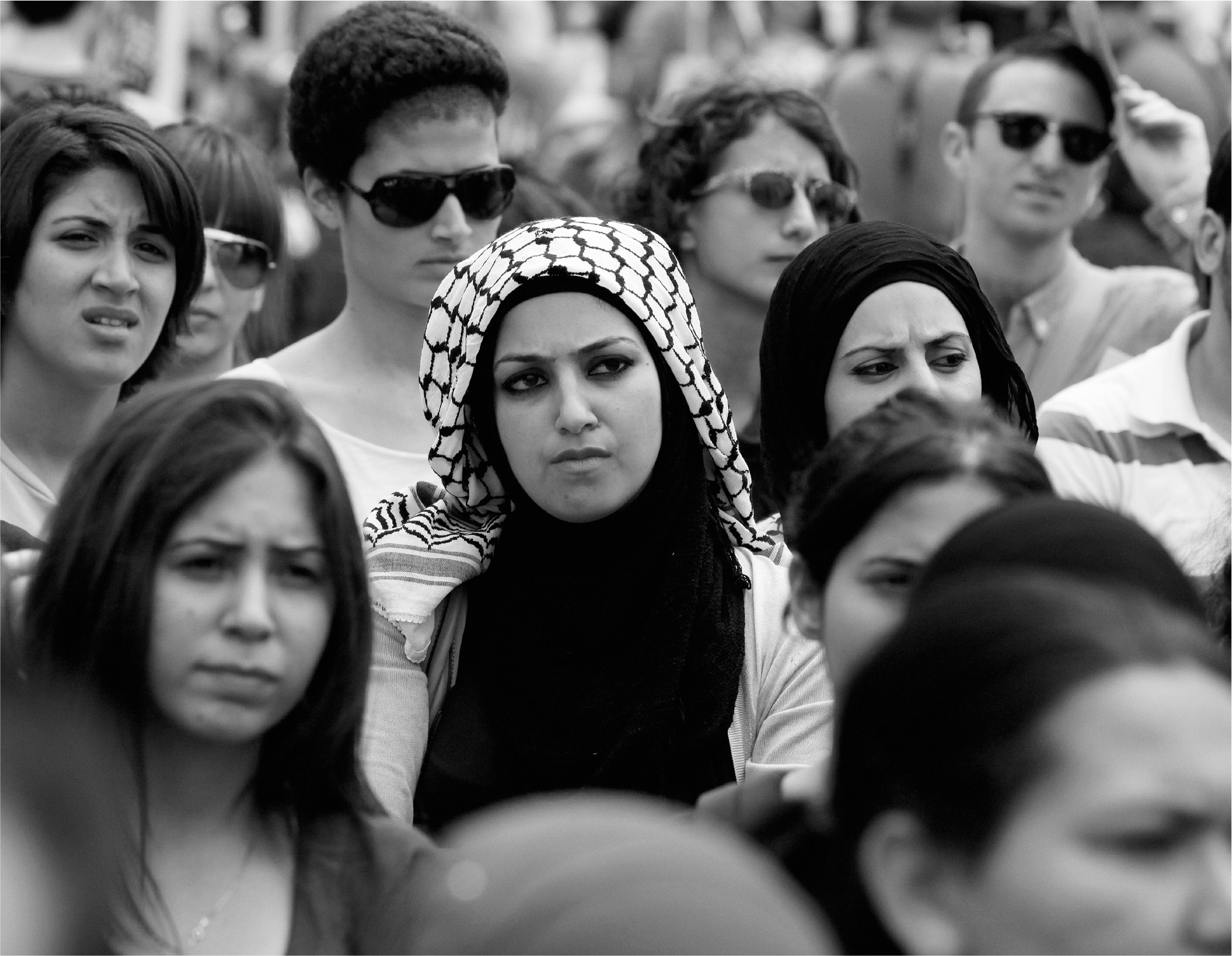
It’s nearly impossible to see how the BDS movement can have the ultimate impact it desires. It will never cause Israel to change policy and it will certainly never erase Israel as a Jewish state. It won’t even aid those inside Israel who are trying to build an anti-occupation or anti-racist camp to develop a stronger shared society between Jewish-Israelis and the Arab minority. But, in the meantime, the silence of those who could grow the chorus inside Israel against the occupation is deafening.
