




Abstract

De Vries, who was 64 and leaves behind a partner and two children, will be remembered not only for his investigations and stories but also for the way he stood in solidarity with crime victims, deeply motivated to help them find justice. It is believed that his decision to act as the confidant of a prosecution witness in a huge organised-crime trial was behind the murder.
RTL, the station that broadcasts the daily news show RTL Boulevard, in which de Vries had appeared on the day he was attacked, said: “Peter’s influence remains stronger than any act of hate can ever be. We will continue to speak freely about wrongs and injustice in society, like he did his whole life.”
The Dutch Association of Editors-in-Chief said: “Peter R de Vries was an icon of Dutch journalism and an incredible support for many people. It is intensely sad that he is no longer among us. With Peter, we lost a tireless and courageous fighter for justice.”
The crime beat
De Vries started his career in 1978 as a trainee journalist at De Telegraaf, the biggest newspaper in the Netherlands. He started using the “R” of his second name, Rudolf, to distinguish himself from a colleague with the same name. Crime journalism wasn’t really a beat yet, but he took it up and soon published his first story about a murder.
He became famous in 1983 when he reported about the kidnapping of beer magnate Freddy Heineken. The book he published about the kidnapping a few years later remained the bestselling true crime book in the Netherlands for years.
He left the paper within a year to become the editor-in-chief of the weekly Aktueel, which he soon turned into a crime magazine. After that, he switched to TV, although he always continued to write as well.
In the early 1990s, he went freelance and started the weekly show Peter R de Vries, Crime Journalist. An episode in 2008 brought him international fame: he used an undercover reporter to trigger Joran van der Sloot, a suspect in the disappearance of US teenager Natalee Holloway on the Caribbean island of Aruba, into confessing that he was present at her death. He won an Emmy for the programme.
Another investigation revealed one of the biggest errors in Dutch judicial history: two brothers were convicted of murder, but de Vries’s investigations led to a retrial and acquittal.
He never shied away from crossing the boundaries of journalism
Apart from his investigation into the Heineken kidnapping, de Vries was not known for reporting organised crime. He mostly focused on cold cases, deceit and scams, standing beside the victims and often confronting perpetrators in front of the camera. His being there carrying out his own investigations with a thorough knowledge of both the criminal world and the justice system became a fact of life for police and prosecutors, who were also relentlessly held to account by de Vries.
He never shied away from crossing the boundaries of journalism, either: he recently started a crowdfunding campaign to raise €1 million to be used as tip money to help solve a cold case of a missing student dating back to 1983.
In the last couple of years, de Vries had become increasingly vocal about social issues in the Netherlands, speaking up for the rights of refugees and against racism. Even though he was respected and popular, his stance triggered a flood of hate and threats against him like never before, he said.
In 2016, he won an award for speaking out against racism and inequality with “courage and nerve, with arguments and substance and without fear”, and that summed him up.
Looking in the mirror
After de Vries was shot, two men were arrested: a 21-year-old from Rotterdam and a 35-year-old from Poland.
It is believed that the reporter’s murder is linked to the Marengo case, which revolves around a large and exceptionally violent drugs gang led by Ridouan Taghi, who was arrested in 2019. De Vries was the confidant of the prosecution witness in the case, Nabil B.
In an interview with the magazine Vrij Nederland, de Vries explained: “I couldn’t have looked at myself in the mirror any more if I had refused his request. I hold the police and the prosecutor to account and I couldn’t do that if I recoiled from requests for help myself, even if they involved risks.”
The risk was clear: in 2018, Nabil B’s brother was murdered by Taghi’s men. A year later, Derk Wiersum, Nabil B’s lawyer, was murdered. Despite the risk, de Vries refused personal protection.
To be accepted by the authorities and get access to his client, de Vries became an employee of the lawyer’s office that represented the prosecution witness. It was a clear risk.
In the Vrij Nederland interview, de Vries said: “I’m not a scared person, but Nabil’s brother and his previous lawyer were murdered so you don’t have to be hysterical to think something may happen. That’s part of the job. A crime reporter who thinks ‘It’s all getting a bit too intense now’ when the going gets tough should instead work for Libelle,” referring to a weekly women’s magazine.
Thomas Bruning, general secretary of the Dutch Association of Journalists (NVJ), told Index: “We have to nuance the image of this being about press freedom only. Nevertheless, for his colleagues, this is an attack on one of them, and it creates a chilling climate.”
This climate has become colder in the last couple of years. Research by the NVJ has shown that more journalists in the Netherlands are being targeted verbally or physically for their work.
National broadcaster NOS last year decided not to use vans with its logo any more because it was increasingly triggering aggression. On Twitter, politician Geert Wilders, leader of the Party for Freedom, recently called journalists “scum”.
Bruning said: “Criminals aren’t triggered by that, of course, but this all complicates the role of journalists in society. There have been threats against journalists, and now one such threat was put into practice.”
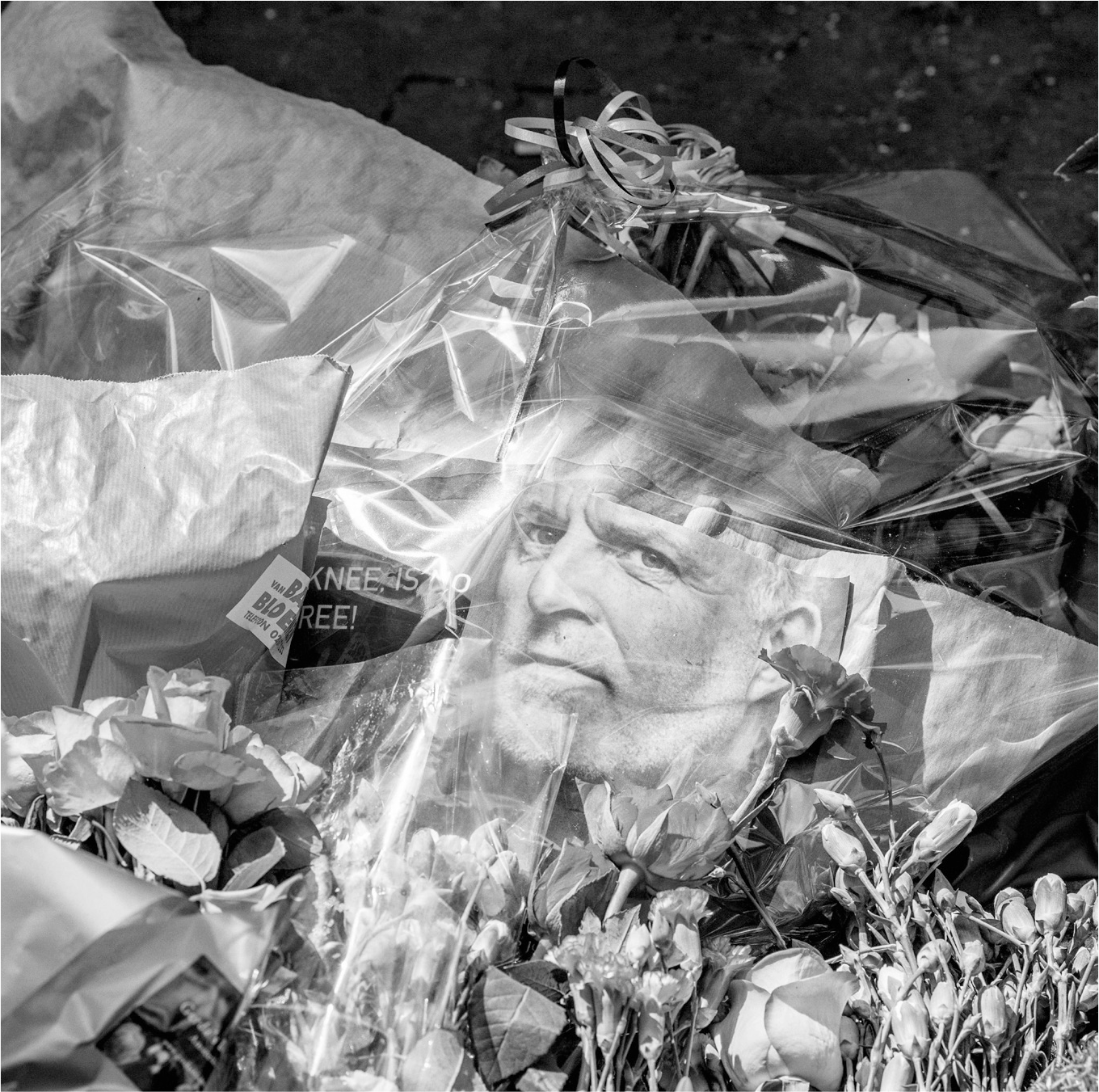
Flowers, candles and messages of support for Peter R de Vries in the Lange Leidsedwarsstraat in the centre of Amsterdam on 8 July 2021 as he remaind critical in hospital
CREDIT: Robin Utrecht/ABACAPRESS.COM
Before, criminals killed each other, then they murdered a lawyer, now there’s been the murder of a journalist for, most likely, his role in a trial.
Bruning, who has discussed the issue with justice minister Ferd Grapperhaus, said there was a difference between de Vries’s murder and those elsewhere, such as the killings of Daphne Caruana Galizia in Malta in 2017 and Ján Kuciak in Slovakia in 2018, which laid bare corruption within the state.
He said: “It’s positive that two suspects have been arrested. The authorities do take this seriously so I don’t think we can draw a parallel with murders of journalists elsewhere.”
Nevertheless, Bruning said he had told Grapperhaus that the trend was worrying. He said: “Before, criminals killed each other, then they murdered a lawyer, now a journalist for, most likely, his role in a trial.
“Who knows? Maybe the next target is a journalist who only reports about crime. It’s a slippery slope.”