




Abstract

It seems that whenever members of the Royal Family are interviewed, it opens another can of worms.
In each case it has been the fault of those of them who chose to be interviewed. The example of the Japanese Imperial Family – a mystery within a ceremony, wrapped in silence – must be a tempting model.
But of course they should be interviewed. There have been interviews that have done what encounters between journalists and powerful public figures should do.
The interviewers have sought information which illuminates their subjects’ actions and their beliefs, and picked up on serious allegations of misdemeanours, even crimes.
In every case, the royal interviewees accepted the interviews in order to win public support. In every case, the reverse happened and they lost much of the support they had.
The televised interview, much more than tabloid scandals, is the most treacherous of devices to use to increase or restore reputation. The tabloids can be dismissed as merely sensational (even though, if usually either fawning or bilious in their celebrity coverage, they are often broadly right). The studio interview may be full of lies or half-truths but what cannot be dismissed as false is what the interviewee has said, which can haunt forever.
Princess Dian during her infamous interview with Martin Bashir, 1993
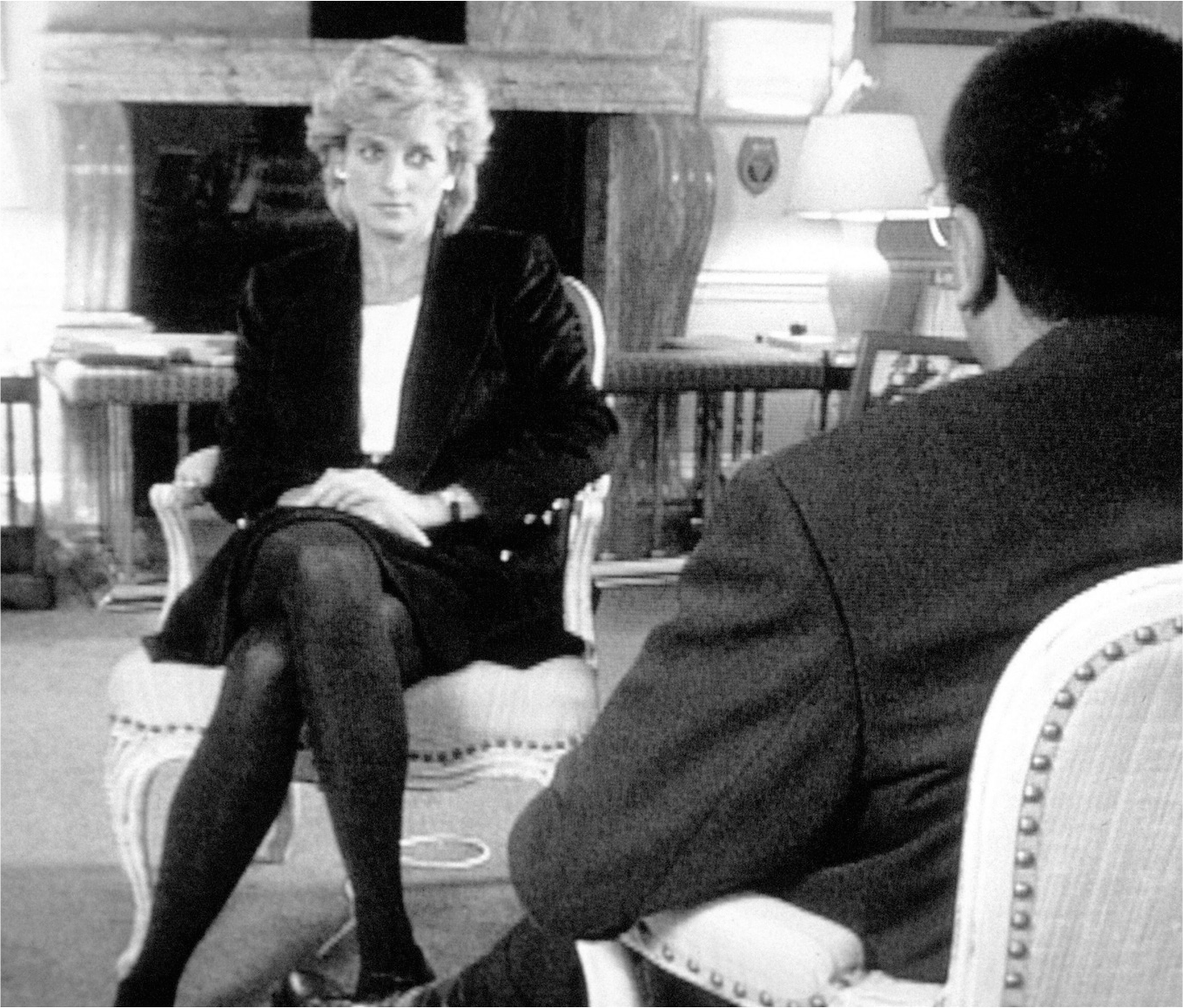
The danger of the interview is large. Yet the most famed of these interviews – that of Diana, Princess of Wales, by the BBC’s Martin Bashir in 1993 – reveals a large danger for journalism, too.
***
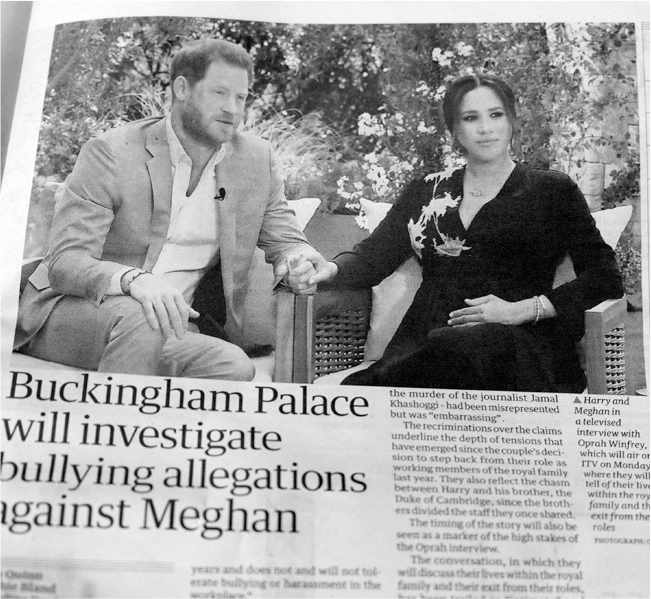
In April this year, Prince Harry – Prince Charles’s younger son – and his wife Meghan Markle (the Duke and Duchess of Sussex) were interviewed by Oprah Winfrey, the most popular and most highly paid interviewer on US television.
The interview was in two parts: in the first, Meghan was interviewed alone: in the second, Harry joined her and answered most of the questions. Both Oprah and the Sussexes – already some sort of friends as Oprah was invited to their wedding in May 2018 – wanted the show to happen. Indeed, the star interviewer’s presence at the wedding was a station on the road to the interview.
It was hailed as a major event, and one broadly flattering to the couple. They must have been pleased, since they spoke and tweeted enthusiastically about its impact afterwards, as did Oprah.
As time passes, however, it sinks more and more to the level of other royal interviews, which did the interviewees no favours even as they shed light on their lives.
One of Harry’s answers to an Oprah question was that he had been cut off without a penny from his family in the first quarter of 2020, when the couple moved to the USA.
In June this year, his father produced evidence that he had given the couple a share of £4.452m along with his elder son, Prince William, and wife Kate – the Duke and Duchess of Cambridge.
Still, the couple implicitly acknowledged that they had received financial help, issuing a statement saying there was no contradiction in this, since Harry had meant the first quarter of 2020-21. For the sceptical, however, this statement seemed hard to square with the common-sense view of what Harry actually said and meant: no money since early 2020.
A series of claims were made, including one of racism shown to Meghan (whose mother is African-American) and of suicidal impulses prompted by this and other mistreatment by members of the royal household.
She spoke of a question asked by a member of the royal household on how dark-skinned her first child would be. Harry confirmed this, but gave no details about the person involved, or what he or she had said.
Oprah’s technique was to use her large reputation to endorse the charges uncritically. Yet asking how dark skinned the child of a white man and a mixed-race woman would be is not in itself racist: it could be, were it from a hostile and racist source – or it could be simple curiosity.
The only way to know about such allegations is to know the details: the who, what, when, where and, if possible, why – the verities of free journalism everywhere.
Quite likely, the Sussexes would have refused to disclose any of that: but they should have been asked – and been told that a vague denunciation remains just that without proof.
Oprah had the possibility of teasing out what was true and what was false in the couple’s presentation of their “escape” from the palace, but made no attempt to do so.
The technique on the part of the couple has backfired, at least in Harry’s home country.
Most Britons, especially the older ones, saw the interview as both self-pitying and self-aggrandising – the spectacle of two very wealthy and privileged individuals posing as victims to attract sympathy and greater fame.
William – who, if the way in which the British head of state emerges remains as it currently is, will be king one day – seems to have fallen for the victimhood trap, with his own allegations that his mother’s interview was corrupted by the means of obtaining it.
To be sure, Martin Bashir, then at the BBC, lied to her and to her brother to obtain the interview.
But William’s assertion that she would have been less extreme had she not been encouraged by Bashir’s claim that her staff and circle were plotting against her seems far-fetched.
Diana, when alive, provided ample evidence that she saw and conducted the interview as an opportunity to say what she wished about her husband’s affair. In making the charge, William reduced rather than protected his mother, depriving her of agency to give her side of the story, which she was certainly entitled to do.
She had foreshadowed this in providing details for Andrew Morton’s book, Diana: Her True Story, and in an interview with Max Hastings, then editor of The Daily Telegraph.
***
Celebrities, who command so much of the media space and are thus important components in our lives, should be interviewed.
In the nature of things, they will often be interviewed sycophantically since, especially for popular magazines, they are likely to increase circulation and thus have a power over the interviewer.
But the Oprah interview was on a different level. The Sussexes were not promoting a film or an event. They were promoting themselves.
They were there to justify their decision to leave British royal duties for an independent life in the USA, and did so by alleging racism and meanness.
This put their interview squarely in the public domain and their contentions and claims were a matter for questioning and probing, as they would be for any others with power and status.
Oprah, with a huge reputation and a career which has seen her rise from poverty to great wealth and high status, has provided a malign example of how to deal with celebrities’ allegations – specially of racism. That is, to put oneself on the side of the celebrity uncritically and to collaborate in the attempt to attract victim status, which is highly prized.
Meghan – with a mildly successful acting career behind her, with marriage into the wealthy Windsor family, with high-paying media and other opportunities opening up before her (at least for the moment), and with an $11m mansion in Montecito, California, and neighbours such as Tom Cruise, Ellen de Generes and Oprah herself in other mansions nearby – would seem to be an unlikely subject for sympathy or pity.
The Guardian newspaper on 4 March 2021, three days before the interview with Harry and Meghan premiered on television.
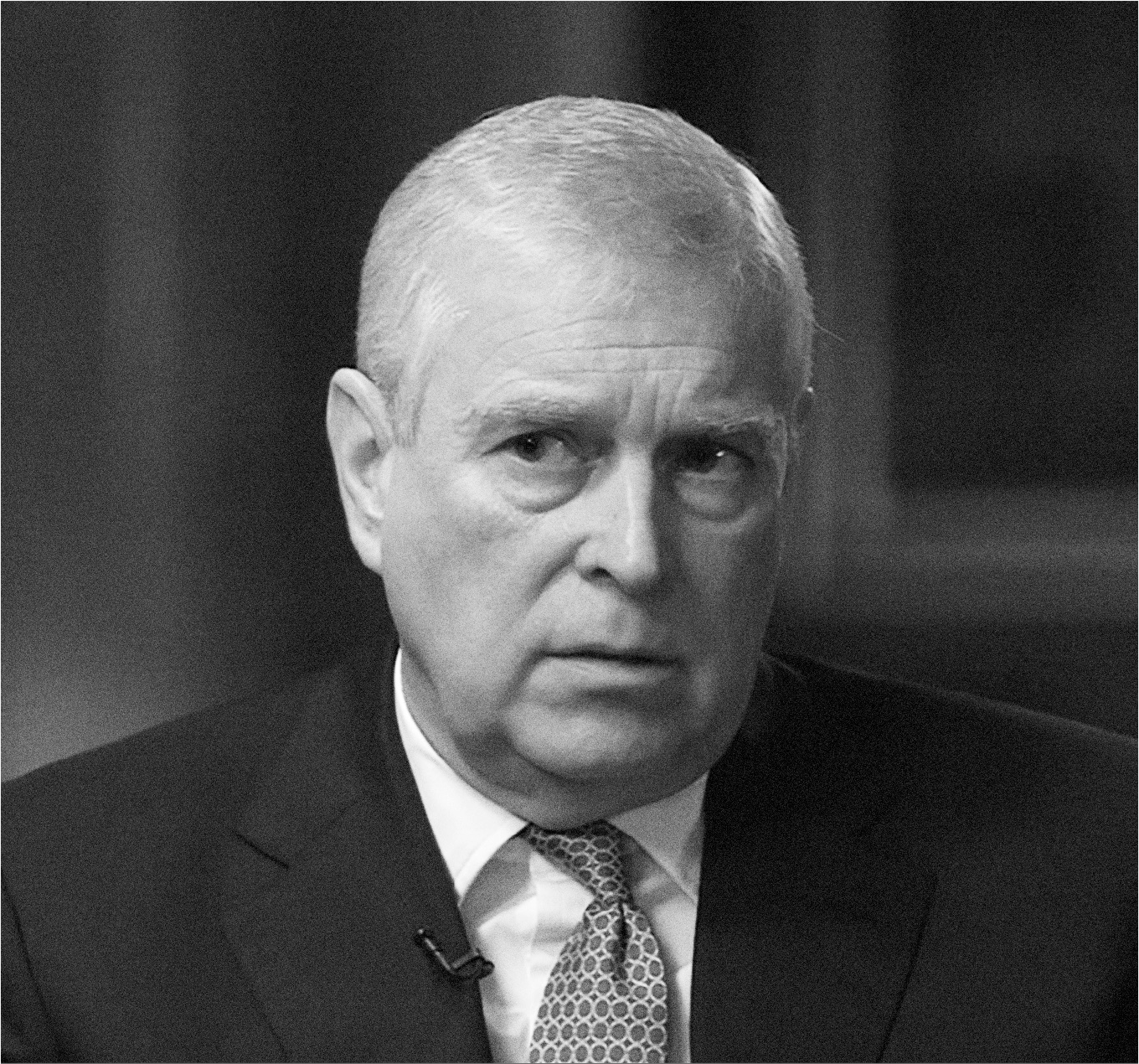
Prince Andrew during his interview with Emily Matlis, 2019
But a claim of racism, especially from a woman of colour, tends to silence all doubt and freeze all investigation.
It should not be if journalistic practice is to be observed.
Who asked the question about the baby’s skin colour? Was it malicious or friendly? How did she react to it? How different was it from asking if the baby would have his father’s red hair?
There are examples of proper interviews of princes and dukes: the best of which by some way was that to which Prince Andrew, the Queen’s second son, submitted himself.
With an allegation hanging over him of having sex with a minor, arranged by convicted US sex trafficker Jeffrey Epstein – who killed himself in his prison cell in August 2019 – the prince negotiated with the BBC Newsnight programme for an interview.
Finally, after some months of haggling, an interview conducted by presenter Emily Maitlis was set for November 2019.
The prince sought to distance himself from Epstein as much as possible, but Maitlis was remorseless, reminding him that he had visited his homes and his private island and flown in his private plane. Closing in, she asked if he had gone to stay after Epstein’s release from jail in 2010 following a short sentence for sexual assault of a minor.
When the prince framed his renewed contact with Epstein after his release as brief and for the purpose of drawing a line under the relationship, Maitlis reminded him he had gone to a celebratory dinner as guest of honour and had stayed in the New York mansion – a decision which the prince said had been “coloured by my tendency to be too honourable”.
The core of the issue was the question: Did Andrew have sex with Virginia Roberts, then underage, in 2001, in London, at a house belonging to Ghislaine Maxwell, an associate of Epstein and now herself facing a delayed trial for sex trafficking?
The prince firmly and repeatedly denied any knowledge of Roberts, saying he had been with his daughter Beatrice at a party in a pizza restaurant in Windsor on the day Roberts had alleged the meeting.
He also denied later meetings, at which Roberts also alleged they had met and had sex. After some more exchanges, during which the prince spoke of the charity work he did, the interview ended.
But it was widely considered that Andrew had dug himself deeper into the hole he was already in.
Interviews have become markedly more probing over the past few decades. When Prince Charles gave an interview to Jonathan Dimbleby in June 1994, it was set within a generally upbeat documentary stressing his charity work and interests. Yet even here, and even though Dimbleby was a friend of the prince, Dimbleby asked Charles if he tried to be “faithful and honourable” to his wife.
Hearing that he absolutely had tried, Dimbleby followed up with: “And you were?”
That elicited the response “Yes”, with Charles adding – after a slight pause –“Until it became irretrievably broken down, us both having tried.”
This response was a forerunner to his son Harry’s response on receiving support from papa: that is, there would be no “contradiction” if “irretrievable breakdown” had set in quite soon after the marriage. Still, it did get some part of the truth into the public domain.
It was not a popular semi-truth. Even now, years later, Charles has a mediocre approval rating, coming in at number eight among the royals in a YouGov poll earlier this year. That is not good for one who is likely to be the next British monarch. In April, another poll showed a majority wanted William rather than Charles to succeed the Queen.
On the Queen’s abdication or death, the monarchy will inevitably lose a great deal of its popularity. Who is to succeed her, how much the successor is likely to change the monarchy, how far a Charles III reign would be one in which the monarch intervenes much more actively in political issues than his mother did… all these are crucial areas of discussion and debate which should involve Charles, and others of the family, in interviews and analysis.
Whoever succeeds, he – it seems certain to be a man, though Princess Anne, at 70 and 16th in line to the throne, would probably be a safer pair of hands – will be titular head of a major state. Much of the job is ceremonial and display but, because the Queen conducts herself with scrupulous attention to neutrality in all matters, we have forgotten that a less disciplined monarch might see it as his right to intervene in policy issues. That has been Charles’s habit and it calls for examination.
The Queen has provided something of a shield to her children’s and grandchildren’s faults. Without that, their characters would be more nakedly exposed.
Journalism has to be ready for that exposure: neither deferential nor celebrity interviews should feature in its coverage because the country’s kings and queens still matter to its democracy.
When bad-mouthing the royals is a crime
LÈSE-MAJESTÉ IS A French term meaning “to do wrong to majesty” which, taken literally, could itself be a contentious point in law.
Heaven forbid anyone should question the majesty and spotless record of the UK’s Prince Andrew, for instance.
But condemnation of the royal pizza connoisseur aside, the law – which covers general criticism of royalty – is a serious problem in many countries and has viciously targeted innocent individuals both historically and today.
The term can also refer to general laws regarding criticism of high-office public figures, but these are not always sanctioned specifically under lèse-majesté legislation.
In January, in Thailand, a woman in her 60s was given a cumulative sentence of 43 years in prison simply for sharing audio clips on social media that were critical of the Thai monarchy. The sentence was originally 87 years but was reduced due to a guilty plea. It followed a spate of arrests and convictions based on minor criticisms of King Maha Vajiralongkorn.
It is in Thailand where the most severe laws regarding this particular type of criticism exist, and this has been met by mass protests in recent years – primarily by students. Some 103 people currently face prosecution.
Article 112 of the criminal code states violations are punishable by between three and 15 years in prison. Chillingly, it also grants anyone the power to file a complaint against a fellow citizen.
As exiled Thai monarchy critic Pavin Chachavalpongpun explained in a previous edition of Index: “As a result, use of the lèse-majesté law can come from all angles. An elder brother filed a complaint against his younger brother. A boss threated to take his employer to court.”
Kuwait, Bahrain and Jordan all have their own version of the law and have particularly alarming records. Malaysia reneged on a moratorium of the 1948 Sedition Act as recently as 2018.
Not all lèse-majesté laws are historic relics of a more restrictive past. In 2018, an amendment in Cambodian law was made to give monetary fines or sentences of up to five years for anyone deemed to “defame, insult or threaten the king”.
Saudi Arabia, where the ruling royal family were the instigators of the brutal killing of critic and journalist Jamal Khashoggi, does not have a formal legal code. Instead, its interpretation of sharia law dictates how criticism is punished, meaning denunciation of the royals is easily (and often brutally) clamped down on.
In the UK, there has not been a conviction under this rule since 1715, but various places in Europe still have such laws.
Monaco, Denmark, Belgium, Sweden and the Netherlands all have lèse-majesté laws. Although they are rarely (if ever) enforced, defamatory statements can, in theory, be more easily punished.
But Spain has continued to employ its draconian legislation. A number of rappers, most recently Pablo Hasél in February, have been sent to jail.