




Abstract

GAZIANTEP, CLOSE TO SYRIAN BORDER, TURKEY

URLA, TURKEY
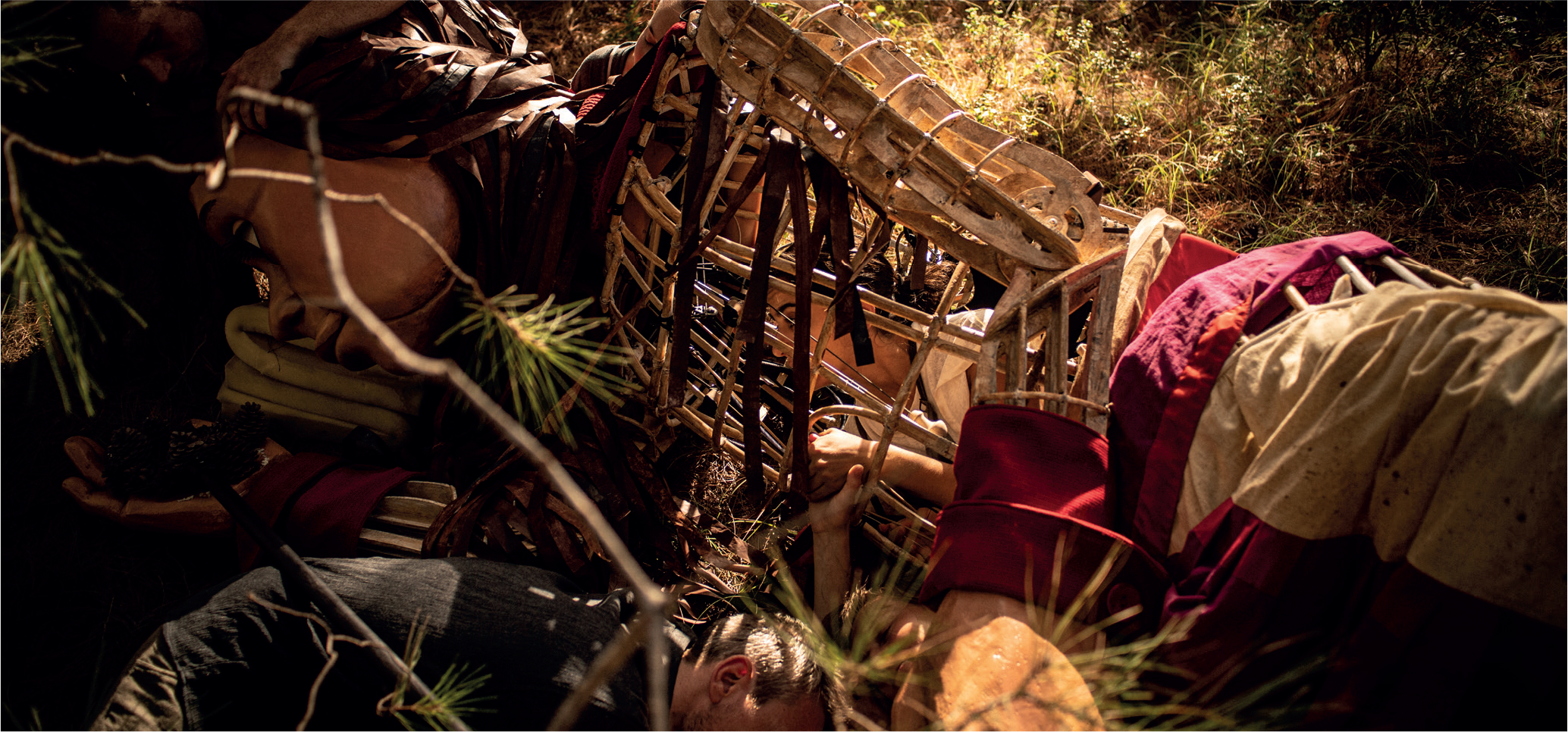
Her name means “hope” in Arabic, and we had hopes for her. We had hope that she had more to say than the one word (‘school’) that she spoke in The Jungle. We had hope that she could provide some sort of tonic or inspiration for those searching for refuge and those who welcome. And we also had hope that it might be easier to empathise, to connect with her - a young girl - than with the negative images of refugees so commonly shared in the media.
PIRAEUS, GREECE
CHIOS, GREECE
VATICAN CITY:
CREDIT: (Gaziantep) Huseyin Ovayolu; (Urla) Andre Liohn; (Piraeus) Elina Giounanli; (Chios) Sokratis Baltagiannis; (Vatican City) handout

Designed by the incredible Handspring Puppet Company, and under the remarkable direction of Amir Nizar Zuabi, this summer she became real to many hundreds of thousands of people as she took a continent for her stage. Produced by Good Chance, Stephen Daldry, David Lan, Tracey Seaward and Naomi Webb, this epic play - too big for any single theatre - was called The Walk.
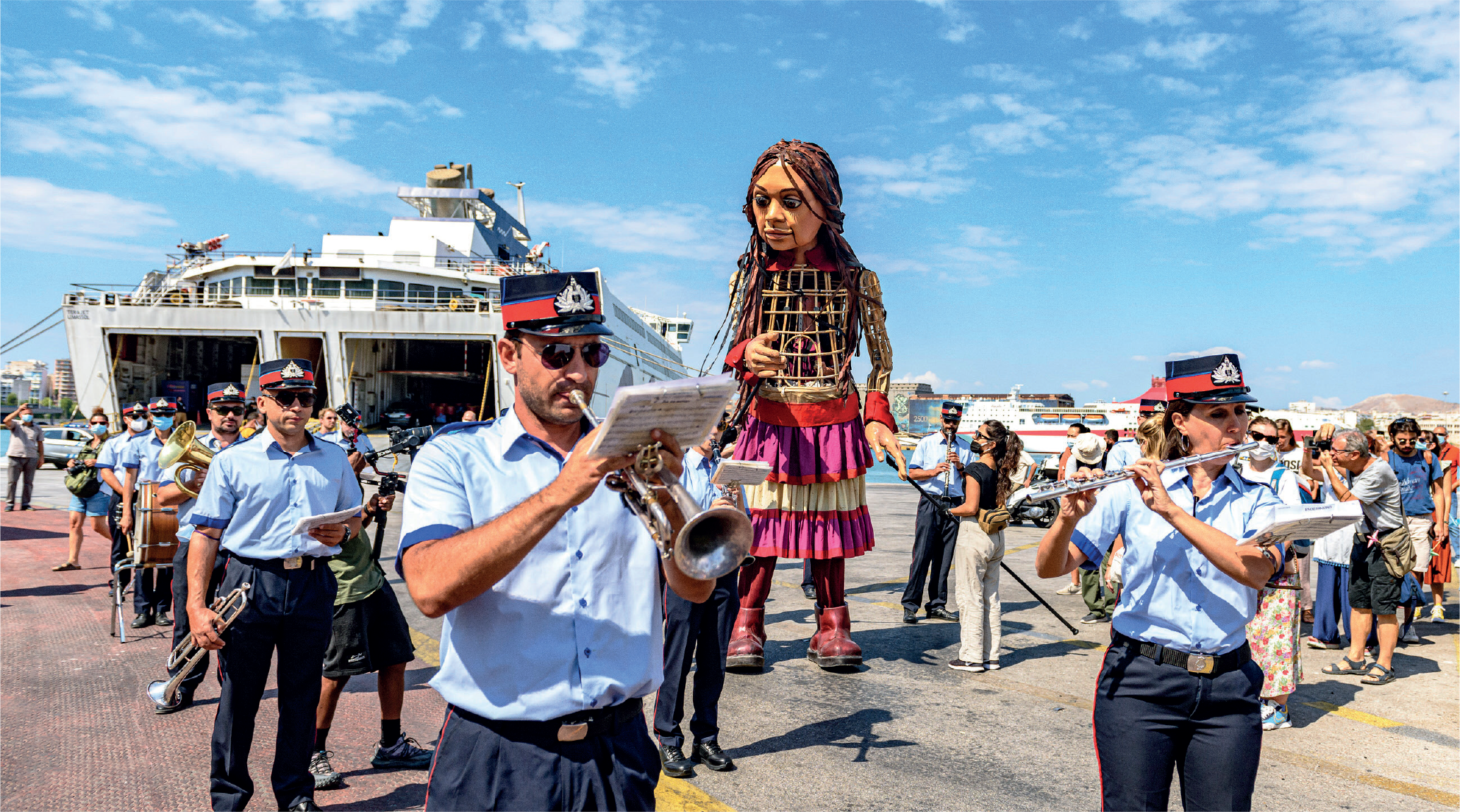
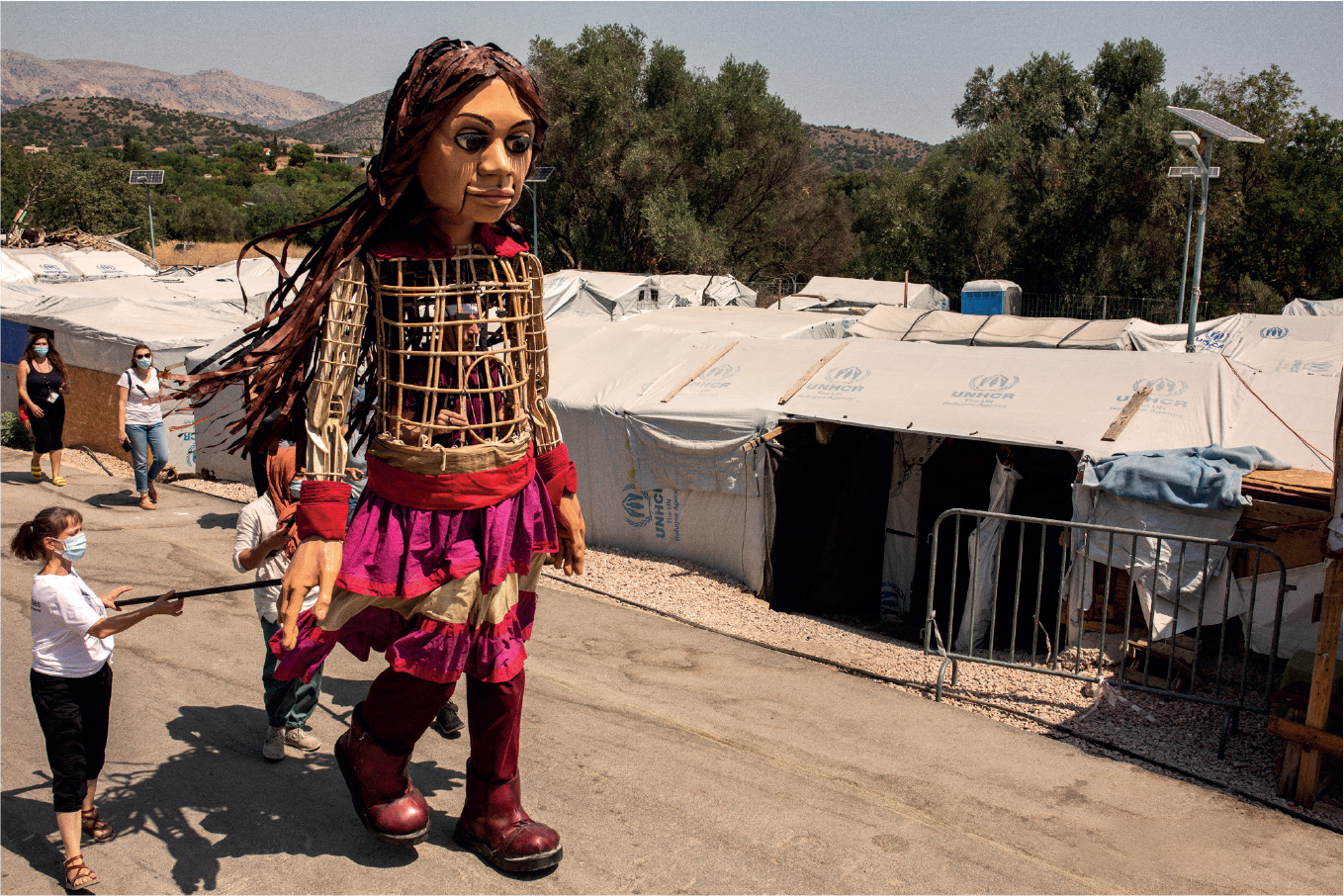
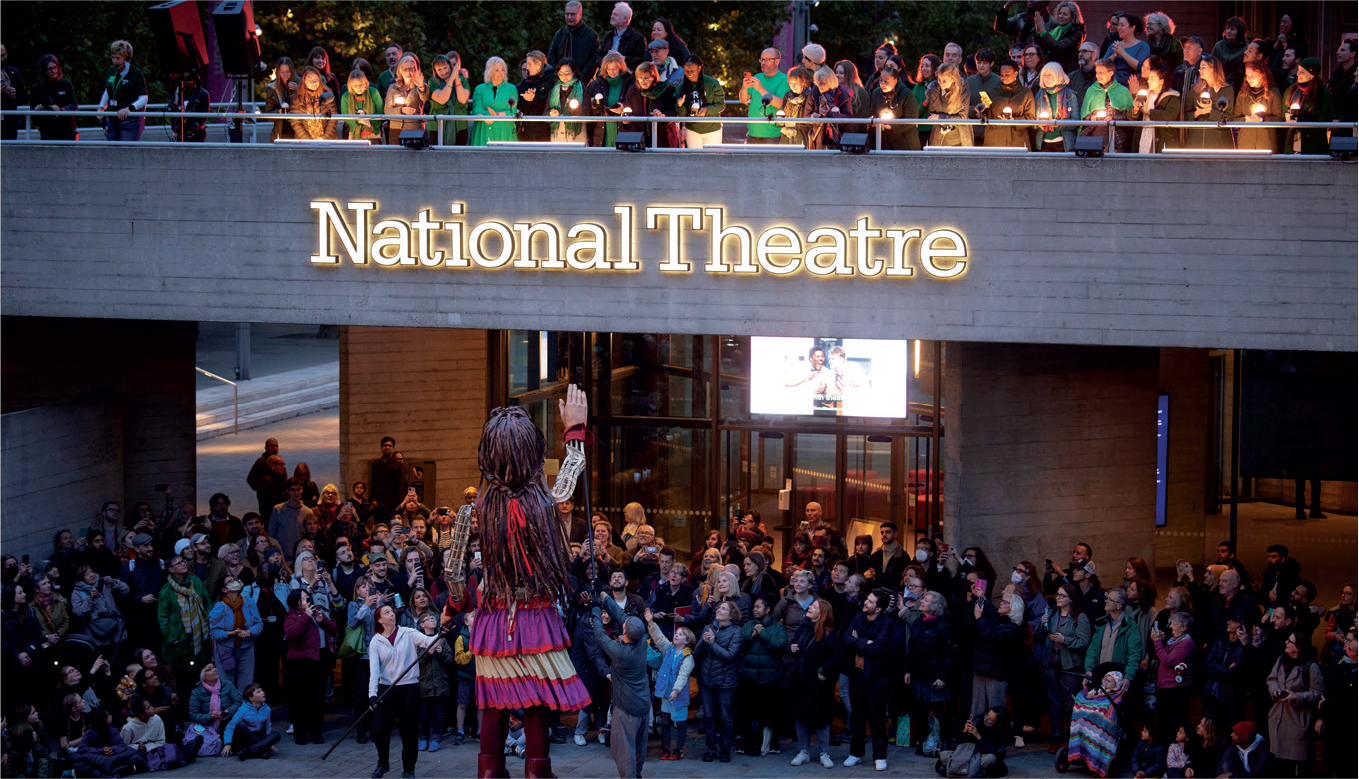
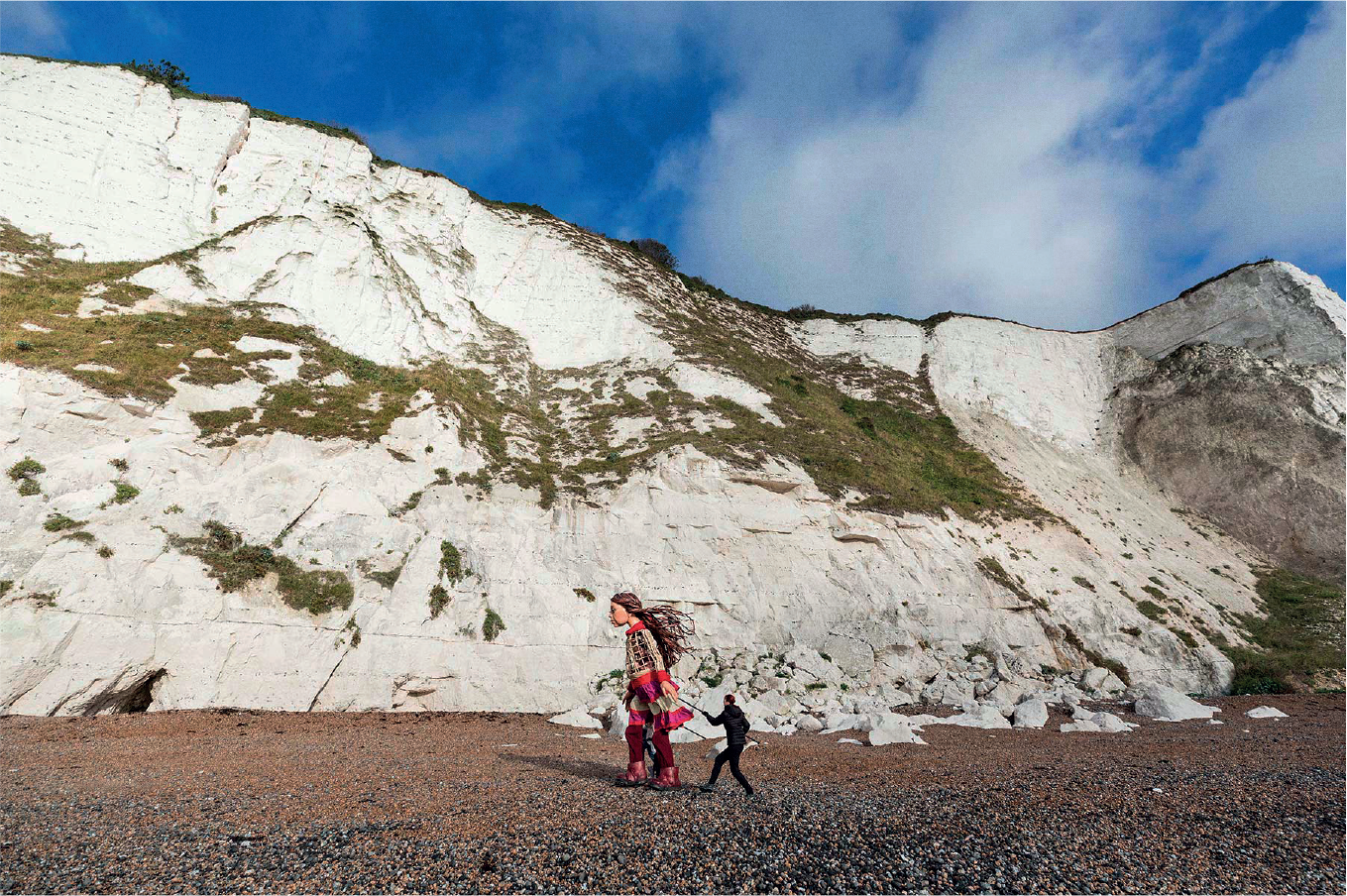
At 3.5 metres tall, she was impossible to ignore. But at that scale, she took on an appearance that felt more real than when we had first encountered her in our play. She wasn’t the girl in need we had expected her to be. Rather, she was a leader, someone who we were destined to follow as she searched for her mother across Europe. Everywhere she passed through, she was welcomed by performances, feasts, events, offerings. The Walk was a provocation, a chance, a good chance, for every city, town and village along the main migration routes of Europe to demonstrate their perfect welcome - and to do it at scale.
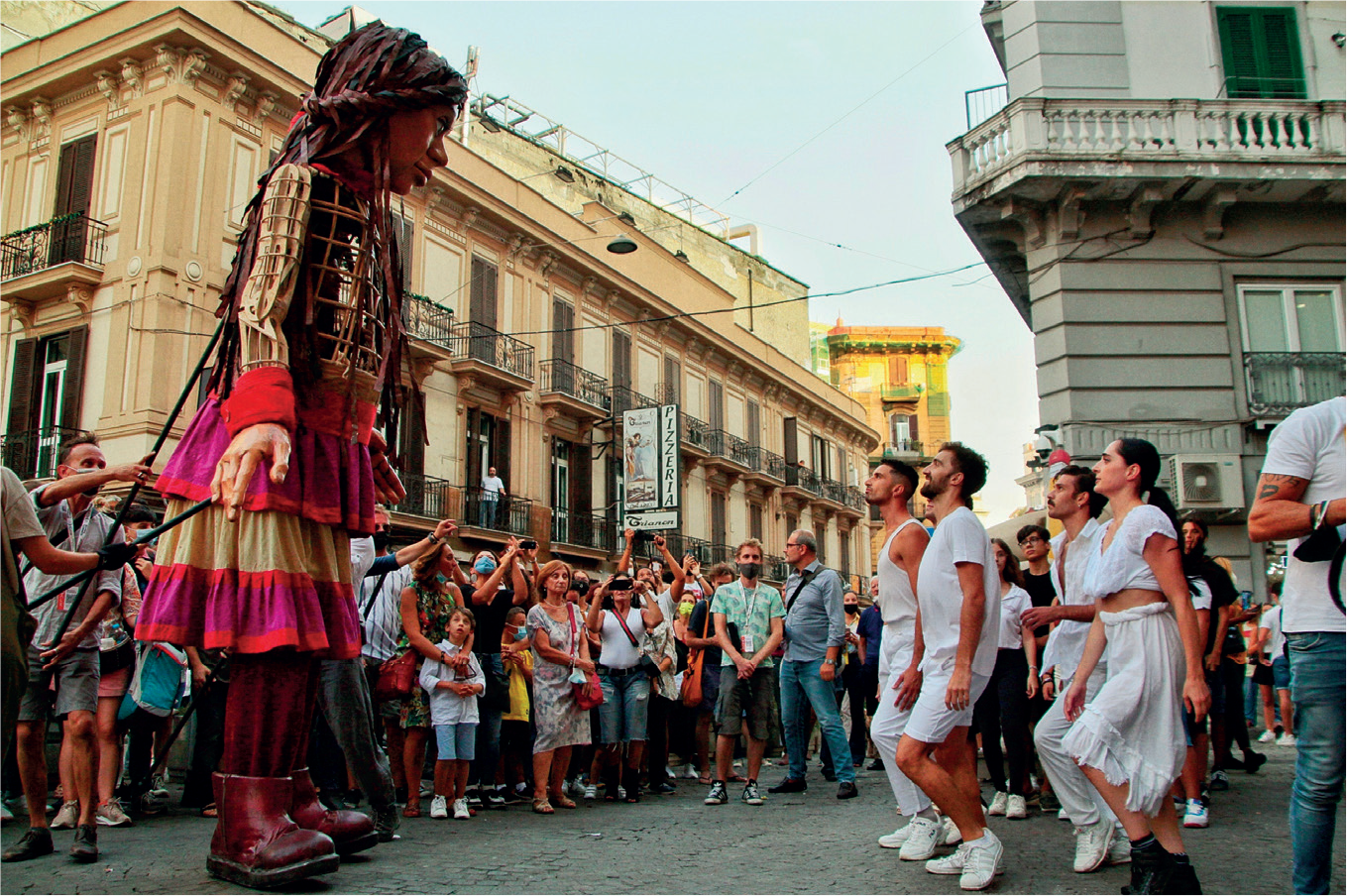
She turned city centres into theatres, and the public became her audience, whether they were expecting it or not.
NAPLES
STUTTGART
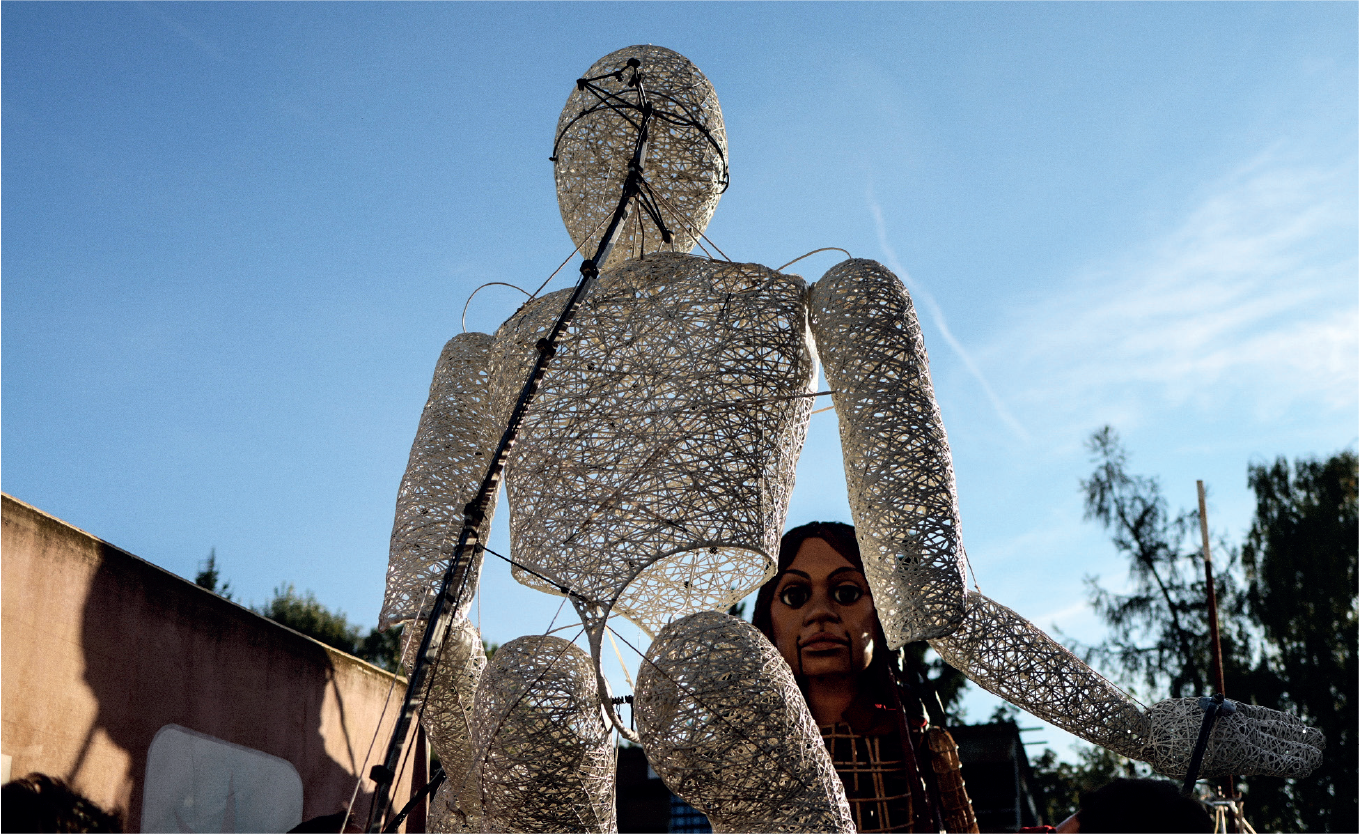
GENEVA
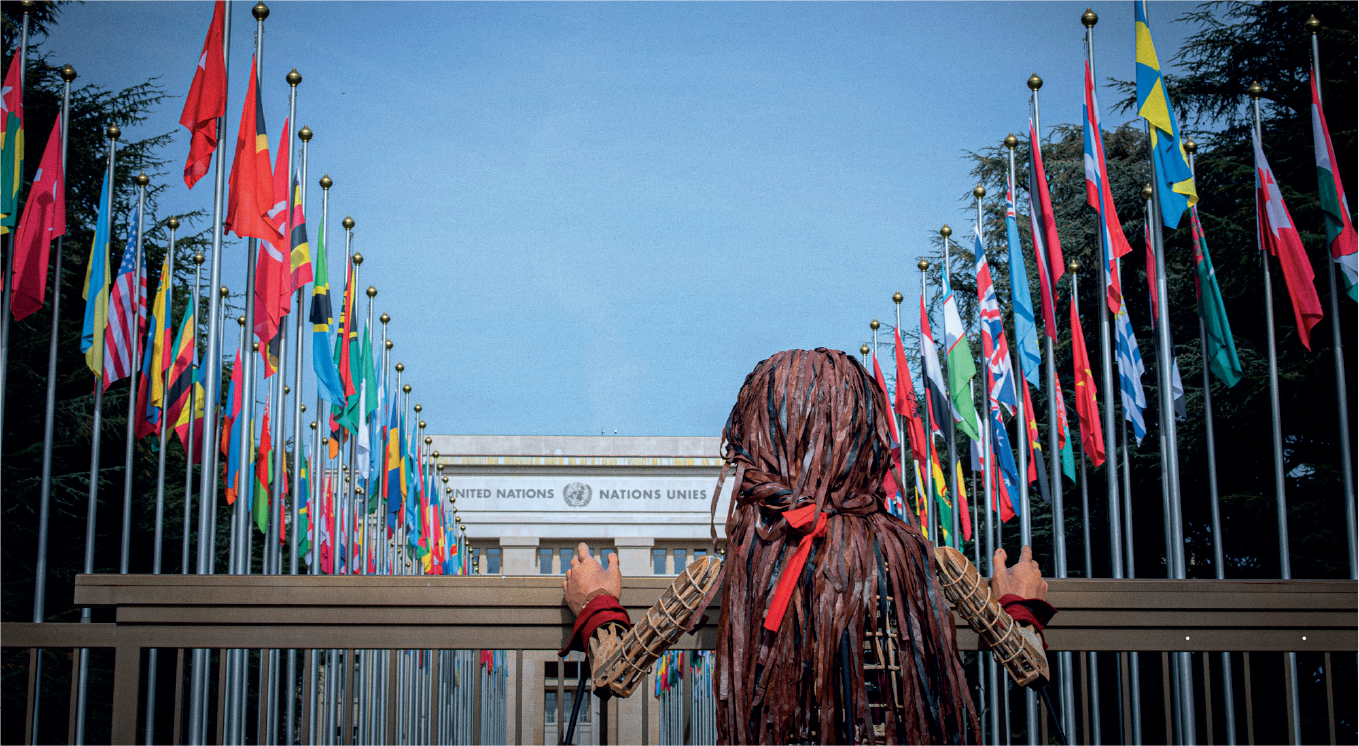
BELFORT, FRANCE

LONDON
DOVER
CREDIT: (Naples) Amapola Chianese; (Stuttgart) Abdul Saboor; (Geneva) handout; (Belfort) handout; (London) David Levene; (Dover) Justin Sutcliffe
The moment that we knew something was working came when Amal, in a tired fit of rage in a village in Italy, yawned - and provoked a yawn from people in the crowd. This was the real connection we had dreamed of.
In theatres we are programmed to make these connections, to believe in the illusion. It is an expected ground for this kind of intense connection. But outside, in the real world, such intensity does not wash. It is not normal to cry at scenes in the streets of our towns. It is not normal to empathise with someone - however young - who is lost and looking for help. It is not normal to hold hands with audience members you have never met before. It is not normal to believe what could be the case.
Even before the pandemic, the feeling had arrived that we must be doing more to reach outside of our theatres. It is often the case in the world of art that we castigate ourselves for not doing enough “outreach”. If we did more of it, we say, then more people would come into our theatres. But this is wishful thinking.
The truth is, some people, lots of people, do not want to come into our theatres, and many have good reason. Theatres are clean, vast, opulently designed, expensive and intimidating. They are full of words, but often empty of both audience and meaning.
Perhaps there is another ingredient to add into our mix. The way in which Little Amal was welcomed by hundreds of artistic and civic groups is in an indication of what could be the case if theatre were not to root itself so firmly in its historic buildings. Forget just trying to persuade people to come and see shows. If theatre is to remain relevant in our social and political lives, perhaps it has to take its first steps outside its buildings, and back towards us?