




Abstract

The appalling hounding of Kathleen Stock at the University of Sussex is a serious threat to freedom of speech on campus, argues
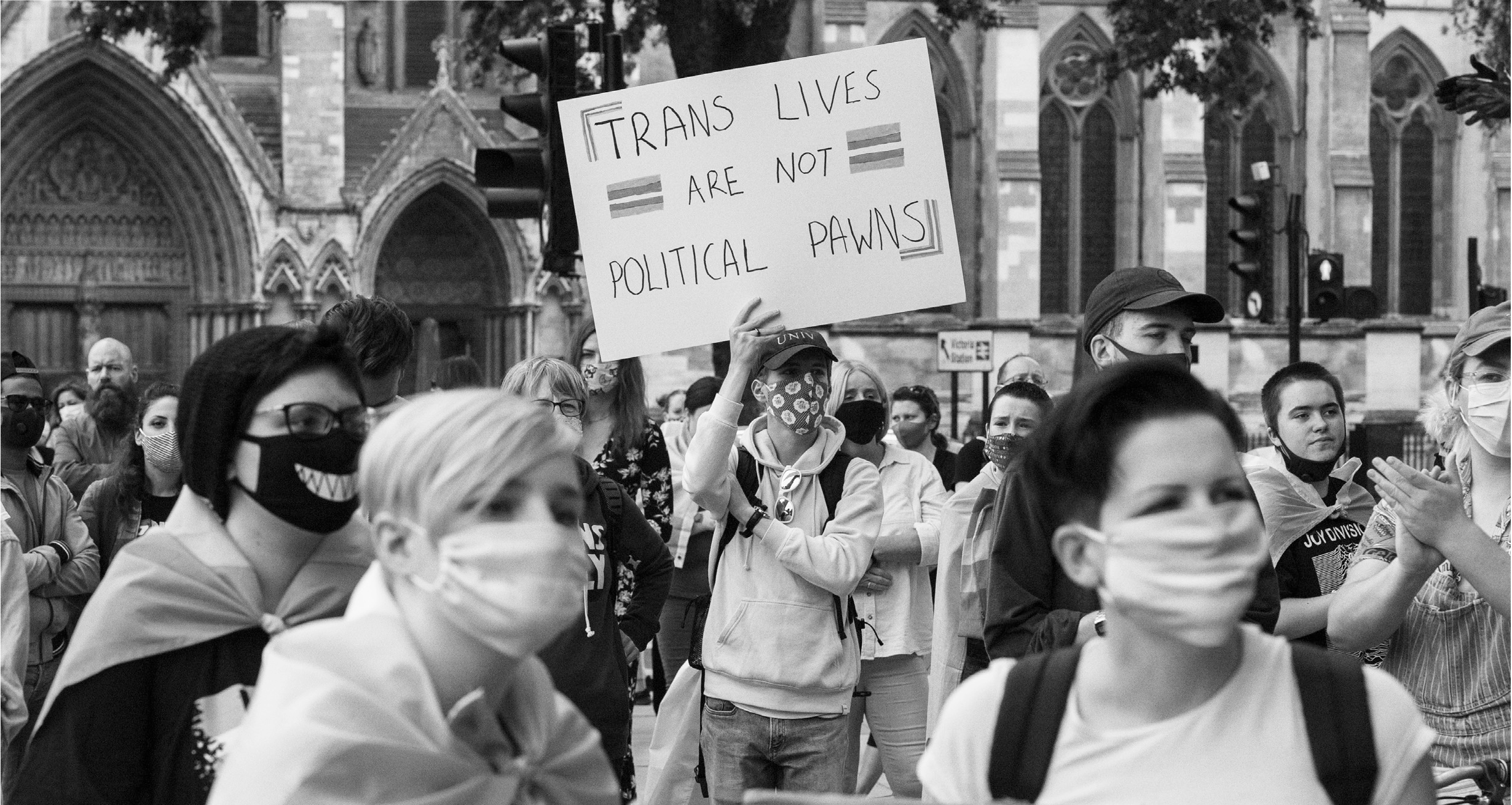
Transgender people and supporters protest in Parliament Square, London
CREDIT: WIktor Szymanowicz/NurPhoto via Getty Images
The first is that most students attend university at a formative time - between school and working life. Their opinions are not yet settled; and once embarked on work it is much harder to take a step back and think about what you really care about, what sort of person you are, or what you want from life. That self-discovery can only be pursued by exploring many options - intellectual, political, sexual, or whatever it may be - and this exploration is only possible when there is no pressure to conform to any orthodoxy. Academic freedom is a prerequisite for the academy as a place of self-discovery.
The second reason is that universities are where experts in their fields - in family law or epigraphy or cosmology or logic - engage in research, which often means disputes, that advance knowledge and can contribute to public discourse. It is a comforting fiction that progress - including moral progress - is always collaborative. Real progress demands a refining process; and that in turn means the freedom to be frank in ways that are often uncomfortable.
Both reasons apply when we consider intellectual debates that connect deeper questions of individual identity with questions in public policy. The issues raised by the government’s 2018 public consultation on the Gender Recognition Act 2004 (GRA) are examples of that.
The Act itself had allowed people - for instance, those with gender dysphoria - to apply for a certificate confirming a new gender; for most purposes the possessor of such a Gender Recognition Certificate (GRC) would then be legally recognised as being of the new gender. The new consultation was (among other things) over whether to relax the conditions under which a person could obtain a GRC. Would it be necessary to have a medical diagnosis of gender dysphoria to receive such a certificate?
On the one hand, the question raises philosophical matters to do with whether and how gender is a social construction, also over its connection with identity and its connection with biological sex. On the other hand, it raised public policy questions to do with the segregation of access to facilities: how stringent should the conditions be under which, for instance, someone born as a man could obtain a certificate entitling them to use women’s lavatories, take part in women’s sports, and so on?
Here then, freedom of speech in an academic context is obviously important. It matters that people feel free to argue both for and against relaxing the requirements for a GRC. Indeed that is what should happen; but it is not happening. The Sussex philosopher Kathleen Stock began writing about the GRA in 2018, in academic journals but also on blogs, in comment pieces for the press and so on. She argued (among other things) that there were costs, to people born women, of expanding the category of “woman” to include anyone who calls themselves one. Because of her intervention, Professor Stock has been subject to a sustained campaign of vilification and harassment.
Stock’s case is unusual by historical standards. In the past, perhaps even today, the principal threat to academic freedom came from the authorities (state or university). In 1687 James II tried to expel the Fellows of Magdalen College, Oxford, who had resisted his favoured choice for president of that institution; the attempt failed and was one of several disasters that together fatally undermined him.
The threat from authority has hardly gone away. In 2021 Abertay University, in Dundee, began disciplinary hearings against a student who had dared to say that women have vaginas; again, the attempt failed, though as far as I know nobody at Abertay has suffered the fate of the last Stuart monarch.
In Stock’s case though, it was not the state that attacked her; and the university authorities supported her - or, at least, they supported her in the latest, most serious round of protests, having failed to do so previously. But she was subject to abuse and harassment by individuals. Sussex admitted as much in October 2021, though by then police had advised her to avoid her place of work, to employ a bodyguard if she ventured on to campus and to install CCTV outside her home, so it was hardly being controversial. In any case, the upshot was that Stock left her job and in November became a Founding Fellow of the new University of Austin in Texas. The UK regulator of Higher Education, the Office for Students, has now launched an investigation into whether the University of Sussex has “met its obligations for academic freedom and freedom of speech within the law for all students and staff, whatever their views”.
Without anticipating what that inquiry finds, it is possible to make two points about this deeply concerning case.
The first is that in principle there may be academic freedom issues on both sides: one side points, rightly, to Stock’s right to lecture, write and speak without fear of harassment; the other side points, again rightly, to the right of students (or anyone else) to protest against her. But we must distinguish peaceful protest in favour of a principle like rights for trans people - which, incidentally, Stock has publicly defended - and harassment and victimisation of an individual aimed at blocking their speech (or worse). It seems that both things were happening at Sussex; but while the former is defensible on free speech grounds, the latter certainly is not.
Second, Stock’s case is extreme but far from unique. In one recent case more than 500 students petitioned Oxford University to force two professors to include trans women in their research into women’s equality, so as not to create a “hostile and exclusionary atmosphere”. One of those professors, Selina Todd, had to be accompanied to lectures by security guards because of credible threats to her physical safety. Professor Jo Phoenix and Professor Rosa Freedman had talks cancelled at Essex University after they were accused of transphobia; an 18-month independent inquiry by a barrister concluded that Essex had failed to uphold free speech.
And these are just the highlights, if that is the word, of a pervasive phenomenon. Hundreds of academics across the UK have written, anonymously, about having to walk on eggshells when it comes to issues around gender, sex and transsexuality.
All this points to something much worse than Stock’s harassment, appalling though that is: the wholesale censorship, by a mob, of a legitimate and important point of view on a matter of public interest. We - I mean we academics - must fight back now; unless we do so, I fear people will look back at 2021 as the time that we let free speech die.