




Abstract

For the first time, English readers can now experience the joys of Ethiopian poetry written in Amharic. The translators of an anthology talk to
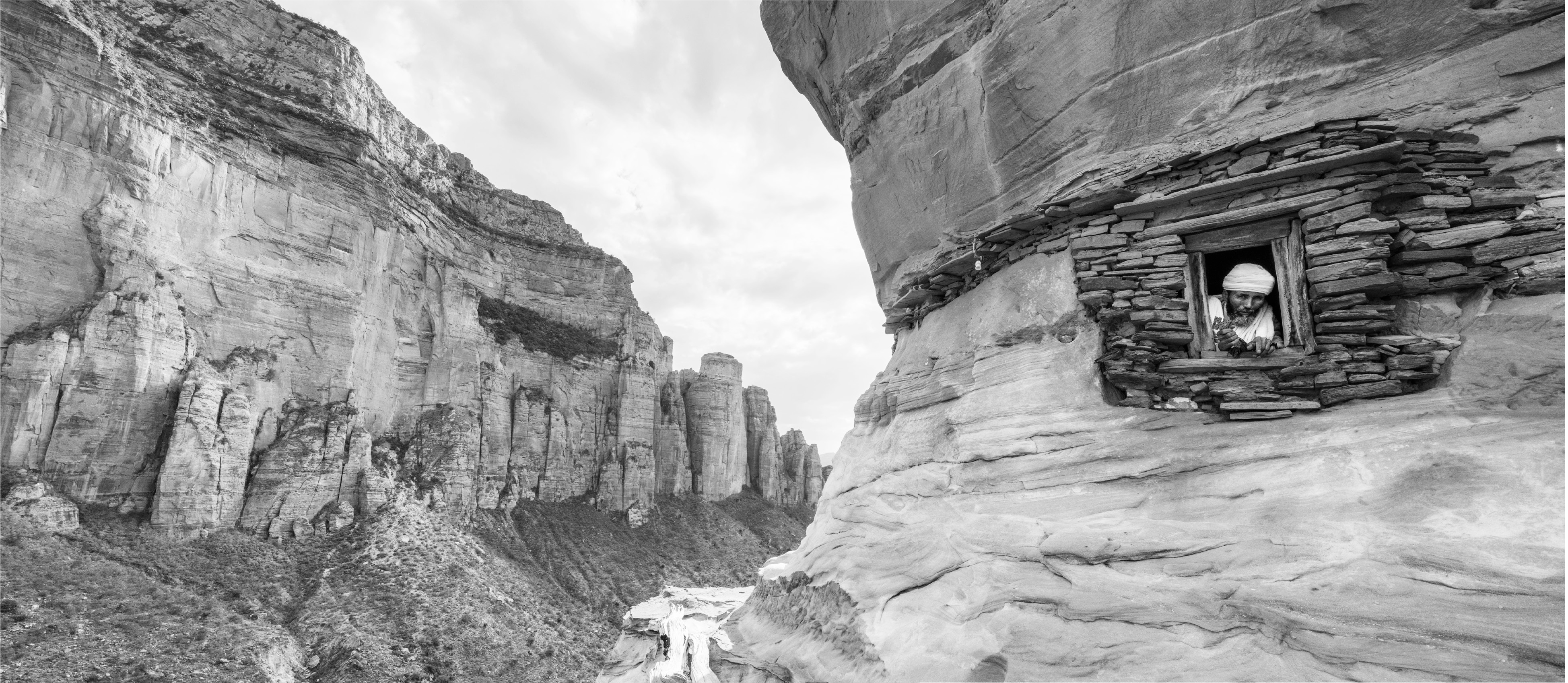
An orthodox priest in the Gheralta mountains of Tigray, a region caught in conflict again with the government in Addis Ababa
CREDIT: Alexander Demianchuk / TASS
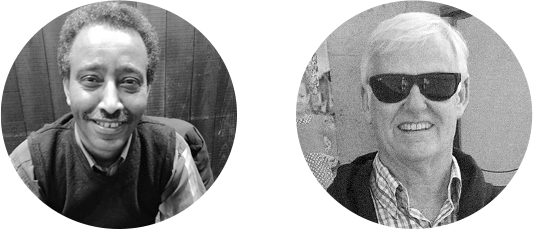
Alemu Tebeje, left, and Chris Beckett, who collaborated on the collection
The poems come from Songs We Learn From Trees, the first anthology of Ethiopian Amharic poetry in English - edited and translated by Alemu Tebeje and Chris Beckett. “I once asked a poet friend in Addis why there was so little Ethiopian poetry translated into European languages,” said Beckett.
“The answer came with an ironic laugh: ‘Chris, we suffer because we were never colonised.’ The corollary is that Ethiopians are used to being independent, and ignored by the world, and are maybe even grateful for that. They have a rich popular culture which they are proud of, without having to receive confirmation from outside.”
Beckett grew up in Ethiopia in the 1960s and studied languages at Oxford. After more than 30 years in international transport and commodities, he decided to dedicate his time and energy to writing and translating poetry.
He was spurred to promote Ethiopian poetry after buying the Penguin Book of Modern African Poetry only to find that there was not a single Ethiopian poet included.
Ethiopian-born Tebeje, meanwhile, spent his boyhood in Shashemene - the town south of Addis Ababa where Haile Selassie famously welcomed Rastafarians to settle - before studying Ethiopian languages and literature at Addis Ababa University.
As chief editor for the Ethiopian Science and Technology Commissions journal, he came into increasing conflict with the censorship of the Tigray People’s Liberation Front- led government that replaced Haile Mengistu Mariam’s military regime in 1991, and he was forced to seek asylum in the UK.
The two ended up working together after Tebeje cleared up Beckett’s confusion over finding there were two Ethiopian poets called Tsegaye Gebre Medhin: one, the country’s unofficial poet laureate and the other, a co-founder of the first political party in Ethiopia, the Ethiopian People’s Revolutionary Party.
In 2018, Carcanet commissioned Beckett and Tebeje to produce the new anthology.
Those new to Amharic poetry might need a primer.
Ethiopia today is made up of more than 80 different language groups, which share a lot of common purposes, stresses and strains. This gives rise to two common types of poem - the nationalistic hymn (extolling bravery against outside enemies such as Let Me Dig Up Their Bones by Yoftahe Negussie, which is reproduced here) and the passionate exhortation to ethnic harmony (such as Solomon Deressa’s Poem to the Matrix, also in the anthology).
“Poets have long been warning against the dangers of ethnic hatred and division, especially since the TPLF-led government took power in 1991 and changed the centralised system of government to a federal system based on ethnic majorities in each state - with each having large, diverse and increasingly persecuted minorities,” said Tebeje. “Negussie reminds us of their great victories over Italian and Sudanese invaders and calls for unison against foreign aggression. Implicit in this is the need for cohesion and unity as Ethiopians together.”
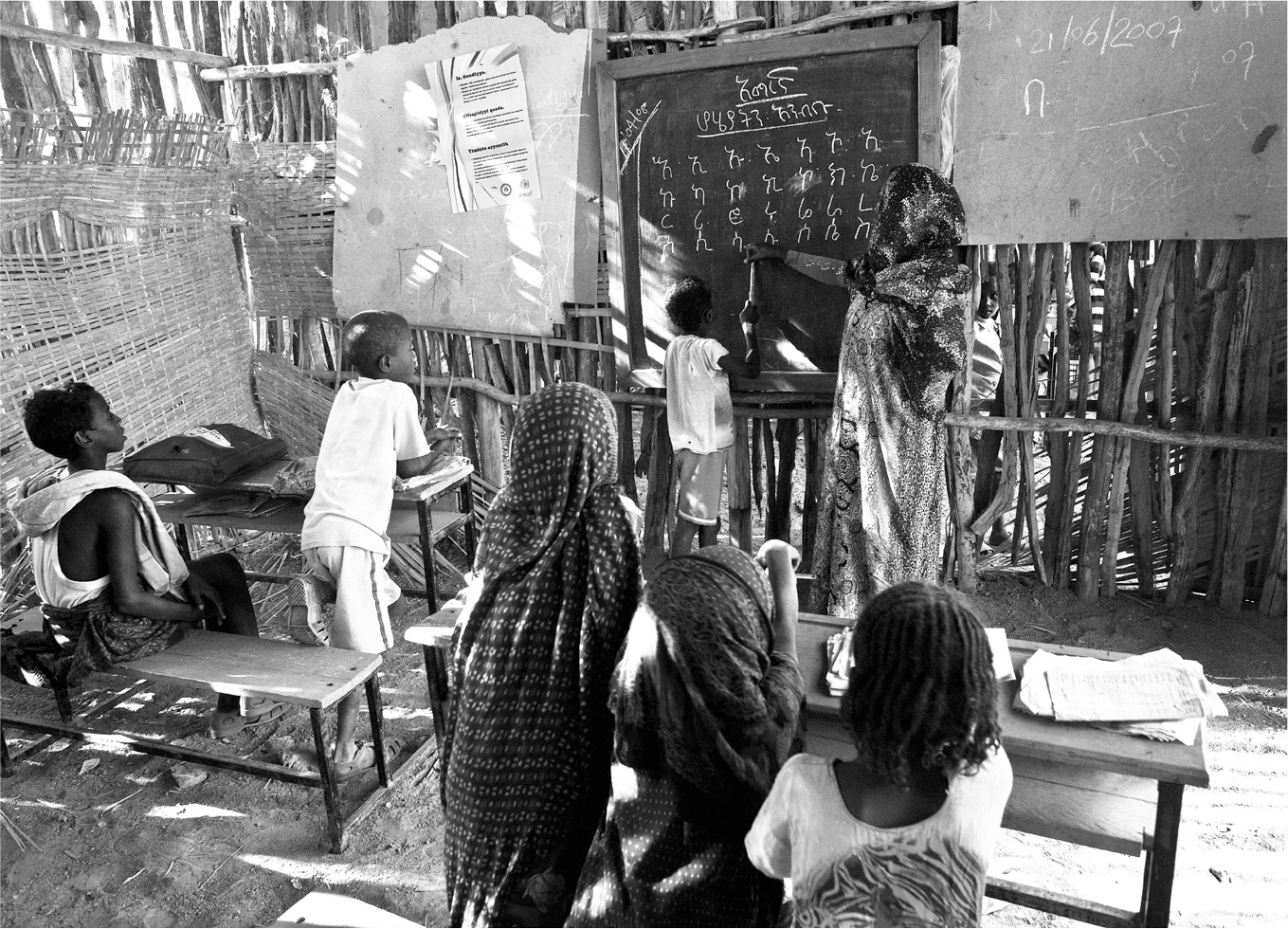
Children at school in Afar, north-east Ethiopia
CREDIT: Franck Metois / Alamy Stock Photo
This resonates at a time of unrest in the country, particularly in Tigray.
He says poetry is mainstream in Ethiopia but that it often has to express its criticisms obliquely, because of censorship and repercussions. “It takes its truth-telling role very seriously.”
Asked about the poems printed here, Tebeje said: “Husbands is such an interesting poem. Feminist and playful, personal but very political, and full of memorable images like ‘because the lid doesn’t fit and the leaders don’t fit’, which we believe is saying something very profound about the mood of Ethiopians today.
“Ethiopian poets are brilliant at finding new ways to write about corruption,” he said, talking about My Continent’s Election Song.
“Here Nebiy Mekonnen compares corruption in politics to that in sport. The chants at football matches and election rallies are both underpinned by whippings and beatings of anyone who disagrees.”
Beckett said: “We see Zewdu Milikit’s The Fashion of Silence as a sort of shame poem - a complaint not only against censorship but against our too- easy acceptance of censorship. It is that rare thing, a poem which criticises itself as well as what it sees as the lies and cowardice the world has come to accept in the interests of comfort, prosperity, a quiet life.”
Let me have a polite conversation with my country
let me write a poem to benefit my country
even if I’m not able to write a poem for my country like the wise poets write
even if I’m not the legal husband of my country or a leader
let me still water the dry land with planted sweat
let me slip in by the fence as a lover
by the front by the top by the upper upper door
they closed the gate but the gate never fits
it never fitted you probably it never properly
fit the bowl and the opening doesn’t open doesn’t let anyone in
through the place where things don’t fit anyway an opening
either way either way I don’t want to ask you to marry
instead let me write you a poem
let me fit a poem to benefit my country
collecting the hill of words
the poetry of the people is the melody of the people
until I grow vines I will fit you with my poetry
until I twist lines here I will build a rhyming house here for you
because the lid doesn’t fit and the leaders don’t fit
and they always leave the door open
they always leave the lid of the pot open
so people can scoop things out scoop things out scoop things out
An election in Africa!
a football cup in Africa!
today an election…
today a football match…
on every day, year, country
in my continent
there is a race, a kind of war
through which the same song threads
its warp and weft
its notes composed
of whips
and beatings
into a universal soundtrack, persistently
magnificent
the steady chords and rhythms
like a holy water
springing out
from cellars and from rooftops
gushing this chorus
again again again
it’s rigged…
it’s rigged.….
it’s rigged…….
Our academic beards
grew long and thick,
we never combed our hair.
‘I don’t need much!’
we’d say, our trousers
thin as hermits’
under our itchy coats.
We discussed
everything that mattered
in the world, tearing
our opinions out like pages
from a breathing book.
But that’s all gone:
our hair is slapped with oil
and smartly trimmed,
our leaner bodies
own a rack of shiny epithets,
our shirts and ties
are mute, even our jackets
don a pensive look
but oh! our baggy pants
are loose enough
to hide a thousand secrets
and whisper when we walk.
The temper of the times
has changed, we do not dare
discuss a thing of
all those everythings
that mattered
and still matter in the world –
today our House of Learning
wears a fashionable hush.
Every night I dream of digging up
the graves of Gobena in Shewa,
Alula in Tigray:
Gobena’s bones for making bullets,
Alula’s bones to make winds whistle.
Put together so they teach Gobena’s daughters
how to ride a horse,
Alula’s daughters how to fire a gun,
for if our country does not come together
and tuck her toe into the stirrup,
she will be toppled…she will fall off.
Let our four founding fathers,
Mekonnen, Dereso,
Alula and Gobena
teach us how to ride a horse again!
Gobena, rise up with your horse again!
Songs We Learned From Trees, edited and translated by Alemu Tebeje and Chris Beckett, is published by Carcanet Press (carcanet.co.uk).