



Abstract

Pieter-Dirk Uys, one of South Africa’s foremost satirists, tells
Under three words in bold – “Disclaimer and Warning” – it reads: “The scripts in this collection, from 1981 to 1994, have not been altered to reflect today’s values and current sensibilities. They are an authentic record of what was performed at the time. The words are specific here to their social context. Deeply offensive terms were used ironically and satirically to expose racism, sexism and hypocrisy and to reflect the prejudices of society at the time. Offensive depictions and harmful terms have therefore been purposefully retained for historical accuracy. To alter the words and scripts would not only give an untrue and false account of the performances but would render the satire and political import of these scripts incomprehensible.”
After a long career as an author, actor and activist, it’s clear that Uys has as little interest in being censored, or censoring himself, as he did during the long, cruel and strange years of apartheid.
He was born in 1945, three years before the racist system became formal government policy. By the 1970s and 1980s, he was often at loggerheads with the country’s notorious Publications Control Board (later the Directorate of Publications). Uys created theatre, and the board scoured it for evidence of, among other things, compatibility with “certain standards of indecency and obscenity”. Inevitably, it found Uys’s work decidedly lacking in decency.
Index visited Uys at Evita se Perron in the small Western Cape town of Darling, about 85km outside Cape Town. The venue was once Darling’s railway station; today, it is a tearoom, restaurant, book shop, museum and theatre – its name taken from Uys’s best-known character, Evita Bezuidenhout.
Several boards in the museum display some of the letters Uys received from the censors in relation to plays such as Selle Ou Storie (Same Old Story – many of his plays were written and staged in both English and Afrikaans) and Karnaval (Carnival). One undated letter warns that Karnaval cannot be staged for audiences aged between two and 18 and that two words – both racial slurs, one used to describe black South Africans and the other a pejorative for people of mixed race – must be excised.
It adds that those changes may not be enough to save the play from punitive action when staged: “The committee sounds the warning that the director of the proposed public entertainment may illuminate certain parts of the text with offensive and obscene gestures.”
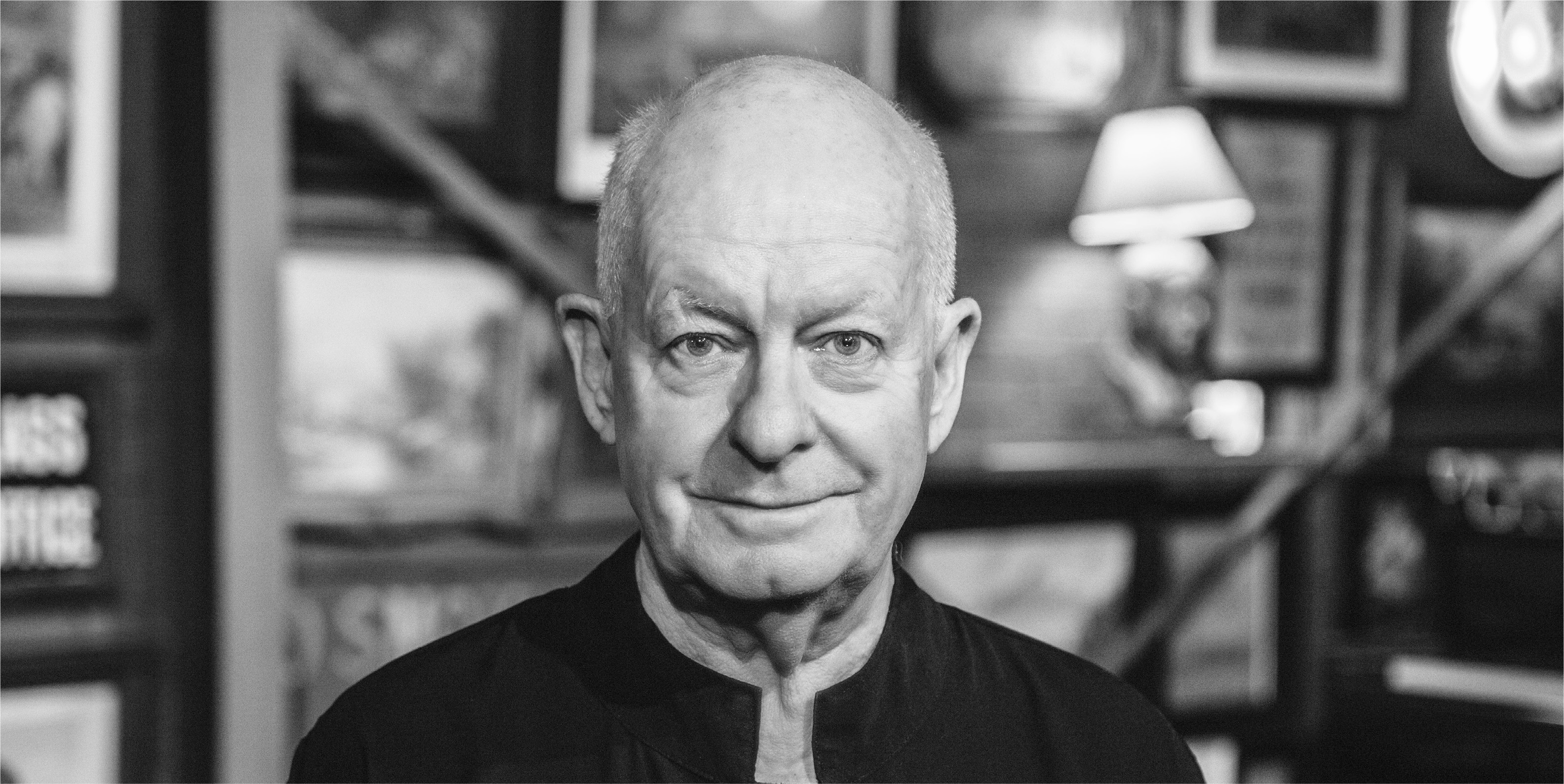
The satirist Pieter-Dirk Uys
CREDIT: Stefan Hurter
Some creators may have been deterred, but Uys still describes the Publications Control Board as “the great love of my life, a love that made me world-famous in Cape Town”. Censorship galled him, of course. It also, he says today, pushed him to think more creatively – to invent words that sounded rude but didn’t exist in any language and so escaped the censors’ red pens. And it taught him a crucial lesson: make your enemies look ridiculous.
Which is not to say he wasn’t frightened, at first.
“The reality about censorship … I had to run for my life,” he told Index over two South African delicacies, rooibos tea and koeksisters. “People kicked me out of their houses. They threw tins of cat food at me – I learned to catch the tins and feed my cats.”
His first communication from the censors arrived while Selle Ou Storie was in rehearsals in Johannesburg in 1974 or 1975. A “guy with a suit on, with two policemen guarding him, made me sign for a brown envelope”.
“None of us smiled. None of us laughed.”
He was horrified – not for himself, but for the cast. “It was a play with characters, people … I had to tell them that we couldn’t perform,” he said. “Immediately they saw themselves as criminals. I didn’t mind if it was for me, I can handle that. But when you’ve got people with you declared as criminals in the country, that’s pretty grim.”
Then something remarkable happened: “Eventually, we couldn’t help laughing – it took [only] a few weeks, thank God.”
When Karnaval was later banned, Uys and the cast perused the board’s letter to see how many swear words had been misspelled. “We photocopied those pages and hung them up in the men’s toilet of the Space Theatre [in Cape Town].”
It was a cheeky gesture, and it made the censors look absurd. That’s what Uys wanted. The alternatives, fear and anger, weren’t for him.
“To be frightened means they have won. To be angry means they have definitely won, because then they know your passion and how you can actually be silenced. And it doesn’t travel. Anger doesn’t travel. People shouting about it doesn’t travel, especially not on stage. Protest theatre was very important for the struggle [against apartheid], but terribly bad for the theatre.
“I’m not talking about The Island or Sizwe Banzi is Dead [both by Athol Fugard, John Kani and Winston Ntshona] – those were great theatre plays. But [most] protest theatre just became predictable, and it played to empty houses. The stage, the theatre, is no place for protest. The theatre is there to make you find your protest.
“I want to offend everybody, because that means I’ve rattled their cage. I give them an alternative to their politics, and they think, ‘He can’t say that. Can he say that? Why can he say that? Gosh, we never thought we’d laugh at the things we don’t want to think about.’”
Absurdity and anarchy
One person who certainly doesn’t approve of Uys’s approach to his craft is his alter ego, Evita.
“Evita has no sense of humour. She’ll never offend. She’s a diplomat.”
She really was, once upon a time. Part of Bezuidenhout’s elaborate back story involves 10 years spent as South African ambassador to the independent – and fake – “homeland”, the Republic of Bapetikosweti. Her signature bouffant was recently tamed into a sleek short style in honour of her 85th birthday and necessitated by South Africa’s Covidlinked ban on visits to the hairdresser. But she remains as demure and studiously inoffensive as she was when she first appeared as a character in Uys’s one-man show, Adapt or Dye, in 1981.
At an African National Congress rally in 1994, Evita Bezuidenhout in her apartheid national dress presents the future president of South Africa Nelson Mandela with some koeksisters(a South African sweet delicacy)
CREDIT: Benny Gool

She was born of two things, in Uys’s telling: “Absurdity and anarchy.”
He said: “I’ve had to find words [over the years] to explain my actions. I didn’t have any words to even explain why I was doing things, I just did them instinctively. I had to produce anarchy – including sexual anarchy – because I was doing a middle-aged Afrikaans lady, who was definitely a mouthpiece for saying things that I could not, would not – or that you did not want me to – say.”
Evita gave Uys a direct line to senior apartheid officials. She once wrote to the then minister of police imploring him to “lock up Pieter-Dirk Uys because he’s a communist, a terrorist and he wears women’s clothing”. The politician replied, addressing his correspondent as “Dear Mrs Bezuidenhout” saying: “We’d love to lock him up, but the jails are full of all the others.”
Another lesson for Uys: “He had a sense of humour.” And a reminder: “Don’t underestimate the enemy.”
“They are charismatic,” he said. “They have a sense of humour. The man who has to ban the play is not the man who makes the decision to ban the play.”
“The censor has become the citizen”
The end of formal apartheid in 1994 didn’t mean Uys – or Evita – ran out of material. Evita interviewed a number of recently unbanned politicians from the now governing African National Congress (ANC) for a TV show called Evita’s Funigalore.
“When one thinks [that] 28 years ago [these politicians] came out of the darkness of the horsemen of the apocalypse, we did these interviews and they just dazzled with their optimism and their love for the country and their sense of humour – my God! That’s gone. Cyril [Ramaphosa, the current president of both the country and the ANC, who was among Evita’s 1994 interviewees] is in such a state of not knowing where to stand.”
The Publications Control Board and the Directorate of Publications are long gone, so does that mean an end to censorship? Uys said: “The censor has become the citizen. In my day, the censor was one mind, two minds, maybe three – politicians, religious people as well, moral people. But it wasn’t that everyone had an opinion, and the power to crucify.”
In the months before Covid, he staged a show in Johannesburg and gave free tickets to university students who had written requesting them. He took aim at former president Jacob Zuma and the group walked out. He found them afterwards at the bar and asked about their departure. They replied: “You can’t make fun of black people, you’re white.” He left them to settle the bar tab and sent a letter to the university asking that it pay for the tickets. It did.
One of the students he spoke to alone at the event said: “You can’t go there. You can’t go there.”
He replied: “You’re going to lose your freedom of speech.” He mimed pulling a zipper across his mouth. “Your mouth is going to disappear.”
But South African satire and comedy is in good hands. At an awards ceremony a few years ago, he met a number of “young black comedians who don’t give a fuck” about what is or isn’t appropriate. They still keep in touch.
“That’s my optimism. I hope these young people or middle-aged people are not punished by their shadows.”