




Abstract

The links between the past, present and future are important and hard to break,
AS HE APPROACHES his 80th birthday, Ariel Dorfman is interested in ghosts. His 2018 novel – a meditation on how the crimes of our ancestors reverberate for generations – even referenced them in its title, Darwin’s Ghosts.
Now, in an Index exclusive, the playwright, novelist and activist has written a short story which, once again, examines the idea of continuity and confrontation with the past.
“As I grow older, I have found myself increasingly obsessed with the question of how the dead persist among us,” he said.
“Mostly, this preoccupation has been made manifest in a series of poems that feature voices from the other side of death, warnings for those who are alive (like Dante foretelling Trump what awaits him beyond the beyond), words that are collected in a forthcoming volume of my verse.”
But there is also a personal element to Dorfman’s fascination.
“I worry, as an atheist, about how to bridge the abyss that death will excavate between myself and my wife, Angélica – to whom I have been married for almost 60 years.”
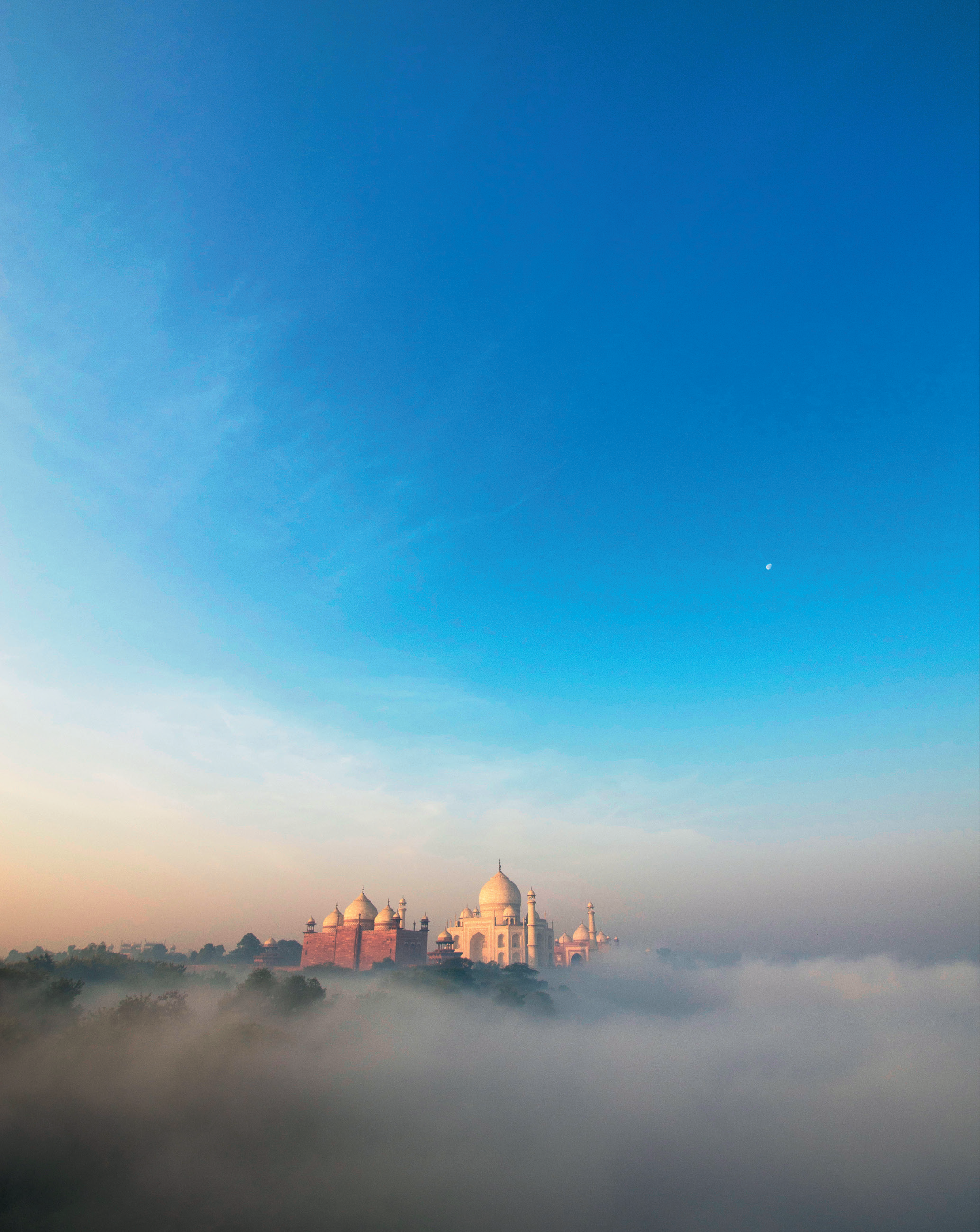
Mumtaz takes us into the mind of Shah Jahan, the fifth Mughal emperor of India who reigned from 1628 to 1658 and famously built the Taj Mahal as a token of love for his deceased wife, Mumtaz. Dorfman was inspired when he visited the monument. He says his “search for ways in which love endures despite the physical absence of the partner’s body was answered one morning when, sitting with Angélica, hand in hand, for hours on a bench facing the Taj Mahal, I was struck with the revelation that here was a story I would pursue until it was ready to be told, when the marble in love would speak to me in words and not stone”.
He says that Shah Jahan came to him recently and dictated the story.
Dorfman is known for his exploration of trauma and injustice. His 1990 play Death and the Maiden – first published in English in Index and later turned into a film by Roman Polanski – follows the story of a sadistic doctor who rapes a political prisoner.
And so, in Dorfman style, this is not a straightforward love story.
Instead, we meet an anguished Jahan, nearing the end of his life and consumed with both his love for Mumtaz and a lingering suspicion that this love has led to bad decisions. Not that he says these words as such. In this story, to speak of this would waste words not on Mumtaz. Jahan is not so much censored by society as by his own mind, trapped in his love for his wife.
“It’s paradoxical that if Shah Jahan had been less fixated on keeping his wife alive through the tomb he built for her, he would have probably been a better ruler and would have avoided the worst of his offspring taking over the throne,” said Dorfman. In the story, as in true life, his son Aurangzeb usurps him.
Dorfman said that Aurangzeb “is his creation (the loins of Shah Jahan are social as well as anatomical: he is the ‘author’ of the usurper)”.
“The ‘villain’, then, could perhaps merely be humanity, our collective that has not yet been able to figure out historical ways to envisage a future where beauty and justice are not at odds,” he said. “Nevertheless, it is this extremely confused, stumbling humanity that has gifted us the consolation of a temple which urges us to never stop seeking the foundations of enduring love inside others.”
For Dorfman, ghosts are reminders of past mistakes that we are destined to repeat. “That such a love-monument cleanses us is undeniable, but if we do not carry its message into the world, truly recognise that beauty, then the sins will continue to infect society,” he said. “It’s the case of India (and not only India) today. And yesterday. The narrator’s own son is unable to comprehend what his father is doing.”
That Dorfman is drawn to the themes of conflict and resolution is no surprise. His family has lived through some of the most tumultuous events of the 20th century.
The son of Jewish immigrants from Eastern Europe, he was born in Argentina but moved to the USA as a child after his father fled president Juan Perón’s soldiers. McCarthyism later forced them out of the USA and they settled in Chile.
Dorfman worked as a cultural adviser to Salvador Allende, then president, in the early 1970s. But after Augusto Pinochet’s coup in 1973, Dorfman was once again exiled. He lived in Paris, the Netherlands and later the USA. Today he splits his time between the USA and a now democratic Chile. When we speak he has just touched down in Santiago.
CREDIT: Frank Bienewald/Alamy
“I’m transfixed with hope at the resounding victory of [president-elect Gabriel] Boric, the possibility that his government could set an example for how to fight neo-liberal inequities and longstanding discrimination against women, indigenous peoples, the underserved,” he said with optimism, before striking a more cautious note.
“But, as I wrote in a recent comment in The Guardian, the shadow of General Pinochet still darkens a Chile where 44% of the electorate voted for a cryptofascist like [ultra-conservative candidate Jose Antonio] Kast. That minority, fearful of any deepening of democracy, retains enormous power and influence and will try to deter radical change.”
When Dorfman was last interviewed by Index, Donald Trump was in power in the USA and Dorfman was incredibly worried about freedom in the country. Joe Biden’s presidency has not quelled these concerns. In fact, he’s concerned “more perhaps than before”.
“Trump is a symptom of a deeper excrescence and malaise in America, the consequence of that country not having dealt with what has been corroding it since its inception, ghosts that do not only come from its own history but a situation I delve into in my novel, Darwin’s Ghosts,” he said. “Note, for instance, how the migrants of today come from the countries that not such a short time ago were aggrieved and colonised and twisted into places that are not havens for their own people.”
We are back to those ghosts. We end, though, on a positive note – a discussion of Index on the magazine’s 50th birthday.
A long-time contributor, Dorfman calls the magazine “a unique, essential, wondrous voice in a world where the temptation to silence dissent and free discussion is on the rise”.
He added: “I am particularly taken with how the magazine devotes so much attention to countries that are generally neglected in the mainstream media. Gabriel Boric’s peaceful battle cry ‘Seguimos’ applies to Index: ‘We go on’.”
Indeed, we go on.
Mumtaz
I AM SHAH Jahan, once king of the Universe, conqueror of Kandahar and builder of the gardens of Shalimar, I am and once was Shah Jahan and now I am dying, I die as I look at her, the crown that was Mumtaz, I am already dead.
To describe her is to sin.
To refuse words is an even greater one.
One word, then: alive.
She was more alive than any bird is now–and now, now as well, even as I look upon the living light of her tomb – more alive than all the birds that I have seen in seventy-six years of life, than the birds that flock the air above and between and below and again above her four towers, more alive than I will ever be, ever have been, changing with each ray of sun and cover of cloud and nightfall and dawnrise, eternal in each moment, eternal and serene.
I would rather have lost my kingdom than have lost sight of my lost love.
I am Shah Jahan, son of Jahangir and father, alas, of Aurangzeb, seizer of the world, and sixth Emperor of this Mughal dynasty, I am and once was Shah Jahan, the king who lost his kingdom and has but one regret.
For twenty-two years, I watched the prophecy of mounting stones, one after the other. The first thing I saw in the morning when I rose, the last thing I saw at night when I went to sleep – like now, like now as I lay dying in the arms of Jahanara, one daughter at least, one child who shared the womb of Mumtaz, one at least, who did not forget this old man.
Stone upon stone, what I saw every day, better to watch that mansion for the dead rising up than to risk the mother of my fourteen children visiting me in my dreams. Sweet to have her again and the same smile with which she greeted me the first time – I was fifteen and she a year younger. Betrothed for five years, five years she told me, we should wait five years so she could slowly cease to be Arjumand Banu and ease into becoming my Mumtaz, five years so the next twenty would be forever years, so there would be no one but her. Sweet, so sweet and wise, the dream and her body in the dream, but more bitter to awake and find her gone. With this recurring consolation: from my bed to witness the breathing white marble of her mausoleum as it shimmered up. Every day I could spare and so many I could not, spent on her memorial and memory and memories of her. Each gem selected personally by me, a homage. Each arch of Jali approved personally by me, a vow. Each scroll of Persian script read personally by me, a promise. Surround her with gates of light, the four rivers of paradise. So, she would remain with me while I remain, so she can be here now as I die, here and there as I feel darkness seep into me, so she will be waiting, saying goodbye and also waiting on the other side, when I join her, the resident of paradise.
I am Shah Jahan and I will soon walk into the Banquet Hall of Eternity.
O Noble, O Magnificent, O Majestic, O Unique, O Eternal, O Glorious, will you deny me the sight of her one more time?
I will never more wake up and see once more stone set upon stone, across the river and the plain of Agra, never again awake in this room in the Red Fort on this hill in Agra, never again examine through the frame of this window – all other rooms are forbidden me by my son – the granite from Bukhara and turquoise from Tibet, the jasper and malachite that inlayers came to prime, the flowering lattices as white as her soul, so the poets said – though they lied as poets lie, as nothing was and is and can be as white as her soul. Slant the minarets thus, I said to Ustar Ahmad Lahauri, slant them slightly outward. So if they fall (as I must fall and die and decline, even I, Shah Jahan, once King of the Universe), so if they fail and fall, they will not fall upon her, my Mumtaz. May nothing but honey fall on her. May only milk and honey fall on her from the sky. May the stones turn all light into milk and all rain into honey. May the stars compete with the moon in their envy of her ravishment in the night. Reject the stone that is not perfect, that does not absorb and reflect and reject and subsume the bright. Refuse the slab that does not fit, make sure the soft fire of colour is both rose and white, so the sun will stay with her and keep her warm even in the winter of her bones and my bones, now that I could not rub her feet when they grew cold, make sure each last carving is flawless so she will have company while she waits for me, the ninety-nine names of God to guide her while I wait.
I would rather have lost my kingdom than have lost sight of my lost love.
This is true. But she would have told me to be careful. Not to neglect the affairs of state so I could watch over the building, day by day, afternoon through night, cloud and rain and summer beating down. That’s what she would have whispered. If she had been there.
I looked at the men working day in and out, spring and fall turning, for twenty-two years I watched the stones rise seamlessly and then the gardens, I looked out onto my Mumtaz and turned my back on taxes except to demand more for her casket and tomb, I turned my back on wars, except to wage those which would bring me more translucent marble from Jaipur, more craftsmen from Baluchistan and artisans from Persia, I tried not to listen to disputes and petitions and petty power. I only had eyes for the mosaic of my love. I worshipped each shining amulet of rock and every curl and curve of the calligraphy, I asked Allah, may his name be blessed, to grant me time to complete her tomb and mine, so she could be there for all those young who have yet to discover love and all the old who still hope to love beyond this life.
I did not have eyes at the back of my head.
Behind me, as I watched the labourers and masons into the night, behind me, he was talking to the generals, he was conspiring with the courtiers against his father and his brothers, behind my head he was consulting the imams, Aurangzeb, whose name I shall not bite bitterly.
He came from inside her.
I shall not deign even to damn him, the son who did what needed to be done, what his brothers would never have done and thus will not rule over one inch of the Empire, he did to me what needed to be done to a father so in love with the dead that the living were forgotten.
He does not, did not, will never understand what it means to be in love, that word love, that word alive, what rolls in his mouth like the corpse of a tongue, he understands nothing. He understands nothing, and this is his punishment.
You understand nothing, Aurangzeb, even if you spent nine months inside the temple of your mother, a place more beautiful than Samarkand, more luminous than the tomb of Timor. This is all you knew: that I had no eyes at the back of my head, this he understood as he bent his knees and twisted his soul towards Mecca. So little that his prayers taught him: to insinuate, when he rose from bowing to God, at first merely to insinuate, then suggesting between clenched teeth, then more than murmuring, then finally bursting the saliva of his thoughts into a word.
Not the word, alive, that he does not understand, will never know what it means.
Sacrilege, that word. His favourite word.
For a woman, to do all this for a woman. Haram for our religion, a betrayal. Idolatry. Mortal man cannot represent the human figure. God alone, may He be blessed, only God can do this with the clay of our flesh. And my father, Aurangzeb said, first thought and then said, my father, Shah Jahan, is doing something worse than blasphemy, making of a mere human figure – a woman, a mere woman, even if she was my mother – making her into a goddess. Aurangzeb, her son and mine, gathering armies to defeat his brothers, gathering jailers to imprison his father, gathering his haunches to mount the Peacock Throne.
I did not see him.
I did not hear him.
My back was turned.
She was not there, my Mumtaz, to provide eyes.
I can say over and over that she is more alive than I am, than birds blessing the sky, but she was not there, my Mumtaz, not here by my side.
She was not here, my Mumtaz, my crown, to provide ears.
I can say she is more alive than ever, but she did not whisper in my ear, she did not say beware, beware, Jahan, beware.
She was dead.
How can I say this, dare as I die in this month of Rajab to decree this, that she is dead.
She could not receive news from the eunuchs, she was not there. She was not there to stare down into the courtyard and read his lips, see our son walking around the fountain, his head haughty as he cast his eyes down, waiting to pounce when I fell ill.
She was not here, my beloved, to tell me what to do, who to fear, who to punish, who to trust, how to stop him.
She was in the shrine I was building for her and for me. She could not be my eyes and ears, could not be my hands and feet, my skin, her skin.
I was blind and deaf without her.
My back turned on the affairs of the world until every last stone was in place, each juncture of each stone with stone like her body and mine, each stone making love to the stone above and the stone below and the stone to the west and the stone to the south until the dome designed by Ismail Afandi went up. I conquered provinces and levied taxes and issued edicts, oh, I pretended to rule, I planned and built the Garden of Grapes, I designed the Pearl Mosque and the red sandstone of the Vazir Khan Mosque at Lahore, I met Sultan Murad the Fourth in Baghdad but only so I could steal his main Ottoman architect, I visited my summer residence in Kashmir but all I saw in the spring near Srinagar was the water of my Mumtaz, I smelled jasmine and only smelled her, I plucked the violets and the roses and it was her, always her, urging me to hurry back and make sure nothing went wrong with what was to be her final resting place, like the resting places I built while she was alive so that travellers would not be weary, like the hospitals she had me foster so that the sick would be cared for, so that other women would not watch their blood flowing from the source and centre of their life as the blood flowed from inside her as she died, do I dare to decree that it is true, that she really died?
My back was turned on the kingdom and my eyes existed only for the memory of Mumtaz.
While Aurangzeb prepared my prison and his palace, his palace and his haunches for a long reign.
Do I have regrets?
Only that she is not with me now.
Do I repent of what I did?
I would do it all over again, every first and final lotus minute.
I say this, Shah Jahan, once Lord of the Universe, Shahanshah Al-Sultan al-’Azam Wal Khagan al-Mukarram, I say this, as I lie dying in the arms of my daughter, the girl my wife gave to me so she could care for this man who is so alone and yet never alone, like the sun and the stone, like the stone and the stories, the girl her mother left me so I would not be alone.
Though I will always be alone.
Until I cross the river of death and find her.
I say this, Shah Jahan, once and no longer Lord of the Universe, Shahanshah–E-Sultanat Ul Hindiya Wal Mugahliya, grandson of the great Akbar and son of Jahangir, I dare to say, I who was the fifth Emperor of the Mughals, I dare to say that I am alone now that my eyes are closed and I cannot see her over there, across the river Yamuna and the plain of Agra, I dare to say that like all men on this earth I must die alone.
Ah, but behind me.
Behind me then, behind us, she and I, look, come and look, behind us we left behind so others can understand, so young and old lovers tomorrow and beyond, we leave behind an asylum where all past sins and weary eyes are to be washed away, we leave behind so you can try and understand, we leave behind us, Mumtaz and I, come and look and try to understand, we leave in front of us and behind us the solace of the Taj Mahal.
Footnotes
Copyright © Ariel Dorfman, 2022.